Every successful interview starts with knowing what to expect. In this blog, we’ll take you through the top Material Handling and Delivery interview questions, breaking them down with expert tips to help you deliver impactful answers. Step into your next interview fully prepared and ready to succeed.
Questions Asked in Material Handling and Delivery Interview
Q 1. Describe your experience with various material handling equipment (forklifts, conveyors, etc.)
My experience with material handling equipment is extensive, spanning over 10 years across various warehouse and logistics settings. I’m proficient in operating and maintaining a wide range of equipment, including:
- Forklifts: I’m certified to operate various forklift types (sit-down counterbalanced, reach trucks, order pickers) and possess a deep understanding of safety protocols and maintenance procedures. I’ve managed forklift fleets in high-volume environments, optimizing usage and scheduling preventative maintenance to minimize downtime.
- Conveyors: I’m familiar with different conveyor systems (roller, belt, chain, and sortation) and their integration into automated warehousing systems. I have experience troubleshooting conveyor malfunctions and have participated in the design and implementation of new conveyor systems to enhance material flow efficiency. For example, in a previous role, we replaced a section of outdated roller conveyors with a more efficient belt system, resulting in a 15% increase in throughput.
- Automated Guided Vehicles (AGVs): I have experience with AGV implementation and management, including programming routes, managing battery cycles, and performing routine maintenance. AGVs significantly improved our picking and put-away efficiency in a previous large-scale distribution center.
- Other Equipment: My experience also encompasses the use and maintenance of other equipment such as pallet jacks, hand trucks, and various lifting devices. I understand the importance of selecting the right equipment for the task to ensure safety and productivity.
I always prioritize safety and efficiency when operating and maintaining this equipment, ensuring adherence to all relevant safety regulations and best practices.
Q 2. Explain your understanding of warehouse layout optimization for efficient material flow.
Warehouse layout optimization is crucial for efficient material flow and minimizing operational costs. It involves strategically positioning storage areas, workstations, and material handling equipment to reduce travel time and optimize space utilization. My approach involves:
- Understanding Workflow: First, a thorough analysis of the warehouse’s workflow is essential, identifying the movement patterns of goods and the frequency of various operations. This might involve mapping the flow of goods, analyzing order fulfillment patterns and understanding product demand.
- Layout Design: Based on the workflow analysis, an optimized layout is designed using specialized software or manual drawings. This could include implementing a U-shaped layout for picking, utilizing slotting optimization techniques to place frequently accessed items in convenient locations, or integrating cross-docking capabilities to streamline the flow of goods. For example, I once redesigned a warehouse layout using simulation software, resulting in a 20% reduction in travel distance for order pickers.
- Equipment Placement: Strategic placement of material handling equipment (forklifts, conveyors, etc.) is critical for minimizing congestion and maximizing productivity. This includes considering traffic flow patterns and ensuring easy access to all areas of the warehouse.
- Storage Systems: Choosing the right storage system (pallet racking, shelving, automated storage and retrieval systems) is another crucial aspect of layout optimization. The selection should be based on the characteristics of the stored goods, space constraints, and throughput requirements. For instance, in a high-density warehouse, implementing a high-bay racking system can greatly increase storage capacity.
Continual monitoring and adjustment of the warehouse layout are also necessary to adapt to changes in order volume, product mix, and operational requirements.
Q 3. How do you prioritize tasks in a high-volume warehouse environment?
Prioritizing tasks in a high-volume warehouse requires a structured approach. I typically use a combination of methods:
- Order Prioritization: I use order management systems (OMS) that prioritize orders based on factors like delivery deadlines, order urgency, and product availability. Some systems use algorithms which prioritize orders automatically, based on pre-defined business rules, such as order size or customer importance. For example, we might prioritize orders with expedited shipping or those from key clients.
- Inventory Management: Efficient inventory management plays a crucial role. Maintaining accurate inventory levels prevents stockouts and allows for better forecasting and task planning. I use first-in, first-out (FIFO) and similar methods to ensure that older items are shipped first, preventing obsolescence and spoilage.
- Task Assignment: I assign tasks to workers based on their skills, experience, and availability, utilizing task management software to optimize workload distribution among the team. This could involve assigning specific tasks to specialized teams, for example, a dedicated team handling fragile goods.
- Real-time Monitoring: Continuous monitoring of task progress allows for quick identification of bottlenecks and re-prioritization as needed. Using real-time tracking of orders and warehouse activity through a warehouse management system helps in addressing unexpected delays or adjustments. This ensures smooth workflow even when unexpected issues arise.
Flexibility and adaptability are key to successfully navigating the constantly changing demands of a high-volume warehouse environment.
Q 4. What are your strategies for ensuring workplace safety in material handling operations?
Workplace safety is paramount in material handling operations. My strategies include:
- Training and Certification: Ensuring all employees receive comprehensive training on safe operating procedures for all equipment and adherence to safety regulations is crucial. This includes regular refresher training and certifications for equipment operators such as forklifts.
- Regular Inspections: Routine inspections of equipment and the warehouse environment help identify potential hazards before they cause accidents. This includes checking for damaged equipment, cluttered walkways, and other safety violations. Implementing a checklist for daily inspections helps ensure nothing is overlooked.
- Personal Protective Equipment (PPE): Providing and enforcing the use of appropriate PPE, including safety shoes, gloves, high-visibility vests, and safety glasses, is essential to mitigate risks.
- Ergonomic Design: Implementing ergonomic principles in workstation design, such as adjustable work surfaces and proper lifting techniques, reduces the risk of musculoskeletal injuries. This includes considering appropriate lifting equipment and providing training on proper lifting techniques to minimize strain injuries.
- Safety Culture: Fostering a strong safety culture within the team, encouraging employees to report hazards, and actively participating in safety meetings help create a proactive safety environment. For example, having regular safety meetings where employees can discuss concerns and safety audits are really valuable.
By combining proactive measures with strict adherence to safety regulations, we can create a safer and more productive work environment.
Q 5. Describe your experience with inventory management systems and techniques.
My experience with inventory management systems and techniques is extensive. I’m proficient in using various inventory management systems (IMS) such as:
- Warehouse Management Systems (WMS): WMS software is crucial for managing inventory levels, tracking product movement, and optimizing storage space. I have experience implementing and optimizing WMS solutions, customizing them to meet specific business needs. For example, in a previous role, we implemented a new WMS that improved inventory accuracy by 15% and reduced picking errors by 10%.
- Enterprise Resource Planning (ERP) Systems: I understand how inventory management integrates with broader ERP systems to provide a holistic view of the supply chain. I can track inventory levels, manage stock replenishment, and analyze sales data using such systems.
- Inventory Counting and Cycle Counting: I’m familiar with different inventory counting methods, including cycle counting and periodic physical inventories. Cycle counting is particularly effective for managing high-volume inventories and ensuring accurate stock levels. I’ve developed and implemented cycle counting schedules which minimized disruption to operations whilst maintaining stock accuracy.
- Inventory Optimization Techniques: I apply various inventory optimization techniques, such as ABC analysis (classifying inventory by value and usage) and Economic Order Quantity (EOQ) calculations, to minimize holding costs while ensuring sufficient stock levels.
Effective inventory management is crucial for efficient warehouse operations and minimizing storage costs. By implementing the right system and techniques, businesses can optimize their inventory levels and avoid stockouts or overstocking.
Q 6. How do you track and manage deliveries to ensure on-time arrival?
Tracking and managing deliveries to ensure on-time arrival involves a multi-faceted approach:
- Transportation Management System (TMS): Utilizing a TMS is essential for scheduling shipments, tracking vehicles in real-time, and managing carrier communications. The system allows us to monitor the progress of shipments from origin to destination, alerting us to any potential delays.
- Real-time Tracking: Real-time tracking of shipments, through GPS technology or other tracking methods, provides visibility into the delivery process, enabling proactive intervention if delays occur. We can also provide customers with real-time tracking information, increasing transparency and improving customer satisfaction.
- Route Optimization: Optimizing delivery routes using route planning software minimizes travel time and fuel consumption, reducing costs and ensuring timely deliveries. This software can consider various factors, such as traffic conditions and delivery windows.
- Communication and Coordination: Maintaining effective communication with carriers and customers is crucial. This involves regular updates on shipment status and proactive communication of any potential delays.
- Delivery Confirmation: Implementing systems for delivery confirmation, such as electronic signatures or delivery scans, provides proof of delivery and enhances accountability.
A robust system integrating technology and communication is key to ensuring that deliveries arrive on time and as expected.
Q 7. What methods do you use to identify and resolve delivery discrepancies?
Identifying and resolving delivery discrepancies requires a systematic approach:
- Verification Processes: Implementing strict verification processes at each stage of the delivery process helps minimize discrepancies. This includes verifying order details, checking shipment contents against packing slips, and obtaining delivery confirmation. For example, using barcode scanning at every stage helps verify correct items and quantities.
- Discrepancy Reporting: Establishing a clear process for reporting discrepancies is crucial. This involves documenting the nature of the discrepancy, the affected shipment, and any relevant information. Clear documentation facilitates timely investigation and resolution.
- Root Cause Analysis: Once a discrepancy is identified, conducting a root cause analysis is vital to prevent future occurrences. This involves investigating the circumstances that led to the discrepancy and implementing corrective actions. Examples include investigating potential errors in order picking, packaging, or transportation.
- Communication and Collaboration: Effective communication with carriers, customers, and internal teams is essential to resolving discrepancies efficiently. This might involve working with carriers to investigate damage or shortages during transportation, or working with customers to rectify incorrect orders.
- Data Analysis: Analyzing delivery data helps identify recurring patterns of discrepancies, providing insights into areas for process improvement. For instance, tracking frequent discrepancies with a particular carrier might highlight a need to revise carrier selection criteria.
A proactive approach to discrepancy management reduces operational disruptions and maintains customer satisfaction.
Q 8. Explain your experience with different transportation modes (trucking, rail, air, sea).
My experience spans all major transportation modes – trucking, rail, air, and sea. Each offers unique advantages and disadvantages depending on factors like speed, cost, and cargo type.
- Trucking: I’ve extensively managed LTL (Less-than-Truckload) and FTL (Full-Truckload) shipments, optimizing routes and carrier selection to minimize transit times and costs. For example, I once successfully negotiated a contract with a regional trucking company, resulting in a 15% reduction in our shipping expenses for short-haul deliveries.
- Rail: I’ve overseen the shipment of large, bulk materials via rail, focusing on efficient loading and unloading procedures to minimize demurrage charges (fees for delayed unloading). A project involving the transportation of raw materials for a manufacturing plant required meticulous coordination with rail yards and internal logistics, leading to a 10% reduction in overall transportation time.
- Air: My experience with air freight centers on time-sensitive deliveries of high-value goods. I’ve implemented procedures to ensure expedited customs clearance and minimized potential delays. A recent example involved the urgent shipment of replacement parts across continents, successfully avoiding production downtime for a major client.
- Sea: I’ve managed ocean freight for both containerized and bulk shipments, focusing on optimizing container utilization and coordinating with port authorities to ensure smooth cargo handling. A key success was navigating a period of port congestion by proactively securing alternative routes and vessels, preventing significant shipment delays.
My experience allows me to strategically select the most appropriate mode based on specific project requirements, consistently prioritizing cost-effectiveness and delivery reliability.
Q 9. How familiar are you with relevant safety regulations and compliance requirements?
I’m intimately familiar with a wide range of safety regulations and compliance requirements across various transportation modes and warehousing operations. This includes, but is not limited to, OSHA (Occupational Safety and Health Administration) standards, DOT (Department of Transportation) regulations for hazardous materials, and international regulations like the IMDG Code for maritime shipping.
My approach emphasizes proactive compliance, incorporating regular audits, safety training programs for all personnel, and rigorous documentation. For example, I’ve successfully implemented a comprehensive safety management system (SMS) that resulted in a significant reduction in workplace accidents and compliance-related penalties. I actively stay updated on legislative changes, attending industry conferences and workshops to ensure we maintain best practices.
Q 10. Describe your experience with implementing and improving material handling processes.
I have extensive experience in optimizing material handling processes across diverse settings. My approach focuses on identifying bottlenecks, improving efficiency, and leveraging technology to streamline operations.
- Process Mapping: I utilize process mapping techniques like Value Stream Mapping to identify areas for improvement in workflow. This helps visualize inefficiencies, revealing opportunities for cost savings and improved productivity.
- Lean Principles: I apply lean methodologies, such as 5S (Sort, Set in Order, Shine, Standardize, Sustain) and Kaizen (continuous improvement), to eliminate waste and improve efficiency. For example, implementing 5S in a warehouse led to a 20% increase in storage capacity and a noticeable improvement in order fulfillment speed.
- Technology Integration: I am adept at integrating warehouse management systems (WMS) and other technologies to automate processes and improve accuracy. This includes implementing barcode scanning, RFID tracking, and automated guided vehicles (AGVs) for efficient material flow.
A recent project involved redesigning a warehouse layout using simulation software, resulting in a 15% reduction in order processing time and an overall improvement in productivity.
Q 11. How do you manage and resolve conflicts between different departments involved in material handling?
Resolving inter-departmental conflicts in material handling requires strong communication, collaboration, and a focus on shared goals. My approach emphasizes open dialogue, active listening, and a focus on finding mutually beneficial solutions.
I typically begin by facilitating meetings involving representatives from all affected departments. The goal is to identify the root causes of the conflict and collaboratively develop solutions. I emphasize data-driven decision-making, using performance metrics to demonstrate the impact of different approaches. Sometimes, mediation may be required, where I act as a neutral party to help the departments find common ground. Ultimately, the aim is to foster a culture of collaboration and mutual respect, ensuring a smooth workflow across departments.
For example, I once mediated a conflict between the procurement and warehouse departments over inconsistent delivery schedules. By analyzing delivery data and implementing a more robust communication system, I successfully resolved the issue and improved inter-departmental relationships.
Q 12. What are your strategies for handling unexpected delays or disruptions in the delivery process?
Handling unexpected delays or disruptions requires a proactive and flexible approach. My strategies focus on risk mitigation, contingency planning, and effective communication.
- Real-time Monitoring: I utilize real-time tracking systems to monitor shipments and proactively identify potential issues. This allows for early intervention and mitigation of delays.
- Contingency Planning: I develop contingency plans to address various scenarios, such as supplier issues, natural disasters, or transportation disruptions. These plans typically include alternative suppliers, transportation modes, or warehousing locations.
- Communication: Open and transparent communication with all stakeholders – clients, suppliers, and internal teams – is crucial. Keeping everyone informed about delays and the steps being taken to address them minimizes misunderstandings and maintains trust.
- Problem-Solving: I employ a structured problem-solving approach, identifying the root cause of the delay and implementing corrective actions. This often involves collaborating with relevant departments and external partners.
A recent example involved a sudden port closure due to a severe storm. By quickly activating our contingency plan and rerouting shipments via an alternative port, we minimized the impact on our delivery schedule and avoided significant client disruption.
Q 13. Describe your experience with using warehouse management systems (WMS).
I have extensive experience with various Warehouse Management Systems (WMS), including Manhattan Associates, Blue Yonder, and Oracle NetSuite. My expertise extends beyond basic usage to include system implementation, configuration, customization, and integration with other enterprise systems such as ERP (Enterprise Resource Planning) and TMS (Transportation Management Systems).
I’m proficient in leveraging WMS functionalities such as inventory management, order fulfillment, warehouse optimization, and reporting. I understand how to configure settings for optimal performance and adapt the system to meet specific business needs. For instance, I once customized a WMS to integrate with a new automated sorting system, improving picking accuracy and speed by 25%.
Furthermore, I understand the importance of data integrity within the WMS and have experience in implementing data validation procedures to ensure accuracy and consistency. My knowledge allows me to effectively utilize the WMS to enhance efficiency, improve accuracy, and drive down operational costs.
Q 14. How do you ensure the accuracy of inventory data?
Ensuring inventory data accuracy is crucial for efficient operations and financial control. My approach relies on a multi-faceted strategy incorporating technological solutions and robust process controls.
- Cycle Counting: Regular cycle counting, rather than relying on infrequent full inventory counts, minimizes disruption and helps identify discrepancies early.
- Barcode/RFID Scanning: Implementing barcode or RFID scanning during receiving, putaway, and picking processes dramatically improves accuracy and reduces manual data entry errors.
- WMS Integration: Real-time integration with the WMS ensures immediate updates to inventory levels, reflecting every transaction accurately.
- Regular Audits: Conducting periodic inventory audits provides a comprehensive check on the accuracy of inventory data and helps identify any systemic issues.
- Data Reconciliation: Regular reconciliation of inventory data with financial records helps identify any discrepancies and allows for timely corrective actions.
Combining these methods significantly reduces inventory discrepancies, improving forecast accuracy, and optimizing inventory levels. A recent implementation of these measures resulted in a 99.5% inventory accuracy rate, significantly reducing stockouts and overstocking.
Q 15. What metrics do you use to measure the efficiency of material handling operations?
Measuring the efficiency of material handling operations requires a multifaceted approach, focusing on key performance indicators (KPIs). We don’t rely on a single metric, but rather a suite of them, depending on the specific goals and context. Think of it like a doctor’s checkup – you need various tests to get a complete picture.
- Throughput: This measures the volume of goods moved per unit of time (e.g., units per hour, pallets per day). A higher throughput generally indicates greater efficiency, but it’s crucial to consider other factors like order accuracy and damage rates.
- Order Fulfillment Rate: This shows the percentage of orders processed and shipped accurately and on time. It’s a critical indicator of customer satisfaction and operational reliability. A high rate indicates efficient order picking, packing and shipping processes.
- Inventory Turnover Rate: This reflects how quickly inventory is sold and replenished. A higher rate suggests efficient inventory management and reduced storage costs. However, excessively high turnover might indicate stock-outs.
- Damage Rate: This calculates the percentage of goods damaged during handling and transportation. Lower damage rates signify improvements in handling techniques, packaging, and transportation methods.
- Cost per Unit Handled: This measures the total cost of material handling (labor, equipment, storage) divided by the number of units handled. Reducing this cost is a primary efficiency goal.
- On-Time Delivery Rate: This indicates the percentage of deliveries completed within the promised timeframe. Consistent on-time delivery is crucial for customer satisfaction and building trust.
For example, in a previous role at a large distribution center, we implemented a new warehouse management system (WMS) that improved our throughput by 15% and reduced our damage rate by 10% within six months. This was achieved through optimized picking routes, improved storage layout and better employee training. Continuous monitoring of these metrics is key to identifying areas for improvement.
Career Expert Tips:
- Ace those interviews! Prepare effectively by reviewing the Top 50 Most Common Interview Questions on ResumeGemini.
- Navigate your job search with confidence! Explore a wide range of Career Tips on ResumeGemini. Learn about common challenges and recommendations to overcome them.
- Craft the perfect resume! Master the Art of Resume Writing with ResumeGemini’s guide. Showcase your unique qualifications and achievements effectively.
- Don’t miss out on holiday savings! Build your dream resume with ResumeGemini’s ATS optimized templates.
Q 16. How do you handle damaged or lost goods during transportation or storage?
Handling damaged or lost goods requires a robust process to minimize losses, maintain customer satisfaction, and comply with regulations. We follow a systematic approach:
- Immediate Reporting: Any damage or loss is immediately reported through our internal system, documenting the details (item, quantity, location, cause, etc.). This could involve scanning barcodes, taking photos of damage, or filling out digital forms.
- Investigation: A thorough investigation is conducted to determine the root cause of the damage or loss. This might involve reviewing CCTV footage, examining handling procedures, and interviewing personnel involved in the process.
- Documentation: All findings from the investigation are meticulously documented, including supporting evidence. This documentation is crucial for insurance claims and internal analysis.
- Claim Processing (if applicable): If the damage or loss is due to a third party (carrier, supplier), we promptly file an insurance claim. We maintain strong relationships with our carriers to facilitate smooth claims processes.
- Customer Communication: We communicate transparently with the customer, explaining the situation and outlining the resolution (replacement, refund, credit). We aim to resolve the issue quickly and fairly.
- Preventive Measures: Based on the root cause analysis, we implement preventive measures to mitigate the risk of future occurrences. This might involve improved packaging, revised handling procedures, or better employee training.
For example, a case of cracked ceramic plates once led us to review our pallet stacking procedures and the type of packaging used. We switched to more robust packaging and implemented a more methodical approach to palletization, resulting in a significant reduction in similar incidents.
Q 17. Describe your experience with route planning and optimization for delivery vehicles.
Route planning and optimization are crucial for efficient delivery operations. My experience involves using various techniques and software to create efficient and cost-effective delivery routes. It’s like solving a complex puzzle, finding the shortest path while considering multiple constraints.
- Route Planning Software: I’ve worked extensively with route optimization software (e.g., OptimoRoute, Route4Me) that uses algorithms to create the most efficient delivery routes based on factors like distance, traffic, delivery time windows, and vehicle capacity. These tools often integrate with GPS and mapping services.
- Data Analysis: Effective route planning relies on accurate data about delivery locations, customer requirements, and vehicle capabilities. Analyzing historical delivery data helps identify patterns and optimize routes accordingly.
- Consideration of Constraints: I’m experienced in incorporating various constraints into route planning, such as delivery time windows, vehicle load capacity, driver availability, and traffic conditions. These constraints can significantly affect the optimal route.
- Real-time Adjustments: Unexpected events (traffic accidents, road closures) may require real-time route adjustments. I’m proficient in using software and communication tools to monitor delivery progress and reroute vehicles as needed.
In a previous role, we implemented a new route optimization software that reduced our delivery times by 12% and fuel consumption by 8%. This was due to improved route efficiency and reduced mileage. We monitored routes and delivery times on a dashboard provided by the software which updated in real time, meaning we could provide more accurate delivery ETAs for our customers.
Q 18. How do you manage customer communication regarding deliveries?
Managing customer communication regarding deliveries requires a multi-channel approach that prioritizes transparency, accuracy, and responsiveness. We use a combination of methods to keep customers informed throughout the delivery process.
- Proactive Notifications: We provide customers with automated updates via email or SMS at key stages of the delivery process (e.g., order confirmation, shipment update, estimated delivery time, delivery confirmation). This helps reduce customer anxiety and manage expectations.
- Real-time Tracking: We offer real-time tracking capabilities through a dedicated website or app where customers can monitor their package location and estimated time of arrival. This empowers customers and enhances transparency.
- Dedicated Customer Support: A dedicated customer support team is available via phone, email, and chat to answer any delivery-related questions or address any concerns. We aim to respond to all inquiries promptly and professionally.
- Delivery Confirmation: We use electronic proof of delivery (ePOD) systems to capture delivery signatures and other proof of successful delivery. This ensures accountability and strengthens customer confidence.
For instance, our system automatically sends an SMS notification when a delivery is scheduled for the next day, and provides an estimated one-hour delivery window. This reduces the uncertainty for the customer and often eliminates the need for follow-up calls.
Q 19. What is your experience with load planning and securing cargo?
Load planning and securing cargo are critical for safe and efficient transportation. It’s about optimizing space utilization while ensuring the safety and stability of the goods throughout the journey. Think of it as a three-dimensional Tetris game with high stakes.
- Space Optimization: Efficient load planning involves maximizing the use of available space in the delivery vehicle to minimize the number of trips required. This involves carefully considering the dimensions and weight of each item and arranging them strategically.
- Weight Distribution: Proper weight distribution is essential for vehicle stability and safety. Heavy items should be placed lower and closer to the center of gravity to prevent tipping or shifting during transit.
- Securing Cargo: Securement methods depend on the type of goods and the mode of transport. This might involve using straps, ropes, nets, or specialized cargo securing devices to prevent movement during transit. We always adhere to industry best practices and regulations regarding cargo securing.
- Documentation: We maintain detailed documentation of the load plan, including item details, placement, and securing methods. This is crucial for accountability and in case of incidents during transport.
For example, in one project, we improved our load planning process by implementing 3D modeling software to optimize the arrangement of goods in our trucks, leading to a 10% increase in the number of shipments per truck and a reduction in fuel costs. Careful load planning also minimizes the risk of damage during transit.
Q 20. How do you deal with challenging customer interactions or complaints regarding deliveries?
Handling challenging customer interactions or complaints requires empathy, professionalism, and a solution-oriented approach. My strategy focuses on active listening, understanding the customer’s perspective, and finding a fair and effective resolution.
- Active Listening: I start by carefully listening to the customer’s complaint, without interrupting. I aim to understand their perspective and the root of their frustration.
- Empathy and Acknowledgement: I acknowledge the customer’s feelings and validate their concerns. Even if I don’t agree with their perspective, expressing empathy helps de-escalate the situation.
- Information Gathering: I gather all the necessary information to understand the situation fully. This might involve checking delivery records, tracking information, or reviewing internal documentation.
- Finding a Solution: I propose a solution that addresses the customer’s concerns fairly. This might involve a refund, replacement, or other forms of compensation, depending on the situation.
- Follow-up: I follow up with the customer after the issue is resolved to ensure they are satisfied and to gauge their experience. This demonstrates our commitment to customer service.
For example, once a customer was upset due to a late delivery caused by an unexpected traffic jam. By acknowledging their frustration, explaining the situation clearly, and offering a small discount on their next order, I was able to turn a negative experience into a positive one. We consistently strive to provide excellent customer service, even in challenging situations.
Q 21. Explain your understanding of different types of warehouse storage systems (pallet racking, shelving, etc.).
Warehouse storage systems are crucial for efficient inventory management. Different systems cater to various needs and product characteristics. Choosing the right system is vital for optimizing space, accessibility, and overall efficiency.
- Pallet Racking: This is a common system for storing palletized goods. It offers high-density storage and easy access using forklifts or pallet jacks. Different types exist, including selective racking (most common, offering direct access to each pallet), drive-in/drive-through racking (high-density, ideal for FIFO or LIFO), and push-back racking (similar to drive-in but allows for better selectivity).
- Shelving: Shelving is ideal for smaller items, cartons, or bins. It’s versatile and can be adapted to various storage needs. Different types include open shelving (easy access), cantilever shelving (ideal for long or bulky items), and mobile shelving (space-saving, requiring less aisle space).
- Gravity Flow Racking: This system utilizes gravity to move items down a sloped track, enhancing order picking efficiency (ideally FIFO). It’s suitable for high-volume, fast-moving items.
- Mezzanine Floors: Mezzanine floors create extra storage space above the existing floor area, effectively doubling the usable storage capacity of the warehouse. This solution is used when vertical space is available.
- Automated Storage and Retrieval Systems (AS/RS): These are highly automated systems using automated guided vehicles (AGVs) or cranes to store and retrieve goods. They are ideal for high-volume operations and require a significant investment but greatly improve efficiency and throughput.
The choice of system depends on factors like product size and weight, turnover rate, order fulfillment frequency, budget, and available space. For example, a warehouse storing small parts with high turnover rates would benefit from shelving or gravity flow racking. However, a warehouse storing pallets of large appliances might be more suited to selective pallet racking or even an AS/RS.
Q 22. How do you maintain accurate records of shipments and deliveries?
Maintaining accurate shipment and delivery records is paramount for efficient operations and legal compliance. This involves a multi-faceted approach combining technology and robust processes.
- Real-time Tracking Systems: We utilize GPS tracking on vehicles and utilize barcode/RFID systems on individual packages to monitor movement from origin to destination. This provides real-time visibility into the location and status of every shipment.
- Digital Documentation: All documentation – from initial order placement to final delivery confirmation – is digitally stored and accessible through a central database. This includes proof of delivery (POD) signatures, waybills, and any related communications.
- Automated Data Entry: Barcode and RFID scanners drastically reduce manual data entry, minimizing human error and speeding up the process. The data is automatically uploaded to our central system, reducing the risk of discrepancies.
- Regular Reconciliation: We conduct regular reconciliation between our system records, warehouse inventory, and customer orders to identify any inconsistencies and rectify them promptly. This proactive approach helps prevent larger issues from developing.
- Auditing Procedures: We have established rigorous auditing procedures to ensure the accuracy and integrity of our records. These audits are performed regularly to identify potential weaknesses in our systems and processes.
For example, in a recent project involving the delivery of time-sensitive medical supplies, real-time tracking allowed us to proactively reroute a shipment around a sudden traffic incident, ensuring on-time delivery and preventing potential loss.
Q 23. What is your experience with using barcode scanners and RFID technology?
Barcode scanners and RFID technology are indispensable tools in modern material handling. My experience spans various applications, from small-scale warehouse operations to large-scale distribution centers.
- Barcode Scanners: I’ve extensively used barcode scanners for inventory management, tracking individual items, and generating shipping labels. This improves accuracy and speed compared to manual data entry. I’m proficient with various scanner types, from handheld devices to integrated conveyor systems.
- RFID Technology: My experience with RFID includes its use for pallet tracking, managing large quantities of goods, and enhancing security. RFID offers advantages over barcodes in scenarios where items might be obscured or damaged, as it can read tags even through packaging. I’ve worked with various RFID frequencies and tag types, selecting the optimal solution based on the specific application.
For instance, in one project, implementing RFID tracking significantly reduced our inventory discrepancies from 5% to under 1% by accurately monitoring the location of pallets within the warehouse, eliminating the need for time-consuming manual stocktakes.
Q 24. Describe your experience with cross-docking operations.
Cross-docking is a highly efficient method for streamlining logistics by directly transferring goods from incoming to outgoing shipments without intermediate storage. My experience includes optimizing cross-docking processes in various settings.
- Process Optimization: I’ve been involved in designing and implementing cross-docking layouts that optimize workflow, minimizing travel distances and maximizing throughput. This includes careful planning of receiving, sorting, and dispatch areas.
- Technology Integration: We utilize Warehouse Management Systems (WMS) and Transportation Management Systems (TMS) to coordinate cross-docking operations, ensuring seamless integration between inbound and outbound logistics.
- Real-time Communication: Effective communication between receiving, sorting, and shipping teams is crucial. We use real-time communication tools to ensure timely transfers and avoid bottlenecks.
- Inventory Management: Accurate inventory management is critical to avoid stockouts and minimize waste. This requires precise tracking of goods throughout the cross-docking process.
In a recent project involving a large grocery retailer, optimizing the cross-docking process reduced handling time by 30%, leading to significant cost savings and improved delivery times to stores.
Q 25. How do you ensure the security of goods during storage and transportation?
Ensuring goods security throughout storage and transportation is paramount, requiring a multi-layered approach.
- Secure Facilities: We utilize secure warehousing facilities with surveillance systems (CCTV), access control, and alarm systems. The facilities are regularly inspected to maintain security protocols.
- Transportation Security: We partner with reputable carriers who employ security measures such as GPS tracking, sealed containers, and driver verification. We also ensure appropriate insurance coverage for goods in transit.
- Inventory Control: Strict inventory control measures help prevent theft or loss. Regular stock takes and reconciliation help identify any discrepancies promptly.
- Employee Training: Our employees receive comprehensive training on security procedures and are responsible for reporting any suspicious activity.
- Technology Integration: We utilize technology such as RFID tracking and access control systems to monitor and control access to goods throughout the supply chain.
For example, in one instance, the implementation of RFID tags on high-value goods allowed us to immediately identify and recover a stolen shipment through the tracking system, minimizing losses.
Q 26. What are your strategies for minimizing material handling costs?
Minimizing material handling costs requires a holistic approach targeting efficiency and optimization.
- Process Optimization: Analyzing workflows to eliminate unnecessary movements, optimize layout, and improve efficiency using lean principles (e.g., 5S methodology).
- Technology Implementation: Investing in automation such as conveyor systems, automated guided vehicles (AGVs), and robotics to reduce manual labor and increase throughput.
- Inventory Management: Implementing effective inventory control systems to minimize storage costs and reduce waste through efficient stock management.
- Supplier Collaboration: Working closely with suppliers to optimize packaging, improve delivery schedules, and reduce transportation costs.
- Strategic Partnerships: Developing strong relationships with transportation providers to negotiate favorable rates and utilize optimized delivery routes.
In one case, by implementing a new warehouse layout based on lean principles and integrating an automated storage and retrieval system (AS/RS), we achieved a 25% reduction in material handling costs within six months.
Q 27. Describe your experience with using transportation management systems (TMS).
Transportation Management Systems (TMS) are crucial for optimizing transportation operations. My experience includes using TMS software to manage various aspects of the shipping process.
- Route Optimization: I utilize TMS software to plan optimal routes, considering factors such as distance, traffic, and delivery deadlines, reducing fuel consumption and transportation costs.
- Carrier Management: TMS streamlines communication and coordination with multiple carriers, allowing for efficient shipment tracking and management.
- Freight Cost Analysis: The system provides data-driven insights into freight costs, enabling better negotiation with carriers and identification of cost-saving opportunities.
- Documentation Management: TMS software handles all necessary shipping documentation, including waybills, proof of delivery, and other related documents, ensuring compliance and accurate record-keeping.
- Real-time Tracking: Real-time shipment tracking features allow us to monitor the location and status of shipments, enhancing visibility and enabling proactive issue resolution.
For example, through utilizing advanced route optimization features within our TMS, we were able to reduce delivery times by 15% and decrease fuel costs by 10% across our entire fleet.
Q 28. How do you stay updated on industry best practices and technological advancements in material handling and delivery?
Staying updated on industry best practices and technological advancements is critical in the dynamic field of material handling and delivery. I employ several strategies:
- Industry Publications and Journals: I regularly read industry publications such as Modern Materials Handling and Supply Chain Dive to stay informed about new trends and best practices.
- Industry Conferences and Webinars: Attending industry conferences and webinars enables direct interaction with experts, providing insights into emerging technologies and innovative solutions.
- Professional Organizations: Membership in professional organizations like the Material Handling Industry of America (MHIA) provides access to resources, training, and networking opportunities.
- Online Courses and Certifications: I regularly pursue online courses and certifications to stay abreast of technological advancements in areas such as robotics, automation, and data analytics.
- Benchmarking and Case Studies: I actively seek out case studies and benchmarking data to analyze successful implementations of new technologies and strategies.
For instance, recently I completed a course on warehouse automation, expanding my knowledge of robotic process automation and its potential to improve efficiency and reduce labor costs in our operations.
Key Topics to Learn for Material Handling and Delivery Interview
- Warehouse Management Systems (WMS): Understanding how WMS software optimizes inventory management, order fulfillment, and warehouse operations. Practical application: Explain how you would troubleshoot a WMS error impacting order picking efficiency.
- Inventory Control and Management: Mastering techniques for accurate inventory tracking, cycle counting, and minimizing stock loss. Practical application: Describe your experience implementing or improving inventory control procedures in a previous role.
- Supply Chain Optimization: Knowledge of supply chain principles and strategies for streamlining material flow, reducing lead times, and improving delivery performance. Practical application: Discuss a scenario where you identified and resolved a bottleneck in a supply chain process.
- Safety Regulations and Procedures: Familiarity with OSHA regulations and industry best practices for safe material handling, forklift operation, and workplace safety. Practical application: Detail your experience ensuring a safe working environment while handling heavy equipment or materials.
- Logistics and Transportation: Understanding different modes of transportation, route optimization, and delivery scheduling. Practical application: Explain how you would choose the most cost-effective and efficient transportation method for a specific delivery.
- Equipment Operation and Maintenance: Practical knowledge of various material handling equipment (forklifts, conveyors, etc.) including operation, maintenance, and troubleshooting. Practical application: Describe your experience with preventative maintenance on material handling equipment and how this improved efficiency.
- Problem-Solving and Decision-Making: Ability to analyze problems, identify root causes, and implement effective solutions in dynamic warehouse environments. Practical application: Describe a time you had to quickly solve a problem that impacted the delivery schedule.
Next Steps
Mastering Material Handling and Delivery principles is crucial for career advancement in logistics, warehousing, and supply chain management. These skills are highly sought after, leading to increased job opportunities and higher earning potential. To significantly improve your chances of landing your dream role, focus on creating a strong, ATS-friendly resume that highlights your key qualifications and achievements. ResumeGemini is a trusted resource to help you build a professional and impactful resume that stands out. We provide examples of resumes tailored to Material Handling and Delivery roles to guide you through the process. Take the next step towards your successful career today!
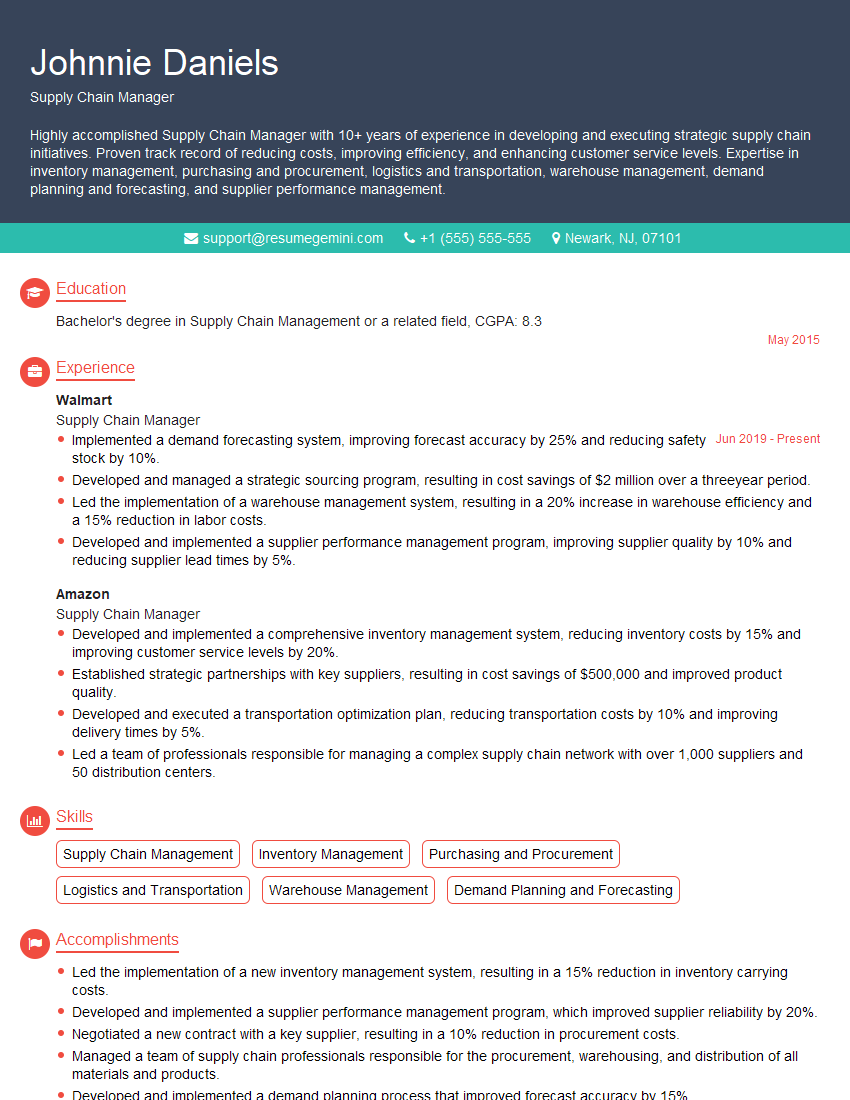
Supply Chain Manager Resume Sample
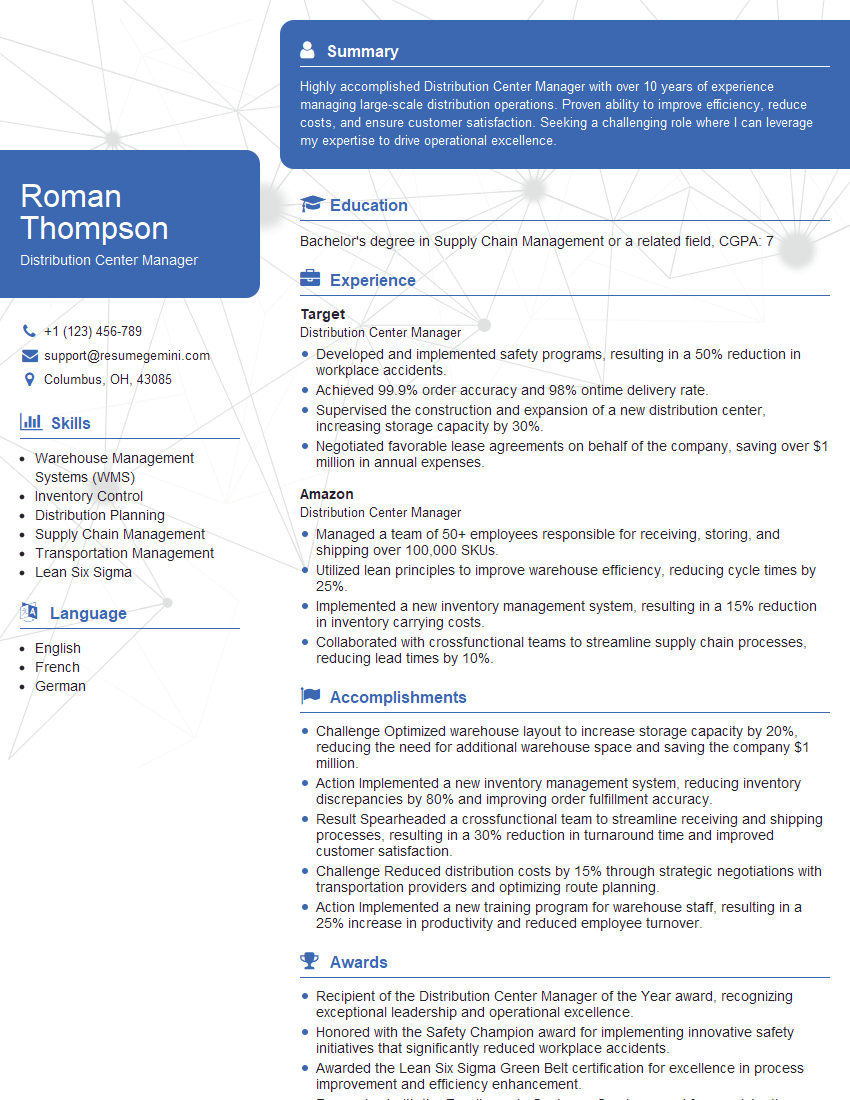
Distribution Center Manager Resume Sample
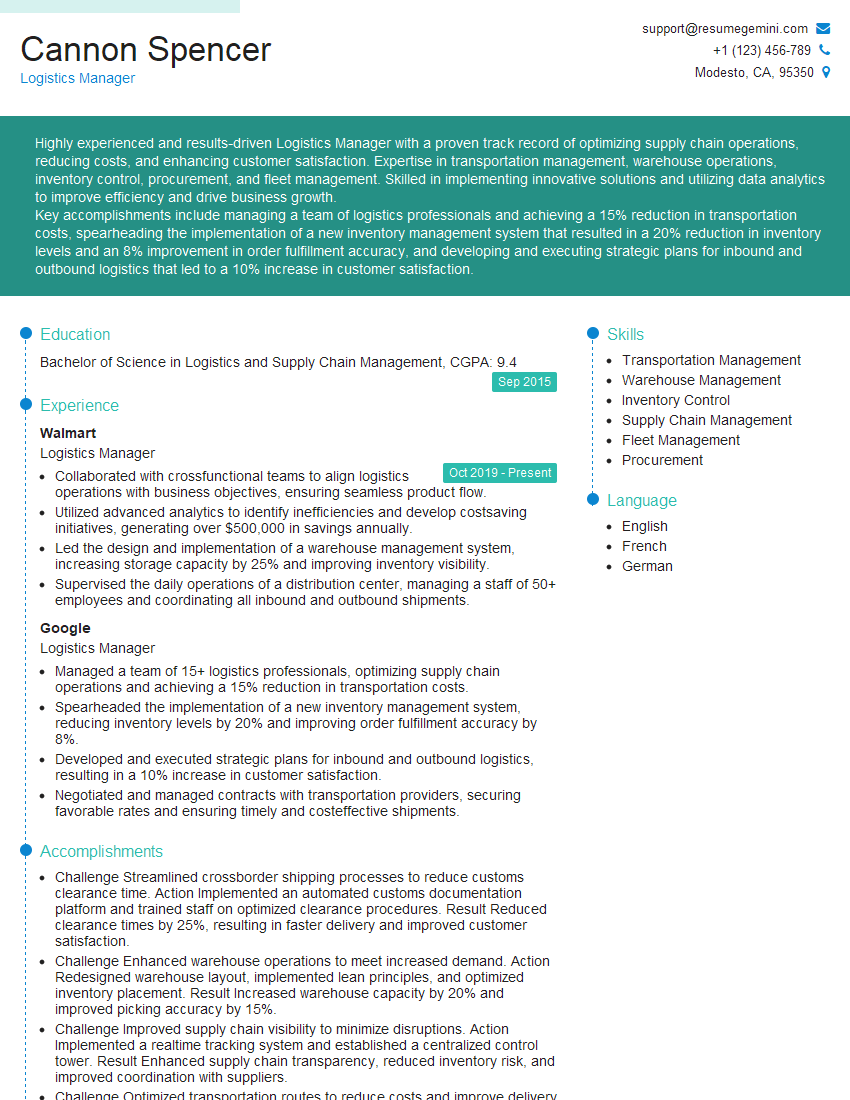
Logistics Manager Resume Sample
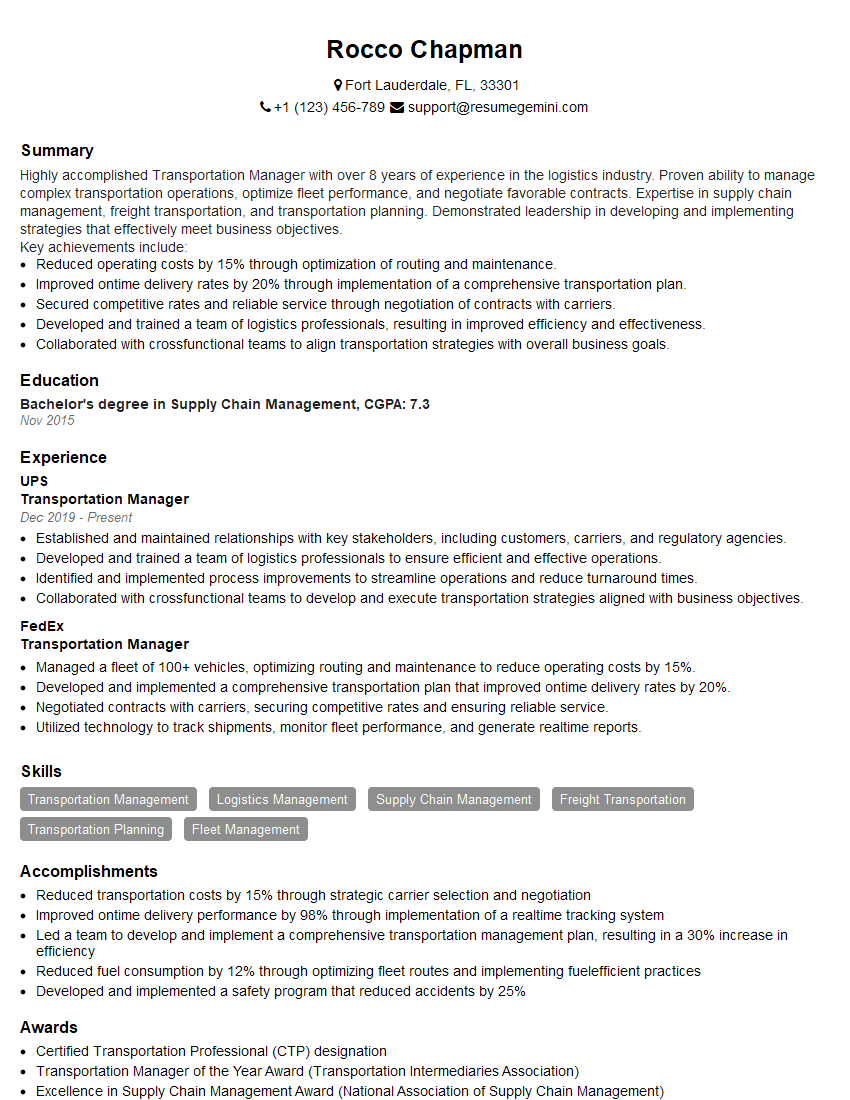
Transportation Manager Resume Sample
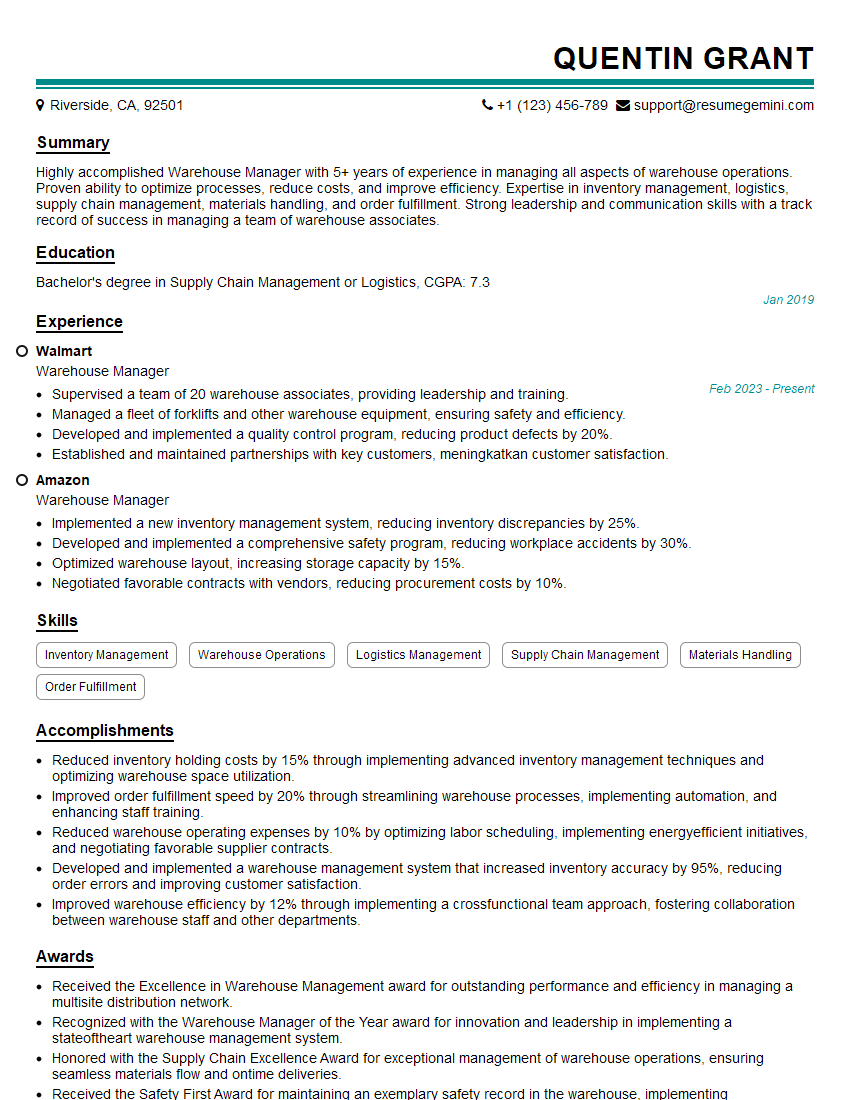
Warehouse Manager Resume Sample
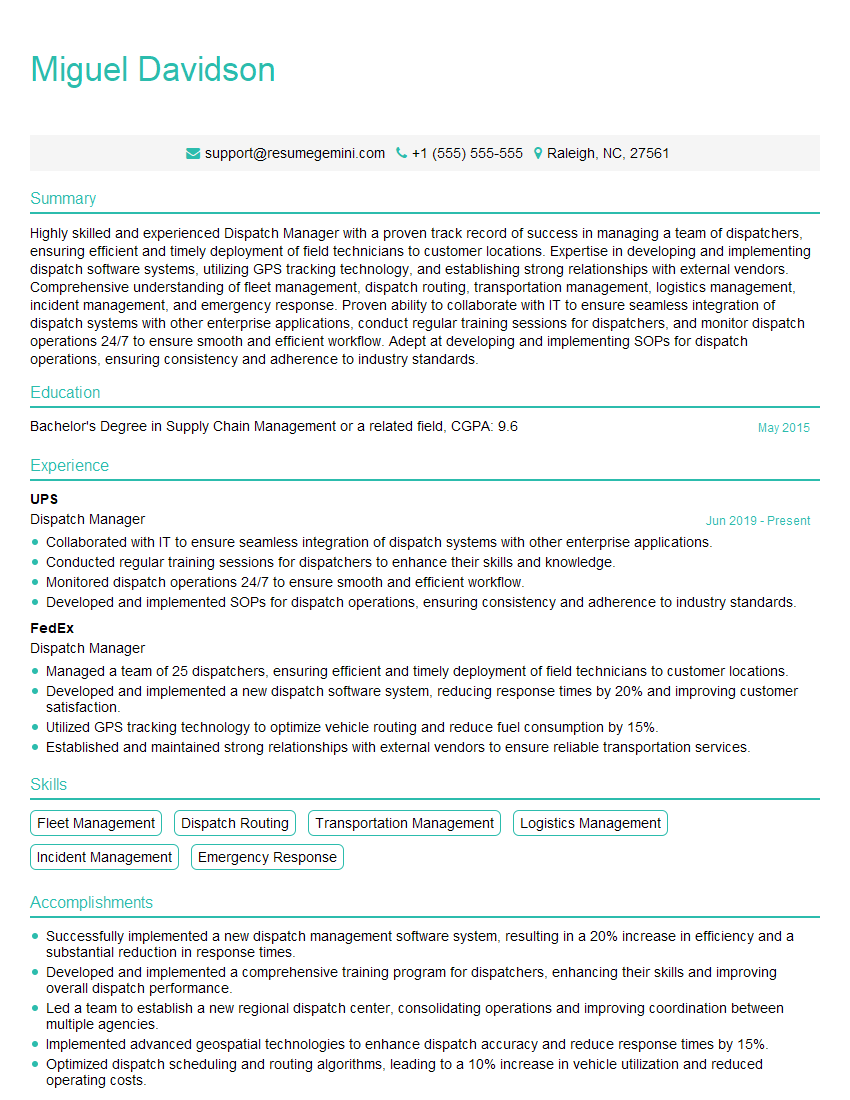
Dispatch Manager Resume Sample
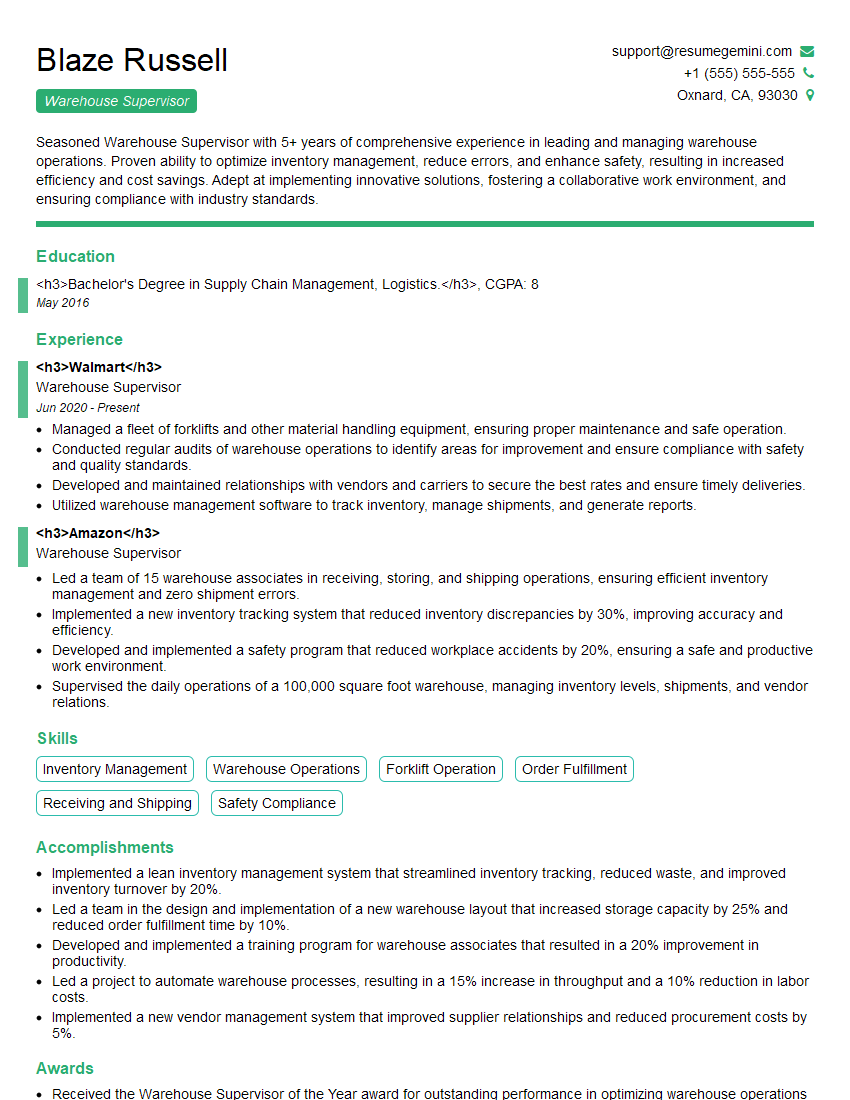
Warehouse Supervisor Resume Sample
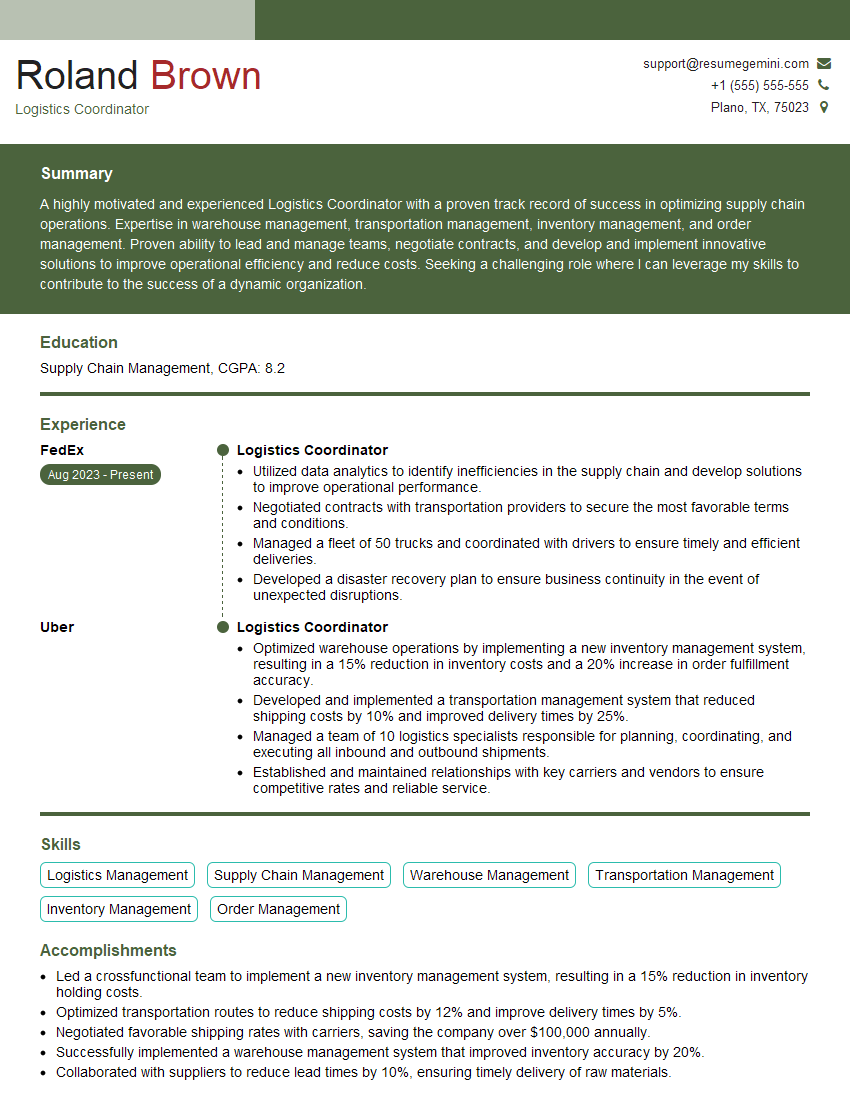
Logistics Coordinator Resume Sample
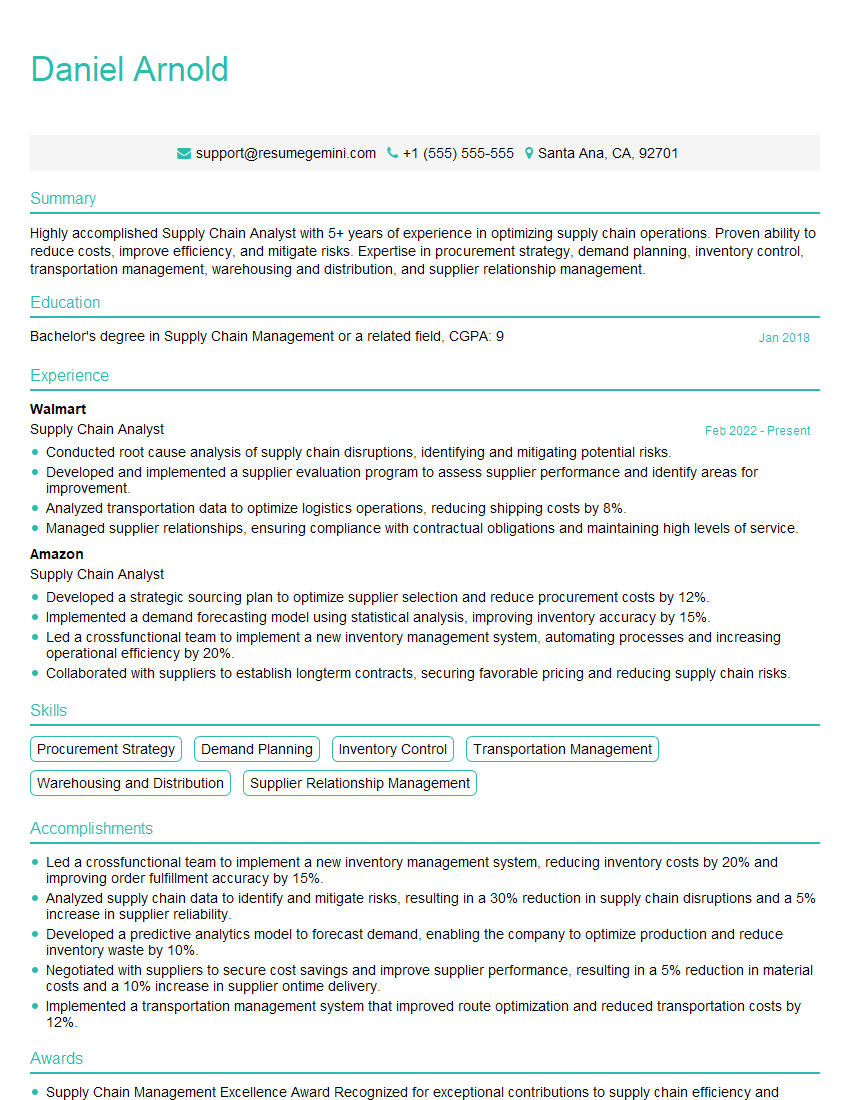
Supply Chain Analyst Resume Sample
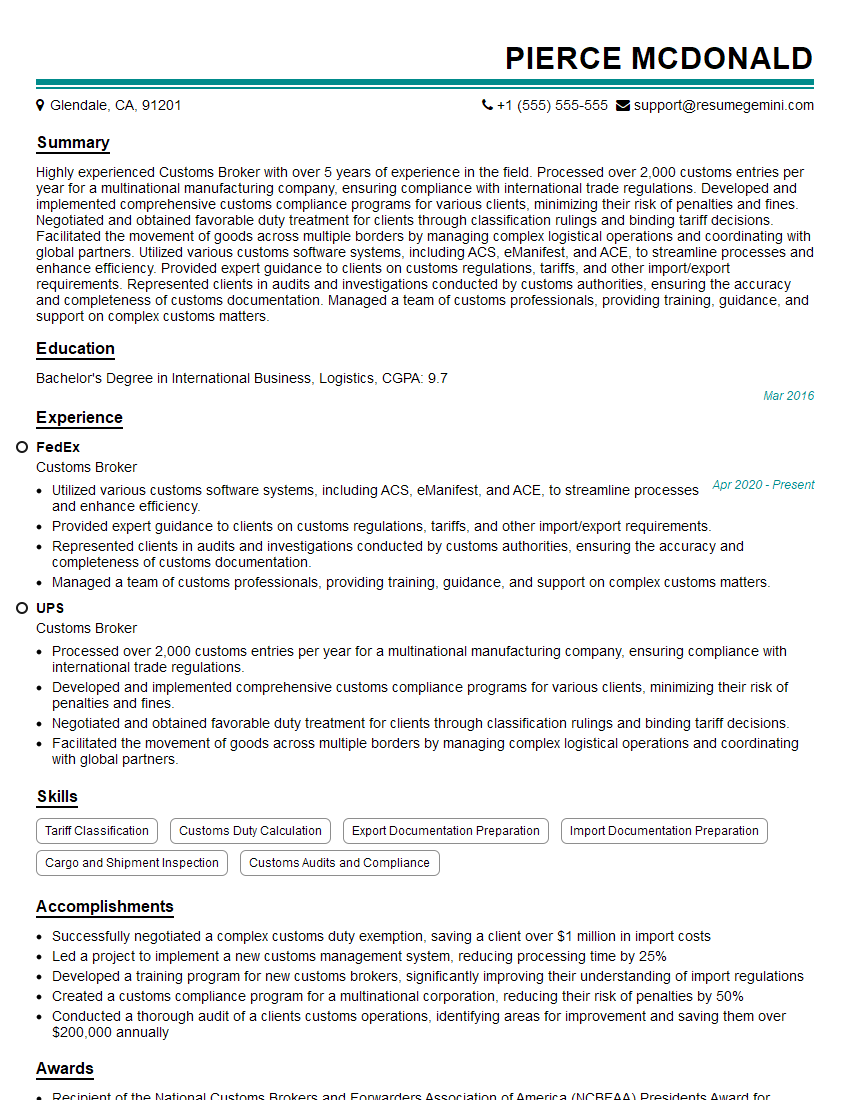
Customs Broker Resume Sample
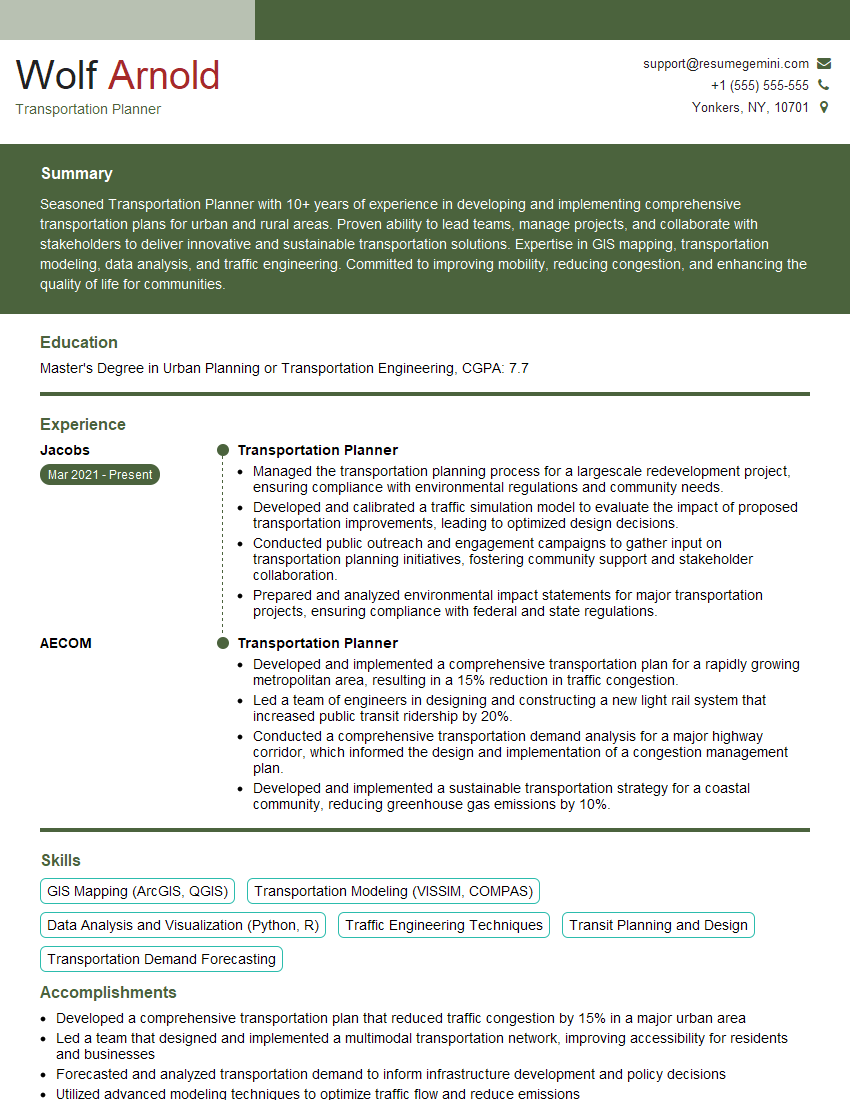
Transportation Planner Resume Sample
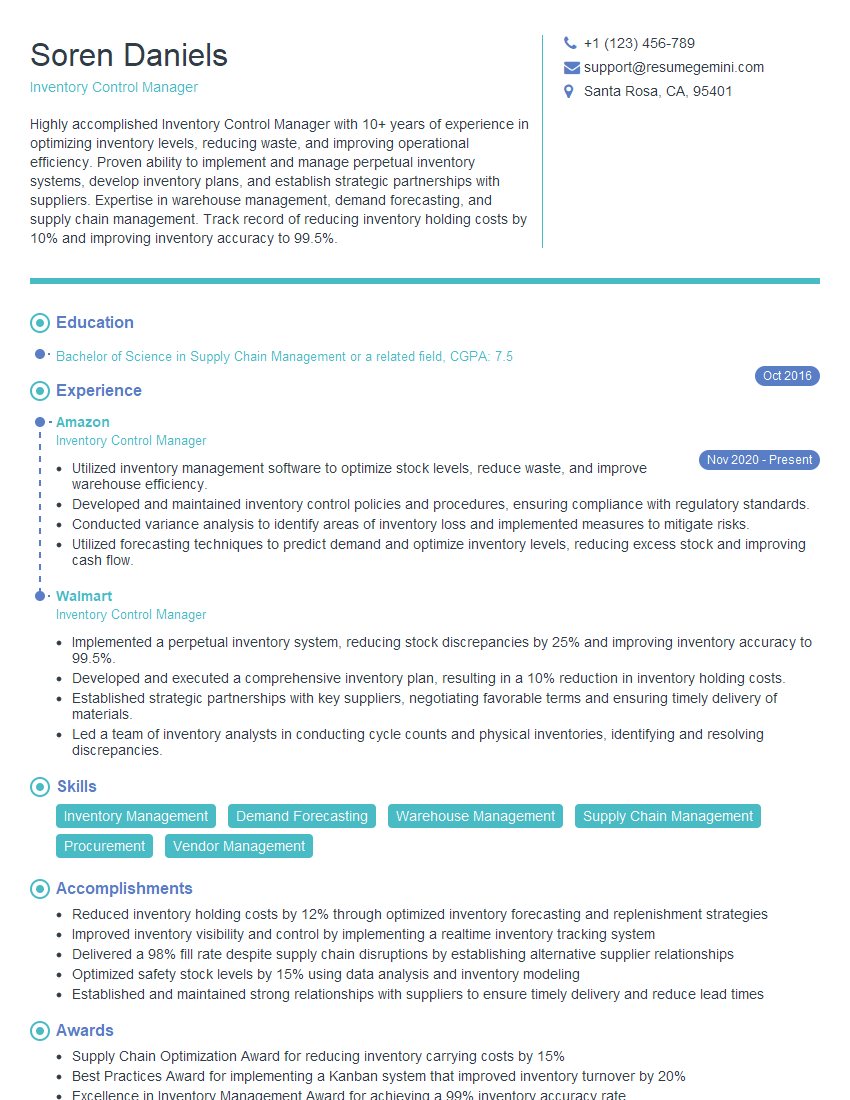
Inventory Control Manager Resume Sample
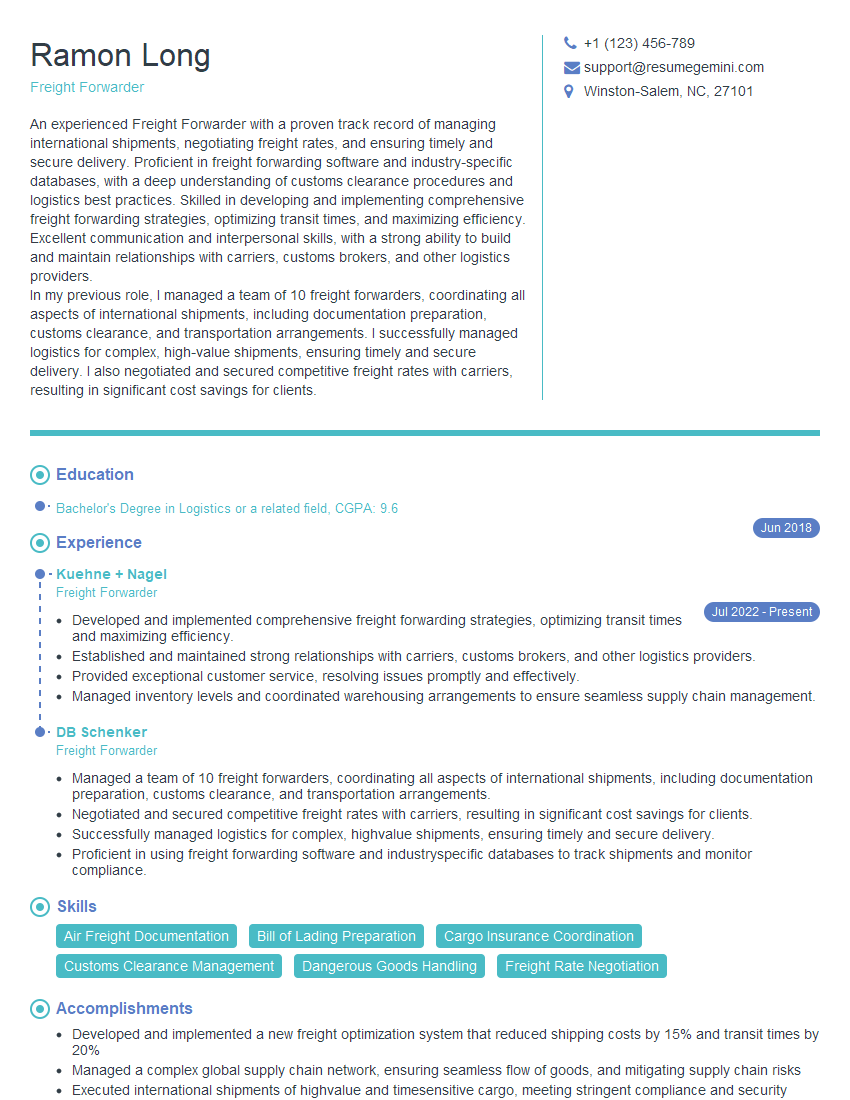
Freight Forwarder Resume Sample
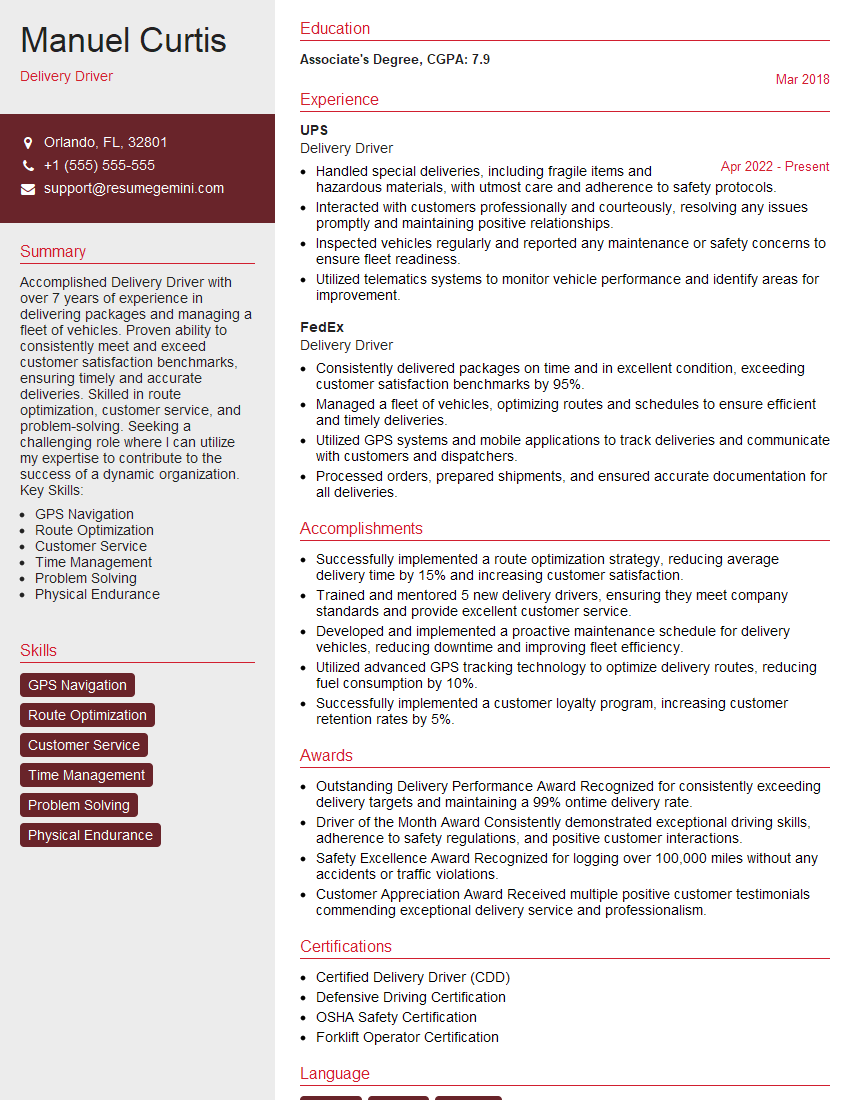
Delivery Driver Resume Sample
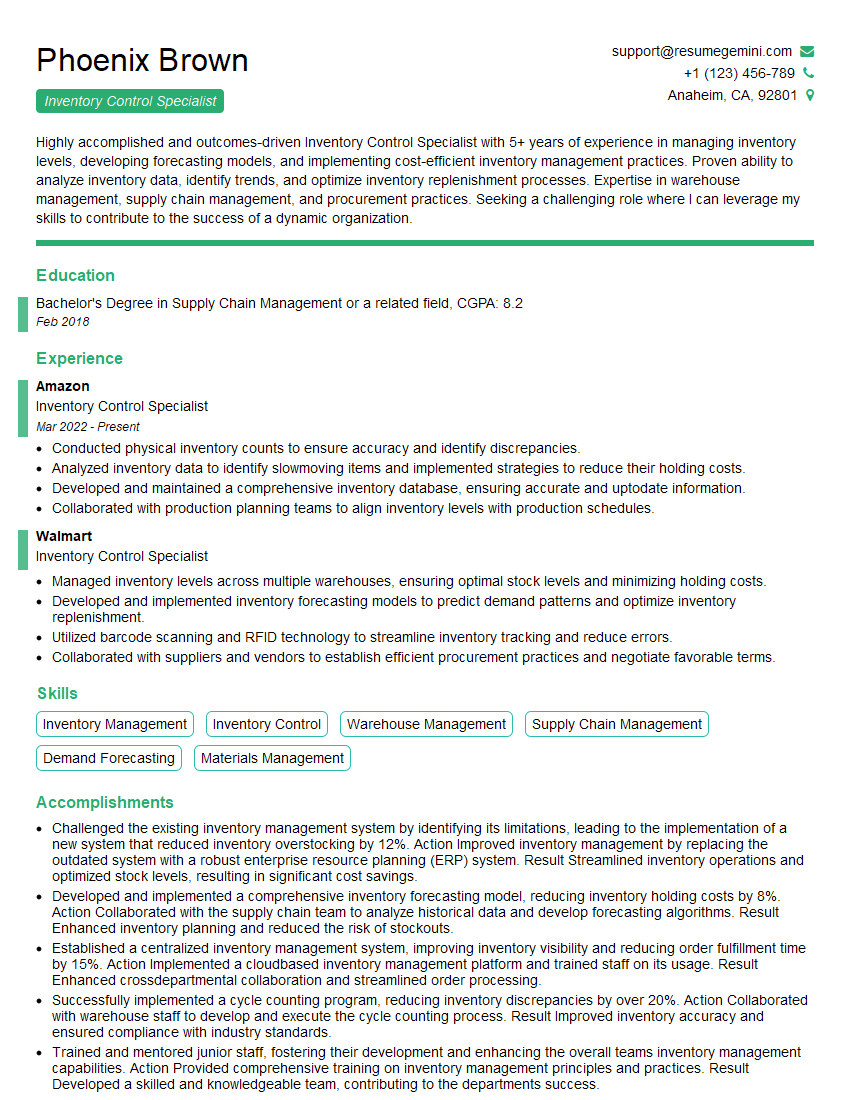
Inventory Control Specialist Resume Sample

Shipping and Receiving Clerk Resume Sample
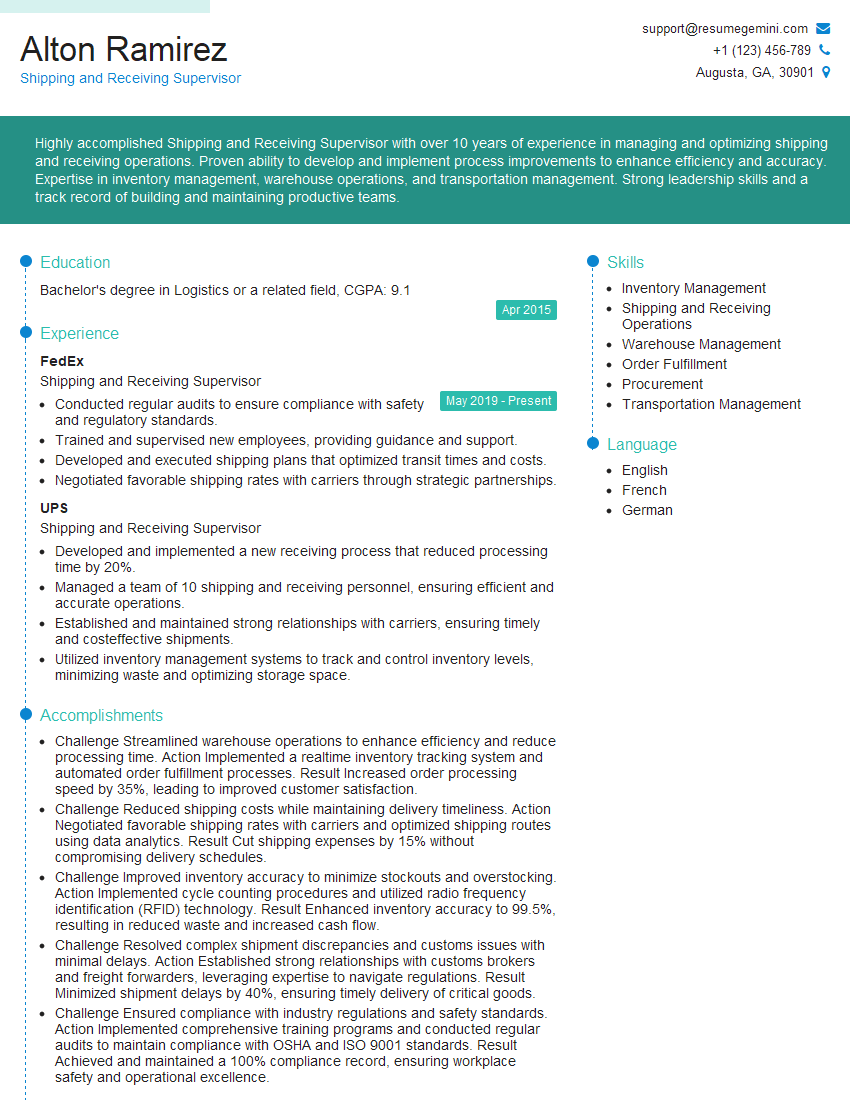
Shipping and Receiving Supervisor Resume Sample
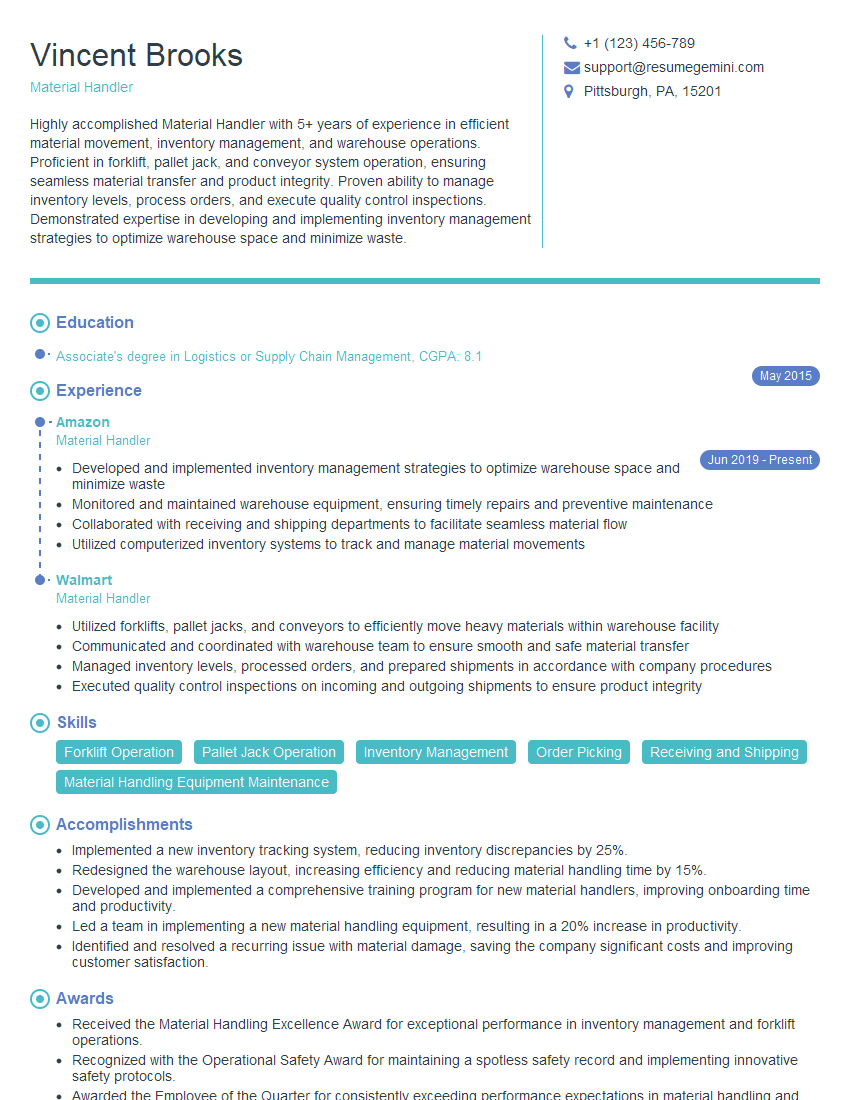
Material Handler Resume Sample
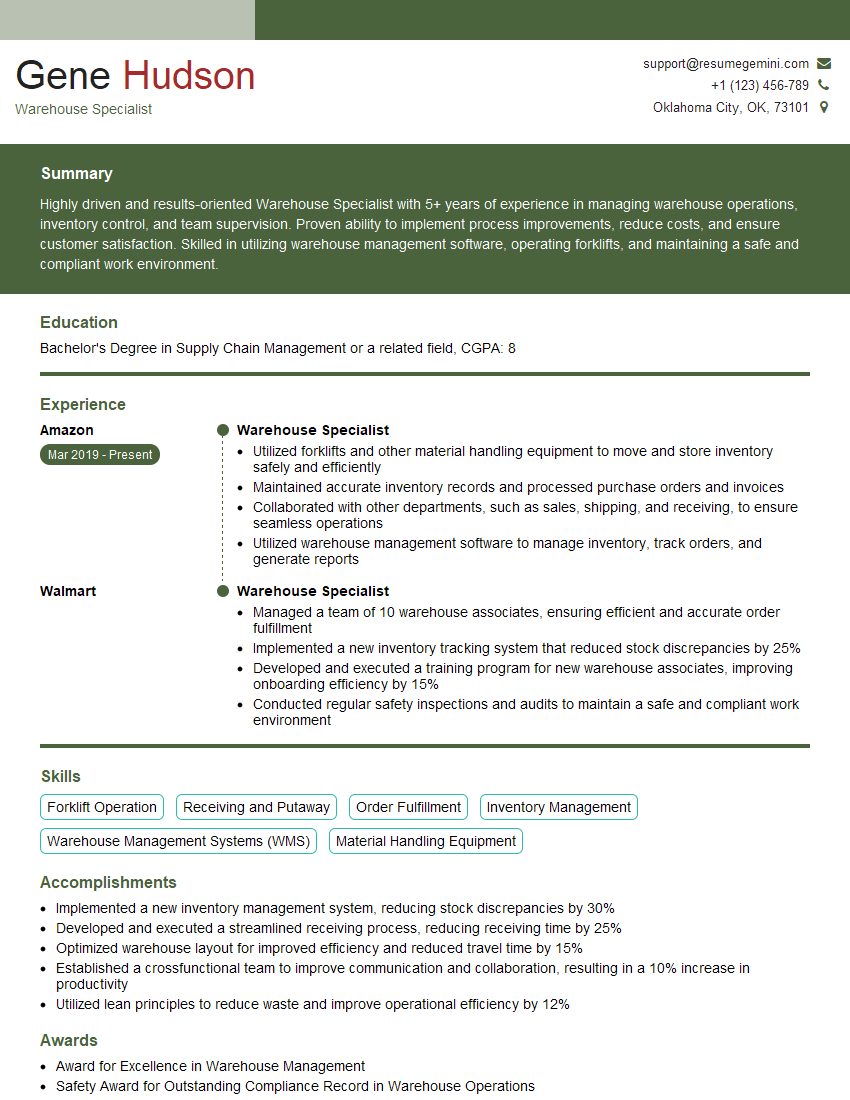
Warehouse Specialist Resume Sample
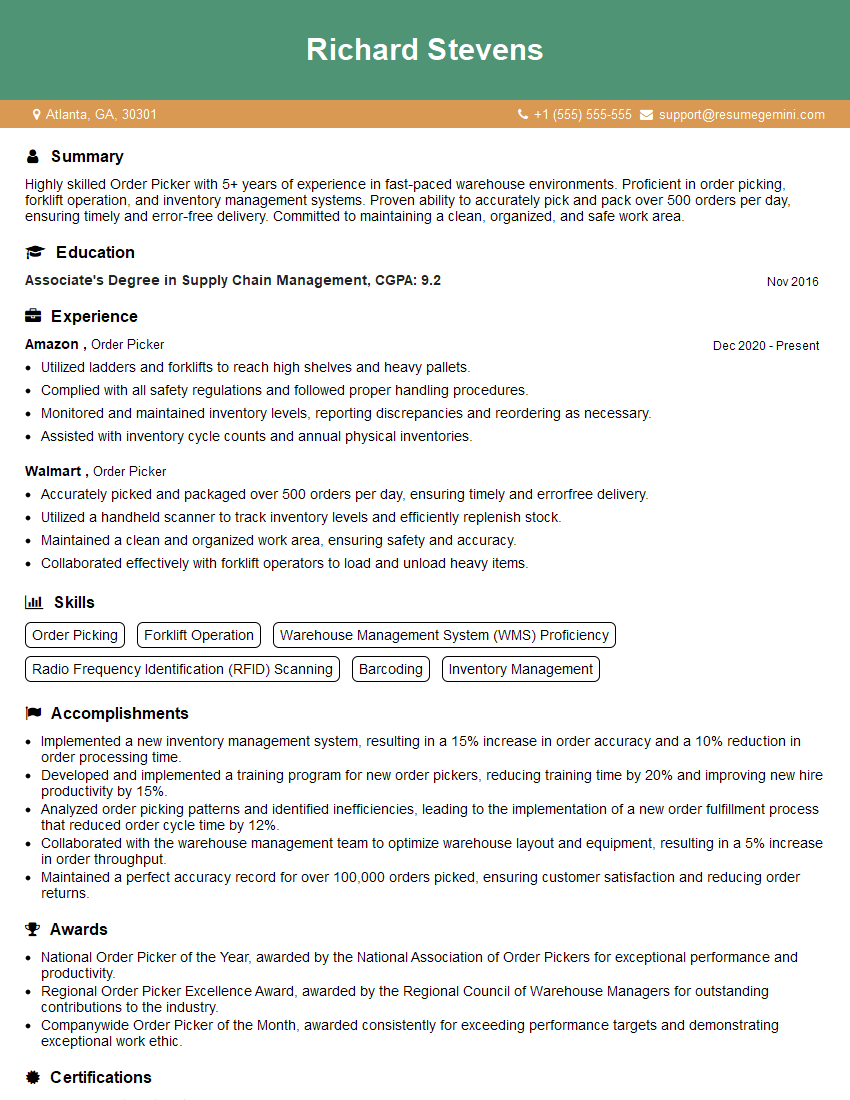
Order Picker Resume Sample
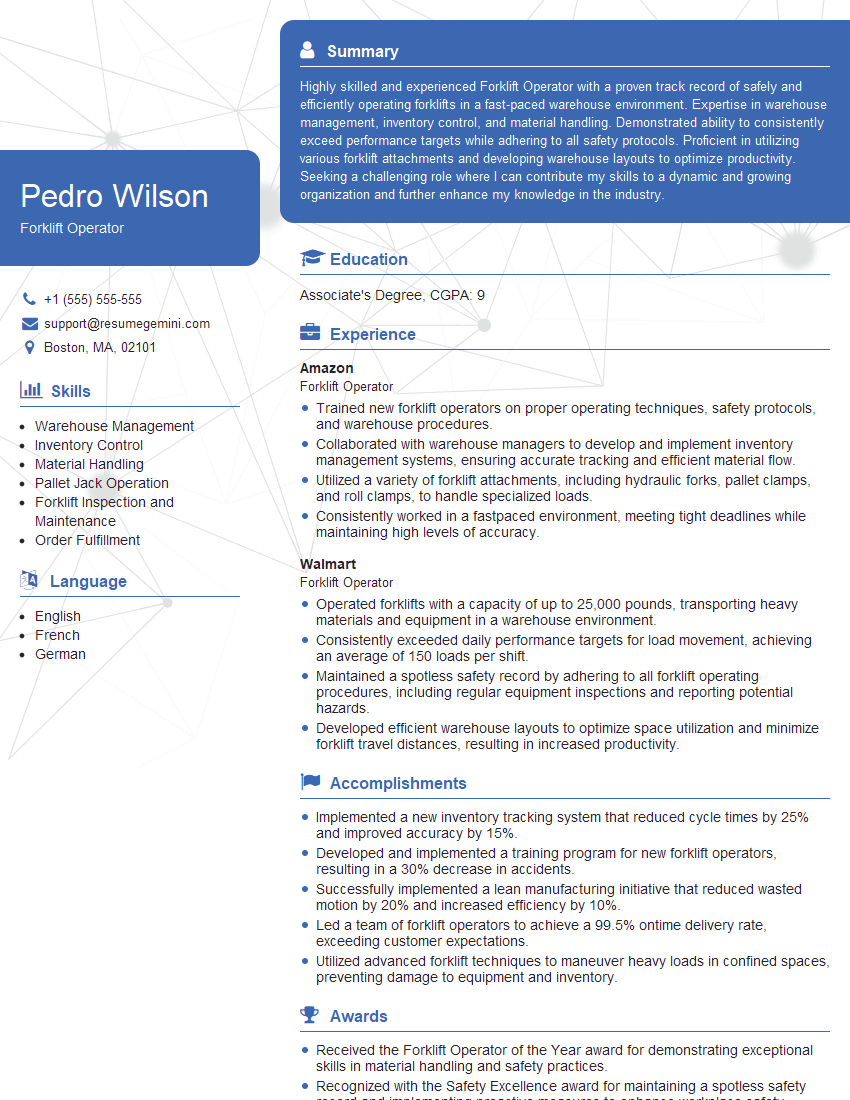
Forklift Operator Resume Sample
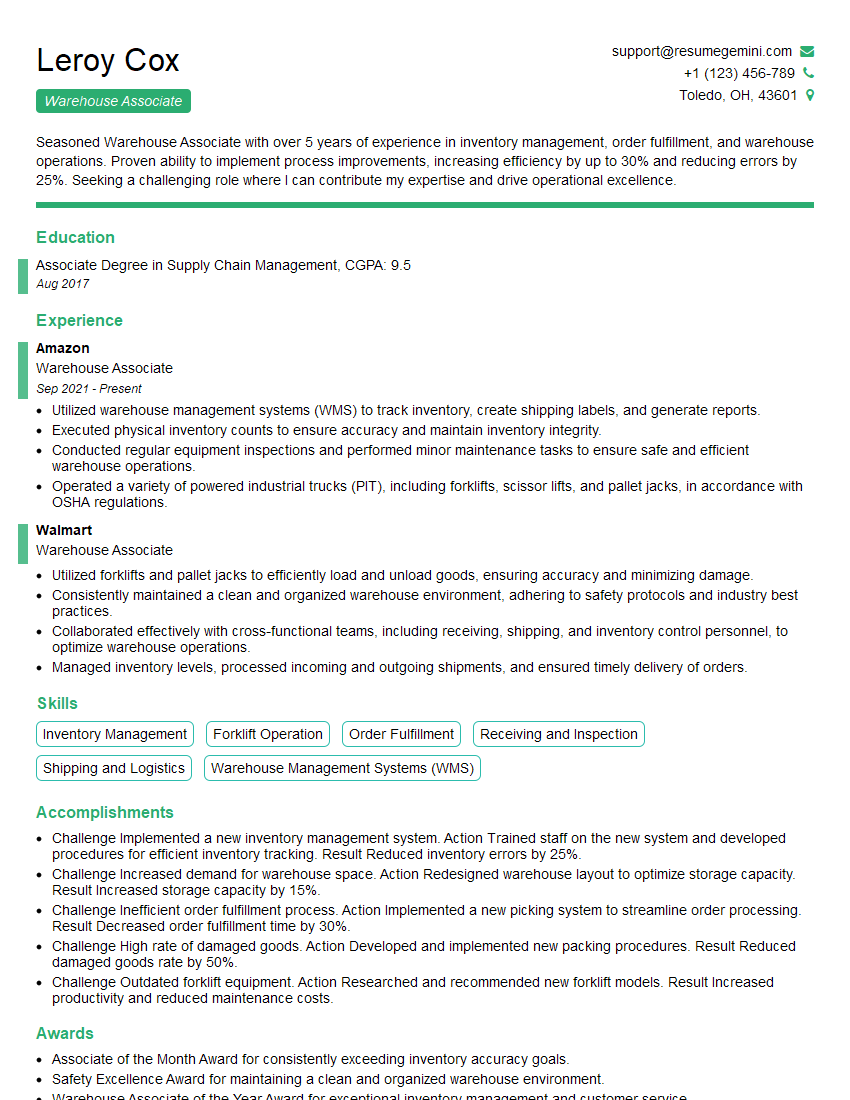
Warehouse Associate Resume Sample
- Supply Chain Manager
- Distribution Center Manager
- Logistics Manager
- Transportation Manager
- Warehouse Manager
- Dispatch Manager
- Warehouse Supervisor
- Logistics Coordinator
- Supply Chain Analyst
- Customs Broker
- Transportation Planner
- Inventory Control Manager
- Freight Forwarder
- Delivery Driver
- Inventory Control Specialist
- Shipping and Receiving Clerk
- Shipping and Receiving Supervisor
- Material Handler
- Warehouse Specialist
- Order Picker
- Forklift Operator
- Warehouse Associate
Explore more articles
Users Rating of Our Blogs
Share Your Experience
We value your feedback! Please rate our content and share your thoughts (optional).
What Readers Say About Our Blog
I Redesigned Spongebob Squarepants and his main characters of my artwork.
https://www.deviantart.com/reimaginesponge/art/Redesigned-Spongebob-characters-1223583608
IT gave me an insight and words to use and be able to think of examples
Hi, I’m Jay, we have a few potential clients that are interested in your services, thought you might be a good fit. I’d love to talk about the details, when do you have time to talk?
Best,
Jay
Founder | CEO