Cracking a skill-specific interview, like one for Material Safety, requires understanding the nuances of the role. In this blog, we present the questions you’re most likely to encounter, along with insights into how to answer them effectively. Let’s ensure you’re ready to make a strong impression.
Questions Asked in Material Safety Interview
Q 1. Explain the hierarchy of hazard controls.
The hierarchy of hazard controls is a prioritized approach to eliminating or minimizing workplace hazards. It’s based on the principle of eliminating hazards at the source whenever possible, progressing to less effective controls only when elimination isn’t feasible. The hierarchy generally follows this order:
- Elimination: This is the most effective control. It involves completely removing the hazard from the workplace. For example, replacing a hazardous chemical with a less hazardous alternative.
- Substitution: Replacing a hazardous material or process with a less hazardous one. This could involve using a less toxic cleaning solvent or substituting manual handling with automated systems.
- Engineering Controls: Implementing physical changes to the workplace to minimize hazard exposure. Examples include installing machine guards, using ventilation systems to remove airborne contaminants, or providing enclosed work areas.
- Administrative Controls: These are procedural controls that modify how work is performed to reduce exposure. This might involve implementing work permits, establishing safe work procedures, providing training, or implementing job rotation to limit exposure time.
- Personal Protective Equipment (PPE): This is the last line of defense. PPE includes items like gloves, safety glasses, respirators, and hearing protection. It’s crucial to remember that PPE should only be used when other controls are not feasible or sufficient, as it protects the worker, not the hazard itself.
Think of it like a ladder: you always try to climb down to the most effective control method before resorting to the less effective ones at the bottom. Starting with PPE without considering the other levels is like trying to extinguish a house fire with a cup of water instead of calling the fire department – ultimately ineffective and potentially dangerous.
Q 2. Describe your experience with Material Safety Data Sheets (MSDS).
I have extensive experience working with Material Safety Data Sheets (MSDS), now commonly referred to as Safety Data Sheets (SDS). In my previous roles, I was responsible for reviewing, interpreting, and managing SDS for a wide range of chemicals and materials. My responsibilities included:
- SDS Review and Update: Ensuring SDSs were current, accurate, and compliant with all applicable regulations (e.g., OSHA’s Hazard Communication Standard).
- SDS Distribution: Making sure employees had access to the relevant SDS for materials they handled.
- Training and Education: Conducting training sessions to teach employees how to read and interpret SDS information and how to use it to work safely.
- Hazard Communication Program: Integrating SDS information into our comprehensive hazard communication program, ensuring clear communication of chemical hazards to all personnel.
- Incident Investigation: Using SDS information to help determine the root cause of incidents and implement preventative measures.
I’m proficient in identifying key sections of an SDS, including the identification of hazards, first aid measures, handling and storage, and personal protective equipment recommendations. I understand the importance of using this information to establish appropriate safety procedures and mitigate potential risks.
Q 3. How do you conduct a risk assessment?
Conducting a thorough risk assessment is crucial for preventing workplace accidents. My approach typically involves these steps:
- Hazard Identification: Identifying all potential hazards present in the workplace. This involves walkthroughs, reviewing incident reports, talking to employees, and consulting relevant documentation like SDSs.
- Risk Evaluation: Assessing the likelihood and severity of each identified hazard. This often involves a qualitative or quantitative risk matrix, weighing the probability of an incident occurring against the potential consequences.
- Risk Control Measures: Determining appropriate control measures based on the hierarchy of hazard controls (discussed in question 1). This is where we determine the most effective way to eliminate, substitute, engineer, administratively control, or use PPE to mitigate identified risks.
- Implementation and Monitoring: Putting the chosen control measures into practice and regularly monitoring their effectiveness. This includes periodic reviews, inspections, and audits to ensure controls remain effective.
- Documentation: Thoroughly documenting the entire risk assessment process, including identified hazards, risk levels, control measures, and monitoring activities. This documentation is vital for accountability, auditing, and continuous improvement.
For example, in a construction site, a risk assessment might identify the hazard of falling objects. The evaluation would consider the likelihood of such an incident and the potential injuries. Control measures might include using safety harnesses, implementing exclusion zones, and ensuring proper storage of materials. Regular monitoring ensures these measures remain effective and updated as the project progresses.
Q 4. What are the key components of a safety program?
A comprehensive safety program is multifaceted and should include:
- Hazard Identification and Risk Assessment: A systematic process for identifying potential hazards and evaluating the associated risks.
- Hazard Control Measures: Implementation of the hierarchy of controls to mitigate identified risks.
- Training and Education: Providing employees with the necessary knowledge and skills to work safely.
- Emergency Response Plan: A detailed plan for handling emergencies, including evacuation procedures, first aid, and communication protocols.
- Personal Protective Equipment (PPE) Program: Selecting, providing, and maintaining appropriate PPE.
- Incident Investigation and Reporting: A system for investigating accidents, near misses, and incidents to determine root causes and implement corrective actions.
- Safety Audits and Inspections: Regular inspections and audits to ensure compliance with safety standards and procedures.
- Communication and Consultation: Effective communication of safety information to employees and consultation with employees on safety matters.
- Record Keeping: Maintaining accurate records of safety performance, training, inspections, and incidents.
Each component is crucial, and their effectiveness relies on their integration into a cohesive system. A strong safety program is a continuous improvement cycle, regularly adapting to changing circumstances and new information.
Q 5. Explain your understanding of OSHA regulations (or relevant local regulations).
My understanding of OSHA regulations (Occupational Safety and Health Administration – US based, but analogous regulations exist globally) is extensive. I am familiar with key standards, including:
- Hazard Communication Standard (29 CFR 1910.1200): This standard mandates the identification, classification, and communication of chemical hazards in the workplace, including the use and proper handling of SDSs.
- Personal Protective Equipment (PPE) Standard (29 CFR 1910.132): This outlines requirements for the selection, use, and maintenance of PPE.
- Lockout/Tagout Standard (29 CFR 1910.147): This standard details procedures for controlling hazardous energy sources during maintenance and repair.
- Machine Guarding Standard (29 CFR 1910.212): This covers requirements for safeguarding machines to prevent injuries.
- Emergency Action Plan (EAP) (29 CFR 1910.38): Requirements for developing and implementing a comprehensive EAP for emergencies such as fires, explosions, or natural disasters.
I understand that OSHA regulations are legally binding and non-compliance can result in significant penalties. I am committed to maintaining compliance and promoting a safety-conscious work environment by ensuring all procedures, training, and equipment adhere to all relevant standards. The specific regulations vary by jurisdiction, so I adapt my knowledge and practices to the relevant local regulations when working in different locations.
Q 6. How do you identify and mitigate workplace hazards?
Identifying and mitigating workplace hazards is a proactive and continuous process. My approach involves:
- Regular Inspections: Conducting routine inspections of the workplace to identify potential hazards and unsafe conditions. This includes visual inspections, equipment checks, and reviewing work processes.
- Employee Input: Encouraging employees to report hazards and near misses. An open communication channel builds trust and allows for early hazard detection.
- Incident Investigation: Thoroughly investigating incidents to understand their root causes and implement corrective actions to prevent recurrence. This often involves interviewing witnesses, analyzing data, and reviewing procedures.
- Training and Education: Providing employees with the training and awareness needed to identify and avoid hazards. This might involve specific training on hazardous materials, equipment operation, or safe work practices.
- Implementing Control Measures: Once hazards are identified, implementing appropriate control measures following the hierarchy of controls.
For example, if a workplace inspection reveals a poorly lit area, this is a potential hazard leading to trips and falls. The mitigation strategy might be to install better lighting (engineering control) combined with increased employee awareness (administrative control).
Q 7. Describe your experience with incident investigation and reporting.
I have substantial experience in incident investigation and reporting. My approach is systematic and aims to identify root causes rather than just assigning blame. It typically involves:
- Immediate Response: Securing the scene, providing first aid if necessary, and notifying relevant authorities.
- Data Collection: Gathering information from various sources, including witness statements, photos, videos, equipment records, and SDSs.
- Root Cause Analysis: Using techniques like the “5 Whys” or fault tree analysis to identify the underlying causes of the incident, going beyond superficial explanations.
- Corrective Actions: Developing and implementing corrective actions to prevent similar incidents from occurring in the future. This often includes procedural changes, equipment modifications, or additional training.
- Reporting and Documentation: Preparing a comprehensive report summarizing the incident, its causes, and the corrective actions taken. This report is crucial for accountability, insurance purposes, and continuous improvement initiatives.
I have successfully investigated various incidents, from minor slips and falls to more complex incidents involving machinery or hazardous materials. My focus is always on learning from past mistakes to improve safety practices and create a safer work environment for everyone.
Q 8. How familiar are you with emergency response planning and procedures?
Emergency response planning is crucial for minimizing the impact of incidents involving hazardous materials. It involves proactive measures to anticipate potential emergencies, develop detailed procedures, and train personnel to respond effectively. My experience encompasses developing and implementing comprehensive emergency response plans, including:
- Hazard Identification and Risk Assessment: Conducting thorough assessments to identify potential hazards and their associated risks, considering factors like material properties, storage conditions, and potential release scenarios.
- Emergency Procedures Development: Creating detailed, step-by-step procedures for various scenarios (e.g., chemical spills, fires, medical emergencies), ensuring they align with OSHA and other relevant regulations. These procedures include evacuation routes, communication protocols, and first aid response.
- Training and Drills: Developing and delivering training programs to familiarize personnel with emergency procedures. Regularly conducting drills to test response capabilities and identify areas for improvement. For example, we’ve conducted mock chemical spill drills using non-hazardous simulants to test the effectiveness of our containment and cleanup procedures.
- Communication and Coordination: Establishing clear communication channels and protocols to ensure effective information flow during an emergency, involving local emergency services and regulatory agencies.
- Post-Incident Analysis: Conducting thorough post-incident analyses to identify weaknesses in the response plan and implement corrective actions. This helps prevent similar incidents from occurring in the future.
Q 9. What is your experience with personal protective equipment (PPE)?
Personal Protective Equipment (PPE) selection and use is paramount in preventing workplace injuries. My expertise covers a wide range of PPE, from basic safety glasses and gloves to more specialized equipment like respirators and full-body suits. I have experience in:
- Hazard Assessment and PPE Selection: Determining the appropriate PPE based on a thorough hazard assessment. This involves considering the specific hazards present (e.g., chemical exposure, physical hazards, biological hazards) and selecting PPE that provides adequate protection. For example, when working with corrosive chemicals, selecting chemically resistant gloves and eye protection is crucial.
- PPE Training and Fit Testing: Training employees on the proper selection, donning, doffing, inspection, and maintenance of PPE. Conducting fit testing for respirators to ensure a proper seal and effective protection.
- PPE Program Management: Implementing and managing a comprehensive PPE program, including inventory management, procurement, and ensuring adequate supply of PPE. We use a barcoding system to track PPE usage and ensure timely replacement.
- Compliance and Regulations: Ensuring compliance with all relevant OSHA and industry standards related to PPE selection and use.
Q 10. How do you ensure compliance with relevant safety standards?
Ensuring compliance with safety standards is an ongoing process that requires diligence and a proactive approach. My strategy involves:
- Identifying Applicable Standards: Thoroughly identifying all applicable OSHA, ANSI, and industry-specific standards relevant to the work environment. This often involves researching and interpreting complex regulations.
- Regular Audits and Inspections: Conducting regular safety audits and inspections to identify potential non-compliances. This often involves using checklists and documented procedures to ensure thoroughness.
- Corrective Actions: Implementing timely corrective actions to address identified non-compliances, ensuring that all identified hazards are mitigated.
- Record Keeping and Documentation: Maintaining detailed records of inspections, training, and corrective actions. This documentation is crucial for demonstrating compliance during audits and investigations.
- Staying Updated on Regulations: Staying abreast of any changes or updates to relevant safety standards and regulations through professional development and industry publications.
For instance, we recently updated our chemical handling procedures to align with the latest OSHA Hazard Communication Standard, ensuring our practices remain current and compliant.
Q 11. Describe your experience with safety training and education.
Safety training and education are critical to fostering a safety-conscious culture. My experience includes:
- Needs Assessment: Conducting needs assessments to identify training gaps and develop targeted training programs that address specific hazards and risks.
- Curriculum Development: Developing engaging and effective training materials, including presentations, manuals, and videos. For example, we’ve developed interactive modules using virtual reality to simulate hazardous situations and train employees on proper responses.
- Delivery of Training: Delivering training using a variety of methods, including classroom instruction, online modules, and on-the-job training. We use a blended learning approach to cater to diverse learning styles.
- Evaluation and Assessment: Developing and administering assessments to evaluate employee understanding and competency. This might involve written tests, practical demonstrations, or scenario-based simulations.
- Documentation and Record Keeping: Maintaining thorough training records to demonstrate compliance with regulations and to track employee progress.
Q 12. How do you communicate safety information effectively to employees?
Effective communication is essential for conveying safety information clearly and concisely. My approach involves:
- Tailored Communication: Adapting communication methods to the audience. For instance, using simple language and visuals for less technically skilled employees, while employing more technical language for engineers.
- Multiple Channels: Utilizing a variety of communication channels, including safety meetings, email updates, posters, toolbox talks, and digital platforms. This ensures that the message reaches everyone.
- Interactive Sessions: Incorporating interactive sessions such as Q&A and group discussions to encourage participation and ensure understanding.
- Feedback Mechanisms: Establishing clear feedback mechanisms to encourage employees to report safety concerns or suggest improvements.
- Regular Reinforcement: Regularly reinforcing key safety messages through ongoing communication, reminders, and updates.
For example, we use short, engaging videos to communicate important safety information, and we also actively encourage employees to report near misses to prevent future incidents.
Q 13. Explain your understanding of lockout/tagout procedures.
Lockout/Tagout (LOTO) procedures are essential for preventing the unexpected release of energy during maintenance or repair activities. My understanding encompasses:
- Energy Isolation: Understanding the various types of energy (electrical, mechanical, hydraulic, pneumatic, thermal, etc.) and the methods for isolating each type.
- LOTO Procedure Development: Developing and implementing comprehensive LOTO procedures that clearly define the steps involved in isolating, locking, and tagging equipment.
- Training and Competency: Training authorized employees on the proper LOTO procedures, ensuring competency through practical demonstrations and assessments. This includes understanding the different types of locks and tags and how to properly apply them.
- Inspection and Audits: Regularly inspecting equipment to ensure that LOTO procedures are being followed correctly and conducting audits to identify areas for improvement.
- Compliance with Regulations: Ensuring compliance with OSHA’s LOTO standard (29 CFR 1910.147).
We use a system of numbered locks and tags to ensure that only authorized personnel can release the energy source during maintenance, reducing the risk of accidental starts. Regular audits and inspections ensure that the procedure is implemented effectively across all departments.
Q 14. Describe your experience with confined space entry procedures.
Confined space entry procedures are crucial for protecting workers from the hazards associated with entering confined spaces. My experience involves:
- Hazard Identification and Assessment: Conducting thorough hazard assessments before any confined space entry to identify potential hazards, including atmospheric hazards (oxygen deficiency, flammable gases), physical hazards (confined spaces, fall hazards), and other specific dangers.
- Permit-Required Confined Space Program: Developing and implementing a comprehensive permit-required confined space program that complies with OSHA’s regulations. This includes establishing procedures for atmospheric testing, ventilation, rescue plans, and emergency response.
- Atmospheric Monitoring: Using appropriate equipment to monitor the atmosphere within the confined space before and during entry to ensure a safe working environment. This often includes measuring oxygen levels, flammable gases, and toxic substances.
- Entry Procedures: Developing and implementing detailed entry procedures, including using appropriate PPE, ensuring proper communication and standby personnel, and establishing emergency rescue plans.
- Rescue Plan: Developing and maintaining a detailed rescue plan and ensuring that all personnel involved are trained on rescue techniques and procedures. We regularly conduct rescue drills to ensure readiness.
For instance, before entering a tank for maintenance, we always conduct a thorough atmospheric test and ensure that adequate ventilation is in place. A standby person is always present outside the confined space to monitor the situation and provide assistance.
Q 15. How do you handle safety violations?
Handling safety violations begins with immediate action to prevent further incidents. My approach is based on a three-pronged strategy: Investigation, Corrective Action, and Prevention.
Investigation: I thoroughly investigate each violation to understand the root cause. This involves interviewing witnesses, reviewing documentation (e.g., incident reports, training records), and assessing the work environment. For example, if a worker suffered a laceration due to improper use of a machine, I’d examine the machine’s safety guards, the worker’s training records, and any relevant safety procedures.
Corrective Action: Once the root cause is identified, I implement immediate corrective actions to rectify the situation. This might include repairing or replacing faulty equipment, providing additional training, or modifying work procedures. In the laceration example, I might add more prominent warning labels to the machine, enforce stricter adherence to lockout/tagout procedures, or provide retraining on safe machine operation.
Prevention: This is the most crucial step. After implementing corrective actions, I analyze the incident to identify preventative measures to ensure it doesn’t recur. This could involve implementing new safety protocols, improving worker training programs, or conducting regular safety inspections. In the example, we could implement a regular machine inspection program and a more robust system for reporting near misses.
Throughout this process, I ensure transparency and communicate effectively with all involved parties.
Career Expert Tips:
- Ace those interviews! Prepare effectively by reviewing the Top 50 Most Common Interview Questions on ResumeGemini.
- Navigate your job search with confidence! Explore a wide range of Career Tips on ResumeGemini. Learn about common challenges and recommendations to overcome them.
- Craft the perfect resume! Master the Art of Resume Writing with ResumeGemini’s guide. Showcase your unique qualifications and achievements effectively.
- Don’t miss out on holiday savings! Build your dream resume with ResumeGemini’s ATS optimized templates.
Q 16. Explain your experience with safety audits and inspections.
I have extensive experience conducting safety audits and inspections, leveraging both established checklists and a proactive observation approach. My process encompasses:
Planning and Preparation: Before an audit, I thoroughly review relevant safety regulations, company policies, and previous audit findings. I then develop a detailed checklist, tailored to the specific area or process being audited.
On-site Assessment: During the inspection, I meticulously assess the workplace, examining equipment, procedures, and employee practices. I look for hazards, non-compliance with regulations, and potential risks. This isn’t just about finding problems but also about understanding the ‘why’ behind them.
Documentation and Reporting: I meticulously document all findings, including observations, photographs, and any necessary measurements. My reports include detailed descriptions of deficiencies, their root causes, and recommendations for corrective actions, prioritized by severity and potential impact. I aim for reports that are clear, concise, and actionable.
Follow-up: After the audit, I ensure that corrective actions are implemented, often participating in follow-up inspections to verify effectiveness. I also integrate lessons learned into future audits and training programs. For instance, if a recurring problem is identified, we might revamp training modules or revise safety procedures.
In one instance, a thorough audit uncovered a previously unidentified electrical hazard, preventing a potentially serious incident.
Q 17. How do you manage safety data and reporting?
Managing safety data and reporting is critical for effective safety management. My approach involves a combination of systematic data collection, analysis, and reporting. This includes:
Data Collection: I utilize various methods to collect safety data, including incident reports, near-miss reports, inspection findings, and employee feedback. Digital platforms and databases are instrumental in organizing and tracking this information.
Data Analysis: I use data analysis techniques to identify trends, patterns, and root causes of incidents. This often involves creating charts, graphs, and reports to visualize the data and identify areas needing improvement. For instance, a sudden spike in hand injuries might indicate a need for additional training on the proper use of hand tools.
Reporting: I create regular safety reports, both for internal stakeholders and regulatory bodies, as required. These reports summarize safety performance, highlight key findings from data analysis, and propose strategies for continuous improvement. I focus on clear and concise communication, using visuals where appropriate.
Data Security and Confidentiality: All safety data is handled with strict adherence to confidentiality and data protection regulations.
Effective data management helps us make data-driven decisions about safety improvements, resulting in a safer and more efficient work environment.
Q 18. What are your strategies for improving workplace safety?
My strategies for improving workplace safety focus on a proactive and multi-faceted approach encompassing:
Hazard Identification and Risk Assessment: Regular hazard identification and risk assessments are paramount. This involves proactively identifying potential hazards and evaluating their associated risks. We then implement control measures to eliminate or mitigate those risks.
Employee Training and Engagement: Robust training programs are essential. I focus on providing comprehensive training on safety procedures, hazard recognition, and emergency response. Employee engagement is equally critical; I encourage workers to actively participate in safety initiatives and report hazards.
Safety Culture: A strong safety culture is fostered through open communication, regular safety meetings, and recognition programs. When everyone feels accountable for safety, it becomes a shared responsibility.
Technological Advancements: We leverage technological advancements, such as safety monitoring systems and personal protective equipment (PPE) with improved functionality, to enhance safety measures.
An example of a successful implementation is a project where we integrated a new safety management system which significantly reduced reported incidents by 25% within six months.
Q 19. Describe your experience with hazard communication programs.
Hazard communication programs are vital for ensuring employees understand and can effectively manage workplace hazards. My experience includes developing and implementing comprehensive programs compliant with OSHA’s Hazard Communication Standard (HCS). This involves:
Hazard Identification and Classification: Accurately identifying and classifying all hazardous chemicals in the workplace, according to the Globally Harmonized System of Classification and Labelling of Chemicals (GHS).
Safety Data Sheet (SDS) Management: Maintaining up-to-date SDSs for all hazardous chemicals and ensuring they are readily accessible to employees. We use a digital system for easy access and version control.
Labeling and Marking: Ensuring all containers of hazardous chemicals are properly labeled according to GHS standards.
Training Programs: Developing and delivering comprehensive training programs that educate employees on hazard identification, safe handling procedures, and emergency response measures. We conduct regular refresher courses.
Employee Communication: Maintaining ongoing communication with employees about hazardous chemicals and safety procedures through regular meetings, email updates and posters.
In a previous role, I streamlined our SDS management system, improving accessibility and reducing the risk of outdated information by 30%.
Q 20. Explain your understanding of respiratory protection programs.
Respiratory protection programs are critical in protecting workers from airborne hazards. My understanding encompasses the entire lifecycle of such a program, starting with a thorough hazard assessment to determine the need for respiratory protection. Key aspects include:
Hazard Assessment and Selection: Determining the specific respiratory hazards present, selecting appropriate respirators based on the hazards identified, and considering factors like fit testing and medical evaluations.
Fit Testing and Medical Evaluations: Ensuring that employees are properly fit-tested for their respirators and have undergone necessary medical evaluations to confirm their suitability to use respiratory protection.
Training and Use: Providing comprehensive training on proper respirator use, maintenance, and limitations. This includes covering donning, doffing, cleaning, and storage procedures. Regular refresher courses are essential.
Maintenance and Inspection: Establishing a routine inspection and maintenance program for respirators to ensure they are functioning correctly and meet safety standards.
Record Keeping: Maintaining accurate and up-to-date records of employee training, fit testing, respirator maintenance, and medical evaluations.
For example, we implemented a new respirator fit-testing program that improved the fit and comfort of respirators, leading to increased employee acceptance and usage.
Q 21. How do you handle employee complaints regarding safety?
Handling employee complaints regarding safety requires a sensitive and systematic approach. My process involves:
Immediate Action: Addressing the complaint promptly and seriously. Assuring the employee that their concerns are valued and will be thoroughly investigated.
Thorough Investigation: Conducting a thorough investigation into the complaint, interviewing the employee and any relevant witnesses, and reviewing available documentation.
Corrective Actions: Implementing necessary corrective actions to address the root cause of the complaint. This might involve modifying procedures, providing additional training, or replacing faulty equipment.
Communication and Follow-up: Communicating the investigation findings and corrective actions to the employee and other relevant parties. Following up with the employee to ensure their concerns have been adequately addressed.
Confidentiality: Maintaining employee confidentiality throughout the process. Only sharing information on a need-to-know basis.
In one instance, an employee complaint led to the discovery of a significant ergonomic issue that was promptly addressed, preventing potential musculoskeletal injuries.
Q 22. What is your experience with ergonomics and workplace design?
Ergonomics is the science of designing the workplace to fit the worker, reducing strain and improving efficiency and safety. My experience encompasses evaluating workplace layouts for optimal workflow, recommending adjustments to workstation setups (chair height, monitor placement, keyboard positioning) to minimize musculoskeletal disorders (MSDs), and conducting ergonomic assessments using tools like the Rapid Upper Limb Assessment (RULA) or Rapid Entire Body Assessment (REBA). For example, in a previous role at a manufacturing plant, we redesigned assembly lines to incorporate adjustable workbenches and reduce repetitive movements, leading to a 30% decrease in reported MSDs.
Workplace design involves integrating ergonomic principles into the overall workspace layout. This includes factors like lighting, noise levels, temperature, and the overall flow of the workplace. In one project, I worked with architects and engineers to create a new office space that maximized natural light, reduced noise pollution, and incorporated break areas to encourage movement throughout the day. This holistic approach greatly improved employee morale and productivity while mitigating risks.
Q 23. How do you ensure the safe handling and storage of hazardous materials?
Safe handling and storage of hazardous materials begins with proper labeling and identification. Each container must be clearly marked with the chemical name, hazards, and appropriate safety precautions. Storage areas should be well-ventilated, away from incompatible materials, and secured to prevent unauthorized access. We use a color-coded system to visually identify different hazard classes, and all personnel receive comprehensive training on safe handling procedures, including the use of personal protective equipment (PPE) such as gloves, respirators, and eye protection.
For example, highly flammable materials are stored in a designated, fire-resistant cabinet away from ignition sources. Reactive chemicals are segregated to prevent dangerous reactions. Inventory management systems track material usage and expiration dates to prevent the accumulation of outdated or unstable chemicals. Regular inspections are crucial to ensure compliance and identify potential hazards before incidents occur.
Q 24. Describe your experience with chemical spill response procedures.
My experience with chemical spill response follows a structured protocol, prioritizing the safety of personnel first. The initial steps involve evacuating the affected area and establishing a perimeter to prevent further exposure. We then identify the spilled substance, consulting the Safety Data Sheet (SDS) to determine the appropriate cleanup procedures and PPE required. Next, we contain the spill using absorbent materials like spill pads or booms, preventing it from spreading. Neutralization or other specialized techniques might be necessary depending on the chemical’s properties. Finally, proper disposal of contaminated materials is critical, adhering to all environmental regulations.
For instance, in a previous incident involving a hydrochloric acid spill, we used sodium bicarbonate to neutralize the acid before carefully collecting the neutralized solution and disposing of it according to the designated procedures. A thorough post-incident review helped us improve our emergency response plan and training protocols.
Q 25. What is your understanding of industrial hygiene principles?
Industrial hygiene principles focus on identifying, evaluating, and controlling workplace hazards that can affect employee health. This includes physical hazards (noise, vibration, radiation), chemical hazards (gases, vapors, dusts), and biological hazards (bacteria, viruses). My understanding encompasses using instruments like sound level meters, air samplers, and personal exposure monitors to assess worker exposure to various hazards. This data is crucial for implementing appropriate control measures, such as engineering controls (ventilation systems, isolation booths), administrative controls (work rotation, limiting exposure time), and personal protective equipment (PPE).
For example, in a factory with high noise levels, we implemented engineering controls like installing noise barriers and using quieter machinery. We also implemented administrative controls like providing hearing protection and regular hearing tests for employees. This multi-faceted approach is essential for effective industrial hygiene management.
Q 26. How do you conduct a job hazard analysis?
A job hazard analysis (JHA) is a systematic process to identify and control hazards associated with a specific job task. It involves a team-based approach, typically including employees performing the task, supervisors, and safety professionals. The process begins with a detailed description of the job task, breaking it down into individual steps. We then identify potential hazards at each step, considering physical, chemical, biological, and ergonomic risks. Next, we evaluate the severity and likelihood of each hazard. Finally, we develop and implement control measures, prioritizing elimination, substitution, engineering controls, administrative controls, and lastly, PPE.
For instance, when analyzing the task of operating a forklift, we identified hazards like collisions, falls, and exposure to exhaust fumes. The control measures implemented included driver training, regular equipment maintenance, designated traffic lanes, and the use of exhaust ventilation.
Q 27. Describe your experience with developing and implementing safety policies.
Developing and implementing safety policies requires a collaborative effort involving all stakeholders. The process begins with a thorough risk assessment to identify potential hazards within the workplace. This assessment informs the development of specific policies that address identified risks and comply with relevant regulations. Policies should be clear, concise, and easily accessible to all employees. Implementation includes providing training to ensure employees understand and follow the policies, and establishing procedures for reporting incidents and conducting investigations.
In a past role, I developed a comprehensive safety policy addressing lockout/tagout procedures for machinery maintenance. This included detailed training programs, regular inspections, and audits to ensure the policy was effectively implemented and compliance was maintained. We also developed a reporting system to track incidents and identify trends, allowing us to proactively address potential issues.
Q 28. How do you stay current with changes in safety regulations and best practices?
Staying current with changes in safety regulations and best practices is an ongoing process. I actively participate in professional organizations like the American Society of Safety Professionals (ASSP), attending conferences and workshops to learn about emerging trends and new technologies. I also subscribe to relevant industry publications and newsletters, regularly review updates from regulatory agencies such as OSHA, and utilize online resources to stay informed on changes in legislation and best practices. Furthermore, I encourage continuous learning within my team, promoting professional development opportunities and knowledge sharing.
For example, I recently completed training on the latest updates to OSHA’s hazardous waste management regulations, ensuring our procedures align with current standards and best practices. This proactive approach ensures that our safety programs remain effective and compliant.
Key Topics to Learn for Material Safety Interview
- Hazard Identification and Risk Assessment: Understanding methods for identifying potential hazards associated with materials, conducting thorough risk assessments, and implementing control measures.
- Material Safety Data Sheets (MSDS/SDS): Interpreting and applying information from SDS, including understanding hazard classifications, handling precautions, and emergency response procedures. Practical application: Explaining how to locate, interpret, and utilize SDS information in a real-world workplace scenario.
- Personal Protective Equipment (PPE): Selecting and utilizing appropriate PPE based on identified hazards. Practical application: Describing the selection process for PPE in different material handling situations and justifying your choices.
- Storage and Handling of Hazardous Materials: Understanding safe storage practices, including segregation, labeling, and appropriate containment. Practical application: Designing a safe storage plan for a specific set of hazardous materials.
- Emergency Response Procedures: Knowledge of emergency procedures in case of spills, leaks, or other incidents involving hazardous materials. Practical application: Describing the steps involved in responding to a specific hazardous material incident.
- Regulatory Compliance: Familiarity with relevant regulations and standards related to material safety (OSHA, etc.). Practical application: Explaining how to ensure compliance with relevant regulations in a workplace setting.
- Incident Investigation and Reporting: Understanding the process of investigating incidents involving hazardous materials, identifying root causes, and preparing reports. Practical application: Describing a methodical approach to investigating a workplace incident involving hazardous materials.
- Communication and Training: Effective communication of material safety information to colleagues and the importance of providing proper training. Practical application: Outlining a training program for workers handling hazardous materials.
Next Steps
Mastering Material Safety demonstrates a crucial commitment to workplace safety and significantly enhances your career prospects in various industries. A strong understanding of these principles is highly valued by employers. To increase your chances of landing your dream job, creating an ATS-friendly resume is essential. ResumeGemini is a trusted resource to help you build a professional and impactful resume that highlights your skills and experience effectively. We offer examples of resumes tailored specifically to Material Safety to help guide you. Take the next step towards your career success – build a winning resume with ResumeGemini!
Compliance Manager Resume Sample
Regulatory Compliance Officer Resume Sample
Loss Prevention Specialist Resume Sample
Environmental Specialist Resume Sample
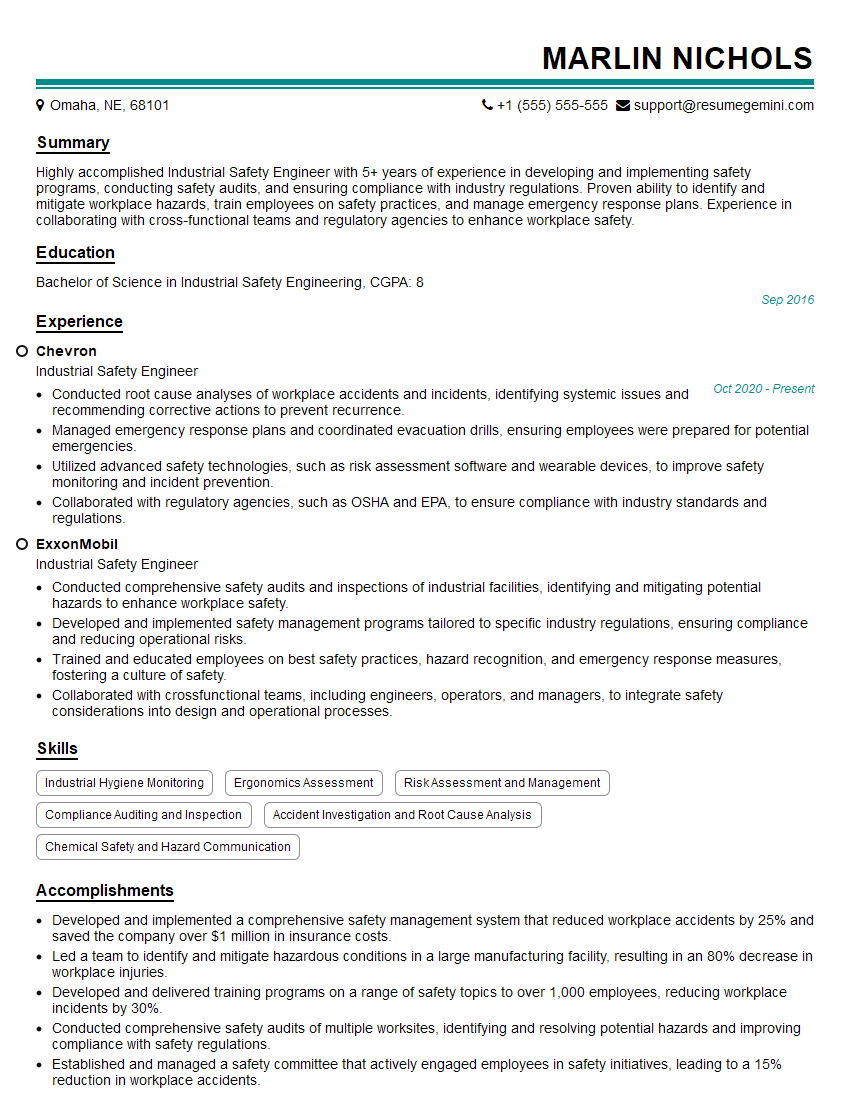
Industrial Safety Engineer Resume Sample
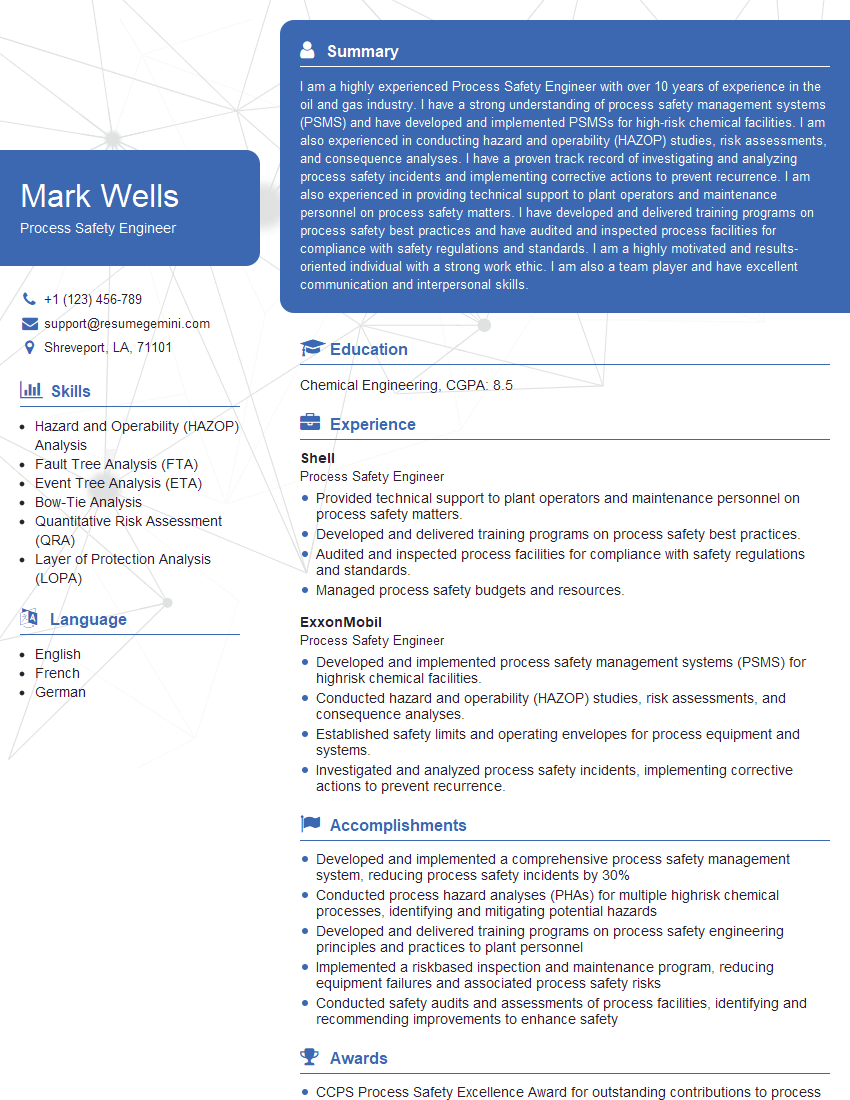
Process Safety Engineer Resume Sample
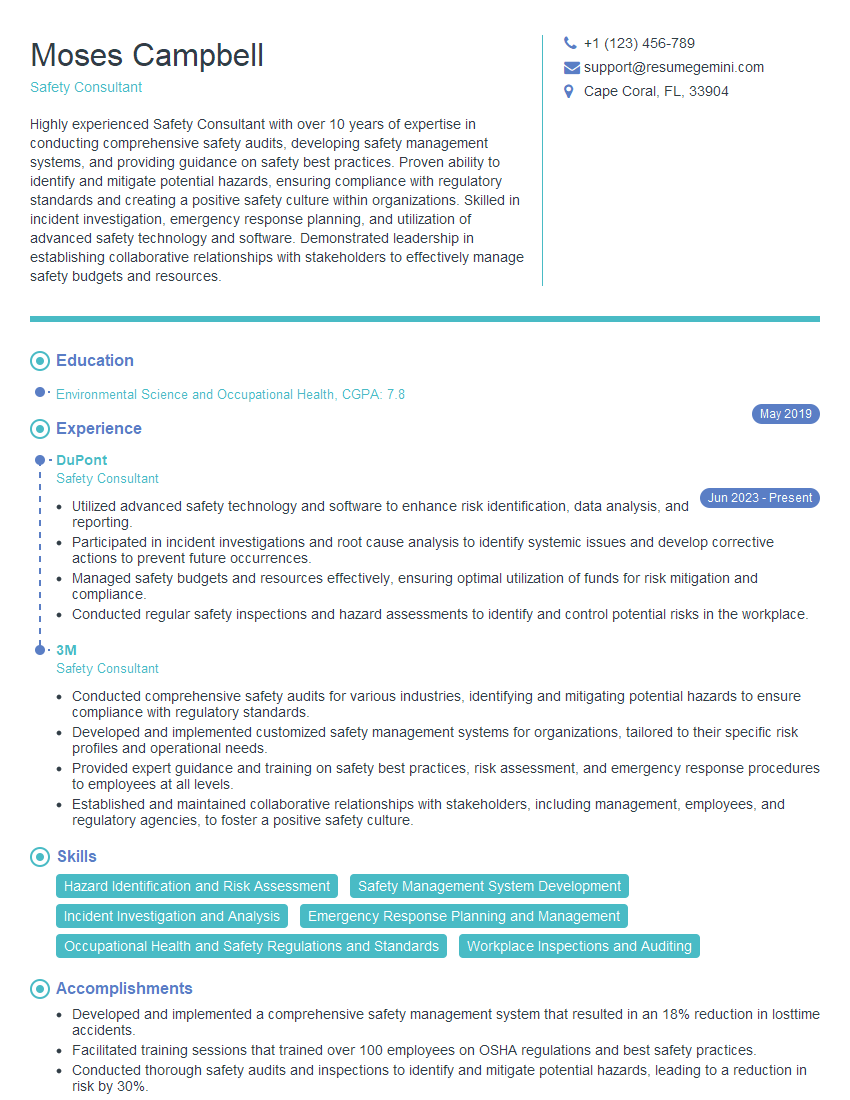
Safety Consultant Resume Sample
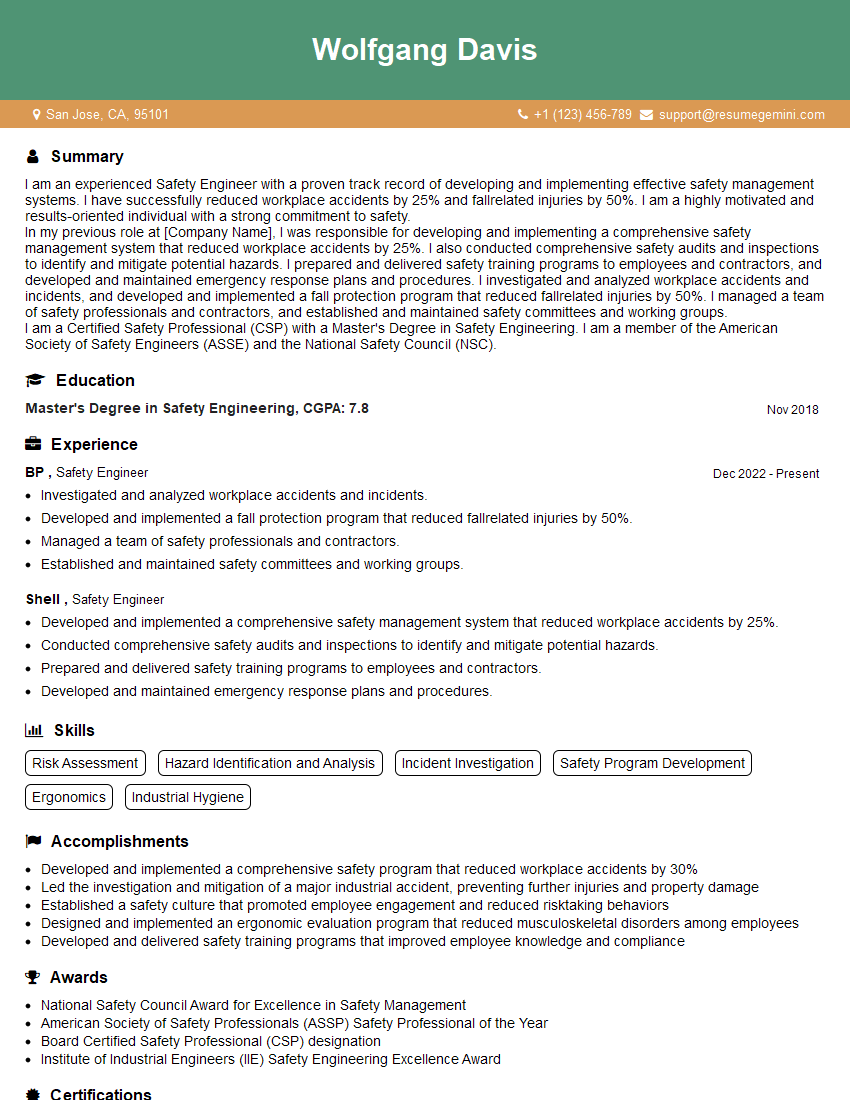
Safety Engineer Resume Sample
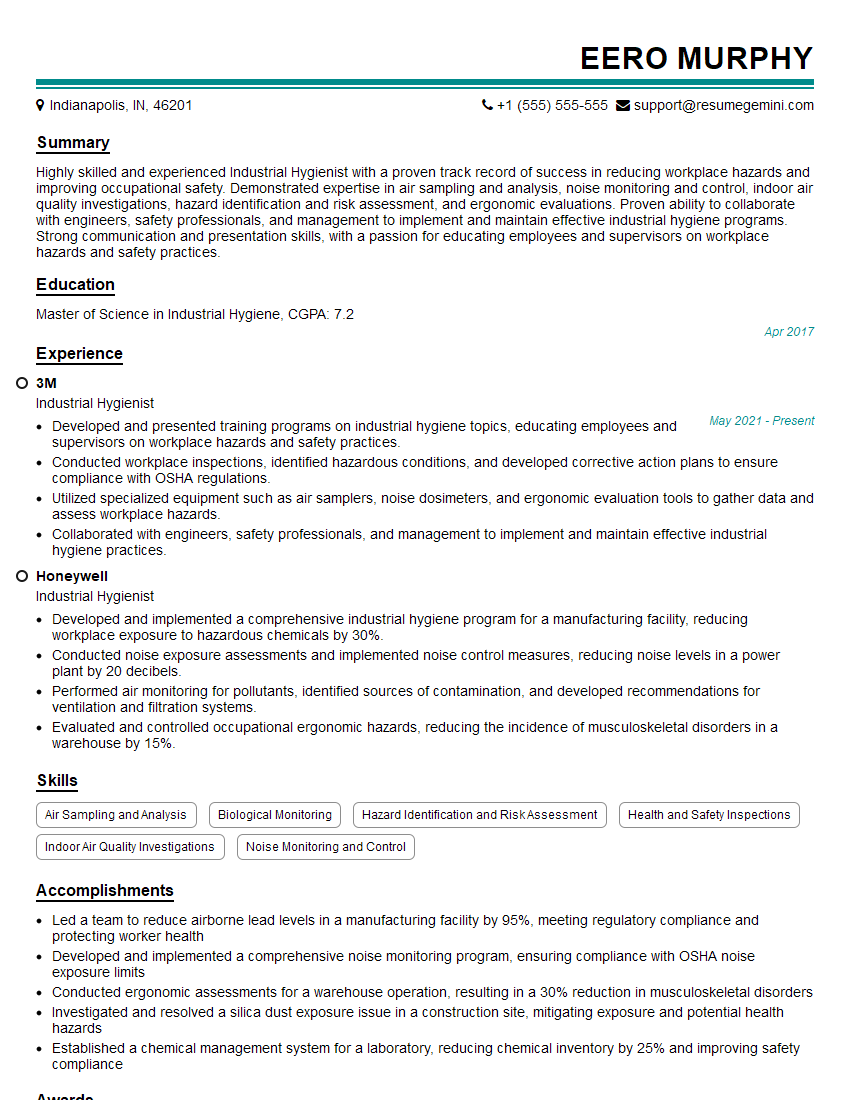
Industrial Hygienist Resume Sample
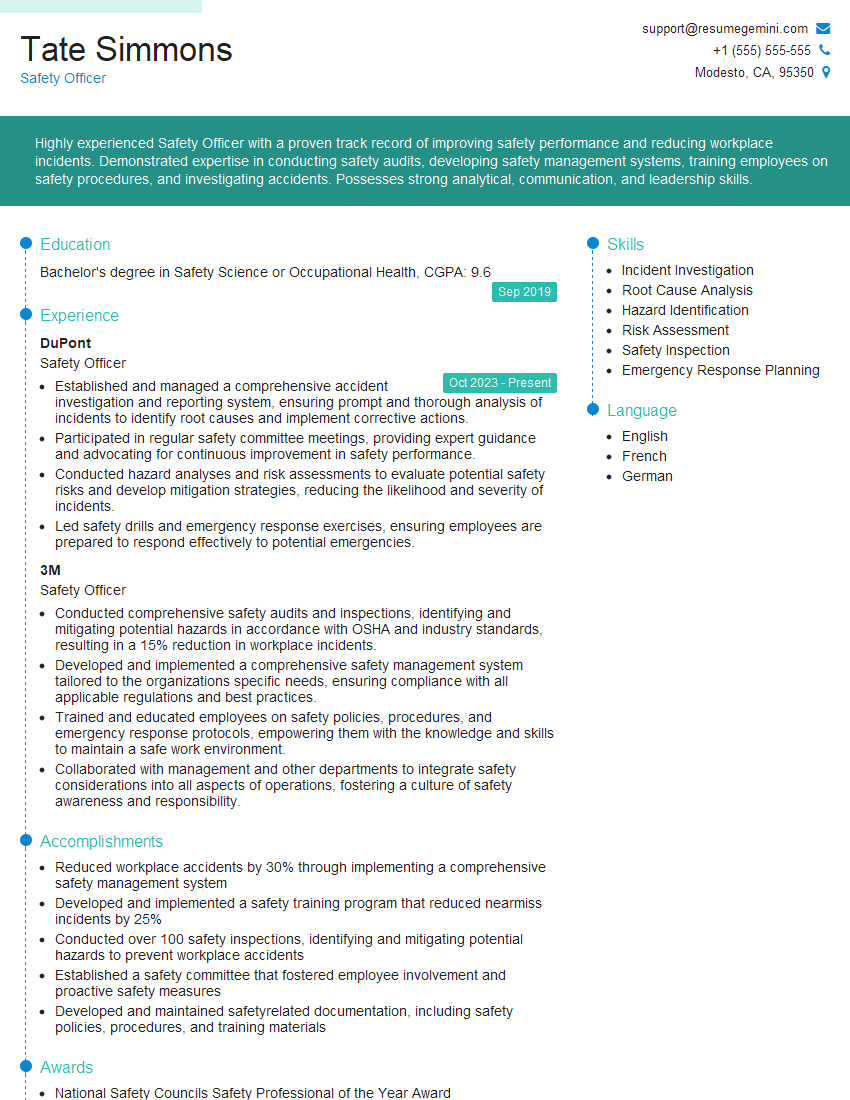
Safety Officer Resume Sample
Explore more articles
Users Rating of Our Blogs
Share Your Experience
We value your feedback! Please rate our content and share your thoughts (optional).
What Readers Say About Our Blog
Really detailed insights and content, thank you for writing this detailed article.
IT gave me an insight and words to use and be able to think of examples