Every successful interview starts with knowing what to expect. In this blog, we’ll take you through the top Material Selection and Compatibility interview questions, breaking them down with expert tips to help you deliver impactful answers. Step into your next interview fully prepared and ready to succeed.
Questions Asked in Material Selection and Compatibility Interview
Q 1. Explain the difference between tensile strength and yield strength.
Tensile strength and yield strength are both crucial mechanical properties describing a material’s resistance to deformation under tensile loading, but they represent different points on the stress-strain curve. Tensile strength represents the maximum stress a material can withstand before fracturing. Think of it as the ultimate breaking point. Yield strength, on the other hand, indicates the stress at which the material begins to deform plastically, meaning the deformation is permanent and won’t recover upon unloading. It’s the point where the material starts to yield or bend permanently. Imagine pulling on a rubber band: The tensile strength is when it finally snaps, while the yield strength is when it starts to stretch beyond its ability to return to its original shape.
For example, a high-tensile strength steel might be ideal for a bridge cable, needing to withstand enormous loads without breaking. However, a lower yield strength might indicate it’s prone to permanent deformation under stress. A material with both high tensile and yield strength is desirable in many applications.
Q 2. Describe the various types of corrosion and their prevention methods.
Corrosion is the deterioration of a material due to a chemical or electrochemical reaction with its environment. Several types exist, each with its prevention strategies:
- Uniform Corrosion: This is the most common type, where the material corrodes evenly across its surface, like the rusting of iron. Prevention involves using corrosion-resistant materials (stainless steel), protective coatings (paint, galvanizing), or cathodic protection (sacrificial anodes).
- Galvanic Corrosion: Occurs when two dissimilar metals are in electrical contact in the presence of an electrolyte (like seawater). The more active metal corrodes preferentially. Prevention involves selecting compatible metals or using insulating materials between dissimilar metals.
- Pitting Corrosion: Localized corrosion leading to the formation of small pits or holes on the surface. It’s often difficult to detect early on. Prevention includes using materials resistant to pitting or modifying the environment to reduce its aggressiveness.
- Crevice Corrosion: Concentrated corrosion within crevices or gaps where stagnant solutions can accumulate. Prevention involves designing components to avoid crevices, using gaskets and seals carefully, or employing materials resistant to crevice corrosion.
- Stress Corrosion Cracking (SCC): Cracking under the combined action of tensile stress and a corrosive environment. Prevention involves reducing stress levels, using corrosion-resistant materials, or employing stress-relieving heat treatments.
Choosing the right prevention method depends heavily on the specific application, material, and environment. For instance, a marine environment requires more robust protection than a dry, indoor setting.
Q 3. How do you select materials for high-temperature applications?
Selecting materials for high-temperature applications requires careful consideration of several factors. The primary concern is maintaining the material’s strength and stability at elevated temperatures. Creep, oxidation, and thermal shock resistance are particularly critical.
- High Melting Point: The material should have a significantly higher melting point than the operating temperature. Superalloys, ceramics, and some refractory metals are often chosen.
- Creep Resistance: Creep is time-dependent deformation at high temperatures. Materials with high creep resistance, such as superalloys reinforced with dispersed phases, are vital.
- Oxidation Resistance: High temperatures often accelerate oxidation, leading to material degradation. Protective coatings (like aluminide coatings) or inherently oxidation-resistant materials (like some ceramics) are necessary.
- Thermal Shock Resistance: The ability to withstand rapid temperature changes without fracturing. Ceramics with low thermal expansion coefficients are suitable.
For example, in gas turbine engines, nickel-based superalloys are used extensively due to their excellent high-temperature strength and oxidation resistance. The specific alloy selected would depend on the precise operating temperature and environmental conditions.
Q 4. What are the key considerations when selecting materials for biomedical implants?
Biomedical implants require materials that are biocompatible, meaning they don’t elicit adverse reactions from the body. Other critical factors include:
- Biocompatibility: The material must not cause inflammation, toxicity, or rejection by the body. Extensive testing is needed to ensure biocompatibility.
- Strength and Durability: The implant needs to withstand the mechanical stresses it will encounter in the body.
- Corrosion Resistance: Corrosion in the body can release harmful ions and compromise the implant’s integrity. Titanium alloys are frequently used because of their excellent biocompatibility and corrosion resistance.
- Sterilizability: The material should be easily sterilized without compromising its properties.
- Processability: The material must be easily manufactured into the required shape and form.
For example, titanium alloys are widely used for orthopedic implants due to their excellent combination of strength, biocompatibility, and corrosion resistance. However, the specific alloy chosen depends on the application (e.g., hip replacement vs. dental implant). Polymers like PEEK (polyetheretherketone) are also used for certain applications due to their biocompatibility and lower modulus of elasticity.
Q 5. Explain the concept of fatigue failure in materials.
Fatigue failure is the progressive and localized structural damage that occurs when a material is subjected to cyclic loading. Even stresses well below the material’s yield strength can cause fatigue failure if applied repeatedly. Imagine repeatedly bending a paper clip back and forth; eventually, it will break at a point of stress concentration, even though the force applied in each cycle is relatively small.
The process involves three stages: crack initiation (formation of microscopic cracks), crack propagation (cracks grow under continued cycling), and final fracture. Factors influencing fatigue life include the magnitude of the applied stress, the number of cycles, the material’s microstructure, surface finish, and the presence of defects. Fatigue testing is crucial to determine a material’s fatigue strength and endurance limit (the stress level below which fatigue failure won’t occur).
Understanding fatigue failure is critical in designing structures and components subjected to cyclic loads, such as aircraft wings, bridges, and engine parts. Design strategies focus on minimizing stress concentrations, improving surface finish, and using fatigue-resistant materials.
Q 6. How do you determine the compatibility of two different materials?
Determining the compatibility of two different materials involves assessing their interaction under specific conditions. Several factors need to be considered:
- Chemical Compatibility: Will the materials react chemically with each other? This might lead to corrosion, degradation, or the formation of undesirable compounds.
- Thermal Compatibility: Do the materials have similar thermal expansion coefficients? Significant differences can cause stress and potential failure due to thermal expansion mismatch.
- Mechanical Compatibility: Will there be any mechanical interaction between the materials (e.g., friction, wear)?
- Environmental Considerations: The surrounding environment can significantly influence the compatibility. For instance, moisture or high temperatures might accelerate degradation or reaction.
Methods to assess compatibility include:
- Material property analysis: Examining the chemical composition and physical properties of the materials.
- Exposure testing: Exposing the materials to simulated service conditions and analyzing the results.
- Accelerated testing: Applying more intense conditions to speed up the aging process and predict long-term behavior.
For instance, in electronics, the compatibility of different metals used in packaging is crucial. Galvanic corrosion can occur if incompatible metals are in contact.
Q 7. What are some common material testing methods?
Many material testing methods exist, categorized by the property being assessed:
- Mechanical Testing:
- Tensile Test: Measures tensile strength, yield strength, and elongation.
- Compression Test: Determines compressive strength and modulus.
- Hardness Test: Measures resistance to indentation (e.g., Brinell, Rockwell, Vickers).
- Fatigue Test: Evaluates the material’s resistance to cyclic loading.
- Impact Test: Assesses the material’s ability to absorb energy upon impact (e.g., Charpy, Izod).
- Chemical Testing:
- Chemical Analysis: Determines the material’s composition (e.g., spectroscopy, chromatography).
- Corrosion Testing: Assesses resistance to corrosion under various conditions (e.g., salt spray test, electrochemical tests).
- Physical Testing:
- Density Measurement: Determines the material’s density.
- Thermal Analysis: Measures thermal properties like melting point, glass transition temperature, and thermal expansion.
The choice of testing method depends on the specific application and the properties of interest. A combination of methods is often used to fully characterize a material.
Q 8. Describe the process of conducting a material selection based on cost and performance.
Material selection, considering both cost and performance, is a crucial aspect of engineering design. It’s not simply about choosing the cheapest option; it’s about finding the optimal balance between functionality, durability, and economic viability. This process often involves a multi-step approach.
- Define Requirements: Clearly specify the material’s necessary properties (strength, weight, corrosion resistance, etc.) and operating conditions (temperature, pressure, environment).
- Material Screening: Create a shortlist of potential materials based on the defined requirements. This often involves consulting material property databases and considering various material families (metals, polymers, ceramics, composites).
- Cost Analysis: Evaluate the cost of each material, including raw material cost, manufacturing cost, and potential lifecycle costs (maintenance, replacement). Consider factors like material availability and sourcing.
- Performance Evaluation: Analyze the performance of each shortlisted material against the defined requirements. This might involve simulations, testing, or referencing existing data. Consider factors like safety and reliability.
- Decision Making: Weigh the cost and performance data to make an informed decision. This often involves creating a cost-performance matrix to visualize the trade-offs. Sometimes, a weighted scoring system is used to quantify and compare different options.
- Verification & Validation: Prototype testing and further analysis may be necessary to verify the selected material’s performance in real-world conditions.
Example: Imagine designing a car part. Steel might be strong and relatively inexpensive but heavy. Aluminum alloys offer a lighter solution but might be more costly. A cost-performance analysis would compare the weight savings of aluminum against its higher cost to determine the optimal material choice.
Q 9. How do you interpret a stress-strain curve?
A stress-strain curve graphically represents a material’s response to applied force. The x-axis shows strain (deformation) and the y-axis shows stress (force per unit area). Understanding this curve reveals crucial material properties.
- Elastic Region: The initial linear portion. The material deforms elastically, returning to its original shape upon removal of the load. The slope of this region represents Young’s modulus (a measure of stiffness).
- Yield Point: The point where the material begins to deform plastically (permanently). The yield strength is a critical design parameter indicating the material’s resistance to permanent deformation.
- Plastic Region: The region beyond the yield point where permanent deformation occurs. The material undergoes significant changes in its microstructure.
- Ultimate Tensile Strength (UTS): The maximum stress the material can withstand before fracturing.
- Fracture Point: The point where the material breaks.
Interpreting the curve helps engineers determine:
- Material strength and stiffness
- Ductility (ability to deform plastically before fracture)
- Toughness (ability to absorb energy before fracture)
- Resilience (ability to absorb energy elastically)
Example: A steeper slope in the elastic region indicates a stiffer material (higher Young’s modulus), while a longer plastic region indicates higher ductility. A higher UTS suggests a stronger material.
Q 10. What are the advantages and disadvantages of different material joining techniques?
Various techniques exist for joining materials, each with advantages and disadvantages. The optimal choice depends on factors such as material type, required strength, cost, and aesthetics.
- Welding:
- Advantages: Strong joints, good for a wide range of materials, relatively fast.
- Disadvantages: Can cause heat damage, requires skilled operators, may produce distortion.
- Bolting/Screwing:
- Advantages: Relatively simple, easily disassembled, good for joining dissimilar materials.
- Disadvantages: Lower strength compared to welding, requires pre-drilled holes, potential for corrosion.
- Adhesives:
- Advantages: Lightweight, versatile, can bond complex shapes, good for stress-sensitive applications.
- Disadvantages: Lower strength compared to welding or bolting, susceptible to temperature and environmental effects, limited service life in extreme conditions.
- Soldering/Brazing:
- Advantages: Lower temperature compared to welding, good for joining dissimilar metals, strong joint for specific applications.
- Disadvantages: Lower strength than welding, limited applications due to filler material limitations.
Example: In automotive manufacturing, welding is commonly used for structural components due to the high strength requirements. Adhesives are preferred for joining lightweight plastic components, while bolting might be used for easily serviceable parts.
Q 11. Explain the concept of creep in materials.
Creep is the time-dependent deformation of a material under constant load and elevated temperature. Imagine a metal wire hanging under its own weight; over time, it will slowly elongate. This permanent deformation, even under a stress well below the yield strength, is creep.
The rate of creep is influenced by factors like temperature, applied stress, and material properties. At higher temperatures, the atoms in the material have more energy to move, accelerating the creep process. The creep curve typically shows three stages:
- Primary Creep: Initial, slow creep rate, work hardening (strengthening of the material) occurs.
- Secondary Creep: Constant creep rate, balance between work hardening and softening processes.
- Tertiary Creep: Accelerating creep rate, leading to fracture due to necking and micro-crack formation.
Engineering Implications: Creep can lead to component failure in high-temperature applications like gas turbines and nuclear reactors. Material selection for such applications requires careful consideration of creep resistance. Creep tests are crucial for predicting long-term performance.
Q 12. How do you select materials for applications involving cryogenic temperatures?
Selecting materials for cryogenic applications (extremely low temperatures) presents unique challenges. Materials must retain their strength, ductility, and toughness at these temperatures while exhibiting minimal brittle behavior.
Factors to consider include:
- Ductile-to-brittle transition temperature (DBTT): The temperature below which a material’s behavior changes from ductile (able to deform before fracture) to brittle (prone to sudden fracture). Materials with a DBTT below the operating temperature are preferred.
- Thermal contraction: Materials contract significantly at cryogenic temperatures, leading to potential stress and cracking. Careful consideration of thermal expansion coefficients is needed.
- Toughness: Maintaining adequate toughness at low temperatures is critical to avoid brittle fracture.
- Cryogenic embrittlement: Some materials become more brittle at cryogenic temperatures. This phenomenon needs to be carefully examined during material selection.
Common materials for cryogenic applications include: austenitic stainless steels (like 304 and 316), aluminum alloys, and some specialized nickel-based alloys. Specific selection depends on the exact temperature, operating conditions, and required mechanical properties.
Example: In liquefied natural gas (LNG) storage tanks, austenitic stainless steels are commonly used because of their excellent toughness and low DBTT.
Q 13. What are some common material degradation mechanisms?
Several mechanisms contribute to material degradation over time, compromising their performance and lifespan.
- Corrosion: Chemical or electrochemical degradation of a material due to interaction with its environment (e.g., oxidation, rusting).
- Erosion: Degradation due to wear from flowing fluids or particles.
- Fatigue: Failure due to repeated cyclical loading, even at stresses below the yield strength.
- Creep: Time-dependent deformation under constant load and elevated temperature (explained previously).
- Stress corrosion cracking (SCC): Cracking under combined stress and corrosive environment.
- Hydrogen embrittlement: Degradation of metal properties due to absorption of hydrogen.
- Radiation damage: Degradation due to exposure to ionizing radiation.
- Biological degradation: Degradation due to the action of living organisms (e.g., microbial attack on polymers).
Example: A bridge exposed to salt spray suffers corrosion. A turbine blade subjected to high-temperature and cyclic loading experiences creep and fatigue. A pipeline exposed to highly acidic environments is susceptible to stress corrosion cracking.
Q 14. How do you assess the environmental impact of material selection?
Assessing the environmental impact of material selection is crucial for sustainable engineering. It involves analyzing the entire lifecycle of the material, from extraction of raw materials to disposal or recycling.
Key considerations include:
- Embodied energy: The energy required to extract, process, and manufacture the material.
- Resource depletion: The impact on the availability of natural resources.
- Toxicity: Potential health and environmental hazards associated with material production and disposal.
- Recyclability: The ease with which the material can be recycled at the end of its service life.
- Greenhouse gas emissions: The amount of greenhouse gases released during the material’s lifecycle.
Tools and methods for assessment include: Life Cycle Assessment (LCA), material flow analysis, and environmental impact indicators.
Example: Comparing aluminum and steel for automotive parts. Aluminum has a higher embodied energy but is lighter, reducing fuel consumption over the vehicle’s lifetime. LCA can help quantify these trade-offs to make a more informed, environmentally conscious decision.
Q 15. Describe different types of polymers and their applications.
Polymers are large molecules composed of repeating structural units called monomers. Their properties vary widely depending on the type of monomer, the way the monomers are linked, and the overall structure of the polymer chain. We can categorize polymers in several ways, including by their chemical structure and their physical properties.
- Thermoplastics: These polymers soften when heated and can be repeatedly molded into different shapes. Examples include polyethylene (PE), used in plastic bags and bottles; polypropylene (PP), found in containers and fibers; and polyvinyl chloride (PVC), used in pipes and flooring. Think of them like playdough – you can repeatedly reshape them with heat.
- Thermosets: These polymers undergo irreversible chemical changes when heated, forming a rigid, cross-linked structure. Once cured, they cannot be remelted or reshaped. Examples include epoxy resins, used as adhesives and coatings; and polyester resins, used in fiberglass composites. Imagine baking a cake; once baked, you can’t unbake it.
- Elastomers: These polymers exhibit significant elasticity, returning to their original shape after deformation. Examples include natural rubber, used in tires and gloves; and synthetic rubbers like styrene-butadiene rubber (SBR), also used in tires. Think of a rubber band – it stretches and returns to its original shape.
- Other categories: Polymers can also be classified by their chemical composition (e.g., polyesters, polyamides, polycarbonates), their degree of crystallinity, and their molecular weight.
Applications span across numerous industries. Polyethylene’s low cost and flexibility make it ideal for packaging. High-strength polyamides (like nylon) find use in textiles and engineering applications. Biocompatible polymers are crucial in medical devices and implants. The choice of polymer is always dictated by the specific application requirements.
Career Expert Tips:
- Ace those interviews! Prepare effectively by reviewing the Top 50 Most Common Interview Questions on ResumeGemini.
- Navigate your job search with confidence! Explore a wide range of Career Tips on ResumeGemini. Learn about common challenges and recommendations to overcome them.
- Craft the perfect resume! Master the Art of Resume Writing with ResumeGemini’s guide. Showcase your unique qualifications and achievements effectively.
- Don’t miss out on holiday savings! Build your dream resume with ResumeGemini’s ATS optimized templates.
Q 16. Explain the concept of material selection charts and their uses.
Material selection charts are visual tools that help engineers and designers quickly identify suitable materials for a given application by comparing various material properties. They typically plot material properties against each other (e.g., strength vs. weight, stiffness vs. cost), allowing for efficient comparison of alternatives. These charts can be simple or complex, incorporating multiple criteria depending on the application’s complexity.
Uses include:
- Initial screening: Quickly eliminate unsuitable materials based on key requirements.
- Comparative analysis: Compare materials with different property combinations to find optimal choices.
- Trade-off analysis: Identify potential compromises between conflicting requirements (e.g., high strength vs. low cost).
- Material optimization: Select materials that best meet the overall design objectives.
For instance, a chart could compare the strength-to-weight ratio of various metals and polymers. A designer working on a lightweight aerospace component might use this to identify materials that offer the best balance of strength and weight reduction. Many commercial software packages incorporate these charts for efficient material selection.
Q 17. How do you select materials resistant to specific chemicals?
Selecting chemically resistant materials requires a systematic approach. It begins with identifying the specific chemicals involved, their concentrations, temperatures, and exposure durations. Material compatibility databases and chemical resistance charts are invaluable resources. These charts list various materials and their resistance to specific chemicals, often expressed as a rating scale (e.g., excellent, good, fair, poor).
The process typically involves:
- Chemical identification: Precisely identify all chemicals the material will be exposed to.
- Consultation of resources: Use material compatibility charts and databases to find suitable materials.
- Testing: Conduct laboratory tests to confirm the material’s resistance under actual operating conditions. Immersion testing, exposure testing and even accelerated aging tests can be crucial.
- Safety factors: Employ safety factors to account for uncertainties and potential variations in chemical concentrations or temperatures.
- Consideration of other properties: In addition to chemical resistance, mechanical strength, thermal stability, and cost must also be considered. Often a material with ‘good enough’ chemical resistance but far superior mechanical properties is the best choice.
For example, selecting a material for a chemical storage tank requires considering the tank’s contents, temperature, pressure, and other factors. Choosing the right material is critical to prevent corrosion, leaks, and safety hazards. Often multiple layers of materials or coatings are employed to enhance resistance.
Q 18. What are the key factors to consider when selecting materials for electronic components?
Selecting materials for electronic components demands careful consideration of several key factors, as even small variations can significantly impact performance and reliability. The electrical and thermal properties are paramount, but other factors such as mechanical strength, dimensional stability and cost play important roles.
- Electrical properties: Conductivity, resistivity, dielectric strength, and permittivity are vital considerations, depending on the component’s function. For example, a printed circuit board requires a material with low resistivity for efficient current flow.
- Thermal properties: Thermal conductivity, thermal expansion coefficient, and melting point are crucial for heat dissipation and preventing component failure due to thermal stress. High thermal conductivity materials are essential for heat sinks to prevent overheating of integrated circuits.
- Mechanical properties: Strength, stiffness, and toughness are important for structural integrity and resistance to vibration. Flexible materials might be required for certain applications, while rigidity is paramount in others.
- Chemical properties: Resistance to moisture, solvents, and other environmental factors is crucial for long-term reliability. Encapsulation materials must protect sensitive electronics from degradation.
- Cost: The overall cost of the material must be balanced against its performance characteristics.
- Processability: Ease of fabrication and assembly should also be considered.
For example, choosing the right substrate material for a microchip involves optimizing thermal conductivity (for heat dissipation), dielectric strength (for insulation), and dimensional stability (for precise device placement). A poor choice of material can lead to device malfunction or failure.
Q 19. Explain how material properties can be affected by processing techniques.
Material processing techniques significantly influence material properties. The same material can exhibit vastly different characteristics depending on how it’s processed. These techniques affect the microstructure of the material, leading to changes in its mechanical, electrical, and chemical properties.
- Heat treatment: Processes like annealing, quenching, and tempering alter the microstructure of metals, affecting their strength, hardness, and ductility. Annealing softens metals, while quenching hardens them.
- Casting: Casting methods, such as die casting and investment casting, affect the grain size and porosity of metals and alloys, influencing their strength and machinability.
- Rolling and forging: These deformation processes can align the grains in a material, leading to improvements in strength and ductility in specific directions. The degree of cold work versus hot work also creates differing effects.
- Polymer processing: Techniques like extrusion, injection molding, and blow molding affect the molecular orientation and crystallinity of polymers, altering their strength, flexibility, and transparency. Different cooling rates can change the morphology dramatically.
- Powder metallurgy: This technique allows for the creation of complex shapes and precise control over the microstructure, leading to specific material properties not easily achieved by other methods.
For example, heat treating steel changes its microstructure, transforming it from a soft, ductile state to a hard, strong state, making it suitable for applications like cutting tools. Similarly, the cooling rate during polymer injection molding influences the final product’s crystallinity and therefore, its mechanical properties.
Q 20. What are the principles of fracture mechanics?
Fracture mechanics is the field of mechanics concerned with the study of the propagation of cracks in materials. It provides a framework for understanding and predicting when and how a crack will grow, ultimately leading to fracture. The central concept is that a crack will propagate when the stress intensity factor at the crack tip exceeds a critical value.
Key principles include:
- Stress intensity factor (K): This parameter quantifies the stress field around a crack tip. It depends on the crack geometry, applied stress, and material properties.
- Fracture toughness (KIC): This material property represents the critical stress intensity factor at which a crack will begin to propagate in a brittle material. It indicates the material’s resistance to crack growth.
- Crack growth: Cracks can propagate through various mechanisms, including brittle fracture, ductile fracture, and fatigue crack growth. The mechanism depends on the material properties and loading conditions.
- Stress concentration: Stress concentration around defects, including cracks, significantly accelerates crack propagation.
- Fatigue: Repeated loading cycles can lead to crack initiation and growth, even at stresses below the material’s yield strength.
Understanding fracture mechanics is vital for designing structures and components that can withstand loads without catastrophic failure. By considering crack propagation and fracture toughness, engineers can design parts with appropriate safety factors and prevent premature failure.
Q 21. Describe different types of non-destructive testing methods.
Non-destructive testing (NDT) methods are used to evaluate the properties of a material, component, or structure without causing damage. These methods are crucial for ensuring product quality, safety, and reliability. Various techniques are available, each with its advantages and limitations.
- Visual inspection: The simplest method, involving a visual examination for surface defects.
- Liquid penetrant testing: A dye is applied to the surface, penetrating any cracks or flaws. A developer then reveals the dye, making the defects visible.
- Magnetic particle testing: A magnetic field is applied to a ferromagnetic material, and magnetic particles are sprinkled on the surface. The particles accumulate at any surface cracks, making them detectable.
- Ultrasonic testing: High-frequency sound waves are transmitted through the material, and reflections from internal flaws are detected.
- Radiographic testing (X-ray and gamma ray): Radiation is used to penetrate the material, revealing internal defects. This provides images of the internal structure.
- Eddy current testing: Electromagnetic induction is used to detect surface and near-surface flaws in conductive materials.
The choice of NDT method depends on the material, the type of defect being sought, and the accessibility of the component. For example, ultrasonic testing is effective for detecting internal flaws in metals, while liquid penetrant testing is suitable for detecting surface cracks in non-porous materials. NDT plays a vital role in quality control throughout the manufacturing process and in the inspection of in-service components to ensure continued safe operation.
Q 22. How do you handle material failures in a design?
Material failures are a serious concern in any design, and addressing them requires a systematic approach. It starts with understanding the root cause of the failure. Was it a design flaw, a manufacturing defect, or an unforeseen operating condition? A thorough failure analysis, often involving microscopic examination and material testing, is crucial.
Once the cause is identified, corrective actions can be implemented. This might involve redesigning the component using a more suitable material, modifying the manufacturing process, or altering the operating conditions to reduce stress on the part. For instance, if fatigue failure is identified in a metal component, we might consider a higher-strength alloy, a redesign to reduce stress concentrations, or surface treatments to improve fatigue resistance.
Implementing robust quality control measures throughout the design and manufacturing processes is vital to prevent future failures. This includes rigorous material testing at various stages, thorough inspection procedures, and a well-defined failure reporting and investigation process.
Q 23. What are the key considerations for material selection in aerospace applications?
Material selection in aerospace is exceptionally demanding due to the stringent safety requirements and harsh operating environments. The key considerations include:
- High Strength-to-Weight Ratio: Minimizing weight is paramount to fuel efficiency and performance. Materials like titanium alloys, aluminum alloys, and carbon fiber composites are frequently employed.
- Fatigue Resistance: Components experience repeated stress cycles during flight, demanding materials with excellent fatigue life. Careful material selection and design considerations are crucial to prevent fatigue failures.
- Creep Resistance: At high altitudes, temperatures can be extreme, causing materials to deform slowly under sustained stress (creep). Materials with high creep resistance are essential for engine components and other high-temperature applications.
- Corrosion Resistance: Aircraft are exposed to various corrosive environments, necessitating materials with excellent corrosion resistance. Coatings and protective treatments are also often applied.
- Temperature Resistance: Engine components and other parts operate at very high temperatures, demanding materials with superior high-temperature strength and oxidation resistance. Superalloys and ceramic matrix composites are often used in these critical areas.
- Cost and Availability: While performance is vital, the cost and availability of materials must also be considered. A balance must be struck between performance requirements and economic constraints.
Q 24. Explain how material selection impacts product lifecycle cost.
Material selection significantly impacts product lifecycle cost (LCC) across various stages. Choosing a more expensive material initially might seem counterintuitive, but it can ultimately reduce LCC. For example, a material with high durability and corrosion resistance might require less maintenance over its lifetime, offsetting the higher initial cost.
Initial Costs: Material purchase price, manufacturing complexity, and processing costs all contribute to initial costs. Operational Costs: These include maintenance, repairs, and potential downtime due to material failures. A more durable material reduces operational costs. Disposal Costs: The cost of safely disposing of the product at the end of its life cycle is also a factor. Environmentally friendly materials can reduce disposal costs.
By performing a thorough LCC analysis that considers all these factors, engineers can make informed decisions, selecting the most cost-effective material while ensuring performance and safety requirements are met.
Q 25. How do you balance competing material properties during selection?
Balancing competing material properties is a central challenge in material selection. Often, a material excels in one property but compromises on another. For example, high strength might come at the expense of ductility (ability to deform before breaking), or high stiffness might reduce toughness (resistance to fracture). This requires a systematic approach:
1. Prioritization: Identify the most critical properties for the application. For example, in a pressure vessel, strength and toughness might be prioritized over stiffness and weight.
2. Trade-off Analysis: Evaluate the trade-offs between competing properties. Use material property charts and databases to compare alternative materials.
3. Multi-criteria Decision Making (MCDM): Employ MCDM techniques to rank materials based on multiple criteria. These techniques allow the weighting of different properties based on their importance.
4. Design Optimization: Modify the design to mitigate the negative impact of compromising on a property. For example, a redesign might reduce stress concentrations in a component, allowing the use of a less strong but more ductile material.
The ultimate goal is to find an optimal balance that satisfies all essential requirements while minimizing compromises.
Q 26. Discuss your experience with Finite Element Analysis (FEA) in material selection.
Finite Element Analysis (FEA) is an indispensable tool in material selection. It allows engineers to simulate the behavior of a component under various loading conditions, providing valuable insights into stress, strain, and deformation. This information is crucial for selecting appropriate materials that can withstand the anticipated loads and operating conditions.
In my experience, I use FEA to validate material choices and to optimize designs. For instance, I might use FEA to compare the stress distribution in a component made of different materials (e.g., aluminum vs. steel). The results would help determine which material is better suited for the application based on stress levels and potential failure modes. FEA also helps predict fatigue life, creep behavior, and other critical material properties under realistic operating conditions.
The integration of FEA with material databases allows for a more efficient and informed material selection process. By inputting material properties directly from the database into the FEA model, the accuracy and reliability of the simulation results are enhanced.
Q 27. Describe a time you had to make a difficult material selection decision. What was the outcome?
In a previous project involving the design of a high-pressure hydraulic cylinder, I faced a challenging material selection decision. The cylinder needed to withstand extremely high pressures while maintaining a lightweight design. Initially, we considered a high-strength steel, but concerns about weight and potential fatigue issues arose. Titanium alloys offered a superior strength-to-weight ratio but were significantly more expensive.
After a thorough analysis involving FEA simulations, material property comparisons, and an LCC analysis, we opted for a high-strength aluminum alloy with specialized surface treatments to improve corrosion resistance and fatigue life. This solution provided a good balance between performance, cost, and weight. The outcome was successful; the hydraulic cylinder performed exceptionally well under pressure, exceeding the project requirements without compromising weight or budget.
Q 28. How familiar are you with different material databases and software?
I am proficient with various material databases and software, including:
- CES EduPack: A comprehensive material selection database with extensive information on material properties, processing, and environmental impact.
- Granta MI: Another powerful material selection software that allows for complex decision-making using multi-criteria analysis and life cycle assessment.
- MatWeb: A user-friendly online database containing material property data for thousands of materials.
- ANSYS and Abaqus: FEA software packages with integrated material libraries that allow for seamless integration of material data into simulations.
My familiarity with these tools allows me to efficiently search, compare, and analyze material properties, leading to informed and effective material selection decisions.
Key Topics to Learn for Material Selection and Compatibility Interview
- Material Properties & Characterization: Understanding mechanical properties (strength, ductility, elasticity), thermal properties (conductivity, expansion), chemical properties (corrosion resistance, reactivity), and electrical properties (conductivity, resistivity) and how to characterize these properties using various testing methods.
- Material Selection Criteria: Defining requirements based on application needs (e.g., cost, performance, safety, environmental impact), using selection charts and databases, and applying trade-off analysis between different material properties.
- Compatibility Considerations: Assessing material interactions (e.g., galvanic corrosion, stress corrosion cracking), understanding the effects of environmental factors (temperature, humidity, chemicals), and selecting compatible materials for different applications (e.g., biomedical implants, chemical processing equipment).
- Failure Analysis & Prevention: Investigating material failures through root cause analysis, understanding common failure mechanisms (e.g., fatigue, creep, fracture), and implementing preventive measures to ensure long-term performance and reliability.
- Material Databases & Software: Familiarity with commonly used material property databases and software for material selection and simulation.
- Sustainability and Life Cycle Assessment: Considering the environmental impact of material selection, exploring sustainable material options, and performing life cycle assessments to minimize environmental footprint.
- Case Studies & Practical Applications: Reviewing case studies demonstrating successful material selection and compatibility strategies in various engineering disciplines (e.g., aerospace, automotive, biomedical).
Next Steps
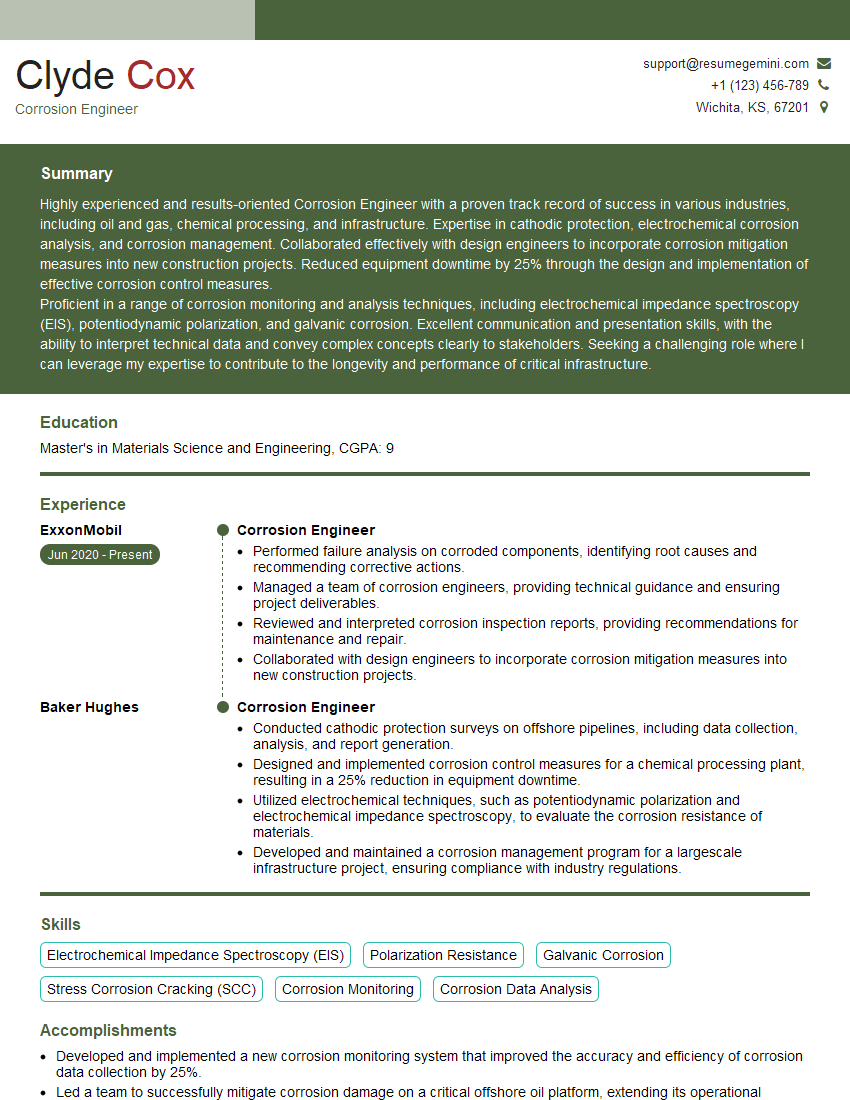
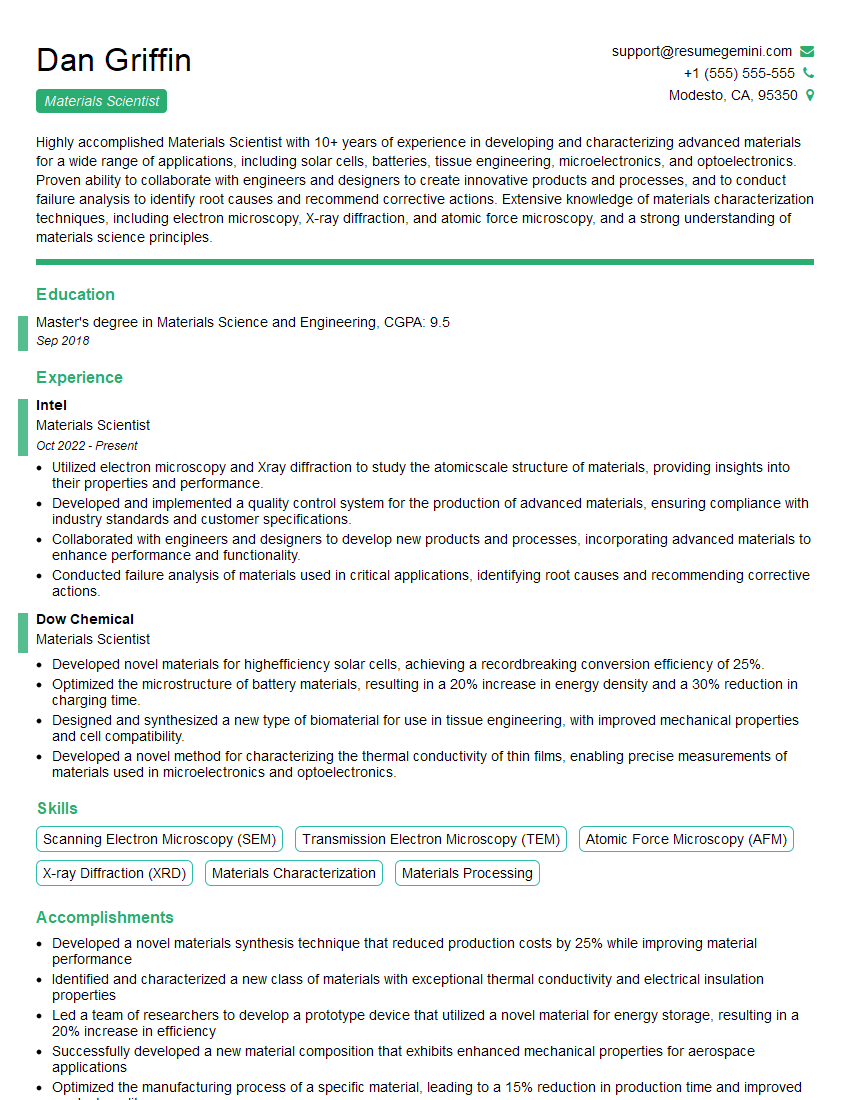
Mastering Material Selection and Compatibility is crucial for career advancement in engineering and related fields. A strong understanding of these principles opens doors to exciting opportunities and positions you as a valuable asset to any team. To maximize your job prospects, focus on crafting an ATS-friendly resume that highlights your skills and experience effectively. ResumeGemini is a trusted resource that can help you build a compelling and professional resume tailored to the specific requirements of Material Selection and Compatibility roles. Examples of resumes tailored to this field are available, enabling you to see best practices in action and build a resume that showcases your expertise. Take the next step in your career journey today!




Explore more articles
Users Rating of Our Blogs
Share Your Experience
We value your feedback! Please rate our content and share your thoughts (optional).
What Readers Say About Our Blog
Really detailed insights and content, thank you for writing this detailed article.
IT gave me an insight and words to use and be able to think of examples