The right preparation can turn an interview into an opportunity to showcase your expertise. This guide to Measurement Strategy interview questions is your ultimate resource, providing key insights and tips to help you ace your responses and stand out as a top candidate.
Questions Asked in Measurement Strategy Interview
Q 1. Explain the difference between vanity metrics and actionable metrics.
The core difference between vanity metrics and actionable metrics lies in their ability to drive decision-making. Vanity metrics are superficial numbers that might look impressive but don’t offer practical insights into performance or guide strategic improvements. Actionable metrics, on the other hand, directly reflect key business objectives and provide clear signals for adjustments and optimization.
Example: Imagine a social media campaign. A vanity metric would be the total number of impressions – it looks good but doesn’t tell you if those impressions translated into engagement or sales. An actionable metric would be the click-through rate (CTR) from the ad to the website, or even better, the conversion rate (percentage of clicks resulting in a purchase). The CTR and conversion rate directly inform decisions about ad copy, targeting, and landing page design.
- Vanity Metric: Number of website visits
- Actionable Metric: Conversion rate (percentage of visits leading to a purchase)
Focusing solely on vanity metrics can lead to misallocation of resources and a false sense of progress. A robust measurement strategy prioritizes actionable metrics aligned with specific business goals.
Q 2. Describe your experience with A/B testing and its role in measurement strategy.
A/B testing is a cornerstone of my measurement strategy. It’s a controlled experiment where two versions (A and B) of a webpage, ad, email, or other element are shown to different user segments. By analyzing the results, we can determine which version performs better based on pre-defined metrics. This data-driven approach minimizes guesswork and allows for continuous optimization.
In my previous role at [Previous Company Name], we used A/B testing to optimize our landing page. We tested different headline variations, call-to-action buttons, and image placements. Through rigorous A/B testing and statistical analysis, we saw a 25% increase in conversion rates within a month. This success demonstrated the power of data-driven decision-making.
The role of A/B testing in measurement strategy is to provide empirical evidence to validate or invalidate hypotheses about user behavior and website performance. It provides actionable insights for continuous improvement and helps to refine the overall measurement strategy by identifying the most effective elements contributing to key performance indicators.
Q 3. How do you define Key Performance Indicators (KPIs) for a new product launch?
Defining KPIs for a new product launch requires a clear understanding of the product’s goals and target audience. The chosen KPIs should directly reflect the success criteria. It’s crucial to avoid too many KPIs to maintain focus and avoid analysis paralysis. I typically use a SMART framework (Specific, Measurable, Achievable, Relevant, Time-bound) to define effective KPIs.
Example KPIs for a new SaaS product launch:
- Acquisition: Number of free trials, number of paid subscribers within the first month, cost per acquisition (CPA)
- Engagement: Average session duration, feature usage rates, daily/monthly active users (DAU/MAU)
- Monetization: Average revenue per user (ARPU), customer lifetime value (CLTV), monthly recurring revenue (MRR)
- Retention: Churn rate, customer satisfaction score (CSAT), Net Promoter Score (NPS)
The specific KPIs will vary depending on the business model and goals. For example, a freemium model might focus heavily on conversion from free to paid users, while a subscription-based model would prioritize retention and churn reduction.
Q 4. What are some common challenges in implementing a measurement strategy?
Implementing a measurement strategy presents several challenges, including:
- Data Silos: Data may be scattered across different platforms and systems, making it difficult to get a holistic view. This requires integrating data from various sources.
- Data Quality Issues: Inaccurate or incomplete data can lead to flawed conclusions. Data cleaning and validation are crucial.
- Lack of Clear Objectives: Without well-defined business objectives, it’s impossible to identify relevant metrics. Clear goals should be established before defining KPIs.
- Resource Constraints: Implementing a robust measurement strategy requires dedicated resources (time, personnel, tools).
- Resistance to Change: Some stakeholders may resist adopting new measurement practices or changing existing workflows.
Overcoming these challenges often involves cross-functional collaboration, investment in data infrastructure, and a change management process to ensure buy-in from stakeholders.
Q 5. How do you handle conflicting data from different sources?
Conflicting data from different sources is a common problem. My approach involves a structured investigation to identify the root cause of the discrepancy. This typically includes:
- Data Validation: Verify the accuracy and completeness of data from each source. Check for data entry errors, inconsistencies, and outliers.
- Source Investigation: Examine the methodology and data collection processes of each source. Identify potential biases or limitations.
- Data Reconciliation: Attempt to identify commonalities and discrepancies. Are there differences in definitions, sampling methods, or time periods?
- Data Cleaning & Transformation: Cleanse and standardize the data to ensure consistency before comparison and analysis.
- Expert Consultation: Involve relevant subject matter experts to help interpret the data and resolve inconsistencies.
Ultimately, the goal is to understand the reasons behind the conflicting data and arrive at a reconciled view that accurately reflects reality. This process may involve weighting data from more reliable sources or conducting further research to clarify uncertainties.
Q 6. What tools and technologies are you proficient in for data analysis and reporting?
I’m proficient in a range of tools and technologies for data analysis and reporting. My expertise includes:
- SQL: For querying and manipulating large datasets from relational databases.
- R & Python: For statistical analysis, data visualization, and building predictive models. I’m familiar with libraries like
pandas,numpy,ggplot2, andscikit-learn. - Data Visualization Tools: Tableau, Power BI, and Google Data Studio for creating interactive dashboards and reports.
- Google Analytics & Similar Web Analytics Platforms: For tracking website traffic and user behavior.
- Cloud-Based Data Warehouses: Snowflake, BigQuery, for storing and analyzing large-scale datasets.
My experience extends to using these tools for various tasks, from simple data exploration and reporting to building complex predictive models and automating data pipelines.
Q 7. Describe your experience with data visualization and dashboard creation.
Data visualization is critical for communicating insights effectively. I have extensive experience creating dashboards and reports that are both informative and visually appealing. My approach focuses on clarity, conciseness, and the use of appropriate chart types to effectively communicate key findings.
For instance, in a previous project, we used Tableau to create a dashboard that monitored key marketing KPIs in real-time. The dashboard allowed stakeholders to track campaign performance, identify areas for improvement, and make data-driven decisions quickly. We used a combination of bar charts, line graphs, and geographical maps to present the data in a clear and intuitive manner.
I prioritize the creation of interactive and customizable dashboards so that users can drill down into specific details and explore the data at their own pace. The goal is to empower decision-makers with the information they need to make informed decisions.
Q 8. Explain the importance of data governance in measurement strategy.
Data governance is the cornerstone of any effective measurement strategy. It’s essentially the set of policies, processes, and technologies that ensure the quality, consistency, and security of your data. Without robust data governance, your measurements are unreliable, leading to flawed insights and poor decision-making. Think of it like building a house – you wouldn’t start constructing without a solid foundation. Similarly, accurate measurement needs a strong data governance framework.
- Data Quality: Governance defines standards for data accuracy, completeness, and timeliness. For example, implementing data validation rules ensures that only correct data is entered into your systems.
- Data Security: It outlines procedures for protecting sensitive data from unauthorized access or breaches, crucial for compliance and maintaining trust.
- Data Access and Usage: It determines who can access and use specific data, preventing misuse and ensuring compliance with regulations like GDPR.
- Metadata Management: Governance dictates how data is documented and described, making it easier to understand and interpret. This is particularly important in larger organizations with diverse data sources.
For instance, in a marketing campaign, data governance ensures that customer data is handled responsibly, that campaign performance data is consistently tracked across different platforms, and that reports are accurate and reliable. Without it, you might end up with conflicting data points or misinterpret campaign success.
Q 9. How do you identify and quantify the ROI of a marketing campaign?
Quantifying the ROI of a marketing campaign involves carefully tracking key metrics and attributing conversions to specific marketing activities. It’s not simply about looking at revenue generated; it’s about understanding the efficiency of your spending.
- Define Objectives and KPIs: Start by establishing clear, measurable objectives for your campaign (e.g., increase brand awareness, drive website traffic, generate leads). Then, identify the Key Performance Indicators (KPIs) that will measure progress toward those objectives (e.g., website visits, conversion rates, cost per acquisition).
- Track Marketing Spend: Meticulously track all expenses associated with the campaign, including advertising costs, creative development, personnel time, and platform fees.
- Measure Revenue and Conversions: Monitor revenue generated directly or indirectly attributable to the campaign. This often involves using attribution models to determine which marketing touchpoints contributed most to conversions.
- Calculate ROI: Use the following formula:
ROI = (Revenue - Cost) / Cost * 100%. For example, if a campaign cost $10,000 and generated $25,000 in revenue, the ROI would be 150%. - Analyze and Refine: Analyze the results to understand which aspects of the campaign were most successful and which areas need improvement. This iterative process allows for continuous optimization.
Consider a scenario where an email marketing campaign cost $500 and generated $2000 in sales. The ROI would be 300%, indicating a highly effective campaign. However, if another campaign cost $10,000 and only generated $8,000, the ROI would be -20%, highlighting an area for improvement.
Q 10. What are some best practices for data quality assurance?
Data quality assurance (DQA) is the process of ensuring that your data is accurate, complete, consistent, and reliable. It’s a crucial step in any measurement strategy, as flawed data leads to flawed conclusions. Think of it as proofreading a crucial document before submitting it – you wouldn’t want any errors to undermine your message.
- Data Profiling: Analyze the data to understand its structure, identify missing values, and detect inconsistencies. This helps pinpoint areas needing attention.
- Data Cleansing: Correct errors, handle missing values (e.g., imputation, removal), and standardize data formats to ensure consistency. This might involve using scripting languages like Python to automate the process.
- Data Validation: Implement rules and checks to ensure that new data meets the defined quality standards. For example, using regex expressions to validate email addresses.
- Regular Audits: Periodically review data quality metrics to identify and address emerging issues. This proactive approach prevents data quality from degrading over time.
- Data Governance Policies: Establish clear policies and procedures for data handling, including data entry, storage, and updates. This ensures everyone is aligned on data quality standards.
For example, implementing a validation rule to ensure that all phone numbers conform to a specific format, or using data cleansing techniques to remove duplicate entries, significantly enhances data quality and its reliability for analysis.
Q 11. How do you communicate complex data findings to non-technical stakeholders?
Communicating complex data findings to non-technical stakeholders requires translating technical jargon into plain language and visualizing data effectively. The key is to focus on the story the data tells, not just the numbers themselves. It’s like translating a scientific paper into a compelling narrative for a general audience.
- Use Visualizations: Charts, graphs, and dashboards are powerful tools for conveying complex information concisely. Avoid overwhelming stakeholders with tables of raw data. Choose the right visualization type for your data – bar charts for comparisons, line charts for trends, etc.
- Tell a Story: Frame the data analysis as a narrative, highlighting key findings and their implications. Use simple language, avoiding technical terms whenever possible. Start with the ‘So What?’ – the key takeaway for the audience.
- Focus on the Key Message: Don’t bury your audience in detail. Identify the most important findings and present them clearly and succinctly. Prioritize information based on the audience’s needs and interests.
- Interactive Dashboards: For more involved stakeholders, interactive dashboards allow them to explore the data at their own pace, focusing on aspects that are most relevant to their roles.
- Practice Effective Communication: Rehearse your presentation to ensure a clear and confident delivery. Be prepared to answer questions in a straightforward manner.
For example, instead of saying ‘The conversion rate increased by 15% due to improved click-through rates,’ you could say ‘Our latest campaign saw a significant improvement in customer engagement, resulting in 15% more customers completing purchases.’
Q 12. Describe your experience with attribution modeling.
Attribution modeling is crucial for understanding which marketing channels and touchpoints contribute most effectively to conversions. It’s like detective work, piecing together the customer journey to identify the factors that lead to a sale or other desired outcome. There are various models, each with its strengths and weaknesses.
- Last-Click Attribution: This simple model assigns all credit to the last touchpoint before conversion. While easy to understand, it overlooks the importance of earlier interactions.
- First-Click Attribution: This attributes all credit to the first touchpoint, useful for understanding brand awareness campaigns.
- Linear Attribution: This distributes credit evenly across all touchpoints in the customer journey.
- Time Decay Attribution: This gives more weight to touchpoints closer to the conversion, reflecting the recency effect.
- Multi-touch Attribution (MTA): This complex model considers multiple touchpoints and their relative contributions, using algorithms to assign credit more accurately. Examples include Markov Chains and Shapley Value.
In my experience, I’ve utilized various attribution models depending on the campaign objectives and data availability. For example, for a brand awareness campaign, first-click attribution might be most appropriate, while for a performance-driven campaign, a multi-touch attribution model may provide a more comprehensive picture of channel effectiveness. I frequently use tools that support multi-touch attribution to gain a better understanding of the customer journey and optimize marketing spend accordingly.
Q 13. What is your approach to choosing the right analytics platform for a specific business need?
Choosing the right analytics platform depends on several factors: business needs, budget, technical expertise, data volume, and integration requirements. It’s like choosing the right tool for a job – a hammer isn’t ideal for every task.
- Define Business Needs: Clearly identify your measurement objectives and the types of data you need to collect and analyze. What key performance indicators (KPIs) are most important?
- Assess Data Volume and Velocity: Will the platform handle your current and projected data volume and processing speed?
- Consider Integrations: Does the platform integrate seamlessly with your existing marketing and CRM systems? Seamless data flow is vital.
- Evaluate Reporting and Visualization Capabilities: Will the platform generate the reports and dashboards you need to communicate insights effectively?
- Budgetary Constraints: Platforms range widely in cost, from free open-source options to expensive enterprise solutions. Align the cost with the value it brings.
- Technical Expertise: Choose a platform whose functionality and user interface align with the technical skills of your team. Ease of use is crucial for broad adoption.
For example, a small business might benefit from a user-friendly platform like Google Analytics, while a large enterprise with complex data needs might require a more robust solution like Adobe Analytics. I always recommend testing a few platforms before committing to a long-term solution to ensure it meets all the necessary requirements.
Q 14. How do you measure the effectiveness of social media marketing efforts?
Measuring the effectiveness of social media marketing requires a multi-faceted approach, tracking both engagement and conversions. It’s not enough to simply look at the number of followers; you need to understand how those followers are interacting with your content and driving business results.
- Engagement Metrics:
- Reach: How many unique users saw your content?
- Impressions: How many times was your content displayed?
- Likes, Comments, Shares: How did users interact with your posts?
- Click-Through Rates (CTR): What percentage of users clicked on links in your posts?
- Conversion Metrics:
- Website Traffic: How much traffic did your social media posts drive to your website?
- Leads Generated: How many leads were generated through social media campaigns?
- Sales: How many sales were directly attributed to social media activities?
- Customer Acquisition Cost (CAC): How much did it cost to acquire a customer through social media?
- Brand Sentiment Analysis: Monitor brand mentions and sentiment to gauge public perception of your brand.
- A/B Testing: Experiment with different types of content, posting times, and ad creatives to optimize campaign performance.
For example, you might track the click-through rate on a promotional post to see how many users visited your website to make a purchase. By analyzing these metrics across different social media platforms, you can gain a comprehensive understanding of your social media marketing effectiveness and make data-driven adjustments to optimize your strategies.
Q 15. Explain the concept of a marketing funnel and how you would measure its performance.
The marketing funnel is a visual representation of the customer journey, from initial awareness to final purchase. It typically consists of stages like Awareness, Interest, Decision, Action, and Loyalty. Measuring funnel performance requires tracking key metrics at each stage to identify bottlenecks and optimize conversions.
How I’d measure it:
- Awareness: Website traffic, social media engagement (likes, shares, comments), brand mentions, reach of marketing campaigns.
- Interest: Number of email sign-ups, content downloads, demo requests, time spent on website pages, bounce rate.
- Decision: Number of product page views, add-to-cart rate, comparison shopping activity.
- Action: Conversion rate (purchases, sign-ups, etc.), average order value, revenue generated.
- Loyalty: Customer retention rate, repeat purchase rate, customer lifetime value (CLTV), Net Promoter Score (NPS).
For example, if the conversion rate from Interest to Decision is low, we might need to improve the product descriptions or offer more compelling visuals. Analyzing each stage’s performance helps us pinpoint areas for optimization.
Career Expert Tips:
- Ace those interviews! Prepare effectively by reviewing the Top 50 Most Common Interview Questions on ResumeGemini.
- Navigate your job search with confidence! Explore a wide range of Career Tips on ResumeGemini. Learn about common challenges and recommendations to overcome them.
- Craft the perfect resume! Master the Art of Resume Writing with ResumeGemini’s guide. Showcase your unique qualifications and achievements effectively.
- Don’t miss out on holiday savings! Build your dream resume with ResumeGemini’s ATS optimized templates.
Q 16. How do you track website traffic and user behavior?
Tracking website traffic and user behavior is crucial for understanding user engagement and optimizing the website experience. This is typically achieved using a combination of tools and techniques.
- Website Analytics (e.g., Google Analytics): This provides insights into website traffic sources, user demographics, page views, bounce rates, session duration, and conversion rates. It allows us to segment users based on various characteristics and analyze their behavior.
- Heatmaps and Scroll Maps: These visualize user interaction with the website, showing where users click, scroll, and spend the most time, revealing areas of high and low engagement.
- Session Recordings: Tools like Hotjar record user sessions, allowing us to replay their interactions and understand their navigation patterns and pain points.
- A/B Testing: This involves comparing different versions of a webpage or element to determine which performs better in terms of conversion rates or user engagement.
For instance, if Google Analytics shows a high bounce rate on a specific landing page, we might examine the page content, design, or calls-to-action to improve user experience.
Q 17. What is cohort analysis and how is it useful?
Cohort analysis is a powerful technique that groups users based on shared characteristics (e.g., acquisition date, demographics, or behavior) and analyzes their behavior over time. This allows us to identify trends and patterns within specific user segments.
Usefulness:
- Understanding user lifetime value: Tracking cohort retention and revenue generation helps us understand the long-term value of different user groups.
- Identifying successful marketing campaigns: Comparing cohorts acquired through different campaigns reveals which ones are most effective in generating high-value customers.
- Optimizing product features: Analyzing cohort behavior can highlight features that resonate with specific user groups and those that are underperforming.
- Improving customer engagement: Identifying cohorts with low engagement can help us tailor interventions to improve retention.
Example: By analyzing cohorts acquired in different months, we might discover that users acquired in Q4 are more likely to make repeat purchases than those acquired in Q1. This insight could guide marketing efforts, focusing on re-engagement strategies for Q1 cohorts.
Q 18. Describe your experience with regression analysis or other statistical modeling techniques.
I have extensive experience using regression analysis and other statistical modeling techniques to analyze marketing data and predict future outcomes.
- Linear Regression: I’ve used linear regression to model the relationship between marketing spend and revenue, enabling us to optimize budget allocation and predict ROI.
- Logistic Regression: I’ve employed logistic regression to predict the probability of a customer converting (e.g., making a purchase or signing up for a newsletter) based on various factors, such as demographics and website behavior.
- Time Series Analysis: I’ve utilized time series analysis to forecast sales trends, identify seasonality, and plan for future inventory needs.
For instance, in a recent project, I used multiple linear regression to model the impact of different marketing channels (e.g., social media, email, paid search) on website conversions. The model allowed us to identify the most effective channels and optimize our marketing budget accordingly. The results were presented with clear visualizations and actionable recommendations.
Q 19. How do you identify areas for improvement based on measurement data?
Identifying areas for improvement from measurement data is an iterative process. It starts with a thorough analysis of the data, focusing on key metrics and trends.
My approach includes:
- Setting clear objectives: Defining specific, measurable, achievable, relevant, and time-bound (SMART) goals helps focus the analysis and identify areas needing improvement.
- Data visualization: Using charts and graphs to visualize data reveals trends and patterns that might be missed in raw data.
- Statistical analysis: Employing statistical tests to identify significant differences or relationships between variables can reveal causal links and areas for optimization.
- Comparative analysis: Comparing performance across different segments, time periods, or channels helps pinpoint specific areas for improvement.
- Root cause analysis: Once areas for improvement are identified, a deeper dive is required to determine the underlying causes. This might involve user interviews, surveys, or A/B testing.
For example, if the conversion rate is low on a specific landing page, we might use A/B testing to compare different versions of the page to identify improvements. If customer satisfaction scores are low, we might conduct user interviews to understand customer pain points.
Q 20. What are your strategies for handling missing data?
Missing data is a common challenge in data analysis. My strategies for handling missing data depend on the nature and extent of the missingness.
- Identifying the pattern of missing data: Understanding why data is missing (e.g., random, systematic) is crucial in choosing an appropriate strategy.
- Imputation techniques: For random missingness, I might use imputation techniques like mean/median imputation, regression imputation, or multiple imputation to fill in missing values. The choice depends on the data distribution and the potential impact on the analysis.
- Deletion techniques: If the missing data is systematic or represents a small fraction of the data, I might use listwise or pairwise deletion, removing rows or pairs with missing values. However, this can reduce statistical power.
- Data collection improvements: In future data collection efforts, I would focus on improving data capture processes to reduce missing data. This might involve better data entry procedures or more robust survey designs.
It’s important to document the method used to handle missing data and acknowledge potential biases this might introduce.
Q 21. How do you ensure the accuracy and reliability of your data analysis?
Ensuring data accuracy and reliability is paramount. My approach involves a multi-faceted strategy:
- Data validation: Thoroughly validating data at the source ensures accuracy before analysis. This involves checking for data entry errors, inconsistencies, and outliers.
- Data cleaning: Cleaning data involves handling missing values, removing duplicates, and transforming variables to ensure consistency and usability.
- Data quality checks: Implementing regular data quality checks and audits help identify and correct errors early on. This may involve comparing data sources, checking for inconsistencies, and applying appropriate data validation rules.
- Using appropriate statistical methods: Selecting statistical methods appropriate for the type of data and research question ensures reliable results. This includes considering assumptions of statistical tests and potential biases.
- Peer review and validation: Having another expert review the analysis helps identify potential errors and biases and enhances the reliability of findings.
Transparency and documentation are key. Clearly documenting data sources, cleaning methods, and analytical techniques allows others to review and verify the process and results, enhancing the credibility and reliability of the analysis.
Q 22. Describe your experience with data warehousing or data lakes.
My experience encompasses both data warehousing and data lakes, recognizing their distinct strengths and applications. Data warehouses are ideal for structured, historical data, perfect for reporting and analysis requiring consistent data definitions. I’ve worked extensively with data warehouses using technologies like Snowflake and Amazon Redshift, designing star schemas and dimensional models to efficiently retrieve insights. For example, in a previous role, we used a data warehouse to track key performance indicators (KPIs) across all marketing channels, allowing us to easily compare campaign effectiveness and identify areas for improvement.
Data lakes, conversely, are excellent for handling diverse, unstructured data, including images, videos, and sensor data. They offer the agility to explore data without rigid schemas upfront. I’ve utilized data lakes built on AWS S3 and Azure Data Lake Storage, employing techniques like data discovery and data profiling to uncover hidden patterns within semi-structured and unstructured data. For instance, a project involved analyzing customer service transcripts from a data lake to identify recurring customer pain points and improve product design. The choice between a data warehouse and a data lake, or a hybrid approach, depends heavily on the specific business needs and data characteristics.
Q 23. How do you stay up-to-date with the latest trends in data analytics and measurement?
Staying current in the dynamic field of data analytics and measurement is crucial. I employ a multi-pronged approach. Firstly, I actively participate in online communities and forums, such as those on LinkedIn and dedicated data science platforms. These offer valuable discussions, insights into new methodologies, and exposure to different perspectives. Secondly, I regularly attend webinars and conferences, both online and in-person, presented by industry experts and thought leaders. These events often provide early access to emerging trends and cutting-edge technologies. Finally, I dedicate time to continuous learning through online courses, reading industry publications like the Harvard Business Review and McKinsey Quarterly, and staying updated on research papers and white papers from reputable sources. This comprehensive approach keeps me informed about advancements in areas like AI-powered analytics, advanced attribution models, and the ethical considerations surrounding data usage.
Q 24. How would you approach measuring the success of an email marketing campaign?
Measuring email marketing campaign success requires a multifaceted approach, going beyond simple open and click-through rates. A robust strategy incorporates various metrics organized into key stages of the customer journey. We’d start by defining clear objectives – is the goal lead generation, sales conversion, or brand awareness? This informs our metric selection.
- Pre-campaign: Defining a baseline to measure improvement against.
- Delivery and Engagement: Open rate, click-through rate, bounce rate, and unique opens provide insights into email deliverability and recipient engagement.
- Conversion: Website visits from email links, form submissions, and ultimately sales or other desired actions demonstrate the campaign’s effectiveness in driving conversions. Attribution models, such as multi-touch attribution, can help accurately credit conversions to the email campaign.
- Post-campaign: Analyzing customer lifetime value (CLTV) of new customers acquired through the campaign offers a long-term perspective on ROI.
A/B testing different subject lines, email content, and call-to-actions allows for optimized campaign performance over time. Finally, comprehensive reporting with clear visualizations enables easy interpretation and identification of areas for improvement in future campaigns. For example, low click-through rates might indicate a poor subject line, while a high bounce rate might highlight issues with email list hygiene.
Q 25. What is your experience with predictive analytics?
I have significant experience with predictive analytics, applying various techniques to forecast future outcomes and optimize business decisions. My expertise spans several areas: time series forecasting (e.g., predicting future sales based on historical data), classification (e.g., identifying customers likely to churn), and regression (e.g., predicting the price of a product based on various features). I am proficient in utilizing machine learning algorithms such as linear regression, logistic regression, random forests, and gradient boosting machines. In a previous project, I employed a random forest model to predict customer purchase propensity, enabling targeted marketing campaigns with a higher return on investment. This significantly improved the efficiency of our marketing spend.
Furthermore, I understand the importance of data preparation and feature engineering in building accurate predictive models. I’m adept at cleaning, transforming, and selecting relevant features to enhance model performance. Model evaluation and selection is also crucial; techniques like cross-validation and AUC calculation help determine the best-performing models and ensure their robustness before deployment.
Q 26. How do you measure customer lifetime value (CLTV)?
Measuring Customer Lifetime Value (CLTV) is critical for understanding the long-term profitability of customers. Several methods exist, with varying levels of complexity. A simple approach is to calculate the average revenue per customer over their lifespan. This requires historical data on customer purchases and churn rate. For example, if the average customer spends $100 per year and has a lifespan of 3 years, their basic CLTV is $300.
However, more sophisticated models consider factors like customer acquisition cost (CAC), customer churn rate, and discount rate to provide a more accurate prediction. These models can incorporate cohort analysis to segment customers based on their acquisition date and behavior, providing a more granular understanding of CLTV across different customer segments. For instance, a more advanced CLTV calculation might use a discounted cash flow model, accounting for the time value of money to refine the estimate. Understanding CLTV enables informed decisions regarding customer acquisition strategies, retention programs, and resource allocation.
Q 27. Describe a time when you had to overcome a significant data challenge.
In a previous role, we faced a significant challenge with inconsistent data from multiple legacy systems. Data was siloed, with varying formats and definitions across different departments. This made it incredibly difficult to get a unified view of the customer and generate accurate reports. The challenge wasn’t just the volume of data, but the inconsistency and lack of standardization.
To overcome this, we implemented a multi-stage process. First, we conducted thorough data profiling to understand the data’s structure, identify inconsistencies, and assess data quality. This involved significant data cleaning and transformation. We then implemented a data governance framework with clear data definitions and standards to ensure consistency going forward. We also adopted a data integration strategy, leveraging ETL (Extract, Transform, Load) processes to consolidate data from various sources into a centralized data warehouse. Finally, we established a robust data quality monitoring system to identify and address data quality issues proactively. This systematic approach not only resolved the immediate data challenge but also established a foundation for more reliable and efficient data analysis in the future.
Q 28. How do you prioritize competing measurement priorities?
Prioritizing competing measurement priorities requires a structured approach that aligns with overall business objectives. I typically use a framework that considers several factors:
- Strategic Alignment: Metrics directly linked to key business goals (e.g., revenue growth, customer acquisition) receive higher priority. These are often leading indicators of overall success.
- Urgency and Impact: Metrics with immediate implications and significant potential impact are prioritized over those with less immediate relevance. For example, a sudden drop in conversion rate needs immediate attention compared to a long-term trend in customer satisfaction.
- Resource Availability: The feasibility of measuring each metric is considered, factoring in data availability, technical capabilities, and resource constraints. Metrics requiring extensive data collection or analysis might be deferred if resources are limited.
- Data Quality: Prioritize metrics based on the reliability and accuracy of the underlying data. Unreliable data can lead to poor decision-making.
Using a prioritization matrix or a weighted scoring system can help objectively rank measurement priorities. Regularly reviewing and adjusting priorities based on changing business needs ensures that measurement efforts remain aligned with the company’s strategic direction. This framework prevents getting bogged down in less critical data and ensures that the most impactful metrics receive adequate attention and resources.
Key Topics to Learn for Measurement Strategy Interview
- Defining Key Performance Indicators (KPIs): Understanding how to select and justify the right KPIs for different business objectives, considering both leading and lagging indicators.
- Attribution Modeling: Exploring different attribution models (e.g., last-click, linear, position-based) and their implications for campaign optimization and budget allocation. Practical application: Discussing scenarios where different models would be most appropriate.
- Data Analysis and Interpretation: Mastering data visualization techniques to effectively communicate insights from measurement data. Practical application: Describing how to identify trends, anomalies, and areas for improvement in a dataset.
- A/B Testing and Experimentation: Understanding the principles of A/B testing, including sample size calculation, statistical significance, and practical limitations. Practical application: Designing an A/B test to evaluate the effectiveness of a marketing campaign.
- Dashboard Design and Reporting: Creating clear, concise, and actionable dashboards to effectively communicate key performance insights to stakeholders. Practical application: Discussing the best practices for designing effective dashboards tailored to different audiences.
- Data Privacy and Compliance: Understanding relevant data privacy regulations and ethical considerations in data collection and analysis.
- Technological proficiency: Demonstrating familiarity with relevant analytics tools (Google Analytics, Adobe Analytics etc.) and data visualization software.
Next Steps
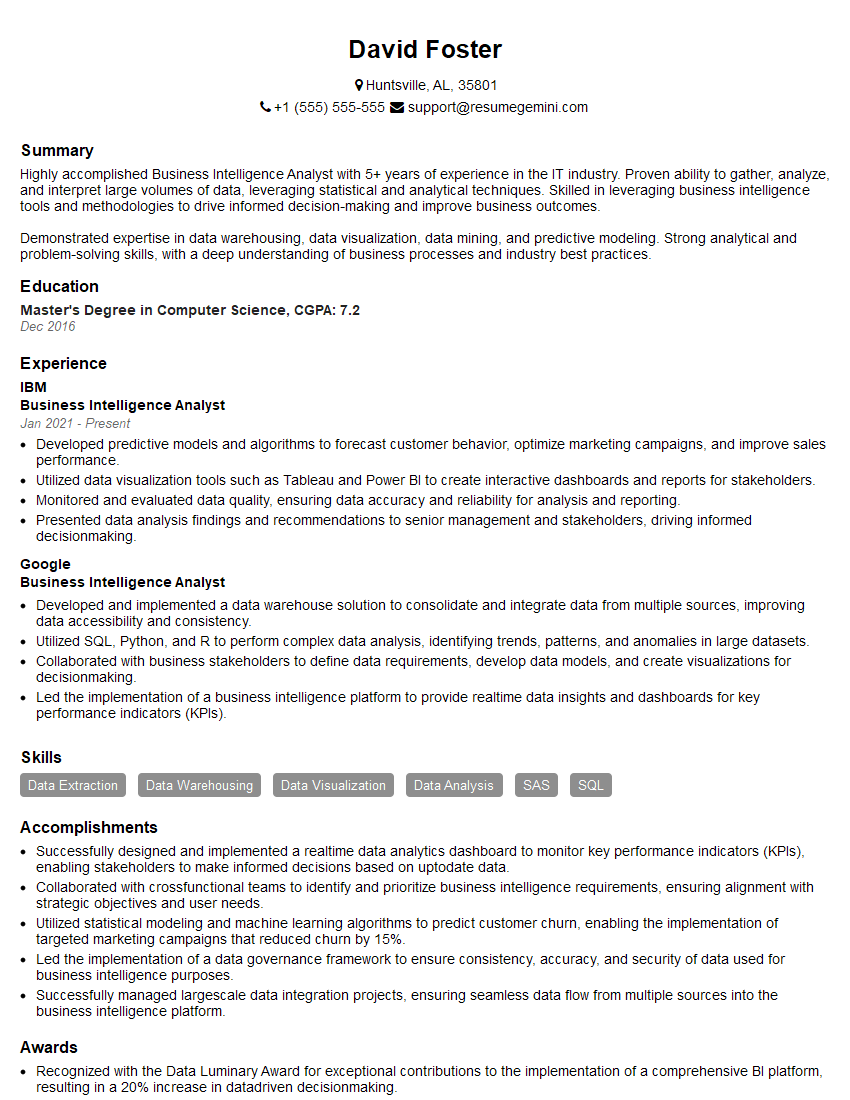
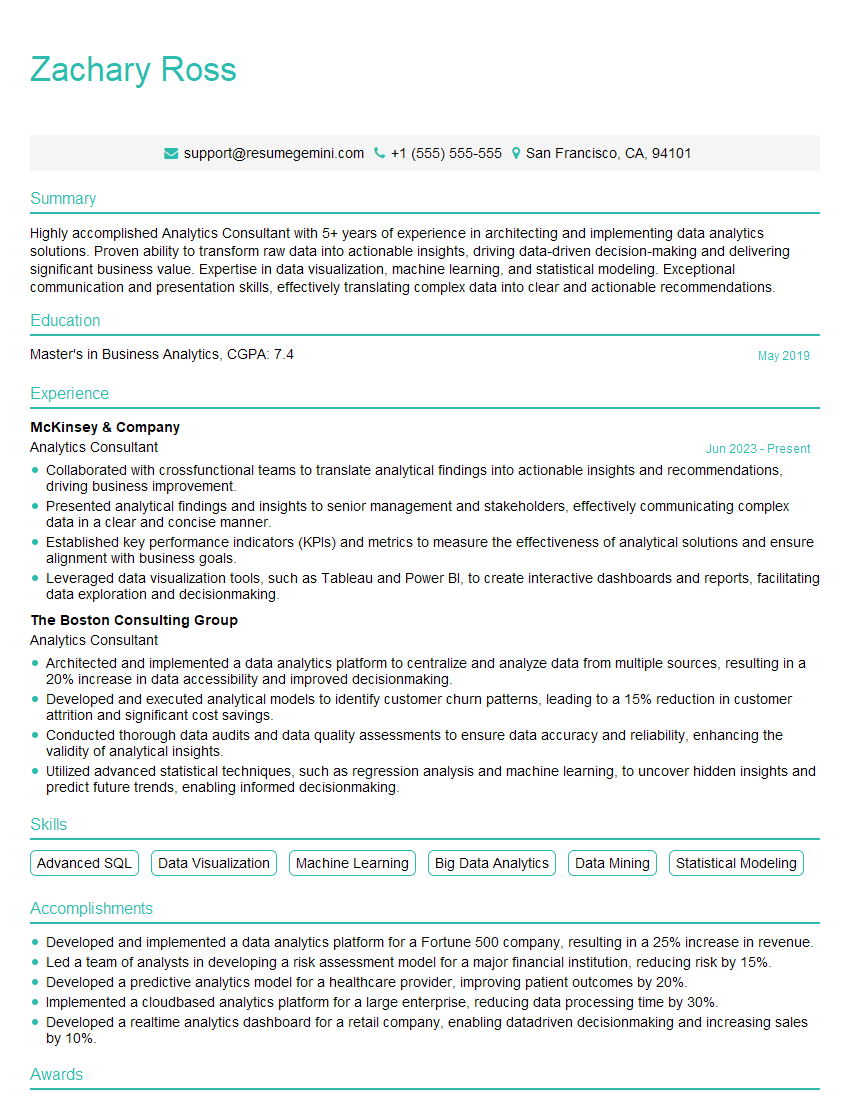
Mastering Measurement Strategy is crucial for career advancement in today’s data-driven world. It demonstrates your ability to make informed decisions, optimize campaigns, and drive tangible business results. To maximize your job prospects, crafting a compelling and ATS-friendly resume is essential. ResumeGemini can help you build a professional and effective resume that highlights your skills and experience in Measurement Strategy. Examples of resumes tailored to this field are available to guide you. Invest the time to create a resume that truly showcases your capabilities – it’s an investment in your future success.
Explore more articles
Users Rating of Our Blogs
Share Your Experience
We value your feedback! Please rate our content and share your thoughts (optional).
What Readers Say About Our Blog
Really detailed insights and content, thank you for writing this detailed article.
IT gave me an insight and words to use and be able to think of examples