Unlock your full potential by mastering the most common Microbiological Testing and Analysis interview questions. This blog offers a deep dive into the critical topics, ensuring you’re not only prepared to answer but to excel. With these insights, you’ll approach your interview with clarity and confidence.
Questions Asked in Microbiological Testing and Analysis Interview
Q 1. Explain the difference between sterilization and disinfection.
Sterilization and disinfection are both methods used to eliminate or reduce the number of microorganisms, but they differ significantly in their scope and outcome.
Sterilization is the complete elimination or destruction of all forms of microbial life, including bacteria, viruses, fungi, and spores, from a surface, object, or fluid. Think of it as achieving absolute microbial cleanliness. Methods include autoclaving (using high-pressure steam), dry heat sterilization, and using chemicals like ethylene oxide gas. Sterility is crucial in medical applications, like preparing surgical instruments or creating sterile injectables, ensuring no risk of infection.
Disinfection, on the other hand, reduces the number of viable microorganisms on a surface or object to a safe level, but it doesn’t necessarily eliminate all forms of life, especially resistant spores. Disinfection is typically achieved using chemicals like disinfectants (e.g., bleach, isopropyl alcohol), UV radiation, or boiling water. Disinfection is appropriate for many settings where complete sterilization isn’t required, like cleaning lab benches or household surfaces.
Imagine preparing a surgical field: sterilization is essential. But cleaning a kitchen counter after preparing food? Disinfection is sufficient to reduce the risk of foodborne illness.
Q 2. Describe the principle of aseptic technique.
Aseptic technique is a collection of practices designed to minimize contamination by unwanted microorganisms. It’s all about creating a sterile field and maintaining it throughout a procedure to prevent contamination of cultures, samples, or individuals.
The core principles involve using sterile materials, working near a flame to create an upward airflow preventing microbes from settling, and maintaining a clean work environment. This includes proper hand hygiene (thorough washing and/or use of gloves), careful handling of equipment to avoid touching sterile areas with non-sterile ones, and the use of sterile transfer tools.
Think of it like preparing a delicate dish in a professional kitchen – every step is taken with precision to prevent cross-contamination and ruin the final product. In microbiology, any contamination can compromise the results of an experiment or cause harm to a patient.
Q 3. What are the different methods used for microbial identification?
Microbial identification uses a range of techniques, often employed in combination, to pinpoint the specific type of microorganism.
- Microscopic examination: Observing size, shape, and arrangement of cells using light microscopy and sometimes electron microscopy. Gram staining (discussed later) is a crucial part of this.
- Biochemical tests: Assessing metabolic capabilities by observing reactions to different substrates. For example, a test may determine if a bacterium ferments lactose or produces specific enzymes.
- Molecular methods: Analyzing the organism’s DNA or RNA. This often involves PCR (polymerase chain reaction) to amplify specific gene sequences for identification and sequencing to determine the precise genetic makeup. 16S rRNA gene sequencing is a common technique for bacterial identification.
- Immunological methods: Utilizing antibodies specific to certain microbial antigens (surface markers) to detect their presence, such as ELISA (enzyme-linked immunosorbent assay) or agglutination tests.
- MALDI-TOF Mass Spectrometry: A rapid and accurate technique for identifying microorganisms based on their unique protein profiles. It provides results very quickly.
The choice of methods depends on the type of microorganism, the resources available, and the level of detail needed for identification. For example, a quick preliminary identification in a clinical setting might rely on microscopy and basic biochemical tests, while detailed research may involve a comprehensive molecular analysis.
Q 4. How do you perform a total plate count?
A total plate count (TPC), also known as a viable count, estimates the number of viable bacteria in a sample. It’s based on the principle that each viable bacterial cell will grow into a colony when cultured on a suitable agar plate under appropriate conditions.
- Sample dilution: The sample is serially diluted in sterile diluent (e.g., sterile saline or buffer) to obtain countable colony numbers (typically 30-300 colonies). This is crucial to prevent overcrowding on the plate.
- Plating: A known volume (usually 0.1 mL or 1 mL) of each dilution is spread evenly onto the surface of an agar plate using a sterile spreader.
- Incubation: The plates are incubated at an optimal temperature for the target organisms until colonies are visible (usually 24-48 hours).
- Colony counting: The number of colonies on each plate is counted. Colonies too close together may be counted as one.
- Calculations: The number of colony-forming units (CFUs) per milliliter (CFU/mL) in the original sample is calculated by multiplying the number of colonies by the dilution factor.
Example: If a 1:1000 dilution yields 50 colonies, the original sample concentration is approximately 50 CFU/mL * 1000 = 50,000 CFU/mL.
Q 5. What are the limitations of the total plate count method?
While TPC is a widely used method, it has limitations:
- Only viable cells are counted: Dead cells are not detected, so the actual total microbial count may be higher.
- Selective media: Using a specific type of growth media selects for certain organisms, while others may not grow, leading to an underestimation of the total microbial population.
- Time-consuming: The procedure involves several steps and requires incubation time, making it slower than other methods.
- Potential for error: Inaccurate dilution, uneven spreading, or improper incubation can lead to inaccurate results.
- Not all organisms form colonies: Some microorganisms may not form visible colonies on agar plates, leading to underestimation of their numbers.
Despite these limitations, TPC remains a valuable tool for assessing the microbial load in various samples, provided its limitations are understood and accounted for in the interpretation of the results.
Q 6. Explain the principles of Gram staining.
Gram staining is a differential staining technique that classifies bacteria into two major groups: Gram-positive and Gram-negative, based on the differences in their cell wall structure.
The procedure involves several steps:
- Crystal violet staining: The bacterial smear is stained with crystal violet, a primary dye, which stains both Gram-positive and Gram-negative cells purple.
- Gram’s iodine treatment: Gram’s iodine acts as a mordant, forming a complex with crystal violet within the cell. This complex is more readily retained by Gram-positive cells.
- Decolorization with alcohol or acetone: This step is crucial. Alcohol dehydrates the peptidoglycan layer of Gram-positive cells, shrinking the pores and trapping the crystal violet-iodine complex inside. In Gram-negative cells, the alcohol dissolves the outer lipid membrane, making them more permeable and allowing the crystal violet-iodine complex to wash away.
- Counterstain with safranin: Safranin, a pink dye, stains the now decolorized Gram-negative cells pink or red, while Gram-positive cells remain purple.
Gram-positive bacteria retain the crystal violet-iodine complex and appear purple, while Gram-negative bacteria lose the crystal violet and take up the safranin counterstain, appearing pink or red. This difference in staining reflects the fundamental differences in their cell wall composition—a thick peptidoglycan layer in Gram-positive bacteria and a thin peptidoglycan layer covered by an outer lipid membrane in Gram-negative bacteria.
Q 7. Describe the different types of microbial growth media and their applications.
Various microbial growth media are used depending on the specific needs of the experiment or application. These media differ in their composition and properties.
- Nutrient agar: A general-purpose medium supporting the growth of many microorganisms. It’s often used for routine culturing and colony counting. Think of it as the ‘all-purpose’ option for growing various microbes.
- Blood agar: Enriched medium containing red blood cells, suitable for growing fastidious (picky) bacteria. The hemolytic patterns (breakdown of red blood cells) can help in identification.
- MacConkey agar: Selective and differential medium. It selects for Gram-negative bacteria and differentiates them based on their ability to ferment lactose (lactose fermenters appear pink, non-fermenters remain colorless).
- Sabouraud dextrose agar (SDA): Supports the growth of fungi, inhibiting bacterial growth due to its low pH. Used in mycology labs.
- Minimal media: Contains only essential nutrients; helps to study specific metabolic pathways. Scientists often use these to study how specific microbes grow under limited nutritional conditions.
- Selective media: Contain substances that inhibit the growth of certain microorganisms while allowing others to grow. Often used to isolate specific organisms from mixed cultures.
- Differential media: Allow for the visual differentiation of microorganisms based on their metabolic characteristics. Changes in colour help identify microbes easily.
The selection of growth medium is critical for successful culturing and identification of microorganisms. The right medium provides the optimal conditions for the target organism(s) to grow and flourish while minimizing growth of others, enabling accurate results.
Q 8. What are the common indicators of microbial contamination?
Microbial contamination, the presence of unwanted microorganisms, manifests in several ways. Think of it like finding uninvited guests at a party – some are subtle, others are obvious. Common indicators include:
Visible signs: Turbidity (cloudiness) in a normally clear solution, discoloration, unusual odors, gas production in sealed containers, or the presence of visible mold or bacterial colonies.
Changes in physical properties: Alterations in viscosity, texture, or appearance of a product can indicate microbial growth affecting its composition.
Positive microbial test results: This is the most definitive indicator. Various microbiological tests, as we’ll discuss later, can detect the presence and quantify different microorganisms. For example, a high colony count on a nutrient agar plate signals significant contamination.
Spoilage: In food products, spoilage is a clear sign of microbial growth, marked by changes in taste, smell, and texture.
Infectious disease: In clinical settings, the presence of pathogenic (disease-causing) microorganisms indicates contamination that poses a risk to patient health.
The specific indicator will depend on the type of sample, the environment, and the microorganisms involved.
Q 9. How do you interpret microbial test results?
Interpreting microbial test results requires a thorough understanding of the methodology and acceptance criteria. It’s not just about numbers; it’s about context. We look at several factors:
Colony Forming Units (CFU): This counts the number of viable microorganisms. A high CFU count above a predefined limit suggests contamination. The acceptable limit varies depending on the product, its intended use, and regulatory guidelines. For example, a pharmaceutical product intended for injection will have much stricter CFU limits than a cosmetic product.
Type of Microorganism: Identifying the specific microorganism is crucial. The presence of a pathogenic bacterium is far more critical than a common environmental bacterium. Think of it like finding a venomous snake versus a garden snake – both are snakes, but one poses a much greater threat.
Test Method: The test method itself dictates the interpretation. Different methods have different sensitivities and specificities, so the results must be interpreted within the context of the method used.
Environmental factors: Ambient conditions during sampling and testing can influence results. Improper handling or storage can lead to false positives or negatives.
Statistical analysis: In many cases, statistical analysis is necessary to determine if the observed results are statistically significant and not just due to random fluctuations.
Ultimately, the interpretation involves comparing the results against predefined acceptance criteria, evaluating the type and quantity of microorganisms detected, and considering the overall context of the sample and the testing environment. Any deviation from the accepted range necessitates investigation and corrective action.
Q 10. What are the different types of microbial tests performed in a quality control lab?
A quality control lab employs a range of tests depending on the sample and regulatory requirements. Here are some common examples:
Total Aerobic Microbial Count (TAMC): Measures the total number of aerobic bacteria and fungi present in a sample.
Total Yeast and Mold Count (TYMC): Specifically quantifies yeast and mold.
Sterility Testing: Checks for the absence of any viable microorganisms, a critical test for products claiming sterility. This is often performed using membrane filtration or direct inoculation methods.
Endotoxin Testing (Limulus Amebocyte Lysate or LAL Assay): Detects bacterial endotoxins, components of the outer membrane of Gram-negative bacteria, which are potent pyrogens (fever-inducing substances).
Bioburden Testing: Determines the total number of microorganisms present on a product before sterilization to assess the effectiveness of the sterilization process.
Identification of Microorganisms: Once microorganisms are detected, tests like Gram staining, biochemical tests, and molecular methods (e.g., PCR) help identify them.
Preservative Efficacy Testing: Evaluates the effectiveness of preservatives in preventing microbial growth in a product.
The choice of test depends on the product, its intended use, and regulatory guidelines. A pharmaceutical injectable will need much more extensive testing than a food product with a short shelf life.
Q 11. Describe the different methods for sterility testing.
Sterility testing, a critical procedure, verifies the absence of viable microorganisms. Two primary methods are employed:
Direct Inoculation Method: The sample is directly added to a sterile culture medium (broth). This is suitable for samples that can be easily dissolved or dispersed in the broth. After incubation, the absence of turbidity or growth indicates sterility.
Membrane Filtration Method: The sample is filtered through a sterile membrane filter, trapping microorganisms. The membrane is then placed onto a culture medium for incubation. This is better suited for low-bioburden samples or samples that are not easily dissolved in the broth. This technique increases the sensitivity of sterility testing by concentrating microorganisms from a large volume of sample.
Both methods involve meticulous aseptic techniques to prevent false positives from environmental contamination. The incubation period is typically extended to ensure detection of slow-growing microorganisms. Regardless of the method used, thorough documentation and adherence to strict regulatory requirements are paramount.
Q 12. What are the regulatory requirements for microbiological testing in the pharmaceutical industry?
Regulatory requirements for microbiological testing in the pharmaceutical industry are stringent and vary based on the product type (e.g., injectables, oral medications, topical creams) and geographic region. Key regulations include:
Good Manufacturing Practices (GMP): These guidelines establish quality standards throughout the manufacturing process, including microbiological control.
United States Pharmacopeia (USP): The USP provides compendial methods and standards for microbiological testing. The USP chapters on sterility tests, bioburden, and endotoxin testing provide detailed procedures and acceptance criteria.
European Medicines Agency (EMA): Similar to the FDA, the EMA sets regulatory standards for the pharmaceutical industry in Europe.
Pharmacopeias of other countries: Various countries have their own pharmacopeias establishing specific requirements for microbiological testing.
These regulations dictate specific testing requirements, acceptance criteria, and documentation procedures. Non-compliance can lead to product recalls, regulatory sanctions, and reputational damage. Adherence to these regulations is essential for ensuring product safety and quality.
Q 13. How do you validate a microbiological testing method?
Validation of a microbiological testing method ensures it reliably and accurately provides the intended results. This involves a series of steps:
Specificity: Demonstrating the method’s ability to detect and identify the target microorganisms without interference from other organisms.
Sensitivity: Determining the lowest concentration of microorganisms the method can reliably detect.
Precision (Repeatability and Reproducibility): Assessing the consistency of results obtained by the same analyst (repeatability) and by different analysts (reproducibility).
Accuracy: Comparing the method’s results to a reference method (gold standard) to evaluate its accuracy.
Ruggedness: Evaluating the method’s performance under varying conditions (e.g., temperature, media, analyst) to ensure robustness.
Range: Establishing the range of concentrations over which the method provides accurate and reliable results.
Validation involves meticulous documentation, statistical analysis, and adherence to established guidelines. A validated method is essential for generating reliable and trustworthy results, ensuring product safety, and meeting regulatory requirements.
Q 14. What are the common sources of error in microbiological testing?
Microbiological testing is susceptible to various errors. These can be broadly classified as:
Sampling errors: Incorrect sampling techniques or inadequate sample representation can lead to inaccurate results. Think of it like trying to understand a whole cake by only tasting one crumb.
Contamination: Contamination from the environment, reagents, or equipment can lead to false positive results. Maintaining a sterile environment is paramount.
Incubation errors: Incorrect incubation temperature, time, or conditions can affect microbial growth and lead to inaccurate results.
Human error: Incorrect dilutions, pipetting errors, or misinterpretations of results are common sources of human error.
Method limitations: Every method has limitations. A method might not be able to detect all types of microorganisms, or it may have a limited detection range.
Equipment malfunction: Malfunctioning equipment, such as autoclaves or incubators, can compromise results.
Implementing stringent quality control measures, including proper training, regular equipment calibration and maintenance, use of appropriate controls (positive and negative), and adherence to standard operating procedures, is crucial in minimizing errors and ensuring reliable results.
Q 15. How do you handle and investigate out-of-specification (OOS) results?
Handling out-of-specification (OOS) results in microbiological testing is a critical process demanding a rigorous investigation to determine the root cause. It’s not simply about dismissing the result; it’s about ensuring the integrity of the entire testing process and product safety.
Our standard operating procedure (SOP) involves a systematic approach:
- Immediate Action: First, we verify the result through repeat testing using the original sample and, if necessary, a new sample. We meticulously check for potential errors in sample preparation, dilutions, or incubation conditions.
- Investigation: If the repeat testing confirms the OOS result, a thorough investigation is launched. This includes reviewing the entire testing process, from sampling and sample handling to equipment calibration and personnel training. We look for any deviations from the SOP, equipment malfunctions, or potential contamination sources.
- Root Cause Analysis: We use tools like fishbone diagrams (Ishikawa diagrams) to identify potential causes, systematically investigating each element of the testing process. This step is crucial to prevent future occurrences.
- Corrective and Preventative Actions (CAPA): Based on the root cause analysis, we implement corrective actions to address the immediate problem and preventative actions to prevent similar issues from recurring. This could include retraining staff, replacing equipment, revising SOPs, or improving environmental controls.
- Documentation: Every step of the OOS investigation is meticulously documented, including initial observations, repeat testing results, investigation findings, and implemented CAPAs. This documentation is essential for regulatory compliance and internal audits.
For example, in a pharmaceutical setting, an OOS result for sterility testing could lead to an investigation into the cleaning and sterilization procedures used for manufacturing equipment. A thorough investigation might uncover a lapse in cleaning validation resulting in biofilm formation, leading to the implementation of improved cleaning protocols and enhanced equipment maintenance schedules.
Career Expert Tips:
- Ace those interviews! Prepare effectively by reviewing the Top 50 Most Common Interview Questions on ResumeGemini.
- Navigate your job search with confidence! Explore a wide range of Career Tips on ResumeGemini. Learn about common challenges and recommendations to overcome them.
- Craft the perfect resume! Master the Art of Resume Writing with ResumeGemini’s guide. Showcase your unique qualifications and achievements effectively.
- Don’t miss out on holiday savings! Build your dream resume with ResumeGemini’s ATS optimized templates.
Q 16. What is the role of environmental monitoring in a microbiological laboratory?
Environmental monitoring (EM) in a microbiological laboratory is crucial for maintaining the integrity of test results and preventing contamination. It’s like maintaining a clean workspace for any precise task – ensuring your results are accurate and reliable. EM programs are designed to detect and monitor the presence of microorganisms in the laboratory environment.
Its key roles include:
- Identifying potential contamination sources: EM helps identify areas with high microbial counts, pinpointing potential sources of contamination such as air handling units, surfaces, and equipment. This helps prevent contamination of samples and lab materials.
- Validating sanitation and disinfection practices: EM programs monitor the effectiveness of cleaning and disinfection procedures, allowing for timely adjustments if necessary. Regular monitoring allows for the assessment of sanitation protocol success.
- Ensuring data integrity: By demonstrating a controlled environment, EM contributes to the validity and reliability of microbiological testing results. A clean environment minimizes the risk of false positives or negatives.
- Regulatory compliance: Many regulatory bodies require comprehensive EM programs as part of Good Manufacturing Practices (GMP) and other quality standards.
An example would be monitoring the air quality within a cleanroom used for sterility testing. High counts of airborne microorganisms could compromise the sterility of the tested products. Regular EM allows for timely intervention before any contamination occurs.
Q 17. Describe the principles of microbial enumeration.
Microbial enumeration is the process of counting the number of microorganisms present in a sample. Think of it as taking a census of the microbial population. Accurate enumeration is critical for assessing microbial load, determining product safety, and monitoring the effectiveness of control measures.
The principles revolve around:
- Sample Preparation: This involves diluting the sample to achieve a countable number of colonies on the growth media. Incorrect dilutions can lead to inaccurate counts.
- Plating Techniques: Various plating techniques like spread plating or pour plating are used to distribute the diluted sample evenly across the agar surface. This ensures individual colonies can grow and be counted accurately.
- Incubation: The plated samples are incubated under specific conditions (temperature, atmosphere) to promote microbial growth. Optimum conditions depend on the target organisms.
- Colony Counting: After incubation, the number of colonies is counted. This is done manually or using automated colony counters. This count is used to calculate the original microbial load in the sample using appropriate dilution factors.
- Statistical Analysis: Statistical methods might be used to determine confidence intervals and uncertainties associated with the colony count. This is especially critical at low counts.
For example, in food microbiology, enumeration of E. coli in a food sample helps assess its safety for consumption. A high count would indicate potential contamination and necessitate further investigation.
Q 18. What are the different types of microbial contamination found in various industries (e.g., food, pharmaceutical, cosmetic)?
Microbial contamination varies significantly across industries due to the different raw materials, processing methods, and environmental conditions.
Here’s a breakdown:
- Food Industry: Common contaminants include Salmonella, Listeria monocytogenes, E. coli O157:H7, Staphylococcus aureus, Bacillus cereus, and molds and yeasts. Sources can range from raw materials to processing equipment and improper handling.
- Pharmaceutical Industry: Contaminants of concern include Pseudomonas aeruginosa, Staphylococcus aureus, Candida albicans, and various Gram-negative bacteria and endotoxins. The primary focus is on sterility and preventing contamination of medications. Endotoxins from Gram-negative bacteria are particularly critical to monitor.
- Cosmetic Industry: Contamination with bacteria, molds, and yeasts is a concern, potentially leading to skin irritation or infections. The specific types of contaminants depend on the raw materials used and the manufacturing process. Preservatives are often included to prevent microbial growth.
The types of contaminants and their sources necessitate different strategies for prevention and control within each industry. For instance, the stringent sterile manufacturing requirements of pharmaceuticals differ significantly from the focus on hygiene and preservation in the food industry.
Q 19. How do you ensure the accuracy and reliability of microbiological testing results?
Ensuring the accuracy and reliability of microbiological testing results is paramount. It involves a multifaceted approach that considers every step of the testing process.
Key strategies include:
- Quality Control (QC): This is an ongoing process. We utilize positive and negative controls with every test batch to validate the media, reagents, and equipment are functioning correctly. Positive controls ensure the media can support growth and negative controls confirm absence of contamination.
- Calibration and Maintenance: Regular calibration and preventative maintenance of equipment like incubators, autoclaves, and pipettes are crucial for consistent results. Proper documentation of maintenance procedures is vital.
- Personnel Training: Well-trained personnel are essential. Comprehensive training on proper aseptic techniques, sample handling, and testing procedures minimizes the risk of error.
- Standard Operating Procedures (SOPs): Detailed and easily understood SOPs guide every step of the testing process, reducing variability and ensuring consistency. Adherence to these procedures is mandatory.
- Method Validation: Established and validated testing methods are critical to ensure the test accurately detects and quantifies target microorganisms. Validation demonstrates the reliability and reproducibility of the method.
- Proficiency Testing: Participation in external proficiency testing programs helps assess laboratory performance against other labs, identifying areas for improvement.
For example, regular calibration of a spectrophotometer used for optical density measurements is critical to ensure accurate quantification of microbial growth.
Q 20. Explain the importance of proper documentation in microbiological testing.
Proper documentation in microbiological testing is not just a formality; it’s the backbone of quality assurance and regulatory compliance. It provides a complete and auditable trail of all activities performed.
Its importance lies in:
- Traceability: Documentation enables complete traceability of samples, test results, and actions taken. This is essential for identifying potential errors or resolving discrepancies.
- Regulatory Compliance: Regulatory agencies like the FDA require detailed documentation to ensure adherence to GMPs and other relevant regulations. Lack of proper documentation can result in regulatory sanctions.
- Quality Assurance: Documentation allows for internal reviews and audits to assess the quality of testing processes and identify areas for improvement. It supports ongoing quality improvement efforts.
- Legal Protection: Comprehensive documentation serves as legal protection in case of disputes or litigation. It helps demonstrate adherence to standards and procedures.
All aspects, from sample collection and handling through to result interpretation and reporting, must be meticulously documented. For instance, any deviations from the SOP should be clearly recorded, along with the reason and corrective actions taken. Failure to do so can compromise the entire testing process.
Q 21. Describe your experience with different types of microbial identification techniques (e.g., MALDI-TOF, biochemical tests).
My experience encompasses various microbial identification techniques, each with its own advantages and limitations.
I have extensive experience with:
- Biochemical Tests: These traditional methods utilize various biochemical reactions to differentiate bacteria based on their metabolic characteristics. Examples include Gram staining, catalase tests, oxidase tests, and sugar fermentation tests. While less expensive than newer methods, they are often slower and require more expertise in interpretation.
- MALDI-TOF Mass Spectrometry (MALDI-TOF MS): This rapid and highly accurate technique analyzes the protein profile of microorganisms to identify them. It’s significantly faster than biochemical methods and is ideal for high-throughput identification. We use this routinely for rapid identification of bacterial and fungal isolates.
- 16S rRNA gene sequencing: This molecular technique allows for precise identification, especially for fastidious organisms or those difficult to identify using conventional methods. It’s often used for confirmation or identification of novel or unusual isolates. However, this can be more time-consuming and costly than other methods.
The choice of technique depends on various factors including the type of microorganism, the urgency of identification, available resources, and the desired level of accuracy. In many instances, a combination of methods is employed for accurate and reliable identification. For example, I might use MALDI-TOF for a rapid presumptive identification, followed by 16S rRNA sequencing for confirmation if necessary.
Q 22. What is your experience with different types of automated microbiological systems?
My experience with automated microbiological systems is extensive. I’ve worked with a range of instruments, from automated colony counters and plate readers that significantly speed up enumeration and data acquisition, to fully automated systems capable of inoculating, incubating, and analyzing samples with minimal manual intervention. For instance, I’m proficient in using the Biomek i7 for liquid handling in microbiology workflows, ensuring precise dilutions and inoculations. I also have experience with automated microbial identification systems like the VITEK 2, which uses advanced technologies to quickly and accurately identify bacterial and fungal species. These systems drastically reduce manual labor, minimize human error, and improve the overall efficiency of the testing process. I’m comfortable with both the operational and maintenance aspects of these systems, including troubleshooting and calibration. My experience also extends to working with systems integrating various technologies, for example those combining automated plating with image analysis software for colony counting.
Q 23. How familiar are you with GMP and GLP guidelines related to microbiological testing?
I have a thorough understanding of Good Manufacturing Practices (GMP) and Good Laboratory Practices (GLP) as they pertain to microbiological testing. My experience encompasses all aspects of these regulations, including documentation, sample management, calibration procedures, and quality control measures. I know the importance of maintaining accurate, auditable records and adhere strictly to SOPs to ensure data integrity and compliance. For example, in a previous role, I was instrumental in implementing a new quality control system that dramatically reduced out-of-specification results and enhanced regulatory compliance. Understanding GMP and GLP is crucial, not just for meeting regulatory requirements, but also for ensuring the reliability and accuracy of our test results, which is critical for the safety and efficacy of the products we test. I’m also familiar with the latest updates and revisions to these guidelines.
Q 24. Describe your experience with data analysis and reporting in microbiological testing.
Data analysis and reporting are integral parts of my microbiological testing workflow. I’m proficient in using various software packages to analyze microbiological data, including statistical analysis software like Microsoft Excel and specialized microbiology software for data management and reporting. My experience includes generating reports that accurately reflect the results of the tests, incorporating statistical analysis (such as calculating CFUs and determining the significance of results), and presenting findings in a clear and concise manner, suitable for both technical and non-technical audiences. I can generate trend analysis reports to help identify potential issues or improvements in manufacturing processes. For example, I once used statistical process control (SPC) charts to identify a recurring contamination issue in a pharmaceutical manufacturing process, leading to effective corrective actions and improved product quality.
Q 25. How do you troubleshoot common problems encountered during microbiological testing?
Troubleshooting is a daily occurrence in microbiological testing. I employ a systematic approach, beginning with identifying the source of the problem. This often involves reviewing the entire testing process, from sample collection and preparation to incubation and analysis. Common problems include contamination, unexpected results, and instrument malfunctions. For instance, if we have unexpectedly high microbial counts, I would investigate potential sources of contamination, such as the environment, reagents, or equipment. I would check for proper aseptic techniques, review sterilization protocols, and examine equipment for any malfunctions. If instrument malfunctions occur, I have a structured approach involving checking calibration, maintenance logs, and troubleshooting manuals. If necessary, I’d consult with service engineers to diagnose and resolve the problem. A methodical approach, coupled with a strong understanding of microbiological principles, allows me to effectively pinpoint and resolve issues, ensuring accurate and reliable results.
Q 26. What are your strengths and weaknesses in microbiological testing?
My strengths lie in my meticulous attention to detail, my problem-solving abilities, and my proficiency in various automated microbiological systems. My systematic approach guarantees accuracy and reliability. I also possess strong communication skills, enabling me to effectively convey complex information to both technical and non-technical audiences. One area for improvement is expanding my knowledge of advanced molecular microbiology techniques, such as next-generation sequencing (NGS). I am actively working towards addressing this through online courses and professional development opportunities. Continuous learning is crucial in this ever-evolving field.
Q 27. What are your salary expectations?
My salary expectations are commensurate with my experience and skills, and I am open to discussing a competitive compensation package based on the specifics of the role and company benefits.
Q 28. Where do you see yourself in 5 years?
In five years, I envision myself as a highly skilled and respected microbiologist, possibly in a leadership role, contributing significantly to the advancement of microbiological testing and analysis within the company. I aim to be a valuable asset, mentoring junior colleagues and driving improvements in our testing processes and overall efficiency. This might involve taking on project management responsibilities or specializing further in a niche area within microbiology. Continuous learning and professional development will be key to achieving this goal.
Key Topics to Learn for Microbiological Testing and Analysis Interview
- Sterilization and Disinfection Techniques: Understanding various methods (autoclaving, filtration, UV sterilization) and their applications in different contexts. Consider the principles behind each method and their limitations.
- Aseptic Techniques: Mastering proper aseptic techniques is crucial. Be prepared to discuss practical applications in sample collection, media preparation, and inoculation.
- Microbial Identification and Characterization: Review methods like Gram staining, biochemical tests, and molecular techniques (PCR, 16S rRNA sequencing) for identifying and characterizing microorganisms.
- Culture Media Preparation and Use: Understand the principles of formulating different types of culture media (selective, differential, enriched) and their applications in isolating and identifying specific microorganisms. Be ready to discuss troubleshooting issues related to media preparation.
- Quality Control and Assurance in Microbiology Labs: Discuss the importance of GLP (Good Laboratory Practices) and the role of quality control measures in ensuring the reliability and accuracy of microbiological testing results.
- Data Analysis and Interpretation: Practice interpreting microbiological data, including growth curves, colony counts, and statistical analysis. Be ready to explain how you would address inconsistencies or anomalies in your data.
- Regulatory Compliance (e.g., FDA, ISO): Familiarize yourself with relevant regulations and guidelines that govern microbiological testing in your field of interest. Understanding these standards is crucial for any role in this area.
- Problem-Solving and Troubleshooting: Be prepared to discuss how you approach troubleshooting common problems encountered during microbiological testing. This showcases your practical skills and analytical abilities.
Next Steps
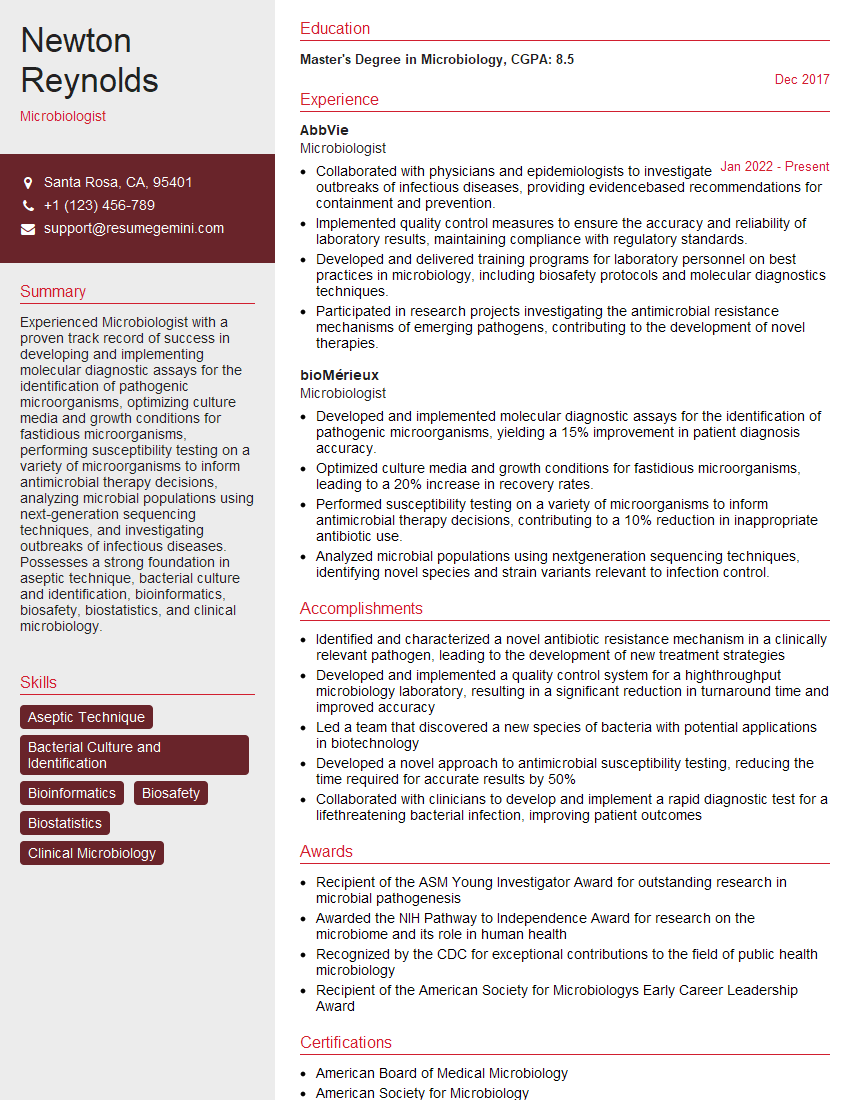
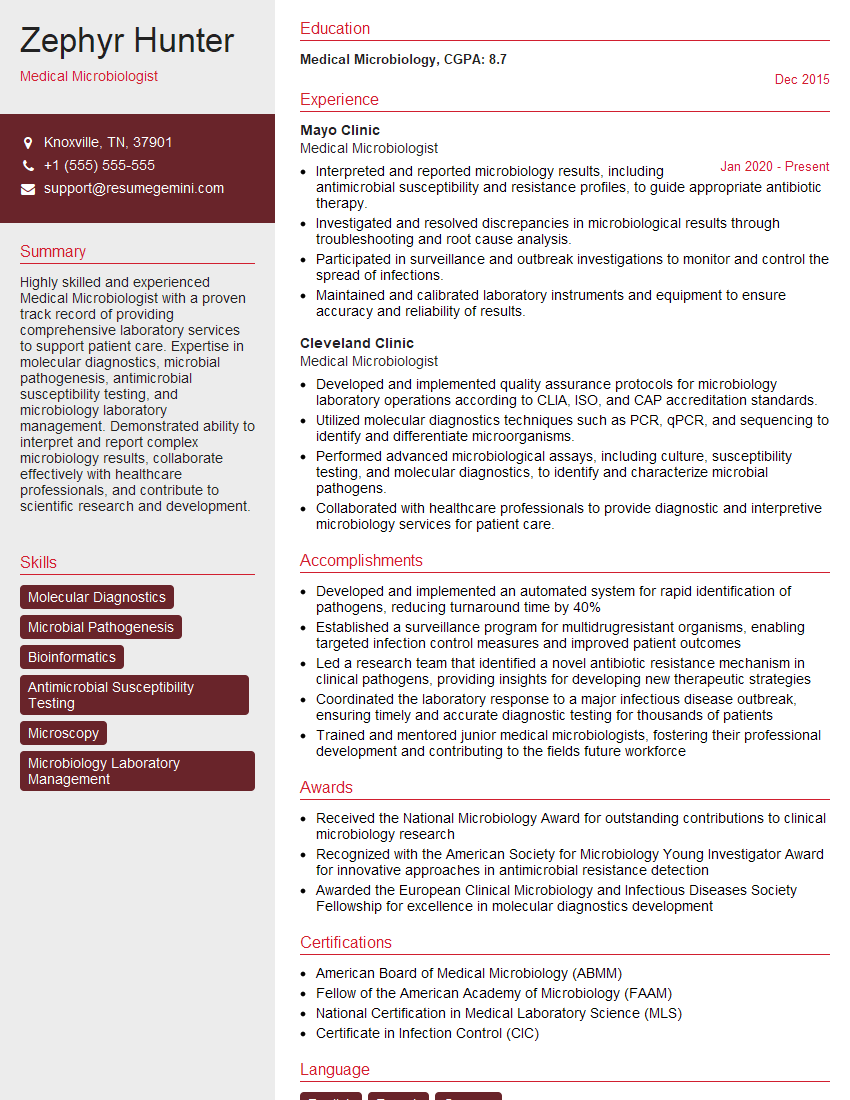
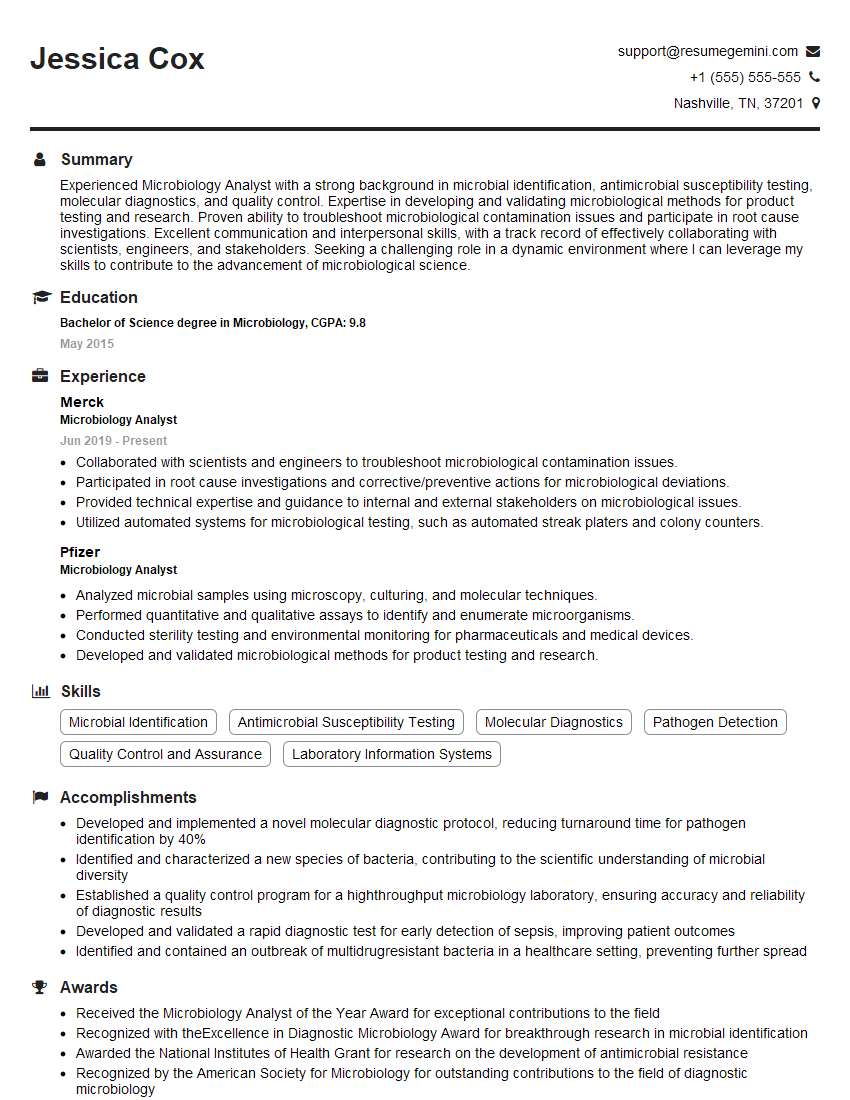
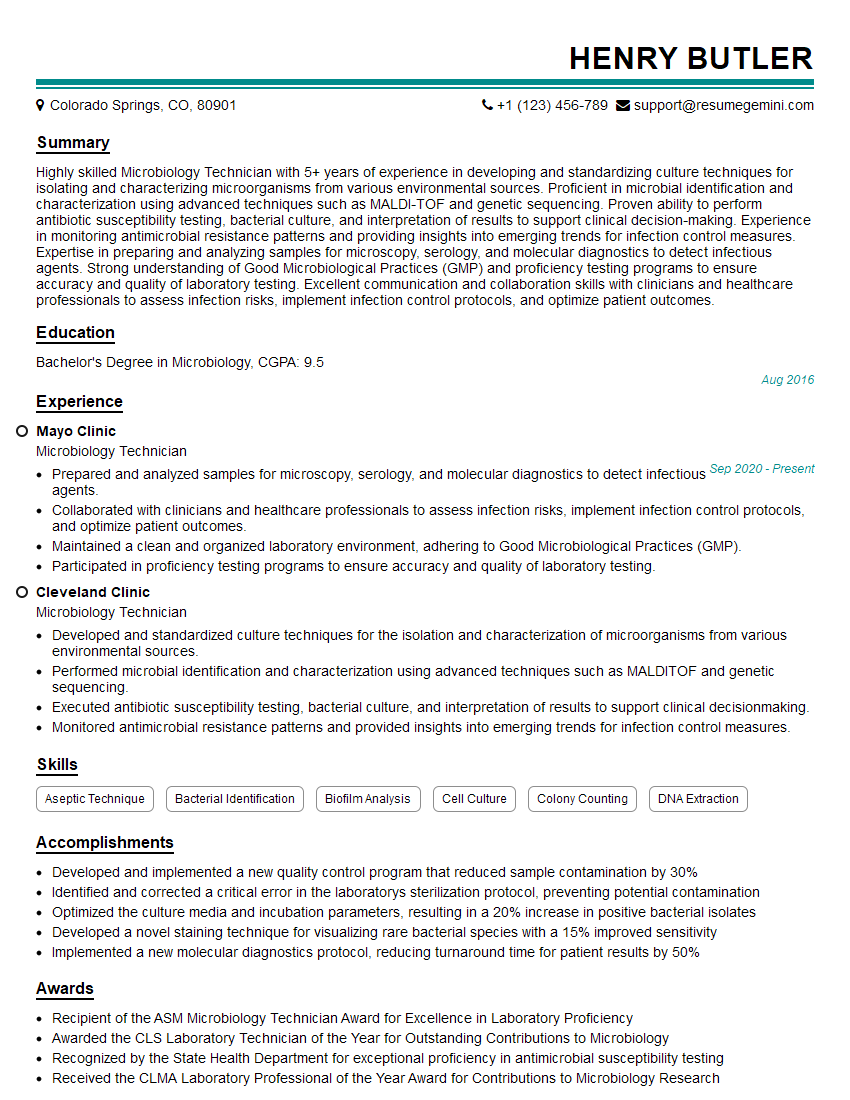
Mastering Microbiological Testing and Analysis opens doors to exciting career opportunities in diverse fields like pharmaceuticals, food safety, environmental monitoring, and clinical diagnostics. To maximize your job prospects, creating a strong, ATS-friendly resume is essential. ResumeGemini is a trusted resource to help you build a professional and impactful resume that highlights your skills and experience effectively. Examples of resumes tailored to Microbiological Testing and Analysis are available to help guide you. Take the next step towards your dream career; invest in your resume today!



Explore more articles
Users Rating of Our Blogs
Share Your Experience
We value your feedback! Please rate our content and share your thoughts (optional).
What Readers Say About Our Blog
Really detailed insights and content, thank you for writing this detailed article.
IT gave me an insight and words to use and be able to think of examples