Unlock your full potential by mastering the most common Milk Quality Assurance and Control interview questions. This blog offers a deep dive into the critical topics, ensuring you’re not only prepared to answer but to excel. With these insights, you’ll approach your interview with clarity and confidence.
Questions Asked in Milk Quality Assurance and Control Interview
Q 1. Describe the key stages of milk processing and the quality control checks at each stage.
Milk processing involves several crucial stages, each with its own set of quality control checks to ensure the final product is safe and of high quality. Think of it like a relay race – each stage needs to perform perfectly for the team to win.
Receiving and Collection: Milk is initially tested for temperature, acidity (pH), and presence of antibiotics. High temperatures indicate potential spoilage, while high acidity suggests bacterial growth. Antibiotics can render the milk unusable for certain processing methods. This is often done using rapid tests at the farm or collection point.
Standardization: This involves adjusting the fat content to meet specific product requirements (e.g., whole milk, skim milk). Quality control includes precise measurement of fat and solids-not-fat using methods such as the Babcock test or infrared spectroscopy.
Pasteurization: This heat treatment eliminates harmful bacteria. Quality control involves monitoring the pasteurization temperature and holding time to ensure sufficient pathogen reduction. Post-pasteurization testing may also be conducted to verify effectiveness.
Homogenization: This process reduces fat globule size, preventing creaming. Quality control focuses on monitoring pressure and temperature to achieve optimal particle size and prevent damage to the milk proteins.
Packaging and Storage: Finally, milk is packaged aseptically and stored under controlled conditions (refrigerated) to maintain quality and prevent spoilage. Quality control checks the integrity of packaging and the temperature of storage facilities. Regular microbiological testing of finished products ensures continued safety.
Q 2. Explain the importance of maintaining a hygienic environment in milk production.
Maintaining a hygienic environment throughout milk production is paramount to preventing contamination and ensuring milk safety. Think of it like preparing a delicate cake – any uncleanliness can ruin the final product. Poor hygiene leads to increased bacterial counts, which can cause spoilage, off-flavors, and potentially harmful illnesses.
Hygiene measures include:
- Clean milking equipment: Thorough cleaning and sanitization of milking machines, storage tanks, and pipelines are essential to eliminate bacteria and prevent their growth.
- Cleanliness of the cows: Maintaining the cleanliness of the udder and surrounding area helps minimize the introduction of bacteria into the milk.
- Proper sanitation practices: This includes using detergents and sanitizers effectively according to manufacturer recommendations, and ensuring proper drying and storage of equipment.
- Employee hygiene: Handwashing, wearing clean clothing, and maintaining personal hygiene by milk handlers are crucial to prevent contamination.
- Controlled environment: Maintaining clean and pest-free environments in milking parlors and storage areas is crucial to preventing contamination from external sources.
Q 3. What are the common microbiological contaminants found in milk and how are they detected?
Milk can be contaminated by various microorganisms, primarily bacteria, yeasts, and molds. These contaminants can cause spoilage, off-flavors, and potentially dangerous illnesses.
Common Bacteria: Escherichia coli (E. coli), Salmonella, Listeria monocytogenes, Staphylococcus aureus, and various coliforms are major concerns. E. coli indicates fecal contamination, while Listeria can cause serious illness, particularly in vulnerable populations.
Detection Methods: Detection usually involves microbiological culture techniques. A sample of milk is plated onto various agar media designed to grow specific types of bacteria. The number of colony-forming units (CFUs) is then counted to estimate bacterial load. Rapid methods like ATP bioluminescence or PCR techniques can provide faster results for specific pathogens.
Example: A high count of E. coli would suggest fecal contamination during milking or processing, requiring thorough investigation and improved hygiene practices.
Q 4. Describe different milk quality testing methods and their applications.
Numerous tests assess milk quality, each with specific applications:
Microbial Tests: These assess bacterial count (Total Plate Count, TPC), presence of specific pathogens (e.g., E. coli, Salmonella), and yeast and mold counts. These tests are crucial for ensuring milk safety.
Chemical Tests: These measure components like fat content (Babcock test, infrared spectroscopy), protein content (Kjeldahl method), lactose content (polarimetry), and acidity (pH meter). These help determine the milk’s composition and suitability for various products.
Physical Tests: These examine aspects like density, freezing point, and color. Freezing point depression helps detect adulteration with water, while color can indicate spoilage.
Somatic Cell Count (SCC): This determines the number of somatic cells (mainly white blood cells) in milk, indicating udder health. A high SCC suggests mastitis (udder inflammation).
The choice of tests depends on the purpose: routine quality control, investigating a specific problem, or regulatory compliance.
Q 5. How do you interpret milk quality test results and determine corrective actions?
Interpreting milk quality test results involves comparing them to established standards and identifying deviations. For instance, a high TPC indicates poor hygiene practices, while a high SCC suggests udder health issues in the cows. Corrective actions are determined based on the specific findings.
Example: If a batch of milk shows a high E. coli count, this signifies fecal contamination. Corrective actions would include reviewing milking procedures, enhancing cleaning and sanitization protocols, and potentially investigating the source of the contamination (e.g., manure spill). High SCC might necessitate treatment of affected cows, improved milking hygiene, and potentially culling of severely infected animals.
The process includes:
- Identify deviations: Compare the test results against acceptable limits defined by regulations and standards.
- Determine the root cause: Analyze the results to identify the source of the problem (e.g., poor hygiene, equipment malfunction, animal health issues).
- Implement corrective actions: Develop and implement solutions to address the identified problems (e.g., improve cleaning procedures, repair equipment, treat affected animals).
- Monitor effectiveness: Track the impact of the implemented actions by performing follow-up tests to ensure the problem is resolved.
Q 6. What are the legal requirements and standards for milk quality and safety in your region?
(Note: Legal requirements and standards vary significantly by region. This answer provides a general framework. Specific details must be obtained from the relevant regulatory authorities in your region.)
Milk quality and safety are subject to stringent regulations. These regulations define acceptable limits for various parameters like microbial counts, chemical composition, and somatic cell counts. They often mandate regular testing and record-keeping by producers and processors. Non-compliance can lead to penalties, product recalls, and reputational damage.
Common aspects of these regulations include:
- Microbial Limits: Maximum acceptable counts for total bacteria, coliforms, and specific pathogens.
- Chemical Composition: Standards for fat, protein, solids-not-fat, and lactose content.
- Somatic Cell Count Limits: Maximum acceptable somatic cell count to indicate udder health.
- Antibiotic Residues: Regulations prohibiting or limiting the presence of antibiotics in milk.
- Packaging and Labeling: Requirements for proper packaging, labeling, and storage.
These regulations aim to protect public health and ensure fair trade practices within the dairy industry.
Q 7. Explain the significance of somatic cell counts in assessing milk quality.
Somatic cell count (SCC) is a crucial indicator of udder health in dairy cows. A high SCC signifies inflammation of the udder (mastitis), which is a common problem affecting milk production. Mastitis can reduce milk yield, alter milk composition (e.g., increased protein and decreased lactose), and potentially lead to the presence of bacteria or other harmful substances in the milk.
Significance of monitoring SCC includes:
- Early detection of mastitis: High SCC allows early identification of mastitis, even before clinical symptoms appear, enabling timely treatment and preventing the spread of infection.
- Milk quality assessment: High SCC indicates reduced milk quality due to altered composition and potential bacterial contamination.
- Economic impact: Mastitis leads to reduced milk yield, increased veterinary costs, and potential milk rejection, impacting farm profitability.
- Public health: Mastitis can lead to the presence of pathogens in milk, posing a risk to public health if undetected.
Regular monitoring of SCC through automated systems in milking parlors enables timely intervention and improved herd health management, ultimately contributing to safer and higher-quality milk production.
Q 8. What are the key indicators of milk adulteration and how can they be detected?
Milk adulteration, the fraudulent addition of substances to milk to increase volume or mask poor quality, is a serious concern. Key indicators include:
- Abnormal color or odor: Bluish tint, unusual sweetness or sourness, or off-putting smells may indicate the presence of water, detergents, or other contaminants.
- Abnormal density: Adding water lowers the density, easily detectable using a lactometer. A hydrometer measures specific gravity, providing a quick assessment.
- Altered freezing point: Water addition raises the freezing point, a precise method for detection using a cryoscope. This is particularly useful because it is less prone to errors from other milk components.
- Elevated acidity: This suggests souring or the addition of acids. Titratable acidity testing quantifies the amount of acid.
- Presence of preservatives or urea: Chemical tests can identify the presence of urea, a common adulterant, and various preservatives.
- Abnormal fat content: Skimming milk reduces fat content, easily tested using a butyrometer.
Detection involves a combination of sensory evaluation (sight, smell, taste), physical tests (density, freezing point), and chemical analysis to identify specific adulterants. For example, a suspicious sample with low density and an elevated freezing point points to water addition. Further chemical tests could confirm the presence of any additional substances.
Q 9. How do you manage and investigate complaints related to milk quality issues?
Managing milk quality complaints starts with a thorough investigation. This involves:
- Detailed complaint recording: Gathering all information, including the date, location, batch number, type of milk, and specific complaint.
- On-site inspection: If possible, visiting the source of the complaint to visually assess the situation and collect samples for analysis.
- Laboratory testing: Performing appropriate tests to confirm or refute the complaint, analyzing samples for adulteration, microbial contamination, and other quality parameters.
- Traceability: Tracking the milk’s journey from the farm to the consumer, identifying potential points of contamination or adulteration.
- Communication: Keeping the complainant updated on the investigation’s progress and sharing the findings and any corrective actions taken.
- Corrective actions: Addressing the root cause of the problem to prevent recurrence. This may involve improved sanitation practices, stricter supplier management, or staff training.
For instance, a complaint about sour milk might lead to an investigation focusing on temperature control during transportation and storage. Finding high bacterial counts would necessitate improved cleaning and sanitization procedures at the dairy or farm.
Q 10. What is your experience with HACCP (Hazard Analysis and Critical Control Points)?
HACCP (Hazard Analysis and Critical Control Points) is a systematic preventive approach to food safety. My experience includes developing and implementing HACCP plans in dairy environments. This involves:
- Hazard identification: Identifying potential biological, chemical, and physical hazards at each stage of the milk production process, from milking to packaging. Examples include bacterial contamination, pesticide residues, and foreign material.
- Critical control point (CCP) determination: Identifying stages in the process where hazards can be controlled or eliminated. For example, pasteurization is a CCP for controlling bacterial growth.
- Establishing critical limits: Defining acceptable limits for each CCP, such as temperature and time for pasteurization. This also includes setting limits for microbial counts, etc.
- Monitoring procedures: Implementing procedures to monitor CCPs regularly, ensuring they are within established limits. This includes temperature monitoring during pasteurization, microbial testing of finished products.
- Corrective actions: Establishing procedures to follow when CCPs are not met. For example, discarding a batch of milk that doesn’t meet pasteurization standards.
- Verification procedures: Regularly verifying that the HACCP plan is effective and that the system is working correctly. This is regularly done through audits, internal reviews, and management oversight.
Through the implementation of HACCP, we ensured the safety and quality of the milk products, significantly reducing the risk of foodborne illness. For example, the strict adherence to temperature parameters during pasteurization, consistently validated by monitoring systems and regular audits, guarantees the destruction of harmful bacteria.
Q 11. Describe your experience with GMP (Good Manufacturing Practices) in a dairy environment.
GMP (Good Manufacturing Practices) are essential for maintaining hygiene and safety in dairy production. My experience encompasses:
- Sanitation and hygiene: Implementing and supervising strict cleaning and sanitization protocols for equipment, facilities, and personnel. This includes regular cleaning schedules, use of appropriate sanitizers, and employee hygiene training.
- Personnel training: Educating employees on hygiene practices, GMP principles, and proper handling procedures. This covers everything from hand washing to equipment operation.
- Pest control: Implementing strategies to prevent pest infestation. This ranges from preventing entry to employing appropriate pest control measures.
- Equipment maintenance: Maintaining the proper function of all equipment, regularly inspecting and servicing it, and making timely repairs.
- Raw material handling: Ensuring proper storage, handling, and use of all raw materials. This includes storage in appropriate conditions and effective FIFO (First In, First Out) inventory management.
- Documentation and record-keeping: Maintaining accurate records of all GMP activities, including cleaning logs, training records, and equipment maintenance logs.
For example, implementing a color-coded system for cleaning utensils and regularly auditing sanitation procedures ensured consistent adherence to GMP standards, leading to a reduction in contamination incidents and improved product quality.
Q 12. How do you ensure the accuracy and reliability of milk quality testing equipment?
Ensuring the accuracy and reliability of milk quality testing equipment is crucial. This is done through:
- Regular calibration and maintenance: Following manufacturer’s instructions for calibration, using certified standards, and maintaining detailed records of calibration procedures. This is essential for all testing equipment like lactometers, butyrometers, and pH meters.
- Quality control checks: Performing regular quality control checks on equipment by using certified reference materials to verify test results.
- Operator training: Ensuring that all personnel operating the equipment are properly trained in its use and maintenance.
- Preventive maintenance: Implementing a preventive maintenance program to identify and address potential issues before they affect the equipment’s accuracy.
- Validation and verification: Regularly validating and verifying test methods to ensure their accuracy and reliability. This may involve participation in proficiency testing programs.
For instance, we use certified reference materials to check the accuracy of our automated bacterial count analyzer monthly, which ensures consistency in our milk quality assessment and prevents deviations from accepted standards.
Q 13. Explain the process of milk sampling and sample preservation.
Milk sampling and sample preservation are critical for accurate testing. The process involves:
- Representative sampling: Collecting a sample that accurately reflects the overall quality of the milk batch. This often involves composite sampling, combining samples taken from various parts of the batch.
- Aseptic techniques: Using sterile equipment and procedures to prevent contamination of the sample.
- Appropriate containers: Using clean, dry, sterile containers, often glass bottles, to prevent any reaction with the sample.
- Proper labeling: Clearly labeling the sample with details such as the date, time, location, and batch number.
- Rapid refrigeration or freezing: Quickly cooling or freezing the sample to inhibit microbial growth and preserve its quality for analysis. This is critical for maintaining the integrity of the sample until it can reach the laboratory.
Think of it like taking a blood sample from a patient – using sterile equipment and promptly processing the sample are both crucial for accurate results. Any lapses in sterile technique or delayed preservation can compromise the analysis and lead to misleading results.
Q 14. Describe your experience with different milk pasteurization techniques.
Milk pasteurization is a heat treatment process that kills harmful microorganisms while retaining the quality of the milk. My experience includes working with different pasteurization techniques:
- High-Temperature Short-Time (HTST) pasteurization: This involves heating milk to 72°C for 15 seconds. It’s widely used due to its effectiveness and minimal impact on milk flavor and nutrients.
- Ultra-High Temperature (UHT) pasteurization: This method involves heating milk to 135°C for 2-5 seconds. It provides a longer shelf life than HTST but may slightly alter the taste and nutritional value.
- Batch pasteurization: This traditional method involves heating milk in large batches to a specific temperature (around 63°C) for 30 minutes. It’s less efficient than HTST or UHT but is still used in some smaller dairies.
Each method has its advantages and disadvantages. The choice depends on factors such as desired shelf life, impact on sensory qualities, and processing capacity. Careful monitoring of temperature and time throughout the process is essential to ensure effective pasteurization and safety.
Q 15. How do you handle and resolve non-conformances related to milk quality?
Handling non-conformances in milk quality begins with a robust root cause analysis. We use a systematic approach, often employing tools like 5 Whys or fishbone diagrams, to pinpoint the source of the problem. For example, if we find elevated somatic cell counts (indicating mastitis in cows), we wouldn’t just discard the batch. We’d investigate the farm’s milking practices, hygiene protocols, and cow health management.
Once the root cause is identified, corrective actions are implemented. This might include retraining farm workers on proper milking techniques, improving sanitation procedures, or providing veterinary treatment for infected cows. We document all non-conformances, corrective actions, and preventative measures in a detailed record-keeping system to track progress and prevent recurrence. Regular audits and internal reviews ensure the effectiveness of our corrective actions. In extreme cases, where contamination poses a significant health risk, we would be forced to reject the milk batch, immediately informing all relevant stakeholders.
Career Expert Tips:
- Ace those interviews! Prepare effectively by reviewing the Top 50 Most Common Interview Questions on ResumeGemini.
- Navigate your job search with confidence! Explore a wide range of Career Tips on ResumeGemini. Learn about common challenges and recommendations to overcome them.
- Craft the perfect resume! Master the Art of Resume Writing with ResumeGemini’s guide. Showcase your unique qualifications and achievements effectively.
- Don’t miss out on holiday savings! Build your dream resume with ResumeGemini’s ATS optimized templates.
Q 16. What are your strategies for continuous improvement in milk quality assurance?
Continuous improvement in milk quality assurance relies on a multi-pronged strategy. First, we leverage data analysis from our quality testing to identify trends and areas needing improvement. We regularly review our standard operating procedures (SOPs) to ensure they align with best practices and technological advancements. This includes updating our hygiene protocols, incorporating new testing methods, and refining our training programs for farmers and our processing plant employees.
Second, we actively participate in industry events, workshops, and research initiatives to stay informed about the latest techniques and technologies in milk quality management. We also foster a culture of open communication and feedback, encouraging employees at all levels to contribute ideas for improvement. Regular employee training and upskilling are key to maintaining competence and adapting to changes in the industry. Finally, we use key performance indicators (KPIs) to track our progress towards our quality goals, ensuring transparency and accountability across all stages of the milk production and processing chain.
Q 17. Explain your understanding of the different types of milk (e.g., whole, skimmed, etc.) and their quality characteristics.
Milk types differ primarily in their fat content. Whole milk retains its natural fat content, typically around 3.25%, providing a creamy texture and rich flavor. Skimmed milk, conversely, has had nearly all its fat removed, resulting in a lower calorie and fat content, but a thinner consistency. Semi-skimmed or 2% milk represents a middle ground. Other variations include toned milk (reduced fat) and double-cream milk (higher fat content).
Quality characteristics vary based on the type. For instance, the protein content is relatively consistent across types, though slightly lower in skimmed milk due to fat removal. However, sensory attributes like taste, aroma, and texture differ substantially. Whole milk is often praised for its creamy mouthfeel, whereas skimmed milk might be perceived as somewhat watery. Furthermore, quality assessments consider factors like bacterial counts, somatic cell counts (indicators of udder health), and the presence of any off-flavors or odors, regardless of milk type. Each type has specific quality standards it must meet to ensure its safety and palatability.
Q 18. How do you manage and interpret data from milk quality testing?
Milk quality testing generates a significant volume of data, including bacterial counts, somatic cell counts, fat content, protein levels, and sensory evaluation scores. We use statistical process control (SPC) charts to monitor these parameters over time. These charts help us identify trends, variations, and any potential problems before they become serious quality issues. For instance, a sudden increase in somatic cell counts might signal a potential outbreak of mastitis in the herd.
We also utilize data analytics software to identify correlations between different parameters. For example, we might find a relationship between improper storage temperatures and increased bacterial growth. This data-driven approach helps us prioritize corrective actions, optimize our processes, and improve overall milk quality. Regular reports summarizing the key findings are shared with relevant stakeholders to ensure transparency and foster collaborative problem-solving.
Q 19. Describe your experience with milk storage and transportation best practices.
Milk storage and transportation require strict adherence to best practices to maintain quality. Immediately after milking, milk is cooled rapidly to below 4°C to inhibit bacterial growth. This is critical as bacteria multiply rapidly at warmer temperatures. Storage tanks must be cleaned and sanitized regularly to prevent contamination. During transport, refrigerated trucks maintaining a consistent temperature below 4°C are essential.
We use temperature loggers in each transport vehicle to continuously monitor temperatures throughout the journey. This data is crucial for identifying any deviations from the prescribed temperature range. The trucks are regularly inspected for proper refrigeration function and cleanliness. All containers used for milk storage and transportation are food-grade and designed to prevent leaks or contamination. Clear traceability systems are implemented, ensuring we can trace each batch of milk from farm to processing plant, enabling prompt identification and response to any quality issues.
Q 20. What are the challenges associated with maintaining milk quality during transportation?
Q 21. Explain the role of sensory evaluation in assessing milk quality.
Sensory evaluation plays a vital role in assessing milk quality, offering a subjective but crucial assessment alongside objective tests. Trained sensory panelists evaluate milk for its appearance, odor, flavor, and texture. Appearance includes checking for color, clarity, and the presence of any foreign particles. Odor assessment detects any off-flavors, such as sourness, bitterness, or rancidity, indicating potential spoilage or contamination.
Flavor evaluation is particularly important, identifying subtle nuances that instrumental methods might miss. Texture analysis assesses the consistency and mouthfeel of the milk. Sensory evaluation provides valuable insights into consumer acceptability, helping to identify subtle quality defects that might not be apparent through chemical testing alone. This holistic approach, combining sensory and instrumental analysis, ensures a comprehensive assessment of milk quality and aids in maintaining consistent product quality and consumer satisfaction.
Q 22. How do you ensure traceability of milk throughout the production chain?
Ensuring milk traceability throughout the production chain is crucial for maintaining quality and safety. It involves a robust system that tracks milk from the farm to the consumer. This is achieved through a combination of record-keeping and identification systems.
- Farm-level Tracking: Each farm should have a unique identifier, and milk batches are tagged with information such as the farm’s ID, date of milking, and volume. This is often done electronically using RFID tags or software integrated with milking machines.
- Transportation and Processing: Throughout transportation and processing, batch numbers are maintained, allowing precise tracking of the milk’s journey. This may involve barcodes or RFID tags on tankers and processing equipment.
- Packaging and Distribution: Finally, traceability continues through the packaging and distribution stages. Product codes on retail packaging link the product to its origin, enabling easy identification and recall if necessary.
For example, if a problem is detected with a batch of milk, the system allows rapid identification of the affected farm and the affected batch, minimizing the impact of a potential contamination event. A well-designed traceability system also allows for continuous monitoring of milk quality parameters along the chain.
Q 23. What is your experience with implementing and maintaining a quality management system (QMS)?
I have extensive experience implementing and maintaining Quality Management Systems (QMS) in dairy facilities, primarily using ISO 22000 and HACCP principles. My involvement ranges from initial system design and documentation to ongoing audits and improvement initiatives.
In a recent project, I led the implementation of an ISO 22000 compliant QMS for a large dairy processor. This involved:
- Gap Analysis: Identifying existing processes and comparing them to ISO 22000 requirements to pinpoint areas needing improvement.
- Documentation Development: Creating and updating standard operating procedures (SOPs), hazard analysis and critical control points (HACCP) plans, and other essential documents.
- Training and Awareness: Educating all personnel on the new QMS, including roles, responsibilities, and procedures.
- Internal Audits: Conducting regular internal audits to ensure compliance and identify areas for improvement.
- Management Review: Participating in management review meetings to assess the effectiveness of the QMS and plan future improvements.
Maintaining the QMS requires constant vigilance. We use data analysis to monitor key performance indicators (KPIs) and proactively identify and address potential issues before they impact product quality or safety. It is important to remember that a QMS is a dynamic system; it evolves to keep up with changing regulations and best practices.
Q 24. Describe your experience with milk powder and its quality control parameters.
Milk powder production requires stringent quality control throughout the process. Key parameters include:
- Moisture Content: Too much moisture leads to spoilage, while too little can negatively affect solubility and reconstitution. We use moisture analyzers to ensure the moisture content is within the specified range.
- Fat Content: Precise control of fat content is critical for product specifications and consumer expectations. We employ techniques like Soxhlet extraction for accurate determination.
- Protein Content: Protein content is important for nutritional value and functional properties. The Kjeldahl method is a common technique used for protein quantification.
- Ash Content: High ash content may indicate contamination or improper processing. We measure ash content using incineration.
- Microbial Load: The absence of pathogenic microorganisms is crucial. Plate counts, PCR methods, and other microbiological assays are used to detect and quantify bacterial counts.
- Sensory Attributes: Color, odor, taste, and texture are assessed through sensory panels to ensure the product meets quality standards.
Maintaining a consistent quality in milk powder involves monitoring these parameters at each stage – from raw milk intake to final packaging. Any deviation triggers corrective actions to ensure the final product meets the predefined quality parameters.
Q 25. How do you ensure the effectiveness of cleaning and sanitization procedures in a dairy facility?
Effective cleaning and sanitization are cornerstones of a safe and efficient dairy facility. We use a multi-pronged approach to ensure effectiveness:
- Standard Operating Procedures (SOPs): Detailed written procedures are followed for cleaning and sanitizing all equipment and surfaces. These procedures specify cleaning agents, contact time, and rinsing protocols.
- Monitoring and Verification: We use various methods to verify the effectiveness of cleaning and sanitization, including ATP bioluminescence testing (measuring residual organic matter), microbial swabbing, and visual inspections.
- Training and Personnel: All personnel involved in cleaning and sanitation are extensively trained on proper procedures and the importance of hygiene.
- Equipment Design: The facility’s design is crucial – easy-to-clean surfaces, readily accessible areas, and appropriate drainage systems are critical elements.
- Cleaning Validation: Regular validation studies ensure the cleaning and sanitization procedures effectively eliminate potential contaminants.
For example, we routinely perform ATP tests on surfaces after cleaning to ensure that residual organic matter is below a certain threshold. Regular monitoring and adjustments to SOPs ensure the maintenance of hygienic conditions throughout the facility.
Q 26. What are the key performance indicators (KPIs) you would use to measure milk quality?
Key Performance Indicators (KPIs) for measuring milk quality are chosen to provide a holistic view of the product’s safety and quality. These can be categorized into:
- Microbiological Quality: Total bacterial count (TBC), somatic cell count (SCC), coliform count, and the presence of pathogens are critical indicators of milk hygiene and health of the cow.
- Physicochemical Properties: Fat content, protein content, lactose content, and freezing point are indicators of milk composition and potential adulteration.
- Sensory Attributes: Taste, odor, color, and texture are assessed through sensory evaluation to gauge consumer acceptability.
- Process Efficiency: Yield, throughput, and waste are important process KPIs that indirectly reflect the quality of the milk handling process.
- Traceability and Compliance: The effectiveness of traceability systems, regulatory compliance rates, and the number of non-conformances are crucial for quality assurance.
Regular monitoring and analysis of these KPIs provide actionable insights, allowing for timely interventions to address any deviations from established quality standards.
Q 27. Describe your experience working with different stakeholders in a milk quality assurance program.
Effective milk quality assurance requires collaboration with a variety of stakeholders, including:
- Dairy Farmers: Building strong relationships with farmers is paramount. This involves providing training on best milking practices, hygiene, and animal health, and establishing clear quality standards. Regular communication and feedback are critical.
- Milk Collectors: Collaborating with milk collectors ensures the safe and timely transport of milk, maintaining its quality throughout. This involves establishing transport protocols and hygiene standards.
- Laboratory Personnel: Effective collaboration with laboratory staff is essential for timely and accurate testing and analysis of milk samples. Clear communication of testing results and requirements are important.
- Regulatory Agencies: Maintaining strong communication and compliance with regulatory agencies is non-negotiable. This involves staying updated on regulations and ensuring adherence to standards.
- Consumers: Understanding consumer preferences and expectations is crucial for meeting their needs and building trust. Feedback mechanisms and consumer surveys can help achieve this.
Successful collaboration relies on clear communication, shared goals, and mutual respect. It’s about building a network of stakeholders who are equally invested in delivering high-quality and safe milk.
Q 28. How do you stay up-to-date with the latest regulations and best practices in milk quality assurance?
Staying current in the ever-evolving field of milk quality assurance necessitates a multi-faceted approach:
- Professional Organizations: Actively participating in professional organizations such as the International Dairy Federation (IDF) provides access to the latest research, best practices, and industry trends.
- Scientific Journals and Publications: Regularly reviewing scientific journals and publications focused on dairy science and food safety keeps me updated on new technologies and research findings.
- Conferences and Workshops: Attending industry conferences and workshops provides opportunities to learn from experts, network with peers, and discover new advancements in the field.
- Regulatory Updates: Closely monitoring changes in national and international regulations ensures compliance with all relevant legal standards.
- Industry News and Websites: Staying abreast of current industry news, technological advancements, and emerging challenges via dedicated dairy websites and news sources.
This combination of continuous learning and active engagement ensures that my knowledge and practices remain at the forefront of milk quality assurance.
Key Topics to Learn for Milk Quality Assurance and Control Interview
- Milk Composition and Properties: Understand the chemical and physical characteristics of milk, including fat, protein, lactose, and solids content. Be prepared to discuss variations and their impact on quality.
- Microbiological Testing and Analysis: Familiarize yourself with common bacteria, yeasts, and molds found in milk and the methods used to detect and quantify them (e.g., plate counts, PCR). Understand the implications of different microbial loads on safety and shelf life.
- Quality Control Procedures: Learn about the various steps involved in ensuring milk quality, from farm to processing plant. This includes sanitation protocols, temperature control, and testing procedures at each stage.
- Regulatory Compliance and Standards: Be familiar with relevant food safety regulations and industry standards (e.g., FDA, USDA) related to milk production and processing. Understand how these standards are applied and enforced.
- Sensory Evaluation of Milk: Know how to assess milk quality through sensory attributes such as taste, odor, appearance, and texture. Understand the importance of this subjective assessment in maintaining quality standards.
- Problem-Solving and Troubleshooting: Prepare examples demonstrating your ability to identify and resolve issues related to milk quality, such as contamination, spoilage, or off-flavors. Highlight your analytical and problem-solving skills.
- Data Analysis and Interpretation: Be comfortable interpreting results from various quality control tests and using this data to make informed decisions about milk processing and handling.
- Hygiene and Sanitation Practices: Understand the importance of maintaining hygienic conditions throughout the milk production and processing chain. This includes personal hygiene, equipment sanitation, and facility cleanliness.
Next Steps
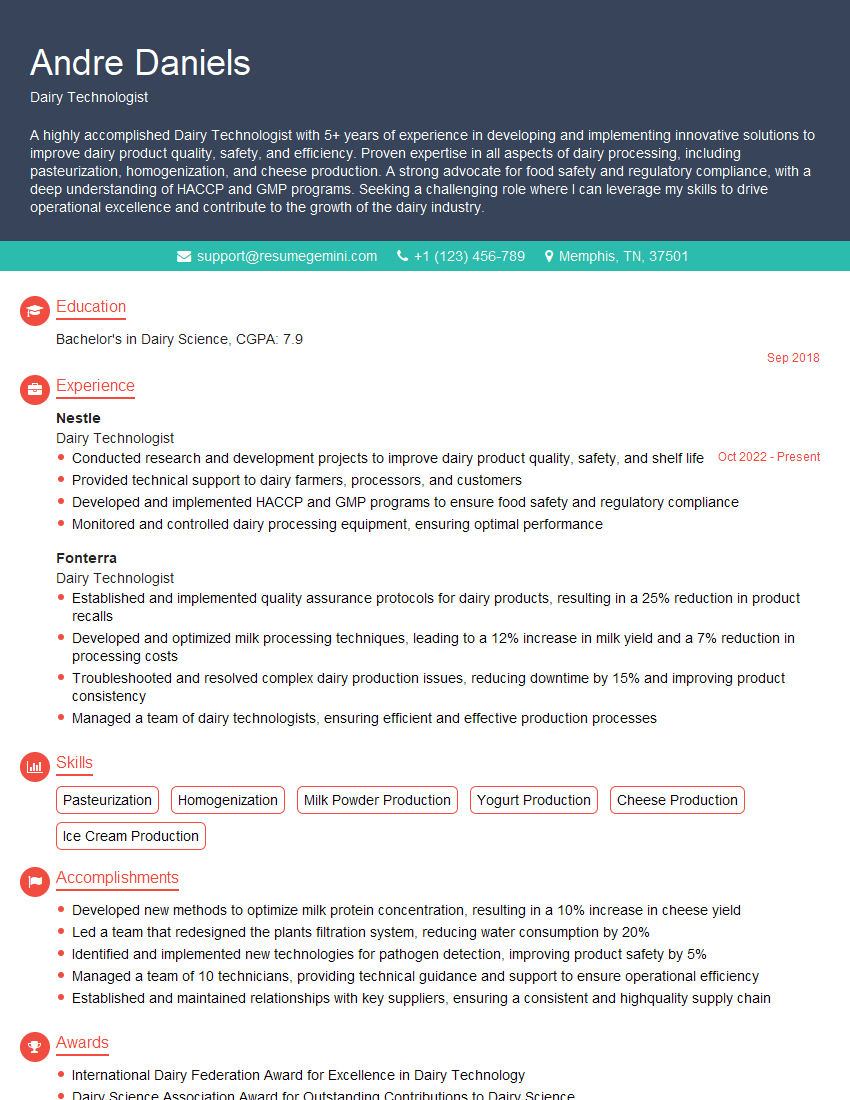
Mastering Milk Quality Assurance and Control opens doors to a rewarding career with excellent growth potential in the food industry. Your expertise in ensuring safe and high-quality milk products is highly valued. To maximize your job prospects, it’s crucial to present your skills effectively. Creating an ATS-friendly resume is key to getting your application noticed. We strongly recommend using ResumeGemini, a trusted resource, to build a professional and impactful resume that highlights your qualifications. Examples of resumes tailored to Milk Quality Assurance and Control are available to help you get started.
Explore more articles
Users Rating of Our Blogs
Share Your Experience
We value your feedback! Please rate our content and share your thoughts (optional).
What Readers Say About Our Blog
Really detailed insights and content, thank you for writing this detailed article.
IT gave me an insight and words to use and be able to think of examples