The right preparation can turn an interview into an opportunity to showcase your expertise. This guide to Molding New Product Development interview questions is your ultimate resource, providing key insights and tips to help you ace your responses and stand out as a top candidate.
Questions Asked in Molding New Product Development Interview
Q 1. Explain the different types of plastic molding processes.
Plastic molding encompasses several processes, each suited to different applications and material properties. The most common include:
- Injection Molding: This is the most widely used process, ideal for high-volume production of complex parts. Molten plastic is injected into a closed mold under high pressure, then cooled and ejected. Think of everything from bottle caps to car dashboards.
- Compression Molding: Here, a preheated plastic material is placed into a mold cavity and compressed using a heated press. This is often used for thermoset plastics (plastics that cure permanently when heated) like fiberglass-reinforced polymers, producing larger parts with consistent properties.
- Extrusion Molding: Plastic is melted and continuously forced through a die to create long, uniform shapes like pipes, tubes, or profiles. Think of the plastic sheathing around electrical wires.
- Blow Molding: A heated plastic tube (parison) is clamped within a mold, and air is injected to inflate it to conform to the mold cavity. This produces hollow shapes like bottles and containers.
- Rotational Molding: Powdered plastic is placed into a mold that rotates in two axes while heated. The powder melts and coats the interior, then cools to form the part. This technique is excellent for large, hollow parts with thick walls, such as kayaks or storage tanks.
- Thermoforming: A plastic sheet is heated until pliable and then formed over a mold using vacuum or pressure. This is suitable for creating shallow-drawn parts, like food containers or packaging.
The choice of process depends on factors like part geometry, material type, production volume, and cost considerations.
Q 2. Describe your experience with injection molding machine parameters.
My experience with injection molding machine parameters is extensive. I’ve worked with machines ranging from small, benchtop models to large, high-tonnage presses. Mastering these parameters is critical for producing high-quality parts consistently. Key parameters include:
- Melt Temperature: Too low, and the plastic won’t flow properly; too high, and it can degrade, leading to defects. This is highly material-dependent and often optimized through experimentation.
- Injection Pressure: This forces the molten plastic into the mold cavity. Insufficient pressure leads to short shots (incomplete filling), while excessive pressure can damage the mold or part.
- Injection Speed: A controlled injection speed prevents air entrapment and ensures uniform filling. It’s often adjusted based on the part’s geometry and material viscosity.
- Mold Temperature: This influences the cooling rate of the part, affecting its final dimensions and mechanical properties. It needs to be carefully controlled to prevent warping or sink marks.
- Clamping Force: This holds the mold halves together during injection, preventing leakage. Insufficient clamping force leads to flash (excess plastic squeezing out).
- Cycle Time: This is the total time for one molding cycle (injection, cooling, ejection). Optimizing cycle time is crucial for maximizing production efficiency.
I routinely use data logging and statistical process control (SPC) to monitor these parameters and make adjustments as needed. For instance, if I see a trend of increasing cycle time, it might signal a problem with the cooling system, requiring preventative maintenance.
Q 3. How do you determine the appropriate material for a specific molding application?
Selecting the right material is paramount to a successful molding project. This requires a thorough understanding of the application’s demands, encompassing mechanical properties, chemical resistance, thermal stability, and cost. My approach involves the following steps:
- Define the Application Requirements: What are the functional requirements of the part? Does it need to be strong, flexible, heat-resistant, chemically inert? What are the environmental conditions it will encounter?
- Material Selection Charts & Databases: I utilize material property databases to identify candidate materials that meet these requirements. This often involves comparing various polymers, copolymers, and blends.
- Prototyping and Testing: After narrowing down the options, I produce prototypes using the selected materials. These prototypes undergo rigorous testing to evaluate their performance under simulated real-world conditions. This might involve tensile testing, impact testing, or chemical resistance tests.
- Cost-Benefit Analysis: While performance is critical, material cost and availability also play a role. I weigh the performance benefits against the total cost to determine the optimal choice.
For example, if designing a car part that needs high impact resistance and heat tolerance, I might consider materials like polycarbonate or reinforced nylon. For a food-contact application, I would prioritize FDA-approved materials that are non-toxic and easily cleaned.
Q 4. What are the common causes of molding defects and how do you troubleshoot them?
Molding defects can stem from various sources – material issues, mold design flaws, or machine parameter issues. Effective troubleshooting involves a systematic approach.
- Short Shots: Insufficient material in the cavity. Check injection pressure, melt temperature, and injection speed.
- Flash: Excess material escaping between mold halves. Inspect mold clamping force, and check for mold wear or damage.
- Sink Marks: Depressions on the part’s surface due to uneven cooling. Optimize mold temperature and cooling channels. Consider material choice.
- Warping: Part deformation after ejection. Review mold design and cooling strategy. May require changes in gate location or part thickness.
- Burn Marks: Discoloration or charring. Reduce melt temperature. Check for material degradation.
- Air Trapping: Voids within the part. Improve mold venting, adjust injection speed, ensure proper mold filling.
My troubleshooting strategy involves carefully examining the defective part, analyzing process parameters, and using root-cause analysis techniques to identify the underlying issue. I utilize process capability studies and statistical analysis to identify potential sources of variation and implement corrective actions. Documentation of each step is vital for continuous improvement.
Q 5. Explain your experience with mold design and CAD software.
I have extensive experience in mold design and utilize CAD software proficiently. My skills encompass 2D and 3D modeling, using software like SolidWorks, AutoCAD, and Pro/ENGINEER.
Mold design is not simply about creating the part geometry; it involves careful consideration of many factors. This includes:
- Gate Location and Design: Proper gate placement is crucial for efficient filling and prevents cosmetic defects.
- Ejection System Design: The ejection system must reliably remove the part from the mold without damage.
- Cooling Channel Design: Efficient cooling channels are essential for minimizing cycle time and preventing warping.
- Mold Material Selection: The mold material choice needs to balance durability, thermal conductivity, and cost.
- Draft Angles: Appropriate draft angles are needed to allow for easy part removal.
I collaborate closely with mold makers throughout the process, providing detailed drawings and specifications. Using simulation software, I can predict potential molding issues early in the design phase, reducing the need for costly revisions later.
Q 6. How do you ensure the quality and consistency of molded parts?
Ensuring the quality and consistency of molded parts is paramount. A multi-faceted approach is essential:
- Process Capability Studies: These studies determine the process’s ability to meet specified tolerances consistently.
- Statistical Process Control (SPC): Implementing SPC charts allows monitoring key parameters in real-time, detecting anomalies, and preventing defects before they occur.
- Regular Mold Maintenance: Scheduled maintenance and mold cleaning are crucial for preventing wear and maintaining dimensional accuracy.
- Incoming Material Inspection: Verifying the quality of the raw material before processing helps prevent defects caused by material variability.
- First Article Inspection (FAI): A thorough inspection of the first produced parts verifies conformity to specifications.
- In-Process Inspection: Regular inspections during production ensure consistent quality and detect potential problems early.
A robust quality management system (QMS), such as ISO 9001, provides a structured framework for these processes. Through continuous monitoring and improvement, we aim for Six Sigma levels of quality, minimizing defects and ensuring customer satisfaction.
Q 7. Describe your experience with statistical process control (SPC) in molding.
Statistical Process Control (SPC) is an integral part of my molding process. I’m experienced in using various SPC tools, including control charts (X-bar and R charts, p-charts, c-charts), to monitor key parameters like melt temperature, injection pressure, cycle time, and part dimensions.
SPC helps in:
- Identifying trends and variations: Early detection of shifts in process parameters, allowing for timely corrective action.
- Reducing variability: Minimizing the range of variation in process parameters, leading to more consistent part quality.
- Improving process capability: Determining the process’s ability to meet specifications and identifying opportunities for improvement.
- Preventing defects: By monitoring key parameters and promptly addressing anomalies, we can prevent the production of defective parts.
I use software packages like Minitab to create and analyze SPC charts. I also train operators on the interpretation of these charts, empowering them to actively participate in process control and improvement. A well-implemented SPC system contributes significantly to consistent part quality and reduced waste.
Q 8. Explain your understanding of Design for Manufacturing (DFM) principles in molding.
Design for Manufacturing (DFM) in molding is a crucial process that integrates manufacturing considerations into the product design phase. It aims to optimize the design for efficient and cost-effective production using injection molding. This prevents costly redesigns and production issues later in the development cycle.
- Material Selection: Choosing a material compatible with molding processes and the desired product properties (strength, flexibility, temperature resistance, etc.). For example, selecting a material with low viscosity for complex geometries to avoid filling issues.
- Part Geometry: Designing parts with features that are easily manufacturable. This includes avoiding undercuts, ensuring sufficient draft angles for easy ejection from the mold, and optimizing wall thickness for consistent material flow. For instance, a steep wall angle might trap air in the mold cavity, causing defects.
- Moldability Analysis: Employing mold flow analysis software (as discussed later) to simulate the filling process and predict potential problems like weld lines, short shots, or air traps.
- Tolerances: Defining realistic tolerances to account for variations in the molding process. Overly tight tolerances can lead to increased costs and potential scrap.
- Assembly Considerations: Designing parts for easy assembly, minimizing the number of components, and considering the impact of molding features on subsequent assembly operations. For example, designing snap-fits that reliably engage but are still manufacturable.
By integrating DFM early, we significantly reduce production costs, lead times, and the risk of defects, leading to a more successful product launch.
Q 9. How do you manage the project timelines and budgets for new product development in molding?
Managing project timelines and budgets in new product development requires a structured approach. We use a combination of project management methodologies and tools.
- Gantt Charts: To visually represent tasks, dependencies, and deadlines, ensuring all team members are aware of their responsibilities and timelines.
- Work Breakdown Structure (WBS): Breaking down the project into smaller, manageable tasks, facilitating better control and tracking of progress.
- Budget Allocation: Careful allocation of funds to each stage (design, mold making, testing, production) with contingency plans for unforeseen issues. Detailed cost estimations are performed early on, using historical data and vendor quotes.
- Regular Meetings: Holding regular meetings with the design team, mold makers, and other stakeholders to review progress, identify potential risks, and adjust timelines and budget as needed.
- Risk Management: Identifying potential risks, assessing their impact, and developing mitigation strategies. This could include procuring critical components early to avoid delays or having backup plans for mold-making challenges.
Through this rigorous approach, we aim to deliver projects on time and within budget, minimizing surprises along the way. We treat budget overruns as a serious problem requiring detailed investigation and corrective action.
Q 10. Describe your experience with mold flow analysis software.
I have extensive experience using various mold flow analysis software packages, including Moldex3D and Autodesk Moldflow. These tools allow us to simulate the injection molding process virtually, predicting potential issues before actual mold production. This is crucial for preventing costly errors and optimizing the design.
For instance, we recently used Moldex3D to analyze a complex part with thin walls and intricate internal features. The simulation revealed potential weld line formation that could compromise the part’s strength. By adjusting the gate location and runner system, as suggested by the software, we successfully eliminated the problem, avoiding costly rework on the mold.
My expertise encompasses not only running simulations but also interpreting the results, understanding the impact of various parameters (melt temperature, injection pressure, cooling time), and suggesting design modifications to improve part quality and cycle times. This capability ensures that we’re not just using the software but leveraging its full potential for optimal design and manufacturing.
Q 11. What are the key considerations for selecting a molding material?
Selecting the right molding material is a critical decision, impacting the product’s performance, cost, and manufacturability. Several key considerations guide this choice:
- Mechanical Properties: Strength, stiffness, toughness, elasticity, and fatigue resistance are crucial depending on the application. A beverage bottle needs different properties than a car part.
- Thermal Properties: Melting point, heat deflection temperature, and thermal conductivity determine the material’s suitability for specific temperature ranges and applications. Will the part be exposed to high heat or cold?
- Chemical Resistance: Resistance to chemicals, solvents, and degradation is critical for products exposed to harsh environments. Food packaging requires inert materials.
- Appearance: Color, gloss, and surface texture influence the aesthetic appeal. A transparent packaging requires specific materials.
- Cost: Material cost is a significant factor influencing the overall product price. Balancing performance and cost is essential.
- Processability: The material’s flow characteristics, shrinkage, and tendency to warp during molding affect the ease of manufacturing. Highly viscous materials require more pressure and temperature control.
We often conduct material trials and testing to validate our selection. Understanding the material data sheet and its limitations is a fundamental part of the process.
Q 12. How do you validate the design and functionality of a new mold?
Validating a new mold involves a rigorous process ensuring it meets the design specifications and produces parts of acceptable quality. This typically involves several stages:
- Initial Inspection: Thorough visual inspection of the mold for any defects or imperfections during its creation.
- Trial Runs: Producing a small number of parts using the mold to assess initial part quality and identify any potential issues like flash, short shots, or sink marks.
- Dimensional Verification: Measuring the dimensions of the molded parts against the design specifications to ensure they are within the defined tolerances.
- Functional Testing: Testing the parts to verify their performance and functionality according to design requirements. This could involve mechanical testing, chemical testing, or any other relevant tests.
- Mold Flow Analysis Verification: Comparing the actual molded part results against the predictions made during the mold flow analysis stage. This helps refine the process and verify simulation accuracy.
- First Article Inspection (FAI): A formal inspection of the first production run to ensure the mold meets all quality requirements and documentation.
We typically document each stage with detailed reports, including photographs and measurements. This rigorous validation process ensures that the mold is ready for mass production and produces consistently high-quality parts.
Q 13. Explain your experience with root cause analysis techniques in a molding environment.
Root cause analysis (RCA) is vital in a molding environment for identifying the underlying causes of defects and preventing their recurrence. We use various techniques depending on the situation:
- 5 Whys: A simple yet effective technique to drill down to the root cause by repeatedly asking ‘Why?’ until the fundamental problem is identified. For example, ‘Why are we getting short shots?’ – ‘Insufficient injection pressure’ – ‘The pump is malfunctioning’ – ‘The pump needs maintenance’ – ‘Lack of preventive maintenance schedule’.
- Fishbone Diagram (Ishikawa Diagram): A visual tool to brainstorm potential causes categorized by factors like materials, machines, methods, and manpower. It helps structure our investigation systematically.
- Pareto Chart: Identifying the vital few problems that contribute to the majority of defects. This allows us to focus on the most impactful issues.
- Data Analysis: Analyzing historical data on defects, including type, frequency, and location, to pinpoint trends and patterns.
After identifying the root cause, we implement corrective actions and monitor the effectiveness of those actions to prevent future occurrences. For example, if the root cause is determined to be improper machine maintenance, we would implement a revised maintenance schedule and operator training program.
Q 14. How do you improve cycle times in the injection molding process?
Improving cycle times in injection molding is essential for increasing productivity and reducing costs. Strategies involve:
- Mold Design Optimization: Designing molds with thinner walls, optimized cooling channels, and efficient gate locations to accelerate cooling. Simulations are vital here.
- Material Selection: Choosing materials with lower viscosity and faster cooling rates can significantly reduce cycle time.
- Process Parameter Optimization: Fine-tuning injection pressure, melt temperature, and holding pressure can reduce filling time and cooling time.
- Mold Temperature Control: Implementing precise temperature control for the mold using advanced temperature controllers to ensure consistent and rapid cooling.
- Machine Optimization: Regular maintenance of the injection molding machine and upgrading its components (e.g., faster hydraulic system) can improve performance.
- Automation: Automating various aspects of the process, such as part removal, reduces manual handling time.
A systematic approach, incorporating design, material, and process improvements, is essential for achieving significant reductions in cycle times. We frequently use Design of Experiments (DOE) to scientifically optimize parameters, ensuring data-driven improvements.
Q 15. What are your strategies for reducing material waste in molding?
Reducing material waste in molding is crucial for profitability and environmental responsibility. My strategies focus on optimization at every stage, from design to production.
- Design for Manufacturing (DFM): This is paramount. I work closely with designers to ensure the part is easily molded with minimal material usage. This includes optimizing wall thicknesses, minimizing undercuts, and choosing the most efficient part geometry. For example, instead of a complex, multi-part design, we might explore a single-part solution achieved through clever design and material selection.
- Mold Optimization: I analyze the mold design itself, identifying areas for improvement in runner and gate systems. Smaller runners and strategically placed gates can significantly reduce sprue and runner waste. We might explore techniques like hot runner systems that eliminate the need for sprues altogether.
- Process Optimization: This involves fine-tuning the molding parameters – injection pressure, temperature, injection speed – to maximize material flow and minimize excess material. Regular monitoring and adjustments based on real-time data are essential. Data analysis from previous runs helps identify and eliminate areas of material inefficiency.
- Material Selection: Selecting the right material is critical. We consider both the performance requirements of the part and the material’s inherent waste potential. Some materials are more prone to shrinkage or warping, leading to higher rejection rates.
- Recycling and Reprocessing: We actively explore options for recycling regrind from the molding process. This regrind, often mixed with virgin material at carefully controlled ratios, can reduce overall material consumption and cost.
By implementing these strategies in a holistic manner, we can substantially decrease material waste and improve the overall efficiency and sustainability of our molding operations.
Career Expert Tips:
- Ace those interviews! Prepare effectively by reviewing the Top 50 Most Common Interview Questions on ResumeGemini.
- Navigate your job search with confidence! Explore a wide range of Career Tips on ResumeGemini. Learn about common challenges and recommendations to overcome them.
- Craft the perfect resume! Master the Art of Resume Writing with ResumeGemini’s guide. Showcase your unique qualifications and achievements effectively.
- Don’t miss out on holiday savings! Build your dream resume with ResumeGemini’s ATS optimized templates.
Q 16. Describe your experience with different types of molding machines.
My experience encompasses a wide range of molding machines, from small, benchtop injection molding machines ideal for prototyping to large, high-tonnage machines used for mass production. I’m proficient with various types, including:
- Hydraulic Injection Molding Machines: These are the workhorses of the industry, known for their versatility and high clamping forces. I’ve worked extensively with machines ranging from 50 tons to 5000 tons, each requiring a different level of expertise in setup, maintenance, and troubleshooting.
- Electric Injection Molding Machines: These are becoming increasingly popular due to their energy efficiency, precise control, and reduced noise. I’ve experienced firsthand the benefits of their precise control over injection parameters, leading to improved part quality and consistency.
- Two-Platoon Molding Machines: These allow for continuous operation by having two sets of molds, significantly increasing production capacity. I’ve overseen the setup and operation of these machines, ensuring seamless transitions between mold sets to maximize output.
- Gas-Assisted Injection Molding Machines: These machines use compressed gas to create hollow parts, reducing material usage and improving part strength. I understand the intricacies of gas pressure control and its impact on part geometry.
My understanding extends beyond simple operation; it encompasses preventative maintenance, troubleshooting, and optimizing machine parameters for different materials and part designs.
Q 17. How do you ensure the safety of personnel and equipment during molding operations?
Safety is paramount. My approach is layered, incorporating procedural safety, equipment safeguards, and ongoing training.
- Lockout/Tagout Procedures: Strict adherence to lockout/tagout procedures is non-negotiable before any maintenance or repair work on molding machines. This prevents accidental startup and ensures the safety of personnel.
- Machine Guards and Safety Interlocks: All molding machines are equipped with appropriate guards and safety interlocks to prevent access to moving parts during operation. Regular inspections are conducted to ensure these safeguards are functioning correctly.
- Personal Protective Equipment (PPE): Employees are always required to wear appropriate PPE, including safety glasses, hearing protection, and heat-resistant gloves, depending on the specific task.
- Emergency Shutdown Procedures: Clearly defined emergency shutdown procedures are in place and regularly practiced by all personnel. This includes knowing the location and operation of emergency stop buttons and fire suppression systems.
- Regular Safety Training: Ongoing safety training is provided to all personnel, covering machine operation, hazard identification, and emergency response. This training is not a one-time event; it is continually updated and reinforced to maintain a high safety standard.
- Material Safety Data Sheets (MSDS): We meticulously handle all materials according to their MSDS, ensuring proper storage, handling, and disposal procedures to minimize any risks.
A proactive safety culture is fostered through open communication, regular safety inspections, and a zero-tolerance policy for unsafe practices.
Q 18. What are your experience with automation in the molding process?
Automation plays a vital role in modern molding, boosting efficiency and consistency. My experience includes integration and management of various automation systems.
- Robotic Systems: I’ve worked with robotic systems for part handling, including removing parts from the mold, placing them on conveyors, and loading them into secondary operations. This enhances speed, consistency, and reduces manual labor.
- Automated Material Handling: I’m familiar with automated systems for conveying materials, raw material feeding and regrind management. This streamlines the overall process and minimizes material waste.
- Process Monitoring and Control Systems: I have experience with sophisticated process control systems that monitor machine parameters (temperature, pressure, speed) and automatically adjust them to maintain optimal conditions. This ensures consistency and improves part quality.
- Data Acquisition and Analysis: Automation provides valuable data on production parameters, allowing for better decision-making and continuous improvement. I use this data to identify areas for optimization and predict potential issues.
My experience extends beyond basic integration. I understand the complexities of system design, programming, troubleshooting, and maintenance, ensuring seamless operation and maximum efficiency. For instance, I led the integration of a vision system into a robotic cell to ensure only correctly molded parts were packaged, significantly reducing scrap.
Q 19. How do you manage the transition from prototype to mass production in molding?
The transition from prototype to mass production in molding requires meticulous planning and execution. It’s not simply scaling up; it’s about ensuring consistent quality and cost-effectiveness at higher volumes.
- Design Verification and Validation: The prototype mold undergoes rigorous testing to validate its design and manufacturing process. This includes confirming dimensional accuracy, material properties, and cycle time. Any necessary design changes are incorporated before proceeding to mass production.
- Mold Tooling for Mass Production: The prototype mold is often different from the production mold. Production molds are designed for higher durability and longer lifecycles, often made from hardened steel. This step demands careful planning and collaboration with tooling suppliers.
- Process Qualification: The molding process is thoroughly qualified to ensure it can consistently produce parts within specified tolerances. This involves establishing optimal process parameters and running controlled production trials.
- Quality Control Implementation: A robust quality control system is established to monitor the quality of parts produced during mass production. This includes in-process inspection, statistical process control (SPC), and final product inspection.
- Supplier Selection and Management: Careful selection and management of suppliers for materials, tooling, and other components are critical for consistent quality and timely delivery.
Success lies in rigorous planning and a well-defined transition plan that addresses all the potential challenges. For example, in one project, we carefully phased the transition, starting with smaller production runs to fine-tune the process before ramping up to full production capacity. This allowed us to address any unforeseen issues early on.
Q 20. Explain your understanding of different types of mold components and their functions.
Mold components are the building blocks of the mold, each playing a critical role in the molding process.
- Cavity and Core: These are the defining features of the mold, forming the shape of the molded part. The cavity is the female part, and the core is the male part. Precise machining of these components is crucial for dimensional accuracy.
- Runner System: This system channels molten material from the sprue to the gate. Different runner systems exist, like hot runners or cold runners, each with its own advantages and disadvantages.
- Gate: The gate is where molten material enters the cavity. The gate design is critical to controlling flow, minimizing stress, and preventing defects. Various types exist, including pin gates, edge gates, and submarine gates.
- Ejector System: This system removes the molded part from the cavity after cooling. It typically includes ejector pins and mechanisms that push the part out of the mold.
- Sprue Bushing: Located at the entrance to the runner system, this bushing helps control the flow of molten material into the mold and prevents leakage.
- Cooling System: This network of channels within the mold allows for controlled cooling of the molded part. Effective cooling is essential for achieving desired part properties and cycle time.
Understanding the function of each component is vital for troubleshooting and optimizing the molding process. For instance, a poorly designed gate can lead to short shots, whereas a malfunctioning ejector system can result in damaged parts.
Q 21. What are your experience with different types of gating systems?
Gating systems are critical for directing molten material into the mold cavity. Different systems offer varying advantages depending on the part design and material.
- Direct Gating: The simplest system, where the molten material flows directly into the cavity. Suitable for simple parts but can lead to weld lines.
- Indirect Gating: The material flows through runners before entering the cavity. Reduces weld lines and is better suited for more complex parts.
- Submarine Gating: The gate is located under the part, allowing for a cleaner surface finish.
- Edge Gating: The gate is located on the edge of the part, often used for thin-walled parts.
- Pin Gating: Uses a small pin to control the flow of material into the cavity. Offers good control and minimizes flow disturbances.
- Hot Runner Systems: Eliminate sprues and runners, minimizing material waste. More expensive initially but more efficient in the long run.
The selection of an appropriate gating system depends on several factors, including part geometry, material properties, cycle time requirements, and desired surface finish. For example, hot runner systems are ideal for high-volume production of complex parts, while direct gating might suffice for simpler, lower-volume applications.
Q 22. How do you ensure dimensional accuracy and tolerances in molded parts?
Ensuring dimensional accuracy and tolerances in molded parts is crucial for functionality and aesthetics. It’s a multifaceted process starting even before the mold is designed. We begin by meticulously reviewing the part design, specifying tight tolerances in the CAD model, and utilizing advanced simulation software to predict potential issues like warping or shrinkage.
During mold creation, precision machining is essential. We use high-precision CNC machining centers to create molds to within a few micrometers of the target dimensions. Furthermore, we incorporate features like cooling channels strategically to control the rate of part cooling, thus minimizing warping. Regular mold maintenance is also vital for consistent production. We regularly inspect molds for wear and tear, using techniques like CMM (Coordinate Measuring Machine) inspection to verify mold dimensions and identify any deviation from the specified tolerances.
For example, in a recent project involving a precision plastic housing for an electronic device, we employed a multi-stage quality control process, including pre-production mold trials, and in-process monitoring using statistical process control (SPC) techniques. This allowed us to detect and correct any deviations from specified tolerances early on, resulting in parts that met the demanding specifications.
Q 23. Explain your experience with mold maintenance and repair.
Mold maintenance and repair are critical for extending mold lifespan and maintaining consistent part quality. My experience encompasses preventative maintenance, troubleshooting, and repair of various mold types, including injection molds, compression molds, and blow molds. Preventative maintenance involves regular inspections, cleaning, and lubrication of mold components. We use specialized cleaning solutions and equipment to remove residual material and prevent buildup.
Troubleshooting involves diagnosing the root cause of molding defects, such as short shots, flash, or sink marks. This often requires close examination of the mold, part analysis, and process parameter adjustments. Repair techniques range from simple polishing and part replacement to more complex repairs involving EDM (Electrical Discharge Machining) or welding. For example, I once repaired a cracked injection mold core pin by using EDM to precisely remove the damaged section and then welding in a replacement. This prevented a costly mold replacement and kept production on schedule.
Q 24. Describe your experience with different types of mold materials.
My experience covers a wide range of mold materials, each with its own strengths and limitations. Common materials include hardened tool steels (like P20, H13, and S7) for high-volume production; aluminum for prototyping and lower-volume production; and specialized materials like beryllium copper for high-temperature applications or maraging steel for extreme wear resistance.
The selection of mold material is driven by several factors, including the type of plastic being molded, production volume, required surface finish, and the anticipated lifespan of the mold. For instance, hardened tool steels are preferred for high-volume production of thermoplastics due to their wear resistance and high strength. Aluminum alloys are often selected for prototyping due to their machinability and lower cost, allowing for faster turnaround times. Choosing the right material is crucial for optimizing the overall molding process and minimizing cost.
Q 25. How do you optimize the molding process for cost-effectiveness?
Optimizing the molding process for cost-effectiveness requires a holistic approach encompassing material selection, mold design, and process parameters. One key strategy is to minimize material waste. This can be achieved through efficient mold design, such as optimizing runner and gate systems to reduce the amount of excess material. Furthermore, selecting the right plastic material is essential, considering both its cost and its performance characteristics.
Process optimization involves fine-tuning parameters like injection pressure, melt temperature, and cycle time to achieve the desired part quality while minimizing energy consumption and production time. Lean manufacturing principles, such as reducing setup times and implementing automated systems, can further enhance cost-effectiveness. Data analysis, utilizing statistical process control (SPC) and process capability analysis, plays a crucial role in identifying areas for improvement and preventing defects. For example, by optimizing the injection pressure and cycle time in one project, we reduced cycle time by 15%, resulting in significant cost savings.
Q 26. What are your experience with different types of runners and sprues?
Runners and sprues are essential components of the molding system, responsible for delivering molten plastic to the mold cavity. My experience spans various types, including cold runners (where the plastic solidifies in the runner system and is removed later), hot runners (where the plastic remains molten in the runner system, reducing material waste), and different runner designs (such as edge gates, tab gates, and sprue gates).
The choice of runner and sprue system significantly impacts part quality, cycle time, and material cost. Cold runner systems are generally less expensive but result in more material waste. Hot runner systems are more expensive initially, but they minimize waste and improve part quality. The design of individual gates can affect part aesthetics and flow patterns. The selection of the optimal system requires careful consideration of the specific part design and production requirements. For instance, a complex part requiring minimal flash might warrant a hot runner system with edge gates for a cleaner finish.
Q 27. How do you handle changes in design or specifications during the molding process?
Handling design changes or specification updates during the molding process requires a methodical and collaborative approach. The first step involves carefully reviewing the proposed changes and assessing their impact on the existing mold and the molding process. This might involve re-evaluating the mold design, making adjustments to the mold itself, or adjusting process parameters. A thorough risk assessment identifies potential problems and their mitigation strategies.
Effective communication with the design team and the manufacturing team is vital to ensure a smooth transition. Detailed documentation of the changes, along with testing and validation of the modified process, is crucial to ensure part quality. Changes might require updating CAD models, re-machining the mold (at least partially), and conducting verification tests. This process emphasizes change control procedures and the proper documentation to maintain traceability.
Q 28. Describe a challenging project involving molding new product development and how you overcame it.
One challenging project involved developing a high-precision, thin-walled plastic component with intricate internal features for a medical device. The thin walls presented a high risk of warping and sink marks, while the internal features required precise gate placement to avoid flow problems. Initial attempts resulted in unacceptable levels of defects.
To overcome this challenge, we employed several strategies: First, we used advanced mold flow simulation software to optimize the gate location and runner system, minimizing flow imbalances. Second, we experimented with different mold materials and cooling strategies to control the cooling rate and minimize warping. Finally, we implemented a robust quality control system using in-line process monitoring and statistical process control (SPC) to detect and address any deviations early on. Through this iterative process of simulation, prototyping, and rigorous testing, we ultimately achieved acceptable yield rates and a final product that met all the stringent requirements of the medical device application. This project highlighted the importance of a systematic approach combining simulation, advanced manufacturing techniques, and a commitment to rigorous quality control.
Key Topics to Learn for Molding New Product Development Interview
- Material Selection & Properties: Understanding the characteristics of various plastics (thermoplastics, thermosets) and their suitability for different molding processes and applications. Consider factors like strength, flexibility, temperature resistance, and cost.
- Mold Design & Engineering: Familiarize yourself with the principles of mold design, including gate locations, runner systems, venting, and cooling considerations. Be prepared to discuss the impact of design choices on product quality and cycle time.
- Injection Molding Process: Gain a comprehensive understanding of the injection molding process, from material melting and injection to cooling and ejection. Discuss common process parameters and their effects on the final product.
- Process Optimization & Troubleshooting: Learn to identify and solve common molding defects such as short shots, sink marks, warping, and flash. Understand the use of statistical process control (SPC) in monitoring and improving process consistency.
- Quality Control & Testing: Become familiar with various quality control methods used in molding, including dimensional inspection, visual inspection, and material testing. Understand how to interpret test results and identify areas for improvement.
- Cost Analysis & Manufacturing Economics: Develop an understanding of the cost drivers in molding, including material costs, tooling costs, labor costs, and energy consumption. Be prepared to discuss strategies for cost reduction and optimization.
- Design for Manufacturing (DFM): Learn how design choices impact manufacturability in molding. Understand the importance of considering moldability early in the product development process.
- New Technologies & Advancements: Stay updated on the latest advancements in molding technologies, such as rapid prototyping, multi-component molding, and automation.
Next Steps
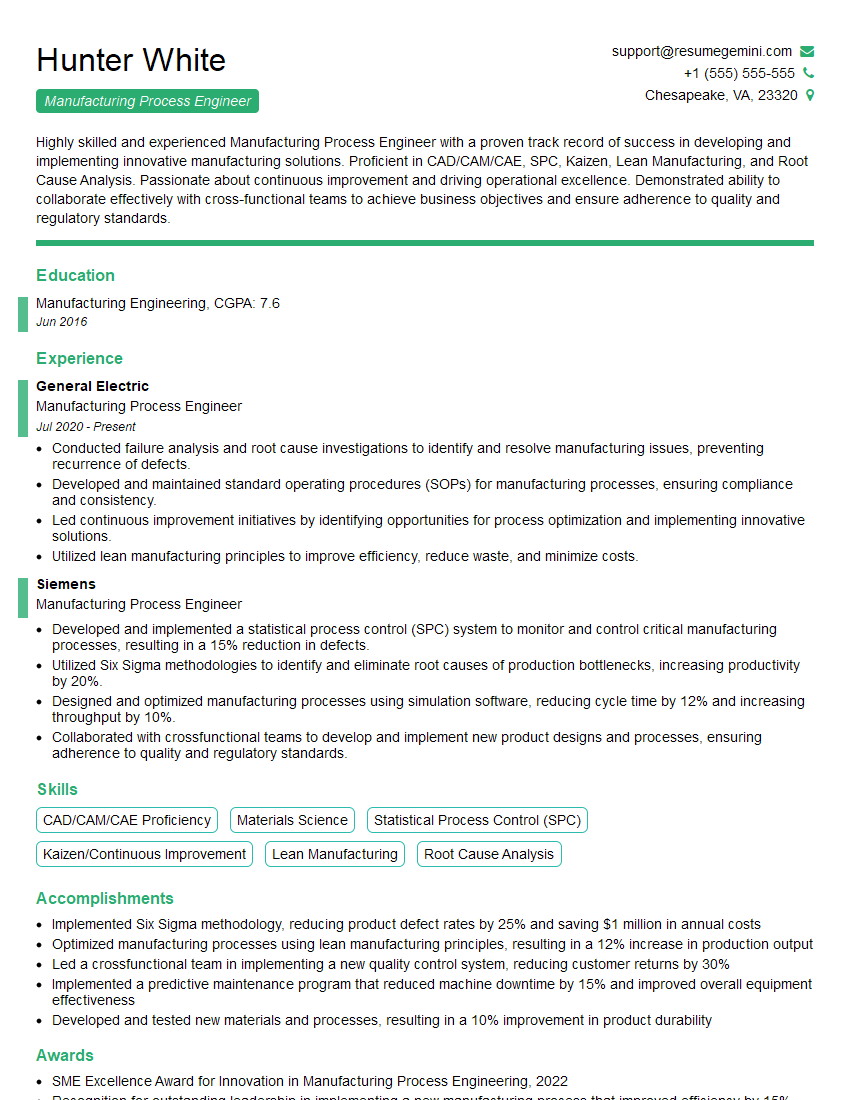
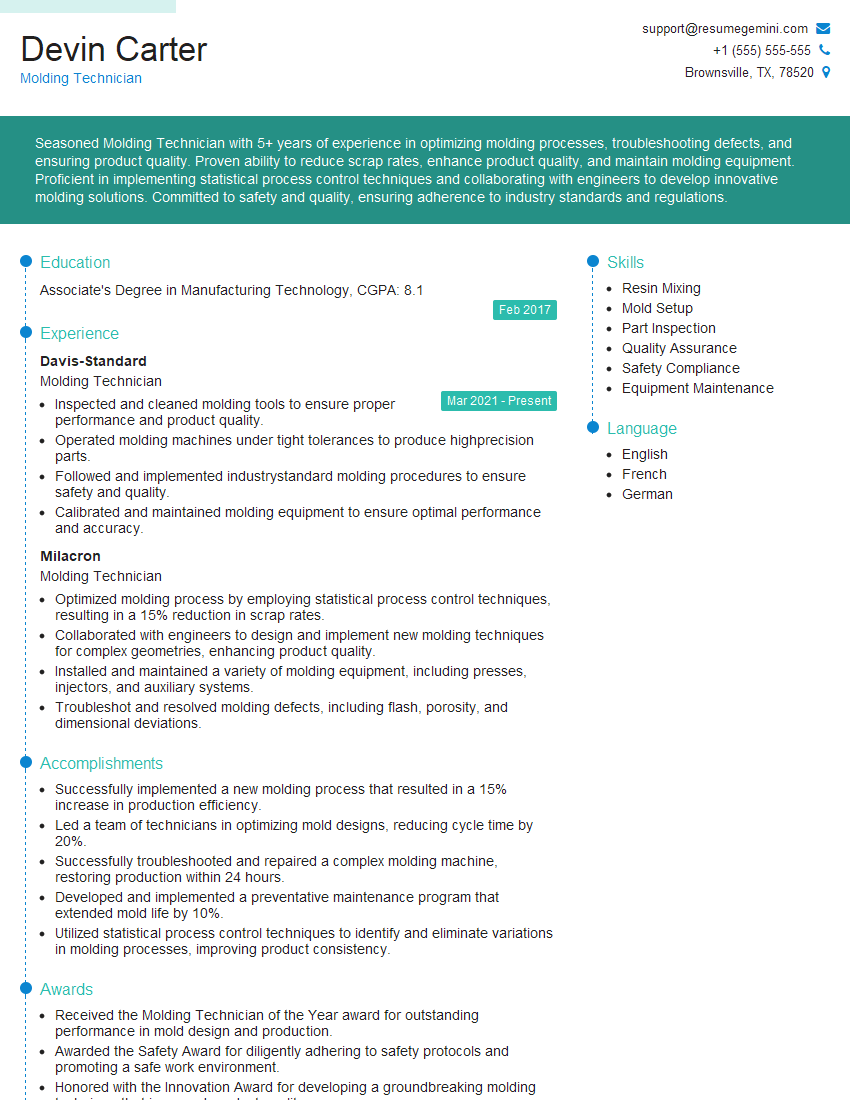
Mastering Molding New Product Development significantly enhances your career prospects, opening doors to exciting roles with increased responsibility and earning potential. A strong, ATS-friendly resume is crucial for maximizing your job search success. To create a compelling resume that highlights your skills and experience in this field, we highly recommend using ResumeGemini. ResumeGemini provides a user-friendly platform to build professional resumes, and we offer examples of resumes tailored to Molding New Product Development to help you get started.
Explore more articles
Users Rating of Our Blogs
Share Your Experience
We value your feedback! Please rate our content and share your thoughts (optional).
What Readers Say About Our Blog
Really detailed insights and content, thank you for writing this detailed article.
IT gave me an insight and words to use and be able to think of examples