Every successful interview starts with knowing what to expect. In this blog, we’ll take you through the top Molding Plant Management interview questions, breaking them down with expert tips to help you deliver impactful answers. Step into your next interview fully prepared and ready to succeed.
Questions Asked in Molding Plant Management Interview
Q 1. Describe your experience managing a molding plant.
My experience managing a molding plant spans over 15 years, encompassing various roles from production supervisor to plant manager. I’ve overseen operations in facilities producing a wide range of products, from small, intricate components to larger, more complex parts. My responsibilities have included budgeting, strategic planning, production scheduling, quality control, maintenance management, and team leadership. For instance, at Acme Plastics, I successfully spearheaded a project to implement a new injection molding machine, resulting in a 20% increase in production output within six months. This involved careful planning, team training, and meticulous integration into existing processes. Another key achievement involved streamlining the warehousing and logistics, leading to a significant reduction in lead times and improved customer satisfaction.
Q 2. Explain your process for optimizing production efficiency in a molding plant.
Optimizing production efficiency in a molding plant is a continuous process. My approach focuses on several key areas:
- Process Optimization: Analyzing cycle times, material usage, and overall process flow to identify bottlenecks. We often employ value stream mapping to visualize the entire process and identify areas for improvement.
- Preventive Maintenance: A robust preventative maintenance schedule is crucial. Regularly scheduled inspections and maintenance prevent costly downtime caused by equipment failures. This includes tracking machine runtimes, conducting regular inspections, and implementing a predictive maintenance strategy using data analytics.
- Lean Manufacturing Principles: Implementing 5S (Sort, Set in Order, Shine, Standardize, Sustain) methodology to maintain a clean, organized, and efficient work environment. This minimizes waste and improves workflow. We also focus on reducing setup times, improving material flow, and eliminating non-value-added activities.
- Data Analysis and KPI Tracking: Regular monitoring of key performance indicators (KPIs) such as Overall Equipment Effectiveness (OEE), cycle time, scrap rate, and production output. This data drives informed decisions and helps identify areas needing attention. For example, a sudden increase in scrap rate might indicate a problem with the molding process or material quality.
- Employee Training and Empowerment: Well-trained employees are vital. Regular training programs equip the team with the knowledge and skills needed to operate efficiently and effectively. Empowering employees to identify and suggest improvements fosters a culture of continuous improvement.
Q 3. How do you handle equipment malfunctions and downtime in a molding operation?
Handling equipment malfunctions and downtime requires a proactive and systematic approach. My strategy involves:
- Preventive Maintenance Program: As mentioned earlier, this is the first line of defense. A well-maintained machine is less likely to fail.
- Rapid Response Team: A dedicated team is responsible for troubleshooting and repairing equipment failures quickly and efficiently. This team undergoes specialized training and has access to necessary spare parts and tools.
- Root Cause Analysis: After a malfunction, we conduct a thorough root cause analysis to understand the underlying cause and prevent recurrence. This involves gathering data, interviewing personnel, and analyzing the failure mode. We use techniques like 5 Whys to get to the root cause.
- Spare Parts Inventory Management: Maintaining an adequate inventory of critical spare parts minimizes downtime. This inventory is managed using an inventory management system to track usage and order new parts proactively.
- External Support: If the problem is complex or requires specialized expertise, we utilize the services of equipment manufacturers or specialized maintenance companies.
For example, a recent hydraulic pump failure was resolved within two hours due to our rapid response team’s expertise and readily available spare parts. The root cause analysis identified a need for more frequent filter changes, which was immediately incorporated into the preventative maintenance schedule.
Q 4. What are your strategies for improving product quality in a molding plant?
Improving product quality is paramount. My strategies include:
- Strict Quality Control: Implementing rigorous quality control checks at every stage of the production process, from raw material inspection to finished product testing. This often involves statistical process control (SPC) techniques to monitor process variations and identify potential problems early on.
- Process Capability Studies: Regularly conducting process capability studies to determine the ability of the production process to meet specifications. This data informs decisions on process improvement and equipment upgrades.
- Employee Training: Equipping employees with the skills and knowledge to identify and correct quality defects. This includes training on proper operating procedures, quality control techniques, and problem-solving methodologies.
- Supplier Relationship Management: Working closely with suppliers to ensure the quality of raw materials. This involves regular audits and performance reviews of our suppliers.
- Continuous Improvement: Utilizing tools like Kaizen events (continuous improvement workshops) to identify and eliminate sources of defects. For example, using a control chart to track the percentage of defective parts identified during a specific period and implementing corrective actions when the percentages are beyond control limits.
Q 5. How do you manage and motivate your team in a high-pressure molding environment?
Managing and motivating a team in a high-pressure molding environment requires strong leadership skills and a supportive work environment. My approach focuses on:
- Clear Communication: Maintaining open and transparent communication with the team, providing regular updates on production targets, challenges, and successes.
- Teamwork and Collaboration: Fostering a collaborative team environment where employees feel valued and respected. We regularly conduct team-building activities and encourage open communication.
- Employee Empowerment: Empowering employees to take ownership of their work and contribute to the improvement of processes. This fosters a sense of responsibility and accountability.
- Recognition and Rewards: Recognizing and rewarding outstanding performance. This can include both formal recognition programs and informal expressions of appreciation.
- Work-Life Balance: Promoting a healthy work-life balance to prevent burnout and maintain employee morale. This includes flexible scheduling options where feasible.
For example, during a particularly demanding production run, I implemented a system of daily team huddles to keep everyone informed and address challenges proactively. This kept morale high and prevented burnout.
Q 6. Describe your experience with implementing lean manufacturing principles in a molding setting.
My experience with lean manufacturing principles in a molding setting is extensive. I’ve successfully implemented various lean techniques, including:
- 5S: Implementing 5S to create a clean, organized, and efficient work environment, resulting in reduced waste and improved safety.
- Value Stream Mapping: Utilizing value stream mapping to identify and eliminate non-value-added activities in the production process.
- Kaizen Events: Conducting Kaizen events to systematically improve processes and eliminate waste.
- Kanban: Implementing Kanban systems for managing inventory and production flow. This reduces work-in-progress (WIP) and improves delivery times.
- Total Productive Maintenance (TPM): Implementing TPM to ensure equipment is well-maintained and running at optimal efficiency.
In one instance, a Kaizen event focused on reducing setup times for injection molding machines. By simplifying the setup process and standardizing procedures, we achieved a 30% reduction in setup time, significantly increasing production efficiency.
Q 7. How do you ensure the safety of your employees in a molding plant?
Ensuring employee safety is my top priority. My approach includes:
- Comprehensive Safety Training: Providing all employees with comprehensive safety training, including machine operation, lockout/tagout procedures, and hazard identification.
- Regular Safety Audits: Conducting regular safety audits to identify potential hazards and address safety concerns proactively. This includes visual inspections of the plant floor, review of safety records, and discussions with employees.
- Personal Protective Equipment (PPE): Ensuring that all employees have access to and use appropriate personal protective equipment (PPE), such as safety glasses, hearing protection, and steel-toe boots.
- Emergency Response Plan: Developing and implementing a comprehensive emergency response plan that includes procedures for handling various emergencies, such as fire, equipment malfunctions, and medical emergencies.
- Safety Culture: Creating a strong safety culture where employees are empowered to report hazards and participate in safety initiatives. This involves active promotion of safe practices, and rewarding employees for their contributions to a safe work environment.
We conduct regular safety training and drills to reinforce safe working practices and ensure preparedness for emergencies. This commitment to safety has resulted in a significant reduction in workplace accidents.
Q 8. What are your methods for managing inventory and materials in a molding operation?
Managing inventory and materials in a molding operation is crucial for efficiency and profitability. It involves a multi-pronged approach encompassing accurate forecasting, robust inventory tracking, and effective material handling.
My methods typically begin with demand forecasting, utilizing historical data and sales projections to predict future needs. This prevents overstocking of slow-moving materials and minimizes the risk of stockouts for critical components. We employ a Material Requirements Planning (MRP) system to schedule and track material usage, ensuring the right materials are available at the right time. This system integrates seamlessly with our production schedule, alerting us to potential shortages well in advance.
Inventory tracking is done through a combination of barcode scanning and a dedicated inventory management software. This allows real-time visibility into stock levels, facilitating informed purchasing decisions. We utilize the Just-In-Time (JIT) inventory management philosophy wherever possible, minimizing storage costs and reducing waste from obsolete materials. For raw materials with long lead times, we maintain a strategic buffer stock to prevent production delays. Finally, our material handling processes are optimized for efficiency. This includes clearly marked storage areas, efficient storage methods (e.g., racking systems), and well-trained personnel who are adept at handling sensitive materials to prevent damage.
For example, in a previous role, we implemented a new inventory management system which reduced our inventory carrying costs by 15% and improved order fulfillment by 10%, leading to increased customer satisfaction.
Q 9. What is your experience with preventative maintenance in a molding plant?
Preventative maintenance (PM) is the cornerstone of a successful and efficient molding plant. It’s far more cost-effective to prevent equipment failures than to react to them. My approach to PM is centered around a comprehensive program that encompasses regular inspections, scheduled maintenance, and proactive repairs.
We typically utilize a Computerized Maintenance Management System (CMMS) to schedule and track all maintenance activities. This system allows us to create detailed maintenance schedules for each piece of equipment, based on manufacturer recommendations and historical data. These schedules include tasks such as lubrication, cleaning, and part replacements. We also conduct regular visual inspections of equipment to identify potential problems before they escalate into major breakdowns. This might involve checking for signs of wear and tear, leaks, or unusual noises.
Beyond routine maintenance, we also employ predictive maintenance techniques where possible, using sensors and data analytics to anticipate potential equipment failures. This could involve monitoring vibration levels, temperature, or power consumption to identify anomalies that could indicate impending problems. For example, monitoring the temperature of an injection molding machine’s barrel can help predict when preventative maintenance, such as nozzle replacement, is required.
Training our maintenance technicians is crucial. We regularly provide them with updated training on new equipment and maintenance procedures to ensure they have the skills and knowledge to effectively perform PM tasks. A well-trained team is essential for the success of any PM program.
Q 10. How do you handle customer complaints or product defects?
Handling customer complaints and product defects requires a prompt, thorough, and professional approach. My strategy focuses on immediate action, root cause analysis, and customer satisfaction.
When a complaint arises, the first step is to acknowledge the issue immediately and assure the customer that we are taking their concern seriously. We gather all relevant information, including details about the product, the defect, and the circumstances under which it occurred. This often involves reviewing photos or samples of the defective product.
Next, we conduct a thorough root cause analysis. This may involve reviewing production records, inspecting the molding process, and analyzing the material properties. We use various quality control tools such as Pareto charts and fishbone diagrams to identify the underlying cause of the defect and implement corrective actions to prevent recurrence. This proactive approach is vital for long-term improvement. Depending on the severity of the defect, we may issue a recall, replace defective products, or offer appropriate compensation to the customer.
Finally, effective communication is key. We keep the customer informed throughout the process, explaining the steps we are taking to address their complaint and keeping them updated on the progress. Our goal is to restore customer trust and maintain a positive business relationship.
Q 11. What are your strategies for reducing costs in a molding operation?
Reducing costs in a molding operation requires a holistic approach that addresses various aspects of the production process. My strategies focus on optimizing material usage, improving energy efficiency, streamlining operations, and enhancing preventative maintenance.
- Material Optimization: This involves minimizing material waste through careful design, precise molding parameters, and efficient material handling. We also explore the use of less expensive, yet suitable, materials without compromising quality.
- Energy Efficiency: This includes upgrading to energy-efficient equipment, optimizing machine settings to minimize energy consumption, and implementing energy-saving measures in the plant, such as improved lighting and HVAC systems.
- Operational Streamlining: This involves analyzing the entire production process to identify bottlenecks and inefficiencies. Lean manufacturing principles, such as eliminating waste and optimizing workflows, are crucial here.
- Preventative Maintenance: A robust PM program prevents costly downtime and repairs, ensuring equipment operates at peak efficiency. This reduces unexpected expenses and improves overall productivity.
- Negotiating Better Prices: Establishing strong relationships with suppliers and negotiating favorable pricing for raw materials and consumables can significantly impact overall costs.
For instance, in a past project, we implemented a lean manufacturing initiative that reduced production time by 12% and material waste by 8%, directly impacting the bottom line.
Q 12. What is your experience with different types of molding machines (e.g., injection, blow, compression)?
I have extensive experience with various types of molding machines, including injection molding, blow molding, and compression molding. Each process has unique characteristics and applications.
Injection Molding is the most widely used method, suitable for high-volume production of complex parts with intricate designs. My experience includes operating and maintaining various injection molding machines, from smaller benchtop units to large, high-tonnage presses. I am proficient in adjusting machine parameters (injection pressure, melt temperature, clamping force) to optimize the molding process for different materials and part geometries.
Blow Molding is ideal for hollow parts like bottles and containers. I have worked with extrusion blow molding and injection blow molding machines, understanding the nuances of parison formation, inflation, and cooling. My experience covers troubleshooting issues related to parison defects, wall thickness variations, and orientation.
Compression Molding is often used for thermosetting materials and larger parts. My expertise extends to operating and maintaining compression molding presses, understanding the importance of precise mold closure, pressure control, and cure cycles. I am familiar with various mold designs and material characteristics in this process.
Understanding the capabilities and limitations of each molding process allows me to select the most appropriate technology for a given application. This includes considering factors such as part complexity, material properties, production volume, and cost-effectiveness.
Q 13. How familiar are you with different types of molding materials (e.g., thermoplastics, thermosets)?
My understanding of molding materials encompasses both thermoplastics and thermosets, including their properties, processing characteristics, and applications.
Thermoplastics, such as polyethylene (PE), polypropylene (PP), and polycarbonate (PC), are widely used due to their ability to be repeatedly melted and remolded. I have extensive experience with selecting the right thermoplastic based on factors such as desired mechanical properties (strength, flexibility, impact resistance), thermal stability, chemical resistance, and cost.
Thermosets, such as epoxy resins and phenolic resins, undergo an irreversible chemical change during curing, resulting in a rigid, cross-linked structure. My experience includes working with thermosets in compression molding and understanding their unique curing processes and material behavior. This includes knowledge of optimizing curing cycles to achieve desired material properties.
Beyond the basic material types, I’m familiar with various additives used to modify the properties of molding materials, including fillers, reinforcing agents, colorants, and flame retardants. This knowledge allows me to select and specify materials that meet specific application requirements and regulatory standards.
For example, I’ve successfully selected and implemented a new flame-retardant thermoplastic material in a previous project, improving the safety of a final product without compromising its structural integrity.
Q 14. Describe your experience with process improvement initiatives in a molding plant.
Process improvement initiatives are crucial for maintaining a competitive edge in the molding industry. My experience includes implementing several initiatives using various methodologies.
I have successfully implemented Lean Manufacturing principles to streamline production processes, reduce waste, and improve efficiency. This involves identifying and eliminating non-value-added activities, optimizing workflows, and reducing lead times. We employed tools like value stream mapping and 5S to identify and address areas for improvement.
Furthermore, I have experience with Six Sigma methodologies to improve process quality and reduce defects. This involved using statistical tools to identify and analyze sources of variation in the molding process, implement corrective actions, and monitor process performance. DMAIC (Define, Measure, Analyze, Improve, Control) was a crucial framework in these projects.
Another key initiative involved implementing automation to improve efficiency and consistency. This included integrating robotic systems for material handling, automated inspection systems, and advanced process control systems to optimize machine parameters.
Ultimately, successful process improvement requires data-driven decision-making, a collaborative approach involving all team members, and a commitment to continuous improvement. The results of these projects have consistently demonstrated improvements in productivity, quality, and reduced costs.
Q 15. What are your strategies for meeting production deadlines?
Meeting production deadlines in a molding plant requires a proactive, multi-pronged approach. It’s not just about pushing harder; it’s about efficient planning and execution. My strategy centers around three key areas: accurate forecasting, streamlined processes, and robust communication.
Accurate Forecasting: I begin by meticulously analyzing historical data, considering seasonal demands and potential market fluctuations. This allows for realistic production scheduling. For example, during peak seasons, I ensure we have sufficient raw materials and that preventative maintenance is scheduled to minimize downtime. I also utilize forecasting software to refine our predictions and account for potential uncertainties.
Streamlined Processes: Inefficiencies are the enemy of deadlines. I focus on optimizing workflows, minimizing bottlenecks, and maximizing machine uptime. This includes implementing lean manufacturing principles like 5S (Sort, Set in Order, Shine, Standardize, Sustain) to create a more organized and efficient workspace. A specific example would be implementing a Kanban system to manage the flow of materials through the production line, preventing overstocking or shortages.
Robust Communication: Clear communication is paramount. I establish regular meetings with team leads and production supervisors to track progress against the schedule. Any deviations or potential roadblocks are discussed immediately, allowing for timely adjustments. We leverage project management software to maintain transparency and provide real-time updates on production status.
By combining these strategies, we establish a system that not only meets deadlines but also improves overall efficiency and reduces wasted resources.
Career Expert Tips:
- Ace those interviews! Prepare effectively by reviewing the Top 50 Most Common Interview Questions on ResumeGemini.
- Navigate your job search with confidence! Explore a wide range of Career Tips on ResumeGemini. Learn about common challenges and recommendations to overcome them.
- Craft the perfect resume! Master the Art of Resume Writing with ResumeGemini’s guide. Showcase your unique qualifications and achievements effectively.
- Don’t miss out on holiday savings! Build your dream resume with ResumeGemini’s ATS optimized templates.
Q 16. How do you ensure compliance with relevant safety and environmental regulations?
Ensuring compliance with safety and environmental regulations is non-negotiable. It’s not just about avoiding fines; it’s about creating a safe and responsible workplace for our employees and the community. My approach involves a three-tiered system: proactive planning, rigorous monitoring, and continuous improvement.
Proactive Planning: This begins with a thorough understanding of all relevant regulations, including OSHA (Occupational Safety and Health Administration) guidelines and EPA (Environmental Protection Agency) standards. We develop comprehensive safety and environmental management plans, including detailed risk assessments, emergency response protocols, and waste disposal procedures. This includes regular safety training for all employees, covering topics like machine operation, lockout/tagout procedures, and the proper handling of hazardous materials.
Rigorous Monitoring: We implement a system of ongoing monitoring to ensure compliance. This includes regular inspections of equipment and facilities, meticulous record-keeping of all safety incidents and environmental data, and comprehensive documentation of all training and compliance activities. We also use monitoring equipment for emissions and waste discharge to ensure we stay within the permitted limits.
Continuous Improvement: Compliance is not a static state; it requires constant vigilance. We regularly review our safety and environmental management plans, incorporating lessons learned from incidents, audits, and industry best practices. We encourage a culture of safety and environmental responsibility, empowering employees to identify and report hazards.
By proactively addressing safety and environmental concerns, we create a culture of responsibility and minimize the risk of accidents, environmental damage, and legal penalties.
Q 17. Describe your experience with root cause analysis and corrective actions.
Root cause analysis (RCA) is crucial for preventing recurring problems. It’s not enough to just fix a problem; we need to understand why it occurred to prevent it from happening again. My approach to RCA uses the 5 Whys technique combined with data analysis.
For example, if we experience frequent mold defects (let’s say sink marks), I wouldn’t just adjust the injection pressure. I would systematically ask “Why?” five times:
- Why are there sink marks? (Insufficient material fill)
- Why insufficient material fill? (Low injection pressure)
- Why low injection pressure? (Faulty pressure sensor)
- Why faulty pressure sensor? (Lack of regular calibration)
- Why lack of regular calibration? (Inadequate maintenance schedule)
This leads to a clear root cause: the inadequate maintenance schedule. The corrective action would then be to implement a more rigorous calibration schedule for the pressure sensor, combined with enhanced operator training on maintenance procedures. We also use control charts and other data analysis tools to identify trends and potential problems before they escalate into major issues.
Q 18. How do you manage and track key performance indicators (KPIs) in a molding plant?
In a molding plant, effective KPI tracking is essential for maintaining efficiency and profitability. We track a range of key indicators, which can be broadly classified into production efficiency, quality control, and cost management.
Production Efficiency: We monitor metrics like Overall Equipment Effectiveness (OEE), cycle time, production output, and machine uptime. OEE, for instance, integrates availability, performance, and quality rate to give a holistic view of production efficiency. We use dashboards to visually track these KPIs, identifying bottlenecks or areas needing improvement.
Quality Control: Key metrics here include defect rate, scrap rate, and customer returns. We implement statistical process control (SPC) charts to monitor these metrics and identify any deviations from acceptable limits, ensuring proactive intervention to prevent quality issues. Regular quality audits and inspection reports also contribute to this.
Cost Management: This includes tracking material costs, labor costs, energy consumption, and maintenance expenses. We use this data to identify areas where costs can be reduced without sacrificing quality or production efficiency.
We use a combination of plant floor data acquisition systems and specialized software to collect, analyze, and report on these KPIs. Regular reviews of these KPIs with management ensures timely responses to challenges and opportunities.
Q 19. How do you implement and manage a continuous improvement program?
Implementing a continuous improvement program requires a culture shift, fostering a mindset of constant learning and adaptation. I advocate for a structured approach, using a PDCA cycle (Plan-Do-Check-Act) as a framework.
Plan: Identify areas for improvement through data analysis, employee feedback, and benchmarking against industry best practices. This might involve a detailed assessment of existing processes, identifying bottlenecks and inefficiencies.
Do: Implement changes based on the plan. This could involve new technologies, process adjustments, or training programs. It’s important to involve the team in the implementation phase.
Check: Monitor the results of the implemented changes using the KPIs discussed earlier. Track the impact on efficiency, quality, and cost.
Act: Based on the results, either standardize the successful changes or revise the plan and repeat the cycle. Document all changes and their outcomes for future reference.
Regular Kaizen events (short, focused improvement sessions) can be used to encourage employee participation and foster a culture of continuous improvement. The key is to make continuous improvement an integral part of the plant’s operational culture, not just a one-off project.
Q 20. What is your experience with Six Sigma or other quality improvement methodologies?
I have extensive experience applying Six Sigma methodologies to improve processes within molding plants. Six Sigma’s focus on data-driven decision-making aligns perfectly with the need for precision and efficiency in manufacturing. I’ve led several projects using DMAIC (Define, Measure, Analyze, Improve, Control) methodology.
For example, in a previous role, we used Six Sigma to reduce the defect rate of a specific part. We defined the problem (high defect rate), measured the current performance (using control charts), analyzed the root causes (using tools like Pareto charts and fishbone diagrams), improved the process (by adjusting injection parameters and implementing stricter quality checks), and controlled the improved process to prevent regressions (using statistical process control). This resulted in a significant reduction in defects and a substantial improvement in the overall quality of the product.
Beyond Six Sigma, I’m also familiar with other quality improvement methodologies like Lean Manufacturing, 5S, and Kaizen. The principles of continuous improvement are applicable across these various approaches.
Q 21. What is your understanding of Statistical Process Control (SPC)?
Statistical Process Control (SPC) is a powerful tool for monitoring and controlling process variation. It utilizes statistical methods to track key process parameters over time, allowing us to identify trends and deviations from acceptable limits. The foundation of SPC is the control chart.
Control charts graphically display data, often including control limits (upper and lower) calculated based on historical data. Points falling outside these limits often signal a process shift or special cause variation that warrants investigation. For example, a control chart tracking the thickness of molded parts would immediately alert us to potential issues with the molding process if multiple points fall outside the specified range. This proactive identification allows us to intervene before significant defects arise, minimizing scrap and improving overall quality.
I have extensive experience in using various types of control charts, including X-bar and R charts, p-charts, and c-charts, depending on the type of data being analyzed. We use SPC in conjunction with other quality tools to ensure consistent product quality and efficient process control within the molding plant.
Q 22. How do you handle conflicts within your team?
Conflict resolution is crucial in a high-pressure environment like a molding plant. My approach is proactive and focuses on open communication and collaboration. I believe in addressing issues directly, but with empathy and respect.
- Identify the root cause: Before jumping to solutions, I take the time to understand the underlying reasons for the conflict. Is it a miscommunication, differing priorities, personality clash, or resource constraint?
- Facilitate a discussion: I bring the involved parties together in a neutral setting to openly discuss their perspectives. I ensure everyone feels heard and respected, actively listening to understand their viewpoints.
- Find common ground: I guide the discussion towards finding a mutually acceptable solution. This might involve compromise, negotiation, or finding creative alternatives that meet everyone’s needs as much as possible.
- Document and follow up: Once a solution is agreed upon, I document it clearly and ensure everyone understands their roles and responsibilities. I follow up to ensure the solution is implemented effectively and to address any remaining concerns.
For example, I once had a conflict between the shift supervisors regarding machine allocation. By understanding their individual constraints and priorities (one needed more time for a complex mold change, the other had a tight deadline on a large order), we found a compromise involving adjusted scheduling and slightly reshuffling the production run. The key was open communication and a willingness to find a solution that worked for everyone.
Q 23. Explain your experience with budget management in a molding plant.
Budget management in a molding plant is about balancing operational efficiency with capital investment. My experience involves meticulous planning, cost control, and proactive identification of potential budget overruns. I utilize a combination of forecasting, tracking, and analysis tools to effectively manage resources.
- Forecasting: I use historical data, production schedules, and market trends to create accurate budget projections. This involves anticipating material costs, labor expenses, utility costs, and maintenance expenses.
- Tracking: I implement a robust system for monitoring actual spending against the budget. This might involve regular reports, dashboards, and automated alerts that flag any significant deviations.
- Analysis: Regular analysis of variances helps identify areas for improvement. Understanding why costs are higher or lower than projected enables informed decision-making and adjustments to the budget.
- Cost Control: Implementing cost-saving measures like optimizing material usage, improving energy efficiency, negotiating favorable contracts with suppliers, and streamlining processes are key.
In my previous role, I successfully implemented a lean manufacturing strategy that reduced material waste by 15% and optimized energy consumption, resulting in significant cost savings and exceeding the annual budget target.
Q 24. How do you stay up-to-date with the latest advancements in molding technology?
Staying current in molding technology is crucial for maintaining a competitive edge. My strategy is multifaceted and involves a blend of active learning and professional networking.
- Industry publications and journals: I regularly read trade publications like Plastics Engineering, Modern Plastics, and industry-specific journals to keep abreast of the latest advancements in materials, processes, and equipment.
- Conferences and trade shows: Attending industry conferences and trade shows offers invaluable opportunities to network with peers, learn from experts, and see the latest technologies firsthand.
- Online resources and webinars: I leverage online resources such as industry websites, professional organizations (like the Society of Plastics Engineers), and webinars to gain insights into emerging technologies and best practices.
- Vendor relationships: Maintaining strong relationships with equipment suppliers and material providers keeps me updated on new product releases and technological advancements.
For instance, I recently attended a conference where I learned about a new type of injection molding machine that offers significantly faster cycle times and improved precision. This knowledge directly influenced our equipment upgrade strategy.
Q 25. Describe your experience with implementing new technologies or processes in a molding plant.
Implementing new technologies and processes requires careful planning and execution. My approach emphasizes thorough assessment, phased implementation, and ongoing monitoring.
- Needs assessment: Before implementing any new technology or process, I conduct a thorough assessment to identify the specific problem it addresses and evaluate its potential benefits and risks.
- Pilot testing: I advocate for pilot testing new technologies on a small scale before full-scale deployment. This allows us to identify and address potential issues early on and refine the implementation process.
- Training and support: Thorough training for the team is essential to ensure successful adoption. I provide hands-on training and ongoing support to address any questions or challenges that arise.
- Monitoring and evaluation: Post-implementation monitoring is crucial to assess the effectiveness of the new technology or process and to identify areas for improvement.
In one instance, we implemented a new automated quality control system. We started with a pilot program on one production line, trained the operators, and monitored its performance. After successful piloting, we gradually rolled it out to other lines, minimizing disruption and maximizing the benefits.
Q 26. How do you ensure the accurate and efficient scheduling of production runs?
Accurate and efficient scheduling of production runs is critical for meeting customer demands and optimizing resource utilization. My approach involves a combination of advanced planning and real-time monitoring.
- Master Production Schedule (MPS): I use an MPS to develop a high-level production plan that aligns with customer orders and inventory targets.
- Capacity planning: I carefully consider the capacity constraints of the molding machines, tooling, and personnel when creating the schedule. This involves analyzing machine availability, setup times, and processing times.
- Material requirements planning (MRP): This system ensures that the necessary raw materials are available at the right time to support the production schedule.
- Shop floor control: I use real-time monitoring systems to track production progress, identify potential bottlenecks, and make necessary adjustments to the schedule as needed.
- Software utilization: ERP (Enterprise Resource Planning) and MES (Manufacturing Execution System) software are essential tools for managing complex schedules and tracking key performance indicators.
For example, we use an ERP system that integrates with our molding machines to provide real-time data on production status. This allows us to proactively address delays or issues and make adjustments to the schedule to meet our deadlines.
Q 27. What are your strategies for training and developing your team members?
Investing in my team’s development is crucial for success. My approach involves a multi-pronged strategy that combines formal training with on-the-job learning and mentorship.
- Formal training: I provide opportunities for team members to participate in formal training programs, workshops, and certifications relevant to their roles and the latest industry advancements. This includes training on new technologies, safety procedures, and quality control techniques.
- On-the-job training: I encourage hands-on learning through mentoring, job shadowing, and cross-training opportunities. This allows team members to gain practical experience and develop their skills in different areas.
- Mentorship: I actively participate in mentoring junior team members, providing guidance, support, and career development advice.
- Performance feedback: Regular performance reviews provide constructive feedback and identify areas for improvement. This creates a culture of continuous learning and growth.
For instance, I recently sponsored a team member to attend a specialized training course on advanced injection molding techniques. This improved their skills and benefited the overall team performance.
Q 28. How would you approach a significant production bottleneck?
Addressing a significant production bottleneck requires a systematic and data-driven approach. My strategy involves a structured problem-solving process.
- Identify the bottleneck: The first step is to accurately pinpoint the source of the bottleneck. This might involve analyzing production data, observing the process, and interviewing operators to identify the constraint.
- Analyze the root cause: Once the bottleneck is identified, the next step is to determine the underlying cause. Is it a machine malfunction, a shortage of materials, inefficient processes, or a lack of skilled labor?
- Develop solutions: Based on the root cause, I develop and evaluate potential solutions. This might involve repairing or replacing equipment, improving material handling processes, optimizing machine settings, or providing additional training to the operators.
- Implement and monitor: The chosen solution is implemented, and its effectiveness is carefully monitored. This involves tracking key performance indicators (KPIs) to ensure the bottleneck is resolved and production efficiency is restored.
- Continuous improvement: Even after resolving the immediate bottleneck, I strive for continuous improvement by analyzing the root causes and implementing preventive measures to avoid similar issues in the future.
In one case, we experienced a significant bottleneck due to a faulty mold. By quickly identifying the problem, procuring a replacement mold, and implementing a preventive maintenance program, we effectively resolved the bottleneck and prevented future occurrences.
Key Topics to Learn for Molding Plant Management Interview
- Production Optimization: Understanding lean manufacturing principles, Six Sigma methodologies, and implementing strategies to maximize output while minimizing waste and defects. Practical application: Analyzing production data to identify bottlenecks and implement process improvements.
- Quality Control and Assurance: Implementing and maintaining robust quality control systems, including statistical process control (SPC) and root cause analysis (RCA) to ensure product quality meets specifications. Practical application: Developing and executing quality control plans and investigating customer complaints.
- Maintenance Management: Developing and executing preventative maintenance programs, managing equipment repairs, and optimizing maintenance schedules to minimize downtime and extend equipment lifespan. Practical application: Implementing a CMMS (Computerized Maintenance Management System) and managing a team of maintenance technicians.
- Safety and Compliance: Ensuring adherence to all relevant safety regulations and industry best practices, implementing safety programs, and managing workplace safety initiatives. Practical application: Conducting safety audits and training employees on safe operating procedures.
- Team Leadership and Management: Effectively leading and motivating a team of production workers, fostering a positive and productive work environment, and addressing employee concerns. Practical application: Delegating tasks effectively, providing constructive feedback, and resolving conflicts within the team.
- Inventory Management: Optimizing inventory levels to meet production demands while minimizing storage costs and preventing obsolescence. Practical application: Implementing a just-in-time (JIT) inventory system and forecasting future production needs.
- Cost Control and Budgeting: Developing and managing budgets, tracking expenses, and identifying opportunities for cost reduction. Practical application: Analyzing production costs and identifying areas for improvement.
- Process Improvement: Continuously seeking ways to improve efficiency, reduce waste, and enhance overall plant performance. Practical application: Implementing Kaizen events and other continuous improvement methodologies.
Next Steps
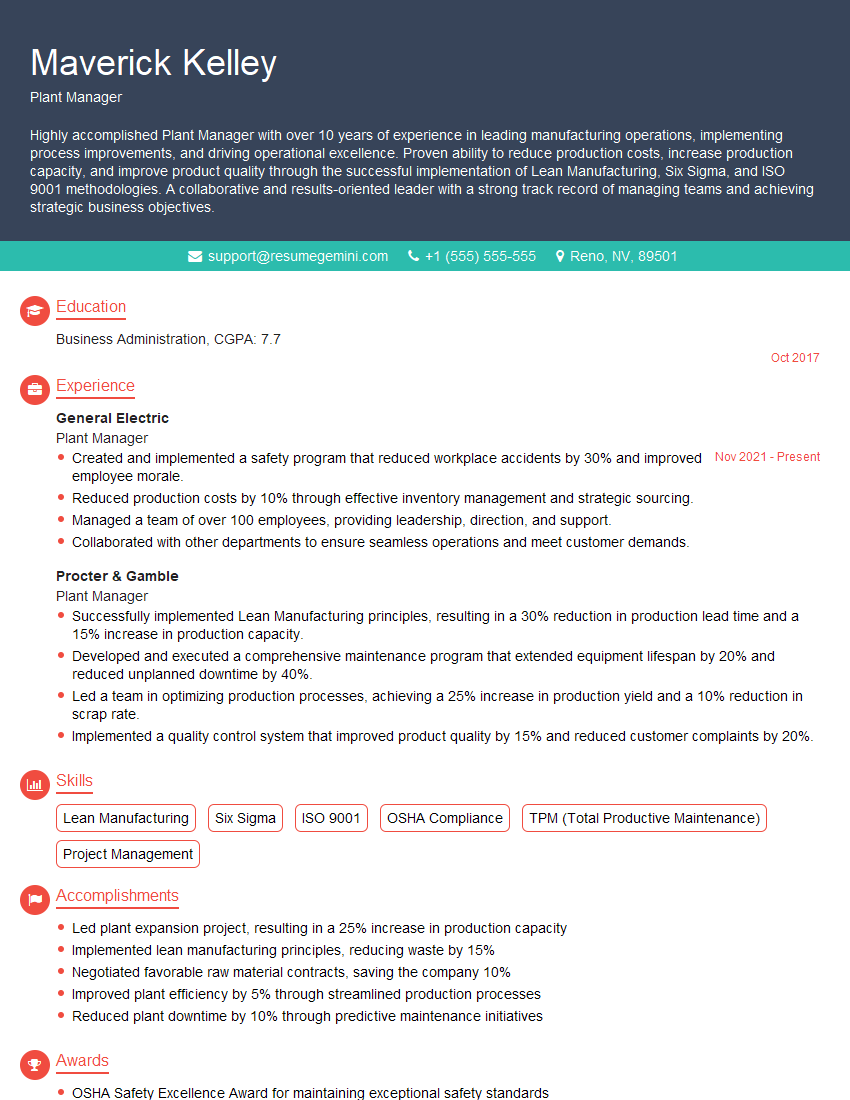
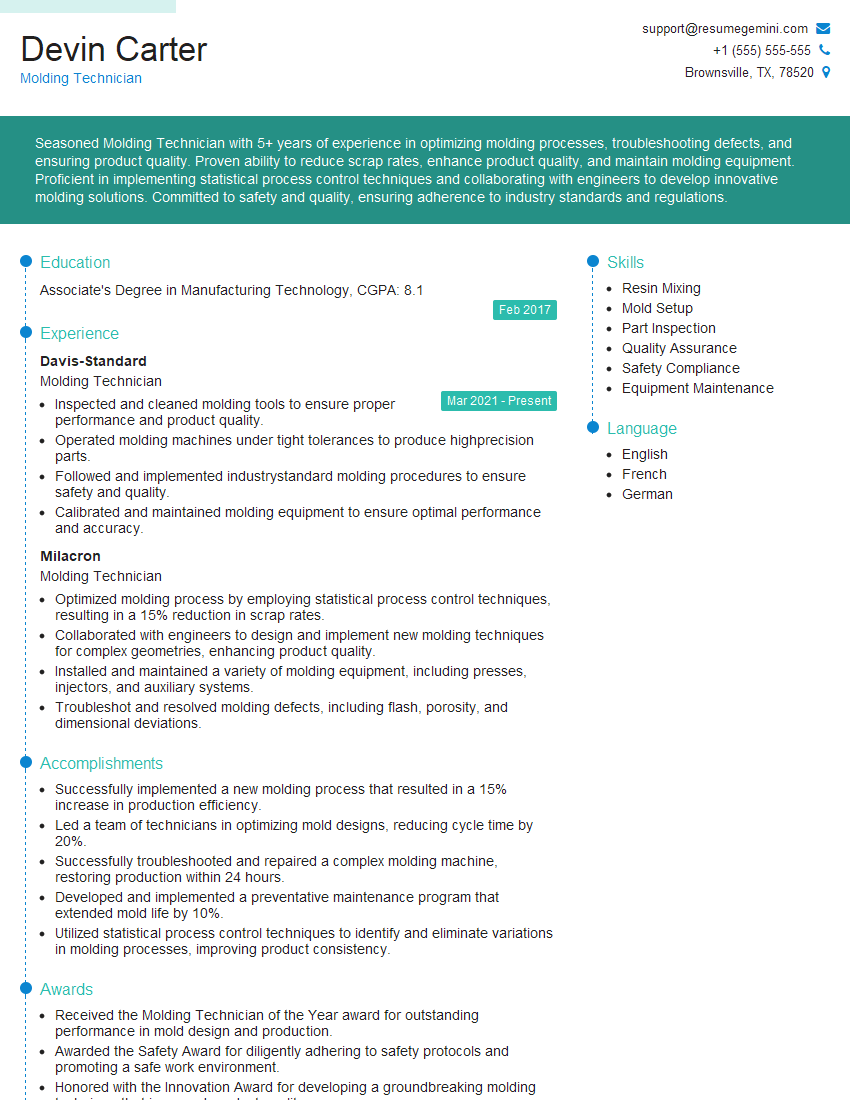
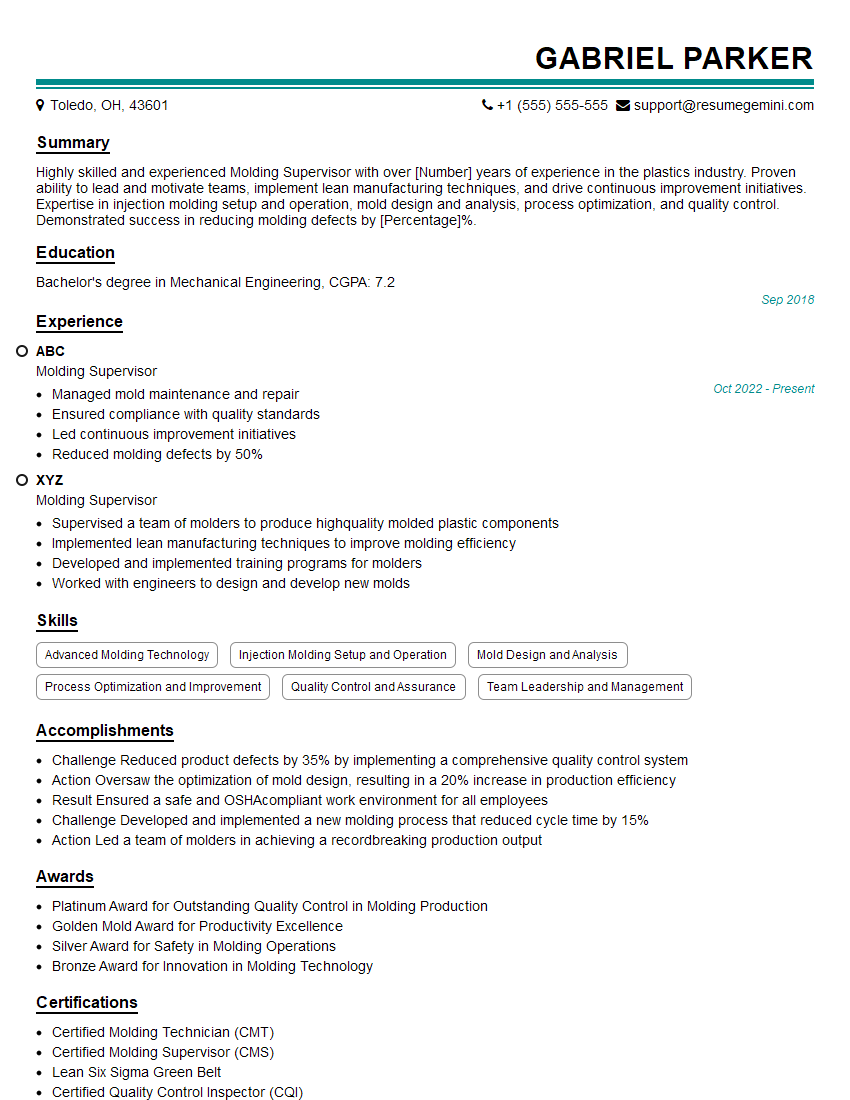
Mastering Molding Plant Management opens doors to exciting career advancements, increased responsibility, and higher earning potential. To significantly boost your job prospects, it’s crucial to present your skills and experience effectively through an ATS-friendly resume. ResumeGemini is a trusted resource that can help you craft a compelling resume tailored to the specific requirements of Molding Plant Management roles. Leverage their expertise to create a professional document that showcases your capabilities. Examples of resumes tailored to Molding Plant Management are available to guide you.
Explore more articles
Users Rating of Our Blogs
Share Your Experience
We value your feedback! Please rate our content and share your thoughts (optional).
What Readers Say About Our Blog
Really detailed insights and content, thank you for writing this detailed article.
IT gave me an insight and words to use and be able to think of examples