The right preparation can turn an interview into an opportunity to showcase your expertise. This guide to Mopping and Vacuuming interview questions is your ultimate resource, providing key insights and tips to help you ace your responses and stand out as a top candidate.
Questions Asked in Mopping and Vacuuming Interview
Q 1. What types of mops are you familiar with and when would you use each?
There are several types of mops, each suited for different tasks and floor types. My familiarity includes string mops, sponge mops, microfiber mops, and flat mops.
- String Mops: These are the classic cotton mops. They’re great for soaking up large spills and cleaning very dirty floors, but require more rinsing and can leave streaks if not properly wrung out. I’d use these for heavily soiled areas or after a significant spill.
- Sponge Mops: These are absorbent and good for general cleaning, especially on smooth surfaces. However, they can be less effective at removing stubborn dirt and might not reach into grout lines as well. I prefer them for quick cleanups or lightly soiled floors.
- Microfiber Mops: My go-to for most situations! Microfiber mops are highly absorbent, effective at removing dirt and grime, and leave floors streak-free. They’re ideal for all floor types, but especially good for delicate surfaces like wood.
- Flat Mops: These are usually used with cleaning solutions and are excellent for large areas and quick cleaning. They’re especially useful with reusable cleaning pads or disposable cloths, ensuring ease of cleaning and sanitation. I use these for efficiency in large spaces.
Q 2. Explain your process for preparing a mop for use.
Preparing a mop correctly is crucial for effective cleaning. My process involves several steps:
- Inspect the mop: Check for any damage like loose strings, frayed edges (string mops), or rips (microfiber/sponge). Discard or repair as needed.
- Clean the mop head: Before each use, I rinse the mop head thoroughly under running water to remove any lingering dirt or previous cleaning solution. For reusable cleaning pads, I may pre-treat heavily soiled areas with a specialized cleaner.
- Prepare the cleaning solution: I use the appropriate cleaning solution for the floor type – a gentle, pH-neutral cleaner for wood, a stronger cleaner for tile, and always following the manufacturer’s dilution instructions on the cleaner.
- Attach the mop head: Securely attach the mop head to the handle, ensuring a tight fit. This is essential to prevent the head from falling off during use.
- Wring out the mop (for string/sponge mops): For string and sponge mops, I wring the mop out thoroughly to remove excess water, preventing water damage to the floor and ensuring efficient cleaning. Overly wet mops can cause streaks and leave floors sticky.
Q 3. How do you properly clean and store a mop after use?
Proper cleaning and storage prolong the life of a mop and prevent the spread of germs. My post-mopping routine is as follows:
- Rinse thoroughly: Rinse the mop head under running water until all dirt and cleaning solution are removed. For stubborn stains, I may scrub gently.
- Disinfect (if necessary): Depending on the level of soiling, I might soak the mop head in a disinfectant solution (following manufacturer’s instructions). This is particularly important if cleaning areas with potential pathogens.
- Wring out completely: Remove as much water as possible by wringing (for string/sponge mops) or squeezing (for microfiber/flat mops).
- Dry thoroughly: Air dry the mop head completely before storing. Leaving it damp encourages mold and mildew growth.
- Store properly: Store the mop in a clean, dry place, preferably upright to allow proper air circulation. This prevents the accumulation of dirt and bacteria.
Q 4. Describe your method for mopping different floor types (tile, wood, etc.).
Mopping different floor types requires a slightly different approach to avoid damage and achieve optimal results.
- Tile: Tile is generally durable and can handle most cleaning solutions. I typically use a microfiber mop with a mild cleaning solution, paying close attention to grout lines. A stiff-bristled brush can help remove stubborn dirt from grout.
- Wood: Wood floors are more delicate and require gentler treatment. I use a damp (not soaking wet) microfiber mop and a pH-neutral cleaner specifically designed for wood. Avoid excessive water to prevent warping or damage. Always follow the manufacturer’s cleaning recommendations for your specific wood flooring.
- Laminate: Similar to wood, laminate floors need a damp microfiber mop and a gentle cleaner. Avoid abrasive cleaners or excessive water. Always test a small, inconspicuous area first to ensure the cleaner doesn’t damage the finish.
- Vinyl: Vinyl floors are relatively durable and can tolerate more cleaning solutions. I would typically use a microfiber mop and a mild cleaner, rinsing the mop frequently to avoid streaking.
In all cases, I work in small sections, overlapping slightly to ensure complete coverage. I always rinse the mop frequently to prevent spreading dirt.
Q 5. How do you handle spills and messes while mopping?
Handling spills efficiently prevents them from spreading and staining the floor. My process involves:
- Immediate action: Quickly soak up as much of the spill as possible using paper towels or a clean cloth. This prevents the spill from setting.
- Appropriate cleaning: Once the bulk of the spill is removed, I use the appropriate cleaning solution for the spill and floor type. For example, a sticky spill might need a stronger cleaner, while a water spill may only need a damp mop.
- Thorough rinsing: Rinse the affected area well to remove all traces of the spill and cleaning solution.
- Dry the area: Use a clean, dry cloth or towel to dry the area completely to prevent future problems.
For stubborn stains, I might need to use a specialized cleaner or stain remover. Always test any new cleaner in an inconspicuous area first.
Q 6. What are the signs of a poorly maintained mop?
A poorly maintained mop shows several signs:
- Foul odor: A lingering unpleasant smell indicates a build-up of bacteria and dirt.
- Visible grime: Dirt, hair, or other debris stuck to the mop head suggests insufficient cleaning.
- Mold or mildew: The presence of mold or mildew is a significant hygiene concern and indicates improper storage and cleaning.
- Frayed or damaged fibers: Worn-out fibers (string mops) or tears (microfiber mops) reduce the mop’s effectiveness and can scratch the floor.
- Stiffness: For string mops, unusual stiffness can suggest insufficient rinsing, leading to cleaning solution buildup.
Any of these signs warrant immediate cleaning, disinfection, or replacement of the mop.
Q 7. What safety precautions do you take when mopping?
Safety is paramount when mopping. My precautions include:
- Proper footwear: I wear non-slip shoes or slippers to prevent falls, especially on wet floors.
- Ventilation: I ensure adequate ventilation in the area being mopped to avoid inhaling cleaning solution fumes.
- Protective gear: I might use gloves to protect my hands from harsh cleaning solutions or allergens.
- Careful handling: I avoid overfilling the mop bucket and wring it out thoroughly to avoid spills and slips. I never overreach or rush, taking my time to ensure the floor is mopped efficiently and safely.
- Caution around pets and children: I keep pets and children away from the area being mopped while the floor is wet.
- Careful handling of electrical appliances: I always make sure all electrical cords and appliances are unplugged and safely stored away before beginning the cleaning process.
Q 8. What types of vacuum cleaners have you used?
Throughout my career, I’ve had extensive experience with a wide variety of vacuum cleaners. This includes upright vacuums, canister vacuums, handheld vacuums, robot vacuums, and even some specialized commercial models. My experience encompasses different brands, power levels, and features, giving me a well-rounded understanding of their strengths and weaknesses.
For example, I’ve used the Dyson Ball Animal 2, known for its powerful suction and maneuverability, and the Miele Complete C3, renowned for its durability and filtration system. I’ve also worked with budget-friendly options to understand how features and performance vary across price points. This diverse experience allows me to assess the needs of any cleaning situation and recommend the optimal equipment.
Q 9. Explain the differences between upright, canister, and handheld vacuums.
The main differences between upright, canister, and handheld vacuums lie in their design, maneuverability, and suitability for various cleaning tasks.
- Upright vacuums are generally the most powerful and best suited for larger areas, particularly carpeted floors. They are designed with a cleaning head directly beneath the motor unit, making them efficient for covering large surfaces. However, their larger size can make maneuvering around furniture more challenging.
- Canister vacuums offer greater maneuverability due to their separate motor unit and cleaning head connected by a hose. They’re excellent for both carpet and hard floors and often come with a variety of attachments for different surfaces and tasks. This versatility is ideal for detailed cleaning.
- Handheld vacuums are compact and lightweight, making them perfect for quick cleanups, spot cleaning, or cleaning hard-to-reach areas like stairs or car interiors. They are not typically as powerful as upright or canister vacuums, but their portability compensates for this.
Q 10. How do you select the appropriate vacuum cleaner attachment for different surfaces?
Choosing the right vacuum cleaner attachment depends on the surface being cleaned and the type of debris to be removed. It’s about matching the tool to the job.
- Upholstery brush: Ideal for cleaning fabric furniture and car interiors. Its soft bristles gently remove dust and pet hair.
- Crevice tool: Excellent for reaching narrow spaces like baseboards, corners, and between cushions.
- Dusting brush: Designed for delicate surfaces like blinds, lamps, and electronics, removing dust without scratching.
- Hard floor brush: Features a softer bristle design for cleaning hard surfaces like hardwood floors, tile, and laminate, preventing scratches.
- Bare floor tool (for canister/upright): A wider tool for efficient cleaning of large, hard-floor areas.
For instance, I wouldn’t use the upholstery brush on hardwood floors—it could leave behind bristle residue. Similarly, I wouldn’t use the hard floor brush on delicate upholstery—it could damage the fabric.
Q 11. How do you empty and clean a vacuum cleaner?
Emptying and cleaning a vacuum cleaner is crucial for maintaining suction and preventing the spread of allergens. The process varies depending on the vacuum type. However, the common steps are:
- Turn off and unplug the vacuum cleaner before proceeding.
- Empty the dustbin or bag: Carefully remove the dustbin or bag and empty its contents into a trash bag. For bagless vacuums, tap the dustbin gently to loosen any stubborn debris.
- Clean the dustbin or bag: Wipe down the interior of the dustbin or bag with a damp cloth or brush to remove any remaining dust or debris. Replace the bag if necessary.
- Clean the filters: Remove and clean or replace filters according to the manufacturer’s instructions. (More detail on filter maintenance is below).
- Clean the exterior: Use a brush or damp cloth to clean the exterior of the vacuum, paying attention to the wheels, hose, and attachments.
Regular cleaning, ideally after each use, is essential for optimal performance and hygiene.
Q 12. How do you maintain the filters and belts of a vacuum cleaner?
Maintaining filters and belts is critical for extending the lifespan and improving the performance of your vacuum cleaner.
- Filters: Most vacuums use HEPA filters or other types of filters to trap allergens and fine dust. Check your vacuum’s manual for the cleaning instructions, but generally, you can either tap them out gently to remove dust or wash them with water (depending on the filter type). Always allow filters to fully dry before reinstalling. Replace filters according to manufacturer guidelines. Ignoring filter maintenance dramatically reduces suction.
- Belts: Vacuum belts drive the brush roll. If the brush roll stops spinning, the belt is likely broken or worn out. Check your vacuum’s manual for instructions on replacing the belt. It’s usually a simple process involving removing the bottom cover and replacing the belt. Always use a replacement belt of the correct size and type.
Regular maintenance of these components is a simple preventative measure that will significantly prolong the life and effectiveness of your vacuum cleaner.
Q 13. Describe your process for vacuuming different floor types (carpet, hardwood, etc.).
My vacuuming process adapts to the type of flooring. Consistency in technique is key.
- Carpet: I use a vacuum with strong suction, and make overlapping passes to ensure complete coverage. For high-pile carpets, I may use a lower setting to prevent damage.
- Hardwood floors: I switch to the hard floor brush attachment or a suitable setting to avoid scratching the surface. A gentler approach is used with fewer passes. I also may need to empty the dustbin more frequently due to fine particles.
- Tile: Similar to hardwood, a gentler, lower-suction approach is best to avoid chipping or dulling the grout.
- Area rugs: I vacuum these thoroughly, paying attention to the edges where dirt tends to accumulate. If the rug is delicate, I may use a lower setting to prevent damage.
Each floor type requires a slightly different approach to achieve optimal cleaning results without causing damage.
Q 14. How do you handle obstacles (furniture, cords) while vacuuming?
Navigating obstacles while vacuuming is a key aspect of efficient cleaning. My strategy involves:
- Careful maneuvering: I carefully move furniture, avoiding collisions or scratches. Smaller pieces are often moved out of the way completely.
- Strategic planning: I work in sections and around obstacles, planning my route for maximum efficiency. This avoids unnecessary back-and-forth movements.
- Attachment use: For confined spaces, I use crevice tools or specialized attachments to reach under and around furniture legs.
- Cord management: I frequently adjust the cord to avoid entanglement and tripping hazards. For cordless models, I pay attention to battery level to ensure uninterrupted cleaning.
Being observant and adjusting to the surroundings is crucial for navigating obstacles safely and efficiently. A well-planned approach prevents accidents and ensures complete cleaning coverage.
Q 15. How do you clean a vacuum cleaner after vacuuming pet hair?
Cleaning a vacuum after tackling pet hair requires a multi-step approach focusing on both the dustbin and the filter system. Think of it like this: you wouldn’t just empty a clogged sink; you’d need to clear the drain too.
- Empty the Dustbin: First, empty the dustbin completely. For stubborn pet hair clinging to the sides, use a small brush or even a damp cloth to wipe it clean.
- Clean the Filter: Pet hair often clogs filters, reducing suction. Depending on your vacuum type, you might have a pre-motor filter, a HEPA filter (high-efficiency particulate air), or both. Check your vacuum’s manual for instructions on how to access and clean them. Some filters are washable; others are disposable and need replacing. If washable, gently rinse the filter under lukewarm water, making sure to avoid using harsh chemicals or strong jets of water that could damage it. Allow it to completely air dry before reinstalling.
- Check for Blockages: Pet hair can also accumulate in the hose or other internal parts. Examine the hose for any visible obstructions. If you find any, carefully remove the hair using a long, thin tool like a wire hanger or a specialized cleaning brush.
- Brush the Roller: Many vacuums have rotating brushes that are prone to tangling with pet hair. Access the brush and use scissors to carefully cut away the hair, or a brush to remove the hair. Do not try to pull out large clumps, as it can damage the roller.
Regular cleaning prevents the buildup of pet hair and ensures your vacuum continues to perform at its best. Think of it as preventative maintenance – a little effort now saves a lot of trouble later.
Career Expert Tips:
- Ace those interviews! Prepare effectively by reviewing the Top 50 Most Common Interview Questions on ResumeGemini.
- Navigate your job search with confidence! Explore a wide range of Career Tips on ResumeGemini. Learn about common challenges and recommendations to overcome them.
- Craft the perfect resume! Master the Art of Resume Writing with ResumeGemini’s guide. Showcase your unique qualifications and achievements effectively.
- Don’t miss out on holiday savings! Build your dream resume with ResumeGemini’s ATS optimized templates.
Q 16. How do you identify and address vacuum cleaner malfunctions?
Identifying vacuum malfunctions requires a systematic approach. Imagine it like diagnosing a car problem; you wouldn’t just guess – you’d check the basics first.
- No Suction: This is usually due to a clogged filter, blocked hose, or a full dustbin. Check these components first. Sometimes, a simple fix like unblocking the hose will resolve the problem.
- Weak Suction: Similar to the first point, but might also indicate a damaged belt, worn brushes or a more significant internal issue. Consider a professional repair in this scenario.
- Unusual Noises: Grinding or squealing noises could point to a broken belt or brush. Consult your vacuum’s user manual to locate these parts.
- Overheating: If your vacuum shuts off suddenly, it might be overheating. Allow it to cool down and then check for blockages that could be restricting airflow.
- Automatic Power Off: It may have a safety mechanism that shuts the device off. Check for overheating, or the user manual for additional clues.
If you’ve checked these and the problem persists, consult your vacuum’s manual or seek professional repair. Attempting complex repairs without proper knowledge can lead to more damage.
Q 17. What is the appropriate technique for vacuuming rugs and carpets?
Vacuuming rugs and carpets effectively involves more than just pushing the vacuum across the floor. Consider it like painting a wall; you need the right technique for an even finish.
- Multiple Passes: Vacuum in multiple directions – first in one direction, then perpendicular to it – to ensure all debris is picked up. Think of it as cross-hatching your vacuuming pattern.
- Adjust Suction: Most vacuums allow you to adjust suction settings. For delicate rugs, use a lower setting to avoid damage. For heavily soiled carpets, use a higher setting for deeper cleaning.
- Proper Height Adjustment: Adjust the vacuum’s height setting to suit the pile height of your rug or carpet. Incorrect height can reduce efficiency and even damage the carpet.
- Address Stains and Spills: Pre-treat any stains or spills before vacuuming to prevent them from spreading further. This will make the vacuuming process more efficient.
- Regular Cleaning: Regular vacuuming prevents dirt buildup, which makes it easier to maintain your rugs and carpets.
By following these tips, you’ll get much better results and prolong the lifespan of your rugs and carpets.
Q 18. How do you ensure efficient cleaning with limited supplies?
Efficient cleaning with limited supplies requires prioritizing and strategizing. Imagine you’re packing for a minimalist trip; you only take essentials.
- Prioritize High-Traffic Areas: Focus on cleaning areas that see the most foot traffic first. These areas tend to gather the most dirt and grime.
- Multi-Purpose Cleaners: Choose cleaning solutions that can be used on multiple surfaces to avoid unnecessary products. Some are good for both hardwood and tile.
- Effective Tools: Opt for tools that have multiple cleaning functions; e.g. a vacuum cleaner with floor and upholstery attachments.
- Reuse and Repurpose: Reusable cleaning cloths are better than single-use wipes, reducing waste and costs.
- Water Conservation: Use appropriate amounts of cleaning solutions to avoid excessive water usage, especially if you have restrictions.
By focusing on efficient techniques and making smart choices about the supplies you use, you can achieve excellent results even with limited resources.
Q 19. What is your preferred cleaning solution for different flooring types?
The ideal cleaning solution depends heavily on the flooring type. Think of it like choosing the right tool for the job; you wouldn’t use a hammer to screw in a screw.
- Hardwood Floors: Use a wood-specific cleaner diluted with water. Avoid excessive moisture, which could damage the wood. Damp mopping is key, not soaking.
- Tile Floors: Tile is usually more durable, so you have more options. However, avoid abrasive cleaners that could scratch the grout.
- Carpets: Use a carpet cleaner specifically formulated for your carpet type. Avoid harsh chemicals which can damage the fibres.
- Laminate Floors: These require specialized cleaners that are non-abrasive to avoid scratching. Damp mopping or using a slightly damp mop is usually best.
Always test any cleaner on an inconspicuous area first to check for any adverse reactions. Refer to the manufacturer’s instructions for the best results.
Q 20. How do you manage your time effectively during a cleaning assignment?
Effective time management during cleaning involves planning and prioritization. Imagine it like following a recipe; you need to prepare ingredients and follow steps.
- Planning and Assessment: Before starting, survey the area to be cleaned, and break the task down into smaller, manageable sections. This lets you properly allocate time.
- Prioritize Tasks: Focus on high-traffic areas first, then move to less visible spots. This gives you quick satisfaction and keeps you motivated.
- Set Time Limits: Assign specific timeframes to each task or zone. This prevents you from getting bogged down in one area for too long.
- Maintain Momentum: Avoid distractions, and work with a consistent pace to finish in the allocated time.
- Use Appropriate Tools and Techniques: Efficient tools and techniques save time compared to less appropriate ones. Choose the tools that save time and get the best results.
By employing these strategies, you can complete cleaning assignments efficiently and effectively, leaving ample time for other tasks or personal time.
Q 21. How do you handle a large cleaning area efficiently?
Handling a large cleaning area efficiently requires a methodical approach. Think of it like managing a large project; you break it down into smaller tasks.
- Divide and Conquer: Divide the large area into smaller, more manageable sections. This approach makes the task less daunting and easier to track progress.
- Strategic Cleaning: Start with the furthest point from the exit, moving progressively toward the exit to minimize backtracking.
- Teamwork (if applicable): If possible, delegate tasks to teammates to speed up the cleaning process. Assign areas to each cleaner.
- Pre-Cleaning: Clear out clutter and any major obstacles in the area. This streamlines the cleaning process.
- Regular Breaks: Taking short, regular breaks helps maintain energy levels and focus. This will make the process more efficient, and avoid burnout.
With a structured and organized approach, even the largest cleaning areas can be handled efficiently and effectively.
Q 22. How do you maintain a consistent level of cleanliness throughout the day?
Maintaining consistent cleanliness throughout the day relies on a proactive, rather than reactive, approach. It’s not just about a single, thorough clean; it’s about preventing dirt build-up. Think of it like tending a garden – you wouldn’t just weed once a month; you’d regularly remove debris to keep it flourishing.
- Regular Spot Cleaning: Addressing spills and messes immediately prevents them from setting or attracting more dirt. This includes using a damp cloth to wipe up spills, sweeping up crumbs, and using a handheld vacuum to quickly pick up loose debris.
- Strategic Scheduling: I often schedule quick touch-ups throughout the day. For example, after a morning rush, I might quickly mop high-traffic areas. This prevents the build-up of dirt and keeps the space looking and feeling clean.
- High-Traffic Zone Focus: High-traffic areas like entrances and hallways require more frequent attention. I dedicate extra time to these zones to keep them looking their best.
- Proper Tool Usage: Always using the right tools for the job is critical. This means having a variety of cleaning tools readily available – from microfiber cloths to specialized cleaning solutions – and knowing when to use them.
For example, in a busy office environment, I might schedule a quick vacuuming of high-traffic areas during lunch breaks, rather than waiting until the end of the day when more dirt has accumulated.
Q 23. How do you prioritize tasks when dealing with multiple cleaning assignments?
Prioritizing cleaning tasks is crucial for efficiency. My approach involves a combination of urgency, impact, and practicality. I use a system that prioritizes tasks based on their importance and the potential consequences of delaying them.
- Urgency: Tasks that need immediate attention, such as spills or accidents, are top priority. This might include addressing a hazardous spill before vacuuming a less urgent area.
- Impact: Tasks that have a significant impact on the overall cleanliness or appearance, such as deep cleaning a high-traffic area, are prioritized over less impactful tasks.
- Practicality: I factor in the practicality of completing tasks. For example, if I need to mop an area, I will do it before vacuuming it, to avoid spreading dust.
I often visualize the space and mentally map out a cleaning route to minimize back-and-forth movement. Think of it like a strategic game where the goal is to efficiently clean the entire area.
Q 24. How do you ensure the safety of yourself and others during your cleaning tasks?
Safety is paramount. My cleaning procedures are designed to minimize risks for myself and others. This involves meticulous preparation and following established safety protocols.
- Proper Equipment: Using appropriate safety gear, such as gloves, eye protection, and non-slip shoes, is non-negotiable. Using well-maintained equipment prevents accidents.
- Hazard Awareness: I am constantly vigilant about potential hazards like wet floors, electrical cords, and sharp objects. I clearly mark hazardous areas to prevent accidents. Proper ventilation is another crucial safety aspect when using cleaning chemicals.
- Chemical Handling: I meticulously follow the instructions on cleaning product labels and use them in well-ventilated areas. I never mix different cleaning chemicals, as this can create dangerous fumes.
- Ergonomics: I use proper lifting techniques to prevent injuries. This is especially important when moving heavy equipment or furniture.
For example, before starting to mop a floor, I always place caution signs to warn others about wet surfaces. I regularly inspect my equipment to ensure it’s in perfect working condition, preventing any unexpected malfunctions that could lead to accidents.
Q 25. What are the proper techniques for cleaning different types of stains?
Cleaning different types of stains requires a tailored approach. There’s no one-size-fits-all solution. Understanding the stain’s nature – whether it’s oil-based, water-based, or biological – is key.
- Oil-based stains (e.g., grease): These typically require a degreasing agent. I often use a dish soap solution for initial cleaning, followed by a more specialized cleaner if needed.
- Water-based stains (e.g., juice, wine): These are often easier to remove with plain water, followed by blotting to prevent spreading.
- Biological stains (e.g., blood, pet stains): Enzyme cleaners are highly effective for these. These cleaners break down the organic material, making removal easier.
Important Note: Always test any cleaning solution on an inconspicuous area first to ensure it doesn’t damage the surface. For stubborn stains, it’s important to be patient and persistent, but also gentle to avoid damaging the fabric or flooring.
Q 26. How do you deal with unexpected issues that might arise during a cleaning job?
Unexpected issues are an inevitable part of cleaning. My approach is to remain calm, assess the situation, and implement a practical solution.
- Assessment: The first step is to understand the nature of the problem. What happened? What are the potential risks?
- Resourcefulness: I have to be creative and resourceful, finding solutions within the available resources. This might involve adapting my cleaning plan or seeking additional help.
- Communication: If I can’t resolve the issue myself, I immediately communicate it to my supervisor or client to seek appropriate guidance and assistance.
For example, if I encounter a significantly larger spill than anticipated, I would immediately inform my supervisor and request additional cleaning supplies or assistance to ensure the area is cleaned efficiently and safely.
Q 27. Describe your experience working in a team environment for cleaning tasks.
I thrive in team environments. Effective teamwork is essential for achieving optimal cleanliness, especially in large spaces or when dealing with complex cleaning tasks.
- Clear Communication: Open and clear communication is essential. We discuss the cleaning plan, assigning tasks and responsibilities clearly to avoid duplication or missed areas.
- Coordination: We coordinate our efforts to ensure a smooth and efficient workflow. For example, one team member might vacuum while another mops, maximizing efficiency.
- Mutual Support: Team members help each other when needed. If one member encounters a difficult stain, others can offer support and expertise.
In one project, our team worked together to clean a large office complex, dividing the work logically and supporting each other to meet the deadline successfully. Collaborative cleaning enhances productivity and ensures a consistently high level of cleanliness.
Q 28. How do you ensure the long-term health of the floors and carpets you clean?
Preserving the long-term health of floors and carpets is crucial. This goes beyond just cleaning; it’s about employing techniques that prevent premature wear and tear.
- Appropriate Cleaning Products: Using pH-neutral cleaners is vital for preserving the integrity of different floor types. Harsh chemicals can damage surfaces over time.
- Gentle Cleaning Methods: Avoid aggressive scrubbing or harsh tools, especially on delicate surfaces like hardwood floors. Use gentle techniques and the appropriate tools for each surface.
- Regular Maintenance: Regular cleaning prevents dirt buildup, which can scratch or damage surfaces. This includes regular vacuuming and dusting, as well as periodic deep cleaning.
- Moisture Control: Excessive moisture can damage floors and carpets. Always ensure proper drying after mopping or cleaning carpets.
For instance, I would avoid using abrasive cleaners on hardwood floors, opting instead for specialized wood cleaners. For carpets, I would regularly vacuum to remove dirt and grit that can contribute to fiber damage. By proactively maintaining floors and carpets, I ensure their longevity and aesthetic appeal.
Key Topics to Learn for Mopping and Vacuuming Interview
- Understanding Cleaning Solutions: Learn about different types of cleaning solutions, their appropriate uses (e.g., hardwood floors vs. tile), and safe handling procedures. This includes understanding dilution ratios and potential safety hazards.
- Equipment Operation and Maintenance: Mastering the operation and basic maintenance of various vacuum cleaners (upright, canister, robotic) and mops (string, sponge, microfiber). This includes understanding filter changes, troubleshooting minor malfunctions, and proper storage techniques.
- Effective Cleaning Techniques: Develop efficient and thorough cleaning methods for different floor types and surface materials. This includes understanding appropriate pressure, motion, and techniques to avoid damage or streaks. Practice achieving a professional, high-quality finish.
- Time Management and Prioritization: Learn how to effectively manage time and prioritize tasks to complete cleaning within deadlines. This is crucial for efficient and productive work.
- Safety Procedures and Hygiene: Understand and implement proper safety procedures, including the use of personal protective equipment (PPE) where necessary, and maintaining a clean and hygienic work environment.
- Stain Removal and Special Cleaning: Learn about removing common stains (e.g., pet stains, spills) from various surfaces and handling special cleaning situations (e.g., heavily soiled areas).
- Customer Service and Communication: Develop excellent communication skills to interact positively with supervisors and clients, addressing concerns and handling feedback professionally.
Next Steps
Mastering mopping and vacuuming techniques is essential for building a successful career in cleaning services. Employers value skilled and efficient cleaners who can deliver high-quality results consistently. To stand out, you need a strong resume that highlights your abilities. Creating an ATS-friendly resume is crucial for getting your application noticed. ResumeGemini is a trusted resource that can help you build a professional and effective resume tailored to your skills and experience. Examples of resumes specifically designed for Mopping and Vacuuming positions are available through ResumeGemini to give you a head start.
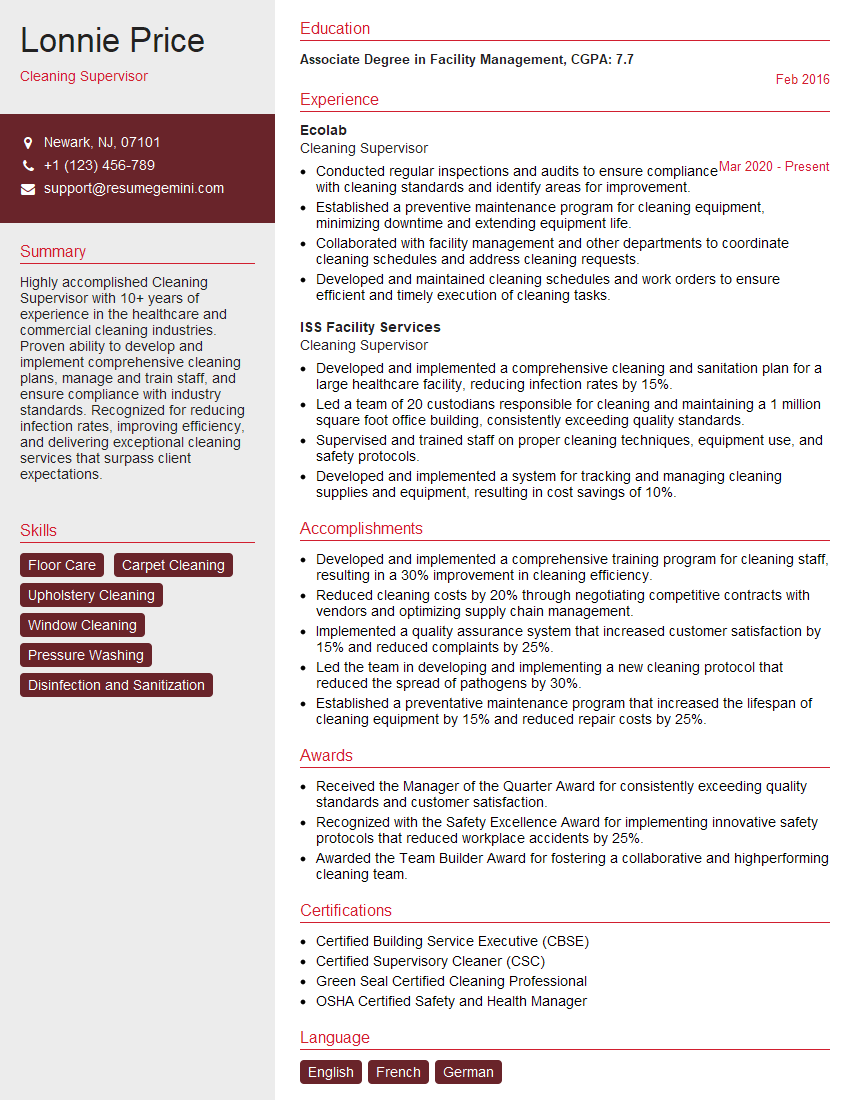
Cleaning Supervisor Resume Sample
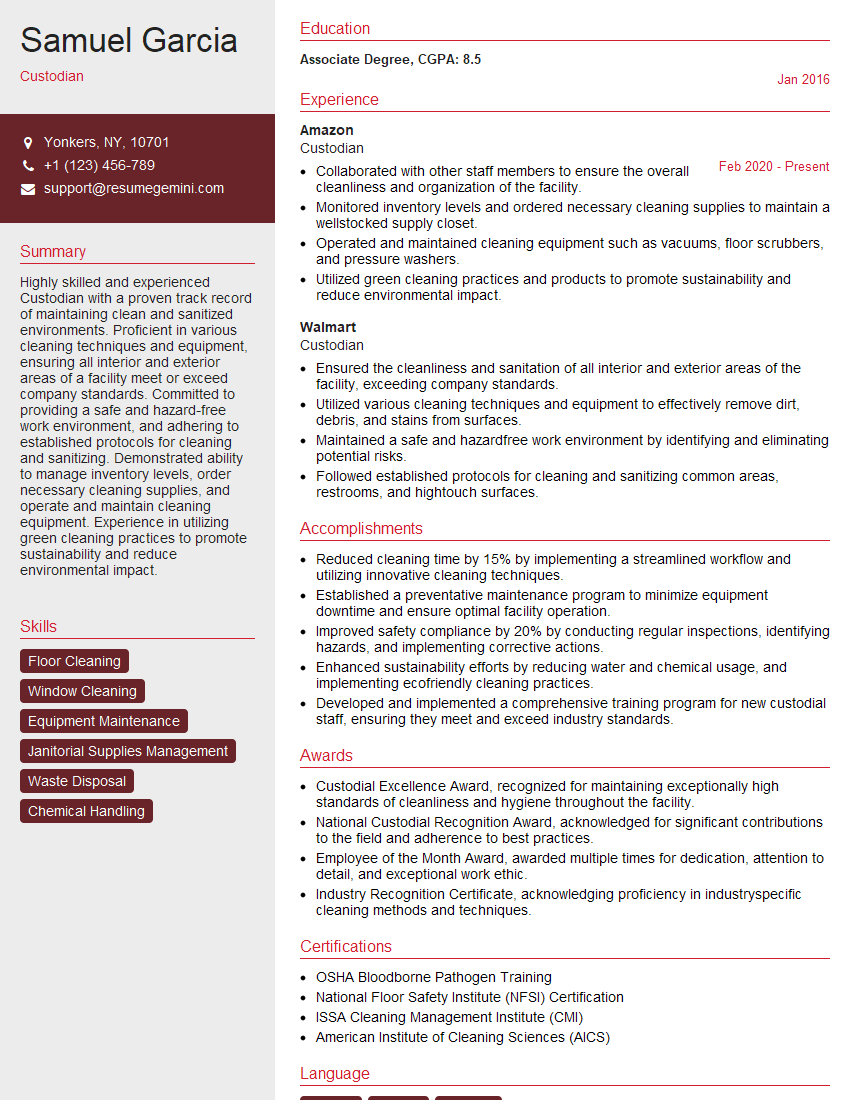
Custodian Resume Sample
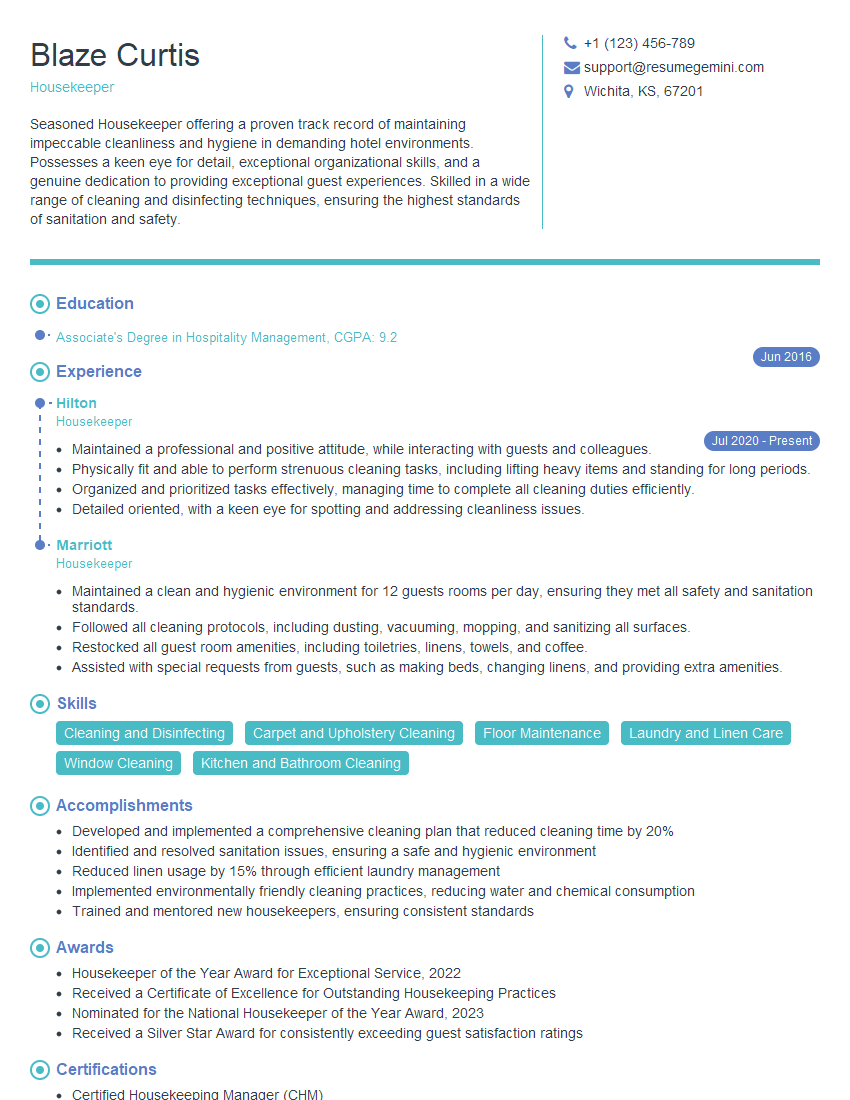
Housekeeper Resume Sample
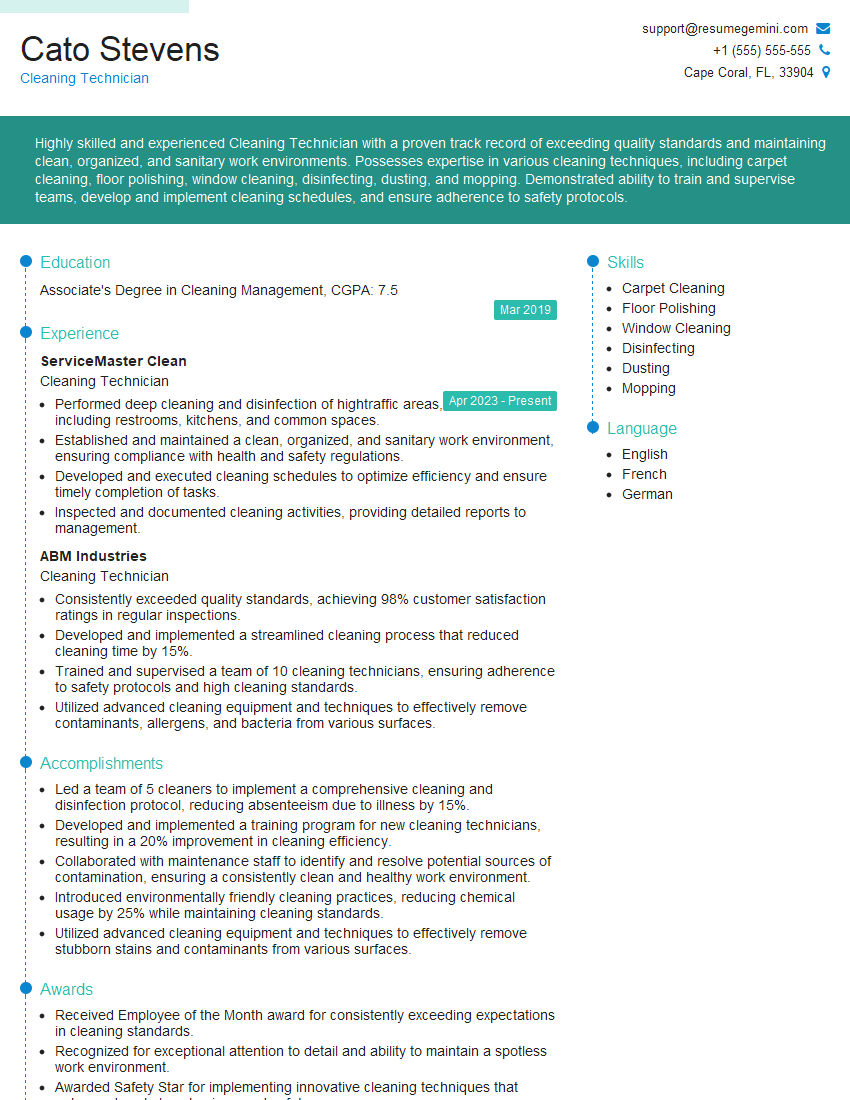
Cleaning Technician Resume Sample
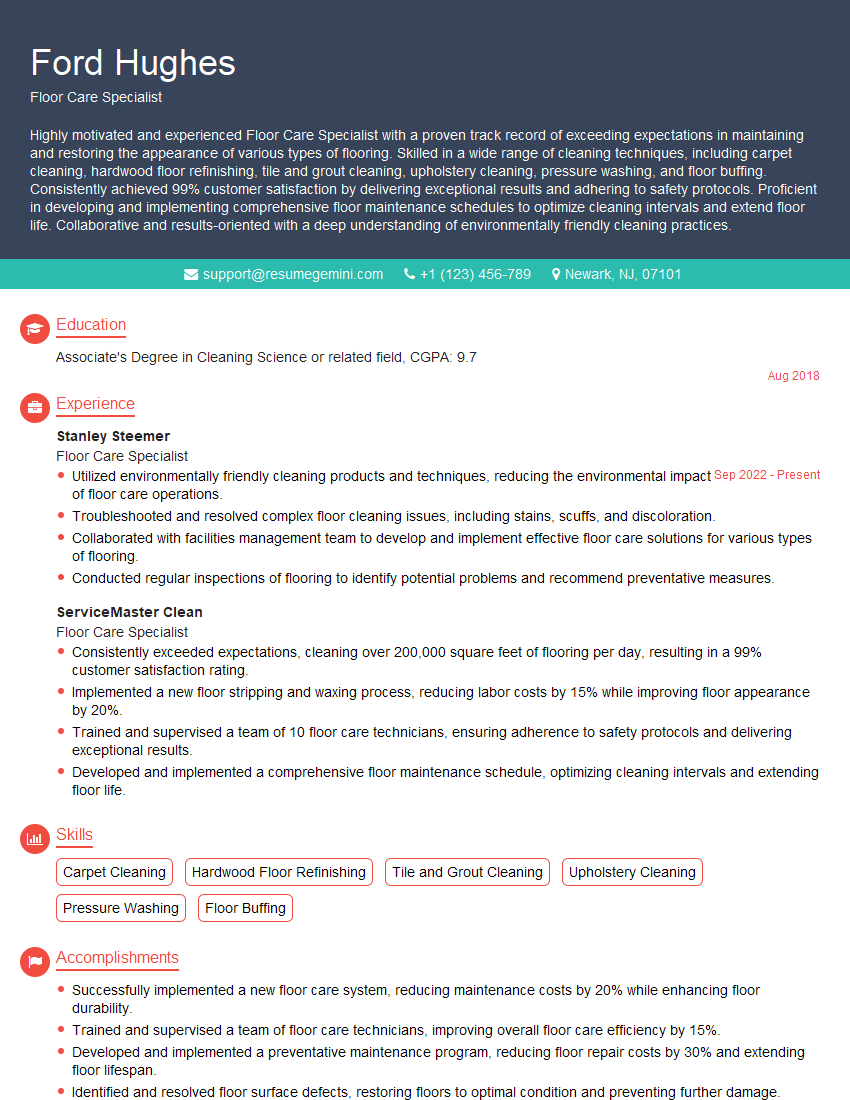
Floor Care Specialist Resume Sample
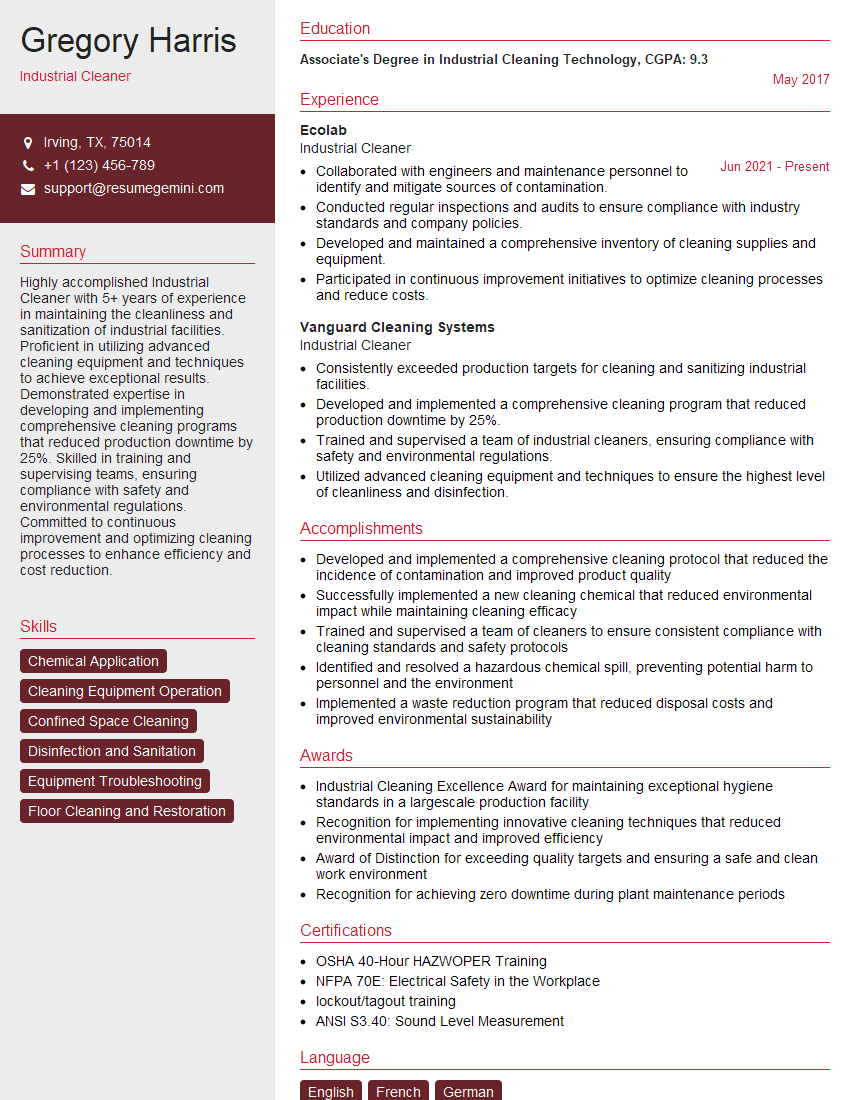
Industrial Cleaner Resume Sample
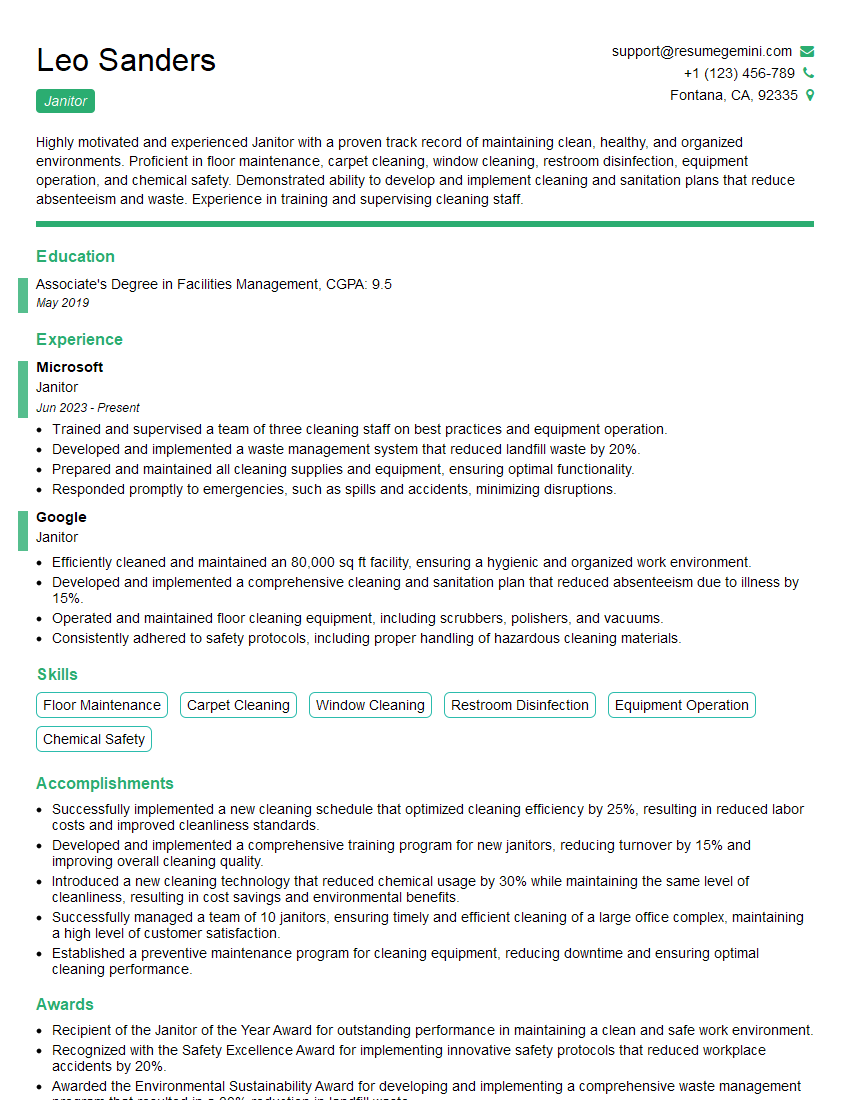
Janitor Resume Sample
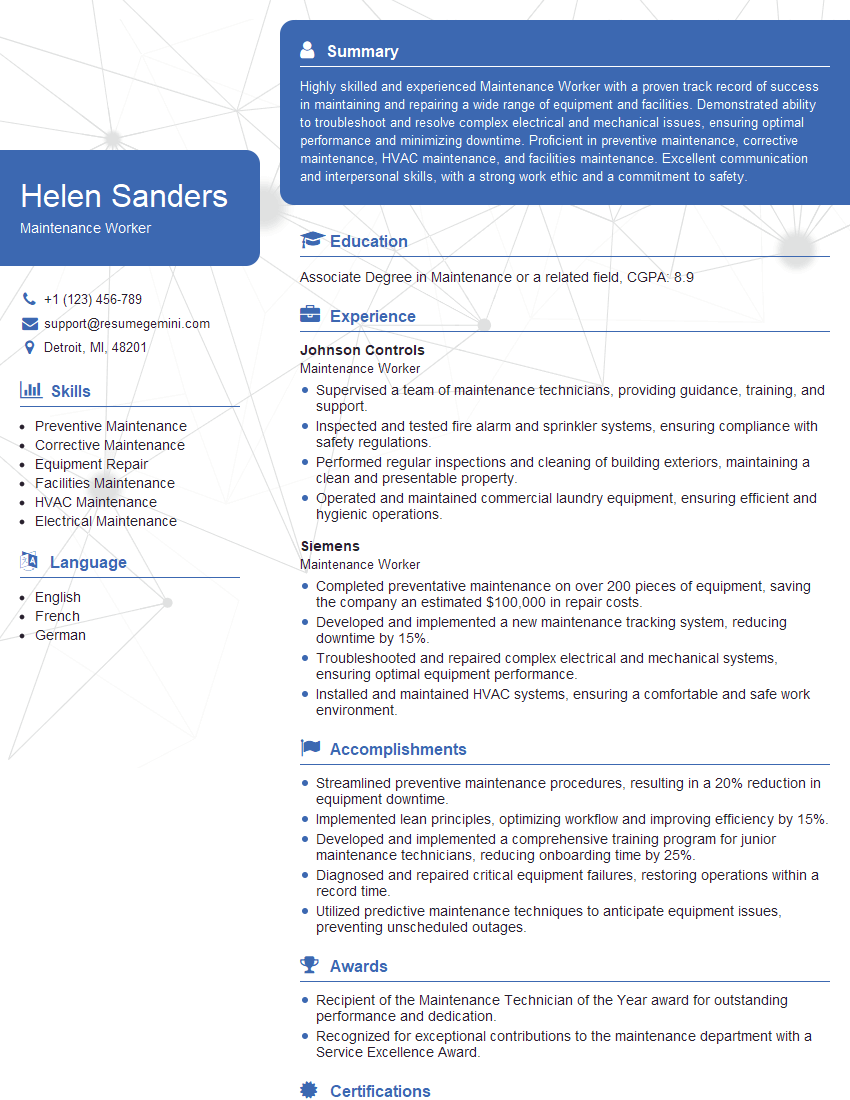
Maintenance Worker Resume Sample
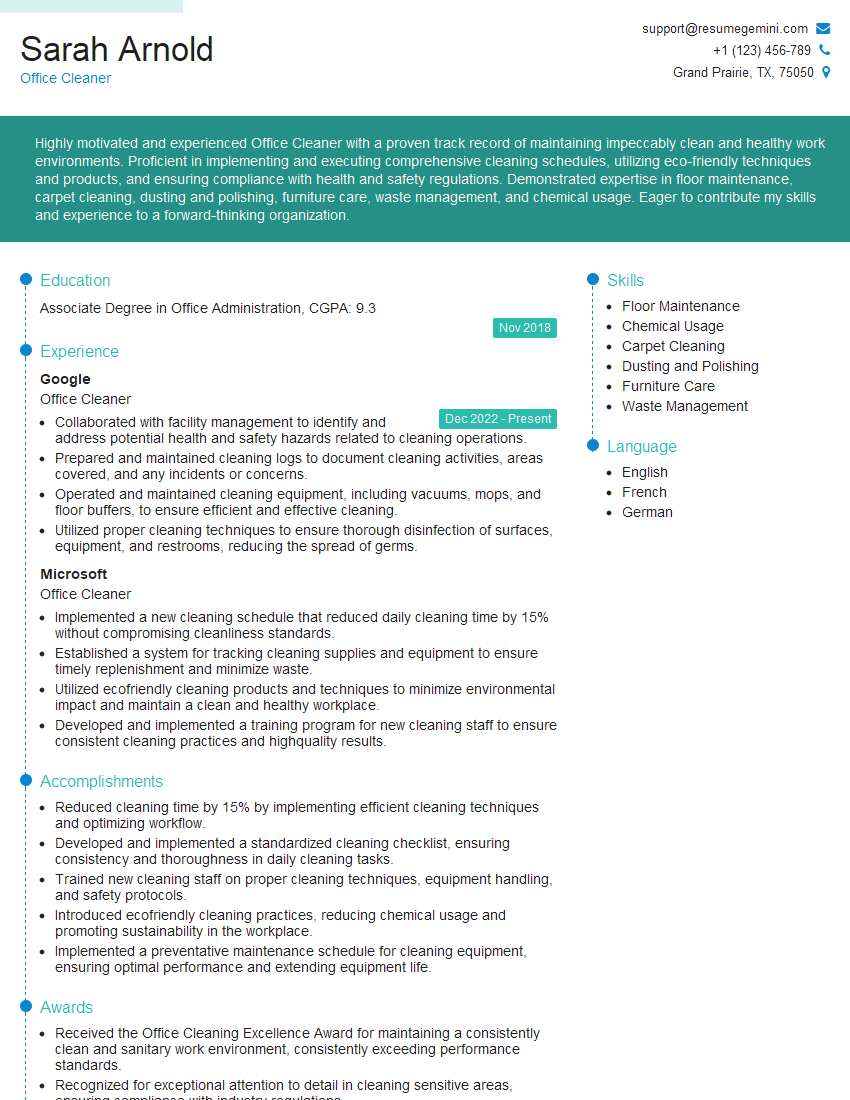
Office Cleaner Resume Sample
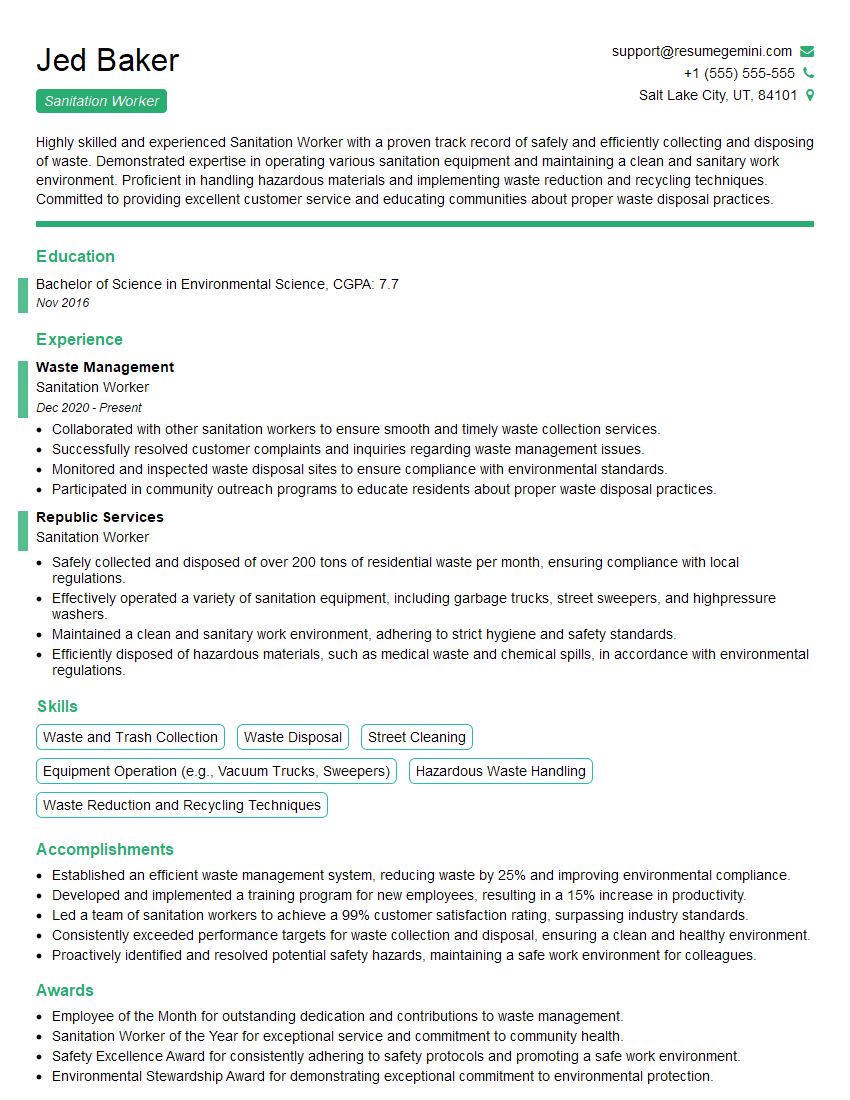
Sanitation Worker Resume Sample
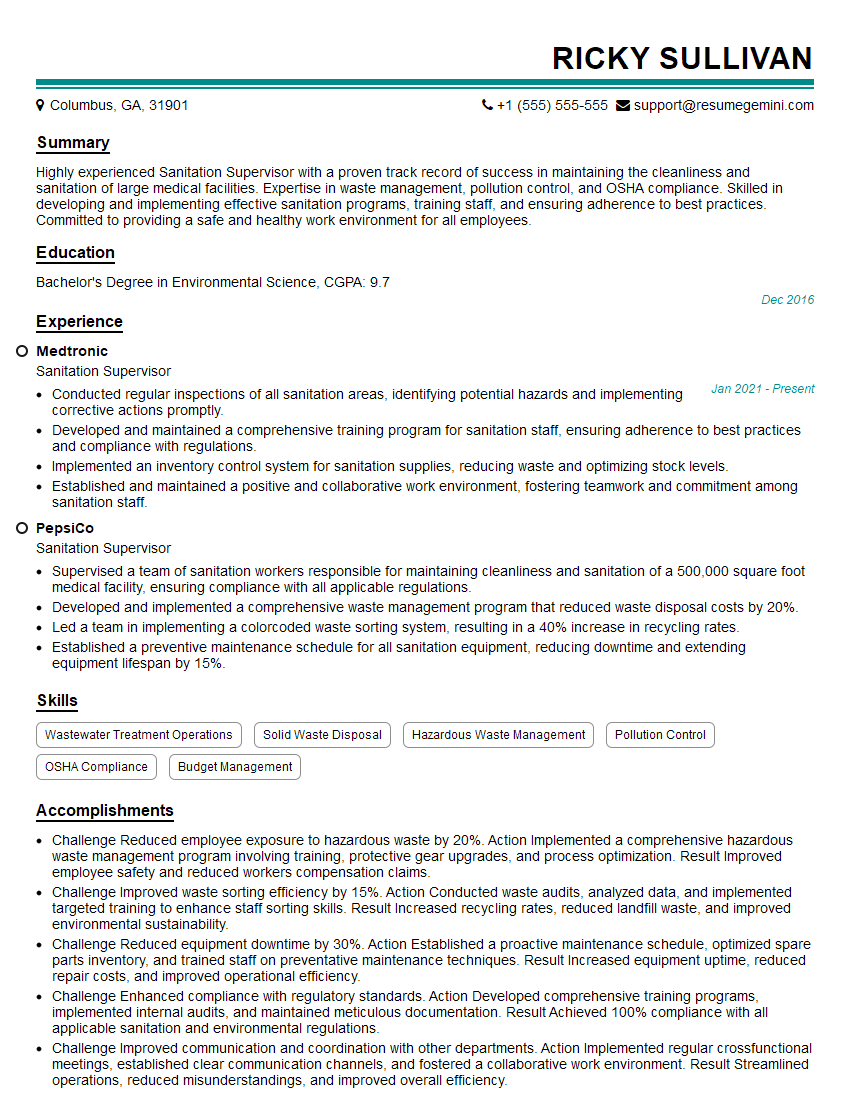
Sanitation Supervisor Resume Sample
Explore more articles
Users Rating of Our Blogs
Share Your Experience
We value your feedback! Please rate our content and share your thoughts (optional).
What Readers Say About Our Blog
Really detailed insights and content, thank you for writing this detailed article.
IT gave me an insight and words to use and be able to think of examples