Unlock your full potential by mastering the most common Music Pedagogy and Instruction interview questions. This blog offers a deep dive into the critical topics, ensuring you’re not only prepared to answer but to excel. With these insights, you’ll approach your interview with clarity and confidence.
Questions Asked in Music Pedagogy and Instruction Interview
Q 1. Describe your teaching philosophy.
My teaching philosophy centers on fostering a love for music through a holistic and inclusive approach. I believe music education should be more than just learning notes and rhythms; it’s about developing creativity, critical thinking, collaboration, and self-expression. My classroom is designed to be a safe and supportive environment where students feel empowered to explore their musical potential, regardless of their prior experience. I prioritize student-centered learning, encouraging active participation and tailoring instruction to individual needs and learning styles. I believe in celebrating both individual achievements and collaborative successes, creating a positive and motivating learning community.
For example, instead of simply lecturing on musical theory, I incorporate interactive games and activities to make learning engaging and memorable. Students might compose short melodies using classroom instruments, analyze song structures to understand form and harmony, or collaborate on creating a class performance.
Q 2. What methods do you use to differentiate instruction for diverse learners?
Differentiating instruction is crucial for maximizing each student’s learning potential. I use a variety of strategies to cater to diverse learners, including those with varying musical abilities, learning styles, and needs. This involves:
- Differentiated assignments: Offering various levels of challenge within the same musical concept. For example, some students might compose a simple melody, while others compose a more complex piece with multiple sections.
- Varied instructional methods: Utilizing a mix of auditory, visual, and kinesthetic learning techniques. This might involve using interactive software, visual aids, group activities, and hands-on instrument play.
- Flexible grouping: Implementing both individual, small group, and whole-class instruction, allowing students to learn from one another and receive personalized support.
- Assistive technologies: Utilizing software or hardware designed to support students with specific learning challenges, such as music notation software with accessibility features.
- Personalized feedback: Providing specific and constructive feedback tailored to each student’s individual progress and challenges.
For instance, a student struggling with rhythm might benefit from additional practice using a rhythm app on a tablet, while a gifted student might be challenged to compose an original song incorporating advanced musical techniques.
Q 3. How do you assess student progress in music?
Assessing student progress in music goes beyond simply grading a performance. I use a multifaceted approach incorporating formative and summative assessments to gain a comprehensive understanding of each student’s development.
- Performance assessments: Evaluating student performance through recitals, solo or ensemble performances, and class presentations.
- Written tests and quizzes: Assessing theoretical knowledge of music history, theory, and composition.
- Portfolio assessments: Collecting student work, such as compositions, analyses, and journal entries, to track growth over time.
- Observation and anecdotal records: Documenting student participation, progress, and challenges during class activities and rehearsals.
- Self and peer assessments: Encouraging students to reflect on their own learning and provide feedback to their peers.
For example, a student’s portfolio might include their compositions, recordings of their performances, and written reflections on their musical journey. This provides a richer understanding of their progress than a single performance grade could offer.
Q 4. Explain your approach to classroom management.
My approach to classroom management emphasizes creating a positive and respectful learning environment where students feel safe and empowered to take risks. I believe in building strong relationships with my students based on trust and mutual respect. My strategies include:
- Clear expectations and routines: Establishing clear expectations for behavior and classroom procedures from the beginning of the year.
- Positive reinforcement: Focusing on rewarding positive behavior rather than punishing negative behavior.
- Proactive strategies: Anticipating potential disruptions and implementing strategies to prevent them.
- Restorative practices: Addressing conflicts constructively through dialogue and problem-solving.
- Collaboration with parents and guardians: Maintaining open communication with parents to ensure consistency in expectations and support for student learning.
For example, I might use a classroom reward system where students earn points for positive behavior, which can be redeemed for privileges or rewards. If a conflict arises, I would facilitate a discussion between the involved students to help them find a solution.
Q 5. What strategies do you employ to engage students in music learning?
Engaging students in music learning requires creativity and a variety of teaching methods. I utilize strategies to cater to different learning styles and interests:
- Incorporating student choices: Allowing students to choose instruments, songs, or musical styles they want to explore.
- Using technology: Integrating music software, apps, and online resources to enhance learning.
- Real-world applications: Connecting musical concepts to real-world experiences, such as analyzing popular songs or composing music for a school event.
- Collaborative projects: Encouraging group work and collaboration on musical projects, performances, and compositions.
- Performance opportunities: Providing regular opportunities for students to perform for an audience, building confidence and showcasing their abilities.
For example, students might choose to learn a song from their favorite artist, compose music for a school play, or participate in a class band or choir. These activities enhance engagement and create a sense of ownership and accomplishment.
Q 6. How do you incorporate technology into your music instruction?
Technology plays a significant role in my music instruction. I utilize various tools to enhance learning and engagement:
- Music notation software:
Sibelius,Finale, orMuseScorefor composing, arranging, and analyzing music. - Digital audio workstations (DAWs):
GarageBand,Logic Pro X, orAbleton Livefor recording, editing, and mixing music. - Interactive music learning apps: Apps like
Tenuto,Teoria, orMusictheory.netfor practicing music theory and ear training. - Online resources: Utilizing online platforms like
YouTube(for educational videos),SoundCloud(for listening to diverse music), andSpotify(for exploring different genres). - Interactive whiteboards and projectors: Displaying scores, visuals, and interactive exercises to enhance classroom engagement.
For instance, students might use GarageBand to record and produce their own compositions, or use an interactive music theory app to practice identifying chords and intervals.
Q 7. Describe your experience with curriculum development in music.
I have extensive experience in curriculum development in music, focusing on creating engaging and standards-aligned learning experiences. My approach involves:
- Needs assessment: Identifying the specific needs and learning goals of the students.
- Standards alignment: Ensuring the curriculum aligns with relevant state and national music education standards.
- Content selection: Choosing diverse and engaging musical materials that represent a variety of styles, cultures, and historical periods.
- Sequencing and pacing: Structuring the curriculum logically, building upon prior knowledge and skills.
- Assessment integration: Incorporating a variety of assessment methods to track student progress and inform instruction.
- Technology integration: Incorporating technology to enhance learning and engagement.
In a recent project, I developed a year-long curriculum for middle school general music, incorporating a project-based learning approach where students collaborated on creating a musical theatre production. This curriculum integrated music theory, performance skills, and technology to create a rich and engaging learning experience.
Q 8. How do you foster a positive and inclusive learning environment?
Creating a positive and inclusive music learning environment is paramount. It’s about building a space where every student feels safe, respected, and valued, regardless of their background, skill level, or learning style. This involves several key strategies:
- Establishing clear expectations and ground rules: A well-defined classroom code of conduct ensures mutual respect and understanding. This includes promoting active listening, encouraging participation, and discouraging judgmental behavior.
- Celebrating diversity: Incorporating diverse musical styles and traditions into the curriculum broadens students’ perspectives and fosters appreciation for different cultures. This might include exploring world music, incorporating diverse instruments, or featuring composers from various backgrounds.
- Differentiated instruction: Recognizing that students learn at different paces and in different ways is crucial. I adapt my teaching methods to accommodate diverse learning needs, using various teaching modalities such as visual aids, auditory cues, kinesthetic activities, and technology.
- Positive reinforcement: Focusing on students’ strengths and celebrating their progress, no matter how small, builds confidence and encourages continued effort. I frequently use verbal praise, written feedback, and non-verbal cues to reinforce positive behavior and learning.
- Creating opportunities for collaboration: Group projects, ensemble work, and peer teaching foster a sense of community and shared responsibility. Students learn from each other, develop teamwork skills, and build supportive relationships.
For example, in a classroom with students of varying skill levels, I might assign ensemble pieces with parts that cater to different abilities, ensuring everyone feels a sense of accomplishment and contribution.
Q 9. How do you address student challenges or learning difficulties in music?
Addressing student challenges requires a multi-faceted approach that combines careful observation, individualized support, and a willingness to adapt teaching strategies. First, I identify the root cause of the difficulty. Is it a technical issue, a lack of understanding of musical concepts, performance anxiety, or something else?
- Individualized instruction: One-on-one sessions or small group work allow for focused attention and tailored support. I might break down complex tasks into smaller, more manageable steps, provide extra practice materials, or modify assignments to suit the student’s needs.
- Differentiated instruction (revisited): This is crucial for addressing learning difficulties. I might use visual aids for students who are auditory learners or provide kinesthetic activities for those who benefit from movement.
- Assistive technologies: For students with specific learning disabilities, assistive technologies like music notation software or specialized apps can be invaluable.
- Collaboration with specialists: If a student has significant learning challenges, I collaborate with school counselors, special education teachers, or therapists to develop an appropriate learning plan.
- Addressing performance anxiety: This is common among music students. I address this by creating a supportive and encouraging learning environment, focusing on the process of learning rather than solely on performance outcomes, and practicing relaxation techniques.
For instance, a student struggling with rhythm might benefit from rhythmic games and activities, while a student experiencing performance anxiety might benefit from guided imagery or progressive muscle relaxation exercises before performances.
Q 10. What is your experience with music theory instruction?
My experience with music theory instruction spans over [Number] years, encompassing a wide range of levels and teaching methodologies. I’ve taught music theory to beginners, intermediate students, and advanced undergraduates. My approach is to make theory relevant and engaging, connecting abstract concepts to practical applications in musical performance and composition.
- Connecting theory to practice: I don’t teach theory in isolation. Instead, I integrate it seamlessly with practical musical activities like ear training, improvisation, and composition. For example, while teaching chords, I’ll have students immediately try improvising melodies over them.
- Diverse teaching methods: I use a variety of techniques including lectures, interactive discussions, group activities, individual assignments, and technology-based exercises. This caters to diverse learning styles.
- Aural skills emphasis: I believe strongly in developing strong aural skills. Ear training exercises are interwoven throughout the curriculum. I use solfège, dictation, and melodic/harmonic analysis to help students internalize theoretical concepts.
- Utilizing technology: Software like MuseScore and online resources help students visualize and interact with musical concepts in a more engaging way.
For instance, when teaching counterpoint, I would guide students to analyze excerpts from Bach’s works, then have them compose their own two-part inventions, applying the learned theoretical principles in a creative context.
Q 11. How do you teach music history effectively?
Teaching music history effectively means more than simply presenting a chronological list of composers and their works. It’s about bringing the music to life and making it relevant to students’ lives.
- Connecting history to current music: I highlight the connections between historical styles and contemporary music, demonstrating how musical ideas and trends evolve over time.
- Storytelling and context: I weave narratives around composers and their times, highlighting the social, political, and cultural influences on their music. This creates a more engaging and memorable learning experience.
- Active listening and analysis: Students actively listen to and analyze musical excerpts, identifying stylistic features and comparing different composers’ works.
- Hands-on activities: I incorporate activities such as creating timelines, researching composers, or presenting short presentations to make the learning experience more interactive.
- Using multimedia resources: Images, videos, and online resources enrich the learning process, providing visual and auditory context to historical information.
For example, when teaching the Baroque period, I would play excerpts from Bach and Handel, discussing the use of counterpoint and ornamentation, and relating it to the broader context of the time period’s emphasis on order and structure.
Q 12. Explain your approach to instrumental or vocal technique instruction.
My approach to instrumental or vocal technique instruction is deeply individualized, focusing on efficient and healthy practice techniques to prevent injury and promote optimal performance.
- Assessment of individual needs: Before beginning instruction, I carefully assess the student’s current skill level, physical capabilities, and any pre-existing conditions that might affect their technique.
- Fundamental principles: I emphasize the foundational principles of posture, breathing, embouchure (for wind instruments), and vocal production.
- Gradual progression: I introduce new techniques and exercises gradually, building upon previously learned skills.
- Correcting bad habits: I identify and address any inefficiencies or bad habits early on, to prevent them from becoming ingrained. This might involve targeted exercises or modifications of technique.
- Developing practice strategies: I teach students effective and efficient practice techniques, such as focused practice sessions, mindful repetitions, and regular self-assessment. I emphasize the importance of regular, consistent practice and discourage marathon practice sessions.
For example, a vocalist might benefit from exercises focusing on breath control and vocal placement, while a guitarist would require attention to proper hand posture and finger exercises.
Q 13. What are some common misconceptions about music education?
Several common misconceptions about music education hinder its potential impact. These include:
- “Only talented people can succeed in music.” Musical ability is developed through consistent effort and effective instruction. While natural talent can certainly play a role, it is not a prerequisite for making progress.
- “Music education is a ‘frill’ or luxury.” Music education is crucial for cognitive development, emotional intelligence, and social skills. It fosters creativity, discipline, and teamwork.
- “Music theory is boring or irrelevant.” Music theory is the language of music. Understanding it enhances musical comprehension, performance, and creativity. My approach focuses on making it engaging and relevant.
- “Music education is only for those who want to become professional musicians.” Music education benefits everyone, regardless of their career aspirations. It fosters valuable life skills applicable in numerous fields.
Addressing these misconceptions involves highlighting the cognitive, social, and emotional benefits of music education through showcasing student successes, emphasizing transferable skills, and creating engaging and relevant learning experiences.
Q 14. How do you use formative and summative assessment to inform instruction?
Formative and summative assessments are essential components of effective music instruction. They provide valuable feedback for both the teacher and the student, informing instructional decisions and evaluating progress.
- Formative assessment: These are ongoing assessments designed to monitor student learning during the instructional process. Examples include informal observations during class, short quizzes, in-class performance checks, and peer feedback sessions. Formative assessment helps me identify areas where students need additional support and adjust my teaching accordingly.
- Summative assessment: These are end-of-unit or end-of-semester assessments designed to evaluate overall learning. Examples include formal recitals, written exams, major performance projects, or portfolio reviews. Summative assessments help gauge students’ overall understanding and mastery of concepts.
I use the data gathered from both formative and summative assessments to inform my lesson planning. For example, if formative assessments reveal that students struggle with a particular theoretical concept, I might spend more time reviewing that concept or use different teaching strategies. Summative assessments inform my overall evaluation of student learning and help me identify areas for improvement in my teaching.
Q 15. How do you collaborate with parents or guardians?
Collaboration with parents is crucial for a student’s musical development. I believe in building strong, open communication channels from the outset. This involves regular updates – perhaps a short email after each lesson summarizing progress and goals – and scheduled parent-teacher conferences. These conferences aren’t just for reporting grades; they’re opportunities to discuss the student’s overall engagement, challenges they might be facing (e.g., time management, practice habits), and to collectively brainstorm solutions. I also encourage parents to attend recitals and performances, as this shared experience strengthens the bond between home and classroom learning.
For instance, if a student is struggling with memorization, I might suggest specific practice techniques to the parent, such as using mnemonic devices or breaking down the piece into smaller sections. Conversely, parents can provide valuable insight into their child’s learning style or any external factors affecting their progress. Open dialogue ensures that we’re all working together towards the same goal: the student’s musical growth.
Career Expert Tips:
- Ace those interviews! Prepare effectively by reviewing the Top 50 Most Common Interview Questions on ResumeGemini.
- Navigate your job search with confidence! Explore a wide range of Career Tips on ResumeGemini. Learn about common challenges and recommendations to overcome them.
- Craft the perfect resume! Master the Art of Resume Writing with ResumeGemini’s guide. Showcase your unique qualifications and achievements effectively.
- Don’t miss out on holiday savings! Build your dream resume with ResumeGemini’s ATS optimized templates.
Q 16. Describe your experience with conducting or ensemble teaching.
I have extensive experience conducting and teaching ensembles, ranging from beginning-level elementary school choirs to more advanced high school orchestras. My approach centers around fostering a collaborative and supportive environment where each student feels valued and empowered. Beyond technical proficiency, I focus on developing musicianship, which includes understanding musical phrasing, dynamics, and articulation. I believe strongly in the value of student leadership. In my ensembles, I often assign section leaders or student conductors to encourage responsibility and teamwork.
For example, when working with a struggling section in an orchestra, I don’t just correct their mistakes; I work with them to understand the underlying cause. Is it a technical issue? A problem with intonation? Perhaps a lack of confidence? By addressing the root cause, I empower the students to solve the problem themselves and fosters greater independence. The goal is not just to make beautiful music but to also cultivate responsible, well-rounded musicians.
Q 17. How do you prepare students for music performance?
Preparing students for performances involves a multi-faceted approach that extends beyond simply mastering the notes. We start by building a strong technical foundation through consistent practice and targeted exercises. Equally important is developing stage presence and performance skills. This includes addressing nerves, learning how to project their voice or instrument, and understanding how to connect emotionally with the audience.
My approach often includes mock performances, providing a safe space for students to practice their performance skills. We’ll work on things like posture, eye contact, and how to handle unexpected events (such as a missed note). I believe in providing constructive feedback that focuses on both technical and expressive aspects of the performance. The ultimate goal is for students to approach the performance not as an evaluation, but as an opportunity to share their musical expression with others and to experience the joy of making music.
Q 18. What are your strategies for developing student creativity and musicality?
Developing creativity and musicality requires a balance of structured learning and open exploration. I encourage improvisation exercises, composition activities, and opportunities for students to arrange existing pieces in their own style. I also use a variety of teaching methods, including active listening, creative movement, and discussions about the music’s history and cultural context. This helps students engage with the music on multiple levels.
For example, I might ask students to compose a short piece based on a specific emotion or image, or to improvise a melody over a given chord progression. These activities not only build their creative skills, but also deepen their understanding of musical elements such as melody, harmony, and rhythm. By fostering a creative and supportive classroom environment, I aim to empower students to express themselves musically in unique and meaningful ways.
Q 19. How do you incorporate music literacy into your teaching?
Music literacy is fundamental to a musician’s development. I incorporate it into my teaching using a variety of techniques, starting with basic notation and gradually building upon that foundation. This includes sight-reading exercises, ear-training drills, and the analysis of musical scores. I use interactive games and technology to make learning music theory more engaging and accessible.
For instance, when teaching about key signatures, I’ll use visual aids and interactive software to reinforce the concepts. I also encourage students to analyze their own musical pieces, identifying melodic patterns, rhythmic structures, and harmonic progressions. By making music literacy an integral part of their learning, I equip students with the tools they need to become confident and well-rounded musicians.
Q 20. How do you adapt your teaching to different age groups or skill levels?
Adapting my teaching to different age groups and skill levels is a critical aspect of effective instruction. I adjust the complexity of materials, teaching methods, and lesson pacing to meet the specific needs of each student or group. Younger students benefit from shorter lessons with more hands-on activities, while older, more advanced students can handle more complex concepts and longer practice sessions. I use a variety of teaching techniques – storytelling, games, technology – to keep students engaged, regardless of their age or skill level.
For example, when teaching rhythm to young children, I might use movement and body percussion, while older students might analyze rhythmic notation and explore more complex rhythmic patterns. Differentiation is key, ensuring that each student is challenged appropriately and feels successful in their musical journey.
Q 21. Describe a time you had to address a conflict in your classroom.
In one instance, two students in my advanced ensemble had a conflict stemming from disagreements about musical interpretations during rehearsal. Both were talented musicians with strong opinions, leading to tension and disruption during practice. My approach was to address the conflict constructively, fostering a dialogue rather than assigning blame. I facilitated a discussion where each student could explain their perspective, listening attentively and ensuring that both felt heard and understood.
We then explored different ways to approach the musical passage in question, encouraging compromise and collaboration. This involved examining the score together, exploring different performance interpretations, and discussing the composer’s intentions. The process emphasized that diverse interpretations could be valid, leading to a richer musical experience. By encouraging collaboration and understanding, we transformed a potential disruptive conflict into an opportunity for musical growth and problem-solving.
Q 22. How do you promote student self-assessment and reflection?
Promoting self-assessment and reflection is crucial for student growth. It shifts the learning process from a teacher-centric model to one where students actively participate in evaluating their progress and identifying areas for improvement. I utilize a multifaceted approach.
Regular Check-ins and Feedback Sessions: I schedule short, informal check-ins where students verbally describe their practice routines, challenges faced, and what they feel they’ve mastered. This opens a dialogue and encourages them to articulate their understanding.
Structured Self-Assessment Worksheets: These worksheets guide students to assess specific aspects of their performance, such as intonation, rhythm, technique, or musical expression. They might rate themselves on a scale and provide written justifications for their ratings.
Recording and Analysis: I encourage students to record their performances and analyze them critically, focusing on areas for improvement. This builds self-awareness and helps them pinpoint specific technical issues.
Goal Setting and Tracking: Students collaboratively set realistic, measurable goals, breaking down larger objectives into smaller, achievable steps. We regularly review progress towards these goals, allowing them to see their accomplishments and adjust strategies as needed. For example, a student might set a goal to learn a specific piece by a certain date, and we track their progress weekly.
Peer Assessment Activities: Strategically designed peer assessment activities teach students to provide constructive feedback, improving their listening and analytical skills. It also offers a different perspective on their own performance.
By employing these methods, students develop metacognitive skills, become more independent learners, and take ownership of their musical journey.
Q 23. How do you stay current with trends and best practices in music education?
Staying current is vital in music education. The field constantly evolves with new pedagogical approaches, technologies, and research findings. My strategy is multi-pronged:
Professional Organizations: I actively participate in professional organizations like the Music Educators National Conference (MENC) and attend their conferences and workshops. These events offer invaluable networking opportunities and exposure to cutting-edge ideas and research.
Journals and Publications: I regularly read journals like the Journal of Research in Music Education and other relevant publications to stay abreast of the latest research and best practices. This keeps my instruction informed by evidence-based practices.
Online Resources and Webinars: Many reputable organizations offer free or paid webinars and online courses on various aspects of music pedagogy. This provides flexible and accessible professional development opportunities.
Networking with Colleagues: Regularly connecting with other music educators through informal discussions, online forums, and collaborative projects exposes me to diverse perspectives and innovative teaching strategies. Sharing experiences and challenges with others is invaluable.
Mentorship and Collaboration: Seeking mentorship from experienced educators and engaging in collaborative teaching projects allows for continuous learning and growth. This fosters a culture of continuous improvement.
By actively engaging in these activities, I ensure my teaching methods remain relevant, effective, and engaging for my students.
Q 24. What are your professional development goals in music pedagogy?
My professional development goals focus on enhancing my skills in several key areas:
Technology Integration: I aim to become more proficient in utilizing digital audio workstations (DAWs) like GarageBand or Ableton Live to enhance student learning and creativity. This will provide students with modern and engaging learning opportunities.
Inclusive Music Education: I want to deepen my understanding of inclusive teaching practices, ensuring all students, regardless of their background or ability, feel welcome and supported in the music classroom. This includes adapting materials and methodologies for students with diverse learning needs.
Assessment Strategies: I’m committed to improving my assessment skills, moving beyond traditional methods to incorporate more authentic assessment techniques that reflect student understanding and musical growth. This includes more holistic approaches to evaluation.
Curriculum Development: I plan to refine my curriculum design skills, creating more engaging and relevant learning experiences for students that incorporate diverse musical styles and cultures. This will ensure a richer and more inclusive musical experience.
These goals are intertwined and will enhance my ability to provide high-quality, inclusive, and engaging music education to all my students.
Q 25. How do you foster a love of music in your students?
Fostering a love of music is paramount. It goes beyond technical skill; it’s about cultivating a genuine appreciation and enjoyment. I achieve this by:
Student Choice and Agency: I incorporate student choice into lesson planning, allowing students to select pieces they want to learn or explore musical styles that interest them. This taps into their intrinsic motivation.
Creating a Positive and Supportive Environment: The classroom should be a safe and encouraging space where students feel comfortable taking risks and expressing themselves musically. Celebrating effort and progress over perfection is key.
Connecting Music to Students’ Lives: I weave connections between music and students’ personal experiences, interests, and cultural backgrounds. This makes the learning relevant and meaningful.
Experiential Learning: We engage in diverse activities like composing, improvising, listening games, and performances. This makes learning active and fun.
Exposure to Diverse Genres and Cultures: Students are exposed to a wide range of musical styles and cultures, broadening their musical horizons and fostering appreciation for the richness of musical traditions worldwide.
Ultimately, fostering a love of music involves making it a positive, engaging, and personally relevant experience for each student.
Q 26. What software or technology are you proficient in for music education?
I’m proficient in several software and technologies vital for music education:
Digital Audio Workstations (DAWs): GarageBand (MacOS), Audacity (cross-platform), and a basic understanding of professional DAWs like Ableton Live and Logic Pro X for recording, editing, and composing music. These tools allow for creative projects and performance recording.
Music Notation Software: Finale and Sibelius for creating and editing musical scores. This is essential for creating personalized learning materials and for composing activities.
Music Theory Software: Software that supports interactive music theory exercises and lessons.
Presentation Software: PowerPoint and Google Slides for creating engaging presentations and lesson plans.
Learning Management Systems (LMS): Experience using platforms like Google Classroom and Moodle for distributing materials, assigning tasks, and tracking student progress.
My proficiency in these technologies allows me to create dynamic and engaging learning experiences for my students and to use technology as a tool for creativity and musical expression.
Q 27. Describe your experience with adapting instruction for students with IEPs or 504 plans.
Adapting instruction for students with IEPs or 504 plans requires careful planning and individualized attention. My approach emphasizes collaboration and differentiation.
Collaboration with Special Education Staff: I work closely with special education teachers and therapists to understand the student’s specific needs and learning styles. This collaborative planning is critical for success.
Differentiated Instruction: I adapt instructional materials and activities to meet the student’s individual needs. This might involve modifying assignments, providing alternative assessment methods, or using assistive technologies. For example, for a student with visual impairments, I might use Braille music notation or auditory learning materials.
Assistive Technology: I’m familiar with assistive technologies that can support students with various learning differences. This could include screen readers, speech-to-text software, or specialized musical instruments.
Accommodations and Modifications: I implement appropriate accommodations and modifications based on the student’s IEP or 504 plan. These could range from extended time on assignments to modified performance expectations.
Positive and Supportive Environment: Creating a classroom climate that is accepting and inclusive is vital. Building strong relationships with students and fostering a sense of belonging helps them thrive.
My experience demonstrates a commitment to providing equitable access to music education for all students, ensuring they can fully participate and achieve their potential.
Q 28. How do you balance individual instruction with group learning in music?
Balancing individual and group learning is essential for a well-rounded music education. I achieve this through a blended approach:
Targeted Individual Instruction: I incorporate scheduled individual lessons or small group sessions to address specific needs and provide personalized feedback. This ensures every student receives focused attention.
Group Activities and Collaborative Projects: Group activities, such as ensemble playing, composition projects, or listening exercises, encourage collaboration, teamwork, and social interaction. These enhance social and musical skills.
Differentiated Group Work: I differentiate group tasks to cater to diverse skill levels within the group, ensuring everyone contributes meaningfully and learns from one another. This allows for collaborative learning within different ability levels.
Rotating Roles and Responsibilities: In ensemble settings, I rotate leadership roles and responsibilities among students, fostering leadership skills and shared responsibility. This fosters shared leadership and promotes equal participation.
Regular Assessments and Feedback: I use a mix of individual and group assessments to evaluate student learning and provide targeted feedback. This informs future instruction and ensures individual needs are addressed.
This balanced approach ensures all students receive individual attention while also benefiting from the collaborative energy and learning opportunities provided by group activities. It offers a holistic musical experience.
Key Topics to Learn for Your Music Pedagogy and Instruction Interview
Preparing for your interview requires a comprehensive understanding of music pedagogy and its practical application. Focus on demonstrating your expertise in these key areas:
- Learning Theories and Methodologies: Explore various pedagogical approaches (e.g., Kodály, Orff, Dalcroze) and their application to diverse learner needs and musical styles. Consider how different learning styles impact your teaching strategies.
- Curriculum Development and Assessment: Discuss your experience in designing engaging and effective lesson plans, aligning curriculum with learning objectives, and utilizing diverse assessment methods (formal and informal) to track student progress and inform future instruction.
- Classroom Management and Student Engagement: Showcase your ability to create a positive and productive learning environment, manage student behavior effectively, and foster a love of music through engaging activities and collaborative projects. Be ready to discuss strategies for differentiating instruction to meet individual student needs.
- Instrumental/Vocal Pedagogy (Specific to your expertise): Demonstrate in-depth knowledge of the techniques, challenges, and best practices associated with teaching your chosen instrument or vocal pedagogy. Prepare examples of successful teaching strategies and problem-solving approaches.
- Technology Integration in Music Education: Discuss your familiarity with music software, apps, and technology tools that enhance teaching and learning. Be ready to share examples of how you have used technology to improve student outcomes.
- Music Theory and History: While not solely pedagogical, a strong foundation in music theory and history is crucial for effective instruction. Be prepared to demonstrate your understanding and its application in your teaching.
- Ethical Considerations and Professional Development: Discuss your understanding of ethical practices in music education, including issues of inclusivity, equity, and professional responsibility. Show commitment to ongoing professional growth and development.
Next Steps: Unlock Your Career Potential
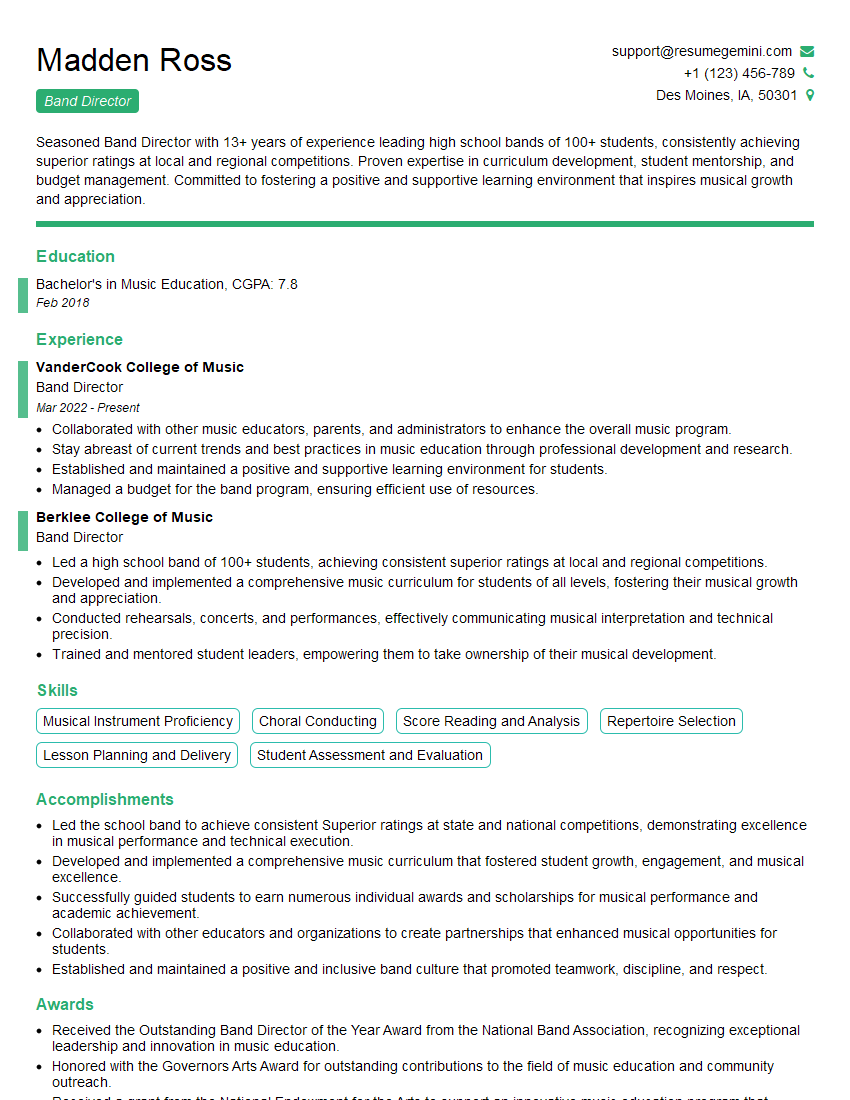
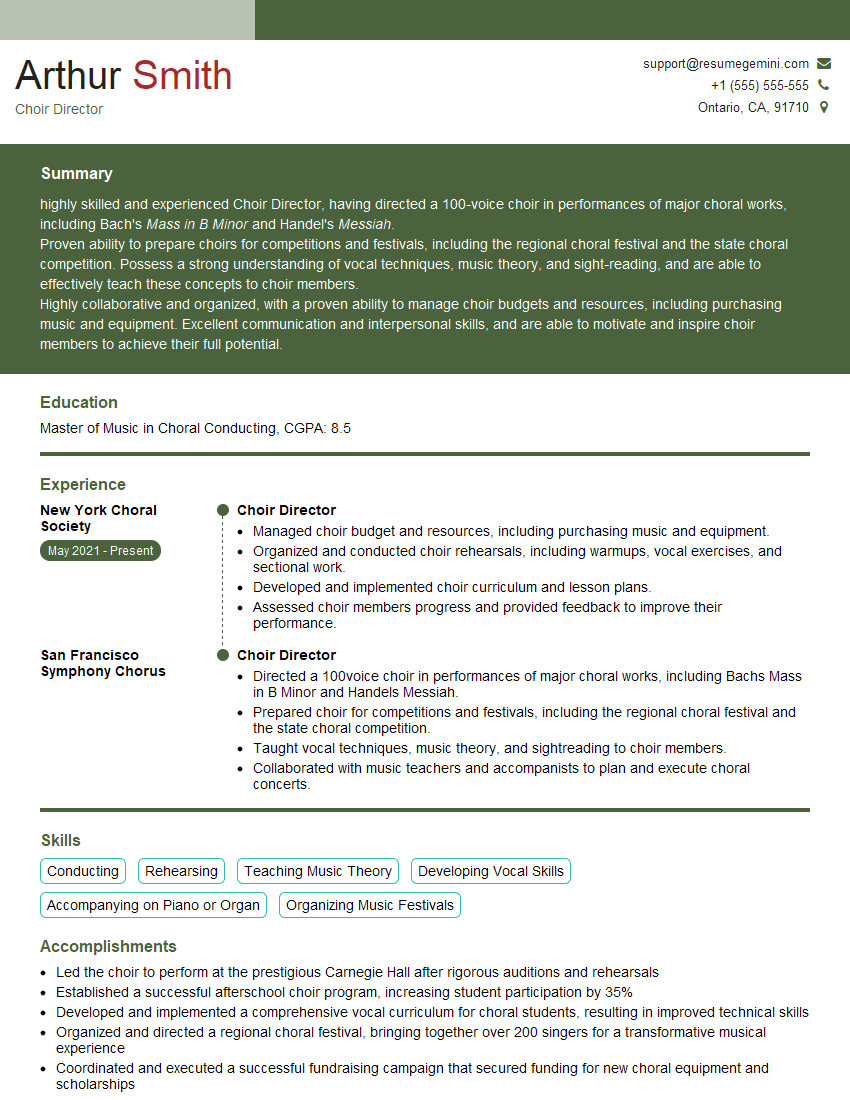
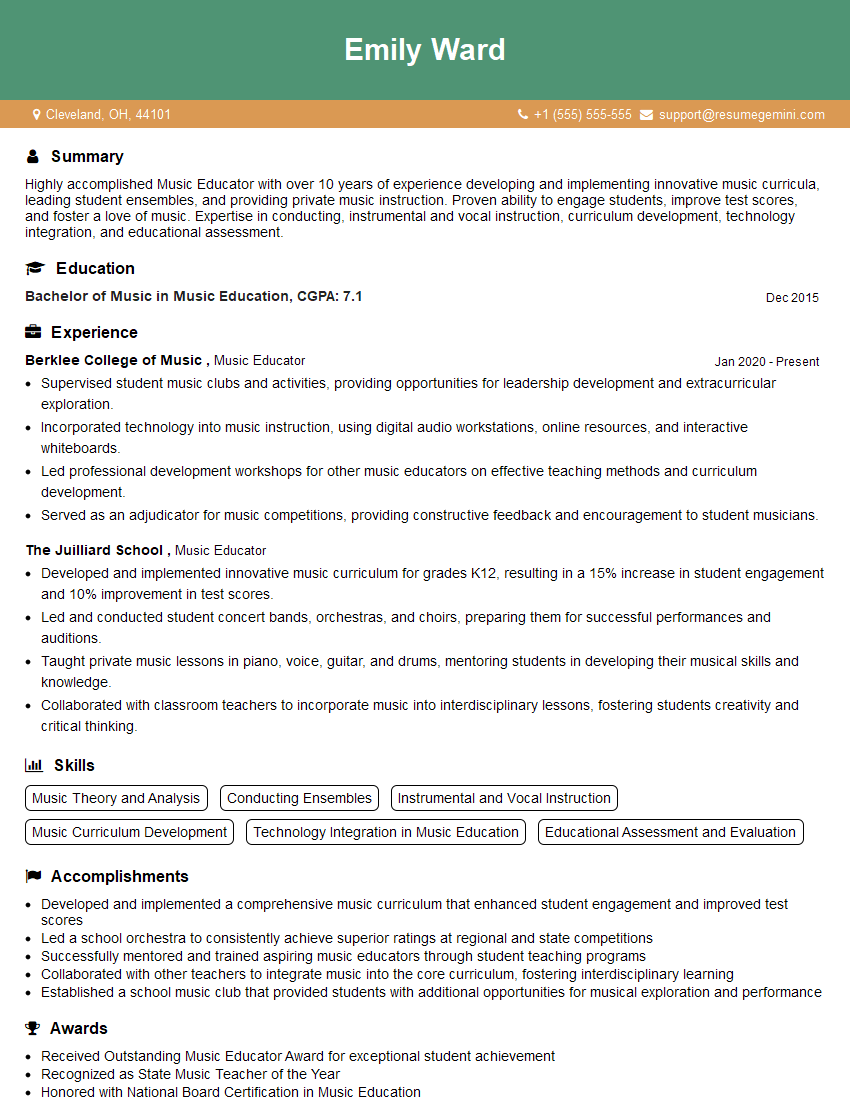
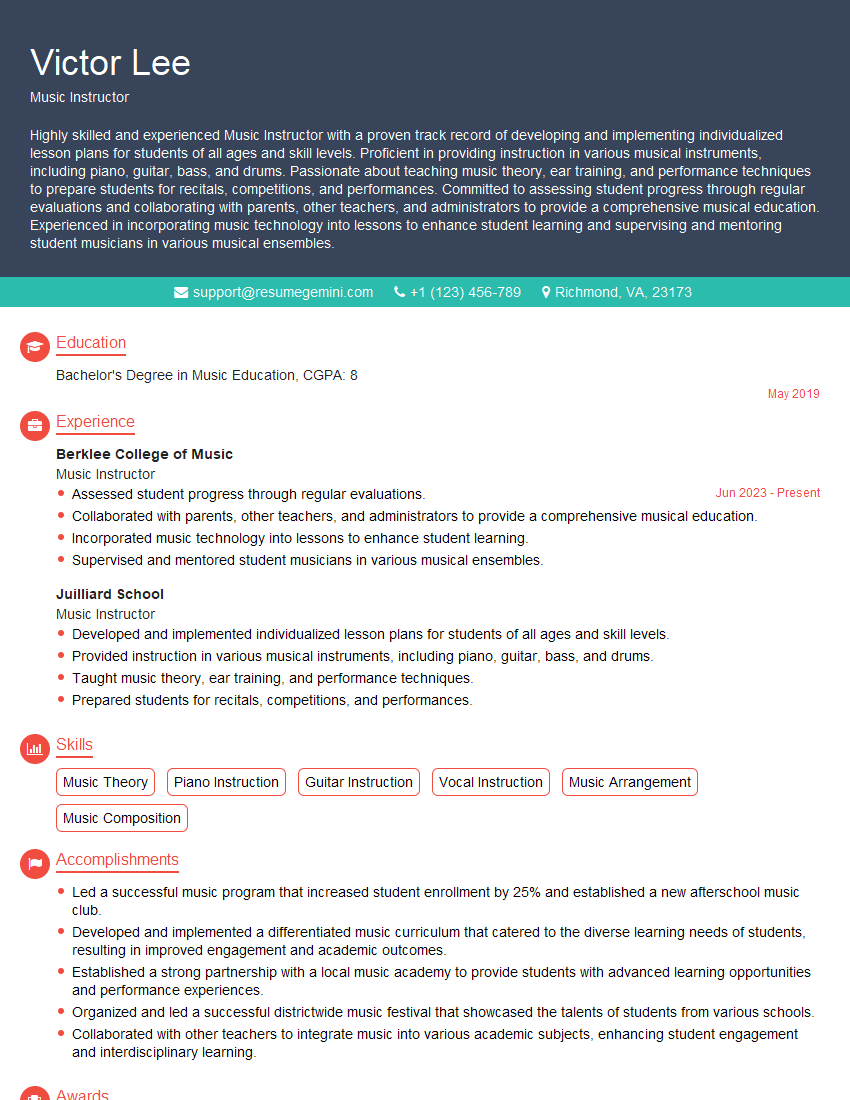
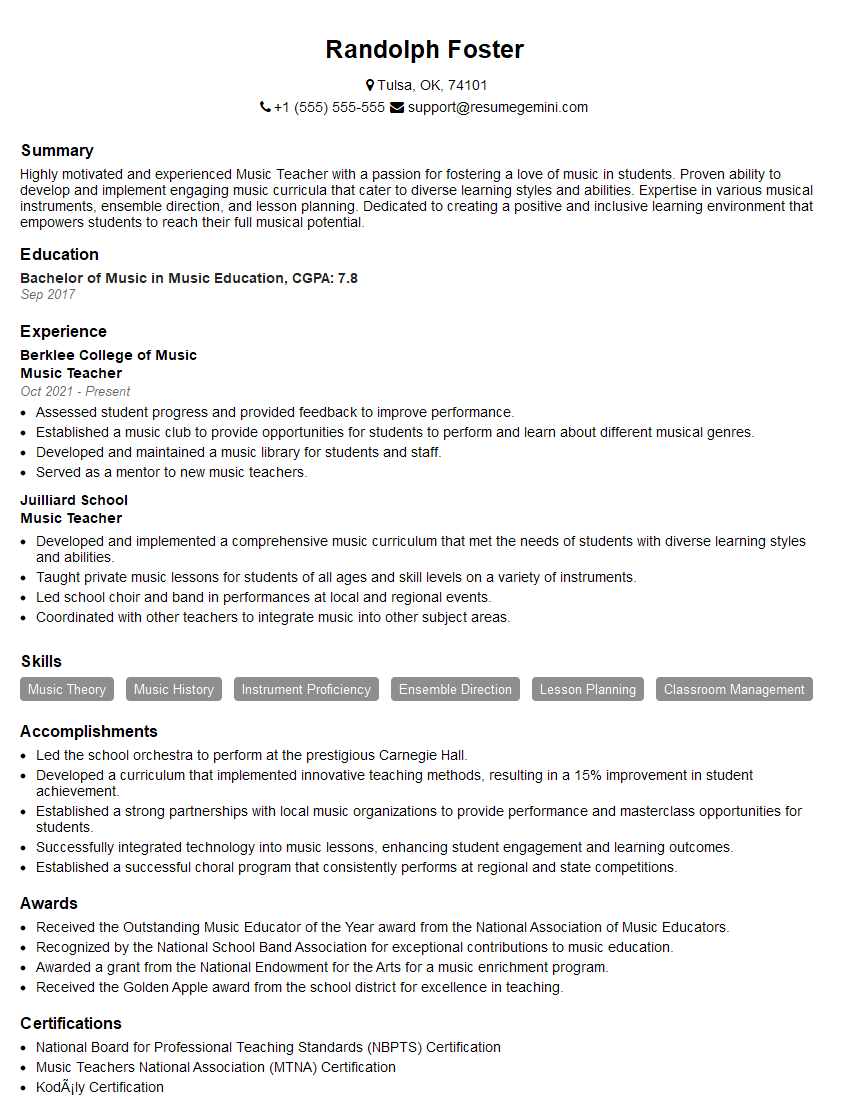
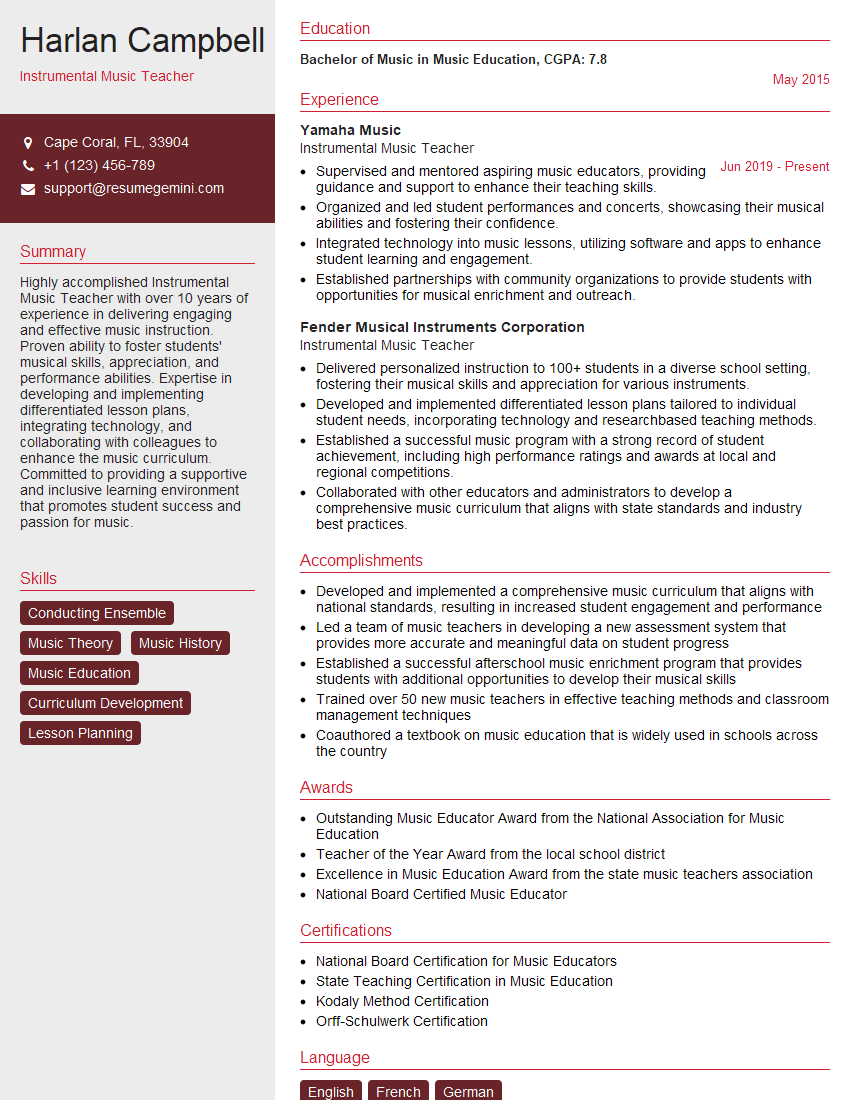
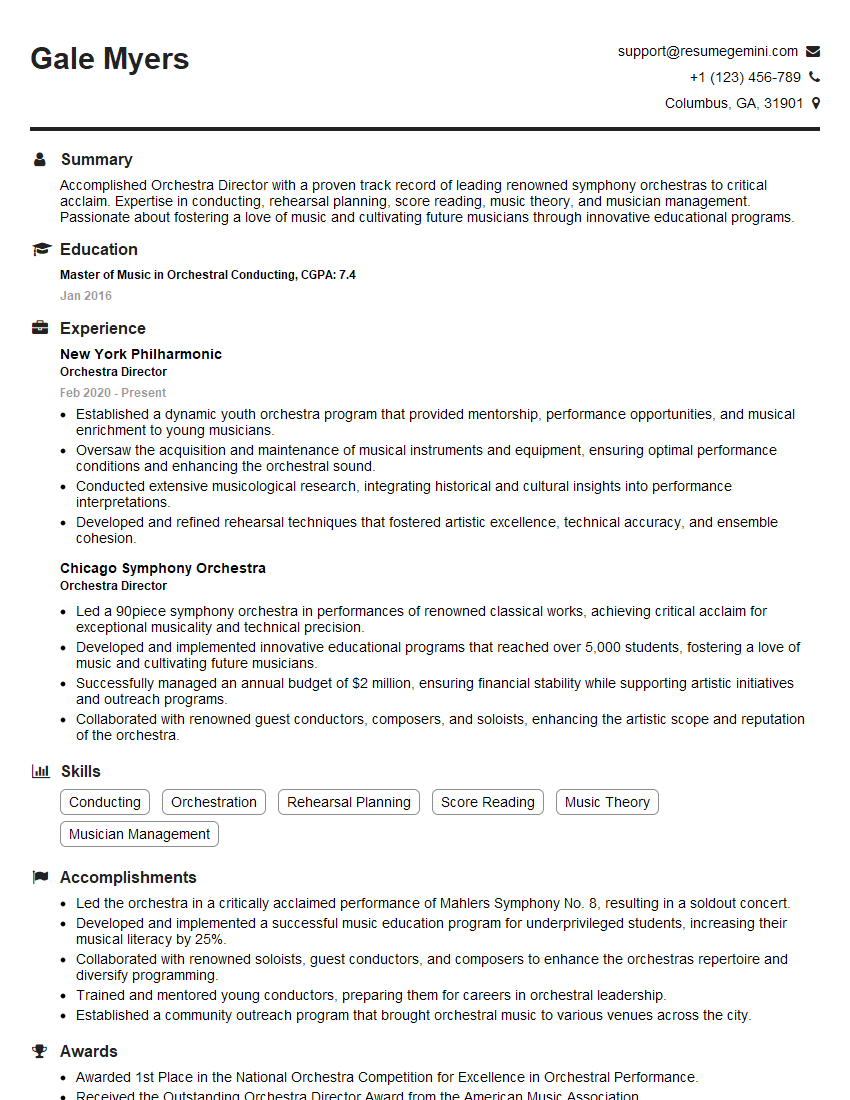
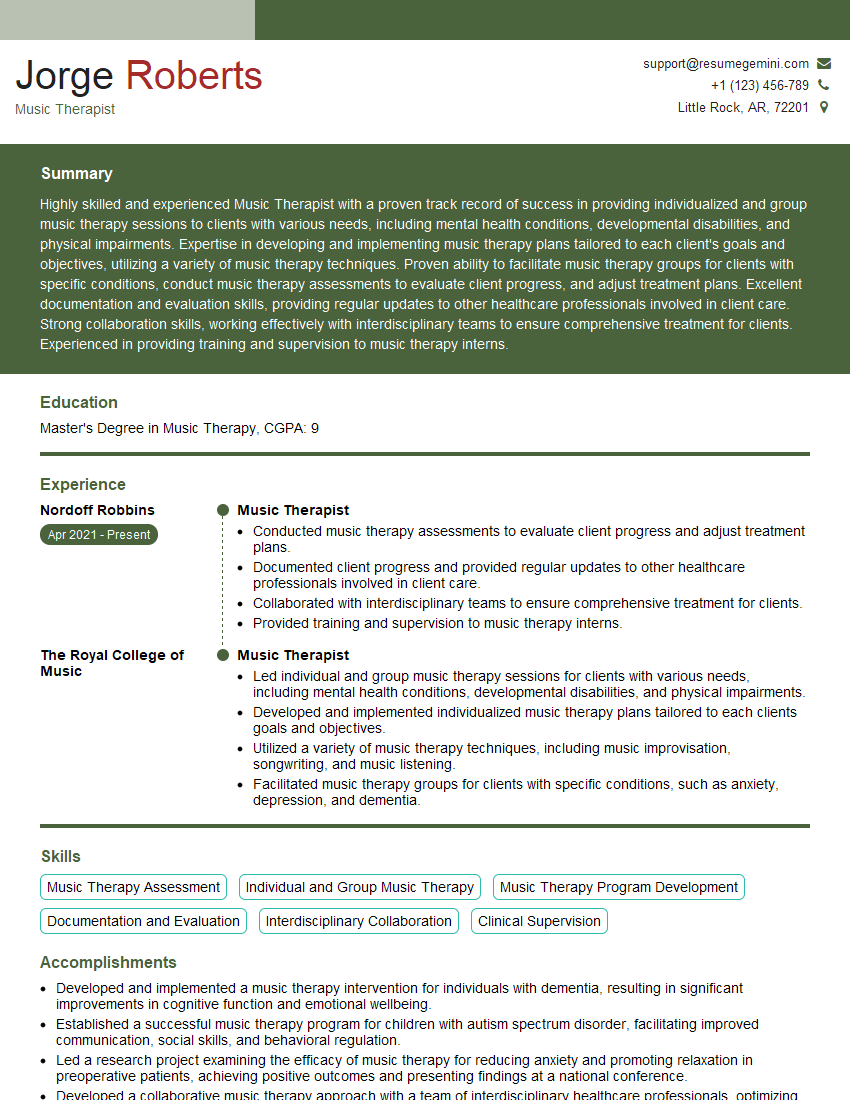
Mastering Music Pedagogy and Instruction is key to a thriving career. A well-crafted resume is your first step towards showcasing your expertise and securing your dream position. An ATS-friendly resume ensures your qualifications are effectively communicated to hiring managers. To create a truly compelling and impactful resume, we recommend using ResumeGemini. ResumeGemini provides the tools and resources to build a professional resume that highlights your unique skills and experiences. Examples of resumes tailored specifically to Music Pedagogy and Instruction are available to guide you.
Explore more articles
Users Rating of Our Blogs
Share Your Experience
We value your feedback! Please rate our content and share your thoughts (optional).
What Readers Say About Our Blog
Really detailed insights and content, thank you for writing this detailed article.
IT gave me an insight and words to use and be able to think of examples