Are you ready to stand out in your next interview? Understanding and preparing for Musician Representation and Negotiation interview questions is a game-changer. In this blog, we’ve compiled key questions and expert advice to help you showcase your skills with confidence and precision. Let’s get started on your journey to acing the interview.
Questions Asked in Musician Representation and Negotiation Interview
Q 1. Describe your experience negotiating music publishing deals.
Negotiating music publishing deals requires a deep understanding of copyright law, market value, and the artist’s long-term goals. It’s not just about securing the highest upfront advance; it’s about ensuring a fair and sustainable revenue stream for the artist throughout the lifespan of their work. My approach involves meticulous research into comparable deals for artists of similar stature and genre, analyzing the proposed terms (including royalty rates, administration fees, and reversion clauses), and advocating for my client’s best interests. For example, I recently negotiated a deal that secured a higher-than-average royalty rate for a singer-songwriter by highlighting the unique lyrical quality of their work and their growing social media following. This demonstrates the value proposition beyond just current sales projections.
The process often involves multiple rounds of negotiation, requiring patience, strong communication skills, and a keen ability to identify potential pitfalls in the contract. Key areas of focus include the definition of ‘works’ covered, the duration of the agreement, and the methods used for royalty tracking and payment. I utilize detailed spreadsheets to compare different offers side-by-side to ensure we achieve the optimal outcome for the artist. This detailed approach minimizes potential disputes down the line and ensures financial transparency.
Q 2. How do you handle conflicts between an artist and a record label?
Conflicts between artists and record labels are unfortunately common. My role is to act as a mediator, facilitating open communication and finding mutually agreeable solutions. This often involves understanding the perspectives of both parties, identifying the root cause of the conflict, and collaboratively developing strategies to address the concerns. For example, if an artist feels their creative vision isn’t being respected, I work to negotiate a clearer creative control clause within their contract. If a dispute arises over royalties, I ensure all accounting practices are transparent and thoroughly audited.
My approach prioritizes maintaining a positive working relationship whenever possible, recognizing that a collaborative environment is crucial for the long-term success of the artist. However, I am also prepared to advocate fiercely for my client’s rights if necessary, escalating the dispute through formal channels if necessary, including mediation or arbitration.
Q 3. Explain your process for identifying and developing new musical talent.
Identifying and developing new talent is a multifaceted process that blends intuition, market analysis, and strategic planning. I attend live music events, actively scour online platforms for emerging artists, and leverage my network of industry contacts to discover promising musicians. My assessment considers not only musical talent but also the artist’s stage presence, songwriting ability, overall brand potential and commitment to their career.
Once I identify a promising artist, the development process involves creating a comprehensive plan that might include songwriting workshops, vocal coaching, marketing strategies, and securing appropriate representation. I help them refine their artistic vision, build a professional team, and navigate the complexities of the music industry. I recently helped an undiscovered singer-songwriter secure a publishing deal by crafting a compelling artist presentation showcasing their unique musical style and future growth prospects.
Q 4. What strategies do you employ to maximize an artist’s earning potential?
Maximizing an artist’s earning potential involves a holistic approach that goes beyond just record sales. We explore diverse revenue streams, including live performances, merchandise sales, brand partnerships, synchronization licensing (using music in film, TV, or advertising), and streaming royalties. For example, a strategic approach might involve negotiating favorable streaming deals with platforms like Spotify and Apple Music, alongside securing lucrative synchronization opportunities that expose the artist to new audiences.
Building a strong brand is also crucial. This involves developing a clear artistic identity, cultivating a loyal fan base through social media engagement and direct interaction, and building relationships with industry influencers. I actively work on crafting a tailored approach to match the artist’s specific strengths and market opportunities.
Q 5. How do you assess the market value of a musical act?
Assessing the market value of a musical act is a complex process requiring a blend of qualitative and quantitative analysis. We consider factors such as their current fanbase size and engagement, their streaming numbers, their touring history, and their critical reception. For established artists, historical sales data and projected future earnings play a significant role. For emerging artists, the potential for growth is crucial, considering elements like their musical talent, marketing potential, and overall branding.
I use various benchmarks and industry data, compare their performance metrics to those of comparable artists, and analyze their potential for future growth. My objective is to create a realistic yet aspirational valuation to guide contract negotiations and business planning.
Q 6. How would you advise an artist on their social media strategy?
Social media is an essential tool for modern musicians. I advise artists to develop a cohesive social media strategy that aligns with their overall brand and artistic goals. This involves identifying their target audience, creating engaging content that showcases their personality and talent, and interacting actively with their followers. Simply posting music isn’t enough; it’s about building a community and fostering genuine connections.
I help them choose the right platforms, develop a consistent posting schedule, and measure their engagement metrics to refine their approach. We discuss the balance between organic growth and potentially using paid advertising to reach a wider audience. The goal is not merely to gain followers, but to convert those followers into loyal fans who attend live shows, buy merchandise, and spread the word.
Q 7. Describe your experience with royalty accounting and reporting.
Royalty accounting and reporting are critical aspects of music business management. I have extensive experience overseeing the process, ensuring accuracy and transparency. This involves verifying reported sales figures from various sources (streaming platforms, physical sales, etc.), reconciling discrepancies, and ensuring timely and accurate royalty payments to the artists. I use specialized software and maintain detailed records to track every transaction.
My expertise extends to navigating the complexities of different royalty structures, ensuring all accounting practices are compliant with industry standards, and resolving any disputes that may arise regarding payment calculation. Proactive auditing and clear documentation are key to ensuring a smooth and efficient process. Protecting the artist’s financial interests is paramount.
Q 8. Explain your understanding of intellectual property rights in the music industry.
Intellectual property (IP) rights in the music industry are crucial for protecting a musician’s creative work. This encompasses several key areas:
- Copyright: This protects the musical composition (the melody, harmony, and lyrics) and the sound recording (the actual performance captured on a disc or digitally). Copyright grants the creator exclusive rights to reproduce, distribute, publicly perform, and create derivative works from their music. For example, a songwriter holds the copyright to their song, while the record label often holds the copyright to the sound recording.
- Mechanical Rights: These rights grant permission to reproduce and distribute a musical composition, typically covering situations like creating a physical CD, digital download, or streaming service usage. A songwriter will license these rights to labels or other entities.
- Performance Rights: These rights govern the public performance of a musical composition. Organizations like ASCAP, BMI, and SESAC collect royalties on behalf of songwriters and publishers when their music is played in public venues like clubs or radio.
- Synchronization Rights: These rights allow the use of a musical composition in a visual medium, such as a film, television show, or advertisement. This is a particularly lucrative area, as synchronization often requires a separate licensing agreement.
- Master Rights: These rights cover the sound recording itself, and belong to the owner of the recording (often the record label). Master rights govern how the recording is distributed and used.
Understanding and effectively managing these various IP rights is vital for maximizing an artist’s revenue streams and preventing infringement.
Q 9. How do you handle negative publicity or controversies involving an artist?
Handling negative publicity requires a swift, strategic, and transparent approach. My first step is damage assessment: determining the extent of the damage, identifying the source, and understanding the public narrative. Then, I strategize a response, which may involve:
- Crisis Communication Plan: A pre-emptive plan outlining procedures to address various scenarios. This usually includes a designated spokesperson, a communication strategy (proactive vs. reactive), and messaging guidelines.
- Fact-Finding: Thoroughly investigate the situation to ascertain the truth and determine the artist’s culpability.
- Public Statement: Crafting a clear, concise, and empathetic public statement acknowledging the situation. Depending on the nature, an apology may be appropriate. Avoiding defensive language is key.
- Damage Control: Utilizing social media, press releases, and other channels to correct misinformation and counteract negative sentiment. Proactive outreach to key media outlets can help shape the narrative.
- Legal Counsel: If the controversy involves legal issues, seeking advice from experienced legal professionals is paramount.
For example, if an artist is embroiled in a plagiarism controversy, we’d commission a thorough legal investigation, engage in direct communication with the alleged source, and if necessary, negotiate a settlement to avoid costly litigation while simultaneously working to manage public perception.
Q 10. What’s your approach to building and maintaining relationships with industry professionals?
Building and maintaining strong industry relationships is the backbone of successful artist representation. My approach is based on mutual respect, transparency, and consistent communication. This involves:
- Networking: Actively attending industry events (conferences, showcases, festivals), and strategically reaching out to relevant individuals (A&R representatives, managers, promoters).
- Relationship Building: Focusing on building genuine connections based on mutual benefit, rather than solely transactional interactions. This means showing genuine interest in the work of others.
- Open Communication: Maintaining transparent communication with all parties involved (clients, labels, managers, publishers). Regular updates and honest dialogue foster trust.
- Professionalism: Delivering on promises, managing expectations effectively, and addressing concerns proactively.
- Giving Back: Mentoring emerging professionals and contributing to the industry through involvement in relevant organizations fosters goodwill.
Think of it as cultivation—you’re not just collecting contacts, you’re building a network that can provide support and opportunities throughout an artist’s career.
Q 11. How do you create and manage a budget for an artist’s career development?
Budgeting for an artist’s career development requires a detailed, forward-looking approach. I typically create a rolling budget, updated quarterly or annually, that encompasses various elements:
- Recording Costs: Studio time, engineering, mixing, mastering, and producer fees.
- Marketing & Promotion: Public relations, social media management, advertising, music video production, website development.
- Distribution: Costs associated with getting music onto digital platforms and physical distribution (if applicable).
- Touring Expenses: Travel, accommodation, equipment rental, venue fees, and crew salaries.
- Legal & Business Fees: Accountants, lawyers, and agents’ commissions.
- Contingency Fund: A buffer for unexpected expenses.
A detailed breakdown of each cost is essential, enabling precise tracking and informed decision-making. For instance, rather than a vague ‘promotion’ budget, specific allocations for social media advertising, radio play, or press kit creation would be detailed. This ensures accountability and optimizes resource allocation.
Q 12. Explain your experience with tour negotiation and logistics.
Tour negotiation and logistics are complex processes involving meticulous planning and strong communication. My approach involves several stages:
- Route Planning: Determining optimal tour dates and locations based on the artist’s target audience, venue availability, and logistical considerations.
- Venue Negotiation: Securing favorable terms with venues, including guarantees, rider stipulations, and marketing commitments.
- Contracts: Reviewing and negotiating contracts with venues, promoters, and other stakeholders.
- Logistics: Arranging transportation (buses, flights, equipment transport), accommodation, and catering for the artist and crew.
- Production: Overseeing the technical aspects of the tour, including sound, lighting, and staging.
- Budget Management: Tracking expenses, managing cash flow, and ensuring the tour operates within the allocated budget.
Negotiating a rider (the artist’s technical and hospitality specifications) is a critical aspect. This must balance the artist’s needs with the venue’s capabilities while being mindful of budget. For example, while an artist may desire top-tier catering, we would work with the venue to identify cost-effective solutions that still meet basic requirements.
Q 13. How do you identify and secure lucrative sponsorship deals for artists?
Securing lucrative sponsorship deals involves understanding the artist’s brand and finding synergistic partners. My process involves:
- Brand Alignment: Identifying brands whose values and target audience align with the artist’s image and fanbase.
- Proposal Development: Crafting compelling proposals highlighting the artist’s reach, engagement, and unique selling points.
- Negotiation: Negotiating favorable terms, including payment structures, deliverables, and brand guidelines.
- Contract Review: Thoroughly reviewing contracts to protect the artist’s interests.
- Campaign Management: Overseeing the implementation of the sponsorship campaign and ensuring compliance with agreed-upon terms.
For example, if an artist has a strong environmental message, I’d explore sponsorships with eco-conscious brands. The proposal would highlight the artist’s commitment to sustainability, their social media reach, and their ability to promote the brand authentically to a highly engaged audience.
Q 14. Describe your process for selecting and managing an artist’s legal team.
Selecting and managing an artist’s legal team requires careful consideration. I look for:
- Expertise: Attorneys specializing in entertainment law, with a proven track record in music industry contracts and intellectual property.
- Reputation: A strong reputation for integrity, responsiveness, and effectiveness.
- Communication: Excellent communication skills, able to clearly explain complex legal concepts in an accessible manner.
- Compatibility: A good working relationship between the artist, their manager, and the legal team is crucial.
- Collaboration: The legal team must work collaboratively with other members of the artist’s team.
Once selected, management involves clear communication regarding ongoing legal matters, proactive advice on contract negotiations, and regular updates on legal developments. I act as a liaison between the legal team and the artist, ensuring that the legal advice is understood and implemented effectively. Building a trusting relationship with the legal team allows for proactive guidance, protecting the artist’s long-term interests.
Q 15. How do you balance creative vision with business strategy for your artists?
Balancing an artist’s creative vision with sound business strategy is a delicate dance, requiring constant communication and a collaborative approach. It’s not about choosing one over the other; it’s about finding the synergy between them. Think of it like composing a song – the melody (creative vision) needs a strong structure (business strategy) to be truly effective.
For example, I worked with a singer-songwriter who had a very specific vision for their debut album – a raw, acoustic sound. While I loved the artistic merit, we also needed to consider market trends. We decided to release a stripped-down acoustic EP first, building buzz and a dedicated fanbase. Then, we used that momentum to support the release of a fuller, more commercially viable album, still keeping true to their original artistic integrity. We leveraged data on streaming habits to inform the album’s release schedule and chose appropriate promotional channels.
- Open Communication: Regular check-ins with the artist are crucial. This allows for a clear understanding of their goals and allows me to propose realistic strategies that align with their aspirations.
- Market Research: Thorough market analysis helps us understand what’s working in the industry and how to best position the artist’s music within those parameters.
- Long-term Vision: We develop a comprehensive plan, outlining short-term goals (e.g., securing a tour) and long-term objectives (e.g., establishing a strong brand identity).
Career Expert Tips:
- Ace those interviews! Prepare effectively by reviewing the Top 50 Most Common Interview Questions on ResumeGemini.
- Navigate your job search with confidence! Explore a wide range of Career Tips on ResumeGemini. Learn about common challenges and recommendations to overcome them.
- Craft the perfect resume! Master the Art of Resume Writing with ResumeGemini’s guide. Showcase your unique qualifications and achievements effectively.
- Don’t miss out on holiday savings! Build your dream resume with ResumeGemini’s ATS optimized templates.
Q 16. Explain your familiarity with different types of music contracts.
My familiarity with music contracts is extensive. I’ve negotiated and reviewed hundreds of agreements across various genres and career stages. This includes understanding nuances in different clauses which can significantly impact an artist’s career trajectory.
- Recording Agreements: These agreements define the artist’s relationship with a record label, outlining royalties, advances, ownership of masters, and term of the contract. Crucially, I ensure the artist receives fair compensation and retains ownership where appropriate.
- Publishing Agreements: These contracts govern the administration and licensing of the artist’s songwriting. I negotiate favorable royalty rates and ensure clear attribution for the artist’s work.
- Licensing Agreements: These are crucial for securing placement in TV, film, commercials, and video games. I focus on maximizing licensing fees and ensuring clear usage rights.
- Merchandising Agreements: These contracts cover the licensing of the artist’s name and image for merchandise sales. I ensure the artist receives a fair share of profits and maintains quality control.
- Live Performance Agreements: These contracts govern an artist’s appearances at concerts and festivals, outlining performance fees, travel expenses, and other relevant details. I carefully review payment schedules and cancellation clauses.
Understanding the legal implications of each clause is paramount to protecting the artist’s rights and ensuring long-term financial stability. It’s more than just signing on the dotted line; it’s about building a solid foundation for the artist’s future.
Q 17. How do you measure the success of an artist’s marketing campaigns?
Measuring the success of a marketing campaign requires a multifaceted approach that goes beyond simple vanity metrics like ‘likes’ and ‘followers’. We look at a combination of quantitative and qualitative data to provide a comprehensive picture of campaign effectiveness.
- Streaming Numbers: Increase in streams across various platforms (Spotify, Apple Music, etc.) indicates reach and engagement.
- Sales Data: Tracking album and merchandise sales gives a direct measure of commercial success.
- Social Media Engagement: While follower counts are important, we also analyze metrics such as engagement rate (likes, comments, shares), reach, and audience demographics.
- Website Traffic: Analyzing website traffic indicates the effectiveness of online promotion.
- Brand Awareness: Surveys and polls can measure changes in brand awareness before and after a campaign.
- Concert Attendance: Tracking ticket sales and concert attendance provides a clear measure of live performance success.
For example, a successful campaign might show a significant increase in streams alongside a rise in brand awareness, indicating a broad reach and growing fanbase. We use this data to refine strategies for future campaigns, ensuring optimal resource allocation.
Q 18. What are your strategies for negotiating favorable terms in licensing agreements?
Negotiating favorable terms in licensing agreements requires a deep understanding of the market value of the artist’s music, along with strong negotiation skills. It’s a strategic process that combines preparation, research, and effective communication.
- Market Research: We research comparable licensing deals to establish a benchmark for royalty rates and usage fees.
- Understanding the Licensee: We assess the licensee’s needs and budget, adapting our negotiation strategy accordingly.
- Clear Contract Language: We ensure the agreement clearly outlines usage rights, territories, and payment schedules.
- Protecting the Artist’s Image: We negotiate clauses protecting the artist’s reputation and brand image.
- Reversion Rights: We work to secure reversion rights, ensuring the artist can regain control of the license after a certain period.
For example, I recently secured a lucrative licensing deal for an artist’s music in a major video game franchise. By thoroughly researching comparable deals and presenting a strong case, we were able to negotiate a higher royalty rate and more favorable usage rights than initially proposed, protecting the artist’s long-term interests.
Q 19. How do you use data analytics to inform your decision-making process?
Data analytics are integral to our decision-making process. We use various platforms to collect and analyze data that informs our strategies across all aspects of artist management.
- Streaming Data: We analyze listening habits, including popular tracks, demographics of the fanbase, and geographic location of listeners.
- Social Media Analytics: We use tools to track engagement, follower growth, and audience demographics on various platforms.
- Website Analytics: We track website traffic, bounce rates, and popular pages to improve the artist’s online presence.
- Sales Data: We analyze sales figures to identify trends, best-selling products, and peak seasons.
- Campaign Performance: We track campaign metrics to assess their effectiveness and refine strategies accordingly.
This data-driven approach enables us to make informed decisions on everything from tour routing and marketing campaigns to selecting appropriate collaborators and planning album releases. We don’t rely solely on intuition; we use numbers to support our creative strategies.
Q 20. Explain your experience with building an artist’s brand and image.
Building an artist’s brand and image is a crucial aspect of long-term success. It’s about crafting a consistent and compelling narrative that resonates with their target audience.
- Defining the Brand Identity: We work closely with the artist to define their core values, unique selling points, and target audience.
- Visual Identity: We create a cohesive visual identity, including logo design, branding guidelines, and photography styles.
- Content Strategy: We develop a robust content strategy encompassing social media, website content, press releases, and other forms of communication.
- Public Relations: We build relationships with media outlets to secure positive press coverage.
- Storytelling: We craft compelling narratives that showcase the artist’s personality, journey, and musical vision.
For instance, with a new artist, we might craft a narrative around their unique musical origins, highlighting what distinguishes them from other artists in the same genre. This helps to build an authentic and engaging connection with their audience. The goal is to establish a recognizable and authentic brand that sets them apart in a crowded market.
Q 21. How do you ensure an artist’s long-term career sustainability?
Ensuring an artist’s long-term career sustainability requires a holistic approach that goes beyond immediate success. It’s about building a solid foundation for their future.
- Diversification of Income Streams: We explore various income sources beyond album sales, including live performances, merchandise, licensing, endorsements, and collaborations.
- Financial Planning and Management: We assist with budgeting, financial planning, and investment strategies.
- Consistent Creative Output: We encourage ongoing creative development, including exploring new genres, collaborating with other artists, and experimenting with different creative formats.
- Strategic Networking: We build and maintain relationships with key industry professionals.
- Adaptability: We encourage the artist to adapt to changing industry trends and embrace new technologies.
Think of it like building a house: immediate success is like laying the foundation, but long-term sustainability requires building strong walls, a sturdy roof, and ongoing maintenance. It’s a continuous process requiring careful planning, consistent effort, and a willingness to adapt to the changing landscape of the music industry.
Q 22. Describe your experience with artist development and mentorship.
Artist development is the cornerstone of a successful music career. It’s not just about polishing a performance; it’s a holistic approach encompassing creative growth, branding, and strategic planning. My mentorship involves a deep dive into understanding the artist’s vision, strengths, and weaknesses. This includes identifying their unique selling proposition (USP) – what sets them apart in a crowded market. We then collaboratively create a tailored development plan. This could involve anything from vocal coaching and songwriting workshops to refining their stage presence and crafting a compelling narrative for their brand. For example, I worked with a young singer-songwriter who lacked confidence in her original material. Through focused sessions on songwriting, performance, and targeted social media engagement, we built her confidence and increased her online following, eventually leading to a record deal.
Mentorship isn’t a one-size-fits-all approach. I adapt my strategy to each artist’s unique needs and personality. Some artists need more guidance, while others require a more collaborative approach. The key is consistent communication, mutual respect, and a shared commitment to their long-term success.
Q 23. Explain your approach to conflict resolution in artist collaborations.
Conflict resolution in artist collaborations is crucial. My approach emphasizes open communication and proactive conflict management. Before any project begins, we establish clear expectations, roles, and responsibilities, ideally in a written agreement. This minimizes misunderstandings later on. When conflict arises – and it inevitably does – I facilitate constructive dialogue, encouraging each party to express their concerns openly and respectfully. I act as a neutral mediator, focusing on finding mutually acceptable solutions, rather than assigning blame. For example, I recently mediated a disagreement between a band and their producer regarding creative direction. By facilitating open communication and compromise, we were able to reach a solution that satisfied everyone involved, resulting in a better final product.
My approach also involves leveraging my deep understanding of the music industry’s dynamics. I often draw on my experience to help resolve creative differences, manage expectations, and ensure that the creative process is as smooth and productive as possible.
Q 24. How do you identify potential risks and opportunities in the music industry?
Identifying risks and opportunities in the music industry requires a keen eye for trends, a solid understanding of the market, and a proactive approach to risk mitigation. I constantly monitor industry changes, such as shifts in streaming consumption, the emergence of new platforms, and changes in legal frameworks. For instance, the rise of TikTok presents both a huge opportunity for viral marketing but also a risk of losing control over an artist’s image and content. Opportunities are found in spotting emerging genres, identifying underserved markets, and understanding the needs of specific audiences.
Risk assessment is done by analyzing contract terms carefully, conducting due diligence on potential collaborators, and proactively planning for potential downsides. For example, a risk might be a label’s financial instability. By diligently checking the label’s financial statements and reputation, we can mitigate the potential risk of non-payment or a stalled career.
Q 25. How do you handle the financial aspects of an artist’s career?
Managing an artist’s finances requires meticulous organization and transparency. I work closely with accountants and financial advisors to ensure accurate bookkeeping, timely tax payments, and strategic financial planning. This includes budgeting for recording, marketing, touring, and other essential expenses. We establish clear financial reporting systems so the artist always understands their income and expenditure. We negotiate contracts that are favorable to the artist, securing fair compensation for their work and protecting their intellectual property rights. For example, this involves carefully negotiating royalty rates, merchandise deals, and performance fees.
A significant part of my role involves educating artists about financial management. I guide them in making smart financial decisions, such as investing wisely and planning for their long-term financial security. This includes setting up savings plans and helping them understand the tax implications of their income.
Q 26. What are your strategies for navigating the challenges of the digital music landscape?
Navigating the digital music landscape requires a multi-faceted strategy. This involves leveraging various digital platforms to reach fans, maximizing streaming revenue, and building a strong online presence. Building a strong online presence requires a well-crafted strategy that involves building a dedicated fan base across social media, creating high-quality content, engaging with fans, and utilizing targeted advertising. For example, we can use data analytics to understand audience preferences and tailor content accordingly. We also strategize on utilizing algorithms to optimize reach.
Monetization strategies in the digital space are diverse. We explore avenues like merchandise sales, sponsorships, brand collaborations, and paid online content. It’s also crucial to understand the nuances of streaming royalties and to negotiate favorable deals with digital distributors.
Q 27. How do you adapt your approach to representing artists across diverse genres?
Adapting my approach to different genres is critical. While core principles of artist development and negotiation remain consistent, my understanding of each genre’s specific market, fan base, and industry trends is crucial. For instance, the marketing strategies for a classical musician differ significantly from those of a hip-hop artist. I thoroughly research each genre’s market dynamics, identify key players, and tailor my strategies accordingly. The marketing, touring and branding will all differ drastically. I will draw on my experience with similar artists in the same genre and ensure I’m aware of the specific opportunities and challenges in that niche. For example, I would use different networks and collaborators for a metal artist as opposed to a country artist.
The key is adaptability and a willingness to learn. I continuously expand my knowledge base to stay informed on emerging trends and evolving audiences across all genres.
Q 28. What are your long-term career goals in music representation and negotiation?
My long-term career goals involve establishing a leading music representation firm that is recognized for its artist-centric approach and its ability to consistently deliver exceptional results. I aspire to build a team of highly skilled professionals who share my passion for nurturing talent and achieving sustainable success for artists. I envision my firm becoming a hub for innovation in the music industry, consistently pushing boundaries and adapting to the ever-evolving landscape. This includes expanding into new areas, such as sync licensing and artist management in film and television.
Ultimately, I aim to leave a lasting impact on the industry by empowering artists to achieve their full potential and shaping the future of music representation through ethical and innovative practices.
Key Topics to Learn for Musician Representation and Negotiation Interview
- Understanding the Music Industry Landscape: Explore the various sectors (record labels, publishing, touring, etc.) and their unique contractual structures.
- Contract Analysis and Interpretation: Learn to dissect complex legal documents, identify key clauses (royalties, advances, deliverables), and understand their implications for artists.
- Negotiation Strategies and Tactics: Develop effective communication and negotiation skills to advocate for artists’ best interests while building strong relationships with stakeholders.
- Intellectual Property Rights (IPR): Gain a solid understanding of copyright, publishing rights, and performance rights, and how they impact artist compensation.
- Financial Management in the Music Industry: Learn about budgeting, forecasting, royalty accounting, and other financial aspects crucial for artist management.
- Building and Maintaining Artist Relationships: Explore the importance of trust, communication, and understanding artist goals and aspirations.
- Marketing and Promotion Strategies: Develop a foundational knowledge of digital marketing, social media, and traditional promotional avenues for artists.
- Legal and Ethical Considerations: Understand best practices, potential conflicts of interest, and the importance of ethical conduct in artist representation.
- Problem-Solving and Conflict Resolution: Practice navigating challenging scenarios, managing disagreements, and finding mutually beneficial solutions.
- Industry Trends and Emerging Technologies: Stay informed about the ever-evolving music industry, including streaming services, NFTs, and the impact of technology on artist representation.
Next Steps
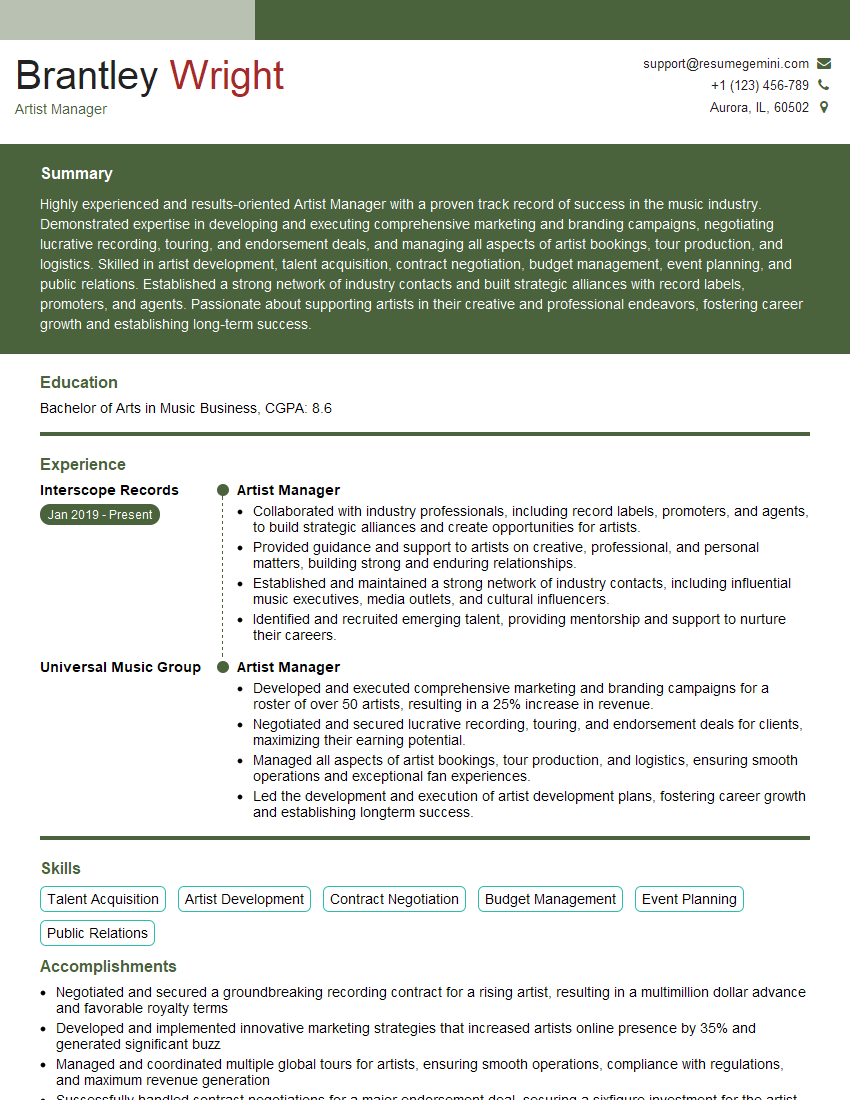
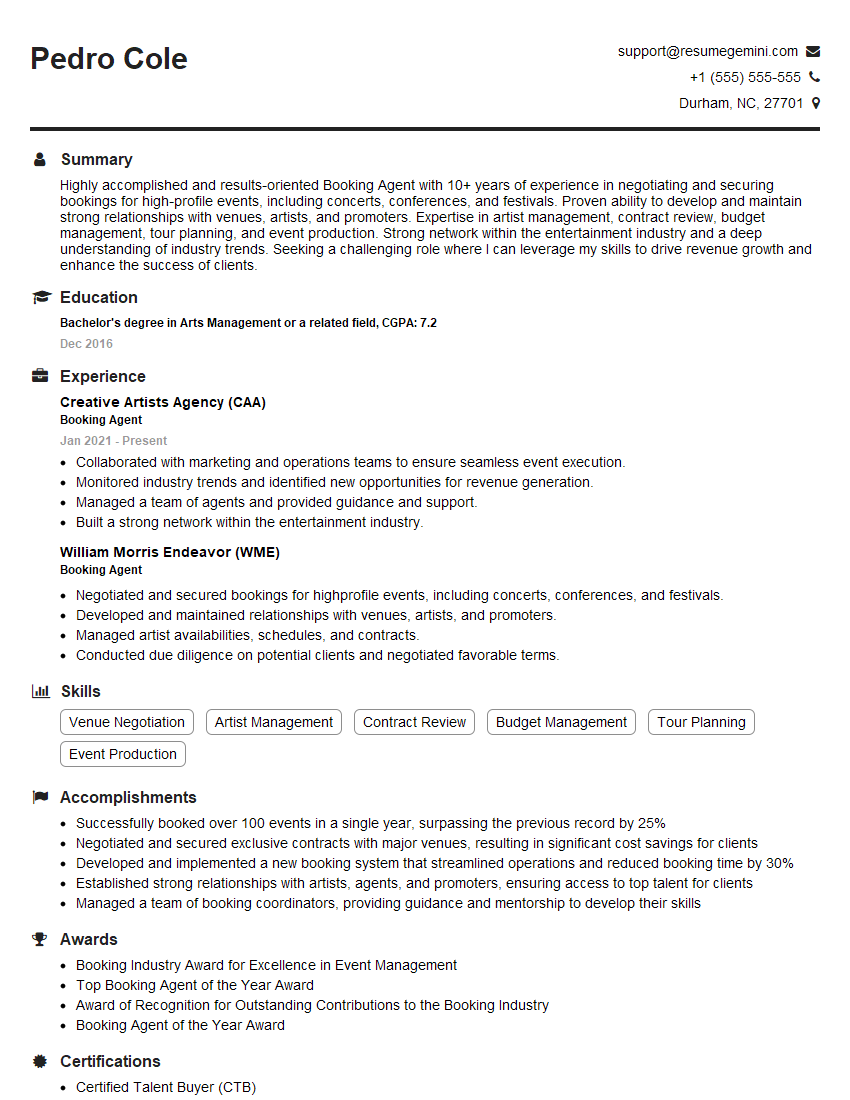
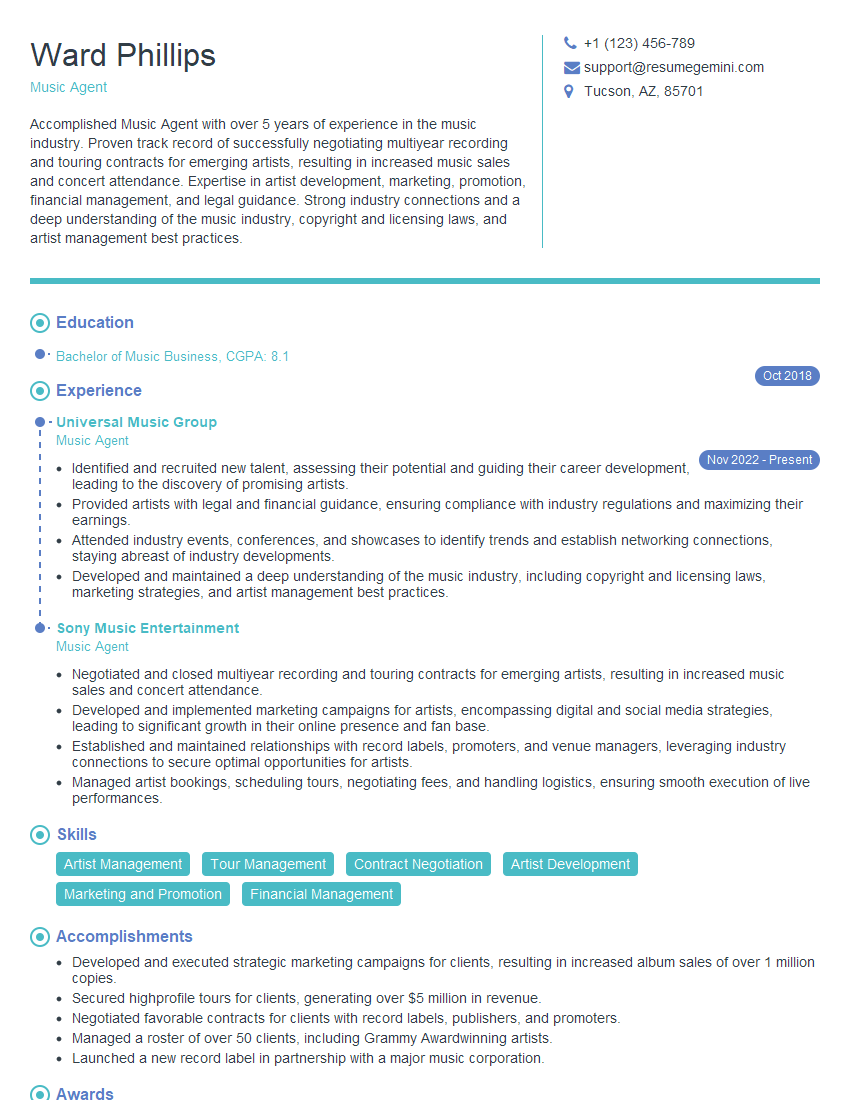
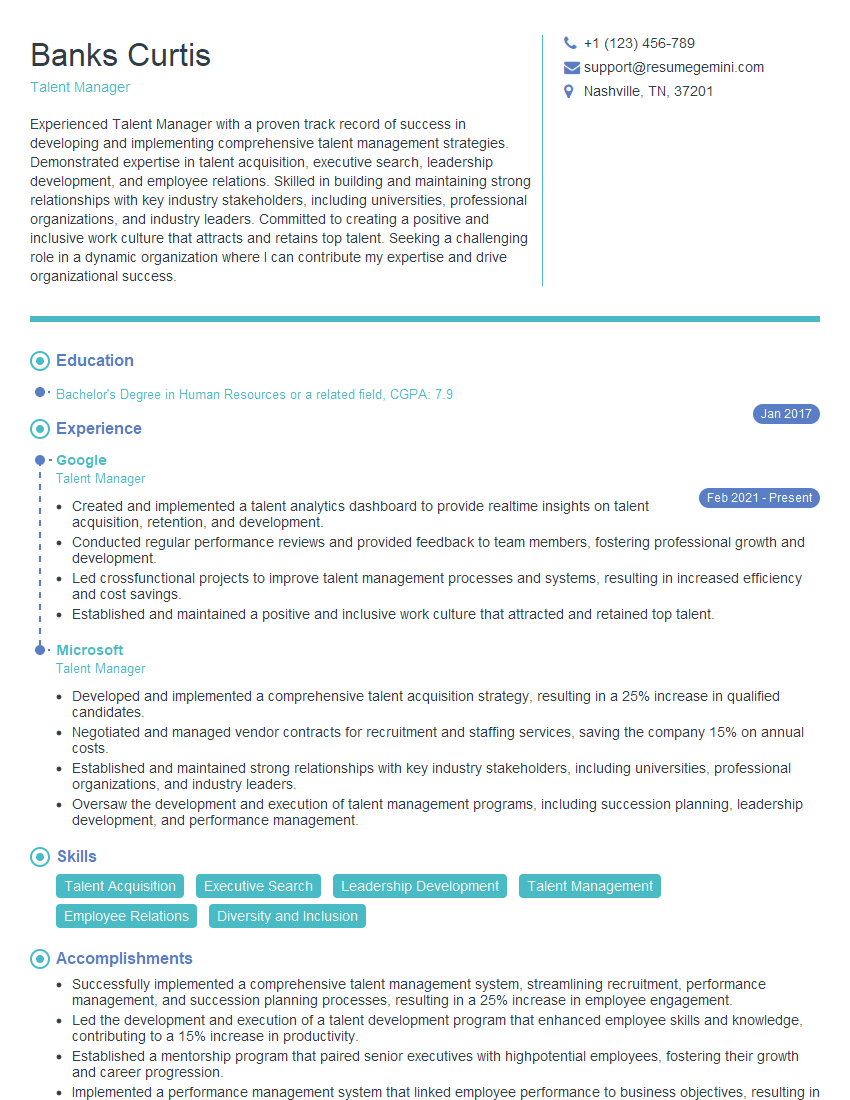
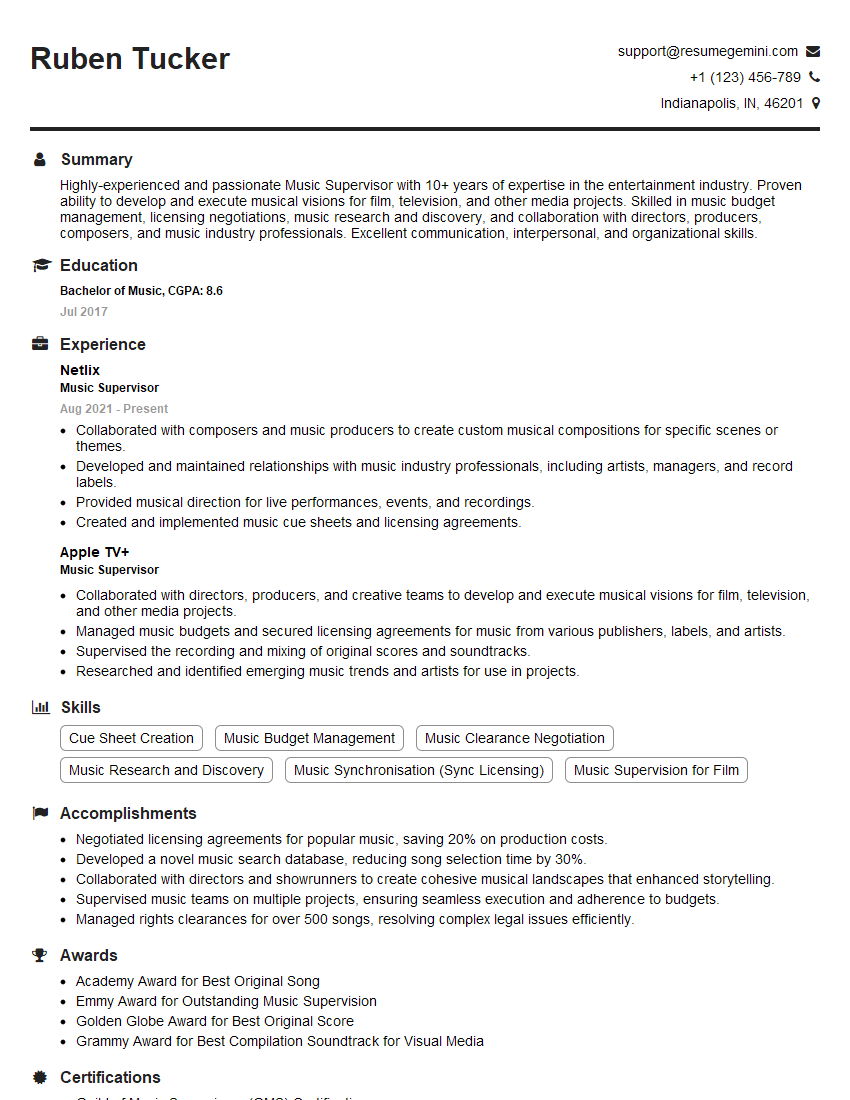
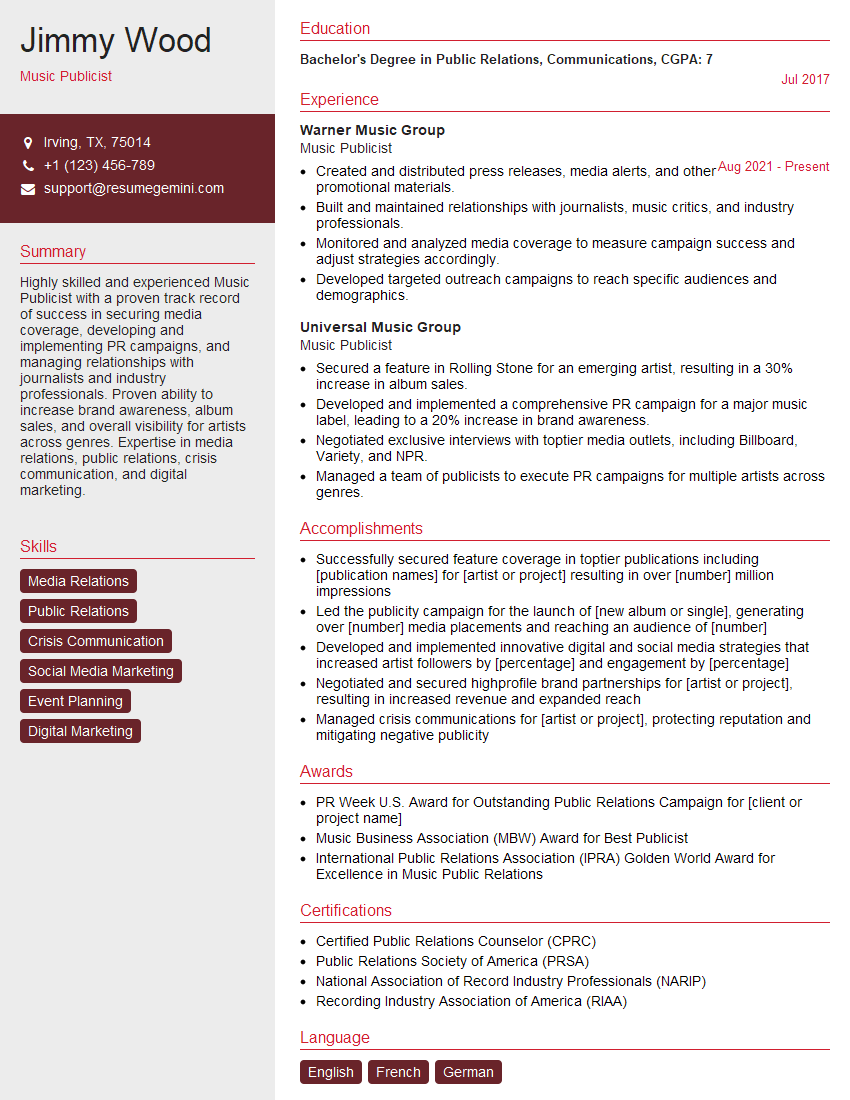
Mastering Musician Representation and Negotiation is crucial for a thriving career in the music industry. It allows you to advocate effectively for artists, build successful careers, and navigate the complex world of music business. To significantly boost your job prospects, create an ATS-friendly resume that highlights your skills and experience. ResumeGemini is a trusted resource to help you build a professional and impactful resume, ensuring your qualifications shine. Examples of resumes tailored to Musician Representation and Negotiation are available to guide you. Invest the time to craft a compelling resume—it’s your first impression on potential employers.
Explore more articles
Users Rating of Our Blogs
Share Your Experience
We value your feedback! Please rate our content and share your thoughts (optional).
What Readers Say About Our Blog
Really detailed insights and content, thank you for writing this detailed article.
IT gave me an insight and words to use and be able to think of examples