Feeling uncertain about what to expect in your upcoming interview? We’ve got you covered! This blog highlights the most important Nailing interview questions and provides actionable advice to help you stand out as the ideal candidate. Let’s pave the way for your success.
Questions Asked in Nailing Interview
Q 1. What types of nail enhancements are you proficient in?
I’m proficient in a variety of nail enhancements, including acrylic nails, gel nails, dip powder nails, and natural nail enhancements like strengthening treatments and manicures. My expertise covers the entire process, from client consultation and nail preparation to application, shaping, and finishing touches. I also have experience with nail art techniques, adding a personalized touch to each service.
Q 2. Describe your experience with acrylic nail application.
My experience with acrylic nail application spans several years, and I’ve worked with a diverse range of clients and nail conditions. I’m adept at creating various nail shapes and lengths using high-quality products. I’m meticulous in my application process, ensuring the acrylic is applied smoothly and evenly to prevent lifting or cracking. For example, I pay close attention to the proper monomer-to-powder ratio and curing time. I have a keen eye for detail, which is essential to create flawless and long-lasting acrylic nails. I always prioritize client comfort and safety throughout the process.
Q 3. Explain the process of applying gel nails.
Applying gel nails involves several steps. First, I prep the natural nails by cleaning, gently pushing back cuticles, and shaping the nails. Next, I apply a thin layer of a base coat to improve adhesion. Then, I apply one or two layers of colored gel polish, curing each layer under a UV or LED lamp. This curing process hardens the gel, preventing smudging. After applying the color, I seal the manicure with a top coat for shine and protection. Finally, I remove any sticky residue and apply cuticle oil to moisturize the skin around the nails. The entire process ensures a long-lasting and polished finish. Think of it like baking a cake – each layer needs to be carefully applied and properly ‘baked’ (cured) to create the perfect final product.
Q 4. How do you maintain sanitation and hygiene standards?
Maintaining sanitation and hygiene is paramount in my practice. I sterilize all my tools using an autoclave after each client. I use disposable files and buffers for each client to prevent cross-contamination. I always wash my hands thoroughly and wear fresh gloves for each service. My work surface is disinfected before and after each client. I use only high-quality, professional-grade products to minimize the risk of infection or allergic reactions. Proper hygiene isn’t just about following protocols; it’s about respecting my clients and ensuring their safety and well-being.
Q 5. What are the different types of nail shapes and how do you achieve them?
There’s a wide variety of nail shapes, each achieving a unique look. Popular shapes include:
- Square: Straight across with a squared-off tip.
- Squoval: A blend of square and oval, softening the corners of a square nail.
- Oval: Rounded and tapered at the tip.
- Almond: A more pointed oval, longer and more tapered.
- Stiletto: Very pointed and long, requiring strong, healthy nails.
- Coveted: A curved variation of the square shape, providing a more elegant appearance.
Q 6. How do you handle difficult clients or nail issues?
Handling difficult clients or nail issues requires patience, communication, and problem-solving skills. For difficult clients, I focus on active listening, understanding their concerns, and clearly explaining the process and potential outcomes. If nail issues arise, such as lifting or breakage, I thoroughly assess the problem, determine the cause (e.g., improper application, product incompatibility, underlying nail condition), and propose appropriate solutions, which might involve repair, reapplication, or recommending a change in products or techniques. I always maintain a calm and professional demeanor, ensuring the client feels heard and valued throughout the process. For example, if a client has a reaction to a product, I immediately stop the service, identify the potential allergen, and recommend alternative products or seek medical advice if needed.
Q 7. Describe your experience with nail art techniques.
My nail art experience is extensive. I’m proficient in various techniques, including freehand painting, nail stamping, airbrushing, water marble, and the application of rhinestones, glitter, and foils. I stay updated on current trends and continuously expand my skillset to offer clients a wide array of artistic options. I often draw inspiration from client requests, current fashion trends, and even natural elements. I recently worked on a project incorporating intricate floral designs using freehand painting, which required extreme precision and patience. Ultimately, I aim to transform each client’s nails into a beautiful piece of art that reflects their unique personality and style.
Q 8. How do you perform a proper manicure and pedicure?
A proper manicure and pedicure involves a series of steps designed to cleanse, condition, and beautify the nails and surrounding skin. Think of it as a spa treatment for your hands and feet.
- Preparation: Begin by sanitizing your hands and the work surface. Soak the hands or feet in warm, soapy water to soften the cuticles. This step is crucial for preventing injury and infection.
- Cuticle Care: Gently push back the cuticles with a cuticle pusher. Avoid cutting the cuticles as this can lead to infection. I use a cuticle softener to make this process easier and safer.
- Nail Shaping: File the nails to the desired shape and length using a fine-grit file. Always file in one direction to avoid splitting or weakening the nail. I typically offer a range of shapes from square to oval, depending on client preference and nail bed structure.
- Nail Surface Smoothing: Buff the nail surface gently to remove any ridges or imperfections. Over-buffing can weaken the nail, so this step is approached carefully.
- Moisturizing: Apply a rich moisturizer or cuticle oil to hydrate the skin around the nails. This promotes healthy nail growth and prevents dryness and cracking.
- Polish Application (Optional): If the client desires polish, apply a base coat, followed by two coats of color, and a top coat for a long-lasting and shiny finish.
- Clean-up: Remove any excess polish with a cotton swab and polish remover.
Throughout the entire process, maintaining hygiene is paramount. I always use freshly sanitized tools and dispose of used materials properly. This commitment to hygiene protects both the client and myself from potential infections.
Q 9. What are the signs of nail infections and how would you handle them?
Nail infections can manifest in several ways, ranging from minor discomfort to severe pain and potential systemic complications. Early detection is key.
- Signs of Infection: These can include redness, swelling, pain, pus, warmth around the nail, discoloration (yellowing, greening), thickening of the nail, and separation of the nail from the nail bed (onycholysis).
- Handling Infections: If I suspect an infection, I immediately stop the treatment. I advise the client to consult a doctor or dermatologist. I do not attempt to treat infections myself; that’s beyond the scope of my expertise and could potentially worsen the problem. In some cases, oral or topical antibiotics may be necessary.
Prevention is always better than cure. Maintaining strict hygiene protocols, using sterilized tools, and advising clients on proper nail care at home are crucial to minimizing the risk of infection.
Q 10. What are your preferred nail product brands and why?
My preferred nail product brands are chosen based on their quality, performance, and safety. I prioritize brands with a proven track record and a commitment to using high-quality ingredients.
- OPI: Known for their wide color range, long-lasting formula, and overall excellent quality. I particularly appreciate their commitment to cruelty-free practices.
- CND: Offers a wide array of products, from Shellac (a popular gel polish) to strengthening treatments, all known for their durability and performance.
- Orly: A reliable brand that balances quality with affordability. Their Breathable nail polish line is a favorite among clients who prefer a more natural approach.
It’s important to note that my product choices are subject to change based on new product releases and client feedback. I’m always looking for products that deliver exceptional results while maintaining the health and integrity of the natural nail.
Q 11. Describe your experience with nail repairs and fillings.
Nail repairs and fillings are essential skills for maintaining the longevity and aesthetic appeal of artificial nails. I have extensive experience in various techniques.
- Repairs: This involves fixing minor chips, cracks, or breaks in acrylic or gel nails using the appropriate acrylic or gel, and a fine-tipped brush to meticulously rebuild the damaged area. Precise application and careful blending are key to achieving a seamless repair.
- Fillings: As artificial nails grow out, a gap appears between the natural nail and the artificial extension. Fillings involve applying fresh acrylic or gel to fill this gap, maintaining the length and shape of the nails. Proper filing and shaping are essential for achieving a natural and smooth transition between the natural and artificial nail.
The success of nail repairs and fillings relies heavily on proper preparation and using the correct products. I ensure that the natural nail is properly prepped before any repair or filling is done to prevent lifting or further damage.
Q 12. What is your knowledge of nail anatomy and physiology?
Understanding nail anatomy and physiology is crucial for providing safe and effective nail services. The nail is made up of several components that interact to maintain its health and growth.
- Nail Plate: The visible part of the nail, made of keratinized cells.
- Nail Bed: The skin under the nail plate that provides nutrients to the nail.
- Nail Matrix: The area at the base of the nail where new nail cells are formed.
- Cuticle (Eponychium): The skin fold that covers the nail matrix and protects it from bacteria and infection.
- Lunula: The whitish half-moon-shaped area at the base of the nail.
Knowledge of these structures enables me to identify potential problems, understand the cause of nail issues, and advise clients on proper nail care. For instance, understanding the nail matrix is essential for correctly advising on nail growth and potential issues stemming from trauma to this area.
Q 13. How do you handle client allergies or sensitivities?
Client allergies and sensitivities are a serious concern and must be addressed with utmost care. Before starting any service, I always conduct a thorough consultation.
- Consultation: I inquire about any known allergies or sensitivities to specific nail products (e.g., acrylic, gel, certain polish brands, fragrances). I carefully note this information in my client’s file.
- Patch Test (When Necessary): For new clients or when introducing new products, I might perform a patch test before applying the product to the entire nail. This helps determine any potential reactions.
- Product Selection: I offer hypoallergenic options whenever possible. I also offer a variety of nail products to cater to individual preferences and sensitivities.
- Emergency Protocol: I have an emergency protocol in place to deal with allergic reactions. This includes having antihistamines readily available and knowing when to refer clients to medical professionals.
Open communication with clients is vital. I encourage them to disclose any concerns or discomfort immediately, allowing me to adapt the treatment accordingly. My priority is always the client’s health and safety.
Q 14. What is your approach to client consultation?
Client consultation is the cornerstone of a successful nail service. It’s not just about discussing nail color; it’s about understanding the client’s needs and expectations.
- Initial Assessment: I begin by assessing the client’s current nail condition, identifying any problems like dryness, breakage, or infections. I also consider the overall health of the surrounding skin.
- Discussion of Services: I discuss the available services, explaining the benefits and drawbacks of each. I use visual aids like color charts and brochures where appropriate.
- Preference Elicitation: I actively listen to understand the client’s preferences, including desired nail shape, length, color, and any specific requests.
- Realistic Expectations: I set realistic expectations, explaining any limitations based on the client’s nail condition or requested design.
- Aftercare Advice: I provide detailed aftercare advice to ensure the longevity and health of their nails.
By fostering open communication and a collaborative approach during the consultation, I ensure that the client leaves feeling satisfied and well-informed. I treat every client as an individual, tailoring my approach to their unique needs and preferences.
Q 15. Explain your experience with different nail filing techniques.
Nail filing techniques are crucial for achieving smooth, even nail surfaces and shaping. My experience encompasses various methods, each suited to different nail types and desired outcomes.
- Straight Filing: This classic technique uses a straight filing motion across the nail, ideal for maintaining length and creating a square or squoval shape. It’s important to file in one direction to avoid splitting or weakening the nail.
- One-Direction Filing: Similar to straight filing but emphasizing filing in a single direction only (from the side to the center) to prevent stress on the nails. This is gentle and recommended for weak nails.
- Rounded Filing: This involves filing the edges of the nail in a gentle curve to create a rounded or oval shape. It’s particularly suitable for those who want a more natural look or who have fragile nails.
- Filing for Nail Extensions: This requires precision to blend the extension seamlessly with the natural nail. Different grits of files are used, starting with coarser grits for shaping and then finer grits for smoothing and buffing.
For example, I recently worked with a client who preferred a very square shape. I used straight filing carefully, ensuring that the edges were even and smooth to avoid any sharp corners that could cause snagging.
Career Expert Tips:
- Ace those interviews! Prepare effectively by reviewing the Top 50 Most Common Interview Questions on ResumeGemini.
- Navigate your job search with confidence! Explore a wide range of Career Tips on ResumeGemini. Learn about common challenges and recommendations to overcome them.
- Craft the perfect resume! Master the Art of Resume Writing with ResumeGemini’s guide. Showcase your unique qualifications and achievements effectively.
- Don’t miss out on holiday savings! Build your dream resume with ResumeGemini’s ATS optimized templates.
Q 16. Describe your knowledge of nail polish application and removal.
Proper nail polish application and removal are essential for maintaining nail health and achieving a polished look. My approach prioritizes both aesthetics and nail care.
Application: I begin with prepping the nails by cleaning them and applying a base coat. This protects the nail from staining and provides better adhesion for the color. I apply thin coats of polish, allowing each coat to dry completely before applying the next to prevent smudging and ensure even coverage. A top coat adds shine and durability.
Removal: I always use a professional acetone-based remover to prevent damage and ensure complete removal. I soak cotton pads in remover and gently place them on each nail, covering with foil for a few minutes to soften the polish. I then gently wipe away the softened polish, avoiding harsh scrubbing that could harm the natural nail.
I’ve found that using a cuticle pusher carefully during removal helps avoid damaging the delicate skin around the nail.
Q 17. How do you choose the correct nail tip size and shape?
Choosing the correct nail tip size and shape is critical for a natural-looking and comfortable extension. The fit should be snug but not overly tight, to prevent lifting or discomfort.
Size: I carefully measure the client’s natural nail to select a tip that covers the nail plate almost completely but leaves a tiny space at the cuticle. I offer a range of sizes to ensure a perfect match.
Shape: The shape of the nail tip should complement the client’s natural nail shape and their desired look. We discuss their preferences and lifestyle to select a shape that is both aesthetically pleasing and practical.
For instance, a client with naturally wide nails might prefer a squoval tip to elongate and refine the appearance. For a client with active jobs, a shorter, rounder tip is generally preferred to minimize snagging.
Q 18. What are the common nail disorders and their treatments?
Several common nail disorders can affect nail health. Recognizing these conditions and providing appropriate advice or referral is a key aspect of my work.
- Onychomycosis (Fungal Infection): This causes discoloration, thickening, and brittleness of the nails. Treatment typically involves antifungal medications, prescribed by a doctor.
- Paronychia (Infection Around the Nail): This leads to inflammation and pain around the nail. Treatment focuses on keeping the area clean, sometimes requiring antibiotics or drainage if an abscess develops.
- Ingrown Toenails: This occurs when the nail grows into the surrounding skin. Treatment can involve trimming the nail properly, or in some cases, medical intervention.
- Brittle Nails: This involves nails that are thin, prone to splitting and breaking. Treatment often involves improving hydration and sometimes using nail strengtheners.
It’s crucial to emphasize that I am not a medical professional, and I advise clients with any suspected disorder to consult a physician or dermatologist for proper diagnosis and treatment. I can provide support and advice on nail care strategies to complement medical treatment.
Q 19. How do you maintain your equipment and tools?
Maintaining sanitized and well-maintained equipment is paramount to providing hygienic and safe services. My routine includes:
- Cleaning: After each client, I thoroughly clean all tools with soap and water, followed by disinfection using a hospital-grade disinfectant.
- Sterilization: Metal tools are further sterilized using an autoclave to eliminate all bacteria and viruses.
- Storage: Clean and sterilized tools are stored in sealed containers or UV sterilizers to prevent recontamination.
- Regular Maintenance: I regularly check my tools for damage or wear and tear, replacing them as needed. This includes nail files, buffers, and other implements.
I also ensure my work station remains clean and organized, replacing disposable materials like files and cotton pads after each use. This minimizes cross-contamination risks and ensures a safe environment for my clients.
Q 20. What are your pricing strategies for different nail services?
My pricing strategies reflect the time, skill, and materials involved in each service. I have a tiered pricing system:
- Basic Manicures/Pedicures: These include basic nail shaping, cleaning, and polish application, priced competitively.
- Advanced Services: Services like gel manicures, acrylic extensions, and nail art are priced higher due to the increased time and specialized products used.
- Add-on Services: Paraffin wax treatments, nail strengthening treatments, or intricate nail art designs are offered as add-ons with additional charges.
I periodically review my pricing to stay competitive and ensure it reflects both my expertise and the cost of materials. I also offer packages and discounts to reward loyalty and attract new clients.
Q 21. Explain your experience with working in a fast-paced environment.
I thrive in fast-paced environments and have experience managing multiple clients and tasks simultaneously. In previous roles, I’ve handled peak periods during holidays and special events while maintaining the high quality of my work and excellent client service.
My organizational skills and ability to prioritize tasks allow me to manage time effectively, ensuring that each client receives the attention they deserve, even during busy times. I’m adept at multitasking, and I’ve developed efficient systems for prepping clients, managing appointments, and addressing client needs quickly and professionally.
For example, during a particularly busy holiday season, I implemented a system for pre-booking client appointments that allowed for smoother transitions between services.
Q 22. Describe your experience with customer service and communication.
Exceptional customer service and clear communication are paramount in the nail industry. I believe in building rapport with clients from the initial consultation, actively listening to their needs and preferences, and ensuring they feel comfortable and valued throughout their appointment. This involves clear, concise explanations of procedures, addressing any concerns proactively, and maintaining a friendly, professional demeanor. For example, if a client expresses anxiety about a particular technique, I’ll take the time to demonstrate the process step-by-step and answer their questions patiently. Post-appointment, I follow up to ensure satisfaction and encourage repeat business through personalized communication, like sending a thank-you message or offering exclusive deals.
Q 23. How do you stay up-to-date on the latest trends in the nail industry?
Staying current in the dynamic nail industry requires a multi-pronged approach. I regularly subscribe to industry magazines like Nailpro and Nails Magazine, attend workshops and conferences hosted by leading nail brands and educators (such as CND, OPI, or Artistic Nail Design), and actively participate in online communities like professional nail technician forums and social media groups dedicated to nail art and technique. I also follow prominent nail artists on Instagram and YouTube to see the latest trends and innovative techniques. This continuous learning ensures my skills remain sharp and I can offer my clients the most up-to-date and fashionable nail services.
Q 24. What are your professional development goals?
My professional development goals focus on continuous improvement and expansion of my expertise. Short-term, I aim to master advanced nail art techniques like intricate 3D designs and advanced gel sculpting. Long-term, I aspire to become a certified nail educator, sharing my knowledge and passion with aspiring technicians. I also plan to specialize in a niche area, such as hand and nail health, to offer more comprehensive services. This commitment to ongoing learning is crucial for maintaining a competitive edge in this ever-evolving field.
Q 25. What are your strengths and weaknesses as a nail technician?
One of my greatest strengths is my meticulous attention to detail. I believe a perfect manicure is in the details, ensuring precise application, neat cuticles, and flawless finishing. I am also highly adaptable and can easily adjust my approach to cater to diverse client needs and preferences. A weakness I’m actively working on is time management, particularly when handling intricate nail art designs. To overcome this, I’m implementing scheduling strategies to allocate appropriate time for each service and utilizing time-saving techniques to streamline my workflow.
Q 26. How do you manage your time effectively during a busy day?
Managing time effectively during busy days involves strategic planning and efficient workflow. I utilize appointment scheduling software to optimize booking intervals, prioritizing appointments based on complexity and time requirements. I prepare all necessary materials beforehand, ensuring a smooth workflow minimizing downtime between clients. I also prioritize tasks, focusing on high-priority appointments and completing simpler tasks during any unexpected downtime. Maintaining a clean and organized workspace is crucial for efficient time management. Finally, I avoid overbooking to ensure I can provide each client with the focused attention they deserve.
Q 27. Describe a time you had to handle a challenging client situation.
Once, a client arrived with a severely damaged nail, significantly different from what she had described during the consultation. Instead of rushing into a fix, I calmly assessed the situation, explaining the limitations of achieving her desired look given the damage. We collaboratively explored alternative options, ultimately agreeing on a more conservative design that preserved the health of her nails while still looking attractive. Open communication and a collaborative approach ensured she left satisfied despite the initial challenges. This experience reinforced the importance of thorough consultations and adapting to unexpected circumstances.
Q 28. What is your experience with using different types of nail drills?
I have extensive experience using various types of nail drills, including both electric and cordless models. I’m proficient with different drill bits, understanding their specific applications, from shaping and refining natural nails to removing gel or acrylic enhancements. I understand the importance of proper technique and speed control to prevent damage to the natural nail. For example, I use a fine-grit bit for delicate cuticle work and a coarser bit for shaping thicker acrylic enhancements. Safety is paramount, so I always use appropriate safety measures, including eye protection and proper ventilation. Regular maintenance and sterilization of my drills are also crucial to ensure hygiene and longevity of the equipment.
Key Topics to Learn for Nailing Your Interview
Ace your next interview by mastering these key areas. Focus on understanding both the theory and practical application to showcase your skills effectively.
- Fundamental Principles: Gain a solid understanding of the core concepts underpinning Nailing. This includes [replace with specific fundamental concept 1], [replace with specific fundamental concept 2], and [replace with specific fundamental concept 3].
- Practical Applications: Explore real-world scenarios where Nailing is applied. Think about how you would use your knowledge to solve problems in [replace with specific application area 1] and [replace with specific application area 2]. Practice applying these concepts to hypothetical situations.
- Problem-Solving Strategies: Develop your ability to approach complex challenges using Nailing techniques. Consider how you would break down a problem into manageable parts, identify potential solutions, and evaluate their effectiveness. Practice with different problem types.
- Advanced Techniques: For more experienced candidates, delve into advanced Nailing concepts such as [replace with specific advanced concept 1] and [replace with specific advanced concept 2]. Be prepared to discuss your experience with these more nuanced aspects.
- Industry Trends: Stay updated on the latest trends and advancements within the field of Nailing. This will demonstrate your commitment to continuous learning and professional growth.
Next Steps
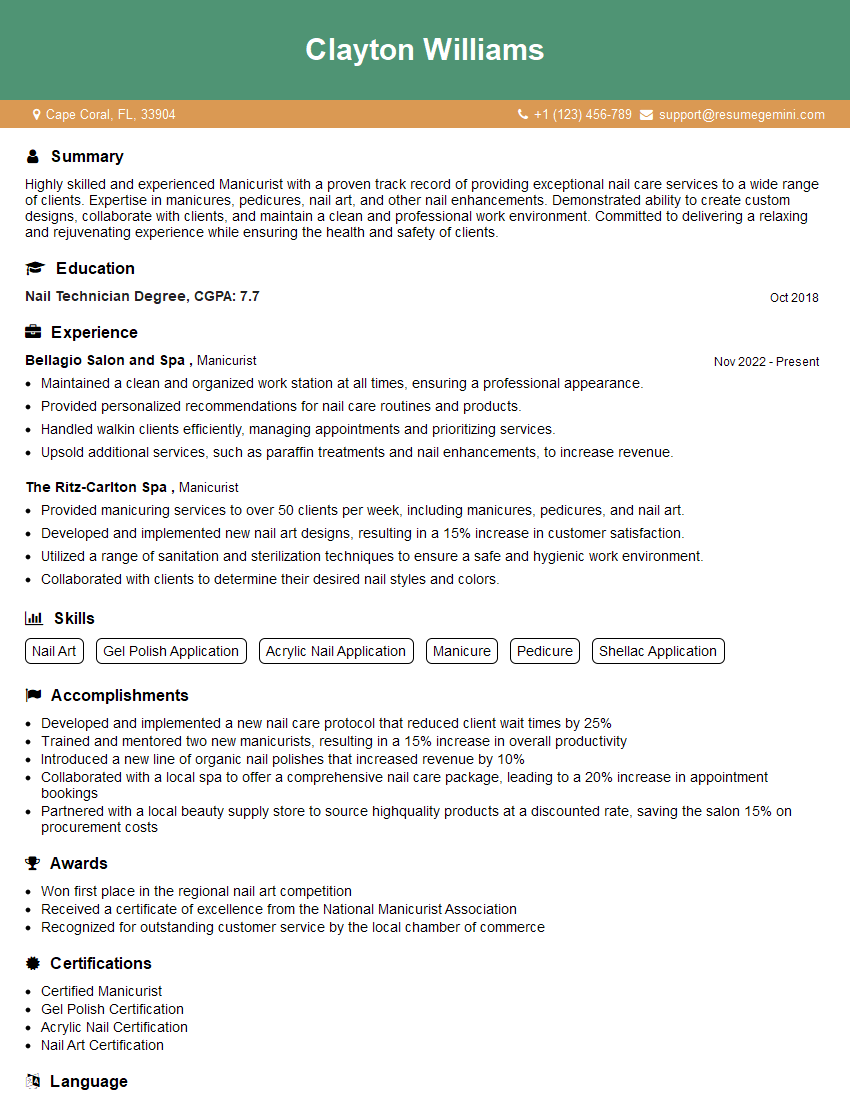
Mastering Nailing can significantly boost your career prospects, opening doors to exciting opportunities and higher earning potential. A strong resume is crucial for getting your foot in the door. Make sure your resume is ATS-friendly to maximize its impact and get noticed by recruiters. To build a professional and effective resume that highlights your Nailing skills, leverage the power of ResumeGemini. ResumeGemini offers a streamlined and intuitive platform to create a compelling resume tailored to your specific experience. Examples of resumes tailored to the Nailing field are available to guide you. Take the next step towards your dream job today!
Explore more articles
Users Rating of Our Blogs
Share Your Experience
We value your feedback! Please rate our content and share your thoughts (optional).
What Readers Say About Our Blog
Really detailed insights and content, thank you for writing this detailed article.
IT gave me an insight and words to use and be able to think of examples