Feeling uncertain about what to expect in your upcoming interview? We’ve got you covered! This blog highlights the most important Network Design Software interview questions and provides actionable advice to help you stand out as the ideal candidate. Let’s pave the way for your success.
Questions Asked in Network Design Software Interview
Q 1. Explain the OSI model and its relevance to network design.
The OSI (Open Systems Interconnection) model is a conceptual framework that standardizes the functions of a telecommunication or computing system without regard to its underlying internal structure and technology. It divides network communication into seven distinct layers, each with its own specific responsibilities. This layered approach simplifies network design, troubleshooting, and development by allowing specialists to focus on individual layers.
- Layer 1 (Physical): Deals with the physical cables and connectors. Think of this as the raw electricity and light signals transmitting data.
- Layer 2 (Data Link): Handles local addressing (MAC addresses) and error detection. This layer ensures data reliably gets across a single network segment.
- Layer 3 (Network): Handles logical addressing (IP addresses) and routing between networks. This is where IP packets are created and routed across the internet.
- Layer 4 (Transport): Provides reliable data transfer between applications using techniques like TCP (Transmission Control Protocol) or UDP (User Datagram Protocol). TCP ensures data arrives in order and complete, while UDP prioritizes speed over reliability.
- Layer 5 (Session): Manages connections between applications, ensuring a consistent communication session.
- Layer 6 (Presentation): Handles data formatting and encryption. This ensures data is presented in a usable format for the application.
- Layer 7 (Application): Provides the interface for applications to access network services. Examples include HTTP (web browsing) and SMTP (email).
In network design, the OSI model is crucial because it provides a structured way to understand how different network components interact. For example, when designing a secure network, you’ll consider Layer 4 (Transport) for encryption and Layer 6 (Presentation) for data integrity. Understanding each layer allows for efficient problem-solving; if a problem occurs, you can isolate it to a specific layer, speeding up troubleshooting.
Q 2. Describe your experience with different network topologies (star, mesh, bus, ring).
I have extensive experience with various network topologies. Each has its strengths and weaknesses, making them suitable for different situations.
- Star Topology: All devices connect to a central hub or switch. This is incredibly common in home and small office networks due to its simplicity and ease of management. A single point of failure (the central device) is a drawback.
- Mesh Topology: Devices connect to multiple other devices, creating redundant paths. This is highly reliable but complex and expensive, often used in critical infrastructure like telecommunications networks. Think of a highly interconnected network where failure of one connection doesn’t bring down the whole system.
- Bus Topology: All devices connect to a single cable. This is simple but suffers from single points of failure and performance bottlenecks as the number of devices increases. It’s rarely used in modern networks due to scalability issues.
- Ring Topology: Devices are connected in a closed loop. Data travels in one direction. It offers equal access to resources but is susceptible to failure if one device goes down. Token ring networks were popular but are now largely obsolete.
In one project, I designed a mesh network for a financial institution to ensure high availability and redundancy for their trading platform. For a smaller client, a simple star topology with a managed switch was perfectly sufficient.
Q 3. What are the key considerations when designing a scalable network?
Designing a scalable network involves anticipating future growth and ensuring the network can handle increased traffic, users, and devices without significant performance degradation. Key considerations include:
- Modular Design: Using modular components allows for easy expansion and upgrades as needed. Think adding more switches or servers without a complete network overhaul.
- Hierarchical Design: Structuring the network in a hierarchical manner (core, distribution, access) improves efficiency and manageability. This allows for better traffic management and isolation of problems.
- Overprovisioning: Initially deploying more bandwidth and capacity than currently required anticipates future growth and minimizes the need for frequent upgrades.
- Technology Choice: Selecting technologies that are known for scalability, such as virtualization and cloud-based solutions, helps in building a future-proof network.
- Network Monitoring and Management: Implementing robust monitoring tools helps identify bottlenecks and potential scalability issues before they impact performance. This allows for proactive adjustments and prevents sudden failures.
For instance, when designing a network for a rapidly growing e-commerce company, I utilized a hierarchical design with redundant links and ample bandwidth to ensure their network could handle peak traffic during sales events.
Q 4. How do you ensure network security in your designs?
Network security is paramount. My designs incorporate multiple layers of security:
- Firewalls: These act as barriers, controlling network traffic and blocking unauthorized access. They are a crucial first line of defense.
- Intrusion Detection/Prevention Systems (IDS/IPS): These monitor network traffic for malicious activity and can automatically block or alert on suspicious events.
- Virtual Private Networks (VPNs): VPNs encrypt traffic between remote users and the network, securing sensitive data transmitted across public networks.
- Access Control Lists (ACLs): These restrict access to specific network resources based on IP address, port, or other criteria. They granularly control what users and systems can do on the network.
- Regular Security Audits and Penetration Testing: Proactive testing helps identify vulnerabilities before attackers can exploit them. This helps to stay ahead of cyber threats.
- Security Information and Event Management (SIEM): Collecting logs from different devices and analyzing them for security threats provides real-time threat detection and incident response.
In a recent project, I implemented a multi-layered security approach for a healthcare provider, ensuring compliance with HIPAA regulations and protecting sensitive patient data. This included implementing robust firewalls, intrusion detection systems, and encryption at multiple layers.
Q 5. What are your experiences with network simulation tools?
I have extensive experience with network simulation tools like GNS3, Cisco Packet Tracer, and OPNET Modeler. These tools allow for testing network designs in a virtual environment before implementation, minimizing risks and costs.
GNS3, for example, allows for creating highly realistic virtual network labs with various routers, switches, and other network devices. This is invaluable for testing complex routing protocols or troubleshooting potential issues before deployment in a live environment. Packet Tracer is simpler, ideal for educational purposes and basic network simulations. OPNET is more advanced, used for large-scale network modelling and performance analysis.
Using these tools allows for ‘what-if’ scenarios, exploring the impact of changes in network configurations without disrupting live systems. This helps optimize designs for performance and scalability, ensuring smooth operations in real-world deployments.
Q 6. Explain your understanding of routing protocols (e.g., BGP, OSPF, EIGRP).
Routing protocols are essential for directing data packets across networks. I’m familiar with several key protocols:
- BGP (Border Gateway Protocol): Used for routing between autonomous systems (ASes), primarily on the internet. It’s a path-vector protocol, meaning routers exchange information about reachable networks and the paths to reach them. It’s incredibly complex but crucial for internet connectivity.
- OSPF (Open Shortest Path First): A link-state routing protocol widely used in large enterprise networks. Routers share information about their directly connected links, allowing the calculation of the shortest path to all destinations. It’s known for its scalability and fast convergence.
- EIGRP (Enhanced Interior Gateway Routing Protocol): A Cisco proprietary distance-vector routing protocol that combines the advantages of both distance-vector and link-state protocols. It offers fast convergence and efficient use of bandwidth, making it suitable for medium to large networks.
The choice of routing protocol depends on the network size, topology, and requirements. For example, BGP is essential for internet connectivity, while OSPF is often used within a large corporate network for its scalability. I’ve used all three protocols extensively in various projects, tailoring the choice to the specific needs of each network.
Q 7. Describe your experience with network monitoring and management tools.
My experience with network monitoring and management tools includes SolarWinds, Nagios, PRTG, and Cisco Prime Infrastructure. These tools provide real-time visibility into network performance, allowing for proactive identification and resolution of issues.
These tools allow me to monitor key metrics like bandwidth utilization, latency, CPU and memory usage of network devices, and application performance. This enables me to identify bottlenecks, predict potential failures, and ensure optimal network performance. For example, using SolarWinds, I can quickly identify network congestion caused by a specific application or device, allowing me to take corrective action before it impacts users.
Furthermore, these tools facilitate automated alerts and reporting, ensuring timely responses to critical events and simplifying network management. This proactive approach reduces downtime and improves overall network reliability.
Q 8. How do you handle network troubleshooting and problem-solving?
Network troubleshooting is a systematic process. I begin by gathering information: checking error logs, monitoring network devices, and interviewing users to understand the symptoms. Then, I formulate a hypothesis based on the information gathered. This involves identifying potential causes, such as faulty cables, misconfigurations, or software issues. I then test my hypothesis using various tools and techniques, such as ping, traceroute, and packet analysis. If my initial hypothesis is incorrect, I iterate, developing a new hypothesis based on the results of my tests. This process continues until the root cause is identified and resolved. For example, if users report slow internet speeds, I might first check for congestion points using network monitoring tools. If that reveals nothing, I’d then investigate individual devices for malware or misconfigurations. I meticulously document each step of the troubleshooting process to improve efficiency and knowledge sharing.
Q 9. What are your experiences with network virtualization technologies?
I have extensive experience with network virtualization technologies, including VMware vSphere, Cisco Virtualization, and Microsoft Hyper-V. These technologies allow for the creation of virtual networks, servers, and storage, offering improved flexibility, scalability, and resource utilization. In a past project, we virtualized our entire server infrastructure, reducing our physical footprint by 70% and improving server provisioning time from days to minutes. This involved designing and implementing virtual networks with VLANs and VXLANs for network segmentation and improved security. We also used tools like vCenter and vRealize Operations to monitor and manage the virtualized environment, proactively identifying and resolving potential issues before they impacted users.
Q 10. Explain your understanding of Quality of Service (QoS).
Quality of Service (QoS) is crucial for prioritizing certain network traffic over others. This ensures that critical applications, such as video conferencing or VoIP, receive sufficient bandwidth even during periods of high network congestion. QoS mechanisms utilize techniques like traffic shaping, prioritization (e.g., using DiffServ or CoS), and policing to manage network resources effectively. For example, in a hospital setting, QoS might prioritize medical image transfers over general web traffic to ensure timely diagnosis and treatment. This involves configuring routers and switches to mark packets based on their priority and to manage queuing mechanisms appropriately. Incorrect QoS implementation can lead to unpredictable network performance and application failures.
Q 11. How do you design for high availability and redundancy in a network?
High availability and redundancy are paramount for mission-critical networks. I design networks using several strategies to achieve this. Redundancy is implemented at various layers; for example, redundant power supplies, network interfaces, and internet connections. Load balancing distributes traffic across multiple servers or devices to prevent overload on a single point of failure. Failover mechanisms automatically switch to backup systems in case of primary system failure. For instance, a redundant network design might include dual internet connections from different providers, connected through a router with failover capabilities. Should one connection fail, the router seamlessly switches to the backup connection, ensuring minimal disruption. Regular testing of failover mechanisms is crucial to ensure they function as intended.
Q 12. Describe your experience with network capacity planning.
Network capacity planning involves forecasting future bandwidth and resource requirements to prevent performance bottlenecks. I utilize various tools and techniques to accomplish this, including network monitoring data analysis, traffic modeling, and historical usage patterns. Factors such as user growth, application requirements, and emerging technologies are taken into consideration. For instance, when planning for the network expansion of a rapidly growing company, I’d analyze historical bandwidth usage, project future growth based on user projections, and consider the bandwidth requirements of planned new applications. This allows me to recommend appropriate hardware upgrades or network architecture adjustments to prevent future bottlenecks and ensure sustained network performance.
Q 13. What are the challenges of designing a large-scale network?
Designing large-scale networks presents several unique challenges. Scalability is critical, requiring a modular and flexible design that can easily accommodate future growth. Managing complexity necessitates a robust monitoring and management system. Security becomes more critical, demanding a layered security approach to protect against various threats. Geographical considerations and latency are important factors in designing networks that span wide geographical areas. Furthermore, optimizing performance across multiple locations and ensuring consistent quality of service presents a significant challenge. Careful planning, modular design, and automation play a crucial role in overcoming these challenges.
Q 14. How do you stay up-to-date with the latest networking technologies?
Staying current in networking is vital. I actively participate in industry events, conferences, and webinars. I engage with online communities and forums, including those hosted by vendors like Cisco and Juniper. I subscribe to industry publications and newsletters and regularly read technical blogs and articles. I also pursue professional certifications, like those offered by Cisco (CCNP, CCIE), to formalize my knowledge and demonstrate competency. Additionally, hands-on experience with new technologies through personal projects and experimental setups greatly enhances my understanding of real-world applications and challenges.
Q 15. Explain your experience with network documentation and diagrams.
Network documentation is the cornerstone of any successful network design and management strategy. It’s more than just pretty pictures; it’s a living record of your network’s architecture, configuration, and operational details. This documentation includes diagrams illustrating the physical and logical layout of devices, cabling, and connections, as well as detailed specifications for each component. I’ve extensive experience creating various types of network diagrams, including:
- Topology Diagrams: Showing the physical layout of devices and their interconnections (e.g., star, bus, ring).
- Logical Diagrams: Illustrating the network’s functional components and their relationships (e.g., showing VLAN segmentation or routing protocols).
- Rack Diagrams: Detailing the physical placement of equipment within server racks, including patching information.
- Network Maps: Providing a high-level overview of the entire network infrastructure.
For example, in a recent project for a large university, I used Visio to create a comprehensive set of diagrams illustrating their complex network, including multiple VLANs, routing protocols (OSPF and BGP), and various security devices. This documentation was crucial for troubleshooting, maintenance, and future network expansion. I ensure all diagrams are consistently formatted, clearly labeled, and regularly updated to reflect any changes in the network infrastructure.
Career Expert Tips:
- Ace those interviews! Prepare effectively by reviewing the Top 50 Most Common Interview Questions on ResumeGemini.
- Navigate your job search with confidence! Explore a wide range of Career Tips on ResumeGemini. Learn about common challenges and recommendations to overcome them.
- Craft the perfect resume! Master the Art of Resume Writing with ResumeGemini’s guide. Showcase your unique qualifications and achievements effectively.
- Don’t miss out on holiday savings! Build your dream resume with ResumeGemini’s ATS optimized templates.
Q 16. Describe your experience with specific network design software (e.g., Cisco Packet Tracer, GNS3).
I’m proficient in several network design software packages, with a strong emphasis on Cisco Packet Tracer and GNS3. Packet Tracer is excellent for learning and simulating smaller networks, allowing for hands-on experimentation with various Cisco devices and configurations. I’ve used it extensively for training purposes and for prototyping smaller network designs before implementation. For larger, more complex simulations, GNS3 is my go-to tool. It allows for the creation of realistic network environments using virtualized devices and real-world images, enabling thorough testing and validation of configurations before deploying them in a production environment.
For instance, I used GNS3 to simulate a multi-site WAN connecting branch offices to a central data center, testing different VPN technologies and routing protocols. This allowed me to identify and resolve potential issues before deploying the actual configuration, saving considerable time and resources. I’m also familiar with other tools such as SolarWinds Network Topology Mapper for automating network discovery and documentation, enhancing efficiency and accuracy.
Q 17. How do you handle conflicting priorities in network design projects?
Conflicting priorities are a common challenge in network design projects. My approach involves a structured process to manage these conflicts effectively. I begin by clearly documenting all stakeholder requirements and prioritizing them based on business needs and potential impact. This often involves holding collaborative meetings and workshops to understand the perspectives of various stakeholders, including IT operations, security, and business units.
I then use a prioritization matrix, considering factors like cost, risk, and timeline. This matrix helps to objectively rank the requirements and identify potential trade-offs. For example, if budget constraints limit the deployment of advanced security features, I’ll work with stakeholders to define acceptable risk levels and implement less expensive, but still effective, security measures. Open and transparent communication is key, keeping stakeholders informed throughout the process and documenting all decisions and compromises made. The final design always reflects a balanced approach, addressing the most critical priorities while mitigating potential risks.
Q 18. What are the key performance indicators (KPIs) you monitor in a network?
Monitoring key performance indicators (KPIs) is essential for ensuring network health and performance. The specific KPIs I monitor vary depending on the network’s size, complexity, and purpose, but some common ones include:
- Latency: The delay in data transmission, measured in milliseconds.
- Packet Loss: The percentage of packets that are lost during transmission.
- Throughput: The amount of data transmitted per unit of time (e.g., Mbps).
- CPU/Memory Utilization: The resource utilization of network devices (routers, switches).
- Error Rates: The frequency of errors during transmission.
- Availability: The percentage of time the network is operational.
I utilize network monitoring tools such as PRTG Network Monitor, Nagios, or SolarWinds to collect and analyze these KPIs. Real-time dashboards provide a clear overview of network performance, allowing for proactive identification and resolution of potential issues before they impact users. Regular reporting on these KPIs provides valuable insights into network trends, helping to inform capacity planning and future network improvements.
Q 19. Explain your understanding of IPv4 and IPv6 addressing.
IPv4 (Internet Protocol version 4) and IPv6 (Internet Protocol version 6) are the addressing protocols used to identify devices on the internet. IPv4 uses 32-bit addresses, represented as four decimal numbers separated by periods (e.g., 192.168.1.1), resulting in a limited number of unique addresses. This limitation has led to the development and adoption of IPv6, which uses 128-bit addresses, represented in hexadecimal notation (e.g., 2001:0db8:85a3:0000:0000:8a2e:0370:7334). IPv6 addresses provide a vastly larger address space, improving scalability and enabling the connection of billions more devices to the internet.
Understanding subnetting (dividing a network into smaller subnets) is critical for both IPv4 and IPv6. In IPv4, this involves using subnet masks to allocate IP addresses efficiently. IPv6 utilizes a more flexible addressing scheme, simplifying subnet management. I have extensive experience in both IPv4 and IPv6 address planning, ensuring efficient allocation and avoiding address conflicts. My experience also includes designing and implementing IPv6 transition mechanisms, such as dual-stack and tunneling, to enable a smooth transition from IPv4 to IPv6.
Q 20. How do you ensure network compliance with relevant standards and regulations?
Ensuring network compliance with relevant standards and regulations is paramount. This involves understanding and adhering to various standards such as IEEE 802.11 (for Wi-Fi), RFCs (Request for Comments) defining internet protocols, and industry best practices. Compliance also extends to regulations like GDPR (General Data Protection Regulation) for data privacy, PCI DSS (Payment Card Industry Data Security Standard) for payment processing security, and HIPAA (Health Insurance Portability and Accountability Act) for healthcare data.
My approach involves a multi-faceted strategy: First, I conduct thorough risk assessments to identify potential compliance gaps. Then, I develop and implement security policies and procedures aligned with relevant standards and regulations. This includes configuring firewalls, intrusion detection systems, and other security technologies to meet specific compliance requirements. I also utilize tools and processes for vulnerability scanning and penetration testing to identify and address security weaknesses proactively. Regular audits and documentation help maintain compliance and demonstrate adherence to regulatory bodies. For example, in a recent project for a financial institution, I ensured the network met PCI DSS standards by implementing strict access controls, encryption, and regular security assessments.
Q 21. Describe your experience with network automation and scripting.
Network automation and scripting are crucial for enhancing efficiency and scalability. I’m proficient in various scripting languages, primarily Python, which I use to automate repetitive tasks such as device configuration, network monitoring, and troubleshooting.
For example, I’ve developed Python scripts using libraries like Paramiko and Netmiko to automate the configuration of hundreds of network devices, ensuring consistent settings across the network. This approach significantly reduces manual effort and the potential for human error. I’ve also utilized Ansible for infrastructure as code, enabling automated provisioning and deployment of network infrastructure components. This approach improves consistency, repeatability, and reduces deployment time. My experience includes integrating scripting with network monitoring tools to create automated alerts and remediation actions, enhancing the overall network management process. These automation efforts significantly improve the efficiency and reliability of network operations.
Q 22. Explain your understanding of Software Defined Networking (SDN).
Software Defined Networking (SDN) is a revolutionary approach to network management that decouples the network control plane from the data plane. Think of it like this: traditionally, network devices (routers, switches) made independent decisions based on their own configurations. SDN centralizes this control. A central controller, often a software application, manages the entire network’s behavior through a programmable interface. This allows for greater flexibility, automation, and programmability compared to traditional networking.
The data plane, responsible for forwarding packets, consists of commodity hardware (switches and routers) that simply follow instructions from the control plane. The control plane, residing on the SDN controller, dictates how packets are forwarded, making the network highly adaptable and manageable. For example, the controller can dynamically reroute traffic based on real-time network conditions or application needs, something difficult to achieve with traditional, static configurations.
OpenFlow is a common protocol used in SDN to communicate between the control plane and the data plane. It allows the controller to precisely control the behavior of individual network devices, enabling features like virtual networks, network slicing, and sophisticated traffic engineering. The benefits include enhanced agility, simplified management, improved security, and better resource utilization. SDN has become vital in cloud computing, data centers, and enterprise networks.
Q 23. What are the benefits and drawbacks of cloud-based networking solutions?
Cloud-based networking solutions, like AWS Direct Connect or Azure ExpressRoute, offer several advantages: scalability, reduced infrastructure costs, and enhanced accessibility. You can easily scale your network resources up or down as needed, paying only for what you use. This eliminates the upfront investment in hardware and simplifies ongoing maintenance. Furthermore, accessing your resources from anywhere with an internet connection is seamless.
However, drawbacks exist. Security concerns are paramount, as your network is reliant on a third-party provider’s security infrastructure. Latency can be an issue depending on your geographic location and the provider’s network infrastructure. Vendor lock-in is a potential problem; migrating away from a cloud provider can be complex and time-consuming. Finally, reliance on internet connectivity is a point of failure; if the internet connection goes down, your cloud-based network may be inaccessible.
Q 24. How do you design for different network bandwidth requirements?
Designing for diverse bandwidth requirements involves a layered approach. First, we need a thorough understanding of current and future bandwidth demands for different applications and user groups. Consider video conferencing (high bandwidth), email (low bandwidth), and database access (variable bandwidth). This analysis informs choices about network infrastructure.
Next, we select appropriate technologies. For high bandwidth needs, we might opt for fiber optic cabling, 10 Gigabit Ethernet or higher speed connections. For lower bandwidth requirements, Gigabit Ethernet might suffice. Quality of Service (QoS) mechanisms are crucial to prioritize critical traffic (like video conferencing) over less critical traffic (like email) during congestion. Network segmentation helps isolate high-bandwidth applications to their own dedicated infrastructure. Finally, network monitoring tools are used to continually assess bandwidth usage and identify potential bottlenecks, allowing proactive adjustments to the network design.
For example, in a hospital setting, the network carrying medical imaging data would require significantly higher bandwidth compared to the network managing administrative tasks. QoS would prioritize the medical imaging traffic to ensure timely access.
Q 25. Explain your experience with network segmentation and security zones.
Network segmentation divides a network into smaller, isolated segments. Security zones, often implemented through firewalls and VLANs, further enhance security by restricting access between segments. Each segment operates with its own security policies. For instance, a guest Wi-Fi network might be a separate segment with limited access to internal resources, while the administrative network would be highly secured.
My experience involves designing and implementing segmented networks using VLANs (Virtual LANs) to separate traffic based on function or security level. Firewalls are then used to control traffic flow between VLANs, enforcing security policies like access control lists (ACLs). For example, I’ve worked on projects where sensitive databases resided on a dedicated VLAN, accessible only by authorized users and applications via carefully configured firewalls. This minimizes the blast radius of any security breach. Intrusion Detection/Prevention Systems (IDS/IPS) are also strategically placed to monitor network traffic for suspicious activity within the segments.
Q 26. Describe your approach to designing a secure wireless network.
Designing a secure wireless network starts with strong authentication. WPA2 or WPA3 encryption is essential, using strong, unique passwords or implementing a robust RADIUS server for centralized authentication. We also need robust access control measures, like MAC address filtering or role-based access controls. Network segmentation is critical – isolate guest Wi-Fi from the internal network using separate VLANs and firewalls.
Regular security audits and updates are vital. Wireless security protocols constantly evolve, so staying current on patches and updates is paramount. Wireless intrusion detection systems are helpful in identifying and mitigating unauthorized access attempts. Employing a captive portal for guest Wi-Fi allows for controlled access and potentially collecting user data for compliance or analysis. Finally, physically securing wireless access points is crucial to prevent unauthorized physical tampering.
Q 27. How do you handle network upgrades and migrations?
Network upgrades and migrations require a phased approach. Thorough planning is key. This includes a detailed assessment of current network infrastructure, identifying bottlenecks, and defining objectives for the upgrade. We’d then develop a migration plan outlining the steps, timelines, and potential risks. This plan often involves pilot testing new technologies in a controlled environment to minimize disruption.
A staged rollout reduces risks associated with large-scale changes. We might start by upgrading a small segment of the network, closely monitoring performance before expanding. Rollback plans are crucial in case of unexpected issues. Thorough documentation, both before and after the migration, is essential for future maintenance and troubleshooting. Automation tools can streamline the upgrade process and reduce manual intervention, leading to faster and less error-prone deployments. For instance, configuration management tools like Ansible can automate the configuration of network devices.
Q 28. What are your experiences with network performance optimization techniques?
Network performance optimization techniques vary based on the specific issues. Common strategies include traffic shaping and QoS to prioritize critical traffic. Careful analysis of network traffic using monitoring tools helps identify bottlenecks and areas for improvement. Regular maintenance, including hardware upgrades and software updates, is vital. Network optimization also often involves analyzing application performance and making necessary changes to application design or deployment to reduce their network impact.
For example, using network monitoring tools, I’ve identified slow database queries that were significantly impacting network performance. Working with the database administrators, we optimized the queries, resulting in a considerable improvement in response times. Implementing caching mechanisms at different layers of the network can drastically reduce network traffic and improve response times. Network topology optimization (improving the physical and logical layout of the network) is another key strategy that can greatly enhance performance. Finally, using network simulators can allow for testing of various optimization strategies before applying them to a live network.
Key Topics to Learn for Network Design Software Interview
- Network Topology Design: Understanding various topologies (star, mesh, bus, ring, hybrid) and their practical implications in different network scenarios. Consider factors like scalability, redundancy, and cost-effectiveness.
- IP Addressing and Subnetting: Mastering IPv4 and IPv6 addressing schemes, subnet masking, and CIDR notation. Be prepared to demonstrate practical subnetting skills and explain your approach to addressing large networks.
- Routing Protocols: A strong grasp of common routing protocols (RIP, OSPF, BGP) including their functionalities, advantages, and disadvantages. Be ready to discuss how to choose the appropriate protocol for specific network requirements.
- Network Security Fundamentals: Understanding concepts like firewalls, intrusion detection/prevention systems, VPNs, and access control lists. Demonstrate familiarity with securing network designs against common threats.
- Network Simulation and Modeling: Experience with network simulation software (e.g., GNS3, Cisco Packet Tracer) and the ability to model and analyze network performance. Be ready to discuss the benefits of simulation in network design.
- Software-Defined Networking (SDN): Familiarity with SDN concepts, architectures, and their impact on network management and automation. Discuss potential applications and benefits in modern network infrastructure.
- Troubleshooting and Problem-solving: Be prepared to discuss your approach to diagnosing and resolving network issues. Highlight your experience with network monitoring tools and techniques.
Next Steps
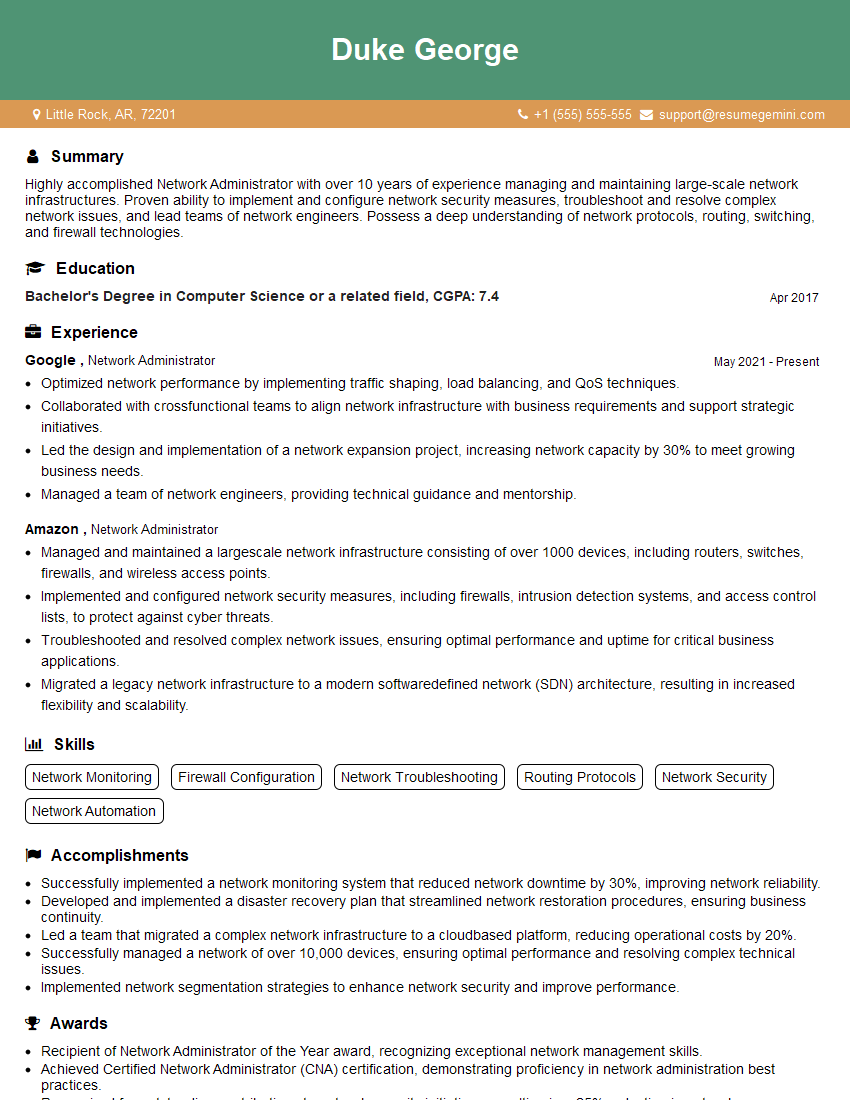
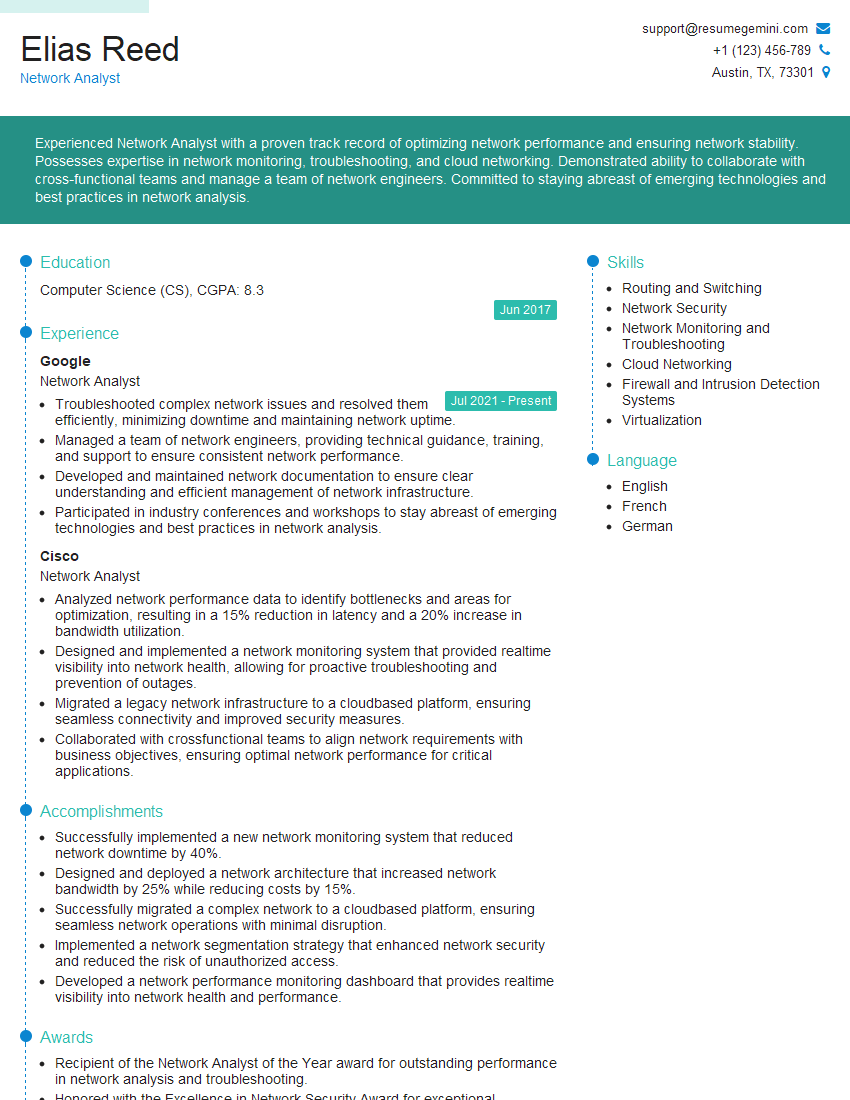
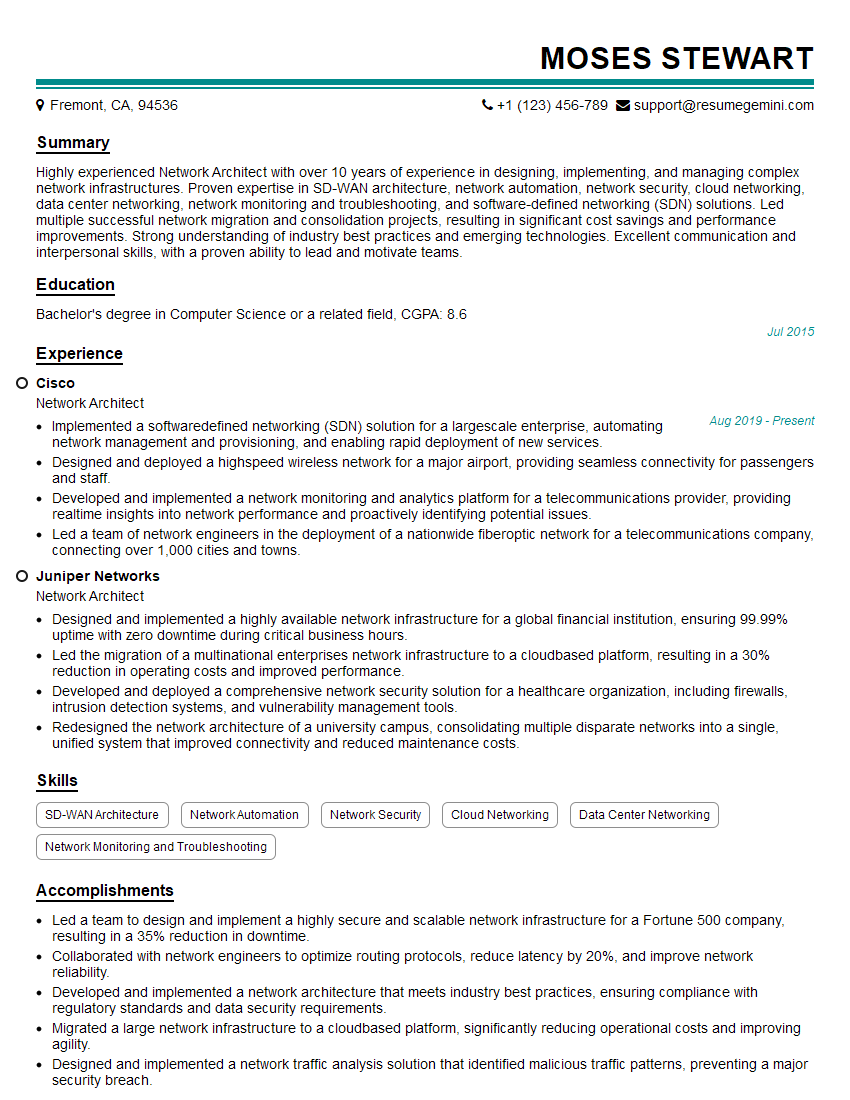
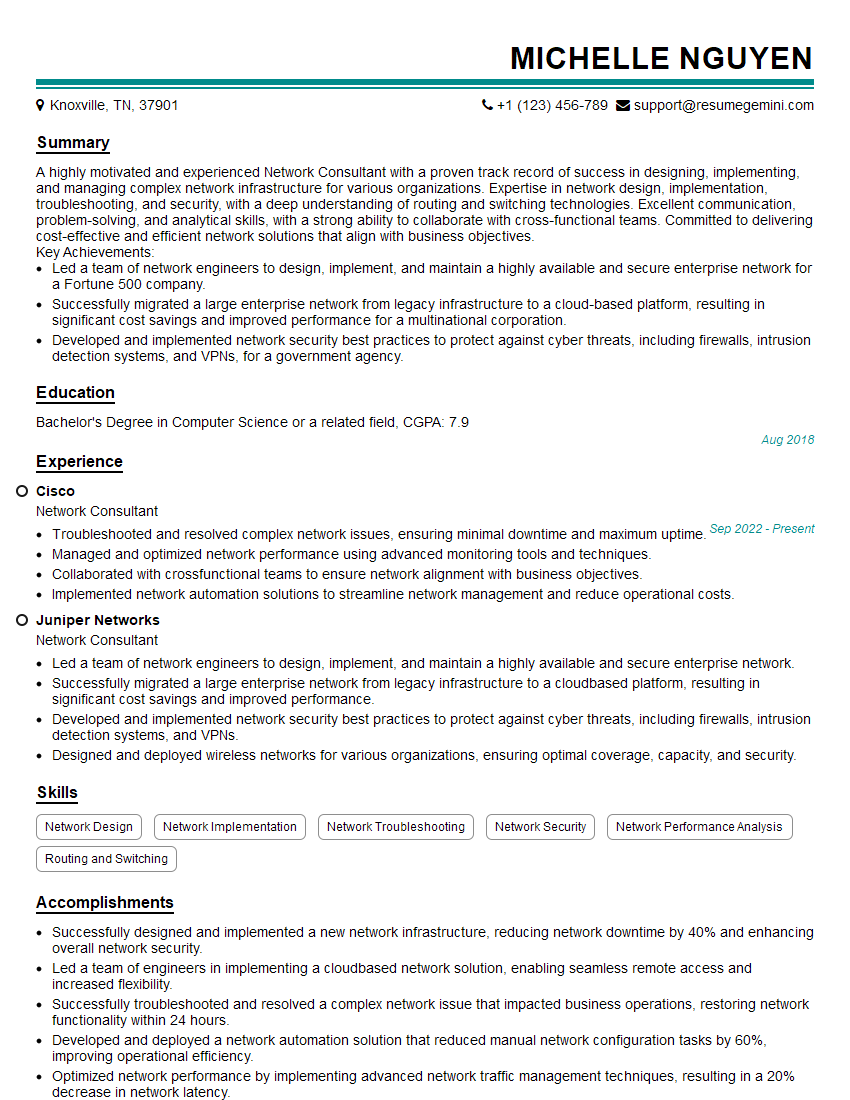
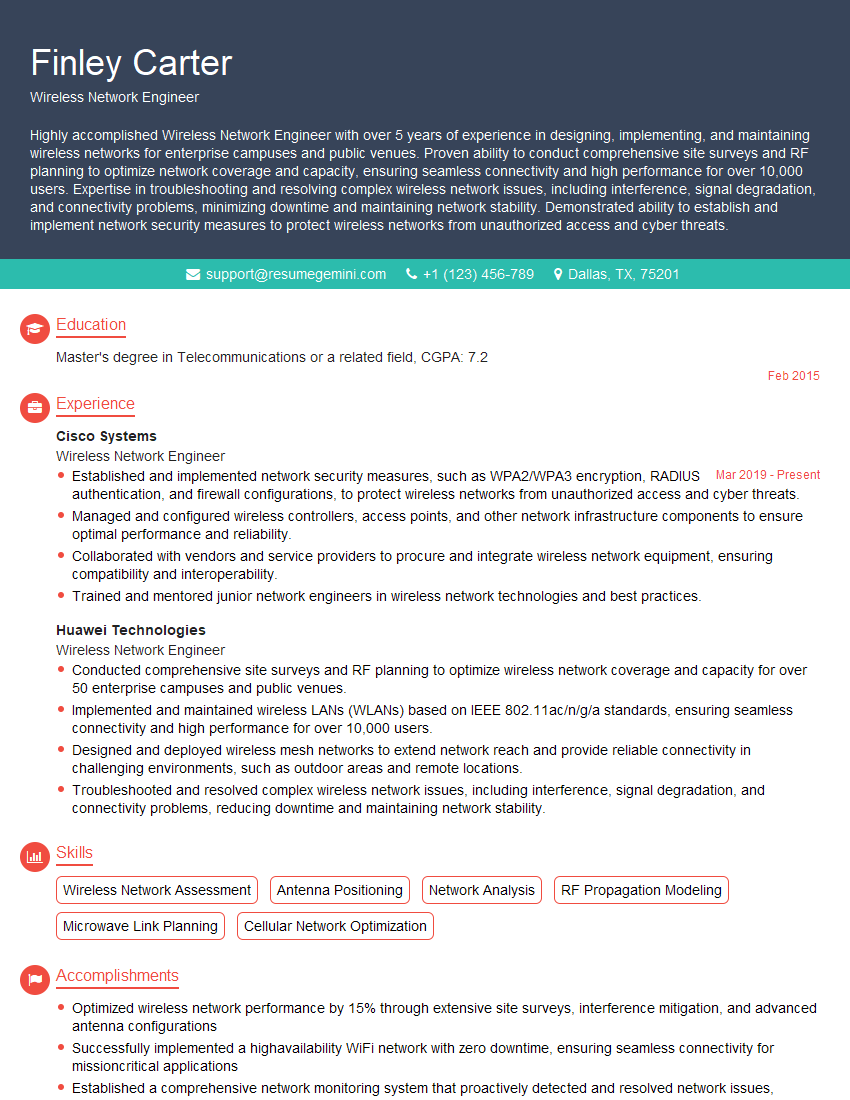
Mastering Network Design Software is crucial for career advancement in today’s technology-driven world. Proficiency in this area opens doors to exciting roles with significant responsibility and growth potential. To maximize your job prospects, it’s vital to create an ATS-friendly resume that effectively highlights your skills and experience. ResumeGemini can be a valuable resource in this process, helping you craft a professional and impactful resume that stands out. Examples of resumes tailored to Network Design Software roles are available to guide you.

Explore more articles
Users Rating of Our Blogs
Share Your Experience
We value your feedback! Please rate our content and share your thoughts (optional).
What Readers Say About Our Blog
Really detailed insights and content, thank you for writing this detailed article.
IT gave me an insight and words to use and be able to think of examples