Preparation is the key to success in any interview. In this post, we’ll explore crucial Oils interview questions and equip you with strategies to craft impactful answers. Whether you’re a beginner or a pro, these tips will elevate your preparation.
Questions Asked in Oils Interview
Q 1. Explain the difference between conventional and unconventional oil reservoirs.
Conventional oil reservoirs are those where oil and gas are trapped in porous and permeable rock formations, typically sandstone or limestone, under relatively high pressure. These reservoirs are often found in geological structures like anticlines (upward folds) or fault traps. The oil is relatively easy to extract, often requiring only natural pressure to bring it to the surface initially. Think of it like finding a naturally pressurized water tank underground – the water (oil) will flow easily if you tap into it.
Unconventional reservoirs, on the other hand, require more advanced techniques to extract oil and gas. These reservoirs include shale gas, tight oil sands, and heavy oil deposits. The oil and gas in these reservoirs are held within low-permeability rocks, meaning they don’t flow easily. The extraction process, therefore, typically involves techniques like hydraulic fracturing (fracking) or steam-assisted gravity drainage (SAGD). Imagine trying to get water out of a sponge – it requires more effort than drawing water from a well.
The key difference boils down to the ease of extraction. Conventional reservoirs offer easier access to hydrocarbons, while unconventional reservoirs demand specialized and often more expensive recovery methods.
Q 2. Describe the process of hydraulic fracturing (fracking).
Hydraulic fracturing, or fracking, is a technique used to extract oil and gas from shale rock formations. Shale is a low-permeability rock, meaning it doesn’t easily allow fluids to flow through it. Fracking creates artificial permeability, allowing the oil and gas to flow to a wellbore.
The process typically begins by drilling a vertical well, followed by horizontal drilling to access the shale formation. Once the horizontal well is in place, multiple fractures are created in the shale by pumping a high-pressure mixture of water, sand, and chemicals down the well. This high-pressure fluid creates fissures in the shale, and the sand acts as a proppant to keep these fissures open, creating pathways for oil and gas to flow into the well.
Think of it as creating tiny cracks in a hard nut to get to the kernel inside. The high pressure is the hammer, the sand is what keeps the crack open, and the oil and gas are the kernel.
After the fracking fluid is injected, it is usually partially recovered during the production phase. However, disposal of the remaining fluid and concerns about potential groundwater contamination are significant environmental issues associated with fracking.
Q 3. What are the main challenges in offshore oil and gas exploration?
Offshore oil and gas exploration presents several unique challenges compared to onshore operations. These challenges can be broadly categorized into environmental, logistical, and technological aspects.
- Environmental Challenges: Harsh weather conditions, extreme water depths, and sensitive marine ecosystems significantly increase the risk and complexity of operations. Oil spills, for instance, can have devastating consequences on marine life and coastal environments.
- Logistical Challenges: Remote locations, difficult access, and the need for specialized equipment and infrastructure significantly increase costs and logistical planning. Transporting personnel and equipment to offshore platforms can be challenging and expensive.
- Technological Challenges: Drilling in deep water requires advanced technology and specialized equipment capable of withstanding immense pressure and harsh conditions. Subsea production systems are complex and require sophisticated monitoring and control systems.
For example, the Deepwater Horizon oil spill highlighted the catastrophic consequences of technological failure in a deepwater environment. The logistical challenges in responding to the spill were immense due to the remote location and harsh weather conditions.
Q 4. How do you calculate oil reserves?
Calculating oil reserves is a complex process that involves geological, engineering, and economic considerations. It’s not simply a matter of measuring the volume of oil in place; it also accounts for how much oil can be economically recovered.
The process usually involves several steps:
- Geological Assessment: Detailed geological studies determine the size and shape of the reservoir, the porosity and permeability of the rocks, and the oil saturation (the percentage of pore space filled with oil).
- Reservoir Simulation: Sophisticated computer models are used to simulate the flow of oil and gas through the reservoir under different production scenarios.
- Recovery Factor Estimation: This crucial step estimates the percentage of oil that can be economically recovered using various enhanced oil recovery (EOR) methods. Factors like reservoir pressure, temperature, oil viscosity, and the applied EOR techniques influence this.
- Reserve Classification: Oil reserves are classified into categories like proven reserves (with high certainty of recovery), probable reserves (moderate certainty), and possible reserves (low certainty). These classifications reflect the level of confidence in the ability to extract the oil economically.
The final calculation of oil reserves is expressed in barrels (bbl), representing the volume of recoverable oil.
Example: If a reservoir contains 1 billion barrels of oil in place, but the recovery factor is estimated to be 30%, then the proven reserves would be 300 million barrels.
Q 5. What are the different types of oil recovery methods?
Oil recovery methods can be categorized into primary, secondary, and tertiary (enhanced oil recovery) methods.
- Primary Recovery: This is the initial stage, relying on natural reservoir pressure to push oil to the surface. This usually recovers only about 10-15% of the oil in place.
- Secondary Recovery: Once natural pressure declines, secondary methods are employed to enhance recovery. These typically involve injecting water or gas into the reservoir to maintain pressure and displace oil towards the production wells. This can increase recovery to around 30-40%.
- Tertiary Recovery (Enhanced Oil Recovery – EOR): EOR techniques are applied when secondary recovery methods become less effective. These methods include:
- Thermal recovery: Injecting steam or hot water into the reservoir to reduce oil viscosity, making it easier to flow.
- Chemical flooding: Injecting chemicals like polymers or surfactants to alter the properties of oil and water, improving oil displacement.
- Gas injection: Injecting gases like carbon dioxide or nitrogen to increase reservoir pressure and improve oil mobility.
The choice of recovery method depends on factors like reservoir characteristics, oil properties, and economic considerations. EOR methods are usually more expensive but can significantly improve overall recovery rates, sometimes even doubling the recoverable amount compared to primary and secondary recovery.
Q 6. Explain the concept of reservoir simulation.
Reservoir simulation is a powerful tool used in the petroleum industry to model the behavior of oil and gas reservoirs under different production scenarios. It involves using sophisticated computer software to create a virtual representation of the reservoir, allowing engineers to predict how the reservoir will respond to various production strategies.
These models incorporate complex geological data, fluid properties, and reservoir characteristics to simulate fluid flow, pressure changes, and energy transfer within the reservoir. They can be used to optimize well placement, design production strategies, predict production rates, and evaluate the impact of various EOR methods.
Think of it as a sophisticated video game, but instead of fighting dragons, you’re managing oil extraction. The model allows you to test different strategies (e.g., changing the number or location of wells, altering injection rates) without the cost and risk of real-world experimentation. The output provides valuable insights into maximizing oil recovery and optimizing the economic efficiency of the operation.
Q 7. What are the key factors affecting oil price volatility?
Oil price volatility is influenced by a complex interplay of factors, including:
- Geopolitical events: Political instability in major oil-producing regions, wars, sanctions, and trade disputes can significantly disrupt supply and demand, leading to price fluctuations. For example, the war in Ukraine caused considerable oil price volatility.
- Supply and demand dynamics: Changes in global oil supply (e.g., due to production disruptions or OPEC decisions) and demand (e.g., driven by economic growth or energy consumption patterns) have a direct impact on prices.
- Economic factors: Global economic growth, currency fluctuations, and inflation influence oil demand and consequently prices.
- Technological advancements: Innovations in oil exploration, extraction, and alternative energy sources can affect both supply and demand, leading to price adjustments.
- Speculation and market sentiment: Investor behavior and market speculation can amplify price swings. Uncertainty and fear can lead to price increases, while positive sentiment can trigger price drops.
These factors often interact in unpredictable ways, making oil price forecasting a challenging endeavor. Understanding these factors is crucial for managing risk and making informed decisions in the oil and gas industry.
Q 8. Describe the different stages of oil and gas production.
Oil and gas production is a complex multi-stage process, from initial exploration to final product delivery. Think of it like baking a cake – each step is crucial for the final product.
- Exploration and Appraisal: This involves geological surveys, seismic studies, and drilling exploratory wells to identify potential hydrocarbon reserves. It’s like finding the perfect recipe.
- Development Planning: Once a reservoir is discovered, detailed planning occurs to determine the optimal extraction methods, infrastructure requirements (pipelines, processing plants), and project economics. This is similar to planning the steps to bake the cake.
- Drilling and Completion: This stage involves drilling wells to access the reservoir. The well is then completed by installing equipment to control flow and optimize production. This is the actual baking process.
- Production: This is the extraction of oil and gas from the reservoir. The extracted hydrocarbons are processed to remove impurities and separate oil from gas. This is like taking the cake out of the oven.
- Transportation and Refining: The produced oil and gas are then transported via pipelines, tankers, or other means to refineries for processing into usable products like gasoline, diesel, and petrochemicals. This is the decorating and serving of the cake.
- Decommissioning: Once the reservoir is depleted, the well and associated infrastructure are safely decommissioned to minimize environmental impact. This is akin to cleaning up after baking.
Q 9. What are the environmental concerns associated with oil and gas extraction?
Oil and gas extraction carries significant environmental risks. These aren’t easily solved and need careful management.
- Greenhouse Gas Emissions: The combustion of fossil fuels releases greenhouse gases (GHGs) like carbon dioxide and methane, contributing to climate change. This is a major concern and various techniques like carbon capture are being explored to mitigate the impact.
- Air and Water Pollution: Extraction activities can pollute air and water sources with harmful substances such as methane, volatile organic compounds (VOCs), and heavy metals. Stringent regulations and monitoring are critical to ensure compliance.
- Habitat Disruption and Biodiversity Loss: Drilling activities and infrastructure development can disrupt ecosystems and lead to habitat loss for wildlife. Minimizing impact requires careful site selection and environmental impact assessments.
- Oil Spills: Accidental spills during extraction, transportation, or processing can have devastating consequences for the environment and human health. Robust safety protocols and spill response plans are crucial to prevent and mitigate spills.
- Waste Management: Oil and gas production generates significant amounts of waste, including drilling muds, produced water, and solid waste. Proper management and disposal of this waste are crucial to avoid pollution.
Q 10. Explain the role of petrophysics in reservoir characterization.
Petrophysics plays a vital role in reservoir characterization, providing the crucial link between geology and engineering. Think of it as the detective work that helps us understand the reservoir’s hidden secrets.
Petrophysicists use various logging tools (while drilling) and laboratory analyses to determine the physical and chemical properties of reservoir rocks and fluids. This data includes porosity (the amount of space in the rock), permeability (how easily fluids flow), fluid saturation (the amount of oil, gas, and water in the pores), and pressure. This information is essential to assess the reservoir’s potential and to design effective production strategies. For example, we can predict the rate at which oil can be produced based on permeability, or predict the flow of gas from a well based on reservoir pressure.
The data collected helps build accurate reservoir models, which are used to simulate fluid flow and predict production performance. These models allow engineers to optimize well placement, completion design, and production strategies to maximize oil and gas recovery, while also providing critical input in the risk assessment of the whole project.
Q 11. What are the different types of drilling rigs?
Drilling rigs are classified based on several factors, including mobility and location. Choosing the right rig is like choosing the right tool for a job.
- Land Rigs: These are stationary rigs used for drilling on land. They range from smaller, mobile rigs suitable for shallow wells to massive, complex rigs used for deepwater wells.
- Offshore Rigs: These are used for drilling in offshore environments, including shallow and deep waters. Examples include jack-up rigs (legs rest on the seabed), semi-submersibles (float partially submerged), and drillships (float completely submerged).
- Jack-up Rigs: These rigs use long legs to raise the drilling platform above the water, making them suitable for shallow water drilling.
- Semi-submersible Rigs: These platforms are partially submerged and stabilized by pontoons, allowing them to operate in deeper waters.
- Drillships: These floating vessels use dynamic positioning systems to maintain their location and can drill in the deepest waters.
Q 12. What are the safety procedures for working on an oil rig?
Safety on an oil rig is paramount. A single mistake can have devastating consequences. Rigorous safety procedures are in place, combining training, equipment, and strict adherence to rules.
- Emergency Response Plans: Comprehensive plans for handling various emergencies, including fires, explosions, and spills, are essential.
- Personal Protective Equipment (PPE): Workers are required to wear appropriate PPE, including hard hats, safety glasses, protective clothing, and respiratory protection.
- Regular Inspections and Maintenance: Equipment and facilities are inspected regularly to identify and address potential hazards.
- Hazard Identification and Risk Assessment: Potential hazards are identified and assessed, and control measures are implemented to minimize risk.
- Training and Competency: Workers undergo extensive training to ensure they are competent in their tasks and understand safety procedures.
- Permit-to-Work Systems: These systems ensure that hazardous work is carried out safely under controlled conditions.
- Emergency Drills and Simulations: Regular drills and simulations help workers prepare for real-life emergencies.
Q 13. How do you manage risks associated with oil spills?
Managing the risks associated with oil spills requires a multi-faceted approach that emphasizes prevention, preparedness, and response. Think of it as a layered defense strategy.
- Prevention: This involves rigorous inspections, maintenance, and adherence to safety protocols to prevent spills from occurring in the first place. It’s about minimizing the chance of the initial accident.
- Preparedness: This includes developing and regularly practicing emergency response plans, establishing oil spill response teams, and securing necessary equipment and resources. This is like having a fire extinguisher ready before a fire even starts.
- Response: In the event of a spill, rapid and effective response is crucial. This involves containing the spill, recovering the oil, and mitigating environmental damage. Think of it as putting out a fire immediately once it starts.
- Cleanup: Techniques used include physical removal (booms, skimmers), in-situ burning (controlled burning of oil on the water surface), bioremediation (using microorganisms to break down oil), and chemical dispersants (breaking down the oil into smaller droplets). Each technique’s effectiveness depends on the oil type, environment, and weather conditions.
- Long-Term Monitoring and Restoration: Environmental monitoring is crucial after the spill to assess the impact and implement restoration measures.
Q 14. Explain the concept of well testing.
Well testing is a crucial process to determine the characteristics of a reservoir and to assess the productivity of a well. It’s like a health check for the well.
Well testing involves temporarily producing the well under controlled conditions to measure parameters such as flow rate, pressure, and fluid composition. This data provides critical information about reservoir properties, including permeability, pressure, and fluid saturation. Different testing methods exist, including:
- Pressure Buildup Tests: Measure the pressure increase in the well after it’s shut in, providing information on reservoir pressure and permeability.
- Drawdown Tests: Measure the pressure decrease in the well during production, providing information on flow rate and reservoir properties.
- Injection Tests: Involve injecting fluids into the reservoir to study its injectivity and assess potential for enhanced oil recovery (EOR).
- Multiphase Flow Tests: Measure the flow of oil, gas, and water simultaneously, providing information on the reservoir’s fluid distribution.
The data obtained from well testing is essential for reservoir modeling, production forecasting, and optimizing field development strategies. It helps to understand how the well will perform throughout its life.
Q 15. What are the different types of oil pipelines?
Oil pipelines are categorized based on several factors, including the type of oil transported, the distance covered, and the pipeline diameter. They are vital for the efficient and safe transportation of crude oil and refined products across vast distances. Here are some key types:
- Crude Oil Pipelines: These pipelines transport raw, unrefined crude oil from production sites (like oil fields) to refineries. These are often very large diameter pipelines, capable of handling significant volumes.
- Product Pipelines: These pipelines transport refined petroleum products such as gasoline, diesel, jet fuel, and heating oil from refineries to distribution terminals and storage facilities. They often consist of multiple smaller diameter pipelines, each carrying a specific product.
- Gathering Pipelines: These smaller pipelines collect crude oil from multiple wellheads within an oil field and consolidate the flow into a larger mainline pipeline. Think of them as the ‘feeder’ lines for larger systems.
- Offshore Pipelines: These pipelines operate underwater, transporting oil and gas from offshore platforms to onshore facilities or between offshore platforms. These require specialized construction and maintenance techniques to withstand the harsh marine environment.
- Multi-Product Pipelines: These advanced pipelines can transport several different petroleum products simultaneously within the same pipeline. This is achieved through sophisticated technologies that separate and manage the flow of individual products, increasing efficiency and reducing the need for multiple individual pipelines.
The choice of pipeline type depends on various factors including the volume and type of oil, the distance to be covered, the terrain, environmental considerations, and cost-effectiveness.
Career Expert Tips:
- Ace those interviews! Prepare effectively by reviewing the Top 50 Most Common Interview Questions on ResumeGemini.
- Navigate your job search with confidence! Explore a wide range of Career Tips on ResumeGemini. Learn about common challenges and recommendations to overcome them.
- Craft the perfect resume! Master the Art of Resume Writing with ResumeGemini’s guide. Showcase your unique qualifications and achievements effectively.
- Don’t miss out on holiday savings! Build your dream resume with ResumeGemini’s ATS optimized templates.
Q 16. Describe the process of oil refining.
Oil refining is a complex process that transforms crude oil into usable products like gasoline, diesel, jet fuel, and various petrochemicals. The process involves several key stages:
- Distillation: Crude oil is heated in a large furnace and then enters a fractionating column. Different hydrocarbons boil at different temperatures, allowing them to be separated into various fractions based on their boiling points (e.g., naphtha, kerosene, gas oil, residue). Think of it like separating different candies by their melting points.
- Conversion: This stage involves changing the molecular structure of the fractions to create more valuable products. Common conversion processes include catalytic cracking (breaking larger molecules into smaller ones), hydrocracking (using hydrogen to break down molecules), and alkylation (combining smaller molecules to create larger ones). This increases the yield of gasoline and other high-value products.
- Treatment: This stage removes impurities and undesirable components from the refined products. Common treatment processes include hydrotreating (removing sulfur and other contaminants using hydrogen) and sweetening (removing mercaptans, which are sulfur-containing compounds that give gasoline an unpleasant odor).
- Blending: Finally, the treated products are blended to meet specific specifications, such as octane rating for gasoline or cetane number for diesel. Different components are mixed in precise ratios to achieve the desired product quality and performance.
The entire refining process is carefully monitored and controlled to ensure efficient production, product quality, and environmental compliance. Think of it as a large-scale, highly controlled chemistry experiment!
Q 17. What are the different types of crude oil?
Crude oil is a complex mixture of hydrocarbons, and its composition varies significantly based on its geological origin. There isn’t a strict classification system, but crude oils are broadly categorized based on several characteristics, primarily their API gravity and sulfur content:
- API Gravity: This measures the density of the crude oil. Higher API gravity indicates lighter, more volatile crude oil, while lower API gravity indicates heavier, denser crude oil. Light crude oils generally yield more gasoline, while heavy crude oils yield more residual fuels.
- Sulfur Content: Crude oil with high sulfur content is called ‘sour’ crude, while crude oil with low sulfur content is called ‘sweet’ crude. Sour crude requires more extensive processing to remove sulfur, increasing refining costs and environmental concerns.
Examples include:
- West Texas Intermediate (WTI): A light, sweet crude oil from the United States, considered a benchmark for oil pricing.
- Brent Crude: A light, sweet crude oil from the North Sea, another important benchmark for oil pricing.
- Maya Crude: A heavy, sour crude oil from Mexico, requiring more complex refining processes.
The specific properties of a crude oil dictate its suitability for different refining processes and the types of products that can be efficiently produced from it.
Q 18. How do you determine the API gravity of crude oil?
API gravity is a measure of how heavy or light a crude oil is compared to water. It’s determined using a hydrometer or a more modern digital density meter. The formula for calculating API gravity is:
API Gravity = (141.5 / Specific Gravity) - 131.5where Specific Gravity is the ratio of the density of the crude oil to the density of water at a standard temperature (usually 60°F or 15°C).
Steps to Determine API Gravity:
- Measure the density of the crude oil sample using a hydrometer or a digital density meter. Ensure the temperature is carefully controlled and recorded.
- Calculate the specific gravity by dividing the density of the crude oil by the density of water at the same temperature.
- Substitute the specific gravity value into the API gravity formula and calculate the API gravity.
The resulting API gravity value provides an important indicator of the crude oil’s quality and its suitability for different refining processes. Higher API gravity generally indicates better quality and potentially higher value.
Q 19. Explain the concept of pressure depletion in a reservoir.
Pressure depletion in a reservoir refers to the gradual decline in reservoir pressure as oil and gas are produced. The reservoir pressure is the driving force that pushes hydrocarbons to the wellbore. As hydrocarbons are extracted, the pressure within the reservoir decreases. This decline can have several significant consequences:
- Reduced Production Rates: Lower reservoir pressure means less driving force to push hydrocarbons to the wellbore, resulting in a decline in production rates over time.
- Increased Water or Gas Coning: As pressure drops, water or gas (depending on the reservoir characteristics) may migrate upward towards the producing well, potentially reducing the oil production rate and even leading to wellbore contamination.
- Formation Damage: In some cases, excessive pressure depletion can cause formation compaction or damage, reducing reservoir permeability and further hindering production.
Pressure depletion is a natural consequence of hydrocarbon production, and various techniques are employed to mitigate its effects, including artificial lift methods (e.g., pumps, gas lift), water or gas injection (to maintain reservoir pressure), and improved reservoir management practices.
Q 20. What are the different types of oil and gas formations?
Oil and gas formations, also known as reservoirs, are geological structures that trap and store hydrocarbons underground. They are classified based on their geological characteristics and the type of trap that holds the hydrocarbons.
- Structural Traps: These traps are formed by geological movements that create folds or faults in the rock layers. Examples include anticline traps (upward folds), fault traps (displacement of rock layers along a fault), and salt dome traps (salt intrusions that displace overlying rock layers).
- Stratigraphic Traps: These traps are formed by changes in the rock layers themselves, such as unconformities (erosion surfaces) or variations in rock porosity and permeability. Examples include pinch-outs (where a reservoir layer thins to zero thickness) and reef traps (porous carbonate structures).
- Combination Traps: These traps are formed by a combination of structural and stratigraphic features. For example, a fault might seal a stratigraphic pinch-out.
Understanding the type of oil and gas formation is crucial for effective reservoir management and production optimization. Different trap types have varying complexities and require different production strategies. For example, highly fractured reservoirs might require hydraulic fracturing to enhance production.
Q 21. How do you interpret well logs?
Well logs are a series of measurements taken while drilling a well to provide information about the subsurface geology and the properties of the formations encountered. Interpreting well logs involves analyzing these measurements to identify potential hydrocarbon reservoirs and to understand their properties.
Different types of well logs provide different information:
- Gamma Ray Log: Measures the natural radioactivity of the formations, helping to distinguish between shale (high radioactivity) and sandstone or limestone (low radioactivity).
- Neutron Log: Measures the hydrogen index of the formation, indicating the presence of hydrocarbons (high hydrogen index) or water (low hydrogen index).
- Density Log: Measures the bulk density of the formation, helping to determine the porosity (volume of pore spaces) and lithology (rock type).
- Resistivity Log: Measures the electrical conductivity of the formation, helping to identify hydrocarbon-bearing zones (high resistivity) because hydrocarbons are poor conductors of electricity.
Interpretation Process:
The interpretation process typically involves:
- Visual Inspection: Examining the logs visually to identify key features such as changes in lithology, porosity, and resistivity.
- Cross-plotting: Creating plots of data from different logs to better understand the relationships between different rock properties.
- Quantitative Analysis: Using specialized software to calculate parameters such as porosity, water saturation (percentage of pore space filled with water), and hydrocarbon saturation.
Well log interpretation is a complex process requiring expertise in geology, petrophysics, and well logging techniques. It plays a vital role in reservoir characterization, hydrocarbon exploration, and production optimization. Think of it as creating a detailed ‘X-ray’ of the subsurface!
Q 22. Describe your experience with reservoir simulation software.
My experience with reservoir simulation software spans over eight years, encompassing a range of industry-standard tools like CMG, Eclipse, and Petrel. I’m proficient in building and running complex reservoir models, incorporating geological data, petrophysical properties, and fluid flow characteristics. This includes defining reservoir geometry, assigning rock and fluid properties, and setting up production and injection scenarios.
For example, in my previous role at XYZ Oil & Gas, I utilized CMG’s STARS simulator to optimize the waterflooding strategy in a mature offshore field. By carefully calibrating the model against historical production data, I was able to predict future reservoir performance and identify opportunities to improve oil recovery, resulting in a projected 10% increase in ultimate recovery.
Beyond model building and running simulations, I’m also skilled in interpreting simulation results, analyzing sensitivity studies, and communicating findings to both technical and non-technical audiences. I understand the limitations of reservoir simulation and employ best practices to ensure model reliability and accuracy.
Q 23. What is your experience with oil and gas regulatory compliance?
Oil and gas regulatory compliance is paramount in my work. I’m intimately familiar with regulations like those from the EPA (Environmental Protection Agency), OSHA (Occupational Safety and Health Administration), and relevant state agencies. My experience includes ensuring adherence to emission standards, waste management protocols, and safety regulations during all phases of oil and gas operations – from exploration to production and decommissioning.
Specifically, I’ve been involved in preparing and submitting regulatory reports, conducting environmental impact assessments, and implementing environmental management systems (EMS) compliant with ISO 14001. I understand the importance of maintaining meticulous documentation and proactively identifying potential compliance issues to avoid penalties and ensure responsible environmental stewardship. In one instance, I successfully guided a project through a complex permitting process, navigating multiple regulatory hurdles and ensuring timely project approval.
Q 24. Explain your understanding of production optimization techniques.
Production optimization techniques aim to maximize hydrocarbon recovery and minimize operating costs. My understanding encompasses a wide array of strategies, including artificial lift optimization, reservoir surveillance, well testing, and production allocation. It’s a holistic approach that requires integrating geological, engineering, and operational data.
For example, I’ve utilized advanced analytics and data-driven decision making to optimize artificial lift systems (e.g., ESPs, gas lift) in several projects. By analyzing production data, identifying bottlenecks, and adjusting operating parameters, I’ve achieved significant improvements in production rates and reduced energy consumption. Other techniques I’m experienced with include well testing interpretation to characterize reservoir performance, deploying advanced sensors for real-time reservoir monitoring, and employing reservoir simulation to optimize production strategies over the field’s lifetime.
The key is to continuously monitor performance, identify areas for improvement, and implement changes in a systematic way, always ensuring safety and environmental compliance.
Q 25. Describe a project where you had to solve a complex technical problem related to oil and gas.
During my time at ABC Energy, we faced a significant challenge with declining production in a mature oil field. The initial diagnosis pointed towards water coning – the upward movement of water into the producing wells, reducing oil production. The solution wasn’t straightforward, as traditional methods had already been implemented.
My team and I developed a multi-pronged approach. We first conducted a thorough reservoir simulation study to accurately model the water coning phenomenon and identify the most effective intervention strategies. This included detailed analysis of well logs, pressure data, and production history. We then proposed a combination of infill drilling, selective water shut-off using polymer gels, and optimized production allocation to minimize water production.
The implementation of this integrated solution resulted in a significant increase in oil production, exceeding initial projections by 15%. This project showcased the importance of a data-driven approach, integrated team work, and creative problem-solving in addressing complex challenges in the oil and gas industry.
Q 26. How do you ensure safety and environmental compliance in your work?
Safety and environmental compliance are not just priorities; they’re integral to my work ethic. I adhere strictly to all relevant safety protocols, participate in regular safety training, and actively contribute to a culture of safety awareness within the team. This includes conducting regular risk assessments, implementing safety procedures, and using appropriate personal protective equipment (PPE).
Environmentally, my approach focuses on minimizing environmental footprint through sustainable practices, efficient resource management, and proactive environmental monitoring. I am proficient in implementing and monitoring environmental management systems and ensuring adherence to all applicable regulations regarding emissions, waste disposal, and spill prevention. In essence, it’s about responsible operations from a safety and environmental standpoint, ensuring that our operations have minimal negative impact on the surroundings.
Q 27. What are your salary expectations for this position?
My salary expectations are in line with the industry standard for a professional with my experience and skillset in this specific role and location. I am open to discussing a competitive compensation package that reflects the value I bring to the organization.
Q 28. Why are you interested in working in the oil and gas industry?
I’m drawn to the oil and gas industry for its blend of technical challenges, global reach, and the opportunity to contribute to a vital sector of the global economy. I find the complexity of reservoir engineering particularly stimulating and appreciate the innovative problem-solving required to efficiently extract hydrocarbons while minimizing environmental impact. I believe my skills and experience align perfectly with the industry’s need for technically skilled professionals committed to sustainability and responsible resource management.
Key Topics to Learn for Oils Interview
- Oil Exploration and Production: Understand the geological processes involved in oil formation, reservoir characteristics, drilling techniques, and production methods. Consider practical applications like reservoir simulation and enhanced oil recovery techniques.
- Oil Refining and Processing: Learn about the different refining processes, including fractional distillation, cracking, and reforming. Explore the various petroleum products derived from crude oil and their applications. Consider case studies on refinery optimization and process control.
- Oil Transportation and Logistics: Familiarize yourself with the different methods of oil transportation (pipelines, tankers, etc.), storage facilities, and the associated logistical challenges. Explore potential problem-solving scenarios related to pipeline management or tanker scheduling.
- Oil Economics and Geopolitics: Understand the factors influencing oil prices, market dynamics, and the geopolitical implications of oil production and consumption. Consider analyzing case studies on oil price volatility and its impact on the industry.
- Oil and Gas Legislation and Regulations: Understand the legal framework surrounding oil exploration, production, and transportation. This includes environmental regulations and safety protocols.
- Sustainability and Environmental Impact: Be prepared to discuss the environmental impact of oil production and consumption, and the industry’s efforts towards sustainability and reducing its carbon footprint. This includes carbon capture and storage technologies and renewable energy integration.
- Data Analysis and Interpretation in the Oil Industry: Understand the use of data analytics in various aspects of the oil industry, from reservoir characterization to production optimization. Practice interpreting geological data, production data, and market trends.
Next Steps
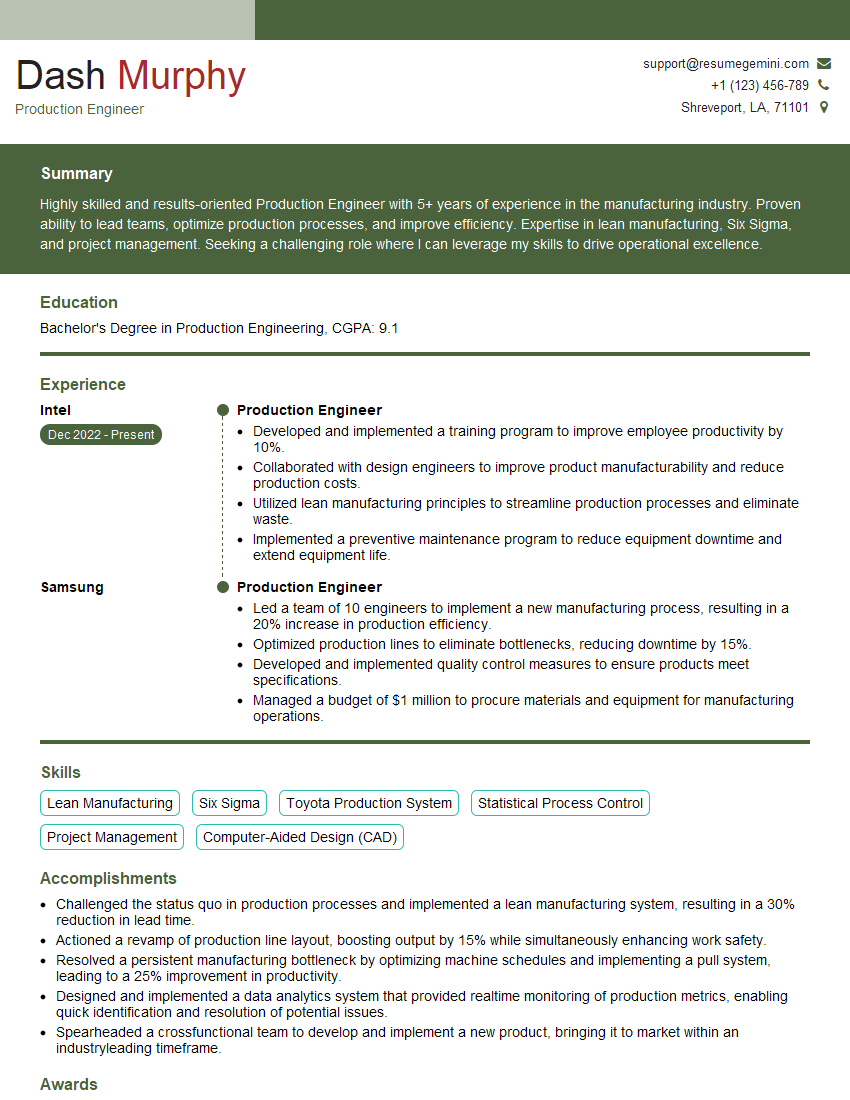
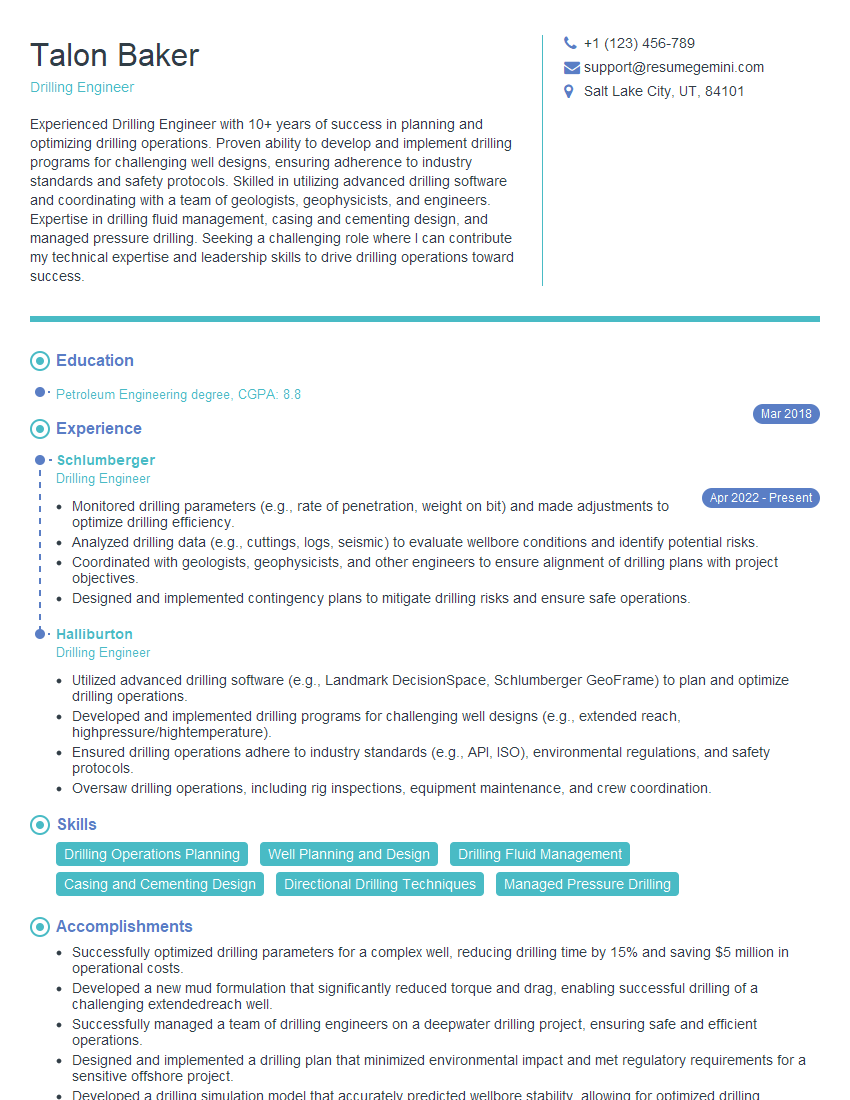
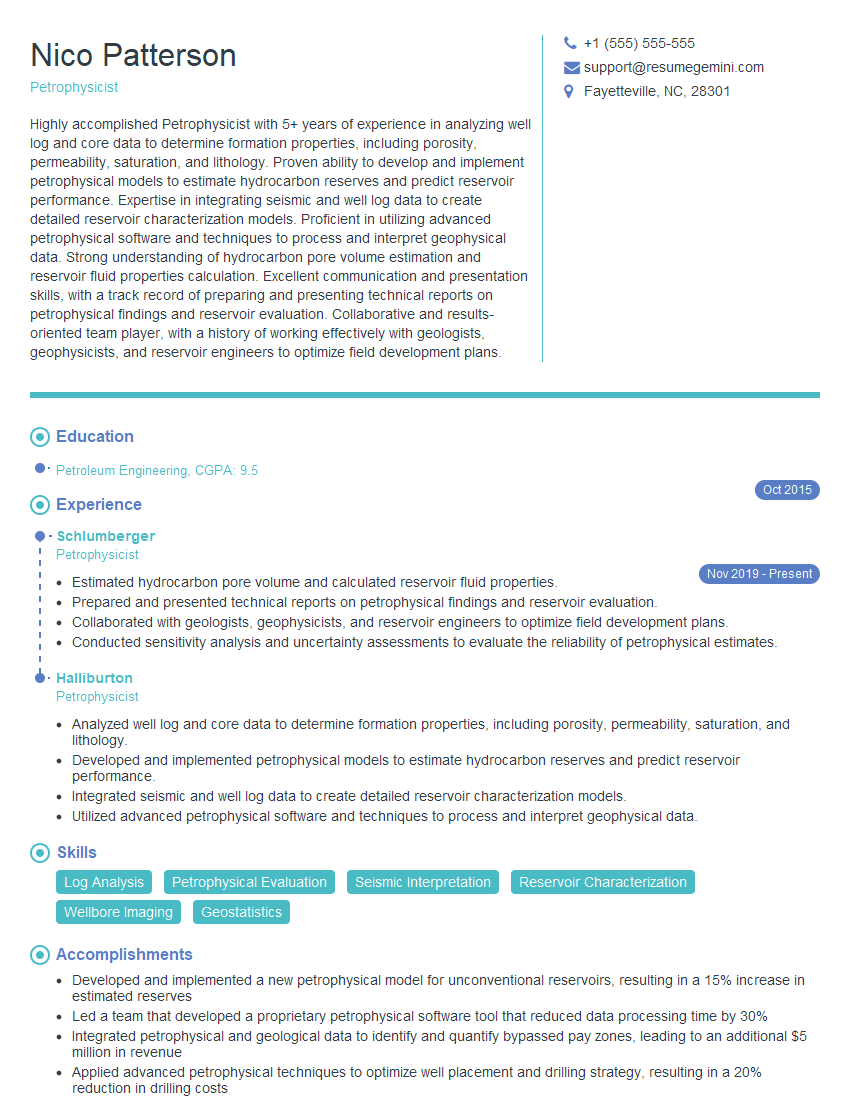
Mastering the intricacies of the oil industry opens doors to exciting and rewarding career opportunities. To significantly boost your job prospects, creating a strong, ATS-friendly resume is crucial. ResumeGemini is a trusted resource that can help you build a professional and impactful resume tailored to the oil industry. Examples of resumes specifically designed for the Oils sector are available to help you get started. Invest time in crafting a resume that showcases your skills and experience effectively, and watch your career in Oils take off!


Explore more articles
Users Rating of Our Blogs
Share Your Experience
We value your feedback! Please rate our content and share your thoughts (optional).
What Readers Say About Our Blog
Really detailed insights and content, thank you for writing this detailed article.
IT gave me an insight and words to use and be able to think of examples