Cracking a skill-specific interview, like one for Operational Analysis, requires understanding the nuances of the role. In this blog, we present the questions you’re most likely to encounter, along with insights into how to answer them effectively. Let’s ensure you’re ready to make a strong impression.
Questions Asked in Operational Analysis Interview
Q 1. Describe your experience with different operational analysis methodologies.
My experience encompasses a wide range of operational analysis methodologies. I’ve extensively used techniques like Lean Six Sigma for process improvement, focusing on eliminating waste and reducing variation. This involved employing tools like Value Stream Mapping to visualize processes and identify bottlenecks. I’ve also applied Discrete Event Simulation (DES), using software like Arena, to model complex systems and predict their behavior under different scenarios, helping optimize resource allocation. Furthermore, I’m proficient in Data Envelopment Analysis (DEA) for benchmarking and assessing the relative efficiency of different operational units. Finally, I’ve leveraged Root Cause Analysis (RCA) methodologies like the 5 Whys and Fishbone diagrams for troubleshooting and problem-solving. Each methodology has its strengths, and my selection depends on the specific context and goals of the analysis.
Q 2. Explain the difference between qualitative and quantitative data analysis in operational analysis.
Qualitative and quantitative data analysis are complementary approaches in operational analysis. Qualitative analysis focuses on understanding the ‘why’ behind operational performance. It involves gathering and interpreting non-numerical data such as observations, interviews, and open-ended survey responses. For instance, conducting interviews with frontline staff to understand their challenges in a specific process provides valuable qualitative insights. This helps uncover underlying issues not apparent in numbers. Quantitative analysis, on the other hand, uses numerical data to measure and quantify operational performance. This might include analyzing production rates, defect rates, or customer satisfaction scores. For example, we can quantitatively analyze the efficiency of a delivery system through delivery time metrics. Combining both approaches provides a holistic understanding of the operational process. Qualitative data can explain unexpected trends identified in quantitative data, while quantitative data can validate or refute qualitative observations.
Q 3. How do you identify key performance indicators (KPIs) for a given operational process?
Identifying key performance indicators (KPIs) requires a thorough understanding of the operational process and its strategic goals. I follow a structured approach: First, I define the process scope and strategic objectives. For example, if the process is order fulfillment, the objective might be to reduce order processing time and improve on-time delivery. Then, I identify critical success factors impacting these objectives. In the order fulfillment example, this might include order accuracy, inventory levels, and shipping time. Finally, I select measurable KPIs that directly reflect these factors, such as order accuracy rate (%), average order processing time (minutes), and on-time delivery rate (%). It’s crucial that KPIs are SMART (Specific, Measurable, Achievable, Relevant, and Time-bound) and aligned with overall business strategy.
Q 4. What statistical methods are you proficient in using for operational analysis?
My statistical proficiency is crucial for operational analysis. I’m adept at descriptive statistics, including calculating measures of central tendency (mean, median, mode) and dispersion (variance, standard deviation). For inferential statistics, I utilize hypothesis testing (t-tests, ANOVA) to compare means and assess statistical significance. Regression analysis (linear, multiple) allows me to model relationships between variables and predict outcomes. I also employ time series analysis techniques like ARIMA modeling to forecast future performance based on historical data. Furthermore, I’m experienced with statistical process control (SPC) charts (e.g., control charts) to monitor process stability and identify potential anomalies. The specific method used depends on the type of data and the research question.
Q 5. Describe your experience using data visualization tools to communicate operational insights.
Data visualization is critical for effectively communicating operational insights. I have extensive experience using tools like Tableau and Power BI to create interactive dashboards and reports. For example, I’ve used Tableau to create interactive dashboards that show key operational metrics in real-time, allowing stakeholders to easily monitor performance and identify areas needing attention. I focus on selecting the most appropriate chart type to represent the data clearly and concisely. For instance, I might use bar charts for comparing different categories, line charts for visualizing trends over time, and scatter plots to show the relationship between two variables. My goal is to make complex data easily understandable and actionable, even for individuals without a strong statistical background.
Q 6. How do you handle conflicting priorities or resource constraints in an operational analysis project?
Handling conflicting priorities and resource constraints requires a systematic approach. I start by clearly defining all project objectives and constraints. Then, I use prioritization techniques like a Prioritization Matrix (ranking by importance and urgency) to identify the most critical tasks. Next, I explore different resource allocation strategies, considering trade-offs and potential impacts. This might involve negotiating with stakeholders to re-prioritize tasks or securing additional resources where feasible. Sometimes, it’s necessary to adjust the project scope to align with available resources. Throughout the process, transparent communication with stakeholders is essential to ensure everyone is informed about decisions and potential consequences.
Q 7. Explain your approach to root cause analysis in operational problem-solving.
My approach to root cause analysis is systematic and data-driven. I typically use a combination of techniques. I begin with a clear definition of the problem and gather relevant data. Then, I apply techniques like the 5 Whys, repeatedly asking ‘why’ to drill down to the root cause. This helps uncover the underlying reasons behind the issue. Simultaneously, I use a Fishbone diagram (Ishikawa diagram) to visually organize potential causes and their relationships. I interview individuals involved in the process to gather insights. The goal is to go beyond surface-level symptoms and identify the underlying systemic issues that need to be addressed for lasting improvement. After identifying the root cause, I develop and implement solutions to prevent recurrence.
Q 8. How do you measure the effectiveness of an operational improvement initiative?
Measuring the effectiveness of an operational improvement initiative requires a multifaceted approach, focusing on both qualitative and quantitative metrics. We need to define clear, measurable objectives before the initiative begins. For instance, if the goal is to reduce order fulfillment time, we’d establish a baseline (e.g., current average fulfillment time) and track the improvement after implementation.
Quantitative metrics might include:
- Percentage reduction in lead times
- Increase in throughput or efficiency
- Cost savings
- Defect rate reduction
- Customer satisfaction scores
Qualitative metrics are equally important and can capture aspects that numbers alone miss:
- Employee feedback on the new process
- Changes in employee morale and productivity
- Impact on customer experience (beyond just satisfaction scores)
A robust evaluation combines both. We might use statistical analysis (e.g., t-tests, ANOVA) to determine if the observed improvements are statistically significant, not just random fluctuations. Regular monitoring and reporting, coupled with post-implementation reviews, are crucial for continuous improvement and adaptation.
Q 9. Describe your experience with process mapping and improvement techniques (e.g., Lean, Six Sigma).
I have extensive experience with process mapping and improvement techniques like Lean and Six Sigma. I’ve used various tools, including value stream mapping, flowcharting, and swim lane diagrams, to visually represent existing processes and identify bottlenecks. For example, in a recent project for a manufacturing plant, we used value stream mapping to pinpoint inefficiencies in the production line, leading to a 15% reduction in cycle time.
Lean methodologies focus on eliminating waste (muda) in all forms – transportation, inventory, motion, waiting, overproduction, over-processing, and defects. I’ve applied Lean principles to streamline workflows, optimize inventory management, and reduce lead times in various settings. Techniques like Kaizen (continuous improvement) and 5S (sort, set in order, shine, standardize, sustain) are integral parts of my Lean toolkit.
Six Sigma, on the other hand, employs statistical methods to reduce variation and defects. I’ve utilized DMAIC (Define, Measure, Analyze, Improve, Control) and DMADV (Define, Measure, Analyze, Design, Verify) methodologies to systematically improve processes. In one project, applying Six Sigma reduced product defects by over 80%, significantly enhancing product quality and customer satisfaction. The tools used included control charts, process capability analysis, and design of experiments.
Q 10. How do you ensure data accuracy and integrity in your operational analyses?
Data accuracy and integrity are paramount. My approach involves a multi-step process:
- Data Source Validation: I meticulously examine the source of data, understanding its collection methods, potential biases, and limitations. This includes checking data documentation, reviewing data dictionaries, and verifying data input procedures.
- Data Cleaning and Preprocessing: This step is crucial. I employ techniques to identify and handle missing values, outliers, and inconsistencies. This might involve imputation (filling in missing data), outlier removal or transformation, and data normalization.
- Data Validation Checks: I perform regular checks to ensure data consistency and plausibility. This could include range checks, cross-validation across multiple data sources, and plausibility checks against known business rules.
- Version Control and Audit Trails: I maintain a detailed audit trail of all data transformations and analysis steps. This allows for reproducibility and facilitates identifying any errors that may arise.
Ultimately, trust in the data is built through rigorous checks and transparency. I often collaborate with data stewards to ensure data quality from the source. My analysis always includes a section discussing data quality and limitations to fully inform any interpretations made.
Q 11. What is your experience with simulation modeling and its application in operational analysis?
Simulation modeling is a powerful tool for operational analysis, allowing us to experiment with different scenarios and predict outcomes without disrupting live operations. I’ve used various simulation software packages, including Arena and AnyLogic, to model complex systems.
For instance, I used simulation to optimize the scheduling of surgeries in a hospital. By modeling the arrival of patients, the duration of surgeries, and the availability of operating rooms, we were able to identify bottlenecks and suggest schedule adjustments that improved patient flow and reduced waiting times.
Simulation is particularly useful when dealing with uncertain parameters or complex interactions. The model can incorporate randomness and variability to better reflect real-world conditions. After building the model, we validate it against historical data and then use it to test various ‘what-if’ scenarios (e.g., adding extra resources, changing processes) to evaluate their impact on key performance indicators (KPIs).
Q 12. How do you present your findings and recommendations to stakeholders?
Presenting findings and recommendations to stakeholders requires clear, concise communication tailored to their level of understanding. I typically use a combination of techniques:
- Executive Summaries: A brief, high-level overview of the key findings and recommendations.
- Visualizations: Charts, graphs, and dashboards are essential to communicate complex data effectively. I choose the most appropriate visualization type depending on the data and audience.
- Storytelling: I frame my analysis as a story, explaining the problem, the methodology used, the findings, and the implications in a narrative format.
- Interactive Presentations: I utilize interactive dashboards and presentations allowing stakeholders to explore data independently.
- Recommendations and Actionable Insights: I present clear, actionable recommendations with specific steps and timelines for implementation.
The goal is to ensure stakeholders understand the analysis and its implications, allowing them to make informed decisions. Post-presentation follow-up is critical to address questions and foster ongoing collaboration.
Q 13. Describe a time you had to overcome a significant challenge in an operational analysis project.
In a project analyzing a supply chain for a large retailer, we encountered a significant challenge: inconsistent and incomplete data from various sources. Some data was missing entirely, while other datasets had differing formats and definitions. This made accurate analysis extremely difficult.
To overcome this, I took a three-pronged approach:
- Data Reconciliation: I worked closely with the data providers to understand the data inconsistencies and develop strategies for data cleaning and standardization.
- Data Imputation: For missing data points, I used statistical techniques to impute missing values based on available data. This involved careful consideration of which imputation method was most appropriate given the data characteristics.
- Sensitivity Analysis: I performed sensitivity analysis to assess how the imputed data might affect the final results. This helped demonstrate the robustness of my findings and identified areas where further data collection was necessary.
Through this systematic approach, we managed to generate reliable results, leading to significant improvements in the supply chain’s efficiency and responsiveness.
Q 14. How do you prioritize competing operational improvement projects?
Prioritizing competing operational improvement projects requires a structured approach. I usually employ a multi-criteria decision analysis (MCDA) framework. This involves identifying key criteria for project selection, such as:
- Potential impact: What’s the potential return on investment (ROI) or improvement in key performance indicators (KPIs)?
- Feasibility: How realistic is it to implement the project given available resources and constraints?
- Urgency: How critical is addressing the issue the project tackles?
- Alignment with strategic goals: Does the project align with the overall strategic objectives of the organization?
Each criterion is assigned a weight reflecting its relative importance. Projects are then scored against each criterion, and the weighted scores are summed to provide an overall priority score. This allows for a more objective and transparent decision-making process, minimizing biases and ensuring that resources are allocated to the most impactful projects.
Q 15. Explain your understanding of different forecasting techniques used in operations.
Forecasting in operations is crucial for predicting future demand, resource needs, and potential bottlenecks. It allows proactive planning and resource allocation, minimizing disruptions and maximizing efficiency. Several techniques exist, each with its strengths and weaknesses depending on the data available and the forecasting horizon.
- Moving Average: This simple method averages data from a specific period to predict the next period. A simple moving average gives equal weight to all data points, while weighted moving averages assign different weights, emphasizing more recent data. Example: A bakery uses a 7-day moving average of bread sales to predict daily demand for the upcoming week.
- Exponential Smoothing: This technique assigns exponentially decreasing weights to older data, making it more responsive to recent trends. Different variations exist, such as single, double, and triple exponential smoothing, each suited for different types of data patterns (e.g., trends, seasonality). Example: An online retailer uses exponential smoothing to forecast demand for a new product, adapting to changing customer interest.
- ARIMA (Autoregressive Integrated Moving Average): A sophisticated statistical model suitable for time series data with trends and seasonality. It uses past data to predict future values, taking into account both autocorrelations (relationships between data points at different times) and moving averages. Requires statistical software for implementation. Example: A logistics company utilizes ARIMA to forecast shipping volumes, considering historical patterns and seasonal fluctuations.
- Regression Analysis: This statistical method models the relationship between a dependent variable (e.g., sales) and one or more independent variables (e.g., advertising spending, price). It helps understand the impact of different factors on the dependent variable and make predictions. Example: A manufacturing plant uses regression analysis to predict production output based on labor hours and machine availability.
The choice of forecasting technique depends heavily on the context. Factors such as data availability, forecasting horizon, data patterns, and required accuracy all influence the decision.
Career Expert Tips:
- Ace those interviews! Prepare effectively by reviewing the Top 50 Most Common Interview Questions on ResumeGemini.
- Navigate your job search with confidence! Explore a wide range of Career Tips on ResumeGemini. Learn about common challenges and recommendations to overcome them.
- Craft the perfect resume! Master the Art of Resume Writing with ResumeGemini’s guide. Showcase your unique qualifications and achievements effectively.
- Don’t miss out on holiday savings! Build your dream resume with ResumeGemini’s ATS optimized templates.
Q 16. What software or tools are you proficient in using for operational analysis (e.g., Excel, R, Python)?
My proficiency in operational analysis software spans a range of tools, each suited for different tasks. I’m highly proficient in Python, utilizing libraries like pandas for data manipulation, NumPy for numerical computation, scikit-learn for machine learning models, and statsmodels for statistical modeling. This allows me to build sophisticated models and perform complex analyses.
I’m also proficient in R, particularly for statistical modeling and data visualization using packages such as ggplot2. Excel remains a valuable tool for simpler analyses, data cleaning, and creating dashboards for presentations. I’ve also worked with simulation software such as Arena for modeling complex systems.
Q 17. How do you stay updated with the latest trends and best practices in operational analysis?
Staying current in operational analysis requires a multifaceted approach. I regularly read industry publications such as the Journal of Operations Management and INFORMS journals. I actively participate in online communities and forums dedicated to operational research and analytics, engaging in discussions and learning from experts. Attending conferences and workshops, both online and in-person, offers opportunities for networking and learning about cutting-edge techniques. Furthermore, I regularly explore new software packages and libraries to expand my skillset and stay abreast of technological advancements in the field.
Q 18. Describe your experience with different types of operational models (e.g., queuing models, network models).
My experience encompasses a variety of operational models. I’ve worked extensively with queuing models, such as M/M/1 and M/D/1 queues, to analyze waiting times and resource utilization in systems with queues. This is invaluable in situations like call centers or manufacturing lines where waiting times significantly impact customer satisfaction or efficiency. For example, I optimized a call center’s staffing levels using an M/M/1 queuing model to minimize both customer wait times and agent idle time.
I also have substantial experience with network models, specifically using linear programming techniques. These models are critical for optimizing logistics, supply chains, and transportation networks. I’ve used these models to improve route optimization and minimize transportation costs in various supply chain scenarios. One project involved developing a network optimization model to determine the most efficient distribution strategy for a large retail company, considering warehouse locations, transportation costs, and customer demand.
Q 19. Explain your understanding of optimization techniques used in operational analysis.
Optimization techniques are fundamental to operational analysis, aiming to find the best solution from a set of feasible alternatives. My experience spans several key methods:
- Linear Programming (LP): Used for problems where the objective function and constraints are linear. I’ve utilized LP solvers like those in Python’s
scipy.optimizeto solve problems involving resource allocation, production planning, and transportation. Example: Optimizing the production mix to maximize profit given limited resources (labor, materials). - Integer Programming (IP): An extension of LP where some or all variables must be integers. Crucial when dealing with discrete quantities like the number of units to produce or the number of trucks to deploy. Example: Determining the optimal number of warehouses to open, considering fixed costs and transportation distances.
- Nonlinear Programming (NLP): Deals with problems where the objective function or constraints are nonlinear. Often requires iterative solution methods. Example: Optimizing the design of a complex system where performance depends on non-linear relationships between design parameters.
- Simulation-Based Optimization: Combining simulation with optimization algorithms to find the best solution for complex systems that are difficult to model analytically. Example: Optimizing the layout of a factory using simulation to evaluate different layouts and identify the one with the highest throughput.
The choice of optimization technique depends on the nature of the problem and the characteristics of the objective function and constraints.
Q 20. How do you balance the need for detailed analysis with the need for timely decision-making?
Balancing detailed analysis with timely decision-making is a constant challenge. I employ a structured approach that prioritizes the critical elements. Firstly, I clearly define the decision problem and identify the key performance indicators (KPIs). Then, I select appropriate analytical methods, focusing on the aspects most influential to the decision. For instance, a quick sensitivity analysis can determine if minor data inaccuracies significantly impact the outcome. If so, more detailed investigation is warranted. If not, a simpler, faster approach suffices.
I utilize iterative analysis, beginning with a simpler model to quickly obtain insights and then progressively refine the model based on the results and additional data. Regular communication with stakeholders is key, keeping them informed of the analysis progress and ensuring alignment on the decision-making process. Using visualization tools effectively communicates findings in a clear, concise way, facilitating faster decision-making.
Q 21. How do you validate your operational analysis findings?
Validating operational analysis findings is crucial for ensuring their reliability and trustworthiness. My approach involves several key steps:
- Data Validation: Thoroughly checking the accuracy and completeness of the data used in the analysis. This includes identifying and handling outliers, missing values, and inconsistencies.
- Model Validation: Assessing the suitability and accuracy of the chosen model. Techniques such as goodness-of-fit tests (e.g., R-squared for regression models) and residual analysis are used to evaluate model performance. In simulation, verification and validation techniques are crucial to ensure the model accurately represents the real-world system.
- Sensitivity Analysis: Examining how the results change when input parameters or model assumptions are varied. This helps understand the robustness of the findings and identify potential risks.
- Backtesting (for forecasting): Comparing the model’s past predictions to actual outcomes to evaluate its accuracy. This helps refine the model and build confidence in its future predictions.
- Real-world Implementation and Monitoring: The ultimate validation is to implement the findings and monitor the outcomes. Tracking key metrics and comparing them to the predicted values provides valuable feedback on the model’s accuracy and effectiveness.
By employing these validation methods, I ensure the credibility of my analysis and its usefulness in supporting effective decision-making.
Q 22. Describe your experience with different data sources used in operational analysis.
My experience with data sources in operational analysis is extensive and spans various types. I’ve worked with structured data from enterprise resource planning (ERP) systems like SAP and Oracle, extracting key performance indicators (KPIs) such as order fulfillment times, inventory levels, and production yields. These systems provide a wealth of quantifiable data, perfect for statistical analysis and trend identification.
Beyond structured data, I’m also proficient in handling semi-structured and unstructured data. For instance, I’ve utilized CRM systems to analyze customer feedback, identifying areas for operational improvement based on sentiment analysis. Unstructured data, such as call center recordings or employee surveys, requires more advanced techniques like natural language processing (NLP) to extract meaningful insights. Finally, I have experience integrating data from external sources, such as market research reports and competitor analyses, to provide a holistic view of operational performance.
For example, in a recent project for a logistics company, we combined GPS tracking data from delivery trucks with order processing data from their ERP system to optimize delivery routes and reduce fuel consumption. This involved cleaning and transforming data from diverse sources before performing the analysis.
Q 23. How do you handle uncertainty and risk in operational analysis?
Uncertainty and risk are inherent in operational analysis. My approach involves a multi-faceted strategy to mitigate these challenges. Firstly, I always begin by clearly defining the scope of the analysis and identifying potential sources of uncertainty. This involves understanding the limitations of the data and acknowledging any biases present.
Next, I incorporate robust statistical methods to quantify uncertainty. This might include using confidence intervals to express the range of possible outcomes or employing Monte Carlo simulations to model the impact of various uncertain parameters on the results. Risk assessment is also crucial, using tools like Failure Mode and Effects Analysis (FMEA) to identify potential risks and their impact on operational efficiency. This allows us to prioritize mitigation strategies.
For instance, when analyzing the impact of a new production process, we used Monte Carlo simulations to account for variations in material costs, labor rates, and equipment downtime, providing a more realistic assessment of the return on investment.
Q 24. Explain your understanding of different types of operational inefficiencies.
Operational inefficiencies manifest in various ways. They can be broadly categorized as:
- Process Inefficiencies: These arise from poorly designed or implemented processes, leading to bottlenecks, redundancies, or unnecessary steps. A classic example is a long and complicated approval process that delays project completion.
- Resource Inefficiencies: These stem from the underutilization or overutilization of resources. For example, underutilized equipment leads to wasted capital investment, while overstaffing results in unnecessary labor costs.
- Technology Inefficiencies: Outdated or poorly integrated systems can hamper efficiency. This could involve using multiple disparate software systems that don’t communicate effectively, resulting in data silos and manual data entry.
- Human Inefficiencies: Lack of training, poor communication, or inadequate motivation can significantly impact operational performance. For instance, employees unfamiliar with new software may make more errors, leading to rework and delays.
Identifying the root cause of these inefficiencies often requires a combination of data analysis and qualitative methods like interviews and observations.
Q 25. How do you measure the return on investment (ROI) of operational improvement initiatives?
Measuring the ROI of operational improvement initiatives requires a clear understanding of both the costs and benefits. Costs include the initial investment in the improvement project (e.g., software, training, consulting fees), while benefits can be both tangible (e.g., reduced labor costs, increased production) and intangible (e.g., improved customer satisfaction, enhanced brand reputation).
A common approach is to use a discounted cash flow (DCF) analysis to determine the net present value (NPV) of the project. This considers the time value of money, discounting future cash flows back to their present value. A positive NPV indicates a positive ROI. Key performance indicators (KPIs) should be tracked before and after the implementation of improvements to quantify the impact on efficiency. For example, if reducing production defects was the goal, we’d track the defect rate before and after the implementation.
Beyond financial metrics, it’s also important to consider qualitative aspects of the ROI, such as employee morale and customer satisfaction. These aspects can be difficult to quantify, but are still valuable in assessing the overall success of the initiative.
Q 26. Describe your experience with change management in relation to operational improvements.
Change management is critical for successful operational improvements. My experience shows that a well-planned and executed change management strategy is crucial for adoption and long-term sustainability. This involves several key steps:
- Communication: Keeping stakeholders informed throughout the process is essential. This includes clearly communicating the reasons for the change, the expected benefits, and the implementation plan.
- Training and Support: Providing adequate training and ongoing support to employees is crucial for ensuring they can effectively use new systems or processes.
- Stakeholder Engagement: Actively involving stakeholders in the change process helps to build buy-in and address concerns early on. This often involves regular feedback sessions and workshops.
- Monitoring and Evaluation: Continuously monitoring the implementation and making adjustments as needed ensures the project stays on track and achieves its objectives.
In one project, we used a phased rollout approach for a new inventory management system, starting with a pilot program in one warehouse before expanding to the entire company. This minimized disruption and allowed us to address issues before widespread implementation.
Q 27. How do you incorporate stakeholder feedback into your operational analysis?
Incorporating stakeholder feedback is paramount. I use a variety of methods to ensure their voices are heard and considered throughout the operational analysis process. This includes:
- Surveys: Surveys can be used to gather quantitative and qualitative data from a large number of stakeholders.
- Interviews: In-depth interviews allow for a deeper understanding of individual perspectives and concerns.
- Focus Groups: Focus groups provide a platform for facilitated discussion and brainstorming among stakeholders.
- Workshops: Workshops can be used to collaboratively develop solutions and build consensus.
It’s crucial to analyze feedback systematically and identify recurring themes or concerns. This feedback is then used to inform decisions and refine the operational analysis, ensuring the recommendations are practical and aligned with the needs of the organization.
For example, in a recent project, customer feedback highlighted the need for improved order tracking capabilities. This feedback directly influenced the design of a new customer portal, leading to improved customer satisfaction.
Q 28. What are your strengths and weaknesses as an operational analyst?
My strengths as an operational analyst lie in my analytical skills, my ability to communicate complex information clearly and concisely, and my experience working with diverse data sources. I am adept at identifying patterns and trends, developing data-driven recommendations, and effectively communicating those recommendations to stakeholders.
My weakness, if I had to identify one, is my tendency towards perfectionism. While this ensures thoroughness in my analysis, it can sometimes lead to delays in project completion. I am actively working on improving my time management skills to address this.
Key Topics to Learn for Operational Analysis Interview
- Process Improvement Methodologies: Understand Lean, Six Sigma, and other process improvement frameworks. Consider practical applications like reducing cycle times or improving defect rates.
- Data Analysis & Interpretation: Master statistical analysis techniques for data interpretation. Focus on practical applications such as identifying trends, drawing conclusions, and making data-driven recommendations.
- Modeling & Simulation: Familiarize yourself with various modeling techniques (e.g., queuing theory, discrete event simulation) and their applications in optimizing operational efficiency.
- Forecasting & Predictive Analytics: Explore different forecasting methods and their use in predicting future demand, resource allocation, and risk management. Be prepared to discuss practical examples.
- Optimization Techniques: Understand linear programming, integer programming, and other optimization algorithms used to solve real-world operational problems. Think about application areas like scheduling and resource allocation.
- Performance Measurement & Metrics: Learn how to define, measure, and interpret key performance indicators (KPIs) relevant to operational efficiency and effectiveness. Be ready to discuss practical examples relevant to various industries.
- Problem Solving & Decision Making Frameworks: Practice applying structured problem-solving approaches (e.g., root cause analysis, A3 problem solving) to analyze operational issues and develop effective solutions.
Next Steps
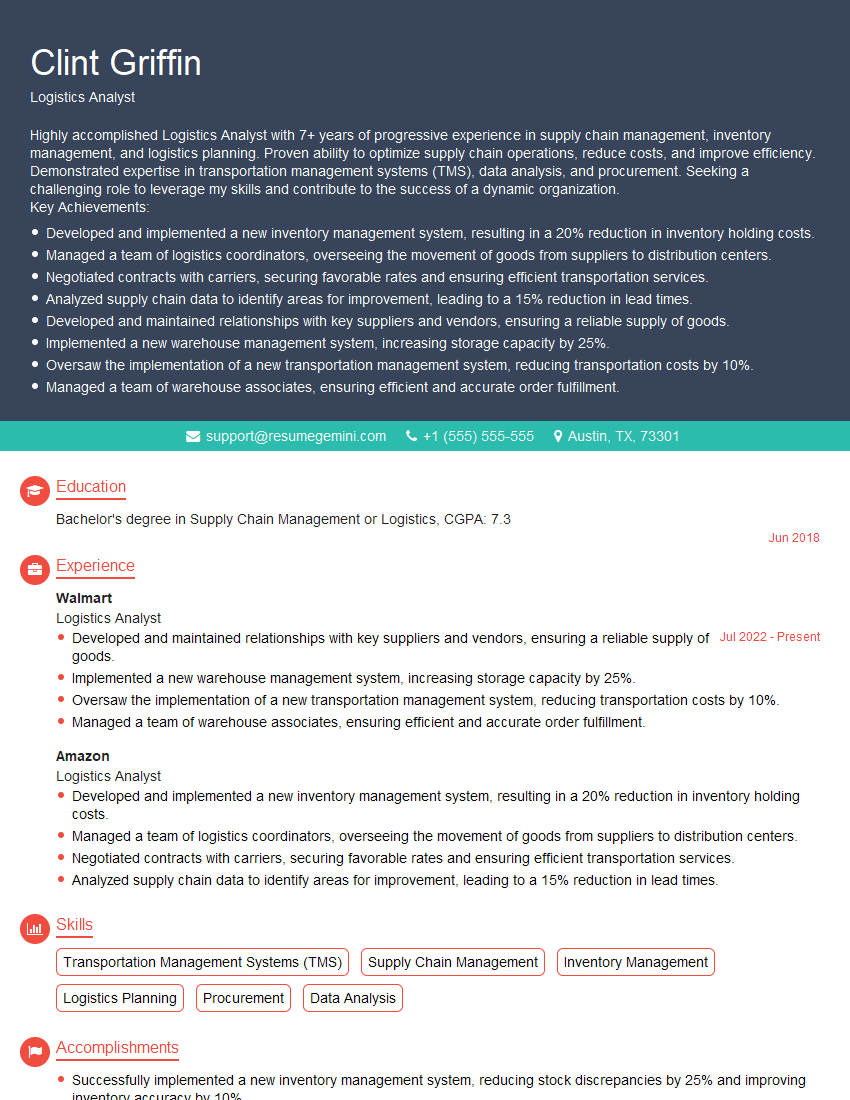
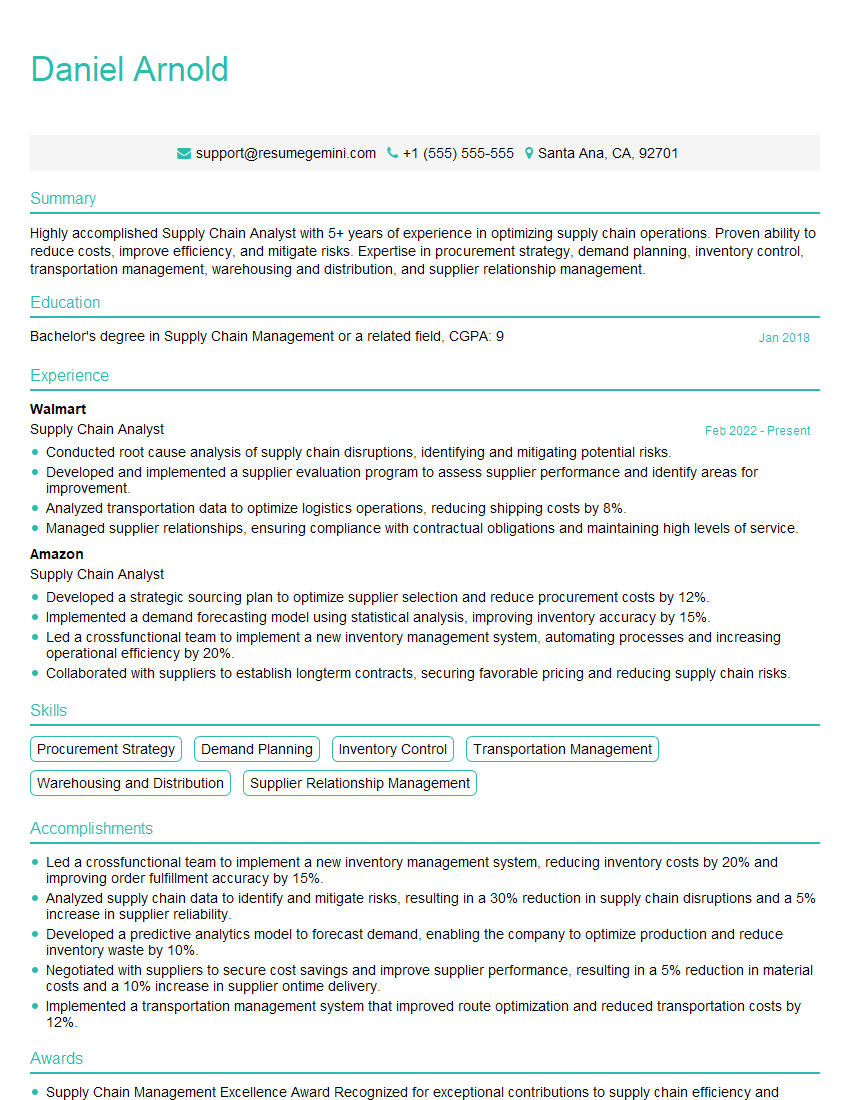
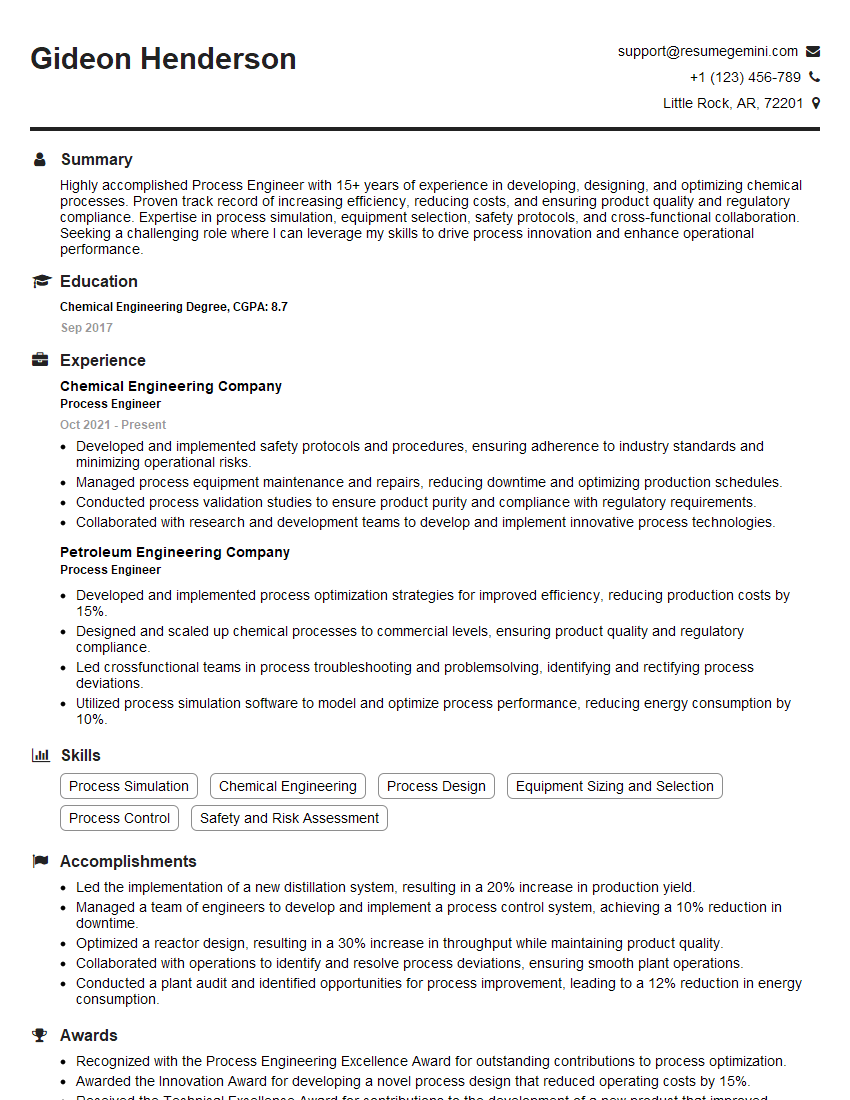
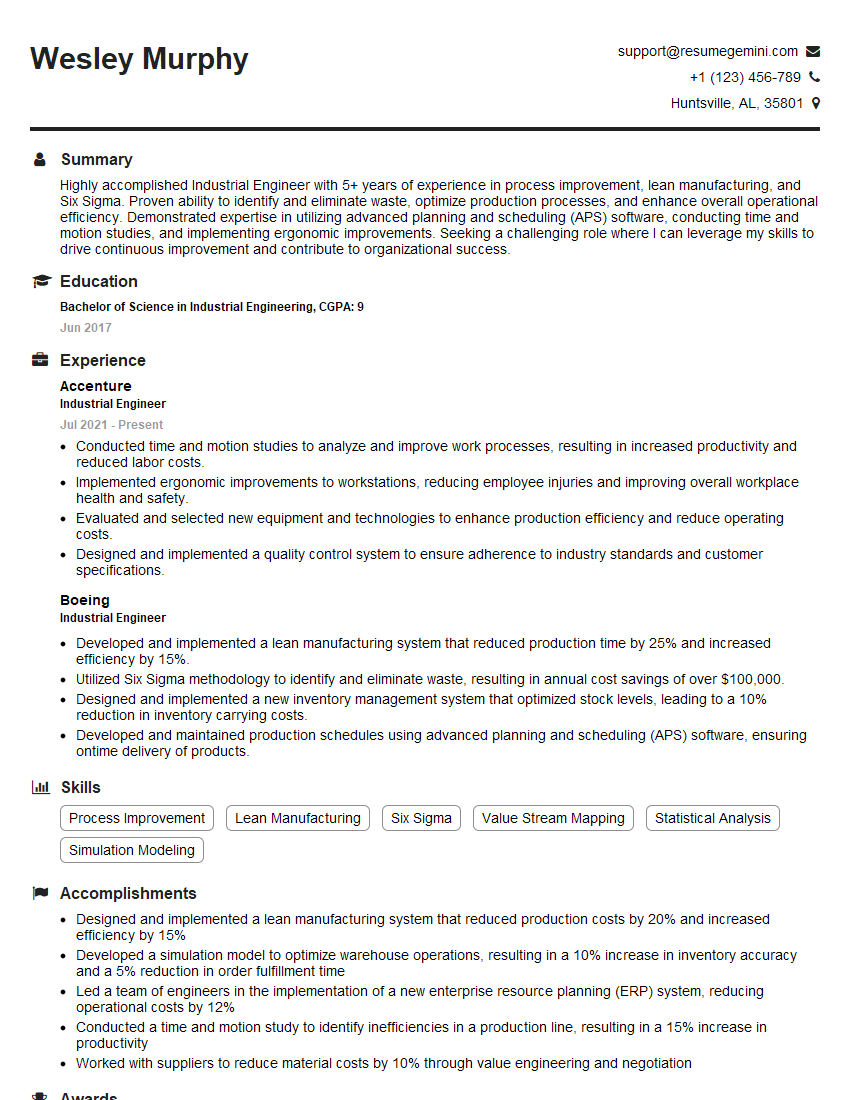
Mastering Operational Analysis opens doors to exciting career opportunities in various industries, offering significant growth potential and high earning capacity. A strong resume is crucial for showcasing your skills and experience effectively to potential employers. Creating an ATS-friendly resume is paramount to ensure your application is noticed. ResumeGemini is a trusted resource to help you build a professional and impactful resume that highlights your Operational Analysis expertise. Examples of resumes tailored to Operational Analysis are available within ResumeGemini to help guide your process. Invest time in crafting a compelling resume—it’s your first impression on a potential employer.

Explore more articles
Users Rating of Our Blogs
Share Your Experience
We value your feedback! Please rate our content and share your thoughts (optional).
What Readers Say About Our Blog
Really detailed insights and content, thank you for writing this detailed article.
IT gave me an insight and words to use and be able to think of examples