Interviews are more than just a Q&A session—they’re a chance to prove your worth. This blog dives into essential Order Picker Training interview questions and expert tips to help you align your answers with what hiring managers are looking for. Start preparing to shine!
Questions Asked in Order Picker Training Interview
Q 1. What are the key safety procedures in order picking?
Safety is paramount in order picking. It’s not just about following rules; it’s about proactively preventing accidents. Key procedures include:
- Proper Footwear: Wearing steel-toed shoes is essential to protect feet from dropped items or equipment.
- Lift Safely: Using proper lifting techniques, avoiding twisting, and asking for assistance with heavy loads prevents back injuries. Think of lifting as a controlled movement, like a weightlifter, not a frantic scramble.
- Awareness of Surroundings: Constant vigilance is crucial. Watch for other workers, forklifts, and obstacles. Think of it like driving – always be aware of your blind spots.
- Equipment Operation: If using powered equipment like forklifts or pallet jacks, ensure you’re properly trained and certified before operation. Regular maintenance checks are vital.
- Reporting Hazards: Immediately report any unsafe conditions, damaged equipment, or near misses. This is not about blame, but about creating a safer environment for everyone.
- Personal Protective Equipment (PPE): Using appropriate PPE, such as safety glasses, gloves, and high-visibility vests, minimizes the risk of injury.
For example, I once witnessed a colleague nearly get hit by a forklift because they weren’t paying attention. Thankfully, they were unharmed, but it highlighted the importance of constant awareness. Since then, we’ve reinforced safety training with an emphasis on situational awareness.
Q 2. Explain the different order picking methods (e.g., batch, zone, wave).
Different order picking methods optimize efficiency depending on factors like order volume, warehouse layout, and product location. The most common methods are:
- Batch Picking: Multiple orders are picked simultaneously for the same items. This minimizes travel time but requires more sorting at the end. Imagine grocery shopping – picking all the dairy products first, then all the produce, etc. Very efficient for similar orders.
- Zone Picking: The warehouse is divided into zones, and each picker is responsible for a specific zone. This improves efficiency by reducing travel time and expertise needed in each area. This is like assigning different teams in a large office to different sections.
- Wave Picking: Orders are grouped into waves based on delivery schedules or other criteria. Pickers work through their assigned wave, maximizing efficiency for time-sensitive orders. Think of it like a synchronized dance – each picker knows exactly what to do and when, leading to efficient and timely fulfillment.
- Piece Picking: One item is picked at a time to fulfill one order. This method lacks efficiency for bulk orders but is useful for customized orders or small orders.
The choice of method depends entirely on the warehouse’s specific needs. In my previous role, we used a combination of zone and wave picking to optimize our operations based on order volume and delivery deadlines.
Q 3. How do you prioritize orders with varying deadlines?
Prioritizing orders with varying deadlines requires a structured approach. I typically use a combination of methods:
- First In, First Out (FIFO): For orders with similar deadlines, this ensures fairness and prevents older orders from being delayed indefinitely.
- Criticality Assessment: Orders with the shortest deadlines or those with significant impact on customers (e.g., urgent medical supplies) are prioritized. This often involves a scoring system.
- WMS Integration: The warehouse management system (WMS) usually has features that automatically prioritize orders based on predefined rules and deadlines.
- Communication and Collaboration: Working closely with the order management team allows for real-time adjustments to priorities as unforeseen circumstances arise.
For example, if we receive an urgent order for a critical part needed for a production line, it will immediately jump to the top of the picking queue regardless of other order deadlines.
Q 4. Describe your experience with using warehouse management systems (WMS).
My experience with WMS is extensive. I’ve worked with various systems, including WMS1 and WMS2 (replace with actual system names). My expertise encompasses:
- Order Management: Creating, assigning, and tracking orders within the system.
- Inventory Management: Maintaining accurate inventory levels and resolving discrepancies using WMS reporting features.
- Picking Optimization: Utilizing the system’s route optimization features to minimize travel time and improve efficiency.
- Reporting and Analysis: Generating reports on picking performance, identifying bottlenecks, and suggesting improvements.
In one instance, I identified a system error in WMS1 that was leading to inaccurate order assignments. I worked with the IT department to resolve the issue, which improved picking accuracy by 15%.
Q 5. How do you handle order discrepancies or errors?
Order discrepancies are handled systematically. The first step is to identify the nature of the discrepancy. This might involve:
- Verification: Double-checking the picked items against the order details using the WMS.
- Inventory Check: Investigating whether the discrepancy is due to stock issues, incorrect product placement, or labeling errors.
- Documentation: Thoroughly documenting the discrepancy, including the order number, items involved, and the nature of the problem.
- Escalation: If the discrepancy cannot be resolved quickly, escalating the issue to the appropriate personnel (e.g., inventory control, supervisors).
- Corrective Action: Once the cause of the discrepancy is identified, taking appropriate corrective action to prevent similar errors from occurring in the future. This could involve retraining, improved processes, or system updates.
For example, if an item is missing, I’d check the inventory location to see if it’s been misplaced or if it’s out of stock. Then, I’d report it and work to find a solution – perhaps sourcing the item from another location or notifying the customer about the delay.
Q 6. What are the common causes of picking errors, and how can they be prevented?
Picking errors stem from various causes, which can be grouped into:
- Human Error: This is the most common cause, including misreading order details, picking the wrong items, or incorrect quantities. Fatigue, distractions, and lack of training contribute to this.
- System Issues: Errors in the WMS, barcode scanning problems, or inaccurate product information can lead to picking errors.
- Poor Warehouse Organization: Poorly organized storage, unclear labeling, or incorrect product placement can increase the likelihood of errors.
Prevention involves:
- Proper Training: Thorough training on order picking procedures, WMS usage, and safety protocols is crucial.
- Clear Labeling and Organization: Maintaining a well-organized and clearly labeled warehouse minimizes confusion.
- Regular Audits and Inspections: Regularly checking inventory accuracy and warehouse organization can identify and address potential problems early on.
- Quality Control Measures: Implementing measures like double-checking orders and using verification systems (e.g., scanners) reduce errors.
- Ergonomic Design: Creating a physically comfortable workspace reduces fatigue and the associated risk of human error.
In my experience, implementing a robust quality control process, including double-checking orders and using barcode scanners consistently, drastically reduced picking errors.
Q 7. How do you maintain accuracy while working under pressure?
Maintaining accuracy under pressure requires a multi-faceted approach:
- Process Prioritization: Focusing on accurate picking rather than speed. Speed without accuracy is inefficient.
- Breakdowns: Taking short breaks to rest and refocus. Short, regular breaks are more effective than one long break.
- Effective Communication: Communicating with supervisors or colleagues if faced with overwhelming workload or complex issues.
- Double-Checking: Employing double-checking measures, especially when under pressure. This is a time investment that minimizes larger problems further down the line.
- Automation: Leveraging technology like voice-picking or automated guided vehicles (AGVs) can improve efficiency and reduce errors, especially when dealing with high-volume orders.
Think of it like a marathon, not a sprint. Maintaining a consistent pace and focusing on accuracy, even under pressure, will yield better long-term results. I’ve found that proactively managing stress and utilizing available technology and resources helps maintain accuracy and efficiency, even in high-pressure situations.
Q 8. Explain your experience with RF scanners and other order picking technologies.
My experience with RF scanners and other order picking technologies is extensive. I’ve worked with a variety of systems, from basic handheld RF scanners to voice-directed picking systems and even warehouse management systems (WMS) integrated with automated guided vehicles (AGVs). Understanding these technologies is crucial for efficient order fulfillment.
With RF scanners, I’m proficient in using them to verify items against the picking list, track progress, and update inventory in real-time. This includes troubleshooting common issues like scanner malfunctions, connectivity problems, and incorrect barcode readings. I’ve even assisted in training new employees on the proper use and maintenance of these devices.
Voice-directed picking systems offer a hands-free approach, greatly enhancing productivity and reducing errors. I’ve successfully implemented and used systems that provide clear audio instructions to pickers, guiding them to the correct locations and quantities. This technology minimizes the need for constant visual reference to paper picking lists, leading to faster picking speeds and reduced errors.
My experience with WMS integration demonstrates a deep understanding of the entire order fulfillment process. I understand how data flows from order placement to picking, packing, and shipping, and I can identify bottlenecks or areas for improvement in the system.
Q 9. How do you ensure the efficient and safe operation of material handling equipment?
Ensuring the efficient and safe operation of material handling equipment (MHE) requires a multi-faceted approach focusing on training, maintenance, and adherence to safety protocols. This starts with comprehensive training for all operators, covering topics such as pre-operational checks, safe operating procedures, emergency stops, and load stability. Regular refresher training is crucial to maintain competency and update operators on any changes in equipment or procedures.
Proper maintenance is vital to prevent accidents and downtime. This includes regular inspections of MHE for any signs of damage or wear and tear, timely repairs, and adherence to manufacturer’s maintenance schedules. I’ve worked in environments where we used checklists and preventative maintenance schedules to keep equipment in optimal condition.
Finally, a strong safety culture is paramount. This involves enforcing the use of personal protective equipment (PPE), like safety glasses and high-visibility vests, and ensuring a clean and organized work environment free of obstacles that could cause accidents. I’ve actively participated in safety meetings, reported any unsafe conditions, and helped to enforce safety regulations in my previous roles.
Q 10. Describe your understanding of inventory management principles.
My understanding of inventory management principles centers on accuracy, efficiency, and cost-effectiveness. Accurate inventory data is the foundation of successful order fulfillment. This involves using various methods to track inventory levels, including cycle counting, physical inventory checks, and using WMS data. Regular cycle counting, for instance, helps detect discrepancies before they become major issues.
Efficient inventory management involves optimizing storage space, implementing efficient picking strategies, and minimizing waste. This might include using FIFO (First-In, First-Out) methods to manage perishable goods or implementing slotting optimization techniques to minimize travel time during order picking.
Cost-effectiveness focuses on minimizing storage costs, reducing waste through accurate forecasting, and optimizing the supply chain. This includes strategies to reduce excess inventory, which ties up capital and increases storage costs, and identifying and resolving inventory discrepancies promptly to avoid stockouts or overstocking.
Q 11. How do you stay organized and efficient when handling high volumes of orders?
Handling high volumes of orders requires a structured and organized approach. I employ several strategies to stay efficient and avoid errors. One key strategy is prioritizing orders based on urgency or delivery deadlines. This might involve using a WMS that prioritizes orders automatically or manually sorting orders based on pre-determined criteria.
Batch picking is another vital technique. Instead of picking individual orders one by one, I group orders with items located in the same area to minimize travel time. Wave picking, a more advanced form of batch picking, is also something I’m experienced in, where groups of orders are released at set intervals throughout the day.
Maintaining a clean and organized workspace is crucial. This prevents items from getting misplaced and reduces the risk of errors. Regularly decluttering the work area and using proper labeling systems significantly enhance picking efficiency. I find that clear communication with colleagues and supervisors helps in addressing issues and ensuring smooth workflow, particularly during peak times.
Q 12. How do you manage your time effectively during a busy shift?
Effective time management during busy shifts involves a combination of planning, prioritization, and efficient execution. I typically start by reviewing the day’s order schedule and identifying any potential bottlenecks or challenges. This allows me to allocate my time effectively and anticipate potential issues.
Prioritization is key: I focus on high-priority orders first, ensuring that urgent items are picked and processed promptly. I’m also adept at multitasking, such as preparing picking lists while waiting for equipment or confirming order details.
Continuous monitoring of my progress is vital. Regularly checking against the schedule and making any necessary adjustments helps me stay on track and identify areas where I might be falling behind. I also utilize technology where available, such as using a WMS with built-in progress tracking to stay updated and inform my supervisor of any issues promptly.
Q 13. Describe your experience working in a team environment.
I thrive in team environments. Effective teamwork is crucial for efficient order fulfillment, especially in high-volume settings. I believe in open communication, actively sharing information with colleagues and assisting where needed. This includes helping train new team members, sharing best practices, and offering support to others when they face challenges.
I’ve been part of teams where we collaboratively solved problems, improved processes, and celebrated our successes together. I believe in mutual respect and valuing each team member’s contributions. I’ve found that effective teamwork leads to increased efficiency, improved morale, and a more enjoyable work environment.
In one particular instance, our team faced a significant backlog due to an unexpected surge in orders. By collaborating effectively, sharing workloads, and implementing a new picking strategy, we managed to overcome the challenge and meet all deadlines. This experience reinforced the importance of teamwork and mutual support.
Q 14. How do you adapt to changes in processes or procedures?
Adaptability is crucial in a dynamic warehouse environment. I’ve successfully adapted to various changes in processes and procedures throughout my career, from implementing new technologies to adjusting to revised workflows. My approach involves actively seeking to understand the reasons behind the changes and the intended outcomes.
I’m a quick learner and readily embrace new technologies and training opportunities. I view change as an opportunity for growth and improvement. I am proficient in using various learning methods and resources to quickly gain competency with any new systems or procedures.
For instance, when our warehouse implemented a new WMS, I proactively attended all training sessions, practiced using the system, and sought out additional support when needed. I quickly became proficient in the new system and even helped train my colleagues, ensuring a smooth transition for the entire team.
Q 15. What are your strengths and weaknesses as an order picker?
My greatest strength as an order picker is my accuracy and efficiency. I consistently meet or exceed picking targets while maintaining a very low error rate. I am meticulous in verifying each item against the order, ensuring complete and accurate fulfillment. This is backed by my ability to quickly learn and adapt to new systems and procedures. For example, when we transitioned to a new Warehouse Management System (WMS), I quickly mastered the new software and even helped train some of my colleagues. My weakness is sometimes overcommitting myself. While I strive for efficiency, I’m learning to better prioritize tasks and delegate when necessary to avoid burnout and maintain consistently high quality work. I am actively working on time management techniques to improve this aspect.
Career Expert Tips:
- Ace those interviews! Prepare effectively by reviewing the Top 50 Most Common Interview Questions on ResumeGemini.
- Navigate your job search with confidence! Explore a wide range of Career Tips on ResumeGemini. Learn about common challenges and recommendations to overcome them.
- Craft the perfect resume! Master the Art of Resume Writing with ResumeGemini’s guide. Showcase your unique qualifications and achievements effectively.
- Don’t miss out on holiday savings! Build your dream resume with ResumeGemini’s ATS optimized templates.
Q 16. How do you handle difficult or demanding customers or supervisors?
Handling difficult customers or supervisors requires a calm and professional approach. I always listen actively to their concerns and try to understand their perspective. If a customer is upset about a delayed order, I apologize sincerely, explain the situation clearly (without making excuses), and offer a solution such as expedited shipping or a discount, if appropriate. With supervisors, I address concerns directly and respectfully, offering suggestions for improvement where possible. For example, if a supervisor expresses concern about picking speed, I’ll offer to demonstrate efficient picking techniques or discuss any challenges that might be hindering my performance, such as equipment malfunctions or unclear instructions. Maintaining a professional and respectful attitude, even under pressure, is crucial in these situations.
Q 17. How do you ensure compliance with company policies and safety regulations?
Compliance with company policies and safety regulations is paramount. I always follow established procedures for handling equipment, operating machinery, and working safely. This includes wearing appropriate safety gear, adhering to lifting techniques to prevent injuries, and reporting any safety hazards immediately. Regularly reviewing safety protocols and participating in training sessions helps me stay updated on any changes or new regulations. For example, I always use the designated pathways in the warehouse to avoid collisions with forklifts and other equipment, and I’m careful to check my surroundings before operating any machinery. I also prioritize maintaining a clean and organized workspace, which contributes to overall safety. Furthermore, I strictly adhere to company policies regarding data privacy and order handling processes.
Q 18. Describe a time you had to solve a problem during order picking.
During peak season, a significant software glitch caused the WMS to misdirect several orders. This led to a backlog and significant delays. I noticed the problem when several orders appeared to be in the wrong locations. I immediately reported the issue to my supervisor and then, using my knowledge of the warehouse layout and the older paper-based system, I worked with my team to identify the misplaced orders manually. We cross-referenced the paper records with the digital system to locate the items. This temporary workaround allowed us to partially fulfill the orders, mitigating the impact on customers. Once the software issue was resolved, we quickly caught up and avoided major disruptions to our operations. This incident highlighted the importance of proactive problem-solving and teamwork in a fast-paced environment.
Q 19. What is your experience with different types of warehouse layouts?
I have experience with various warehouse layouts, including block stacking, narrow aisle racking, and high-bay storage using reach trucks and order pickers. I understand the advantages and disadvantages of each layout, and I can adapt my picking strategies accordingly. For example, in a narrow aisle warehouse, I am highly proficient in operating a reach truck and optimizing my routes to minimize travel time. In a high-bay environment, I understand the importance of precise order picking and safe operation of the equipment. In block stacking facilities, I utilize efficient route planning to minimize travel time between stock locations. My adaptability allows me to quickly become proficient in any warehouse environment.
Q 20. How do you prioritize your tasks when faced with competing priorities?
When faced with competing priorities, I use a prioritization matrix, considering urgency and importance. I prioritize tasks based on deadlines, order urgency (e.g., express shipments), and potential consequences of delay. For example, I would prioritize an urgent rush order with a tight deadline over a standard order with a later delivery date. Using this matrix prevents me from becoming overwhelmed. By systematically working through the tasks in order of priority, I ensure that the most critical items are handled promptly and efficiently while still addressing less urgent tasks.
Q 21. Explain your knowledge of warehouse organization and storage techniques.
My understanding of warehouse organization and storage techniques is comprehensive. I am familiar with various storage methods including FIFO (First-In, First-Out), LIFO (Last-In, First-Out), and random storage. I understand the importance of proper stock rotation, optimal placement of frequently accessed items, and maintaining clear labeling and inventory control to ensure efficient order fulfillment and minimize storage costs. Furthermore, I understand the importance of maintaining a clean and organized workspace for efficient workflow and safety. I am proficient in using warehouse management systems (WMS) to track inventory, manage orders and optimize picking routes. My experience helps to ensure efficient inventory management and streamline the entire order picking process.
Q 22. How do you maintain productivity and efficiency throughout a long shift?
Maintaining productivity and efficiency during a long order picking shift requires a strategic approach combining physical stamina, mental focus, and smart work practices. Think of it like running a marathon, not a sprint.
- Prioritization and Planning: I start by reviewing the order queue, prioritizing urgent orders and grouping similar items together to minimize travel time. This is like mapping out your marathon route to avoid unnecessary detours.
- Ergonomics and Breaks: Regular, short breaks are crucial. I ensure I’m using proper lifting techniques and taking micro-breaks to stretch and re-energize. This prevents burnout and potential injuries, keeping me in the race.
- Staying Hydrated and Fueled: Staying hydrated and having healthy snacks throughout the shift is non-negotiable. Dehydration and low blood sugar significantly impair performance, much like running out of energy mid-marathon.
- Maintaining Focus: I employ techniques like mindfulness and positive self-talk to stay focused and avoid errors. Mental fatigue is a silent killer of productivity, so actively managing mental energy is key.
- Continuous Improvement: I constantly seek ways to improve my workflow. Analyzing my picking routes and identifying bottlenecks allows me to refine my process and become more efficient over time. It’s about learning from each ‘mile’ of the shift.
Q 23. What is your understanding of quality control procedures in order picking?
Quality control in order picking is paramount. It’s not just about getting the order out the door; it’s about ensuring the customer receives the correct items in perfect condition. My approach involves several key steps:
- Double-Checking: I always double-check each item against the picking list, verifying quantity and product code. This is like proofreading an important document – one mistake can have significant consequences.
- Visual Inspection: I visually inspect each item for any damage, defects, or discrepancies before placing it in the order. Looking for anything unusual is just like a quality control check at a manufacturing plant.
- Packaging Integrity: I use appropriate packaging materials to protect the items from damage during transit, ensuring secure sealing and labeling. Proper packaging is crucial for a positive customer experience.
- Accuracy Verification: I often use handheld scanners to verify item accuracy and track picking progress, minimizing errors and ensuring complete orders. Technology ensures accuracy and improves speed.
- Reporting: Any issues, such as damaged items or discrepancies, are immediately reported to the supervisor, documenting everything precisely.
Q 24. Describe your experience with picking and packing different types of goods.
I have extensive experience picking and packing a diverse range of goods, including:
- Fragile Items: Such as glassware or electronics, requiring careful handling and specialized packaging to prevent breakage.
- Perishable Goods: Requiring temperature-controlled storage and rapid processing to maintain freshness. This demands extra attention to detail.
- Bulk Items: Like boxes of stationery or clothing, demanding efficient organization and stacking techniques.
- Small, Lightweight Items: Requiring meticulous attention to detail to avoid picking errors or miscounts.
- Hazardous Materials: Requiring adherence to strict safety regulations and specialized packaging.
My adaptability allows me to quickly learn new products and adjust my techniques accordingly, ensuring consistent accuracy and efficiency regardless of the goods being handled.
Q 25. How familiar are you with different types of shipping labels and packaging?
I’m familiar with a variety of shipping labels and packaging, including:
- Standard Shipping Labels: Containing address information, tracking numbers, and other essential details.
- Hazardous Material Labels: Adhering to regulations for shipping dangerous goods.
- Custom Branded Labels: Reflecting company branding and providing additional information to the customer.
- Different Packaging Types: Boxes, envelopes, padded mailers, bubble wrap, and other protective materials, chosen based on product fragility and shipping requirements.
My experience extends to using thermal printers to generate labels, understanding different postal regulations, and selecting appropriate packaging based on the order’s contents and destination. Understanding these intricacies is crucial to ensuring timely and successful delivery.
Q 26. How do you deal with damaged or defective products during the picking process?
When encountering damaged or defective products during the picking process, my response is systematic and follows these steps:
- Immediate Reporting: I immediately report the damage to my supervisor, providing details about the product, the nature of the damage, and its location.
- Accurate Documentation: I meticulously document the incident, including photos if possible. Detailed documentation is crucial for tracking and preventing future issues.
- Segregation: I isolate the damaged item to prevent accidental shipment and potential customer dissatisfaction. This keeps a clear record.
- Follow-up: I follow up with my supervisor to ensure the damaged product is correctly handled, be it returned to stock, discarded, or processed for returns.
My goal is to ensure the problem is addressed promptly and doesn’t disrupt the rest of the picking process.
Q 27. Describe your understanding of inventory cycle counting procedures.
Inventory cycle counting is a crucial aspect of warehouse management. It’s a system of regularly counting a subset of inventory rather than a complete inventory count. Think of it like checking your bank account regularly instead of only once a year. It helps identify discrepancies early.
- Random Sampling: Items are selected randomly or based on specific criteria (e.g., high-value items, fast-moving items) for counting. This allows for efficient inventory monitoring without total stock taking.
- Regular Schedules: Counting is performed on a set schedule – weekly, monthly, or quarterly – depending on the warehouse’s needs and inventory turnover rate. This ensures timely detection of errors.
- Record Keeping: Accurate record-keeping of counted quantities and comparisons with inventory management system data are critical for identifying inaccuracies and making adjustments.
- Discrepancy Resolution: Discrepancies are investigated to determine the cause (e.g., data entry errors, theft, damage). Addressing root causes is essential.
My experience includes participating in cycle counts, using handheld scanners to record counts, and reconciling discrepancies with the inventory management system, ensuring data integrity and inventory accuracy.
Q 28. What are your salary expectations for this position?
My salary expectations for this position are in the range of [Insert Salary Range], reflecting my experience and skills in order picking, my commitment to quality, and my proven ability to contribute to a high-performing team. I’m open to discussing this further based on the specific responsibilities and benefits offered.
Key Topics to Learn for Order Picker Training Interview
- Warehouse Safety Procedures: Understanding and adhering to all safety regulations, including proper lifting techniques, equipment operation, and hazard identification. Practical application includes demonstrating knowledge of emergency procedures and safe work practices.
- Order Picking Methods: Mastering various order picking techniques (e.g., batch picking, zone picking, wave picking) and understanding their efficiency implications. Practical application involves explaining the advantages and disadvantages of each method and how to select the most appropriate method for a given situation.
- Inventory Management Systems: Familiarity with warehouse management systems (WMS) and order processing software. Practical application includes demonstrating ability to navigate a WMS interface, accurately locate items using system information, and understand inventory control processes.
- Scanning and Data Entry: Accurate and efficient use of handheld scanners for picking and verifying orders, including understanding data entry procedures and troubleshooting scanner malfunctions. Practical application includes describing strategies to minimize errors and maximize efficiency during order picking and data entry.
- Order Accuracy and Quality Control: Understanding the importance of accurate order picking and the processes involved in verifying order accuracy before shipment. Practical application includes describing methods for minimizing picking errors and detailing quality control checks.
- Problem-Solving and Adaptability: Demonstrating the ability to identify and resolve issues that arise during the order picking process, such as misplaced items, damaged goods, or system errors. Practical application includes describing a scenario where a problem occurred and how it was effectively resolved.
- Teamwork and Communication: Highlighting the importance of effective communication and collaboration within a warehouse team environment. Practical application includes describing experiences working collaboratively and communicating effectively with colleagues and supervisors.
Next Steps
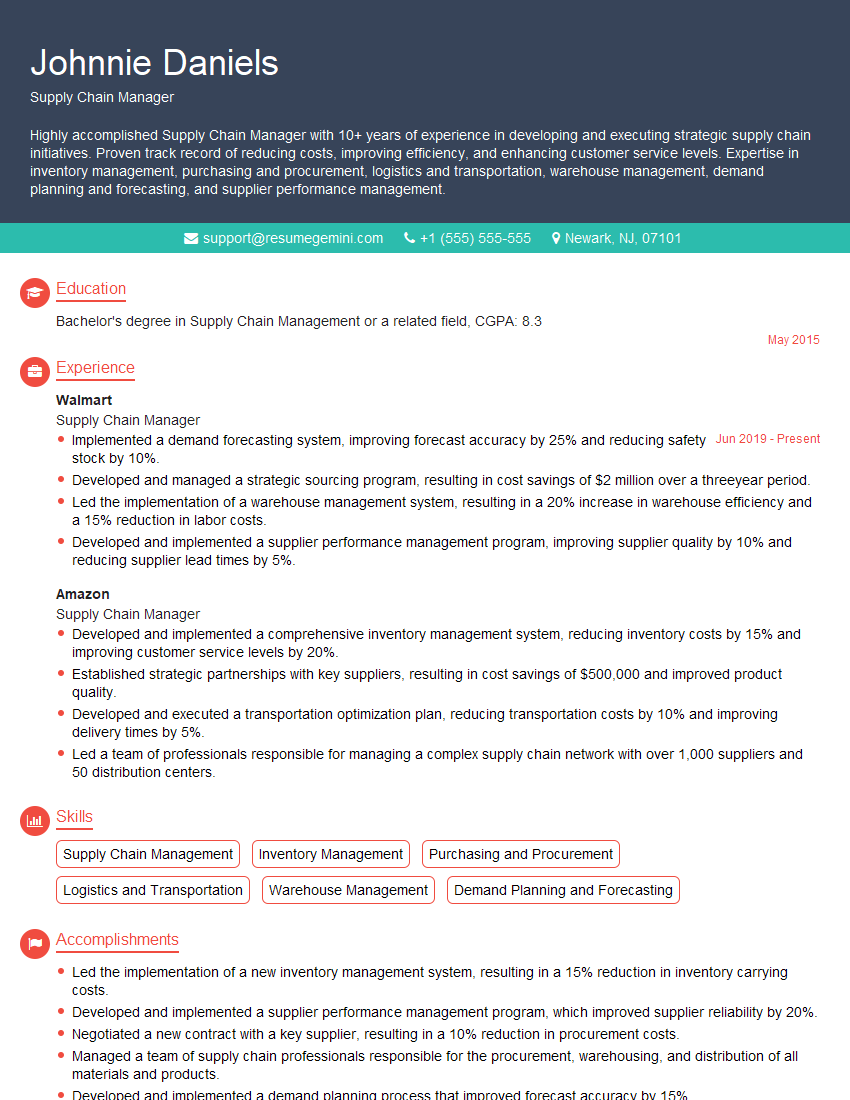
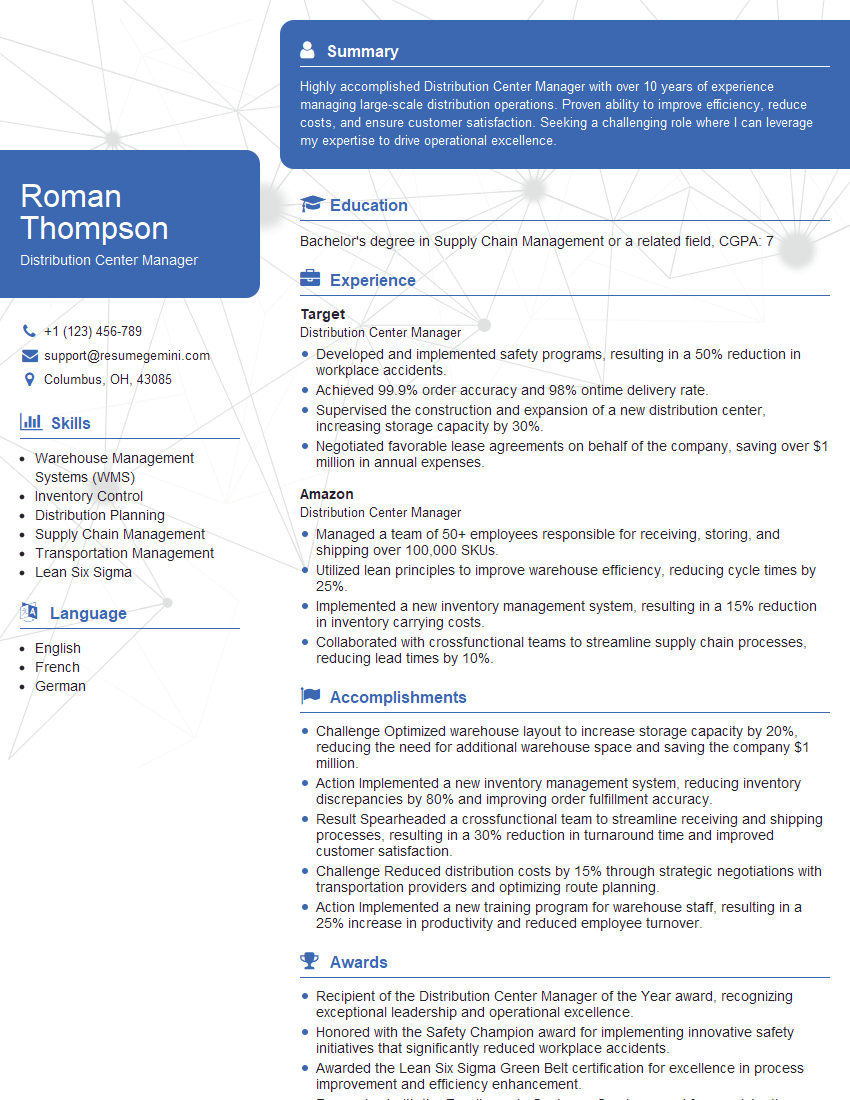
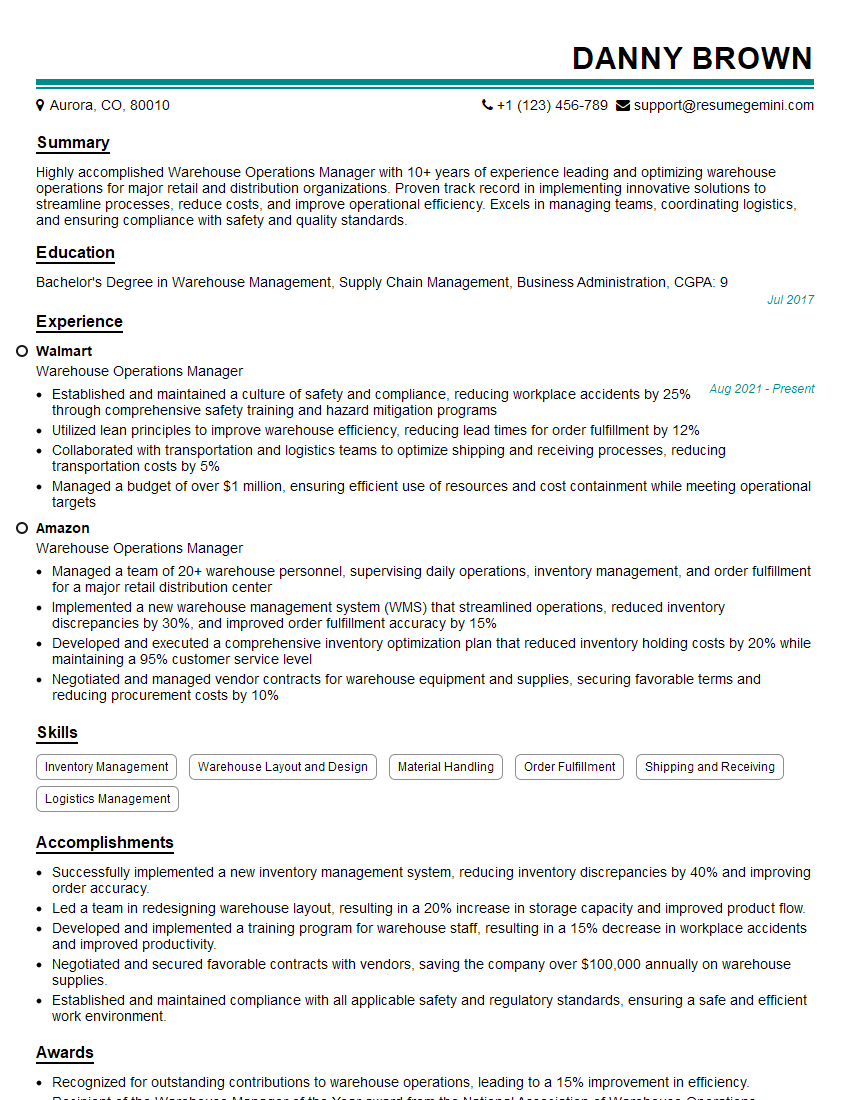
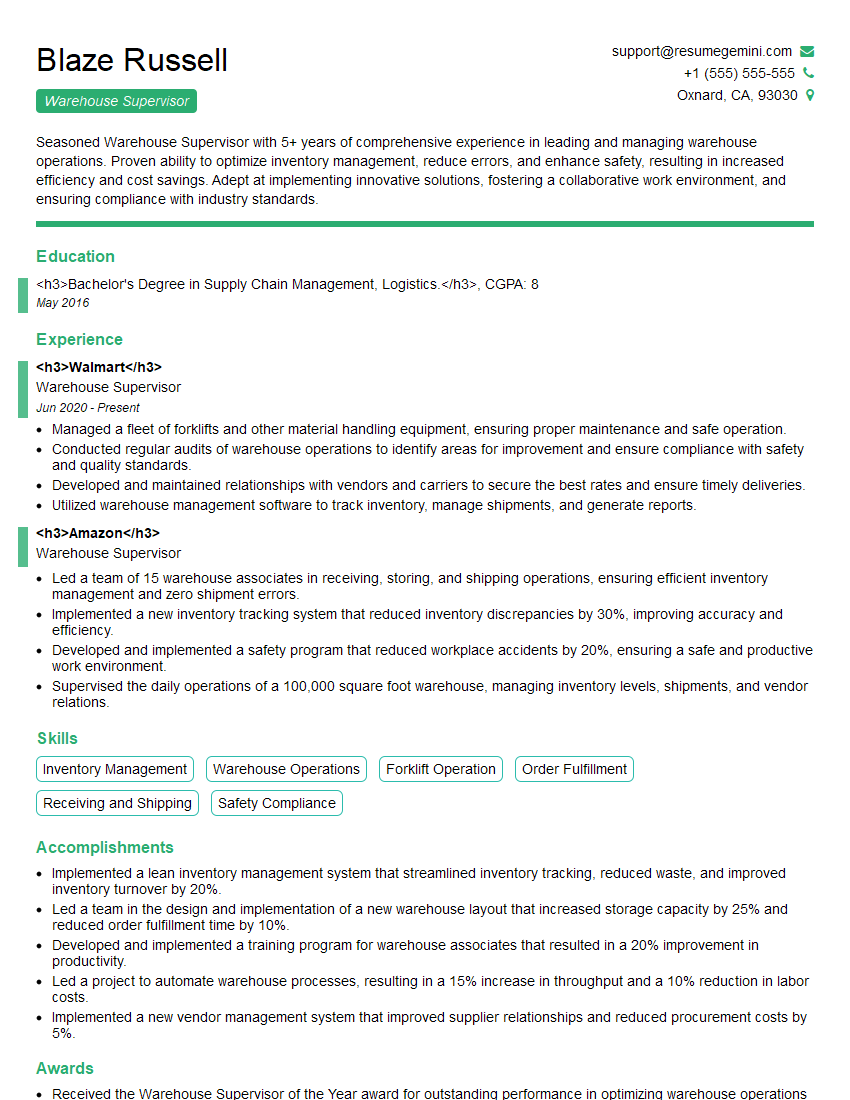
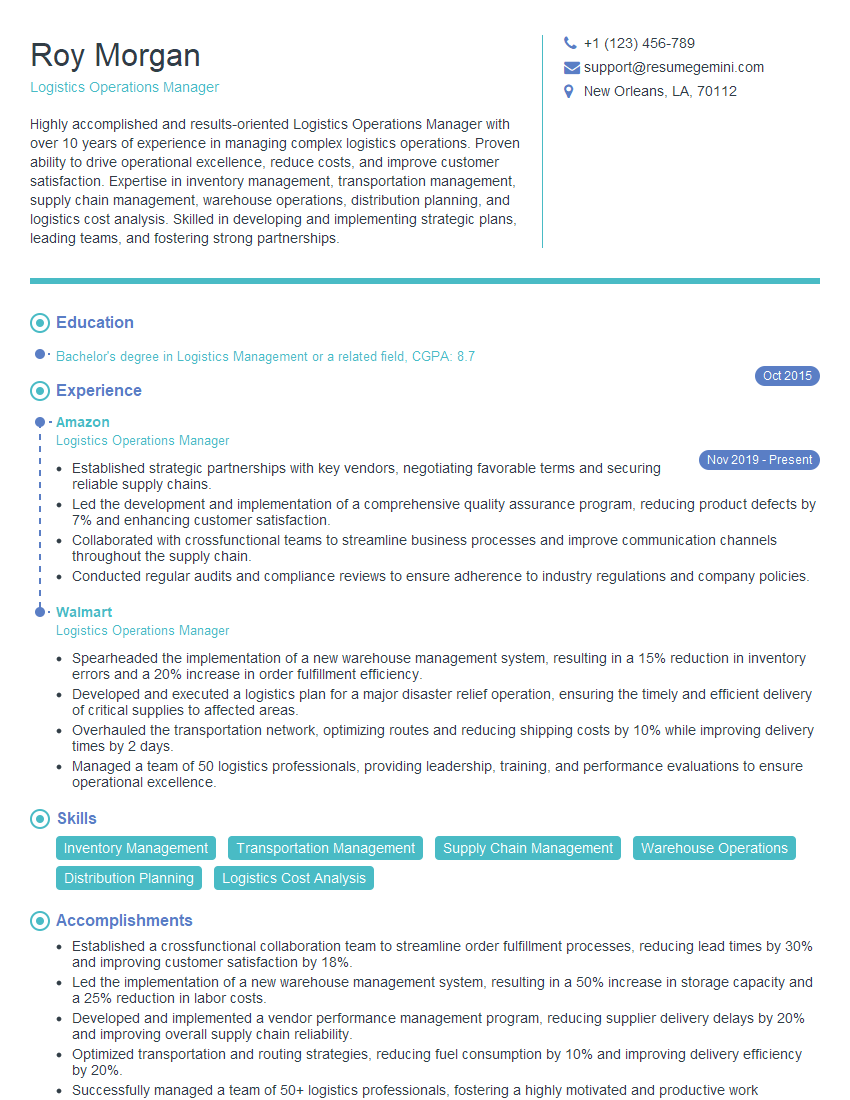
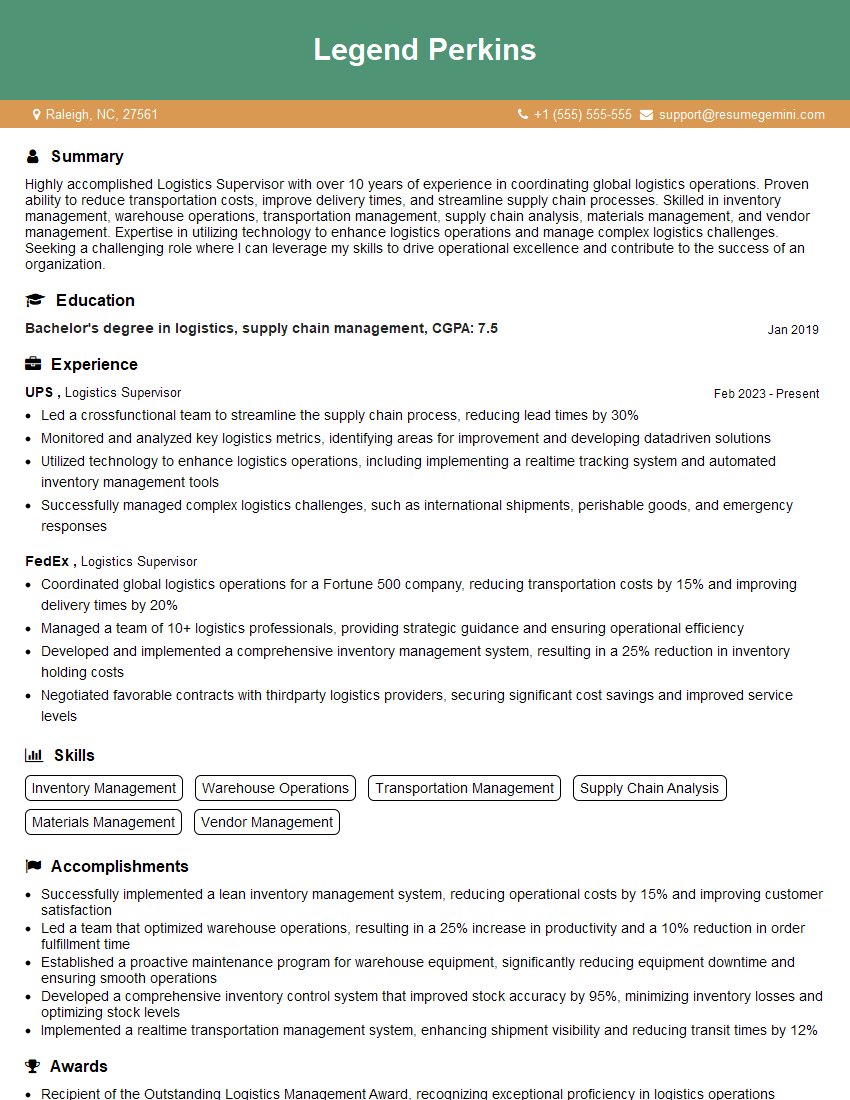
Mastering Order Picker Training opens doors to a fulfilling career with opportunities for advancement within logistics and warehousing. To maximize your job prospects, invest time in crafting an ATS-friendly resume that highlights your skills and experience. ResumeGemini is a trusted resource that can help you build a professional and impactful resume. They provide examples of resumes tailored to Order Picker Training, making the process easier and more efficient. Take the next step towards your career success today!
Explore more articles
Users Rating of Our Blogs
Share Your Experience
We value your feedback! Please rate our content and share your thoughts (optional).
What Readers Say About Our Blog
Really detailed insights and content, thank you for writing this detailed article.
IT gave me an insight and words to use and be able to think of examples