Unlock your full potential by mastering the most common Outside Plant Maintenance interview questions. This blog offers a deep dive into the critical topics, ensuring you’re not only prepared to answer but to excel. With these insights, you’ll approach your interview with clarity and confidence.
Questions Asked in Outside Plant Maintenance Interview
Q 1. Explain the difference between aerial and underground cable placement.
Aerial and underground cable placement represent two fundamentally different approaches to deploying telecommunication infrastructure. Aerial placement involves suspending cables on poles or towers, while underground placement involves burying cables beneath the surface. The choice between the two depends on several factors, including cost, terrain, environmental concerns, and the risk of damage.
- Aerial Placement: This method is generally less expensive upfront, especially in areas with readily available pole infrastructure. However, it’s more vulnerable to damage from severe weather (storms, ice, high winds), and requires more frequent maintenance and repairs. Think of it like clotheslines – easy to install but exposed to the elements.
- Underground Placement: This is a more robust and long-lasting solution, offering better protection against environmental hazards. However, it is significantly more expensive due to the excavation, trenching, and conduit installation required. It’s also more challenging to access for repairs, leading to potentially longer downtime in case of faults. Think of it as burying a treasure – safe and secure, but difficult to retrieve if needed.
For example, in densely populated urban areas where digging is difficult and expensive, aerial placement might be favored, except in areas with particularly severe weather events. Conversely, in rural areas with fewer obstacles and a need for greater protection from weather, underground placement is often the preferred method.
Q 2. Describe your experience with fiber optic splicing and fusion splicing techniques.
I have extensive experience in both fiber optic splicing and fusion splicing, two crucial techniques for connecting fiber optic cables. Fusion splicing is my preferred method for its superior performance and reliability.
- Fusion Splicing: This method uses an electric arc to melt the ends of two optical fibers together, creating a permanent, seamless connection. It results in minimal signal loss and high strength. The process involves precise fiber cleaving, alignment using a microscope, and precise arc application using a fusion splicer. It’s like welding two pieces of glass together, creating a nearly invisible join.
- Mechanical Splicing: This method uses mechanical connectors to join the fibers. While faster and easier, it usually results in higher signal loss and is less reliable over time compared to fusion splicing. I use this method sparingly, typically in situations where fusion splicing is impractical or time constraints are exceptionally tight. It’s more like connecting two pipes with a coupler – functional but with some loss.
My experience includes working with various types of fusion splicers from different manufacturers, troubleshooting connection issues, and ensuring consistent low loss performance. I’m proficient in documenting splice locations and characteristics to maintain accurate network records, essential for future maintenance and troubleshooting.
Q 3. How do you troubleshoot common OSP issues like cable cuts or fiber breaks?
Troubleshooting OSP issues requires a systematic approach. For cable cuts or fiber breaks, I typically follow these steps:
- Identify the affected area: This often involves using network monitoring tools to pinpoint the location of the outage or signal degradation. OTDR traces are invaluable here.
- Locate the physical cable fault: This might involve tracing the cable path, using a cable locator, or physically inspecting the area, potentially utilizing aerial lifts or excavation equipment.
- Assess the damage: Determine the extent of the damage, including the cause of the fault (e.g., rodent damage, digging, natural disaster). This helps in selecting the most appropriate repair technique.
- Repair or replace the damaged cable: This might involve splicing, patching, or replacing sections of the cable. Safety procedures must be strictly followed at all times.
- Test the repair: Use OTDR and other testing equipment to verify that the repair is successful and that the signal quality has been restored to the acceptable level.
- Document the repair: Create a detailed record of the fault, repair procedure, and any relevant information, ensuring the information is added to the network’s as-built drawings.
For example, if the OTDR shows a significant loss at a particular location, we can use a cable locator to pinpoint the exact spot along the cable route underground, allowing for more efficient excavation and repair.
Q 4. What safety procedures do you follow when working on energized lines or in confined spaces?
Safety is paramount in OSP maintenance. When working on energized lines or in confined spaces, I strictly adhere to all applicable safety regulations and company policies. These include, but are not limited to:
- Lockout/Tagout (LOTO): Always follow LOTO procedures to de-energize lines before working on them. This prevents accidental energization and ensures the safety of personnel.
- Personal Protective Equipment (PPE): Using appropriate PPE is mandatory, including safety glasses, gloves, hard hats, high-visibility clothing, and arc flash protection if working near energized equipment.
- Confined Space Entry Procedures: For confined spaces (e.g., manholes, vaults), I follow established procedures, including atmospheric testing, ventilation, and the use of safety harnesses and rescue equipment. This is crucial to prevent suffocation or exposure to hazardous materials.
- Grounding and Bonding: Proper grounding and bonding techniques are crucial to mitigate the risk of electrical shock or arc flash. I ensure that all metallic components are properly grounded and bonded before starting any work.
- Working at Heights: When working at heights, I use appropriate fall protection equipment, such as harnesses and safety lines. I also obtain the required training and certifications to perform work at heights safely.
Regular safety training and toolbox talks are also crucial components of my approach to maintain a safe work environment.
Q 5. Describe your experience with different types of cable (e.g., copper, fiber, coaxial).
My experience encompasses various cable types, each with its own characteristics and applications:
- Copper Cable: I’ve worked extensively with various types of copper cables, from twisted-pair for voice and data transmission to coaxial cables for video applications. Copper cables are still prevalent, particularly for legacy systems, though they are being progressively replaced by fiber.
- Fiber Optic Cable: This is my primary focus. I’m highly experienced in handling different types of fiber optic cables, including single-mode and multi-mode, understanding their properties and applications. I’m familiar with different cable constructions and their impact on signal transmission.
- Coaxial Cable: I have worked with coaxial cables primarily in video applications, understanding their impedance characteristics and the importance of proper termination to avoid signal reflections. The use of coaxial cables is decreasing as fiber optic technology becomes more prevalent.
Understanding the strengths and weaknesses of each cable type allows me to choose the most appropriate solution for a given application and anticipate potential issues that could arise from using a particular cable in a specific environment.
Q 6. What are your skills in using OTDR and other testing equipment?
I’m highly proficient in using OTDR (Optical Time-Domain Reflectometer) and other testing equipment to diagnose and troubleshoot OSP networks. OTDRs are indispensable for identifying fiber breaks, attenuation, and other signal impairments. I’m also experienced with:
- Optical Power Meters: These measure the optical power levels in a fiber optic link, helping to identify signal loss and ensure proper transmission.
- Fiber Optic Light Sources: Used in conjunction with power meters to test fiber optic links.
- Cable Locators: For locating underground cables to prevent damage during excavation.
- TDR (Time Domain Reflectometry): For testing copper cables to identify shorts, opens, and other faults.
I understand how to interpret the data provided by these instruments, and I can use this information to efficiently locate and repair faults. My expertise allows me to accurately diagnose the nature and location of issues, minimizing downtime and maximizing efficiency in the repair process.
Q 7. Explain the importance of proper grounding and bonding in OSP maintenance.
Proper grounding and bonding are critical for safety and reliability in OSP maintenance. Grounding provides a low-impedance path for fault currents, protecting equipment and personnel from electrical hazards. Bonding ensures that metallic components are at the same electrical potential, preventing voltage differences that could lead to dangerous arcing or sparking.
- Grounding: This involves connecting metallic parts of the OSP infrastructure to the earth, providing a safe path for fault currents. Inadequate grounding can lead to electrical shocks, equipment damage, and potentially dangerous voltage buildups.
- Bonding: This involves connecting multiple metallic components together to ensure they are at the same electrical potential. This is essential to prevent voltage differences that could cause arcing or sparking. Improper bonding can lead to dangerous electrical discharges.
For example, grounding and bonding are crucial when installing new cables or performing maintenance on existing infrastructure. Failure to properly ground and bond can result in serious safety hazards and damage to the network. A well-grounded and bonded system significantly reduces the risk of electrical shocks, equipment damage, and service interruptions.
Q 8. How do you manage and document OSP work orders and repairs?
Managing and documenting OSP work orders and repairs involves a systematic approach to ensure efficiency and accountability. We typically use a Computerized Maintenance Management System (CMMS). This system allows for the creation, assignment, tracking, and closure of work orders. Each work order includes detailed information like location, description of the problem, required materials, assigned technician, priority level, and scheduled completion time.
Upon completion of a repair, the technician updates the work order with details of the work performed, materials used, and any relevant notes. Digital photography and even short video clips are often included to document the before-and-after condition of the repair. This detailed documentation serves multiple purposes: it provides a historical record for future reference, aids in preventative maintenance planning, and allows for performance analysis and improvement. For example, if we consistently see a high volume of repairs related to a specific type of cable in a certain geographic area, that flags a potential systemic issue that needs addressing. We also maintain a robust database of as-built drawings, constantly updated to reflect changes made during maintenance activities. This ensures accurate records are available should future work be required.
Q 9. What are your experience with different types of cable terminations?
My experience encompasses a wide range of cable terminations, including those for fiber optic and copper cables. For fiber optics, I’m proficient in various fusion splicing techniques, mechanical splicing, and the use of different connector types like SC, LC, ST, and MTRJ connectors. Each connector type has its strengths and weaknesses, and I select the appropriate one based on the application requirements, such as bandwidth needs and environmental conditions. For copper cables, I’m experienced with various techniques, including the use of compression connectors (like RJ45) and punch-down blocks for structured cabling. I’m also familiar with different types of cable such as twisted pair, coaxial, and shielded twisted pair and know how to terminate each properly.
I’ve also worked extensively on terminating cables in various environments, from underground vaults to aerial pedestals, which requires an understanding of grounding, bonding, and protection measures to avoid signal degradation or equipment damage. A recent project involved terminating a high-count fiber optic cable in a densely populated area. Careful planning and attention to detail were crucial to ensure the integrity of the connection and minimize disruption to service.
Q 10. Describe your experience with preventative maintenance of OSP infrastructure.
Preventative maintenance of OSP infrastructure is crucial for minimizing outages and extending the lifespan of equipment. Our preventative maintenance program follows a scheduled approach, combining routine inspections with proactive measures. Inspections involve visually checking for physical damage to cables, conduits, and other equipment. This includes looking for things like rodent damage, corrosion, and signs of stress on cables.
Proactive measures include tasks such as cleaning equipment, tightening connections, testing cable integrity, and performing preventative testing on equipment such as amplifiers and repeaters. We also employ predictive maintenance techniques, leveraging data from CMMS to identify patterns and predict potential issues before they become significant problems. For instance, by monitoring the temperature of certain equipment, we can identify potential overheating issues before they lead to equipment failure. Regular testing of fiber optic cables using Optical Time Domain Reflectometers (OTDRs) allows us to detect subtle changes in signal strength or attenuation, which can help in identifying potential problems before they cause service disruptions. We meticulously document all preventative maintenance activities and use this data to refine our maintenance schedules and strategies.
Q 11. How familiar are you with various types of cable connectors?
My familiarity with various cable connectors is extensive. For fiber optics, as mentioned, I’m experienced with SC, LC, ST, MTRJ, and other connector types. I understand the differences in their physical characteristics, insertion loss, and applications. For example, LC connectors are preferred for their smaller size and high density applications, while SC connectors are more robust and widely used.
For copper cables, I work with RJ45 connectors for Ethernet, BNC connectors for coaxial cables, and various types of connectors for specialized applications. The choice of connector depends heavily on the type of cable, the intended application, and the environmental conditions. Proper crimping and termination techniques are crucial to ensure reliable connections, which I meticulously follow. A poor connection can easily lead to signal degradation or complete loss of service.
Q 12. Explain your knowledge of different types of splicing techniques.
I’m proficient in various splicing techniques for both fiber optic and copper cables. For fiber optics, fusion splicing is the preferred method for achieving the highest quality connection with minimal signal loss. This involves precisely aligning the fiber ends and then fusing them together using an electric arc. Mechanical splicing offers a faster, less expensive alternative, although typically with slightly higher signal loss. The choice depends on the application and the acceptable level of signal loss. For copper cables, I use different techniques depending on the type of cable. For example, twisting and soldering are commonly used for smaller gauge wires while compression connectors are used for larger cables.
In each case, proper preparation of the cable ends is crucial to ensuring a successful splice. This includes stripping the cable sheath and the outer jacket without damaging the individual fibers or conductors. A correctly performed splice is visually inspected and tested with appropriate equipment to verify continuity and quality. Proper documentation is essential for traceability and future maintenance.
Q 13. How do you prioritize tasks in a high-pressure OSP environment?
Prioritizing tasks in a high-pressure OSP environment requires a clear understanding of the impact of each task on service availability and overall network performance. We use a combination of factors to establish priorities. First, we consider the severity of the issue. An outage affecting many customers takes precedence over a minor issue. Second, we consider the potential impact. A potential major outage warrants immediate attention while less critical issues can be scheduled for later. Third, we assess the resources required to complete the task. Tasks requiring specialized equipment or skills might need to be scheduled accordingly.
We utilize a ticketing system that assigns priority levels (e.g., critical, high, medium, low) based on the factors described above. The system also allows for real-time tracking of the work being done, so we can quickly adapt our priorities if unexpected problems arise. Clear communication among team members is vital to ensure everyone is aware of the priorities and can coordinate their efforts efficiently.
Q 14. Describe a time you had to solve a complex OSP problem.
One challenging situation involved a significant fiber optic cable cut that impacted a large number of customers. Initial diagnostics pointed to a localized issue, but repeated repairs kept failing. The problem was compounded by severe weather conditions, making access to the affected area difficult. We initially focused on the area initially indicated by the fault, but repeated failures suggested the problem was not localized.
I decided to shift our approach and thoroughly investigate the entire cable run. This meant going beyond the initial area of fault and carefully examining the entire path of the fiber. Through methodical inspection and by utilizing an OTDR, we discovered a second, previously unknown, cut some distance away from the initial reported location. This secondary cut was in a very difficult-to-reach area, requiring specialized equipment and expertise to access and repair. By correctly identifying the secondary cut and repairing both, we restored service to all affected customers. This situation highlighted the importance of thorough investigation, methodical troubleshooting, and adapting to unexpected complications. The use of advanced tools such as OTDR proved crucial to identify the elusive problem.
Q 15. What software or tools do you use to manage OSP data?
Managing OSP (Outside Plant) data requires robust software capable of handling large datasets, integrating with various systems, and providing visualization tools. I’ve extensively used several systems, including GIS (Geographic Information Systems) software like ArcGIS and QGIS, coupled with dedicated OSP management platforms. These platforms usually incorporate features like:
- Network Mapping: Visualizing the entire network, including cable routes, locations of equipment, and connectivity details.
- Asset Management: Tracking inventory, maintenance schedules, and the lifecycle of various OSP components (cables, conduits, manholes).
- Work Order Management: Creating, assigning, and tracking work orders for maintenance, repairs, and new installations.
- Reporting and Analytics: Generating reports on network performance, maintenance costs, and other key metrics.
For example, in a recent project, we used ArcGIS to map the entire fiber optic network of a large municipality, allowing us to quickly identify potential issues and plan efficient maintenance routes. This GIS integration with the OSP management system enabled us to streamline our processes significantly.
Career Expert Tips:
- Ace those interviews! Prepare effectively by reviewing the Top 50 Most Common Interview Questions on ResumeGemini.
- Navigate your job search with confidence! Explore a wide range of Career Tips on ResumeGemini. Learn about common challenges and recommendations to overcome them.
- Craft the perfect resume! Master the Art of Resume Writing with ResumeGemini’s guide. Showcase your unique qualifications and achievements effectively.
- Don’t miss out on holiday savings! Build your dream resume with ResumeGemini’s ATS optimized templates.
Q 16. How familiar are you with industry standards and regulations (e.g., TIA, ANSI)?
Industry standards and regulations are fundamental to OSP work. I’m highly familiar with TIA (Telecommunications Industry Association) and ANSI (American National Standards Institute) standards, particularly those related to cable specifications, installation practices, and safety. I understand the importance of adhering to these guidelines to ensure network reliability, safety, and compliance.
For instance, TIA-568 standards for cabling systems and ANSI/TIA-758 standards for fiber optic cabling are crucial for ensuring consistent quality and performance across the network. These standards guide our selection of materials, cable routing, and termination techniques. We also follow all relevant local and national regulations regarding underground installations, aerial placements, and safety procedures. Non-compliance can lead to costly repairs and safety hazards. Understanding and applying these standards is a core part of my daily work.
Q 17. Explain your experience working with underground vaults and manholes.
I have extensive experience working with underground vaults and manholes, encompassing inspection, maintenance, and repair. This involves understanding the potential hazards associated with confined spaces, working with potentially hazardous materials (e.g., hydrogen sulfide gas), and using specialized equipment.
My experience includes: regular inspections for structural integrity, water infiltration, and cable condition; clearing debris and maintaining ventilation; performing cable splicing and termination within the vaults; and coordinating with other crews for repairs or upgrades. Safety is paramount – we always utilize confined space entry procedures, gas detection equipment, and proper personal protective equipment (PPE). I’ve also been involved in the planning and implementation of upgrades to aging infrastructure, which requires meticulous planning and coordination to minimize service disruption.
One challenging project involved repairing a flooded manhole during a heavy rainstorm. We had to work quickly and safely to clear the water, assess the damage, and restore service, demonstrating the importance of quick response and skillful problem-solving in these situations.
Q 18. Describe your experience with aerial cable placement and repair.
Aerial cable placement and repair demands a thorough understanding of safety procedures, rigging techniques, and the properties of various cable types. I’ve been involved in numerous projects ranging from installing new fiber optic cables to repairing damaged aerial lines. This includes utilizing appropriate climbing and safety equipment, utilizing proper tensioning techniques, and adhering to stringent safety regulations.
My experience includes: planning cable routes, selecting appropriate hardware (e.g., clamps, lashing wire), and ensuring proper grounding. I’m proficient in using various tools, including cable pullers, tension meters, and splicing equipment. Repair work often involves troubleshooting damaged cables, identifying fault locations, and performing repairs while working at heights. Safety is paramount in this work, and regular training is essential to maintain proficiency in safe working practices. For example, I’ve had to use specialized aerial lifts to reach high-tension lines, which requires detailed planning and precise execution.
Q 19. How do you ensure the safety and integrity of OSP infrastructure?
Ensuring the safety and integrity of OSP infrastructure is a continuous process that requires a multi-faceted approach. This involves a combination of proactive measures, regular inspections, and adherence to safety regulations.
- Regular Inspections: Routine inspections of cables, conduits, manholes, and other infrastructure components are crucial to identify potential issues before they escalate. This can prevent costly repairs and ensure continued service reliability.
- Preventive Maintenance: A schedule of preventive maintenance tasks, such as cleaning and inspecting manholes, helps extend the lifespan of infrastructure and reduce the likelihood of failures.
- Safety Training: Regular safety training for all personnel involved in OSP work is crucial to prevent accidents and ensure a safe work environment. This includes training on confined space entry, working at heights, and the proper handling of tools and equipment.
- Emergency Response Planning: Having a robust emergency response plan in place is critical to address unforeseen events, such as cable damage caused by severe weather. This involves having backup systems and procedures to quickly restore service.
- Adherence to Standards: Rigorous adherence to industry standards and regulations ensures the infrastructure meets the required safety and performance standards.
For example, we implemented a system of GPS-tracked inspections to ensure complete coverage and prompt identification of potential problems. This allowed us to proactively address issues and minimize downtime.
Q 20. What is your experience with various types of cable pulling equipment?
I’m experienced with a variety of cable pulling equipment, ranging from hand-operated capstans to motorized cable pullers and winches. The selection of equipment depends on the cable type, distance, and environmental conditions. Understanding the capabilities and limitations of each type is critical for safe and efficient cable installation.
- Hand-Operated Capstans: Suitable for shorter distances and smaller cables.
- Motorized Cable Pullers: Used for longer distances and larger cables, offering greater pulling force and speed.
- Winches: Often used in conjunction with motorized pullers for added control and pulling capacity.
- Lubricants and Pulling Soaps: Essential for reducing friction and protecting cables during pulling operations.
For instance, on a recent project involving a long underground cable pull, we utilized a motorized cable puller equipped with a tension meter to monitor the force applied to the cable and prevent damage. Careful planning and selection of the right equipment is key to successful cable pulling operations and prevents damage to both equipment and the cables themselves.
Q 21. Explain your knowledge of different types of cable trenching methods.
Various trenching methods are employed depending on the soil conditions, project scale, and environmental considerations. The selection of the right method is crucial for both efficiency and safety.
- Hand Trenching: Suitable for small-scale projects and areas with limited access.
- Trencher (Chain Trenchers): Efficient for longer trenches in relatively soft soil. They offer speed and precision.
- Hydraulic Excavators (Backhoes): Versatile and powerful, suitable for a wide range of soil types, but more disruptive to surrounding areas.
- Directional Drilling: Used to install cables under roads, waterways, or other obstacles without extensive open trenching. This reduces environmental impact and disruption.
- Plowing: A technique used for shallow burial depths, typically employed for smaller cables.
In one instance, we used directional drilling to install fiber optic cable under a busy highway, minimizing traffic disruption and maintaining the integrity of the road surface. Choosing the appropriate technique requires a thorough understanding of the site conditions and a consideration of the potential environmental and safety implications of each method.
Q 22. How do you handle conflicts or disagreements with other team members on an OSP job?
Conflict resolution is crucial in any team, especially in the fast-paced environment of OSP maintenance. My approach involves prioritizing open communication and collaborative problem-solving. If a disagreement arises, I begin by actively listening to understand each team member’s perspective. We then collaboratively identify the root cause of the conflict, focusing on the issue, not the personalities involved. This often involves brainstorming potential solutions together, weighing the pros and cons of each, and ultimately reaching a consensus that aligns with project goals and safety regulations. For example, during a fiber optic splice job, if a technician disagreed with my proposed splicing method, I would explain my reasoning, highlighting the benefits regarding speed and minimizing potential signal loss. We’d discuss their concerns, perhaps identifying a slight modification that addressed their concerns without compromising quality. If a resolution isn’t immediately reached, we document the disagreement, propose a path forward, and then revisit it later with fresh perspectives.
Q 23. What is your experience with using GIS mapping systems for OSP management?
I have extensive experience leveraging GIS mapping systems for OSP management, specifically ArcGIS and Google Earth. I utilize these systems for several critical tasks: planning cable routes, identifying underground utilities to prevent damage during excavation, tracking the location and status of assets (e.g., manholes, fiber closures), creating ‘as-built’ drawings after completing projects, and facilitating efficient troubleshooting of network issues. For instance, when troubleshooting an outage, I can quickly visualize the affected cable segment on the GIS map, identify nearby manholes for access, and review the as-built drawings to pinpoint the exact location of the splice or cable fault. My proficiency extends to incorporating data from various sources, such as field surveys and existing network databases, into the GIS system for a comprehensive overview of the OSP network.
Q 24. Describe your understanding of different types of cable fault location techniques.
Understanding cable fault location techniques is vital for efficient OSP maintenance. I’m proficient in several methods, each suited to different situations. Time Domain Reflectometry (TDR) is a common technique that uses pulses of electrical signals to pinpoint the location of shorts or opens in metallic cables. Optical Time Domain Reflectometry (OTDR) does the same for fiber optic cables, measuring the backscattered light to detect faults. Signal tracing, involves manually tracing signals through the cable network, often utilizing specialized equipment to pinpoint the faulty segment. Lastly, visual inspection, while seemingly simple, remains a crucial technique for identifying physical damage to cables or hardware. For example, when a customer experiences a service disruption, I would initially use OTDR to locate a potential fiber cut on an aerial cable route. If the OTDR shows no fault, I’d then transition to a visual inspection of the aerial cable to identify physical damage from environmental factors.
Q 25. Explain your experience with maintaining and repairing different types of OSP hardware.
My experience encompasses maintaining and repairing a wide range of OSP hardware, including: fiber optic closures, splice trays, pedestals, handholes, aerial cable terminations, underground cable vaults, and various types of grounding equipment. I’m familiar with different types of connectors and terminations for both copper and fiber optic cables, and I am adept at identifying and addressing issues such as water ingress, loose connections, and corrosion. For example, I’ve successfully repaired a flooded underground vault by removing the water, cleaning and drying the equipment, conducting thorough testing, and then resealing the vault to prevent future water infiltration. This involved coordinating with other teams to ensure minimal service disruption and adherence to all safety protocols.
Q 26. What is your experience with working with different types of OSP documentation?
OSP documentation is critical for efficient network management. I have extensive experience working with various documentation types, including: as-built drawings (illustrating the actual physical layout of the network), network schematics (showing the logical connections between network components), cable records (detailing cable specifications, routes, and splicing points), and maintenance logs (recording repairs, upgrades and preventative maintenance activities). My experience includes utilizing both paper-based and digital documentation systems. I am adept at interpreting these documents to diagnose faults and understand the network’s historical changes. For instance, I recently used old as-built drawings along with a current GIS map to pinpoint the location of an old, undocumented fiber splice that was contributing to network signal degradation. This allowed for a targeted repair, saving considerable time and resources.
Q 27. How do you stay updated on the latest OSP technologies and industry best practices?
Staying current in the ever-evolving OSP field requires a proactive approach. I regularly attend industry conferences and webinars, such as those offered by organizations like TIA and BICSI. I actively participate in professional organizations relevant to OSP maintenance, such as IEEE Communications Society, to network with peers and learn about the newest technologies and best practices. I subscribe to relevant industry journals and publications, and frequently explore online resources and training modules to expand my knowledge in areas such as new fiber optic technologies, cable management techniques and updated safety regulations. I also proactively seek out training opportunities to keep my certifications up to date, ensuring my skills remain at the cutting edge of the industry.
Q 28. Describe your experience with handling emergency OSP repairs.
Handling emergency OSP repairs requires a calm and systematic approach. My experience includes responding to various emergencies, such as major cable cuts, equipment failures, and severe weather damage affecting network infrastructure. My immediate response involves assessing the situation, prioritizing safety for myself and the public, and then quickly determining the extent of the damage. This often involves collaborating with dispatchers, other field teams, and potentially law enforcement to ensure coordinated efforts and minimize service disruption. Once the initial assessment is done, I follow established procedures to restore service as quickly and efficiently as possible, always adhering to safety standards. One example involved responding to a major fiber cut caused by a traffic accident. Working swiftly and coordinating with emergency services and the network operations center, I was able to restore service to affected customers within hours, minimizing the impact on their lives and businesses.
Key Topics to Learn for Outside Plant Maintenance Interview
- Fiber Optics: Understanding fiber optic cable installation, splicing, testing, and troubleshooting. Practical application includes identifying and resolving signal loss issues.
- Copper Cable Maintenance: Knowledge of different types of copper cabling, testing methods (e.g., TDR), and repair techniques. Practical application involves diagnosing and fixing faults in existing copper infrastructure.
- Network Infrastructure: Familiarity with network topologies, protocols, and hardware components within the outside plant environment. Practical application includes understanding the impact of cable faults on network performance.
- Safety Procedures and Regulations: Thorough understanding of OSHA regulations, safe digging practices, and working at heights. Practical application involves ensuring a safe working environment and adhering to all safety protocols.
- Preventive Maintenance and Inspection: Knowledge of routine inspection procedures, preventative maintenance schedules, and predictive maintenance techniques. Practical application includes identifying potential problems before they lead to outages.
- Troubleshooting and Repair Techniques: Ability to diagnose and resolve problems related to cable damage, equipment malfunctions, and environmental factors. Practical application involves effectively utilizing testing equipment and applying appropriate repair strategies.
- Documentation and Reporting: Understanding the importance of accurate record-keeping, maintenance logs, and reporting procedures. Practical application includes maintaining clear and concise documentation of all work performed.
- Emerging Technologies: Awareness of advancements in outside plant technologies, such as smart grids and network monitoring systems. This demonstrates a proactive approach to professional development.
Next Steps
Mastering Outside Plant Maintenance opens doors to a rewarding career with excellent growth potential. As the demand for reliable communication networks increases, skilled technicians are highly sought after. To maximize your job prospects, it’s crucial to create an ATS-friendly resume that showcases your expertise effectively. ResumeGemini is a trusted resource to help you build a professional and impactful resume that highlights your skills and experience in the best possible light. Examples of resumes tailored to Outside Plant Maintenance are available within ResumeGemini to guide your creation.
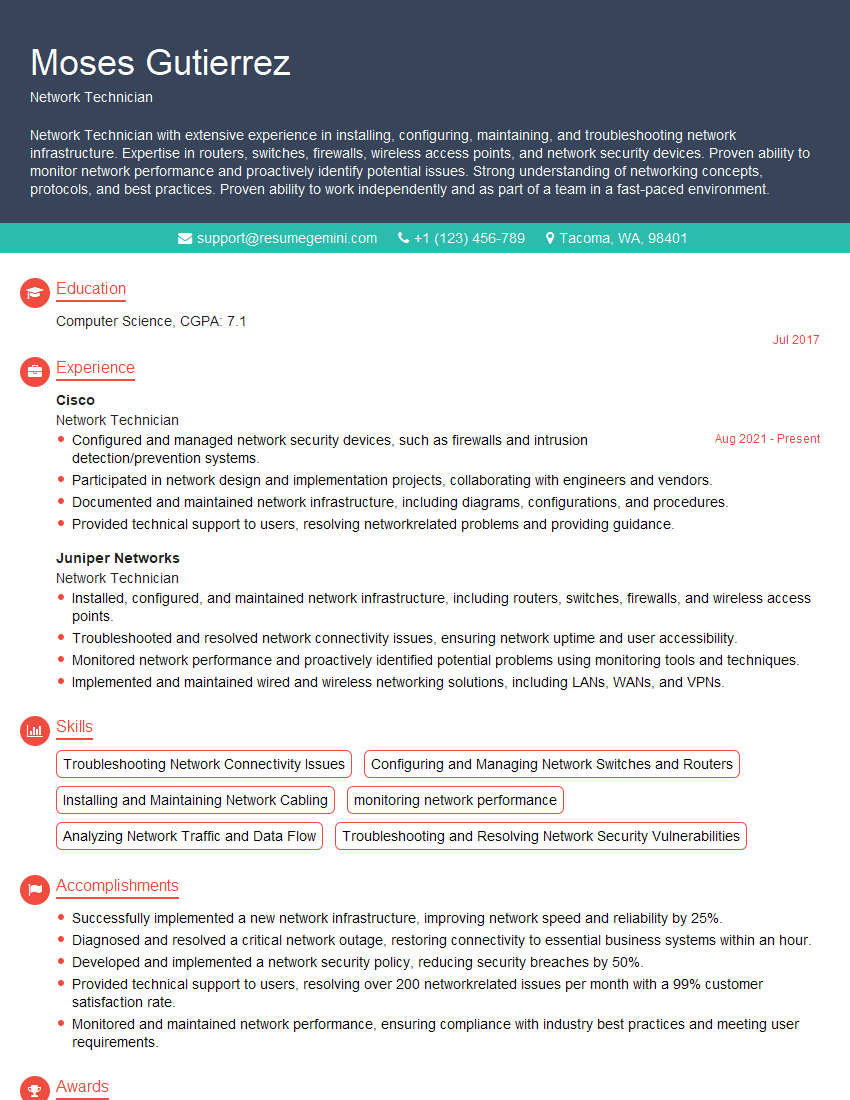
Network Technician Resume Sample
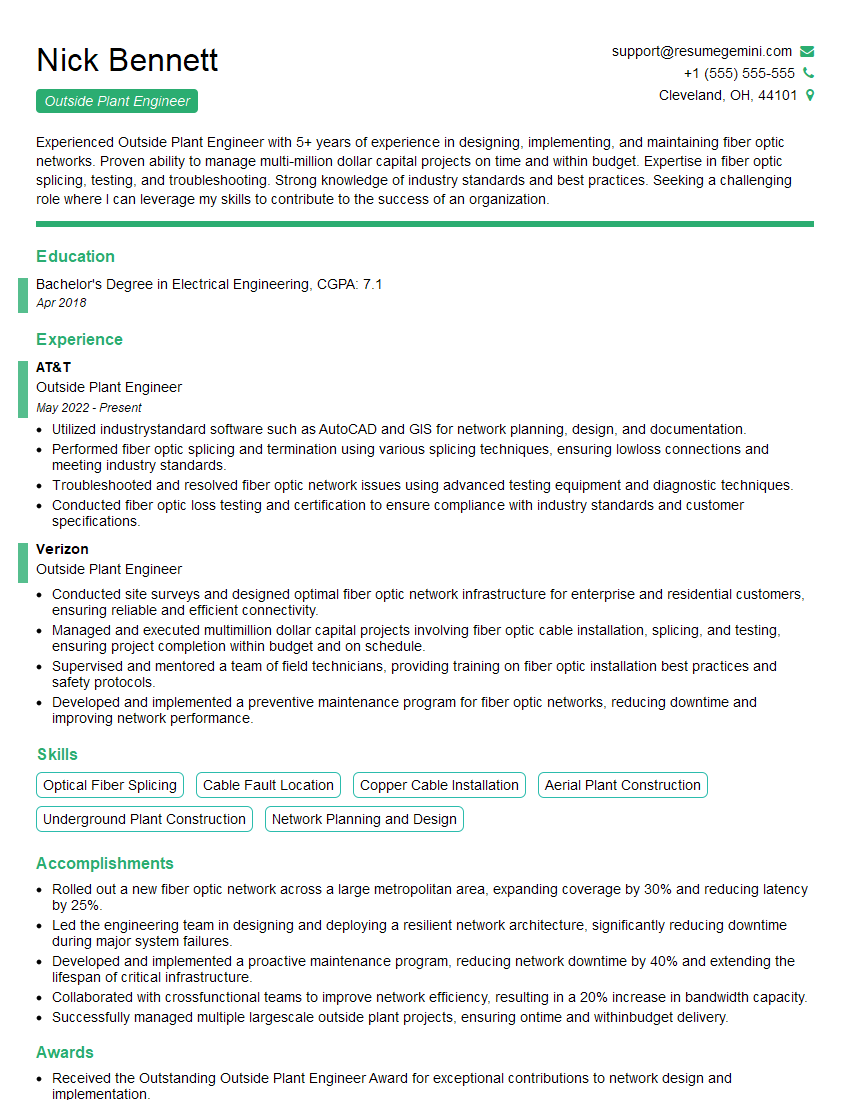
Outside Plant Engineer Resume Sample
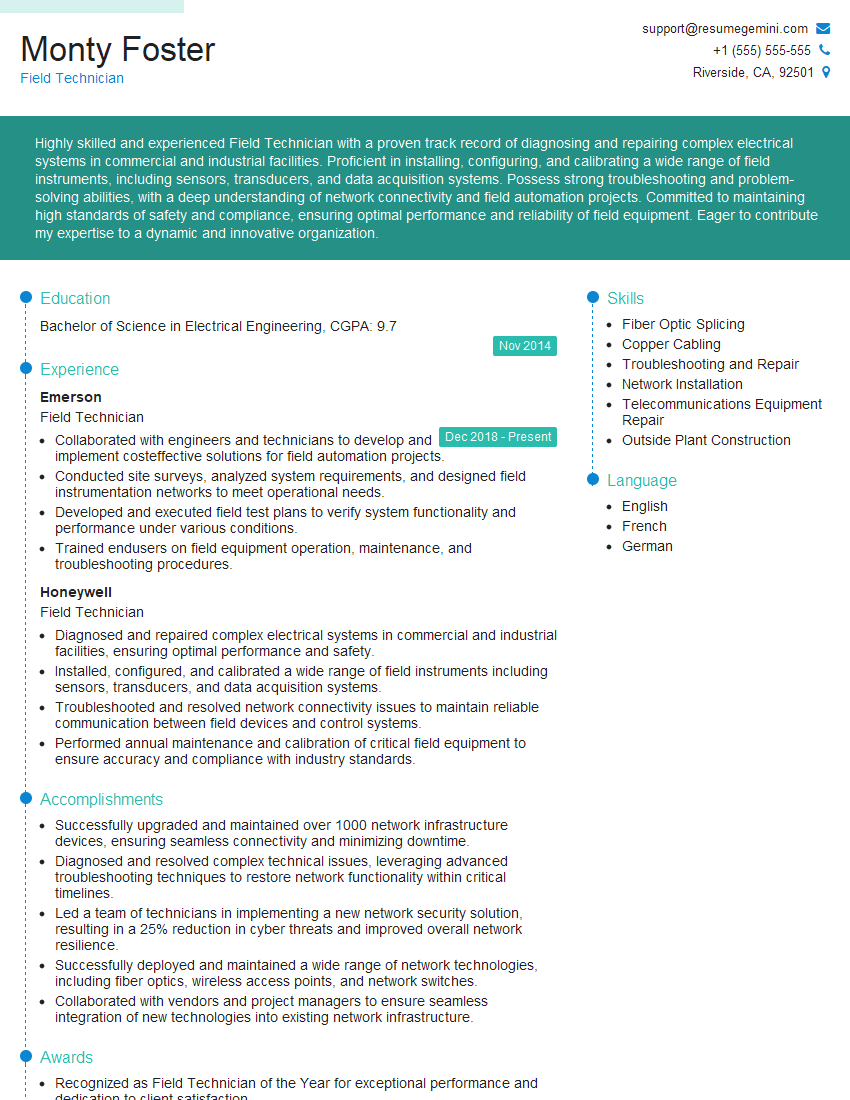
Field Technician Resume Sample
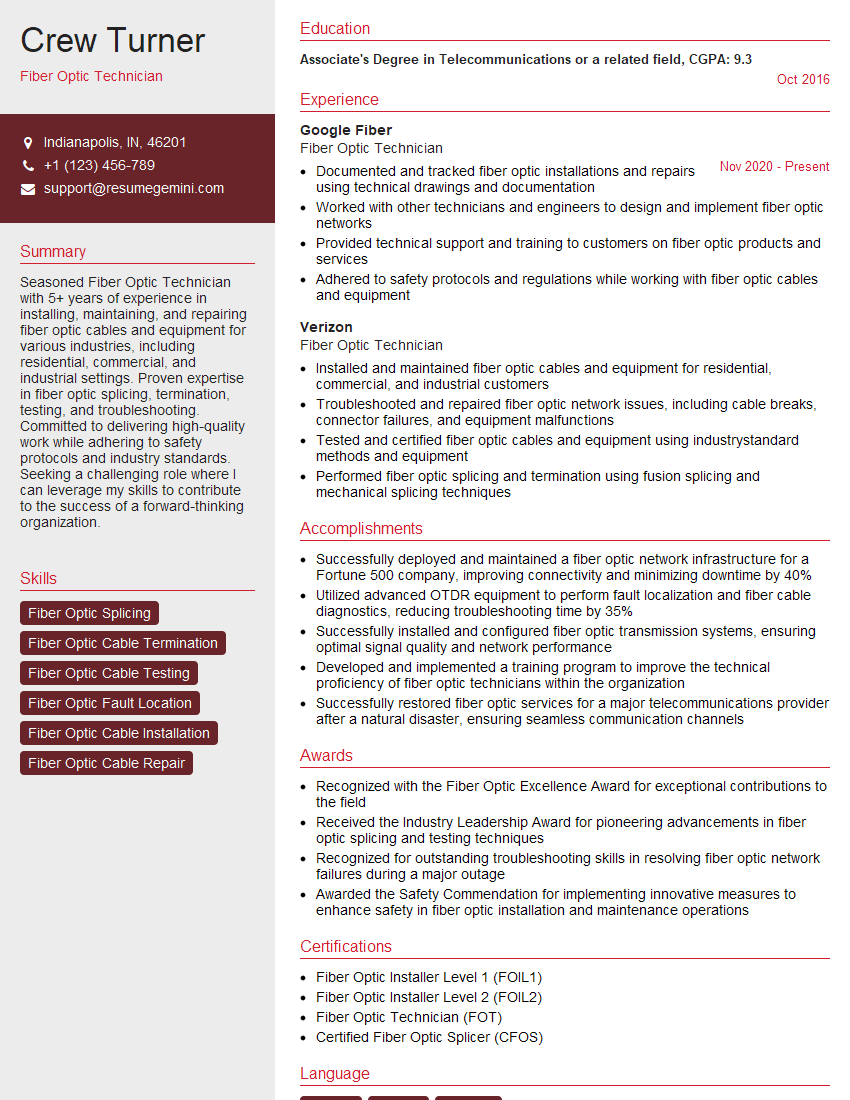
Fiber Optic Technician Resume Sample
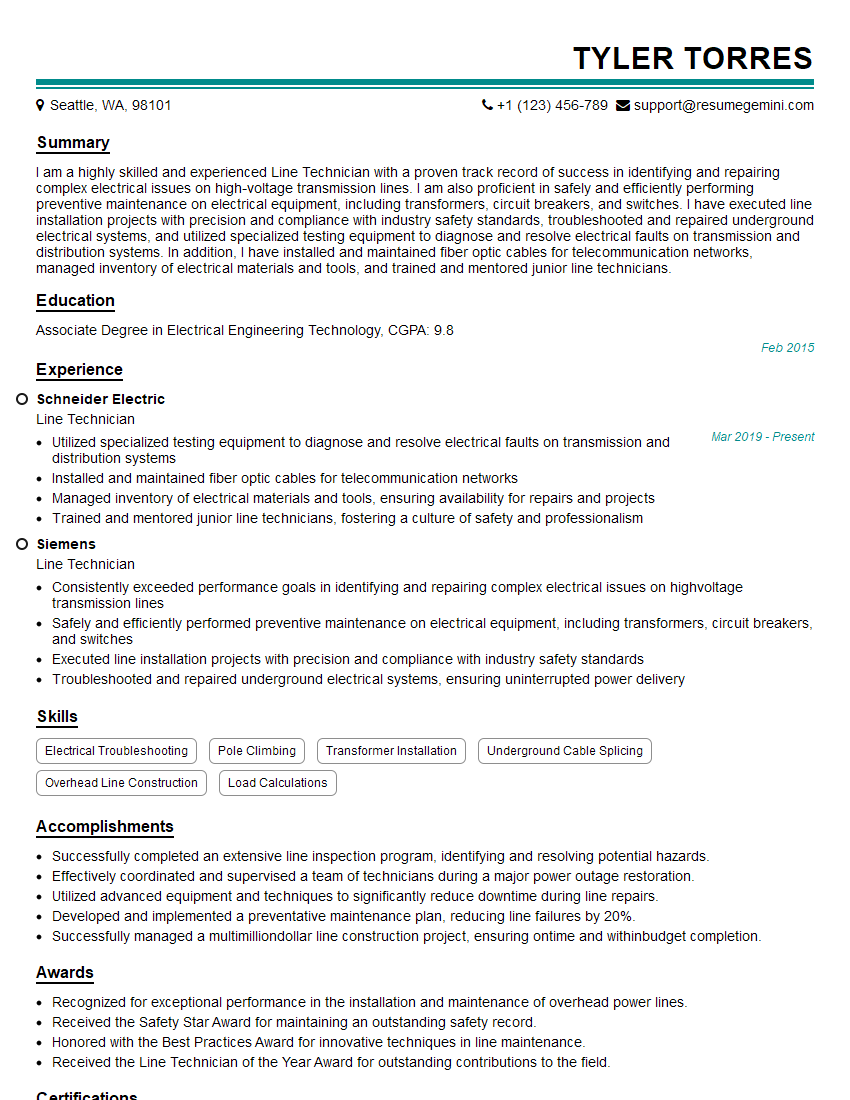
Line Technician Resume Sample
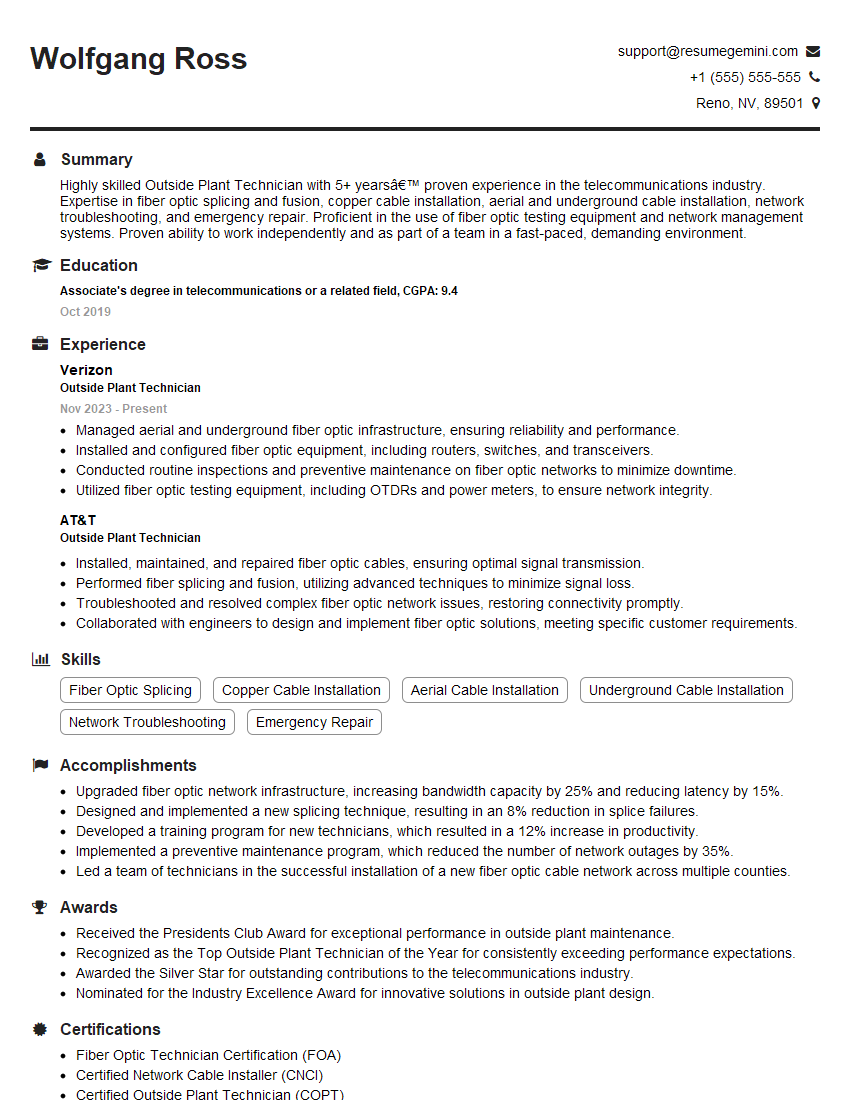
Outside Plant Technician Resume Sample
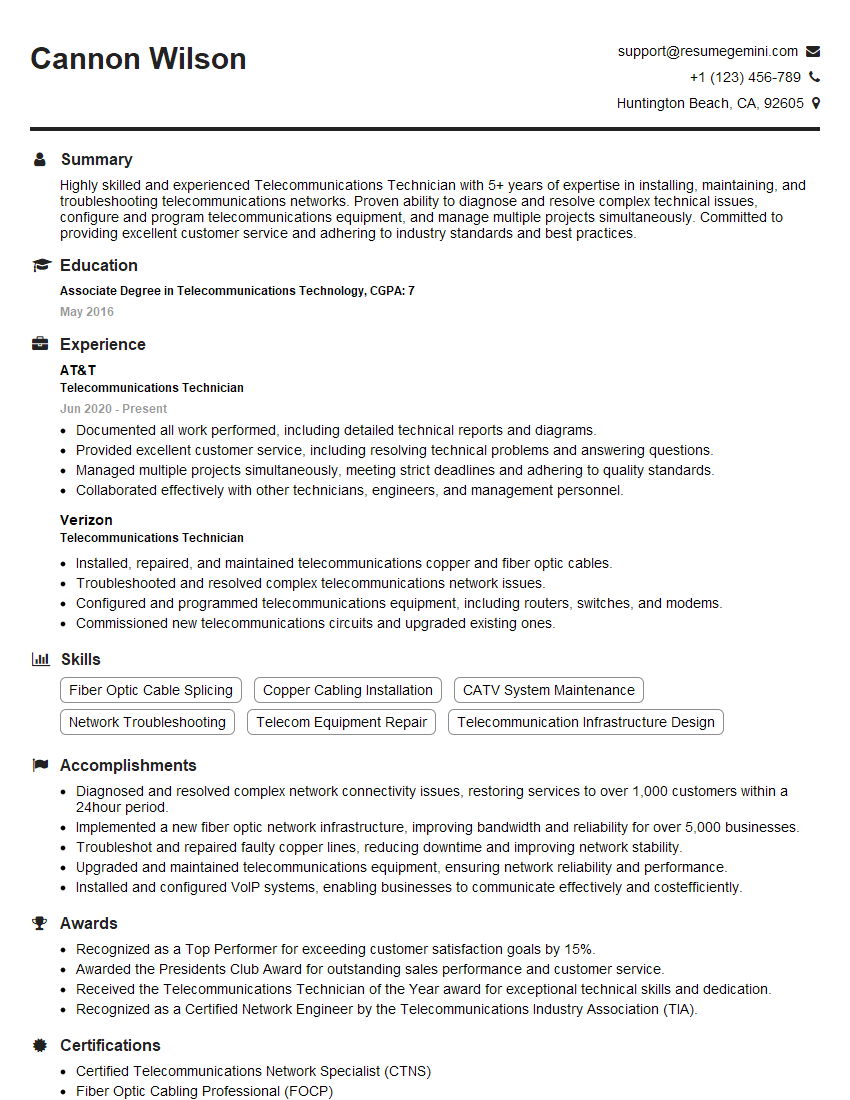
Telecommunications Technician Resume Sample
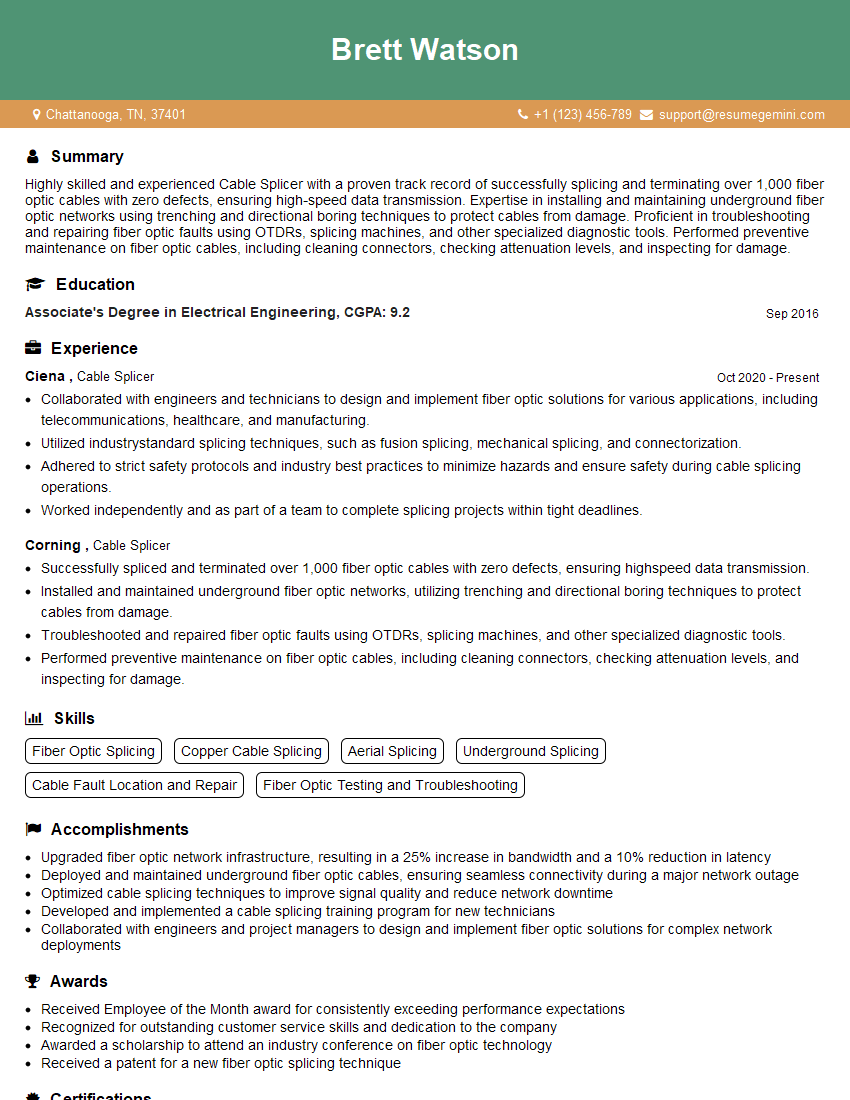
Cable Splicer Resume Sample
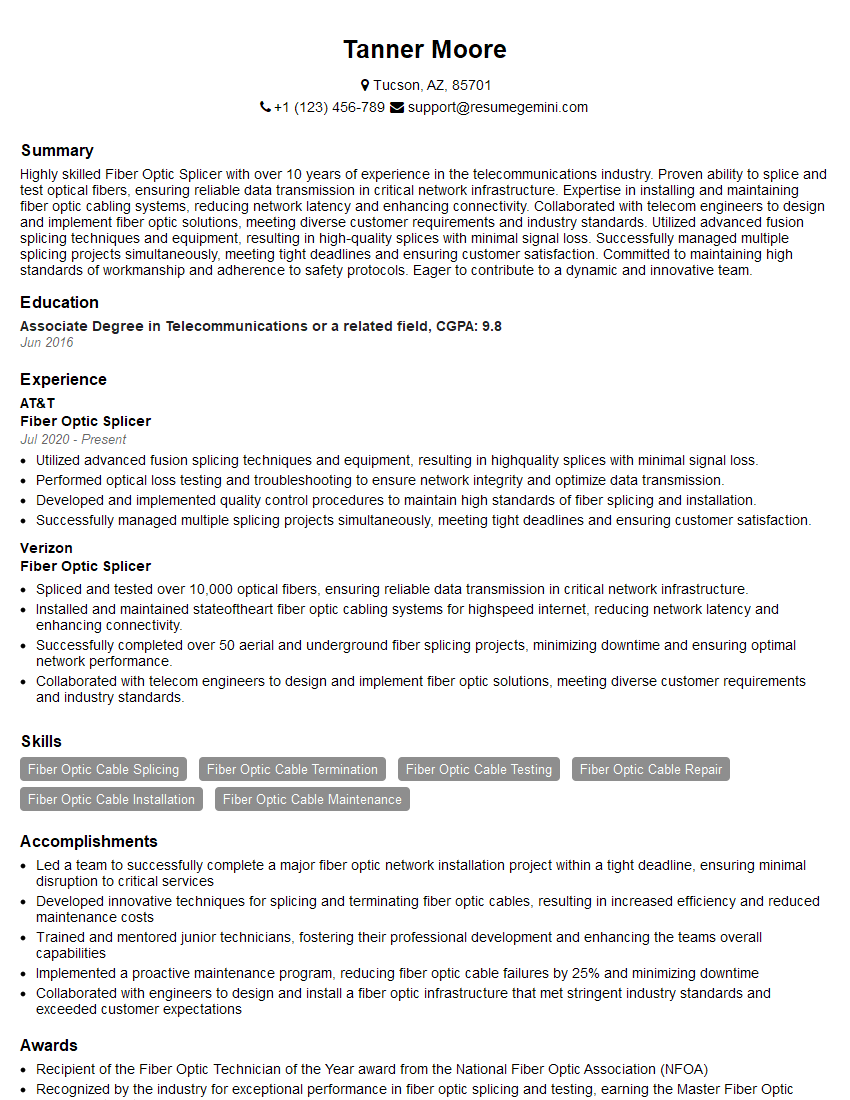
Fiber Optic Splicer Resume Sample
Explore more articles
Users Rating of Our Blogs
Share Your Experience
We value your feedback! Please rate our content and share your thoughts (optional).
What Readers Say About Our Blog
Really detailed insights and content, thank you for writing this detailed article.
IT gave me an insight and words to use and be able to think of examples