The right preparation can turn an interview into an opportunity to showcase your expertise. This guide to Packaging Line Inspection interview questions is your ultimate resource, providing key insights and tips to help you ace your responses and stand out as a top candidate.
Questions Asked in Packaging Line Inspection Interview
Q 1. Describe your experience with various packaging inspection methods.
My experience encompasses a wide range of packaging inspection methods, both manual and automated. Manual inspections, while labor-intensive, are crucial for initial assessments and verifying the accuracy of automated systems. I’ve extensively utilized various automated methods, including:
- Vision Systems: These use cameras and sophisticated software to detect defects like missing labels, incorrect seals, or print errors. For instance, I’ve worked with systems that identify subtle variations in color or texture, ensuring consistent product appearance.
- Weight Checkers: These verify that each package contains the correct amount of product. I’ve troubleshooted instances where inaccurate weight readings were due to calibration issues or inconsistent product filling.
- Metal Detectors: Essential for food safety, these detect metal contaminants. I have experience optimizing sensitivity settings to minimize false positives while maintaining high detection rates.
- X-ray Inspection: This technology allows for the detection of contaminants and defects not visible to the naked eye, such as glass fragments or improperly sealed packages, even within opaque packaging.
My experience also includes implementing and managing quality control checks utilizing different technologies combined, resulting in a comprehensive, multi-layered inspection process.
Q 2. How do you identify and troubleshoot common packaging line issues?
Troubleshooting packaging line issues requires a systematic approach. I typically follow a process involving:
- Identify the Problem: This begins with carefully documenting the type of defect, its frequency, and the affected products. For example, if we’re seeing a high rate of damaged cartons, I’d investigate whether it’s due to excessive conveyor speed, improper stacking, or faulty carton material.
- Analyze the Data: Review historical data, production records, and quality control reports to identify trends or patterns. Statistical Process Control (SPC) charts are invaluable here.
- Inspect the Equipment: A thorough visual inspection of the entire line, focusing on the areas potentially contributing to the problem. This might involve checking conveyor belts, sealing mechanisms, or labeling equipment.
- Test and Validate: Implement corrective actions, such as adjusting machine settings or replacing faulty components. Then, carefully monitor the line to verify the effectiveness of the solution.
- Preventative Maintenance: Implementing a robust preventative maintenance schedule minimizes the occurrence of breakdowns and associated quality issues.
Imagine a situation where product pouches are consistently tearing. I’d systematically check the sealing temperature, the condition of the sealing jaws, and the quality of the film itself. By analyzing data, inspecting equipment, and testing solutions, I pinpoint and fix the problem effectively.
Q 3. What are the key quality control metrics you monitor on a packaging line?
Key quality control metrics I monitor include:
- Defect Rate: The percentage of defective units compared to the total units produced. This is a critical indicator of overall line performance.
- Line Efficiency (OEE): Overall Equipment Effectiveness, calculated by considering availability, performance, and quality. A low OEE suggests inefficiencies that need addressing.
- Mean Weight/Fill Level: Ensuring consistency in product weight or fill level is vital for consumer satisfaction and legal compliance.
- Seal Integrity: Monitoring the percentage of packages with properly sealed seams is crucial, especially for products requiring hermetic sealing.
- Label Accuracy: Checking for correct placement, content, and readability of labels.
- Production Rate: Tracking output volume and identifying bottlenecks in the process.
Regularly tracking and analyzing these metrics provides a comprehensive overview of the packaging line’s performance and allows for proactive interventions to maintain consistent quality.
Q 4. Explain your understanding of GMP (Good Manufacturing Practices) in packaging.
GMP (Good Manufacturing Practices) in packaging are crucial for ensuring product safety and quality. My understanding involves adhering to strict guidelines covering:
- Hygiene and Sanitation: Maintaining a clean and sanitary packaging environment to prevent contamination. This includes regular cleaning and sanitization procedures, employee hygiene protocols, and pest control.
- Personnel Training: Ensuring all personnel involved in packaging are properly trained in GMP principles and standard operating procedures.
- Equipment Qualification and Validation: Verifying that all packaging equipment functions correctly and meets the required specifications. This includes regular calibration and maintenance checks.
- Material Handling: Properly handling raw materials, packaging components, and finished products to prevent damage or contamination.
- Documentation and Record Keeping: Maintaining detailed records of all processes, including quality control checks, maintenance activities, and any deviations from established procedures.
- Traceability: Maintaining comprehensive records to trace the origin and path of materials and products to pinpoint potential sources of contamination or defects quickly.
Compliance with GMP is not merely a regulatory requirement; it is a commitment to delivering safe and high-quality products to consumers. I’ve been involved in implementing and maintaining GMP compliant systems in various settings, always prioritizing safety and quality above all.
Q 5. How do you ensure the accuracy and reliability of packaging inspection data?
Ensuring the accuracy and reliability of packaging inspection data requires a multifaceted approach:
- Calibration and Verification: Regularly calibrating inspection equipment using traceable standards. This ensures that measurements are accurate and consistent.
- Data Validation: Implementing checks and balances to verify the integrity of the collected data. This can include manual spot checks and comparisons to other data sources.
- Statistical Process Control (SPC): Employing SPC techniques to monitor process variation and identify potential problems before they impact product quality.
- Automated Data Collection and Analysis: Utilizing automated systems for data acquisition to minimize human error and increase efficiency.
- Regular Audits: Conducting periodic audits of the inspection process to identify areas for improvement.
- Operator Training: Providing comprehensive training to operators to ensure consistent and accurate data collection and interpretation.
For instance, if our vision system identifies a high number of misaligned labels, we’d investigate if it’s a genuine issue or a false positive due to poor lighting or improper calibration. We would then verify the findings through manual checks before implementing any corrective measures.
Q 6. What experience do you have with different types of packaging equipment?
My experience with packaging equipment includes a wide range of technologies, such as:
- Fillers: I’ve worked with various fillers, including volumetric, gravimetric, and net weight fillers, troubleshooting issues related to fill accuracy and efficiency.
- Sealers: Experienced with both heat sealers and induction sealers, understanding the intricacies of seal parameters to ensure product integrity and prevent leakage.
- Cartoners and Case Packers: Proficient in troubleshooting issues related to carton forming, product loading, and case sealing, ensuring efficient and consistent packaging.
- Labeling Machines: Familiar with various labeling technologies, including pressure-sensitive labelers, wrap-around labelers, and inkjet printers, adept at identifying and resolving labeling issues.
- Conveyor Systems: Experience with designing and optimizing conveyor systems for efficient product flow and minimizing bottlenecks.
I’m also proficient in integrating various equipment components into a cohesive packaging line, optimizing their performance for maximum efficiency and minimal downtime. My experience goes beyond basic operation; it encompasses preventative maintenance, troubleshooting, and improvement strategies.
Q 7. Describe your experience with Statistical Process Control (SPC) in packaging.
Statistical Process Control (SPC) is fundamental to maintaining consistent quality on a packaging line. I utilize SPC charts, such as control charts (X-bar and R charts, p-charts, etc.), to monitor key process parameters like fill weight, seal strength, or defect rates.
These charts help me:
- Identify trends: Early detection of shifts in process parameters, indicating potential problems that need attention.
- Reduce variation: Pinpoint sources of variation and implement improvements to reduce variability, leading to more consistent product quality.
- Prevent defects: Early identification of issues prevents large batches of defective products and minimizes waste.
- Improve efficiency: By optimizing processes based on data analysis, we can improve throughput and reduce downtime.
For instance, if the fill weight control chart shows a consistent upward trend, I’d investigate the filling machine’s calibration or the product’s density variation, implementing corrections to bring it back within acceptable limits. SPC provides a data-driven approach to continuous improvement, ensuring consistent product quality and operational efficiency.
Q 8. How familiar are you with different types of packaging materials (e.g., cardboard, plastic, etc.)?
My familiarity with packaging materials is extensive, encompassing a wide range of materials and their properties. I have hands-on experience with common materials like cardboard (various grades and constructions, including corrugated and solid board), plastics (PET, HDPE, PP, PVC, etc., considering their different forms like bottles, films, and containers), glass, metal (tin, aluminum), and flexible packaging (pouches, films). I understand the strengths and weaknesses of each material concerning its suitability for different products, its impact on the manufacturing process, and its environmental implications. For example, I know that PET is lightweight and recyclable but can be susceptible to damage during transportation, while corrugated cardboard provides excellent cushioning but has limitations in terms of moisture resistance. Understanding these nuances is crucial for effective inspection.
- Cardboard: Variations in flute type (A, B, C, E flute) significantly affect strength and cushioning. I can identify defects like crushing, punctures, and print misalignment.
- Plastics: I’m adept at recognizing defects such as warping, cracking, shrinkage, and improper sealing in plastic containers and films. Understanding the different plastic resin types and their properties is essential for determining the root cause of a defect.
- Glass: I can identify defects like cracks, chips, and imperfections in glass containers, knowing that these can be particularly dangerous if not detected.
Q 9. How would you handle a situation where a significant packaging defect is discovered?
Discovering a significant packaging defect necessitates a swift and structured response. My first step involves immediately halting the production line to prevent further defective products from being produced. This is a critical step to minimize waste and maintain product quality. Then, I’d meticulously document the defect, including the type, location, frequency, and any potential contributing factors. I’d collect samples of the defective packaging for further analysis. A thorough investigation would then be undertaken, possibly involving cross-functional teams to perform a root cause analysis (RCA), as described in my answer to question 3. Once the root cause is identified and corrected, the production line can be restarted after verification. A detailed report of the incident, the RCA findings, and corrective actions taken would be documented and shared with relevant stakeholders.
For example, if a significant number of bottles have cracked seals, this could be due to a malfunctioning sealing machine, incorrect sealing temperature, or even a change in the material properties of the bottle or seal itself. A thorough investigation would help pinpoint the exact cause.
Q 10. Explain your experience with root cause analysis in packaging line issues.
Root cause analysis (RCA) is fundamental to resolving packaging line issues. I’m proficient in using several RCA methodologies, including the 5 Whys, Fishbone diagrams (Ishikawa diagrams), and Fault Tree Analysis. Let’s take the 5 Whys as an example: If we find numerous instances of crushed boxes, we’d ask:
- Why are the boxes crushed? (Answer: Insufficient cushioning)
- Why is there insufficient cushioning? (Answer: Incorrect amount of filler material)
- Why is the incorrect amount of filler material being used? (Answer: Malfunctioning filling machine)
- Why is the filling machine malfunctioning? (Answer: Sensor failure)
- Why did the sensor fail? (Answer: Lack of preventative maintenance)
This methodical approach helps us move beyond superficial symptoms to uncover the underlying cause. Using different techniques such as fault tree analysis, which considers multiple contributing factors and the potential failure of multiple components, allows for a more comprehensive understanding of complex issues and avoids quick fixes that do not truly solve the problem.
Q 11. How do you maintain accurate records and documentation of inspection results?
Maintaining accurate records is paramount in packaging line inspection. I utilize a combination of digital and physical methods. All inspection results are digitally recorded in a database, usually a dedicated Quality Management System (QMS) software. This database includes detailed information such as the date and time of the inspection, the type of packaging inspected, the number of units inspected, the number of defects found (categorized by type), and any corrective actions taken. Each data entry is timestamped and linked to the specific production batch and lot number. Additionally, physical records, such as signed inspection reports, are maintained and archived according to company policy. This dual system provides redundancy and ensures data integrity. I am also experienced in using statistical process control (SPC) charts to monitor and analyze the data over time.
Q 12. Describe your experience with automated inspection systems.
I possess significant experience with automated inspection systems, including vision systems, X-ray inspection, and weight checkers. I’m comfortable setting up, operating, and troubleshooting these systems. Vision systems, for example, utilize cameras and sophisticated software to detect defects like missing labels, incorrect printing, or damaged containers. X-ray systems detect internal defects such as contaminants in food products. Weight checkers ensure that the weight of each package is within specified limits. My experience extends to calibrating and maintaining these systems to ensure accurate and reliable performance. Furthermore, I am familiar with the data analysis and reporting features integrated with many automated systems, which streamline the inspection process.
Q 13. What are your preferred methods for communicating inspection findings to management?
My preferred methods for communicating inspection findings involve clarity, conciseness, and visual aids. I typically prepare concise reports that clearly summarize the findings, including the number and types of defects detected, their severity, and their potential impact on product quality and safety. These reports usually include supporting visuals such as photos or charts illustrating the defects. I use data visualization tools to present the data in an accessible and easily understandable manner. For example, if there’s a trend of increasing defects, I would use a chart to highlight this trend. I prioritize face-to-face communication for critical issues, allowing for immediate discussion and collaborative problem-solving. For routine updates, I use email and reporting dashboards that provide real-time visibility of inspection data.
Q 14. How do you ensure compliance with industry regulations and standards (e.g., FDA, ISO)?
Ensuring compliance with industry regulations and standards is paramount. I’m familiar with the requirements of various regulatory bodies such as the FDA (Food and Drug Administration), ISO (International Organization for Standardization), and others depending on the product and industry. This includes understanding the relevant Good Manufacturing Practices (GMP), and specific regulations concerning food safety, labeling, and packaging materials. I’m adept at implementing and maintaining the necessary procedures and documentation to ensure continuous compliance. This involves regular audits, training of personnel, and the implementation of corrective and preventive actions (CAPA) whenever necessary. Staying updated on changes in regulations and best practices is a continuous process requiring ongoing professional development. For example, in food packaging, understanding and implementing the Hazard Analysis and Critical Control Points (HACCP) principles is crucial for compliance.
Q 15. Describe your experience with different types of packaging seals and closures.
My experience encompasses a wide range of packaging seals and closures, from the simplest heat-sealed pouches to complex tamper-evident closures. I’m familiar with various types, including:
- Pressure-sensitive seals: These are commonly found on labels and require precise adhesion for reliable product protection. I’ve worked extensively with ensuring consistent label application and seal integrity, particularly concerning issues like label skew or incomplete adhesion.
- Induction seals: I’ve handled inspections involving induction-sealed containers, which require careful monitoring for proper seal formation and strength. This includes checking for leaks or compromised seals, often using specialized leak detection equipment.
- Screw caps and lids: I have experience inspecting a wide variety of screw caps, from simple plastic caps to those with liners for enhanced protection. This includes verifying proper torque and ensuring that they are securely fastened to prevent spills or contamination. Variations in cap tightness can lead to consumer complaints or product spoilage.
- Crimp seals: These seals, often used on metal cans, need precise crimping for hermetic sealing. My inspection experience involves ensuring consistent crimp quality and looking for imperfections that could compromise the seal’s integrity.
- Heat seals: These are common for flexible packaging like pouches and films. I’ve dealt with issues like incomplete seals, weak seals, or seal breaches leading to product leakage or contamination. Proper heat seal settings and material properties are crucial for consistent results.
Understanding the specifics of each type of seal and closure is crucial for effective inspection. For instance, a poorly applied pressure-sensitive label might seem minor, but it could affect tamper evidence or even hide underlying product damage.
Career Expert Tips:
- Ace those interviews! Prepare effectively by reviewing the Top 50 Most Common Interview Questions on ResumeGemini.
- Navigate your job search with confidence! Explore a wide range of Career Tips on ResumeGemini. Learn about common challenges and recommendations to overcome them.
- Craft the perfect resume! Master the Art of Resume Writing with ResumeGemini’s guide. Showcase your unique qualifications and achievements effectively.
- Don’t miss out on holiday savings! Build your dream resume with ResumeGemini’s ATS optimized templates.
Q 16. How do you handle a discrepancy between your inspection findings and the production line’s output?
Discrepancies between my inspection findings and the production line’s output require a methodical approach. My first step is to verify my findings through repeat inspections, using different methods if necessary. Then, I’d collaborate with the production team to identify the root cause. This often involves:
- Reviewing production data: Checking machine settings, speed, and any reported issues during the production run.
- Visual inspection of the production line: Identifying potential issues with the machinery or material handling.
- Sampling additional units: Expanding the inspection sample size to confirm the extent of the discrepancy.
- Data analysis: Using statistical process control (SPC) charts to identify trends and potential sources of variation.
Once the root cause is identified, a corrective action plan is implemented and monitored. This could involve adjusting machine settings, replacing faulty components, or retraining operators. For example, if consistently misaligned labels were found, I’d work with the engineering team to adjust the label applicator or check the quality of the label material itself. The goal is always to prevent recurrence and ensure consistent quality.
Q 17. What is your experience with using vision systems for packaging inspection?
I have extensive experience using vision systems for automated packaging inspection. I’m proficient in operating and troubleshooting various systems, including those using technologies like:
- 2D and 3D imaging: These technologies allow for highly accurate detection of defects such as misprints, missing components, or damaged packaging. 3D imaging offers a significant advantage in detecting subtle flaws in three-dimensional shapes.
- Machine vision software: I’m comfortable using various software packages to program inspection criteria, analyze image data, and generate reports. I can adapt algorithms to detect specific defects relevant to different packaging types and materials.
- Automated defect classification: Many vision systems automatically classify and categorize defects, which greatly improves efficiency and allows for faster responses to quality control issues. For example, a system might categorize a defect as a ‘label misalignment’ with a specified severity level, simplifying reporting and analysis.
My experience includes integrating vision systems into existing production lines, optimizing their performance, and developing custom inspection routines for unique packaging challenges. For instance, we once used a vision system to detect subtle variations in fill levels of transparent containers which were impossible to detect with human inspection alone.
Q 18. Explain how you would train a new team member on packaging line inspection procedures.
Training a new team member involves a structured approach, combining classroom instruction with hands-on experience:
- Classroom Training: I’d start with an overview of packaging line inspection procedures, including safety regulations, quality standards, and documentation procedures. This would include presentations covering different types of packaging defects, inspection techniques, and use of inspection tools.
- On-the-Job Training: I’d pair the new team member with an experienced inspector for shadowing and hands-on training. This allows for practical application of classroom knowledge under supervision.
- Practical Exercises: I’d set up practice scenarios to test their ability to identify and classify different defects, using a variety of packaging types.
- Regular Feedback and Assessment: Ongoing feedback and regular assessments ensure understanding and mastery of the required skills. This also allows for identification of any knowledge gaps and appropriate remedial training.
I use a mentor-mentee approach to build confidence and encourage questions. The goal is to empower them to independently perform accurate and efficient inspections.
Q 19. How familiar are you with different types of packaging defects (e.g., mislabeling, damage, contamination)?
My familiarity with packaging defects is comprehensive. I can identify and classify a wide array of defects, including:
- Mislabeling: Incorrect product information, missing labels, or damaged labels.
- Damage: Dents, scratches, tears, or punctures on the packaging.
- Contamination: Foreign materials present inside or outside the package.
- Incorrect seals or closures: Leaks, improperly sealed packages, or missing closures.
- Fill level discrepancies: Product underfill or overfill.
- Print defects: Smudges, missing ink, or blurry text.
- Structural defects: Warping, deformation, or inconsistencies in the packaging material itself.
I can recognize these defects across various packaging types (e.g., cartons, bottles, pouches, cans) and materials (e.g., paper, plastic, metal). The ability to quickly identify defects is critical for maintaining product quality and preventing customer complaints. For instance, identifying a small crack in a bottle could prevent a serious safety hazard down the line.
Q 20. How do you prioritize your tasks when multiple packaging line issues arise?
Prioritizing tasks when multiple packaging line issues arise requires a structured approach based on risk assessment and urgency. I’d use a framework like this:
- Severity Assessment: Categorize each issue by severity (critical, major, minor) based on its potential impact on product safety, quality, and regulatory compliance. For instance, a contamination issue would be critical, whereas a minor cosmetic flaw might be less urgent.
- Urgency Assessment: Determine how quickly each issue must be addressed based on factors like production speed and potential for significant losses.
- Impact Assessment: Consider the potential impact of each issue on downstream processes or the customer. A widespread defect would require faster attention than an isolated incident.
- Resource Allocation: Allocate resources (personnel, equipment) to address the highest priority issues first.
Often, a seemingly minor issue can snowball into a larger problem if ignored. For example, a slightly misaligned label might not seem serious, but if left unaddressed it could lead to a batch recall. By using this prioritization approach I ensure that the most critical issues are addressed promptly and efficiently.
Q 21. What is your experience with preventative maintenance on packaging equipment?
Preventative maintenance (PM) on packaging equipment is crucial for maintaining production efficiency, ensuring product quality, and minimizing downtime. My experience includes:
- Developing and Implementing PM Schedules: Creating and managing regular PM schedules based on equipment manufacturers’ recommendations and historical maintenance data. This includes tasks like lubrication, cleaning, and part replacements.
- Performing Routine Inspections: Regularly inspecting equipment for wear and tear, loose parts, or potential malfunctions, proactively identifying and addressing issues before they escalate into major problems.
- Troubleshooting and Repair: Diagnosing and repairing equipment malfunctions, ensuring that repairs are done efficiently and effectively.
- Maintaining Records: Keeping accurate and detailed records of all PM activities, including dates, tasks performed, and any identified issues. This documentation assists in identifying trends, improving maintenance procedures, and supporting regulatory compliance.
Preventative maintenance is more cost-effective in the long run than reactive repairs. A simple lubrication task can prevent a costly equipment breakdown and production stoppage. This approach minimizes downtime, maximizes production efficiency, and ensures the delivery of high-quality products.
Q 22. How do you handle pressure and deadlines in a fast-paced packaging environment?
In a fast-paced packaging environment, pressure and deadlines are the norm. My approach is multifaceted, focusing on proactive planning and efficient execution. I begin by meticulously reviewing production schedules and identifying potential bottlenecks before they arise. This might involve analyzing historical data to predict peak demand periods or collaborating with other departments to ensure timely supply of materials.
Once the plan is in place, I prioritize tasks based on their urgency and impact. I use project management tools to track progress and allocate resources effectively. For example, during a recent promotional campaign launch, we anticipated a significant surge in order volume. I preemptively scheduled overtime shifts for the inspection team and ensured all equipment was calibrated and in optimal working condition. This proactive approach minimized delays and enabled us to meet all deadlines without compromising quality.
Finally, I believe in clear communication. Keeping my team informed about progress, challenges, and any necessary adjustments fosters collaboration and prevents misunderstandings. Open communication ensures that everyone is on the same page and working towards the same goals, especially critical under pressure.
Q 23. Describe your proficiency in using inspection tools and measuring devices.
My proficiency in using inspection tools and measuring devices is extensive. I’m experienced with a wide array of technologies, including vision systems (like Cognex and Keyence), checkweighers, metal detectors, and various manual gauging tools such as calipers, micrometers, and rulers. I understand the principles behind each device, including their limitations and potential sources of error. For instance, I know that the accuracy of a vision system depends heavily on proper lighting and image processing parameters, while checkweighers require regular calibration to ensure accurate weight measurements.
Beyond mere operation, I’m adept at troubleshooting and maintenance. I can identify malfunctions, perform basic repairs, and schedule necessary calibrations. For example, when our vision system started producing inaccurate readings, I systematically checked lighting, lens cleanliness, and software settings before escalating to a service technician, saving valuable downtime. This hands-on approach significantly reduces equipment downtime and improves overall inspection efficiency.
Q 24. Explain your understanding of packaging line efficiency and optimization.
Packaging line efficiency and optimization are paramount for maximizing output and minimizing costs. My understanding encompasses several key areas: maximizing uptime (reducing downtime due to equipment failure or material shortages), optimizing speed without compromising quality, and minimizing waste (reducing material usage and rejects).
Optimizing a packaging line involves a systematic approach. I start by analyzing the entire process, identifying bottlenecks and inefficiencies. This often involves data analysis – examining historical production data to pinpoint areas where improvements can be made. For instance, if a particular machine is consistently causing delays, I’d investigate its performance metrics, looking for patterns or anomalies. Tools like Overall Equipment Effectiveness (OEE) calculations help quantify these inefficiencies.
Once bottlenecks are identified, I develop and implement solutions. These solutions might range from minor process adjustments to more substantial changes such as equipment upgrades or workflow redesign. I also strongly advocate for continuous improvement methodologies like Kaizen, emphasizing small, incremental changes rather than large-scale overhauls to maintain momentum and minimize disruption.
Q 25. How do you identify and address potential safety hazards on a packaging line?
Safety is my top priority. Identifying and addressing potential hazards on a packaging line requires a proactive, multi-pronged approach. This starts with regular safety audits, adhering to OSHA (or equivalent) guidelines, and conducting thorough risk assessments. These assessments identify potential hazards, like pinch points in machinery, electrical hazards, or slip and fall risks.
Once potential hazards are identified, I develop and implement control measures. This might involve installing safety guards, providing appropriate personal protective equipment (PPE), implementing lockout/tagout procedures for maintenance, or improving workplace ergonomics to reduce strain injuries. I also emphasize proper training for all personnel, ensuring everyone understands safe operating procedures and emergency response protocols. For example, I instituted a mandatory training program on the safe operation of our high-speed wrapping machine, significantly reducing near-miss incidents. A culture of safety is not just about rules; it’s about fostering a mindset where everyone feels empowered to report hazards and participate in creating a safer working environment.
Q 26. What experience do you have with implementing new packaging inspection technologies?
I have extensive experience implementing new packaging inspection technologies. This includes everything from integrating new vision systems to implementing advanced checkweighers with data acquisition and reporting capabilities. The process typically begins with a thorough needs assessment, identifying the specific challenges the current system is facing and the desired improvements. For example, if we were experiencing high rates of mislabeled products, I would investigate vision systems capable of high-resolution image analysis and accurate character recognition.
Next, I conduct a detailed evaluation of available technologies, considering factors such as cost, performance, integration requirements, and ease of use. This involves discussions with vendors, demonstrations of equipment, and careful review of specifications. After selecting a solution, I oversee the installation and commissioning process, ensuring seamless integration with the existing packaging line. This includes working closely with IT and engineering to configure the system properly and train personnel on its operation and maintenance. Finally, I monitor performance post-implementation, tracking key metrics to ensure the new technology is delivering the expected improvements.
Q 27. Describe a situation where you had to solve a complex packaging line problem. What was your approach?
One challenging situation involved a recurring problem with our automated case sealing machine. Cases were frequently being sealed improperly, resulting in damaged products and significant production downtime. My approach was systematic and data-driven. First, I gathered data, documenting the frequency and nature of the sealing failures. This involved reviewing production logs, examining faulty cases, and interviewing operators.
My analysis revealed that the failures were often correlated with variations in the case dimensions. Some cases were slightly larger or smaller than the specifications, causing misalignment in the sealing mechanism. I hypothesized that the issue originated upstream in the case erecting process. I collaborated with the case erecting machine operator and mechanics to inspect the machine for misalignment or wear. Indeed, we discovered a worn component in the case-forming mechanism resulting in inconsistent case dimensions. Replacing this component resolved the issue, significantly improving sealing efficiency and reducing product damage.
This experience highlighted the importance of a structured problem-solving approach. By systematically gathering data, analyzing the findings, and collaborating with other teams, we effectively identified and addressed the root cause of the problem, preventing future recurrences.
Key Topics to Learn for Packaging Line Inspection Interview
- Understanding Packaging Line Processes: Familiarize yourself with the entire packaging line flow, from raw materials to finished product. This includes understanding different types of packaging machinery and their functions.
- Quality Control Procedures: Learn about various quality control methods used in packaging line inspection, such as visual inspection, dimensional checks, weight checks, and seal integrity testing. Be prepared to discuss specific examples of how these methods ensure product quality and consistency.
- Defect Identification and Classification: Practice identifying common packaging defects (e.g., mislabeling, damaged packaging, incorrect fill levels) and classifying their severity according to company standards. Understand the impact of different defects on product quality and safety.
- Data Collection and Analysis: Understand how data is collected during inspection (manual recording, automated systems) and how this data is used to track performance, identify trends, and improve processes. Be prepared to discuss data analysis techniques relevant to quality control.
- Problem-solving and Troubleshooting: Practice describing situations where you identified and resolved issues on a production line. Highlight your ability to think critically, identify root causes, and implement effective solutions to maintain efficiency and quality.
- Safety Regulations and Procedures: Demonstrate your understanding of relevant safety regulations and procedures related to packaging line operations. This includes proper use of equipment, personal protective equipment (PPE), and adherence to safety protocols.
- Good Manufacturing Practices (GMP): Familiarize yourself with GMP principles and how they apply to packaging line inspection. This includes maintaining a clean and organized workspace, following hygiene standards, and adhering to documentation requirements.
Next Steps
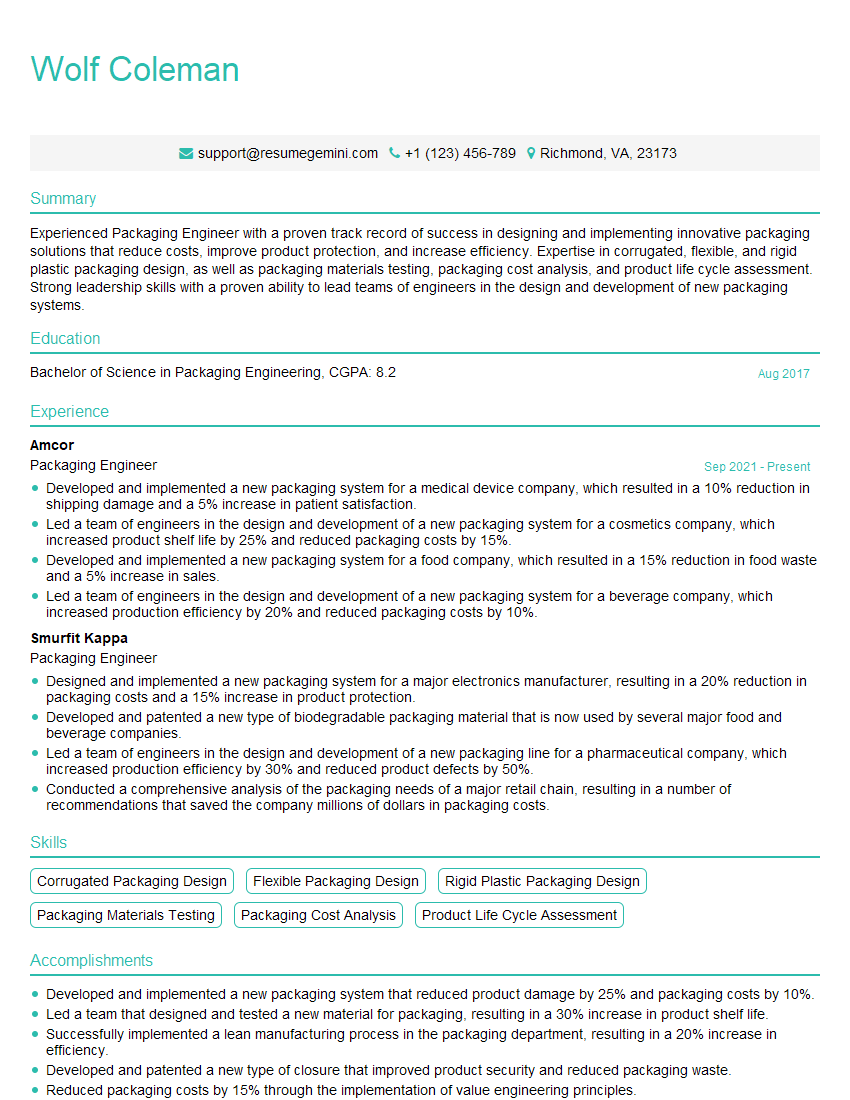
Mastering Packaging Line Inspection opens doors to a rewarding career with opportunities for advancement in quality control, production management, and even process engineering. To significantly increase your chances of landing your dream job, focus on creating an ATS-friendly resume that highlights your skills and experience effectively. ResumeGemini is a trusted resource that can help you build a professional and impactful resume. We provide examples of resumes tailored specifically to Packaging Line Inspection to guide you through the process. Take the next step towards your career success!
Explore more articles
Users Rating of Our Blogs
Share Your Experience
We value your feedback! Please rate our content and share your thoughts (optional).
What Readers Say About Our Blog
Really detailed insights and content, thank you for writing this detailed article.
IT gave me an insight and words to use and be able to think of examples