Interviews are opportunities to demonstrate your expertise, and this guide is here to help you shine. Explore the essential Paint mixing and color matching interview questions that employers frequently ask, paired with strategies for crafting responses that set you apart from the competition.
Questions Asked in Paint mixing and color matching Interview
Q 1. Explain the difference between tinting and mixing paint.
Tinting and mixing paint are both methods to achieve a desired color, but they differ significantly in their approach. Tinting involves adding a small amount of colored pigment (a tint) to a base color to modify its shade, tone, or saturation. Think of it like subtly adjusting a recipe. Mixing, on the other hand, involves combining two or more different colors from scratch to create a completely new color. This is like creating a new recipe altogether.
For example, tinting white paint with a small amount of blue creates a light blue. Mixing, conversely, might involve combining red and yellow to create orange, or perhaps blending blue and green to achieve a teal.
In practice, tinting is often preferred for minor adjustments, as it preserves the base paint’s properties. Mixing offers greater flexibility for bolder color creations but requires more precision and understanding of color theory.
Q 2. Describe your experience with various paint types (e.g., latex, oil-based, acrylic).
My experience spans a wide range of paint types, each with its unique characteristics and application methods. Latex paints, known for their water-based, low-odor formulations, are excellent for interior walls and offer good washability. I’ve worked extensively with various latex formulations, from matte to high-gloss finishes, each requiring slightly different mixing techniques to achieve consistent results.
Oil-based paints, though requiring more careful cleanup due to their solvent base, offer superior durability and richness of color, particularly useful for exterior applications and trim work. I have experience with both alkyd and traditional oil paints, understanding their different drying times and the adjustments needed in mixing to achieve a particular finish.
Acrylic paints, a versatile hybrid, offer the quick drying time of water-based paints with the durability closer to oil-based paints. Their versatility in various applications, from fine art to crafting to some residential projects, allows me to apply various techniques and understand the nuances of color mixing within their unique properties.
Q 3. How do you ensure accurate color matching using a spectrophotometer?
A spectrophotometer is a crucial tool for accurate color matching. It measures the spectral reflectance of a surface, providing precise numerical data representing the color’s components. To ensure accurate color matching, I follow a methodical process:
- Sample Preparation: Ensure the surface to be matched is clean and evenly lit.
- Spectrophotometer Calibration: Calibrate the instrument according to manufacturer guidelines using a standard white tile.
- Measurement: Take multiple readings of both the target color (e.g., a paint chip) and the mixed paint, ensuring consistent placement and lighting.
- Data Analysis: The spectrophotometer will generate data, often in the form of a color formula, that specifies the proportions of colorants required to match the target color. This might be in a system like CIE LAB or a proprietary system based on specific paint manufacturer’s formulations.
- Refinement: I use the spectrophotometer’s data as a starting point and make minor adjustments to the paint mix, performing additional measurements to fine-tune the match. This iterative process ensures optimal accuracy.
For instance, a spectrophotometer might identify a slight discrepancy in hue or saturation between the target and the mixed paint. Based on this feedback, I might add a small amount of a particular pigment to achieve an exact color match.
Q 4. What are the common color systems used in paint mixing (e.g., RYB, CMYK, RGB)?
Several color systems are used in paint mixing, each serving different purposes. The RYB (Red, Yellow, Blue) system is a subtractive color model traditionally used by artists. It’s intuitive but less precise for complex color reproduction than other systems.
CMYK (Cyan, Magenta, Yellow, Key/Black) is another subtractive model commonly used in printing and sometimes in paint mixing. It represents colors based on the subtractive effect of pigments. The ‘Key’ or Black is added to control darkness and improve reproduction of dark shades.
RGB (Red, Green, Blue) is an additive color system used extensively in digital displays. While not directly used in pigment mixing, RGB data from digital images can be converted to other systems, like LAB, to aid in color matching.
The CIE LAB system is becoming the industry standard. This is a device-independent color space which makes it useful for communicating color specifications across various devices and manufacturers. It defines colors using three values: L (lightness), a (red-green), and b (blue-yellow). This system is particularly helpful for fine color adjustments and achieving precise color matches using a spectrophotometer.
Q 5. How do you handle a color mismatch during a paint mixing project?
Color mismatches are inevitable, even with advanced tools. When faced with a mismatch, I systematically troubleshoot the issue:
- Re-evaluate the Target: Confirm the original color sample is accurate and hasn’t degraded.
- Check the Equipment: Ensure the spectrophotometer is calibrated correctly, and the mixing equipment (e.g., scales, tints) are functioning properly.
- Analyze the Mix: Assess the proportions of colorants used, looking for any errors in calculations or dispensing.
- Fine-Tune the Formula: Use small incremental adjustments to the formula, guided by the spectrophotometer data or visual assessment. Add tiny amounts of the colorant, thoroughly mixing the paint after each addition.
- Test Application: Paint a small test patch to evaluate the color under various lighting conditions before applying a larger quantity.
If the mismatch persists despite these steps, I might need to re-evaluate the original paint or seek additional samples for further comparison. Documentation at each step is crucial for tracing the problem and finding a solution.
Q 6. Explain the concept of color temperature and its relevance to paint mixing.
Color temperature refers to the warmth or coolness of a color, expressed in Kelvin (K). It’s crucial in paint mixing because it impacts the overall perception and harmony of a color scheme. Colors with lower Kelvin values (e.g., 2700K) are considered warmer, exhibiting yellowish or reddish hues, while higher Kelvin values (e.g., 6500K) are cooler, leaning towards bluish or greenish tints.
In paint mixing, we need to consider color temperature, particularly when matching colors across different locations or under varied lighting conditions. A paint that looks perfect under warm incandescent lighting may appear slightly off under cool fluorescent light. Understanding color temperature ensures consistency and avoids unexpected visual discrepancies.
For instance, in a project needing a specific shade of blue, a cool blue might be suitable for a modern space with predominantly cool light sources, whereas a warmer blue may be a better choice for a space with warmer lighting to achieve a balanced and harmonious look.
Q 7. Describe your experience with different paint mixing equipment.
My experience includes a variety of paint mixing equipment, ranging from basic tools to sophisticated automated systems. I am proficient with manual tools like tint dispensers, measuring cups, and stirring sticks for smaller projects. I am adept at using digital scales for precise measurement of colorants, ensuring consistency and repeatability.
For larger-scale projects, I’ve utilized automated paint mixing systems. These machines precisely dispense colorants, ensuring accuracy and efficiency, especially helpful when replicating large batches of a specific color. I have experience operating and maintaining both older and newer systems, ensuring consistency and repeatability regardless of the machine’s type.
Beyond the machinery, I value the role of efficient organization and proper clean-up procedures in maintaining equipment and delivering consistent results. A clean and well-maintained workspace is as crucial as the equipment itself in delivering high quality color matches.
Q 8. How do you calculate the amount of each pigment needed to achieve a specific color?
Calculating the precise amount of each pigment for a specific color is a crucial aspect of paint mixing, relying heavily on color formulas and a good understanding of pigment properties. Think of it like baking a cake – you need the right proportion of each ingredient for the desired outcome. While some formulas are readily available, often we need to develop them through experimentation and precise measurement. Here’s a breakdown:
Understanding the Color System: We usually work within a specific color system, like CMYK (Cyan, Magenta, Yellow, Key/Black) for printing or a proprietary system provided by the paint manufacturer. Each system has its own set of standard color formulations.
Using Color Formulas: Existing formulas provide ratios for pigments to achieve a target color. For example, a formula might state: ‘Achieve ‘Forest Green’ by mixing 60% Phthalo Green, 30% Yellow Ochre, and 10% Black.’ These are percentage ratios of the total volume.
Calculations for a Specific Batch Size: Let’s say we need 1 liter of Forest Green. We’d calculate: 60% of 1 liter = 0.6 liters of Phthalo Green; 30% of 1 liter = 0.3 liters of Yellow Ochre; 10% of 1 liter = 0.1 liters of Black.
Spectrophotometer Use: For complex or custom colors, we use a spectrophotometer. This instrument measures the color’s spectral properties and provides a numerical formula that can be translated into pigment ratios. This helps achieve extremely precise color matching.
Trial and Error (with careful record-keeping): Even with formulas, fine-tuning is often required. We start with the calculated ratios, then make small adjustments, meticulously recording each change and its resulting color, until the perfect match is achieved. This necessitates precise measurement and documentation.
Q 9. What are the safety precautions you take when working with paint and solvents?
Safety is paramount in paint mixing. We work with potentially hazardous materials, so stringent protocols are essential. This involves:
Proper Ventilation: Solvents release volatile organic compounds (VOCs), which are harmful. We always work in well-ventilated areas, ideally with dedicated extraction systems. I never compromise on ventilation.
Personal Protective Equipment (PPE): This includes respirators (specifically designed for the solvents used), safety glasses, gloves (nitrile is preferred for its chemical resistance), and protective clothing. The type of PPE changes depending on the materials and the tasks.
Material Safety Data Sheets (MSDS): I meticulously review MSDS for every product before use. This document provides vital information on hazards, safe handling, and emergency procedures.
Waste Disposal: Paint waste and solvent containers are handled according to local regulations. We utilize appropriate containers and labeling, and ensure proper disposal through licensed hazardous waste handlers.
Emergency Preparedness: We have a designated eye-wash station and emergency shower readily available, and all personnel are trained on emergency response procedures, including spill containment.
Q 10. How do you manage inventory and maintain organization in a paint mixing environment?
Maintaining a well-organized paint mixing environment is crucial for efficiency and accuracy. Think of it like a well-stocked kitchen – everything needs to be in its place and easily accessible.
Pigment Organization: Pigments are meticulously labeled and stored according to color family and type. We utilize a well-defined system—for example, alphabetical order or by hue, for easy retrieval.
Inventory Management System: We use a digital inventory management system to track pigment levels, usage, and order new supplies proactively, preventing stock-outs. This system also alerts us to expiring materials.
FIFO (First In, First Out): This system ensures that older pigments are used before newer ones to minimize waste from expiration. Each pigment container is clearly dated.
Cleanliness and Order: The workspace is meticulously cleaned after each mixing session to prevent cross-contamination and maintain accuracy. All tools and equipment are properly cleaned and stored.
Color Formula Database: A comprehensive database of color formulas is maintained, both digitally and physically, to ensure consistency and prevent rework.
Q 11. What are some common challenges you’ve faced in paint mixing and how did you overcome them?
Challenges are inevitable in paint mixing. Some common issues I’ve encountered include:
Metamerism: This is a phenomenon where two colors appear to match under one light source but differ under another. Overcoming this requires careful testing under various lighting conditions and using spectrophotometers to ensure a true match across different light spectrums.
Batch-to-Batch Variations: Even with the same formula, slight variations can occur between batches due to raw material differences. We address this by using precise measurement tools and regularly calibrating our equipment. Statistical process control helps maintain consistency.
Unexpected Color Reactions: Certain pigments can react unexpectedly when mixed together, resulting in an unintended hue. This requires a deep understanding of pigment chemistry and thorough testing before large-scale production.
Matching Complex Colors: Precisely matching highly saturated, unusual, or metallic colors requires significant experience, precision, and the use of specialized tools like spectrophotometers.
The solutions often involve meticulous record-keeping, diligent testing and retesting, employing sophisticated color measurement instruments, and leveraging knowledge of both pigment behavior and color theory.
Q 12. Explain the importance of using accurate measurements in paint mixing.
Accurate measurements in paint mixing are fundamental for consistency and repeatability. Even a small error in measurement can result in a noticeable color difference. Think of it like a recipe – a small change in ingredients can dramatically alter the final product.
Color Consistency: Accurate measurements ensure that the same color can be reproduced consistently across multiple batches and over time.
Cost Savings: Precise measurements prevent waste caused by inaccurate mixing ratios, leading to significant cost savings.
Quality Control: Accurate measurements are vital for meeting quality standards and ensuring customer satisfaction.
Troubleshooting: If a problem arises, accurate records allow for precise analysis and identification of the cause.
We use calibrated scales, graduated cylinders, and pipettes to ensure accuracy. Every measurement is double-checked and recorded meticulously.
Q 13. How do you maintain the consistency of a paint mix over time?
Maintaining consistency over time requires meticulous attention to detail and proper storage. Factors like temperature, light exposure, and even the container material can influence a paint mix’s stability.
Proper Storage: Paints should be stored in airtight containers, away from direct sunlight and extreme temperatures, preferably in a cool, dry, and dark place.
Protective Coatings: Some paints, especially those with delicate pigments, might benefit from the addition of a UV-protective additive to prolong their color stability.
Regular Testing: Periodically checking color consistency by comparing it against a standard sample allows for the early detection of any degradation or change.
Material Selection: Using high-quality, lightfast pigments ensures greater longevity and color stability.
Implementing these measures helps minimize color shifts over time and ensures that the mixed paint maintains its desired properties for an extended duration.
Q 14. Describe your understanding of color theory and its application in paint mixing.
Color theory is the backbone of paint mixing. It’s the science and art of understanding how colors interact with each other. A strong grasp of color theory is essential for predicting and achieving desired color outcomes.
Color Wheel: The color wheel shows the relationships between primary, secondary, and tertiary colors, including complementary colors (colors opposite each other on the wheel), analogous colors (colors next to each other), and triad colors (three colors evenly spaced on the wheel).
Hue, Saturation, and Value: These three elements (HSV) define a color. Hue refers to the pure color, saturation refers to its intensity, and value refers to its lightness or darkness. Understanding these allows precise color adjustments.
Color Mixing: Understanding additive color mixing (light) and subtractive color mixing (pigments) is critical. In subtractive mixing, adding pigments tends to darken and desaturate the color.
Temperature and Color Harmony: Warm colors (reds, oranges, yellows) and cool colors (blues, greens, purples) create different moods. Understanding this helps in choosing color combinations for specific effects.
By applying color theory principles, I can accurately predict the outcome of mixing different pigments, achieving the desired color efficiently and effectively.
Q 15. How familiar are you with different paint brands and their color palettes?
My familiarity with paint brands and their color palettes is extensive. Over the years, I’ve worked with major brands like Sherwin-Williams, Benjamin Moore, PPG, and Behr, gaining a deep understanding of their individual color systems, pigment formulations, and the subtle differences in their finishes. I can confidently navigate their color cards, fan decks, and digital color libraries. For example, I know that Sherwin-Williams’ color matching system utilizes a sophisticated spectrophotometer, offering high precision, while Benjamin Moore’s historically focuses on hand-mixed precision for certain lines. This brand-specific knowledge helps me select the appropriate brand and color based on a client’s needs, budget, and desired aesthetic.
Beyond the major brands, I’m also familiar with numerous specialty and import paint lines, often chosen for specific projects or unique color requirements. Understanding these differences – from the subtle undertones in a particular brand’s white to the unique properties of specialized exterior paints – is crucial for achieving optimal results.
Career Expert Tips:
- Ace those interviews! Prepare effectively by reviewing the Top 50 Most Common Interview Questions on ResumeGemini.
- Navigate your job search with confidence! Explore a wide range of Career Tips on ResumeGemini. Learn about common challenges and recommendations to overcome them.
- Craft the perfect resume! Master the Art of Resume Writing with ResumeGemini’s guide. Showcase your unique qualifications and achievements effectively.
- Don’t miss out on holiday savings! Build your dream resume with ResumeGemini’s ATS optimized templates.
Q 16. Describe your experience with computer-aided paint mixing systems.
I have extensive experience with computer-aided paint mixing systems. These systems significantly improve accuracy and efficiency in color matching. My experience encompasses various systems from different manufacturers, including those using spectrophotometers for precise color readings and software for calculating the precise pigment ratios needed to achieve a specific color. I’m proficient in operating these systems, calibrating them for optimal performance, and troubleshooting any technical issues that may arise.
For instance, I’m adept at using software that allows me to input a color code (like a Pantone or RAL code) and automatically generates the necessary formula for mixing the paint. This reduces human error and ensures consistent color reproduction across multiple batches. I also understand how to manage the database of color formulas, ensuring accurate retrieval and efficient management of color history.
Q 17. What are the environmental considerations in paint mixing and disposal?
Environmental considerations are paramount in paint mixing and disposal. We must adhere to strict regulations concerning volatile organic compounds (VOCs) – harmful chemicals released into the air during paint application and drying. This means carefully selecting low-VOC or zero-VOC paints whenever possible, which minimizes environmental impact. Furthermore, proper ventilation during the mixing and application process is crucial to prevent the buildup of harmful fumes.
Disposal is equally important. Paint waste must be handled responsibly, often requiring specific procedures for both liquid and solid waste, depending on local regulations. We use proper containers and labels, and often partner with recycling centers specializing in hazardous waste to ensure responsible disposal, minimizing the environmental impact of our work.
Q 18. How do you handle customer requests for specific, unusual colors?
Handling requests for unusual colors requires a creative and systematic approach. I start by understanding the client’s vision, discussing the desired color nuances (undertone, saturation, lightness), and any existing samples or inspiration images. I then use my expertise in color theory to interpret these requests and translate them into a feasible paint formula. If a precise match is impossible using standard colorants, I might need to experiment with various pigments and techniques to closely approximate the target color.
For example, a client might bring in a fabric swatch of a unique shade of blue. I would use a spectrophotometer to read the color values, inputting them into the mixing system. If an exact match proves difficult, I’d adjust the formula iteratively, carefully monitoring the results until the color closely resembles the swatch. Documenting this process, including the color formula and any adjustments made, is crucial for consistency and future reference.
Q 19. What is your understanding of viscosity and its impact on paint application?
Viscosity, or the thickness of a paint, significantly impacts its application. High viscosity paints are thick and require more effort to spread, potentially leaving brushstrokes visible, while low viscosity paints are thinner and flow more easily, risking drips and runs. The ideal viscosity depends on the type of paint, application method (brush, roller, spray), and desired finish. Knowing how to adjust viscosity is essential for optimal results.
I adjust viscosity using thinners or retarders, carefully following manufacturer instructions. Too much thinner can compromise the paint’s durability and finish, while too little can make application difficult. Experience allows me to assess the needed adjustments based on visual inspection and testing. For instance, when spraying, I need lower viscosity than when using a brush for greater control and smoother finish. Understanding this aspect is fundamental to successful painting.
Q 20. Describe your experience with different paint finishes (e.g., matte, gloss, satin).
My experience with various paint finishes is extensive. Each finish offers a distinct look, feel, and durability. Matte finishes have minimal sheen, hiding imperfections but showing more dirt; gloss finishes have a high sheen, are durable and easy to clean, but highlight surface imperfections; satin finishes offer a balance of sheen and durability, making them versatile options. I understand how the specific pigment concentrations and resin binders affect the final finish, ensuring that the client gets the look they want.
Beyond these common finishes, I’m also familiar with eggshell, semi-gloss, and other specialized finishes. The selection process involves careful consideration of the application area (e.g., walls, trim, cabinets) and the client’s desired level of sheen and cleanability. In the past, I’ve assisted clients in choosing a durable semi-gloss for kitchen cabinets while recommending a softer eggshell for living room walls based on their needs and preferences.
Q 21. How do you troubleshoot issues with paint consistency or application?
Troubleshooting paint consistency or application issues often involves a systematic approach. First, I carefully examine the problem: Are there issues with the paint’s viscosity (too thick or thin)? Are there color inconsistencies? Are there issues with application, such as brushstrokes, drips, or uneven coverage? Once I identify the problem, I address it strategically.
For example, if the paint is too thick, I might add a suitable thinner, carefully monitoring the changes. If there are color inconsistencies, I might need to remix the paint batch using the original formula to ensure uniformity. Problems with application might necessitate using different application techniques or tools, such as switching from a brush to a roller or adjusting the paint pressure when spraying. Careful documentation of the problem, steps taken to address it, and the final outcome is essential for continuous improvement and to help prevent similar issues in the future. A thorough understanding of paint chemistry and application techniques is crucial for effective troubleshooting.
Q 22. How do you identify and address problems with paint adhesion?
Poor paint adhesion, where the paint doesn’t stick properly to the surface, is a common problem with several potential causes. Identifying the issue involves a systematic approach. First, we need to understand the substrate – the surface being painted. Is it properly prepared? Dirt, grease, old paint, or even excessive moisture can prevent adhesion. The type of paint also matters; some paints are better suited for certain surfaces than others. For example, oil-based paints might adhere better to wood than latex paints, which are often better for drywall. Finally, environmental factors like temperature and humidity during application and drying can significantly impact adhesion.
Addressing adhesion problems begins with proper surface preparation. This might involve cleaning with a degreaser, sanding to create a rougher surface for better mechanical bonding, or applying a primer to enhance adhesion. If moisture is the culprit, allowing the surface to dry completely before painting is crucial. In cases of severe adhesion problems, the existing paint may need to be completely removed before repainting, ensuring a clean, sound surface for the new coat.
- Example 1: A client’s newly painted exterior wall was peeling. Investigation revealed that the old paint hadn’t been properly scraped and sanded, leaving a weak bond for the new paint.
- Example 2: A newly painted door showed poor adhesion in high-humidity areas. The solution was to ensure the door was thoroughly dry before painting and to use a paint specifically designed for high-humidity environments.
Q 23. What is your experience with color matching automotive paints?
My experience with automotive paint color matching is extensive. It’s a highly specialized area requiring precision and a deep understanding of color theory, paint chemistry, and the use of spectrophotometers. These devices measure the precise color of a vehicle’s existing paint, allowing us to generate a formula to closely replicate it. It’s not simply about mixing colors; it also involves understanding the different layers of automotive paint – primer, base coat, and clear coat – and how each layer contributes to the final color and finish. Achieving a perfect match often requires multiple adjustments and fine-tuning of the paint formula.
I’ve worked with a range of automotive paint systems, from OEM (Original Equipment Manufacturer) formulations to aftermarket brands. I’m proficient in using color matching software and databases to identify appropriate formulas, often requiring adjustments based on factors like age and environmental exposure of the original paint. Accurate color matching minimizes the visibility of repairs, ensuring a professional and seamless finish.
For instance, matching a metallic paint is far more challenging than a solid color, demanding careful consideration of the pigment distribution and the reflectivity of the metallic particles. It requires a keen eye for subtle color variations, often requiring several attempts to achieve a flawless match.
Q 24. How familiar are you with different paint mixing ratios and formulas?
Understanding paint mixing ratios and formulas is fundamental to my work. Paint manufacturers provide specific mixing guidelines, often expressed as ratios (e.g., 2:1 base to thinner) or percentages (e.g., 70% base, 30% thinner). These ratios are crucial for achieving the desired viscosity, color strength, and overall performance of the paint. Deviation from these recommended ratios can result in a variety of problems – from poor flow and leveling to color inconsistencies and reduced durability.
My experience includes working with both simple and complex formulas. Simple formulas may involve mixing a base color with a thinner or a tint, while more complex formulas may involve blending multiple colors and additives to achieve a specific shade or effect. I can read and interpret paint mixing charts, calculate precise amounts of each component required for a given volume of paint, and accurately measure these components to ensure consistent results. I’m also comfortable using paint mixing software to calculate formulas and to manage inventory.
Example: A client requested a custom shade of green. I used a color formula based on a specific color system, calculating the precise amount of cyan, yellow, and magenta pigments needed to achieve the target color. This required meticulous measurement and mixing to ensure a consistent and uniform shade.
Q 25. Explain your experience with different types of colorants and pigments.
My experience encompasses a wide range of colorants and pigments, including organic and inorganic types. Organic pigments generally offer brighter, more vibrant colors but may be less durable than inorganic pigments, which often provide better lightfastness and weather resistance. I understand the properties of various pigments, such as their tinting strength, transparency, and dispersion characteristics. This knowledge is critical for selecting the appropriate pigments to achieve specific color effects and ensure the desired performance of the final paint.
Examples include:
- Titanium dioxide (TiO2): A common white pigment known for its excellent opacity and brightness.
- Iron oxides: Inorganic pigments offering a range of earth tones, from yellows and reds to browns and blacks. They are known for their durability and resistance to fading.
- Phthalocyanine blues and greens: Organic pigments known for their intense color and brilliance.
Understanding the interaction of different pigments in a paint mix is crucial. For instance, some pigments may interact negatively with others, leading to unexpected color shifts or changes in the paint’s properties. My expertise includes selecting pigments that are compatible and will produce the desired results.
Q 26. How do you maintain the cleanliness and organization of your workspace?
Maintaining a clean and organized workspace is paramount in paint mixing. A cluttered workspace can lead to errors, contamination, and inefficiency. My approach involves a systematic cleaning process after each project, ensuring all equipment, including mixing containers, tools, and measuring instruments, are thoroughly cleaned and put away in designated storage areas. I use color-coded containers to organize different types of pigments and additives, making it easier to locate specific materials quickly and efficiently. Regular cleaning of the entire workspace, including floors and work surfaces, prevents the accumulation of dust and paint spills, maintaining a safe and productive environment.
Furthermore, I utilize a clearly defined workflow to ensure efficiency and prevent cross-contamination. This involves segregating areas for mixing different paint types, preparing surfaces, and cleanup. Regular maintenance of equipment, including calibration of measuring instruments, is also a critical part of my workspace management strategy. This ensures consistency and accuracy in all paint mixing tasks.
Q 27. Describe your experience with quality control procedures in paint mixing.
Quality control is an integral part of my paint mixing process. This involves rigorous adherence to standardized procedures, starting with careful measurement of ingredients to ensure accuracy and consistency. Visual inspection of the mixed paint for color uniformity and the absence of lumps or inconsistencies is a crucial step. I regularly calibrate my measuring equipment to maintain accuracy, and I maintain detailed records of each batch of paint, including formulas, date of mixing, and any relevant notes.
In addition to visual checks, I may perform more advanced quality control checks such as viscosity testing to ensure the paint is at the correct consistency for application, and colorimetric analysis using a spectrophotometer to verify the accuracy of the color match. I consistently document all testing results, ensuring traceability and providing a clear audit trail of the paint’s production history. This diligent approach minimizes the risk of errors and ensures consistent quality in every batch of mixed paint.
Q 28. How do you handle customer complaints related to paint color or quality?
Handling customer complaints regarding paint color or quality requires a calm and professional approach. My first step involves active listening, carefully understanding the customer’s concerns and gathering all relevant information, such as the specific paint used, the application method, and the environmental conditions. I would then visually inspect the affected area, noting the specific issues and the extent of the problem. This investigation often involves comparing the finished paint to the original color sample or the customer’s expectations.
Depending on the nature of the complaint, the solution may range from providing additional paint to correct color inconsistencies to offering a full replacement or refund. If the problem is due to a fault in the paint mixing process, I would investigate the cause of the error and take corrective actions to prevent similar problems in the future. In some cases, a site visit may be necessary to thoroughly assess the issue. Open communication with the customer throughout the process is essential to build trust and confidence. A timely and satisfactory resolution to the customer’s complaint is always my primary goal.
Key Topics to Learn for Paint Mixing and Color Matching Interviews
- Color Theory Fundamentals: Understanding the color wheel, primary, secondary, and tertiary colors, color harmonies (complementary, analogous, etc.), and tints, shades, and tones. This forms the theoretical base for accurate mixing.
- Paint Chemistry Basics: Familiarize yourself with different paint types (e.g., acrylic, latex, oil), their properties, and how these properties influence mixing and color matching. Understanding binders, pigments, and solvents is crucial.
- Practical Mixing Techniques: Master the skills of accurately measuring pigments and bases, using various mixing tools (tinting machines, hand mixing), and achieving consistent color batches. Practice makes perfect!
- Color Matching Processes: Learn different color matching methods, including using color formulas, spectrophotometers, and visual assessment. Understand the challenges of matching colors across different paint types and batches.
- Troubleshooting and Problem Solving: Develop your ability to identify and solve common mixing issues, such as achieving desired opacity, managing color variations, and addressing inconsistencies in mixing.
- Health and Safety Regulations: Understand and adhere to safety protocols when handling paints, solvents, and mixing equipment. This demonstrates responsibility and professionalism.
- Industry-Specific Software & Tools: Familiarity with any relevant color matching software or specialized equipment used in your target industry will be a significant advantage.
Next Steps
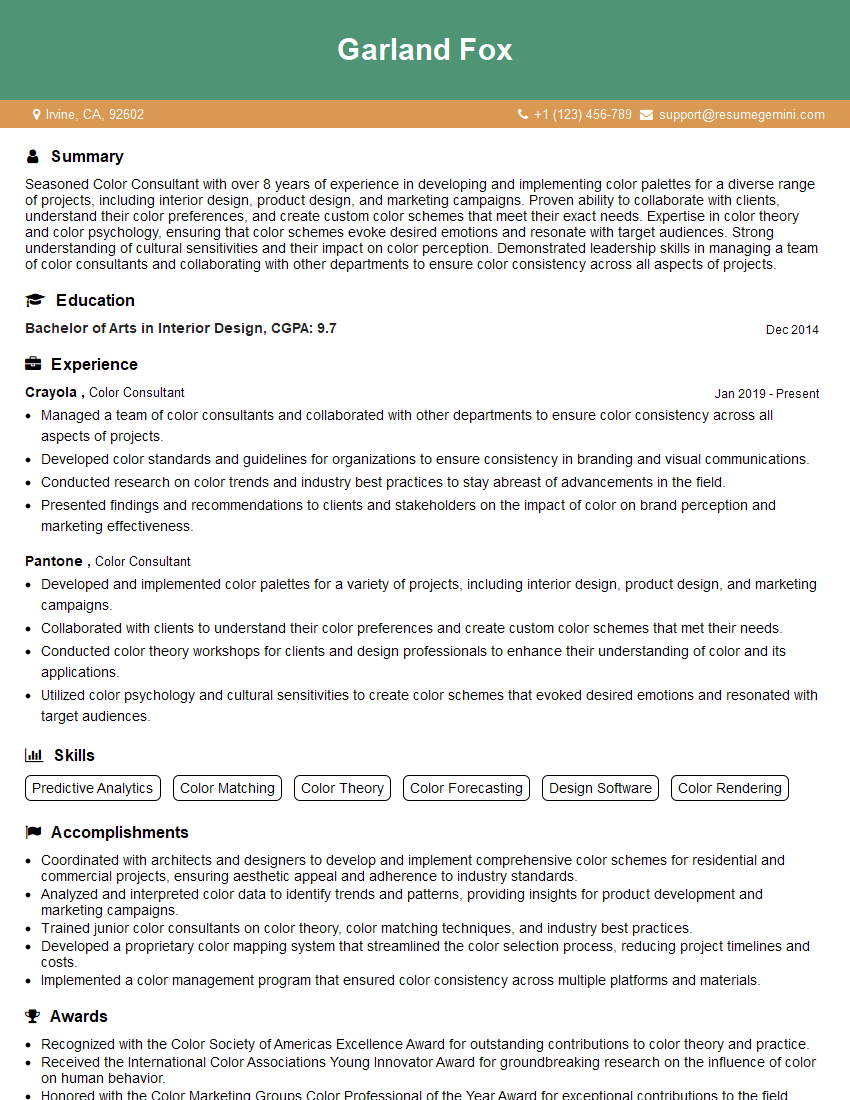
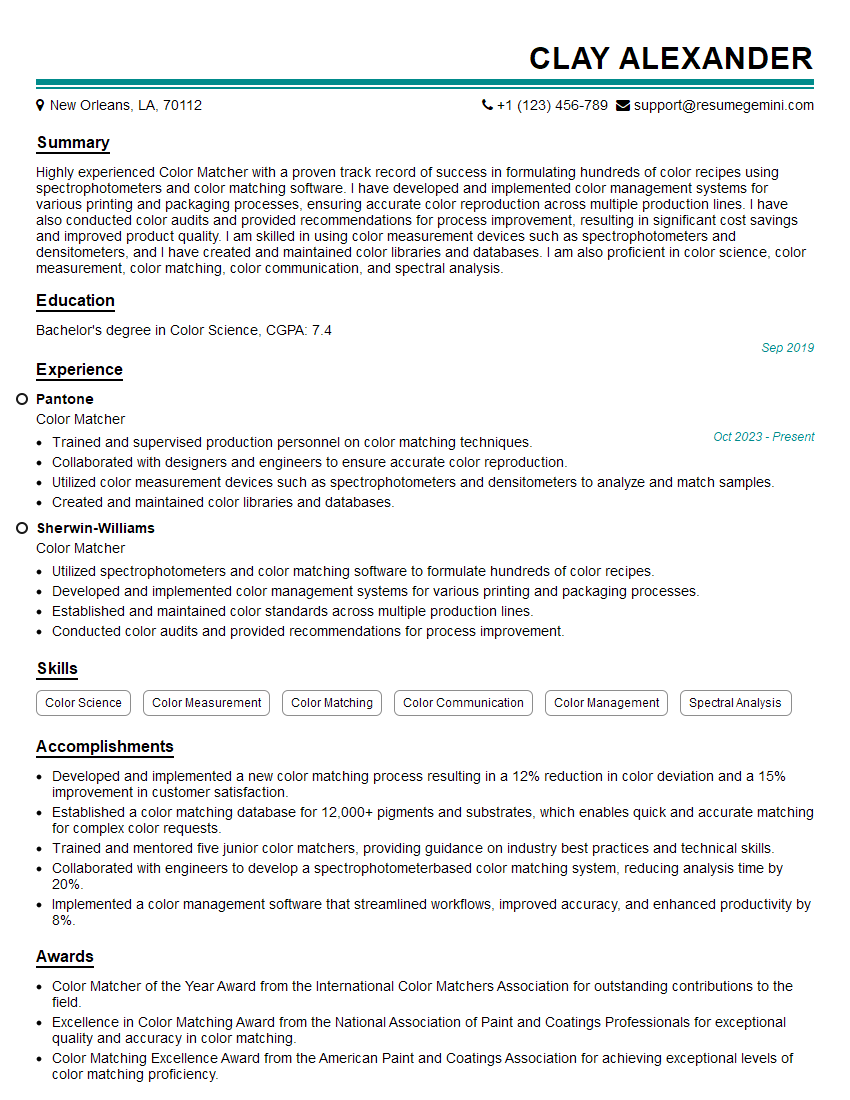
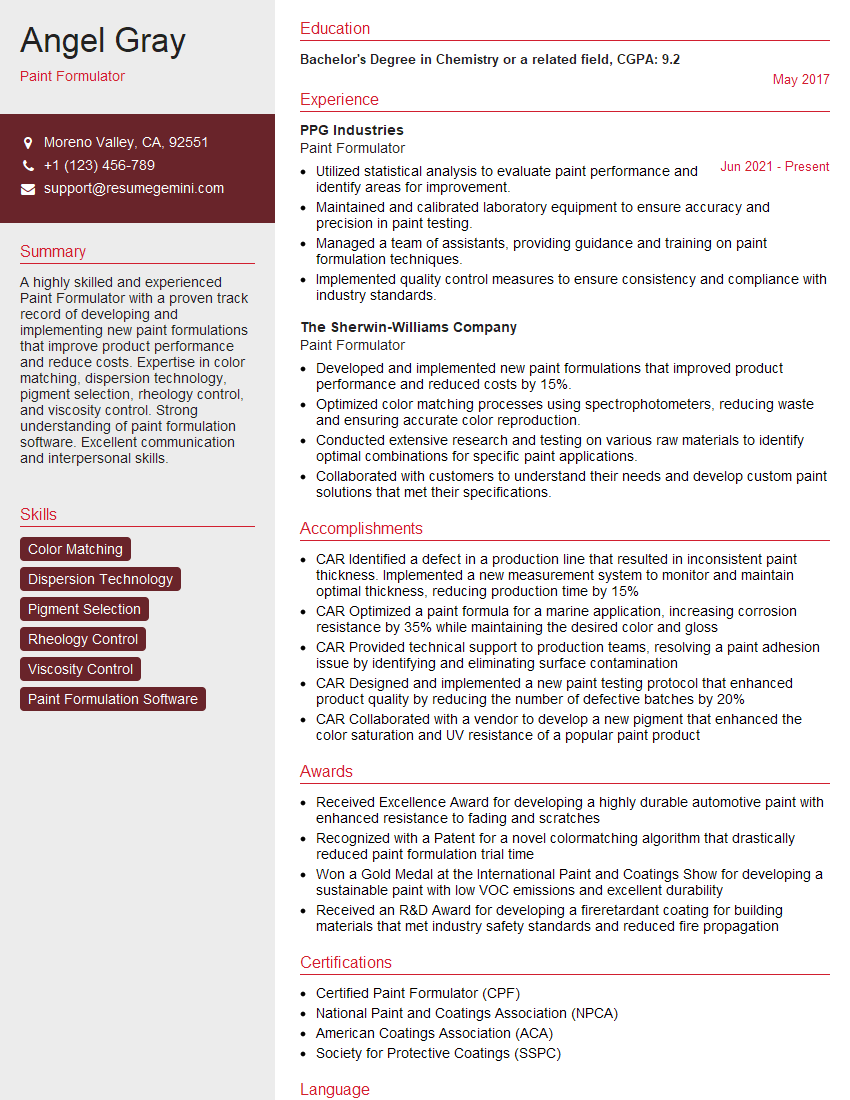
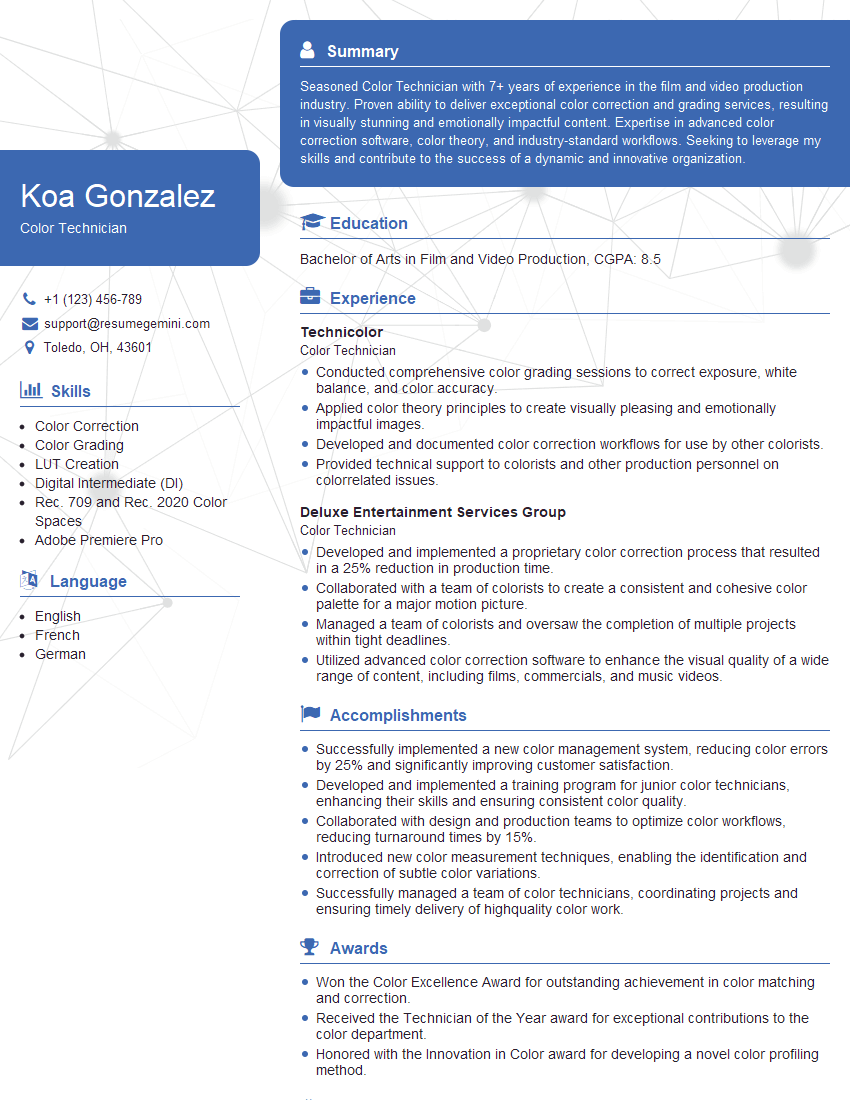
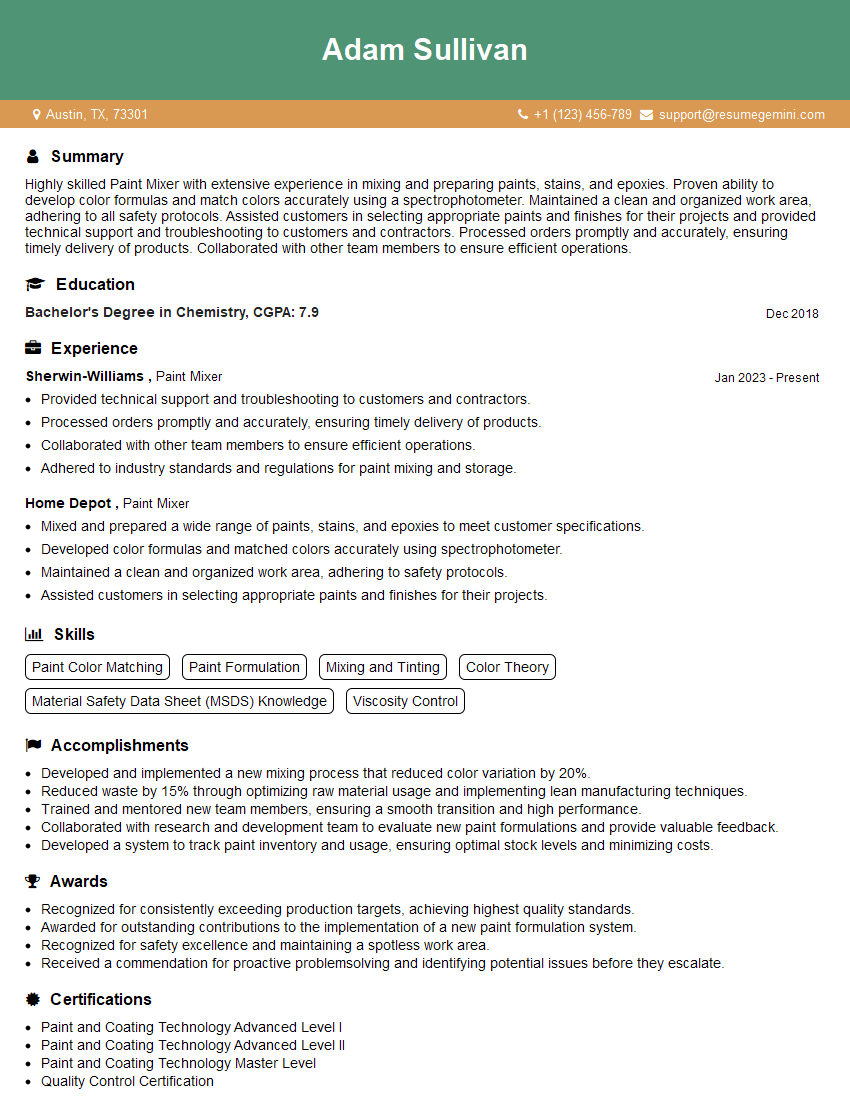
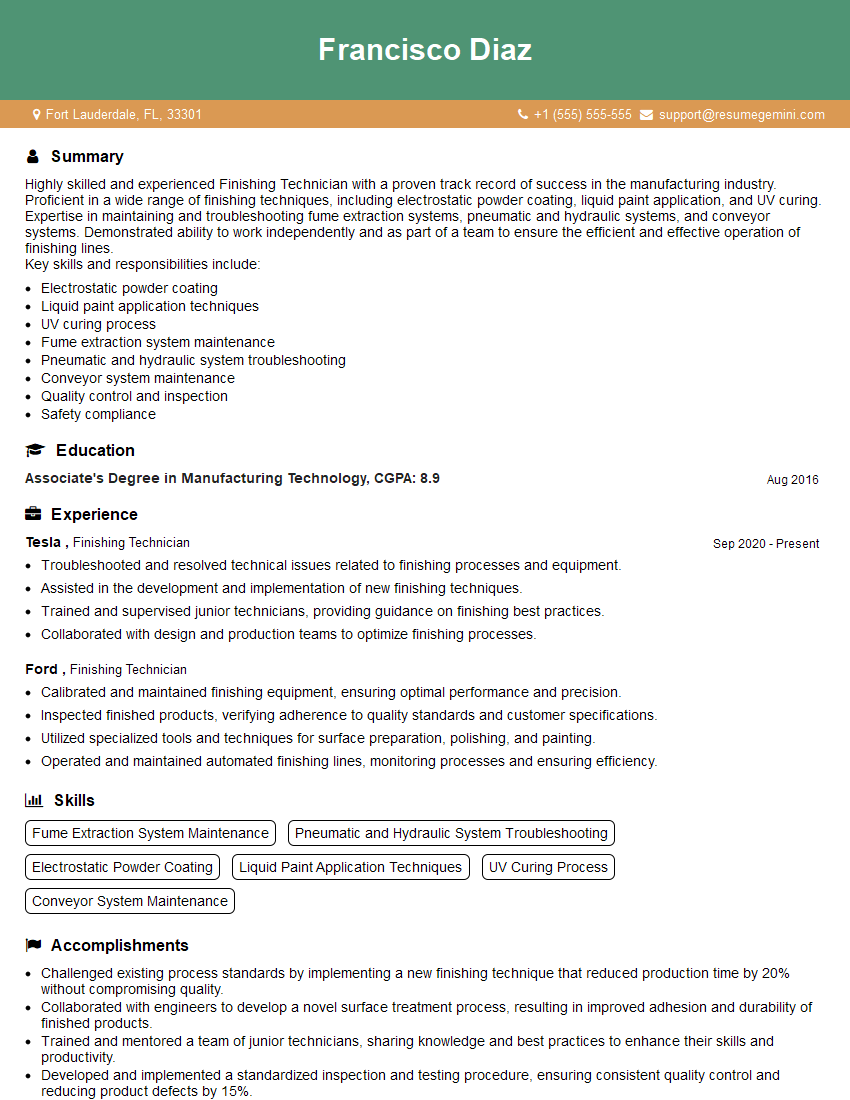
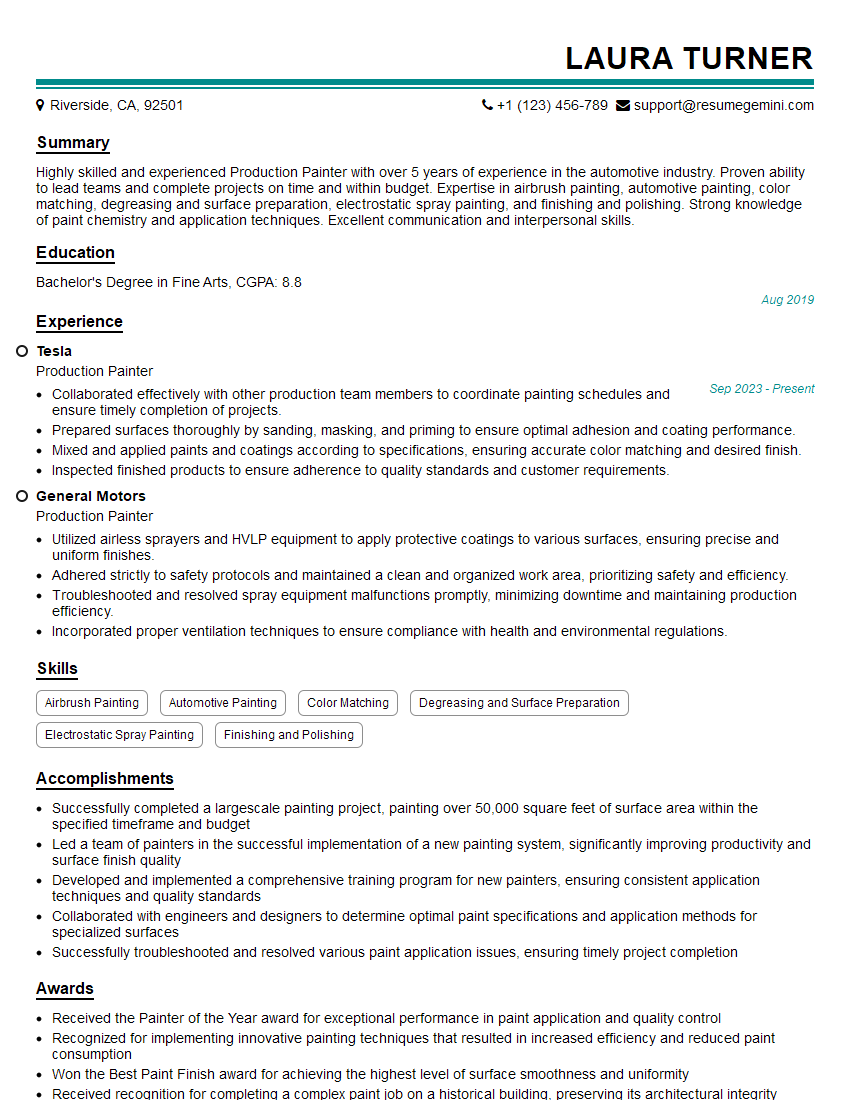
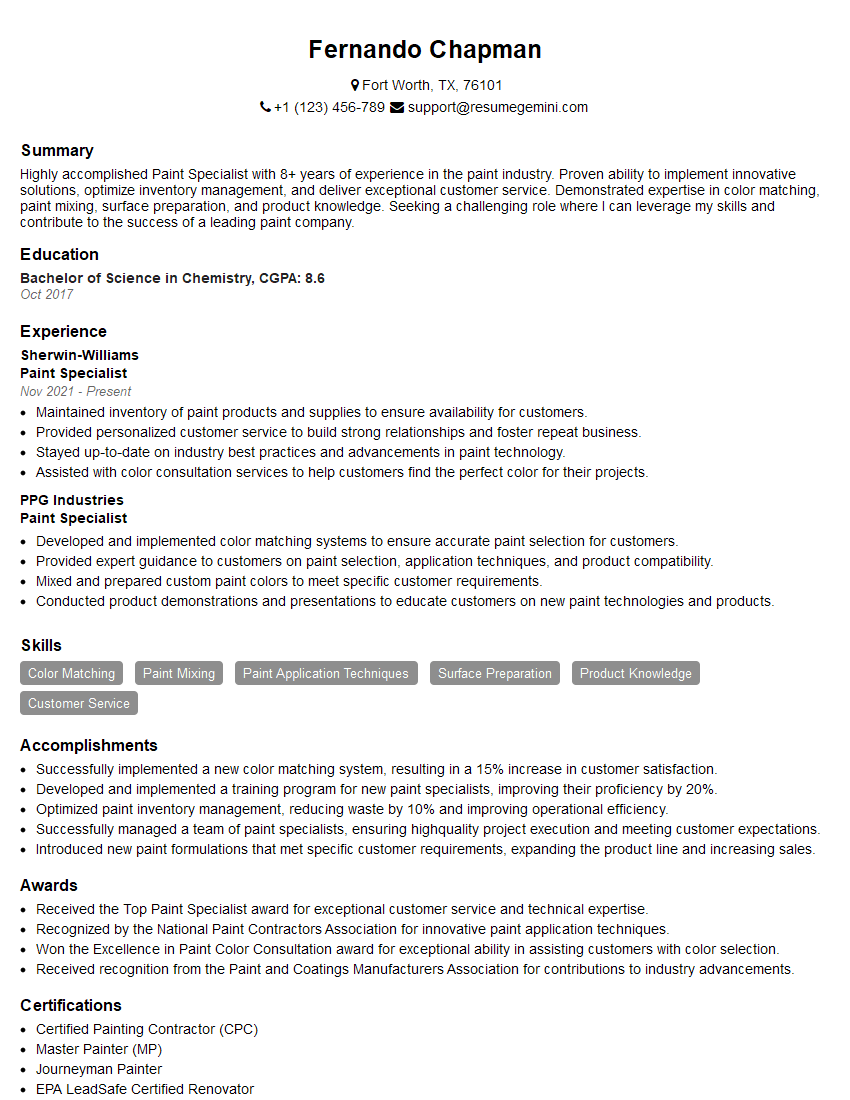
Mastering paint mixing and color matching opens doors to exciting career opportunities in various industries, from construction and design to manufacturing and art. A strong understanding of these skills demonstrates precision, attention to detail, and problem-solving abilities – highly valued attributes in any workplace. To maximize your job prospects, invest time in creating a professional, ATS-friendly resume that highlights your skills and experience effectively. ResumeGemini is a trusted resource to help you build a compelling resume that showcases your expertise. They provide examples of resumes tailored to paint mixing and color matching to give you a head start. Take the next step towards your dream career today!
Explore more articles
Users Rating of Our Blogs
Share Your Experience
We value your feedback! Please rate our content and share your thoughts (optional).
What Readers Say About Our Blog
Really detailed insights and content, thank you for writing this detailed article.
IT gave me an insight and words to use and be able to think of examples