Feeling uncertain about what to expect in your upcoming interview? We’ve got you covered! This blog highlights the most important Physical Prototyping Techniques interview questions and provides actionable advice to help you stand out as the ideal candidate. Let’s pave the way for your success.
Questions Asked in Physical Prototyping Techniques Interview
Q 1. Describe your experience with different rapid prototyping techniques (e.g., 3D printing, CNC machining, injection molding).
My experience encompasses a wide range of rapid prototyping techniques, each with its own strengths and weaknesses. I’ve extensively used 3D printing (FDM, SLA, SLS), CNC machining, and injection molding. With 3D printing, I’ve prototyped everything from complex geometries for medical devices to intricate housing components for electronics. CNC machining has been invaluable for creating high-precision parts with smooth surfaces and tight tolerances, particularly for functional prototypes that need to interface with other components. Finally, injection molding has provided the opportunity to create high-volume, accurate, and cost-effective prototypes when nearing mass production.
For instance, in one project designing a new ergonomic hand tool, I used FDM printing for initial concept models to quickly iterate on the design. Then, I switched to CNC machining to create a more refined prototype with improved surface finish and dimensional accuracy before finally moving to injection molding for a final prototype that closely resembled the intended manufacturing process.
Q 2. What are the advantages and disadvantages of using FDM, SLA, and SLS 3D printing?
Let’s compare three common 3D printing methods: FDM (Fused Deposition Modeling), SLA (Stereolithography), and SLS (Selective Laser Sintering).
- FDM: Advantages include low cost, ease of use, and ability to print large parts. Disadvantages are lower resolution, less precise dimensional accuracy, and a somewhat layered surface finish. Think of it like a hot glue gun meticulously laying down plastic layers.
- SLA: Advantages are high resolution, excellent detail, and smooth surface finish. Disadvantages are higher cost per part, slower build speeds, and the need for post-processing (support removal, cleaning). Imagine a laser carefully curing liquid resin layer by layer, creating a very precise and detailed object.
- SLS: Advantages include the ability to print complex geometries, strong parts, and a wide range of materials (including powders). Disadvantages are slower build times, higher cost, and the need for post-processing (powder removal). This process uses a laser to fuse powdered material together, creating robust parts from the inside out.
The choice depends heavily on the project requirements. For a quick, low-cost concept model, FDM might suffice. For a high-precision part requiring a smooth finish, SLA is a better choice. For robust, complex parts, SLS is often preferred.
Q 3. Explain the process of creating a physical prototype from a CAD model.
Creating a physical prototype from a CAD model is a multi-step process that begins with proper CAD design and ends with a finished product.
- CAD Design: This is the crucial first step. The model must be meticulously designed, considering all aspects of the final product.
- File Preparation: The CAD model needs to be prepared for the chosen manufacturing process. This might involve fixing any errors, simplifying geometry, or adding support structures for 3D printing.
- Manufacturing Process Selection: Choose the appropriate method based on factors like accuracy, material properties, and budget (e.g., 3D printing, CNC machining, injection molding).
- Prototype Creation: The chosen manufacturing method is used to create the physical prototype.
- Post-Processing: Depending on the process, post-processing may be required. This could involve removing supports, cleaning, sanding, or painting.
- Assembly (if necessary): If the prototype consists of multiple parts, they need to be assembled.
- Testing and Evaluation: The prototype is rigorously tested and evaluated to identify any design flaws or areas for improvement.
For example, if using 3D printing, the .stl file from the CAD software would be sliced using the printer’s software, and then the printing process would begin. CNC machining requires the CAD model to be imported into CAM software which generates the toolpaths to guide the cutting machine.
Q 4. How do you select the appropriate prototyping method for a given project?
Selecting the appropriate prototyping method requires a careful consideration of several factors:
- Budget: FDM is generally the cheapest, followed by SLA, SLS, CNC machining, and finally injection molding.
- Required Accuracy and Finish: High-precision parts need SLA, CNC machining, or injection molding. FDM offers lower accuracy.
- Geometry Complexity: SLS excels at complex geometries; FDM might struggle.
- Material Properties: The required material strength, flexibility, and other properties dictate the process.
- Lead Time: FDM and SLA can be quicker than CNC machining or injection molding.
- Volume: Injection molding is ideal for high-volume prototypes.
For instance, a quick concept validation might utilize FDM. A functional prototype needing tight tolerances might use CNC machining. A high-volume prototype that needs to resemble the final product might use injection molding.
Q 5. What are the key considerations when designing for manufacturability?
Designing for manufacturability (DFM) is crucial to ensure the prototype can be efficiently and cost-effectively produced. Key considerations include:
- Simplification of Geometry: Avoid complex shapes or features that are difficult or expensive to manufacture.
- Material Selection: Choose materials readily available and compatible with the chosen manufacturing process.
- Tolerances: Specify realistic manufacturing tolerances to avoid costly precision requirements.
- Assembly Considerations: Design parts for easy assembly to reduce production time and cost.
- Surface Finish: Consider the desired surface finish and its impact on manufacturing costs.
- Draft Angles: Incorporate draft angles on features to facilitate removal from molds or machining.
For example, sharp corners should be avoided in injection molding as they are prone to defects. Instead, fillets (rounded corners) should be incorporated.
Q 6. Describe your experience with tolerance analysis in prototyping.
Tolerance analysis is critical in prototyping to ensure that the final product meets the design specifications. This involves identifying the permissible variations in dimensions and other characteristics of the prototype and its components. I use various techniques, including:
- Geometric Dimensioning and Tolerancing (GD&T): Employing GD&T symbols to clearly specify tolerances on drawings, ensuring the manufacturing process adheres to strict quality standards.
- Statistical Tolerance Analysis: Using statistical methods to predict the probability of a component falling outside the acceptable tolerance range.
- Monte Carlo Simulation: Employing simulation software to model variations in dimensions and assess their impact on the final product’s functionality.
For example, in a project involving a precise fitting mechanism, I performed a Monte Carlo simulation to determine the probability of the parts not fitting correctly due to manufacturing tolerances. This helped refine the design and tighten critical tolerances while keeping non-critical ones relaxed, optimizing the cost and manufacturability.
Q 7. How do you manage material selection for different prototyping processes?
Material selection is crucial and highly dependent on the prototyping process and the desired properties of the final product. Factors to consider include:
- Process Compatibility: The material must be compatible with the selected manufacturing process (e.g., ABS for FDM, resin for SLA, nylon powder for SLS).
- Mechanical Properties: The required strength, stiffness, flexibility, and other mechanical properties influence material choice.
- Thermal Properties: If the prototype will be subjected to high or low temperatures, the material’s thermal properties must be carefully considered.
- Cost: The material’s cost per unit is a significant factor, especially for large-scale projects.
- Biocompatibility (if necessary): For medical devices or implants, biocompatibility is a critical requirement.
For example, for a durable, functional prototype for an outdoor device, I might choose a high-impact ABS plastic for FDM or a strong, UV-resistant resin for SLA. For a medical prototype, the material would need to be biocompatible and meet regulatory standards.
Q 8. How do you ensure the accuracy and precision of your prototypes?
Ensuring accuracy and precision in prototyping is paramount. It’s a multi-step process that begins even before the physical creation. First, the digital design needs meticulous attention to detail. This involves using high-resolution CAD models and rigorously checking dimensions, tolerances, and surface finishes. For example, I would use features like design rule checks (DRC) in my CAD software to identify potential issues early on.
Next, the manufacturing process itself requires careful selection of techniques and parameters. For 3D printing, this means selecting appropriate materials, optimizing print settings (layer height, infill density, nozzle temperature), and performing calibration checks to ensure the printer’s accuracy. For CNC machining, it involves selecting the right tooling, feeds and speeds, and verifying the toolpaths.
Finally, post-processing plays a crucial role. This may include techniques like sanding, polishing, or even surface treatments to achieve the desired finish and dimensional accuracy. Regular calibration and maintenance of equipment is also essential. I always maintain detailed records of all settings and parameters used, allowing me to reproduce results and identify sources of error.
Think of it like baking a cake – a precise recipe (CAD model), the right ingredients (materials), and careful execution (manufacturing & post-processing) are all crucial for a perfect result.
Q 9. What software packages are you proficient in for CAD modeling and CAM programming?
My expertise spans several leading CAD and CAM software packages. I’m highly proficient in SolidWorks for 3D modeling, offering robust features for complex designs and detailed simulations. For CAM programming, I extensively use Mastercam, which allows me to generate efficient toolpaths for various subtractive manufacturing processes like CNC milling and turning. I also have experience with Fusion 360, a cloud-based platform offering a seamless integration of CAD and CAM functionalities, making collaborative projects and design iteration exceptionally smooth.
Beyond these, I’m familiar with other industry-standard software, including Autodesk Inventor, Creo Parametric, and various slicing software for 3D printing (Cura, PrusaSlicer). This breadth of experience enables me to select the most appropriate software based on the project’s specifics, optimizing workflow and efficiency.
Q 10. Describe your experience with post-processing techniques for 3D printed parts.
Post-processing of 3D printed parts is often as critical as the printing itself. It’s where we bridge the gap between the raw printed part and the final, functional prototype. My experience encompasses a wide array of techniques, depending on the material and desired outcome.
- Support Removal: Carefully removing support structures without damaging the part is crucial. This often requires specialized tools and techniques, varying from simple manual removal to using solvents or specialized tools.
- Surface Finishing: Techniques like sanding, filing, and polishing are used to improve surface smoothness and aesthetics. The choice of abrasive depends on the material and desired finish.
- Painting and Coating: Applying paint, primer, or other coatings enhances appearance, durability, and functionality. This may include specialized coatings for specific applications such as chemical resistance or UV protection.
- Heat Treatment: For some materials like certain plastics, heat treatment can improve strength and dimensional stability.
For example, I recently worked on a project where we 3D printed a complex biomechanical device using a resin material. After printing, we meticulously removed the supports, then used a fine-grit sanding process followed by polishing to achieve a smooth, biocompatible surface before applying a specialized coating.
Q 11. Explain your approach to troubleshooting issues during the prototyping process.
Troubleshooting is an integral part of prototyping. My approach is systematic and data-driven. I start by thoroughly documenting the issue, including the symptoms, the steps leading to the problem, and any relevant data (e.g., machine logs, parameter settings). Then, I use a structured approach:
- Identify the Root Cause: I systematically investigate possible causes, starting with the most likely. This could involve checking the CAD model for errors, verifying the manufacturing process parameters, analyzing the material properties, or examining the post-processing steps.
- Test Hypotheses: I design and conduct experiments to test my hypotheses. For example, if I suspect a problem with the print settings, I might run a test print with altered parameters. If a material defect is suspected, I would switch to a different batch.
- Implement Solutions: Based on the experimental results, I implement the appropriate corrective action, which may involve modifying the CAD model, adjusting the manufacturing process, using alternative materials, or refining the post-processing steps.
- Document Findings: I meticulously document the entire troubleshooting process, including the problem, the investigation steps, the findings, and the implemented solutions. This aids in future problem prevention and helps build a valuable knowledge base.
This methodical approach has consistently helped me resolve complex prototyping issues efficiently and effectively.
Q 12. How do you document and manage the prototyping process?
Documentation and process management are critical for successful prototyping. I employ a combination of digital and physical methods.
- Version Control: All CAD models are stored in a version control system (like Git) to track changes and revert to previous versions if necessary.
- Detailed Logs: I maintain detailed logs of all prototyping steps, including material specifications, manufacturing parameters, and post-processing procedures. This information is crucial for reproducibility and troubleshooting.
- Digital Project Management Software: I use project management tools (such as Jira or Asana) to manage tasks, deadlines, and team communication. This enhances collaboration and keeps the project on track.
- Physical Organization: Physical prototypes are labeled and stored in an organized manner, making it easy to locate and retrieve them as needed.
- Test Reports: I generate detailed test reports that document the testing procedures, results, and analysis. These reports provide valuable insights into the prototype’s performance and help inform design iterations.
This comprehensive documentation approach ensures clarity, reproducibility, and efficient project management.
Q 13. Describe your experience with different types of prototyping materials (e.g., plastics, metals, composites).
My experience encompasses a wide range of prototyping materials, each with its own advantages and limitations. The choice of material is crucial and depends heavily on the application and performance requirements of the final product.
- Plastics: I’ve worked extensively with various plastics like ABS, PLA, PETG for 3D printing, offering good balance of cost, ease of processing, and reasonable mechanical properties. For injection molding, I’ve used materials offering higher strength and temperature resistance.
- Metals: I have experience with aluminum, stainless steel, and titanium, often using CNC machining for prototyping. These provide high strength and durability, crucial for applications requiring robustness.
- Composites: I have experience with carbon fiber reinforced polymers (CFRP), offering high strength-to-weight ratios. These are often used when lightweight and high strength are critical design factors. Working with composites requires specialized processing techniques.
For example, for a lightweight drone frame, I would choose CFRP, while a high-strength engine component might require a metal like aluminum or stainless steel. Material selection is a critical design decision that directly impacts the prototype’s performance and cost.
Q 14. How do you assess the functionality and performance of a physical prototype?
Assessing the functionality and performance of a physical prototype is crucial. This involves a multi-faceted approach that combines qualitative and quantitative methods.
- Functional Testing: This involves systematically testing the prototype’s functionality according to its design specifications. For example, if the prototype is a mechanical device, this might involve testing its range of motion, force output, and speed. If it’s an electronic device, this might involve testing its power consumption, signal integrity, and response time.
- Performance Evaluation: This involves quantifying the prototype’s performance using appropriate metrics. This could involve measuring the prototype’s strength, durability, efficiency, or other relevant parameters. Data is meticulously recorded and analyzed.
- Comparative Analysis: The performance of the prototype is often compared to simulations or other prototypes to evaluate design improvements and identify areas for optimization.
- User Feedback: When appropriate, user feedback is gathered through usability testing to ensure the prototype meets user needs and expectations. This is especially important for user-centered designs.
The specific testing methods depend heavily on the nature of the prototype, but the goal is always to gather objective data to inform design improvements and ensure the prototype meets its intended purpose.
Q 15. How do you collaborate with engineers and designers during the prototyping phase?
Collaboration during prototyping is key to success. It’s not a solo act! I believe in a highly iterative, communicative process. I start by deeply understanding the engineering and design briefs, ensuring clear communication channels are established. This involves regular meetings—daily stand-ups for quick updates, weekly progress meetings to discuss challenges and solutions, and design reviews to assess form and function. I actively seek feedback throughout the process, using tools like shared online platforms for version control and feedback annotation on physical prototypes. For example, when working on a complex robotics project, I worked closely with the mechanical engineer to ensure the prototype’s structural integrity and with the software engineer to verify seamless integration of the electronics. This collaborative approach significantly reduces errors and improves the overall quality of the final prototype.
Career Expert Tips:
- Ace those interviews! Prepare effectively by reviewing the Top 50 Most Common Interview Questions on ResumeGemini.
- Navigate your job search with confidence! Explore a wide range of Career Tips on ResumeGemini. Learn about common challenges and recommendations to overcome them.
- Craft the perfect resume! Master the Art of Resume Writing with ResumeGemini’s guide. Showcase your unique qualifications and achievements effectively.
- Don’t miss out on holiday savings! Build your dream resume with ResumeGemini’s ATS optimized templates.
Q 16. How do you handle changes in design requirements during prototyping?
Handling design changes during prototyping requires flexibility and a well-defined change management process. It’s crucial to understand the impact of each change request—some might be minor adjustments, while others could necessitate a complete redesign. We use a formal change request system, documenting each change, its rationale, and the impact on schedule and budget. For smaller changes, we often incorporate them directly into the next iteration of the prototype. Major changes may require reevaluating the entire prototyping strategy, possibly employing different techniques or selecting alternative materials. For example, during the development of a medical device, a late-stage change in material specification necessitated a re-evaluation of biocompatibility testing and a slight modification of the manufacturing process, which we managed smoothly through effective communication and careful planning.
Q 17. Describe a time when you had to overcome a significant challenge in prototyping.
One significant challenge I faced involved creating a prototype for a complex, miniature electromechanical device. The design called for incredibly tight tolerances and intricate internal components. Initial attempts using traditional machining techniques proved too costly and time-consuming, resulting in significant delays. To overcome this, I explored additive manufacturing (3D printing) techniques, specifically using a high-resolution stereolithography (SLA) printer. This enabled us to create highly detailed prototypes with the required accuracy, drastically reducing manufacturing time and cost. The key was thoroughly analyzing the specific requirements and then selecting the most appropriate prototyping method – a decision that saved the project from significant delays and budget overruns.
Q 18. What are the limitations of physical prototyping?
Physical prototyping, while valuable, does have limitations. One key limitation is cost – materials, labor, and equipment can be expensive, especially for complex prototypes. Another limitation is time – the process of creating physical prototypes can be slow, especially for intricate designs. Furthermore, creating accurate representations of specific functionalities, such as software integration or complex interactions, may be challenging. Finally, scaling a physical prototype to production can present issues, as the materials and manufacturing processes used for prototyping may not be suitable for mass production. For example, a prototype made using a high-end 3D printer might not be cost-effective to manufacture on a large scale using injection molding.
Q 19. How do you balance the speed and cost of prototyping with the required level of fidelity?
Balancing speed, cost, and fidelity is a constant challenge. The approach is highly context-dependent. For early-stage exploration, I might use low-fidelity methods like cardboard mockups or simple 3D printed models, focusing on speed and low cost. As the design matures, I’d gradually increase the fidelity, perhaps using more sophisticated techniques like CNC machining or vacuum casting, even investing in rapid tooling for certain aspects. This tiered approach ensures that resources are allocated efficiently. For example, in a consumer electronics project, I might start with a basic clay model for form exploration, then move to a 3D-printed functional prototype for basic testing, and finally create a high-fidelity prototype using injection-molded components before committing to full-scale manufacturing.
Q 20. How do you incorporate user feedback into the prototyping process?
User feedback is crucial. I incorporate it using several techniques. Usability testing sessions, where users interact with the prototype and provide feedback, are essential. I also utilize observation techniques, observing users’ interactions with the prototype to identify areas for improvement. Following each test session, I carefully document user feedback, classifying it according to severity and frequency. This informs iterative design modifications, ensuring the prototype aligns with user needs and expectations. For example, during testing of a new mobile app interface, we observed users struggling with a specific navigation button. This feedback led us to redesign the button, improving overall usability.
Q 21. What are your experiences with different types of rapid tooling?
My experience spans various rapid tooling methods. I’m proficient in CNC machining for precise, durable prototypes; 3D printing (SLA, FDM, SLS) for rapid iteration and complex geometries; vacuum casting for creating multiple copies of a prototype; and injection molding for high-fidelity prototypes that closely resemble the final product. The selection of the most suitable method depends on factors such as the complexity of the design, material requirements, budget, and time constraints. Each method has its strengths and weaknesses – for example, CNC machining is excellent for creating accurate parts but can be time-consuming and expensive for complex geometries, while 3D printing is fast but may have limitations in terms of material properties and surface finish. Understanding these trade-offs is crucial for making informed decisions.
Q 22. Explain your understanding of design for additive manufacturing (DfAM).
Design for Additive Manufacturing (DfAM) is a crucial methodology that considers the unique capabilities and limitations of 3D printing technologies throughout the entire design process. It’s not simply about converting a traditionally designed part into a printable file; it’s about optimizing the design from the ground up to leverage the advantages of additive manufacturing for better functionality, reduced cost, and improved performance.
For instance, unlike traditional subtractive manufacturing where material is removed, DfAM embraces the ability to create complex internal structures, lattices, and geometries impossible with traditional methods. This leads to lighter, stronger, and more efficient parts. Consider designing a lightweight aerospace component: instead of a solid block, DfAM allows the creation of a lattice structure with the same strength but significantly reduced weight, saving fuel and improving efficiency.
Key aspects of DfAM include understanding support structures, overhang limitations, build orientation, and material properties. For example, selecting the optimal orientation minimizes support structures, reducing waste and improving surface finish. DfAM also considers the print process itself – choosing a layer height and infill density appropriate for the final function and structural requirements of the part. Poorly designed parts can lead to print failures, wasted material, and a suboptimal final product.
Q 23. How do you ensure the sustainability of your prototyping processes?
Sustainability is paramount in my prototyping processes. I prioritize several strategies to minimize environmental impact. Firstly, I select eco-friendly materials whenever possible. This includes using recycled plastics, bioplastics derived from renewable resources, and materials with low carbon footprints. Secondly, I optimize designs for minimal material usage. DfAM techniques like lattice structures and topology optimization are key here. Less material means less waste and reduced energy consumption during manufacturing.
Thirdly, I carefully manage the energy used during the prototyping process. I choose energy-efficient 3D printers and other equipment. I also employ techniques like optimizing print speeds and settings to reduce overall energy use. Finally, responsible waste management is crucial. I ensure proper recycling and disposal of materials, using appropriate recycling facilities and avoiding landfill disposal where possible. We track material usage and waste generated for continuous improvement in sustainability metrics.
Q 24. What safety precautions do you observe during physical prototyping?
Safety is my top priority. When working with physical prototyping, I always adhere to strict safety protocols. This includes using appropriate personal protective equipment (PPE), such as safety glasses, gloves, and respirators, depending on the materials and processes involved. For example, when working with lasers or hazardous chemicals, the appropriate safety gear is mandatory. Furthermore, I ensure the workspace is well-ventilated, especially when using solvents or fumes-producing materials. Proper machine guarding and lockout/tagout procedures are followed for all machinery. Regular maintenance checks on equipment are crucial to prevent accidents.
Training is also a vital element. All team members receive comprehensive training on safe operating procedures for each piece of equipment and material we utilize. We also conduct regular safety briefings to address potential hazards and reinforce best practices. Emergency procedures, including the location of safety equipment and evacuation routes, are clearly communicated and practiced.
Q 25. Explain your experience with reverse engineering techniques.
Reverse engineering is a crucial skill in prototyping, often used to understand the design and manufacturing process of existing products. My experience includes using a variety of techniques, starting with careful disassembly of the target product to document its components and assembly. I then use various measurement tools like calipers, CMMs (Coordinate Measuring Machines), and 3D scanners to capture precise dimensional data. The 3D scanned data is then processed using CAD software to create a digital 3D model. This model can then be analyzed to understand the design choices made by the original manufacturer, potentially identifying areas for improvement or cost reduction.
For example, I once reverse engineered a complex plastic housing to understand its internal structure and manufacturing process. By carefully disassembling it and 3D scanning the individual parts, I created a complete digital model, which revealed subtle design features that weren’t immediately apparent. This information helped us improve the design for a new, more cost-effective version. The process also allows for identification of materials used, which aids in material selection for new prototypes.
Q 26. How do you choose the appropriate scale for a physical prototype?
The appropriate scale for a physical prototype depends on the project’s goals and the stage of development. Early-stage prototypes might be at a smaller scale (e.g., 1:5 or 1:10) to quickly test form, fit, and function without extensive material and time investment. These smaller prototypes are great for initial concept testing and ergonomic assessments. However, as the project progresses, the scale typically increases to a larger scale, and often to full-size (1:1), especially for functional prototypes that need to undergo rigorous testing. For instance, a full-scale prototype of a car door might be needed to test the mechanism and ensure proper alignment with the car body.
The decision on scale also considers the testing requirements. For example, if aerodynamic testing is crucial, a scaled-down model might be sufficient for wind tunnel tests, but for structural testing, a full-scale prototype is necessary. Cost and time constraints also play a significant role in the selection of the appropriate scale. Smaller scale models generally cost less to produce and require less lead time.
Q 27. Describe your experience with creating prototypes for different industries (e.g., automotive, medical, aerospace).
My experience spans various industries. In the automotive industry, I’ve created functional prototypes of car parts, including dashboards, door handles, and interior components, using techniques like 3D printing, CNC machining, and vacuum forming. These prototypes were used for fit and function testing, ergonomic evaluations, and design refinement. In the medical field, I’ve worked on prototypes for surgical instruments and prosthetics, using biocompatible materials and focusing on precision and accuracy. Here, the prototypes undergo stringent testing to ensure biocompatibility and functionality.
For the aerospace sector, I’ve developed prototypes for aircraft components, prioritizing lightweight designs with high strength-to-weight ratios. Additive manufacturing has been particularly crucial here, allowing for the creation of complex lattice structures that optimize weight and performance. These parts have been subjected to extensive structural and fatigue testing. Each industry has its unique requirements and challenges, demanding careful consideration of material selection, manufacturing techniques, and testing protocols.
Q 28. How do you manage the budget and timeline for a prototyping project?
Budget and timeline management are crucial for successful prototyping. I begin by meticulously defining the project scope, identifying all tasks and materials needed. This allows me to create a detailed work breakdown structure (WBS), which helps break down the project into smaller, manageable tasks. I then estimate the cost of each task, considering material costs, labor hours, and equipment usage. This forms the basis for a realistic project budget.
For scheduling, I use project management software to create a detailed Gantt chart, outlining task dependencies and deadlines. This ensures that tasks are completed in a logical sequence and that potential delays are identified and addressed proactively. Regular progress monitoring and communication are key. We hold weekly progress meetings to track performance against the plan and address any challenges promptly. Contingency plans are built into the budget and schedule to account for unexpected delays or cost overruns. This proactive approach ensures that the project stays within budget and meets the agreed-upon timeline.
Key Topics to Learn for Physical Prototyping Techniques Interview
- Additive Manufacturing (3D Printing): Understanding various 3D printing technologies (FDM, SLA, SLS, etc.), material selection, design for additive manufacturing, and post-processing techniques. Practical application: Explain how you would choose a 3D printing method for a specific project based on material properties and desired finish.
- Subtractive Manufacturing: Mastery of machining processes (milling, turning, drilling), selecting appropriate tools and materials, and understanding tolerances and surface finishes. Practical application: Describe a project where you used subtractive manufacturing and the challenges you overcame regarding dimensional accuracy.
- Rapid Prototyping Methods: Familiarity with rapid prototyping techniques like vacuum forming, casting, and sheet metal fabrication. Practical application: Compare and contrast the advantages and disadvantages of different rapid prototyping methods for creating functional prototypes.
- Material Selection and Properties: Deep understanding of material properties (strength, flexibility, durability, etc.) and how they influence prototype design and manufacturing choices. Practical application: Justify your choice of material for a specific prototype application, considering factors like cost, performance, and manufacturability.
- Design for Manufacturing (DFM): Applying DFM principles to create prototypes that are easily and cost-effectively manufactured. Practical application: Explain how you would design a prototype to minimize manufacturing time and costs.
- Prototyping Workflows and Processes: Understanding the entire prototyping process, from initial concept to final testing and iteration. Practical application: Outline the steps you would take to create a functional prototype of a new product.
- Testing and Evaluation: Developing effective testing methods to evaluate prototype performance and identify areas for improvement. Practical application: Describe a time you conducted rigorous testing on a prototype and how you used the results to improve the design.
Next Steps
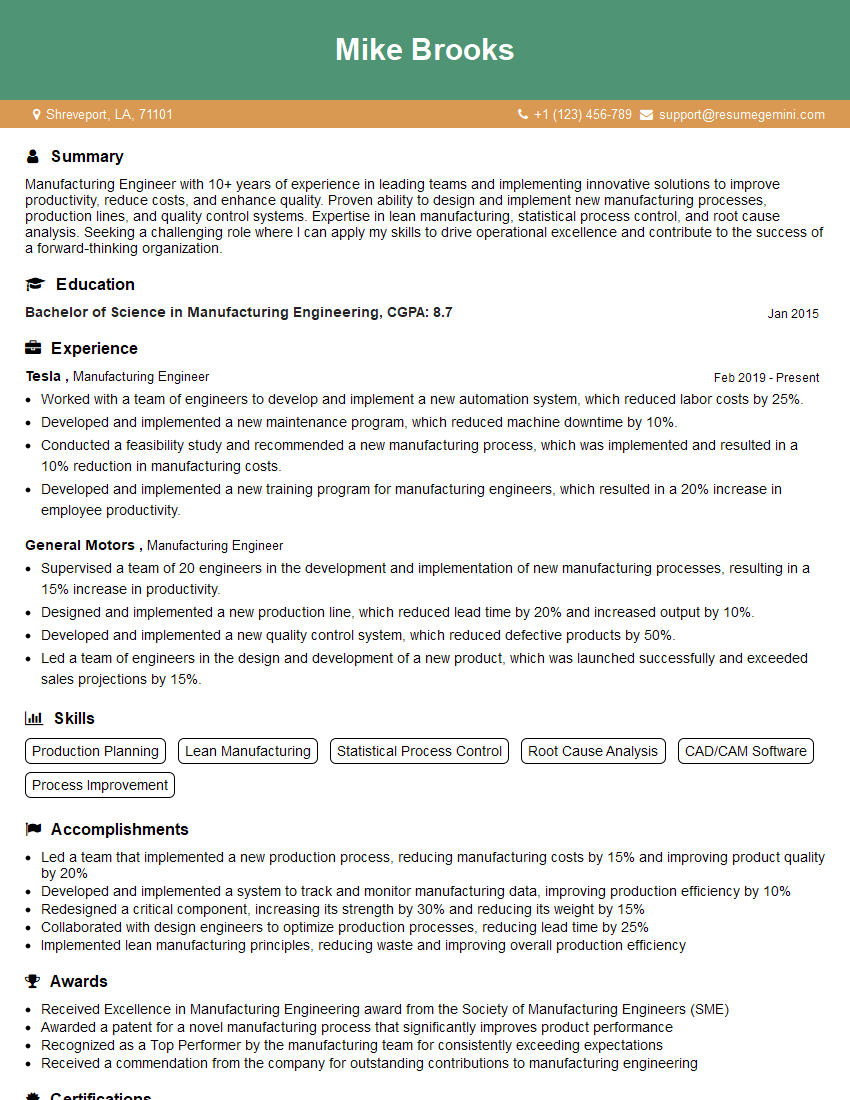
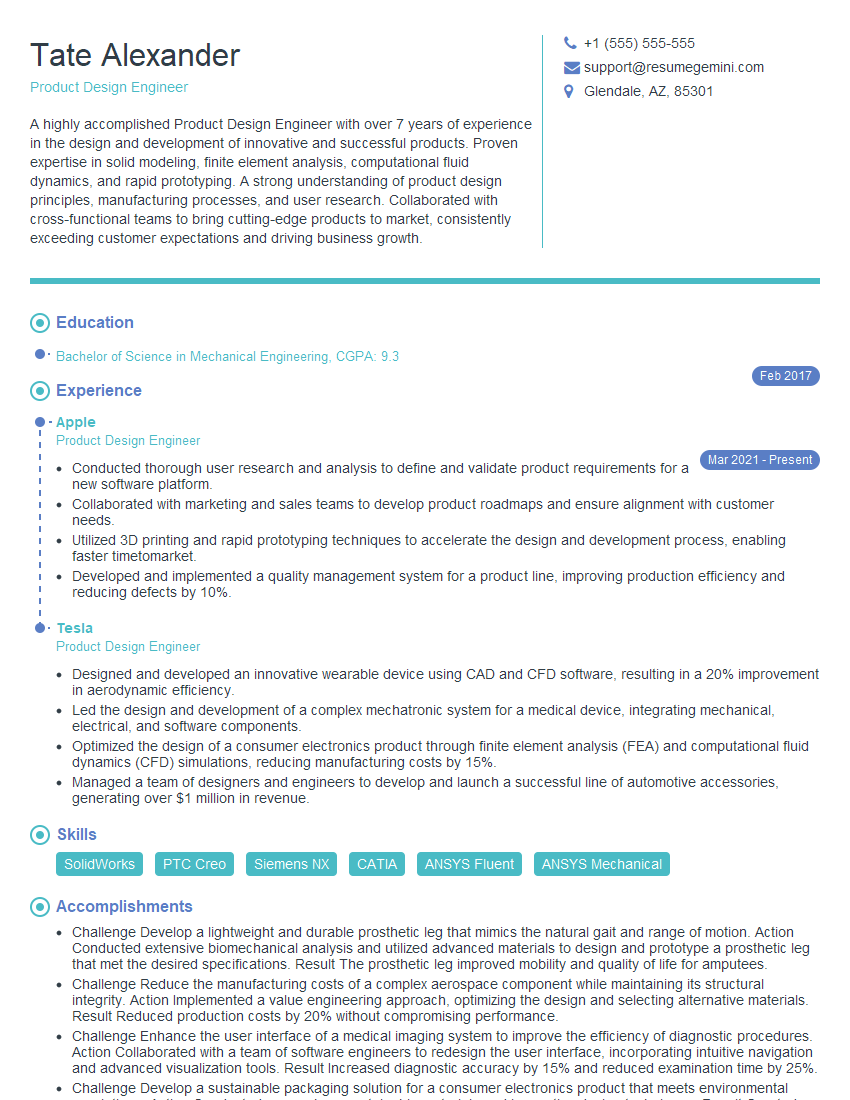
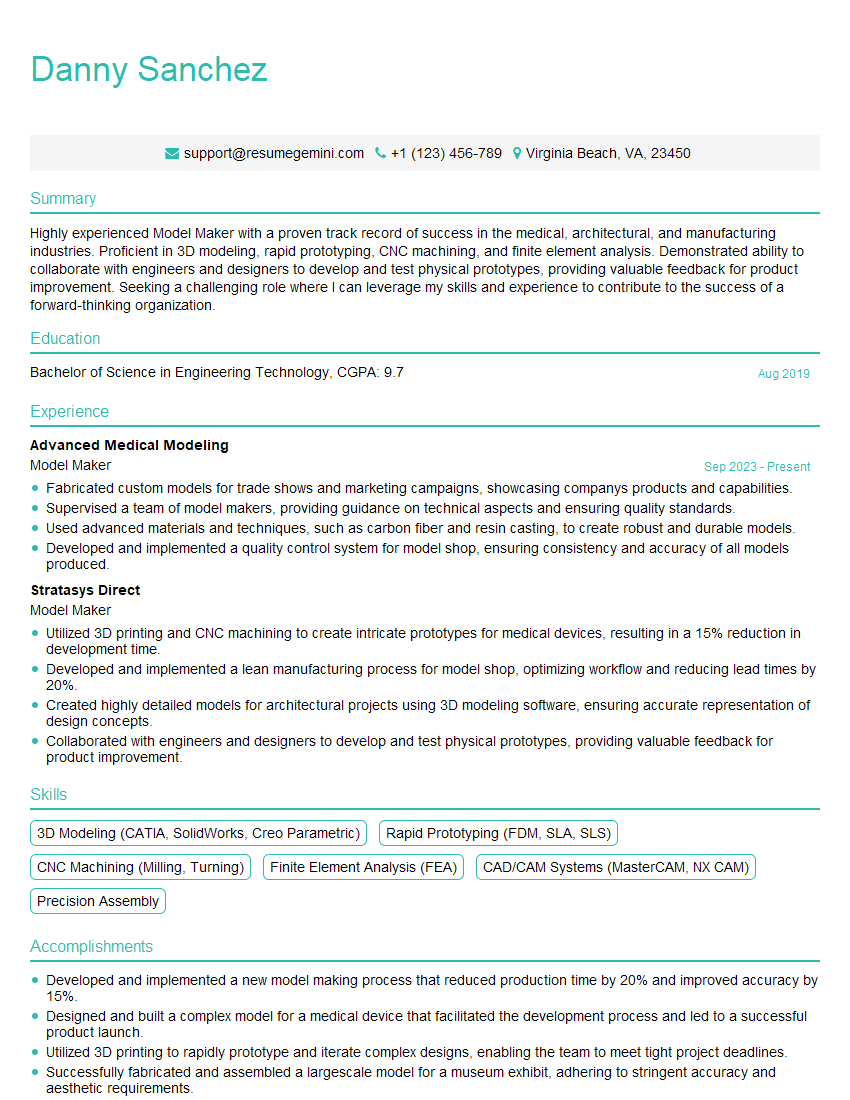
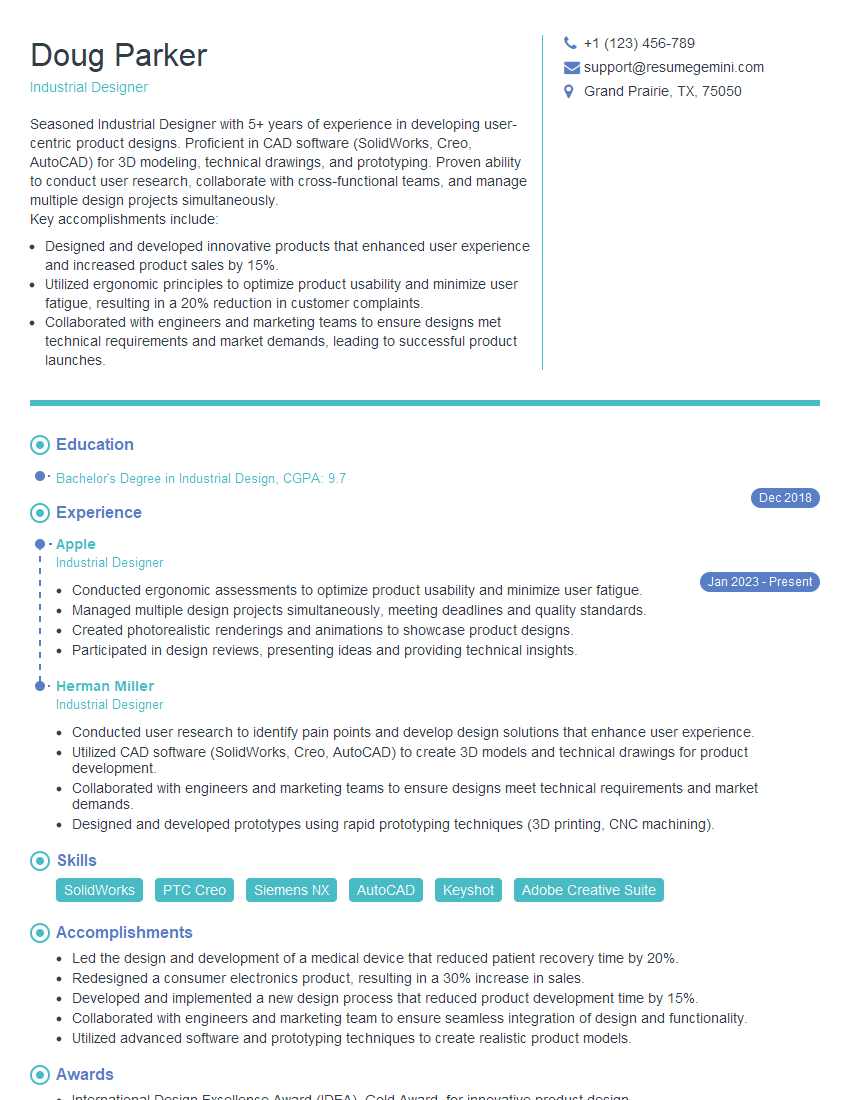
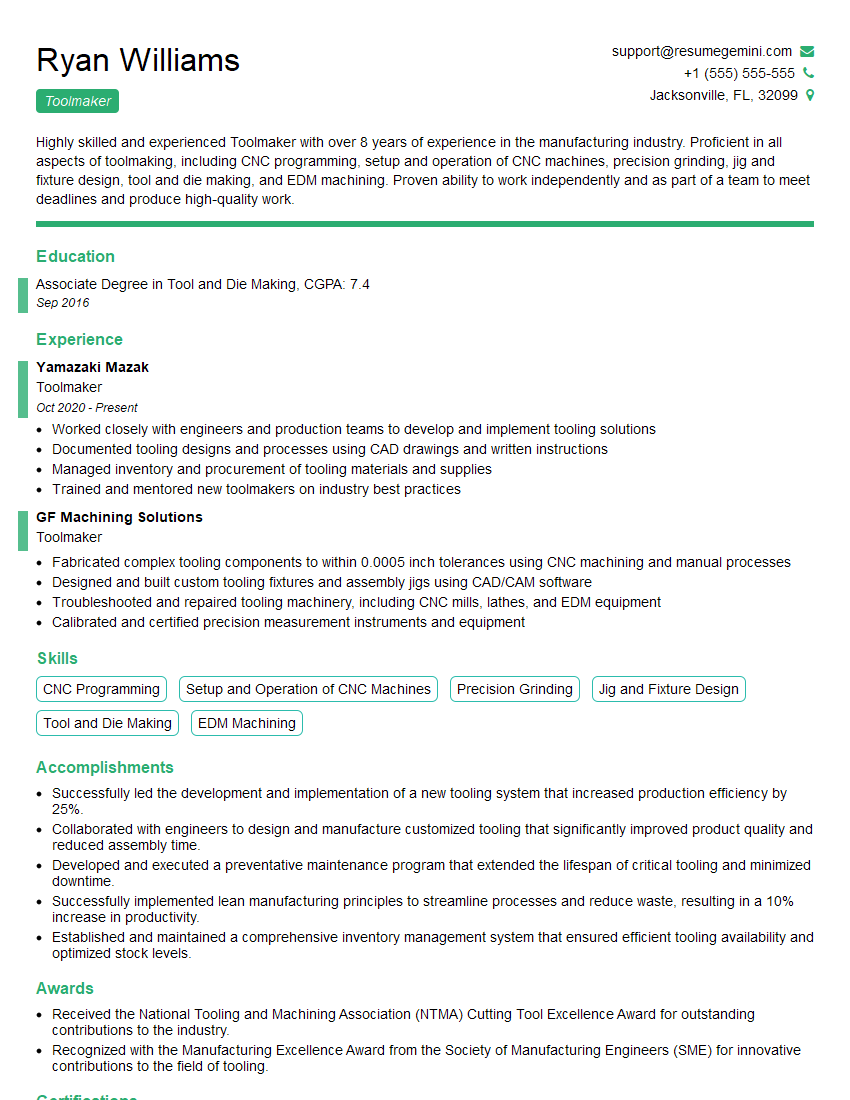
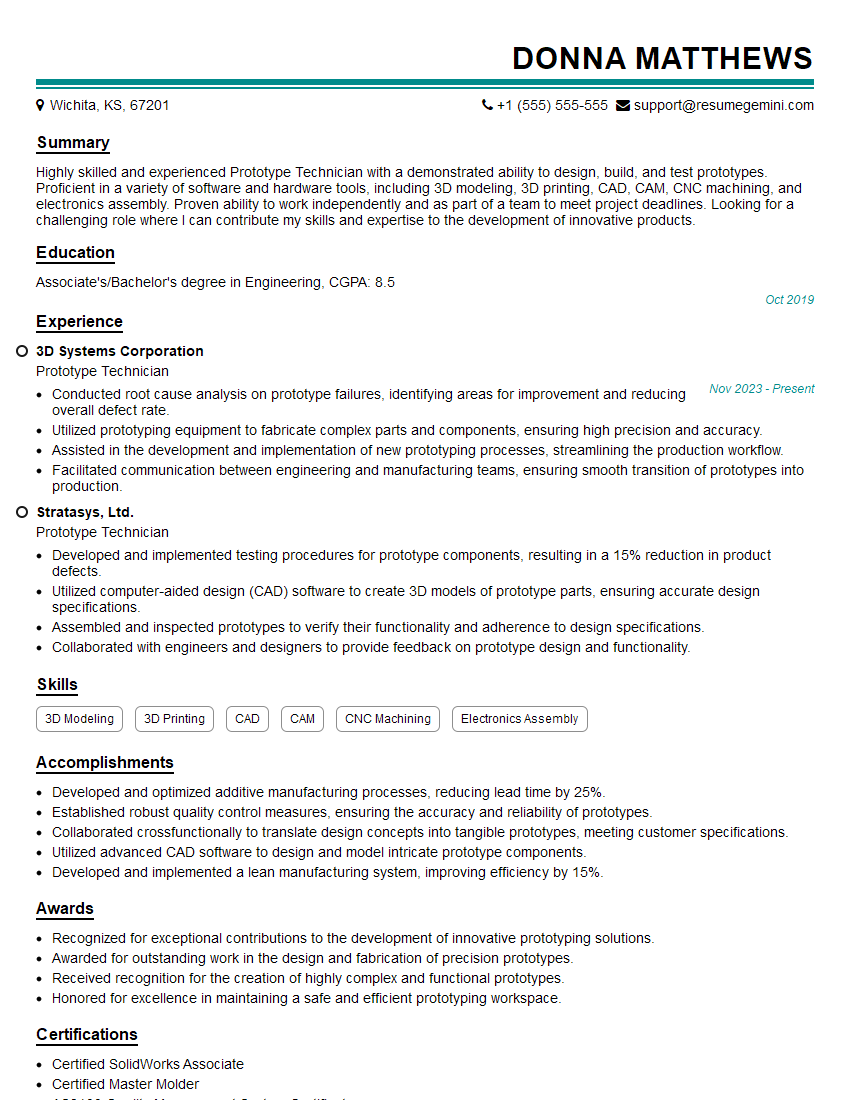
Mastering Physical Prototyping Techniques is crucial for career advancement in many engineering and design fields. A strong understanding of these techniques demonstrates valuable problem-solving skills and practical experience, making you a highly desirable candidate. To further enhance your job prospects, focus on building an ATS-friendly resume that highlights your skills and accomplishments effectively. ResumeGemini is a trusted resource that can help you create a professional and impactful resume. Examples of resumes tailored to Physical Prototyping Techniques are available to guide you through the process.
Explore more articles
Users Rating of Our Blogs
Share Your Experience
We value your feedback! Please rate our content and share your thoughts (optional).
What Readers Say About Our Blog
Really detailed insights and content, thank you for writing this detailed article.
IT gave me an insight and words to use and be able to think of examples