Interviews are more than just a Q&A session—they’re a chance to prove your worth. This blog dives into essential Plant Disease Control interview questions and expert tips to help you align your answers with what hiring managers are looking for. Start preparing to shine!
Questions Asked in Plant Disease Control Interview
Q 1. Describe the disease cycle of a common plant pathogen.
The disease cycle of a plant pathogen typically involves several crucial stages. Think of it like a life cycle, but for a disease. It begins with the inoculum – the pathogen’s initial source, like spores or bacteria in the soil. This inoculum then needs to invade the plant, often through wounds or natural openings like stomata (tiny pores on leaves). Once inside, the pathogen must colonize the plant tissues, multiplying and causing infection. This period can be symptomless at first (latent period). Next comes the incubation period, where the pathogen establishes and symptoms appear, e.g., wilting, spots, or decay. Finally, the pathogen produces more inoculum, ready to spread and infect more plants, completing the cycle. This cycle can vary drastically depending on the pathogen, plant species, environmental conditions (temperature, humidity), and other factors. For example, a fungal pathogen like Phytophthora infestans (causing late blight in potatoes) relies heavily on moist conditions for spore dispersal and germination. While powdery mildew fungi, thrive in dry conditions.
- Inoculum: Spores, bacteria, viruses.
- Invasion: Entry points in the plant.
- Colonization: Pathogen growth within plant tissue.
- Incubation: Time between infection and symptom appearance.
- Reproduction/Dissemination: Production and spread of new inoculum.
Q 2. Explain the difference between biotrophic and necrotrophic pathogens.
Biotrophic and necrotrophic pathogens represent two fundamentally different strategies for obtaining nutrients from their host plants. Imagine them as two different dining styles: a polite guest versus a hungry invader.
Biotrophic pathogens, like many rust fungi, maintain a close relationship with living plant cells. They delicately extract nutrients without immediately killing the host, essentially living off the plant as a parasite would live off a host animal. They often specialize on specific plant tissues and might only cause localized damage. Think of it like a vampire: they keep their host alive to feed on it.
Necrotrophic pathogens, such as Botrytis cinerea (gray mold), are more aggressive. They kill host cells and then feed on the dead tissue. They release toxins or enzymes that break down plant cells. This results in noticeable necrosis (death of tissue) and visible symptoms like rotting or blighting. Imagine this as more like a carnivore eating its prey.
Q 3. What are the key factors to consider when diagnosing a plant disease?
Accurately diagnosing plant diseases requires a systematic approach, combining observation with scientific investigation. It’s like being a plant detective!
- Symptoms: Carefully observe the plant’s visual signs of disease. This includes noting the type of symptom (spots, wilting, rots), location on the plant, and the extent of damage. Is it on leaves, stems, roots or flowers?
- Signs: Look for the actual pathogen. This could be fungal fruiting bodies, bacterial ooze, viral inclusions (often requiring microscopy), or even nematodes in the soil. This is more objective evidence of the pathogen.
- Host plant: Identify the plant species. Disease occurrence and severity can vary greatly depending on the plant’s genetic background and its growing conditions.
- Environmental factors: Consider weather patterns, soil conditions, and overall plant health. Many diseases thrive under specific environmental conditions, such as excessive moisture or high temperatures.
- Geographic location: Certain diseases are prevalent in specific regions due to climate and soil conditions and the presence of particular pathogens.
Considering all these factors helps narrow down possibilities and leads to a confident diagnosis. Often, a combination of symptoms and signs, together with other factors, is essential for definitive identification.
Q 4. Discuss various methods for sampling plant tissues for disease diagnosis.
Sampling plant tissue correctly is crucial for accurate diagnosis. A poor sample leads to a poor diagnosis. The method depends on the suspected disease and plant part affected.
- Leaves: Collect several symptomatic leaves, including both diseased and apparently healthy tissue for comparison. Avoid leaves affected by other stressors.
- Stems: Sample sections of stems showing discoloration, cankers, or wilting. Include both healthy and diseased tissue at the transition zone.
- Roots: Carefully excavate roots, paying attention to root lesions or discoloration. Sample both symptomatic and healthy root sections.
- Fruits and vegetables: Select fruits or vegetables exhibiting symptoms like rot, spots, or discoloration. Include both diseased and healthy areas if possible.
- Soil: Collect soil samples from around affected plants, paying attention to root zones. The method for sampling depends on whether a soilborne pathogen is suspected.
Always use clean tools, properly label samples with date, location, and plant species, and transport them carefully to prevent further contamination.
Q 5. Explain different diagnostic techniques used in plant pathology (e.g., microscopy, molecular techniques).
Various diagnostic techniques are employed in plant pathology, depending on the suspected pathogen and available resources.
- Microscopy: Light microscopy can be used to observe fungal structures (hyphae, spores), bacterial colonies, and nematode morphology in plant tissues or soil samples. Electron microscopy offers higher resolution for identifying viruses and smaller pathogens.
- Molecular techniques: Polymerase Chain Reaction (PCR) is widely used to detect specific pathogens by amplifying their DNA or RNA. This is highly sensitive and specific and useful for detecting latent infections or pathogens difficult to observe microscopically. Sequencing techniques can further identify the pathogen to the species or even strain level.
- Serological tests: These tests use antibodies to detect specific pathogen proteins. They can be quick and relatively inexpensive, but their sensitivity might be lower than PCR.
- Histopathology: Examination of plant tissue sections under a microscope to observe pathogen colonization patterns and host-pathogen interactions. This can be valuable for understanding disease development.
- Pathogenicity tests: Isolating a pathogen from diseased plants and inoculating it onto healthy plants to confirm its causal role in disease development is the gold standard of plant disease diagnosis.
Q 6. What are integrated pest and disease management (IPM) strategies?
Integrated Pest and Disease Management (IPM) is a holistic approach to minimizing pest and disease problems in a sustainable manner. It’s about preventing problems rather than just reacting to them. Think of it as a well-orchestrated defense system, utilizing multiple methods to achieve long-term control.
- Cultural practices: Optimizing planting density, crop rotation, proper sanitation, irrigation management, and fertilization to make the crop less susceptible to diseases. This is the foundation of IPM.
- Biological control: Introducing natural enemies of pests and pathogens, such as beneficial insects, fungi, or bacteria. This offers a more environmentally friendly approach to control.
- Genetic resistance: Using resistant plant varieties. Breeding programs create plants that are less susceptible to disease, reducing reliance on chemical interventions.
- Chemical control: Using pesticides and fungicides only when necessary and as a last resort, applying them strategically to minimize environmental impact.
- Monitoring: Regular scouting and monitoring of crops for disease symptoms and pest infestations is crucial for timely interventions. This enables early detection and thus less dramatic treatments.
IPM strategies are tailored to specific crops, pests, diseases, and environmental conditions, making it a highly adaptive and effective approach.
Q 7. Describe different types of plant disease resistance (e.g., genetic, induced).
Plants possess diverse mechanisms of resistance against pathogens, representing nature’s sophisticated defense strategies.
Genetic resistance: This is inherent resistance controlled by the plant’s genes. It can be either qualitative (resistance is either present or absent, often controlled by single genes offering strong resistance) or quantitative (resistance is expressed as a range of resistance levels, usually controlled by multiple genes offering broader, but often less strong resistance). Examples include specific genes conferring resistance to particular races of rust fungi or powdery mildew in wheat or potatoes.
Induced resistance: This resistance develops in response to pathogen attack or other stimuli. It is not pre-existing like genetic resistance but arises following exposure to a pathogen. This can involve systemic acquired resistance (SAR), where the plant activates a wide-ranging defense response following localized infection. Induced Systemic Resistance (ISR) is triggered by beneficial microorganisms (often in the rhizosphere) that prime the plant’s defenses. Another example of induced resistance is the use of plant activators, natural compounds which stimulate the plants own defense mechanisms, resulting in increased resistance to disease.
Understanding both genetic and induced resistance mechanisms is vital for developing disease-resistant crops and implementing effective disease control strategies.
Q 8. How do environmental factors influence plant disease development?
Environmental factors play a crucial role in plant disease development, acting as either predisposing factors (making plants more susceptible) or contributing to the actual disease process. Think of it like a recipe: you need the right ingredients (pathogen, susceptible host) and the right environment to bake (grow) a disease.
Temperature: Many pathogens have optimal temperature ranges for growth and reproduction. For instance, Phytophthora infestans, the cause of late blight in potatoes, thrives in cool, wet conditions. Conversely, high temperatures can inhibit fungal growth.
Moisture: Water is essential for the germination of most fungal spores and the spread of many bacterial and viral pathogens. Excessive rainfall or high humidity can create ideal conditions for disease outbreaks, while drought can stress plants, making them more vulnerable.
Light: Light intensity and duration influence plant growth and development, which, in turn, affects susceptibility to disease. Weak plants, shaded or starved of sunlight, are often more prone to attack.
Soil conditions: Soil pH, nutrient levels, and drainage significantly impact plant health and disease resistance. Poor drainage can lead to root rot, while nutrient deficiencies weaken plants, making them easier targets for pathogens.
Wind: Wind can spread fungal spores and bacterial cells over long distances, accelerating disease spread. It can also cause physical damage to plants, creating entry points for pathogens.
Understanding these environmental influences is critical for effective disease management. For example, knowing that late blight thrives in cool, wet conditions allows for the implementation of preventive measures like choosing disease-resistant potato varieties and adjusting irrigation practices.
Q 9. Explain the principles of disease forecasting and its importance.
Disease forecasting utilizes weather data, disease incidence history, and plant phenology (developmental stages) to predict the likelihood of a disease outbreak. It’s like predicting the weather, but for plant diseases. This allows for timely intervention, preventing widespread crop losses.
Principles: Forecasting relies on understanding the relationship between environmental conditions and disease development. Models use historical data to predict the risk of disease emergence and spread, considering factors like temperature, rainfall, humidity, and the developmental stage of the crop.
Importance: Accurate forecasting allows for proactive management strategies. Farmers can implement preventive measures such as fungicide application or cultural practices before a disease outbreak occurs, minimizing yield losses and reducing the need for extensive chemical interventions.
Example: Systems are in place to forecast the risk of late blight in potato crops. By monitoring weather conditions and plant development, farmers can receive alerts and make informed decisions about fungicide application, thereby preventing major outbreaks.
The importance of disease forecasting can’t be overstated. It’s a critical tool in sustainable agriculture, allowing for precise and targeted interventions, reducing environmental impact, and ensuring food security.
Q 10. What are the common chemical and biological control methods for plant diseases?
Plant disease control utilizes both chemical and biological methods, each with its advantages and disadvantages.
Chemical control: This involves the use of pesticides, including fungicides, bactericides, and nematicides. These chemicals are effective at controlling diseases but can have negative environmental and human health impacts. Improper use can lead to resistance development in pathogens.
Examples of Chemical Control: Mancozeb is a broad-spectrum fungicide effective against many fungal diseases, while streptomycin is a bactericide used to control bacterial diseases. The choice of chemical depends on the specific pathogen and the crop.
Biological control: This approach uses naturally occurring organisms or their products to suppress plant pathogens. It’s a more environmentally friendly approach compared to chemical control.
Examples of Biological Control: Introducing beneficial microbes, like Trichoderma fungi, into the soil can compete with plant pathogens for resources, reducing their ability to cause disease. The use of bacterial antagonists like Bacillus subtilis is another effective strategy. The use of biopesticides derived from naturally occurring organisms is also growing in popularity.
Ideally, an integrated pest management (IPM) approach combines both chemical and biological control methods, along with other strategies, to minimize environmental impact while maximizing disease control.
Q 11. Describe the role of quarantine measures in preventing plant disease spread.
Quarantine measures are critical in preventing the introduction and spread of plant diseases across geographical boundaries. Think of it as border control for plants to keep out unwanted pathogens.
Inspection: Plants and plant products are inspected at ports of entry to detect potential pathogens. This may involve visual examination, testing, and analysis.
Prohibition or Restriction: The import of certain plant materials from areas known to have specific plant diseases may be prohibited or restricted. This helps prevent the entry of harmful pathogens.
Treatment: Some plant materials may be treated to eliminate or reduce the risk of pathogens before entry into a new area. This may involve fumigation, heat treatment, or other methods.
Certification: Plants and plant products from certain regions may require certification verifying their freedom from specific diseases. This ensures that only healthy plants are imported.
Quarantine measures are essential for protecting domestic crops from exotic pathogens that could cause devastating outbreaks. The prevention of such outbreaks is far more cost-effective than dealing with the consequences.
Q 12. Discuss the importance of proper sanitation in plant disease control.
Proper sanitation plays a vital role in preventing the buildup and spread of plant pathogens. It’s like cleaning your kitchen to prevent the spread of bacteria – only on a larger scale for plants.
Removal of infected plant material: Diseased plants or plant parts should be removed and destroyed promptly to prevent the further spread of pathogens. This can involve burning, burying, or composting (under controlled conditions).
Cleaning and disinfection of tools and equipment: Tools and equipment used in the field should be cleaned and disinfected to eliminate any pathogens that may have been transferred from infected plants.
Soil sanitation: In some cases, soil may need to be treated to reduce pathogen populations. This can involve soil solarization (heating the soil with sunlight) or chemical fumigation.
Hygiene practices: Maintaining hygiene practices among farm workers is critical. This includes wearing clean clothing, washing hands, and avoiding the spread of pathogens through contact.
Sanitation is a preventative measure that reduces the initial inoculum (the amount of pathogen initially present) and significantly reduces the risk of disease outbreaks. It’s a cost-effective and environmentally sound strategy.
Q 13. How can cultural practices help in managing plant diseases?
Cultural practices are agronomic methods that influence plant health and disease resistance. They indirectly affect disease by optimizing plant growth and reducing susceptibility.
Crop rotation: Rotating crops helps to break the life cycle of soilborne pathogens, reducing their build-up in the soil. It’s like changing the menu to avoid overusing the same ingredients.
Planting density: Proper planting density ensures adequate spacing between plants, improving air circulation and reducing humidity, which can minimize the spread of fungal diseases. This helps prevent overcrowding and allows for better ventilation.
Irrigation: Efficient irrigation techniques help prevent excessive moisture in the soil and leaves, reducing the risk of waterborne diseases. Avoid overhead irrigation when possible, as this promotes the spread of fungal spores.
Fertilization: Balanced fertilization ensures plants receive the nutrients they need for optimal growth and development, improving their resistance to diseases. Nutrient deficiencies weaken plants, making them more susceptible.
Weed management: Weeds can harbor pathogens and compete with crops for resources. Effective weed management minimizes these risks.
Cultural practices are crucial in disease management. They are environmentally friendly, cost-effective, and improve overall crop health.
Q 14. Explain the concept of disease resistance breeding.
Disease resistance breeding involves developing plant varieties with genetic resistance to specific pathogens. It’s like creating a super-plant that’s naturally immune to certain diseases.
Methods: Breeders utilize various techniques, including conventional breeding (cross-pollination of resistant and susceptible varieties), marker-assisted selection (using DNA markers to identify resistant plants), and genetic engineering (introducing resistance genes from other organisms).
Advantages: Disease-resistant varieties offer several advantages: reduced reliance on chemical pesticides, improved crop yields, increased profitability for farmers, and reduced environmental impact.
Example: Many disease-resistant varieties of wheat, rice, and other important crops have been developed through breeding programs. For instance, varieties resistant to late blight have been developed for potato crops.
Challenges: Breeding for resistance is a complex process that requires considerable time, resources, and expertise. Pathogens can also evolve, overcoming resistance in previously resistant varieties. The development of durable resistance that lasts for many years is a major challenge.
Disease resistance breeding is a cornerstone of sustainable agriculture, offering a long-term solution to disease management and contributing to food security.
Q 15. What are the benefits and limitations of using resistant cultivars?
Resistant cultivars, also known as disease-resistant varieties, are plant varieties bred or genetically modified to possess inherent resistance to specific diseases. This offers a highly effective and environmentally friendly approach to disease control.
- Benefits: Reduced reliance on chemical pesticides, leading to lower environmental impact and reduced production costs. Increased yield and improved crop quality due to the absence of disease. Simpler and more cost-effective management practices.
- Limitations: Resistance can be overcome by evolving pathogens; a disease-resistant variety might not remain resistant forever. The process of developing resistant cultivars can be time-consuming and expensive. Narrowing the genetic base through selective breeding might make the plants more vulnerable to other stresses like pests or environmental changes. Finally, resistance is often specific to particular diseases and races of pathogens, meaning a resistant variety may not offer complete protection against all strains.
Example: Many wheat varieties are bred with resistance to specific rust diseases. However, new races of the rust fungi constantly emerge, requiring ongoing breeding efforts to maintain resistance.
Career Expert Tips:
- Ace those interviews! Prepare effectively by reviewing the Top 50 Most Common Interview Questions on ResumeGemini.
- Navigate your job search with confidence! Explore a wide range of Career Tips on ResumeGemini. Learn about common challenges and recommendations to overcome them.
- Craft the perfect resume! Master the Art of Resume Writing with ResumeGemini’s guide. Showcase your unique qualifications and achievements effectively.
- Don’t miss out on holiday savings! Build your dream resume with ResumeGemini’s ATS optimized templates.
Q 16. Discuss the role of fungicides in plant disease management.
Fungicides are pesticides used to control fungal diseases in plants. They play a crucial role in protecting crops and maintaining food security, but their use requires careful consideration due to potential environmental and health impacts.
- Role in Disease Management: Fungicides can prevent disease development, reduce disease severity, or even eradicate existing infections. They are often used as part of an integrated pest management (IPM) strategy, combined with other control methods like resistant cultivars and cultural practices.
- Types of Fungicides: Various types target specific fungal structures or processes, offering diverse modes of action. Understanding the target and mode of action is crucial for effective and responsible use. Improper use can lead to the development of fungicide-resistant strains of fungi.
- Application: Fungicides are applied through various methods, including spraying, dusting, seed treatment, and soil application. Timing and frequency of application depend on the specific disease, the pathogen’s life cycle, and weather conditions. Careful calibration of application rates is essential to avoid excessive use and environmental damage.
Example: Grape growers often employ fungicides to control powdery mildew and downy mildew, crucial for maintaining fruit quality and yield.
Q 17. What are the safety considerations when using pesticides?
Safety considerations when using pesticides, including fungicides, are paramount to protect human health, the environment, and beneficial organisms.
- Personal Protective Equipment (PPE): Always use appropriate PPE, including gloves, masks, eye protection, and protective clothing, to minimize exposure during handling, mixing, and application.
- Environmental Protection: Avoid pesticide drift by following label instructions and choosing appropriate application methods. Minimize run-off into waterways by adhering to guidelines for application timing and location. Consider the impact on non-target organisms, including pollinators and beneficial insects.
- Storage and Disposal: Store pesticides securely, out of reach of children and pets. Follow regulations for disposal of leftover pesticides and containers to avoid environmental contamination.
- Label Reading: Carefully read and follow all instructions on the pesticide label. This includes application rates, safety precautions, and first-aid measures.
- Worker Safety Training: Provide adequate training to workers involved in pesticide handling and application, including awareness of potential health hazards and emergency procedures.
Example: Improper disposal of pesticide containers can contaminate soil and groundwater, harming both the environment and human health.
Q 18. Describe the impact of climate change on plant disease prevalence.
Climate change significantly influences plant disease prevalence and severity. Changes in temperature, precipitation patterns, and humidity directly impact the life cycle and spread of plant pathogens.
- Increased Temperature: Warmer temperatures can favor the growth and reproduction of many plant pathogens, accelerating disease development and expanding their geographical range.
- Altered Precipitation: Increased frequency and intensity of rainfall can create favorable conditions for waterborne pathogens. Conversely, prolonged droughts can weaken plants, making them more susceptible to disease.
- Humidity Changes: Higher humidity levels generally favor the growth of many fungal pathogens.
- Extreme Weather Events: Extreme weather events, such as heatwaves, floods, and storms, can stress plants, making them more vulnerable to disease. Such events can also alter pathogen dynamics and vector populations.
Example: The increased prevalence of late blight in potato crops in some regions has been linked to changing weather patterns.
Q 19. How can you assess the economic impact of a plant disease outbreak?
Assessing the economic impact of a plant disease outbreak involves evaluating direct and indirect costs across various sectors.
- Direct Costs: Include reduced yields, increased production costs (due to disease management measures), loss of quality, and costs associated with disease control efforts (e.g., pesticides, fungicides).
- Indirect Costs: Include impacts on market prices, trade restrictions, processing costs, reduced income for farmers, and potential health impacts (if the disease affects edible crops).
- Methods of Assessment: Economic impact assessments often involve analyzing yield data, market prices, production costs, and surveying affected farmers. Economic modeling can be employed to project future impacts under different scenarios.
Example: The Irish Potato Famine, caused by late blight, had devastating economic and social consequences, demonstrating the wide-ranging impact of plant diseases.
Q 20. What are some emerging plant diseases of concern?
Several emerging plant diseases are cause for significant concern due to their potential to spread rapidly and cause substantial economic losses.
- Xylella fastidiosa: A bacterium that affects a wide range of plants and can cause severe damage to olive trees, almond trees, and other crops.
- Huanglongbing (HLB) or citrus greening: A devastating disease affecting citrus crops worldwide, causing significant yield reductions and impacting the citrus industry globally.
- Various fungal diseases: New and more aggressive strains of fungal pathogens constantly emerge, posing continuous threats to different crops.
These are just a few examples. The emergence and spread of new diseases are constantly monitored by plant pathologists worldwide, demanding continuous research and effective disease management strategies.
Q 21. Explain the importance of record-keeping in plant disease management.
Record-keeping is essential for effective plant disease management. Detailed and accurate records help track disease outbreaks, evaluate the effectiveness of control measures, and inform future management decisions.
- Disease Symptoms: Accurate descriptions of disease symptoms, including photographs, are crucial for diagnosis.
- Disease Incidence and Severity: Regular monitoring and recording of disease incidence (percentage of plants affected) and severity (extent of disease on affected plants) provide data on disease progression.
- Control Measures: Records of control measures implemented (e.g., pesticide applications, cultural practices), their timing, and application rates provide valuable information for evaluating effectiveness.
- Environmental Conditions: Recording relevant environmental parameters, such as temperature, humidity, and rainfall, helps identify factors contributing to disease outbreaks.
- Yield Data: Tracking yield data before and after disease outbreaks allows for assessment of the economic impact.
Example: A farmer tracking the incidence of a specific disease over several seasons can observe patterns and trends, potentially identifying conditions that favor disease development. This information helps develop tailored disease management strategies for future seasons.
Q 22. Describe your experience with plant disease surveys.
Plant disease surveys are crucial for understanding the prevalence and distribution of diseases within a specific region or agricultural area. My experience involves conducting both field surveys and laboratory analyses. Field surveys typically involve systematic sampling of plant populations, visually inspecting plants for disease symptoms, and collecting samples for further laboratory testing. For example, during a survey on soybean rust in Iowa, I utilized a stratified random sampling technique to assess the disease severity across various fields with different soil types and management practices. This involved meticulously recording the incidence (percentage of infected plants) and severity (extent of disease on infected plants) of the rust using a standardized scale.
Laboratory analyses would then involve microscopic examination to identify the pathogen, quantitative assessments of disease severity using image analysis software, and potentially molecular techniques like PCR for pathogen detection and quantification. Data collected from both field and lab work are analyzed statistically to generate reports which inform disease management strategies.
- Systematic sampling techniques ensure representative data collection
- Standardized disease assessment scales ensure consistency and comparability across surveys
- Laboratory analyses provide conclusive pathogen identification and disease severity quantification
Q 23. How do you stay up-to-date on the latest advances in plant pathology?
Staying current in plant pathology requires a multifaceted approach. I regularly read peer-reviewed journals like Phytopathology and Plant Pathology, attend international conferences such as the annual meeting of the American Phytopathological Society, and participate in online professional development courses offered by reputable organizations. I also actively engage with online communities and professional networks, participating in discussions and sharing knowledge with colleagues globally. This keeps me abreast of new disease outbreaks, novel diagnostic techniques, and advancements in disease management strategies. For instance, recent breakthroughs in CRISPR-Cas technology for disease resistance breeding are closely monitored for potential applications in my work.
Q 24. What is your experience with plant disease risk assessment?
Plant disease risk assessment involves predicting the likelihood of a disease outbreak based on various factors. My experience encompasses using quantitative models, incorporating environmental variables like temperature, humidity, and rainfall, along with host susceptibility and pathogen virulence. I also consider agricultural practices such as planting density, crop rotation, and pesticide use. One particular project involved developing a risk map for late blight in potatoes using a Geographic Information System (GIS). The model integrated historical weather data, potato planting records, and previous disease incidence to predict high-risk areas, allowing for targeted disease management strategies.
Q 25. How would you handle a situation where a new and unknown plant disease appears?
The appearance of a new and unknown plant disease necessitates a rapid and systematic response. First, I would initiate a thorough investigation to confirm the disease and its impact. This involves detailed field surveys to assess its distribution and severity, along with laboratory diagnostics including morphological characterization, molecular analyses (like next-generation sequencing for pathogen genome analysis) to identify the causal agent. Simultaneously, I would establish quarantine measures to prevent its spread.
Once identified, I’d collaborate with other researchers nationally and internationally to share findings, leverage existing databases for comparison, and develop management strategies. This may involve exploring biocontrol agents, developing resistant varieties, or employing chemical control methods. The whole process would be documented and communicated transparently to stakeholders including farmers, regulatory bodies, and the public. It’s similar to a detective investigation: gather evidence, identify the culprit, and develop a solution.
Q 26. Explain your understanding of plant disease epidemiology.
Plant disease epidemiology is the study of disease dynamics within plant populations. It explores the factors influencing the development and spread of diseases, such as the pathogen’s life cycle, environmental conditions, and host susceptibility. Understanding this helps predict disease outbreaks and devise effective management strategies. For example, analyzing the disease triangle – the interaction between the host, pathogen, and environment – is key to managing diseases like late blight. This involves understanding the pathogen’s ability to survive in the soil, its dispersal mechanisms via wind or rain, and the susceptibility of potato varieties to infection under specific environmental conditions. This knowledge aids in choosing appropriate disease management practices such as resistant cultivars, fungicide application, or crop rotation.
Q 27. Describe your experience working with different stakeholders (farmers, researchers, regulatory bodies) in plant disease management.
Effective plant disease management requires collaboration across various stakeholders. My experience includes working with farmers by conducting on-farm demonstrations of sustainable disease management strategies. I’ve collaborated with researchers to design and implement field trials testing new disease control methods. And, I’ve worked with regulatory bodies to help develop and implement plant health policies to prevent the introduction and spread of diseases. For instance, a project on citrus greening disease involved working directly with farmers to implement improved orchard sanitation practices, coordinating with researchers to test new biocontrol agents, and collaborating with regulatory agencies to implement stringent import regulations to prevent the spread of infected plant material. Effective communication and a clear understanding of each stakeholder’s perspective are key to successful collaboration.
Key Topics to Learn for Plant Disease Control Interview
- Disease Diagnostics: Understanding various diagnostic techniques (visual inspection, laboratory methods) for accurate identification of plant diseases.
- Pathogen Biology: Knowledge of fungal, bacterial, viral, and nematode pathogens, including their life cycles and mechanisms of infection.
- Disease Epidemiology: Analyzing factors influencing disease development (environment, host susceptibility, pathogen virulence) and predicting disease outbreaks.
- Integrated Pest Management (IPM): Applying a holistic approach to disease control, balancing chemical, biological, and cultural methods.
- Chemical Control: Understanding the principles of fungicide, bactericide, and nematicide application, including safety and efficacy considerations.
- Biological Control: Exploring the use of beneficial microorganisms and natural enemies to suppress plant pathogens.
- Resistant Cultivars: Knowledge of breeding programs and the role of resistant varieties in disease management.
- Cultural Practices: Implementing sanitation, crop rotation, and other cultural methods to minimize disease incidence.
- Disease Forecasting and Modeling: Utilizing predictive models to optimize disease management strategies.
- Regulatory Aspects: Familiarity with relevant regulations and quarantine procedures for plant disease control.
- Data Analysis and Interpretation: Analyzing experimental data and drawing meaningful conclusions to inform management decisions.
- Problem-Solving and Critical Thinking: Applying your knowledge to diagnose, analyze, and develop effective control strategies for complex disease scenarios.
Next Steps
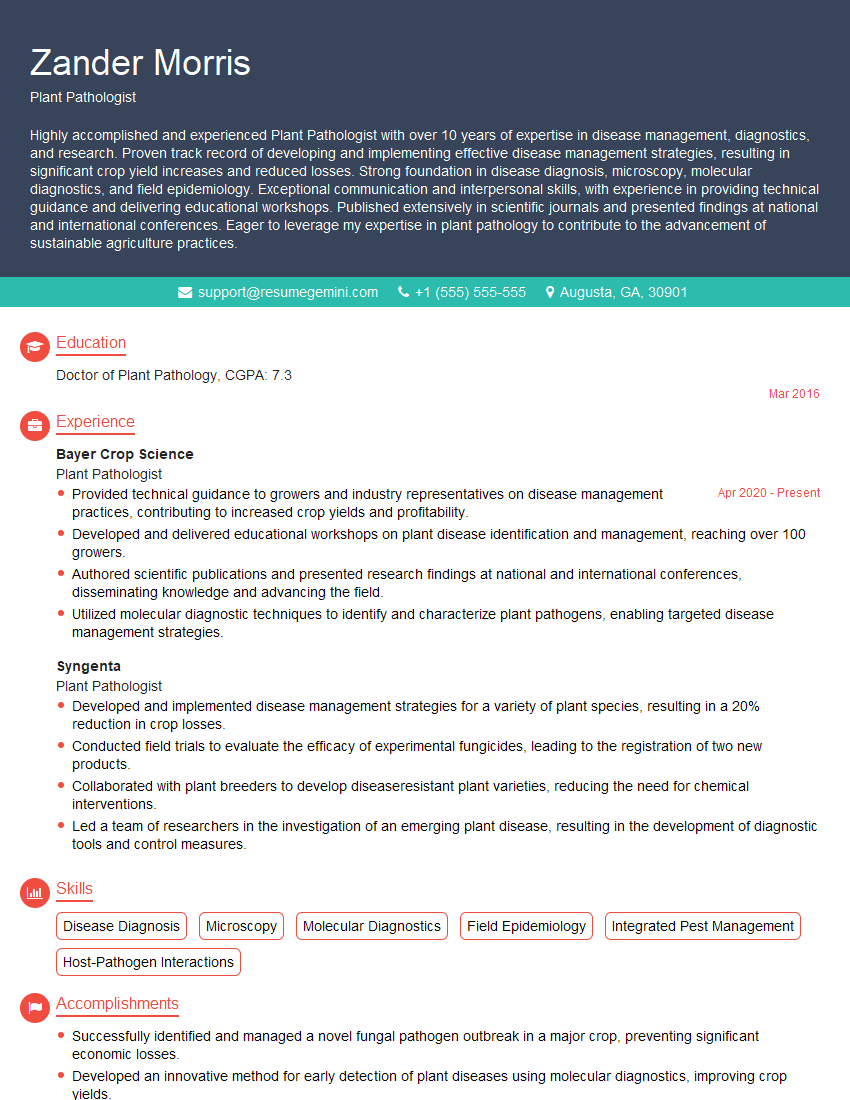
Mastering Plant Disease Control is crucial for a successful and rewarding career in agriculture, horticulture, and related fields. A strong understanding of these principles opens doors to diverse opportunities and allows you to make significant contributions to food security and environmental sustainability. To maximize your job prospects, it’s essential to create an ATS-friendly resume that showcases your skills and experience effectively. ResumeGemini is a trusted resource that can help you build a professional and impactful resume. They provide examples of resumes tailored to Plant Disease Control to guide you through the process, ensuring your application stands out.
Explore more articles
Users Rating of Our Blogs
Share Your Experience
We value your feedback! Please rate our content and share your thoughts (optional).
What Readers Say About Our Blog
Really detailed insights and content, thank you for writing this detailed article.
IT gave me an insight and words to use and be able to think of examples