Every successful interview starts with knowing what to expect. In this blog, we’ll take you through the top Plant identification and knowledge interview questions, breaking them down with expert tips to help you deliver impactful answers. Step into your next interview fully prepared and ready to succeed.
Questions Asked in Plant identification and knowledge Interview
Q 1. Describe the process of using a dichotomous key for plant identification.
A dichotomous key is a tool used for identifying organisms, including plants. It works by presenting a series of paired choices, or couplets, based on observable characteristics. Each choice leads to either another couplet or the identification of the plant. Think of it like a botanical choose-your-own-adventure!
Process: You start at the beginning of the key and follow the descriptions. Let’s say the first couplet asks: 1a. Leaves simple; or 1b. Leaves compound. If your plant has simple leaves (one blade attached to the stem), you follow the instructions to, for example, couplet 2. If it has compound leaves (multiple leaflets attached to a common stem), you’d go to couplet 11. You continue this process, making choices based on the plant’s features until you arrive at the plant’s name or a closely related group.
Example: Imagine you find a plant with opposite leaves and square stems. The key might guide you to a specific family (e.g., Lamiaceae, the mint family), and through further couplets, even to the genus and species level. The key’s accuracy depends on the detail and thoroughness of its descriptions and the accuracy of your observations.
Q 2. Explain the difference between monocots and dicots.
Monocots and dicots are two major groups of flowering plants (angiosperms), distinguished by several key differences. The names themselves refer to the number of cotyledons – embryonic leaves – in the seed.
- Monocots (monocotyledons): Possess one cotyledon in their seed, parallel leaf venation (veins run parallel to each other), flower parts typically in multiples of three, fibrous root systems (no main taproot), and scattered vascular bundles in the stem (arranged irregularly).
- Dicots (dicotyledons): Have two cotyledons in their seed, reticulate leaf venation (veins form a network), flower parts typically in multiples of four or five, a taproot system (with a main, central root), and vascular bundles arranged in a ring in the stem.
Examples: Grasses, lilies, and orchids are monocots. Roses, sunflowers, and oaks are dicots. These differences are crucial for plant classification and understanding evolutionary relationships.
Q 3. Identify three key morphological characteristics used to distinguish between plant families.
Three key morphological characteristics used to distinguish between plant families are:
- Flower structure: This includes the number and arrangement of flower parts (sepals, petals, stamens, and pistils). For example, the number of petals (3 in lilies, 4 or 5 in many dicots) can be very informative. The fusion or separation of these parts is another key difference. The Asteraceae family (sunflowers, daisies) shows a unique composite flower head, a characteristic that sets it apart from other families.
- Leaf arrangement and morphology: This involves examining the shape, margin (edge), venation, and arrangement of leaves on the stem (alternate, opposite, whorled). The Lamiaceae (mint) family is easily recognizable by its square stems and opposite, often aromatic leaves.
- Fruit type: The type of fruit produced (berry, drupe, capsule, etc.) is a vital identifier. For instance, the Rosaceae family (roses, apples) often produces pomes or drupes, while legumes (Fabaceae) produce characteristic pods.
These characteristics, when considered together, provide a robust framework for identifying plant families. Careful observation and comparison are essential for accurate family-level identification.
Q 4. What are the main characteristics used to identify poisonous plants?
Identifying poisonous plants requires caution and should never be attempted without proper training. There is no single, foolproof method. However, certain characteristics can raise suspicion. It’s crucial to consult authoritative resources like field guides and experts rather than relying solely on these visual cues.
- Presence of milky sap: Many poisonous plants, like milkweeds and poison ivy, produce a milky or colored sap that can cause skin irritation or other reactions.
- Unusual color or odor: Brightly colored berries or an unusually strong or unpleasant odor can indicate toxicity. However, this is not a definitive indicator; some edible plants also have vibrant colors or strong scents.
- Specific leaf structures: Some poisonous plants have distinctive leaf shapes or textures. For example, the distinctive three-leaflet structure of poison ivy is well known, but relying solely on shape is dangerous.
- Hairy or spiny surfaces: The presence of hairs or spines can sometimes be associated with poisonous plants. Again, this is not reliable on its own.
Important Note: Never taste or touch an unknown plant to test its toxicity. If you suspect poisoning, seek immediate medical attention.
Q 5. How do you differentiate between annual, biennial, and perennial plants?
The life cycle of a plant significantly impacts its classification into annual, biennial, or perennial:
- Annual plants: Complete their entire life cycle (germination, growth, flowering, seed production, and death) within a single growing season. Examples include marigolds, zinnias, and many vegetables.
- Biennial plants: Take two years to complete their life cycle. In the first year, they focus on vegetative growth (leaves and roots). In the second year, they flower, produce seeds, and then die. Carrots, parsley, and some wildflowers are biennials.
- Perennial plants: Live for more than two years. They usually flower and produce seeds repeatedly each year. Trees, shrubs, and many flowering plants are perennials.
Distinguishing between these types often involves observing the plant’s growth habits over time. Knowing the plant’s expected life cycle aids in determining appropriate management strategies, such as planting and harvesting times for vegetables or pruning schedules for perennial shrubs.
Q 6. What are some common methods for collecting and preserving plant specimens?
Collecting and preserving plant specimens for scientific purposes or personal herbaria requires careful technique:
- Collecting: Gather representative samples, noting habitat, location (using GPS coordinates), date, and any other relevant information. Include flowers, leaves, stems, and if possible, fruits or roots. Use a sharp knife or shears to make clean cuts.
- Pressing: Place the specimen between sheets of newspaper inside a plant press (or a stack of heavy books). This flattens the plant, removing excess moisture to prevent rotting. Change the newspaper regularly during the drying process (every 1-2 days) to absorb excess moisture.
- Drying: Allow the specimens to dry completely (typically 1-3 weeks) in a well-ventilated area. A warm, dry environment is ideal. The plant should be brittle when dry.
- Mounting: Once dry, attach the specimen to a sheet of archival-quality herbarium paper using acid-free glue or tape. Write the relevant details – species, location, date, collector’s name – neatly on the label attached to the sheet.
Proper techniques ensure specimens retain their structural integrity and color, making them valuable research materials or additions to a personal collection.
Q 7. Explain the importance of proper plant labeling and documentation.
Proper plant labeling and documentation are crucial for several reasons:
- Accurate Identification: Labels provide essential information for future identification, preventing confusion or misidentification of the plant.
- Scientific Research: Detailed documentation allows scientists to track plant distribution, monitor changes in populations, and study plant ecology.
- Record Keeping: Accurate labeling ensures a complete record of the collection’s origin and collection date, crucial for traceability and verification.
- Preventing Errors: Careful documentation minimizes errors during identification, and subsequent research and analysis based on the specimen.
- Legal Compliance: In some cases, accurate plant labeling is legally required for endangered species or invasive species monitoring and management.
Plant labeling and documentation not only serve the immediate purpose of identification but contribute to the long-term preservation of knowledge about the plant world and support a wide range of conservation efforts.
Q 8. Describe different types of plant tissues and their functions.
Plant tissues are groups of cells with similar structures and functions, working together to support the plant’s overall needs. Think of them like the organs of a plant body. We can broadly categorize them into three main types:
- Meristematic Tissues: These are embryonic tissues, constantly dividing and producing new cells. They’re responsible for plant growth. Examples include apical meristems (at the tips of roots and shoots) and lateral meristems (responsible for secondary growth, like thickening of tree trunks). Imagine them as the plant’s ‘growth plates’.
- Ground Tissues: These form the bulk of the plant body, providing support, storage, and photosynthesis. They include parenchyma (thin-walled cells involved in photosynthesis and storage), collenchyma (thickened cell walls providing support in young stems), and sclerenchyma (cells with lignified walls providing structural support in mature plants). Think of these as the ‘filler’ and ‘structural support’ tissues.
- Vascular Tissues: These are responsible for transporting water, minerals, and sugars throughout the plant. Xylem transports water and minerals from the roots to the leaves (unidirectional flow), while phloem transports sugars produced during photosynthesis from the leaves to other parts of the plant (bidirectional flow). Think of these as the plant’s ‘plumbing system’.
Understanding these tissues is crucial for plant pathologists, horticulturists, and botanists. For example, knowing how meristematic tissues function helps us understand how plants can be cloned via tissue culture.
Q 9. Discuss the role of photosynthesis in plant growth and development.
Photosynthesis is the remarkable process where plants convert light energy into chemical energy in the form of glucose (sugar). This sugar fuels all plant activities—growth, development, reproduction, and even defense mechanisms. The process occurs in chloroplasts within plant cells, using chlorophyll to capture light energy. The simplified equation is: 6CO2 + 6H2O + Light Energy → C6H12O6 + 6O2 (Carbon dioxide + Water + Light energy → Glucose + Oxygen).
This glucose isn’t just fuel; it’s the building block for all plant structures – from leaves and stems to roots and flowers. The rate of photosynthesis directly impacts plant growth; more efficient photosynthesis leads to faster growth and higher yields. Factors affecting photosynthetic rates include light intensity, CO2 levels, temperature, and water availability. Agricultural practices often aim to optimize these factors to maximize crop yields.
Q 10. What are the key factors influencing plant growth (light, water, nutrients)?
Plant growth is a delicate dance orchestrated by several key factors:
- Light: Light provides the energy for photosynthesis. The intensity, duration (photoperiod), and quality (wavelength) of light all influence plant growth. Plants require specific amounts of light; too little leads to etiolation (weak stems and pale leaves), while excessive light can cause damage.
- Water: Water is essential for photosynthesis, nutrient transport, and maintaining turgor pressure (cell firmness). Water deficits lead to wilting and reduced growth. Different plants have varying water requirements, impacting their distribution and survival.
- Nutrients: Plants require various essential nutrients (macronutrients like nitrogen, phosphorus, and potassium, and micronutrients like iron and zinc) obtained from the soil. Nutrient deficiencies lead to stunted growth and characteristic symptoms (e.g., nitrogen deficiency results in yellowing leaves).
Understanding these factors is crucial for successful agriculture and horticulture. For instance, farmers use fertilizers to supplement soil nutrients and irrigation systems to manage water availability for optimal crop growth. Landscape architects must also consider these factors when selecting plants for specific locations.
Q 11. Describe common plant diseases and their symptoms.
Plant diseases can be caused by various pathogens (fungi, bacteria, viruses) or environmental factors. Some common examples include:
- Powdery Mildew: A fungal disease causing a white powdery coating on leaves, often resulting in stunted growth.
- Rust Diseases: Fungal infections producing orange or brown pustules on leaves and stems.
- Bacterial Blights: Bacterial infections causing leaf spots, wilting, and stem cankers.
- Viral Diseases: Viruses cause various symptoms like mosaic patterns on leaves, stunted growth, and distorted leaves (e.g., Tobacco Mosaic Virus).
- Root Rot: Caused by soilborne fungi and bacteria, leading to root decay and wilting.
Symptoms vary widely depending on the pathogen and plant species. Accurate diagnosis is crucial for effective management, often involving visual inspection, laboratory tests, and consideration of environmental factors. Plant pathologists play a critical role in identifying and managing plant diseases, developing disease-resistant varieties, and implementing appropriate control measures.
Q 12. Explain the different types of plant reproduction (sexual and asexual).
Plants reproduce through two main methods:
- Sexual Reproduction: Involves the fusion of male and female gametes (sperm and egg) to produce genetically diverse offspring. This occurs through pollination (transfer of pollen from the anther to the stigma), fertilization (fusion of gametes), and seed development. Flowers are the reproductive structures in many plants. Sexual reproduction provides genetic variation, allowing plants to adapt to changing environments.
- Asexual Reproduction: Produces genetically identical offspring from a single parent. Methods include vegetative propagation (e.g., cuttings, runners, bulbs), apomixis (seed formation without fertilization), and fragmentation (separation of parts that develop into new plants). Asexual reproduction is advantageous for quick propagation and maintaining desirable traits but lacks the genetic diversity of sexual reproduction.
Understanding plant reproduction is essential for plant breeding, conservation, and horticulture. Horticulturists utilize asexual reproduction techniques like grafting and budding to propagate desirable plant varieties.
Q 13. How do you identify invasive plant species?
Identifying invasive plant species requires a multi-faceted approach combining field observations and knowledge of their characteristics. Key features to consider include:
- Rapid Growth and Spread: Invasive plants often exhibit exceptionally fast growth rates and efficient reproductive strategies (e.g., prolific seed production, vegetative propagation).
- Aggressive Competition: They often outcompete native plants for resources like light, water, and nutrients.
- Lack of Natural Enemies: In their new environment, they may lack natural predators, parasites, or diseases that control their populations in their native range.
- Morphological Characteristics: Unique leaf shape, flower structure, stem type, and overall appearance can help distinguish them from native species.
- Geographic Distribution: Knowing the native range and current distribution helps determine if a plant is invasive in a specific area.
Utilizing field guides, online databases, and consulting with experts are essential steps. DNA barcoding can also confirm species identification. Early detection and rapid response are crucial for effective management of invasive plants.
Q 14. What are the impacts of climate change on plant life?
Climate change significantly impacts plant life, altering their distribution, phenology (timing of life cycle events), and overall productivity. The major effects include:
- Shifts in Geographic Ranges: Species are shifting their ranges towards higher altitudes or latitudes in response to warming temperatures. This can lead to habitat loss and range contractions for some species.
- Altered Phenology: Changes in temperature and precipitation patterns are affecting the timing of flowering, leafing, and fruiting, potentially disrupting plant-pollinator interactions and seed dispersal.
- Increased Frequency and Severity of Extreme Weather Events: Droughts, heat waves, floods, and wildfires are becoming more frequent and intense, causing widespread damage to plant populations.
- Changes in CO2 Levels: Elevated CO2 can enhance photosynthetic rates for some plants, but this benefit is often offset by other negative impacts like nutrient imbalances and increased pest susceptibility.
- Ocean Acidification: Increased CO2 absorption by oceans reduces pH, impacting marine plants like seagrasses and algae.
These changes have cascading effects on ecosystems and human societies, affecting food security, biodiversity, and the provision of ecosystem services. Understanding these impacts is crucial for developing effective conservation strategies and adapting to the challenges of climate change.
Q 15. Discuss the principles of plant propagation.
Plant propagation is the process of creating new plants from existing ones. It’s a fundamental practice in horticulture, agriculture, and conservation. The principles revolve around exploiting the plant’s natural ability to reproduce, either sexually (using seeds) or asexually (using vegetative parts). Successful propagation hinges on understanding the specific needs of each plant species.
Sexual Propagation (Seed Propagation): This involves using seeds produced through the fertilization of a plant’s ovule. It’s a relatively inexpensive method that can generate genetic diversity, leading to potentially hardier and more adaptable offspring. However, seed germination can be unpredictable, and it often takes longer for plants to reach maturity.
Asexual Propagation (Vegetative Propagation): This method involves using vegetative parts of a plant, such as stems, leaves, roots, or buds, to create genetically identical copies (clones). This ensures that the new plant retains the desirable traits of the parent plant. Examples include cuttings, layering, grafting, and tissue culture. It’s faster and more reliable than sexual propagation but offers less genetic diversity.
Choosing the appropriate propagation method depends on factors like the plant species, the desired quantity of plants, and the available resources. For instance, propagating orchids might involve tissue culture, while propagating roses might be done using cuttings.
Career Expert Tips:
- Ace those interviews! Prepare effectively by reviewing the Top 50 Most Common Interview Questions on ResumeGemini.
- Navigate your job search with confidence! Explore a wide range of Career Tips on ResumeGemini. Learn about common challenges and recommendations to overcome them.
- Craft the perfect resume! Master the Art of Resume Writing with ResumeGemini’s guide. Showcase your unique qualifications and achievements effectively.
- Don’t miss out on holiday savings! Build your dream resume with ResumeGemini’s ATS optimized templates.
Q 16. Explain the process of plant grafting and its applications.
Grafting is a type of asexual propagation where a piece of one plant (the scion) is joined to another plant (the rootstock) in a way that they grow together as one plant. The scion provides the desired fruit, flower, or other characteristic, while the rootstock provides the root system and overall plant vigor. A successful graft creates a union between the vascular tissues (xylem and phloem) of the scion and rootstock, allowing the flow of water, nutrients, and hormones.
The process involves preparing both scion and rootstock by making precise cuts, aligning the cambium layers (the actively dividing tissue) and then securely binding them together. This union is then protected from the elements until the graft heals.
Applications: Grafting is extensively used in fruit production (e.g., grafting a desired apple variety onto a disease-resistant rootstock), ornamental horticulture (creating unique plant combinations), and plant breeding (transferring desirable traits).
Example: Imagine grafting a high-yield apple variety onto a rootstock that’s resistant to a specific soilborne disease. This combines the best of both worlds: high yield and disease resistance.
Q 17. Describe different methods of plant pest and disease management.
Plant pest and disease management aims to protect plants from harmful organisms and conditions while minimizing environmental impact. An integrated approach is generally preferred, combining various methods to achieve long-term sustainable control.
Cultural Practices: These include crop rotation, proper sanitation, maintaining good plant spacing to improve air circulation, and selecting pest-resistant varieties. For example, rotating crops can disrupt pest life cycles.
Biological Control: Introducing natural enemies of pests, like predatory insects or parasitic fungi, can help control pest populations. This reduces the reliance on chemical pesticides.
Chemical Control: Using pesticides (insecticides, fungicides, herbicides) as a last resort, only when necessary and following label instructions carefully. This is crucial to minimize environmental damage and avoid pesticide resistance.
Physical Control: Methods such as handpicking pests, using traps, or installing physical barriers (like nets) to prevent pest access. For example, using sticky traps to capture flying insects.
Monitoring: Regularly inspecting plants for signs of pests or diseases allows for early detection and timely intervention, preventing widespread damage.
An integrated pest management (IPM) strategy combines these methods in a coordinated effort to effectively manage pests and diseases while protecting the environment and human health.
Q 18. How do you assess soil health for optimal plant growth?
Assessing soil health is crucial for optimal plant growth. A healthy soil provides essential nutrients, water, and oxygen, while also supporting beneficial soil organisms. Assessment involves several steps:
Visual Inspection: Observe soil color, texture, and structure. Darker soil usually indicates higher organic matter content. Good soil structure appears crumbly, allowing for aeration and water infiltration.
Soil Texture Analysis: Determine the proportions of sand, silt, and clay. This helps understand water retention and drainage characteristics.
Soil pH Testing: Measure the soil acidity or alkalinity. Most plants thrive within a specific pH range. A soil test kit can easily measure this.
Nutrient Analysis: Determine the levels of essential nutrients like nitrogen, phosphorus, and potassium. A soil sample sent to a lab provides detailed results and fertilizer recommendations.
Organic Matter Content: Assess the amount of organic matter (decomposed plant and animal material). High organic matter improves soil structure, water retention, and nutrient availability.
Biological Assessment: Examine the soil’s biological activity by observing the presence of earthworms, beneficial fungi, and other microorganisms. A healthy soil teems with life.
Based on these assessments, appropriate amendments (e.g., compost, fertilizers) can be applied to improve soil health and support plant growth.
Q 19. Explain the importance of biodiversity in plant communities.
Biodiversity in plant communities is essential for ecosystem health and resilience. A diverse plant community offers a range of benefits:
Increased Stability: Diverse communities are less vulnerable to pests, diseases, and environmental changes. If one species is affected, others can compensate.
Enhanced Productivity: Different plant species utilize resources differently, leading to greater overall productivity and nutrient cycling.
Improved Soil Health: A variety of plants contributes to better soil structure, water retention, and nutrient availability.
Support for Wildlife: Plant diversity provides food and habitat for a wider range of animals, insects, and other organisms, strengthening the entire ecosystem.
Genetic Diversity: High plant diversity provides a reservoir of genetic material, crucial for plant breeding and adaptation to future challenges.
The loss of plant biodiversity can lead to ecosystem instability, reduced productivity, and increased vulnerability to environmental stresses. Protecting and promoting plant biodiversity is crucial for maintaining healthy ecosystems.
Q 20. What are some common plant families found in your region?
(This answer will depend on your region. Replace the examples below with common plant families in your specific area.)
In my region, some common plant families include:
Asteraceae (Compositae): This family includes sunflowers, daisies, and asters, known for their composite flower heads.
Poaceae (Gramineae): This is the grass family, including many important cereal crops and pasture grasses.
Fabaceae (Leguminosae): This family includes legumes like beans, peas, and clover, known for their nitrogen-fixing abilities.
Rosaceae: This family includes roses, apples, cherries, and strawberries, many of which are economically important fruit and ornamental plants.
Solanaceae: This family includes tomatoes, potatoes, peppers, and eggplants, many important food crops.
These families represent only a small fraction of the plant diversity found in my region. The specific composition varies based on factors like climate, soil type, and altitude.
Q 21. Describe the life cycle of a specific plant species.
(This answer will depend on the specific plant species you choose. I will use the example of a sunflower (Helianthus annuus) here.)
The life cycle of a sunflower begins with a seed. Once sown in suitable soil and given adequate moisture and sunlight, the seed germinates, sending a root down and a shoot up. The seedling grows rapidly, developing leaves and a sturdy stem. As it matures, the sunflower produces a large flower head, technically an inflorescence composed of many individual florets. These florets are pollinated, usually by insects, resulting in the development of seeds within the flower head. Once the seeds mature, they are dispersed, either by wind or animals, completing the cycle. Sunflowers are typically annuals, meaning their entire life cycle is completed within a single growing season.
This process can be divided into distinct phases: germination, vegetative growth, flowering, seed development, and seed dispersal. The timing of these phases can vary depending on environmental conditions.
Q 22. How do you use a hand lens or microscope for plant identification?
Hand lenses and microscopes are indispensable tools for plant identification, allowing us to examine minute details often crucial for distinguishing species. A hand lens, typically magnifying 10x to 20x, is perfect for observing features like leaf venation, trichome (hair) types, and the arrangement of flowers. For example, I might use a hand lens to differentiate between two similar grasses by examining the shape of their leaf blades and the presence or absence of tiny hairs.
Microscopes, on the other hand, offer much higher magnification (e.g., 40x to 1000x or more), enabling detailed study of pollen grains, stomata (microscopic pores on leaves), and cellular structures. Imagine using a microscope to distinguish between two similar species of sedge by analyzing the intricate patterns of their epidermal cells. The specific magnification needed depends on the features being examined; a 40x objective might suffice for stomata observation, while 100x or even higher might be necessary for detailed pollen analysis.
In practice, I often start with a hand lens for a preliminary assessment, followed by microscopy if the characteristics aren’t sufficiently diagnostic. Careful documentation, including sketches and photographs, is essential to record these microscopic observations.
Q 23. Explain different types of plant adaptations to their environments.
Plants have evolved a remarkable array of adaptations to thrive in diverse environments. These adaptations can be broadly categorized into structural, physiological, and behavioral changes.
- Structural Adaptations: These involve physical modifications to the plant’s body. For example, cacti have succulent stems to store water in arid environments, while desert plants often possess spines (modified leaves) to reduce water loss and deter herbivores. Plants in windy areas may develop a low, prostrate growth form, reducing wind resistance. Epiphytes, such as orchids, have aerial roots to absorb moisture from the air, while hydrophytes, or aquatic plants, have flexible stems and leaves adapted for buoyancy and efficient gas exchange in water.
- Physiological Adaptations: These involve internal changes to the plant’s metabolism or biochemical processes. Halophytes, plants that grow in saline environments, have mechanisms to tolerate high salt concentrations. Shade-tolerant plants have higher chlorophyll content per unit area, optimizing light absorption in low-light conditions. CAM plants, like succulents, open their stomata at night to minimize water loss during daytime photosynthesis.
- Behavioral Adaptations: While seemingly less obvious, plants exhibit certain ‘behaviors’ to respond to their environment. For example, the rapid closing of leaves in sensitive plants (Mimosa pudica) upon touch is a protective response to stimuli. Phototropism, the growth of a plant towards light, and gravitropism, the growth response to gravity, are other examples of plant behavioral adaptations.
Understanding these diverse adaptations is critical for identifying plant species and predicting their distribution and survival in various ecosystems.
Q 24. Describe the process of creating a herbarium specimen.
Creating a herbarium specimen is a meticulous process that ensures the long-term preservation of plant material for research and educational purposes. The process generally involves these steps:
- Collecting: Gather a representative specimen, including flowers, fruits, leaves, and stems, if possible. Record crucial information, such as location, date, habitat, and any notable characteristics.
- Pressing: Place the specimen between sheets of newspaper within a plant press. This flattens and dries the plant material, preventing decay.
- Drying: The pressed specimen is then dried, typically in a plant press under pressure for 1-3 weeks, until brittle. Regular changes of newspaper help absorb excess moisture.
- Mounting: Once dry, the specimen is carefully glued to a sheet of archival-quality herbarium paper. This paper is acid-free to ensure long-term preservation. Information about the plant is written on a label attached to the sheet.
- Labeling: The label contains essential details like the species name (scientific and common), location of collection, date of collection, collector’s name, habitat description, and any other relevant observations. This information is crucial for future researchers.
- Storage: Finally, the mounted specimen is stored in a cool, dry, and pest-free environment, often in a herbarium, a collection of preserved plant specimens.
Proper technique is crucial to minimize damage to the specimen and ensure its preservation for decades, even centuries.
Q 25. What are the ethical considerations in collecting and studying plant specimens?
Ethical considerations are paramount in plant collecting and study. Respect for the environment and local communities is essential.
- Permits and Regulations: Always obtain necessary permits before collecting specimens on protected land or in national parks. Adherence to local regulations is crucial.
- Sustainable Collection Practices: Collect only the minimum number of specimens needed for your research. Avoid over-collecting, especially from rare or endangered species. Prioritize non-destructive sampling methods whenever possible.
- Respect for Private Property: Always obtain permission from landowners before collecting specimens on private property.
- Cultural Sensitivity: Be mindful of the cultural significance of plants in certain communities. Some plants may hold spiritual or medicinal value, and it’s important to respect these beliefs.
- Data Sharing and Access: Share data and specimens with the scientific community and make them accessible to other researchers. This contributes to the collective knowledge and understanding of plant diversity.
- Biosecurity: Proper cleaning and sterilization of equipment can prevent the introduction of invasive species or pathogens to new areas.
Ignoring ethical considerations can have serious consequences, including legal penalties, damage to ecosystems, and erosion of trust with local communities.
Q 26. How do you identify plant species using molecular techniques (DNA barcoding)?
DNA barcoding is a powerful molecular technique used for plant identification. It involves sequencing a specific region of the plant’s DNA, often a portion of the chloroplast genome (e.g., rbcL or matK genes), to create a unique ‘barcode’ that can be compared against a database of known species. The process typically involves:
- DNA Extraction: DNA is extracted from a plant sample, usually a leaf or other tissue.
- PCR Amplification: The target DNA region (the barcode) is amplified using polymerase chain reaction (PCR).
- Sequencing: The amplified DNA is sequenced to determine the exact order of nucleotide bases.
- Database Comparison: The obtained DNA sequence is compared to reference sequences in a DNA barcode database (e.g., BOLD Systems). The closest match in the database helps identify the plant species.
DNA barcoding can be particularly useful for identifying cryptic species – those that are morphologically very similar but genetically distinct. It’s also invaluable for identifying degraded or fragmented specimens where traditional morphological identification might be challenging.
Q 27. Describe your experience using plant identification software or databases.
I have extensive experience using several plant identification software and databases, including online resources like The Plant List and Tropicos, as well as specialized software such as Lucid. These resources are invaluable for plant identification, particularly when dealing with complex taxonomic groups.
For example, I’ve used Lucid to create interactive identification keys for specific plant families, enabling non-experts to identify species based on morphological characteristics. The Plant List and Tropicos offer comprehensive taxonomic information, including synonyms and accepted names, helping resolve discrepancies and ensure consistent nomenclature. These tools facilitate quicker and more accurate identifications, particularly helpful when working with large datasets or unfamiliar taxa. My experience extends to integrating data from various sources, cross-referencing information from different databases to achieve higher identification confidence.
Q 28. Explain how to interpret a phylogenetic tree showing plant relationships.
A phylogenetic tree, also known as a cladogram, is a visual representation of the evolutionary relationships among plant species. Interpreting it requires understanding that branch points represent common ancestors, and the length of branches can (sometimes) represent the time since divergence or the amount of genetic change.
- Branch Points (Nodes): Each node represents a hypothetical ancestor from which the descendant lineages branched off. This ancestor possessed characteristics shared by all its descendants.
- Branches: Branches represent evolutionary lineages. The length of a branch doesn’t always indicate the passage of time but may reflect genetic divergence or evolutionary changes.
- Tips (Leaves): The tips of branches represent the extant (currently living) species or groups.
- Clades: Clades are groups of organisms that include a common ancestor and all its descendants. They’re shown as distinct branches within the tree.
For instance, imagine a tree with two main branches, one representing monocots and another dicots. The node connecting them shows their last common ancestor, a characteristic shared by both is the presence of flowers. By comparing branch lengths and observing clades, we can infer evolutionary relationships and understand how different groups are related. The interpretation often involves understanding evolutionary innovations (synapomorphies) unique to particular clades.
Key Topics to Learn for Plant Identification and Knowledge Interview
- Plant Morphology: Understanding plant structures (roots, stems, leaves, flowers, fruits, seeds) and their variations across species. Practical application: Accurate identification based on observable characteristics.
- Plant Taxonomy and Classification: Familiarity with binomial nomenclature, plant families, and the hierarchical systems used to classify plants. Practical application: Efficiently navigating botanical keys and databases.
- Plant Physiology: Knowledge of plant processes such as photosynthesis, respiration, and nutrient uptake. Practical application: Understanding plant health, growth, and responses to environmental factors.
- Plant Ecology: Understanding plant communities, habitats, and interactions with other organisms. Practical application: Assessing plant distribution and predicting impacts of environmental change.
- Plant Pathology and Pest Management: Recognizing common plant diseases and pests, and understanding integrated pest management strategies. Practical application: Implementing effective control measures and maintaining plant health.
- Identification Techniques: Proficiency in using various identification tools, including dichotomous keys, botanical guides, and digital resources. Practical application: Accurate and efficient identification in the field.
- Data Collection and Analysis: Gathering and analyzing data related to plant identification and distribution. Practical application: Contributing to ecological research and conservation efforts.
Next Steps
Mastering plant identification and knowledge is crucial for career advancement in fields like horticulture, botany, agriculture, and conservation. A strong understanding of these concepts opens doors to exciting opportunities and positions you as a valuable asset to any organization. To maximize your job prospects, create an ATS-friendly resume that highlights your skills and experience effectively. ResumeGemini is a trusted resource for building professional resumes, and we provide examples of resumes tailored specifically to plant identification and knowledge roles to help you get started. Invest time in crafting a compelling resume – it’s your first impression on potential employers.

Greenhouse Manager Resume Sample

Nursery Manager Resume Sample

Landscape Architect Resume Sample

Environmental Consultant Resume Sample

Arborist Resume Sample

Botanist Resume Sample

Plant Breeder Resume Sample

Plant Pathologist Resume Sample
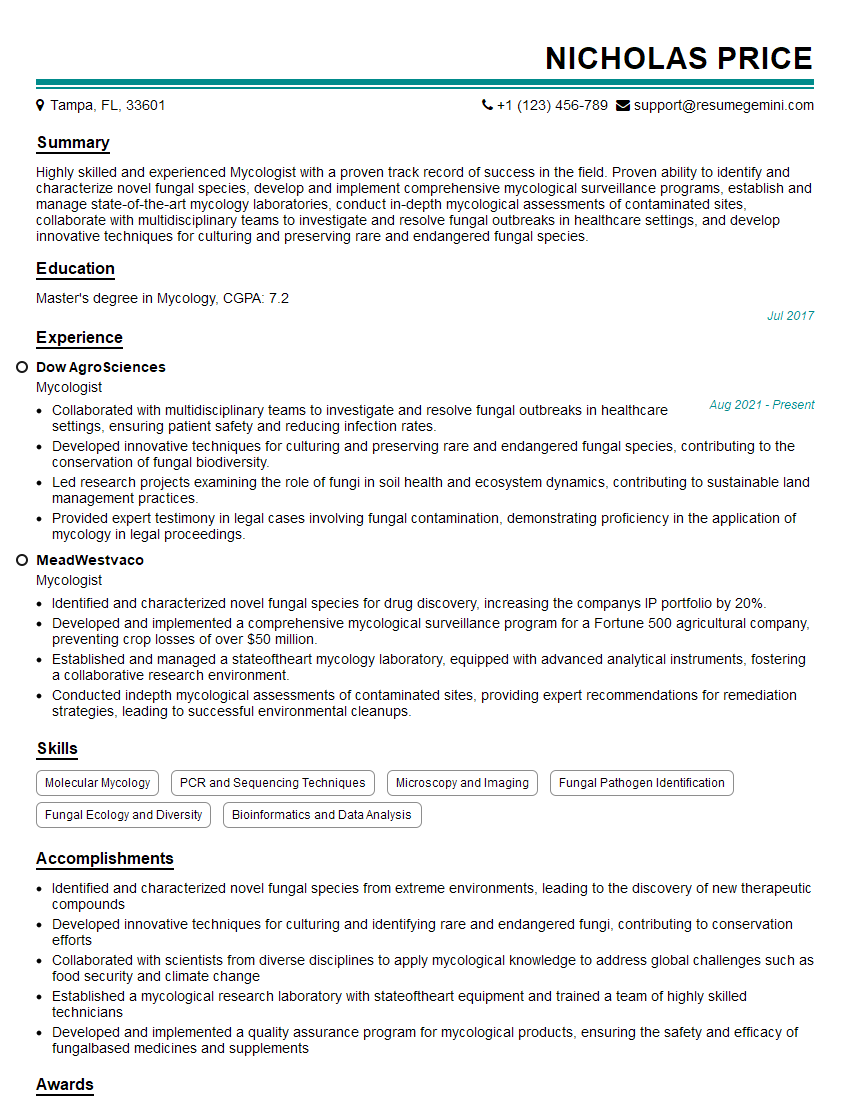
Mycologist Resume Sample

Ecologist Resume Sample

Plant Taxonomist Resume Sample

Restoration Ecologist Resume Sample

Park Ranger Resume Sample

Forestry Technician Resume Sample

Seed Analyst Resume Sample

Horticultural Therapist Resume Sample
Explore more articles
Users Rating of Our Blogs
Share Your Experience
We value your feedback! Please rate our content and share your thoughts (optional).
What Readers Say About Our Blog
Really detailed insights and content, thank you for writing this detailed article.
IT gave me an insight and words to use and be able to think of examples