The thought of an interview can be nerve-wracking, but the right preparation can make all the difference. Explore this comprehensive guide to PM/TPM Programs interview questions and gain the confidence you need to showcase your abilities and secure the role.
Questions Asked in PM/TPM Programs Interview
Q 1. Describe your experience managing cross-functional teams.
Managing cross-functional teams requires a collaborative approach built on clear communication, mutual respect, and a shared understanding of goals. My experience has shown that success hinges on fostering a team environment where individuals from diverse backgrounds and specializations can contribute effectively. I achieve this through:
- Regular communication and meetings: I establish clear communication channels—daily stand-ups, weekly progress meetings, and regular email updates—to ensure everyone stays informed and aligned.
- Defining clear roles and responsibilities: A well-defined RACI matrix (Responsible, Accountable, Consulted, Informed) clarifies individual ownership and responsibilities, minimizing confusion and overlap.
- Building consensus and resolving conflicts: I actively encourage open dialogue and facilitate conflict resolution through collaborative problem-solving. My focus is on understanding differing perspectives and finding mutually acceptable solutions.
- Celebrating successes and recognizing contributions: Acknowledging achievements and individual contributions strengthens team morale and reinforces positive behaviors.
For example, in a recent project involving software development, marketing, and sales, I used a Kanban board to visualize workflow and track progress across teams. This allowed for transparent communication and quick identification of bottlenecks. By proactively addressing these issues, we managed to deliver the product ahead of schedule.
Q 2. Explain your process for prioritizing competing project demands.
Prioritizing competing project demands necessitates a structured approach. I utilize a framework that combines urgency, importance, and strategic alignment to make informed decisions. I typically follow these steps:
- Define criteria: I start by clearly defining the criteria for prioritization—considering factors like business value, risk, dependencies, and deadlines.
- Assess projects: I evaluate each project against these criteria, assigning scores or rankings. This allows for a data-driven approach, mitigating biases.
- Visualize priorities: Tools like a MoSCoW method (Must have, Should have, Could have, Won’t have) or a prioritized backlog help visualize project rankings and dependencies.
- Stakeholder alignment: I discuss the prioritized list with key stakeholders to ensure alignment and address any concerns or objections. This transparency builds buy-in and collaboration.
- Regular review and adjustment: Priorities are not static; I regularly re-evaluate projects based on evolving business needs and feedback, adapting the priorities as necessary.
For instance, if faced with a critical bug fix, a planned feature enhancement, and a marketing campaign, I would prioritize the bug fix due to its immediate impact and risk. The feature enhancement might follow, based on its strategic value, while the marketing campaign might be adjusted based on available resources and time.
Q 3. How do you handle stakeholder conflicts?
Stakeholder conflicts are inevitable in complex projects. My approach focuses on proactive communication, active listening, and finding solutions that meet everyone’s needs as much as possible. I often employ these strategies:
- Identify the root cause: Understanding the underlying issues driving the conflict is crucial. This often requires open communication and potentially separate one-on-one conversations.
- Facilitate open dialogue: I create a safe space for stakeholders to express their concerns and perspectives without judgment. This often involves active listening and summarizing viewpoints to ensure mutual understanding.
- Find common ground: I work towards identifying shared goals and objectives. Focusing on these shared goals helps redirect the conversation away from conflicting viewpoints.
- Compromise and negotiation: Negotiation and compromise are often key in resolving conflicts. This involves exploring mutually acceptable alternatives that address each stakeholder’s concerns.
- Document agreements: Once a resolution is reached, it’s vital to document the agreement and communicate it to all stakeholders to ensure clarity and prevent future misunderstandings.
In one instance, two stakeholders disagreed about the design of a key feature. By facilitating a discussion and emphasizing the shared goal of user satisfaction, we collaboratively developed a design that incorporated elements of both original proposals, leading to a win-win outcome.
Q 4. What is your experience with Agile methodologies (Scrum, Kanban)?
I have extensive experience with Agile methodologies, primarily Scrum and Kanban. I’ve successfully utilized both in various project settings, adapting their application to the specific needs of each project.
- Scrum: I’ve led Scrum teams, facilitating sprint planning, daily stand-ups, sprint reviews, and retrospectives. My experience includes managing product backlogs, tracking progress using burn-down charts, and addressing impediments to ensure sprint goals are met.
- Kanban: I’ve employed Kanban boards to visualize workflow and manage project tasks, especially in projects requiring flexibility and continuous delivery. I’ve used Kanban to optimize workflow, identify bottlenecks, and improve team efficiency.
I understand the strengths and weaknesses of each methodology and can effectively choose the appropriate framework or hybrid approach based on project complexity, team dynamics, and client needs. For example, I used a Scrum framework for a complex software development project, ensuring regular iterations and feedback loops. For a smaller marketing campaign, a Kanban board allowed for greater flexibility in task prioritization and resource allocation.
Q 5. How do you define and track program success metrics?
Defining and tracking program success metrics is critical for measuring progress and demonstrating value. I typically employ a balanced scorecard approach, considering both quantitative and qualitative metrics aligned with strategic business objectives. These metrics are established collaboratively with stakeholders at the outset of the program.
- Quantitative Metrics: These include metrics like on-time delivery, budget adherence, defect rate, customer satisfaction scores (CSAT), and return on investment (ROI).
- Qualitative Metrics: These focus on aspects like stakeholder satisfaction, team morale, process improvements, and knowledge gained.
- Tracking and Reporting: Regular reporting using dashboards and visualizations helps track progress against established metrics. I often use tools like Jira, Asana, or custom-built dashboards to present this information clearly to stakeholders.
- Continuous Improvement: Regular review of the metrics allows for identification of areas for improvement and enables data-driven decision-making.
For instance, in a recent product launch program, we tracked metrics such as the number of downloads, user engagement, and customer feedback. This data helped us refine our marketing strategy and identify potential issues early on, resulting in a highly successful launch.
Q 6. Describe your experience with risk management in program execution.
Risk management is integral to successful program execution. My approach involves a proactive identification, assessment, and mitigation of potential risks. I use a structured process that includes:
- Risk Identification: I conduct brainstorming sessions with the project team and stakeholders to identify potential risks, utilizing tools such as SWOT analysis and risk registers.
- Risk Assessment: I assess each identified risk by considering its likelihood and impact. This helps prioritize which risks require immediate attention.
- Risk Response Planning: For each risk, I develop a mitigation strategy (avoidance, reduction, transfer, acceptance). This plan outlines specific actions to be taken to address the risk.
- Risk Monitoring and Control: I regularly monitor identified risks, tracking their status and adjusting the response plan as needed. This continuous monitoring ensures that the program remains on track.
For example, in a project involving external dependencies, I identified the risk of supplier delays. To mitigate this, I built buffer time into the schedule and established clear communication channels with the supplier. This proactive approach allowed us to avoid significant project delays when the supplier did experience a minor setback.
Q 7. How do you manage program scope creep?
Scope creep, the uncontrolled expansion of project scope, is a major threat to project success. My strategy for managing scope creep involves proactive planning, change control, and clear communication.
- Define and document the scope clearly: A detailed project scope statement, including deliverables, acceptance criteria, and exclusions, serves as the foundation. This document should be reviewed and approved by all stakeholders.
- Establish a change control process: This formal process ensures all proposed scope changes are reviewed, evaluated, and approved before implementation. This might involve submitting change requests, conducting impact assessments, and obtaining stakeholder approval.
- Regular scope reviews: Conducting regular reviews with the team and stakeholders helps to identify potential scope creep early and address it proactively.
- Timeboxing and Prioritization: Utilize timeboxing techniques to allocate specific timeframes for tasks. When confronted with new requests, assess the impact and prioritize based on the overall project goals.
- Transparent communication: Open communication about potential scope changes ensures that all stakeholders are aware of any impacts on timelines, budgets, and resources.
In a recent project, a stakeholder requested a significant feature addition mid-project. Through the change control process, we evaluated the impact on the timeline and budget. After a thorough assessment and discussion, we decided to postpone the addition to a future release, preventing the project from being delayed.
Q 8. How do you create and maintain a program schedule?
Creating and maintaining a program schedule involves a multi-step process that goes beyond simply listing tasks and deadlines. It requires a deep understanding of dependencies, resource allocation, and risk mitigation. I typically start by using a work breakdown structure (WBS) to decompose the program into manageable projects and tasks. Each task gets a defined duration, dependencies on other tasks, and assigned resources. Tools like Microsoft Project, Jira, or Asana are invaluable for visualizing this schedule and tracking progress.
Next, I establish a critical path, which identifies the sequence of tasks that directly impacts the overall program duration. Any delays on this path directly impact the program’s completion date. We regularly hold schedule review meetings with stakeholders to discuss progress, identify potential roadblocks, and proactively adjust the schedule as needed. This often involves techniques like critical chain project management which accounts for resource contention and multitasking.
Finally, maintaining the schedule is an iterative process. Regular monitoring, utilizing burn-down charts, and progress reporting are crucial. We use Earned Value Management (EVM) to assess performance against the planned schedule and budget. This allows for early identification of variances and the implementation of corrective actions to keep the project on track.
Q 9. What is your experience with budget management for large programs?
Budget management for large programs requires meticulous planning, tracking, and control. My experience includes developing detailed budgets, forecasting expenses, and managing variances. I’ve worked with budgets ranging from hundreds of thousands to millions of dollars. I usually start by establishing a baseline budget, broken down into cost categories aligned with the program’s WBS. This includes direct costs (labor, materials), indirect costs (overhead), and contingency reserves to accommodate unexpected expenses.
Throughout the program lifecycle, I regularly track actual spending against the budget, analyze variances, and identify potential cost overruns. We use reporting dashboards to visualize budget performance and communicate this information to stakeholders. This includes identifying and managing risks that might impact the budget. For instance, in one program, we identified a potential increase in material costs due to market fluctuations and proactively adjusted the budget to accommodate this. Regular forecasting enables us to proactively adjust spending to stay within budget.
Q 10. Describe a time you had to make a difficult decision under pressure.
In a previous program, we faced a critical issue with a key vendor failing to deliver components on time. This threatened to significantly delay the entire program launch, impacting both schedule and budget. The pressure was immense as the launch date was rapidly approaching. After careful consideration and assessment of all options, I decided to leverage our contingency plan: securing an alternative vendor. This required renegotiating contracts, managing the transition, and adding additional quality checks.
While this decision added unforeseen costs and required additional resources, it prevented a much more significant delay and potential financial loss. The quick and decisive action helped maintain the overall program’s success. This experience taught me the importance of having robust contingency plans, strong vendor management, and the ability to make tough decisions under pressure with a clear understanding of the trade-offs involved.
Q 11. How do you ensure effective communication within a large program?
Effective communication is the cornerstone of any successful large program. I utilize a multi-faceted approach, ensuring transparency and clear communication channels across all stakeholders. This starts with defining clear communication protocols and regular meeting cadences. We use various methods, such as weekly status meetings, regular email updates, and project management tools that facilitate real-time collaboration.
For complex information or updates to a large audience, I’ll employ newsletters or presentations. I also emphasize active listening and feedback mechanisms to ensure everyone understands the program’s goals, progress, and challenges. For instance, regular town hall meetings allow for open discussion and address concerns directly from team members and stakeholders. Using a centralized communication platform keeps everyone informed and helps reduce confusion and ambiguity.
Q 12. What is your experience with program reporting and dashboards?
Program reporting and dashboards are essential for monitoring progress and communicating performance to stakeholders. I have extensive experience creating and managing various reports, including those focusing on schedule adherence, budget performance, risk management, and key performance indicators (KPIs). I leverage data visualization tools like Power BI or Tableau to create interactive dashboards that provide a clear and concise overview of the program’s status. These dashboards are customized to the needs of different audiences, from executive summaries to detailed technical reports.
For instance, I’ve developed dashboards that track critical path tasks, highlighting potential delays. Other dashboards focus on resource utilization, budget burn-down charts, and risk probabilities. These reports are not just static documents; they are living, dynamic tools that are updated regularly to reflect the program’s current state. The ability to quickly identify trends and potential problems is paramount in effective program management. The goal is to provide stakeholders with the information they need to make informed decisions.
Q 13. How do you handle dependencies between different projects within a program?
Handling dependencies between projects within a program requires careful planning and coordination. We use dependency mapping techniques to identify all interdependencies between projects. This is often represented visually using a dependency network diagram or a Gantt chart. Understanding these relationships allows for proactive scheduling and risk mitigation. Critical path analysis helps identify the projects most critical to the program’s timeline.
Furthermore, we establish clear communication channels between project teams to ensure timely information exchange. We also build buffer time into the schedule to account for potential delays caused by dependencies. Regular progress monitoring, coupled with proactive communication, allows for early identification of potential issues and the implementation of corrective actions to mitigate the impact of any delays. For example, if Project A’s completion is critical to the start of Project B, we might allocate extra resources to Project A to ensure its timely completion, or create a contingency plan in case of delays.
Q 14. How do you identify and mitigate risks in a program?
Risk identification and mitigation is a continuous process throughout the program lifecycle. We begin by conducting a comprehensive risk assessment, identifying potential risks, analyzing their probability and impact, and prioritizing them based on their severity. Techniques such as brainstorming sessions, SWOT analysis, and checklists are helpful for generating a comprehensive list. This often involves interviews with team members and stakeholders to gain different perspectives.
Once risks are identified, we develop mitigation strategies to reduce their probability or impact. These strategies might include contingency planning, risk avoidance, risk transfer (e.g., insurance), or risk acceptance. We regularly monitor the identified risks, tracking their status and adjusting mitigation strategies as needed. A risk register, regularly updated and shared with stakeholders, is crucial for maintaining transparency and accountability. Regular risk reviews and updates ensure the program remains agile and responsive to changing circumstances. Using a probabilistic approach to risk analysis (Monte Carlo simulations) helps in decision-making under uncertainty.
Q 15. Explain your experience with resource allocation in a program.
Resource allocation in a program is the strategic process of assigning and managing resources—people, budget, time, technology—to various tasks and projects within the program to optimize its success. It’s like a conductor orchestrating an orchestra: each musician (resource) needs to be in the right place at the right time to create a harmonious whole (successful program).
In my experience, effective resource allocation involves several key steps:
- Needs Assessment: Clearly defining the requirements of each project or task within the program. This includes quantifying the resources needed (e.g., number of developers, budget for testing).
- Resource Inventory: Creating an inventory of available resources, including their skills, availability, and potential limitations. This might involve using a resource management tool.
- Prioritization: Prioritizing projects or tasks based on strategic goals, dependencies, and deadlines using methods like MoSCoW (Must have, Should have, Could have, Won’t have) analysis.
- Allocation: Assigning resources to projects and tasks, ensuring that individuals have manageable workloads and appropriate skills. I often utilize resource leveling techniques to balance workloads and prevent bottlenecks.
- Monitoring and Adjustment: Continuously monitoring resource utilization, identifying potential issues, and making adjustments as needed. This involves regular meetings and tracking progress against the plan.
For example, in a recent program involving the launch of a new software platform, I identified a shortage of QA testers towards the end of the development cycle. By re-allocating resources from a less critical task and bringing in external contractors, I ensured timely testing and avoided a project delay.
Career Expert Tips:
- Ace those interviews! Prepare effectively by reviewing the Top 50 Most Common Interview Questions on ResumeGemini.
- Navigate your job search with confidence! Explore a wide range of Career Tips on ResumeGemini. Learn about common challenges and recommendations to overcome them.
- Craft the perfect resume! Master the Art of Resume Writing with ResumeGemini’s guide. Showcase your unique qualifications and achievements effectively.
- Don’t miss out on holiday savings! Build your dream resume with ResumeGemini’s ATS optimized templates.
Q 16. How do you ensure the quality of deliverables in a program?
Ensuring the quality of deliverables is paramount. It’s not just about meeting requirements; it’s about exceeding expectations and delivering a product or service that is robust, reliable, and user-friendly. Think of it as building a house: you wouldn’t want cracks in the foundation or leaky faucets.
My approach focuses on a multi-layered strategy:
- Defining Clear Quality Standards: Establishing precise quality metrics and acceptance criteria early in the program lifecycle. This might involve creating a detailed quality assurance plan.
- Implementing Quality Gates: Setting up checkpoints at different stages of the project to evaluate progress and ensure that deliverables meet the defined standards. This could involve code reviews, testing phases, and user acceptance testing (UAT).
- Using Quality Tools and Technologies: Leveraging tools for static code analysis, automated testing, and performance testing to identify and resolve defects early. For example, using tools like JIRA for defect tracking.
- Continuous Improvement: Regularly reviewing the quality processes to identify areas for improvement and implementing corrective actions. This might involve conducting post-project reviews to learn from past experiences.
- Focus on User Feedback: Gathering feedback from users throughout the development lifecycle to ensure that the final product meets their needs and expectations. This could involve user surveys and beta testing.
In a past program, we implemented a rigorous testing framework with automated tests and continuous integration/continuous delivery (CI/CD) pipelines. This significantly reduced the number of defects found in the final product, leading to higher customer satisfaction and lower support costs.
Q 17. What is your experience with change management in a program?
Change management in a program is the structured approach to managing changes in scope, requirements, resources, or timelines. It’s like navigating a ship through a storm: you need to adapt to changing winds and waves to reach your destination safely.
My experience highlights the importance of a proactive and systematic approach:
- Establishing a Change Control Process: Defining a formal process for requesting, evaluating, approving, and implementing changes. This typically involves a change control board (CCB) to review and approve change requests.
- Impact Assessment: Thoroughly analyzing the impact of proposed changes on schedule, budget, resources, and overall program goals. This often involves using impact analysis matrices.
- Communication and Collaboration: Openly communicating changes to stakeholders, explaining the rationale, and managing expectations. This ensures transparency and minimizes disruptions.
- Documentation: Maintaining detailed records of all change requests, approvals, and implementations. This is essential for auditing and future reference.
- Continuous Monitoring: Continuously monitoring the impact of implemented changes and making adjustments as needed to ensure that the program remains on track.
In one project, a significant change request arose midway through the project. By utilizing the change management process, we assessed the impact, negotiated a revised timeline, and secured additional resources. This prevented the project from derailing and ensured successful delivery.
Q 18. How do you handle unexpected delays or setbacks in a program?
Unexpected delays and setbacks are inevitable in any program. The key is to have a plan in place to deal with them effectively. It’s like having a spare tire in your car; you hope you don’t need it, but it’s crucial to have when you do.
My approach involves:
- Risk Management: Proactively identifying potential risks and developing mitigation plans. This could involve using a risk register to track and manage potential issues.
- Problem Solving: Quickly identifying the root cause of the delay or setback using methods like the 5 Whys.
- Replanning and Rescheduling: Developing a revised schedule that accounts for the delay, prioritizing tasks, and adjusting resources as needed.
- Communication: Communicating the delay and revised plans to stakeholders promptly and transparently. This is crucial to maintaining trust and managing expectations.
- Contingency Planning: Having contingency plans in place for foreseeable challenges. For example, having extra budget allocated for unforeseen issues.
In a past project, a critical vendor experienced unforeseen delays, impacting our timeline. By promptly identifying the problem, renegotiating the contract, and using our contingency plan, we managed to minimize the impact and still meet our overall program goals.
Q 19. Describe your experience with program closure activities.
Program closure activities are the final steps in a program lifecycle, ensuring that all loose ends are tied up and lessons learned are documented. It’s like completing a marathon: you don’t just cross the finish line; you need to cool down and reflect on your performance.
My experience includes:
- Formal Acceptance: Obtaining formal acceptance of the final deliverables from stakeholders. This involves thorough testing and sign-offs.
- Final Reporting: Preparing a comprehensive final report summarizing the program’s achievements, challenges, and lessons learned. This often includes a post-implementation review.
- Knowledge Transfer: Transferring knowledge and experience to the appropriate teams or individuals. This could involve creating documentation or conducting training sessions.
- Resource Release: Releasing resources and equipment. This involves returning equipment, canceling contracts, and re-assigning personnel.
- Archiving: Archiving all relevant program documentation. This ensures that the information is readily accessible for future reference.
In one recent program, we developed a detailed closure plan that included a thorough knowledge transfer session for the maintenance team, ensuring a smooth transition and minimizing disruption after the project ended.
Q 20. What tools and technologies are you proficient in for program management?
I’m proficient in a range of tools and technologies for program management. My toolkit includes:
- Project Management Software: Microsoft Project, Jira, Asana, Monday.com – for task management, resource allocation, and progress tracking.
- Collaboration Tools: Microsoft Teams, Slack, Google Workspace – for communication and collaboration within the program team and stakeholders.
- Reporting and Analytics Tools: Power BI, Tableau – for creating dashboards and reports to monitor program performance.
- Resource Management Tools: Resource Guru, Planview Enterprise One – for managing resource availability and allocation.
- Risk Management Software: Risk Management Pro, Jira – for identifying, assessing, and managing risks.
I’m also experienced in using various methodologies like Agile, Waterfall, and hybrid approaches, adapting my tool selection to the specific needs of the program.
Q 21. How do you measure the ROI of a program?
Measuring the ROI (Return on Investment) of a program requires a clear understanding of the program’s objectives and the value it delivers. It’s not just about the financial return; it also encompasses qualitative benefits. Think of it like investing in a stock: you want to see a positive return on your initial investment.
My approach involves:
- Defining Key Performance Indicators (KPIs): Identifying measurable metrics that reflect the program’s success. These could include financial metrics (e.g., cost savings, revenue generation), operational metrics (e.g., efficiency gains, process improvements), and customer-centric metrics (e.g., customer satisfaction, market share).
- Baseline Measurement: Establishing a baseline measurement of the relevant KPIs before the program starts to measure the impact of the program.
- Data Collection and Analysis: Collecting data throughout the program lifecycle and analyzing it to track progress against the KPIs. This might involve using data analytics tools.
- Cost-Benefit Analysis: Conducting a cost-benefit analysis to compare the costs of the program with the benefits it delivers. This could involve both tangible and intangible benefits.
- Qualitative Assessment: Considering qualitative factors, such as improved employee morale, enhanced brand reputation, and improved customer loyalty.
For example, in a recent cost reduction program, we established KPIs such as reduction in operational expenses and improved efficiency. By tracking these KPIs and conducting a cost-benefit analysis, we were able to demonstrate a significant ROI exceeding initial projections.
Q 22. Describe your experience with implementing program governance processes.
Program governance ensures programs align with organizational strategy and deliver expected value. My experience involves establishing and implementing governance frameworks encompassing clear roles, responsibilities, decision-making processes, and reporting mechanisms. This includes defining a governance committee with executive sponsorship, creating a robust program management office (PMO) structure, and developing regular reporting cadences – including executive dashboards highlighting key performance indicators (KPIs) and risk mitigation strategies. For example, in a previous role, I led the implementation of a new governance framework for a large-scale digital transformation program, reducing project delays by 15% and improving overall stakeholder satisfaction.
- Defining Roles and Responsibilities: Establishing clear roles (e.g., program manager, project managers, stakeholders) with defined accountabilities and decision-making authorities.
- Developing a PMO: Creating a central point of control for program management activities, including resource allocation, risk management, and reporting.
- Implementing a Reporting System: Establishing regular reporting cycles using dashboards to monitor progress, identify risks, and track KPIs.
- Establishing a Change Management Process: Defining procedures for managing changes to scope, budget, and schedule, ensuring alignment with organizational governance processes.
Q 23. How do you foster a collaborative and productive team environment?
Fostering a collaborative and productive team environment is critical for program success. My approach involves creating a culture of trust, open communication, and mutual respect. I achieve this through several key strategies:
- Regular Team Meetings: Holding consistent, structured meetings, ensuring everyone feels heard and their contributions valued. This includes not only status updates but also opportunities for brainstorming and problem-solving.
- Open Communication Channels: Utilizing various communication tools (e.g., email, instant messaging, project management software) to ensure seamless information flow and transparency.
- Team Building Activities: Organizing regular team-building activities (both virtual and in-person) to strengthen relationships and build camaraderie. This can be anything from simple online games to a team lunch or an off-site retreat.
- Conflict Resolution: Addressing conflicts proactively and fairly, promoting constructive dialogue and finding mutually acceptable solutions. I act as a mediator when necessary, ensuring everyone feels respected and heard.
- Recognition and Appreciation: Publicly acknowledging and rewarding team members’ achievements and contributions. This strengthens morale and fosters a positive work environment.
For instance, on a recent project facing tight deadlines, I implemented daily stand-up meetings and a dedicated communication channel, which resulted in improved teamwork and a successful on-time delivery.
Q 24. What is your experience with program strategic planning?
Program strategic planning involves aligning program goals with overall organizational objectives. My experience includes conducting thorough needs assessments, defining clear objectives and scope, developing detailed plans with timelines and resource allocation, and creating risk mitigation strategies. I often employ frameworks like SWOT analysis (Strengths, Weaknesses, Opportunities, Threats) and PESTLE analysis (Political, Economic, Social, Technological, Legal, Environmental) to gain a comprehensive understanding of the external and internal factors that could impact the program. This ensures that the program is not just well-defined but also strategically positioned for success.
For example, in a previous program, we used a SWOT analysis to identify our organization’s competitive advantages, potential threats from competitors, and opportunities for growth within the market. This informed the overall program strategy, leading to a successful product launch.
Q 25. How do you adapt your management style to different team dynamics?
Adapting my management style is crucial for effective team leadership. I use a situational leadership approach, adjusting my methods based on team members’ skills and experience. For example, with highly experienced and self-directed teams, I adopt a more delegative style, providing support and guidance when needed. With less experienced teams, I provide more direct instruction and close supervision. Furthermore, I am sensitive to individual communication styles and preferences, ensuring that I tailor my approach to maximize each team member’s contribution.
Consider a recent project where I managed two distinct teams. One team comprised experienced developers who required minimal supervision and thrived on autonomy. I empowered them with decision-making authority and facilitated open communication. The other team included newly hired engineers. For this team, I opted for a more structured approach, providing frequent feedback and guidance, coupled with hands-on training and mentorship.
Q 26. How do you build and maintain strong stakeholder relationships?
Building and maintaining strong stakeholder relationships is paramount for successful program delivery. My approach emphasizes proactive communication, transparency, and engagement. I use a variety of strategies, including:
- Regular Communication: Providing stakeholders with consistent and timely updates on program progress, risks, and issues.
- Stakeholder Analysis: Identifying key stakeholders and their interests, communication preferences, and influence levels.
- Feedback Mechanisms: Establishing processes for gathering feedback from stakeholders, ensuring their concerns are addressed and their needs are met.
- Relationship Building: Developing personal relationships with stakeholders through regular meetings, informal communication, and active listening.
- Managing Expectations: Setting clear expectations and actively managing them throughout the program lifecycle.
In a past project involving multiple departments, I proactively engaged stakeholders early on, establishing a communication plan and regular feedback sessions. This open dialogue resulted in strong buy-in and minimized conflicts throughout the project life cycle.
Q 27. Describe a challenging program and how you successfully navigated it.
One challenging program involved the migration of a legacy system to a cloud-based platform. The project was fraught with technical complexities, tight deadlines, and limited resources. To navigate this, I implemented a phased approach, focusing on high-value components first. We also created a detailed risk register and mitigation plan, proactively addressing potential challenges. Furthermore, I established a strong communication plan, keeping all stakeholders informed of progress and roadblocks. Finally, I fostered a culture of collaboration and problem-solving within the team, empowering them to find creative solutions to unexpected problems. The phased rollout allowed us to learn from early iterations and refine our process, ultimately leading to a successful migration. We completed the project on time and within budget, achieving a 20% reduction in operational costs.
Key Topics to Learn for PM/TPM Programs Interview
- Project Management Methodologies: Understanding Agile (Scrum, Kanban), Waterfall, and hybrid approaches. Consider practical applications like choosing the right methodology for a specific project and managing transitions between methodologies.
- Risk Management & Mitigation: Identifying, analyzing, and developing strategies to mitigate potential project risks. Think about real-world scenarios and how you would proactively address challenges.
- Stakeholder Management: Effectively communicating with and managing expectations of diverse stakeholders (clients, team members, executives). Practice techniques for conflict resolution and negotiation.
- Scheduling & Resource Allocation: Mastering techniques for creating realistic project schedules and efficiently allocating resources (time, budget, personnel). Explore critical path analysis and resource leveling.
- Communication & Collaboration: Developing strong communication skills for conveying project updates, providing feedback, and fostering teamwork. Consider how to use different communication tools effectively.
- Data Analysis & Reporting: Utilizing data to track progress, identify bottlenecks, and make informed decisions. Practice creating compelling presentations and reports to communicate project performance.
- Technical Proficiency (TPM Focus): Depending on the role, demonstrate understanding of relevant technologies, processes, or systems. Consider showcasing your problem-solving skills in a technical context.
Next Steps
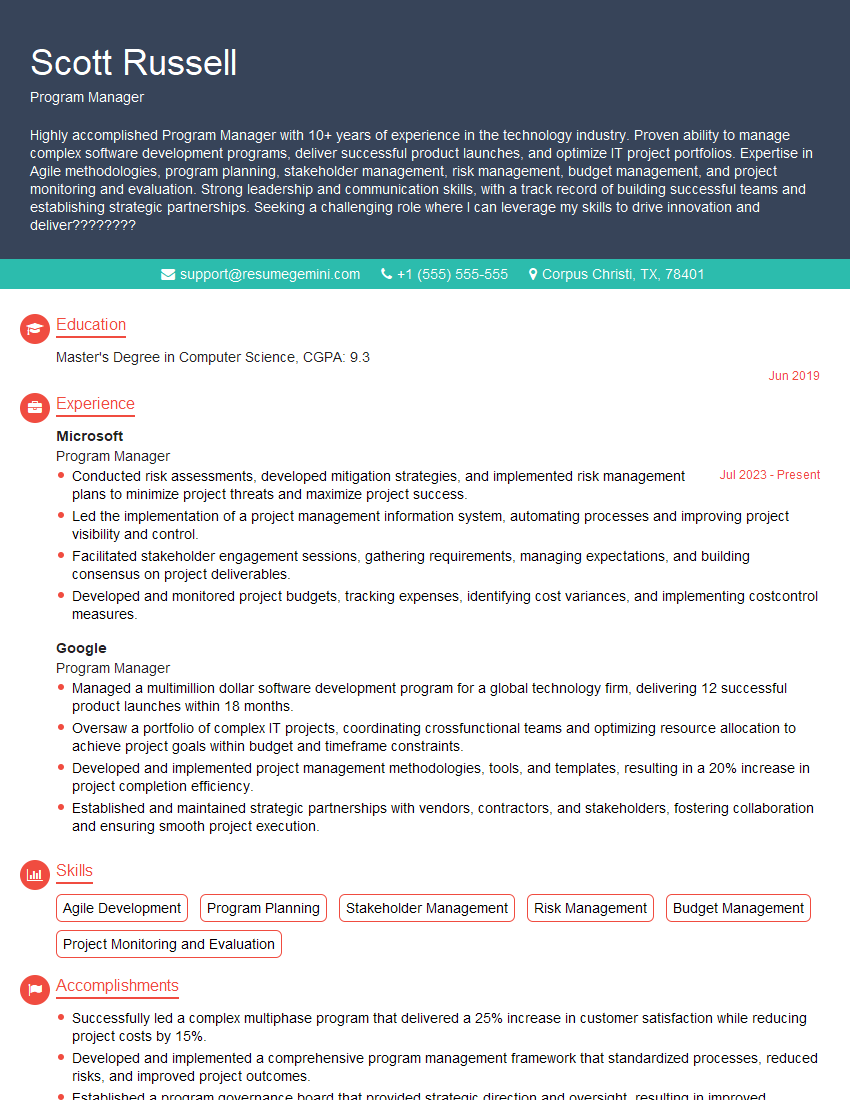
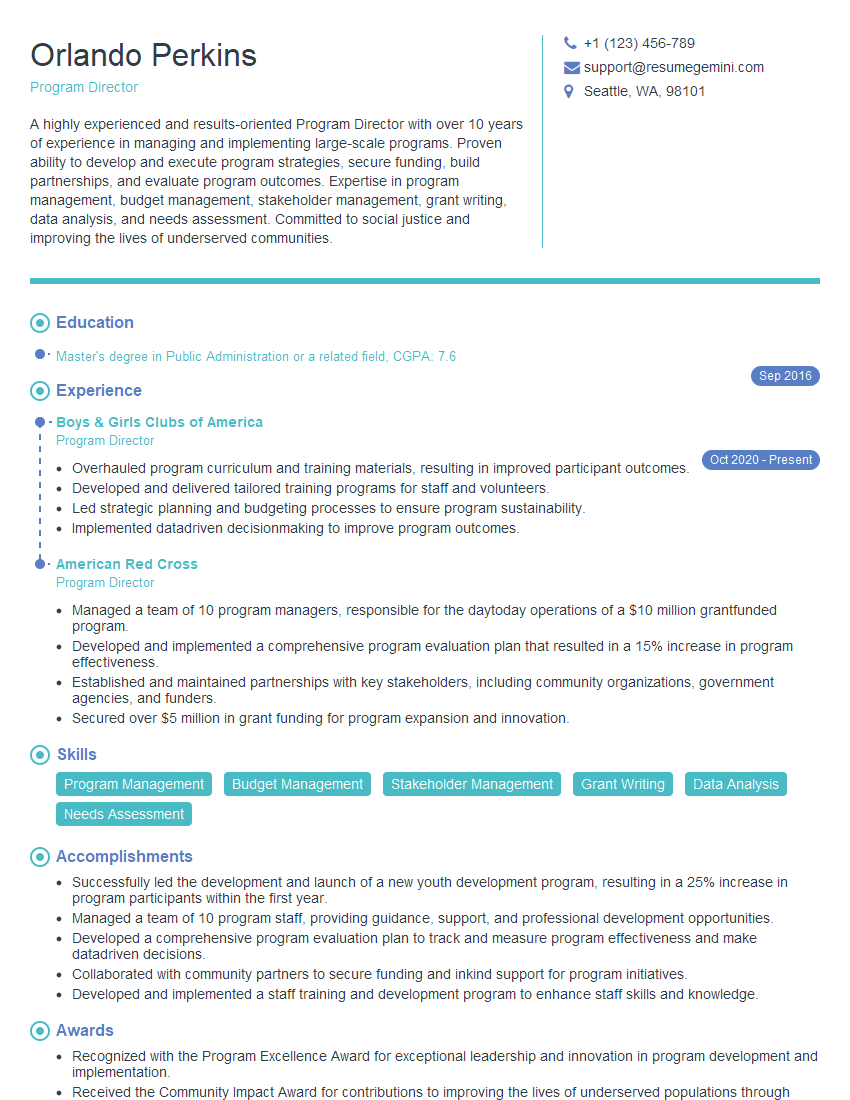
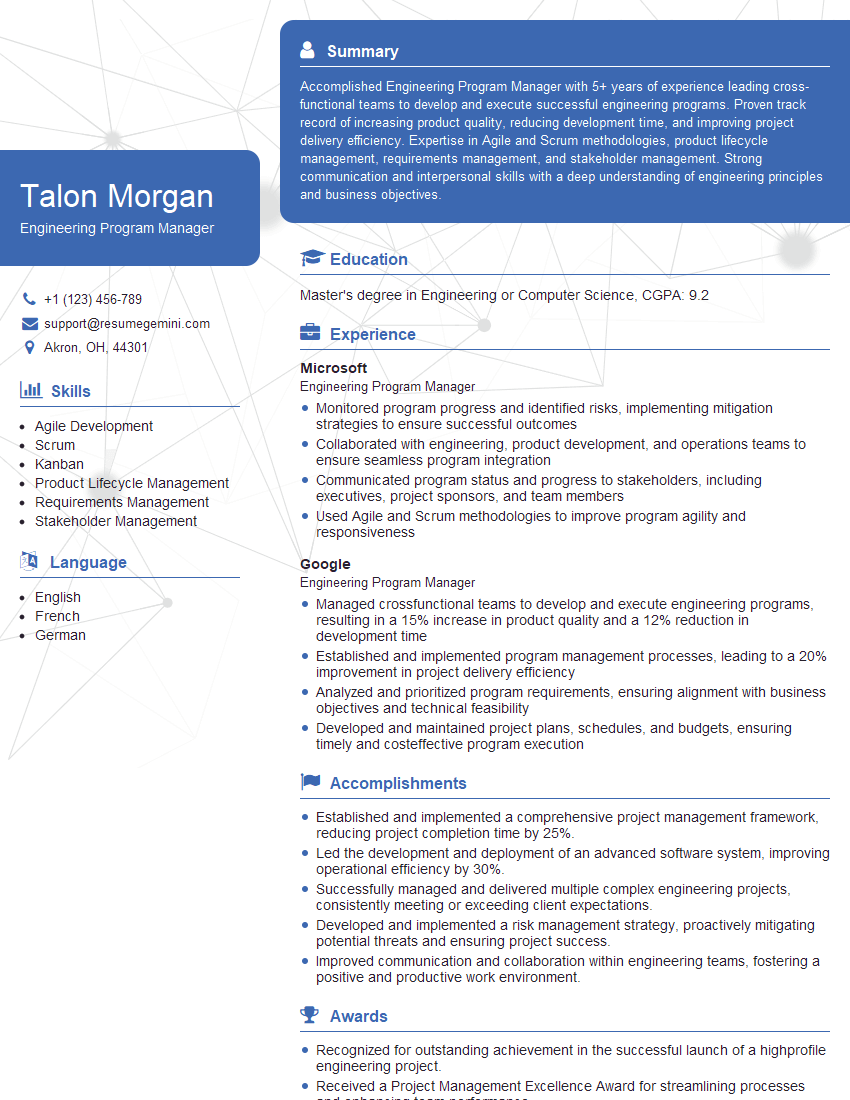
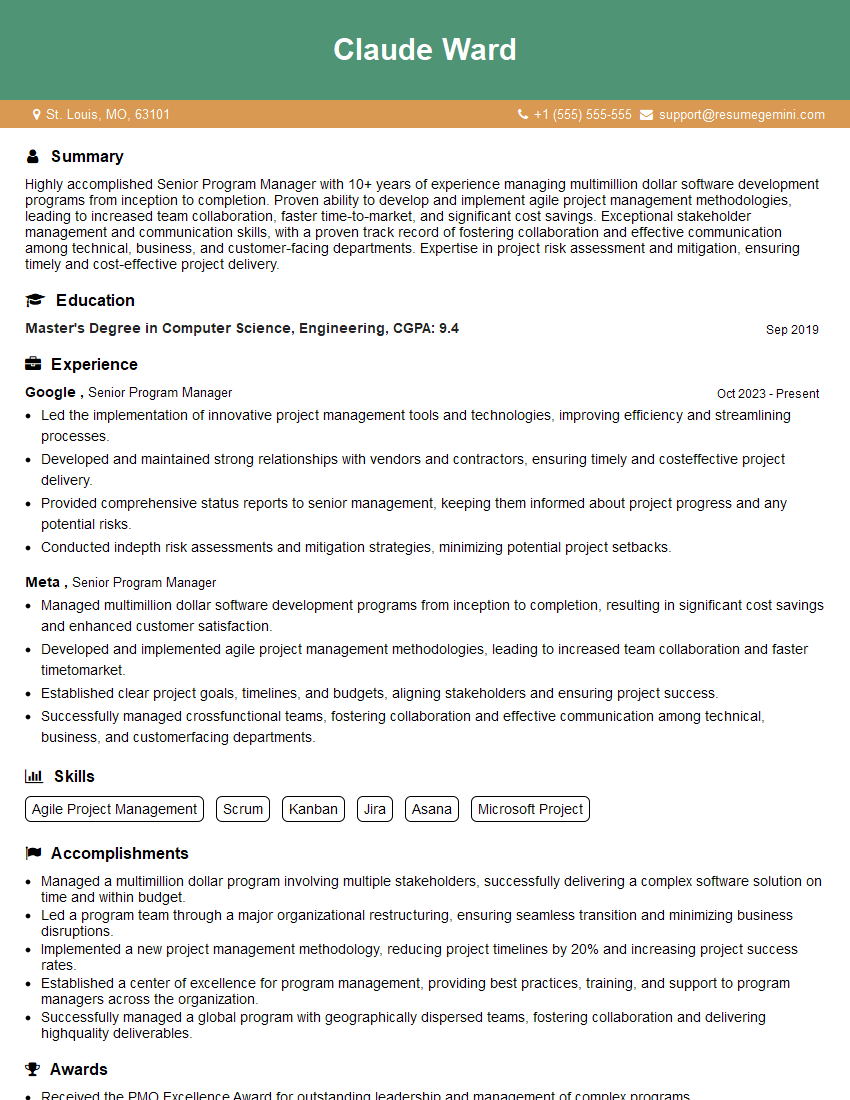
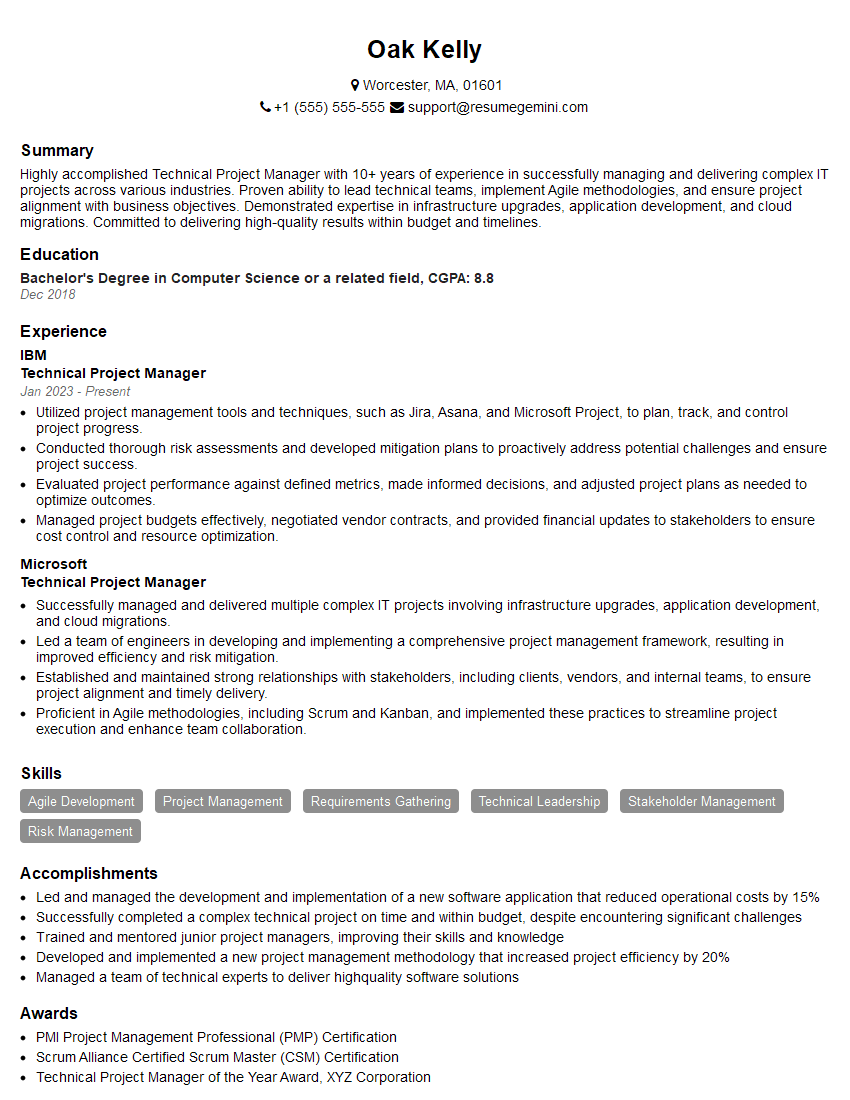
Mastering PM/TPM principles is crucial for career advancement in today’s dynamic work environment. These skills are highly sought after, opening doors to leadership roles and increased earning potential. To maximize your job prospects, crafting a compelling and ATS-friendly resume is essential. ResumeGemini can help you build a professional resume that highlights your skills and experience effectively. We provide examples of resumes tailored to PM/TPM Programs to help you get started. Invest the time to build a strong resume – it’s your first impression on potential employers.
Explore more articles
Users Rating of Our Blogs
Share Your Experience
We value your feedback! Please rate our content and share your thoughts (optional).
What Readers Say About Our Blog
Really detailed insights and content, thank you for writing this detailed article.
IT gave me an insight and words to use and be able to think of examples