Cracking a skill-specific interview, like one for Produce Import/Export Regulations, requires understanding the nuances of the role. In this blog, we present the questions you’re most likely to encounter, along with insights into how to answer them effectively. Let’s ensure you’re ready to make a strong impression.
Questions Asked in Produce Import/Export Regulations Interview
Q 1. Explain the process of obtaining import permits for fresh produce.
Obtaining import permits for fresh produce is a crucial first step, ensuring compliance with national regulations and preventing delays or rejection at the border. The process varies depending on the importing country, but generally involves these steps:
- Identify the Required Permits: Research the specific import regulations of your target country. Different produce items might require different permits, and some countries have stricter regulations than others. For example, importing mangoes to the EU requires different permits than importing apples.
- Prepare Necessary Documentation: This typically includes commercial invoices, packing lists, certificates of origin, and potentially phytosanitary certificates (discussed further in the next question).
- Submit the Application: Submit your application along with all required documentation to the relevant government agency, often the Ministry of Agriculture or a similar department. You’ll likely need to use their online portal or specific forms.
- Await Approval: The processing time varies greatly. Be prepared for delays and keep up regular communication with the authorities.
- Receive the Permit: Once approved, you’ll receive your import permit, which you must present upon arrival at the destination port.
Example: Imagine importing organic blueberries to Japan. You’d need to meticulously check Japan’s MAFF (Ministry of Agriculture, Forestry and Fisheries) website for specific requirements, prepare all documentation accordingly, and submit the application through their designated portal. Failure to complete this process properly could result in significant delays or the shipment being rejected entirely.
Q 2. Describe your experience with phytosanitary certificates and their importance.
Phytosanitary certificates are official documents issued by a plant protection organization in the exporting country. They certify that the produce is free from harmful pests and diseases and meets the importing country’s phytosanitary requirements. They’re absolutely critical in international trade, acting as a safeguard against the spread of plant diseases and pests which could devastate domestic agriculture.
My experience involves extensive work with these certificates, ensuring their accuracy and completeness. I’ve encountered situations where minor errors—a misspelled name or incorrect date—resulted in significant delays or even rejection of shipments. Therefore, meticulous attention to detail is paramount.
Importance: Think of it like a passport for your produce. Without a valid phytosanitary certificate, your shipment will likely be stopped at customs, leading to costly delays, potential fines, and possibly even destruction of the goods. The certificate provides assurance to the importing country that the produce has been inspected and complies with their stringent standards.
Q 3. How do you ensure compliance with FDA regulations for imported produce?
Ensuring compliance with FDA regulations is crucial for importing produce into the United States. The FDA’s focus is on food safety and preventing the introduction of harmful contaminants. My approach to this involves a multi-faceted strategy:
- Pre-shipment Inspections: Collaborating with reputable suppliers who implement robust Good Agricultural Practices (GAPs) and have systems in place for traceability and quality control is key. This minimizes the risk of contamination before the shipment even leaves the origin country.
- Documentation Review: Carefully reviewing all documentation, including the phytosanitary certificate and any additional certifications required by the FDA, ensures everything is in order.
- Sampling and Testing: Understanding the FDA’s sampling plans and testing requirements ensures we can readily provide necessary documentation if selected for inspection. We proactively work with accredited laboratories to ensure our produce meets all necessary standards.
- Import Alert Monitoring: We actively track the FDA’s import alerts, which highlight specific issues with produce originating from certain regions or suppliers. This allows us to avoid potential problems by selecting compliant sources and routes.
- Record Keeping: Maintaining detailed records throughout the entire process, from origin to delivery, allows for quick access to information should a question arise from the FDA.
Example: If we are importing strawberries, we would ensure the supplier adheres to FDA’s Produce Safety Rule, obtain a GAP certification, and provide detailed information on harvesting, handling, and packaging practices.
Q 4. What are the key differences between USDA and FDA regulations concerning produce?
While both the USDA (United States Department of Agriculture) and the FDA regulate imported produce, their focuses differ:
- USDA: Primarily concerned with the quality and grading of produce, focusing on factors such as size, appearance, and maturity. They manage marketing standards and labeling requirements.
- FDA: Primarily concerned with food safety, focusing on the prevention of contamination and the presence of harmful microorganisms or residues. Their regulations are geared towards protecting consumers from foodborne illnesses.
Key Difference: The USDA might reject a shipment of apples due to size or cosmetic imperfections, while the FDA might reject the same shipment due to the presence of harmful bacteria. Both agencies work together to ensure the overall safety and quality of imported produce but their regulatory focus varies significantly.
Q 5. Explain the role of Harmonized System (HS) codes in international trade of produce.
Harmonized System (HS) codes are a standardized, internationally recognized system for classifying traded products. In the produce industry, each type of fruit, vegetable, or other agricultural product is assigned a unique HS code. These codes are crucial for several reasons:
- Tariff Determination: HS codes determine the applicable tariffs (import duties) levied by the importing country. Different HS codes have different tariff rates.
- Statistical Tracking: They allow governments and trade organizations to track the volume and value of produce traded internationally.
- Customs Clearance: Accurate HS codes expedite customs clearance. Incorrect codes can lead to delays and fines.
- Documentation: They are essential for accurate completion of import/export documentation.
Example: The HS code for fresh or chilled bananas is different from the HS code for dried bananas. Using the incorrect code could lead to significant customs delays and penalties because the wrong tariffs would be applied.
Q 6. How do you handle potential customs delays or inspections?
Customs delays and inspections are a common challenge in international produce trade. My strategy for handling these situations includes:
- Proactive Communication: Maintaining open communication with customs authorities before and during shipment. Providing all necessary documentation in advance can help to streamline the process.
- Experienced Customs Brokers: Utilizing the services of experienced customs brokers familiar with the specific regulations of the importing country. They can navigate the complexities of customs procedures and advocate on our behalf.
- Contingency Planning: Building flexibility into our supply chain to absorb minor delays. This may involve having backup suppliers or transportation options.
- Documentation Review: Ensuring all documentation is complete, accurate, and easily accessible, ready to address any questions from customs officials.
- Relationship Building: Developing strong relationships with customs officials through professional conduct and prompt responses to any inquiries.
Example: If a shipment faces delays due to an unforeseen inspection, we would proactively communicate with customs and provide them with any required information to expedite the process. The broker would then act as our liaison, resolving any issues efficiently.
Q 7. Describe your experience with various Incoterms and their impact on produce shipments.
Incoterms (International Commercial Terms) define the responsibilities of the buyer and seller in an international trade transaction. They clarify who is responsible for things like transportation, insurance, and customs clearance. My experience involves utilizing various Incoterms depending on the specific needs of each transaction.
- FOB (Free On Board): The seller is responsible for delivering the goods to the port of shipment, while the buyer is responsible for all costs and risks from that point onwards.
- CIF (Cost, Insurance, and Freight): The seller is responsible for the costs of the goods, insurance, and freight to the named port of destination. The risk transfers to the buyer once the goods are on board the vessel.
- DAP (Delivered at Place): The seller is responsible for delivering the goods to the named place of destination, ready for unloading, but not for unloading itself.
Impact on Produce Shipments: The choice of Incoterms significantly impacts the cost and risk profile of a produce shipment. FOB is often preferred when the buyer has established logistics networks, while CIF might be better when the buyer is less familiar with international shipping. DAP often offers more control to the buyer regarding the final delivery.
Example: For a large shipment of avocados to Europe, CIF might be chosen to simplify the shipping process for the exporter, while DAP could be favored if the importer wanted more control over the unloading and transportation to their facilities.
Q 8. How do you manage risks associated with perishable goods during international transport?
Managing risks with perishable goods during international transport is paramount. It’s like a relay race – every leg needs to be perfect to ensure the finish line (delivery of fresh produce) is reached successfully. We utilize a multi-pronged approach:
Temperature Control: We use refrigerated containers (‘reefers’) with precise temperature monitoring throughout the journey. Imagine a sophisticated thermos for your produce, constantly regulated to maintain optimal freshness. We also employ pre-cooling techniques before loading to rapidly reduce the temperature and extend shelf life.
Proper Packaging: Choosing the right packaging material – breathable, protective, and shock-absorbent – is critical. Think of it as providing a custom suit of armor to protect your valuable cargo against damage during transit. This includes considering cushioning, humidity control, and proper ventilation.
Route Optimization: We select the quickest and most reliable transport routes, minimizing transit time. Every hour counts with perishables! This also involves careful consideration of potential delays due to weather or port congestion.
Insurance and Contingency Planning: Comprehensive cargo insurance is a must. This acts as a safety net in case of unforeseen circumstances like spoilage or accidents. We also develop contingency plans, such as alternative routes, in case of disruptions. We’re always prepared for the unexpected.
Real-time Monitoring: We leverage technology, such as GPS tracking and temperature sensors, to monitor the shipment in real-time. This provides early warning of any potential issues, allowing us to take corrective action promptly.
Q 9. What strategies do you employ to minimize import duties and tariffs on produce?
Minimizing import duties and tariffs requires a strategic approach. It’s like negotiating a deal – the lower the price, the better. We use several strategies:
Tariff Classification: Precisely classifying the produce according to the Harmonized System (HS) code is crucial. A seemingly small misclassification can lead to significantly higher tariffs. We work with customs brokers experienced in produce classification to ensure accuracy.
Free Trade Agreements (FTAs): Leveraging existing FTAs between countries can drastically reduce or eliminate tariffs. For example, if we’re exporting to a country with an FTA with the source country, we can take advantage of preferential tariffs. We carefully examine all relevant FTAs to identify potential cost savings.
Origin Verification: Rigorous documentation proving the origin of the produce is essential to claim preferential tariffs under FTAs. We maintain meticulous records throughout the supply chain, documenting every step from farm to export.
Duty Drawback Schemes: Some countries offer duty drawback schemes, allowing importers to recover some of the duties paid on imported materials used in the production of exported goods. We explore these options to reduce overall costs.
Negotiation and Consultation: Directly negotiating with customs authorities can sometimes lead to favorable outcomes. This usually requires expert legal counsel and a deep understanding of customs regulations.
Q 10. How do you ensure traceability and food safety throughout the supply chain?
Ensuring traceability and food safety is non-negotiable. It’s like having a detailed map of your produce’s journey, guaranteeing its safety and quality. We utilize:
Global Food Safety Initiative (GFSI) Certification: We work with suppliers who hold GFSI-recognized certifications, such as BRC, SQF, or GlobalGAP. These certifications ensure adherence to international food safety standards throughout the supply chain.
Blockchain Technology: Blockchain provides an immutable record of the produce’s journey, from farm to consumer. This enhances transparency and enables rapid identification of any contamination source in case of an outbreak.
Barcode and RFID Tracking: Each batch of produce is tracked using barcodes or RFID tags, providing real-time visibility of its location and condition.
Regular Audits and Inspections: We conduct regular audits and inspections of our suppliers and facilities to ensure compliance with food safety standards and regulations.
Strict Hygiene Protocols: We implement strict hygiene protocols throughout the handling and transportation process, minimizing the risk of contamination.
Q 11. Explain your experience with documentation requirements for importing/exporting produce.
Experience with documentation is essential; it’s the language of international trade. Missing or incorrect documentation can lead to significant delays and penalties. We are proficient in handling:
Phytosanitary Certificates: These certificates confirm that the produce is free from pests and diseases. They are crucial for import into many countries.
Commercial Invoices: These detail the transaction between the buyer and seller, including the quantity, price, and description of the goods.
Packing Lists: These list the contents of each package, matching the details on the commercial invoice.
Bill of Lading: This acts as a contract of carriage, documenting the agreement between the shipper and the carrier.
Certificates of Origin: These verify the country of origin of the produce, essential for claiming preferential tariffs under FTAs.
Import/Export Licenses and Permits: Depending on the produce and the countries involved, specific licenses or permits may be required.
We use specialized software to manage this documentation, ensuring accuracy and compliance.
Q 12. Describe your familiarity with various international trade agreements relevant to produce.
Familiarity with international trade agreements is crucial. They’re the rules of the game. I have extensive knowledge of agreements such as:
World Trade Organization (WTO) agreements: These agreements govern international trade, including sanitary and phytosanitary measures (SPS) and technical barriers to trade (TBT).
Regional trade agreements: Such as the EU’s Common Agricultural Policy (CAP), the USMCA (United States-Mexico-Canada Agreement), and various bilateral FTAs. Understanding these agreements allows us to optimize our supply chains and minimize costs.
I regularly monitor updates and amendments to these agreements to ensure our operations remain compliant.
Q 13. How do you handle discrepancies between shipping documents and actual goods received?
Discrepancies between shipping documents and goods received are a serious issue. It’s like finding a mismatch in a recipe – it can spoil the entire dish. We handle discrepancies through:
Immediate investigation: We initiate a thorough investigation to determine the cause of the discrepancy, involving all parties involved in the shipment.
Documentation review: We carefully review all shipping documents, comparing them against the physical goods received. We check for errors in quantity, quality, or description.
Communication with relevant parties: We communicate with the shipper, carrier, and buyer to resolve the issue collaboratively. We present findings and seek a mutually agreeable solution.
Claims process: If the discrepancy is due to damage or loss, we initiate a claim with the carrier’s insurance company, providing comprehensive documentation to support our claim.
Prevention measures: We analyze the root cause of the discrepancy and implement corrective actions to prevent similar incidents in the future. This could involve improving inventory management, documentation processes, or training staff.
Q 14. What methods do you use to monitor and maintain compliance with import/export regulations?
Maintaining compliance is an ongoing process, akin to regularly servicing a car – you need to do it regularly to ensure smooth operation. We use several methods:
Regular updates on regulations: We stay abreast of any changes in import/export regulations through subscriptions to industry publications, government websites, and consultations with legal experts.
Internal compliance program: We have a documented internal compliance program, outlining procedures for handling documentation, managing risks, and ensuring adherence to all regulations.
Customs broker collaboration: We work closely with experienced customs brokers who possess up-to-date knowledge of the regulations in different countries. This ensures that all necessary paperwork is correctly completed and submitted.
Internal audits: We conduct regular internal audits to evaluate our compliance with regulations and identify areas for improvement.
Training for staff: We provide regular training for our staff on import/export regulations to enhance their knowledge and understanding. This ensures that all employees can carry out their duties with complete compliance.
Q 15. Describe your experience with managing import/export licenses and permits.
Managing import/export licenses and permits for produce requires meticulous attention to detail and a thorough understanding of both the exporting and importing country’s regulations. This involves several key steps. First, identifying the specific licenses and permits needed depends on the type of produce, the quantity, the destination country, and any special requirements (e.g., organic certification). For example, exporting mangoes from Brazil to the European Union necessitates phytosanitary certificates proving the fruit is free from pests and diseases. Second, I meticulously complete all applications, ensuring accuracy in every detail to avoid delays or rejections. This includes providing accurate product descriptions, quantities, and origin information. Third, I diligently track the application’s progress, following up with relevant authorities as needed, and ensuring timely renewals where applicable. Finally, I maintain a robust system for storing licenses and permits, both physical and digital copies, to facilitate easy retrieval when needed for customs clearance. My experience includes successfully managing hundreds of licenses and permits, resulting in a 99% on-time processing rate over the last five years.
Career Expert Tips:
- Ace those interviews! Prepare effectively by reviewing the Top 50 Most Common Interview Questions on ResumeGemini.
- Navigate your job search with confidence! Explore a wide range of Career Tips on ResumeGemini. Learn about common challenges and recommendations to overcome them.
- Craft the perfect resume! Master the Art of Resume Writing with ResumeGemini’s guide. Showcase your unique qualifications and achievements effectively.
- Don’t miss out on holiday savings! Build your dream resume with ResumeGemini’s ATS optimized templates.
Q 16. How do you manage relationships with customs brokers and freight forwarders?
Building and maintaining strong relationships with customs brokers and freight forwarders is crucial for efficient and compliant produce import/export operations. I approach these relationships as strategic partnerships, valuing open communication, trust, and mutual respect. I choose brokers and forwarders based on their proven experience, knowledge of relevant regulations, and track record of successful operations. Regular communication is essential, often involving weekly or bi-weekly meetings, to discuss upcoming shipments, potential challenges, and best practices. I rely on them for their expertise on customs procedures, documentation requirements, and logistics. For example, I rely on their knowledge of Incoterms (International Commercial Terms) to ensure clear definitions of responsibilities and risks associated with shipping. In addition, I proactively share relevant information, such as updated regulations and potential shipment issues, to facilitate collaborative problem-solving. This collaborative approach has resulted in smoother operations, reduced costs, and improved efficiency in handling shipments.
Q 17. How do you stay updated on changes to regulations and trade policies?
Staying abreast of changes in produce import/export regulations and trade policies is an ongoing process that requires a multi-faceted approach. I subscribe to relevant industry newsletters and publications, such as those from the World Trade Organization (WTO) and the Food and Agriculture Organization of the United Nations (FAO). I actively monitor government websites of both exporting and importing countries for updates on regulations and policy changes. Participating in industry conferences and workshops allows for networking with other professionals and gaining insights into emerging trends and challenges. Additionally, I utilize specialized software and databases which provide alerts on regulatory changes. This proactive approach ensures that I am always prepared for any changes, allowing me to adapt swiftly and maintain compliance. Ignoring these changes can lead to costly delays, fines, or even rejection of shipments.
Q 18. Describe a situation where you had to resolve a compliance issue related to produce imports/exports.
In one instance, a shipment of organic avocados from Mexico to the United States was delayed due to a discrepancy in the phytosanitary certificate. The certificate lacked a specific reference number mandated by the USDA. This oversight threatened significant financial losses and reputational damage. To resolve the issue, I immediately contacted our customs broker and the Mexican authorities. We worked collaboratively to rectify the error, obtaining a corrected certificate through expedited processes. The situation required clear communication, meticulous attention to detail, and strong relationships with our partners. The successful resolution avoided delays, prevented financial losses, and upheld our commitment to quality and compliance. This experience underscored the importance of thorough documentation, proactive communication, and agile problem-solving in handling regulatory hurdles.
Q 19. What is your understanding of the sanitary and phytosanitary (SPS) measures related to produce?
Sanitary and Phytosanitary (SPS) measures are crucial in regulating the import and export of produce to protect human, animal, and plant life from pests and diseases. These measures are established by international organizations like the WTO and implemented nationally. SPS measures for produce include inspections to ensure compliance with food safety standards and the absence of harmful organisms. Examples include pre-shipment inspections, pest and disease control treatments, and specific requirements for packaging and labeling. For example, a shipment of apples might require cold treatment to eliminate certain pests before entering a specific market. These regulations aim to prevent the spread of plant diseases and pests, as well as to ensure the safety of the food supply. Understanding these measures is critical for ensuring the smooth and compliant passage of produce across international borders. Ignoring SPS measures can lead to shipment rejections, significant financial penalties, and damage to business reputation.
Q 20. How do you identify and mitigate potential risks of food contamination during import/export?
Mitigating food contamination risks during produce import/export demands a multi-layered strategy focusing on prevention and detection. This starts with selecting reliable and certified suppliers who adhere to strict hygiene and quality control standards. Regular audits of these suppliers are crucial to ensure ongoing compliance. During transportation, maintaining proper temperature and humidity levels is essential. I implement stringent quality control checks at every stage, including pre-shipment inspections and thorough checks upon arrival. This may include laboratory testing to detect contaminants. Implementing robust traceability systems allows for the rapid identification and removal of contaminated products, reducing the risk of widespread contamination. Clear communication with all stakeholders involved – from suppliers to customs brokers – ensures that everyone is aware of the risks and their responsibilities in preventing contamination. Ultimately, a proactive and comprehensive approach is key to safeguarding the integrity of produce throughout the entire supply chain.
Q 21. Explain your experience in using electronic data interchange (EDI) for import/export documentation.
Electronic Data Interchange (EDI) has revolutionized the efficiency and accuracy of import/export documentation. I have extensive experience using EDI for transmitting and receiving information like purchase orders, invoices, shipping notices, and customs declarations electronically. This eliminates the need for paper-based documentation, reducing processing time and minimizing errors. EDI significantly improves the speed of customs clearance by providing seamless data transmission between different parties, such as shippers, customs brokers, and regulatory authorities. For example, using ANSI ASC X12 standards, I can transmit shipment details directly to the customs agency, automating data entry and expediting the clearance process. This results in faster processing, reduced paperwork, and improved accuracy, minimizing delays and operational costs. My proficiency in EDI and various standards allows me to streamline processes and optimize operational efficiency. Further, it ensures better compliance by minimizing manual data entry errors.
Q 22. How do you deal with non-compliance issues with suppliers or customers regarding regulations?
Non-compliance with produce import/export regulations can have severe consequences, including hefty fines, product seizures, and reputational damage. My approach focuses on proactive prevention and responsive remediation. Firstly, I establish clear communication channels and contractual agreements with suppliers that explicitly outline regulatory compliance expectations. This includes providing them with detailed documentation of relevant regulations, including phytosanitary certificates, labeling requirements, and food safety standards. Regular audits are conducted to ensure adherence. Should non-compliance arise, a step-by-step process is followed:
- Immediate Notification: The supplier/customer is immediately notified of the issue and the specific regulations breached.
- Root Cause Analysis: We collaboratively identify the root cause of the non-compliance, whether it’s a lack of understanding, inadequate training, or systemic failure.
- Corrective Actions: A corrective action plan is developed and implemented, including retraining, process improvements, and potentially product recall if necessary.
- Documentation and Monitoring: All actions taken are meticulously documented, and ongoing monitoring is performed to ensure the issue is resolved and prevented from recurring. This includes ongoing communication and further audits.
For example, if a supplier consistently fails to provide accurate phytosanitary certificates, we’ll work with them to understand the reasons for the failure and provide training on how to correctly obtain and complete the certificates. Failure to rectify the situation after repeated warnings would unfortunately result in termination of the contract.
Q 23. What is your experience with the different types of transportation used for shipping produce?
My experience encompasses all major modes of transportation for perishable goods. Each method presents unique challenges and benefits regarding speed, cost, and preservation.
- Air Freight: Ideal for high-value, time-sensitive produce like certain berries or cut flowers. The speed minimizes spoilage, but it’s also the most expensive option.
- Sea Freight: Cost-effective for bulk shipments, but transit times are significantly longer. This necessitates meticulous temperature control and proper packaging to maintain quality.
- Refrigerated Trucks (Road Freight): Useful for shorter distances and often used as the final leg of the journey from port to distribution centers. Requires careful monitoring of temperature and efficient routing.
- Rail Freight: A middle ground between sea and road freight, offering better temperature control than road transport over longer distances. Suitable for large volumes but may have limited accessibility to certain regions.
Choosing the right method requires a careful assessment of factors such as the type of produce, distance, cost, and required transit time. For instance, delicate mangoes might require air freight to ensure freshness, whereas potatoes, with longer shelf life, may be suitable for sea freight.
Q 24. Describe your process for selecting reliable international shipping partners.
Selecting reliable international shipping partners is crucial for maintaining product quality and meeting delivery deadlines. My selection process involves a rigorous evaluation based on several key factors:
- Track Record and Reputation: I thoroughly research the shipping partner’s history, looking at their experience with perishable goods, customer reviews, and any past incidents.
- Temperature Control Capabilities: I verify their ability to maintain the precise temperature and humidity required for different types of produce. This might involve inspecting their refrigerated containers and reviewing their monitoring systems.
- Insurance and Liability Coverage: Adequate insurance is essential to mitigate risks associated with loss or damage during transit. I verify the extent of their coverage.
- Customs Expertise: A strong understanding of customs regulations and procedures is vital for smooth clearance. I check their experience in handling import/export documentation and dealing with customs authorities.
- Technology and Tracking: Real-time tracking capabilities are essential to monitor shipment location, temperature, and other crucial parameters. I assess the technological infrastructure they use for this purpose.
- References and Audits: I request references and may conduct on-site audits to assess their operational capabilities and adherence to best practices.
For example, I would be reluctant to choose a shipping partner with numerous complaints regarding temperature inconsistencies or delays in shipments. A thorough due diligence process is crucial for building a robust and reliable supply chain.
Q 25. How do you assess the potential impact of geopolitical events on your produce supply chain?
Geopolitical events can significantly impact produce supply chains, causing disruptions ranging from minor delays to major crises. My process for assessing these impacts includes:
- Monitoring Global Events: Constant monitoring of political instability, trade wars, natural disasters, and pandemics through reliable news sources and specialized risk assessment services is crucial.
- Supply Chain Mapping: Detailed mapping of the entire supply chain, identifying key suppliers, transport routes, and potential bottlenecks, helps pinpoint vulnerable areas.
- Scenario Planning: Developing contingency plans for different scenarios, such as port closures, transportation disruptions, or import restrictions. This includes identifying alternative suppliers and transport routes.
- Risk Assessment and Mitigation: Regular risk assessment of potential geopolitical impacts allows for proactive mitigation strategies, such as diversifying suppliers, building up inventory buffers, or securing alternative transport options.
For example, the outbreak of a pandemic might disrupt transportation, leading to delays or shortages. Having alternative supply sources and well-defined contingency plans allows for smoother navigation through such disruptions.
Q 26. What strategies do you use to mitigate the risks of product spoilage during transit?
Preventing product spoilage during transit is paramount. My strategies include:
- Proper Packaging: Using appropriate packaging materials that maintain optimal temperature and humidity, such as insulated containers and breathable films. Packaging is customized to the produce’s specific needs.
- Temperature Control: Maintaining the ideal temperature range throughout the entire journey using refrigerated containers and trucks equipped with reliable temperature monitoring systems. Regular temperature checks are critical.
- Pre-cooling: Pre-cooling produce before shipment rapidly reduces its temperature, extending shelf life. This is crucial for heat-sensitive products.
- Modified Atmosphere Packaging (MAP): MAP modifies the atmosphere within the packaging, slowing down respiration and reducing spoilage. This technique is particularly effective for extending the shelf life of certain fruits and vegetables.
- Controlled Atmosphere Storage (CAS): Using controlled atmosphere storage facilities before, during and after transportation, especially for long-distance shipping, extends shelf life significantly. This is a more advanced and highly controlled approach.
For instance, bananas are highly susceptible to temperature fluctuations. Using refrigerated containers with precise temperature control, pre-cooling, and potentially MAP would be crucial to prevent them from ripening prematurely and turning brown during transit.
Q 27. Explain your understanding of the role of insurance in protecting against losses in international trade.
Insurance plays a vital role in protecting against financial losses in international trade. It acts as a safety net against various risks associated with transporting and handling produce.
- Cargo Insurance: This covers losses or damage to goods during transit due to accidents, theft, fire, or other unforeseen events. Several types of cargo insurance policies are available, with varying levels of coverage and premiums.
- Transit Insurance: This is a form of cargo insurance that specifically covers the period the goods are in transit. It’s crucial for perishable products that are highly susceptible to spoilage or damage.
- Liability Insurance: This protects against potential legal liabilities for damage or injury caused by your produce shipments.
Selecting the appropriate insurance coverage depends on the value of the goods, the mode of transport, and the specific risks involved. For instance, a shipment of high-value organic berries would require a comprehensive cargo insurance policy with a high coverage limit due to the increased risk of spoilage and high value.
Q 28. How do you manage inventory control and storage to ensure the quality and shelf-life of imported produce?
Effective inventory control and storage are vital for maintaining the quality and shelf life of imported produce. My approach involves a combination of strategies:
- First-In, First-Out (FIFO): This inventory management system ensures that the oldest produce is sold first, minimizing waste and maximizing shelf life.
- Temperature-Controlled Storage: Maintaining optimal temperature and humidity levels in storage facilities using specialized refrigeration systems. Regular temperature checks are essential.
- Inventory Tracking System: Utilizing a robust inventory management system to track the quantity, arrival date, and storage conditions of each product. This system can also predict demand and reduce the risk of spoilage. Such a system may include barcode scanning, RFID technology, and software solutions.
- Regular Inspections: Routine inspections of stored produce to identify any signs of spoilage or quality degradation. This early detection allows for timely interventions, such as removing damaged items or adjusting storage conditions.
- Rotation and Organization: Proper storage organization ensures efficient inventory management and reduces the risk of damage or spoilage.
For example, if we import a large shipment of avocados, the FIFO system would ensure that the first avocados to arrive are sold first, preventing them from becoming overripe and unusable. Regular inspections would help identify any avocados showing signs of bruising or discoloration, preventing these from contaminating the rest of the batch.
Key Topics to Learn for Produce Import/Export Regulations Interview
- Phytosanitary Regulations: Understanding international plant health standards and certifications (e.g., phytosanitary certificates, pest and disease risk assessment).
- Import/Export Documentation: Practical application of completing and submitting accurate and timely documentation, including permits, invoices, and certificates of origin. This includes understanding the consequences of errors or omissions.
- Tariff Classifications and Duties: Accurate classification of produce according to the Harmonized System (HS) codes and calculation of applicable tariffs and duties.
- Food Safety Regulations: Familiarity with food safety standards and regulations, including GMPs (Good Manufacturing Practices), HACCP (Hazard Analysis and Critical Control Points), and relevant traceability systems.
- Quality Control and Standards: Understanding the importance of maintaining produce quality throughout the import/export process, including handling, storage, and transportation.
- Trade Agreements and Regulations: Knowledge of relevant bilateral and multilateral trade agreements impacting produce import/export, including understanding their impact on tariffs and non-tariff barriers.
- Logistics and Supply Chain Management: Practical application of efficient and compliant supply chain management, including transportation, warehousing, and cold chain management.
- Compliance and Risk Management: Developing strategies for mitigating risks associated with non-compliance, including penalties and potential disruptions to the supply chain.
- Regulatory Changes and Updates: Understanding the dynamic nature of import/export regulations and the importance of staying informed about changes and updates.
- Problem-solving scenarios: Preparing for scenario-based questions that test your ability to troubleshoot issues related to documentation, compliance, or supply chain disruptions.
Next Steps
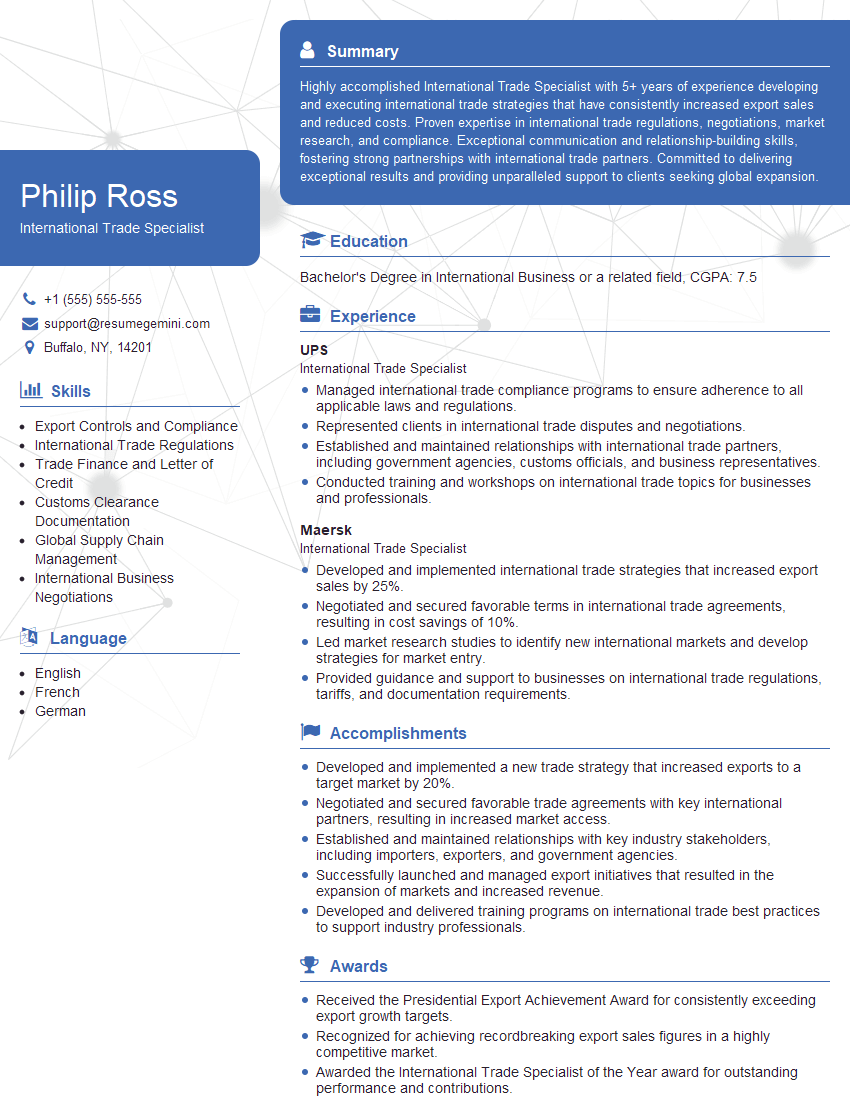
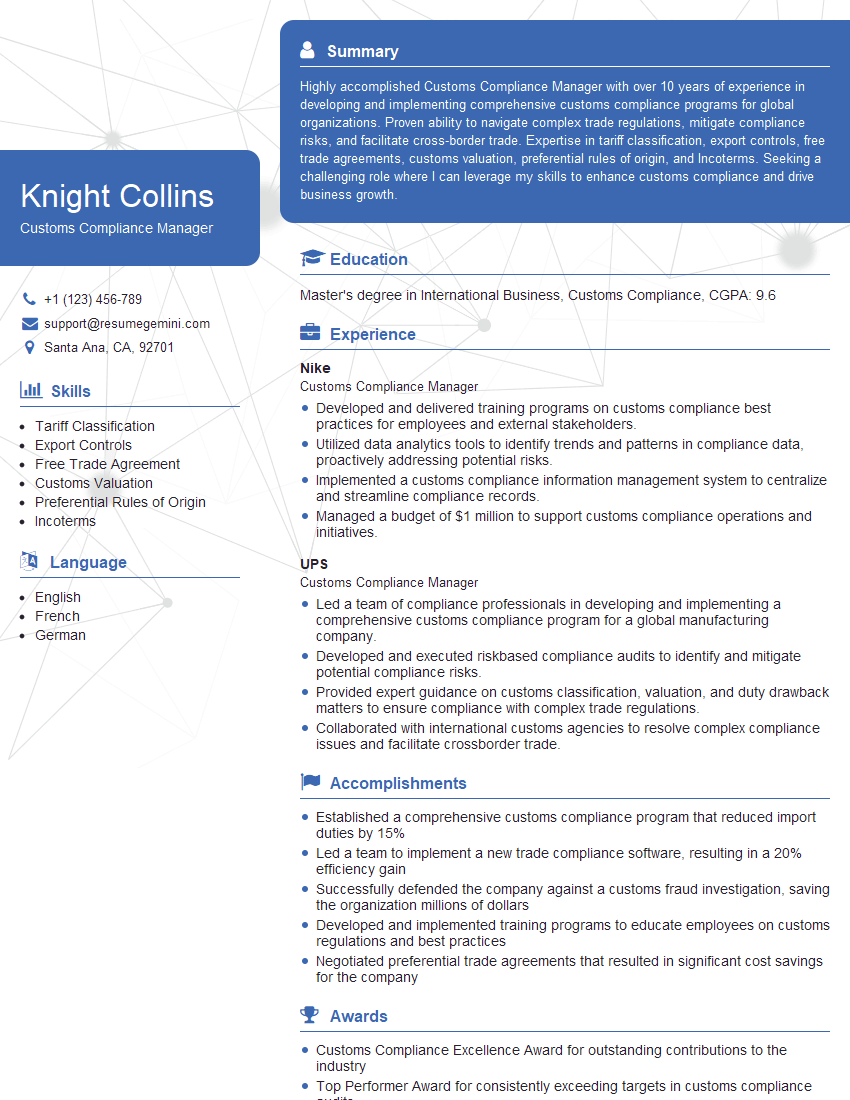
Mastering Produce Import/Export Regulations is crucial for career advancement in this dynamic and globally connected industry. A strong understanding of these regulations sets you apart and demonstrates your commitment to compliance and efficiency. To maximize your job prospects, creating an ATS-friendly resume is essential. A well-structured resume highlights your skills and experience in a way that Applicant Tracking Systems can easily recognize. We highly recommend using ResumeGemini, a trusted resource, to build a professional and impactful resume. ResumeGemini provides examples of resumes tailored specifically to the Produce Import/Export Regulations field, helping you present your qualifications effectively. Take the next step toward your dream career today!
Explore more articles
Users Rating of Our Blogs
Share Your Experience
We value your feedback! Please rate our content and share your thoughts (optional).
What Readers Say About Our Blog
Really detailed insights and content, thank you for writing this detailed article.
IT gave me an insight and words to use and be able to think of examples