The thought of an interview can be nerve-wracking, but the right preparation can make all the difference. Explore this comprehensive guide to Production Records Management interview questions and gain the confidence you need to showcase your abilities and secure the role.
Questions Asked in Production Records Management Interview
Q 1. Explain your experience with different records management systems (RMS).
My experience spans a range of Records Management Systems (RMS), from simple file-sharing systems to sophisticated enterprise content management (ECM) platforms. I’ve worked with both cloud-based solutions like SharePoint and M-Files, and on-premise systems such as OpenText Content Server. Each system presents unique strengths and weaknesses. For instance, SharePoint excels in collaboration and ease of use for less structured documents, while OpenText offers robust security and compliance features ideal for highly regulated industries. My experience allows me to select and implement the system best suited to specific organizational needs and regulatory requirements. I’ve also worked extensively with systems that integrate directly with production equipment, capturing data in real-time, ensuring data integrity and reducing manual entry errors.
- SharePoint: Used for managing less structured documents, project collaboration, and version control within smaller teams.
- M-Files: Leveraged for its metadata-rich environment and ability to handle complex document relationships, ideal for highly structured records management.
- OpenText Content Server: Implemented for managing highly sensitive and regulated documents, utilizing its strong security and audit trail capabilities.
Q 2. Describe your approach to implementing a new records management system.
Implementing a new RMS is a methodical process requiring careful planning and stakeholder engagement. My approach follows a phased methodology:
- Needs Assessment: Thoroughly analyze current processes, identify pain points, and determine the specific requirements of the new system. This includes understanding document types, volume, retention policies, and regulatory compliance needs.
- System Selection: Evaluate various RMS options based on the needs assessment, considering factors such as cost, scalability, integration capabilities, user-friendliness, and security features. I always involve key stakeholders in this process.
- Data Migration: Develop a comprehensive data migration plan to move existing records into the new system. This often involves data cleansing and validation to ensure data integrity. I typically employ a phased approach to migration to minimize disruption.
- Training and User Adoption: Provide thorough training to all users on the new system’s functionalities. This is crucial for successful implementation. I advocate for ongoing support and feedback mechanisms to address any challenges.
- Testing and Go-Live: Conduct rigorous testing before the go-live date to identify and resolve any issues. A phased rollout can minimize risk and allows for continuous improvement based on feedback.
- Ongoing Monitoring and Optimization: Continuously monitor system performance and user adoption. Regular review and optimization are crucial to ensure the system remains effective and efficient.
Q 3. How do you ensure the accuracy and completeness of production records?
Ensuring accuracy and completeness of production records is paramount. My approach utilizes a multi-pronged strategy:
- Real-time Data Capture: Integrating the RMS with production equipment allows for automated data capture, minimizing manual entry and reducing errors. This also ensures data is recorded immediately, eliminating delays.
- Data Validation: Implementing data validation rules within the system prevents incorrect or incomplete data from being entered. This can include checks for data type, range, and consistency.
- Workflow Automation: Automated workflows ensure that records follow a defined process, ensuring all necessary steps are completed and approvals obtained. This streamlines the process and minimizes omissions.
- Regular Audits: Conduct regular audits to verify data accuracy and completeness. These audits can involve spot checks, sampling, or comprehensive reviews, depending on the risk level.
- User Training and Accountability: Thorough training ensures users understand their responsibilities in maintaining data accuracy. Clear roles and responsibilities promote accountability.
For example, in a pharmaceutical manufacturing setting, a deviation from established protocols needs to be immediately recorded, reviewed, and approved—all within the RMS to maintain complete and accurate records supporting regulatory compliance.
Q 4. What are the key principles of effective records retention and disposal?
Effective records retention and disposal are governed by legal, regulatory, and business requirements. Key principles include:
- Legal and Regulatory Compliance: Adhering to all applicable laws and regulations regarding record retention periods and disposal methods. This varies widely by industry (e.g., HIPAA for healthcare, SOX for finance).
- Retention Schedules: Developing and maintaining a comprehensive retention schedule that specifies the retention period for each record type. This ensures records are kept for the necessary duration and disposed of appropriately.
- Secure Disposal: Utilizing secure disposal methods to protect sensitive information, such as shredding or secure electronic deletion, preventing unauthorized access or data breaches.
- Auditable Trail: Maintaining an auditable trail of all record creation, access, modification, and disposal activities. This is crucial for demonstrating compliance and accountability.
- Regular Review and Updates: Regularly reviewing and updating the retention schedule to reflect changes in legal requirements or business needs. This ensures ongoing compliance.
Q 5. How do you manage the lifecycle of production records?
Managing the lifecycle of production records involves a systematic approach from creation to final disposition. This includes:
- Creation: Ensuring records are created accurately and completely, often integrating directly with the production process.
- Capture: Using appropriate methods to capture records, whether electronically or physically, depending on the nature of the record.
- Storage: Storing records securely and accessibly, using appropriate technologies and physical locations.
- Access and Retrieval: Establishing procedures for accessing and retrieving records efficiently, ensuring authorized access only.
- Maintenance: Regularly reviewing and updating records to ensure accuracy and completeness.
- Retention: Adhering to established retention schedules to maintain records for the required period.
- Disposition: Securely disposing of records once the retention period has expired, following established procedures.
Consider a manufacturing plant: Raw material receipts are recorded, the production process is documented, quality control checks are logged, and finally, the finished goods are shipped—each step generating records carefully tracked and managed through their lifecycle.
Q 6. Explain your understanding of metadata and its importance in records management.
Metadata is data about data. It’s crucial in records management because it provides the context and structure needed to effectively manage and retrieve information. Examples of metadata include author, date created, file type, keywords, and department. In a production environment, metadata might include machine ID, batch number, operator ID, and timestamps. Without robust metadata, finding specific production records becomes extremely challenging. Imagine searching for a specific production batch without knowing the date or batch number—it would be like searching for a needle in a haystack. Metadata makes this process efficient and reliable. It allows for powerful searching and filtering, enabling quick access to the information needed for audits, compliance, and decision-making. It is the backbone of effective records management.
Q 7. Describe your experience with document version control.
Document version control is essential to track changes and ensure that the most current version of a document is being used. My experience includes implementing various version control strategies, from simple numbering systems to more sophisticated systems integrated with the RMS. Techniques I’ve used include:
- Sequential Versioning: Assigning sequential numbers to each version (e.g., Document_v1, Document_v2). This is simple but can become cumbersome.
- Date-Based Versioning: Including the date in the filename (e.g., Document_20241027). Useful but can lead to confusion if multiple versions are created on the same day.
- Integrated Version Control within RMS: Using the version control features built into the RMS, providing a clear history of changes and allowing for easy retrieval of previous versions. This offers the best control and traceability.
In a regulated industry, version control is particularly important. Imagine a manufacturing process where a crucial document detailing safety protocols is updated. Having a clear version history allows for traceability, proving compliance, and preventing accidental use of an outdated, potentially unsafe, version.
Q 8. How do you ensure compliance with relevant regulations (e.g., FDA, GMP)?
Ensuring compliance with regulations like FDA guidelines and GMP (Good Manufacturing Practices) is paramount in production records management. It’s not just about following rules; it’s about building trust and ensuring product safety. We achieve this through a multi-pronged approach.
Documented Procedures: We have meticulously documented Standard Operating Procedures (SOPs) for every aspect of record creation, handling, storage, and retrieval. These SOPs directly address the specific requirements of relevant regulations.
Training and Audits: All personnel involved in handling production records receive comprehensive training on the relevant regulations and our internal SOPs. Regular internal audits ensure consistent adherence to these procedures, identifying gaps and enabling corrective actions. Think of it as a regular health check for our record-keeping system.
Record Retention Policies: We maintain a robust record retention policy that aligns perfectly with regulatory requirements, specifying retention periods for different record types. This avoids potential legal issues and ensures we have the necessary data for future reference or audits.
Electronic Signatures and Validation: Where applicable, we utilize electronic signature systems validated to meet regulatory requirements. This ensures the authenticity and integrity of records while simplifying the process.
For instance, in a pharmaceutical setting, we would meticulously document batch records, including raw material details, process parameters, and quality control results, all in accordance with 21 CFR Part 11 (electronic records).
Q 9. How do you handle sensitive or confidential production records?
Handling sensitive or confidential production records requires a layered security approach. Think of it like protecting a valuable asset – multiple layers are better than one.
Access Control: Access to production records is strictly controlled using role-based access permissions. Only authorized personnel with a legitimate need to access specific records are granted permission. This is often implemented using access control lists (ACLs) within our record management system.
Data Encryption: Sensitive data, such as formulas or customer-specific information, is encrypted both in transit and at rest. This protects against unauthorized access even if a breach occurs.
Secure Storage: Both physical and electronic records are stored in secure locations with restricted access, utilizing physical security measures like locked cabinets and electronic security measures like firewalls and intrusion detection systems.
Regular Security Audits: We conduct regular security audits and vulnerability assessments to identify and address potential security weaknesses in our systems and processes.
Data Loss Prevention (DLP): We implement DLP measures to prevent sensitive data from leaving the controlled environment through unauthorized means, such as email or USB drives.
For example, if we’re dealing with a client’s proprietary formula, we would encrypt the formula document, restrict access to only authorized personnel within the client project team, and document all access attempts via audit trails.
Q 10. What strategies do you employ to ensure data integrity in production records?
Data integrity in production records is essential for accurate reporting and decision-making. Maintaining data integrity is like carefully constructing a sturdy building – every brick needs to be in place.
Automated Data Entry: We leverage automated data entry whenever possible, minimizing manual data input and the associated risk of errors. This might involve integrating production equipment directly with our record-keeping system.
Data Validation: We implement data validation rules to ensure data consistency and accuracy. For instance, we might prevent the entry of unrealistic values (like negative production quantities). Think of it as spell-check but for production data.
Audit Trails: Complete and auditable trails are maintained for all record modifications. This ensures the history of changes is transparent and easily traceable. This is crucial for resolving discrepancies and investigating potential issues.
Data Backup and Recovery: We have robust backup and recovery procedures in place to protect against data loss due to hardware failures, natural disasters, or other unforeseen events.
Periodic Data Reconciliation: Regular reconciliation of production data with other sources, such as inventory management systems, helps to identify and correct discrepancies. This provides an independent check on the accuracy of our records.
Imagine a scenario where a discrepancy arises in our production records. The audit trail would show who made the changes, when they were made, and what the previous values were, allowing us to swiftly investigate and rectify the error.
Q 11. Describe your experience with auditing production records.
Auditing production records is a crucial aspect of ensuring compliance and maintaining data integrity. It’s like a thorough inspection of a building to ensure it meets safety standards. My experience includes both internal and external audits.
Internal Audits: I lead and participate in regular internal audits, verifying adherence to SOPs, regulatory requirements, and data integrity. This often involves reviewing a sample of records, checking for completeness and accuracy, and identifying areas for improvement.
External Audits: I’ve collaborated with external auditors during regulatory inspections, providing them with the necessary documentation and answering their queries. This requires thorough knowledge of the relevant regulations and the ability to demonstrate compliance.
Corrective Action Plans: As part of the audit process, I’ve developed and implemented corrective action plans to address any identified non-conformances, ensuring continuous improvement.
Audit Trail Analysis: I’m proficient in analyzing audit trails to identify trends, potential issues, and areas requiring further investigation. This proactive approach helps to prevent future problems.
For example, during an FDA audit, I would be prepared to demonstrate the accuracy of batch records, traceability of materials, and the effectiveness of our quality control procedures. A well-organized and compliant system makes these audits much smoother.
Q 12. How do you manage the retrieval and access to production records?
Efficient retrieval and access to production records are critical for timely decision-making and responding to inquiries. It’s like having a well-organized library – you need to be able to find the book you need quickly.
Electronic Document Management System (EDMS): We utilize a robust EDMS to manage and store production records. This system allows for efficient searching, retrieval, and version control.
Metadata Tagging: We employ comprehensive metadata tagging to organize and categorize records, making them easily searchable using keywords or other relevant parameters.
Access Control: Access is controlled based on user roles and responsibilities, ensuring that only authorized personnel can access sensitive records.
Workflow Automation: Workflows are automated to streamline the processes of record creation, approval, and archiving.
Record Retention Schedule: The EDMS supports adherence to our record retention schedule, ensuring that records are appropriately retained and archived.
If an inquiry arises about a specific batch of product, we can quickly locate the relevant batch records within the EDMS using a search based on the batch number or date of manufacture. The metadata ensures we find the correct document swiftly.
Q 13. What methods do you use to organize and categorize production records?
Organizing and categorizing production records is essential for efficient retrieval and analysis. Think of it as building a well-organized filing system – you need a logical structure to find what you need.
Hierarchical Structure: We use a hierarchical structure, categorizing records by product, batch number, date, and other relevant parameters. This makes navigating the records very straightforward.
Document Type Classification: Records are classified by their type (e.g., batch records, quality control reports, calibration certificates). This helps in quickly identifying specific types of information.
Numerical and Alphanumeric Coding: We use numerical and alphanumeric coding systems to uniquely identify each record. This prevents ambiguity and ensures easy tracking.
Metadata Tagging: We extensively use metadata tagging to add relevant keywords and descriptors to each record. This enhances searchability and allows users to locate records easily using various search criteria.
For instance, batch records might be organized by product name, then by batch number, with each record having metadata tags such as ‘raw materials used,’ ‘production date,’ and ‘quality control results.’ This level of organization makes finding specific information seamless.
Q 14. How do you handle requests for information from internal and external stakeholders?
Handling requests for information from internal and external stakeholders requires a systematic approach to ensure timely and accurate responses. It’s about providing the right information to the right person at the right time.
Formal Request Process: All requests are handled through a formal process, requiring proper authorization and justification. This ensures data security and prevents unauthorized access.
Centralized Point of Contact: A designated point of contact manages all incoming requests, ensuring efficient routing and processing.
Response Timelines: We have established response timelines for different types of requests, ensuring efficient service delivery.
Record Redaction: Where necessary, records are redacted to protect confidential or sensitive information before being released to external stakeholders.
Documentation of Requests and Responses: All requests and responses are meticulously documented to maintain a complete audit trail.
For example, if a regulatory agency requests information related to a specific batch of product, we would process the request through our established procedure, redact any confidential information as necessary, and provide the agency with the relevant documentation within the agreed timeframe. The entire process would be carefully documented.
Q 15. Describe your experience with e-discovery processes.
E-discovery is the process of identifying, collecting, and producing electronically stored information (ESI) in response to litigation, regulatory investigations, or other legal requests. My experience encompasses the entire lifecycle, from initial preservation and identification of potentially relevant ESI to its review, production, and ultimately, disposal. This includes working with various data sources like email servers, databases, cloud storage, and even social media platforms. For example, in a recent case involving a product liability lawsuit, I led the effort to identify and preserve all relevant emails, design documents, and test results, utilizing advanced search techniques and predictive coding to minimize the review burden.
A key aspect of my role is understanding the legal holds and preservation requirements. I’ve developed and implemented robust workflows to ensure that all relevant ESI is identified and preserved appropriately, preventing spoliation and ensuring compliance. I’m also skilled in using e-discovery software such as Relativity and Everlaw to process and review large volumes of data, applying advanced search methodologies like keyword searches, Boolean operators, and concept searching to efficiently locate responsive information.
Career Expert Tips:
- Ace those interviews! Prepare effectively by reviewing the Top 50 Most Common Interview Questions on ResumeGemini.
- Navigate your job search with confidence! Explore a wide range of Career Tips on ResumeGemini. Learn about common challenges and recommendations to overcome them.
- Craft the perfect resume! Master the Art of Resume Writing with ResumeGemini’s guide. Showcase your unique qualifications and achievements effectively.
- Don’t miss out on holiday savings! Build your dream resume with ResumeGemini’s ATS optimized templates.
Q 16. Explain your knowledge of different record formats (paper, electronic, etc.).
Production records exist in various formats, each presenting unique management challenges. Think of it like a library – you have books (paper records), digital documents (electronic records), audio recordings, and even video files.
- Paper Records: These are the traditional format, often stored in filing cabinets or archives. Management involves indexing, security, and proper storage conditions to prevent deterioration. For instance, using a robust filing system with clear labeling is crucial for easy retrieval.
- Electronic Records: This encompasses a broad range, from simple Word documents and spreadsheets to complex databases and CAD drawings. Managing electronic records requires robust systems for version control, metadata management, and access control. A critical element is ensuring data integrity and preventing unauthorized modification or deletion.
- Other Formats: Many other formats exist, including audio recordings (interviews, meetings), video files (site inspections, training sessions), and even images (photographs of equipment). Managing these requires specific software and storage solutions tailored to the format.
Understanding these diverse formats is crucial for developing effective record management strategies. Each format necessitates different preservation and access methods, emphasizing the need for a holistic approach to records management.
Q 17. How do you address record retention challenges?
Record retention challenges stem from balancing legal obligations, business needs, and storage limitations. Regulations often mandate retaining certain records for specific periods, while the sheer volume of records can strain resources.
My approach is multifaceted:
- Establish a clear retention schedule: This policy dictates how long different types of records need to be kept based on legal requirements and business needs. This involves identifying which records are essential to keep and for how long.
- Implement a robust record disposition process: Once a record’s retention period expires, it must be securely destroyed, following appropriate procedures for both paper and electronic records. This involves ensuring that the disposal method meets compliance requirements. For example, shredding paper records and securely deleting electronic records.
- Utilize technology: Records management software can automate retention policies and streamline the process of identifying and disposing of outdated records. We can set up automatic deletion of files once they reach the end of their retention period within the system.
- Regular audits: Periodic audits ensure compliance with the retention schedule and identify any gaps or inconsistencies.
For example, in my previous role, I implemented a new retention policy that reduced storage costs by 30% while ensuring full compliance with relevant regulations.
Q 18. What are your strategies for managing large volumes of production records?
Managing large volumes of production records requires a structured approach combining technology and strategic planning. Think of it like organizing a massive warehouse—you need a system to locate specific items quickly and efficiently.
- Data Classification and Tagging: Implementing a robust metadata tagging system, categorizing records based on content and importance, greatly streamlines search and retrieval. This allows you to find critical information quickly when needed.
- Database Management Systems (DBMS): Utilizing DBMS solutions allows for efficient storage, indexing, and retrieval of large quantities of records. This enables powerful search capabilities and reduces the time spent searching for specific records.
- Cloud Storage: Cloud-based solutions offer scalable storage and enhanced accessibility while improving disaster recovery capabilities. This eliminates worries about storage capacity and provides easy access to records regardless of location.
- Data Compression and Deduplication: These techniques reduce storage requirements by eliminating redundant data, thereby lowering storage costs and improving system performance.
- Efficient Search and Retrieval Tools: Investing in advanced search tools that go beyond basic keyword searches is essential, enabling sophisticated search criteria for faster location of specific records.
For example, I once implemented a system using a combination of cloud storage and a sophisticated DBMS that allowed a manufacturing plant with thousands of daily records to easily manage and retrieve information within seconds.
Q 19. How do you ensure the security and backup of production records?
Security and backup of production records are paramount. Data breaches can have severe legal and financial consequences. This is akin to securing a valuable vault—multiple layers of protection are necessary.
- Access Control: Implementing strict access control measures, including role-based access and encryption, is crucial to protect sensitive information. This ensures that only authorized personnel can access sensitive data.
- Data Encryption: Encrypting data both in transit and at rest safeguards information against unauthorized access. This provides a further layer of security, particularly important for sensitive data.
- Regular Backups: Employing a robust backup and recovery system is essential. Regular backups—ideally to multiple locations—ensure data availability in case of hardware failure, natural disasters, or cyberattacks. This ensures business continuity and data recovery capabilities.
- Version Control: Maintaining version control allows for tracking changes and reverting to previous versions if necessary. This also contributes to preventing accidental deletion of important information.
- Disaster Recovery Plan: A comprehensive disaster recovery plan outlines procedures for restoring data and operations in case of a major disruption. This plan ensures that the business is able to recover quickly and minimize any downtime.
For example, I implemented a three-tier backup system involving onsite, offsite, and cloud storage to ensure the resilience of our clients’ records.
Q 20. Describe your experience with records management software and technologies.
I possess extensive experience with a range of records management software and technologies, including both on-premise and cloud-based solutions. This expertise covers both the technical aspects and the strategic application of these tools to improve efficiency and compliance.
My experience includes working with systems such as:
- Document Management Systems (DMS): These systems provide centralized storage, version control, and access management for documents. Examples include M-Files, SharePoint, and OpenText.
- Enterprise Content Management (ECM) systems: These offer broader capabilities, integrating various content types and workflows. Examples include Alfresco, Hyland OnBase, and Laserfiche.
- Records Management Systems (RMS): These systems are specifically designed to manage records throughout their lifecycle, including retention, disposition, and audits. Examples include different modules within larger ECM systems or dedicated RMS solutions.
Beyond the software, I’m proficient in utilizing various technologies such as optical character recognition (OCR) for digitizing paper records, metadata tagging for efficient search and retrieval, and workflow automation tools to streamline record management processes.
Q 21. How do you train others on proper records management procedures?
Training others on proper records management procedures is crucial for ensuring compliance and maintaining data integrity. My approach emphasizes practical application and hands-on experience.
My training methodology combines:
- Interactive Workshops: These sessions involve interactive exercises and real-world case studies to help participants understand the practical implications of records management best practices.
- Hands-on Training: I guide participants through the use of records management software and systems, ensuring they are comfortable using the tools.
- Development of Training Materials: I create clear and concise training materials, including manuals, presentations, and quick-reference guides, for easy access to information.
- Ongoing Support and Mentorship: Post-training, I provide ongoing support and mentorship to answer questions, address challenges, and ensure that best practices are consistently followed.
- Customized Training: I tailor training programs to the specific needs and roles of the participants. This ensures that the training is relevant and effective for each individual.
I believe in a continuous learning approach, regularly updating training materials to reflect changes in regulations and best practices. This ensures that individuals stay up-to-date and compliant.
Q 22. Explain your approach to resolving records management conflicts or disputes.
Resolving records management conflicts often involves a multi-step process focused on clear communication and adherence to established policies. My approach begins with identifying the root cause of the dispute. This might involve a misunderstanding of retention schedules, conflicting interpretations of regulations, or disagreements over ownership or access rights.
Next, I facilitate a collaborative discussion involving all stakeholders. This includes gathering all relevant information, including the specific records in question, the policies that apply, and the perspectives of each involved party. I act as a neutral mediator, ensuring all voices are heard and fostering a respectful dialogue. Documentation is crucial at this stage.
Based on the gathered information and discussion, I propose a solution that is fair, equitable, and aligns with organizational policies and legal requirements. This might involve clarifying the policy, adjusting access permissions, or establishing a clear process for future decision-making. Finally, I document the resolution, ensuring that it’s communicated to all stakeholders and serves as a precedent for future situations. For example, in one instance, a dispute arose over the destruction of engineering drawings. By carefully reviewing the retention schedule and engaging in open discussions with the engineering and legal teams, we determined that a subset of the drawings met criteria for permanent archiving, thus resolving the conflict and clarifying future procedures.
Q 23. Describe your experience with implementing a records management policy.
Implementing a records management policy requires a systematic approach that encompasses planning, development, communication, and ongoing monitoring. My experience begins with conducting a thorough assessment of the current state of records management within the organization. This includes identifying the types of records generated, their volume, storage methods, and existing procedures. I then use this information to develop a policy that aligns with industry best practices, legal and regulatory requirements, and the specific needs of the organization.
The policy needs to be clear, concise, and readily accessible to all employees. I typically utilize plain language, avoiding overly technical jargon. Effective communication is paramount. This includes training sessions, workshops, and regular updates to ensure employees understand their responsibilities and the policy’s implications. Once the policy is in place, it’s essential to monitor its effectiveness. This might involve periodic audits, feedback mechanisms, and analysis of key metrics. For example, in a previous role, I implemented a new electronic document management system alongside a revised records management policy. This involved thorough employee training, a phased rollout, and ongoing support to ensure a smooth transition and successful adoption.
Q 24. How do you measure the effectiveness of your records management program?
Measuring the effectiveness of a records management program requires a combination of quantitative and qualitative metrics. Quantitative measures focus on data points such as the number of records managed, storage costs, retrieval time, and compliance audit results. For example, tracking the reduction in storage space after implementing a digital records management system or measuring the time taken to locate a specific document provides tangible evidence of improvement.
Qualitative measures focus on aspects such as employee satisfaction, perceived efficiency of processes, and the overall impact on organizational operations. These might include surveys, interviews, or focus groups to assess user experience and gather feedback on the program’s effectiveness. A balanced scorecard approach, combining both quantitative and qualitative data, provides a comprehensive overview of the program’s performance and identifies areas for improvement. For instance, we monitored our success by tracking the number of compliance-related incidents, user satisfaction through surveys, and the reduction in time spent searching for critical documents post-implementation of our new system.
Q 25. What are some common challenges in production records management, and how have you overcome them?
Production records management presents unique challenges, primarily due to the volume, variety, and velocity of data generated. Common challenges include ensuring data integrity in dynamic production environments, managing diverse record formats (electronic and physical), maintaining accurate and up-to-date metadata, and ensuring compliance with regulatory requirements.
To overcome these, I employ a multi-pronged strategy. This includes implementing robust data capture and validation procedures, utilizing automated metadata extraction tools, and deploying a secure and scalable records management system. Implementing a robust workflow for records creation, approval, and disposition is also critical. For example, in a manufacturing environment, we integrated automated data collection from production machinery directly into the records management system, eliminating manual data entry and significantly improving accuracy. Regular audits and training ensure ongoing compliance and data integrity. Another challenge involved managing the vast amount of data generated by different production lines. The solution was to create a centralized repository using metadata tagging and a robust search functionality to make retrieval more efficient and easier.
Q 26. How do you stay up-to-date with best practices in records management?
Staying abreast of best practices in records management involves continuous learning and engagement with the field’s advancements. I actively participate in professional organizations such as ARMA International, attending conferences, workshops, and webinars to gain insights into emerging trends and technologies. I also regularly review industry publications, journals, and online resources to stay informed about regulatory updates and best practices.
Furthermore, I actively participate in online forums and communities to exchange knowledge and collaborate with other professionals in the field. I seek out opportunities for professional development, including certifications and training programs, to enhance my skills and knowledge. Staying informed helps me anticipate potential challenges and adapt my approaches to maintain the highest standards of records management. For example, I recently completed a certification in information governance, which has broadened my understanding of data management and compliance requirements in a rapidly evolving digital landscape.
Q 27. Describe your experience working with cross-functional teams on records management initiatives.
Working with cross-functional teams on records management initiatives is critical for successful implementation and ongoing support. My approach centers on building strong relationships and fostering collaborative communication. This includes regular meetings, open dialogue, and clear communication of goals and responsibilities. I leverage each team member’s expertise to address specific aspects of the project.
For instance, in a project involving the implementation of a new document management system, I worked closely with IT, legal, and various operational teams. The IT team handled the technical aspects of system integration, the legal team ensured compliance with regulations, and the operational teams provided input on workflow and user needs. By facilitating open communication and clear task assignments, we successfully implemented the system within budget and timeline. Effective communication, active listening, and a collaborative spirit are key to success in cross-functional projects. Understanding the unique perspectives and challenges faced by different teams enables the development of solutions that are practical and sustainable.
Key Topics to Learn for Production Records Management Interview
- Record Lifecycle Management: Understanding the entire lifecycle of production records, from creation and storage to retrieval, retention, and disposal, including compliance aspects.
- Data Integrity and Accuracy: Ensuring the reliability and trustworthiness of production records through proper data entry, validation, and version control. Practical application: Implementing quality control measures to prevent data corruption or loss.
- Record Retention Policies and Compliance: Familiarizing yourself with industry-specific regulations (e.g., FDA, ISO) and company policies regarding record retention schedules and secure disposal methods.
- Document Control Systems: Understanding and applying various document control systems (e.g., electronic document management systems, physical archiving) to maintain organized and accessible records.
- Data Security and Confidentiality: Implementing measures to protect sensitive production data from unauthorized access, modification, or disclosure. Practical application: Understanding access control protocols and encryption techniques.
- Record Retrieval and Reporting: Efficiently locating and retrieving specific records, generating reports based on record data, and utilizing reporting tools to track key metrics.
- Auditing and Inspection Readiness: Preparing for and participating in audits or inspections, demonstrating a thorough understanding of record-keeping practices and compliance.
- Technological Applications: Understanding the role of technology in Production Records Management, including database systems, document management software, and data analytics tools.
- Problem-Solving and Troubleshooting: Developing strategies for addressing common challenges in Production Records Management, such as data loss, system failures, and compliance issues.
Next Steps
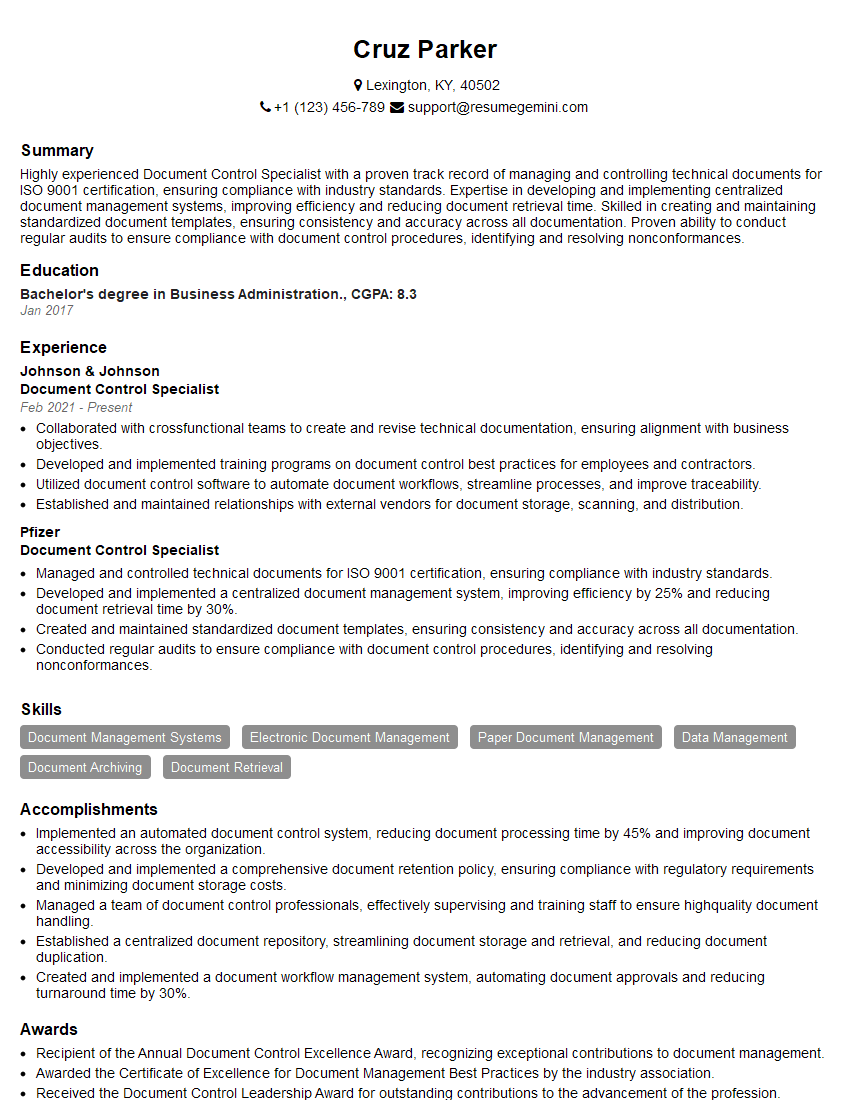
Mastering Production Records Management significantly enhances your career prospects in various industries, opening doors to rewarding roles with increased responsibility and earning potential. To maximize your job search success, it’s crucial to create a compelling and ATS-friendly resume that highlights your skills and experience effectively. ResumeGemini is a trusted resource to help you build a professional resume that stands out. Examples of resumes tailored specifically to Production Records Management are available to help you get started. Invest time in crafting a strong resume – it’s your first impression with potential employers!

Explore more articles
Users Rating of Our Blogs
Share Your Experience
We value your feedback! Please rate our content and share your thoughts (optional).
What Readers Say About Our Blog
Really detailed insights and content, thank you for writing this detailed article.
IT gave me an insight and words to use and be able to think of examples