Cracking a skill-specific interview, like one for Proficiency in Medical Terminology Software, requires understanding the nuances of the role. In this blog, we present the questions you’re most likely to encounter, along with insights into how to answer them effectively. Let’s ensure you’re ready to make a strong impression.
Questions Asked in Proficiency in Medical Terminology Software Interview
Q 1. Explain the difference between ICD-10 and CPT codes.
ICD-10 and CPT codes are both crucial for medical billing and coding, but they serve different purposes. Think of it like this: ICD-10 codes describe why a patient is being seen (diagnosis), while CPT codes describe what was done (procedure).
ICD-10 (International Classification of Diseases, 10th Revision): These alphanumeric codes classify diseases, injuries, and other health conditions. For example, J45.90 represents unspecified chronic obstructive pulmonary disease. These codes are essential for tracking disease prevalence, public health surveillance, and reimbursement from insurance companies. They are highly detailed, allowing for precise diagnosis coding.
CPT (Current Procedural Terminology): These codes describe medical, surgical, and diagnostic services performed by healthcare providers. For example, 99213 represents an established patient office visit with a moderate level of medical decision-making. CPT codes are critical for billing and determining the appropriate reimbursement for services rendered. They ensure accurate tracking of procedures and help manage healthcare costs.
In short: ICD-10 diagnoses the problem; CPT describes the solution or treatment.
Q 2. Describe your experience with different medical terminology software applications.
Throughout my career, I’ve gained extensive experience with a variety of medical terminology software applications. This includes both large-scale Electronic Health Record (EHR) systems like Epic and Cerner, and more specialized coding software such as 3M 360 Encompass and CodeRyte. I’m proficient in using these systems to accurately code diagnoses and procedures, generate reports, and ensure compliance with regulatory requirements. My experience with Epic, for instance, has involved extensive use of its coding tools to streamline workflows and improve data accuracy within a large hospital system. With smaller, more specialized software like CodeRyte, I’ve focused on improving the efficiency of individual coders and ensuring consistency in coding practices.
I am comfortable navigating complex interfaces, utilizing advanced search functions, and applying my knowledge of medical terminology to efficiently input and retrieve data. I am also adept at troubleshooting common software issues and identifying potential system errors.
Q 3. How do you ensure accuracy when entering medical data?
Accuracy in medical data entry is paramount. To ensure this, I employ a multi-layered approach:
- Double-checking: I always double-check every code entered against the patient’s medical record and the official coding manuals (ICD-10-CM, CPT, HCPCS). This helps identify and correct potential errors before submission.
- Using built-in software tools: Modern medical terminology software often includes features like automated spell-check, code validation, and cross-referencing tools. I utilize these extensively to minimize errors.
- Staying updated: Medical coding guidelines are constantly evolving. I actively participate in continuing education courses and stay current on code updates and changes in medical terminology to maintain accuracy.
- Understanding medical context: I don’t just input codes; I understand the clinical context. I carefully review patient charts and doctor’s notes to ensure the codes accurately reflect the diagnosis and procedures performed.
For example, if a patient’s chart indicates pneumonia, I wouldn’t just enter a generic pneumonia code; I’d carefully review for specifics like the location (e.g., lobar versus bronchopneumonia) to select the most precise and accurate ICD-10 code.
Q 4. What are some common challenges in using medical terminology software, and how do you overcome them?
Common challenges in using medical terminology software include:
- Software glitches and updates: Software updates can sometimes introduce new bugs or alter workflows, requiring retraining and adjustment.
- Coding ambiguity: Medical terminology can be ambiguous, and choosing the correct code requires careful interpretation of clinical notes and medical documentation.
- Keeping up with changes: ICD and CPT codes are updated regularly, requiring ongoing education and training to maintain proficiency.
- Data entry errors: Even with careful attention, human error can still occur during data entry.
To overcome these, I use the following strategies:
- Regular software training: I actively participate in training to familiarize myself with new features and updates.
- Reference materials: I constantly consult official coding manuals and reliable online resources to clarify ambiguous terms.
- Quality control measures: Implementing rigorous double-checking and peer review processes minimizes errors.
- Proactive problem-solving: I promptly report software glitches and suggest improvements to enhance usability.
Q 5. How familiar are you with HIPAA regulations and their relevance to medical terminology software?
I am very familiar with HIPAA (Health Insurance Portability and Accountability Act) regulations and their relevance to medical terminology software. HIPAA requires the protection of patient health information (PHI). Medical terminology software plays a crucial role in handling PHI, and its use must comply with HIPAA regulations. This includes ensuring data security through secure access controls, encryption, and audit trails. My experience ensures I handle PHI responsibly, adhering to all relevant HIPAA guidelines, including the Privacy Rule and Security Rule. Specifically, this means understanding how the software helps maintain the confidentiality, integrity, and availability of patient data, and knowing what actions are needed to report any potential breaches.
Q 6. How do you handle conflicting or ambiguous medical terminology?
When encountering conflicting or ambiguous medical terminology, I follow a structured approach:
- Consult official coding manuals: I always begin by referring to the latest versions of ICD-10-CM, CPT, and other relevant coding manuals to find the most accurate and appropriate code.
- Review clinical documentation: I carefully examine the patient’s medical record, including doctor’s notes, lab results, and imaging reports, to understand the clinical context and find clues to resolve the ambiguity.
- Seek clarification from healthcare providers: If necessary, I contact the healthcare provider who documented the information to clarify any uncertainty about the diagnosis or procedure.
- Utilize coding resources: I consult reliable online resources and coding reference materials, such as those from the AMA (American Medical Association) or AHIMA (American Health Information Management Association), for guidance.
- Document the process: I meticulously document any ambiguities encountered and the steps taken to resolve them, including the sources consulted and rationale behind the chosen code.
Using this systematic approach ensures accurate coding, even in complex situations. For example, if the clinical documentation mentions a symptom without a definitive diagnosis, I would carefully review the documentation to determine whether enough information is available for coding or whether further clarification is needed from the physician.
Q 7. What is your experience with medical terminology databases?
My experience with medical terminology databases is extensive. I’m proficient in using various databases, both those integrated within EHR systems and standalone databases. This includes understanding the structure of these databases, querying them effectively to retrieve specific information, and analyzing the data to identify trends and patterns. For example, I’ve used such databases to generate reports on the frequency of specific diagnoses within a patient population, analyze coding accuracy, and identify areas for improvement in clinical documentation. I understand the importance of data integrity and the proper maintenance of these databases to ensure accurate and reliable information. My experience also includes understanding data privacy concerns and ensuring compliance with HIPAA regulations when accessing and utilizing data from medical terminology databases.
Q 8. Describe your process for verifying the accuracy of coded data.
Verifying the accuracy of coded data is paramount to ensuring the integrity of patient records and accurate reimbursement. My process involves a multi-step approach, beginning with a thorough understanding of the medical record itself. I meticulously review the documentation, paying close attention to the physician’s notes, lab results, diagnostic imaging reports, and any other relevant information.
Next, I compare the coded data generated by the medical terminology software against the documented clinical findings. I utilize several methods to ensure accuracy. For instance, I use code validation tools within the software to check for inconsistencies and confirm that the codes align with the appropriate diagnostic and procedural classifications (e.g., ICD-10-CM, CPT, HCPCS). I also cross-reference with established coding guidelines and official coding manuals to confirm code selection appropriateness.
Finally, I employ a systematic approach of double-checking. This means reviewing a sample of my coded records to identify any potential errors I might have made. I often use a ‘four-eyes’ principle, where a colleague independently reviews a portion of my work, providing a further layer of quality control. Think of this process like editing a written document – first you write it, then you review it yourself, and finally, a colleague might offer a fresh perspective. This ensures the highest possible accuracy before submitting the data.
Q 9. How do you stay up-to-date with changes in medical coding and terminology?
Staying current in medical coding and terminology is a continuous learning process. The healthcare landscape constantly evolves, requiring regular updates to coding guidelines and the addition of new codes. I accomplish this through several key strategies:
- Professional Organizations: I actively participate in professional organizations such as the American Academy of Professional Coders (AAPC) or AHIMA, attending webinars, and accessing their resources. These organizations offer continuing education credits and keep members informed about coding updates.
- Coding Manuals and Guides: I subscribe to and meticulously review the official coding manuals, including the ICD-10-CM, CPT, and HCPCS code sets. I ensure I have access to the latest editions and updates.
- Professional Journals and Publications: I stay informed by reading journals like the AAPC’s Coder’s Update and other relevant publications related to medical coding and billing. This helps me grasp the nuances of new coding guidelines.
- Vendor-Provided Updates: The medical terminology software providers themselves offer training modules and updates on new features and changes to their systems. I actively participate in these sessions.
By consistently engaging in these methods, I ensure my coding knowledge remains both current and accurate.
Q 10. Explain your proficiency in using different medical terminology software interfaces.
My experience encompasses a variety of medical terminology software interfaces, including (but not limited to) 3M 360 Encompass, Optum360, and GE Centricity. My proficiency extends beyond simply navigating the user interface; I possess a deep understanding of the functionalities of these systems. This includes:
- Code Lookup and Selection: I am adept at using the software’s search functions to quickly and accurately identify the appropriate codes, taking into account modifiers, and ensuring correct sequencing.
- Data Entry and Validation: I understand the importance of accurate data entry and utilization of built-in validation tools to minimize errors and ensure data integrity. For example, I’m proficient in using the built-in edits and checks to prevent incorrect code combinations.
- Reporting and Analytics: I can generate various reports from the software, including productivity reports and code utilization analyses. This assists in identifying trends and potential areas for improvement in coding accuracy and efficiency.
- Integration with other systems: I understand how these software systems integrate with other electronic health record (EHR) systems, ensuring a seamless workflow. For instance, I understand how to import data from EHR systems and transfer it to billing systems.
My experience with diverse systems allows me to quickly adapt to new software and effectively leverage its capabilities to maximize efficiency and accuracy.
Q 11. What is your experience with auditing medical records for coding accuracy?
I have extensive experience auditing medical records for coding accuracy. This involves a systematic review of medical documentation to ensure that the codes assigned accurately reflect the services provided and diagnoses documented. My approach includes:
- Random Sampling: I typically use a stratified random sampling technique to select a representative sample of medical records to audit. This ensures a fair representation of the overall coding practices.
- Code Comparison: I compare the codes used in the medical record to the supporting documentation. This is similar to the process I described for verifying coded data, but on a larger scale.
- Documentation Review: I carefully review the documentation to ensure that it is complete, accurate, and supports the codes used. Missing or incomplete information can result in inaccurate coding.
- Identification of Trends: Through auditing, I identify trends and patterns in coding errors. For example, I might observe that a particular diagnosis is consistently miscoded. This allows for corrective actions to be implemented to prevent future errors.
- Reporting and Feedback: I provide detailed reports on the audit findings, including the frequency and types of errors found. This allows for improvement in coding practices and training of coders, which leads to a higher level of accuracy across the entire operation.
My audit experience helps to improve the quality of medical coding and ultimately, the financial health of healthcare organizations.
Q 12. How do you prioritize tasks when managing a large volume of medical data?
Managing a large volume of medical data requires a strategic approach to prioritization. I typically utilize a combination of methods to handle this efficiently:
- Urgency and Importance Matrix: I categorize tasks based on their urgency and importance. This allows me to focus on high-priority tasks that need immediate attention while still addressing less urgent but important ones. This uses a four-quadrant matrix (Urgent/Important, Important/Not Urgent, Urgent/Not Important, Neither Urgent nor Important).
- Workload Planning: I use project management techniques to plan and schedule my workload, allocating time to each task realistically. I break down large tasks into smaller, more manageable components.
- Time Management Techniques: I employ time management strategies such as time blocking and the Pomodoro Technique to maintain focus and avoid interruptions. For example, I dedicate specific blocks of time to coding, reviewing, and auditing.
- Automation: Wherever possible, I leverage the automation features of the medical terminology software to streamline repetitive tasks and increase efficiency. This frees up my time to focus on complex coding scenarios.
- Delegation: If appropriate and feasible, I delegate tasks to other team members to improve overall productivity. This involves clearly defining responsibilities and ensuring clear communication.
By employing these methods, I ensure that all tasks are addressed efficiently and effectively, regardless of the volume of data.
Q 13. Describe your problem-solving skills in a situation where medical terminology software malfunctions.
Malfunctions in medical terminology software can significantly disrupt workflow. My problem-solving approach in such situations is methodical and focused on finding a swift resolution:
- Identify the Problem: The first step is to precisely identify the nature of the malfunction. Is it a software bug, a hardware issue, a network connectivity problem, or a user error? I often start by checking obvious things first like internet connection and making sure the software is properly updated.
- Troubleshooting: Based on the identified problem, I undertake troubleshooting steps. This might involve restarting the software, checking for software updates, verifying network connectivity, or consulting the software’s help documentation or FAQs.
- Escalation: If the problem persists despite initial troubleshooting, I escalate the issue to the appropriate technical support team. I clearly describe the problem, including screenshots or error messages, to expedite the resolution.
- Workarounds: While waiting for technical support, I explore potential workarounds to minimize disruption. This might involve using alternative methods to code data, or prioritizing tasks that don’t rely on the malfunctioning software.
- Documentation: I meticulously document the entire process, from the initial problem identification to the resolution. This documentation serves as a record for future reference and helps prevent similar problems from occurring.
This structured approach allows me to efficiently address software malfunctions and minimize their impact on my workflow.
Q 14. How do you handle corrections or revisions in medical records after coding?
Handling corrections or revisions in medical records after coding requires a careful and documented approach. Accuracy and compliance are paramount. My process includes:
- Identify the Error: First, I clearly identify the nature and location of the error in the medical record. This could range from a simple typographical error in a code to a more significant error in the code selection itself.
- Documentation of Correction: I document the correction meticulously, noting the original code, the corrected code, the date of the correction, and the reason for the correction. This ensures a clear audit trail. Many software systems have a built-in function for creating a correction log.
- Update the Medical Record: I update the medical record with the correct code, ensuring all related fields are consistent. Depending on the software system, this might involve overwriting the original code or making a separate note of the change.
- Compliance with Regulations: I ensure that all corrections and revisions comply with relevant regulatory guidelines, such as HIPAA. This involves following established protocols for amending medical records.
- Notification (if necessary): In some cases, particularly significant errors, I might need to notify relevant parties such as the physician or billing department of the correction.
By following these steps, I maintain the integrity of the medical record, ensure accurate billing, and remain compliant with all regulations. This is similar to a meticulous scientific process, where all changes and corrections must be transparent and documented.
Q 15. Can you explain the process of generating reports from medical terminology software?
Generating reports from medical terminology software involves several steps, from data selection to formatting and distribution. The process typically begins with defining the report’s scope – what specific data needs to be included (e.g., patient demographics, diagnoses, procedures, medications). This often involves using query tools within the software to filter and extract relevant information based on specific criteria, like date ranges, ICD codes, or CPT codes. The software then processes this data, performing calculations or aggregations as needed, such as counting the number of patients with a particular diagnosis or calculating average length of stay.
Once the data is processed, the report is formatted. Most medical terminology software offers various templates and customization options to ensure reports meet specific needs, whether it’s a simple list or a complex graphical representation. The final step involves exporting the report in a suitable format (PDF, CSV, Excel, etc.) for distribution to relevant parties like physicians, insurance companies, or administrative staff. For example, a hospital might generate a monthly report summarizing all surgical procedures performed, while a clinic might generate a report tracking patient adherence to medication regimens. The specific functionalities and reporting capabilities vary greatly depending on the specific software used.
Career Expert Tips:
- Ace those interviews! Prepare effectively by reviewing the Top 50 Most Common Interview Questions on ResumeGemini.
- Navigate your job search with confidence! Explore a wide range of Career Tips on ResumeGemini. Learn about common challenges and recommendations to overcome them.
- Craft the perfect resume! Master the Art of Resume Writing with ResumeGemini’s guide. Showcase your unique qualifications and achievements effectively.
- Don’t miss out on holiday savings! Build your dream resume with ResumeGemini’s ATS optimized templates.
Q 16. How familiar are you with different healthcare reimbursement systems?
My understanding of healthcare reimbursement systems is extensive. I’m familiar with various models, including fee-for-service (FFS), capitation, and value-based care. In FFS, providers are reimbursed for each service rendered, while capitation involves a fixed payment per patient, regardless of services provided. Value-based care focuses on quality metrics and patient outcomes, linking reimbursement to achieving specific performance goals. I understand the complexities of coding (ICD, CPT, HCPCS) and their impact on reimbursement. I’ve worked with various claims processing systems and understand how accurate coding and documentation are crucial for maximizing reimbursement and minimizing denials. For instance, I’ve helped organizations optimize their coding practices to ensure compliance with regulations and improve revenue cycle management. My experience allows me to recognize how crucial accurate medical terminology is to successful billing and reimbursement.
Q 17. What is your experience working with electronic health records (EHR) systems?
I possess significant experience working with electronic health records (EHR) systems. My experience spans multiple vendors and platforms. I understand the intricacies of EHR data structures, including how different data elements are stored and accessed. I’m adept at utilizing EHR systems for data extraction, analysis, and report generation, contributing to improved clinical decision-making and workflow efficiency. For example, I have assisted in developing custom reports to track key performance indicators (KPIs) for a hospital’s emergency department, identifying bottlenecks and opportunities for improvement based on data extracted from the EHR.
Furthermore, I am familiar with the integration between EHR systems and medical terminology software. This integration ensures that data entered into the EHR system is correctly coded and documented, which is vital for accurate reporting and billing.
Q 18. How do you maintain data integrity and security within medical terminology software?
Maintaining data integrity and security is paramount in medical terminology software. My approach involves a multi-layered strategy. This includes implementing robust access control mechanisms, such as role-based permissions, to limit access to sensitive data based on user roles and responsibilities. Regular data backups and disaster recovery planning are essential to safeguard against data loss. We utilize data encryption both in transit and at rest to protect patient information from unauthorized access. Data validation rules and checks are implemented to ensure accuracy and consistency of data entered into the system. Regular audits and security assessments are conducted to identify and address potential vulnerabilities.
Compliance with relevant regulations, such as HIPAA in the US, is crucial. I am well-versed in these regulations and ensure all security measures are aligned with best practices and legal requirements. For instance, I would oversee the implementation of strict protocols for handling patient data, including secure data disposal methods when data is no longer needed.
Q 19. Describe your understanding of medical abbreviations and their proper usage.
Understanding and properly using medical abbreviations is fundamental to my work. I have extensive knowledge of commonly used abbreviations across various medical specialties, including those found in documentation, orders, and reports. However, I also recognize the inherent risks associated with using abbreviations, especially ambiguous ones that can lead to errors. My approach emphasizes clarity and precision; ambiguous abbreviations should be avoided. Instead of relying solely on abbreviations, the full term should be used or written in conjunction with an abbreviation for the first instance, clarifying what the abbreviation stands for. For example, instead of solely using ‘HTN,’ writing ‘hypertension (HTN)’ when first mentioned ensures understanding. I regularly update my knowledge base to incorporate any changes or new standards in the use of medical abbreviations, following guidelines from organizations like The Joint Commission.
Q 20. What is your experience with different medical specialties and their associated terminology?
My experience encompasses a wide range of medical specialties, from cardiology and oncology to orthopedics and neurology. I’m familiar with the unique terminology, coding systems (ICD and CPT codes), and documentation requirements associated with each specialty. For instance, my understanding of cardiology terminology includes familiarity with various cardiac procedures, diagnostic tests, and medications; knowledge of oncology terminology includes cancer staging, treatment protocols, and common side effects; and my understanding of orthopedics extends to various musculoskeletal procedures and diagnoses. This broad knowledge allows me to effectively support users across diverse healthcare settings and assist in developing tailored reports and documentation processes for each specialty.
Q 21. Explain your experience with medical terminology software training or mentoring.
I have extensive experience in training and mentoring others in the use of medical terminology software. I’ve developed and delivered training programs for various healthcare professionals, including physicians, nurses, coders, and billing staff. My training incorporates a blend of theoretical knowledge and hands-on practice, using real-world scenarios to illustrate key concepts. I employ a variety of teaching methods, including lectures, demonstrations, interactive exercises, and group discussions. I believe in a supportive and collaborative learning environment where individuals feel comfortable asking questions and seeking clarification. I also provide ongoing mentorship and support to ensure users effectively utilize the software and stay updated on any changes or new features. My training approach fosters confidence and competence in applying medical terminology correctly, leading to improvements in data quality and clinical workflows.
Q 22. How do you handle stressful situations and tight deadlines in a medical coding environment?
In medical coding, tight deadlines and stressful situations are commonplace. My approach is multifaceted. First, I prioritize tasks using techniques like timeboxing and the Eisenhower Matrix (urgent/important), focusing on high-impact coding first. Second, I leverage the software’s features efficiently – automation where possible, utilizing built-in tools for error checking and validation. Third, proactive communication is key. If I foresee a delay, I inform my supervisor immediately, proposing solutions collaboratively. Finally, I practice stress management techniques outside of work, ensuring a healthy work-life balance to maintain focus and efficiency.
For example, during a particularly busy period involving a large influx of patient charts requiring urgent coding, I prioritized charts based on urgency and regulatory compliance deadlines, using the Eisenhower Matrix to categorize tasks. By efficiently using the software’s automation features for common codes, I met all deadlines without compromising accuracy.
Q 23. Describe your experience collaborating with physicians and other healthcare professionals.
Collaboration with physicians and other healthcare professionals is crucial for accurate medical coding. I regularly interact with physicians to clarify diagnoses, procedures, and medical necessity, ensuring codes precisely reflect the provided documentation. This often involves querying physicians via secure messaging systems for clarification on ambiguous documentation or to ensure that all necessary details are included in the medical record. I also work closely with other coders, billing specialists, and compliance officers to maintain consistency in coding practices and ensure proper claim submission. This collaborative spirit often leads to the identification of areas for process improvement and better communication.
For instance, in a case involving a complex surgical procedure, I worked closely with the surgeon to fully understand the procedural steps and the associated codes, ultimately resolving a coding discrepancy and preventing a potential claim denial.
Q 24. How familiar are you with different medical billing systems and their integration with medical terminology software?
My experience encompasses various medical billing systems, including (but not limited to) Epic Beaker, Cerner Millennium, and Greenway PrimeSUITE. I understand their integration with medical terminology software is critical for streamlined workflow. Effective integration ensures seamless transfer of coded data from the medical terminology software directly into the billing system, minimizing manual data entry, reducing errors, and improving overall efficiency. This integration often involves utilizing application programming interfaces (APIs) or direct data exchange mechanisms. Familiarity with different billing system interfaces is vital for smooth claim processing and revenue cycle management.
For example, I have experience configuring data mappings between a specific medical terminology software and our practice’s Epic Beaker billing system, which dramatically reduced claim processing time and improved accuracy of submitted claims.
Q 25. What is your experience using medical terminology software for quality improvement initiatives?
Medical terminology software plays a vital role in quality improvement. I’ve used it for various initiatives, including identifying and correcting coding errors through regular audits and comparisons with benchmarks. The software’s reporting capabilities provide valuable data for identifying trends and patterns in coding practices, highlighting areas for improvement. For example, we identified a significant increase in incorrect codes for a particular diagnosis using the software’s audit trail feature. By providing training on the correct codes and re-auditing the corrected charts, we significantly improved the accuracy of our coding practices.
Furthermore, the software’s data analytics features allow for the identification of areas needing improvement in documentation, leading to better provider education and increased efficiency in the entire coding and billing process.
Q 26. How do you adapt to new medical terminology software and updates?
Adapting to new software and updates is a continuous process in this field. My approach involves several steps: first, I thoroughly review the release notes and training materials provided by the vendor. Second, I engage in hands-on training sessions, practicing with sample data to become comfortable with the new functionalities. Third, I actively seek mentorship from colleagues or supervisors with prior experience with the new system. Finally, I participate in ongoing professional development opportunities to stay abreast of the latest industry trends and best practices in medical terminology software.
For example, when our practice upgraded to a new version of our medical terminology software, I proactively completed all online training modules, participated in a hands-on workshop, and mentored newer colleagues, ensuring a smooth transition for the entire team.
Q 27. What are some best practices for maintaining data security and privacy in medical terminology software?
Maintaining data security and privacy in medical terminology software is paramount. Best practices include adhering to HIPAA regulations and implementing strong password policies, utilizing multi-factor authentication, and regularly updating the software and antivirus programs. Access controls should be strictly enforced, granting only necessary permissions to authorized personnel on a need-to-know basis. Data encryption both in transit and at rest is essential. Regular security audits and penetration testing should be performed to identify and mitigate potential vulnerabilities. Additionally, robust data backup and disaster recovery plans are crucial to ensure business continuity.
In our practice, we conduct regular security awareness training to educate staff on best practices, including phishing awareness and responsible data handling. We also employ encryption techniques and rigorous access control measures to ensure the confidentiality, integrity, and availability of protected health information (PHI).
Q 28. Describe a situation where you had to troubleshoot a technical issue related to medical terminology software.
During a system upgrade, a critical error prevented the software from accurately recognizing certain ICD-10 codes. This resulted in coding delays and potential billing errors. My troubleshooting involved several steps: I first checked the system logs for error messages and correlated them with the specific ICD-10 codes causing the issue. I then reviewed the vendor’s knowledge base and support documentation for similar problems. Once I identified a potential solution, I followed the recommended steps in the documentation; however, this didn’t resolve the issue. Next, I contacted the vendor’s technical support team and reported the problem, providing them with detailed information about the errors. They identified a bug in their recent software update, promptly addressing it with a patch.
This experience reinforced the importance of regular software updates, thorough documentation, and access to effective technical support when troubleshooting complex technical issues. It also showcased my systematic approach to problem-solving, ensuring quick resolution and minimal disruption to workflow.
Key Topics to Learn for Proficiency in Medical Terminology Software Interview
- Understanding Medical Terminology: Mastering the foundational elements of medical terminology, including prefixes, suffixes, and root words, is crucial for effectively using any medical terminology software. Practice breaking down complex medical terms to understand their meaning.
- Software Functionality: Become proficient in the specific software’s features. This includes data entry, searching, reporting, and any specialized functions the software offers. Practice using the software with sample data to build speed and accuracy.
- Data Integrity and Accuracy: Learn how to ensure the accuracy and integrity of data entered into the system. Understand the implications of errors and the importance of verification procedures. Consider how you’d approach data cleanup or correction scenarios.
- Coding and Classification Systems: Familiarize yourself with relevant coding systems (e.g., ICD, CPT) and how the software integrates with them. Understand the importance of proper coding for billing and medical record keeping.
- Troubleshooting and Problem-Solving: Prepare to discuss common software issues and your approach to troubleshooting. Develop strategies for identifying and resolving problems efficiently. This could involve exploring the software’s help features or seeking assistance from colleagues.
- Software Applications in Healthcare Settings: Understand how the software is used in various healthcare settings (e.g., hospitals, clinics, physician offices) and the specific challenges and requirements of each environment.
- Data Security and Confidentiality (HIPAA): Demonstrate your understanding of HIPAA regulations and how they apply to the use and handling of patient data within the software.
Next Steps
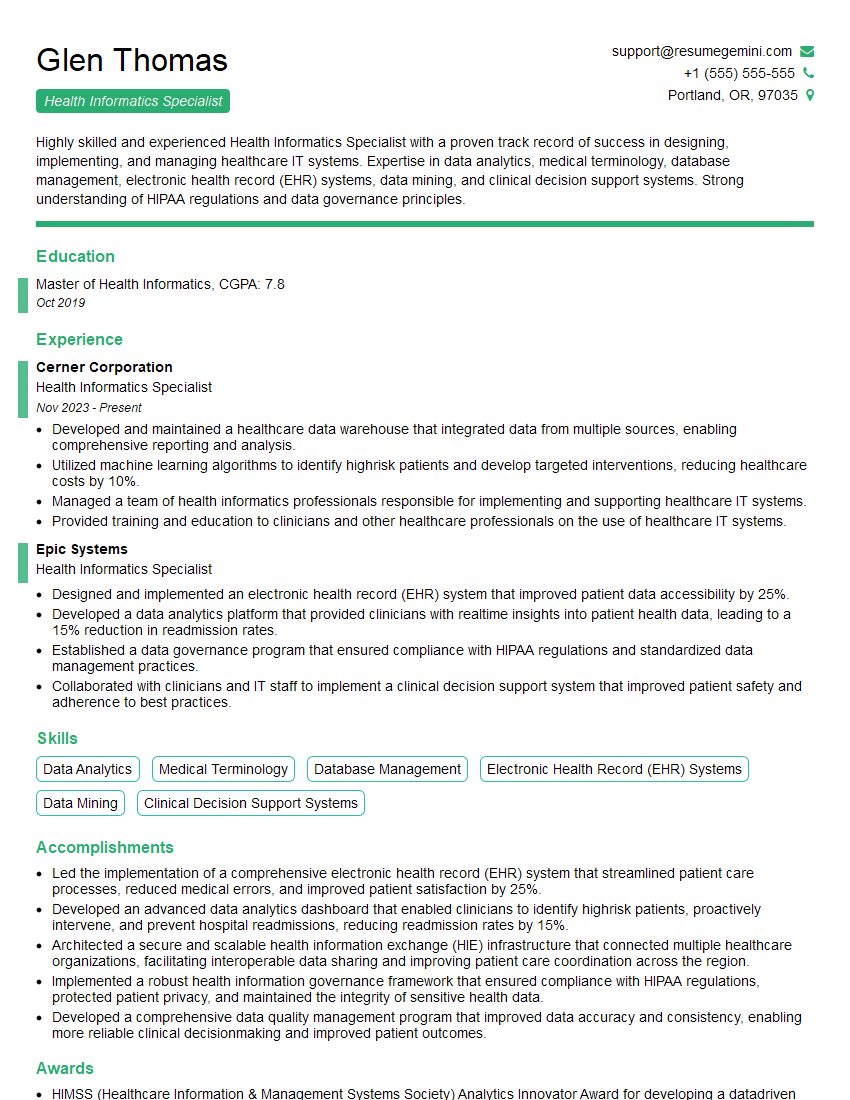
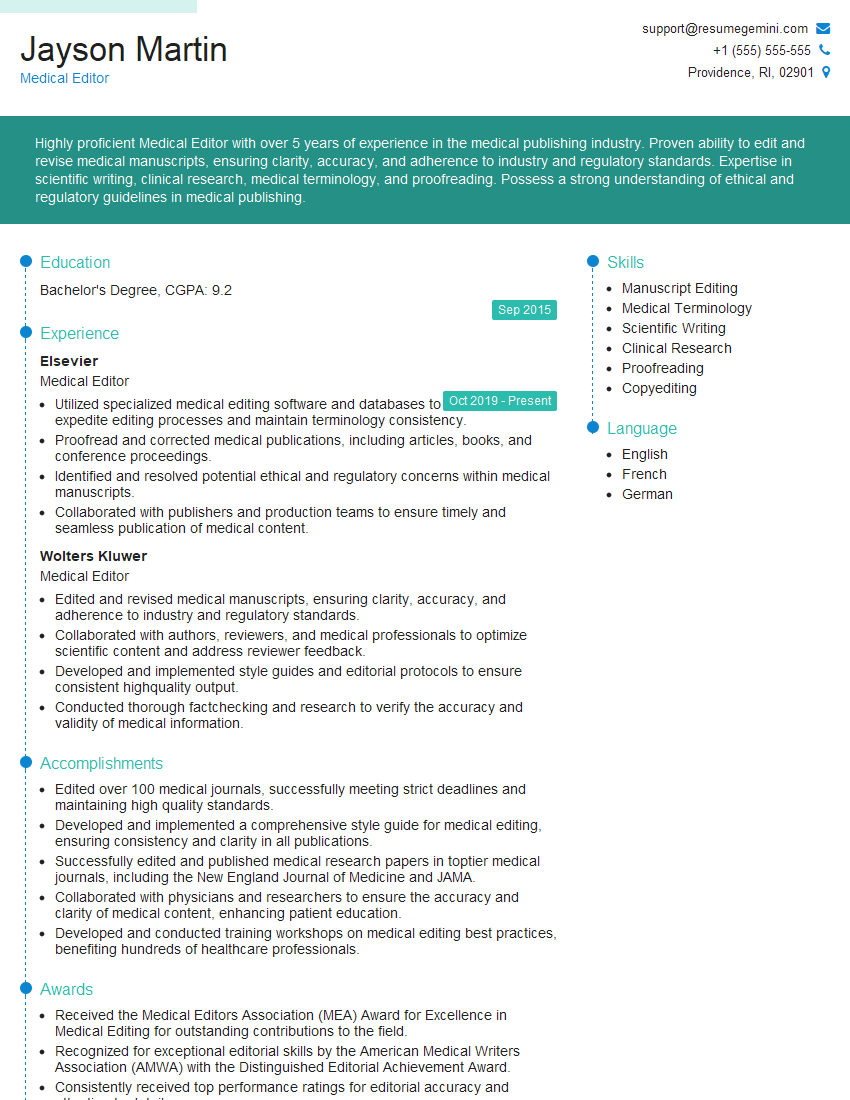
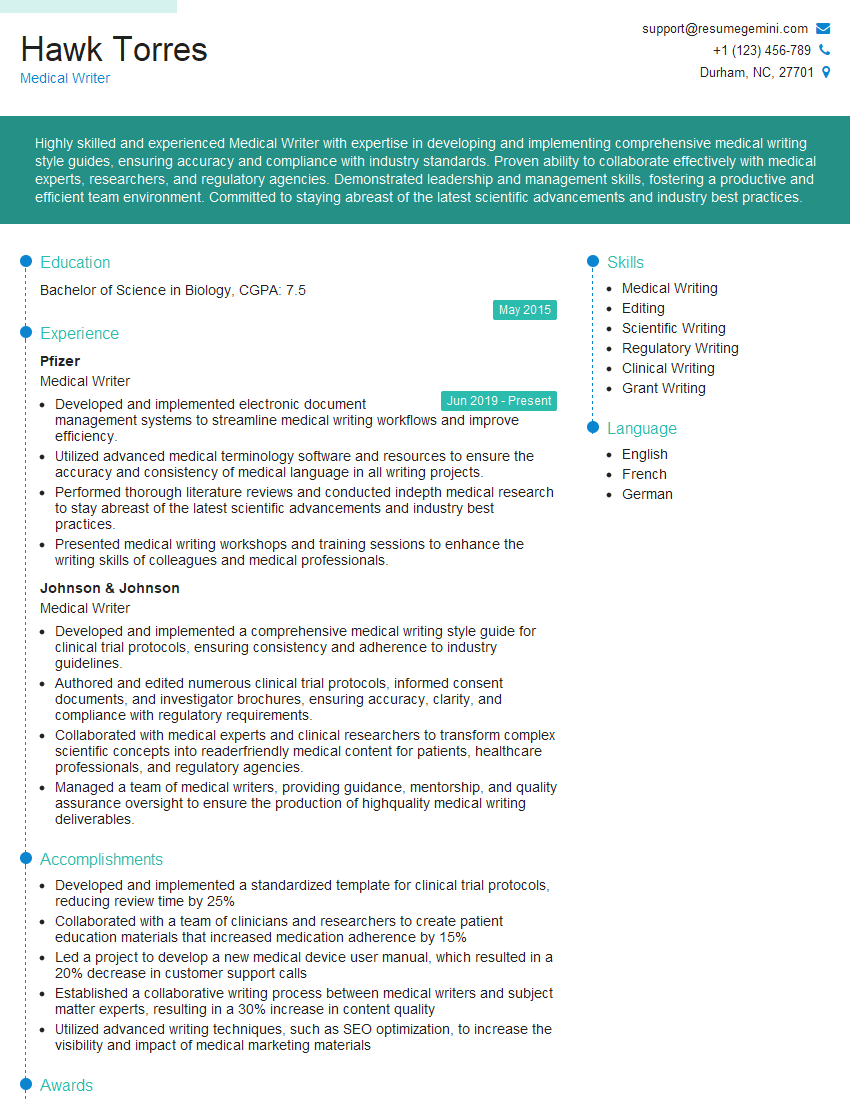
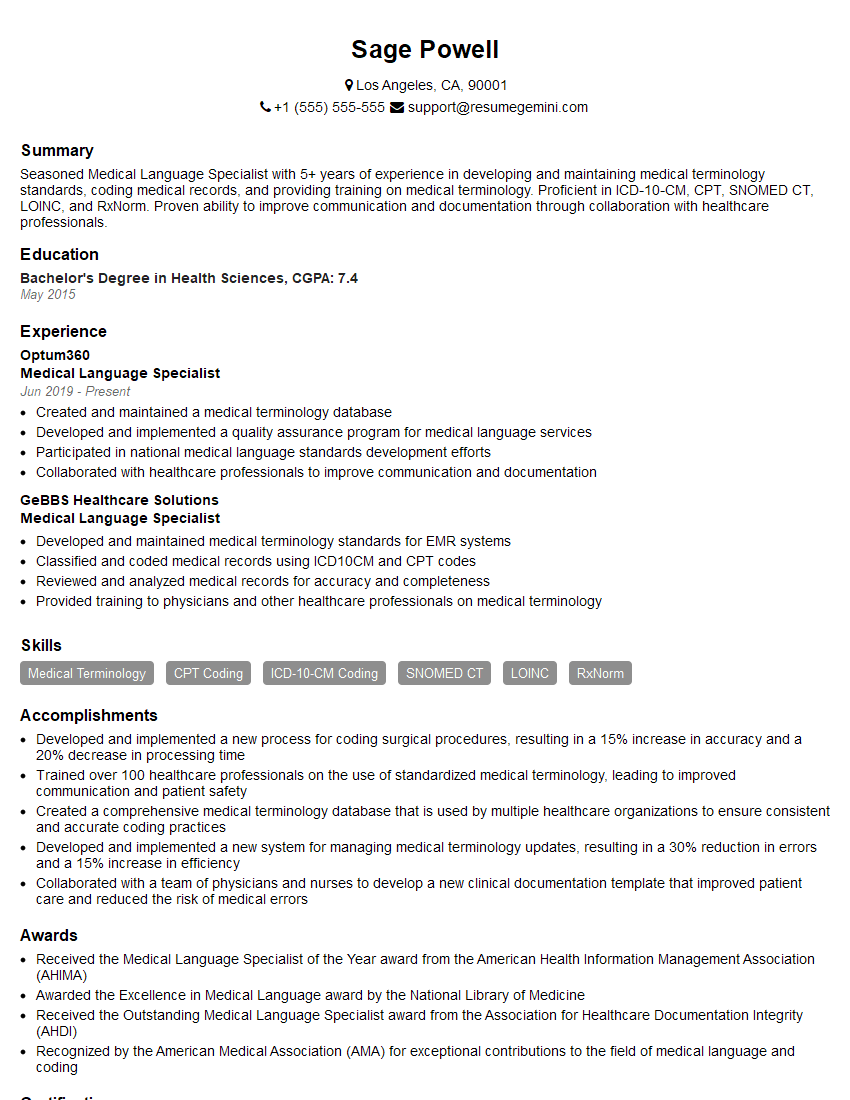
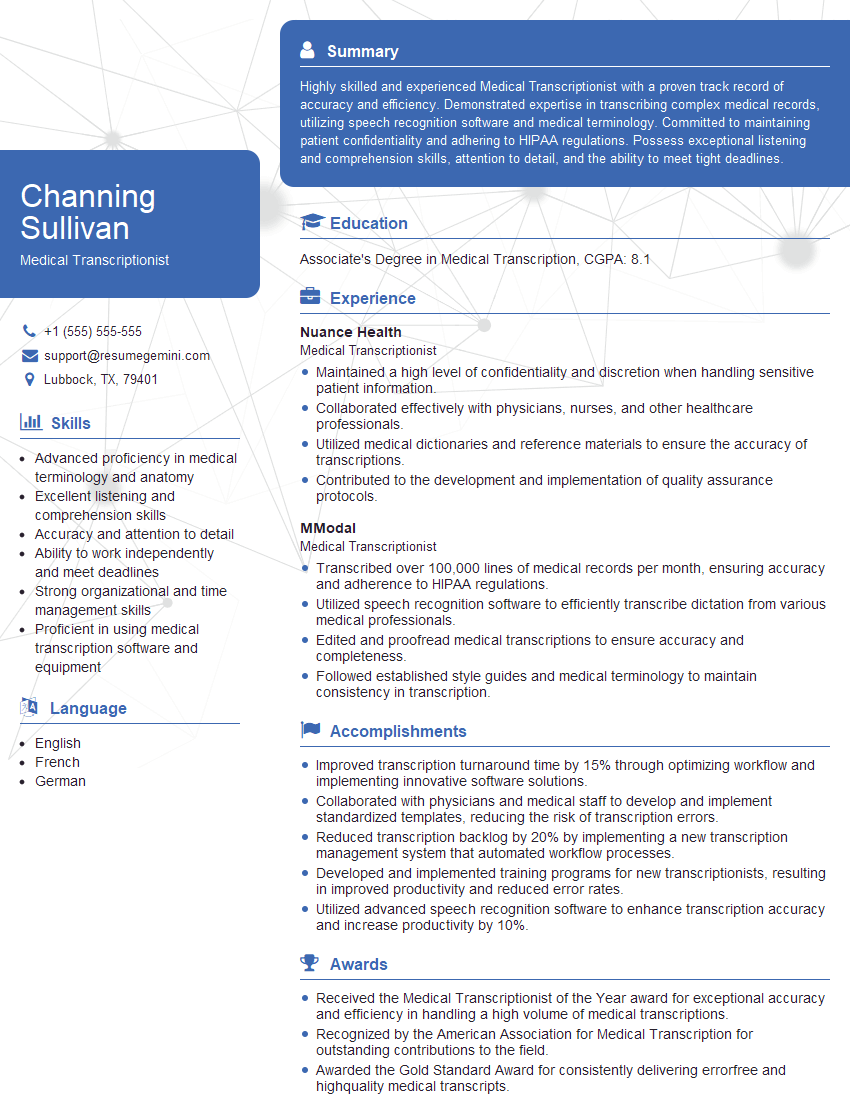
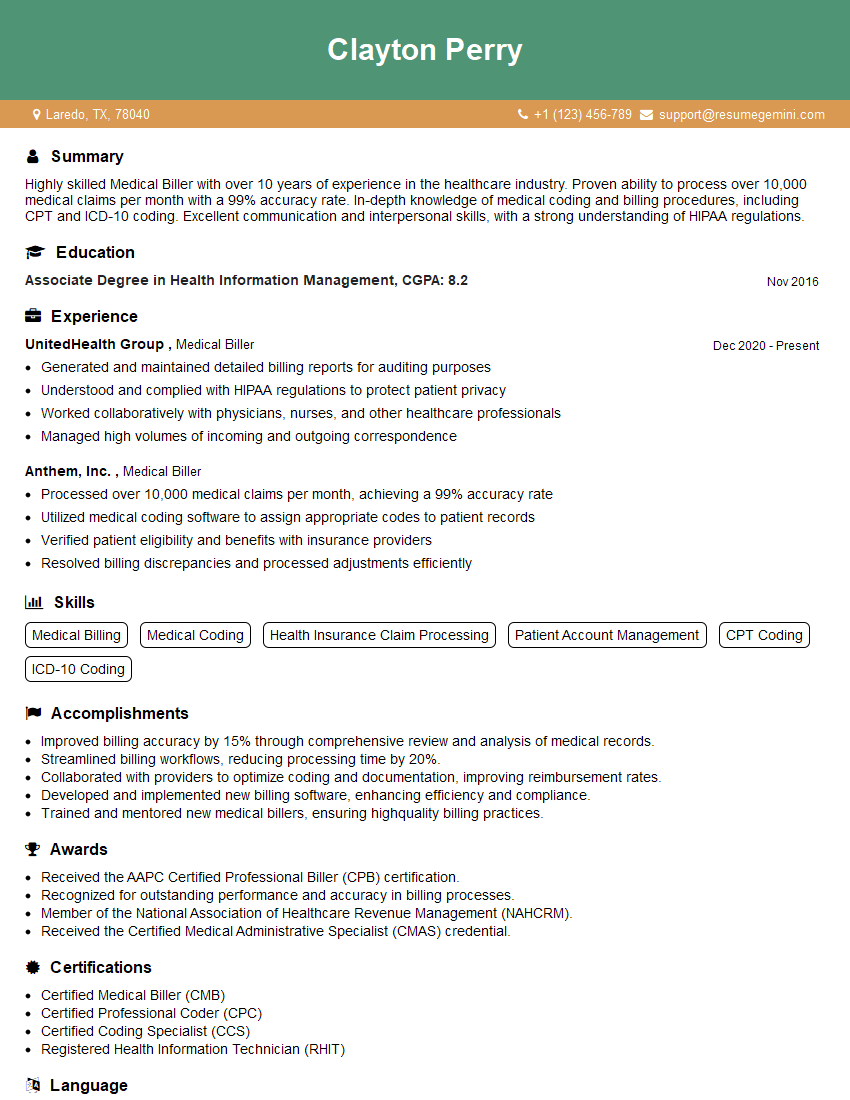
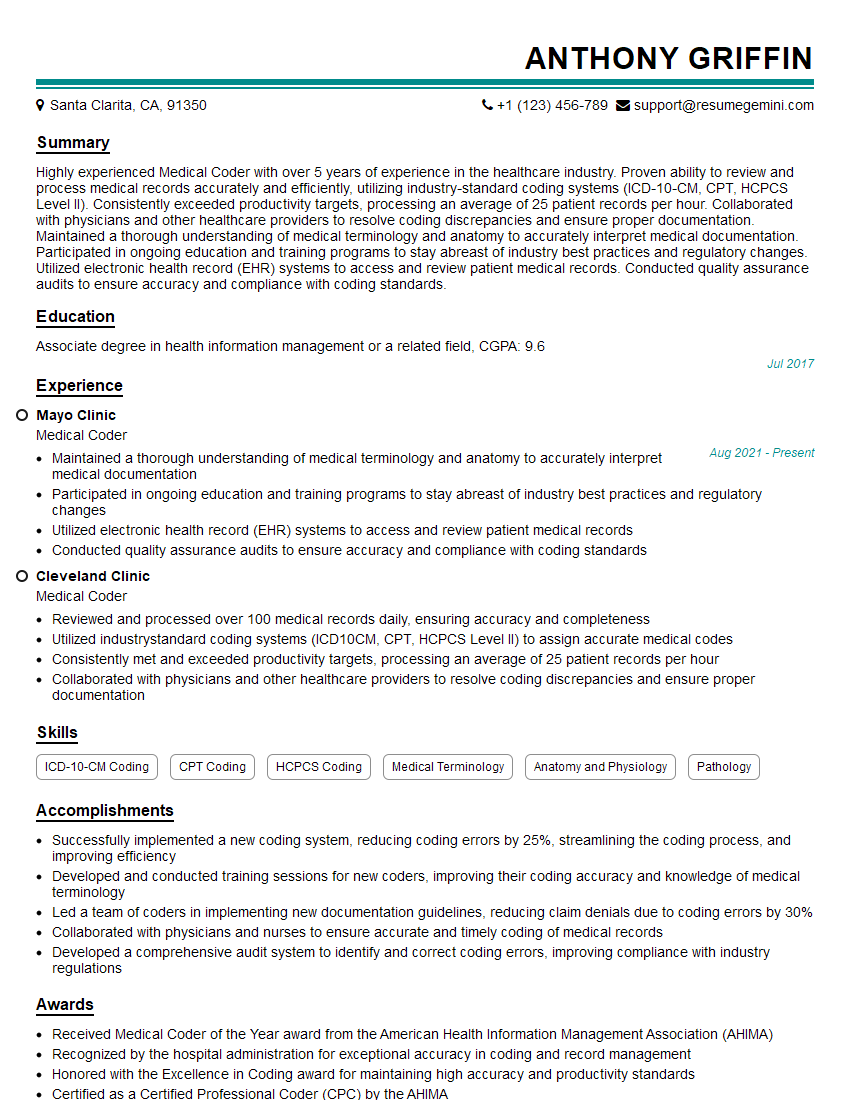
Mastering proficiency in medical terminology software significantly enhances your career prospects in healthcare administration, medical coding, and other related fields. It demonstrates valuable technical skills and attention to detail highly sought after by employers. To maximize your chances of securing your dream role, crafting an ATS-friendly resume is essential. ResumeGemini is a trusted resource that can help you build a compelling and effective resume that highlights your skills and experience. Take advantage of their resources and examples of resumes tailored to Proficiency in Medical Terminology Software to showcase your qualifications and land that interview!
Explore more articles
Users Rating of Our Blogs
Share Your Experience
We value your feedback! Please rate our content and share your thoughts (optional).
What Readers Say About Our Blog
Really detailed insights and content, thank you for writing this detailed article.
IT gave me an insight and words to use and be able to think of examples