The right preparation can turn an interview into an opportunity to showcase your expertise. This guide to Project Bidding and Estimating interview questions is your ultimate resource, providing key insights and tips to help you ace your responses and stand out as a top candidate.
Questions Asked in Project Bidding and Estimating Interview
Q 1. Explain your process for developing a project budget.
Developing a project budget is a meticulous process that ensures we accurately predict all costs associated with a project. It’s like planning a complex vacation – you need to account for flights, hotels, activities, and unexpected expenses. My process involves several key steps:
- Project Scope Definition: Thoroughly understanding the project requirements is paramount. This includes deliverables, timelines, and any specific client requests. I often create a detailed Work Breakdown Structure (WBS) to break down the project into smaller, manageable tasks.
- Resource Identification: Next, I identify all the resources needed – labor (skilled and unskilled), materials, equipment, and software. I then research and obtain accurate cost estimates for each resource.
- Cost Estimation: This is where I apply different estimation techniques (bottom-up, top-down, parametric) to estimate the cost of each task in the WBS. I’ll detail this further in the next answer.
- Contingency Planning: I always build in a contingency buffer – a percentage added to the total cost to account for unforeseen issues or changes. This acts as a safety net, preventing budget overruns.
- Profit Margin: Finally, a reasonable profit margin is added to ensure the project is financially viable for the company.
- Review and Refinement: The budget is reviewed thoroughly with stakeholders to ensure accuracy and alignment with project goals.
Throughout this process, clear documentation and transparent communication are critical. This ensures everyone involved has a shared understanding of the project costs and risks.
Q 2. Describe your experience with different estimating methods (e.g., bottom-up, top-down).
I’m proficient in several estimating methods, each with its own strengths and weaknesses. Choosing the right method depends on the project’s complexity, available data, and timeline.
- Bottom-up Estimating: This is a highly detailed approach where we estimate the cost of individual tasks, and then sum them up to get the total project cost. It’s like adding up the cost of individual ingredients to estimate the total cost of a meal. It’s very accurate but time-consuming, best suited for projects with well-defined specifications.
- Top-down Estimating: This is a quicker, less detailed approach. We start with the overall project cost and then allocate it to different phases or components. This is useful in early project stages when details are limited, akin to estimating the total cost of a vacation based on previous similar trips. However, it can lead to less accuracy.
- Parametric Estimating: This statistical method uses historical data and project parameters (size, complexity) to predict the cost. Think of it like using a formula to estimate the paint needed based on the surface area. This approach is efficient but relies on the accuracy and relevance of the historical data.
In practice, I often use a combination of these methods. For example, I might use top-down for initial budgeting, then refine it with bottom-up estimates for critical tasks, and potentially incorporate parametric models if historical data is available.
Q 3. How do you handle changes in project scope during the bidding process?
Scope changes are a common occurrence during the bidding process, and handling them effectively is vital. My approach involves:
- Formal Change Request Process: Any proposed change, no matter how small, must be documented as a formal change request. This ensures transparency and accountability.
- Impact Assessment: We thoroughly assess the impact of the change on the project timeline, budget, and resources. This involves detailed discussions with the client and the project team.
- Revised Estimate: A new, revised cost estimate is prepared, reflecting the impact of the change. This might involve additional labor, materials, or extended timelines.
- Negotiation and Agreement: The revised estimate is presented to the client, along with a clear explanation of the rationale. We negotiate a mutually acceptable agreement on the scope change and its associated costs.
- Contract Amendment: Finally, a formal amendment to the contract is created, incorporating the agreed-upon changes and the revised budget.
By following a structured process, we can manage scope changes effectively while minimizing disruption and ensuring the project remains financially sound.
Q 4. How do you identify and mitigate potential risks in a project estimate?
Identifying and mitigating risks is crucial for accurate project estimations. I employ a proactive approach that involves:
- Risk Identification: This involves brainstorming potential risks – technical challenges, supply chain disruptions, regulatory changes, and even changes in client requirements. I often use tools like SWOT analysis and risk registers.
- Risk Assessment: Each identified risk is assessed based on its likelihood and potential impact. This helps prioritize which risks need the most attention.
- Risk Mitigation Strategies: For each significant risk, we develop mitigation strategies. This might include contingency plans, alternative solutions, or insurance coverage.
- Contingency Budgeting: As mentioned before, a contingency buffer is added to the budget to absorb the impact of unforeseen issues. The size of the buffer is determined based on the assessed risks.
- Monitoring and Reporting: Throughout the project, we continuously monitor risks and update the risk register, adapting mitigation strategies as needed.
For example, if a risk assessment identifies a high likelihood of material delays, we might explore sourcing from multiple vendors or building extra time into the schedule.
Q 5. What software or tools are you proficient in for project estimating and bidding?
I’m proficient in several software tools commonly used for project estimating and bidding. These include:
- Microsoft Project: For scheduling and resource allocation.
- Primavera P6: A more advanced scheduling and cost management tool for larger, complex projects.
- Microsoft Excel: For creating detailed cost breakdowns and budgets. I frequently use advanced features like pivot tables and formulas to analyze data efficiently.
- Estimating software specific to the industry: Depending on the project type (construction, IT, etc.), industry-specific software can provide specialized features and templates to streamline the process.
My expertise extends beyond software; I’m equally adept at manual calculations and creating detailed spreadsheets when needed, ensuring accuracy and flexibility in different project scenarios.
Q 6. Explain your understanding of contingency planning in project budgeting.
Contingency planning in project budgeting is akin to having a financial safety net. It’s the process of identifying potential problems and allocating funds to handle them. It’s not about predicting the future perfectly, but about minimizing the impact of unforeseen events.
A contingency reserve is a specific sum of money set aside to cover unexpected costs or delays. The size of the reserve depends on several factors:
- Project Complexity: More complex projects have a higher risk of unexpected issues, therefore requiring a larger contingency.
- Risk Assessment: The results of the risk assessment, highlighting the likelihood and potential impact of identified risks, heavily influence the size of the reserve.
- Historical Data: Analysis of past project performance helps determine typical cost overruns or delays and inform contingency planning.
Proper contingency planning ensures project success by minimizing the financial impact of unexpected events. It also enhances stakeholder confidence and demonstrates responsible financial management.
Q 7. How do you ensure accuracy and completeness in your cost estimates?
Ensuring accuracy and completeness in cost estimates requires a multi-faceted approach:
- Detailed Scope Definition: A clear and comprehensive project scope is the foundation for accurate estimating. Ambiguity leads to inaccurate predictions.
- Thorough Research and Data Collection: I meticulously research and collect data on labor rates, material costs, equipment rentals, and other relevant factors. Multiple sources are consulted to validate data.
- Appropriate Estimating Methods: Selecting the right estimating method(s) based on project characteristics is vital. A combination of methods often provides a more robust estimate.
- Peer Review and Quality Checks: Before finalizing the estimate, I conduct a thorough peer review and quality check to identify potential errors or omissions. A fresh pair of eyes can often spot mistakes.
- Regular Updates and Revisions: Cost estimates are not static; they are updated and revised as the project progresses and new information becomes available.
- Transparent Communication: Maintaining open communication with stakeholders ensures everyone is aware of potential cost fluctuations and the rationale behind any adjustments.
Ultimately, accuracy and completeness are achieved through meticulous planning, attention to detail, and a commitment to continuous improvement.
Q 8. Describe your experience with value engineering.
Value engineering is a systematic process of analyzing a project’s design and specifications to identify ways to reduce costs without compromising functionality or quality. It’s about finding creative solutions that achieve the same outcome more efficiently. I’ve used value engineering extensively throughout my career, often leading value engineering workshops with project teams and clients.
For example, on a recent hospital construction project, the initial design called for high-end, custom-made light fixtures. Through value engineering, we identified a comparable, readily available fixture at a significantly lower cost, resulting in substantial savings without affecting the overall aesthetic or functionality of the space. We documented the cost savings and the rationale for the substitution, ensuring transparency and buy-in from all stakeholders. Another instance involved replacing expensive specialized materials with readily available alternatives with similar performance characteristics, again resulting in significant cost reduction without sacrificing project quality or schedule.
My approach involves a collaborative effort. I engage all relevant stakeholders – architects, engineers, contractors, and clients – in brainstorming sessions to explore alternative solutions and assess their impacts on cost, schedule, and performance. The goal isn’t just to cut corners, but to optimize the design for maximum value.
Q 9. How do you present your cost estimates to clients or stakeholders?
Presenting cost estimates requires clarity, transparency, and a tailored approach based on the client’s needs and technical understanding. I typically use a multi-faceted presentation style.
- Summary Overview: I start with a concise executive summary highlighting key cost elements and the total estimated cost. This provides a high-level understanding at a glance.
- Detailed Breakdown: This section delves into the specifics, breaking down costs by category (labor, materials, equipment, permits, etc.). I use charts and graphs to visualize this data, making it easier to digest. For example, a pie chart showing the percentage of the budget allocated to each major category can be very informative.
- Risk Assessment: I clearly identify potential cost risks and uncertainties, along with mitigation strategies. This demonstrates proactive planning and manages client expectations.
- Contingency Planning: A dedicated section outlines contingency reserves for unforeseen circumstances, providing a buffer to absorb potential cost overruns. I explain the rationale behind the contingency percentage.
- Interactive Session: I always allow time for questions and discussion. This encourages open communication and allows me to address any concerns the client may have.
The format of the presentation is adjusted depending on the client. For highly technical clients, I provide greater detail and may include supporting documentation; for less technical clients, I focus on the key takeaways and use simpler language.
Q 10. How do you handle conflicting information from subcontractors or suppliers?
Conflicting information from subcontractors or suppliers is a common challenge in project bidding. My approach involves a systematic process to resolve discrepancies and ensure accuracy.
- Verification: I independently verify the conflicting information by checking multiple sources, such as manufacturer’s websites, industry databases, and previous projects with similar requirements.
- Communication: I directly contact the subcontractors or suppliers involved, seeking clarification and documentation to support their claims. This often involves asking specific questions, requesting detailed quotes, and comparing the information received.
- Negotiation: If discrepancies persist, I initiate negotiations to reach a mutually agreeable solution. This could involve price adjustments, alternative materials or methods, or even selecting a different subcontractor.
- Documentation: I meticulously document all communications, negotiations, and decisions made. This creates a clear audit trail for future reference and risk management.
- Escalation: In rare cases where a resolution cannot be reached, I escalate the issue to the project manager or senior management for further guidance and decision-making.
Transparency is key. I keep all stakeholders informed throughout the process to prevent misunderstandings and maintain trust.
Q 11. What is your experience with different types of contracts (e.g., lump sum, cost-plus)?
I have extensive experience with various contract types, including lump sum, cost-plus, and time and materials. Each type presents unique challenges and opportunities.
- Lump Sum: This is a fixed-price contract where the total cost is predetermined. It requires detailed planning and accurate estimating upfront. The risk of cost overruns is primarily on the contractor.
- Cost-Plus: In this type of contract, the contractor is reimbursed for all allowable costs, plus a predetermined fee (percentage or fixed amount). It offers greater flexibility but necessitates rigorous cost tracking and control. The risk of cost overruns is shared between the client and the contractor.
- Time and Materials: This contract type charges for actual labor and materials used. It is suitable for projects with unclear scopes or evolving requirements. However, it requires careful monitoring to prevent cost escalation.
My choice of contract type depends on the project’s complexity, the client’s risk tolerance, and the level of detail known at the bidding stage. I always ensure a clear understanding of the contract terms and conditions with the client before proceeding.
Q 12. How do you manage the bidding process from start to finish?
Managing the bidding process requires meticulous planning and execution. My typical process includes:
- Pre-Qualification: I thoroughly review the project requirements and determine our firm’s suitability to bid. This involves assessing our capacity, expertise, and resources.
- Scope Clarification: I clarify any ambiguous aspects of the project specifications with the client to prevent misunderstandings and potential disputes later.
- Estimating: I develop a detailed cost estimate, considering all direct and indirect costs, including labor, materials, equipment, and subcontractor costs. I use estimation software and historical data to enhance accuracy.
- Schedule Development: I create a realistic project schedule that outlines key milestones and tasks. This helps in resource allocation and risk management.
- Risk Assessment: I identify potential risks and develop mitigation strategies to manage uncertainties and prevent cost overruns.
- Bid Preparation: I prepare a comprehensive bid document that includes the cost estimate, project schedule, risk assessment, and our firm’s qualifications.
- Submission: I submit the bid document on time and in accordance with the client’s requirements.
- Post-Bid Analysis: Regardless of whether the bid is successful, I conduct a thorough analysis of the process, identifying areas for improvement in future bids.
Throughout the process, I ensure open communication and collaboration with the client and team.
Q 13. How do you prioritize tasks when working on multiple bids simultaneously?
Prioritizing tasks across multiple bids simultaneously requires a structured approach. I use a combination of techniques:
- Prioritization Matrix: I use a matrix to rank bids based on factors such as potential profit margin, project complexity, client relationship, and deadline urgency. This provides a clear visual representation of priorities.
- Timeboxing: I allocate specific time blocks to each bid based on its priority and the tasks required. This ensures focused effort and prevents task switching.
- Delegation: Where possible, I delegate tasks to team members based on their expertise and availability. This helps distribute the workload and maintain efficiency.
- Regular Review: I regularly review my progress and adjust priorities as needed, accounting for changes in project requirements or deadlines.
- Communication: I maintain clear communication with team members and clients to ensure everyone is aware of priorities and potential delays.
This structured approach ensures that higher-priority bids receive the necessary attention and resources, maximizing the chances of success.
Q 14. How do you handle challenging or unrealistic deadlines?
Challenging or unrealistic deadlines require proactive problem-solving and open communication. My approach involves:
- Assessment: I first assess the feasibility of meeting the deadline. This involves reviewing the project scope, resources, and potential constraints.
- Negotiation: If the deadline is unrealistic, I initiate discussions with the client to explore options, such as extending the deadline or adjusting the project scope. This requires presenting a clear and reasoned justification.
- Resource Allocation: If the deadline is achievable, I optimize resource allocation, potentially involving overtime, additional personnel, or the use of specialized equipment. This should always be carefully weighed against the potential cost implications.
- Critical Path Analysis: I utilize critical path analysis to identify the most time-sensitive tasks and prioritize their completion. This helps in optimizing the project schedule.
- Regular Monitoring: I closely monitor progress against the schedule, using appropriate project management tools and regularly reporting to the client. This enables early identification of potential delays and allows for proactive intervention.
Transparency and proactive communication are essential in handling unrealistic deadlines. It’s always better to address potential issues early rather than facing them as a crisis later.
Q 15. Describe your experience with proposal writing and preparation.
Proposal writing is a critical skill in securing projects. It involves crafting a compelling document that clearly articulates the project scope, proposed solution, methodology, timeline, and cost. My experience encompasses all stages, from initial market research and understanding client needs to final document preparation and submission.
I start by thoroughly analyzing the Request for Proposal (RFP) or Request for Information (RFI) to identify key requirements and evaluation criteria. This forms the basis of my proposal strategy. Then, I collaborate with subject matter experts within the organization to gather the necessary technical details and ensure accuracy. I pay meticulous attention to the narrative, ensuring the proposal is persuasive, professional, and error-free. I often use storytelling techniques to make complex technical information easily understandable. For instance, in a recent proposal for a large-scale infrastructure project, I used a case study of a similar project we successfully completed to demonstrate our capabilities and build client confidence.
The final stage involves rigorous review and editing to eliminate ambiguity and ensure compliance with all submission guidelines. My focus is on creating a document that not only meets but exceeds client expectations, demonstrating our commitment and expertise.
Career Expert Tips:
- Ace those interviews! Prepare effectively by reviewing the Top 50 Most Common Interview Questions on ResumeGemini.
- Navigate your job search with confidence! Explore a wide range of Career Tips on ResumeGemini. Learn about common challenges and recommendations to overcome them.
- Craft the perfect resume! Master the Art of Resume Writing with ResumeGemini’s guide. Showcase your unique qualifications and achievements effectively.
- Don’t miss out on holiday savings! Build your dream resume with ResumeGemini’s ATS optimized templates.
Q 16. How do you stay current with industry trends and best practices in estimating?
Staying current in the dynamic field of estimating requires a multifaceted approach. I regularly attend industry conferences and workshops, such as those offered by organizations like the Association for the Advancement of Cost Engineering (AACE International). These events provide valuable insights into the latest methodologies, software, and regulatory changes. I also actively participate in online forums and subscribe to industry publications and journals which keep me informed on emerging technologies and best practices.
Furthermore, I maintain a network of professional contacts within the industry. Engaging in discussions with peers and exchanging knowledge and experiences is incredibly helpful in broadening my understanding of current challenges and solutions. Finally, continuous self-learning is vital; I dedicate time to researching and exploring new software tools and techniques relevant to cost estimating, such as parametric modeling or machine learning applications.
Q 17. Describe a time you had to make a difficult decision regarding a project estimate.
In one project, we were estimating costs for a complex software development project with rapidly evolving requirements. My initial estimate was based on traditional methods and seemed reasonable. However, halfway through the project, the client significantly altered the scope, requiring a more sophisticated AI-driven feature. This was a difficult decision because the original estimate was already submitted and accepted.
To address this, I presented the client with a transparent and justified change order. This included a detailed breakdown of the additional costs, clearly demonstrating the impact of the new requirements on the project timeline and resources. This involved using earned value management techniques to re-evaluate the remaining work and potential impacts. The client appreciated my honesty and the detailed analysis. Though it was challenging to adjust the budget mid-project, transparent communication and a data-driven approach led to a successful resolution, maintaining client trust and project completion.
Q 18. How do you ensure your estimates are compliant with relevant regulations?
Compliance is paramount in project estimation. I ensure compliance by adhering to relevant regulations, industry standards, and company policies. This includes understanding and applying accounting principles (GAAP or IFRS), labor laws, environmental regulations (e.g., waste disposal), and safety standards (OSHA).
For example, when estimating costs for construction projects, I ensure our estimates accurately account for permits, licenses, and environmental impact assessments. We use certified cost databases and regularly update our estimates to reflect changes in material costs and labor rates. Our internal processes include multiple levels of review, ensuring compliance with all applicable regulations and minimizing risks associated with non-compliance.
Q 19. What are your strengths and weaknesses in project bidding and estimating?
My strengths lie in my analytical abilities, attention to detail, and experience with diverse project types. I’m adept at using various estimating techniques, including parametric estimating, bottom-up estimating, and analogy estimating. I’m also proficient in using cost estimating software and data analysis tools. My ability to communicate complex information clearly and concisely to both technical and non-technical audiences is a key asset.
One area I’m continually working on is enhancing my predictive modeling skills, specifically incorporating more advanced statistical methods for risk analysis into my estimations. While I have a solid foundation in this area, continued professional development will allow me to provide even more accurate and robust estimates in the future.
Q 20. How do you manage uncertainty and risk in project estimation?
Managing uncertainty and risk in project estimation is crucial for successful bidding. I use a combination of techniques to address this. This includes sensitivity analysis, where we vary key parameters (e.g., material costs, labor rates) to assess the impact on the overall estimate. This gives us a range of possible outcomes, rather than a single point estimate.
Monte Carlo simulations are another powerful tool I employ, allowing for probabilistic forecasting. By using historical data and expert judgment to create probability distributions for uncertain variables, we can generate a more realistic range of possible project costs. I also incorporate contingency buffers into our estimates, accounting for unforeseen events and risks. The size of this buffer is determined by a risk assessment process. Finally, thorough risk identification and mitigation planning is essential. We proactively identify potential problems and develop strategies to avoid or minimize their impact, reflecting this in our estimates.
Q 21. What is your experience with different types of project delivery methods?
My experience spans several project delivery methods including Design-Bid-Build, Design-Build, Construction Management at Risk (CMAR), and Integrated Project Delivery (IPD).
In Design-Bid-Build, I’ve focused on accurate cost estimation during the bidding phase, ensuring competitiveness while maintaining profitability. Design-Build projects require a collaborative approach, where early cost estimating and value engineering are crucial. CMAR involves close collaboration with the construction manager to manage costs throughout the project lifecycle. Finally, in IPD, I work collaboratively with all stakeholders from the beginning, contributing to early cost planning and risk mitigation. Understanding the nuances of each methodology helps me tailor my estimating approach for optimal results.
Q 22. How do you verify the accuracy of subcontractor bids?
Verifying subcontractor bids requires a multi-faceted approach ensuring both accuracy and fairness. It’s not simply about accepting the lowest bid; it’s about finding the best value for the project.
- Reviewing the Bid Breakdown: I meticulously examine the subcontractor’s detailed breakdown of costs. Are the labor hours realistic? Are material costs in line with market prices? Are there any unexplained or unusually high expenses? I’d compare this to my own internal estimates for the same scope of work. For example, if a subcontractor bids significantly lower than the market rate for concrete pouring, I’d investigate if they are cutting corners, potentially jeopardizing quality.
- Checking References and Past Performance: I’d contact previous clients of the subcontractor to understand their reliability, project completion times, and quality of work. Past performance is a strong indicator of future behavior. I’d also check for any red flags, like frequent legal issues or payment disputes.
- Confirming Licensing and Insurance: Ensuring proper licensing and adequate insurance coverage is vital to protect the main project from potential liabilities. A subcontractor without the necessary permits or insurance could lead to substantial financial risks.
- Comparing Multiple Bids: I wouldn’t rely on a single bid. Obtaining bids from at least three reputable subcontractors allows for a comparison and identification of potential outliers. This helps determine a reasonable range and identify any bids that seem too high or too low.
- Clarifying Uncertainties: If a bid is unclear or lacks crucial information, I’d engage directly with the subcontractor to seek clarifications. This ensures there are no assumptions or misunderstandings that could lead to later disputes.
By implementing this rigorous verification process, I minimize the risks associated with subcontractor selection and ensure the project stays on budget and schedule.
Q 23. How do you identify and manage potential cost overruns?
Identifying and managing potential cost overruns is proactive risk management. It involves constant monitoring, analysis, and decisive action.
- Regular Monitoring and Reporting: I use Earned Value Management (EVM) – which I’ll explain further in the next answer – to track progress and costs against the baseline. Regular progress reports highlight potential variances early, allowing for timely intervention.
- Risk Assessment and Mitigation Planning: Before the project even begins, I conduct a thorough risk assessment, identifying potential cost overruns and developing mitigation strategies for each. This might include securing contingency funds, negotiating flexible contracts with suppliers, or establishing change management procedures.
- Change Control Processes: All changes to the project scope are carefully documented, reviewed, and approved through a formal change control process. This helps quantify the impact of any changes on the budget and prevents uncontrolled cost increases.
- Value Engineering: If cost overruns are projected, I participate in value engineering sessions to identify ways to reduce costs without compromising quality. This might involve substituting materials, optimizing processes, or simplifying designs.
- Contingency Planning: A project budget always needs a contingency reserve to absorb unexpected expenses. The size of the reserve will depend on the project’s complexity and inherent risks.
- Early Warning Systems: I establish clear indicators or triggers that signal potential cost overruns, such as significant deviations from the baseline schedule, unresolved technical issues, or a surge in material costs. This allows for prompt intervention and corrective action.
Imagine building a house. If I don’t account for potential material price increases or unforeseen site conditions (like hitting unexpected rock), I’m setting myself up for cost overruns. My approach is to anticipate these issues and plan accordingly.
Q 24. Explain your understanding of Earned Value Management (EVM).
Earned Value Management (EVM) is a powerful project management technique for measuring project performance and progress. It integrates scope, schedule, and cost data to provide a comprehensive view of project health.
Key EVM metrics include:
- Planned Value (PV): The budgeted cost of work scheduled to be completed at a specific point in time.
- Earned Value (EV): The value of work actually completed at a specific point in time.
- Actual Cost (AC): The actual cost incurred in completing the work.
These metrics are used to calculate:
- Schedule Variance (SV): EV – PV. A positive SV indicates ahead of schedule, while a negative SV indicates behind schedule.
- Cost Variance (CV): EV – AC. A positive CV indicates under budget, while a negative CV indicates over budget.
- Schedule Performance Index (SPI): EV / PV. An SPI greater than 1 indicates ahead of schedule, while less than 1 indicates behind schedule.
- Cost Performance Index (CPI): EV / AC. A CPI greater than 1 indicates under budget, while less than 1 indicates over budget.
EVM provides a quantitative assessment of project status, allowing for proactive adjustments to prevent further deviations from the baseline. For example, if the CPI is consistently below 1, it alerts us to cost overruns, enabling us to take corrective action before it gets out of hand.
Q 25. How do you use historical data to improve future estimates?
Historical data is invaluable for improving future estimates. It provides a foundation for informed decision-making and reduces the uncertainty inherent in estimating.
- Database Creation and Maintenance: I maintain a comprehensive database of past projects, including detailed cost breakdowns, durations, and relevant factors like material prices, labor rates, and unforeseen circumstances. This data needs to be consistently updated and organized.
- Data Analysis and Trend Identification: I utilize statistical analysis techniques to identify trends and patterns in historical data. This could involve analyzing the relationship between project size and cost, or identifying common sources of cost overruns. For instance, if we consistently underestimate the cost of specific subcontractors, we would adjust the next bid accordingly.
- Developing Parametric Estimating Models: Based on the analysis of historical data, I can develop parametric estimating models. These models use statistical relationships to predict costs based on project characteristics. For example, a model could predict the cost of a road construction project based on the length of the road and the type of terrain.
- Refining Estimating Techniques: Historical data helps refine our estimating techniques. If a specific estimating method consistently produces inaccurate results, we can refine it, potentially incorporate more detailed data or choose a different approach.
- Identifying and Mitigating Risks: By analyzing past projects, we can identify common risks and develop better mitigation strategies. For example, if historical data reveals that weather delays are frequently a factor, we can build a larger contingency buffer for weather-related impacts in future projects.
Essentially, using historical data is like a seasoned chef using past recipes – they don’t start from scratch each time; they refine their approach based on their past experiences and learn from mistakes.
Q 26. How do you communicate effectively with different stakeholders?
Effective communication with various stakeholders is crucial for project success. Different stakeholders have varying needs and preferences, so a tailored communication strategy is essential.
- Identifying Key Stakeholders: First, I identify all key stakeholders – clients, subcontractors, internal team members, and potentially regulators – and understand their specific communication preferences and needs.
- Choosing Appropriate Communication Channels: I select the appropriate channels – regular project meetings, email updates, formal reports, presentations, etc. – depending on the audience and the information being shared. For instance, I’d use formal reports for financial information, while email is better for quick updates.
- Clear and Concise Messaging: My communications are always clear, concise, and easy to understand. I avoid jargon and technical terms when communicating with non-technical stakeholders.
- Active Listening and Feedback Mechanisms: I actively listen to stakeholders’ concerns, questions, and feedback. This involves actively seeking feedback through surveys, questionnaires, or informal discussions.
- Regular and Timely Updates: I provide regular and timely updates to stakeholders, keeping them informed of project progress, potential issues, and any decisions impacting them. Transparency fosters trust and minimizes misunderstandings.
- Conflict Resolution: I proactively address any communication-related conflicts using techniques like mediation and negotiation. A prompt response is critical.
Imagine telling a client about a project delay. I wouldn’t use technical jargon; instead, I’d clearly explain the reason for the delay, its impact on the project, and our plan to mitigate it. Transparent communication helps maintain strong relationships.
Q 27. Describe your approach to teamwork and collaboration in a project estimating environment.
Teamwork and collaboration are the cornerstones of effective project estimating. I believe in a collaborative environment where each team member contributes their expertise.
- Open Communication and Information Sharing: I foster an environment of open communication where information is readily shared among team members. This includes regularly scheduled meetings, shared digital platforms, and transparent decision-making processes.
- Clearly Defined Roles and Responsibilities: Each team member’s role and responsibilities are clearly defined to ensure everyone understands their contributions and avoids duplication of efforts.
- Collaborative Tools and Technologies: We utilize collaborative software and tools to streamline communication, track progress, and share documents effectively. This could include cloud-based project management software or shared spreadsheets.
- Constructive Feedback and Peer Review: I encourage constructive feedback and peer review among team members to enhance the quality of estimates and identify potential errors or omissions. Regular reviews ensure better quality control.
- Conflict Resolution Mechanisms: I establish clear processes for resolving conflicts that may arise within the team. This could involve mediation, negotiation, or escalation to senior management, if necessary.
- Mentorship and Knowledge Sharing: I believe in mentoring junior team members and fostering a culture of knowledge sharing within the team. This ensures everyone’s continuous improvement.
On a recent project, our team used a shared online whiteboard for brainstorming and estimating. This facilitated real-time collaboration and improved the accuracy of our final estimates.
Q 28. What are your salary expectations?
My salary expectations are commensurate with my experience, skills, and the market rate for a Project Bidding and Estimating expert with my qualifications. I am open to discussing a competitive salary range based on the specific responsibilities and benefits of the position. I’d be happy to provide more detail after learning more about the role and the company’s compensation structure.
Key Topics to Learn for Project Bidding and Estimating Interview
- Cost Estimating Techniques: Understand various methods like parametric estimating, bottom-up estimating, and analogous estimating. Practice applying these methods to different project scenarios.
- Risk Assessment and Mitigation: Learn how to identify potential risks in a project, assess their impact, and develop mitigation strategies. Be prepared to discuss how these strategies influence your bid.
- Resource Allocation and Scheduling: Master the principles of resource allocation and scheduling, understanding how to effectively manage time, budget, and personnel throughout the project lifecycle.
- Proposal Writing and Presentation: Develop strong communication skills to articulate your bid effectively. Practice presenting your estimates and justifications confidently and persuasively.
- Contract Negotiation and Understanding: Familiarize yourself with different contract types (e.g., fixed-price, time and materials) and be prepared to discuss your understanding of contract terms and conditions.
- Software Proficiency: Showcase your skills in relevant project management and estimating software. Be ready to discuss your experience with tools used for cost estimation, scheduling, and resource management.
- Profitability Analysis and Margin Calculation: Understand how to analyze project profitability, calculate margins, and make informed decisions based on financial considerations.
- Change Management and Control: Explain your approach to managing changes in scope, budget, or schedule throughout the project, emphasizing control and communication.
Next Steps
Mastering Project Bidding and Estimating is crucial for career advancement in project management and related fields. It demonstrates your ability to manage projects effectively, deliver projects on time and within budget, and contribute significantly to a company’s bottom line. To increase your chances of landing your dream role, creating a strong, ATS-friendly resume is vital. ResumeGemini is a trusted resource that can help you build a professional resume that highlights your skills and experience effectively. Examples of resumes tailored to Project Bidding and Estimating are available within ResumeGemini, showcasing best practices for showcasing your expertise.
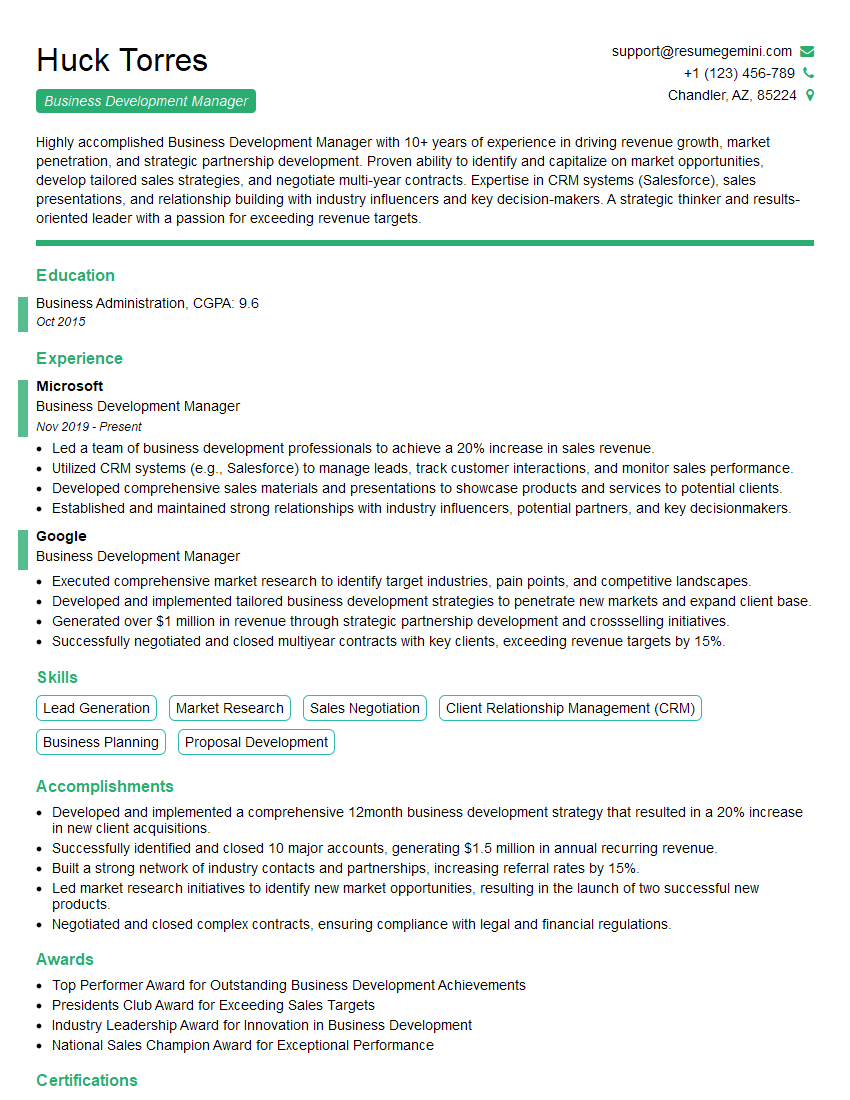
Business Development Manager Resume Sample
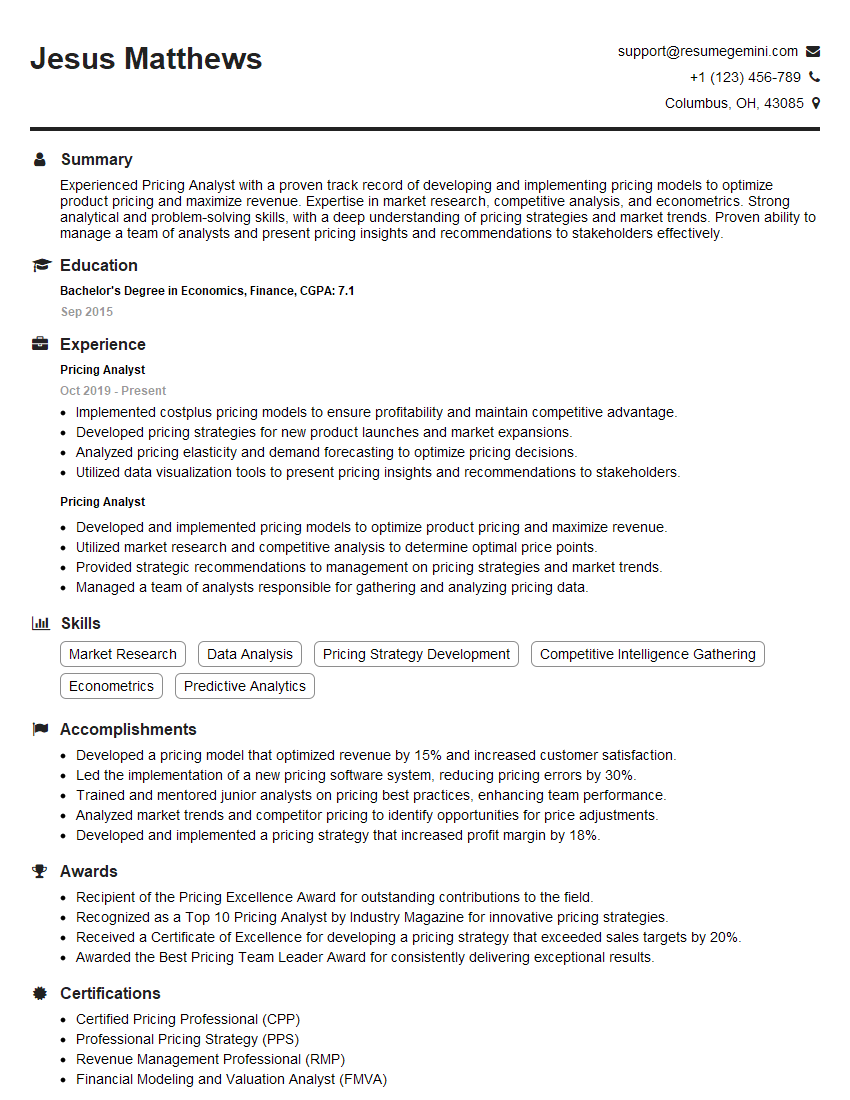
Pricing Analyst Resume Sample
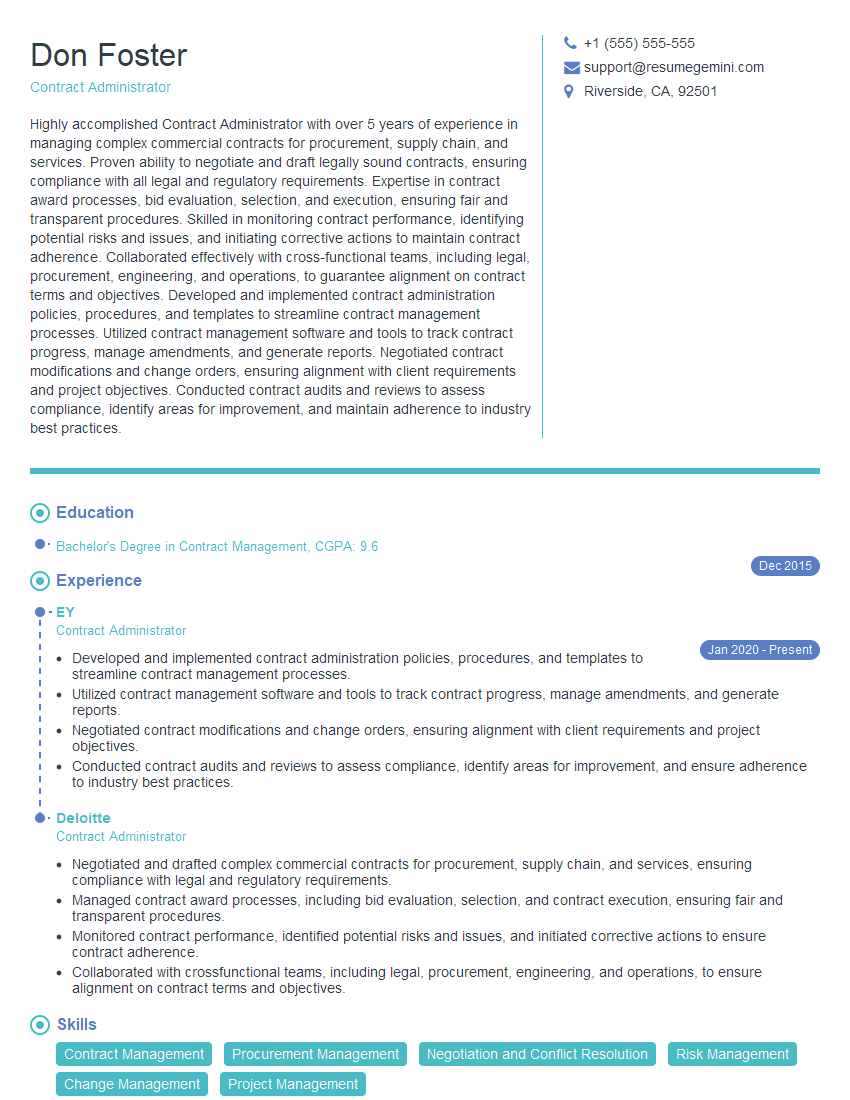
Contract Administrator Resume Sample
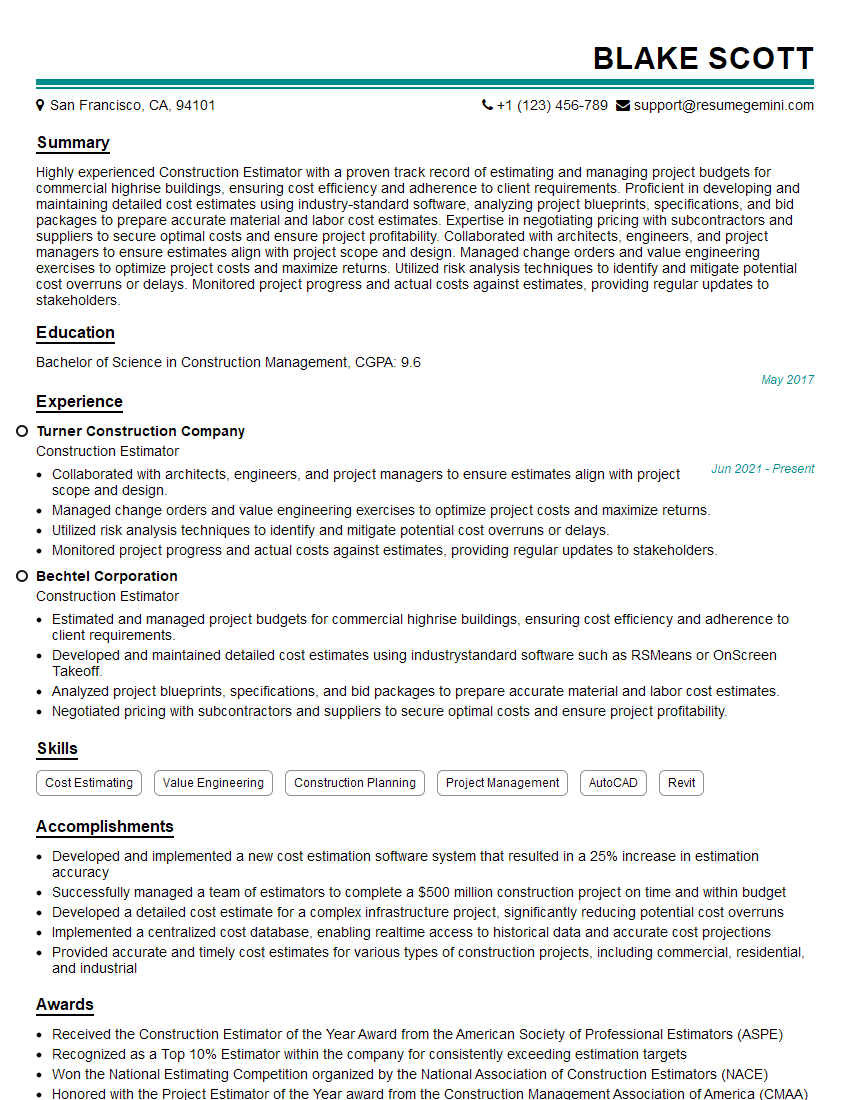
Construction Estimator Resume Sample
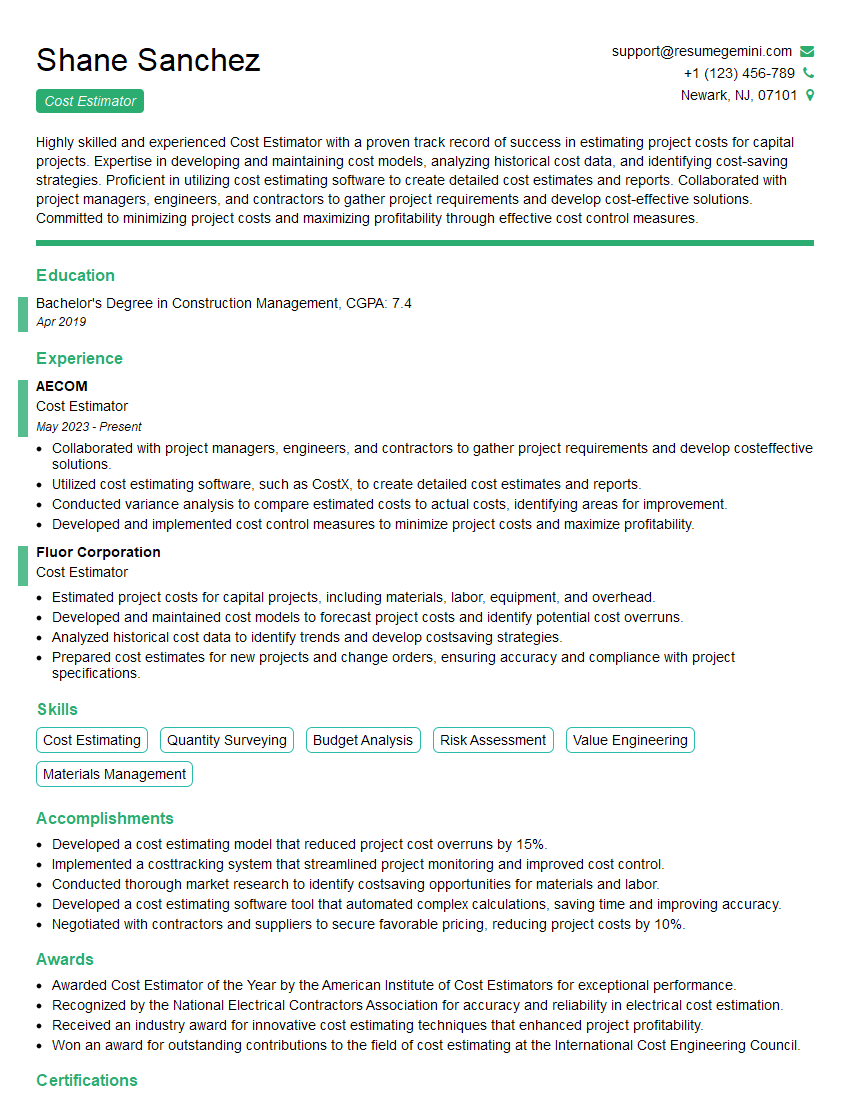
Cost Estimator Resume Sample
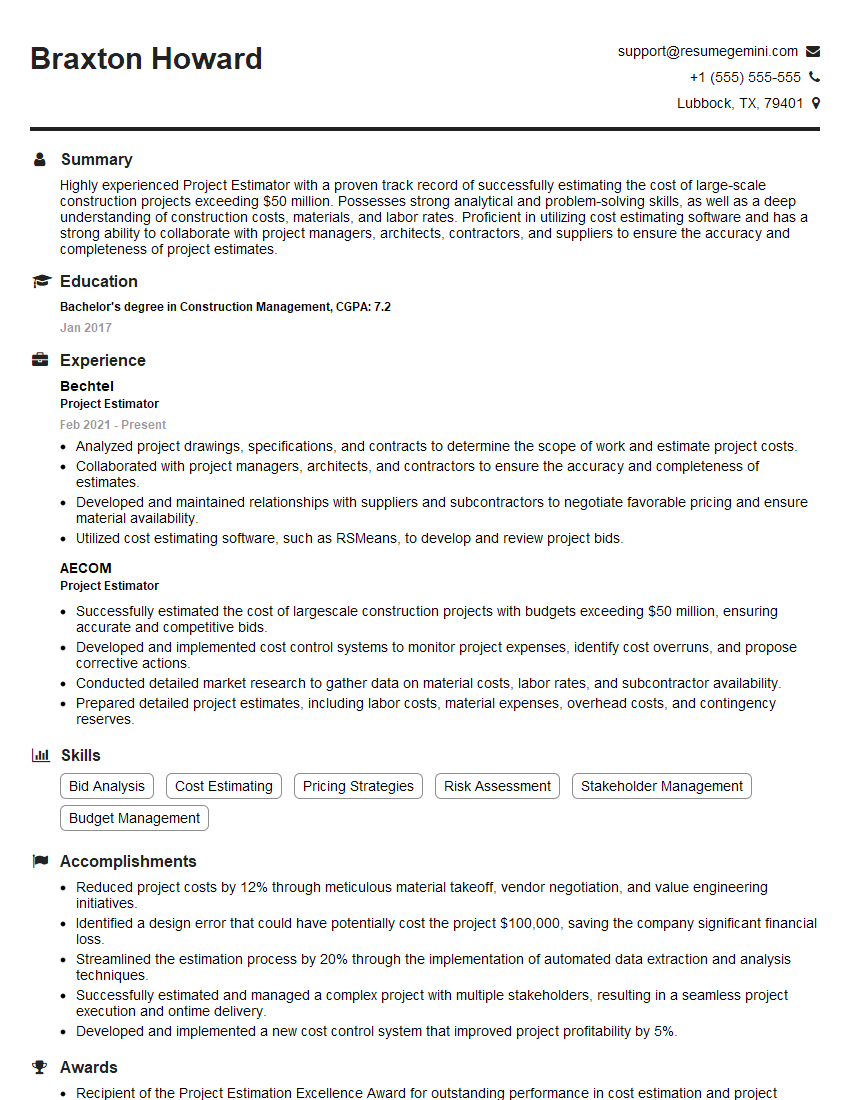
Project Estimator Resume Sample
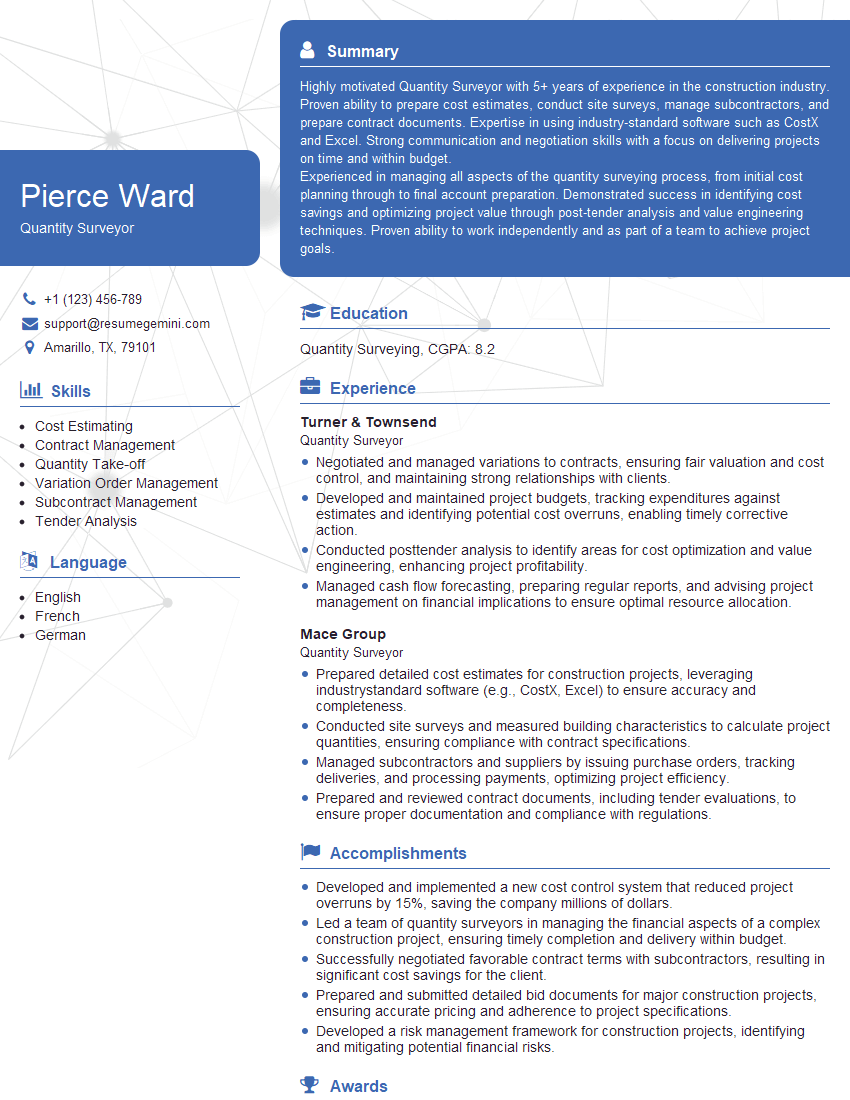
Quantity Surveyor Resume Sample
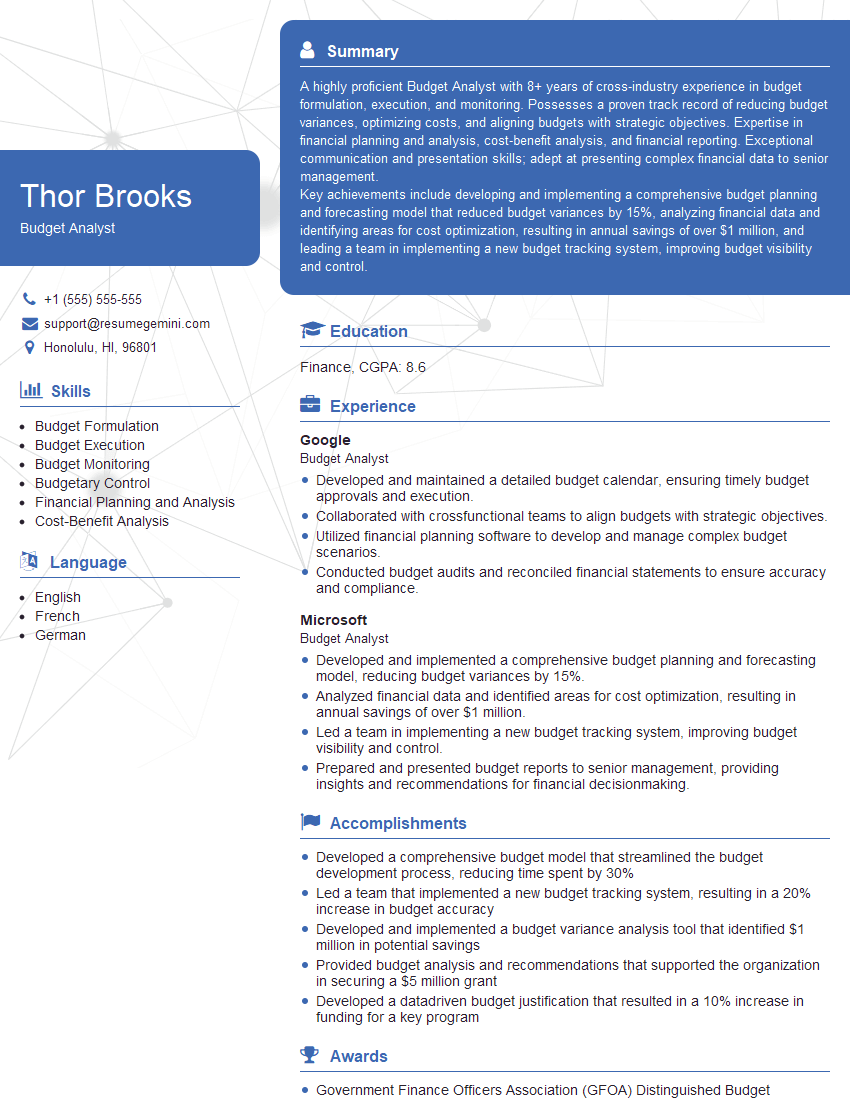
Budget Analyst Resume Sample

Value Engineer Resume Sample
Explore more articles
Users Rating of Our Blogs
Share Your Experience
We value your feedback! Please rate our content and share your thoughts (optional).
What Readers Say About Our Blog
Really detailed insights and content, thank you for writing this detailed article.
IT gave me an insight and words to use and be able to think of examples