Preparation is the key to success in any interview. In this post, we’ll explore crucial Public Health Policy and Regulations interview questions and equip you with strategies to craft impactful answers. Whether you’re a beginner or a pro, these tips will elevate your preparation.
Questions Asked in Public Health Policy and Regulations Interview
Q 1. Explain the difference between a public health policy and a public health regulation.
Public health policies and regulations are both crucial for protecting and improving population health, but they differ significantly in their nature and enforcement. A public health policy is a course of action or principle adopted by a government or other organization to achieve a specific health objective. Think of it as a broad statement of intent, a guideline. For example, a policy might state a commitment to reducing childhood obesity rates. This policy then needs concrete steps to be implemented.
A public health regulation, on the other hand, is a legally binding rule or order that mandates specific actions or restrictions to achieve a public health goal. These are the teeth of the policy. They are enforceable by law. For instance, a regulation might mandate that restaurants clearly display calorie information on their menus to support the childhood obesity reduction policy. Regulations carry penalties for non-compliance, unlike policies.
In short: Policy sets the direction; regulation enforces it.
Q 2. Describe the role of evidence-based practice in developing public health policy.
Evidence-based practice is absolutely central to developing effective public health policy. It means basing policy decisions on the best available scientific evidence, data analysis, and real-world experience, rather than solely on ideology or anecdotal evidence. This approach ensures that resources are allocated efficiently and that interventions are likely to have the desired impact.
For example, if a policy aims to reduce smoking rates, the policy should consider rigorous research on effective cessation programs, the impact of tobacco taxation, and proven messaging strategies. Evidence-based policy also necessitates ongoing evaluation and adaptation. If a program isn’t working as intended, data should inform revisions to ensure its effectiveness. Ignoring evidence leads to wasted resources and potentially harmful interventions.
Q 3. What are the key steps in the policy-making process at the state or federal level?
The policy-making process, whether at the state or federal level, generally follows these key steps:
- Problem Identification and Agenda Setting: Identifying a significant public health problem (e.g., rising rates of a specific disease, environmental hazards) that necessitates policy action. This often involves data analysis, stakeholder input, and public health surveillance.
- Policy Formulation: Developing policy options and proposals based on available evidence, including stakeholder consultation (public health experts, community organizations, affected populations).
- Policy Adoption: The formal approval of a policy by the relevant legislative body (e.g., state legislature or Congress). This often involves debate, negotiation, and compromise.
- Policy Implementation: Putting the policy into action through various mechanisms such as program development, resource allocation, and regulation enforcement. Effective implementation often requires collaboration among government agencies and community organizations.
- Policy Evaluation: Assessing the impact of the policy to determine its effectiveness, efficiency, and equity. This step involves data collection, analysis, and reporting, providing valuable feedback for future policy improvements or adjustments.
Q 4. How do you assess the effectiveness of a public health policy intervention?
Assessing the effectiveness of a public health intervention requires a robust evaluation strategy. This often involves a multi-faceted approach:
- Defining Measurable Outcomes: Clearly defining what constitutes success. For example, if the policy aims to reduce obesity, specific measurable outcomes could include changes in BMI, prevalence of obesity, or related health indicators.
- Data Collection and Analysis: Gathering data through various methods (e.g., surveys, health records, observational studies) to track changes in the target population before, during, and after policy implementation. Statistical analysis is crucial to determine if observed changes are statistically significant.
- Comparative Analysis: Comparing outcomes in intervention and control groups to isolate the impact of the policy. Sometimes, a comparison with similar geographical areas that didn’t implement the policy can be insightful.
- Qualitative Data: Collecting qualitative data through interviews or focus groups to understand the lived experiences of individuals and communities affected by the policy. This helps provide context and depth to quantitative findings.
- Cost-effectiveness Analysis: Assessing the cost of implementing the policy compared to the health and economic benefits gained. This is crucial for resource allocation decisions.
A well-designed evaluation provides crucial evidence for future policy decisions and helps to ensure that resources are used effectively.
Q 5. Discuss the ethical considerations involved in implementing public health regulations.
Implementing public health regulations raises several ethical considerations:
- Individual Liberty vs. Public Good: Regulations often restrict individual freedoms (e.g., mandatory vaccination, restrictions on smoking in public places) to protect public health. Balancing these competing interests is crucial. Policies should be justified by compelling public health needs and be as minimally restrictive as possible.
- Equity and Justice: Regulations must be implemented equitably, avoiding disproportionate impacts on vulnerable populations. For example, policies should consider access to healthcare, economic factors, and cultural sensitivity.
- Transparency and Accountability: The process of developing and implementing regulations should be transparent and accountable, allowing for public scrutiny and participation. Clear communication about the rationale and impact of regulations is essential.
- Informed Consent: When appropriate, individuals should be provided with adequate information to make informed decisions about their participation in public health programs or interventions.
- Privacy and Confidentiality: Regulations should respect individual privacy rights and ensure the confidentiality of health data. Strict data protection measures are essential.
Ethical considerations must be carefully addressed throughout the policy-making and implementation process to ensure that regulations are both effective and just.
Q 6. Explain the concept of health equity and its relevance to public health policy.
Health equity refers to the absence of avoidable, unfair, or remediable differences among populations in the distribution of health resources, opportunities, and outcomes. It’s not just about equality (everyone getting the same), but about fairness and justice. It recognizes that some groups face systemic barriers that limit their access to health resources and opportunities, leading to disparities in health outcomes.
Health equity is critical to public health policy because it guides the development and implementation of interventions that aim to reduce health disparities. Policies must actively address social determinants of health (e.g., poverty, education, housing, access to healthy food) that contribute to health inequities. For instance, policies addressing food deserts, ensuring access to quality education and healthcare, and tackling environmental hazards in low-income communities are essential for promoting health equity.
Ignoring health equity can lead to policies that exacerbate existing disparities, making some populations even more vulnerable. An equitable approach ensures that everyone has a fair opportunity to achieve their full health potential.
Q 7. Describe your experience analyzing health data to inform policy decisions.
Throughout my career, I’ve extensively used health data analysis to inform policy decisions. For example, during an outbreak of a newly emerging infectious disease, I led a team to analyze epidemiological data—incidence rates, mortality rates, geographic distribution—to identify high-risk populations and inform targeted interventions. We used statistical modeling to project the potential trajectory of the outbreak and evaluate the effectiveness of different response strategies, such as quarantine measures, contact tracing, or vaccination campaigns. This analysis directly influenced the allocation of resources and public health messaging.
In another project, I analyzed data on chronic disease prevalence among different socio-economic groups to identify disparities in access to care and risk factors. This data helped inform the development of a policy that targeted health promotion programs and resource allocation towards vulnerable communities, thereby demonstrating a commitment to promoting health equity. I am proficient in various statistical software packages (e.g., R, SAS, STATA) and data visualization techniques to effectively communicate complex findings to policymakers and stakeholders.
Q 8. How do you prioritize competing public health needs when allocating resources?
Prioritizing competing public health needs requires a systematic approach that balances urgency, impact, and feasibility. I typically use a framework that integrates several key considerations. First, I assess the burden of disease – looking at mortality, morbidity, and years of life lost – to understand the scale of the problem. Second, I analyze the potential impact of interventions, considering their effectiveness, cost-effectiveness, and equity implications. Third, I evaluate the feasibility of implementation, including resource availability, political will, and community acceptance.
For example, imagine a scenario where we have limited funding to address both an opioid crisis and an outbreak of a vaccine-preventable disease. A cost-effectiveness analysis might show that a targeted vaccination campaign offers a higher return on investment in terms of lives saved and healthcare costs averted, while simultaneously providing a public health win, even if the opioid crisis still requires urgent attention. This prioritization would be further justified by evaluating factors such as the availability of existing infrastructure to support a vaccination campaign compared to the complexity of establishing new addiction treatment programs.
Ultimately, the decision-making process involves a transparent and data-driven approach that considers ethical implications and ensures equitable resource allocation across all populations.
Q 9. How do you communicate complex health information to diverse audiences?
Communicating complex health information effectively to diverse audiences necessitates tailoring the message to the specific audience’s needs, literacy levels, and cultural contexts. This involves using clear, concise language, avoiding jargon, and employing various communication channels. For example, a public service announcement about influenza vaccination should differ significantly in its approach and content when targeted toward elderly individuals compared to younger adults, or those with low health literacy.
- Plain language: I always strive to use simple words and short sentences, avoiding technical terms unless absolutely necessary. If technical terms are unavoidable, I provide clear definitions.
- Visual aids: Infographics, videos, and other visual tools can make complex information easier to understand and remember.
- Multiple channels: I utilize various channels, such as social media, community events, print materials, and partnerships with local media outlets, to reach broader and more diverse audiences.
- Cultural sensitivity: Understanding cultural nuances is crucial to crafting messages that resonate with various groups. For instance, using culturally appropriate imagery and language ensures messages are well-received and understood.
- Feedback mechanisms: Incorporating feedback mechanisms such as surveys or focus groups enables me to evaluate message effectiveness and make necessary adjustments.
In short, effective communication requires careful planning, empathy, and a commitment to ensuring all segments of the population can access and understand crucial public health information.
Q 10. Describe your experience working with stakeholders to build consensus on policy issues.
Building consensus among stakeholders on policy issues requires active listening, collaboration, and a commitment to finding common ground. My approach involves a multi-stage process:
- Stakeholder identification and engagement: I start by identifying all relevant stakeholders, including government agencies, community organizations, healthcare providers, and the public. Early and consistent engagement is vital.
- Data-driven discussion: Presenting evidence-based information and data to support policy proposals builds trust and credibility.
- Negotiation and compromise: I actively seek out common interests and find compromise solutions that satisfy the needs of multiple stakeholders.
- Transparency and communication: Maintaining open and transparent communication is essential. I provide regular updates and actively solicit feedback.
- Collaborative problem-solving: I encourage stakeholders to actively participate in the problem-solving process and work together to develop innovative and feasible solutions.
For example, during a campaign to improve childhood vaccination rates, I worked with parents, healthcare providers, school officials, and community leaders to address concerns about vaccine safety and accessibility. Through workshops, open forums, and targeted communication, we identified and resolved critical barriers resulting in improved vaccination coverage.
Q 11. How do you navigate political considerations when advocating for public health policies?
Navigating political considerations when advocating for public health policies requires strategic planning and skillful communication. While advocating for evidence-based policies, I acknowledge the political realities and build alliances with legislators and policymakers who share similar goals.
This involves:
- Building relationships: Cultivating relationships with influential policymakers helps facilitate the advocacy process.
- Framing the message: Tailoring the message to resonate with the political context and priorities of the decision-makers is key.
- Data and evidence: Providing strong, credible evidence to support policy proposals strengthens the advocacy effort.
- Addressing concerns: Anticipating and addressing potential political objections proactively avoids misunderstandings.
- Coalition building: Building coalitions with diverse stakeholders amplifies the advocacy effort.
For instance, when advocating for stricter regulations on tobacco sales to minors, I partnered with anti-smoking organizations, healthcare professionals, and parents’ groups to create a united front, strengthening the impact of our message and increasing the likelihood of policy change.
Q 12. Explain your understanding of the legal framework governing public health regulations.
The legal framework governing public health regulations is complex and varies across jurisdictions, but generally involves a combination of constitutional law, statutory law, and administrative regulations.
- Constitutional law: The U.S. Constitution provides a foundation for public health, granting states the police power to protect the health and welfare of their citizens. However, these powers are subject to constitutional limitations such as due process and equal protection.
- Statutory law: Federal and state legislatures enact laws that establish public health agencies, define their powers and responsibilities, and authorize specific public health interventions. For example, laws mandating immunizations or regulating food safety fall under this category.
- Administrative regulations: Public health agencies promulgate regulations that interpret and implement statutory law, often providing detailed guidance on specific practices and procedures. These can be found in public health codes and related manuals.
- Case law: Court decisions shape the interpretation and application of public health law, clarifying legal limits and providing guidance on constitutional rights and public health authority.
Understanding this intricate legal framework is critical for developing and implementing effective public health policies that are both impactful and legally sound.
Q 13. Describe a time you had to address a conflict related to public health policy or regulations.
During a contentious debate about mandatory influenza vaccination for healthcare workers, I encountered significant resistance from a segment of the workforce who raised concerns about vaccine safety and personal autonomy.
To address the conflict, I employed a multi-pronged approach:
- Open dialogue: I organized forums and meetings where healthcare workers could voice their concerns and ask questions.
- Evidence-based information: I presented scientific evidence about vaccine safety and effectiveness, addressing their concerns with verifiable data.
- Ethical considerations: I explained the ethical imperative of protecting vulnerable patients from infection.
- Compromise solutions: We explored alternative solutions like offering religious or medical exemptions within a robust consent process.
- Collaboration: I worked closely with labor unions and healthcare administration to address employee concerns and ensure a smooth implementation of the policy.
While complete consensus wasn’t achieved, the process fostered greater understanding, reduced opposition, and eventually resulted in a significantly higher vaccination rate among healthcare workers, ultimately improving patient safety.
Q 14. How do you stay current with changes in public health policy and regulations?
Staying current with changes in public health policy and regulations requires a multifaceted approach.
- Professional journals and publications: I regularly read peer-reviewed journals such as the American Journal of Public Health and the New England Journal of Medicine to keep abreast of the latest research and policy discussions.
- Government websites and agencies: I monitor websites of relevant government agencies, including the Centers for Disease Control and Prevention (CDC), the World Health Organization (WHO), and state and local health departments for updates on regulations and guidelines.
- Professional organizations: Membership in professional organizations such as the American Public Health Association (APHA) provides access to webinars, conferences, and newsletters that keep me informed about current events.
- News and media monitoring: I regularly review reputable news sources for updates on public health issues and emerging trends.
- Continuing education: I actively participate in continuing education programs and professional development opportunities to enhance my knowledge and skills.
By consistently engaging with these resources, I ensure my understanding of public health policy and regulations remains current and relevant to my work.
Q 15. What are the key challenges in implementing public health policies in underserved communities?
Implementing public health policies in underserved communities presents unique challenges. These communities often face a confluence of factors that hinder effective policy implementation. Think of it like trying to build a house on unstable ground – the foundation needs to be addressed first.
- Limited Access to Resources: Underserved communities frequently lack access to crucial resources like healthcare facilities, transportation, and reliable internet access, making it difficult for residents to utilize programs and services.
- Socioeconomic Barriers: Poverty, unemployment, and lack of education can create significant obstacles. For example, a program offering free health screenings might be ineffective if residents cannot afford transportation to the clinic or take time off work.
- Cultural and Linguistic Barriers: Differences in language, cultural beliefs, and health literacy can impede effective communication and program understanding. Policy materials need to be culturally sensitive and available in multiple languages.
- Mistrust of Authority: Past experiences with discriminatory practices or lack of community engagement can lead to mistrust of government agencies and healthcare providers, making it challenging to build trust and encourage participation in health initiatives.
- Data Gaps: Accurate data is crucial for designing effective policies, but underserved communities are often underrepresented in health data collection. This makes it difficult to understand their specific needs and tailor programs accordingly.
Addressing these challenges requires a multifaceted approach involving community engagement, culturally competent program design, resource allocation, and addressing the root causes of health disparities.
Career Expert Tips:
- Ace those interviews! Prepare effectively by reviewing the Top 50 Most Common Interview Questions on ResumeGemini.
- Navigate your job search with confidence! Explore a wide range of Career Tips on ResumeGemini. Learn about common challenges and recommendations to overcome them.
- Craft the perfect resume! Master the Art of Resume Writing with ResumeGemini’s guide. Showcase your unique qualifications and achievements effectively.
- Don’t miss out on holiday savings! Build your dream resume with ResumeGemini’s ATS optimized templates.
Q 16. Discuss your experience in using cost-benefit analysis to evaluate public health programs.
Cost-benefit analysis (CBA) is a crucial tool for evaluating the economic efficiency of public health programs. It involves comparing the total costs of a program with the total benefits, expressed in monetary terms. Think of it as weighing the investment against the return.
In my experience, I’ve used CBA to evaluate programs ranging from vaccination campaigns to community-based health education initiatives. The process typically involves identifying all relevant costs (program development, staffing, materials) and benefits (reduced hospitalizations, increased productivity, averted deaths). We often use techniques like discounted cash flow analysis to account for the time value of money, as benefits often accrue over several years.
For instance, in a recent project evaluating a smoking cessation program, we quantified the costs of running the program, including staff salaries, advertising, and materials. We then estimated the benefits, such as reduced healthcare costs due to fewer smoking-related illnesses, increased worker productivity, and the value of lives saved. The CBA allowed us to demonstrate the program’s cost-effectiveness and justify its continued funding.
It’s important to note that assigning monetary values to health outcomes, such as life years saved, can be complex and involves making value judgments. However, a well-conducted CBA provides valuable insights to inform decision-making about resource allocation in public health.
Q 17. Describe your understanding of health disparities and how they are addressed through policy.
Health disparities refer to the preventable differences in the burden of disease, injury, violence, or opportunities to achieve optimal health that are experienced by socially disadvantaged populations. These disparities are often rooted in social determinants of health.
Addressing health disparities requires a policy approach that tackles the root causes of inequality. This includes:
- Expanding Access to Healthcare: Policies aimed at increasing access to affordable healthcare insurance, primary care services, and specialized medical care are crucial. This might involve expanding Medicaid coverage, implementing subsidies for health insurance, or increasing the number of healthcare providers in underserved areas.
- Addressing Social Determinants of Health: Policies focusing on improving housing, education, employment opportunities, and access to healthy food can significantly impact health outcomes. Examples include investments in affordable housing programs, job training initiatives, and policies to improve food access in food deserts.
- Reducing Health Inequities: Policies need to explicitly target the disparities faced by specific populations, such as racial and ethnic minorities, low-income individuals, and LGBTQ+ individuals. This might involve culturally appropriate outreach programs, targeted interventions, and policies to reduce discrimination in healthcare.
- Investing in Health Equity Research: Further research is needed to better understand the complex interplay of factors contributing to health disparities and to evaluate the effectiveness of interventions.
Ultimately, successful policy interventions must address not just individual behaviors but also the broader social and economic factors that drive health inequalities.
Q 18. How would you approach advocating for changes to a specific public health policy?
Advocating for changes to a specific public health policy requires a strategic and multi-pronged approach. It’s like campaigning for a cause you deeply believe in – it needs a well-defined strategy.
- Identify the Policy and the Need for Change: Clearly define the policy and the specific changes you are advocating for. Gather data and evidence to support the need for change. For example, if advocating for stricter regulations on air pollution, present data showing the correlation between air quality and respiratory illnesses.
- Build a Coalition: Form alliances with other organizations, community groups, and individuals who share your concerns. A united front is much more powerful than individual action. Consider partnering with public health professionals, community leaders, and affected populations.
- Develop a Communication Strategy: Clearly communicate the problem, proposed solutions, and the benefits of the policy change. Use various channels, including social media, media outreach, and public presentations, to spread your message. Tailor your communication to different audiences.
- Engage with Policymakers: Directly engage with policymakers at all levels (local, state, federal). This may involve lobbying, providing testimony at hearings, or meeting with elected officials to discuss your concerns.
- Mobilize Public Support: Generate public awareness and support for your cause through petitions, rallies, or public campaigns. Public pressure can be highly influential in the policy-making process.
- Monitor and Evaluate: Track the progress of your advocacy efforts and assess their impact. Be prepared to adjust your strategy based on the results and feedback you receive.
This iterative process requires patience, persistence, and adaptability. Successful advocacy often involves building long-term relationships with policymakers and community partners.
Q 19. Explain the impact of social determinants of health on public health policy development.
Social determinants of health (SDOH) are the conditions in the environments where people are born, live, learn, work, play, worship, and age that affect a wide range of health, functioning, and quality-of-life outcomes and risks. These factors significantly impact public health policy development because they are the underlying causes of many health disparities.
Ignoring SDOH in policy development would be like treating a symptom without addressing the underlying disease. For example, focusing solely on individual behavior change for smoking cessation without considering the environmental factors that promote smoking, like easy access to tobacco products in underserved communities, will yield limited results.
Public health policies must integrate considerations of SDOH. This involves:
- Data Collection and Analysis: Collecting comprehensive data on SDOH, such as income inequality, housing quality, access to healthy food, and educational attainment, is crucial for understanding their impact on health outcomes and targeting interventions appropriately.
- Policy Integration: SDOH should be explicitly addressed in policy development across various sectors, not just healthcare. This requires intersectoral collaboration involving housing, education, transportation, and environmental agencies.
- Community Engagement: Meaningful community engagement is essential to ensure that policies are responsive to the needs and priorities of the affected populations.
- Resource Allocation: Adequate resources must be allocated to address SDOH through programs and initiatives that promote healthy environments and social equity.
By incorporating SDOH into policy decisions, we can create a more comprehensive and effective approach to improving population health and reducing health disparities.
Q 20. Discuss the role of technology in improving public health policy and regulations.
Technology plays a transformative role in improving public health policy and regulations. It’s like adding a powerful engine to a car – it dramatically increases efficiency and effectiveness.
- Data Collection and Analysis: Digital technologies allow for the efficient collection and analysis of large datasets from various sources, providing real-time insights into disease outbreaks, health trends, and risk factors. This improves surveillance and enables quicker, more informed responses.
- Disease Surveillance and Outbreak Response: Real-time monitoring of infectious disease outbreaks through electronic health records and mobile health technologies allows for faster detection and more effective containment strategies. This is crucial for preventing epidemics.
- Health Communication and Education: Digital platforms facilitate the rapid dissemination of public health information and educational materials to a wider audience. This can improve health literacy and promote health behaviors.
- Telehealth and Remote Healthcare: Telehealth technologies expand access to healthcare services, particularly in underserved areas. This can improve access to care and promote early intervention.
- Precision Public Health: Technology enables the use of data analytics to identify high-risk populations and tailor interventions to their specific needs, leading to more targeted and efficient public health programs.
However, ethical considerations, such as data privacy and security, must be carefully addressed when implementing new technologies in public health. Ensuring equitable access to technology across all populations is also crucial for preventing digital divides that could exacerbate health disparities.
Q 21. How do you ensure public participation in the development and implementation of public health policies?
Public participation is essential for developing and implementing effective public health policies. Without the community’s voice, policies risk being irrelevant or even harmful. It’s akin to building a house without consulting the future residents.
Strategies to ensure public participation include:
- Community Forums and Town Halls: Organizing community forums and town halls provides opportunities for direct interaction between policymakers and the public, allowing for open dialogue and feedback.
- Surveys and Online Feedback Mechanisms: Utilizing surveys and online platforms allows for the collection of broad-based input from a larger segment of the population.
- Community Advisory Boards: Establishing community advisory boards composed of representatives from diverse groups ensures that the perspectives and needs of all stakeholders are considered.
- Participatory Budgeting Processes: Involving the public in decisions about how public health resources are allocated can foster a sense of ownership and improve program effectiveness.
- Culturally Sensitive Communication: Using culturally appropriate communication strategies ensures that information is easily accessible and understandable to all members of the community.
Active engagement with diverse communities ensures that policies address actual needs and are implemented in a way that fosters trust and promotes equitable health outcomes.
Q 22. Explain the importance of monitoring and evaluation in public health policy implementation.
Monitoring and evaluation (M&E) are the cornerstones of effective public health policy implementation. They’re not simply afterthoughts; they’re integral processes that ensure policies achieve their intended goals and identify areas for improvement. Think of it like navigating with a map and compass: the policy is your destination, M&E is your navigation system.
Effective M&E involves systematically collecting and analyzing data on policy implementation and outcomes. This data allows us to assess the reach, effectiveness, efficiency, impact, and sustainability of a public health program or intervention. For instance, if we implement a new smoking cessation program, we would track indicators such as participation rates, quit rates, and changes in smoking prevalence within the target population. Without M&E, we wouldn’t know if the program is working, if it’s reaching the right people, or if resources are being used efficiently.
- Reach: How many people are exposed to the intervention?
- Effectiveness: Does the intervention achieve its intended outcomes?
- Efficiency: Are resources being used optimally?
- Impact: What is the overall effect on the population’s health?
- Sustainability: Can the program be maintained long-term?
Regular monitoring allows for timely adjustments, preventing costly failures and maximizing positive health outcomes. For example, if our smoking cessation program’s quit rates are low, we can analyze the data to understand why—perhaps the program needs more targeted messaging or more support services. This iterative approach is crucial for optimizing public health interventions.
Q 23. Describe your experience working with different levels of government on public health issues.
My experience spans collaboration with various levels of government – local, state, and federal – on numerous public health initiatives. I’ve worked with city health departments on implementing community-based health promotion programs, collaborating with state agencies on infectious disease surveillance and response, and partnering with federal agencies on national health initiatives. Each level presents unique challenges and opportunities.
At the local level, the focus is often on direct service delivery and community engagement. For example, I assisted a city health department in developing a successful lead poisoning prevention program by directly engaging with community leaders, healthcare providers, and residents. At the state level, there’s a greater emphasis on policy development, resource allocation, and coordinating responses to regional health emergencies, such as during a flu pandemic where I played a crucial role in developing resource allocation models. At the federal level, collaborations center on developing national guidelines, securing funding for public health programs, and establishing national health goals. For example, I was part of a team working with a federal agency to develop a national campaign for improving vaccine uptake.
Successful intergovernmental collaboration requires strong communication, mutual respect, and a clear understanding of each level’s respective roles and responsibilities. It’s essential to tailor communication and data to the specific needs and understanding of each stakeholder.
Q 24. How do you manage competing priorities and deadlines in a fast-paced public health environment?
The public health field is inherently fast-paced and demands the ability to juggle numerous competing priorities. My approach involves a structured prioritization framework and effective time management techniques.
Firstly, I utilize a prioritization matrix to rank tasks based on urgency and importance. This helps me focus on high-impact activities while delegating or deferring lower-priority tasks. Secondly, I break down large projects into smaller, manageable tasks with clearly defined deadlines. This allows for better progress tracking and prevents feeling overwhelmed. Thirdly, I leverage project management tools such as Gantt charts or Kanban boards to visualize progress and identify potential bottlenecks. Finally, effective communication is key; keeping stakeholders informed of progress and potential roadblocks is crucial to maintaining alignment and managing expectations. I’ve successfully managed competing priorities during a measles outbreak, seamlessly coordinating surveillance, case investigation, vaccination campaigns, and community outreach activities while adhering to strict deadlines.
Imagine it like conducting an orchestra: you have different instruments playing different parts at varying tempos. You need to coordinate them all to create a harmonious and effective whole. Prioritization ensures you focus on the most critical sections, while time management keeps everything on schedule.
Q 25. What are the key components of a successful public health communication strategy?
A successful public health communication strategy needs several key components. It’s not just about delivering information; it’s about influencing behavior and achieving specific health outcomes. Think of it as a targeted marketing campaign, but for health and well-being.
- Audience Segmentation: Tailoring messages to specific demographics, considering their cultural beliefs, health literacy, and communication preferences.
- Clear and Concise Messaging: Using plain language, avoiding jargon, and focusing on key takeaways.
- Multiple Channels: Utilizing various platforms like social media, traditional media, community events, and trusted health professionals to reach the widest audience.
- Community Engagement: Involving community leaders, influencers, and organizations to build trust and foster a sense of collective responsibility.
- Evaluation and Feedback: Tracking message reach, engagement, and behavior change to refine the strategy over time.
For example, a successful campaign to increase flu vaccination rates might involve targeting older adults through senior centers and community newsletters, while reaching younger populations through social media campaigns featuring influencers. Continuous monitoring of campaign effectiveness is crucial for making data-driven adjustments.
Q 26. Explain your understanding of the role of public health in emergency preparedness and response.
Public health plays a vital role in emergency preparedness and response. It’s about preventing, mitigating, and responding to public health threats, from natural disasters to pandemics. Imagine it as being a first responder, but for population health.
Preparedness involves developing plans and procedures for managing various health emergencies. This includes establishing surveillance systems to detect outbreaks, stockpiling essential medical supplies, training healthcare workers in emergency response, and developing communication protocols for informing the public. Response involves coordinating the delivery of essential health services, such as vaccination campaigns, disease surveillance, and contact tracing during an outbreak. It also involves damage assessment, providing medical care, and mental health support in the aftermath of a disaster.
My experience includes developing pandemic response plans, coordinating community health clinics during natural disasters, and working on risk communication strategies to address public concerns during health emergencies. During a major hurricane, for instance, my team ensured the continuity of essential health services by pre-positioning medical supplies and establishing emergency communication channels.
Q 27. How do you address resistance to public health interventions or regulations?
Addressing resistance to public health interventions or regulations requires a multi-faceted approach that combines education, communication, and engagement. It’s about understanding the reasons behind resistance and tailoring responses accordingly.
Firstly, it’s crucial to understand the root causes of resistance. This might involve conducting surveys, focus groups, or interviews to gauge public perception and address any misconceptions or concerns. Secondly, clear and transparent communication is key. Explaining the scientific basis for interventions, addressing potential risks and side effects, and presenting evidence of effectiveness can help build trust and understanding. Thirdly, engaging community leaders and trusted figures can help build support and overcome resistance. Collaboration with community organizations, religious leaders, and local influencers is vital in promoting acceptance and adherence to public health measures.
For example, during a vaccination campaign, we might encounter resistance due to misinformation about vaccine safety. In response, we can engage with community leaders and healthcare providers to address these concerns through educational sessions and outreach programs. We might also highlight success stories and testimonials to demonstrate the positive impact of vaccines.
Q 28. Describe your experience conducting policy research and writing policy briefs.
I have extensive experience in conducting policy research and writing policy briefs. This involves synthesizing evidence from various sources, identifying policy options, and presenting findings in a clear and concise manner for policymakers. It’s like translating complex scientific information into actionable recommendations.
My research projects have spanned various areas of public health, including infectious disease control, chronic disease prevention, and health equity. The process typically involves reviewing existing literature, conducting data analysis, and conducting interviews with stakeholders. Policy briefs summarize key findings and recommend specific actions, often incorporating data visualizations and tables to enhance clarity and impact. For example, I conducted research on the effectiveness of different strategies for reducing opioid overdose deaths, synthesizing findings from various studies and presenting actionable policy recommendations to a state legislative committee. This resulted in the implementation of a new program designed to increase access to addiction treatment and naloxone distribution.
Writing effective policy briefs requires strong analytical skills, excellent writing skills, and the ability to communicate complex information clearly and concisely to non-technical audiences.
Key Topics to Learn for Public Health Policy and Regulations Interview
- Health Policy Frameworks: Understand the development, implementation, and evaluation of health policies at local, national, and international levels. Consider the influence of political, economic, and social factors.
- Regulatory Processes: Analyze the role of government agencies in regulating public health, including rule-making, enforcement, and compliance monitoring. Explore the interplay between policy and regulation.
- Public Health Law: Grasp the legal basis for public health interventions, including constitutional rights, legal precedents, and ethical considerations. Familiarize yourself with relevant statutes and case law.
- Health Equity and Social Determinants of Health: Examine how social, economic, and environmental factors impact health outcomes and how policies can address health disparities. Be prepared to discuss strategies for promoting health equity.
- Data Analysis and Epidemiology: Understand how data is used to inform public health policy decisions. Be familiar with epidemiological methods and their application in policymaking.
- Program Evaluation and Impact Assessment: Learn how to assess the effectiveness of public health programs and policies. Be prepared to discuss different evaluation methods and their strengths and weaknesses.
- Health Communication and Advocacy: Develop skills in effectively communicating complex health information to diverse audiences and advocating for public health policies.
- Budgeting and Resource Allocation in Public Health: Understand the complexities of allocating limited resources to maximize public health outcomes. Be familiar with cost-effectiveness analysis and other resource allocation methodologies.
- Global Health Policy and International Collaboration: Explore international health organizations and the role of global cooperation in addressing transnational health challenges.
Next Steps
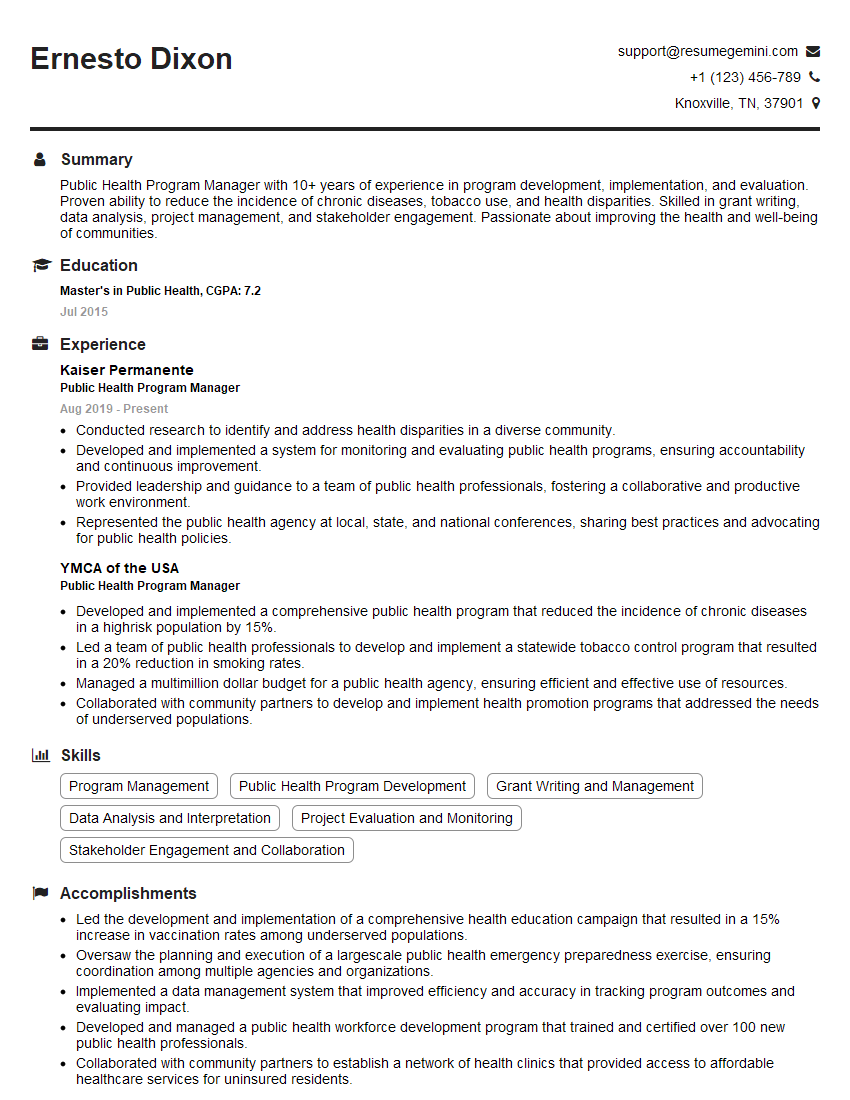
Mastering Public Health Policy and Regulations is crucial for career advancement in this vital field. A strong understanding of these areas will open doors to leadership roles, impactful research opportunities, and fulfilling careers dedicated to improving public health. To maximize your job prospects, creating an ATS-friendly resume is essential. ResumeGemini can help you build a powerful and effective resume that showcases your skills and experience. ResumeGemini provides examples of resumes tailored to Public Health Policy and Regulations to help you create a compelling application that stands out. Take the next step in your career journey – build your best resume with ResumeGemini.
Explore more articles
Users Rating of Our Blogs
Share Your Experience
We value your feedback! Please rate our content and share your thoughts (optional).
What Readers Say About Our Blog
Really detailed insights and content, thank you for writing this detailed article.
IT gave me an insight and words to use and be able to think of examples