Unlock your full potential by mastering the most common Public Relations Skills interview questions. This blog offers a deep dive into the critical topics, ensuring you’re not only prepared to answer but to excel. With these insights, you’ll approach your interview with clarity and confidence.
Questions Asked in Public Relations Skills Interview
Q 1. Describe your experience crafting a PR strategy for a product launch.
Crafting a PR strategy for a product launch involves a multifaceted approach that goes beyond simple announcements. It’s about creating a narrative that resonates with the target audience and generates excitement. I begin by thoroughly understanding the product’s unique selling points (USPs) and identifying the target audience. This informs the overall message and tone. Then, I develop a comprehensive communication plan that includes:
- Identifying Key Messages: Distilling the core benefits of the product into concise, memorable statements.
- Targeting Media Outlets: Selecting relevant media outlets (print, online, broadcast, social) based on their audience reach and alignment with the product.
- Developing a Media Kit: Preparing a comprehensive press kit with high-quality images, product information, and key messaging for journalists.
- Planning Media Outreach: Crafting personalized pitches for journalists and influencers, scheduling interviews, and managing media relationships.
- Social Media Strategy: Integrating social media platforms into the campaign to build anticipation, engage with potential customers, and amplify media coverage.
- Monitoring and Evaluation: Tracking media coverage, social media engagement, and overall campaign impact to assess effectiveness.
For example, in a recent launch of a sustainable fashion brand, we focused on storytelling—highlighting the ethical sourcing and eco-friendly manufacturing processes—rather than just product features. This resonated strongly with environmentally conscious consumers and earned significant positive media coverage.
Q 2. How do you measure the success of a PR campaign?
Measuring the success of a PR campaign requires a multi-faceted approach that goes beyond simple metrics like media mentions. While media coverage is important, its quality and impact are more crucial. I employ a combination of quantitative and qualitative methods:
- Media Mentions: Tracking the number of mentions across various media outlets, analyzing the tone (positive, negative, neutral), and calculating media impressions.
- Website Traffic and Leads: Monitoring website traffic originating from media coverage and measuring the conversion of media mentions into leads or sales.
- Social Media Engagement: Analyzing metrics like likes, shares, comments, and retweets to understand the audience’s response to the campaign.
- Sentiment Analysis: Using tools to analyze the overall sentiment (positive, negative, or neutral) towards the brand or product.
- Brand Awareness Surveys: Conducting surveys before and after the campaign to measure changes in brand awareness and perception.
- Sales Data: If applicable, measuring sales increases attributed to the PR campaign.
For instance, we might track not just the number of articles mentioning a client, but also the overall tone and reach of these articles, correlating this data with sales figures or website traffic to gauge the true effectiveness of the campaign.
Q 3. Explain your process for managing media inquiries.
Managing media inquiries efficiently and effectively requires a structured approach. My process involves:
- Prompt Response: I acknowledge all inquiries within 24 hours, even if a full response is not immediately possible.
- Understanding the Request: I carefully review the inquiry to understand the journalist’s needs and deadlines.
- Research and Preparation: I research the journalist and their publication to tailor my response appropriately. I gather relevant information and prepare talking points.
- Crafting a Response: I write a clear, concise, and informative response that addresses the journalist’s questions while remaining on-message.
- Following Up: I follow up to ensure the journalist received the information and address any further questions.
- Maintaining Relationships: I build and maintain long-term relationships with journalists by providing them with valuable information and consistently delivering on my promises.
This approach ensures that journalists receive timely, accurate, and relevant information, leading to positive media coverage and strengthened relationships.
Q 4. How would you handle a negative media crisis?
Handling a negative media crisis requires a swift, decisive, and transparent response. My approach involves:
- Rapid Assessment: Immediately assess the situation, determining the severity and scope of the crisis.
- Crisis Communication Team: Assemble a crisis communication team comprised of key stakeholders.
- Develop a Response Strategy: Develop a comprehensive communication strategy that addresses the concerns raised and conveys empathy and accountability.
- Transparent Communication: Issue a statement acknowledging the issue and outlining the steps being taken to resolve it.
- Proactive Engagement: Engage with media inquiries promptly and directly, providing factual information and avoiding speculation.
- Monitor and Adapt: Continuously monitor media coverage and social media conversations, adapting the communication strategy as needed.
- Long-term Recovery: Develop a long-term plan to rebuild trust and reputation.
For example, if a product recall is necessary, our response would focus on immediate action to protect consumers, transparent communication about the recall process, and proactive engagement with media outlets to manage the narrative.
Q 5. What experience do you have with social media PR?
My experience with social media PR is extensive. I understand that social media is no longer just a supplementary channel; it’s a crucial component of any comprehensive PR strategy. I leverage various platforms to achieve different objectives:
- Platform Selection: I carefully select platforms based on the target audience and campaign goals. For example, LinkedIn might be ideal for B2B campaigns, while Instagram is better suited for visually driven products.
- Content Creation: I create engaging content tailored to each platform—videos for YouTube, visually appealing images for Instagram, and thought leadership articles for LinkedIn.
- Community Engagement: I actively engage with the audience, responding to comments and questions, fostering a sense of community and building brand loyalty.
- Influencer Marketing: I collaborate with relevant influencers to amplify the message and reach a wider audience.
- Social Listening: I continuously monitor social media conversations to track brand mentions, identify emerging issues, and measure campaign effectiveness.
- Crisis Management: I develop social media protocols for crisis management, ensuring swift and effective response to negative situations.
For instance, we recently used a targeted Instagram campaign featuring user-generated content to boost brand awareness and engagement for a new skincare line.
Q 6. Describe your approach to building and maintaining relationships with journalists.
Building and maintaining strong relationships with journalists is fundamental to successful PR. My approach is built on trust, mutual respect, and consistent value delivery:
- Personalization: I personalize my communication, understanding each journalist’s beat and interests. Generic press releases are avoided.
- Value-Driven Communication: I offer journalists valuable information, exclusive insights, and access to sources relevant to their stories.
- Consistent Communication: I maintain regular communication, providing updates even when there’s no immediate news.
- Relationship Building: I attend industry events and build personal relationships with journalists through informal interactions.
- Transparency and Honesty: I am transparent and honest in my dealings with journalists, ensuring credibility and trust.
- Respecting Deadlines: I always respect journalists’ deadlines, promptly responding to their queries and providing them with the information they need.
Think of it like any strong relationship—it needs consistent nurturing and trust. By providing value and consistently demonstrating reliability, you build a network of journalists who will trust your information and consider your pitches.
Q 7. How do you identify and target key media outlets for a specific campaign?
Identifying and targeting key media outlets for a specific campaign requires careful research and strategic thinking. My process involves:
- Defining Target Audience: Clearly define the target audience for the campaign. This will help determine the right media outlets to target.
- Media Landscape Research: Research relevant media outlets, analyzing their audience demographics, editorial focus, and past coverage.
- Keyword Research: Use keyword research tools to identify relevant keywords related to the campaign and the target audience.
- Competitor Analysis: Analyze media coverage of competitors to understand which publications they’ve engaged with and what type of content resonates with them.
- Media Database: Utilize media databases (online and offline) to identify journalists and bloggers who cover relevant topics.
- Prioritization: Prioritize media outlets based on their reach, relevance, and influence.
- Personalized Pitches: Craft personalized pitches tailored to the specific interests of each publication and journalist.
For example, if launching a new tech gadget, I would focus on tech publications, blogs, and online reviewers, as opposed to lifestyle magazines.
Q 8. What is your experience with writing press releases?
Press releases are the cornerstone of PR, designed to disseminate information to a wide audience through media outlets. My experience spans crafting compelling press releases for diverse clients, from tech startups announcing groundbreaking innovations to non-profits highlighting impactful community initiatives. I’m proficient in structuring releases using the inverted pyramid style – leading with the most crucial information, followed by supporting details. This ensures the key message resonates even if the entire release isn’t read. I meticulously research target publications and tailor the language and tone to each outlet’s audience and style guidelines. For example, a press release for a scientific breakthrough would use precise technical language for publications like Nature, while a release for a consumer product would employ simpler, more engaging language for outlets like The New York Times Style section. I also have experience optimizing press releases for SEO, ensuring they’re easily discoverable online.
Beyond the writing itself, I’m adept at distributing releases through various channels, including traditional media databases like PR Newswire and targeted email outreach to journalists. I monitor the performance of releases, tracking media coverage and social media mentions to gauge their effectiveness.
Q 9. How do you adapt your communication style to different audiences?
Adapting communication style is crucial for effective PR. Think of it like choosing the right tool for the job – a sledgehammer isn’t suitable for delicate tasks. I analyze the audience’s demographics, interests, and media consumption habits to determine the best approach. For instance, when communicating with a younger demographic on social media, I’d employ a more informal, engaging tone, using shorter sentences and relevant hashtags. In contrast, a press release for a financial institution would require a formal, precise tone, focusing on factual information and avoiding slang.
Understanding the audience’s level of knowledge is key. For a technical audience, I’ll use specialized terminology; for a general audience, I’ll simplify complex concepts using clear and concise language and compelling storytelling. I also consider the platform; a tweet needs to be concise, while a blog post allows for more in-depth explanation. Finally, I always maintain a consistent brand voice that reflects the client’s values and personality.
Q 10. Explain your understanding of media pitching.
Media pitching is the art of strategically contacting journalists and media outlets to secure coverage for your client or organization. It’s more than just sending a press release; it’s about building relationships and understanding the media landscape. Successful pitching begins with identifying the right journalists and publications. I carefully research reporters who cover relevant topics and have a demonstrated interest in the subject matter. I analyze their past work to understand their writing style, preferred formats, and areas of expertise.
My approach involves crafting personalized pitches that highlight the newsworthiness of the story and its relevance to the journalist’s audience. Generic pitches rarely succeed; a tailored pitch showcasing the story’s unique angle and its value to the publication increases the likelihood of securing coverage. For example, instead of simply sending a press release about a new product launch, I might tailor my pitch to a specific reporter known for covering similar products, highlighting the innovative aspect that differentiates this product from its competitors. I also actively build relationships with journalists, attending industry events and engaging with them on social media.
Q 11. What metrics do you track to assess the effectiveness of your PR efforts?
Measuring PR effectiveness is crucial for demonstrating ROI. I track a range of metrics, both quantitative and qualitative. Quantitative metrics include:
- Media mentions: The total number of times the client or organization is mentioned in media outlets.
- Reach: The total estimated audience reached through media coverage.
- Website traffic: Increases in website traffic from media coverage.
- Social media engagement: Likes, shares, comments, and retweets related to media coverage.
- Sales leads generated: The number of leads directly attributable to PR efforts.
Qualitative metrics include:
- Tone of coverage: Assessing whether the coverage is positive, neutral, or negative.
- Placement in publication: High-profile placement indicates greater impact.
- Impact on brand reputation: Measuring changes in brand awareness, perception, and sentiment.
- Audience feedback: Gathering feedback from target audiences on the PR campaign’s impact.
I use analytics tools to track these metrics and regularly report on progress to clients, demonstrating the value of PR investment.
Q 12. How familiar are you with SEO best practices as they relate to PR?
SEO (Search Engine Optimization) best practices are now integral to successful PR. My understanding includes incorporating relevant keywords into press releases and other PR materials to improve their search engine ranking. This enhances the visibility of the content and drives organic traffic to the client’s website. I also ensure that all press releases and other materials are optimized for on-page SEO, including the use of proper title tags, meta descriptions, and header tags (H1, H2, etc.).
Beyond the text itself, I use relevant backlinks to increase domain authority and improve search ranking. I also leverage multimedia content, like videos and images, to enhance engagement and improve search engine performance. Finally, I ensure that the content is easily shareable on social media platforms, further amplifying reach and promoting organic SEO.
Q 13. Describe a time you had to quickly adapt to an unexpected change in a PR campaign.
During a product launch campaign for a new sustainable clothing line, a major competitor unexpectedly released a similar product a week earlier, stealing some of the spotlight. We needed to quickly adjust our strategy. Instead of solely focusing on the product’s initial features, we highlighted its unique sustainable sourcing practices and ethical manufacturing, which the competitor’s product lacked. We pivoted to emphasize these differentiators in our media outreach, focusing on publications and journalists known for their commitment to sustainability. This allowed us to reposition our client’s product as the truly ethical and sustainable choice.
We also leveraged social media to directly address the competitor’s launch, highlighting the differences in values and ethical commitments. This quick adaptation allowed us to maintain momentum and avoid a significant loss of impact. The campaign was still successful, generating strong positive media coverage in targeted publications.
Q 14. How do you manage multiple projects simultaneously with tight deadlines?
Managing multiple projects with tight deadlines requires a systematic approach. I utilize project management tools and methodologies like Agile to prioritize tasks, allocate resources effectively, and track progress. This involves creating detailed project plans with clear timelines and deliverables for each project. I prioritize tasks based on urgency and importance, using techniques like Eisenhower Matrix (urgent/important). I break down large projects into smaller, manageable tasks to improve focus and prevent feeling overwhelmed.
Regular communication with clients and team members is key. I schedule regular check-in meetings to discuss progress, address challenges, and ensure alignment. Delegation is also crucial; I effectively assign tasks based on team members’ strengths and skills. Finally, I build in buffer time for unexpected delays and maintain a flexible approach, recognizing that adjustments might be necessary during the project lifecycle.
Q 15. Explain your understanding of reputation management.
Reputation management is the ongoing process of monitoring and influencing public perception of an individual, brand, or organization. It involves proactively shaping narratives, managing crises, and fostering positive relationships with stakeholders to maintain a strong and favorable reputation. Think of it as carefully crafting and protecting your public image.
For example, if a company accidentally releases a faulty product, effective reputation management would involve a swift, transparent response acknowledging the issue, outlining steps to rectify it, and communicating clearly with affected customers. This proactive approach minimizes negative publicity and maintains trust.
Conversely, neglecting reputation management can lead to significant damage. A single negative event, if mishandled, can spiral into a full-blown crisis, damaging brand equity, and impacting sales and investor confidence. Therefore, proactive and strategic reputation management is crucial for long-term success.
Career Expert Tips:
- Ace those interviews! Prepare effectively by reviewing the Top 50 Most Common Interview Questions on ResumeGemini.
- Navigate your job search with confidence! Explore a wide range of Career Tips on ResumeGemini. Learn about common challenges and recommendations to overcome them.
- Craft the perfect resume! Master the Art of Resume Writing with ResumeGemini’s guide. Showcase your unique qualifications and achievements effectively.
- Don’t miss out on holiday savings! Build your dream resume with ResumeGemini’s ATS optimized templates.
Q 16. What tools and technologies are you proficient in using for PR tasks (e.g., media monitoring, social listening)?
My toolkit for PR tasks encompasses a range of technologies, focusing on media monitoring, social listening, and data analytics. I’m proficient in using tools like:
- Meltwater and Brandwatch for media monitoring, tracking mentions across online and offline channels, and identifying emerging trends. This allows us to see what’s being said about our clients and competitors.
- Talkwalker and Hootsuite for social listening, gauging public sentiment, identifying influencers, and engaging with audiences in real-time. This provides crucial insights into the public’s perception.
- Google Analytics and SEMrush for website analytics, tracking campaign performance and understanding audience behavior. We need to measure the impact of our PR efforts.
- CRM systems (e.g., Salesforce) to maintain organized contact lists and track interactions with media and influencers.
My experience extends to using these tools to generate comprehensive reports, identify key performance indicators (KPIs), and provide data-driven recommendations to improve PR strategies.
Q 17. How do you ensure consistency in messaging across all communication channels?
Ensuring consistent messaging across all communication channels requires meticulous planning and a centralized approach. I utilize a combination of methods to achieve this:
- Style guides and brand books: These documents detail brand voice, tone, and key messaging points, ensuring consistency in all communications.
- Centralized content repository: A shared platform (e.g., a shared drive or content management system) provides a single source of truth for all approved messaging and materials. This prevents variations and inconsistencies.
- Regular team briefings: Consistent communication among the PR team ensures everyone understands the key messages and target audience, minimizing inconsistencies.
- Pre-approval process: All content is reviewed and approved before publication to ensure alignment with the overall brand messaging.
- Template utilization: Using templates for press releases, social media posts, and emails ensures a consistent format and brand identity.
For instance, when launching a new product, a comprehensive messaging framework would dictate specific language and key selling points to be used across press releases, website content, social media posts, and internal communications, ensuring a cohesive and unified brand narrative.
Q 18. Describe your experience with developing and executing a content calendar.
My experience in developing and executing content calendars involves a structured, data-driven approach. I typically follow these steps:
- Audience research: Identifying target audiences and their preferences is the first step. Understanding what resonates with them is paramount.
- Keyword research: Determining relevant keywords for SEO purposes informs content topic selection.
- Content ideation: Brainstorming content ideas based on audience insights and industry trends.
- Content format selection: Choosing appropriate formats (blogs, infographics, videos, etc.) to match audience preferences and content goals.
- Scheduling and publishing: Using scheduling tools to strategically distribute content across various channels.
- Performance monitoring and optimization: Tracking key metrics to assess campaign performance and make data-driven adjustments.
For example, I recently managed a content calendar for a tech startup, focusing on thought leadership pieces for industry publications and short, engaging videos for social media. By aligning the content with the company’s strategic objectives and target audience, we generated significant brand awareness and lead generation.
Q 19. How would you identify and assess potential risks to a company’s reputation?
Identifying and assessing potential risks to a company’s reputation requires a proactive and multi-faceted approach. I employ a systematic process that includes:
- SWOT analysis: Identifying internal strengths and weaknesses and external opportunities and threats.
- Competitive analysis: Monitoring competitors’ activities and identifying potential reputational risks that could impact the company.
- Social listening: Tracking conversations online to identify early warnings of potential crises.
- Risk assessment matrix: Categorizing potential risks based on likelihood and impact.
- Scenario planning: Developing contingency plans for potential reputational crises.
For instance, if a company is launching a new product in a highly regulated industry, a thorough risk assessment would identify potential regulatory violations or safety concerns. By proactively preparing for such scenarios, the company can mitigate the potential reputational damage significantly.
Q 20. What is your experience with internal communications and employee engagement?
Internal communications and employee engagement are vital for a company’s overall success and reputation. My experience includes:
- Developing and implementing internal communication strategies: Creating plans that foster a culture of transparency, engagement, and open communication.
- Utilizing various channels: Employing newsletters, intranets, town hall meetings, and social media to reach employees effectively.
- Employee feedback mechanisms: Implementing surveys and feedback sessions to gauge employee sentiment and address concerns.
- Employee advocacy programs: Encouraging employees to share positive company messaging on social media.
- Change management communications: Supporting organizational changes by effectively communicating updates and addressing employee anxieties.
In a previous role, I helped improve employee morale by implementing an internal communication strategy that enhanced transparency, celebrated employee achievements, and provided a platform for open dialogue. This led to improved employee retention and increased productivity.
Q 21. How do you leverage data analytics to inform your PR strategy?
Data analytics plays a crucial role in informing my PR strategy. I leverage data to:
- Measure campaign effectiveness: Tracking key metrics such as media coverage, website traffic, social media engagement, and sentiment analysis to assess the impact of PR efforts.
- Identify key influencers: Analyzing social media data to identify individuals with significant reach and influence within the target audience.
- Optimize messaging: Analyzing audience feedback and sentiment to refine messaging and improve campaign resonance.
- Target specific audiences: Utilizing demographic and psychographic data to tailor messaging and media outreach to specific audience segments.
- Predict future trends: Using data to identify emerging trends and anticipate potential reputational risks.
For example, by tracking website analytics, we can determine which content resonates most with the target audience and tailor future content accordingly. Similarly, by analyzing social media sentiment, we can identify negative trends early and proactively address concerns, preventing a crisis.
Q 22. Explain your understanding of different PR measurement tools.
Measuring the effectiveness of PR campaigns is crucial. We use a variety of tools, each offering unique insights. These can broadly be categorized into quantitative and qualitative methods.
Quantitative Tools: These tools provide numerical data, allowing for measurable results. Examples include:
- Media Monitoring Tools: These track media mentions (news articles, blog posts, social media posts) across various platforms. They provide metrics like reach, sentiment (positive, negative, neutral), and share of voice. Tools like Meltwater and Cision are industry standards. For example, we can track the number of times our company’s name appeared in positive articles following a product launch, quantifying the success of our PR efforts.
- Website Analytics: Google Analytics provides data on website traffic driven by PR initiatives. We can track referral traffic from specific media outlets to measure the impact of our press releases or media appearances.
- Social Media Analytics: Platforms like Facebook Insights, Twitter Analytics, and Instagram Insights provide data on engagement (likes, shares, comments), reach, and follower growth. This allows us to understand how our social media PR activities resonate with the target audience.
Qualitative Tools: These tools provide deeper insights into public perception and opinions. Examples include:
- Surveys: These can gauge public awareness, attitudes, and opinions towards the brand or a specific campaign. We might use surveys to understand the impact of a crisis communication strategy on public trust.
- Focus Groups: These provide in-depth qualitative data by facilitating discussions with target audiences. This allows for a nuanced understanding of their reactions to specific messaging and campaigns.
- Social Listening: Manually monitoring social media conversations and analyzing the sentiment expressed provides valuable qualitative insights that complement quantitative data.
The best approach is often a combination of both, providing a holistic view of PR campaign performance.
Q 23. Describe your experience with crisis communication planning and execution.
Crisis communication requires a proactive and well-rehearsed plan. My experience involves developing and executing plans that minimize damage and protect reputation. This usually involves a three-stage process:
Pre-Crisis Planning: This crucial phase involves identifying potential crisis scenarios (e.g., product recalls, negative media coverage, accidents), establishing a crisis communication team with defined roles and responsibilities, creating pre-approved messaging, and designating primary communication channels. I’ve been involved in creating detailed crisis communication playbooks for several organizations, including outlining media response strategies and establishing protocols for internal communication.
Crisis Response: During an actual crisis, swift and decisive action is paramount. This involves activating the crisis communication plan, monitoring media coverage and social media conversations, coordinating responses across all channels, and ensuring consistent messaging. In one instance, a product malfunction led to widespread negative press. We promptly activated our plan, issued a public apology, outlined the corrective measures being taken, and proactively addressed customer concerns via dedicated helplines and social media channels, limiting the reputational damage.
Post-Crisis Analysis: Once the immediate crisis has subsided, it’s crucial to review the effectiveness of the response. This involves analyzing the crisis, identifying areas for improvement in the communication strategy and the overall crisis management plan, and implementing changes to ensure better preparedness in the future. This post-mortem analysis is critical for continuous learning and improving future responses.
Q 24. What is your understanding of different types of media (e.g., traditional, social, digital)?
The media landscape is multifaceted, and understanding its nuances is vital for effective PR. Different media channels serve different purposes and reach various audiences:
Traditional Media: This encompasses newspapers, magazines, radio, and television. It holds significant credibility and authority, reaching broad audiences but often requiring higher levels of pitching and media relations expertise. For example, securing an interview on a national news program can reach millions of viewers.
Digital Media: This encompasses websites, blogs, online news portals, and podcasts. It offers targeted outreach and data analytics capabilities, allowing us to monitor campaign performance in real-time. Successfully running a targeted digital advertising campaign can reach niche audiences interested in specific products or services.
Social Media: This includes platforms like Facebook, Twitter, Instagram, LinkedIn, and TikTok. It offers immediate feedback, two-way communication with stakeholders, and opportunities for building brand communities. A carefully crafted social media campaign can rapidly build brand awareness and generate positive buzz.
Effective PR strategies often integrate all three media types, leveraging their individual strengths to maximize reach and impact. A comprehensive approach might involve issuing a press release to traditional media, amplifying the message across social media, and supplementing it with blog posts and online content.
Q 25. How do you work collaboratively with other departments to achieve PR goals?
Collaboration is paramount in achieving PR goals. I work closely with various departments, including marketing, sales, product development, and executive teams. Effective collaboration involves:
Open Communication: Regular meetings and transparent communication ensure that everyone is aligned on objectives, strategies, and timelines. This helps avoid misunderstandings and ensures everyone is on the same page.
Shared Goals: We define clear, shared objectives that align with overall business goals. This ensures that PR activities are contributing to broader organizational success.
Information Sharing: I proactively share relevant information with other departments, such as market research, product updates, and customer feedback, to help inform the PR strategy and maximize its effectiveness.
Active Listening: I actively listen to the needs and perspectives of other departments, incorporating their input into the PR planning process.
For example, working closely with the marketing department on a product launch allows for coordinated messaging and a synergistic approach that maximizes reach and impact. Collaboration with sales allows us to leverage PR efforts to support sales targets and create compelling sales narratives.
Q 26. How do you stay current with changes in the media landscape?
Staying current is critical in the rapidly evolving media landscape. I utilize several methods:
Industry Publications: I regularly read trade publications, blogs, and online news sources focused on PR, marketing, and media to stay informed about industry trends and best practices.
Conferences and Webinars: Attending industry conferences and webinars offers invaluable opportunities to learn from experts, network with peers, and gain insights into emerging trends. This also allows for direct engagement with thought leaders.
Professional Organizations: Membership in professional organizations like PRSA (Public Relations Society of America) provides access to resources, training, and networking opportunities, helping to stay updated on the latest developments.
Social Media Monitoring: Active monitoring of relevant social media channels and hashtags allows me to keep abreast of trending topics, public sentiment, and emerging issues.
By combining these methods, I maintain a strong understanding of the changing media landscape and adapt my strategies accordingly.
Q 27. Describe your experience working with a budget.
Budget management is a critical skill in PR. My experience includes developing and managing budgets across various campaign types. This involves:
Budget Planning: I collaborate with stakeholders to develop realistic and detailed budgets, identifying all potential costs (e.g., media buys, content creation, event expenses, agency fees, software subscriptions, travel). I’ve used budgeting software to track expenses and ensure that funds are allocated effectively and efficiently.
Cost Tracking: I meticulously track all expenses against the budget, ensuring transparency and accountability. This allows for real-time monitoring of spending and early identification of potential overruns.
Reporting and Analysis: I provide regular budget reports that showcase actual spending versus planned spending, highlighting any variances and providing explanations for any significant deviations. This allows for informed decision-making and resource allocation.
Return on Investment (ROI) Analysis: I track the return on investment for PR campaigns by analyzing the impact of activities on key performance indicators (KPIs) such as brand awareness, media mentions, website traffic, and lead generation. This analysis demonstrates the value of PR investments.
A well-managed budget ensures that PR activities are cost-effective and deliver optimal results.
Q 28. How do you prioritize tasks and manage your time effectively?
Effective time management and prioritization are crucial. My approach combines strategic planning and practical techniques:
Prioritization Frameworks: I use prioritization frameworks like Eisenhower Matrix (urgent/important) to categorize tasks and focus on high-impact activities first. This ensures that the most critical tasks are addressed promptly and efficiently.
Task Management Tools: I use task management tools like project management software (Asana, Trello) or simple to-do lists to track progress and ensure accountability. This allows for effective delegation and monitoring of tasks.
Time Blocking: I allocate specific time blocks for different tasks, minimizing distractions and promoting focused work. This technique improves concentration and helps to meet deadlines.
Delegation: I effectively delegate tasks to team members when appropriate, leveraging their skills and expertise to maximize productivity. This allows for more efficient use of time and resources.
Regular Review: I regularly review my schedule and adjust priorities as needed to adapt to changing circumstances and demands. This helps to maintain flexibility and adapt to unexpected events.
By combining these methods, I ensure that I’m efficiently managing my time and focusing on the most important activities to achieve my goals.
Key Topics to Learn for Public Relations Skills Interview
- Media Relations: Understanding media landscapes, pitching stories effectively, building and maintaining relationships with journalists, and managing media crises.
- Crisis Communication: Developing and implementing crisis communication plans, managing reputation during difficult situations, and effectively communicating with stakeholders during a crisis.
- Public Speaking & Presentation Skills: Crafting compelling presentations, delivering confident speeches, and adapting communication styles to different audiences.
- Social Media & Digital PR: Leveraging social media platforms for brand building and reputation management, understanding social listening, and creating engaging digital content.
- Content Creation & Storytelling: Developing compelling narratives, crafting engaging press releases, writing website copy, and creating other content formats.
- Strategic Communication Planning: Setting PR goals, developing communication strategies, measuring campaign effectiveness, and adapting strategies based on results.
- Reputation Management: Monitoring brand reputation, addressing negative feedback effectively, and building positive relationships with key audiences.
- Stakeholder Engagement: Identifying key stakeholders, understanding their interests and concerns, and building strong, mutually beneficial relationships.
- Measurement & Reporting: Tracking key metrics, analyzing data, and reporting on the effectiveness of PR campaigns.
- Ethical Considerations in PR: Understanding ethical guidelines and best practices in public relations, ensuring transparency and accountability.
Next Steps
Mastering Public Relations skills is crucial for career advancement in today’s competitive job market. A strong understanding of these skills opens doors to diverse and rewarding opportunities in various industries. To maximize your job prospects, invest time in crafting an ATS-friendly resume that showcases your accomplishments and abilities effectively. ResumeGemini is a trusted resource to help you build a professional and impactful resume that highlights your unique strengths. Examples of resumes tailored to Public Relations skills are available to guide you through the process. Take the next step towards your dream PR career!

Communications Director Resume Sample

Communications Manager Resume Sample

Marketing Communications Manager Resume Sample
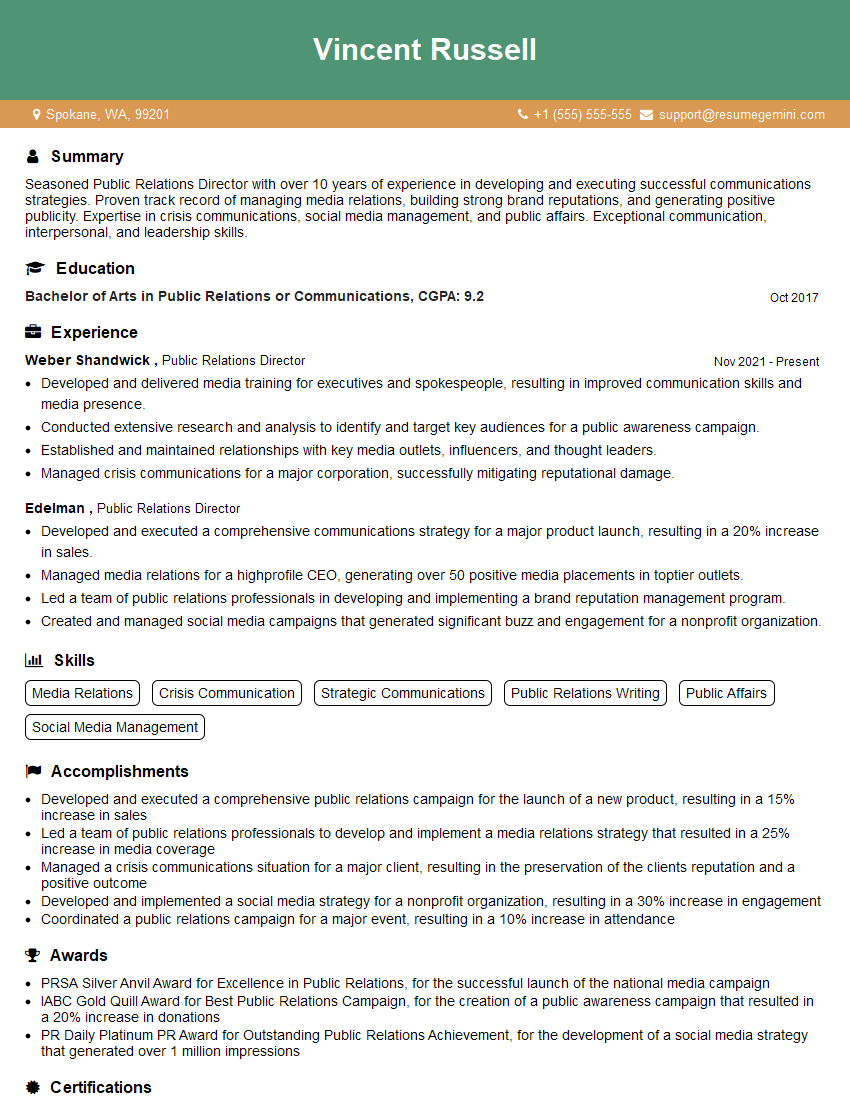
Public Relations Director Resume Sample
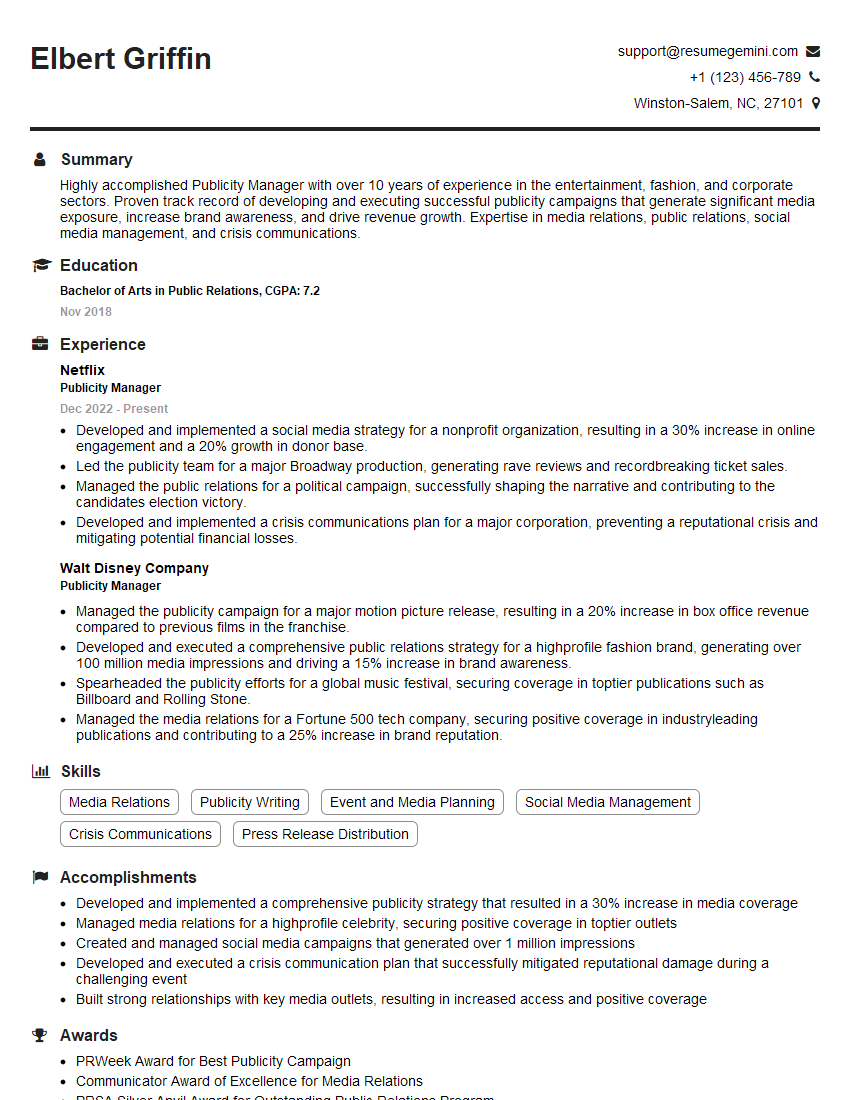
Publicity Manager Resume Sample
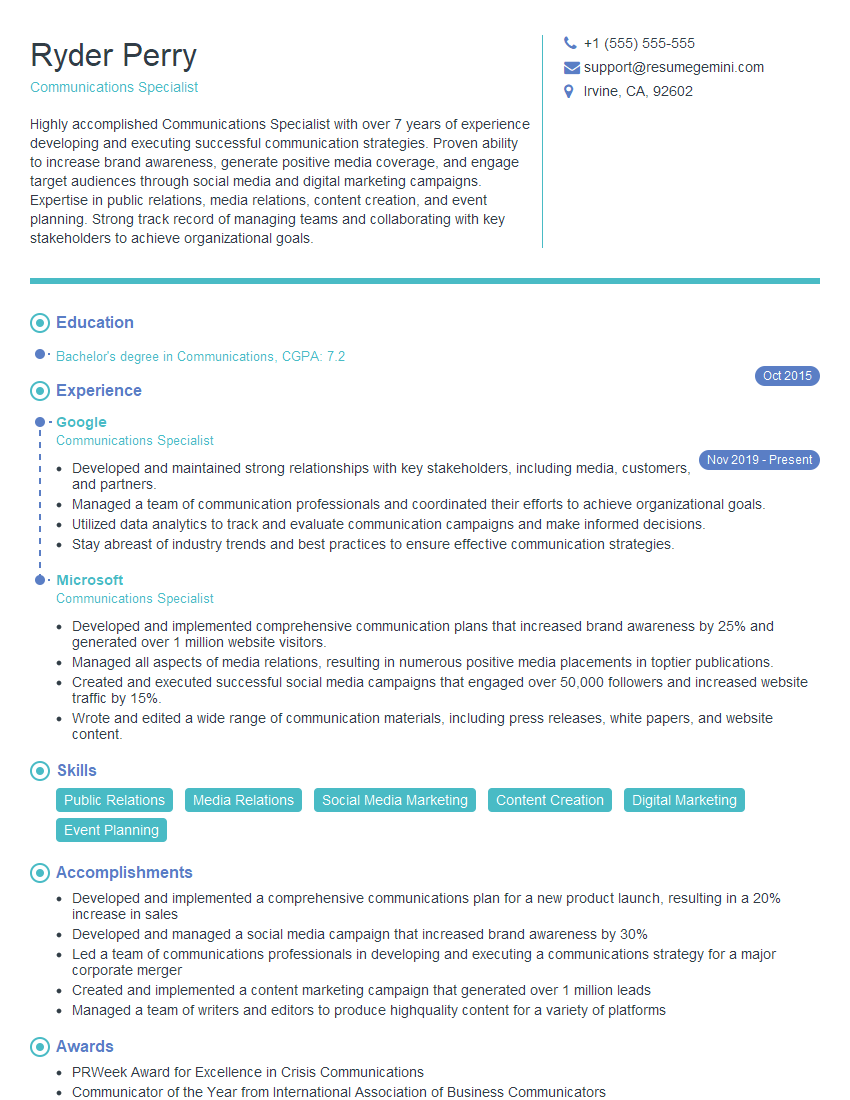
Communications Specialist Resume Sample

Communications Consultant Resume Sample
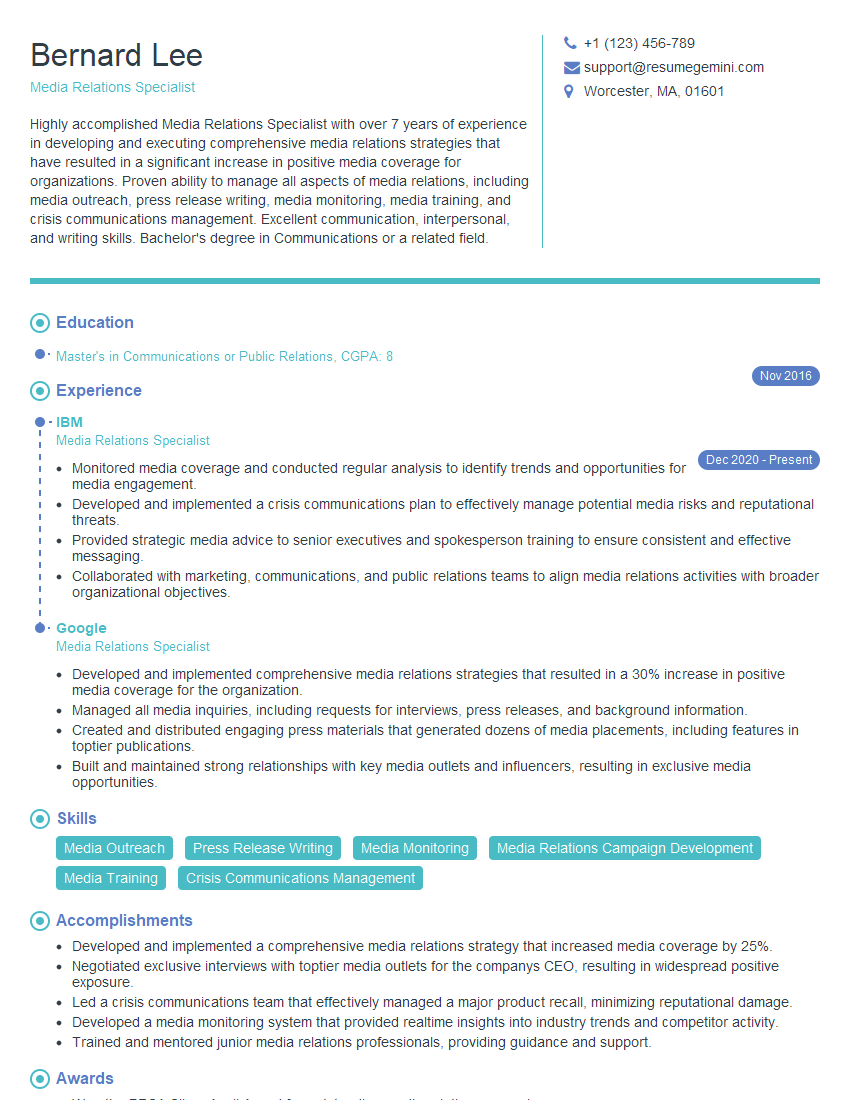
Media Relations Specialist Resume Sample
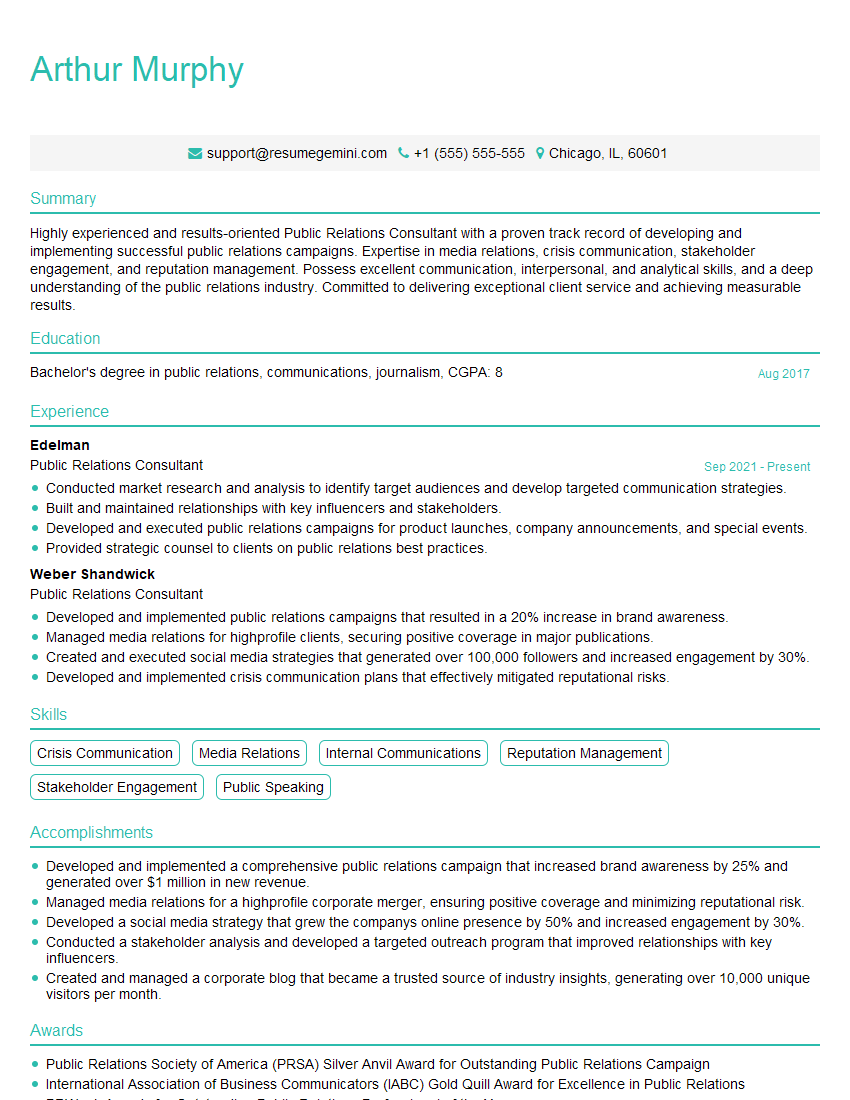
Public Relations Consultant Resume Sample
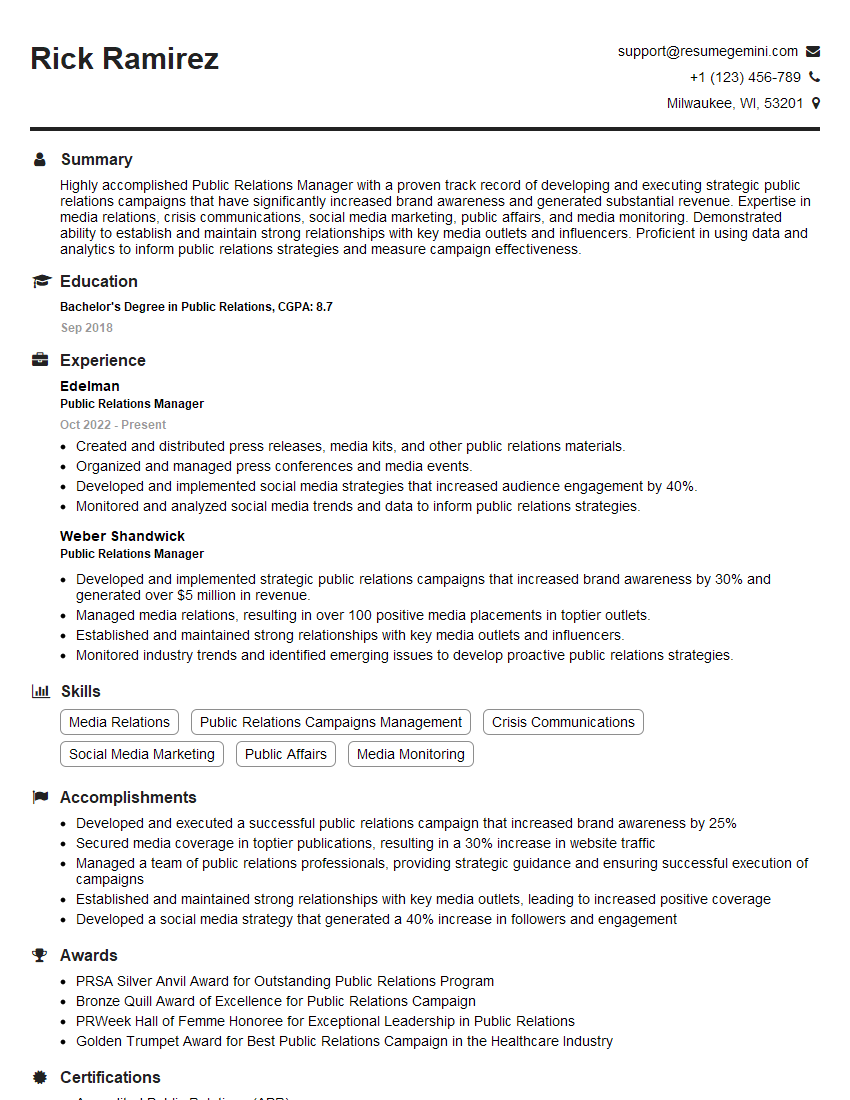
Public Relations Manager Resume Sample
Explore more articles
Users Rating of Our Blogs
Share Your Experience
We value your feedback! Please rate our content and share your thoughts (optional).
What Readers Say About Our Blog
Really detailed insights and content, thank you for writing this detailed article.
IT gave me an insight and words to use and be able to think of examples