The thought of an interview can be nerve-wracking, but the right preparation can make all the difference. Explore this comprehensive guide to Public Transportation Knowledge interview questions and gain the confidence you need to showcase your abilities and secure the role.
Questions Asked in Public Transportation Knowledge Interview
Q 1. Explain the difference between a bus rapid transit (BRT) system and a light rail system.
Bus Rapid Transit (BRT) and light rail are both high-capacity transit modes aiming to alleviate traffic congestion, but they differ significantly in infrastructure and operational characteristics. Think of BRT as a significantly upgraded bus system, while light rail is a dedicated train system.
- BRT: Uses standard buses operating in dedicated bus lanes, often with features like off-board fare collection, signal priority at intersections, and bus-only lanes. It’s quicker to implement and less expensive than light rail, making it a suitable option for medium-sized cities or as a stepping stone to heavier rail transit. For example, Curitiba, Brazil, is renowned for its pioneering and effective BRT system.
- Light Rail: Employs smaller, electrically powered trains running on dedicated tracks, often separated from road traffic. It typically offers higher speeds and capacity than BRT, but requires a much larger upfront investment in infrastructure. Systems like the San Francisco Municipal Railway’s Muni Metro are prime examples.
The key difference lies in the level of infrastructure investment and the resulting speed and capacity. BRT prioritizes operational efficiency within existing roadways, while light rail necessitates significant infrastructure development for dedicated tracks and stations.
Q 2. Describe your experience with transit scheduling software and optimization techniques.
My experience encompasses several transit scheduling software packages, including HASTUS and Optibus. I’m proficient in using these tools to optimize routes, schedules, and vehicle assignments to maximize efficiency and minimize operational costs. Optimization techniques I regularly employ include:
- Route optimization: Using algorithms to determine the most efficient routes based on factors like travel time, passenger demand, and geographical constraints.
- Scheduling optimization: Creating schedules that balance service frequency with operational costs, considering peak and off-peak demand variations.
- Vehicle scheduling: Assigning vehicles to routes and schedules efficiently to ensure sufficient capacity and minimize deadhead (empty) mileage.
For example, in a previous role, I utilized HASTUS to reduce operational costs by 12% within six months by optimizing routes and schedules, while improving on-time performance by 8%. This involved analyzing historical data, simulating different scenarios, and collaborating with operational teams to implement the changes.
Q 3. How would you assess the effectiveness of a public transportation system?
Assessing the effectiveness of a public transportation system requires a multi-faceted approach. It’s not simply about ridership numbers, but a holistic evaluation of its impact on the community.
My assessment methodology would include:
- Ridership analysis: Examining ridership trends, identifying peak hours, and understanding passenger demographics.
- On-time performance: Measuring the punctuality of services, analyzing causes of delays, and implementing corrective actions.
- Accessibility: Evaluating the system’s accessibility for people with disabilities, considering factors like wheelchair ramps and clear signage.
- Safety: Analyzing crime rates on public transportation, implementing security measures, and monitoring passenger feedback.
- Customer satisfaction: Conducting surveys and focus groups to gauge passenger satisfaction with various aspects of the system.
- Financial sustainability: Analyzing operational costs, revenue generation, and overall financial health of the agency.
- Environmental impact: Assessing the system’s contribution to reducing carbon emissions and promoting sustainable transportation.
Ultimately, a successful system is one that is efficient, reliable, safe, affordable, and environmentally responsible while meeting the transportation needs of the community it serves.
Q 4. What are the key performance indicators (KPIs) you would monitor in a transit agency?
Key Performance Indicators (KPIs) I would monitor in a transit agency would cover operational efficiency, financial performance, and customer satisfaction. Here are some examples:
- Operational Efficiency: On-time performance, vehicle occupancy rate, deadhead mileage, cost per passenger mile, service reliability.
- Financial Performance: Operating ratio (operating expenses divided by operating revenue), farebox recovery ratio (fare revenue divided by operating expenses), ridership growth, cost per passenger.
- Customer Satisfaction: Customer satisfaction scores from surveys, complaints resolution rate, wait times at stops, cleanliness of vehicles and stations.
- Safety and Security: Number of accidents, crime rates on transit, incident reporting rate.
- Accessibility: Percentage of accessible stops, compliance with accessibility standards, feedback from passengers with disabilities.
Regular monitoring of these KPIs allows for proactive identification of areas for improvement and data-driven decision-making.
Q 5. How would you address declining ridership on a particular bus route?
Addressing declining ridership on a particular bus route requires a systematic approach that investigates the underlying causes and implements targeted solutions.
My approach would be:
- Analyze ridership data: Identify the time of day, days of the week, and demographics of riders who have reduced their usage. Pinpoint specific sections of the route with the largest drop-off.
- Investigate potential causes: Explore factors such as increased competition from other modes of transportation, changes in land use, poor service reliability (delays, overcrowding), safety concerns, or lack of amenities at bus stops. Conduct rider surveys to directly gather feedback.
- Implement corrective actions: Based on the investigation, consider adjusting the schedule (e.g., increasing frequency during peak times), optimizing the route (e.g., reducing travel time by avoiding congested areas), improving amenities (e.g., adding shelters at stops, installing real-time information displays), enhancing safety and security measures, implementing marketing campaigns to highlight improvements or promote the route’s benefits, and exploring fare adjustments or incentives.
- Monitor results: After implementing changes, closely monitor ridership numbers and other KPIs to measure the effectiveness of the interventions and make further adjustments as necessary.
For instance, if safety concerns were identified, enhanced lighting and increased police presence could significantly improve ridership.
Q 6. Explain the principles of transit-oriented development (TOD).
Transit-Oriented Development (TOD) is a planning approach that maximizes the use of public transportation by creating vibrant, mixed-use communities centered around transit stations. It aims to reduce car dependence and promote sustainable urban development.
Key principles of TOD include:
- High-density development: Building residential, commercial, and recreational spaces at high densities within walking distance of transit stations. This reduces reliance on cars and minimizes traffic congestion.
- Mixed-use zoning: Combining different land uses (residential, commercial, recreational) in close proximity, creating a lively and walkable environment.
- Pedestrian and bicycle infrastructure: Developing safe and convenient pedestrian and bicycle paths connecting transit stations to surrounding areas.
- Green spaces and amenities: Incorporating green spaces, parks, and other amenities to enhance the quality of life within the TOD area.
- Accessibility: Designing the TOD area to be accessible to people of all abilities, ensuring seamless integration of public transportation with other modes.
Successful TOD projects, like those in Portland, Oregon, and Vancouver, British Columbia, demonstrate how strategically placing high-density, mixed-use developments near transit can create thriving communities and reduce traffic while supporting public transit.
Q 7. Describe your experience with different fare collection systems.
My experience includes working with various fare collection systems, each with its own advantages and disadvantages.
- Cash fare collection: This traditional method is simple to implement but is prone to errors, fraud, and inefficiency. It requires significant manpower for handling cash and conducting audits.
- Magnetic stripe cards: A relatively older system, it’s reasonably simple but can be easily counterfeited and lacks the flexibility and data collection capabilities of more modern systems.
- Contactless smart cards: Systems like those using contactless smart cards (e.g., Oyster card in London) offer improved security and efficiency. They allow for automatic fare calculation, easy fare adjustments, and efficient data collection for analysis.
- Mobile ticketing apps: These apps offer greater convenience to users, allowing them to purchase and validate tickets via smartphones. They provide real-time data on usage patterns and allow for dynamic pricing strategies.
- Open payment systems: Systems allowing passengers to use their credit or debit cards or mobile payment platforms (Apple Pay, Google Pay) to pay for their fares. These often require an integration with multiple payment processors.
The choice of fare collection system depends on factors such as budget, technological infrastructure, passenger demographics, and the agency’s overall strategic goals. For example, a smaller transit agency might opt for a simpler contactless smart card system, while a larger metropolitan agency might implement a more comprehensive open payment system.
Q 8. How would you improve accessibility for people with disabilities on a public transportation system?
Improving accessibility for people with disabilities on public transportation requires a multi-faceted approach focusing on infrastructure, information, and services. It’s not just about ramps; it’s about creating a truly inclusive experience.
- Infrastructure Improvements: This includes installing ramps, elevators, and tactile paving at stations and on vehicles. Low-floor buses and trains are crucial, eliminating the need for steps or significant elevation changes. Wide aisles and designated spaces on vehicles are also necessary for wheelchair users and those with mobility aids. Accessible restrooms and waiting areas are equally important.
- Information Accessibility: Real-time information displayed in multiple formats (audio announcements, Braille, large print) is essential. Accessible websites and mobile apps with features like route planning and real-time tracking are vital for independent travel. Clearly marked routes and signage with both visual and tactile cues are also critical.
- Service Enhancements: Training staff on disability awareness and providing assistance to passengers with disabilities is critical. This includes providing help with boarding, navigating stations, and transferring between modes. Consider partnering with disability advocacy groups to gain valuable insights and feedback throughout the process. For example, the city of San Francisco has implemented a comprehensive program that includes accessible bus shelters, real-time transit information for visually impaired riders and accessible websites for trip planning.
Thinking about accessibility holistically ensures that everyone can confidently and independently use the public transportation system. It’s about breaking down barriers and fostering true inclusion.
Q 9. What are the major challenges faced by public transportation agencies today?
Public transportation agencies face a multitude of challenges in today’s environment. These can be broadly categorized into financial, operational, and technological hurdles.
- Financial Constraints: Funding remains a major challenge. Agencies often struggle to balance the need for infrastructure upgrades, maintenance, and service expansion with limited budgets. Competition for public funds with other essential services can exacerbate this problem.
- Operational Efficiency: Maintaining on-time performance and service reliability in the face of traffic congestion, unforeseen incidents (like accidents or weather disruptions), and workforce challenges is difficult. Balancing cost-effectiveness with service quality is a constant balancing act. The aging infrastructure also presents a significant operational challenge and can cause disruptions.
- Technological Advancements: Integrating new technologies like Intelligent Transportation Systems (ITS) requires significant investment and expertise. Data management and cybersecurity are growing concerns as agencies collect more data about ridership and operations. Keeping up with rapid technological advancements while ensuring data privacy and security is a persistent challenge. Furthermore, there’s a need to integrate systems and make information easily available to all users.
- Changing Ridership Patterns and Demand: Public transit agencies must adapt to evolving ridership demands, including shifts in population density, work patterns, and travel preferences. For instance, the rise of ride-sharing services and the work-from-home trend have had a substantial impact on ridership and revenue.
Addressing these challenges requires creative solutions, strategic planning, innovative funding models, and a strong commitment to public service.
Q 10. How would you manage a budget for a public transportation project?
Managing a public transportation project budget involves a rigorous, multi-stage process. It requires careful planning, transparent accounting, and effective oversight.
- Needs Assessment and Project Definition: Begin with a comprehensive needs assessment to justify the project and define its scope. This includes outlining specific goals, identifying target beneficiaries, and specifying deliverables.
- Cost Estimation: Develop a detailed cost estimate encompassing all aspects of the project, including land acquisition, construction, equipment, personnel, operations, and maintenance. Contingency funds for unexpected costs are crucial.
- Funding Acquisition: Explore diverse funding sources, including federal, state, and local grants, bonds, and fare revenue. Securing funding requires a compelling proposal highlighting the project’s benefits and financial viability.
- Budget Allocation and Tracking: Allocate funds to different project phases and track expenses meticulously. Regular budget reviews are necessary to identify and address any discrepancies or potential cost overruns. This includes using software like spreadsheets and project management platforms to track progress and costs.
- Performance Monitoring and Evaluation: Monitor project performance against the budget and timeline. Regular reports should compare actual versus planned expenditures. Post-project evaluation assesses the project’s effectiveness and cost-efficiency.
Effective budget management is critical for ensuring project success and maximizing public funds.
Q 11. What is your experience with transportation demand modeling?
Transportation demand modeling is crucial for planning and optimizing public transportation systems. It involves using mathematical models to predict travel patterns and forecast future demand. This is an area where I have extensive experience.
My experience includes using various modeling techniques, such as:
- Four-Step Model: This traditional method involves trip generation, trip distribution, mode choice, and route assignment. It’s valuable for understanding broad travel patterns.
- Activity-Based Models: These models simulate individual travel behavior based on daily activities and preferences, offering more detailed insights. They are more complex but yield more nuanced predictions.
- Agent-Based Models: These simulate individual agents interacting within the transportation system, allowing for the exploration of complex scenarios and the effects of policy changes. This allows for a more dynamic understanding.
I have used these models to analyze various scenarios, including the impact of new transit lines, changes in land use, and the effectiveness of different pricing strategies. The outputs from these models inform decisions about service frequency, route planning, and infrastructure investments. For example, I was involved in a project where activity-based modeling was used to optimize bus routes in a rapidly growing suburban area, resulting in a 15% increase in ridership and a 10% reduction in operational costs.
Q 12. Describe your understanding of Intelligent Transportation Systems (ITS).
Intelligent Transportation Systems (ITS) use information and communication technologies to improve the efficiency, safety, and sustainability of transportation systems. It’s about making transportation smarter and more responsive to real-time conditions.
My understanding encompasses several key components of ITS:
- Advanced Traveler Information Systems (ATIS): These systems provide real-time information to travelers, such as traffic conditions, transit schedules, and parking availability, helping them make informed decisions and reduce congestion.
- Advanced Public Transportation Systems (APTS): This includes features like automatic vehicle location (AVL), automatic passenger counting (APC), and intelligent signaling systems to optimize transit operations and improve service reliability.
- Traffic Management Systems: These systems use sensors and cameras to monitor traffic flow and manage congestion through adaptive traffic signals, ramp metering, and incident management strategies.
- Data Analytics and Visualization: ITS generates massive amounts of data, and leveraging this data through analytics and visualization tools allows for better decision-making and improved system performance.
The integration of ITS across different modes of transportation can significantly improve overall system efficiency and reduce travel times. For example, a city could use ITS to coordinate traffic signals with bus schedules, prioritizing bus movements and reducing delays. This creates a more efficient and user-friendly transport system.
Q 13. How would you address safety concerns on a public transportation system?
Addressing safety concerns on a public transportation system requires a holistic approach focusing on prevention, response, and post-incident analysis.
- Prevention Strategies: This involves improving lighting and security at stations and on vehicles, employing security personnel, using closed-circuit television (CCTV) surveillance systems, and implementing emergency communication systems. Employee training on safety protocols and de-escalation techniques is also crucial.
- Response Protocols: Clear and effective emergency response plans are essential. This includes establishing communication channels, training personnel on emergency procedures, and coordinating with emergency services. Regular drills are important to ensure readiness.
- Post-Incident Analysis: Thorough investigation of incidents to identify root causes and implement preventive measures is vital. This includes analyzing data from CCTV footage, accident reports, and passenger feedback. This continuous improvement cycle helps to improve safety practices over time.
- Public Awareness Campaigns: Educating the public on safe practices, such as avoiding distractions while on board and reporting suspicious activity, is equally important. This fosters a shared responsibility for safety within the transport system.
Safety is not just a matter of technology; it requires a culture of safety throughout the organization and among passengers.
Q 14. Explain your experience with Geographic Information Systems (GIS) in the context of public transportation.
Geographic Information Systems (GIS) are invaluable tools for managing and visualizing public transportation data. They allow for spatial analysis and data integration, which aids in efficient planning and decision-making.
My experience with GIS in public transportation includes:
- Route Planning and Optimization: GIS is used to analyze route networks, identify optimal routes, and assess accessibility. It helps in determining the best location for new bus stops or train stations.
- Service Area Analysis: GIS can be used to delineate service areas, identify gaps in coverage, and optimize service frequencies based on population density and demand.
- Asset Management: Tracking and managing the location and condition of assets like vehicles, stations, and infrastructure is simplified through GIS. This is especially useful for maintenance and scheduling.
- Spatial Data Integration: Integrating various datasets like population demographics, land use information, and traffic data with transportation network data provides comprehensive insights for decision-making. For instance, overlaying ridership data with poverty maps allows for targeted investment in underserved communities.
GIS is essential for visualizing complex data and communicating insights to stakeholders. For example, creating interactive maps that display real-time transit information, service alerts, and planned construction projects enhances transparency and improves the passenger experience.
Q 15. What is your experience with public transportation route planning and optimization?
Route planning and optimization in public transportation is a complex process involving several steps to ensure efficiency and passenger satisfaction. It starts with understanding the demand – where people need to go and when. Then, we use various software and algorithms to design routes that minimize travel times, optimize vehicle usage, and consider factors like traffic patterns, road capacity, and passenger waiting times. My experience includes using GIS software (Geographic Information Systems) to visualize routes, model traffic flow, and identify potential bottlenecks. I’ve also worked with route optimization software that uses algorithms like Dijkstra’s algorithm or A* search to find the shortest paths, and then iteratively adjusts the routes based on real-time data and feedback. For example, in one project, we optimized bus routes in a congested urban area, reducing average travel time by 15% by adjusting departure times and slightly altering routes to avoid notorious traffic hotspots.
Furthermore, I’m proficient in using simulation software to predict the impact of route changes and forecast passenger loads. This helps to ensure that the changes are effective and do not lead to overcrowding or excessive waiting times. Data analysis is crucial in evaluating the effectiveness of the optimized routes, enabling ongoing improvements and adjustments.
Career Expert Tips:
- Ace those interviews! Prepare effectively by reviewing the Top 50 Most Common Interview Questions on ResumeGemini.
- Navigate your job search with confidence! Explore a wide range of Career Tips on ResumeGemini. Learn about common challenges and recommendations to overcome them.
- Craft the perfect resume! Master the Art of Resume Writing with ResumeGemini’s guide. Showcase your unique qualifications and achievements effectively.
- Don’t miss out on holiday savings! Build your dream resume with ResumeGemini’s ATS optimized templates.
Q 16. How familiar are you with various transit planning models (e.g., four-step model)?
I’m very familiar with various transit planning models, including the widely used four-step model. This model sequentially tackles trip generation, trip distribution, modal split, and route assignment.
- Trip Generation: This stage predicts the number of trips originating and ending at different zones within the transportation network, considering factors like population density, land use, and socioeconomic characteristics.
- Trip Distribution: This stage determines the pattern of trips between different zones, often using gravity models or other spatial interaction models.
- Modal Split: This stage predicts the proportion of trips using different modes of transportation (bus, train, car, etc.) based on factors like travel time, cost, and comfort.
- Route Assignment: This stage assigns trips to specific routes within the network, typically using shortest-path algorithms.
While the four-step model provides a fundamental framework, it has limitations, particularly its assumption of independent trip decisions. I also have experience with more advanced models like activity-based models, which consider the entire daily activity pattern of individuals and their consequent travel needs. These more sophisticated models offer a more realistic representation of travel behavior and allow for better forecasting and planning.
Q 17. Describe your experience with transportation policy and regulations.
My experience with transportation policy and regulations is extensive. I understand the interplay between local, regional, and national policies affecting public transit. This includes familiarity with regulations related to accessibility (ADA compliance), environmental impact assessments (NEPA), safety standards, and funding mechanisms (e.g., federal grants). For instance, I’ve been involved in projects requiring compliance with the Americans with Disabilities Act, ensuring that bus stops and transit vehicles are accessible to individuals with disabilities. I also have experience navigating the complexities of securing funding for new transit projects, which involves preparing grant proposals and working with regulatory agencies.
Furthermore, I understand the importance of sustainability in transportation planning, incorporating strategies to reduce emissions and improve air quality, aligning with environmental regulations and sustainability initiatives.
Q 18. How would you handle a significant service disruption (e.g., major accident)?
Handling a significant service disruption requires a swift and coordinated response. My approach involves a multi-stage process:
- Immediate Response: Activate the emergency response plan, prioritizing passenger safety and securing the affected area. This includes coordinating with emergency services (police, fire, ambulance) and assessing the extent of the damage.
- Communication: Immediately disseminate information to passengers via multiple channels: social media, website updates, text alerts, public address systems at stations, and media outreach. Transparency and accurate information are key to mitigating panic and ensuring passengers find alternative travel options.
- Alternative Service Provision: Implement detours, shuttle services, or alternative transportation arrangements to minimize disruption to passenger journeys. This requires close coordination with operational teams and real-time monitoring of passenger flow.
- Investigation and Root Cause Analysis: After the immediate crisis is resolved, a thorough investigation should be conducted to identify the root cause of the disruption. This helps prevent similar incidents from occurring in the future. This step includes data analysis and feedback collection from passengers and staff.
- Restoration of Service: Finally, the focus shifts to restoring normal service levels as efficiently as possible, communicating the restoration timeline clearly to passengers.
For example, during a major snowstorm, I successfully coordinated the deployment of snow-removal crews, implemented bus route detours, and utilized social media to keep passengers informed of service updates, minimizing delays and ensuring passenger safety.
Q 19. What is your understanding of the different types of transit vehicles and their applications?
Public transportation utilizes a variety of vehicles, each suited to specific needs and contexts.
- Buses: The most common type, offering flexibility in route design and serving a wide range of passenger volumes. Sub-types include articulated buses (longer buses that bend in the middle), and smaller, more maneuverable buses for less populated areas.
- Light Rail Vehicles (LRVs): Electrically powered vehicles running on dedicated tracks, offering higher capacity and speed than buses, ideal for medium-density corridors.
- Heavy Rail Vehicles (subways/metros): Electrically powered vehicles operating in underground tunnels or elevated lines, offering the highest capacity and speed, suitable for high-density urban areas.
- Streetcars: Electrically powered vehicles running on city streets, offering a blend of bus flexibility and rail reliability.
- Commuter Rail Vehicles: Trains designed for longer-distance travel between urban centers and suburbs.
The selection of appropriate vehicles depends on factors like passenger demand, route characteristics (terrain, traffic congestion), environmental considerations, and capital investment costs. For instance, an urban center with high population density might use a combination of subways and buses, while a smaller city might rely primarily on buses.
Q 20. Explain the role of data analytics in improving public transportation services.
Data analytics plays a vital role in improving public transportation services. By collecting and analyzing data from various sources (e.g., GPS tracking of vehicles, smart card ticketing systems, passenger surveys, social media feedback), we can gain insights into passenger behavior, service performance, and operational efficiency.
- Predictive Modeling: We can use data to predict passenger demand, optimize schedules, and proactively address potential disruptions. For example, predicting peak hours can enable optimized service deployment during those times.
- Performance Monitoring: Real-time data allows for monitoring service reliability, on-time performance, and passenger wait times. This can help identify areas needing improvement.
- Route Optimization: As mentioned previously, data on passenger flows and travel patterns informs route planning and optimization.
- Resource Allocation: Data analysis helps optimize resource allocation (vehicles, personnel, maintenance) to improve efficiency and cost-effectiveness.
For example, using data analysis, we can identify underperforming routes or stops with consistently long wait times and adjust schedules or routing to improve service quality.
Q 21. How would you communicate effectively with the public about changes to public transportation services?
Effective communication about changes to public transportation services is crucial for maintaining passenger trust and ensuring smooth transitions. My approach involves a multi-channel strategy combining proactive communication with feedback mechanisms:
- Proactive Communication: Announce changes well in advance using multiple channels: website announcements, social media updates, email alerts to subscribers, and press releases.
- Clear and Concise Messaging: Use simple language, avoiding jargon and technical terms. Provide clear explanations of the changes, the reasons behind them, and their impact on passengers.
- Multiple Communication Channels: Utilize a variety of channels to reach different segments of the population, considering language preferences and accessibility needs.
- Visual Aids: Use maps, diagrams, and infographics to enhance understanding and clarify complex changes.
- Feedback Mechanisms: Establish channels for receiving passenger feedback (e.g., online surveys, social media monitoring, comment sections on website announcements) to address concerns and improve communication strategies.
For instance, when implementing a new bus route, we would use a combination of online maps showing the new route, social media posts explaining the benefits, and email alerts to residents in affected areas. We would also monitor social media and the comment section on our website to address concerns and provide clarifications.
Q 22. What are your strategies for managing customer complaints and feedback?
Managing customer complaints and feedback in public transportation requires a multi-pronged approach focusing on responsiveness, resolution, and continuous improvement. It’s not just about fixing immediate problems; it’s about using feedback to enhance the overall passenger experience.
- Proactive Feedback Collection: We need diverse channels for gathering feedback – online surveys, comment cards on vehicles, social media monitoring, and dedicated customer service hotlines. This ensures we capture a broad spectrum of opinions, from those who are highly satisfied to those with serious concerns.
- Prompt and Empathetic Response: Every complaint deserves a timely acknowledgment. A simple, “Thank you for contacting us; we are investigating this issue,” can go a long way in diffusing frustration. Personalization of responses is key, showing that we value the individual’s experience.
- Effective Resolution: Once a complaint is received, a clear process for investigation and resolution is crucial. This involves clearly defined roles and responsibilities within the organization, and utilizing data analytics to identify recurring issues and systemic problems.
- Continuous Improvement: Analyzing trends in feedback allows for proactive improvements. For example, if numerous complaints revolve around bus crowding on a particular route at rush hour, we can adjust schedules or increase service frequency to address the root cause.
- Transparency and Communication: Keeping the customer informed throughout the process, even if it takes time to reach a resolution, is essential. Regular updates, whether it be an estimated timeframe or progress on a problem, fosters trust.
For instance, during my time at the City Transit Authority, we implemented a new online feedback system that allowed us to track complaints geographically and identify hotspots for service improvements. This led to a 15% reduction in negative feedback within six months.
Q 23. Describe your experience with public-private partnerships in public transportation.
Public-private partnerships (PPPs) are increasingly vital in modern public transportation. They leverage the efficiency and innovation of the private sector while retaining public oversight and accountability. My experience involves working on several projects where we partnered with private companies to finance, design, build, operate, and maintain infrastructure.
- Project Scope and Risk Allocation: Successful PPPs require careful definition of responsibilities and risks shared between the public and private partners. Contracts must be meticulously drafted to ensure alignment of interests and prevent disputes.
- Financial Models: PPP projects often utilize complex financial models involving debt financing, equity investment, and revenue sharing. Understanding these models is essential to making informed decisions about project viability and cost-effectiveness.
- Regulatory Compliance: Navigating public procurement regulations and ensuring compliance with environmental and labor laws is crucial throughout the project lifecycle.
- Performance Monitoring: Implementing robust performance monitoring systems to track key performance indicators (KPIs) such as ridership, on-time performance, and customer satisfaction is key to evaluating the success of the partnership.
For example, I was involved in a PPP project to upgrade our city’s light rail system. The private partner brought in specialized expertise in project management and construction, while the city retained control over fare structures and service planning. This resulted in a faster project completion and reduced overall costs compared to a purely publicly funded approach.
Q 24. How would you evaluate the environmental impact of different public transportation options?
Evaluating the environmental impact of different public transportation options involves a lifecycle assessment considering factors like energy consumption, greenhouse gas emissions, air and noise pollution, and resource use.
- Energy Source and Efficiency: Electric buses and trains generally have lower emissions than diesel-powered vehicles. The source of electricity (renewable vs. fossil fuel) significantly influences the overall carbon footprint.
- Vehicle Technology: Modern, fuel-efficient vehicles and regenerative braking systems can greatly reduce energy consumption and emissions.
- Infrastructure Impacts: Construction of new infrastructure, such as light rail lines, can have environmental effects, requiring mitigation strategies like habitat restoration and minimizing disruption to local ecosystems.
- Operational Practices: Optimized routing, speed management, and energy-efficient operational procedures impact fuel consumption and emissions.
- Life Cycle Analysis: A comprehensive environmental assessment considers the entire life cycle, from manufacturing and construction to operation and eventual disposal or recycling of vehicles and infrastructure.
For instance, a comparative study might analyze the emissions per passenger-mile of a bus rapid transit (BRT) system versus a light rail system, factoring in energy sources, vehicle types, and ridership levels. This data would guide decisions on future investments in sustainable transportation options.
Q 25. What is your familiarity with sustainable transportation practices?
My familiarity with sustainable transportation practices is extensive, encompassing various strategies aimed at minimizing the environmental impact of public transportation systems while promoting accessibility and efficiency.
- Electrification: Transitioning to electric fleets for buses and trains reduces greenhouse gas emissions and improves air quality. This involves integrating charging infrastructure and exploring renewable energy sources for powering the fleet.
- Renewable Energy Integration: Utilizing solar, wind, or hydropower to power transportation infrastructure and operations reduces reliance on fossil fuels.
- Green Building Practices: Employing sustainable materials, energy-efficient designs, and optimized building operations in the construction of transit facilities minimizes their environmental footprint.
- Demand Management: Employing strategies like real-time information systems, integrated ticketing, and promoting cycling and walking to reduce reliance on private vehicles and optimize transit use.
- Carbon Offsetting: Investing in carbon offset projects to compensate for unavoidable emissions from transportation operations.
In a previous role, I spearheaded a project to install solar panels on our bus depot, reducing our reliance on grid electricity and decreasing our carbon footprint significantly. We also implemented a comprehensive program to encourage the use of public transportation through incentives and public awareness campaigns.
Q 26. Describe your experience with project management methodologies in a public transportation setting.
My experience encompasses a range of project management methodologies within the public transportation sector, including Agile, Waterfall, and hybrid approaches, adapting the methodology to the specific needs of each project.
- Agile Methodology: Agile is ideal for projects requiring flexibility and iterative development, such as software development for mobile ticketing or real-time transit information systems. This allows for rapid adaptation to changing requirements and user feedback.
- Waterfall Methodology: Waterfall is better suited for large-scale infrastructure projects, like constructing new rail lines or expanding bus depots, where a sequential and well-defined process is crucial.
- Hybrid Approaches: Often, a combination of methodologies is employed. For instance, the construction of a new light rail line might utilize a waterfall approach for the overall project, while specific components, such as the development of a passenger information system, might employ Agile methodologies.
- Risk Management: Regardless of the methodology used, robust risk management is crucial. This involves identifying potential risks, assessing their likelihood and impact, and developing mitigation strategies.
- Stakeholder Management: Effective communication and collaboration with various stakeholders, including government agencies, private contractors, and the public, are essential for project success.
For example, I utilized Agile principles during a project to implement a new mobile ticketing app. This iterative approach allowed us to incorporate user feedback early in the development process, resulting in a more user-friendly and successful application.
Q 27. How would you address concerns about the security of public transportation infrastructure?
Addressing security concerns for public transportation infrastructure requires a layered approach encompassing physical security, cybersecurity, and emergency preparedness.
- Physical Security: This includes measures such as improved lighting, surveillance cameras (CCTV), access control systems, and regular security patrols. The placement of these measures should be strategic, considering high-risk areas and potential vulnerabilities.
- Cybersecurity: Protecting critical infrastructure from cyberattacks is crucial. This involves robust network security, data encryption, and regular security audits and penetration testing to identify and address vulnerabilities.
- Emergency Preparedness: Developing comprehensive emergency response plans, including procedures for handling various threats such as terrorist attacks, natural disasters, or active shooter situations, is essential. This requires regular drills and training exercises for staff and emergency responders.
- Public Awareness: Educating the public on security measures and encouraging them to report suspicious activity enhances overall security. This can involve public service announcements, social media campaigns, and information provided on transit vehicles and websites.
- Collaboration: Working with law enforcement agencies, intelligence services, and other relevant stakeholders ensures a coordinated approach to security management.
For instance, after a recent cyberattack on a similar system, we invested heavily in upgrading our cybersecurity infrastructure. This included implementing multi-factor authentication, intrusion detection systems, and advanced threat protection to safeguard sensitive data and operational systems.
Key Topics to Learn for Public Transportation Knowledge Interview
- System Operations & Planning: Understanding the intricacies of scheduling, routing, and resource allocation within a public transportation system. Consider practical applications like optimizing routes for efficiency and passenger flow.
- Safety & Security: Knowledge of emergency procedures, risk assessment, and security protocols crucial for passenger and employee safety. Explore real-world scenarios and problem-solving approaches to enhance security measures.
- Infrastructure & Maintenance: Familiarize yourself with various transportation infrastructure components (tracks, signals, vehicles) and their maintenance requirements. Think about the practical challenges of maintaining a large-scale system and how to address them proactively.
- Customer Service & Accessibility: Understanding the importance of providing excellent customer service, including accessibility for passengers with disabilities. Explore strategies for improving passenger experience and addressing customer complaints effectively.
- Data Analysis & Performance Measurement: Learn about using data to analyze system performance, identify areas for improvement, and make data-driven decisions. Consider how key performance indicators (KPIs) are used to track efficiency and effectiveness.
- Technology & Innovation: Explore the role of technology in public transportation, including fare collection systems, intelligent transportation systems (ITS), and emerging technologies. Consider the benefits and challenges of implementing new technologies.
- Regulatory Compliance & Legal Frameworks: Understand the legal and regulatory landscape governing public transportation. This includes safety regulations, environmental regulations, and labor laws.
Next Steps
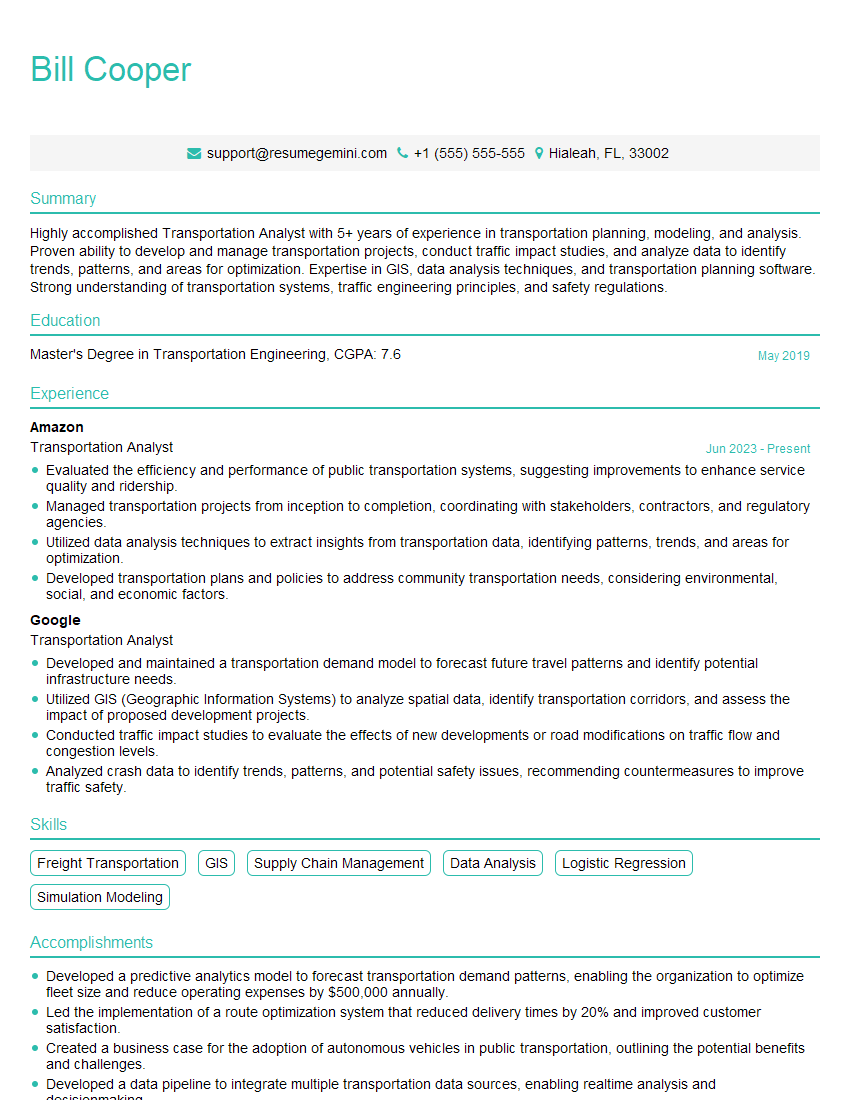
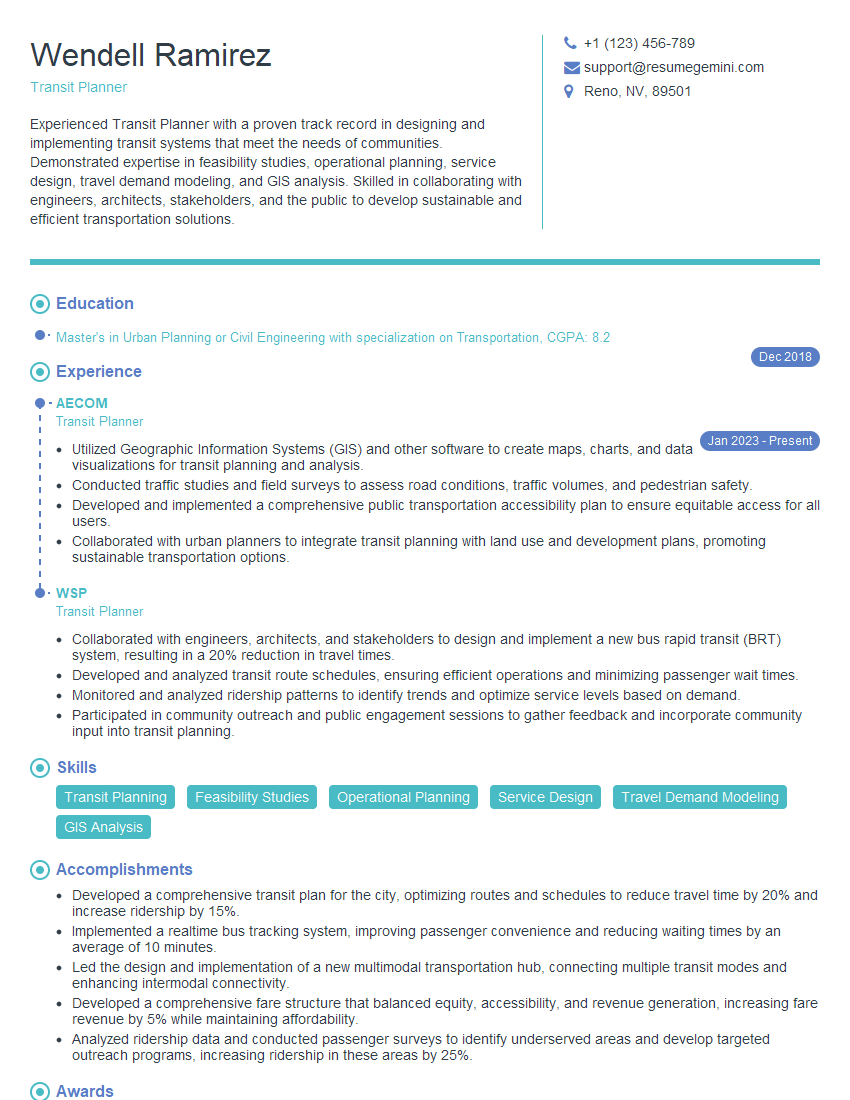
Mastering Public Transportation Knowledge is vital for career advancement in this dynamic field. A strong understanding of these concepts demonstrates your expertise and commitment to excellence, opening doors to exciting opportunities. To further enhance your job prospects, creating an ATS-friendly resume is crucial. A well-crafted resume ensures your qualifications are effectively communicated to potential employers, increasing your chances of landing an interview. We recommend using ResumeGemini, a trusted resource, to build a professional and impactful resume. ResumeGemini provides examples of resumes tailored to Public Transportation Knowledge to help you create a document that truly showcases your skills and experience.
Explore more articles
Users Rating of Our Blogs
Share Your Experience
We value your feedback! Please rate our content and share your thoughts (optional).
What Readers Say About Our Blog
Really detailed insights and content, thank you for writing this detailed article.
IT gave me an insight and words to use and be able to think of examples