The right preparation can turn an interview into an opportunity to showcase your expertise. This guide to Pulp and Paper Industry Knowledge interview questions is your ultimate resource, providing key insights and tips to help you ace your responses and stand out as a top candidate.
Questions Asked in Pulp and Paper Industry Knowledge Interview
Q 1. Explain the Kraft pulping process.
The Kraft pulping process, also known as the sulfate process, is the dominant method for producing pulp from wood. It’s a chemical process that uses a mixture of sodium hydroxide (NaOH) and sodium sulfide (Na2S) – the ‘white liquor’ – to break down the lignin that binds wood fibers together. This process is effective because it separates the fibers efficiently, resulting in strong, high-quality pulp.
Here’s a breakdown of the process:
- Wood Preparation: Wood chips are prepared by debarking and chipping the logs.
- Digestion: The wood chips are cooked in a digester under high pressure (typically 3-4 MPa) and temperature (160-175°C) with the white liquor. This breaks down the lignin, leaving behind cellulose fibers.
- Washing: The cooked pulp is washed to remove the spent liquor, known as ‘black liquor’. This liquor contains dissolved lignin and other chemicals.
- Screening and Cleaning: The pulp is screened to remove uncooked wood chips and other large debris. It’s then cleaned to remove smaller contaminants.
- Bleaching (Optional): To achieve a brighter pulp, a bleaching stage is often included. This typically uses various chemicals like oxygen, hydrogen peroxide, chlorine dioxide, etc.
Think of it like cooking a stew; the white liquor is your cooking liquid, breaking down the tough components of the wood (lignin), leaving the tender fibers (cellulose) ready for the next steps. The Kraft process is valued for its strength and the ability to recover chemicals used in the process, making it environmentally friendlier compared to other pulping methods.
Q 2. Describe the different types of papermaking machines.
Papermaking machines are complex systems that transform pulp into paper. There are primarily two main types:
- Fourdrinier Machines: These are the most common type, using a long wire mesh moving over a table to form the paper sheet. The pulp is distributed onto the wire mesh, and water is removed through drainage. Think of it like slowly draining pasta in a colander – the water drains leaving the pasta (fibers) behind.
- Cylinder Machines: These use a series of rotating cylinders covered with wire mesh to form the paper sheet. Each cylinder forms a layer, which are then pressed together. This method is often used for thicker or multi-layered papers like cardboard.
Variations within these types exist based on factors such as speed, size, and specific features. For instance, some machines incorporate advanced technologies such as press sections optimized for water removal, improved calendering for surface smoothness, or energy-efficient designs. The choice of machine depends on the paper grade and production capacity needed.
Q 3. What are the key quality parameters for paper production?
The key quality parameters for paper production ensure the final product meets specific requirements for its intended use. These parameters include:
- Basis Weight: The weight of paper per unit area (grams per square meter, gsm). This impacts the paper’s stiffness and opacity.
- Brightness: A measure of how much light the paper reflects. Higher brightness means whiter paper.
- Opacity: The ability of the paper to prevent light from passing through, crucial for printing and writing.
- Tensile Strength: The resistance of the paper to tearing or stretching. Important for durability.
- Burst Strength: The paper’s resistance to rupture when pressure is applied. This affects its ability to withstand handling and packaging.
- Smoothness: The smoothness of the paper’s surface, influencing printing quality and feel.
- Porosity: The ability of the paper to absorb liquids, important for certain applications like printing and tissue.
Monitoring these parameters throughout the production process is vital to maintaining consistent quality and meeting customer specifications. Inconsistencies can lead to defects, waste, and ultimately, dissatisfied customers.
Q 4. How do you control the consistency of pulp in a paper mill?
Controlling pulp consistency is crucial for uniform paper sheet formation and quality. It’s usually expressed as a percentage of solids in the pulp slurry. Inconsistent consistency leads to variations in paper properties across the sheet.
Several methods are used to maintain consistency:
- Dilution Control: Precisely adding water to adjust the consistency.
- Consistency Regulators: Sensors continuously monitor and automatically adjust the consistency by adding or removing water.
- Pulp Blending Systems: Ensure uniform mixing of pulp from different sources.
- Regular Monitoring and Calibration: Regular checks of the consistency sensors and adjustments to maintain accuracy.
Imagine trying to bake a cake with unevenly mixed ingredients; the result wouldn’t be uniform. Similarly, inconsistent pulp leads to uneven paper thickness, variations in strength, and other quality issues. Strict control is essential for a high-quality final product.
Q 5. Explain the role of a recovery boiler in a pulp mill.
The recovery boiler is a crucial component in a Kraft pulp mill, responsible for recovering chemicals and generating energy. It’s a large, complex boiler that burns the black liquor (the spent cooking liquor from the pulping process). This process serves two vital purposes:
- Chemical Recovery: The black liquor contains valuable chemicals, such as sodium hydroxide and sodium sulfide, that were used in the pulping process. Burning the black liquor recovers these chemicals in the form of smelt (sodium carbonate and sodium sulfide), which is then causticized (treated with lime) to regenerate the white liquor for reuse in the pulping process. This closed-loop system minimizes chemical consumption and reduces the environmental impact.
- Energy Generation: The burning of the black liquor generates a significant amount of steam and electricity, providing a substantial portion of the energy needs for the entire mill. This steam is used to drive turbines and provide power for various processes within the mill. This process creates energy from waste, significantly reducing operational costs.
Essentially, the recovery boiler is the heart of the Kraft mill’s sustainability and economic viability. It turns what would otherwise be waste into a valuable resource.
Q 6. Describe different types of paper grades and their applications.
Paper grades are categorized based on their properties and intended applications. Some common types include:
- Printing and Writing Papers: These include offset papers, coated papers, and bond papers. They vary in brightness, smoothness, and opacity depending on the printing method and desired quality.
- Packaging Papers: This broad category includes corrugated board (used for boxes), linerboard (the outer layer of corrugated board), and kraft paper (for bags and wrapping). Strength, durability, and printability are key qualities.
- Tissue Papers: Soft, absorbent papers used in applications like toilet paper, facial tissue, and paper towels. Softness, absorbency, and strength are crucial considerations.
- Speciality Papers: This category includes papers designed for specific purposes like filter paper, photographic paper, or currency paper. Their properties are tailored to their function.
For example, a high-quality magazine would require a coated printing paper with high brightness and smoothness for excellent image reproduction, while a grocery bag needs a strong and durable kraft paper. The selection of paper grade is determined by the final product’s required performance characteristics.
Q 7. What are the environmental concerns associated with pulp and paper production?
The pulp and paper industry faces several environmental concerns, primarily related to:
- Deforestation: The use of wood as a raw material can lead to deforestation, habitat loss, and biodiversity reduction if not managed sustainably.
- Water Pollution: Wastewater from pulp mills can contain pollutants like organic matter, chlorinated compounds, and heavy metals, if proper treatment isn’t implemented. Strict regulations and advanced wastewater treatment plants are crucial to mitigate this.
- Air Pollution: The burning of fossil fuels for energy and the release of volatile organic compounds during pulping and bleaching can contribute to air pollution. Improving energy efficiency and adopting cleaner technologies are essential.
- Greenhouse Gas Emissions: The industry contributes to greenhouse gas emissions through energy consumption and the decomposition of organic matter in landfills. Sustainable forest management, improved energy efficiency, and carbon capture technologies are being implemented to reduce emissions.
The industry is actively working to minimize its environmental impact through sustainable forestry practices, improved process technologies, cleaner production methods, and stricter environmental regulations. Certification schemes like FSC (Forest Stewardship Council) promote responsible forest management and responsible sourcing of wood fibers.
Q 8. How is wastewater treated in a pulp and paper mill?
Wastewater treatment in a pulp and paper mill is a crucial process, vital for environmental compliance and sustainability. The process typically involves several stages to remove various contaminants. Think of it like cleaning a very dirty dish – you need multiple steps to get it sparkling clean.
Primary Treatment: This initial stage involves physical separation of solids from the wastewater. This might include screening to remove large debris, grit removal to catch sand and gravel, and sedimentation to allow heavier solids to settle out, forming sludge. Imagine a large sieve filtering out the biggest pieces of food from dirty dishwater.
Secondary Treatment: This stage focuses on biological treatment. Aerobic microorganisms (those that need oxygen) break down organic matter in the wastewater, reducing its biological oxygen demand (BOD) and chemical oxygen demand (COD). This is like using dish soap to break down the greasy food particles.
Tertiary Treatment: This is an optional but often necessary step for stricter environmental regulations. It can involve advanced processes like activated carbon adsorption to remove dissolved organic matter, or membrane filtration (microfiltration, ultrafiltration, or reverse osmosis) to remove even smaller contaminants and improve water clarity. This is similar to rinsing the dish thoroughly with clean water to ensure no soap residue remains.
Sludge Treatment: The sludge collected during the various treatment stages needs further processing. This typically involves dewatering to reduce its volume and potentially anaerobic digestion, a process where microorganisms break down the sludge in the absence of oxygen, producing biogas which can be used for energy generation. This is akin to disposing of the leftover food scraps after cleaning the dish.
The treated wastewater is then often discharged back into the environment, meeting regulatory standards for water quality. The treated sludge can be disposed of in a landfill or used as a soil amendment, depending on its composition and regulations.
Q 9. What are the different types of wood used in pulp production?
The choice of wood for pulp production depends on several factors, including fiber length, strength, and cost. Different species offer different properties, much like choosing the right type of wood for building a house – you wouldn’t use balsa wood for load-bearing beams!
- Softwoods: These are usually coniferous trees, like pine, spruce, and fir. They have long fibers that result in strong paper with good tensile strength. Think of them as the sturdy, long planks for a strong structure.
- Hardwoods: These come from deciduous trees like oak, maple, and birch. They possess shorter fibers, resulting in smoother paper with good opacity and printability, but potentially lower strength. They are more like the finer finishing wood for interior detail.
- Non-wood fibers: Increasingly, pulp is also made from non-wood sources like bamboo, bagasse (sugarcane residue), and recycled paper. These offer sustainable alternatives to traditional wood sources, contributing to environmental responsibility.
The specific wood type selected often depends on the desired paper properties and the mill’s geographic location and access to raw materials. A mill near a pine forest would likely specialize in softwood pulp, while one near bamboo plantations might utilize that resource.
Q 10. Explain the concept of paper furnish and its importance.
Paper furnish is the mixture of fibers and additives used to make paper. Think of it as the recipe for a cake – the exact ingredients and proportions determine the final product’s quality and characteristics.
Components of Paper Furnish:
- Pulp fibers: These are the primary component, providing the paper’s structure and strength. The type and proportion of fibers (softwood, hardwood, recycled) determine the paper’s properties.
- Fillers: These are fine mineral powders, such as kaolin clay or calcium carbonate, added to improve paper brightness, opacity, and printability. They are like adding baking powder to make a cake rise.
- Additives: These include various chemicals such as sizing agents (to control ink absorption), retention aids (to improve fiber retention during papermaking), and wet-strength agents (to improve paper strength when wet). These act like the flavorings and preservatives in a cake.
Importance of Paper Furnish: The correct furnish is critical to achieving the desired paper properties, such as strength, smoothness, opacity, brightness, and printability. A poorly chosen furnish will lead to defects, poor quality paper, and ultimately, dissatisfaction among consumers.
For example, a newspaper requires a furnish optimized for low cost and high speed production, prioritizing strength and printability but not necessarily the highest smoothness or brightness. In contrast, a high-quality art paper needs a furnish focused on smoothness, brightness, and printability, even if it means a higher cost.
Q 11. Describe the role of additives in paper manufacturing.
Additives play a vital role in paper manufacturing, modifying the paper’s properties to meet specific end-use requirements. Think of them as the secret ingredients that give a dish its unique flavor and texture.
- Sizing agents: These reduce the paper’s absorbency, preventing ink feathering and improving printability. They are like waterproofing the paper, preventing the ink from spreading.
- Retention aids: These improve the retention of fibers and fillers during papermaking, reducing fiber loss and improving paper quality. They ensure that the ingredients stay together, preventing loss during the process.
- Wet-strength agents: These increase paper strength when wet, important for applications like paper towels or packaging. They make the paper more resilient to moisture.
- Fillers: As mentioned before, these improve brightness, opacity, and printability. They enhance the aesthetic qualities of the paper.
- Biocides: These prevent microbial growth in the papermaking system, reducing the risk of slime and bacterial contamination. They protect the paper-making process from unwanted biological growth.
The specific additives used and their concentrations depend on the type of paper being produced and its intended use. The wrong additive or concentration can lead to defects like poor printability, weak paper, or uneven brightness.
Q 12. How do you measure and control the brightness of paper?
Brightness is a critical quality attribute for many paper grades. It’s measured using a spectrophotometer, an instrument that measures the reflectance of light from the paper surface. Think of it like comparing the brightness of two light bulbs – you need a precise instrument to quantify the difference.
Measurement: The most common method is using ISO brightness, measured at a specific wavelength (usually 457 nm). A higher ISO brightness value indicates a brighter paper. This is an objective, standardized measurement. The reading is typically expressed as a percentage – for example, a paper with an ISO brightness of 90% is brighter than one with 80%.
Control: Brightness is controlled through various means during the pulping and papermaking processes:
- Pulp bleaching: Chemical processes are used to remove lignin (a natural component of wood that darkens paper). Careful control of bleaching chemicals and conditions is critical.
- Filler addition: Fillers like kaolin clay or calcium carbonate contribute to brightness. The amount of filler added is carefully controlled to balance brightness with other properties like opacity and printability.
- Optical brighteners: These fluorescent dyes absorb ultraviolet light and re-emit it as visible light, increasing the paper’s perceived brightness. Their addition is carefully controlled to avoid excessive fluorescence.
Continuous monitoring of brightness throughout the papermaking process allows for adjustments to be made, ensuring consistent product quality. Real-time monitoring is crucial for optimizing the process and minimizing waste.
Q 13. Explain the different types of paper coatings.
Paper coatings enhance paper properties like printability, smoothness, and opacity. They’re like adding a finishing layer to a cake, improving its appearance and texture.
- Clay coatings: These are the most common type, using kaolin clay as the primary component. They offer good opacity, smoothness, and printability at a relatively low cost. They are like a smooth frosting on a cake.
- Calcium carbonate coatings: These use calcium carbonate as the main ingredient. They provide high brightness and good opacity but may be less smooth than clay coatings. They are like a bright, slightly textured icing.
- Polymer coatings: These use various synthetic polymers to improve smoothness, gloss, and water resistance. They are more expensive than clay or calcium carbonate coatings but offer superior performance for demanding applications. Think of this as a specialized glaze for a high-end cake.
- Combination coatings: These combine different coating components to optimize properties. They are like combining different icing techniques to achieve the perfect cake finish.
The choice of coating depends on the desired paper properties and the intended application. For example, glossy magazine paper would utilize a high-gloss polymer coating, while a newspaper might only require a simple clay coating.
Q 14. What are the common defects found in paper production?
Paper production is a complex process, and several defects can occur. Identifying these defects is crucial for maintaining quality control. Think of it like baking a cake – if you miss a step or use the wrong ingredients, the cake won’t be perfect.
- Holes and pinholes: These are small imperfections in the paper sheet. They can result from fiber agglomeration, poor formation, or damage during the manufacturing process.
- Wrinkles and creases: These are surface imperfections that can arise from improper drying or handling of the paper.
- Caliper variations: These are inconsistencies in the paper’s thickness, affecting its uniformity and printability.
- Brightness variations: Uneven brightness across the paper sheet can be caused by inconsistencies in the furnish or coating application.
- Fiber bundles or shives: These are clumps of unrefined fibers that stick out from the paper surface, causing roughness.
- Watermarks: These are unintended patterns imprinted on the paper, usually due to irregularities in the papermaking process.
- Broken wires: In wire-formed papers, broken or damaged wires can lead to irregular patterns on the paper surface.
Detecting and correcting these defects requires careful monitoring of the papermaking process, utilizing quality control instruments, and understanding the root causes of these problems. Proper maintenance of equipment and training of personnel are essential in minimizing these defects.
Q 15. How do you troubleshoot a paper machine breakdown?
Troubleshooting a paper machine breakdown requires a systematic approach. It’s like diagnosing a car problem – you need to identify the symptoms, isolate the cause, and then implement the fix.
My approach begins with a thorough assessment of the situation. This involves checking the machine’s operational parameters, looking for any visible damage or unusual patterns, and reviewing the machine’s historical data to identify any preceding anomalies. For example, if the machine is experiencing frequent breaks, we might examine the quality of the pulp or look for inconsistencies in the pressing process.
- Step 1: Gather Information: This includes reviewing machine logs, talking to operators about the specifics of the failure, and observing the problem firsthand.
- Step 2: Identify the Problem Area: Is it related to the headbox, press section, dryer section, calender stack, or rewinder? Pinpointing the source narrows the scope of investigation.
- Step 3: Isolate the Root Cause: This might involve checking for mechanical issues (e.g., broken rollers, worn-out bearings), electrical problems (e.g., faulty sensors, power failures), or process issues (e.g., incorrect pulp consistency, inappropriate drying temperatures).
- Step 4: Implement the Solution: This could range from simple repairs like replacing a broken part to more complex solutions that require adjustments to the process parameters or even a complete machine shutdown for major repairs. A detailed record of the troubleshooting process, including the issue, the steps taken, and the ultimate solution, is crucial for preventative maintenance.
- Step 5: Preventative Measures: After resolving the breakdown, I’d implement preventive measures to reduce the likelihood of similar incidents in the future. This might include regular maintenance schedules, improved operator training, or upgrades to machine components.
Once, we experienced a sudden drop in paper production due to a malfunction in the dryer section. By systematically analyzing the data and inspecting the machine, we identified a faulty steam valve causing uneven heating. Replacing the valve swiftly restored production and highlighted the need for more regular valve maintenance.
Career Expert Tips:
- Ace those interviews! Prepare effectively by reviewing the Top 50 Most Common Interview Questions on ResumeGemini.
- Navigate your job search with confidence! Explore a wide range of Career Tips on ResumeGemini. Learn about common challenges and recommendations to overcome them.
- Craft the perfect resume! Master the Art of Resume Writing with ResumeGemini’s guide. Showcase your unique qualifications and achievements effectively.
- Don’t miss out on holiday savings! Build your dream resume with ResumeGemini’s ATS optimized templates.
Q 16. Describe your experience with process optimization in a pulp and paper mill.
Process optimization in a pulp and paper mill focuses on enhancing efficiency and minimizing waste. Think of it like streamlining a manufacturing process – finding ways to produce more high-quality paper using less energy, water, and raw materials.
In my experience, I’ve led initiatives to optimize several mill processes. This includes using advanced process control (APC) systems to maintain consistent pulp quality, implementing energy-efficient drying systems, and optimizing the use of chemicals in the pulping and bleaching processes. For example, we implemented a new process control system that reduced energy consumption in the dryer section by 8%, a significant saving considering the scale of operations.
Data analysis plays a vital role. By examining historical production data and identifying bottlenecks or areas for improvement, we can implement targeted changes and measure their impact. For instance, we used statistical process control (SPC) techniques to identify and eliminate variations in pulp consistency, leading to a reduction in paper defects.
One successful optimization project involved the implementation of a new digester control system. This reduced the variability in pulp quality, improving paper strength and reducing waste. The project was successful because of a collaborative approach involving engineers, operators, and mill management.
Q 17. How do you ensure the safety of workers in a pulp and paper mill?
Ensuring worker safety in a pulp and paper mill is paramount. The industry involves hazardous materials, heavy machinery, and challenging work conditions. Safety is not just a policy; it’s a culture that needs to be ingrained in every aspect of the operation.
My approach to worker safety focuses on a multi-layered strategy:
- Hazard Identification and Risk Assessment: Regularly identifying potential hazards through job safety analyses (JSAs) and risk assessments is crucial. This helps proactively implement control measures.
- Personal Protective Equipment (PPE): Ensuring that workers have the appropriate PPE, such as safety glasses, hearing protection, and specialized clothing, is non-negotiable. Regular inspections and training on correct usage are also important.
- Lockout/Tagout Procedures: Strict adherence to lockout/tagout (LOTO) procedures before performing maintenance on equipment is essential to prevent accidental start-ups and injuries. Regular training and audits are necessary to ensure these procedures are effectively implemented.
- Emergency Response Plans: Developing and regularly practicing comprehensive emergency response plans for various scenarios, such as chemical spills, fires, or equipment malfunctions, are crucial to minimize the impact of incidents and safeguard personnel.
- Training and Communication: Providing regular training to workers on safe work practices, hazard awareness, and emergency procedures is vital. Open communication channels and a culture of reporting near misses without fear of reprisal are essential.
- Regular Safety Audits and Inspections: Conducting frequent safety audits and inspections to identify potential hazards and ensure compliance with safety regulations is critical.
In one instance, a comprehensive safety training program, focusing on the safe operation of heavy machinery, resulted in a significant reduction in workplace accidents.
Q 18. Explain your understanding of pulp and paper industry regulations.
The pulp and paper industry is highly regulated to protect the environment and ensure worker safety. Regulations vary by region, but common themes include air and water quality standards, waste management guidelines, and occupational safety and health regulations.
My understanding of these regulations is comprehensive. I’m familiar with:
- Environmental Regulations: These cover discharge limits for air and water pollutants, waste disposal practices (including sludge management), and emissions monitoring. Compliance is usually demonstrated through regular reporting and third-party audits.
- Occupational Safety and Health Regulations: These address workplace safety, employee training, and risk assessment procedures, focusing on the prevention of workplace accidents and illnesses. This includes regulations related to handling hazardous materials and operating heavy machinery.
- Product Quality Standards: Regulations often dictate minimum quality standards for paper products, ensuring consistent quality and safety for consumers. There are often industry-specific quality standards which are used as well.
- Reporting and Compliance: Companies must maintain detailed records of their operations, including emissions data, safety incidents, and maintenance logs, to demonstrate compliance with regulations. These records are regularly reviewed by regulatory bodies through audits.
Staying current on these evolving regulations is essential, and it is critical to understand the specific requirements for the geographical region and the type of paper manufacturing involved. Failure to comply can result in significant fines and legal repercussions.
Q 19. Describe your experience with quality control procedures in a pulp and paper mill.
Quality control (QC) in a pulp and paper mill is a continuous process that ensures the final product meets the required specifications. It’s like a series of checkpoints along an assembly line, ensuring each step produces a quality output.
My experience in QC involves several key aspects:
- Pulp Quality Testing: This involves regularly testing the pulp’s properties, such as fiber length, brightness, and viscosity. This ensures consistent quality at the start of the production line.
- Paper Properties Testing: Once the paper is manufactured, we conduct various tests to measure its properties such as tensile strength, burst strength, tear strength, and smoothness. These tests verify the paper’s compliance with customer specifications and quality standards.
- Visual Inspection: Visual inspections for defects like holes, wrinkles, and blemishes are routinely conducted at different stages of the production process.
- Statistical Process Control (SPC): SPC charts and other statistical tools are used to monitor the process parameters and identify any deviations from the set points. This allows for timely intervention and correction of potential problems.
- Calibration and Maintenance: Regular calibration and maintenance of testing equipment are crucial to ensure accurate and reliable measurements.
In one instance, by implementing a new statistical process control (SPC) system, we were able to significantly reduce the number of paper defects, leading to a reduction in waste and an improvement in customer satisfaction.
Q 20. How do you manage inventory in a pulp and paper mill?
Inventory management in a pulp and paper mill is critical for ensuring smooth operations and avoiding production stoppages. It’s a balance between having enough raw materials and finished goods on hand to meet demand without tying up too much capital in storage.
Effective inventory management involves:
- Demand Forecasting: Accurately forecasting future demand for various paper grades is essential for determining the optimal inventory levels.
- Raw Material Management: This includes managing the inventory of pulp, chemicals, and other raw materials, ensuring timely delivery and sufficient stock to meet production needs. This often involves careful management of supplier relationships and contracts.
- Finished Goods Inventory: Maintaining an optimal level of finished goods inventory to meet customer orders and minimize stockouts without excessive storage costs is key.
- Inventory Tracking System: Implementing a robust inventory tracking system using barcodes or RFID tags ensures accurate tracking and control of inventory levels.
- Warehouse Management: Efficient warehouse management is critical for minimizing storage costs and maximizing space utilization.
- Waste Management: Efficient management of waste materials is also considered part of inventory management, as it involves tracking waste and ensuring proper disposal or recycling.
For example, we implemented a new inventory management system that optimized our raw material ordering process, reducing storage costs by 10% and improving our responsiveness to customer orders. This system also helped to reduce waste by better forecasting and improved production planning.
Q 21. What are the key performance indicators (KPIs) for a pulp and paper mill?
Key performance indicators (KPIs) for a pulp and paper mill are metrics used to track the efficiency and profitability of the mill’s operations. They are like the vital signs of a business, providing insights into its overall health.
Important KPIs include:
- Production Output: Tons of paper produced per day or month, measured against the mill’s capacity.
- Production Efficiency: This could be expressed as the percentage of operating time or the output per unit of input (e.g., tons of paper per kilowatt-hour of energy).
- Quality Metrics: The percentage of defect-free paper produced, meeting customer specifications, and minimizing waste.
- Cost of Production: Cost per ton of paper produced, including raw materials, energy, labor, and maintenance costs. Tracking this helps identify areas of cost reduction.
- Inventory Turnover: How quickly inventory is processed and sold, reflecting the efficiency of the supply chain and warehouse management.
- Safety Record: The number of safety incidents, lost-time injuries, and near misses, reflecting the effectiveness of the mill’s safety program.
- Environmental Performance: Metrics that track emissions, waste generation, and water usage are important for sustainability and regulatory compliance.
Regular monitoring and analysis of these KPIs help identify areas for improvement and drive continuous improvement in the mill’s performance.
Q 22. Describe your experience with preventative maintenance in a pulp and paper mill.
Preventative maintenance (PM) in a pulp and paper mill is crucial for maximizing uptime, minimizing costly breakdowns, and ensuring safety. It’s not just about fixing things when they break; it’s about proactively identifying and addressing potential issues before they escalate. My experience involves developing and implementing comprehensive PM schedules using computerized maintenance management systems (CMMS).
- Developing PM Schedules: This includes analyzing equipment failure history, manufacturer recommendations, and industry best practices to create tailored schedules for each machine, from digesters and paper machines to recovery boilers and wastewater treatment plants. For example, I once developed a predictive maintenance program for a paper machine’s dryer section using vibration analysis, significantly reducing unplanned downtime.
- Implementing and Monitoring: Effective implementation requires detailed work orders, training for maintenance personnel, and a robust system for tracking PM completion and identifying recurring issues. We used a CMMS to schedule tasks, track spare parts inventory, and generate reports on PM effectiveness. Regular review of these reports allows for adjustments to the PM schedules based on actual performance.
- Continuous Improvement: PM isn’t a static process. We regularly analyze maintenance data to identify trends, improve efficiency, and optimize PM schedules. For example, by analyzing data on bearing failures, we were able to adjust lubrication schedules, extending bearing life by 15%.
In essence, my approach to PM is data-driven, focused on continuous improvement, and designed to minimize operational disruptions and maximize the lifespan of critical equipment.
Q 23. How do you manage a team in a pulp and paper mill environment?
Managing a team in a pulp and paper mill requires a blend of strong leadership, technical expertise, and an understanding of the unique challenges of this demanding environment. My approach focuses on:
- Clear Communication: Open and honest communication is paramount. I utilize various methods, including daily huddles, regular team meetings, and one-on-one check-ins, to keep everyone informed and engaged.
- Empowerment and Delegation: I believe in empowering my team members by delegating tasks based on their skills and experience. This fosters a sense of ownership and responsibility, boosting morale and productivity. For instance, I empowered a junior technician to lead a small project on improving a specific maintenance procedure, resulting in a 10% increase in efficiency.
- Training and Development: Continuous learning is key in this rapidly evolving industry. I invest in training programs to enhance my team’s skills and knowledge, particularly in areas like process control, safety protocols, and new technologies.
- Safety First: Safety is non-negotiable in a pulp and paper mill. I maintain a strict focus on adhering to safety regulations and promoting a culture of safety awareness within my team.
- Conflict Resolution: I address conflicts promptly and fairly, focusing on finding mutually acceptable solutions. I believe in creating a positive and collaborative work environment.
My goal is to cultivate a high-performing team that’s motivated, skilled, and committed to achieving operational excellence.
Q 24. Explain your experience with project management in a pulp and paper mill.
My experience in project management within a pulp and paper mill encompasses various projects, from implementing new process control systems to upgrading aging equipment. I utilize a structured approach, typically following a phased methodology (like Agile or Waterfall, depending on project complexity).
- Project Planning: This involves defining clear project objectives, scope, timelines, and budgets. Risk assessment is a critical component; identifying potential problems early helps mitigate disruptions.
- Resource Allocation: Effectively allocating resources – personnel, materials, and budget – is crucial for project success. This requires careful planning and monitoring to ensure resources are used efficiently.
- Execution and Monitoring: I employ project management tools and techniques to track progress, manage risks, and address challenges as they arise. Regular progress reports keep stakeholders informed.
- Communication: Maintaining clear and consistent communication with stakeholders is essential throughout the project lifecycle. This includes regular updates, addressing concerns, and managing expectations.
- Completion and Post-Project Review: Once a project is completed, a thorough review identifies lessons learned and areas for improvement in future projects.
For example, I successfully managed the implementation of a new DCS (Distributed Control System) in a paper machine, reducing production downtime and improving product quality. This involved careful planning, coordination with vendors, rigorous testing, and extensive training for operators.
Q 25. How do you stay up-to-date with the latest technologies in the pulp and paper industry?
Staying current in the pulp and paper industry requires a multi-faceted approach. I actively participate in:
- Industry Conferences and Trade Shows: Attending conferences and trade shows allows me to network with industry professionals, learn about the latest technologies, and see new equipment demonstrations.
- Professional Organizations: Membership in professional organizations, such as TAPPI (Technical Association of the Pulp and Paper Industry), provides access to publications, webinars, and networking opportunities.
- Industry Publications and Journals: Regularly reading industry publications and journals keeps me informed on new research, innovations, and best practices.
- Online Resources and Webinars: Numerous online resources, including vendor websites and online courses, offer valuable insights into the latest technologies and trends.
- Continuing Education: I actively pursue continuing education opportunities, such as workshops and specialized training courses, to enhance my skills and knowledge.
By combining these methods, I ensure that my knowledge remains current and relevant in this dynamic industry.
Q 26. Describe your experience with process control systems in a pulp and paper mill.
Process control systems (PCS) are the nervous system of a modern pulp and paper mill. My experience encompasses various systems, including DCS (Distributed Control Systems), PLC (Programmable Logic Controllers), and advanced process control (APC) strategies.
- DCS/PLC Operation and Maintenance: I have hands-on experience with the operation and maintenance of DCS and PLC systems, including troubleshooting, programming, and system optimization. This includes understanding the various loops (e.g., temperature, pressure, flow) and their impact on the overall process.
- Advanced Process Control (APC): I’m familiar with the implementation and application of APC strategies, such as model predictive control (MPC), to optimize process performance and improve product quality. MPC, for example, uses mathematical models to predict the future behavior of the process and adjust control actions accordingly.
- Data Acquisition and Analysis: I’m proficient in using PCS data for monitoring, analysis, and optimization of mill operations. This involves extracting data from historical databases, performing statistical analysis, and creating reports to identify areas for improvement.
- Troubleshooting and Diagnostics: I have extensive experience in troubleshooting PCS issues, diagnosing problems, and implementing corrective actions to minimize downtime and ensure efficient operation.
For example, I once implemented an MPC system on a digester, resulting in a significant reduction in chemical consumption and an improvement in pulp quality.
Q 27. Explain your understanding of sustainability practices in the pulp and paper industry.
Sustainability is no longer a ‘nice-to-have’ but a ‘must-have’ in the pulp and paper industry. My understanding encompasses several key areas:
- Reduced Water and Energy Consumption: This involves implementing efficient technologies and processes to minimize water and energy usage throughout the mill. Examples include closed-loop water systems, energy-efficient drives, and improved process controls.
- Waste Reduction and Recycling: Minimizing waste generation and maximizing recycling are crucial. This involves implementing effective waste management strategies, including the recovery of valuable byproducts.
- Sustainable Sourcing of Raw Materials: Procuring wood from sustainably managed forests is essential for environmental responsibility. This often involves certification schemes like FSC (Forest Stewardship Council).
- Emissions Reduction: Reducing greenhouse gas emissions is a major focus, involving efforts to reduce emissions from various sources, such as the recovery boiler and other processes.
- Biodiversity Conservation: Protecting biodiversity around mill operations is also critical, often involving habitat restoration and collaboration with local communities.
I believe that sustainable practices not only benefit the environment but also enhance a company’s reputation and competitiveness in the long term. A commitment to sustainability is integral to the future of the pulp and paper industry.
Q 28. How do you handle conflict resolution within a team in a pulp and paper mill?
Conflict resolution is an inevitable part of team management, particularly in a high-pressure environment like a pulp and paper mill. My approach focuses on:
- Early Intervention: Addressing conflicts early, before they escalate, is crucial. This often involves informal discussions to understand the root cause of the disagreement.
- Active Listening: Listening carefully to all parties involved, without interrupting, is key to understanding their perspectives.
- Facilitation and Mediation: I act as a facilitator, creating a safe space for open discussion and helping parties find common ground. This may involve suggesting compromises or alternative solutions.
- Focus on Solutions: The goal is to find solutions that address the underlying issues and prevent future conflicts. This involves collaborating to develop a mutually acceptable plan of action.
- Documentation: In some cases, it’s important to document the conflict and the agreed-upon resolution for future reference.
For example, I once mediated a conflict between two maintenance crews regarding scheduling priorities. By facilitating open communication and identifying the root causes of the disagreement, we developed a new scheduling system that satisfied both teams.
Key Topics to Learn for Pulp and Paper Industry Knowledge Interview
- Pulp Production: Understand the different pulping processes (mechanical, chemical, semi-chemical), their advantages and disadvantages, and the impact on fiber properties and paper quality. Consider the environmental implications of each process.
- Papermaking: Familiarize yourself with the paper machine process, from headbox to reel, including stock preparation, sheet formation, pressing, drying, and calendaring. Be prepared to discuss common paper machine issues and troubleshooting techniques.
- Paper Properties and Testing: Know how to interpret key paper properties like tensile strength, burst strength, tear strength, and opacity. Understand the different testing methods used to determine these properties and their significance in quality control.
- Fiber Science: Develop a solid understanding of fiber characteristics (length, width, strength), their influence on paper properties, and how different fiber types are used in various paper grades.
- Process Control and Optimization: Explore the role of automation and process control systems in modern pulp and paper mills. Understand key process parameters and how to optimize them for efficiency and quality.
- Sustainability and Environmental Concerns: Be prepared to discuss environmental regulations, waste management strategies, and sustainable practices within the pulp and paper industry. This is increasingly important in the industry.
- Industry Trends and Technologies: Research current trends and advancements in the pulp and paper industry, such as biorefineries, new pulping technologies, and smart manufacturing.
Next Steps
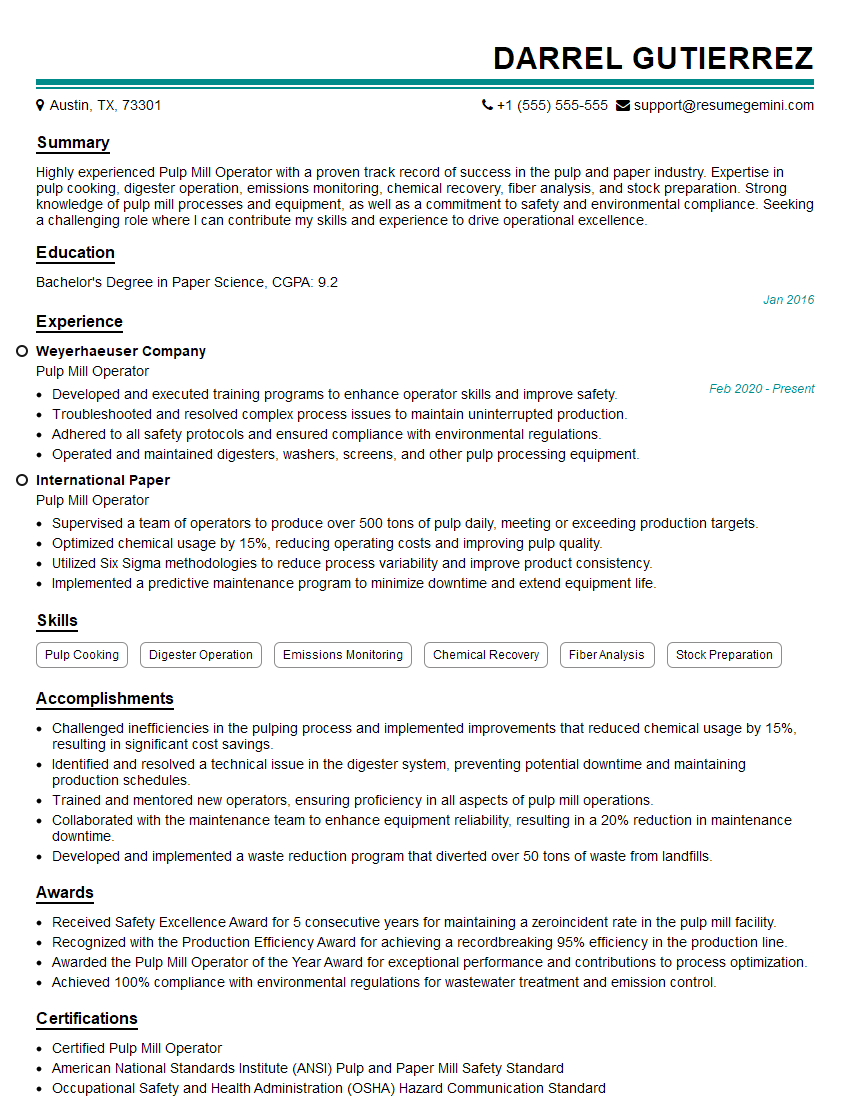
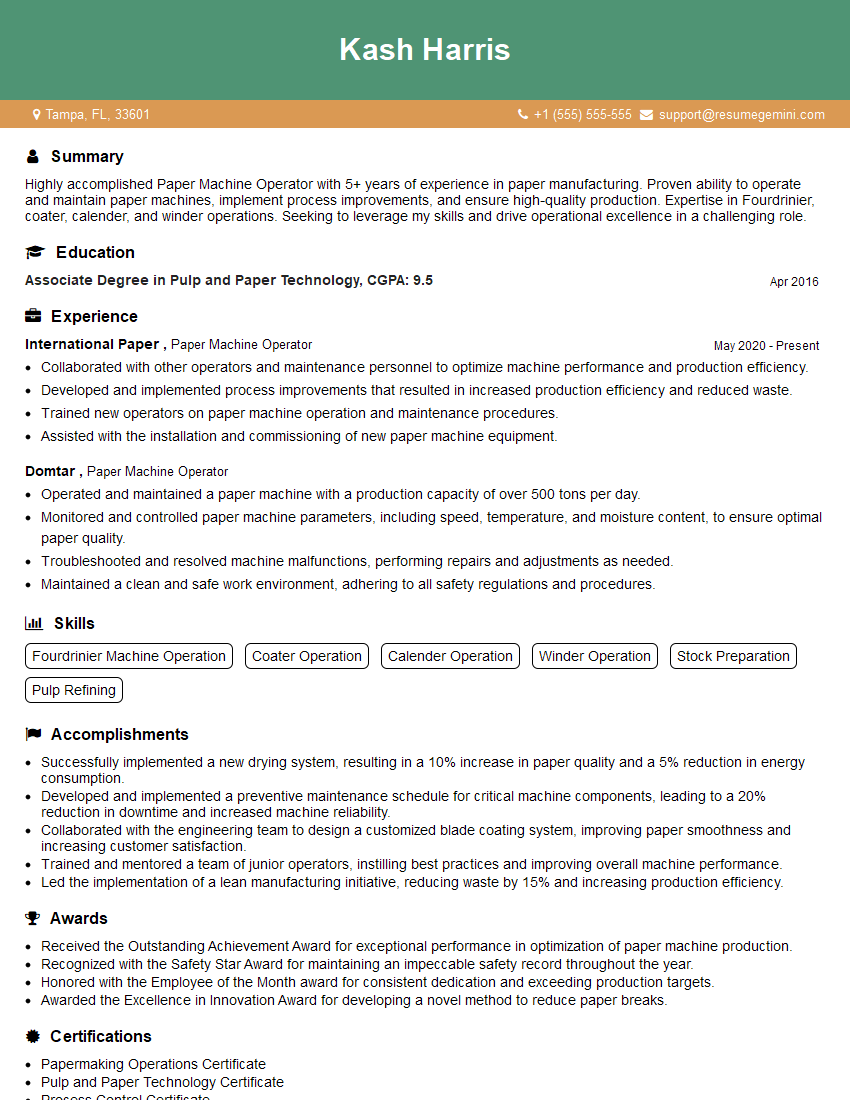
Mastering Pulp and Paper Industry Knowledge is crucial for career advancement. A strong understanding of these concepts demonstrates your expertise and commitment to the field, opening doors to more challenging and rewarding roles. To maximize your job prospects, it’s essential to create an ATS-friendly resume that highlights your skills and experience effectively. ResumeGemini is a trusted resource that can help you build a professional and impactful resume tailored to the pulp and paper industry. Examples of resumes optimized for this industry are available through ResumeGemini to guide you in showcasing your qualifications effectively.
Explore more articles
Users Rating of Our Blogs
Share Your Experience
We value your feedback! Please rate our content and share your thoughts (optional).
What Readers Say About Our Blog
Really detailed insights and content, thank you for writing this detailed article.
IT gave me an insight and words to use and be able to think of examples