The thought of an interview can be nerve-wracking, but the right preparation can make all the difference. Explore this comprehensive guide to Quality Management System (ISO 9001, AS9100, etc.) interview questions and gain the confidence you need to showcase your abilities and secure the role.
Questions Asked in Quality Management System (ISO 9001, AS9100, etc.) Interview
Q 1. Describe your experience with implementing ISO 9001.
Implementing ISO 9001 is a journey, not a destination. It involves a systematic approach to ensuring your organization consistently meets customer requirements and enhances customer satisfaction. In my experience, successful ISO 9001 implementation hinges on strong leadership commitment, thorough documentation, and consistent training.
I’ve led several ISO 9001 implementations across diverse industries, from manufacturing to software development. My approach typically begins with a gap analysis to assess the organization’s existing processes against the ISO 9001 requirements. This allows us to identify areas needing improvement. We then develop a comprehensive implementation plan outlining timelines, responsibilities, and resource allocation. This plan includes the development and implementation of a Quality Management System (QMS) that encompasses all key elements of ISO 9001, such as management responsibility, resource management, product realization, measurement, analysis, and improvement.
A crucial part of the process is employee training. Everyone needs to understand their roles and responsibilities within the QMS. Regular internal audits are vital to ensure compliance and identify areas for corrective action. Finally, achieving certification requires a thorough preparation for the external audit conducted by a certified body. Successfully navigating this process demonstrates a strong commitment to quality and efficiency.
Q 2. Explain the PDCA cycle and its application in quality management.
The PDCA cycle, or Plan-Do-Check-Act cycle, is a fundamental iterative process improvement methodology. It’s a continuous loop for improving processes and products. Think of it as a perpetual cycle of learning and refinement.
- Plan: This phase involves defining the problem, setting objectives, and creating a plan to address the problem. This might involve reviewing data, identifying root causes, and developing solutions. For example, if a manufacturing process is producing a high defect rate, the plan would outline how to reduce that rate.
- Do: This phase involves implementing the plan and gathering data on the results. This might include piloting a new process or implementing a new training program.
- Check: This phase involves analyzing the data collected in the ‘Do’ phase to evaluate the effectiveness of the plan. Does the solution actually solve the problem?
- Act: This phase involves standardizing successful changes, taking corrective action if needed, or abandoning the solution if it’s not effective. This could mean updating process documentation, providing further training, or revisiting the initial planning phase.
The PDCA cycle is not a one-time event; it’s a continuous loop, constantly refined and improved upon. For example, a company might use PDCA to reduce customer complaints. They’d plan interventions (Plan), implement training and new procedures (Do), check the success through monitoring complaint rates (Check), and then revise the process or expand training based on the results (Act). This cycle would continue to ensure consistently low complaint rates.
Q 3. How do you conduct internal audits in accordance with ISO 9001?
Internal audits are a critical component of a robust ISO 9001 QMS. They ensure your processes are compliant with the ISO 9001 standard and identify areas for improvement before an external audit. My approach involves a structured and systematic process.
First, I develop an audit plan that outlines the scope, objectives, schedule, and team members involved. The scope may be a specific process, department, or the entire QMS. The audit plan should include a sampling method of processes and documentation to be reviewed. Then, a team of qualified auditors, ideally with varied experience and knowledge of the system, is selected. Next, the audit team conducts the audit, which typically involves reviewing documents, interviewing personnel, and observing processes in action. Any nonconformances (things not in compliance with the standard or internal processes) are documented with objective evidence. The findings are presented to management in a formal report, including recommendations for corrective action. This report needs to include objective evidence and a clear description of the nonconformances found.
Follow-up is crucial. Management must review the audit report and develop and implement corrective actions to address the findings. A subsequent audit (often performed after corrective actions are completed) verifies their effectiveness.
Q 4. What are the key differences between ISO 9001 and AS9100?
Both ISO 9001 and AS9100 are quality management system standards, but AS9100 is specifically tailored for the aerospace industry. While ISO 9001 provides a general framework, AS9100 builds upon it with more stringent requirements focused on safety and reliability, crucial for aerospace applications.
- Focus: ISO 9001 focuses on customer satisfaction and continuous improvement. AS9100 adds a strong emphasis on safety, regulatory compliance, and risk management within the aerospace and defense industries.
- Requirements: AS9100 includes specific requirements not found in ISO 9001, such as requirements concerning configuration management, product traceability, and process control for aerospace components. It also often integrates with other industry-specific standards.
- Audits: AS9100 audits are more rigorous and typically include deeper dives into safety-critical processes. Auditors need to possess specialized knowledge of the aerospace industry.
- Supply Chain: AS9100 emphasizes robust supply chain management, ensuring all suppliers adhere to similar quality standards. This is essential to maintaining the safety and reliability of the overall aerospace product.
In essence, AS9100 is a more specialized and demanding standard built on the foundation of ISO 9001, reflecting the higher safety and regulatory standards of the aerospace industry. A company certified to AS9100 is automatically compliant with ISO 9001, but the converse isn’t true.
Q 5. Explain your understanding of corrective and preventive actions (CAPA).
Corrective and Preventive Actions (CAPA) are crucial elements of any effective QMS. They are proactive measures to address issues and prevent recurrence. Corrective actions address existing problems, while preventive actions aim to stop potential future problems.
Corrective Actions (CA): These are taken to address a nonconformity that has already occurred. The process typically involves identifying the nonconformity, determining its root cause, implementing a corrective action to eliminate the nonconformity, and verifying the effectiveness of the action. For example, if a batch of products fails a quality inspection due to a faulty machine setting, a corrective action would involve recalibrating the machine and inspecting the affected products.
Preventive Actions (PA): These are implemented to prevent potential nonconformities from occurring. This often involves identifying potential risks, analyzing their potential impact, and implementing controls to mitigate these risks. For example, if a machine frequently malfunctions due to wear and tear, a preventive action might involve establishing a regular maintenance schedule.
Both CAs and PAs require careful documentation, including the details of the nonconformity or potential risk, root cause analysis, implemented actions, verification of effectiveness, and any necessary updates to processes or documentation. Without proper documentation, the effectiveness of CAPA is severely compromised, making recurrence likely.
Q 6. How do you measure and track key performance indicators (KPIs) in a quality management system?
Key Performance Indicators (KPIs) are crucial for measuring the effectiveness of a QMS. They provide objective data to monitor progress and identify areas needing attention. The specific KPIs will vary based on the organization and its goals, but some common examples include:
- Defect Rate: The percentage of nonconforming products or services.
- Customer Satisfaction: Measured through surveys or feedback mechanisms.
- On-Time Delivery: The percentage of orders delivered on schedule.
- Lead Time: The time it takes to fulfill a customer order.
- Internal Audit Findings: The number and severity of nonconformances identified during internal audits.
- Customer Complaints: The number and type of customer complaints received.
These KPIs should be tracked using appropriate tools, such as spreadsheets, databases, or dedicated quality management software. Data should be regularly analyzed to identify trends and assess the overall performance of the QMS. Regular reporting is vital to communicate performance to all stakeholders, enabling data-driven decision-making to improve processes and product quality. For instance, a high defect rate might indicate the need for additional employee training or equipment upgrades.
Q 7. Describe your experience with root cause analysis techniques.
Root cause analysis is crucial for effective corrective and preventive actions. It involves identifying the underlying cause of a problem, not just the symptoms. Several techniques can be employed, each with its strengths and weaknesses.
- 5 Whys: A simple yet effective technique that involves repeatedly asking “Why?” to peel back the layers of a problem until the root cause is identified. For instance: Problem: Machine malfunction. Why? Worn-out part. Why? Lack of preventative maintenance. Why? Inadequate training. Why? Insufficient budget for training. Root cause: Insufficient budget for training.
- Fishbone Diagram (Ishikawa Diagram): A visual tool that categorizes potential causes of a problem, facilitating brainstorming and analysis. Categories might include people, methods, materials, machines, environment, and measurement.
- Fault Tree Analysis (FTA): A top-down approach mapping out the causes that could lead to an undesirable event, often used for safety-critical systems. It visualizes the relationships between various causes and effects.
The choice of technique depends on the complexity of the problem and the available resources. Regardless of the method used, a thorough investigation is essential. It requires collecting relevant data, interviewing involved personnel, and analyzing the evidence to identify the root cause, enabling effective corrective and preventative actions that address the problem at its source rather than just treating the symptoms.
Q 8. How do you handle customer complaints related to quality issues?
Handling customer complaints effectively is crucial for maintaining a strong reputation and fostering customer loyalty. My approach follows a structured process ensuring prompt resolution and proactive prevention of similar issues.
- Acknowledgement and Empathy: I begin by acknowledging the customer’s frustration and expressing empathy for their situation. This builds rapport and sets a positive tone.
- Information Gathering: I systematically gather all relevant information regarding the complaint, including details about the product or service, the nature of the defect or issue, and the customer’s desired resolution.
- Investigation and Root Cause Analysis: A thorough investigation follows, utilizing tools like the 5 Whys or fishbone diagrams to pinpoint the root cause of the problem. This is crucial for preventing recurrence.
- Resolution and Communication: Based on the root cause analysis, I propose and implement a solution, keeping the customer informed at each stage. This might involve repair, replacement, refund, or process improvement.
- Follow-up and Prevention: After resolving the immediate issue, I follow up with the customer to ensure satisfaction. Moreover, I document the complaint and corrective actions taken to prevent similar issues in the future. This information is often fed back into our continuous improvement process.
For instance, in a previous role, a customer complained about a faulty component in a high-precision instrument. By meticulously investigating the assembly process, we discovered a flaw in our calibration procedure. We revised the procedure, retrained personnel, and issued a recall for the affected instruments. This not only resolved the immediate complaint but also prevented future occurrences.
Q 9. Explain your familiarity with statistical process control (SPC).
Statistical Process Control (SPC) is a powerful tool for monitoring and controlling process variations. It leverages statistical methods to identify trends, anomalies, and patterns within data collected from ongoing processes. This enables proactive intervention to prevent defects and maintain consistent quality.
My familiarity extends to various SPC techniques, including control charts (like X-bar and R charts, p-charts, and c-charts), capability analysis (Cp, Cpk), and process behavior charts. I understand how to interpret control chart patterns (e.g., shifts, trends, runs) to detect assignable causes of variation, differentiate between common and special causes, and make data-driven decisions for process improvement.
In a previous project involving the manufacture of precision bearings, we implemented X-bar and R charts to monitor the diameter consistency of the bearings. By analyzing the control charts, we identified a shift in the average diameter caused by a slight adjustment in the manufacturing machine settings. By correcting these settings, we significantly reduced the variation and improved the overall quality of the bearings. Example: An X-bar chart would show the average diameter measured for each sample, while an R chart would depict the range of variation within each sample. Out-of-control points on these charts signal potential issues requiring investigation.
Q 10. Describe your experience with process mapping and flowcharting.
Process mapping and flowcharting are essential tools for visually representing workflows, identifying bottlenecks, and improving efficiency. I’m proficient in creating various types of process maps, including swim lane diagrams, value stream maps, and SIPOC diagrams, which provide a clear understanding of a process’s steps, responsibilities, and inputs/outputs.
My experience involves using these tools to analyze existing processes, identify areas for improvement, and design new, more efficient processes. I use software like Visio or Lucidchart, but I am equally comfortable creating hand-drawn maps for quick brainstorming and analysis.
For example, in a previous project to streamline the order fulfillment process, we created a value stream map that visually depicted the entire process from order placement to delivery. This map highlighted several bottlenecks, including delays in inventory management and inefficient shipping procedures. By addressing these bottlenecks through process improvements, we significantly reduced order fulfillment times and improved customer satisfaction.
Q 11. How do you ensure compliance with relevant regulations and standards?
Ensuring compliance with relevant regulations and standards is paramount in any quality management system. My approach focuses on proactive compliance, which involves staying informed about evolving standards and regulations and integrating them into our processes.
- Standard Identification and Review: I identify and review all applicable standards and regulations, such as ISO 9001, AS9100, FDA regulations (if applicable), and industry-specific requirements.
- Gap Analysis and Implementation: I conduct gap analyses to identify any discrepancies between our existing system and the requirements of these standards. Based on this analysis, we implement necessary changes to bridge the gaps.
- Documentation and Training: We meticulously document all processes, procedures, and records to demonstrate compliance. Training is provided to all relevant personnel to ensure they understand and adhere to the requirements.
- Internal Audits and Management Review: Regularly scheduled internal audits and management reviews assess our compliance and identify areas for improvement.
- Continuous Monitoring: We actively monitor changes in standards and regulations to maintain ongoing compliance and ensure that our system remains current.
For instance, when our company transitioned to AS9100, I led the initiative to revise our QMS documentation, train personnel, and implement new procedures to meet the specific requirements of the aerospace standard. This included establishing stricter control over nonconforming material and documenting traceability throughout the supply chain.
Q 12. How do you manage and resolve quality-related conflicts within a team?
Resolving quality-related conflicts within a team requires a collaborative and objective approach. My strategy centers on open communication, active listening, and a focus on finding mutually acceptable solutions.
- Facilitation and Open Dialogue: I facilitate open dialogue between conflicting parties, encouraging them to express their perspectives and concerns openly and respectfully.
- Active Listening and Understanding: I actively listen to each side, aiming to understand the underlying issues and concerns driving the conflict. This avoids focusing solely on symptoms rather than root causes.
- Objective Analysis: I strive to analyze the situation objectively, separating emotions from facts and identifying the core points of disagreement.
- Collaborative Problem Solving: I guide the team toward a collaborative solution that addresses the concerns of all parties while remaining aligned with quality objectives. This might involve brainstorming, compromise, or mediation.
- Documentation and Follow-up: I document the conflict resolution process, the agreed-upon solution, and any necessary corrective actions. A follow-up ensures the resolution is effective and lasting.
In one instance, a disagreement arose between the engineering and production teams regarding the feasibility of a new quality control procedure. By facilitating open communication and joint problem-solving sessions, we found a modified procedure that satisfied both teams’ concerns while enhancing the product’s quality.
Q 13. Describe your experience with quality management software.
My experience with quality management software encompasses various systems, including ERP systems with integrated QMS modules, dedicated QMS platforms, and specialized statistical software packages. I am proficient in utilizing these tools to manage documents, track nonconformances, conduct audits, analyze data, and monitor key performance indicators (KPIs).
For example, I have extensive experience with [mention specific software, e.g., Oracle’s quality management module, a dedicated QMS platform like MasterControl] which I used to manage document control, track nonconforming materials, and generate reports on key quality metrics such as defect rates and customer satisfaction scores. I am adept at configuring and customizing these systems to meet specific organizational needs and reporting requirements. My skills also include data analysis using statistical software such as Minitab for SPC analysis.
Q 14. What is your approach to continuous improvement within a quality management system?
Continuous improvement is the backbone of any effective quality management system. My approach relies on a structured framework that combines data-driven analysis with proactive problem-solving.
- Data-Driven Decision Making: I leverage data from various sources (KPIs, customer feedback, internal audits) to identify areas needing improvement. This ensures improvements are targeted and effective.
- PDCA Cycle (Plan-Do-Check-Act): I systematically use the PDCA cycle to implement and evaluate improvements. This structured approach guarantees a methodical and measurable approach to change.
- Lean Principles: I integrate Lean principles, such as waste reduction and process optimization, to streamline processes and eliminate non-value-added activities.
- Root Cause Analysis: When problems arise, I use root cause analysis techniques to identify the underlying causes and implement targeted solutions that address the root of the problem, rather than simply treating symptoms.
- Team Involvement: I actively involve team members in the continuous improvement process, fostering a culture of ownership and innovation.
For example, in a previous role, we implemented a Kaizen (continuous improvement) event to reduce waste in our manufacturing process. By engaging the team in identifying and eliminating waste, we achieved a 15% reduction in lead time and a 10% reduction in material waste.
Q 15. How do you prioritize quality improvement projects?
Prioritizing quality improvement projects requires a strategic approach that balances urgency, impact, and resource availability. I typically use a combination of methods, starting with a thorough assessment of potential projects.
- Risk-Based Prioritization: Projects addressing high-risk areas (e.g., those with a high likelihood of causing customer dissatisfaction or regulatory non-compliance) are prioritized first. This often involves a Failure Mode and Effects Analysis (FMEA) to identify potential failures and their severity.
- Cost-Benefit Analysis: We evaluate the potential cost savings or revenue gains against the project’s investment. A simple ROI calculation helps determine the return on investment for each project.
- Urgency and Impact Matrix: Plotting projects on a matrix with urgency on one axis and impact on the other allows for visual prioritization. High-urgency, high-impact projects take precedence. For example, a critical customer complaint would rank higher than a minor process improvement.
- Resource Availability: The availability of personnel, budget, and time is critical. Even the most impactful project may be delayed if resources are unavailable.
For example, in a previous role, we used a weighted scoring system combining risk, cost-benefit, and urgency to rank our improvement projects. This provided a transparent and objective basis for decision-making.
Career Expert Tips:
- Ace those interviews! Prepare effectively by reviewing the Top 50 Most Common Interview Questions on ResumeGemini.
- Navigate your job search with confidence! Explore a wide range of Career Tips on ResumeGemini. Learn about common challenges and recommendations to overcome them.
- Craft the perfect resume! Master the Art of Resume Writing with ResumeGemini’s guide. Showcase your unique qualifications and achievements effectively.
- Don’t miss out on holiday savings! Build your dream resume with ResumeGemini’s ATS optimized templates.
Q 16. Explain your experience with conducting quality audits.
My experience in conducting quality audits spans various industries, encompassing both internal and external audits based on ISO 9001, AS9100, and other industry-specific standards. I’m proficient in planning, conducting, and reporting on audits, ensuring objectivity and fairness throughout the process.
- Planning: I begin by understanding the scope of the audit, reviewing relevant documentation (e.g., quality manual, procedures), and identifying key areas requiring attention. This involves establishing audit objectives and criteria.
- Conducting Audits: I use a combination of techniques including document review, interviews with personnel, observation of processes, and examination of records to gather evidence. I maintain a professional and respectful demeanor while ensuring thoroughness and objectivity.
- Reporting: I prepare detailed audit reports clearly outlining findings, including non-conformances and their severity. I work with auditees to develop corrective and preventive actions (CAPAs) to address any identified issues.
- Follow-up: I ensure that CAPAs are implemented effectively and verified to prevent recurrence. This often involves a follow-up audit to confirm the effectiveness of the implemented actions.
For instance, during an AS9100 audit of a supplier, I identified a gap in their traceability system for critical components. This led to the development of a new traceability procedure and subsequent corrective action.
Q 17. Describe your experience with risk management within a quality management system.
Risk management is fundamental to a robust quality management system. My experience involves integrating risk-based thinking into all aspects of quality management, from process design to product development and delivery.
- Risk Identification: I employ various techniques like brainstorming, FMEA, and HAZOP (Hazard and Operability Study) to identify potential risks related to products, processes, and the organization’s overall operations.
- Risk Analysis: This involves assessing the likelihood and impact of each identified risk. I use quantitative and qualitative methods to determine the severity of potential consequences.
- Risk Evaluation: After analyzing risks, we prioritize them based on their severity and probability. This prioritization helps allocate resources effectively to mitigation efforts.
- Risk Treatment: This stage involves developing and implementing strategies to reduce or eliminate identified risks. Options include risk avoidance, mitigation, transfer, or acceptance.
- Risk Monitoring and Review: Risks are regularly monitored and reviewed to ensure effectiveness of implemented controls. The risk assessment process is dynamic and requires continuous monitoring.
In a previous project, we implemented a risk management plan for a new product launch, identifying potential risks related to supply chain disruptions, manufacturing defects, and regulatory compliance. This proactive approach allowed us to develop mitigation strategies, reducing the risk of project failure.
Q 18. How do you develop and implement quality control plans?
Developing and implementing quality control plans requires a structured approach that ensures consistency and effectiveness. The process typically involves the following steps:
- Define Objectives: Clearly articulate the goals of the quality control plan. What are we trying to achieve? Are we aiming to reduce defects, improve efficiency, or meet specific customer requirements?
- Identify Key Characteristics: Pinpoint the critical characteristics of the product or process that need to be monitored and controlled. These are the factors that directly impact quality.
- Establish Measurement Methods: Determine the appropriate methods for measuring these characteristics. This could involve visual inspection, dimensional measurements, testing, or other relevant techniques.
- Define Acceptance Criteria: Set clear criteria for determining whether the product or process meets quality standards. These criteria should be measurable and objective.
- Develop Control Procedures: Outline the procedures for monitoring and controlling the identified characteristics. This might include checklists, inspection plans, or statistical process control (SPC) techniques.
- Implement and Monitor: Put the plan into action and continuously monitor its effectiveness. Track key metrics and make adjustments as needed to ensure the plan remains effective.
For example, in a manufacturing environment, a quality control plan might involve regularly inspecting finished products to ensure they meet dimensional specifications, using a specific checklist and measurement tools. Any non-conformances are recorded and addressed through corrective actions.
Q 19. Explain your understanding of quality control charts and their interpretation.
Quality control charts, also known as statistical process control (SPC) charts, are graphical tools used to monitor process variation over time. They help identify trends and patterns that indicate potential problems before they become major issues.
- Types of Charts: Several types of control charts are used, depending on the type of data. Common types include X-bar and R charts (for continuous data), p-charts (for proportions), and c-charts (for counts).
- Control Limits: Each chart has upper and lower control limits, typically set at three standard deviations from the process average. Data points outside these limits signal potential out-of-control conditions requiring investigation.
- Interpretation: Trends, shifts in the average, or unusually high variability indicated on the charts suggest potential process issues that need immediate attention.
- Applications: Quality control charts are used across various industries, including manufacturing, healthcare, and service sectors. They can be applied to track anything from the weight of a product to the number of customer complaints.
For example, an X-bar and R chart might track the average diameter and range of a manufactured part. If the average diameter consistently drifts outside the control limits, it indicates a potential issue with the manufacturing process. Investigating the cause might reveal a problem with the machine settings or raw materials.
Q 20. How do you ensure effective communication within the quality management team?
Effective communication is crucial for a high-performing quality management team. I ensure effective communication through several strategies:
- Regular Meetings: Holding regular team meetings provides a platform for sharing information, discussing progress, addressing challenges, and making decisions collaboratively.
- Clear Communication Channels: Establishing clear and defined communication channels, whether through email, instant messaging, or project management software, ensures that information flows efficiently.
- Open and Honest Dialogue: Fostering a culture of open and honest dialogue where team members feel comfortable raising concerns and providing feedback is essential.
- Visual Management: Using visual management tools like dashboards and Kanban boards facilitates communication and transparency by providing a readily accessible overview of key metrics and project status.
- Documentation: Maintaining comprehensive documentation, including meeting minutes, procedures, and reports, ensures that information is readily available and consistent.
In one instance, we used a project management software to track progress on quality improvement projects, enabling team members to monitor progress, update tasks, and communicate efficiently. This helped improve collaboration and transparency.
Q 21. How do you train and mentor employees on quality management procedures?
Training and mentoring employees on quality management procedures are critical for maintaining a robust quality management system. My approach focuses on a multi-faceted strategy:
- Needs Assessment: Identifying the specific training needs of employees based on their roles and responsibilities ensures that training is relevant and effective. This involves identifying knowledge gaps and skill deficiencies.
- Developing Training Materials: Creating comprehensive training materials, including presentations, manuals, and hands-on exercises, caters to different learning styles and ensures consistency in training delivery.
- Delivering Training: Employing diverse training methods such as classroom training, online modules, and on-the-job training enhances engagement and learning outcomes.
- Mentoring and Coaching: Providing individual mentoring and coaching supports employees in applying their knowledge and skills in their daily work. This involves regular feedback and guidance.
- Assessment and Evaluation: Assessing employee understanding and skills through tests, practical exercises, and performance evaluations ensures that training is effective and employees have acquired the necessary competencies.
For example, I developed a comprehensive training program for our manufacturing team on the use of statistical process control (SPC) charts. This involved classroom training, hands-on exercises using real-world data, and ongoing mentoring to help them apply SPC in their daily tasks.
Q 22. Describe your experience with document control within a quality management system.
Document control is the cornerstone of any effective Quality Management System (QMS). It ensures that all documents are current, readily available, and controlled to prevent the use of obsolete or incorrect information. This involves a structured process for creating, reviewing, approving, distributing, updating, and archiving documents.
In my experience, this has involved implementing a document control system using a dedicated software solution, often coupled with a physical filing system for critical documents. This includes assigning unique identifiers to each document, establishing a clear revision control system (often using numbering schemes like ‘Rev. A’, ‘Rev. B’), and implementing a formal change management process. For example, if a design drawing needs modification, the change request follows a formal process with review, approval, and distribution of the updated drawing to all relevant parties. We also implemented a system of controlled access, limiting document access based on job roles and responsibilities to ensure data security. Regular audits of our document control system are crucial to ensure its ongoing effectiveness.
I’ve also worked in environments where we’ve utilized electronic document management systems (EDMS) which offers version control, audit trails, and automated notification systems, streamlining the entire document control process and significantly reducing the risk of using outdated information.
Q 23. Explain your understanding of the different types of audits (first-party, second-party, third-party).
Audits are crucial for evaluating the effectiveness of a QMS. They are categorized based on who performs them:
- First-party audits (Internal audits): These are conducted by the organization itself to assess its compliance with its own QMS and identify areas for improvement. Think of it as a self-check. In my experience, these audits are planned and executed according to a predetermined schedule, covering all aspects of the QMS, with a focus on verifying documented procedures and actual practices.
- Second-party audits: These are performed by a customer or another external organization to assess the supplier’s ability to meet their requirements. A car manufacturer, for instance, might audit a parts supplier to ensure they meet their quality standards. These audits are often more focused on specific aspects relevant to the customer’s needs.
- Third-party audits: These are conducted by independent, accredited certification bodies, like those from ANSI or UKAS, to determine whether an organization conforms to the requirements of a specific standard such as ISO 9001 or AS9100. This leads to certification, demonstrating the organization’s commitment to quality to its customers and stakeholders. These are typically more rigorous than first or second-party audits.
Each audit type serves a different but equally important purpose in ensuring a robust and effective QMS.
Q 24. How do you handle nonconformances and implement corrective actions?
Nonconformances are deviations from specified requirements. Handling them effectively is key to continuous improvement. My approach involves a systematic process:
- Identify and document the nonconformance: Clearly define the nature, location, and impact of the nonconformance. This is often documented using a formal Nonconformance Report (NCR).
- Investigate the root cause: Use tools like 5 Whys, Fishbone diagrams, or Pareto analysis to determine the underlying cause of the nonconformance, not just the symptoms.
- Implement corrective actions: Develop and implement actions to prevent the nonconformance from recurring. This might involve process changes, equipment upgrades, or employee training.
- Verify the effectiveness of corrective actions: Monitor and evaluate the effectiveness of the corrective actions to ensure the problem is truly resolved.
- Document the entire process: Maintain a complete record of the nonconformance, investigation, corrective actions, and verification, including any updates or changes to procedures.
For instance, if a batch of products fails a quality check due to inconsistent material properties, I would investigate the supplier’s process, review our incoming inspection procedures, and implement changes to prevent this from happening again. We’d document the NCR, the root cause analysis, the corrective and preventative actions (CAPA), and the verification process, closing out the NCR once we’re confident the issue is resolved. Effective corrective action ensures continuous improvement and customer satisfaction.
Q 25. Describe your experience with the implementation of a quality management system in a manufacturing environment.
Implementing a QMS in a manufacturing environment requires a structured and phased approach. My experience includes leading such implementations, focusing on a combination of top-down strategic planning and bottom-up employee involvement.
The process typically starts with a thorough gap analysis to identify the current state of the organization against the requirements of the chosen standard (e.g., ISO 9001). This involves reviewing existing processes, documentation, and training programs. Based on the gap analysis, we develop an implementation plan outlining specific actions, responsibilities, timelines, and resources. This plan often utilizes a project management methodology to ensure efficient execution.
Crucial aspects include defining clear roles and responsibilities, developing and implementing documented procedures, providing comprehensive training to all employees, and establishing effective internal audit processes. Furthermore, data collection and analysis are essential for continuous improvement and monitoring the effectiveness of the QMS. In one project, we implemented a system using Kanban boards to visualize workflow, reduce lead times, and highlight bottlenecks in our production process. This improved communication and transparency across the production floor and assisted in delivering better quality products.
Q 26. Explain your understanding of the 8 principles of quality management.
The eight principles of quality management, as defined by ISO 9001, provide a framework for achieving sustainable success. They are:
- Customer focus: Understanding and meeting customer needs and expectations.
- Leadership: Establishing unity of purpose and direction within the organization.
- Engagement of people: Creating an environment where people are engaged and empowered.
- Process approach: Managing work as processes and understanding their interrelationships.
- Improvement: Continuously improving the organization’s performance.
- Evidence-based decision making: Using data and information to make decisions.
- Relationship management: Developing mutually beneficial relationships with suppliers and partners.
- Results orientation: Focusing on achieving results that meet customer requirements and enhance organizational effectiveness.
These principles are not merely theoretical concepts; they are practical guidelines for building a strong QMS. For example, fostering a culture of employee engagement – an element of the “Engagement of people” principle – has a directly positive impact on quality by encouraging employees to actively participate in process improvement and problem-solving.
Q 27. How do you ensure data integrity within the quality management system?
Data integrity is critical within a QMS, ensuring that all collected data is accurate, reliable, and trustworthy. This impacts decision-making, audits, and overall system effectiveness. My experience emphasizes several key strategies:
- Establish clear data management procedures: This includes defining data collection methods, record-keeping systems, and data validation processes.
- Use validated systems and equipment: Employ calibrated measuring devices and validated software to ensure accuracy and reliability.
- Implement access controls: Restrict access to data based on roles and responsibilities to prevent unauthorized changes or deletions.
- Maintain audit trails: Record all data changes and modifications, including the date, time, and user making the changes. This ensures traceability and accountability.
- Regular data backups and recovery plans: Protecting data from loss through regular backups and a defined disaster recovery plan is crucial for maintaining data integrity.
- Data validation and verification checks: Regularly check the accuracy and completeness of data through spot checks and audits.
For example, in a pharmaceutical manufacturing setting, maintaining accurate records of batch numbers, ingredients, and processing parameters is paramount. Any deviation requires thorough investigation. We would use a system with electronic signatures and access controls to ensure data integrity, combined with regular audits to verify the accuracy of this critical data.
Q 28. Describe your experience with supplier quality management.
Supplier Quality Management (SQM) is crucial for ensuring the quality of materials and services obtained from external sources. My approach involves a multi-faceted strategy:
- Supplier selection and evaluation: Rigorous selection criteria are essential, including evaluating suppliers’ quality management systems, capabilities, and performance history. This might involve questionnaires, on-site audits, or reviewing their certifications.
- Supplier performance monitoring: Ongoing monitoring of supplier performance using key performance indicators (KPIs) such as on-time delivery, defect rates, and compliance with requirements. Regular performance reviews are conducted to address any issues promptly.
- Collaboration and communication: Establishing clear communication channels and collaborative relationships with suppliers to proactively address potential quality issues. Regular meetings and feedback mechanisms are beneficial.
- Corrective and Preventative Actions (CAPA): Implementing a robust CAPA system to manage and resolve any nonconformances or quality issues identified with suppliers. This includes working with them to implement corrective actions and prevent similar issues from recurring.
- Documentation and records management: Maintaining thorough documentation of all aspects of the SQM process, including supplier evaluations, performance data, and corrective actions.
In a previous role, we implemented a supplier rating system, assigning scores based on various KPIs. This system provided a clear picture of supplier performance and helped us identify potential risks proactively. We also developed standard operating procedures for managing supplier nonconformances, improving our overall response time and effectiveness.
Key Topics to Learn for Quality Management System (ISO 9001, AS9100, etc.) Interview
- Understanding ISO 9001 and AS9100 Standards: Familiarize yourself with the core principles, clauses, and differences between these standards. Consider the specific requirements relevant to your target role.
- Quality Policy and Objectives: Learn how to define, implement, and measure the effectiveness of quality policies and objectives within an organization. Practice explaining your approach to setting and achieving them.
- Risk-Based Thinking: Understand how to identify, analyze, and mitigate risks related to quality management. Be prepared to discuss practical examples of risk assessment and control within a QMS.
- Internal Audits and Corrective Actions: Master the process of conducting internal audits, identifying nonconformances, and implementing effective corrective actions. Prepare to discuss your audit experience and methodologies.
- Management Review: Know the purpose and process of management reviews and how they contribute to continuous improvement within the QMS. Be ready to discuss your role in such processes.
- Document Control and Record Management: Understand the importance of maintaining accurate and up-to-date documentation and records within the QMS. Be prepared to discuss best practices and challenges.
- Continuous Improvement (Kaizen): Demonstrate your understanding of continuous improvement methodologies and your ability to apply them in a practical setting. Prepare examples from your experience.
- Customer Focus and Satisfaction: Explain how a strong QMS contributes to customer satisfaction and retention. Provide examples of how you’ve incorporated customer feedback into quality improvement initiatives.
- Process Approach: Understand and articulate the importance of a process-oriented approach to quality management. Be prepared to discuss how processes are mapped, monitored, and improved.
- Data Analysis and Interpretation: Demonstrate your ability to interpret quality data, identify trends, and use data-driven insights to improve processes and decision-making.
Next Steps
Mastering Quality Management Systems (ISO 9001, AS9100, etc.) is crucial for career advancement in many industries, opening doors to leadership roles and higher earning potential. To maximize your job prospects, create an ATS-friendly resume that showcases your skills and experience effectively. ResumeGemini is a trusted resource to help you build a professional and impactful resume. We provide examples of resumes tailored to Quality Management System roles, helping you present your qualifications in the best possible light.
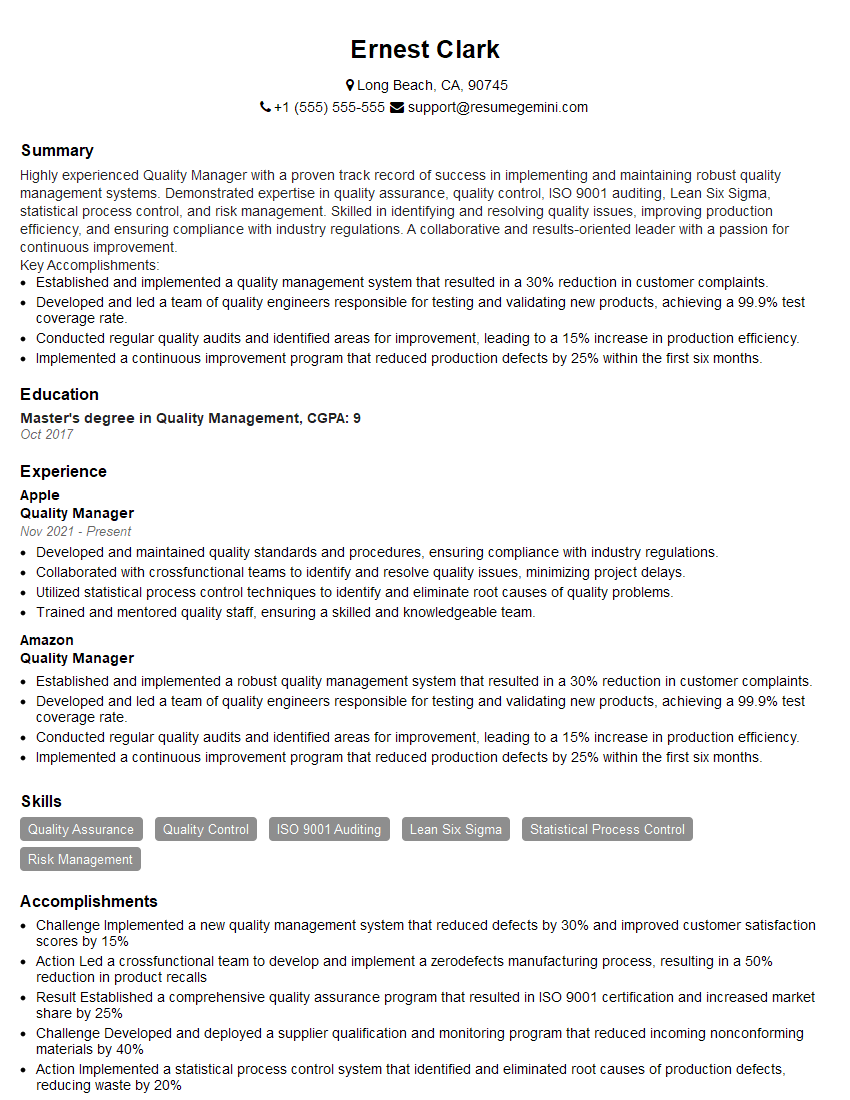
Quality Manager Resume Sample
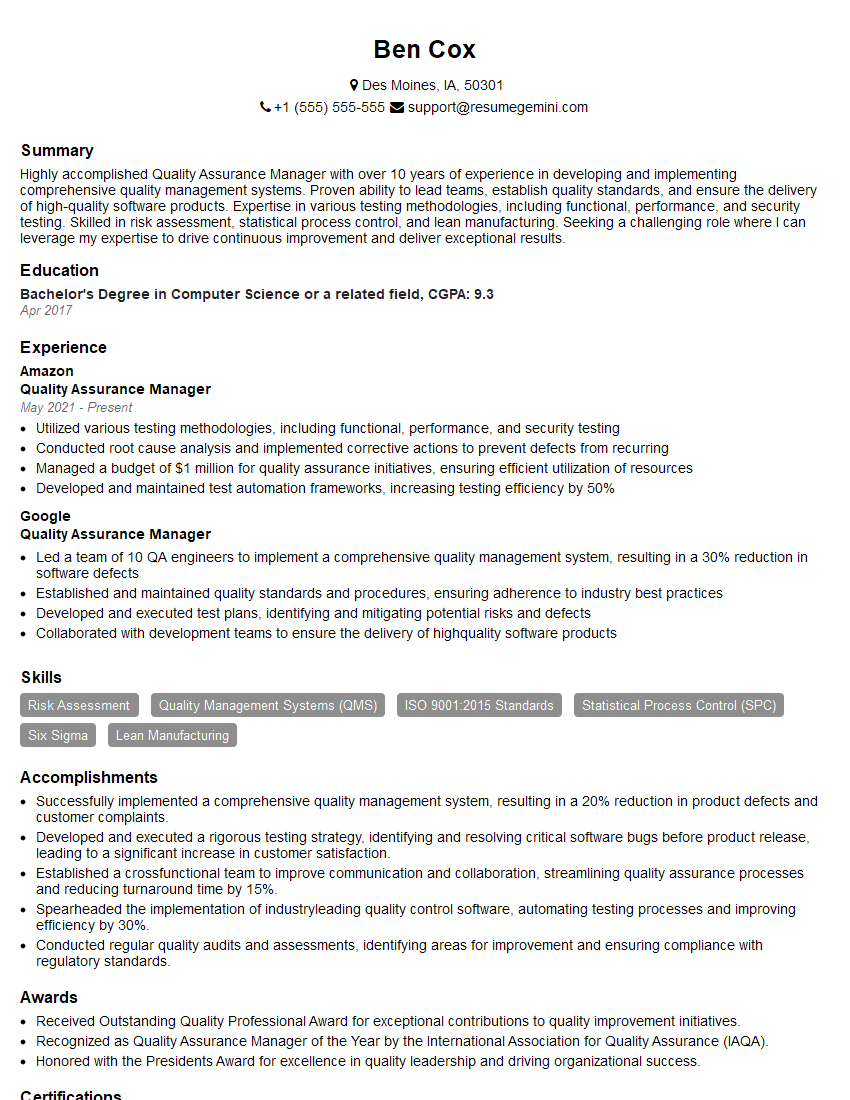
Quality Assurance Manager Resume Sample
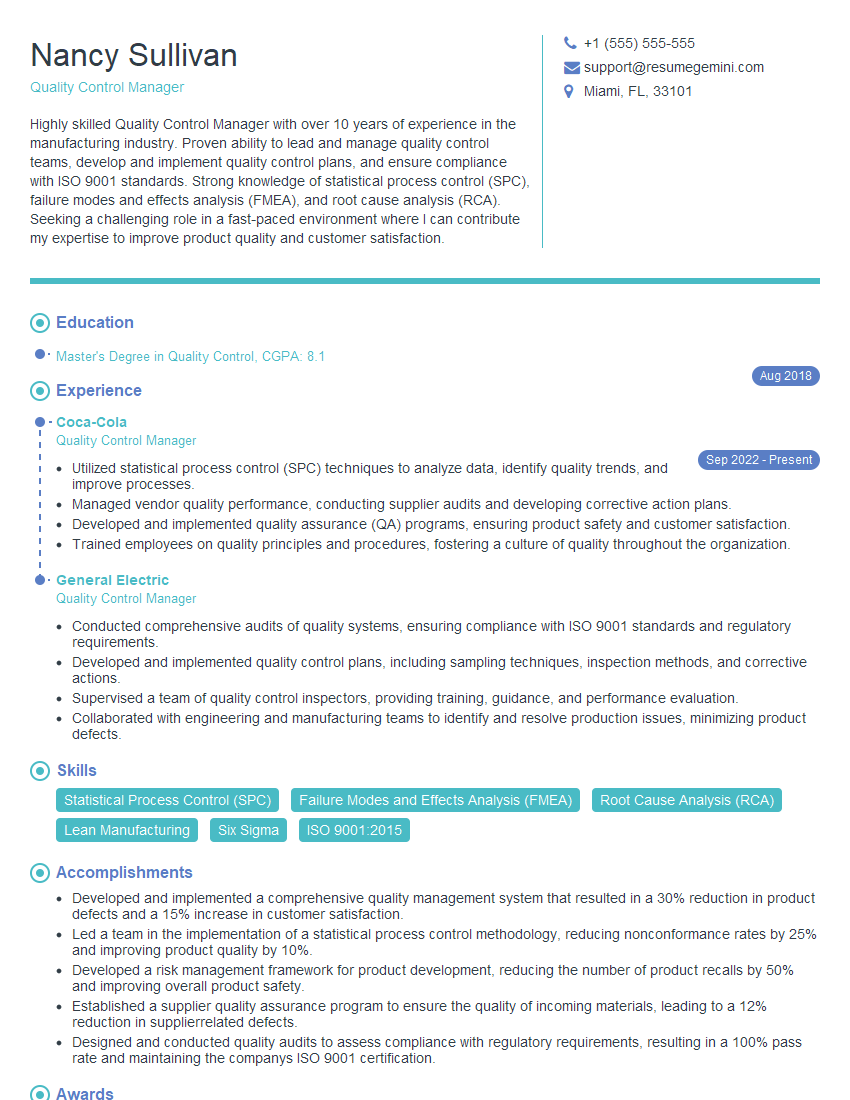
Quality Control Manager Resume Sample
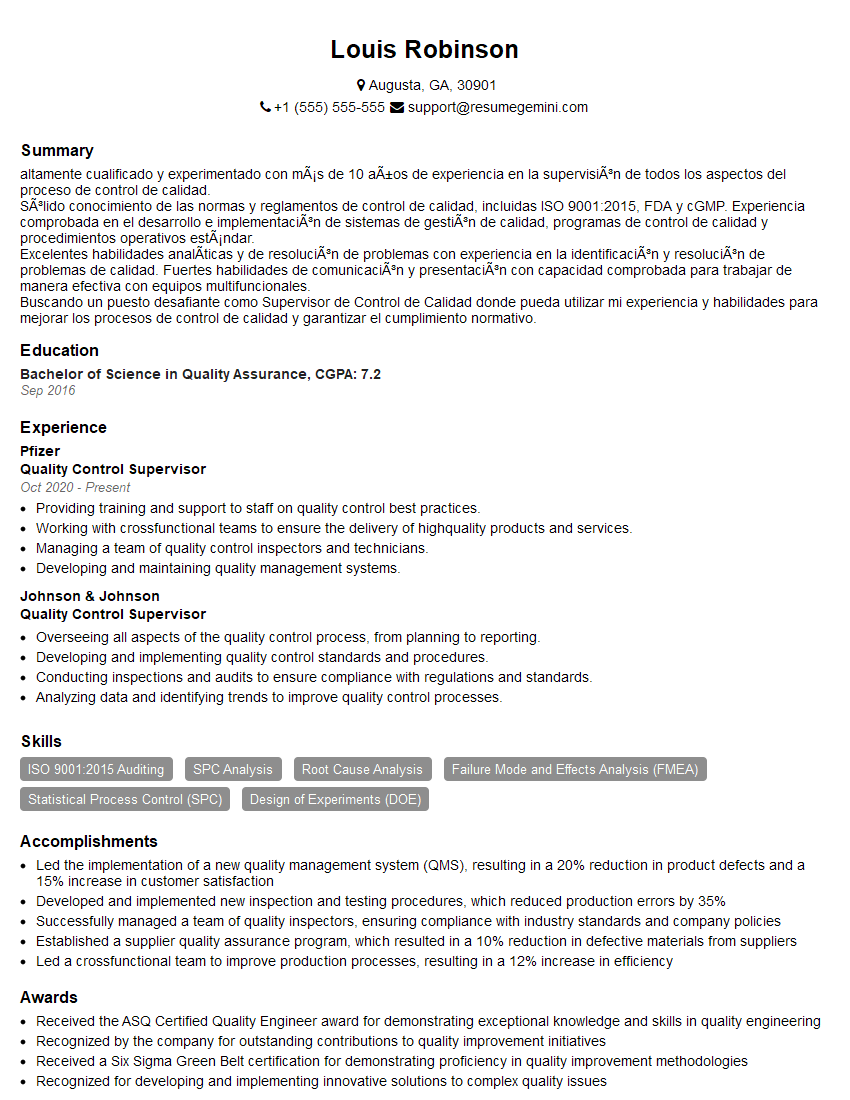
Quality Control Supervisor Resume Sample
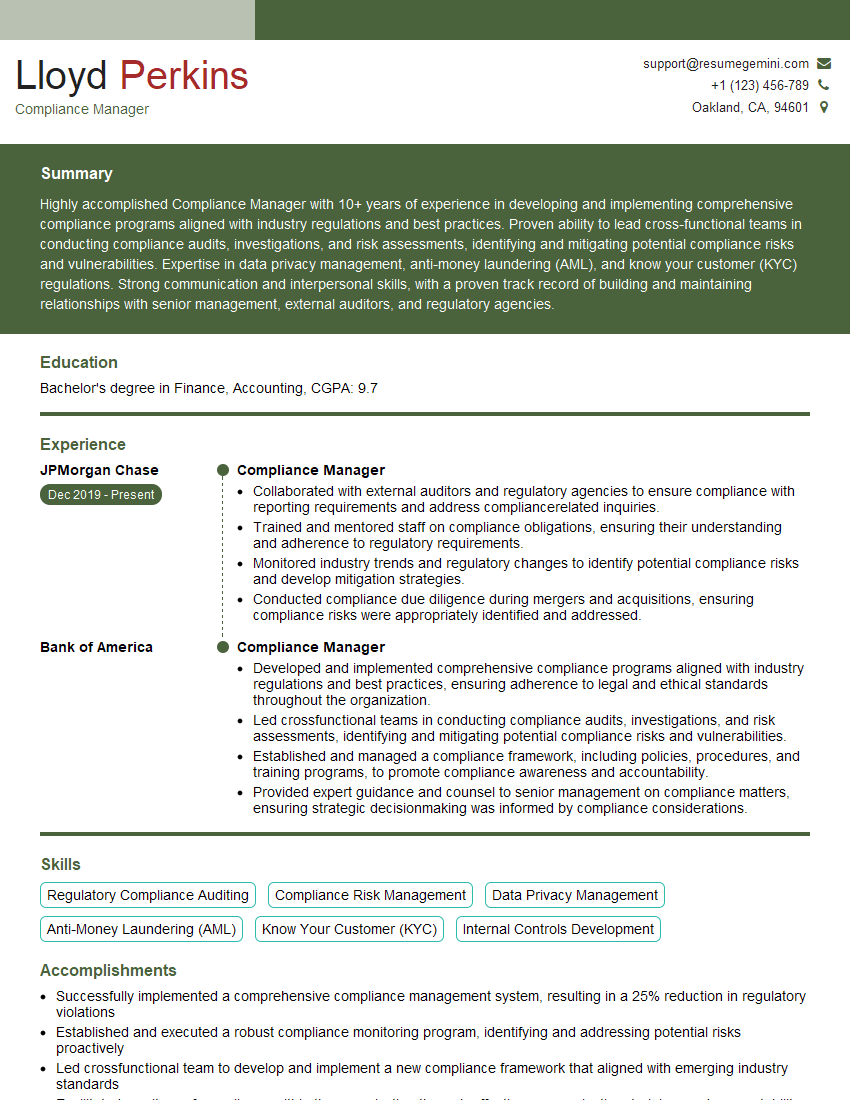
Compliance Manager Resume Sample
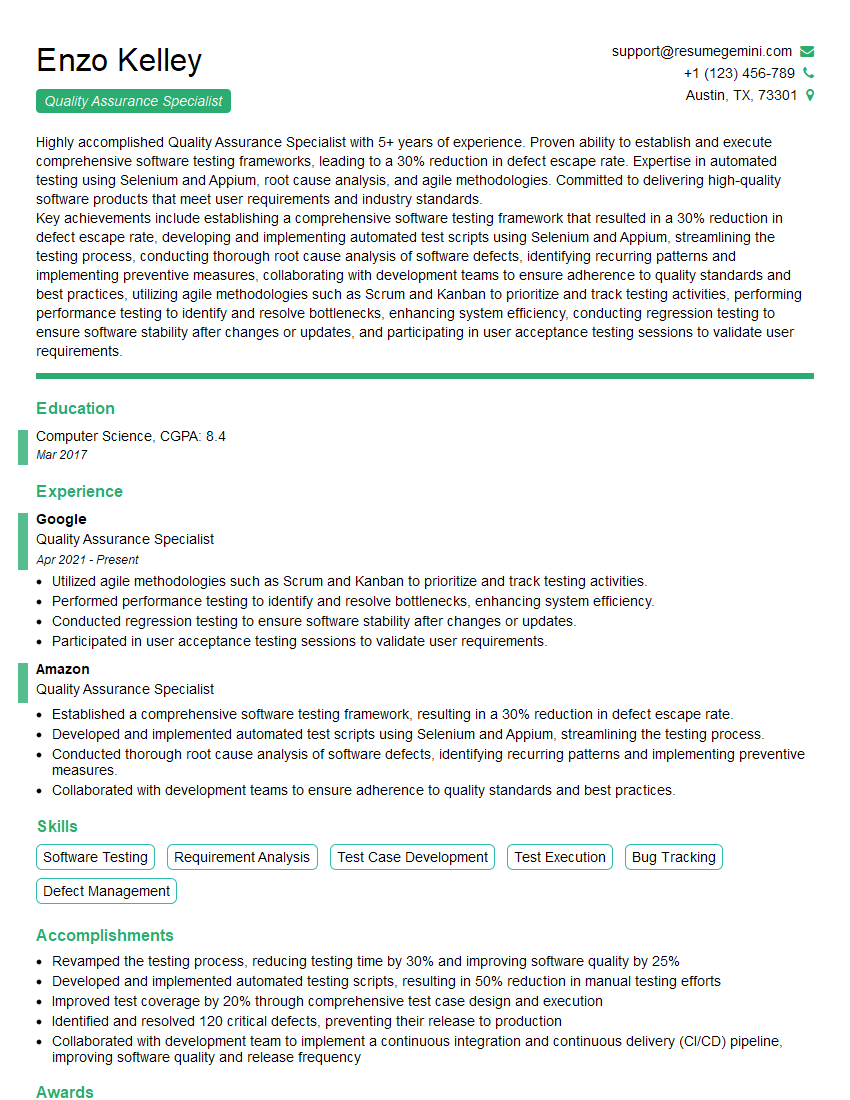
Quality Assurance Specialist Resume Sample
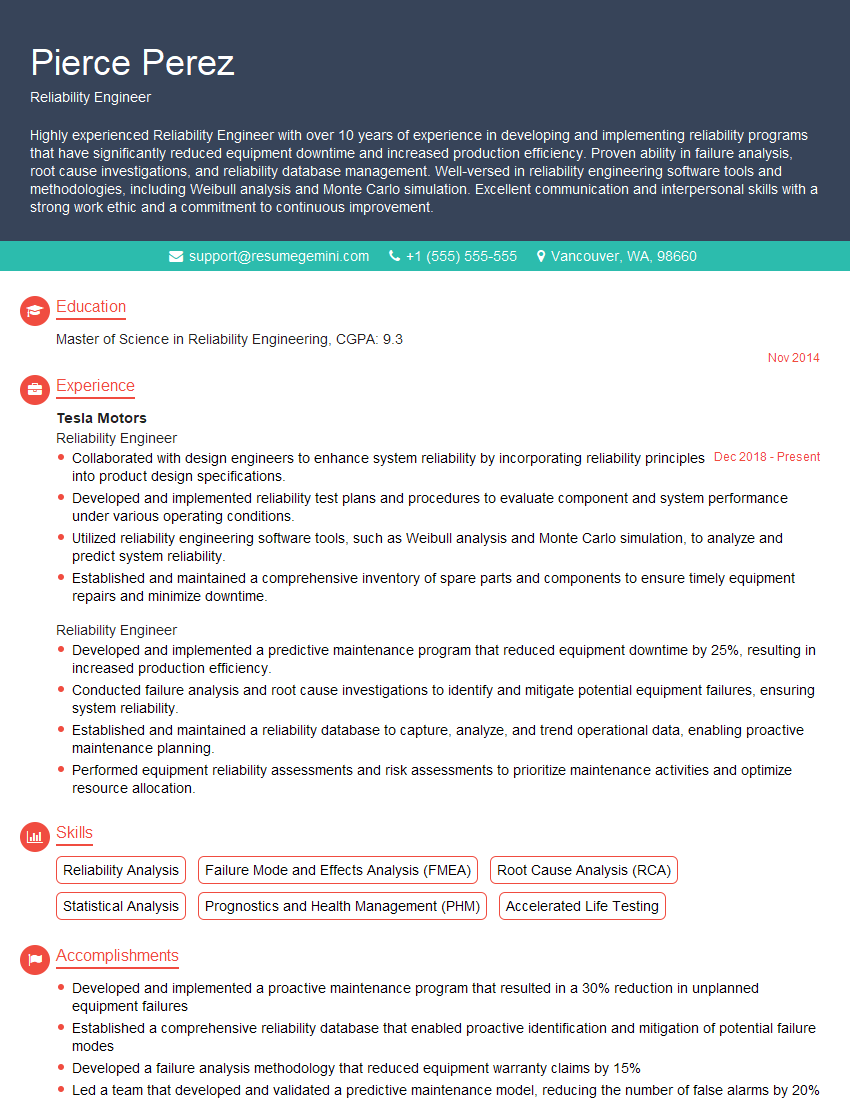
Reliability Engineer Resume Sample
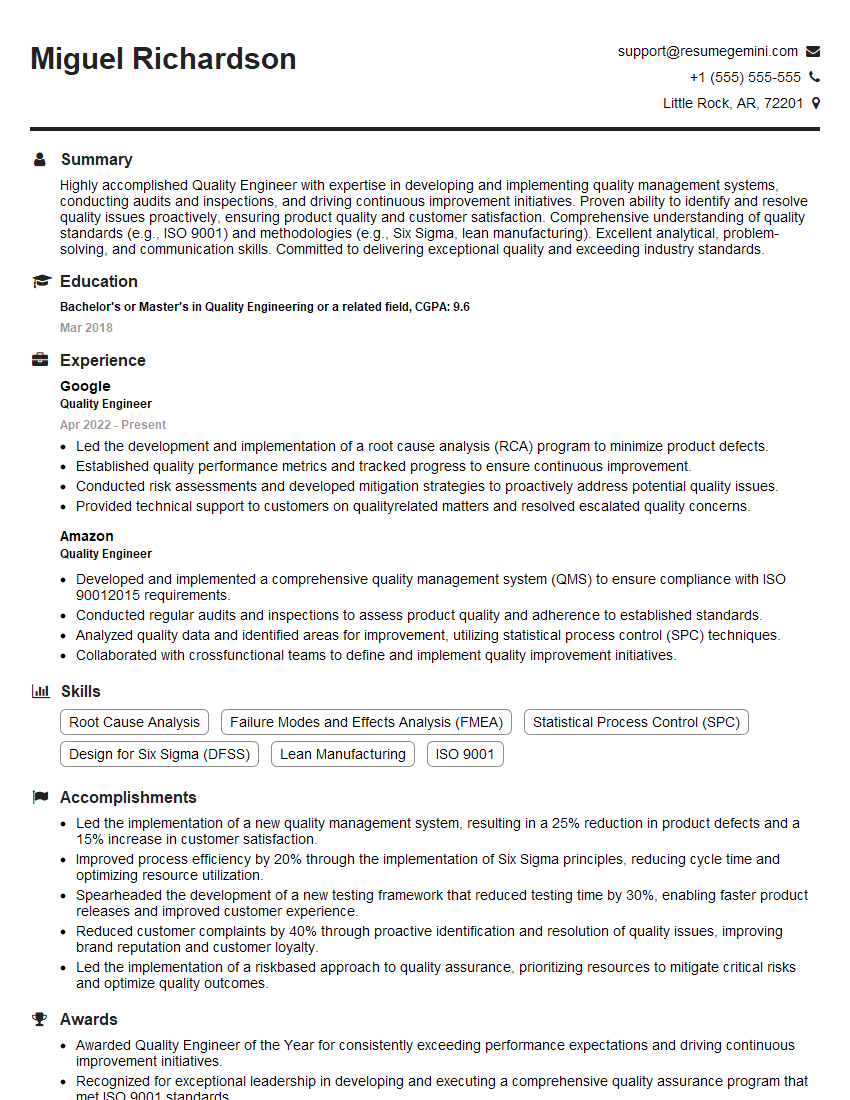
Quality Engineer Resume Sample
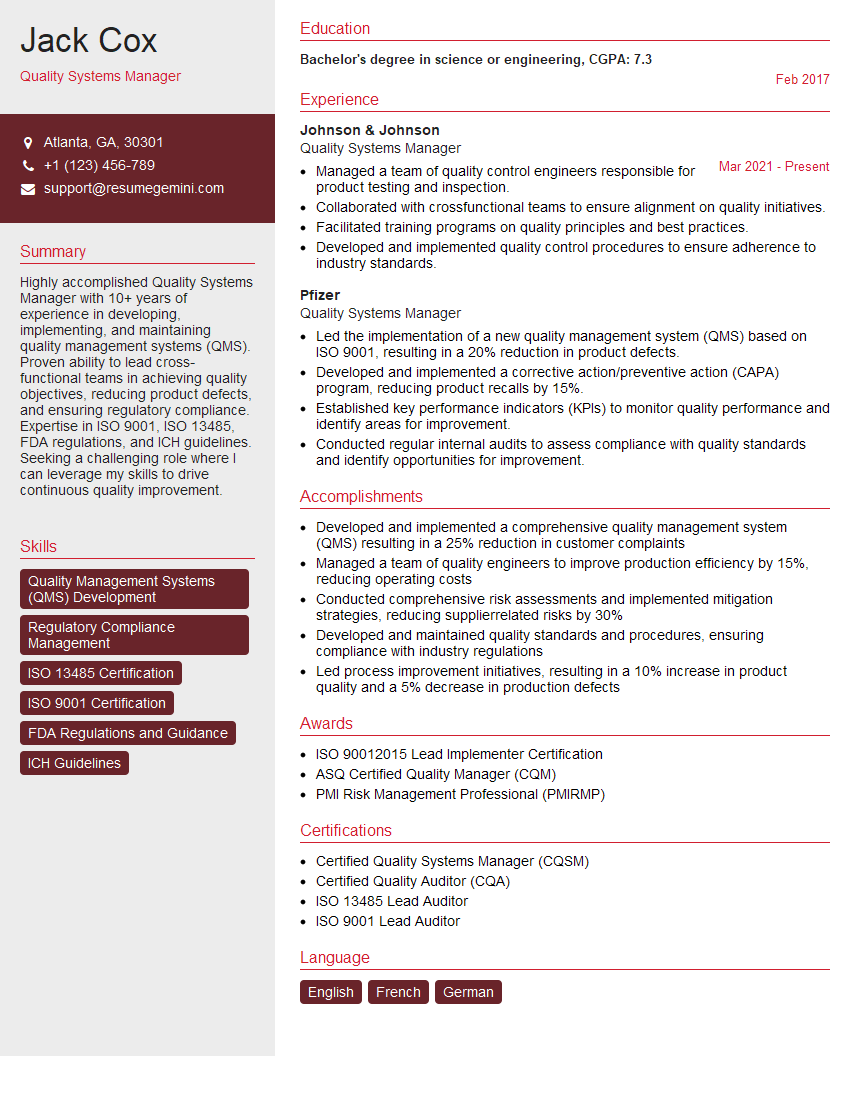
Quality Systems Manager Resume Sample
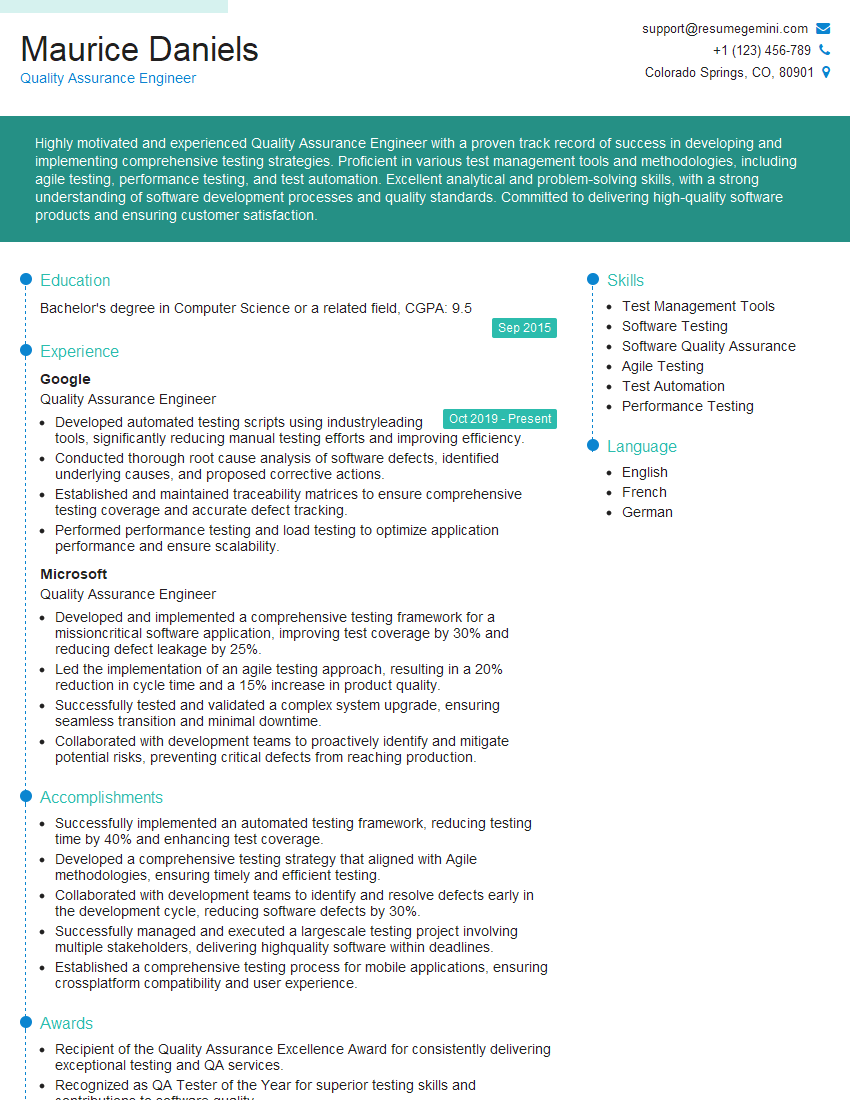
Quality Assurance Engineer Resume Sample
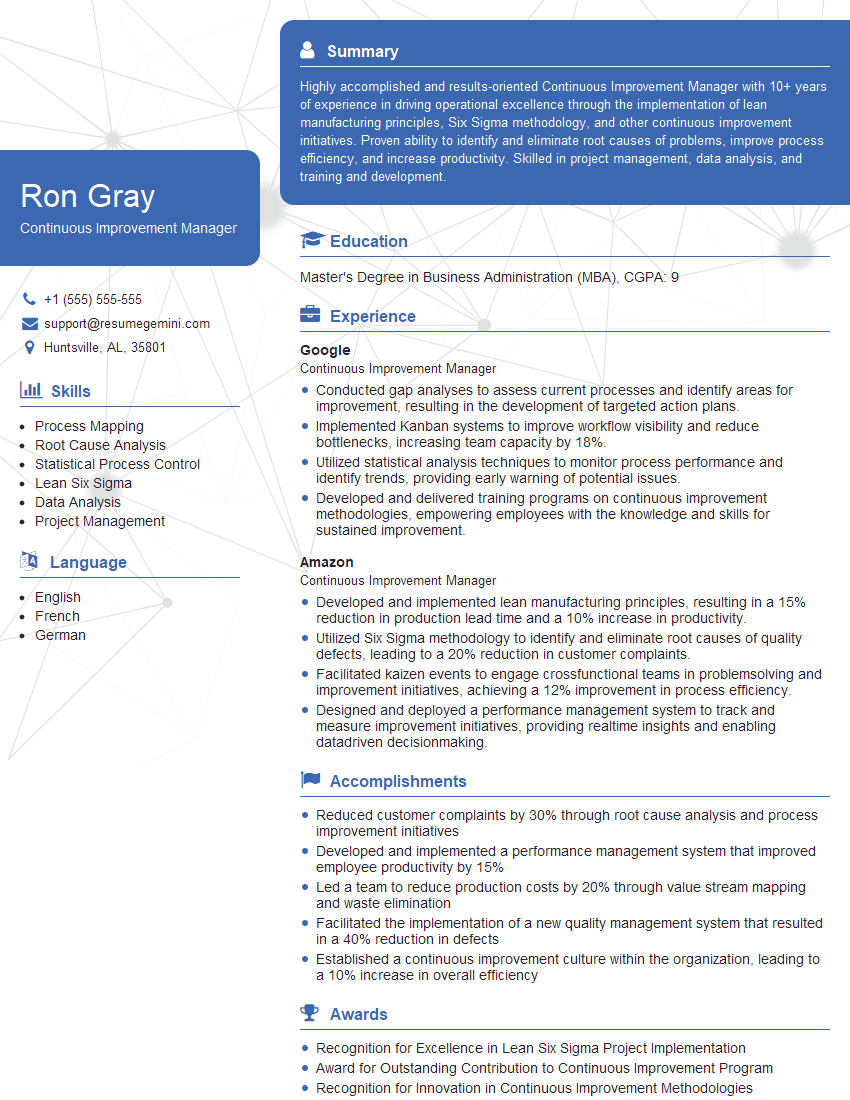
Continuous Improvement Manager Resume Sample
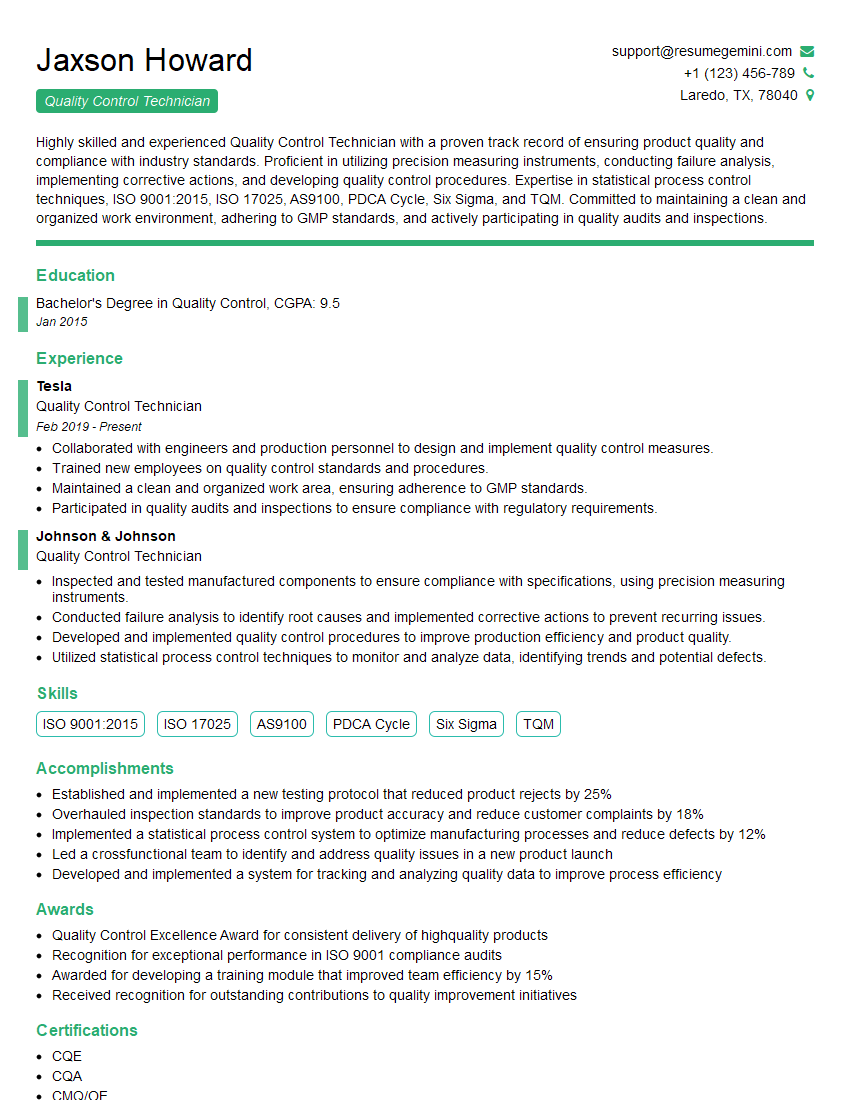
Quality Control Technician Resume Sample
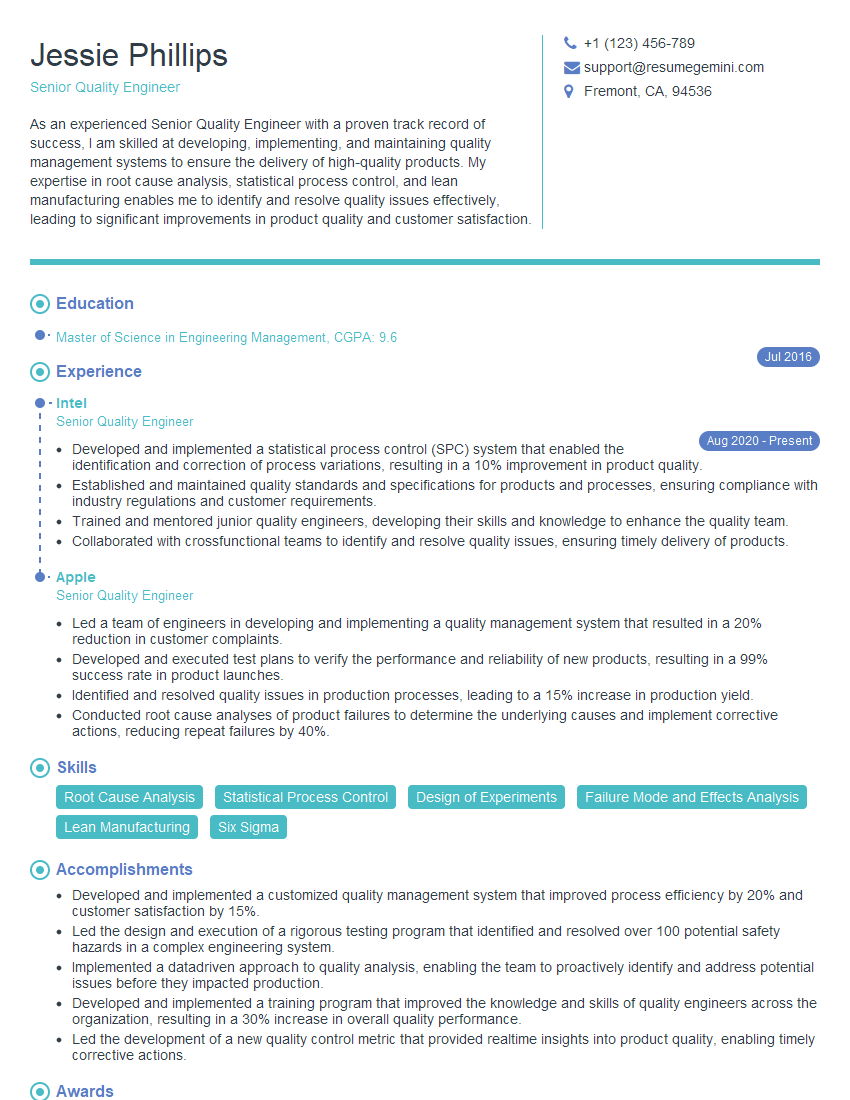
Senior Quality Engineer Resume Sample
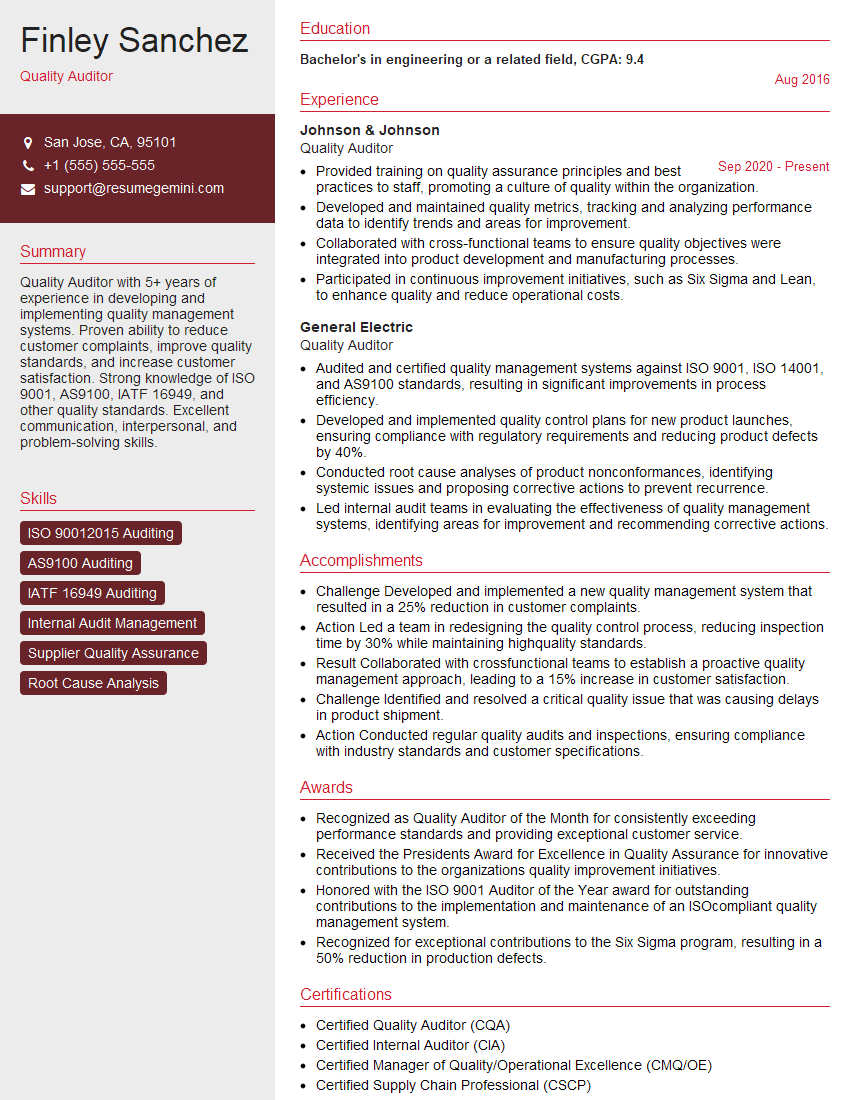
Quality Auditor Resume Sample
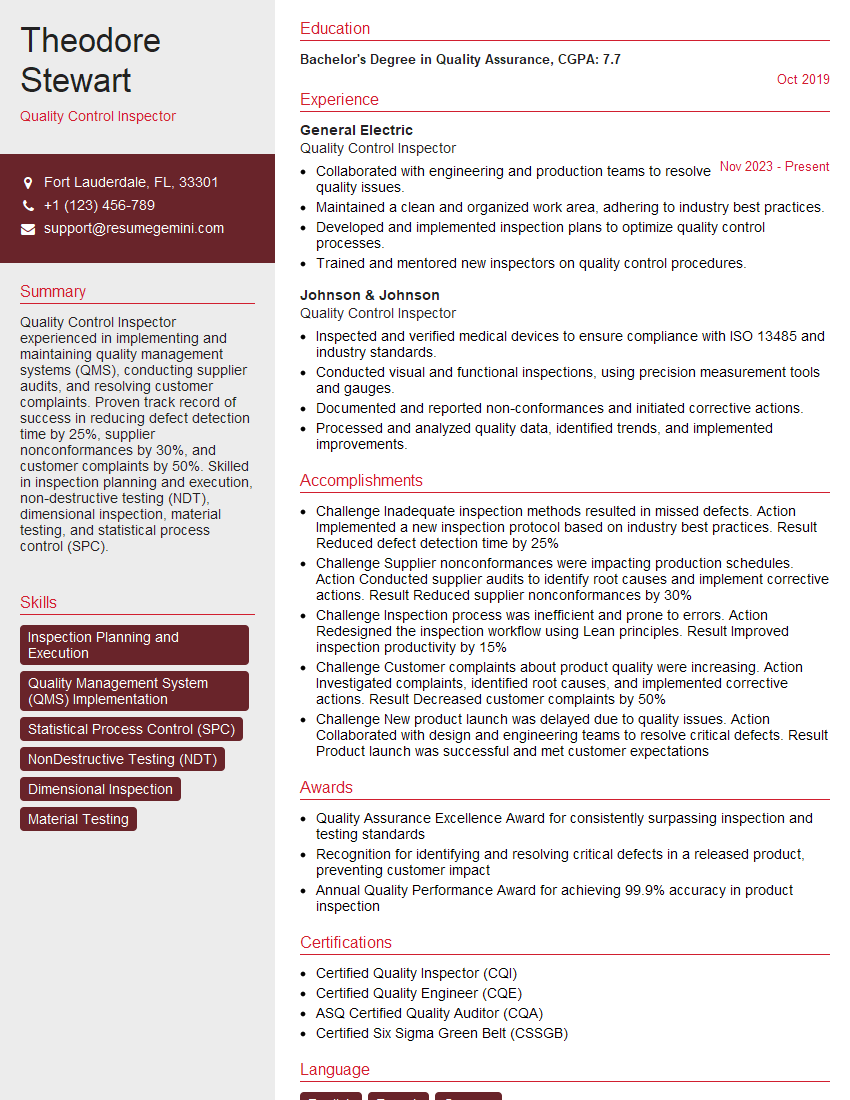
Quality Control Inspector Resume Sample
- Quality Manager
- Quality Assurance Manager
- Quality Control Manager
- Quality Control Supervisor
- Compliance Manager
- Quality Assurance Specialist
- Reliability Engineer
- Quality Engineer
- Quality Systems Manager
- Quality Assurance Engineer
- Continuous Improvement Manager
- Quality Control Technician
- Senior Quality Engineer
- Quality Auditor
- Quality Control Inspector
Explore more articles
Users Rating of Our Blogs
Share Your Experience
We value your feedback! Please rate our content and share your thoughts (optional).
What Readers Say About Our Blog
Really detailed insights and content, thank you for writing this detailed article.
IT gave me an insight and words to use and be able to think of examples