Every successful interview starts with knowing what to expect. In this blog, we’ll take you through the top Railroad Equipment Knowledge interview questions, breaking them down with expert tips to help you deliver impactful answers. Step into your next interview fully prepared and ready to succeed.
Questions Asked in Railroad Equipment Knowledge Interview
Q 1. Describe the different types of locomotive engines and their applications.
Locomotive engines are the powerhouse behind trains, and different types are suited for various applications. The most common types include:
- Diesel-Electric Locomotives: These are the workhorses of North American freight railroads. They use a diesel engine to generate electricity, which then powers electric traction motors driving the wheels. This provides excellent power and control, making them ideal for hauling heavy freight trains over long distances and varied terrain. Think of it like a power plant on wheels; the diesel engine is the generator, and the electric motors are the engines actually turning the wheels.
- Electric Locomotives: These locomotives draw power from an external source, such as overhead lines (catenary) or a third rail. They are often used in areas with high traffic density or where minimizing emissions is crucial, like commuter rail systems and high-speed rail lines. They’re incredibly powerful and efficient when operating on electrified tracks.
- Gas Turbine-Electric Locomotives: These locomotives use a gas turbine (similar to a jet engine) to generate electricity for traction motors. They offer high horsepower, but typically have lower fuel efficiency than diesel-electric locomotives and are less common. They were more prevalent in the past and are still used in specific niche applications.
The choice of locomotive engine type depends largely on operational requirements, such as the weight of the trains, the length of the routes, the terrain, and environmental regulations.
Q 2. Explain the braking systems used on freight and passenger trains.
Train braking systems are complex and critical for safety. Both freight and passenger trains utilize a combination of braking systems:
- Air Brakes: This is the primary braking system for most trains. Compressed air is used to actuate brake shoes or discs on each railcar. The system is designed with fail-safe mechanisms – if air pressure is lost, the brakes automatically apply. Think of it as a sophisticated network of air-powered clamps on each wheel.
- Dynamic Braking: This system uses the traction motors as generators to create resistance, slowing the train down. It’s particularly effective on steep grades and reduces wear and tear on the air brake system. It’s like using the train’s engines in reverse to slow it down.
- Automatic Train Control (ATC): ATC systems are crucial safety features, particularly in passenger rail. They monitor train speed and location and automatically apply the brakes if the train exceeds a safe speed limit or approaches a signal improperly. This adds an extra layer of automated safety.
- Independent Braking: Each railcar in a freight train has its own braking system, ensuring that if one car fails, the others can still brake effectively. Passenger trains generally have more sophisticated distributed braking systems to ensure smooth, coordinated braking.
Passenger trains typically prioritize faster stopping distances and smoother braking compared to freight trains, which must prioritize the control of very long and heavy trains.
Q 3. What are the common causes of railcar wheel failures?
Railcar wheel failures can have serious consequences, disrupting operations and posing safety risks. Common causes include:
- Metal Fatigue: Repeated stress from rolling and braking can cause microscopic cracks to form and propagate in the wheel, ultimately leading to failure. Think of it like bending a paper clip back and forth repeatedly until it breaks.
- Impact Damage: Collisions, derailments, or contact with track irregularities can cause significant damage to wheels, leading to cracks or fractures. Even seemingly minor impacts can initiate fatigue cracks over time.
- Improper Maintenance: Lack of regular inspection and maintenance, including inadequate wheel profile maintenance, can accelerate wear and tear and increase the risk of failure. This includes checking for flat spots, shelling, and other defects.
- Manufacturing Defects: Flaws in the manufacturing process can weaken the wheel material, making it more susceptible to failure. This is why rigorous quality control is crucial in the manufacturing process.
- Thermal Cracking: Excessive braking can generate significant heat, potentially leading to thermal stress and cracks in the wheel. This is more common in high-speed or heavy-duty applications.
Regular wheel inspections and proactive maintenance are vital for preventing wheel failures and ensuring the safety of railway operations.
Q 4. How do you diagnose and troubleshoot electrical problems in locomotives?
Diagnosing electrical problems in locomotives requires a systematic approach and a solid understanding of the locomotive’s electrical systems. Here’s a general troubleshooting process:
- Safety First: Always de-energize the system and follow proper lockout/tagout procedures before attempting any repairs.
- Gather Information: Identify the specific symptom (e.g., lights not working, motor failure). Gather information on when the problem occurred, under what conditions, and if any other systems are affected.
- Visual Inspection: Carefully inspect wiring harnesses, connectors, and components for damage, loose connections, or corrosion. Look for burnt components or signs of overheating.
- Use Diagnostic Tools: Modern locomotives are equipped with sophisticated diagnostic systems. Use these tools to read fault codes and obtain data about system performance. This provides valuable clues about the problem’s location and potential cause.
- Schematic Review: Refer to the locomotive’s electrical schematic diagrams to trace circuits and identify the affected components. This detailed diagram of the electrical system provides a roadmap for tracking down a faulty circuit.
- Component Testing: Once you’ve identified a suspect component, use multimeters or other testing equipment to verify its functionality. Replace or repair as needed.
- Retest: After making repairs, thoroughly test the system to ensure the problem is resolved and that no new issues have been introduced.
Troubleshooting electrical issues requires specialized knowledge and training. Working with a faulty electrical system can be dangerous, so always prioritize safety and seek expert assistance when needed.
Q 5. Detail the process of inspecting and maintaining railcar couplers.
Railcar couplers are crucial for connecting railcars and ensuring the safe transmission of forces during train operation. Inspection and maintenance are essential for safety and operational efficiency:
- Visual Inspection: Regular visual inspections are crucial. Check for damage to the coupler components such as the knuckle, shank, and locking mechanism. Look for cracks, bends, or excessive wear.
- Lubrication: Proper lubrication of moving parts, like the knuckle and locking pins, is essential to reduce friction and wear. Use the correct type and amount of lubricant recommended by the manufacturer.
- Pin and Lock Mechanism Check: Ensure the locking pin mechanism is functioning correctly and securely holds the coupler in its closed position. Test the locking mechanism for proper function and replace any worn or damaged parts.
- Uncoupling Mechanism Test: Manually test the uncoupling mechanism to ensure it operates smoothly and freely. A jammed or faulty uncoupling mechanism can cause delays and safety issues.
- Gauging and Measurements: Periodically, use specialized gauges to measure the coupler’s dimensions and ensure they meet the required tolerances. This helps to identify early signs of wear that could lead to failure.
- Repair or Replacement: If any damage or wear is detected beyond acceptable limits, repair or replace the faulty coupler. Using damaged couplers can result in derailments or other accidents.
Regular maintenance and timely repairs of couplers prevent costly derailments and ensure safe train operation. Remember to always consult the manufacturer’s maintenance manual for detailed specifications.
Q 6. What safety procedures are followed when working on railroad equipment?
Safety is paramount when working on railroad equipment. Procedures vary depending on the specific task and location, but key elements include:
- Lockout/Tagout (LOTO): Before commencing any work on equipment that could have potentially hazardous energy sources (electrical, hydraulic, pneumatic), a LOTO procedure must be strictly followed to prevent accidental energization.
- Personal Protective Equipment (PPE): Appropriate PPE is essential, including safety glasses, gloves, steel-toed boots, high-visibility clothing, and hearing protection depending on the task.
- Trackside Safety: If working on or near tracks, strict adherence to railroad rules and regulations is mandatory. This includes proper flagging procedures to warn of approaching trains, use of communication systems, and awareness of the surroundings.
- Competency and Training: Only trained and qualified personnel should perform maintenance and repair work. Regular training and competency assessments are crucial to ensure that workers are aware of the safety risks and the procedures to mitigate those risks.
- Emergency Procedures: Workers must be aware of emergency response procedures in case of accidents or injuries. They should know how to contact emergency services and what actions to take in various emergency scenarios.
Following these safety procedures diligently protects workers and prevents accidents, contributing to a safer and more efficient railway operation.
Q 7. Explain the importance of preventative maintenance for railroad equipment.
Preventative maintenance for railroad equipment is crucial for safety, reliability, and cost-effectiveness. Regular inspections and scheduled maintenance significantly reduce the likelihood of costly breakdowns and unexpected repairs.
- Reduced Downtime: Preventative maintenance minimizes unscheduled downtime caused by equipment failures, keeping trains running on schedule and reducing operational disruptions.
- Improved Safety: Regular inspections identify potential safety hazards early on, allowing for timely repairs or replacements, minimizing the risk of accidents and injuries.
- Extended Equipment Life: Preventative maintenance prolongs the service life of railroad equipment by preventing premature wear and tear, resulting in significant cost savings in the long run. This extends the period of time before major overhaul or replacement.
- Predictive Maintenance: Using advanced technologies like sensor-based monitoring allows for predictive maintenance, enabling proactive interventions before failures occur. This reduces the potential for sudden and potentially catastrophic failures.
- Cost Savings: While preventative maintenance involves initial investment, the long-term cost savings from reduced breakdowns, extended equipment life, and fewer costly emergency repairs far outweigh the initial investment.
A comprehensive preventative maintenance program is an investment in safety, reliability, and operational efficiency. It’s a proactive approach that reduces long-term costs and ensures the smooth operation of railway systems.
Q 8. Describe the different types of track and their maintenance requirements.
Railroad track comes in various types, each with specific maintenance needs. The most common are:
- Conventional Rail: This is the standard type, usually made of steel. Maintenance involves regular inspections for rail defects like cracks, corrosion, and gauge widening (the distance between the rails). This requires visual inspections, often with specialized equipment like ultrasonic flaw detectors, and regular grinding or replacement of damaged sections.
- Continuous Welded Rail (CWR): Sections of rail are welded together to form long, continuous lengths. This reduces the number of joints, improving ride quality and reducing maintenance related to joint issues. However, CWR requires more precise temperature monitoring to prevent buckling in extreme heat and careful management of thermal stresses during installation.
- Pre-stressed Concrete Sleepers (Crossties): These offer a longer lifespan compared to wooden sleepers but need periodic inspection for cracks and damage. Repairs involve localized patching or replacement of damaged components.
Overall track maintenance involves regular patrolling, cleaning, ballast (the stone bed under the tracks) renewal, and weed control. The frequency and intensity depend on factors like traffic volume and environmental conditions. For example, heavy freight lines require more frequent maintenance than lightly used branch lines. Failure to maintain track properly leads to derailments, slow speeds, and increased operational costs.
Q 9. What are the common types of rail defects and how are they detected?
Rail defects can severely impact safety and operational efficiency. Common types include:
- Head Checks and Splits: These are cracks or breaks in the head of the rail (the top surface). Often caused by fatigue from heavy loads or impact, they are detected through visual inspection, sometimes with the aid of magnetic particle testing or ultrasonic testing.
- Corrosion: Rust and other forms of corrosion weaken the rail structure. This is identified through visual inspections and requires cleaning or replacement depending on the severity.
- Gauge Widening: The distance between the rails expands beyond the specified limit. Detected through measurements with specialized instruments, it can lead to derailments.
- Broken Rails: Complete fractures of the rail, usually requiring immediate replacement. Often found during regular inspections or reported by train crews.
Detection methods vary depending on the defect, from simple visual inspections to sophisticated ultrasonic testing, magnetic flux leakage testing, and even advanced technologies like ground penetrating radar for subsurface evaluation. Early detection is crucial to prevent catastrophic failure.
Q 10. How do you handle emergency situations related to railroad equipment failure?
Emergency situations involving railroad equipment failure require immediate and coordinated action. The response depends on the nature of the failure, but typically involves:
- Securing the Scene: Immediately stop affected trains and isolate the area, preventing further accidents. This may involve activating emergency communication systems and deploying signals to warn approaching trains.
- Assessing the Situation: Determine the extent of the damage and potential hazards. This involves evaluating the equipment, track, and surrounding environment.
- Emergency Repairs or Replacement: If feasible, perform temporary repairs to enable train movement. Otherwise, arrange for replacement components or even track sections.
- Incident Reporting and Investigation: Document the incident thoroughly, including all relevant details, and initiate an investigation to determine the cause and prevent future occurrences. This also involves notifying relevant authorities and agencies.
- Communication: Maintain clear communication with affected personnel, passengers (if applicable), and external stakeholders.
Effective emergency response relies on well-trained personnel, clear communication protocols, and access to readily available resources, emphasizing safety as the paramount concern.
Q 11. Explain the function of a train control system.
A train control system is crucial for safe and efficient railway operations. It encompasses various technologies and processes to manage train movements and prevent collisions. Key functions include:
- Signaling: Uses signals (lights and signs) to direct trains, controlling speed and routing. This can be a simple color-light system or a sophisticated computer-controlled system.
- Automatic Train Protection (ATP): Systems that automatically intervene to prevent accidents by applying brakes if a train exceeds speed limits or enters a prohibited area.
- Centralized Traffic Control (CTC): Allows operators to remotely control and monitor train movements over a large area through a central control center.
- Communications: Reliable communication channels between trains, control centers, and maintenance crews are vital for smooth operation and emergency response.
- Track Circuit Monitoring: Detects the presence of trains on specific sections of track, contributing to safe train spacing and collision avoidance.
Modern train control systems integrate various technologies to enhance safety, capacity, and efficiency. For example, Positive Train Control (PTC) is a sophisticated system that automatically stops trains before certain accidents.
Q 12. Describe different types of railcar designs and their purposes.
Railcar designs vary widely depending on their intended purpose. Some common types include:
- Tank Cars: Transport liquids like oil, chemicals, and gases. Their design emphasizes structural integrity and leak prevention.
- Hopper Cars: Designed to carry bulk materials like grain, coal, and ore. Their bottom is equipped with hatches for easy unloading.
- Boxcars: Closed, rectangular cars ideal for transporting packaged goods, pallets, and containers. They come in various sizes and configurations, with variations for specific cargo types.
- Refrigerated Cars (Reefer Cars): Equipped with refrigeration units to maintain a consistent temperature for perishable goods.
- Flatcars: Simple, open-top cars used for oversized loads, machinery, and construction materials.
- Gondola Cars: Open-top cars with sides, suitable for transporting bulk materials that don’t require complete enclosure.
The design of a railcar must consider its payload capacity, structural strength, safety features, and the specific requirements of the cargo it is intended to transport. Each type has unique features to optimize performance and safety within its specific use case.
Q 13. What are the components of a locomotive’s air brake system?
A locomotive’s air brake system is a crucial safety feature. It uses compressed air to apply brakes to the locomotive and the entire train. Key components include:
- Air Compressor: Compresses atmospheric air to create a high-pressure air supply.
- Main Reservoirs: Large tanks that store the compressed air.
- Brake Valves: Control the flow of compressed air to the brake cylinders.
- Brake Cylinders: Piston-driven cylinders that apply the brakes by pushing brake shoes against the wheels.
- Control Valves: Manage air pressure to individual cars and the locomotive’s brakes. These might include automatic brake valves to control emergency braking.
- Safety Valves: Protect against over-pressurization.
- Air Pipes and Hoses: Transport compressed air throughout the train.
The entire system is designed to be fail-safe, relying on redundancy and automatic mechanisms to ensure reliable braking under various conditions. Regular inspections and maintenance are paramount to ensuring the system’s operational integrity.
Q 14. How do you perform a wheelset inspection?
A wheelset inspection is a critical part of railway maintenance, aimed at identifying potential problems before they cause derailments or other issues. The process involves:
- Visual Inspection: Checking for cracks, wear and tear on the wheel and axle surfaces. Look for flat spots, shelling (material flaking off), and any obvious damage.
- Wheel Profile Measurement: Using specialized tools or gauges to measure the wheel’s diameter and tread profile, ensuring it conforms to specifications. Uneven wear can indicate issues with the track or wheel alignment.
- Gauge Measurement: Verifying the distance between the wheels is correct to prevent derailment.
- Axle Inspection: Looking for cracks, corrosion, or any signs of damage to the axle itself. This often involves using ultrasonic testing to detect internal flaws.
- Bearing Inspection: Checking the condition of the wheel bearings, listening for any unusual noises which may indicate bearing failure. Heat build-up is another indicator of bearing problems.
- Documentation: Meticulous record-keeping of findings and measurements is vital for tracking wear and scheduling preventive maintenance.
Regular wheelset inspections are vital for railway safety. The frequency of inspections depends on factors like train type, speed, and track conditions, but it is a highly regulated aspect of railway maintenance. Early detection of problems saves time and costs, preventing costly accidents.
Q 15. Explain the process of repairing a damaged railcar underframe.
Repairing a damaged railcar underframe is a complex process requiring careful assessment and precise execution. It involves several steps, beginning with a thorough inspection to determine the extent of the damage. This might involve visual inspection, ultrasonic testing, or even X-rays to detect hidden cracks or fractures. The type of damage dictates the repair strategy.
- Minor Damage: Small dents or surface scratches might only require cleaning, grinding, and repainting.
- Significant Damage: More substantial damage, such as cracks or broken components, requires more extensive repairs. This could involve cutting out the damaged section, fabricating a replacement part (often using welding techniques like GMAW or SMAW), and then carefully welding it into place. The weld will then need to be inspected for quality and strength, often using non-destructive testing methods.
- Severe Damage: In cases of severe damage, the entire underframe might need replacement. This is a major undertaking requiring specialized equipment and skilled technicians. A new underframe would be installed, ensuring proper alignment and securing all components.
Throughout the process, adherence to strict safety protocols and adherence to the manufacturer’s specifications and industry standards are paramount. After repairs are complete, the underframe undergoes rigorous testing to ensure its structural integrity before the railcar is returned to service. For instance, we might conduct load tests to verify its capacity to handle the expected weight and stress. Think of it like rebuilding a car’s chassis – meticulous work is required to guarantee safety and reliability.
Career Expert Tips:
- Ace those interviews! Prepare effectively by reviewing the Top 50 Most Common Interview Questions on ResumeGemini.
- Navigate your job search with confidence! Explore a wide range of Career Tips on ResumeGemini. Learn about common challenges and recommendations to overcome them.
- Craft the perfect resume! Master the Art of Resume Writing with ResumeGemini’s guide. Showcase your unique qualifications and achievements effectively.
- Don’t miss out on holiday savings! Build your dream resume with ResumeGemini’s ATS optimized templates.
Q 16. What are the regulations and standards for railroad equipment maintenance?
Railroad equipment maintenance is governed by a comprehensive set of regulations and standards designed to prioritize safety and operational efficiency. Key players include the Federal Railroad Administration (FRA) in the US and similar regulatory bodies in other countries. These regulations cover all aspects of maintenance, from track inspections to the repair of rolling stock. Specific standards, such as the Association of American Railroads (AAR) standards, provide detailed specifications for the construction, inspection, and repair of railcars and locomotives.
These standards address issues such as:
- Inspection frequency: Regular inspections are mandated to detect potential problems early.
- Repair procedures: Detailed procedures are outlined for various types of repairs, ensuring consistency and quality.
- Record-keeping: Meticulous record-keeping is crucial to track maintenance activities and ensure compliance.
- Personnel qualifications: The qualifications and training of maintenance personnel are strictly regulated.
Failure to comply with these regulations can lead to serious consequences, including hefty fines, operational shutdowns, and potential legal repercussions. The overarching goal is to minimize risk and ensure the safe and reliable operation of the railroad system.
Q 17. How do you ensure the safety of yourself and others when working on tracks?
Safety is paramount when working on or around railroad tracks. A structured safety approach is essential, encompassing several key elements:
- Proper training: Thorough training on safe work practices is mandatory. This includes understanding signal systems, recognizing hazards, and using appropriate personal protective equipment (PPE).
- Risk assessment: A detailed risk assessment should be conducted before any work begins, identifying potential hazards and developing mitigation strategies.
- Personal Protective Equipment (PPE): Appropriate PPE, such as high-visibility clothing, safety glasses, gloves, and hard hats, must always be worn.
- Trackside safety procedures: Strict procedures must be followed to ensure the safety of workers, including flagging procedures to warn approaching trains. Use of trackside warning devices and clear communication are critical.
- Lockout/Tagout procedures: Before working on any equipment, lockout/tagout procedures must be followed to prevent accidental energization or movement.
- Emergency preparedness: Emergency procedures and communication plans should be in place in case of accidents or unexpected events.
Imagine working on a busy track – proper communication and safety protocols could be the difference between a successful repair and a potentially devastating accident. It’s not just about following rules; it’s about cultivating a strong safety culture where everyone takes responsibility for their own safety and the safety of others.
Q 18. Describe your experience with different types of welding used in railcar repair.
My experience encompasses various welding techniques commonly employed in railcar repair. The choice of welding process depends on the material being welded, the thickness of the material, and the required weld quality. Here are some examples:
- Gas Metal Arc Welding (GMAW): Also known as MIG welding, this is widely used for its speed and ease of use. It’s often employed for joining thinner materials or for less critical repairs. It’s efficient and produces a good weld quality with proper technique.
- Shielded Metal Arc Welding (SMAW): Often called stick welding, this process is versatile and suitable for a range of materials and thicknesses. It is valuable in outdoor conditions or where access is limited. The weld quality can be very good, though it requires more skill than MIG welding.
- Gas Tungsten Arc Welding (GTAW): This method, also known as TIG welding, provides excellent control and high-quality welds, crucial for critical structural repairs. Its precision is especially important when working with high-strength steels. It is slower than other methods.
In addition to these, specialized techniques like submerged arc welding (SAW) may be used for specific applications, particularly in the manufacturing of new railcar components. My experience includes the selection of appropriate filler metals and techniques to achieve the desired weld properties and meet stringent quality control standards.
Q 19. What are the environmental considerations in railroad equipment maintenance?
Environmental considerations are increasingly important in railroad equipment maintenance. The industry is working to minimize its environmental impact through several strategies:
- Waste management: Proper disposal of hazardous materials, such as used oils, solvents, and paints, is essential. Recycling and reuse programs are also increasingly common.
- Air quality: Emissions from welding and other processes need to be controlled, often through the use of ventilation systems and emission control equipment. Using low-emission equipment is crucial.
- Water quality: Wastewater from cleaning and other processes must be treated to prevent water pollution. This often includes filtration and proper disposal techniques.
- Noise pollution: Noise levels from maintenance activities should be minimized, potentially through the use of noise-reducing equipment and sound barriers.
- Sustainable practices: Using environmentally friendly materials and processes is becoming increasingly important. This includes selecting low-VOC paints and using recycled materials where possible.
Railroad companies are recognizing their environmental responsibilities, and many are actively investing in sustainable practices to improve their environmental footprint. This approach is not only environmentally sound but is also often beneficial from a cost-saving perspective in the long run.
Q 20. How familiar are you with different types of track gauges?
Track gauge refers to the distance between the inner faces of the two rails of a railway track. Different countries and regions utilize various track gauges, primarily standard gauge (4 ft 8 1/2 in or 1435 mm), broad gauge (over 5 ft), and narrow gauge (under 4 ft 8 1/2 in). I’m very familiar with these common gauges and their applications:
- Standard Gauge (1435 mm): This is the most widely used gauge globally, offering a good balance between stability and cost-effectiveness. Most of North America and Europe utilize this gauge.
- Broad Gauge (various): Broad gauges, such as the Indian broad gauge (5 ft 6 in), offer greater stability and allow for higher speeds, but they are more expensive to construct and maintain.
- Narrow Gauge (various): Narrow gauges are used in mountainous regions or areas with limited space, where a smaller gauge reduces construction costs. They might have lower speeds and carrying capacity.
Understanding track gauge is crucial for ensuring the compatibility of rolling stock with the infrastructure. A mismatch in gauge would obviously lead to derailment. My experience includes working with different gauges and the challenges associated with gauge conversions or operating equipment designed for one gauge on tracks of a different gauge.
Q 21. Explain the use and maintenance of track switches and crossings.
Track switches, also known as points, and crossings are critical components of a railway system, enabling trains to change tracks. Their proper functioning is essential for safe and efficient train operations.
Track Switches (Points): These allow trains to divert from one track to another. They consist of movable rails held in place by mechanisms that enable their movement. Maintenance involves regular inspection for proper alignment, lubrication of moving parts to reduce wear and tear, and timely replacement of worn components. Malfunctioning switches could lead to derailments or collisions. Regular checks for proper throw and alignment are imperative.
Crossings: These allow trains to cross from one track to another at an angle. They consist of specially hardened steel components designed to withstand the high stresses of passing trains. Maintenance involves inspecting for proper alignment, checking for cracks or damage, and ensuring that the crossing is properly maintained to prevent derailments. Regular checks for wear and tear and proper fastening of components are crucial.
Maintenance for both switches and crossings is highly regulated to ensure safety. This involves regular inspections, lubrication, and prompt repair or replacement of damaged components. It’s like maintaining a critical junction in a highway system – regular attention is necessary to avoid potentially dangerous situations.
Q 22. Describe the process of lubricating locomotive components.
Locomotive lubrication is a critical aspect of preventative maintenance, ensuring smooth operation and extending the lifespan of vital components. The process varies depending on the specific locomotive model and manufacturer but generally involves a systematic approach targeting key areas such as bearings, gears, and other moving parts.
- Identifying Lubrication Points: This begins with consulting the locomotive’s lubrication chart, which details the type and quantity of lubricant required for each point. These charts are incredibly detailed and often color-coded for clarity.
- Grease Gun Application: For many components, a grease gun is used to inject the appropriate grease into zerk fittings. It’s vital to avoid over-greasing, which can lead to seal damage. I always make sure to pump until I see fresh grease coming out of the zerk fitting, indicating proper lubrication.
- Oil Level Checks and Top-ups: Engine oil, transmission oil, and other fluid levels are checked regularly using dipsticks and topped up as needed with the correct type and grade of oil. This ensures adequate lubrication for the internal moving parts.
- Specialized Lubricants: Certain components might require specialized lubricants, such as high-temperature grease for brake systems or specialized oils for specific gearboxes. Using the wrong lubricant can cause damage and catastrophic failure.
- Record Keeping: Meticulous record-keeping is essential. We document the date, time, location, type of lubricant used, and the quantity applied for every lubrication event. This ensures traceability and helps in predictive maintenance.
For example, during my time at Union Pacific, we had a standardized lubrication schedule for our GE AC4400CW locomotives. We adhered to this schedule rigorously, which resulted in significantly reduced instances of mechanical failure due to inadequate lubrication.
Q 23. What is your experience with diagnostic software used for railroad equipment?
I have extensive experience using various diagnostic software packages for locomotives, including but not limited to, the GE Genesis, EMD Engine Control System (ECS), and various onboard computer systems. These systems are crucial for identifying fault codes, monitoring performance metrics, and isolating problems for efficient repair.
For instance, using GE’s Genesis system, I’ve successfully diagnosed and resolved issues ranging from minor sensor malfunctions to complex problems with the locomotive’s electrical system. The software provides real-time data on engine parameters, fuel consumption, and other vital information. Understanding how to interpret this data is key to effective troubleshooting. I’m proficient in using the diagnostic tools to download event logs, which are invaluable in pinpointing the root cause of malfunctions.
Furthermore, my experience extends to using off-board diagnostic equipment which is particularly useful in situations where the onboard system might not be accessible or providing the necessary data. I am familiar with the use of various data loggers and analysis software used to make sense of the collected data.
Q 24. How do you interpret maintenance manuals and schematics?
Interpreting maintenance manuals and schematics is fundamental to my work. These documents provide the roadmap for repairing and maintaining locomotives. I’m adept at understanding both the textual descriptions and the visual representations provided in these materials.
Schematics, for instance, provide a detailed breakdown of the locomotive’s systems, showing the relationships between various components. I use them to trace electrical circuits, identify wiring harnesses, and locate specific parts. Maintenance manuals provide step-by-step procedures for various tasks, including component removal, repair, and reassembly. I’m particularly skilled at understanding cross-referenced diagrams, where one component might be shown in detail across multiple pages of the manual.
For example, during a recent repair of a faulty air compressor, I used the schematic to trace the electrical circuit powering the compressor and the manual’s instructions for safely disconnecting and replacing the faulty component. Proper interpretation of these documents ensures the job is performed safely and correctly, preventing potential hazards and ensuring the locomotive’s safe and efficient operation.
Q 25. Describe your experience with various types of hand tools and power tools used in rail maintenance.
My experience with hand and power tools used in rail maintenance is comprehensive. I’m proficient in using a wide variety of tools, from basic wrenches and screwdrivers to specialized pneumatic and hydraulic tools. Safety is paramount, so I’m meticulous about ensuring that tools are in good working condition, and I always follow appropriate safety procedures.
- Hand Tools: I’m skilled in using various wrenches (socket, open-end, adjustable), screwdrivers (Phillips, flathead), pliers, hammers, chisels, and measuring tools. These are essential for a wide range of maintenance tasks.
- Power Tools: I have experience with impact wrenches, grinders, drills, saws (reciprocating and circular), and pneumatic rivet guns. These tools significantly improve efficiency and precision, particularly on larger tasks.
- Specialized Tools: My expertise extends to specialized tools used in rail maintenance, such as bearing pullers, hydraulic jacks, and wheel sets. Knowledge of these tools is critical for complex maintenance and repair operations.
For instance, I regularly use impact wrenches to quickly and efficiently remove and install wheel nuts, and hydraulic jacks for lifting and supporting heavy components during repairs. Safety procedures, like using appropriate safety glasses, hearing protection, and ensuring proper tool maintenance, are always strictly followed.
Q 26. What are the signs of a failing axle or bearing?
Identifying a failing axle or bearing is crucial for preventing derailments and ensuring safety. Early detection is key, and there are several telltale signs to look out for.
- Unusual Noise: A common indicator is the presence of unusual sounds, such as squealing, grinding, or rumbling, coming from the wheelset area. This often intensifies as the bearing deteriorates.
- Excessive Vibration: Increased vibration in the locomotive or car is another significant warning sign. This can be felt by the operator or detected using vibration sensors.
- Overheating: Failing bearings and axles can generate excessive heat, which can be detected using infrared thermometers. Excessive heat is a major safety concern, potentially leading to bearing seizure and derailment.
- Wheel Wear: Uneven or accelerated wheel wear can be an indication of issues with the axles or bearings, highlighting a misalignment or excessive load on one particular wheel.
- Oil or Grease Leakage: Leaks of oil or grease from the wheelset area point to a potential seal failure in the bearing housing. This indicates compromised lubrication and impending failure.
Any of these signs should trigger immediate inspection and possible replacement of the faulty component. Ignoring these signals can have devastating consequences.
Q 27. What is your experience with FRA regulations concerning rail safety?
My understanding of FRA (Federal Railroad Administration) regulations concerning rail safety is comprehensive. Compliance with these regulations is non-negotiable and forms the basis of all my work. I’m familiar with a wide range of regulations concerning locomotive maintenance, track inspection, signal systems, and overall operational safety.
For instance, I’m very familiar with the regulations surrounding the inspection and maintenance of braking systems, wheel and axle components, and the documentation procedures required to demonstrate compliance. I also know the rules surrounding the handling and transportation of hazardous materials. I am particularly aware of the requirements for proper reporting of incidents and defects, adhering to the strict protocols established by the FRA.
I regularly participate in safety training sessions to stay abreast of any updates or changes in FRA regulations. Ensuring that all my work complies with these regulations is my top priority and is an essential part of contributing to a safe and reliable railroad operation. Following FRA guidelines contributes to prevention of accidents and incidents, protecting the lives of both employees and the public.
Q 28. Describe your experience with troubleshooting and resolving issues related to train communication systems.
Troubleshooting train communication systems requires a multifaceted approach, blending knowledge of hardware, software, and network protocols. My experience covers various aspects, from diagnosing simple cable faults to resolving complex network connectivity issues.
I’m proficient in using various diagnostic tools to isolate problems within these systems. This might involve checking cable continuity, inspecting connectors, analyzing network traffic, and testing communication protocols such as Ethernet, Wi-Fi, or radio.
For example, I once resolved an issue where a train was experiencing intermittent communication failure. Through systematic testing using a multi-meter and network analyzer, I traced the problem to a faulty connection in the train’s data cabinet. By replacing the faulty connector and thoroughly testing the connection, I restored reliable communication and prevented potential operational disruptions. Understanding the underlying communication protocols and using specialized diagnostic tools is crucial for quickly identifying and resolving these issues to maintain efficient and safe train operations.
Key Topics to Learn for Railroad Equipment Knowledge Interview
- Locomotive Systems: Understanding diesel engine operation, traction motors, braking systems (dynamic and pneumatic), and control systems. Practical application: Troubleshooting common locomotive malfunctions and performing preventative maintenance.
- Freight Car Components: Knowledge of different freight car types (tank cars, hopper cars, boxcars), their structural components, and loading/unloading procedures. Practical application: Assessing the structural integrity of freight cars and identifying potential safety hazards.
- Signaling and Communication Systems: Understanding the principles of railway signaling, communication protocols (e.g., radio dispatch), and safety systems (e.g., automatic train control). Practical application: Interpreting signal indications and ensuring safe train operations.
- Track and Maintenance: Knowledge of track geometry, ballast, rail types, and maintenance practices. Practical application: Identifying track defects and understanding the impact on train operations and safety.
- Safety Regulations and Procedures: Familiarity with FRA regulations and industry best practices related to railroad safety. Practical application: Ensuring compliance with safety standards and mitigating risks.
- Rolling Stock Inspection and Maintenance: Detailed understanding of procedures, tools, and techniques used for inspecting and maintaining various types of rolling stock. Practical application: Conducting thorough inspections and identifying potential issues before they become major problems.
- Troubleshooting and Problem Solving: Develop your ability to analyze problems systematically, identify root causes, and implement effective solutions related to railroad equipment malfunctions.
Next Steps
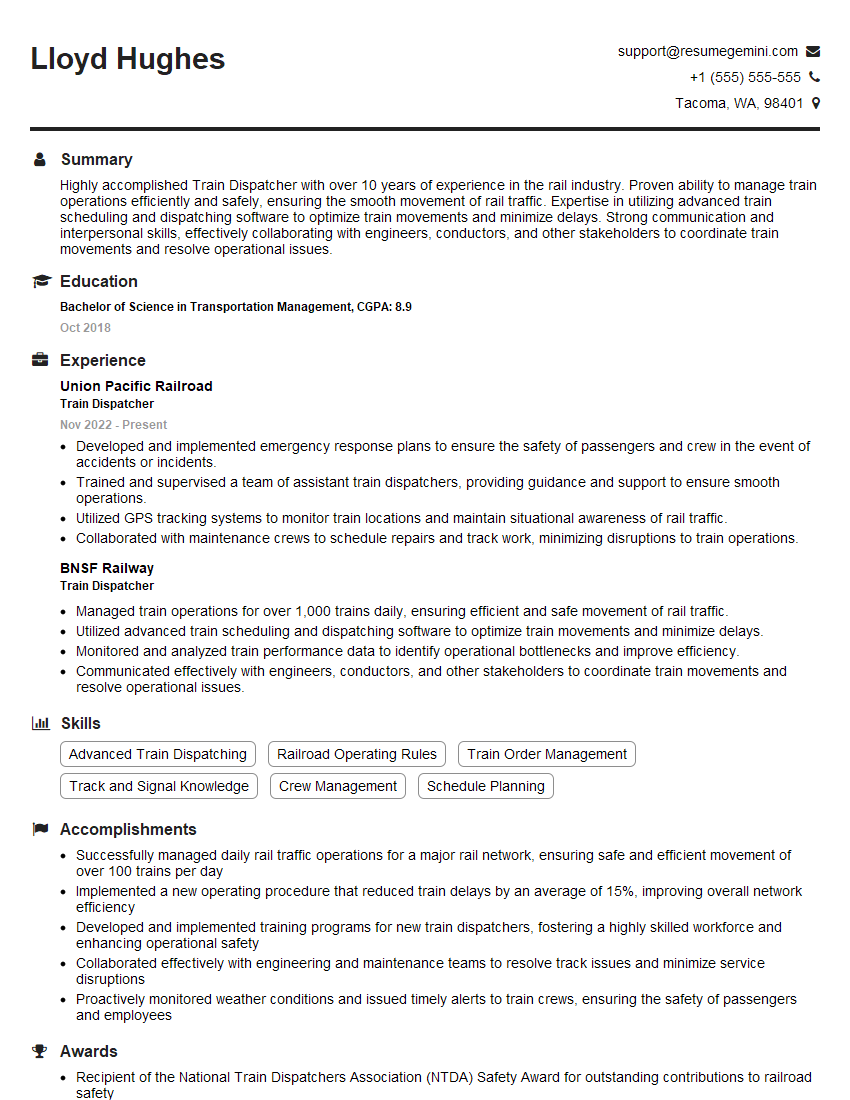
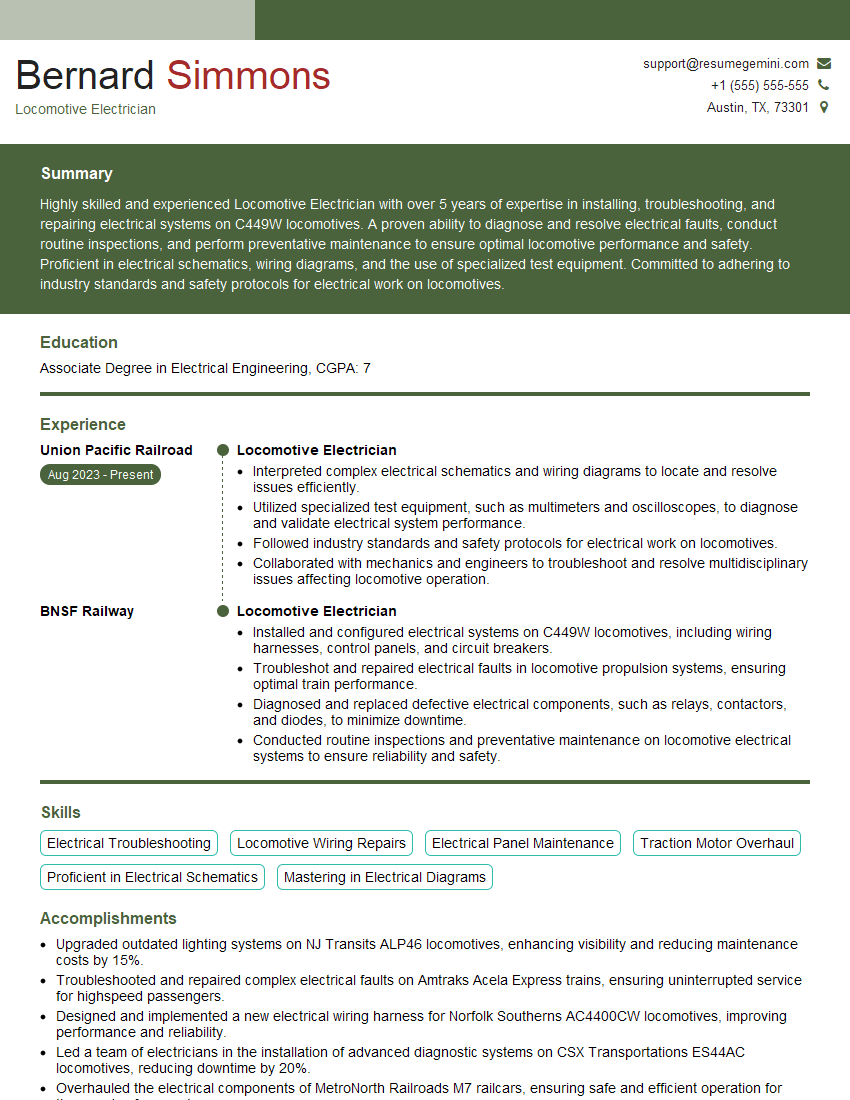
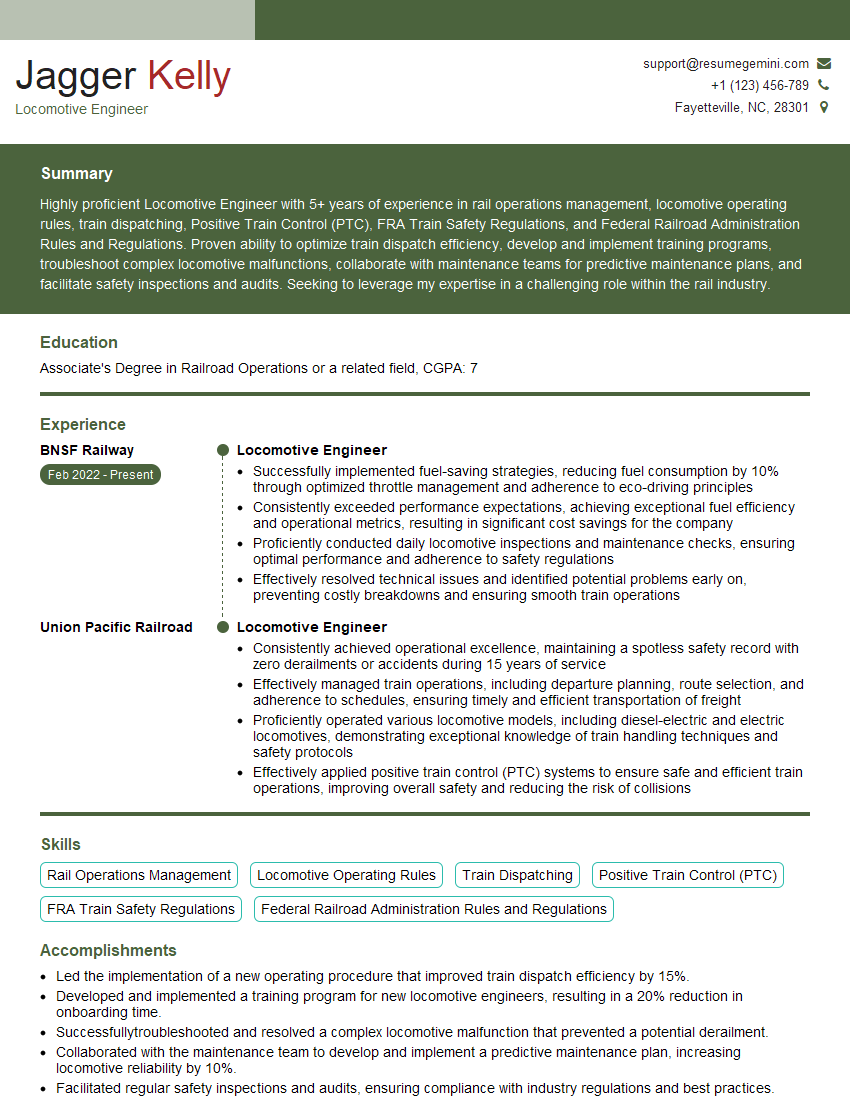
Mastering Railroad Equipment Knowledge is crucial for career advancement in this exciting and essential industry. A strong understanding of these concepts will significantly improve your interview performance and open doors to exciting opportunities. To further enhance your job prospects, creating an ATS-friendly resume is key. ResumeGemini can help you build a professional and effective resume that highlights your skills and experience. ResumeGemini provides examples of resumes tailored to Railroad Equipment Knowledge to help guide your resume creation. Invest time in crafting a compelling resume – it’s your first impression on potential employers.


Explore more articles
Users Rating of Our Blogs
Share Your Experience
We value your feedback! Please rate our content and share your thoughts (optional).
What Readers Say About Our Blog
Really detailed insights and content, thank you for writing this detailed article.
IT gave me an insight and words to use and be able to think of examples