Interviews are more than just a Q&A session—they’re a chance to prove your worth. This blog dives into essential Refrigeration Equipment Installation interview questions and expert tips to help you align your answers with what hiring managers are looking for. Start preparing to shine!
Questions Asked in Refrigeration Equipment Installation Interview
Q 1. What types of refrigerants are commonly used, and what are their environmental impacts?
Refrigerants are the heart of any refrigeration system, responsible for absorbing heat from the space being cooled and releasing it elsewhere. Common refrigerants have evolved significantly due to environmental concerns. Historically, chlorofluorocarbons (CFCs) like R-12 were widely used, but their ozone-depleting potential led to their phase-out. Hydrochlorofluorocarbons (HCFCs) like R-22 were introduced as a transition, but they still have some ozone-depleting potential and are also being phased out.
Today, we predominantly use hydrofluorocarbons (HFCs) such as R-134a and R-410A, which have a negligible impact on the ozone layer. However, HFCs are potent greenhouse gases. The industry is now transitioning towards more environmentally friendly options including natural refrigerants like ammonia (R-717), carbon dioxide (R-744), propane (R-290), and isobutane (R-600a). These natural refrigerants have a significantly lower global warming potential (GWP) and are considered more sustainable.
- R-134a: Widely used in automotive and residential air conditioning, relatively low ozone depletion potential but high GWP.
- R-410A: Popular in residential and light commercial air conditioning, low ozone depletion but still contributes to global warming.
- Ammonia (R-717): Excellent thermodynamic properties, zero ozone depletion and very low GWP, but toxic and requires specialized handling.
- CO2 (R-744): Environmentally friendly, readily available, but requires high operating pressures.
The environmental impact is measured by Ozone Depletion Potential (ODP) and Global Warming Potential (GWP). We always strive to use refrigerants with the lowest possible ODP and GWP to minimize our environmental footprint.
Q 2. Explain the different types of refrigeration systems (e.g., vapor-compression, absorption).
Refrigeration systems primarily fall into two categories: vapor-compression and absorption.
Vapor-Compression Refrigeration: This is the most common type, found in most home refrigerators, commercial freezers, and air conditioners. It works on a thermodynamic cycle involving four key components: a compressor, a condenser, an expansion valve, and an evaporator. The compressor compresses the refrigerant vapor, increasing its pressure and temperature. The hot, high-pressure refrigerant then releases heat in the condenser, condensing into a liquid. The liquid refrigerant then passes through an expansion valve, causing a dramatic drop in pressure and temperature. This low-pressure, low-temperature refrigerant absorbs heat in the evaporator, vaporizing and completing the cycle. Think of it like a heat pump, moving heat from a cold place to a warmer place.
Absorption Refrigeration: This system uses a refrigerant-absorbent solution, typically ammonia-water, instead of a compressor. Heat is used to drive the refrigerant vapor from the solution, and the cycle continues similar to the vapor-compression system. Absorption systems are often used in situations where waste heat is readily available, such as solar energy applications or industrial processes, making them more energy-efficient in specific scenarios. It’s less common in household applications due to lower efficiency in typical scenarios.
Q 3. Describe the process of installing a commercial refrigeration unit.
Installing a commercial refrigeration unit is a complex process requiring careful planning and execution. It involves several key steps:
- Site Survey and Planning: Assessing the location, power requirements, accessibility, and ensuring compliance with building codes.
- Unit Delivery and Unpacking: Carefully handling the unit to prevent damage during delivery and unpacking.
- Foundation and Mounting: Creating a stable base for the unit to prevent vibrations and ensure proper leveling.
- Refrigerant Lines and Connections: Precisely installing and connecting the refrigerant lines, ensuring no leaks using specialized tools and techniques.
- Electrical Connections: Connecting the unit to the power supply, ensuring proper grounding and adherence to safety regulations.
- System Vacuuming: Evacuating the system to remove any non-condensables that might interfere with system efficiency and performance.
- Refrigerant Charging: Accurately charging the system with the correct amount of refrigerant based on the unit’s specifications. This step needs precise measurement and careful monitoring.
- Testing and Commissioning: Thoroughly testing the system’s functionality, monitoring temperatures, pressures, and performance to ensure that it meets the required specifications.
- Documentation and Handover: Creating complete documentation of the installation process, including testing results, and providing instruction and training to the client on system operation and maintenance.
Throughout the process, safety is paramount. We strictly adhere to industry best practices and regulations to ensure a safe and efficient installation.
Q 4. How do you troubleshoot a malfunctioning refrigeration system?
Troubleshooting a malfunctioning refrigeration system requires a systematic approach. I would start by gathering information, such as the nature of the problem (e.g., no cooling, excessive frost, unusual noises), the age of the system, and any recent maintenance performed.
My process usually involves:
- Visual Inspection: Checking for obvious issues like loose connections, damaged components, or leaks.
- Temperature and Pressure Readings: Using gauges to measure refrigerant pressures and temperatures at various points in the system to identify deviations from normal operating parameters. This helps isolate the problem area.
- Component Testing: Testing individual components such as the compressor, condenser fan motor, expansion valve, and evaporator to determine which is malfunctioning.
- Refrigerant Charge Check: Verifying the refrigerant charge is within the specified range. An undercharge or overcharge can significantly impact performance.
- Electrical Checks: Checking for proper voltage, current, and continuity to ensure electrical components are functioning correctly.
For example, if the system isn’t cooling properly, I might check the refrigerant charge first, then the condenser fan, and then the compressor. Documenting each step and the findings is crucial for efficient troubleshooting and future reference.
Q 5. What safety precautions do you take when working with refrigerants?
Safety is paramount when working with refrigerants. Many refrigerants are flammable, toxic, or both. I always follow strict safety protocols, including:
- Personal Protective Equipment (PPE): Wearing appropriate PPE such as safety glasses, gloves, and respiratory protection, depending on the refrigerant and task.
- Proper Ventilation: Ensuring adequate ventilation to prevent refrigerant buildup in the workspace. This minimizes the risk of inhalation or flammability issues.
- Leak Detection and Repair Procedures: Using leak detection equipment to identify and promptly repair any leaks. This is crucial to protect both the environment and workers’ health.
- Emergency Preparedness: Knowing the location of emergency shut-off valves and having a plan in case of an accident or leak.
- Refrigerant Handling and Storage: Properly handling and storing refrigerants in accordance with all safety regulations.
- Following Manufacturer Guidelines: Adhering to all manufacturer’s guidelines, safety data sheets (SDS), and local regulations related to refrigerant handling and system operation.
I always prioritize safety and make sure every team member understands and follows these procedures.
Q 6. Explain the importance of proper refrigerant charging.
Proper refrigerant charging is critical for optimal system performance and efficiency. An undercharged system will struggle to cool effectively, while an overcharged system can lead to high pressure and potential damage to components. The amount of refrigerant required depends on the system’s size and design.
The process involves:
- System Evacuation: Thoroughly evacuating the system to remove air and moisture, which can contaminate the refrigerant and reduce efficiency.
- Refrigerant Type and Quantity: Using the correct type and quantity of refrigerant, as specified by the manufacturer. Incorrect refrigerant can damage the system.
- Charging Method: Using the appropriate charging method, which might involve charging by weight, subcooling, or superheat, based on system requirements. I will use accurate scales and gauges for precise measurement.
- Monitoring System Parameters: Closely monitoring system pressures and temperatures during charging to ensure the refrigerant charge is within the optimal range. This helps to avoid undercharging or overcharging.
Incorrect refrigerant charging can lead to reduced cooling capacity, increased energy consumption, and premature equipment failure.
Q 7. How do you identify and address refrigerant leaks?
Identifying and addressing refrigerant leaks is crucial for environmental protection and system efficiency. Leaks can lead to system performance degradation, increased energy bills, and environmental damage due to refrigerant emissions. I use a combination of methods to detect leaks:
- Electronic Leak Detectors: These devices use sensors to detect refrigerant escaping into the atmosphere. They are highly sensitive and can pinpoint even small leaks.
- Soap Solution Test: Applying a soap solution to suspected leak points. Bubbles will form if a leak is present. This is a simple, visual method.
- Pressure Monitoring: Regularly monitoring system pressure. A gradual pressure drop often indicates a leak.
Once a leak is identified, the repair process depends on the location and severity of the leak. Minor leaks might be repaired using leak sealant, while larger leaks may require replacing damaged components or sections of refrigerant lines. After repair, the system needs to be thoroughly evacuated and recharged to ensure optimal performance and prevent further environmental damage.
Regular leak checks are essential for preventative maintenance and to prolong the lifespan of refrigeration equipment.
Q 8. What are the common causes of compressor failure?
Compressor failure is a major concern in refrigeration systems, leading to significant downtime and financial losses. Several factors contribute to this. Think of a compressor as the heart of your system; if it fails, the entire system stops functioning.
- Lack of Lubrication: Insufficient or contaminated oil leads to increased friction and overheating, eventually causing compressor seizure. Imagine trying to run a car engine without oil – the same principle applies.
- Electrical Issues: Voltage fluctuations, short circuits, or faulty wiring can damage the compressor’s motor windings or internal components. This is like a sudden power surge frying your computer’s motherboard.
- High Discharge Pressure: This indicates a problem elsewhere in the system, such as a blocked condenser, restricting refrigerant flow and overloading the compressor. Picture a clogged artery preventing blood flow – the heart works harder and eventually fails.
- Refrigerant Leaks: Leaks reduce the refrigerant charge, leading to decreased cooling capacity and increased compressor workload. It’s like trying to inflate a tire with a hole; you keep pumping, but the pressure never builds up.
- Contaminants: Moisture or other contaminants in the refrigerant can cause corrosion and damage internal components. This is similar to rust damaging a car’s engine.
- Wear and Tear: Over time, normal wear and tear on internal parts such as valves and pistons can lead to failure. Like any mechanical device, they have a limited lifespan.
Regular maintenance, including oil changes, refrigerant checks, and electrical inspections, significantly reduces the risk of compressor failure.
Q 9. Describe your experience with different types of refrigeration compressors.
My experience encompasses a broad range of refrigeration compressors, including reciprocating, scroll, screw, and centrifugal types. Each has its strengths and weaknesses, suited for different applications. I’ve worked with everything from small residential units using reciprocating compressors to large industrial systems employing screw compressors.
- Reciprocating Compressors: These are the workhorses of smaller systems, relatively simple and inexpensive. I’ve installed many in commercial refrigerators and freezers.
- Scroll Compressors: These are popular in air conditioning and smaller refrigeration systems due to their smooth operation and high efficiency. They are quieter than reciprocating compressors and often found in modern supermarket display cases.
- Screw Compressors: These are suited for large-scale industrial applications requiring high cooling capacity. I’ve worked with these in large processing plants and cold storage warehouses.
- Centrifugal Compressors: These are typically used in very large industrial refrigeration systems like those found in ammonia-based plants. Their high capacity and efficiency make them ideal for high-volume chilling applications, though they demand more specialized knowledge.
My expertise extends to selecting the appropriate compressor type based on factors such as capacity, efficiency requirements, and the specific application, ensuring optimal system performance and reliability.
Q 10. How do you ensure proper insulation and prevent heat transfer in refrigeration systems?
Proper insulation is crucial for minimizing heat transfer into the refrigeration system, thus improving efficiency and reducing energy consumption. Imagine trying to keep an ice cube cold in the sun without wrapping it – it melts quickly! The same principle applies to refrigeration.
We achieve this through several measures:
- Insulation Material Selection: Choosing appropriate insulation materials with high R-values (thermal resistance) is essential. This might include polyurethane foam, fiberglass, or mineral wool depending on the application and temperature requirements.
- Insulation Thickness: The thicker the insulation, the greater the thermal resistance. We calculate the required thickness based on heat load calculations and environmental conditions.
- Proper Installation: Seamless insulation installation is vital to prevent thermal bridging (paths for heat transfer). Any gaps or voids should be carefully sealed.
- Vapor Barriers: Vapor barriers prevent moisture from entering the insulation, degrading its performance over time. These are crucial in cold storage applications.
- Airtight Seals: Doors and access points need airtight seals to prevent warm air from entering and reducing cooling efficiency.
Failing to properly insulate a refrigeration system leads to increased energy consumption, higher operational costs, and reduced cooling capacity. I always prioritize a thorough and meticulous insulation process to ensure optimal system performance.
Q 11. What are your experiences with different types of refrigeration controls (e.g., thermostats, controllers)?
My experience includes working with various refrigeration control systems, ranging from simple mechanical thermostats to sophisticated electronic controllers with advanced features.
- Thermostats: These are basic temperature-sensing devices that control the compressor’s on/off cycle. I’ve used these in simpler applications, such as smaller walk-in coolers.
- Electronic Controllers: These offer more precise temperature control, monitoring, and data logging. They are often equipped with features like multiple sensors, alarms, and remote monitoring capabilities. I frequently utilize these in larger commercial and industrial installations.
- Programmable Logic Controllers (PLCs): PLCs provide advanced control and automation in complex refrigeration systems. They manage various system parameters, optimize performance, and offer comprehensive diagnostics. I’ve utilized PLCs in large-scale cold storage facilities.
The choice of control system depends on the system’s complexity, required accuracy, and desired level of automation. My expertise ensures selecting the most suitable and reliable control system for the specific needs of each project.
Q 12. Explain the importance of maintaining accurate refrigeration system documentation.
Accurate refrigeration system documentation is essential for several reasons: it provides a historical record of the system’s specifications, performance, and maintenance history. Think of it as a medical chart for your refrigeration system!
- Troubleshooting and Repairs: Detailed documentation simplifies troubleshooting and repairs, as technicians can readily access information about the system’s components, wiring diagrams, and past maintenance records.
- Preventative Maintenance: Regular maintenance is crucial for extending system lifespan. Documentation helps track maintenance schedules and ensures timely servicing.
- Regulatory Compliance: Many industries have regulations requiring detailed records of refrigeration systems, especially those using refrigerants with environmental concerns. This aids in complying with these regulations.
- System Upgrades and Modifications: When upgrades or modifications are needed, documentation provides a valuable reference for planning and execution.
- System Ownership Transfers: Comprehensive documentation facilitates smooth transfers of system ownership, providing the new owner with all the necessary information.
I always ensure the creation and maintenance of thorough documentation, including system schematics, parts lists, maintenance logs, and operational data. This meticulous approach contributes to the long-term reliability and efficient operation of refrigeration systems.
Q 13. How do you handle emergency situations involving refrigeration equipment malfunctions?
Handling emergency situations requires a calm and systematic approach. The key is swift action combined with safety precautions.
- Assess the Situation: Determine the nature and extent of the malfunction. Is it a refrigerant leak, compressor failure, or power outage? Safety is paramount, so assess any immediate hazards (e.g., electrical shock, refrigerant exposure).
- Isolate the Problem: If possible, isolate the affected area to prevent further damage or escalation. This might involve turning off power to the system or closing valves to contain a refrigerant leak.
- Implement Emergency Procedures: Follow established emergency procedures, which may include contacting emergency services, activating backup systems (if available), and notifying relevant personnel.
- Safe Shutdown: Shut down the system safely according to manufacturer instructions and relevant safety procedures.
- Contact Qualified Technicians: Unless the problem is minor and can be immediately resolved by me safely, contact qualified refrigeration technicians for repair. Never attempt repairs beyond your skill level.
- Document the Incident: Thoroughly document the incident, including the time, nature of the malfunction, steps taken, and repairs performed. This will help prevent future issues.
My experience includes handling various emergency situations, from minor refrigerant leaks to major compressor failures. My training and expertise enable me to react effectively and minimize downtime.
Q 14. What experience do you have with different types of refrigeration valves and fittings?
My experience with refrigeration valves and fittings is extensive. Selecting and installing the correct components is critical for system performance and safety. It’s like plumbing, but with specialized components for refrigerant handling.
- Solenoid Valves: These electrically controlled valves regulate refrigerant flow, and I’ve used numerous types for various applications, including liquid line shut-off valves and metering devices.
- Expansion Valves: These control refrigerant flow to the evaporator, maintaining optimal pressure and temperature. I have experience with thermostatic expansion valves (TXVs) and electronic expansion valves (EEVs), each with specific applications and adjustment procedures.
- Check Valves: Prevent refrigerant backflow, ensuring proper system operation. I frequently utilize them in various locations within the refrigeration cycle.
- Service Valves: Allow access for charging, evacuation, and other service operations. Proper selection and installation of service valves are essential for safe and efficient maintenance.
- Fittings and Connections: Selecting appropriate fittings is crucial to prevent leaks. I have experience with brazed, flared, and compression fittings for different refrigerant lines and system pressures.
My expertise ensures proper selection and installation, minimizing leaks and ensuring safe and efficient system operation. I always prioritize using quality components and employing best practices for proper connections.
Q 15. Describe your experience with brazing and soldering techniques in refrigeration systems.
Brazing and soldering are crucial for creating leak-proof joints in refrigeration systems. Brazing uses a filler metal with a higher melting point than the base metal, creating a stronger, more reliable joint suitable for high-pressure applications. Soldering, on the other hand, uses a filler metal with a lower melting point, and is generally used for lower-pressure applications. My experience encompasses both techniques, working with various refrigerants and pipe materials.
For example, I’ve extensively used brazing to connect copper tubing in commercial refrigeration systems, ensuring a robust and leak-free connection. This involves proper cleaning of the pipe ends, applying flux to promote the flow of the filler metal, and using a torch to carefully heat the joint until the filler metal flows smoothly into the gap. The process needs precise temperature control to avoid overheating and weakening the pipes. I’ve also used silver brazing for superior strength in high-pressure applications. Soldering is often utilized for lower pressure applications, such as connecting smaller gauge refrigerant lines or electrical components, using a lower temperature soldering iron and appropriate solder.
Safety is paramount in both processes. I always ensure adequate ventilation to avoid inhaling harmful fumes and wear appropriate safety gear, including safety glasses, gloves, and protective clothing.
Career Expert Tips:
- Ace those interviews! Prepare effectively by reviewing the Top 50 Most Common Interview Questions on ResumeGemini.
- Navigate your job search with confidence! Explore a wide range of Career Tips on ResumeGemini. Learn about common challenges and recommendations to overcome them.
- Craft the perfect resume! Master the Art of Resume Writing with ResumeGemini’s guide. Showcase your unique qualifications and achievements effectively.
- Don’t miss out on holiday savings! Build your dream resume with ResumeGemini’s ATS optimized templates.
Q 16. How do you ensure proper system vacuum before charging refrigerant?
Achieving a proper system vacuum before charging refrigerant is vital to remove air, moisture, and other non-condensables that can significantly reduce system efficiency and lead to compressor damage. The process typically involves using a vacuum pump capable of achieving a deep vacuum (below 500 microns or 0.5 torr). The duration of the vacuum depends on the system size and complexity, with larger systems requiring longer vacuuming times.
The steps I follow are: First, thoroughly leak check the system using nitrogen or a refrigerant leak detector. Then, I connect the vacuum pump to the system and evacuate the air. I monitor the vacuum gauge and allow the system to reach the desired vacuum level. If the system is very large or complex, I may use a two-stage vacuum process where a roughing pump is used initially to quickly reduce the pressure followed by a finer vacuum pump to achieve a deep vacuum. Once the desired vacuum is reached, it’s held for a period to ensure that all non-condensables are removed. Finally, I carefully introduce the refrigerant into the system. If the vacuum level fails to hold after pump is turned off, it indicates the presence of a leak in the system and needs to be addressed before proceeding.
Q 17. Explain the process of commissioning a new refrigeration system.
Commissioning a new refrigeration system involves a thorough series of tests and checks to verify that the system operates as designed. It’s a multi-stage process to ensure efficiency, safety, and long-term reliability.
- Pre-Commissioning: This involves verifying that all components are correctly installed, wired, and connected according to the schematic diagrams. A visual inspection is crucial.
- Leak Testing: A thorough leak test using nitrogen or a refrigerant leak detector is performed to identify and repair any leaks before charging the system.
- Vacuuming: The system is then vacuumed to remove air and moisture as described earlier.
- Refrigerant Charging: Once the vacuum is achieved, the refrigerant is charged into the system according to the manufacturer’s specifications.
- System Start-up: The system is started and monitored to ensure proper operation. Temperatures are checked at various points to ensure accurate performance.
- Performance Testing: Performance testing verifies the system is meeting its specified cooling capacity, ensuring optimal temperature stability, refrigerant pressures, and power consumption.
- Documentation: All testing results, including temperatures, pressures, and electrical readings, are meticulously documented for future reference.
An example would be commissioning a walk-in cooler. We’d check the evaporator’s temperature, condenser pressures, compressor amperage and operation to ensure proper cooling.
Q 18. What is your experience with preventative maintenance of refrigeration equipment?
Preventative maintenance is crucial for maximizing the lifespan and efficiency of refrigeration equipment. My experience encompasses a wide range of preventative tasks, including regularly scheduled inspections, cleaning, and component replacements. These actions significantly reduce the risk of costly repairs and downtime.
- Visual Inspections: Regularly inspect all components for signs of wear, damage, or leaks.
- Cleaning: Clean condenser coils and evaporators to remove dirt and debris that can impede heat transfer and reduce efficiency.
- Lubrication: Lubricate moving parts according to manufacturer recommendations to minimize friction and extend component life.
- Pressure Checks: Regularly check refrigerant pressures to ensure the system is operating within its design parameters.
- Electrical Checks: Inspect electrical connections, wiring, and components for any signs of damage or overheating.
- Component Replacements: Replace worn-out components, such as belts, filters, and seals, proactively to prevent failures.
For example, in a supermarket setting, I would implement a preventative maintenance schedule for their refrigeration systems, including weekly visual inspections, monthly cleaning of condenser coils, and annual pressure checks, significantly minimizing downtime and ensuring consistent product preservation.
Q 19. Describe your experience with different types of refrigeration piping and tubing.
Refrigeration systems utilize various types of piping and tubing depending on the system’s application, pressure, and refrigerant. Common materials include copper, steel, and sometimes aluminum. Copper tubing is frequently used due to its excellent heat transfer properties, ease of brazing, and resistance to corrosion. Steel tubing, often used in larger industrial systems, offers greater strength and durability. Aluminum tubing is used less often, typically in smaller systems, because of its softer nature.
The tubing size is critical and is selected based on the refrigerant flow rate and pressure drop requirements. Larger diameter tubing is used for higher flow rates and to minimize pressure drop. I’ve worked with various sizes of copper tubing, from small diameter lines for capillary tubes to large diameter lines for liquid and suction lines in large commercial systems. Proper bending techniques and the use of bending springs are essential to prevent kinks that can restrict flow and damage the tubes. Different types of fittings are used depending on the materials and pressure ratings, such as flared fittings, compression fittings, and brazed joints.
Q 20. How do you interpret refrigeration system schematics and diagrams?
Interpreting refrigeration system schematics and diagrams is fundamental to understanding the system’s layout, component connections, and operational flow. These diagrams provide a visual representation of the system’s design including component locations, refrigerant flow paths, electrical connections, and safety components. Understanding these diagrams is essential for troubleshooting, maintenance, and installation.
I am proficient in reading and interpreting various types of refrigeration diagrams, including piping and instrumentation diagrams (P&IDs), wiring diagrams, and component layout drawings. I can identify components such as compressors, condensers, evaporators, expansion valves, and other control devices. I use these diagrams to trace the refrigerant flow path, understand the system’s controls and safety mechanisms, and troubleshoot problems. For example, by reviewing the P&ID I can quickly trace a refrigerant leak in a system and locate the point of failure. This quick identification saves valuable time and resources.
Q 21. What is your experience with different types of refrigeration condensers and evaporators?
Refrigeration systems utilize various types of condensers and evaporators, each designed for specific applications and operational conditions. Condensers reject heat from the refrigerant, while evaporators absorb heat from the space being cooled.
- Condensers: Air-cooled condensers are common in smaller systems, using fans to dissipate heat. Water-cooled condensers, commonly used in larger systems, use water to transfer heat. Evaporative condensers are very efficient, using both air and water to dissipate heat.
- Evaporators: These come in many forms including flooded evaporators, commonly used in industrial applications, and dry evaporators often found in commercial refrigeration and air conditioning. Shell and tube evaporators are used in larger systems and are particularly effective for handling high refrigerant flow rates. The selection of the type of evaporator is based upon the application and load requirements.
My experience includes working with various types of condensers and evaporators, and I’m familiar with their performance characteristics and maintenance requirements. For instance, I understand how the design of a condenser’s fin spacing affects its efficiency, and I can select the appropriate evaporator type for a given application, considering factors such as the type of refrigerant used, the cooling load, and the available space.
Q 22. How familiar are you with EPA regulations regarding refrigerant handling?
I’m intimately familiar with EPA regulations regarding refrigerant handling, specifically the Clean Air Act and its amendments concerning ozone-depleting substances and hydrofluorocarbons (HFCs). This includes understanding and adhering to regulations around refrigerant recovery, recycling, and reclamation. For instance, I’m proficient in using EPA-approved recovery equipment to ensure that refrigerants are properly evacuated from systems before any repairs or decommissioning, preventing their release into the atmosphere. I’m also well-versed in the proper disposal procedures for refrigerants, ensuring compliance with all applicable regulations and minimizing environmental impact. My certifications demonstrate my commitment to safe and environmentally responsible refrigerant handling.
Understanding these regulations isn’t just about compliance; it’s about protecting the environment and the health of technicians and the public. For example, improper handling of refrigerants like R-22, now phased out, can lead to significant ozone depletion. My experience covers the latest regulations and best practices for handling all currently used refrigerants, including low-GWP (Global Warming Potential) alternatives.
Q 23. Describe your experience with troubleshooting electrical issues in refrigeration systems.
Troubleshooting electrical issues in refrigeration systems requires a systematic approach, combining electrical knowledge with an understanding of refrigeration principles. I start by visually inspecting wiring, connections, and components for any obvious problems like loose wires, burnt components, or damage from water leaks. Then, I use multimeters to test voltage, amperage, and continuity across the system’s electrical components, including compressors, fans, and control boards. I’m familiar with reading electrical schematics and using them to trace circuits and identify potential faults.
For example, I once encountered a refrigeration system where the compressor wasn’t running. Initial visual inspection revealed nothing, but using a multimeter, I discovered a blown fuse in the compressor’s circuit. Replacing the fuse immediately resolved the issue. In another case, I had to diagnose an intermittent power failure that was traced to a faulty contactor. My experience extends to working with various types of control systems, from simple electromechanical systems to advanced microprocessor-based controllers, allowing me to accurately diagnose and fix complex issues.
Q 24. Explain your process for diagnosing and repairing refrigeration system leaks.
Diagnosing and repairing refrigeration system leaks involves a multi-step process. I begin by identifying the location of the leak, often using electronic leak detectors that can detect even small amounts of refrigerant. Visual inspection for signs of oil or refrigerant staining can also pinpoint potential leak locations. Once the leak is located, the next step is to determine its cause and severity.
For example, a small leak in a soldered joint might require simple brazing to repair, while a larger leak in a component might require component replacement. I’m proficient in various leak repair techniques, including brazing, welding, and the use of specialized leak sealants. After the repair, I always perform a thorough system evacuation and recharge with the appropriate refrigerant. Accurate record-keeping is critical, noting the type and amount of refrigerant used, the location and nature of the leak, and the repairs completed. This ensures future maintenance and troubleshooting can be conducted efficiently.
Q 25. How do you maintain accurate records of work performed on refrigeration systems?
Maintaining accurate records is crucial for efficiency and accountability. I use a combination of digital and paper-based methods. For digital records, I utilize service management software which allows me to log all work performed, including the date, time, location, customer information, equipment details (make, model, serial number), refrigerant used, problems encountered, repairs performed, and parts replaced. Pictures and videos of the system and repairs are also often included. Digital documentation allows for easy retrieval and sharing of information.
Additionally, I maintain a paper-based record – a detailed service report – that accompanies the job. This report is given to the customer and a copy is kept in my files. This ensures a backup record and provides a tangible record for the client. Both digital and physical records are carefully archived according to company policy and legal requirements.
Q 26. Describe your experience with working on different brands and models of refrigeration equipment.
Throughout my career, I’ve worked on a wide range of refrigeration equipment from various manufacturers, including commercial walk-in coolers and freezers, reach-in refrigerators, ice machines, and HVAC systems with refrigeration components. I have experience with various brands, such as Carrier, York, Trane, Hussmann, and others, each with their unique design characteristics and troubleshooting requirements. My experience spans different refrigerants and compressor types, ensuring I can effectively diagnose and repair a broad spectrum of systems.
Working with diverse equipment allows me to adapt quickly to new challenges. For example, I recently worked on a vintage commercial ice maker that used an R-12 refrigerant (now banned). Using my understanding of both older and newer refrigeration technologies, combined with readily available information, I safely completed the repair using a currently approved refrigerant.
Q 27. How do you prioritize tasks when handling multiple refrigeration system issues?
When handling multiple refrigeration system issues, prioritization is crucial for efficiency and to minimize downtime. I use a triage approach, starting by assessing the urgency and potential impact of each issue. Issues that pose a safety risk, threaten food spoilage, or cause significant operational disruption are prioritized first. This is often a collaborative process; discussions with clients or managers often help to determine the best order of operations.
For example, a malfunctioning walk-in freezer in a grocery store would take precedence over a minor refrigerant leak in a less critical area. I create a prioritized list of tasks and clearly communicate this to the relevant parties. Regular updates on progress help to maintain transparency and manage expectations.
Q 28. What are your salary expectations for this role?
My salary expectations are commensurate with my experience, skills, and the requirements of this role. Considering my expertise in refrigeration equipment installation, maintenance, and repair, coupled with my understanding of relevant safety and environmental regulations, I’m confident in my ability to make significant contributions to your organization. I’m open to discussing a competitive salary range based on a comprehensive overview of the position’s responsibilities and your compensation structure. I’d also appreciate it if we could discuss any additional benefits.
Key Topics to Learn for Refrigeration Equipment Installation Interview
- Refrigerant Handling and Safety: Understanding different refrigerants, proper handling procedures, safety regulations (EPA certifications), and leak detection methods. Practical application: Describing your experience with refrigerant recovery and charging procedures.
- Installation Techniques: Mastering various installation methods for different types of refrigeration equipment (e.g., split systems, chillers, walk-in coolers). Practical application: Explaining your proficiency in brazing, pipe fitting, electrical wiring, and vacuum pump operation.
- System Components and Functionality: In-depth knowledge of compressors, condensers, evaporators, expansion valves, and other key components. Understanding the thermodynamic principles governing refrigeration cycles. Practical application: Troubleshooting common refrigeration system malfunctions.
- Electrical Controls and Wiring: Understanding control circuits, safety devices (e.g., high-pressure switches, low-pressure switches), and proper wiring techniques. Practical application: Describing your experience with electrical schematics and troubleshooting electrical issues in refrigeration systems.
- Troubleshooting and Diagnostics: Developing strong troubleshooting skills to identify and resolve common issues in refrigeration equipment. Practical application: Explaining your approach to diagnosing system malfunctions using various tools and techniques.
- HVAC/R Codes and Standards: Familiarity with relevant industry codes and standards (e.g., ASHRAE, local building codes). Practical application: Explaining how you ensure compliance with these standards during installation.
- Blueprint Reading and Interpretation: Ability to accurately interpret blueprints and schematics to guide the installation process. Practical application: Describing your experience with interpreting technical drawings and specifications.
Next Steps
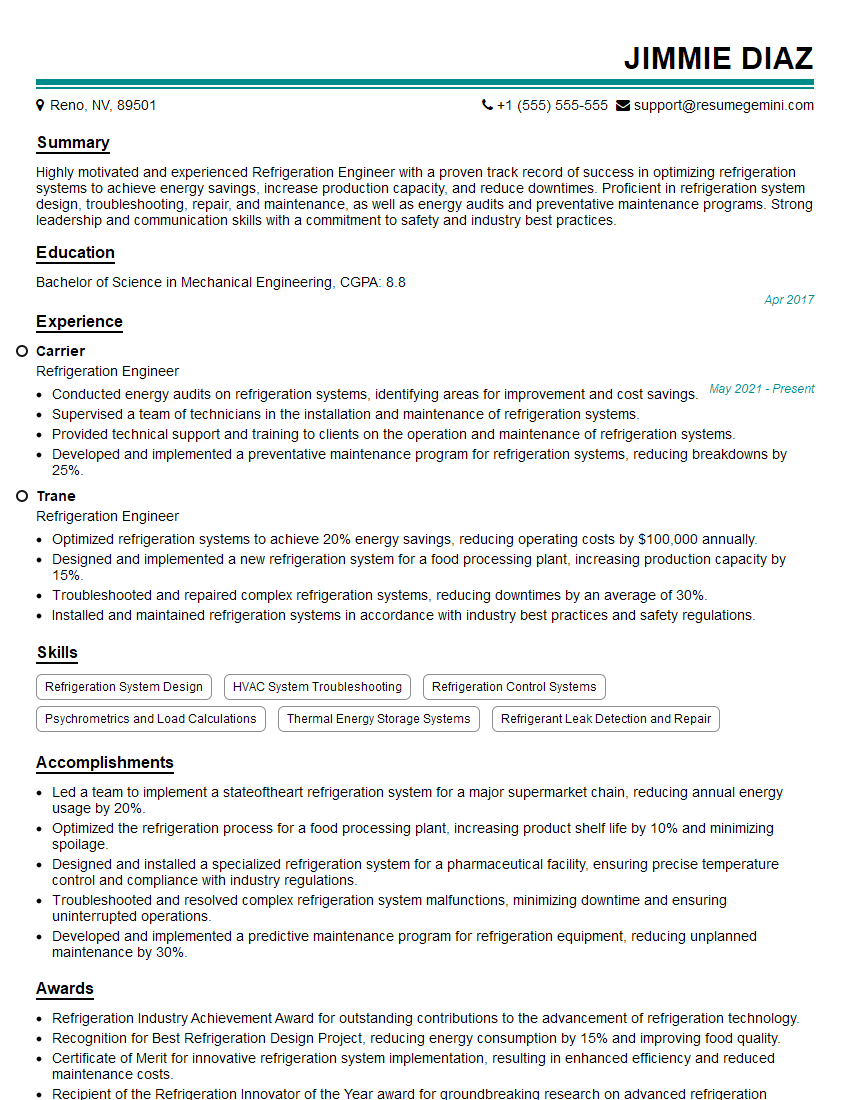
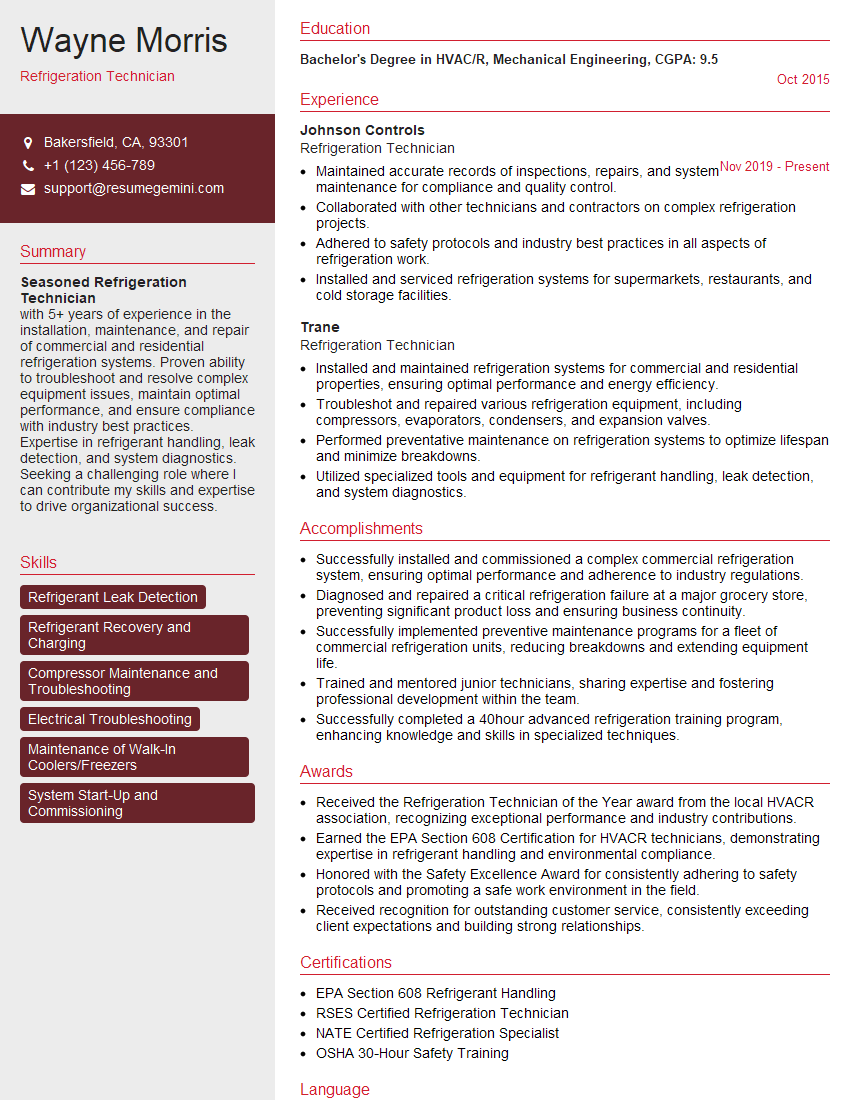
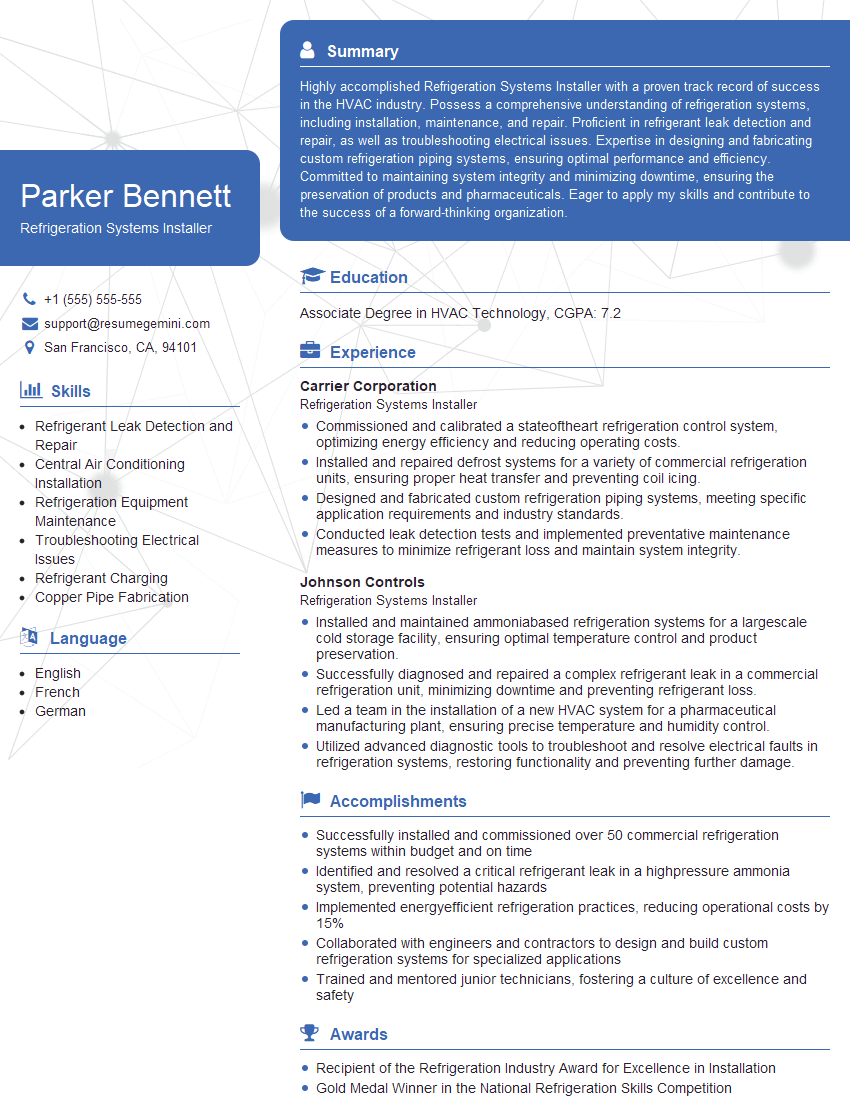
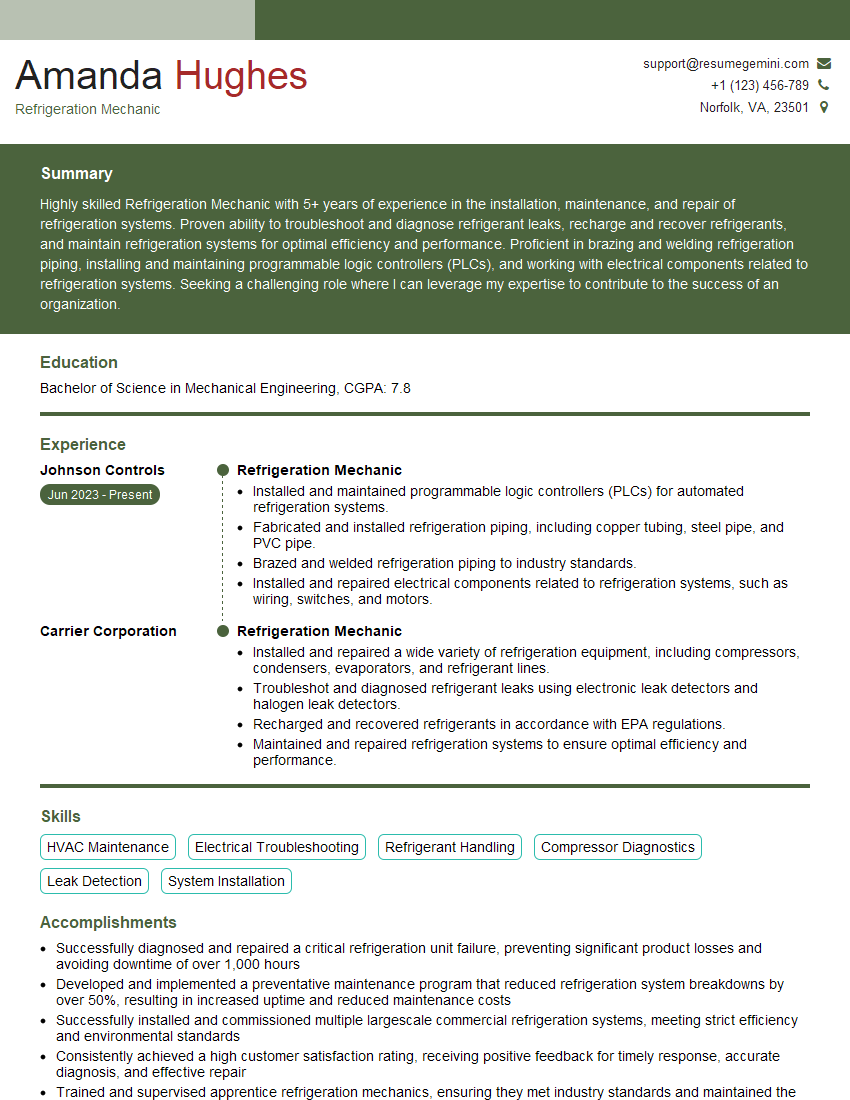
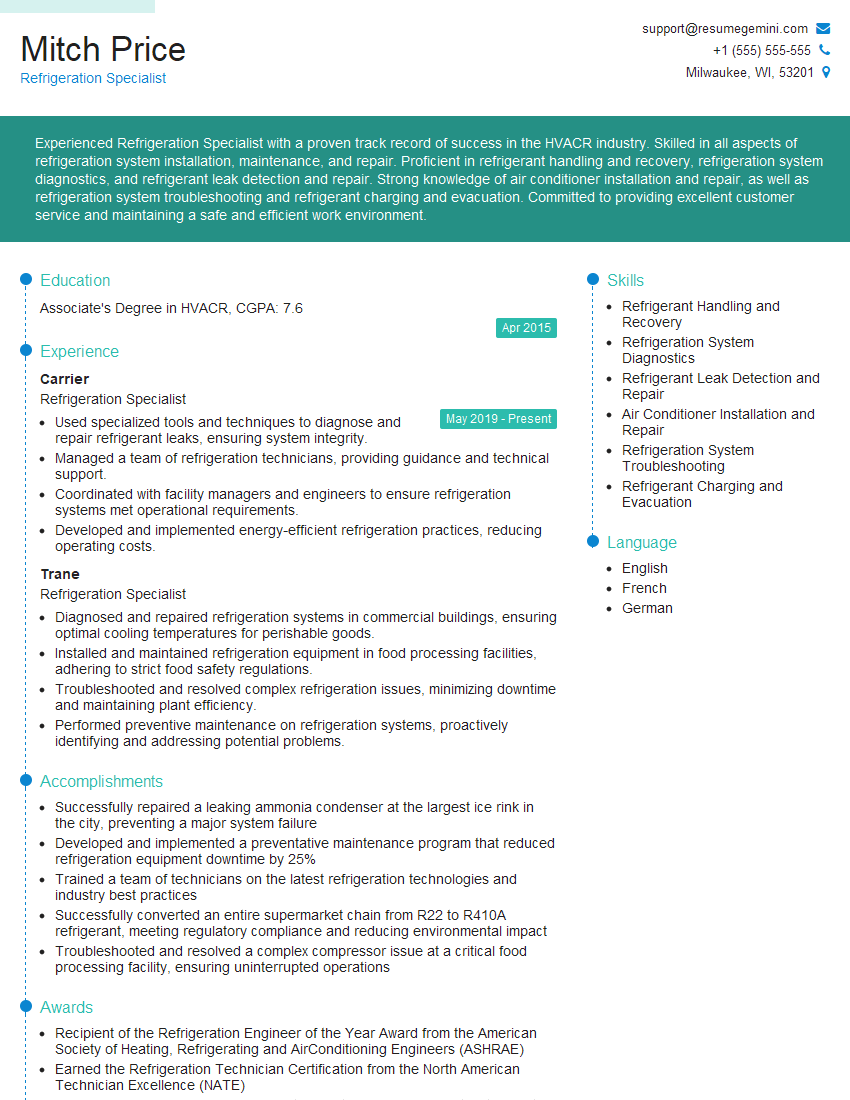
Mastering Refrigeration Equipment Installation opens doors to exciting career opportunities with excellent growth potential. Companies highly value skilled technicians who can efficiently and safely install and maintain refrigeration systems. To maximize your job prospects, create an ATS-friendly resume that highlights your key skills and experience. ResumeGemini is a trusted resource that can help you craft a professional and impactful resume, ensuring your application stands out. Examples of resumes tailored to Refrigeration Equipment Installation are available to help you build a compelling application.
Explore more articles
Users Rating of Our Blogs
Share Your Experience
We value your feedback! Please rate our content and share your thoughts (optional).
What Readers Say About Our Blog
Really detailed insights and content, thank you for writing this detailed article.
IT gave me an insight and words to use and be able to think of examples