Are you ready to stand out in your next interview? Understanding and preparing for Refrigeration Plant Operations interview questions is a game-changer. In this blog, we’ve compiled key questions and expert advice to help you showcase your skills with confidence and precision. Let’s get started on your journey to acing the interview.
Questions Asked in Refrigeration Plant Operations Interview
Q 1. Explain the difference between high-pressure and low-pressure refrigeration systems.
The primary difference between high-pressure and low-pressure refrigeration systems lies in the operating pressures within the system. High-pressure systems typically operate with higher condensing pressures, usually above 200 PSI, while low-pressure systems operate at significantly lower pressures, often below 100 PSI. This difference stems primarily from the refrigerant used and the design of the system. High-pressure systems often employ refrigerants with higher boiling points, requiring higher condensing pressures to release the heat efficiently. Low-pressure systems, conversely, use refrigerants with lower boiling points that condense at lower pressures. Think of it like this: a high-pressure system is like a powerful firehose needing significant pressure to force the water (refrigerant) through, whereas a low-pressure system is more akin to a gentle sprinkler system that uses less pressure to cover a wide area.
The choice between a high-pressure and low-pressure system depends largely on the application. High-pressure systems are better suited for applications that require greater cooling capacity in a smaller space, or when using refrigerants like R-22 or R-404A. Low-pressure systems are better suited for applications where energy efficiency is paramount, or with newer, environmentally friendly refrigerants that work optimally at lower pressures, like R-744 (CO2).
Q 2. Describe the refrigeration cycle and its key components.
The refrigeration cycle is a thermodynamic process that moves heat from a cold space to a warmer space, using a refrigerant as the working fluid. It’s a closed-loop system, meaning the refrigerant continuously circulates through various components. Imagine it as a constantly circulating river, carrying heat away from your refrigerator.
- Evaporator: The refrigerant absorbs heat from the cold space (e.g., inside your refrigerator), turning from a low-pressure liquid into a low-pressure vapor. Think of this as the river absorbing heat from the surrounding environment, causing the water to turn into steam.
- Compressor: This increases the pressure and temperature of the refrigerant vapor. It’s the heart of the system, compressing the refrigerant to a high-pressure, high-temperature gas. This is like a pump in the river system that increases the water pressure and velocity.
- Condenser: The high-pressure, high-temperature refrigerant gas releases its heat to the surrounding environment (ambient air or cooling water). The gas changes into a high-pressure liquid in this phase. This is like the river releasing its heat energy into the atmosphere as the steam cools down and turns back into water.
- Expansion Valve (or Metering Device): This reduces the pressure of the high-pressure liquid refrigerant, causing it to partially vaporize and become a low-pressure, low-temperature mixture of liquid and vapor, ready to start the cycle again. It’s like a valve controlling the flow of water back into the river.
These four key components work together in a continuous cycle, efficiently transferring heat and maintaining the desired temperature.
Q 3. What are the common refrigerants used and their environmental impact?
Many refrigerants have been used over time, each with its own properties and environmental impact. Older refrigerants like R-12 (dichlorodifluoromethane) and R-22 (chlorodifluoromethane) were very effective but have been phased out due to their significant ozone depletion potential (ODP). These chemicals damage the ozone layer, which protects us from harmful UV radiation. Hydrochlorofluorocarbons (HCFCs), such as R-22, also have high global warming potential (GWP).
Modern refrigerants strive for low ODP and GWP. Common examples include:
- HFCs (Hydrofluorocarbons): R-134a, R-404A, R-410A. These have zero ODP but still contribute to global warming.
- HFOs (Hydrofluoroolefins): R-1234yf, R-1234ze. These have significantly lower GWP than HFCs.
- Natural Refrigerants: Ammonia (NH3), Carbon Dioxide (CO2 or R-744), Propane (R-290). These have very low or zero ODP and GWP. However, ammonia is toxic and flammable, requiring careful handling, while propane and CO2 have limitations in specific application.
The choice of refrigerant depends on the application, efficiency requirements, safety concerns, and environmental regulations. The trend is clearly towards refrigerants with minimal environmental impact.
Q 4. How do you troubleshoot a malfunctioning compressor?
Troubleshooting a malfunctioning compressor requires a systematic approach. Safety is paramount; always disconnect power before working on the system.
- Check for power supply: Verify the compressor is receiving power. Test the circuit breaker, fuses, and wiring.
- Listen for unusual sounds: A noisy compressor could indicate bearing wear, internal damage, or a loose mounting. Unusual clicking or knocking sounds are cause for concern.
- Check motor current draw: Compare the measured current draw to the compressor’s nameplate rating. High current draw could signify a faulty motor winding or a refrigerant issue.
- Inspect the compressor’s temperature: An unusually hot compressor can indicate insufficient lubrication, restricted refrigerant flow, or a faulty overload protector.
- Check the refrigerant pressure: Low suction pressure and high discharge pressure indicate a lack of refrigerant or a restriction in the system. High suction pressure with low discharge pressure can indicate liquid refrigerant slugging back to the compressor which could severely damage it. Low pressure in both indicates refrigerant leak. Use appropriate gauges to measure these pressures carefully.
- Inspect for leaks: Use a leak detector to identify any refrigerant leaks.
If you’re not experienced, call a qualified refrigeration technician to diagnose and repair the compressor. Attempting repairs without proper training can be dangerous and may further damage the system.
Q 5. Explain the importance of proper refrigerant handling and safety procedures.
Proper refrigerant handling and safety procedures are crucial for several reasons: environmental protection, personal safety, and equipment protection. Refrigerants, especially older ones, can be harmful to the environment and human health.
- Environmental Protection: Refrigerant leaks contribute to ozone depletion and global warming. Proper handling minimizes these emissions.
- Personal Safety: Many refrigerants are toxic or flammable, posing significant health risks if inhaled or exposed to open flames. Proper handling, including using personal protective equipment (PPE) such as safety glasses and gloves, helps prevent serious injury or illness. Never work with refrigerants if you are not appropriately trained.
- Equipment Protection: Improper handling can damage the refrigeration system itself, leading to costly repairs and downtime. Following proper procedures helps maintain system integrity and longevity.
Key safety procedures include using certified equipment for refrigerant recovery, recycling, and reclaiming. Always follow manufacturer’s recommendations for handling and disposal of refrigerants. Regular leak checks are also essential to prevent environmental contamination and safety hazards. Proper training and certification are essential before handling any refrigerant.
Q 6. What are the different types of expansion valves and their applications?
Expansion valves, or metering devices, control the flow of refrigerant into the evaporator. Different types cater to various system requirements:
- Thermostatic Expansion Valve (TXV): This valve senses the temperature in the evaporator and adjusts the refrigerant flow accordingly. It’s widely used in many refrigeration systems because it provides precise control of superheat, resulting in efficient operation. Think of this as a smart valve that automatically adjusts the flow based on the temperature demands.
- Capillary Tube: A simple, inexpensive device consisting of a precisely sized tube that restricts refrigerant flow. It’s used in smaller systems where precise temperature control isn’t as critical, like in domestic refrigerators. It’s a simple passive restriction, like a narrow pipe controlling water flow.
- Electronic Expansion Valve (EEV): An electrically controlled valve that allows for precise and dynamic control of refrigerant flow based on signals from a controller. It’s used in larger, more complex systems that need intricate control and optimization of the refrigeration process. It’s like a highly sophisticated valve managed by a computer.
- Automatic Expansion Valve (AEV): A pressure-controlled valve that regulates refrigerant flow based on evaporator pressure. It’s simpler than a TXV but doesn’t provide the same level of precision.
The selection of expansion valve depends on factors such as system size, required control accuracy, cost considerations, and refrigerant type.
Q 7. How do you perform preventative maintenance on a refrigeration system?
Preventative maintenance is crucial for ensuring the efficient, reliable, and safe operation of a refrigeration system. A well-maintained system consumes less energy, lasts longer, and requires fewer repairs.
- Regular visual inspections: Check for leaks, loose connections, and signs of wear and tear. Examine components such as compressors, condensers, evaporators, and expansion valves for any irregularities.
- Refrigerant charge check: Periodically measure the refrigerant charge and top it off as needed. Address any leaks promptly.
- Pressure checks: Monitor suction and discharge pressures to detect any anomalies indicative of malfunctions.
- Cleaning: Regularly clean condenser coils and other components to remove dust and debris that can impede heat transfer efficiency.
- Lubrication: Lubricate moving parts such as compressor bearings as per manufacturer instructions.
- Filter-drier replacement: Replace the filter-drier every few years to remove moisture and contaminants from the system.
- Motor current monitoring: Track the current drawn by the compressor motor to detect potential issues like winding degradation.
A comprehensive preventative maintenance program, tailored to the specific refrigeration system and its operating conditions, will extend its life, improve its performance, and improve system safety.
Q 8. Describe the process of diagnosing and repairing a refrigerant leak.
Diagnosing and repairing a refrigerant leak involves a systematic approach. First, we need to detect the leak using electronic leak detectors, which are very sensitive to even the smallest amounts of refrigerant. These detectors work by sensing changes in the air’s composition. Alternatively, we can use soapy water to check for bubbles forming at suspected leak points. Once the leak is located, the next step depends on the location and type of leak. Small leaks in easily accessible areas might be repaired by replacing a faulty gasket or tightening a connection. Larger leaks or those in hard-to-reach places may require brazing or welding, which requires specialized equipment and expertise, and always adheres to safety regulations. Before commencing any repair, the system needs to be depressurized and evacuated to remove any remaining refrigerant. After the repair, we’ll need to recharge the system with the correct amount and type of refrigerant, using a calibrated set of gauges to ensure proper pressure and charge levels.
For example, I once diagnosed a leak in a large supermarket refrigeration system. Using an electronic leak detector, we traced the leak to a tiny crack in a soldered joint. We carefully brazed the joint, evacuated the system, and then recharged it, restoring the system to its full efficiency. Accurate and thorough leak detection and repair is crucial to maintain system efficiency, protect equipment, and meet environmental regulations.
Q 9. What are the safety precautions when working with ammonia refrigeration systems?
Working with ammonia refrigeration systems demands strict adherence to safety protocols due to ammonia’s toxicity and flammability. Ammonia is particularly hazardous because of its strong pungent odor, which can cause respiratory irritation and even death at high concentrations. It is critical to remember that ammonia is heavier than air, which means leaks can settle in low-lying areas.
- Personal Protective Equipment (PPE): Always wear appropriate PPE, including respirators with ammonia cartridges, safety glasses, gloves, and coveralls.
- Ventilation: Ensure adequate ventilation in the area to prevent ammonia buildup. This might involve using exhaust fans or opening windows.
- Leak Detection and Repair: Use specialized leak detection equipment and only qualified personnel should perform repairs. Remember to use the correct tools and never work alone near an ammonia system.
- Emergency Response Plan: Be familiar with the facility’s emergency response plan and ensure that all personnel are aware of the proper procedures in case of a leak.
- Training and Awareness: All personnel working with ammonia systems must undergo comprehensive training on handling ammonia safely and responding to leaks. Regular refresher courses are necessary.
For instance, before working on any ammonia system, we always conduct a thorough gas check to ensure that the levels are within safe limits. The safety of the team and the environment is always the utmost priority.
Q 10. Explain the principles of heat transfer in refrigeration systems.
Refrigeration systems rely on the principles of heat transfer to move heat from a cold space (like a refrigerator’s interior) to a warmer space (the surrounding environment). Three main modes of heat transfer are at play:
- Conduction: Heat transfer through direct contact. For example, heat flows from the evaporator coils (which are cold) to the air surrounding them.
- Convection: Heat transfer through the movement of fluids (liquids or gases). The compressor circulates the refrigerant, which absorbs heat from the evaporator and then releases it in the condenser. Fans also play a role in convection, moving air around the evaporator and condenser coils to promote efficient heat transfer.
- Radiation: Heat transfer through electromagnetic waves. While less significant in refrigeration systems compared to conduction and convection, radiation does play a small part in the overall heat transfer process.
Think of it like this: the evaporator is like a sponge absorbing heat from inside the refrigerator. The refrigerant then carries this absorbed heat to the condenser, which acts like a radiator, releasing the heat into the surrounding air. This cyclical process maintains the desired low temperature within the refrigerated space.
Q 11. How do you interpret a refrigeration system’s pressure-temperature chart?
A pressure-temperature (P-T) chart is a crucial tool for refrigeration technicians. It shows the relationship between the pressure and temperature of a refrigerant at different states (liquid, vapor, or a mixture of both). This chart is refrigerant specific. By knowing the pressure and temperature readings from the system, we can determine the refrigerant’s state, identify potential problems, and confirm that the system is operating correctly. For example, if the pressure is lower than expected at a specific temperature, it could indicate a refrigerant leak or a low charge. If the temperature is too high at a specific pressure, there might be a problem with the condenser or airflow.
For example, if I’m working with R-134a refrigerant, and my gauges read a pressure of 100 psi and a temperature of 80°F, I can quickly consult the R-134a P-T chart to determine the refrigerant’s state and if these readings are consistent with the system’s operating conditions. The chart is essential for verifying system performance, troubleshooting malfunctions, and making appropriate adjustments to the system.
Q 12. What are the common causes of compressor failure?
Compressor failure is a major concern in refrigeration systems, leading to significant downtime and repair costs. Several factors can cause compressor failure:
- Liquid Slugging: Liquid refrigerant entering the compressor can damage internal components due to the high pressures generated. This often is due to insufficient refrigerant subcooling at the condenser, faulty components or improper installation.
- Lack of Lubrication: Insufficient lubrication leads to friction and wear on moving parts, eventually causing failure. Regular oil checks and maintenance are crucial.
- Overheating: High operating temperatures due to inadequate cooling, excessive workload, or airflow restrictions can cause the compressor to overheat and fail.
- Electrical Issues: Problems like voltage surges, short circuits, or faulty motor windings can damage the compressor motor.
- Wear and Tear: Natural wear and tear on moving parts, due to extended usage, also lead to failure. Regular maintenance and servicing reduces the effect of wear and tear.
For example, a compressor failure I encountered was traced to liquid slugging caused by a faulty expansion valve. Replacing the valve resolved the issue and prevented further damage.
Q 13. Explain the function of a condenser in a refrigeration system.
The condenser is a vital component in a refrigeration system, responsible for rejecting the heat absorbed by the refrigerant from the evaporator. This heat rejection is crucial to convert the high-pressure, high-temperature refrigerant vapor back into a high-pressure liquid state. It operates on the principle of heat transfer, primarily through convection. Fans circulate air around the condenser coils, allowing the heat to dissipate into the surrounding environment. The condenser can be air-cooled or water-cooled, depending on the size and application of the refrigeration system. Air-cooled condensers are common in smaller systems, while water-cooled ones are often found in large industrial applications, allowing greater heat dissipation.
Imagine the condenser as a radiator in a car – it takes the hot fluid (refrigerant vapor) and releases the heat into the atmosphere, converting the refrigerant into a liquid. Efficient condenser operation is crucial for maintaining the system’s overall efficiency and preventing overheating.
Q 14. Describe the role of an evaporator in a refrigeration system.
The evaporator is the component where the refrigerant absorbs heat from the space to be cooled. As the low-pressure, low-temperature refrigerant flows through the evaporator coils, it absorbs heat from the surrounding environment, causing the refrigerant to evaporate and become a vapor. This process cools the space, much like sweating cools the human body. The design and configuration of the evaporator depend on the application. For instance, an evaporator in a refrigerator will have a different design and size compared to one in an industrial chilling system. Different types include flooded evaporators, dry evaporators, and plate evaporators, each suitable for specific applications and refrigerants.
Think of the evaporator as a ‘heat sponge’ drawing heat from the refrigerator to keep the temperature low. The refrigerant absorbs this heat, and the now warm refrigerant vapor then moves to the compressor for the next stage of the refrigeration cycle.
Q 15. How do you calculate the cooling capacity of a refrigeration system?
Calculating the cooling capacity of a refrigeration system involves determining the amount of heat it can remove per unit of time, typically expressed in tons of refrigeration (TR) or kilowatts (kW). One TR is equivalent to removing 12,000 BTU/hr (British Thermal Units per hour). The calculation depends on several factors and often involves using industry-standard formulas or specialized software.
Methods:
- Using refrigerant flow rate and enthalpy: This is a precise method requiring knowledge of the refrigerant’s properties at various points in the cycle (evaporator inlet and outlet, condenser inlet and outlet). The difference in enthalpy between the evaporator inlet and outlet, multiplied by the refrigerant mass flow rate, gives the cooling capacity. This usually needs specialized equipment for accurate measurements.
- Using the system’s power consumption (approximate): A simpler, less accurate method estimates cooling capacity based on the compressor’s power input. Empirical relationships exist between power consumption and cooling capacity, but these are very system-specific and depend heavily on efficiency. The efficiency of the system must be known (usually from the manufacturer’s specifications).
- Using manufacturer’s data: The most reliable method is to consult the manufacturer’s specifications. They provide the cooling capacity under various operating conditions, including temperature, pressure, and refrigerant charge.
Example: Imagine a system with a compressor consuming 10 kW of power. If its efficiency is approximately 3.5 kW/TR, the approximate cooling capacity would be 10 kW / 3.5 kW/TR ≈ 2.86 TR. Note, this is just an approximation and the real cooling capacity may vary depending on the operating conditions.
Career Expert Tips:
- Ace those interviews! Prepare effectively by reviewing the Top 50 Most Common Interview Questions on ResumeGemini.
- Navigate your job search with confidence! Explore a wide range of Career Tips on ResumeGemini. Learn about common challenges and recommendations to overcome them.
- Craft the perfect resume! Master the Art of Resume Writing with ResumeGemini’s guide. Showcase your unique qualifications and achievements effectively.
- Don’t miss out on holiday savings! Build your dream resume with ResumeGemini’s ATS optimized templates.
Q 16. What are the different types of cooling towers and their applications?
Cooling towers are crucial components in refrigeration systems, responsible for dissipating heat from the condenser. Several types exist, each suited to different applications:
- Counterflow Cooling Towers: Air flows upward, while water flows downward, allowing for maximum heat transfer. They are efficient and commonly used in larger industrial refrigeration systems.
- Crossflow Cooling Towers: Air flows horizontally across the water flow. They are compact and often used in smaller applications.
- Induced Draft Cooling Towers: A fan pulls air through the tower. These are suitable for various sizes and are often preferred for their efficient air circulation.
- Forced Draft Cooling Towers: A fan pushes air through the tower. They are less commonly used because the fans can clog easier, and require more maintenance.
- Open Cooling Towers: The most common type, where water is exposed to the atmosphere allowing for evaporation. Less expensive and easier to maintain but require water treatment to prevent scaling and algae growth.
- Closed Cooling Towers: Water is contained within a closed loop, reducing water loss and the risk of contamination. Higher initial investment but require less maintenance, and are more suitable for higher water purity requirements.
Applications: The choice depends on factors such as available space, water quality, cooling capacity requirements, and budget. For instance, a large industrial processing plant might opt for a counterflow induced-draft tower for its high efficiency and capacity, while a smaller commercial application might suffice with a crossflow tower for its compactness.
Q 17. How do you troubleshoot a malfunctioning cooling tower?
Troubleshooting a malfunctioning cooling tower involves a systematic approach:
- Visual Inspection: Check for obvious issues like debris clogging the fill media, leaks in the basin or piping, damaged fan blades, or signs of corrosion. Look for any unusual noises.
- Water Level Check: Ensure the water level in the basin is within the operating range. Too low could indicate a leak, while too high could suggest a pump malfunction.
- Water Temperature Measurement: Measure the inlet and outlet water temperatures. A significant difference indicates proper heat transfer; minimal difference points to a problem (low air flow, dirty fill).
- Airflow Measurement: Use an anemometer to check the airflow rate through the tower. Low airflow points to fan problems, clogged fill, or air intake restrictions.
- Pump Operation Check: Verify the pump is operating correctly and delivering sufficient water flow. Measure water flow rate for comparison against design specifications.
- Fill Media Inspection: Check for clogging, deterioration, or damage to the fill media. Cleaning or replacement might be needed.
- Chemical Treatment: Assess water chemistry for proper pH, alkalinity, and scaling inhibitors. Incorrect chemical treatment can lead to fouling and corrosion.
Example: If you find low airflow and high water temperatures, it suggests a problem with the fan or potential clogging within the fill media. Cleaning or replacing the fill could fix the issue.
Q 18. What are the common causes of condenser fouling?
Condenser fouling reduces heat transfer efficiency, leading to reduced cooling capacity and increased energy consumption. Common causes include:
- Scaling: Mineral deposits accumulate on the condenser tubes due to hard water, increasing thermal resistance.
- Corrosion: Chemical reactions between the refrigerant and the condenser material degrade the surface, reducing heat transfer.
- Oil Fouling: Oil from the compressor accumulates on the condenser tubes, forming a layer that insulates the surface.
- Biological Fouling: Algae, bacteria, and other microorganisms can grow within the condenser, particularly in open systems.
- Dirt and Debris: Dust, insects, and other airborne particles can clog the condenser fins, reducing airflow and heat transfer.
Preventive Measures: Regular cleaning, proper water treatment (for water-cooled condensers), and oil management are crucial for minimizing fouling.
Q 19. Explain the importance of regular filter changes in a refrigeration system.
Regular filter changes in a refrigeration system are vital for maintaining efficiency and preventing damage. Filters remove contaminants, such as dust, debris, and moisture, from the refrigerant lines. These contaminants can:
- Clog expansion valves and capillaries: Restricting refrigerant flow and reducing cooling capacity.
- Damage compressor components: Leading to premature wear and tear, costly repairs, and potential system failure.
- Reduce heat transfer efficiency: Fouling of heat exchangers.
- Cause corrosion: Acidic contaminants can corrode internal system components.
Frequency: The frequency of filter changes depends on the system’s operating conditions and the type of filter used. However, regular inspection and timely replacement (following manufacturer’s recommendations) are essential for optimal system performance and longevity. Ignoring this can lead to major issues down the line, potentially requiring costly repairs and significant downtime.
Q 20. Describe the process of charging a refrigeration system with refrigerant.
Charging a refrigeration system with refrigerant is a critical procedure that requires careful attention to detail and safety precautions. The process generally involves:
- System evacuation: Thoroughly evacuate the system using a vacuum pump to remove air, moisture, and non-condensables. This is vital to prevent system damage and ensure efficient operation.
- Refrigerant selection: Choose the correct refrigerant type and quantity specified by the manufacturer. Improper refrigerant selection can lead to system malfunction or damage.
- Charging method: Refrigerant can be charged by weight (most accurate), by subcooling, or by pressure (least accurate). Weight charging uses a precise scale and is generally preferred. Subcooling involves measuring the refrigerant’s temperature below its saturation point. Pressure charging relies on pressure gauges and is less accurate.
- Charging process: Slowly introduce refrigerant into the system while closely monitoring the system’s pressure and temperature. Charging rates are often manufacturer-specific to avoid slugging or liquid hammer. Avoid rapid refrigerant additions.
- Leak check: After charging, conduct a thorough leak check to identify and repair any leaks. Leaks can lead to refrigerant loss, reduced cooling capacity, and potential environmental damage.
Safety: Always wear appropriate personal protective equipment (PPE) and follow the manufacturer’s instructions and safety guidelines carefully. Some refrigerants are flammable or toxic.
Q 21. How do you identify and address potential safety hazards in a refrigeration plant?
Identifying and addressing safety hazards in a refrigeration plant requires a proactive approach and adherence to strict safety protocols:
- Refrigerant Leaks: Refrigerants can be toxic, flammable, or contribute to global warming. Regular leak detection and prompt repairs are essential. Proper ventilation is critical.
- High-Pressure Systems: Refrigeration systems operate under high pressure, posing a risk of rupture and serious injury. Regular pressure testing and maintenance are necessary. Proper safety valves and pressure relief devices must function properly. Never work on a pressurized system without training and proper lockout/tagout procedures.
- Electrical Hazards: Refrigeration plants use significant amounts of electrical power. Proper grounding, insulation, and lockout/tagout procedures are crucial to prevent electrical shocks and fires.
- Moving Parts: Compressors, pumps, and fans have moving parts that can cause injury. Proper guards and safety interlocks should be in place. Never reach into moving machinery while it’s operating.
- Confined Spaces: Refrigeration equipment often involves working in confined spaces (e.g., compressor rooms). Appropriate entry permits, ventilation, and safety monitoring are vital to prevent oxygen deficiency or exposure to hazardous substances.
- Ammonia (NH3) Systems: Ammonia is a common refrigerant but is toxic and corrosive. Special training and safety procedures are required for handling ammonia refrigeration systems.
Training: All personnel working in refrigeration plants should receive adequate safety training. Regular safety inspections and emergency drills help prevent incidents and ensure a safe working environment.
Q 22. Explain the principles of energy efficiency in refrigeration systems.
Energy efficiency in refrigeration systems focuses on minimizing energy consumption while maintaining desired cooling capacity. This is achieved through a combination of strategies targeting various components and operational aspects. Think of it like optimizing a car engine – you want maximum power with minimal fuel use.
Improved Insulation: Reducing heat leakage into the refrigerated space is crucial. Properly insulated walls, ceilings, and doors significantly reduce the compressor’s workload. Imagine a well-insulated thermos keeping your drink cold longer – same principle applies.
Efficient Compressors: Modern compressors with variable speed drives (VSDs) adjust their output based on the cooling demand, unlike older models running constantly at full power. This is akin to using cruise control in a car; it maintains a steady speed while optimizing fuel efficiency.
Optimized Refrigerant Charge: The correct amount of refrigerant is crucial. Too much or too little reduces efficiency. An overcharged system forces the compressor to work harder, while an undercharged system struggles to achieve the target temperature. This is similar to adjusting the tire pressure in your car for optimal performance.
Heat Recovery: Capturing waste heat from the refrigeration cycle and using it for other purposes, like heating water, significantly improves overall energy efficiency. This is like using the heat from your car engine to warm the cabin.
Proper Maintenance: Regular maintenance, including cleaning condenser coils and checking refrigerant levels, ensures optimal performance and prevents energy waste. Regular car servicing prevents unnecessary fuel consumption in a similar way.
Q 23. What are the common types of refrigeration controls and their functions?
Refrigeration control systems regulate various parameters to maintain optimal cooling. Common types include:
Thermostats: These are the simplest controls, maintaining a set temperature by cycling the compressor on and off. Think of it as a basic room thermostat turning the heater or AC on and off based on temperature.
Pressure Controls: These monitor and control refrigerant pressures, ensuring proper operation and preventing damage to components. They act as safety mechanisms, similar to a pressure relief valve in a boiler.
Electronic Controls: These sophisticated systems use microprocessors to manage various parameters (temperature, pressure, airflow) for precise control and energy efficiency. They provide much more intricate control compared to simple thermostats, just like an advanced car’s computer system manages various aspects of the engine.
Variable Frequency Drives (VFDs): These allow for stepless control of compressor speed, optimizing energy consumption based on the cooling load. Imagine a smoothly accelerating car – the VFD achieves a similar smooth and energy-efficient operation of the compressor.
Q 24. How do you troubleshoot a malfunctioning refrigeration control system?
Troubleshooting a malfunctioning refrigeration control system requires a systematic approach. It’s like diagnosing a car problem; you need to follow a logical process.
Identify the Problem: What exactly is malfunctioning? Is the temperature not holding, are there pressure fluctuations, or is the compressor not starting?
Check the Basics: Power supply, fuses, circuit breakers. Are the simplest things checked? This is like ensuring your car has sufficient fuel before checking complex engine issues.
Inspect Wiring and Connections: Look for loose wires, shorts, or damaged components. This is like checking all the cables and connections under the hood of your car.
Verify Sensor Readings: Use a multimeter to check the output of temperature and pressure sensors. Are the readings accurate, or are there sensor faults contributing to the problem?
Check Control System Settings: Make sure the setpoints are correct and the control logic is functioning as intended. This is like ensuring the correct settings are applied on the car’s control panel.
Consult Schematics and Manuals: Understanding the system’s design and operation is crucial for effective troubleshooting. This is like having a car repair manual to guide you through the process.
If the issue persists, specialized equipment and expertise might be required.
Q 25. What experience do you have with different types of refrigeration compressors (e.g., reciprocating, screw, centrifugal)?
I have extensive experience with various compressor types, each with its own advantages and disadvantages. The choice depends on the application’s size and cooling requirements, much like choosing the right engine for a vehicle.
Reciprocating Compressors: These are widely used in smaller systems, offering simplicity and relative affordability. Think of these as the workhorses of smaller refrigeration systems, reliable and easy to maintain.
Screw Compressors: Suitable for medium to large-scale applications, they offer high efficiency and capacity. These are like the powerful engines of larger trucks, providing high power for demanding tasks.
Centrifugal Compressors: Typically used in very large industrial refrigeration systems, they provide excellent efficiency at high capacities. These are similar to the powerful jet engines used for large aircraft, efficient and high-capacity.
My experience includes installation, maintenance, and troubleshooting of all three types, including diagnosing issues like valve failures, motor problems, and lubrication issues.
Q 26. Describe your experience with different types of refrigerants (e.g., HFCs, CO2, Ammonia).
My experience spans various refrigerants, each with its own properties and environmental impact. The selection of refrigerant is crucial and depends on factors such as efficiency, safety, and environmental regulations, much like choosing the right fuel for your car.
HFCs (Hydrofluorocarbons): While more environmentally friendly than older refrigerants like CFCs, they still have a global warming potential. I’ve worked extensively with various HFCs, understanding their properties and handling procedures.
CO2 (Carbon Dioxide): A natural refrigerant with zero ozone depletion potential and low global warming potential. I’ve worked on transcritical CO2 systems, understanding the unique challenges they pose, such as high discharge pressures.
Ammonia (NH3): A highly efficient natural refrigerant but toxic and flammable, requiring specific safety precautions. I have experience with ammonia refrigeration systems in industrial settings, fully aware of the safety protocols.
I am familiar with the regulations and best practices surrounding the handling and disposal of all these refrigerants.
Q 27. Explain your understanding of the relevant safety regulations and codes for refrigeration systems.
Safety is paramount in refrigeration plant operations. I am intimately familiar with relevant safety regulations and codes, including those related to refrigerant handling, electrical safety, and pressure vessel regulations. This knowledge is essential, just like following traffic laws is essential for safe driving.
My understanding includes:
OSHA (Occupational Safety and Health Administration) regulations: This covers various aspects of workplace safety, including handling of hazardous materials.
ASHRAE (American Society of Heating, Refrigerating and Air-Conditioning Engineers) standards: These standards provide guidance on refrigeration system design, installation, and operation.
Local and national codes: These codes vary by region and often set specific requirements for refrigeration systems.
I always prioritize safety in all aspects of my work, ensuring compliance with all applicable regulations and promoting a safe work environment.
Q 28. Describe a challenging refrigeration problem you solved and the steps you took to resolve it.
In one instance, a large industrial refrigeration system experienced sudden temperature increases in the cold storage area. This was like a car suddenly losing cooling capacity – a critical issue requiring immediate action.
Initial Assessment: I checked the system’s pressure gauges, noting abnormally high discharge pressure and low suction pressure, indicating a potential refrigerant leak.
Leak Detection: Using electronic leak detectors and a nitrogen pressure test, I pinpointed the leak to a faulty weld on a refrigerant line near the compressor.
Repair: The damaged section of the line was carefully repaired by certified welders, and the system was thoroughly evacuated and recharged with the appropriate refrigerant.
Testing and Monitoring: After the repair, I monitored the system’s performance for several hours, ensuring the temperature returned to the desired range and pressures stabilized.
This systematic approach, combined with my experience and knowledge, ensured a rapid and effective solution, minimizing downtime and potential product loss.
Key Topics to Learn for Refrigeration Plant Operations Interview
- Refrigerant Cycles: Understand the principles of vapor-compression refrigeration cycles, including different types (e.g., cascade, multi-stage) and their applications in various plant settings. Consider the impact of different refrigerants on efficiency and environmental concerns.
- Plant Equipment and Components: Become familiar with the operation and maintenance of key components like compressors, condensers, evaporators, expansion valves, and pumps. Be prepared to discuss troubleshooting common malfunctions.
- Safety Procedures and Regulations: Demonstrate a strong understanding of safety protocols related to handling refrigerants, working with high-pressure systems, and adhering to industry regulations (e.g., EPA regulations on refrigerant handling). This includes lockout/tagout procedures and emergency response.
- Instrumentation and Control Systems: Explain your knowledge of temperature, pressure, and flow measurement devices, and how they are used to monitor and control plant operations. Discuss experience with automated control systems and data logging.
- Energy Efficiency and Optimization: Discuss strategies for improving plant energy efficiency, such as optimizing refrigerant charge, reducing leaks, and implementing energy-saving technologies. Be ready to explain the economic benefits of energy efficiency measures.
- Troubleshooting and Maintenance: Describe your approach to diagnosing and resolving common refrigeration plant problems. This includes understanding fault codes, using diagnostic tools, and performing preventative maintenance tasks.
- Process Optimization: Discuss your experience (if any) in optimizing plant processes for improved efficiency, reduced downtime, and enhanced product quality.
Next Steps
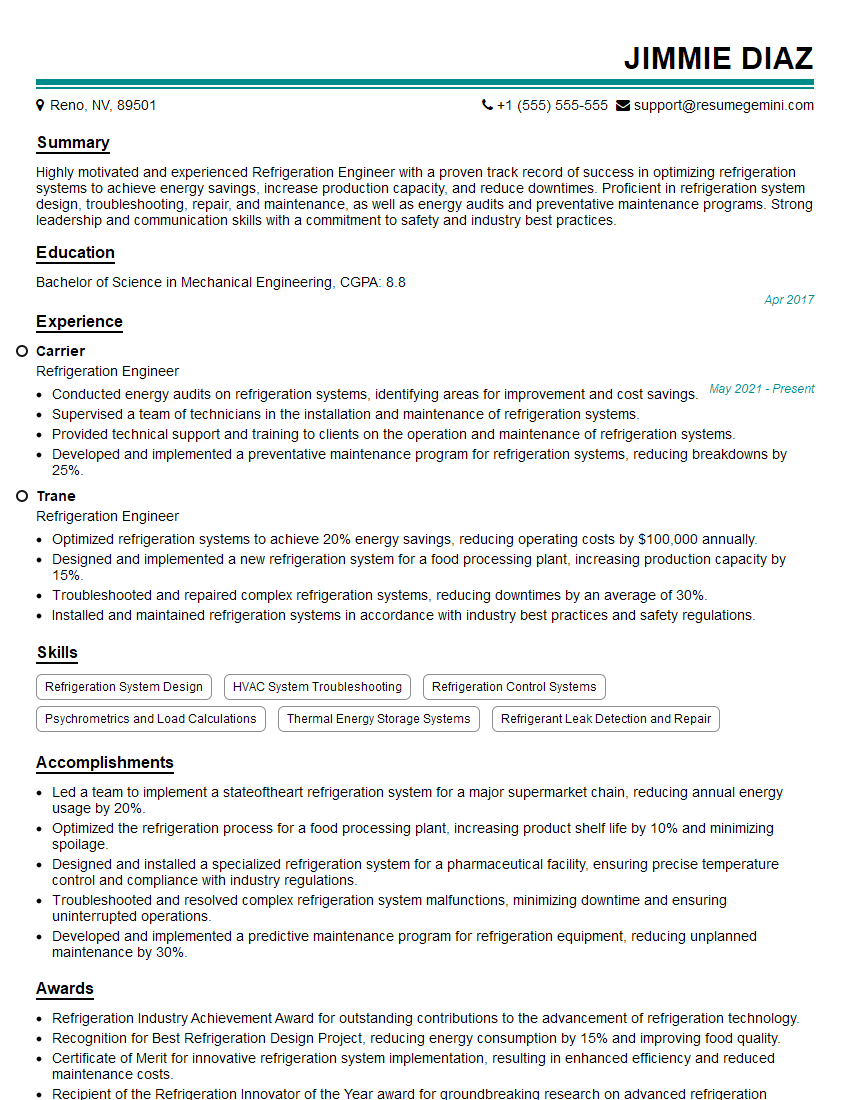
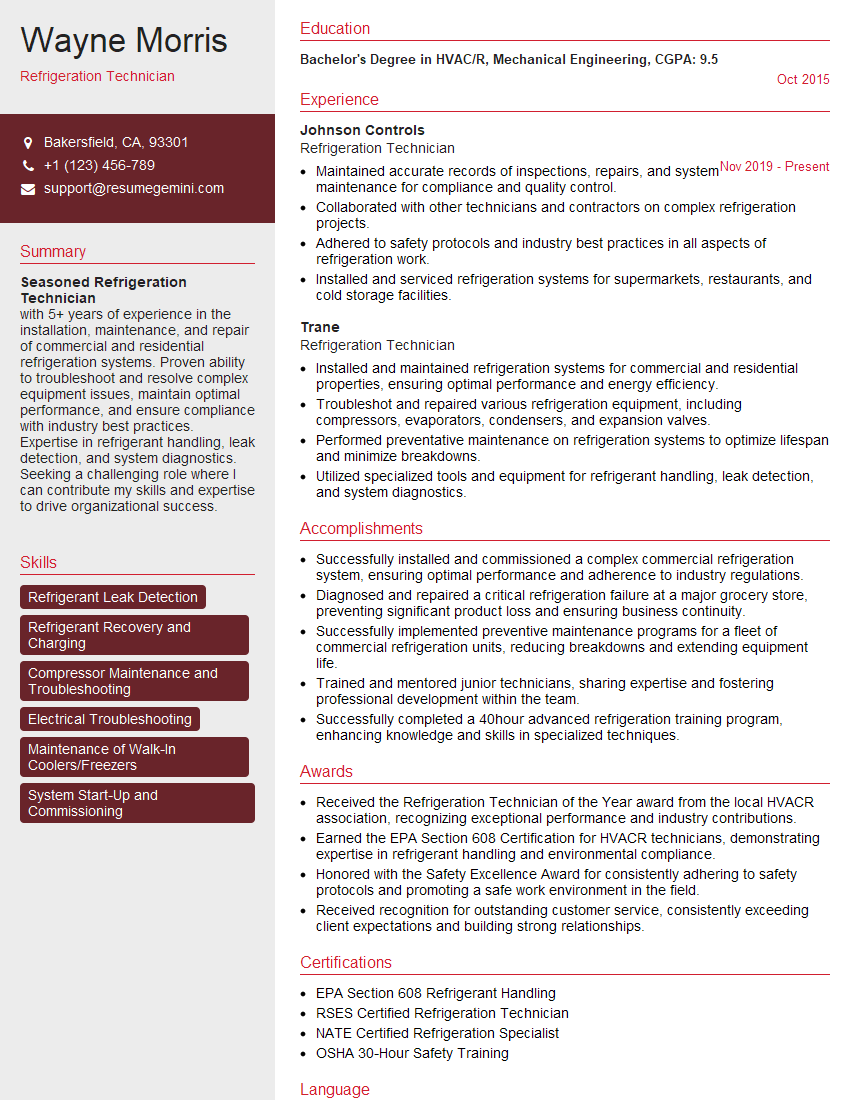
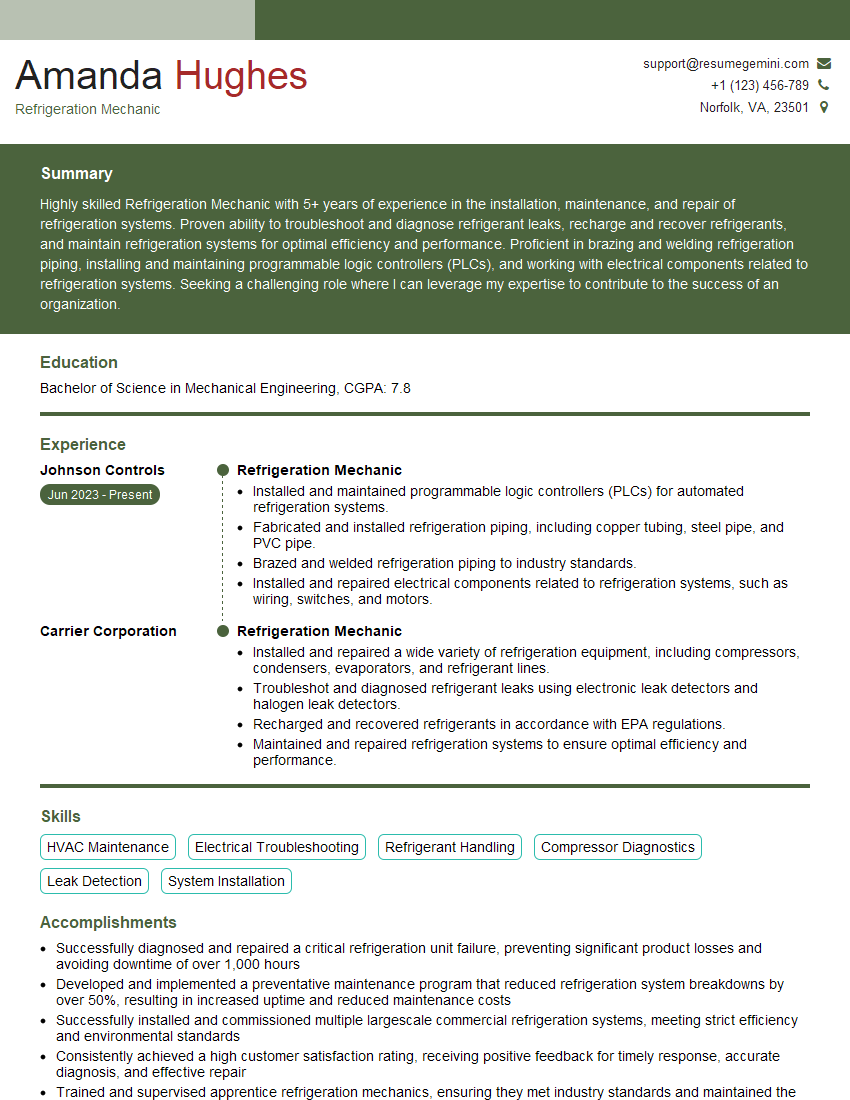
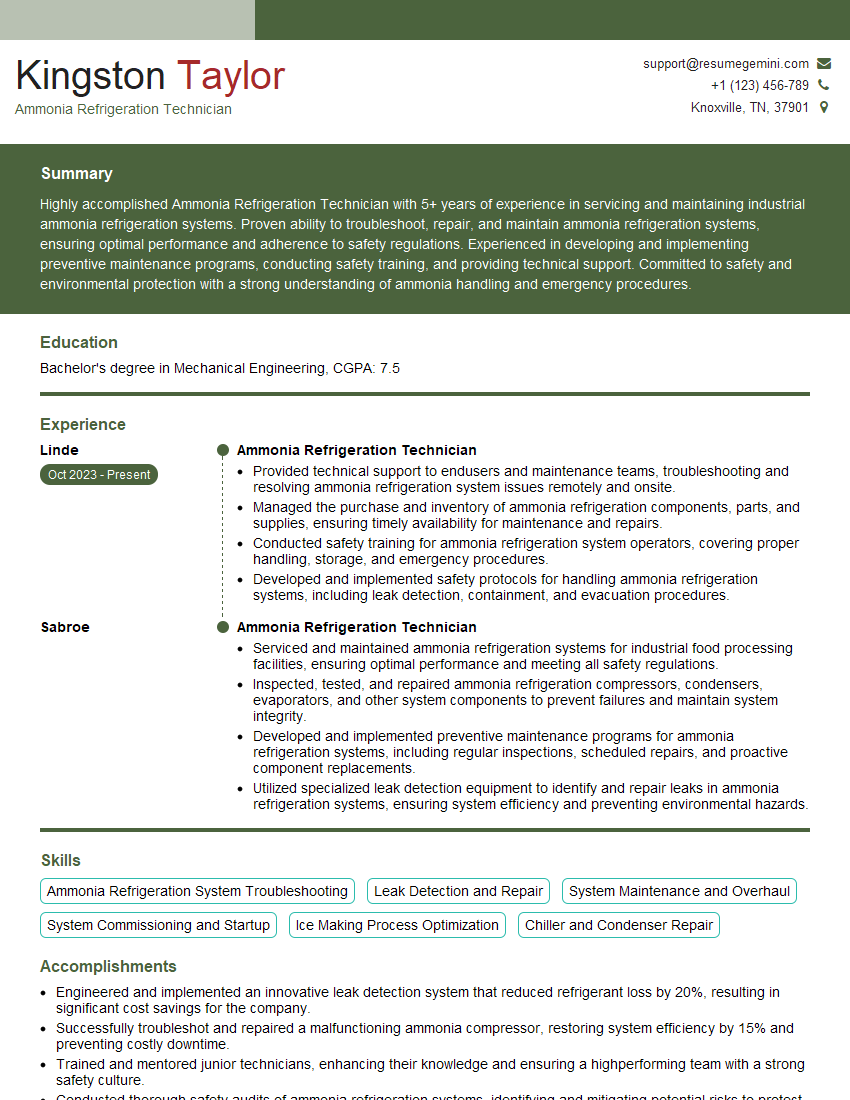
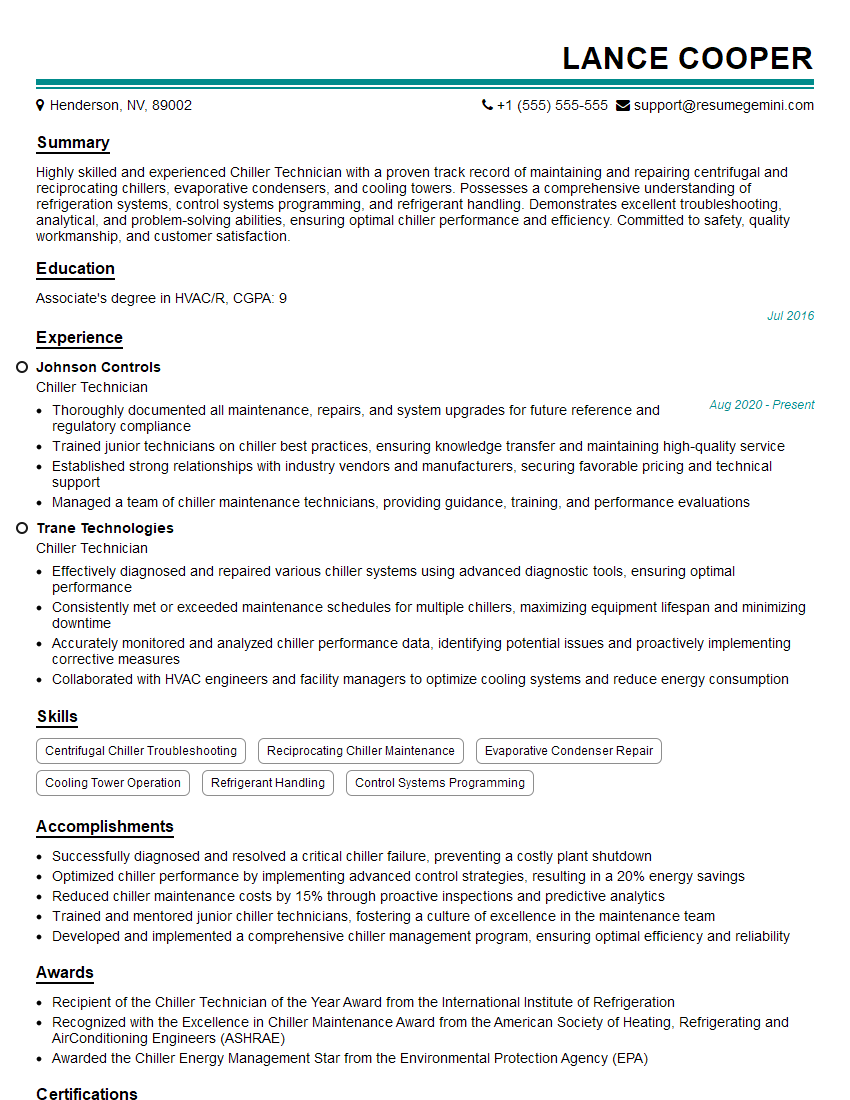
Mastering Refrigeration Plant Operations is crucial for career advancement in this dynamic and essential industry. A strong understanding of these principles will significantly enhance your job prospects and open doors to more challenging and rewarding roles. To maximize your chances of landing your dream job, creating an ATS-friendly resume is paramount. ResumeGemini is a trusted resource to help you build a professional and impactful resume that gets noticed. They offer examples of resumes tailored to Refrigeration Plant Operations, ensuring your qualifications are effectively presented to potential employers. Invest the time to build a compelling resume – it’s your first impression and a crucial step in your career journey.
Explore more articles
Users Rating of Our Blogs
Share Your Experience
We value your feedback! Please rate our content and share your thoughts (optional).
What Readers Say About Our Blog
Really detailed insights and content, thank you for writing this detailed article.
IT gave me an insight and words to use and be able to think of examples