Interviews are more than just a Q&A session—they’re a chance to prove your worth. This blog dives into essential Restoration of Paintings interview questions and expert tips to help you align your answers with what hiring managers are looking for. Start preparing to shine!
Questions Asked in Restoration of Paintings Interview
Q 1. Describe your experience with different types of paint media (oil, acrylic, tempera, etc.).
My experience spans a broad range of paint media, each presenting unique challenges and rewards in restoration. Oil paints, with their complex drying process and susceptibility to cracking and yellowing, require a delicate approach. I’ve worked extensively with paintings from the Old Masters, employing techniques like solvent cleaning and consolidating cracked paint layers. Acrylics, while more stable than oils, can suffer from delamination or discoloration. My approach involves careful assessment of the paint film’s adhesion and employing appropriate consolidants. Tempera, with its sensitive egg-yolk binder, necessitates gentle cleaning methods and a keen understanding of its fragility. I’ve also worked with fresco and gouache, each requiring specialized knowledge and meticulous handling. For instance, I once restored a 17th-century Flemish oil painting where meticulous cleaning revealed subtle underpainting, enriching our understanding of the artist’s technique. Working with tempera, I had to stabilize a medieval panel painting by carefully consolidating its flaking surface before any cleaning could be attempted. Each medium requires a tailored approach based on its chemical properties and age.
Q 2. Explain the process of cleaning a painting.
Cleaning a painting is a critical yet risky stage, demanding a meticulous approach. It involves carefully removing accumulated dirt, grime, varnish, and other accretions that obscure the artwork’s original appearance. The process begins with thorough examination under various light sources—including UV and infrared—to assess the painting’s condition and identify vulnerable areas. Next, I select cleaning methods based on the paint medium and the nature of the soiling. This could involve dry cleaning with soft brushes, or wet cleaning using solvents applied with cotton swabs or specialized tools. The solvents are always tested on inconspicuous areas to gauge their effects. The goal is not just to clean but to preserve the painting’s integrity. For example, a highly varnished oil painting might necessitate a gradual, layer-by-layer varnish removal using a dilute solvent solution, a process that can take several sessions spread over weeks. The entire process is meticulously documented with photographs and detailed notes.
Q 3. What are the common causes of damage to paintings, and how do you address them?
Paintings face various threats throughout their lifespan. Environmental factors, such as fluctuating temperature and humidity, cause cracking, flaking, and warping of the canvas or support. Physical damage, including tears, punctures, and abrasions, often results from mishandling or accidents. Biological agents, like mold and insect infestations, can severely degrade the paint layers and support materials. Improper storage or display conditions contribute to fading and discoloration. Chemical degradation, caused by the inherent aging of the paint itself or the effects of pollutants, also causes damage. Addressing these issues requires a multifaceted approach. Cracking might involve consolidation using reversible adhesives. Tears are mended using fine silk threads and carefully matched pigments. Insect infestations necessitate fumigation or localized treatment. Discoloration sometimes necessitates careful cleaning and possibly localized inpainting. For example, a painting damaged by water exposure needed extensive drying, followed by careful consolidation of loose paint before any cleaning or inpainting could be attempted. A systematic and careful assessment is crucial to creating a successful treatment plan.
Q 4. Describe your experience with inpainting techniques.
Inpainting, the process of filling losses in a painting, is a delicate balance between restoration and artistic license. My approach prioritizes invisibility; the goal isn’t to create a ‘new’ painting but to seamlessly integrate the repaired area. This requires matching the surrounding colors, textures, and brushstrokes as accurately as possible. I use high-quality, lightfast pigments and carefully blend them to create a flawless transition. The materials are chosen to be reversible, allowing future conservators to remove the inpainting if needed. My training emphasizes working in thin layers to avoid disrupting the existing paint layers. I’ve often found that careful preparation of the support and subtle color modulation are key to creating a truly invisible repair. For example, a 19th-century landscape painting with significant losses in the sky required the creation of a gradient of colors rather than simply filling it with a solid tone.
Q 5. How do you select appropriate materials for restoration?
Material selection is paramount in conservation. My choices always prioritize reversibility and compatibility with the artwork. I use archival-quality materials that won’t degrade further or react negatively with the existing paint or support. For adhesives, I might use Paraloid B72, a reversible acrylic resin. For inpainting, I choose lightfast pigments from reputable manufacturers. The support materials chosen must also be compatible and appropriate for the painting’s age and style. I always thoroughly research the optimal materials for the specific artwork before initiating any treatment. This is essential because a poor choice of material can result in further damage and complicate future conservation efforts. For example, using a non-archival varnish could cause yellowing and discoloration over time, necessitating more extensive treatment in the future.
Q 6. Explain the importance of proper documentation in art conservation.
Proper documentation is the cornerstone of ethical and effective art conservation. It provides a complete record of the painting’s condition before, during, and after treatment, ensuring transparency and accountability. My documentation involves detailed written reports, high-resolution photography (including UV and infrared images), and sometimes video recording. These records allow future conservators to understand the treatment rationale and make informed decisions if further intervention is necessary. Detailed notes on materials used, techniques employed, and observations made throughout the process are also crucial. This detailed documentation is also important for insurance purposes, as it provides clear evidence of the work undertaken. In essence, good documentation acts as a safeguard for the artwork and as a valuable research tool for future generations of conservators.
Q 7. How do you handle ethical dilemmas in art restoration?
Ethical dilemmas in art restoration are inevitable. Balancing the desire to preserve the artwork with the need to intervene minimally requires constant ethical consideration. For instance, deciding the extent of inpainting can be challenging. My guiding principle is always minimal intervention—only undertaking treatments that are necessary and reversible. I also prioritize transparency and open communication with the artwork’s owner and other stakeholders about the treatment plans and limitations. When faced with a difficult decision, I consult with colleagues and experts in the field to ensure the best possible approach. The goal is always to preserve the historical integrity and artistic merit of the artwork, making the most informed decisions based on the best available scientific knowledge and ethical practice.
Q 8. Describe your experience with varnish removal and application.
Varnish removal and application are critical steps in painting restoration. Old, discolored varnish can obscure the artist’s original colors and dull the painting’s vibrancy. Removal requires careful consideration of the varnish’s type and the painting’s underlying layers. I typically begin with a thorough assessment, using techniques like microscopy and UV fluorescence to determine the varnish’s composition and its interaction with the paint. This helps me select the most appropriate solvent system, whether it’s a gel-based solvent for localized cleaning or a more aggressive solvent for extensive varnish removal. The process is slow and meticulous, often involving repeated applications and careful monitoring to avoid damaging the paint layers. For example, I recently worked on a 19th-century oil painting where the aged shellac varnish had yellowed significantly. Using a specialized gel, I was able to carefully remove the varnish layer by layer, revealing the artist’s brilliant colors underneath. Once the old varnish is removed, a new protective layer is applied; the choice of varnish depends on various factors including the painting’s material, its age, and environmental conditions. A reversible, non-yellowing varnish is generally preferred to ensure future conservation possibilities. The application itself is done in thin, even coats using soft brushes or specialized spray techniques to ensure even distribution and avoid streaking.
Q 9. Explain your understanding of different types of canvas supports and their conservation.
Canvas supports, the foundation of many paintings, vary significantly in their composition and construction. Understanding these differences is crucial for effective conservation. Common canvas types include linen, cotton, and jute, each with unique properties affecting its lifespan and susceptibility to damage. Linen, for example, is prized for its strength and durability, while cotton can be more prone to deterioration. The support’s condition directly impacts the painting’s stability. Weave density, tension, and the presence of tears or weaknesses are all carefully assessed. Conservation involves addressing issues such as canvas sagging, tears, and areas of weakness. This can involve lining the canvas – adhering a new support fabric to the back – or filling tears and holes with appropriate materials, often using compatible adhesives. For instance, I once worked on a painting where the canvas had severely sagged due to age and improper storage. We carefully lined the canvas using a high-quality linen, securing the original canvas and improving its structural integrity. Regular monitoring and environmental control are equally important in preserving the canvas support, as fluctuations in temperature and humidity can significantly impact its longevity.
Q 10. How do you assess the condition of a painting before starting restoration?
Before any restoration work begins, a thorough assessment of the painting’s condition is paramount. This involves a multi-stage process that might include visual examination under different lighting conditions (natural and UV), microscopic analysis, X-radiography (to reveal underdrawings and structural issues), and sometimes infrared reflectography (to see underpainting and pentimenti). I look for signs of damage, including cracks (craquelure), paint flaking, losses, discoloration, mold, or insect infestation. The condition of the canvas support, varnish layer, and any previous restoration attempts are also documented. This detailed assessment informs the treatment plan, determining the priority of interventions and selecting appropriate materials and techniques. For example, a recent assessment revealed significant craquelure in a late 18th-century portrait. Through microscopic examination, we determined the craquelure wasn’t structurally compromising, and instead of invasive treatments, we opted for a light cleaning and revarnishing. However, in other cases, more intensive measures might be required. This detailed documentation ensures a comprehensive record of the painting’s history and condition, aiding in future conservation efforts.
Q 11. What are the different types of adhesives used in paintings conservation?
Adhesives play a crucial role in consolidating fragile paint layers and attaching lining fabrics. The selection of an appropriate adhesive is critical, as it needs to be reversible (to facilitate future treatments) and compatible with the painting’s materials. Common adhesives used in paintings conservation include animal-hide glue, starch pastes, and synthetic adhesives like polyvinyl acetate (PVAc) and acrylic resins. Animal-hide glue, a traditional adhesive, is often used for lining and mending. Starch pastes are suitable for less demanding tasks. Synthetic adhesives are preferred in some cases due to their strength and stability but must be carefully selected to minimize future issues. The choice of adhesive depends on several factors, including the age and type of the painting, the type of damage, and the desired level of reversibility. For example, in consolidating flaking paint, I might use a reversible acrylic resin, ensuring minimum intervention while providing structural support. Using the wrong adhesive can cause irreversible damage, such as staining or chemical reactions. Careful selection and application are paramount for successful outcomes.
Q 12. Describe your experience with the consolidation of fragile paint layers.
Consolidating fragile paint layers is a delicate process aimed at stabilizing loose or flaking paint, preventing further loss. I usually start by carefully cleaning the affected area to remove any loose debris or dirt. Then, depending on the extent of the damage and the type of paint, I select an appropriate consolidant. These can include Paraloid B72 (an acrylic resin), or other specialized consolidants, which are applied in very thin layers using techniques like micro-injections or carefully controlled brushing. The consolidant penetrates the paint, binding the particles and increasing their cohesion. The application process is extremely slow and meticulous, often requiring multiple sessions to avoid over-saturation and to achieve the best possible results. For instance, on a 17th-century panel painting, we had significant areas of paint flaking on the figures’ faces. We opted for a carefully applied micro-injection method with Paraloid B72 which allowed controlled consolidation, minimal surface disturbance and an improved stability for those valuable details. The entire process is carefully monitored under magnification to ensure that no damage occurs. The success of consolidation depends significantly on proper diagnosis, selecting the right materials, and patient application.
Q 13. Explain your understanding of color matching and its role in inpainting.
Color matching in inpainting – the process of filling losses in a painting’s surface – is an incredibly important aspect of restoration. It involves carefully recreating the original color and texture of the lost area to seamlessly blend it with the surrounding paint. This isn’t about creating a perfect match; rather, it’s about creating an illusion, a delicate integration into the existing artwork. I meticulously analyze the painting’s existing colors, considering how they have changed over time due to factors such as light exposure and aging. I use high-quality pigments and mediums that are chemically stable and compatible with the original paint layer. The color is often applied in thin layers to build the depth and match the original hue. This demands patience, understanding of pigment characteristics, and artistic skill. For example, while repairing a small loss in a background sky, I analyzed the pigment mixtures in the surrounding areas using a microscope and spectral analysis. This provided a color profile to create an accurate and subtle blend into the original painting. Poor color matching is immediately visible and undermines the restoration’s success, so achieving a sensitive and unobtrusive repair is crucial.
Q 14. How do you address mold or insect infestation in paintings?
Mold and insect infestations can cause severe damage to paintings. Addressing these problems requires a multi-pronged approach. The first step is to identify the type of infestation and assess the extent of the damage. Mold, for example, requires specialized cleaning techniques using appropriate fungicides. These are often applied locally and carefully monitored to avoid harming the paint. Insect infestations require a combination of methods including freezing, vacuuming, and sometimes the use of insecticides, but these must be used with extreme care. It’s crucial to consider the painting’s materials and ensure that any treatment doesn’t compromise its integrity. Following treatment, the painting is usually placed in a stable environment with controlled temperature and humidity to prevent recurrence. In one instance, a painting arrived with severe mold damage. We used a combination of local fungicide treatment and careful cleaning, alongside stabilization of the artwork in a climate-controlled chamber for the next phases of treatment. Preventative measures are crucial; paintings should be stored in a clean, dry environment away from direct sunlight to prevent future infestations.
Q 15. Describe your experience with the stabilization of cracked or flaking paint.
Stabilizing cracked or flaking paint is crucial for preserving a painting’s integrity. It involves consolidating loose paint fragments to prevent further loss and damage. This is often a delicate process requiring a nuanced understanding of the paint layers and the underlying support.
My approach typically begins with careful assessment of the damage. I use magnification to examine the extent of the flaking and the nature of the cracks (e.g., are they craquelure – a network of fine cracks, or larger, more significant fissures?). I then select an appropriate consolidant – a substance that penetrates the paint layer and binds the loose particles together. The choice of consolidant depends heavily on the painting’s materials and the type of damage. For example, a reversible consolidant, like a Paraloid B-72 solution in appropriate solvent, is often preferred for its ability to be removed if necessary in the future.
The application process is slow and methodical. I might use a very fine brush or even a syringe to carefully introduce the consolidant into the cracks and onto the flaking areas. Excess consolidant must be carefully removed to avoid altering the painting’s appearance or texture. The whole process requires patience, precision, and a keen eye for detail. I have successfully stabilized numerous paintings using this methodology, ranging from small portraits on panel to large canvases. One particular case involved a 19th-century oil on canvas with extensive flaking due to age and poor previous handling; meticulous consolidation using Paraloid B-72 and careful cleaning allowed the preservation of a significant amount of the original paint layer.
Career Expert Tips:
- Ace those interviews! Prepare effectively by reviewing the Top 50 Most Common Interview Questions on ResumeGemini.
- Navigate your job search with confidence! Explore a wide range of Career Tips on ResumeGemini. Learn about common challenges and recommendations to overcome them.
- Craft the perfect resume! Master the Art of Resume Writing with ResumeGemini’s guide. Showcase your unique qualifications and achievements effectively.
- Don’t miss out on holiday savings! Build your dream resume with ResumeGemini’s ATS optimized templates.
Q 16. How do you determine the appropriate level of intervention in a restoration project?
Determining the appropriate level of intervention is a cornerstone of ethical conservation. It’s about balancing the need to preserve the artwork with the potential risks of over-intervention. My philosophy prioritizes minimal intervention, meaning I only undertake treatments that are absolutely necessary to stabilize the artwork and prevent further deterioration.
This decision-making process is guided by several factors. First, a thorough examination is carried out to fully document the artwork’s condition. This involves visual inspection, often with magnification, as well as the use of scientific imaging techniques (discussed later). This gives a comprehensive picture of the painting’s condition and the extent of the damage. Second, I carefully consider the artwork’s historical and artistic significance. Aggressive intervention may be justified on a significantly damaged, highly important artwork, whereas minimal intervention might be preferred for a less significant piece with only minor damage. Third, I take into account the reversibility of the treatments. Ideally, treatments should be easily reversible to allow future conservators to amend or undo work if needed. Finally, I always discuss my findings and proposed treatment plan with the owner or institution responsible for the artwork, ensuring shared understanding and informed consent. The goal is always to preserve the artwork’s authenticity and integrity, respecting both its history and its artistic value.
Q 17. Explain your understanding of the aging process of different painting materials.
Understanding the aging process of different painting materials is essential for effective conservation. Paints, canvases, and wood panels all age differently, and their deterioration mechanisms interact.
- Paints: Oil paints, for example, undergo a complex process of oxidation and polymerization. This leads to darkening, yellowing, and cracking. Pigments themselves can also fade or become unstable over time.
- Canvases: Canvas supports can become brittle and weak due to age and environmental factors. The linen fibres weaken and can tear. They can also be affected by the chemicals in the paint itself.
- Wood panels: Wooden panels are susceptible to warping, cracking, and insect infestation. Changes in relative humidity can cause significant dimensional changes in the wood.
These processes are intertwined. For instance, the contraction and expansion of a wooden panel can cause cracking in the overlying paint layer. My understanding of these aging processes allows me to anticipate potential problems and develop appropriate preventative and restorative strategies. For example, by carefully monitoring and controlling the environmental conditions in storage, I can minimize the impact of fluctuating temperature and humidity on a painting’s condition. By understanding the aging characteristics of different materials, I can also anticipate and manage issues like paint flaking and canvas tearing.
Q 18. Describe your experience with using imaging techniques (e.g., X-ray, infrared reflectography) in conservation.
Imaging techniques are invaluable tools in paintings conservation. They allow for non-invasive investigation of the artwork’s structure and condition, revealing information invisible to the naked eye.
X-ray radiography reveals the underlying structure of a painting, showing the presence of underdrawings, changes in composition, and the presence of any foreign objects within the layers. For example, I once used X-rays to detect a previous repair in a painting where a section had been completely repainted. Infrared reflectography (IRR) penetrates the surface layers to reveal underdrawings and pentimenti (artist’s changes). This is especially useful in studying the artist’s working methods and making decisions about cleaning or restoration. I used IRR to study a Renaissance painting that revealed several significant changes in the composition the artist had made before deciding on the final version. Both techniques are vital for developing informed conservation strategies and minimizing risks during treatment. They provide crucial insights for making responsible decisions about restoration and conservation, without causing any physical damage to the artwork itself.
Q 19. How do you manage the environmental conditions for the storage and display of paintings?
Managing environmental conditions is paramount in preventive conservation. Fluctuations in temperature and relative humidity are the primary enemies of paintings, causing paint flaking, canvas deterioration, and wood panel warping.
For storage and display, the ideal environment is characterized by:
- Stable temperature: Ideally around 20°C (68°F)
- Stable relative humidity: Ideally around 50%
- Protection from light: UV filtering and controlled light levels to prevent fading
- Clean air: Minimal dust and pollutants
I use various methods to achieve these conditions. For example, climate-controlled storage rooms or display cases are often employed. The use of dehumidifiers, humidifiers, and UV filters are common. Regular monitoring of temperature and humidity with data loggers is crucial to ensure stable conditions. In some cases, microclimates are created inside display cases to ensure optimal conditions for particularly sensitive works. This holistic management approach minimizes the deterioration risks associated with temperature and humidity changes and extends the life of paintings by reducing stress on the materials.
Q 20. Explain your understanding of the principles of preventive conservation.
Preventive conservation focuses on minimizing future damage by creating a stable and protective environment for the artwork. It is a proactive approach that aims to prevent deterioration before it occurs, thereby reducing the need for extensive restoration interventions later.
Its core principles include:
- Environmental control: Maintaining stable temperature and humidity levels is crucial as discussed earlier. This reduces stress on materials and minimizes deterioration risks.
- Proper handling and storage: Careful handling and appropriate storage materials (e.g., acid-free materials) protect paintings from physical damage.
- Pest control: Regular inspections and preventative measures against pests are important to prevent damage.
- Regular monitoring and documentation: Periodic inspections and condition reporting help in early detection of problems.
- Education and training: Educating staff and visitors about proper handling and care significantly contributes to preservation.
Preventive conservation is the most cost-effective and ethical approach. By proactively minimizing risk factors, we greatly reduce the need for invasive and potentially damaging restorative treatments in the future. It’s not just about reacting to damage; it’s about preventing it from occurring in the first place.
Q 21. What are some common challenges faced in paintings conservation, and how have you overcome them?
Conservation faces several challenges. One common challenge is dealing with the complex interactions between different materials in a painting. The deterioration of one layer can affect others, leading to complex problems needing integrated solutions. For example, the warping of a wooden panel can crack the overlying paint. Addressing this requires a holistic approach. Another challenge is the identification and removal of previous, poorly executed restorations that may have caused more damage. This can be particularly difficult if the original artist’s materials are unknown. In such cases, meticulous analysis and careful experimentation are required before implementing any treatment.
I have overcome these challenges by using a combination of methods, including scientific analysis, advanced imaging techniques, and meticulous documentation. In one case, a painting had been subjected to aggressive cleaning in the past, leaving areas of paint severely damaged. By carefully analyzing the damage using microscopy and spectroscopy, I was able to develop a targeted cleaning technique using very gentle solvents and carefully controlled parameters, successfully stabilizing the vulnerable areas and improving the overall appearance of the painting without further loss of paint. A collaborative approach, involving specialists in other scientific fields, is crucial for tackling complex issues, enabling informed decision-making and developing innovative solutions.
Q 22. Describe your experience with working collaboratively with other specialists (e.g., scientists, curators).
Collaboration is paramount in art conservation. I’ve extensively worked with scientists, conservators, curators, and art historians on numerous projects. For example, during the restoration of a 17th-century Flemish painting, I collaborated closely with a materials scientist to analyze the paint layers using non-invasive techniques like X-ray fluorescence (XRF) spectroscopy. This helped us understand the original pigments and identify areas of degradation caused by specific chemical processes. This data directly informed my treatment choices, ensuring the intervention was both effective and historically accurate. With curators, my collaboration centers on understanding the artistic and historical context of the artwork, ensuring that the restoration aligns with the museum’s goals and respects the artistic integrity of the piece. This often involves discussing various treatment options and their potential impact on the artwork’s aesthetic and historical value. For instance, in a recent project, a curator’s detailed knowledge of the artist’s working methods guided my decision to employ a less aggressive cleaning technique, preserving subtle brushstrokes that might otherwise have been lost.
Q 23. How do you prioritize tasks in a large-scale restoration project?
Prioritization in large-scale projects requires a structured approach. I typically begin with a thorough assessment of the artwork’s condition, documenting all areas requiring attention. This often involves creating a detailed condition report with photographic documentation. Next, I prioritize tasks based on urgency and impact. Immediate risks, like flaking paint or insect infestation, take precedence. I then categorize treatments by their invasiveness, starting with non-invasive methods like cleaning and consolidation before moving onto more invasive procedures like inpainting. I use a project management system to track progress, deadlines, and resource allocation. For instance, in the restoration of a large mural, I initially focused on stabilizing loose plaster, preventing further damage. Then, I moved to cleaning, and finally, to inpainting. This phased approach minimizes the risk of causing further damage and allows for flexible adjustments along the way. This method also ensures that the most important aspects of the restoration are addressed first, maximizing the impact of the limited time and resources available.
Q 24. Explain your experience with developing a conservation treatment plan.
Developing a conservation treatment plan is a crucial and multifaceted process. It begins with a comprehensive examination of the artwork, employing various analytical techniques such as microscopy, X-ray radiography, and infrared reflectography to identify the materials, techniques, and the extent of deterioration. I then formulate a hypothesis explaining the cause of deterioration and propose treatment strategies based on current best practices and the specific needs of the artwork. This involves a detailed assessment of risks versus benefits for each potential treatment. The plan includes specific materials and methodologies, a timeline, and a budget. For example, when treating a painting with craquelure (a network of fine cracks in the paint layer), I might recommend a consolidant to strengthen the paint film before attempting any cleaning. The plan is always reviewed and approved by the relevant stakeholders, including curators and conservators before commencing any treatment. This collaborative process allows for informed decision-making, ensuring the best possible outcome while minimizing any potential negative consequences.
Q 25. Describe your understanding of health and safety procedures in a conservation studio.
Health and safety are paramount in a conservation studio. My understanding encompasses various aspects, including proper ventilation to minimize exposure to solvents and pigments, the use of personal protective equipment (PPE) such as respirators, gloves, and eye protection, and the safe handling and disposal of hazardous materials. We adhere strictly to material safety data sheets (MSDS) for all materials used. Regular training on safety protocols is mandatory, and the studio is equipped with emergency eyewash stations and showers. Furthermore, we maintain a clean and organized workspace to prevent accidents. Proper waste management and disposal of hazardous materials according to environmental regulations are crucial. For example, we utilize specialized containers for solvents and other chemicals, and we work with licensed waste disposal companies for safe and environmentally responsible removal. Regular safety inspections and risk assessments are performed to ensure compliance with all relevant health and safety regulations.
Q 26. How do you stay up-to-date with the latest advancements in paintings conservation?
Staying abreast of advancements in paintings conservation requires continuous learning. I regularly attend conferences, workshops, and seminars organized by organizations such as the American Institute for Conservation (AIC) and the International Institute for Conservation of Historic and Artistic Works (IIC). I also actively participate in professional networks, engaging in discussions and knowledge sharing with other conservators. Subscribing to relevant journals and reviewing recent publications in the field is a key part of my professional development. I also utilize online resources and databases, accessing current research findings and best practices. Keeping my skills updated ensures that I am employing the most effective and up-to-date techniques and technologies in my work. This includes staying informed about new analytical methods and materials, ensuring I am always delivering the highest quality conservation treatments.
Q 27. Explain your experience with writing conservation reports.
Conservation reports are crucial for documenting the treatment process and its outcomes. My reports follow a standardized format, including a detailed description of the artwork, its condition before and after treatment, a rationale for the chosen treatment methods, a detailed account of the procedures undertaken, and a photographic record of the entire process. These reports serve as a permanent record of the intervention, allowing for future reference and providing valuable information for future conservators. They also highlight any discoveries made during the examination, such as unexpected materials or techniques used by the artist. The reports are written clearly and concisely, avoiding technical jargon wherever possible, and are tailored to the needs of the audience (e.g., curators, owners). For example, a report for a museum might focus on the historical implications of the treatment, while a report for a private collector might focus on the preservation of the artwork’s market value.
Q 28. What are your salary expectations for this role?
My salary expectations are commensurate with my experience and expertise in the field, reflecting the high level of skill and specialized knowledge required for this role. I am open to discussing a competitive salary package based on the specific requirements and benefits offered.
Key Topics to Learn for your Restoration of Paintings Interview
- Materials Science & Analysis: Understanding paint composition (pigments, binders, mediums), aging processes, and the scientific methods used for analyzing artwork (e.g., microscopy, spectroscopy).
- Cleaning Techniques: Practical application of various cleaning methods (solvent cleaning, laser cleaning, etc.) and the crucial decision-making involved in selecting appropriate techniques based on artwork fragility and material analysis.
- Conservation Ethics & Principles: Understanding the ethical responsibilities of a conservator, including minimal intervention, reversibility, and documentation of all processes. This includes the responsible use of materials and adherence to best practices.
- Repair & Reconstruction: Techniques for repairing canvas tears, filling losses, and inpainting damaged areas using appropriate materials and matching techniques to maintain the artwork’s integrity.
- Preventive Conservation: Implementing strategies to protect paintings from environmental damage (light, temperature, humidity) and understanding the long-term impact of storage and display conditions.
- Documentation & Reporting: Thorough documentation of all procedures, materials used, and observations made throughout the restoration process, preparing comprehensive reports for clients or institutions.
- Case Studies & Problem-Solving: Analyzing successful and unsuccessful case studies to develop a strong understanding of problem-solving in complex restoration scenarios. Be prepared to discuss your approach to tackling unforeseen challenges.
- Health & Safety: Understanding and adhering to strict safety protocols when handling artwork and using potentially hazardous materials and equipment.
Next Steps
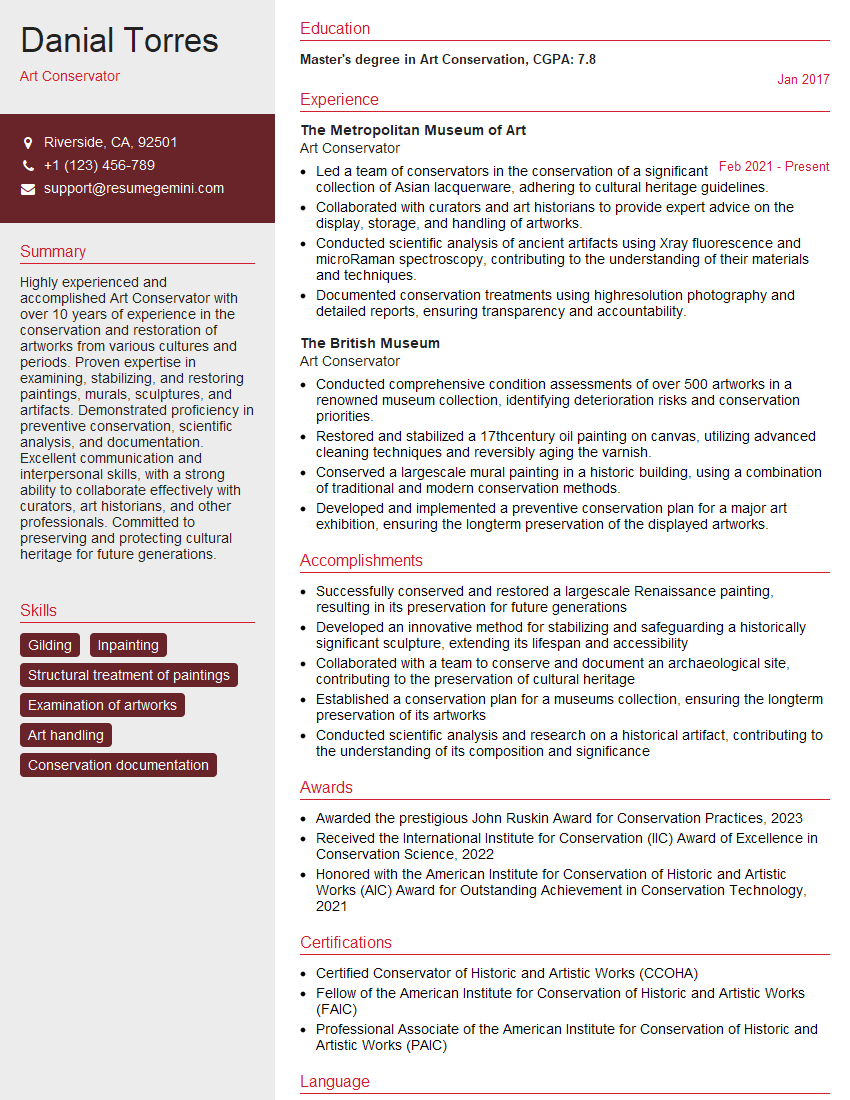
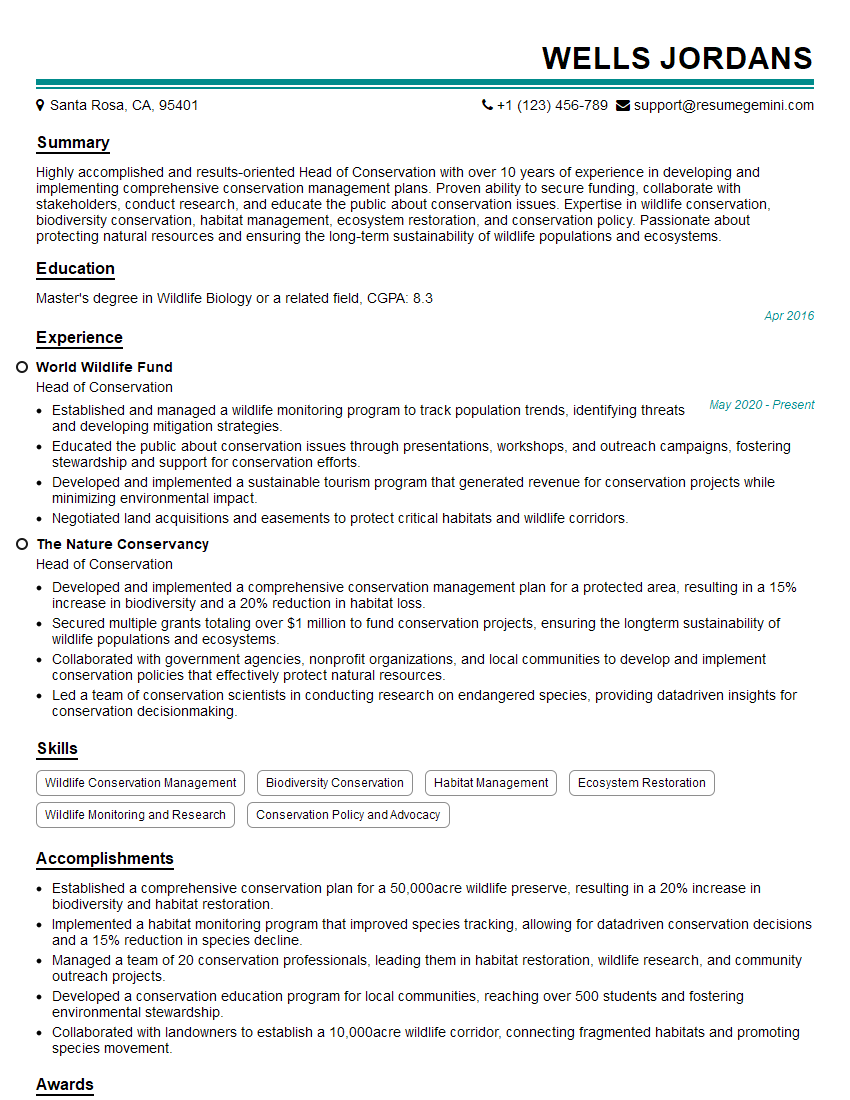
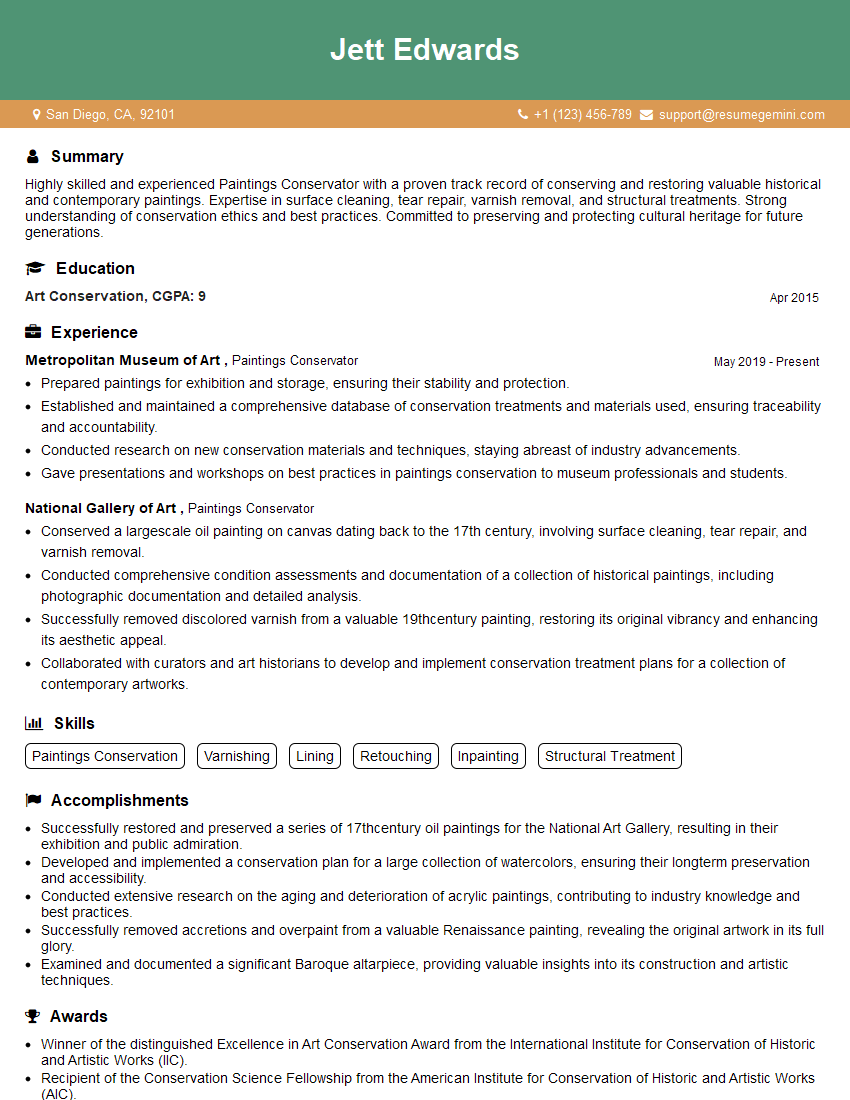
Mastering the art of Restoration of Paintings opens doors to a rewarding career with diverse opportunities in museums, galleries, private collections, and conservation studios. To maximize your chances of landing your dream role, crafting a compelling and ATS-friendly resume is crucial. ResumeGemini can help you create a professional resume that highlights your skills and experience effectively. We provide examples of resumes tailored to the Restoration of Paintings field to help you showcase your expertise in the best possible light.
Explore more articles
Users Rating of Our Blogs
Share Your Experience
We value your feedback! Please rate our content and share your thoughts (optional).
What Readers Say About Our Blog
Really detailed insights and content, thank you for writing this detailed article.
IT gave me an insight and words to use and be able to think of examples