Unlock your full potential by mastering the most common Restoration of Sculptures interview questions. This blog offers a deep dive into the critical topics, ensuring you’re not only prepared to answer but to excel. With these insights, you’ll approach your interview with clarity and confidence.
Questions Asked in Restoration of Sculptures Interview
Q 1. Describe the different types of stone used in sculpture and their respective conservation challenges.
Sculptures are created from a wide variety of stones, each presenting unique conservation challenges. The porosity, hardness, and chemical composition of the stone directly influence its susceptibility to deterioration.
Marble: A metamorphic rock, marble is relatively soft and porous, making it vulnerable to water damage, salt efflorescence (salt crystals forming on the surface), and acid rain. Its crystalline structure can also be susceptible to cracking and fracturing. Think of the iconic marble statues of ancient Greece – many suffer from these issues.
Limestone: Another sedimentary rock, limestone is also porous and susceptible to similar problems as marble. However, different types of limestone have varying degrees of porosity and hardness, influencing their vulnerability.
Sandstone: A sedimentary rock composed of sand grains cemented together, sandstone can be more resistant to weathering than marble or limestone, depending on the cementing agent. However, it can be susceptible to erosion and salt damage.
Granite: An igneous rock, granite is much harder and less porous than marble or limestone, making it more resistant to weathering. However, it can still be affected by extreme temperature changes and physical damage.
Understanding the specific stone type is crucial for selecting appropriate conservation treatments. For example, a cleaning method suitable for granite might be too aggressive for marble.
Q 2. Explain the process of cleaning a bronze sculpture.
Cleaning a bronze sculpture is a delicate process requiring careful consideration of the patina (the surface layer formed by oxidation) and the type of corrosion present. The goal isn’t just to clean, but to preserve the historical integrity and aesthetic value of the piece.
Assessment: Begin with a thorough examination to identify the type and extent of soiling and corrosion. Documentation, including photography, is essential.
Pre-cleaning: Gently remove loose dirt and debris using soft brushes, possibly with compressed air. Always test any cleaning method in an inconspicuous area first.
Cleaning: Several methods exist. For light soiling, deionized water may suffice. More stubborn deposits might require the use of specialized cleaning solutions, applied with cotton swabs or soft brushes. Electrolytic cleaning is sometimes used for heavily corroded areas, but this requires specialized equipment and expertise.
Post-cleaning: After cleaning, the sculpture should be thoroughly rinsed with deionized water and allowed to dry slowly. A protective coating might be applied to help prevent future corrosion.
Example: A bronze statue covered in a thick layer of grime might first be treated with a poultice (a paste-like substance) to draw out ingrained dirt before gentle cleaning with deionized water.
Q 3. What are the common causes of deterioration in wooden sculptures?
Wooden sculptures are particularly vulnerable to deterioration due to their organic nature. Several factors contribute to their decay:
Wood-boring insects: Beetles and other insects can bore into the wood, causing structural weakening and surface damage.
Fungal growth: Fungi thrive in damp conditions, leading to rot and discoloration of the wood. This is especially a problem in areas with high humidity.
Environmental factors: Fluctuations in temperature and humidity cause the wood to expand and contract, leading to cracking and splitting. Exposure to sunlight can also cause fading and discoloration.
Previous treatments: Improper past repairs or treatments can actually accelerate deterioration.
Imagine a beautiful wooden statue left outdoors – exposure to rain, sun, and insects will lead to rapid decay.
Q 4. How would you approach the consolidation of a cracked marble sculpture?
Consolidating a cracked marble sculpture involves strengthening the weakened areas to prevent further fragmentation. The approach depends on the extent and nature of the cracks.
Assessment and Documentation: A thorough visual and possibly microscopic examination is necessary to understand the crack’s depth, extent, and cause.
Cleaning: The area around the crack needs to be carefully cleaned to ensure proper adhesion of the consolidant.
Consolidation: A consolidant, a liquid material that penetrates into the stone and strengthens it, is carefully applied. The choice of consolidant depends on the type of stone and the nature of the damage. Common consolidants include acrylic resins or other synthetic polymers. Application techniques vary but often involve careful injection or brushing.
Monitoring: The consolidated area should be monitored for several days to ensure proper curing and effectiveness of the consolidant.
Think of a consolidant as a glue at the microscopic level, binding the broken fragments back together to improve overall structural integrity.
Q 5. Describe various methods for filling losses in stone sculptures.
Filling losses in stone sculptures requires careful consideration of aesthetics, material compatibility, and reversibility. Several methods exist:
Matching stone: If a suitable piece of stone matching the original can be found, this is the ideal solution. This is the most aesthetically pleasing but often difficult to achieve.
Stone dust and binder: A mixture of finely ground stone dust (from the same type of stone as the sculpture, if possible) and a resin binder can be used to create a filler that closely matches the original material. This is often employed for smaller losses.
Synthetic resins: Various synthetic resins can be colored to match the surrounding stone and used to fill larger losses. These are less desirable for larger gaps due to the visual contrast they might create.
Plaster of Paris: Historically used, plaster of Paris is now less favored due to its instability and tendency to discolor over time. It should generally be avoided in modern conservation practice.
The chosen method should always be documented, and the fill should be clearly distinguishable from the original material to avoid misleading future generations.
Q 6. What are the ethical considerations in sculpture restoration?
Ethical considerations are paramount in sculpture restoration. The principle of minimum intervention is central—only necessary interventions should be undertaken, always respecting the historical and artistic integrity of the work.
Reversibility: Treatments should be, as much as possible, reversible, allowing future conservators to undo the work if necessary or if new techniques emerge.
Transparency: All interventions should be meticulously documented, ensuring that future generations know what has been done and why. This includes detailing materials used and techniques employed.
Authenticity: The restoration should not misrepresent the artwork’s history or artistic intent. Distinguishing between original material and restoration is crucial, and any additions must be clearly identifiable.
Professionalism: Only qualified and experienced conservators should undertake the work, adhering to professional standards and best practices.
Imagine restoring a medieval statue – ethically, you wouldn’t replace significant portions with modern materials. The goal is preservation, not creation.
Q 7. Explain the importance of documentation in the conservation process.
Documentation is the cornerstone of any successful conservation project. It provides a historical record of the object’s condition, the treatments performed, and the reasoning behind those choices. This allows future generations of conservators to understand the object’s history and make informed decisions.
Condition reports: Detailed descriptions of the object’s condition before any treatment is undertaken, including photographs, drawings, and written descriptions.
Treatment records: A precise record of every conservation intervention, including materials used, techniques employed, and the results observed.
Photography: High-quality photographs documenting the object’s condition at various stages of the conservation process are essential.
Sampling: In some cases, small samples might be taken for scientific analysis to inform treatment decisions. This sampling must be documented.
Thorough documentation is essential not only for future conservators but also for researchers and the public, providing crucial insight into the object’s history and the conservation process itself. It’s like a detailed medical chart for a sculpture.
Q 8. What are the different types of adhesives used in sculpture restoration and their applications?
The choice of adhesive in sculpture restoration is crucial, as it must be reversible, strong enough to hold fragments, and compatible with the sculpture’s material. We avoid using irreversible adhesives whenever possible, aiming for solutions that allow for future treatments or corrections. Here are some common types:
- Animal glues (e.g., hide glue): These are traditional, reversible adhesives, ideal for joining porous materials like wood and some stones. Their reversibility is a huge advantage; they can be softened with water, allowing for adjustments or removal. I’ve used hide glue extensively on a 17th-century wooden statue, successfully reattaching a broken arm. The key is to control the viscosity and temperature for optimal adhesion.
- Acrylic adhesives: Acrylics offer excellent strength and are compatible with a wider range of materials than animal glue. However, some formulations are not entirely reversible and should be used cautiously. I prefer using them for consolidating fragile fragments of stone or bronze sculptures where a more robust bond is needed. For example, during the restoration of a terracotta statue, a specific acrylic adhesive allowed me to securely rejoin fragments while minimizing visual impact.
- Epoxy resins: Epoxies are very strong, but are generally irreversible. Their use is reserved for situations where other options are impractical, such as consolidating severely damaged sections where the existing material is weak. I only use epoxies as a last resort, after careful consideration of their permanence and potential impact on future treatments.
Q 9. How do you determine the appropriate level of intervention for a damaged sculpture?
Determining the appropriate intervention level requires a meticulous assessment balancing preservation ethics with aesthetic concerns. The principle of minimum intervention guides my decisions – only undertaking actions necessary to stabilize the sculpture and preserve its integrity. This involves:
- Documentation: Detailed photographic and written records are crucial. This establishes a baseline for assessing the damage and monitoring the effects of any treatment.
- Material analysis: Identifying the sculpture’s material (e.g., marble, bronze, wood) is essential to selecting appropriate treatments. Scientific analysis might involve microscopy or X-ray fluorescence to understand the material’s composition and deterioration processes.
- Risk assessment: We weigh the risks associated with intervention against the risks of doing nothing. Sometimes, minimal intervention, such as environmental control, is the best approach. In other cases, active intervention like cleaning or consolidation is necessary to prevent further deterioration.
- Ethical considerations: The decision must respect the object’s historical and artistic value. I always prioritize preserving its original substance over imposing modern aesthetics. In one project involving a Renaissance bronze, the client desired aggressive cleaning to remove decades of accumulated dirt. However, I carefully explained that this could remove valuable patina and ultimately harm the sculpture’s integrity, suggesting a more subtle cleaning strategy.
Q 10. Describe your experience with different surface coatings used in sculpture conservation.
Surface coatings are applied judiciously to protect sculptures from environmental factors such as dust, pollutants, and moisture. The choice of coating depends on the material and the specific needs of the sculpture. I have extensive experience with several types:
- Waxes: These offer a protective barrier and enhance the appearance of the sculpture, but they need to be reapplied periodically. I use microcrystalline waxes extensively on wooden sculptures; they provide a breathable layer that protects against moisture without compromising the wood’s ability to breathe.
- Acrylic resins: They are suitable for various materials, offering good protection without significantly altering the appearance. Their reversibility is a major advantage in conservation, allowing for future removal or reapplication. I recently applied a removable acrylic coating to a marble statue to protect it during transport and exhibition.
- Silicone resins: These are used in specialized cases where extremely durable protection is needed and offer better water resistance than acrylics. However, they are less reversible. I’ve used silicone resins on outdoor bronze sculptures, but only after careful consideration of their long-term impact.
Each coating needs careful application to avoid uneven surfaces or buildup. Over-application can actually damage the sculpture. In each case, extensive testing on a small, inconspicuous area is essential before widespread application.
Q 11. What are the advantages and disadvantages of using laser cleaning on sculptures?
Laser cleaning offers a precise and non-invasive method for removing surface dirt and deposits from sculptures. However, its application requires careful consideration:
- Advantages: Laser cleaning offers exceptional precision, allowing for targeted cleaning of specific areas without damaging the underlying material. It’s particularly effective on delicate surfaces where traditional methods might be too abrasive. I have successfully used laser cleaning on several highly intricate stone carvings where even the slightest abrasion would have caused irreversible damage.
- Disadvantages: Laser cleaning can be expensive and requires specialized equipment and expertise. Incorrect settings or improper use can damage the sculpture, so careful testing is always needed. Furthermore, not all materials respond well to laser cleaning; some may react unexpectedly, resulting in unwanted discoloration or surface damage. Before applying laser cleaning, I always conduct extensive testing on a sample to evaluate its effectiveness and safety on the specific sculpture.
Q 12. How would you identify and address pest infestations in a sculpture collection?
Pest infestations are a serious threat to sculpture collections. Identifying and addressing them requires a multi-pronged approach:
- Inspection: Regular, thorough inspections are crucial to detect early signs of infestation (e.g., insect frass, webbing, holes in the material).
- Identification: Identifying the specific pest is vital for choosing the correct treatment. This often requires microscopic examination or consultation with an entomologist.
- Treatment: Treatment options range from freezing to fumigation, depending on the pest and the material of the sculpture. For example, freezing is effective for many insects and is often less damaging to the object than chemical treatments. I have used freezing successfully to eliminate insect infestations in a collection of wooden artifacts.
- Preventive measures: Maintaining proper environmental conditions (low temperature, low humidity) and regularly inspecting the sculptures are crucial for preventing future infestations. This includes monitoring the storage environment for any signs of pests or conducive conditions.
Q 13. Explain the importance of environmental control in the preservation of sculptures.
Environmental control is paramount in sculpture preservation. Fluctuations in temperature and humidity can cause significant damage, including cracking, flaking, and material degradation. Think of it like this: sculptures are sensitive; they react to their surroundings just like our skin reacts to harsh weather. Maintaining stable conditions is essential:
- Temperature: Consistent, cool temperatures minimize thermal stress and slow down deterioration processes. I recommend maintaining a temperature around 68°F (20°C).
- Humidity: Relative humidity should be kept at a stable level, usually between 45% and 55%. This prevents expansion and contraction of materials, reducing stress and cracking.
- Light: Excessive light, especially UV radiation, can cause fading and discoloration. Sculptures should be shielded from direct sunlight or intense artificial light. Using UV-filtering glazing on display cases is beneficial.
- Air quality: Controlling pollutants like sulfur dioxide and nitrogen oxides helps minimize corrosion of metal sculptures and deterioration of stone. Proper ventilation is crucial for maintaining good air quality.
Monitoring and controlling these environmental factors is not just a good practice, but a crucial aspect of long-term preservation. I’ve witnessed firsthand the devastating effects of environmental fluctuations on a collection of terracotta sculptures, which led to extensive surface damage and cracking. Proper environmental control would have significantly mitigated that.
Q 14. Describe your experience with the use of 3D scanning and modeling in sculpture conservation.
3D scanning and modeling have revolutionized sculpture conservation, providing invaluable tools for documentation, analysis, and restoration.
- Documentation: 3D scanning creates highly accurate digital representations of the sculpture, capturing even minute details. This allows for detailed documentation of its condition before, during, and after treatment. This digital record becomes invaluable for future reference and assessment.
- Analysis: Digital models allow for precise measurements and analysis of damage, providing essential information for planning restoration interventions. Software can analyze the geometry and identify areas of weakness or instability. In one project, a 3D scan revealed minute cracks in a marble statue that were not readily visible to the naked eye, guiding our consolidation work.
- Restoration: 3D models can be used to create accurate replicas of missing fragments or to guide the creation of custom supports and fixtures during restoration. It’s particularly valuable in situations where only fragments survive, making it possible to recreate missing parts with unprecedented accuracy.
The use of 3D technology has moved beyond mere documentation; it is now an integral part of the decision-making process and the restoration interventions themselves, fundamentally enhancing our ability to preserve valuable sculptures for future generations.
Q 15. What are the common materials used for creating casts and replicas?
Creating accurate and durable casts and replicas is crucial in sculpture conservation, allowing for study, display of fragile originals, and even providing replacement parts during restoration. The choice of material depends on factors like the original sculpture’s material, the intended use of the replica, and budget constraints.
- Plaster: A readily available and relatively inexpensive material, plaster is excellent for creating detailed casts, particularly for smaller sculptures. However, it’s brittle and susceptible to damage.
- Epoxy resins: These offer superior strength and durability compared to plaster, making them ideal for larger and more structurally demanding replicas. They can also be pigmented to closely match the original’s color.
- Silicone rubber: Used to create molds, silicone rubbers are known for their flexibility and ability to capture fine details. These molds can then be used to cast replicas in other materials.
- Polyurethane resins: Offering a good balance of detail capture, strength, and cost-effectiveness, these resins are frequently used for creating replicas.
- 3D printing materials: Increasingly common, 3D printing allows for highly precise replicas, often with the ability to customize the replica’s material properties based on need. Materials range from resins and plastics to metals.
For example, I once worked on a project where we created silicone molds of a delicate bronze sculpture to produce several polyurethane resin replicas for a traveling exhibition, ensuring the original remained safely stored.
Career Expert Tips:
- Ace those interviews! Prepare effectively by reviewing the Top 50 Most Common Interview Questions on ResumeGemini.
- Navigate your job search with confidence! Explore a wide range of Career Tips on ResumeGemini. Learn about common challenges and recommendations to overcome them.
- Craft the perfect resume! Master the Art of Resume Writing with ResumeGemini’s guide. Showcase your unique qualifications and achievements effectively.
- Don’t miss out on holiday savings! Build your dream resume with ResumeGemini’s ATS optimized templates.
Q 16. How would you assess the structural stability of a large stone sculpture?
Assessing the structural stability of a large stone sculpture requires a multi-faceted approach, combining visual inspection with advanced techniques. Think of it like a thorough medical checkup for a patient!
- Visual Examination: This initial step involves meticulously documenting cracks, fissures, areas of deterioration, and any evidence of previous repairs or damage. We look for signs of weakness such as unstable joints or areas prone to stress.
- Tap Testing: Gently tapping the stone surface with a small hammer helps reveal areas with internal weakening or voids. A dull sound often indicates damage.
- Endoscopy: A small camera inserted into cracks can provide images of the interior, allowing for the assessment of the extent of damage and the stability of internal structure.
- Non-destructive testing (NDT): Techniques like ground-penetrating radar (GPR) and ultrasonic testing can provide information on internal flaws and material strength without causing damage.
- Structural Analysis: Based on the data from the tests, I would create a 3D model of the sculpture to perform stress and stability analysis, identifying potential weak points and informing conservation strategies.
For instance, while working on a large sandstone statue, we used endoscopy to identify internal fracturing that wasn’t visible externally. This informed our decision to implement a series of controlled consolidations to stabilise those areas before any other treatments could be undertaken.
Q 17. What is your approach to working collaboratively with other conservators and professionals?
Collaboration is the backbone of successful sculpture conservation. I firmly believe in a multi-disciplinary approach, bringing together individuals with specialized expertise to tackle the unique challenges each project presents. Think of it as an orchestra, each instrument playing its part to create a beautiful whole.
- Open Communication: Regular meetings and clear communication channels are key. We share findings, discuss treatment strategies, and jointly make decisions.
- Respect for Expertise: I value the input of every team member, acknowledging their specific skills and contributions. A conservator might specialize in certain materials, while an engineer provides structural assessments.
- Shared Decision Making: The treatment plan is developed collaboratively, considering all aspects of the project. This ensures that every voice is heard and the best possible outcome is achieved.
- Documentation: Detailed records are maintained throughout the process, reflecting the contributions of each team member and promoting transparency.
One memorable project involved a team of conservators, engineers, archaeologists, and museum staff, working in perfect harmony to restore a medieval stone fountain. The combined expertise ensured a holistic and informed approach resulting in a successful outcome.
Q 18. Describe your experience with risk assessments and developing conservation treatment plans.
Risk assessment and treatment planning are paramount. It’s like designing a surgical procedure – every step needs careful consideration to minimize potential harm while maximizing positive results.
- Risk Assessment: This involves identifying potential hazards to the sculpture during the conservation process. This includes environmental risks (e.g., temperature fluctuations, humidity), material incompatibilities, and risks posed by treatment methods.
- Treatment Plan Development: Based on the assessment, a detailed treatment plan is created, outlining each step, including material selection, techniques, and safety precautions. The plan should be flexible enough to adapt to unforeseen circumstances.
- Testing and Trials: Before implementing any treatment, I conduct tests on small, inconspicuous areas of the sculpture to evaluate the effectiveness and compatibility of proposed materials and methods.
- Documentation and Monitoring: All stages of the treatment process are meticulously documented, including photographs, material specifications, and progress notes. The sculpture is monitored throughout and after treatment to evaluate long-term stability.
For instance, when working on a sculpture with significant areas of surface deterioration, we conducted several tests before deciding upon the ideal consolidation method to ensure the chosen materials wouldn’t cause further damage or impact the sculpture’s aesthetic qualities.
Q 19. How do you stay informed about current best practices and new technologies in sculpture conservation?
Staying abreast of the latest advancements in sculpture conservation requires continuous learning and engagement with the field. It’s a dynamic discipline that’s constantly evolving!
- Professional Organizations: Active membership in organizations like the American Institute for Conservation (AIC) provides access to publications, conferences, and workshops.
- Scientific Journals and Publications: I regularly read journals specializing in conservation science and materials science, keeping up with research on new materials and techniques.
- Conferences and Workshops: Attending conferences and workshops allows for direct interaction with leading experts in the field, fostering collaboration and knowledge exchange.
- Online Resources and Databases: Many online resources and databases provide access to valuable information, including conservation case studies and best practices.
- Mentorship and Collaboration: Working with and learning from experienced colleagues broadens my knowledge and perspectives.
Recently, I participated in a workshop focused on the application of advanced imaging techniques in sculpture conservation, which significantly improved my diagnostic capabilities.
Q 20. Explain the importance of preventative conservation measures.
Preventative conservation is arguably the most important aspect of sculpture conservation. It focuses on minimizing the risk of damage before it occurs, preventing costly and time-consuming interventions later. Think of it as preventive medicine rather than emergency care.
- Environmental Control: Maintaining stable temperature and humidity levels is crucial, preventing cracking, flaking, and other forms of deterioration. This often involves climate control systems in museums.
- Protection from Physical Damage: This involves measures like appropriate handling techniques, secure storage and display, and protecting the sculpture from accidental damage.
- Pest Control: Regular pest control measures are essential to prevent damage caused by insects, rodents, and other organisms.
- Regular Monitoring and Inspections: Regular inspection and documentation of the sculpture’s condition allows for the early detection of any deterioration, enabling timely intervention.
- Cleanliness: Keeping the sculpture clean and free from dust and pollutants protects its surface and prevents further damage.
A proactive preventative conservation plan helped us avoid major damage to a collection of outdoor bronze sculptures by implementing a schedule of regular cleaning, inspecting for corrosion, and applying protective coatings, thus extending their lifespan significantly.
Q 21. Describe your experience with different types of metal corrosion and their treatment.
Metal corrosion is a significant challenge in sculpture conservation. Understanding the different types of corrosion and their causes is crucial for developing effective treatments. Each type requires a tailored approach.
- Oxidation (Rust): This is the most common type of corrosion in iron and steel, where the metal reacts with oxygen and moisture to form iron oxide. Treatment often involves careful cleaning to remove loose rust, followed by the application of corrosion inhibitors or protective coatings.
- Chlorination: This occurs in chloride-rich environments, accelerating corrosion. It’s often a concern near coastal areas. Treatment involves removing chloride ions and protecting the metal from further exposure.
- Bronze Disease: This is a specific form of corrosion in bronze sculptures characterized by the formation of green or black patinas. Treatment involves carefully removing the affected areas using mechanical methods and applying consolidants to stabilize the metal.
- Galvanic Corrosion: This occurs when two dissimilar metals are in contact in the presence of an electrolyte, such as rainwater. The more active metal corrodes preferentially. Treatment might involve separating the metals or applying protective coatings.
In one instance, we successfully treated a severely corroded iron gate using a combination of electrochemical methods and a protective wax coating. We first carefully removed loose rust before applying an inhibitor and then a protective coating, extending the lifespan of the gate significantly.
Q 22. What are the different types of paint used on sculptures and their conservation challenges?
Sculptures, particularly those from earlier periods, were painted using a variety of materials, each presenting unique conservation challenges. The type of paint used heavily influences the approach to restoration.
Tempera: This water-based paint, using egg yolk as a binder, was common in medieval and Renaissance periods. It’s relatively fragile and susceptible to cracking and flaking. Conservation focuses on consolidating flaking paint layers using carefully chosen consolidants and minimizing further damage.
Oil Paint: Used extensively from the Renaissance onwards, oil paints are more durable than tempera but can yellow and darken over time, requiring careful cleaning and potentially retouching with matching pigments.
Polychrome Sculpture Paints: These often involve multiple layers of different types of paint, including gesso (a preparation layer), gold leaf, and various colored pigments. The complexity necessitates careful analysis before any intervention to understand the original techniques and materials used.
Modern Paints: 20th- and 21st-century sculptures might employ acrylics, synthetic resins, or even industrial paints, each requiring specialized cleaning and conservation approaches, and often presenting compatibility issues with older materials.
The biggest challenge is always ensuring that any intervention is reversible and doesn’t further damage the original artwork. For instance, a poorly chosen cleaning solvent can dissolve a paint layer, while an aggressive consolidation technique can leave unsightly residues.
Q 23. How do you ensure the authenticity and integrity of a sculpture during restoration?
Authenticity and integrity are paramount in sculpture restoration. We employ a multi-pronged approach:
Thorough Documentation: Before any work begins, extensive documentation is crucial, including high-resolution photography, 3D scanning, and detailed written descriptions of the sculpture’s condition. This serves as a baseline for evaluating the restoration’s success.
Non-invasive Analysis: Techniques like X-ray fluorescence (XRF) and infrared reflectography (IRR) help us understand the sculpture’s construction, materials, and any previous interventions without causing damage. We can identify underlying layers of paint or repairs made in the past.
Principle of Reversibility: All interventions must be reversible. This means that any treatment can be removed in the future without harming the sculpture. This is crucial for preserving the integrity of the original artwork and allowing future conservators to revisit and refine treatments as new technology and understanding evolve.
Ethical Considerations: We always adhere to the highest ethical standards, avoiding any additions or alterations that might misrepresent the sculpture’s history or provenance. We differentiate clearly between original material and added restorative material.
For example, when restoring a gilded statue, we might carefully consolidate flaking gold leaf using a reversible adhesive. Any loss of gold would be documented, and any newly applied gold would be clearly differentiated through documentation and potentially through the use of a slightly different shade or texture.
Q 24. Explain the process of creating a condition report for a sculpture.
A condition report is a crucial first step in any sculpture restoration project. It’s a comprehensive record of the sculpture’s current state, serving as a roadmap for the conservation process.
Creating a condition report involves:
Visual Examination: A thorough visual inspection to document surface condition (cracks, chips, discoloration), structural stability, and the presence of any previous repairs.
Photography and Videography: High-resolution images and videos from multiple angles to record the overall condition and any details that might be missed during a visual inspection.
Non-invasive Analysis: Utilizing techniques such as X-radiography, UV fluorescence, and microscopic analysis to reveal hidden damage, material composition, or previous restorations without causing any harm.
Material Identification: Determining the composition of the sculpture’s materials (stone, wood, metal, paint) using analytical techniques.
Detailed Documentation: A written report summarizing all findings, including descriptions of damage, condition of paint layers, and suggested treatments. This often includes detailed sketches and diagrams.
The condition report acts as a vital reference for the entire conservation team, guiding treatment decisions and providing a means of evaluating the success of the intervention. It also provides transparency and accountability, demonstrating a rigorous approach to preserving cultural heritage.
Q 25. What are some common problems encountered in the restoration of polychrome sculptures?
Polychrome sculptures, due to their inherent complexity of materials and layers, present a unique set of challenges. Some of the most common issues include:
Paint Loss and Degradation: The paint layers can be extremely delicate, susceptible to flaking, cracking, and discoloration due to age, environmental factors, and previous inappropriate treatments.
Insect Infestation: Wood sculptures, in particular, are vulnerable to woodworm and other insects which can cause significant damage to both the substrate and the overlying paint.
Biological Growth: Molds, fungi, and other biological organisms can colonize the surface, causing discoloration, and degradation of the paint layers.
Previous Interventions: Older, ill-advised restoration attempts can complicate matters, introducing incompatible materials that may be difficult to remove without causing damage to the original layers.
Substrate Deterioration: The underlying material, whether it’s wood, stone, or metal, can suffer its own form of deterioration, causing instability and further damage to the paint layers.
Addressing these problems requires a careful, phased approach, often using micro-surgical techniques and specialized materials to consolidate fragile paint layers, remove accretions, and re-establish structural integrity. The knowledge of historical painting techniques is essential in determining suitable interventions.
Q 26. How would you approach the removal of accretions from a sculpture’s surface?
Accretions, which are accumulations of dirt, grime, and other deposits on a sculpture’s surface, need careful removal to reveal the original artwork. The approach is highly dependent on the type of accretion and the sculpture’s material.
The process typically involves:
Initial Assessment: Determining the type and extent of the accretions. This might involve magnification and testing to ensure that the cleaning method used is appropriate for both the accretion and the sculpture’s surface.
Gentle Cleaning Methods: Starting with the most conservative methods, such as soft bristle brushes, cotton swabs, and low-pressure air to remove loose and superficial deposits. We avoid aggressive methods unless absolutely necessary.
Solvent Cleaning (when necessary): If the above methods prove insufficient, carefully selected solvents (often water-based or low-toxicity organic solvents) can be applied to dissolve more stubborn accretions. This is a very precise process involving careful testing to avoid any damage to the original material or the paint layers. We use small amounts of solvent on a test area first.
Ultrasonic Cleaning (for delicate items): This method uses high-frequency sound waves to gently dislodge accretions without causing mechanical damage. It’s often used for smaller, intricate pieces.
Laser Cleaning (as a last resort): Laser cleaning is highly sophisticated and effective for removing accretions, but its use requires extreme caution and precise control to prevent damage to the substrate. It’s reserved for specific cases where other techniques are ineffective.
Throughout the cleaning process, we monitor the sculpture’s condition, and it’s critical to document every step to ensure accountability and traceability. We frequently photograph the process in order to have a detailed record.
Q 27. Describe your experience with the use of specialized equipment and tools in sculpture conservation.
Specialized equipment and tools are indispensable in sculpture conservation. My experience spans a wide range of technologies, each selected for its precision and compatibility with the artwork.
Microscopes: Stereo microscopes are essential for close examination of surface details, assessing the condition of paint layers, and guiding the precise application of cleaning agents or consolidants. They allow for precise manipulation and detailed observation.
Scalpels and Micro-tools: Extremely fine surgical instruments are used to remove loose paint flakes or accretions with precision, minimizing damage to the surrounding areas. These tools require an extremely steady hand and a good understanding of the materials.
Vacuum Systems: Specialized vacuum systems are used to remove loose debris gently without causing abrasion. Different attachments are used depending on the sculpture’s surface texture and the type of debris.
Laser Cleaning Equipment: As mentioned, I have experience working with laser cleaning systems to remove accretions selectively without damaging the underlying material. This involves precise control and thorough understanding of the laser’s wavelength and power settings.
3D Scanning Technology: For complex sculptures, 3D scanning enables the creation of digital models that can be used for documentation, analysis, and even to guide the creation of custom support structures for fragile pieces.
The choice of tools and equipment depends entirely on the specific nature of the sculpture and the problems to be addressed. Selecting the right tools is critical to ensuring that the treatment doesn’t inadvertently cause more damage than it solves.
Key Topics to Learn for Your Restoration of Sculptures Interview
- Materials Science & Analysis: Understanding the composition of various sculptural materials (stone, bronze, wood, etc.), their inherent vulnerabilities, and appropriate analytical techniques for assessment (e.g., microscopy, spectroscopy).
- Conservation Ethics & Principles: Applying ethical considerations to restoration projects, prioritizing minimal intervention and respecting the object’s history and integrity. This includes understanding different philosophies of conservation and their practical implications.
- Cleaning & Surface Treatments: Mastering safe and effective cleaning methods for different materials, including the selection and application of appropriate solvents and consolidants. Understanding the potential risks and side-effects of each treatment.
- Repair & Reconstruction Techniques: Proficiency in various repair techniques, including patching, infilling, and joining fractured pieces. Understanding the properties of different filling materials and their compatibility with the original sculpture.
- Documentation & Record Keeping: The crucial role of meticulous documentation throughout the entire restoration process, including photographic records, detailed condition reports, and treatment notes. Understanding best practices for digital archiving.
- Preventive Conservation: Strategies for minimizing future damage and deterioration, including environmental controls, appropriate display techniques, and protective coatings.
- Problem-Solving & Decision Making: Developing effective problem-solving skills to address unforeseen challenges during the restoration process. This includes adapting techniques based on the specific condition of the sculpture and making informed decisions based on available evidence.
Next Steps
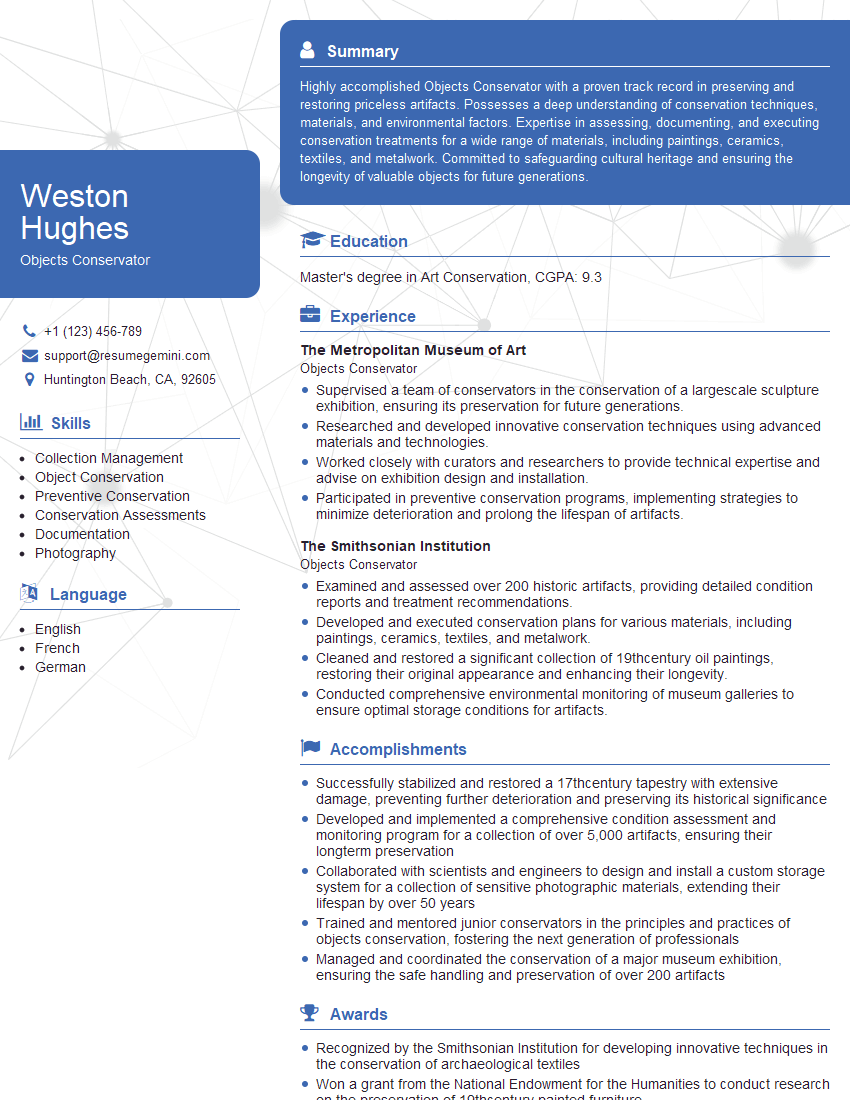
Mastering the art of sculpture restoration opens doors to a rewarding career with diverse opportunities in museums, galleries, historical sites, and private collections. To maximize your job prospects, creating a strong, ATS-friendly resume is essential. ResumeGemini can significantly enhance your resume-building experience, helping you present your skills and experience effectively to potential employers. Take advantage of their resources and review the examples of resumes tailored to Restoration of Sculptures to craft a compelling application that showcases your expertise.
Explore more articles
Users Rating of Our Blogs
Share Your Experience
We value your feedback! Please rate our content and share your thoughts (optional).
What Readers Say About Our Blog
Really detailed insights and content, thank you for writing this detailed article.
IT gave me an insight and words to use and be able to think of examples