Interviews are more than just a Q&A session—they’re a chance to prove your worth. This blog dives into essential Safety Certifications interview questions and expert tips to help you align your answers with what hiring managers are looking for. Start preparing to shine!
Questions Asked in Safety Certifications Interview
Q 1. Explain your understanding of OSHA regulations.
OSHA (Occupational Safety and Health Administration) regulations are a comprehensive set of standards designed to ensure safe and healthful working conditions for all employees in the United States. My understanding encompasses a wide range of these regulations, including general industry standards, construction standards, and those specific to particular industries like maritime or agriculture. These standards cover a multitude of hazards, from fall protection and lockout/tagout procedures to hazard communication and personal protective equipment (PPE).
For example, OSHA’s General Duty Clause (Section 5(a)(1)) requires employers to provide a workplace free from recognized hazards that are causing or are likely to cause death or serious physical harm. This clause is crucial because it covers hazards not explicitly addressed in specific standards. Understanding this clause necessitates a proactive approach to hazard identification and control.
Specific OSHA standards often prescribe detailed procedures and requirements. For instance, the lockout/tagout standard (29 CFR 1910.147) outlines procedures to prevent the unexpected energization or startup of equipment during maintenance or servicing, minimizing the risk of serious injury or death. I have extensive experience in interpreting and applying these standards to ensure compliance.
Q 2. Describe your experience conducting safety audits.
I’ve conducted numerous safety audits across various industries, using a combination of observation, interviews, and documentation review. My approach is systematic and thorough. I begin with a pre-audit planning phase to understand the organization’s operations, identify high-risk areas, and tailor the audit scope accordingly. During the audit itself, I visually inspect work areas, observe employee work practices, and review safety documentation such as safety policies, training records, and incident reports.
For instance, during an audit at a manufacturing plant, I observed employees not using the designated lifting equipment for heavy materials, creating a significant risk of musculoskeletal injuries. This observation led to recommendations for improved training and enforcement of existing safety policies, including the introduction of job safety analysis (JSA) for specific high-risk tasks.
Post-audit, I compile a detailed report, clearly outlining findings, non-compliances, and recommendations for corrective actions. I prioritize areas with the highest potential impact, focusing on immediate hazards. I also follow up to ensure that corrective actions have been implemented and are effective.
Q 3. How do you develop and implement safety training programs?
Developing and implementing effective safety training programs requires a needs analysis, design, delivery, and evaluation approach. I begin by identifying training needs through job hazard analysis (JHA), incident investigations, and employee feedback. The analysis helps determine the specific knowledge, skills, and attitudes employees need to work safely.
The design phase involves creating engaging and relevant training materials, using various methods such as interactive presentations, hands-on exercises, and case studies. I ensure the training is tailored to the audience’s learning style and incorporates practical applications. For example, for a construction site, I might conduct a hands-on training session on fall protection equipment and techniques.
Effective delivery is essential. I utilize a variety of techniques, including classroom instruction, online modules, and on-the-job training (OJT). Post-training evaluation, through testing, observation, and feedback mechanisms, is critical to assess effectiveness and identify areas for improvement. I believe ongoing reinforcement and refresher training are crucial for long-term success.
Q 4. What are the key elements of a successful safety management system?
A successful safety management system (SMS) is a proactive and integrated approach to safety, focusing on preventing incidents and improving overall safety performance. Key elements include:
- Leadership Commitment: Visible commitment from top management is crucial to foster a strong safety culture.
- Hazard Identification and Risk Assessment: Regular identification, evaluation, and control of workplace hazards are vital.
- Risk Control Measures: Implementation of engineering controls, administrative controls, and PPE to mitigate identified risks.
- Emergency Preparedness and Response: Development and regular testing of emergency response plans.
- Incident Investigation and Reporting: Thorough investigation of incidents to identify root causes and prevent recurrence.
- Training and Competency Assurance: Regular training to ensure employees possess the necessary skills and knowledge to work safely.
- Communication and Consultation: Open communication channels and employee involvement in safety processes.
- Performance Measurement and Review: Regular monitoring and evaluation of safety performance and adjustments based on data.
Think of an SMS as a living document, constantly evolving and adapting to changing conditions and new hazards. It’s not just a set of rules but a culture of continuous improvement.
Q 5. Explain your experience with incident investigation and root cause analysis.
Incident investigation and root cause analysis (RCA) are crucial for learning from past events and preventing future occurrences. My approach involves a systematic process, starting with securing the scene, gathering evidence, and interviewing witnesses. I use various RCA techniques, such as the ‘5 Whys’ method or fault tree analysis (FTA), to drill down to the underlying causes of an incident, going beyond immediate symptoms to address the systemic issues.
For example, in investigating a near-miss involving a forklift, the immediate cause might have been a driver’s momentary lapse in attention. However, using the ‘5 Whys’ method, I might uncover underlying causes like inadequate training, poor lighting, or a lack of routine maintenance on the forklift. These deeper causes can be addressed with more effective solutions.
The final report includes a detailed account of the incident, the identified root causes, and specific recommendations to prevent similar events. This report is shared with relevant personnel and used for corrective actions and updated safety procedures.
Q 6. How do you identify and assess workplace hazards?
Identifying and assessing workplace hazards is an ongoing process requiring a proactive approach. I use a combination of methods including:
- Walkthrough Inspections: Regularly walking through the workplace to observe potential hazards.
- Job Hazard Analysis (JHA): Systematically examining each job task to identify potential hazards.
- Incident/Near-Miss Reporting: Analyzing reports to identify trends and recurring hazards.
- Employee Feedback: Gathering input from employees who are directly involved in the work.
- Data Analysis: Reviewing injury and illness data to identify patterns and high-risk areas.
For example, during a walkthrough, I might observe a cluttered walkway, creating a trip hazard. This would be documented and addressed through corrective actions, such as implementing a 5S program (Sort, Set in Order, Shine, Standardize, Sustain) to improve workplace organization.
Hazard assessment involves determining the severity and likelihood of harm associated with each hazard, allowing prioritization of corrective actions. This might involve using a risk matrix to categorize hazards based on their risk level.
Q 7. Describe your experience with risk assessment and mitigation.
Risk assessment and mitigation are central to preventing workplace accidents. I utilize a structured approach, typically involving identifying hazards, analyzing the risks associated with those hazards, evaluating the existing controls, determining if the risks are adequately controlled and implementing additional controls where needed. This often involves using a risk matrix to prioritize actions based on severity and likelihood.
For example, if the risk assessment identifies a high risk of falls from heights, mitigation strategies could include implementing engineering controls like guardrails, administrative controls such as work permits, and the use of personal protective equipment (PPE) like fall arrest harnesses. The chosen mitigation strategies should reduce the risk to an acceptable level.
Ongoing monitoring and review are crucial. Once controls are implemented, their effectiveness must be regularly reviewed and updated as needed, ensuring they continue to provide the necessary level of protection. This iterative process ensures that the risk remains at an acceptable level.
Q 8. How do you communicate safety information effectively to diverse groups?
Effective communication of safety information across diverse groups requires a multi-faceted approach. It’s not just about *what* you say, but *how* you say it and to whom. I tailor my communication style to the audience’s background, literacy level, and primary language.
- Visual Aids: For visually-oriented learners, I utilize diagrams, infographics, and short videos demonstrating safe practices. For example, a simple image showing the correct way to lift heavy objects is far more impactful than a lengthy verbal explanation.
- Interactive Sessions: Hands-on training, quizzes, and group discussions encourage active participation and knowledge retention. Instead of a lecture, I might use a simulated scenario to demonstrate proper emergency procedure.
- Multilingual Resources: Safety information should be accessible to everyone. This includes providing translated materials and using interpreters when necessary. If I’m working with a team where multiple languages are spoken, I would ensure all crucial safety documents and training are available in those languages.
- Different Communication Channels: I utilize a variety of communication channels – posters, emails, intranet announcements, toolbox talks – to ensure that the message reaches everyone, regardless of their preferred method of receiving information. A simple email reminder about PPE use might be supplemented with a brightly coloured poster in the workplace.
By adapting my communication style and using multiple channels, I ensure critical safety information is effectively and consistently understood by all members of a team, regardless of their backgrounds or preferences.
Q 9. What is your experience with emergency response planning and procedures?
My experience with emergency response planning encompasses developing comprehensive plans, conducting drills, and leading response teams. I’ve worked across various industries, from construction to manufacturing, and each has its unique challenges. A well-structured emergency response plan is crucial for mitigating risk and ensuring the safety of personnel.
- Plan Development: I’m proficient in conducting risk assessments to identify potential hazards and developing tailored emergency response procedures. This includes defining roles and responsibilities, establishing communication protocols, and outlining evacuation routes. For instance, in a manufacturing facility, we might designate specific assembly points based on the location of potential hazards.
- Drills and Training: Regular drills are essential to ensure that the plan is effective and that personnel are adequately trained. I conduct various drills – fire drills, evacuation drills, and specialized drills addressing specific hazards – providing feedback and making necessary adjustments to the plan. For example, we’d use timed evacuation drills to assess the effectiveness of our escape routes and identify bottlenecks.
- Post-Incident Analysis: Following any incident, I lead a thorough review to identify areas for improvement. This involves analyzing the effectiveness of the response, identifying gaps in training or equipment, and updating the emergency response plan accordingly. A detailed report with recommendations is prepared and shared to improve future responses.
My experience has equipped me with the skills to create, implement, and continuously improve emergency response plans, ensuring a proactive and effective response to any unforeseen circumstances.
Q 10. How do you ensure compliance with safety regulations and standards?
Ensuring compliance with safety regulations and standards requires a proactive and systematic approach. This involves staying updated on the latest regulations, implementing robust safety programs, and conducting regular audits.
- Regulatory Knowledge: I maintain a comprehensive understanding of relevant Occupational Safety and Health Administration (OSHA) standards, industry-specific regulations, and best practices. This involves actively monitoring updates and changes in legislation.
- Safety Program Implementation: I develop and implement comprehensive safety programs that incorporate risk assessments, hazard controls, training programs, and emergency response plans. This ensures that all activities are conducted in accordance with relevant regulations.
- Audits and Inspections: Regular internal audits and inspections are crucial to identify any non-compliance issues. This allows for prompt corrective actions and ensures ongoing compliance. I’m experienced in conducting these audits and documenting findings, ensuring all deficiencies are addressed.
- Record Keeping: Maintaining accurate and comprehensive records of safety training, inspections, and incident reports is critical for demonstrating compliance. This documentation serves as evidence of adherence to regulations.
My approach is proactive and data-driven, ensuring that we are not only compliant but also continuously improving our safety performance.
Q 11. Describe your experience with safety inspections and monitoring.
Safety inspections and monitoring are integral to maintaining a safe work environment. My experience includes conducting regular inspections, identifying hazards, and implementing corrective actions.
- Inspection Methodology: I utilize a systematic approach to inspections, checking for compliance with safety procedures, identifying potential hazards, and evaluating the effectiveness of implemented controls. This includes reviewing PPE use, equipment maintenance, and housekeeping practices.
- Hazard Identification and Control: During inspections, I identify potential hazards, assess their severity and likelihood, and recommend appropriate control measures. For example, if I identify a tripping hazard, I’d immediately report it and recommend immediate rectification.
- Corrective Actions: I ensure that corrective actions are promptly implemented to address identified hazards and non-compliance issues. This includes documenting the corrective actions taken and verifying their effectiveness.
- Reporting and Documentation: I meticulously document all inspection findings, corrective actions, and follow-up actions. This documentation serves as a record of safety performance and enables continuous improvement.
Through thorough inspections and vigilant monitoring, I help maintain a safe and productive work environment, minimizing the risk of accidents and incidents.
Q 12. Explain your knowledge of lockout/tagout procedures.
Lockout/Tagout (LOTO) procedures are critical for preventing accidental energy release during maintenance or repair activities. These procedures ensure that equipment is safely de-energized and prevented from unexpected startup.
My understanding of LOTO procedures encompasses the entire process, from planning and preparation to verification and restoration of energy. This includes:
- Preparation: Thorough planning is essential. This involves identifying all energy sources, selecting the appropriate LOTO devices, and ensuring the availability of necessary tools and equipment.
- Notification and Communication: All affected personnel must be notified prior to initiating LOTO procedures. Clear communication is crucial to prevent unauthorized access to the equipment.
- Lockout/Tagout Steps: I’m proficient in the steps involved in securely locking out and tagging out all energy sources. This involves using appropriate devices and ensuring that the equipment is completely de-energized and incapable of starting up unexpectedly.
- Verification: Before work begins, it’s crucial to verify that the equipment is completely de-energized. This often involves testing the equipment to ensure there is no residual energy.
- Energy Restoration: Following completion of the work, the energy is restored only after a thorough verification process and after all personnel have safely cleared the area. This ensures that there is no risk of accidental energization during work.
LOTO procedures are not simply a set of steps; they are a mindset focused on preventing accidents. I emphasize the importance of following these procedures meticulously to protect worker safety.
Q 13. How do you handle workplace safety conflicts or disagreements?
Workplace safety conflicts or disagreements require a careful and diplomatic approach. My strategy focuses on open communication, collaborative problem-solving, and adherence to established procedures.
- Open Communication: I encourage open communication between all involved parties to understand the root cause of the disagreement. I create a safe space for individuals to express their concerns without fear of retribution.
- Collaborative Problem Solving: I facilitate a collaborative problem-solving process, working with all parties to reach a mutually acceptable solution that prioritizes safety. This might involve brainstorming alternative solutions or making necessary compromises.
- Mediation: If necessary, I act as a mediator to facilitate communication and guide the parties towards a resolution. This involves remaining neutral and helping the individuals to find common ground.
- Escalation Procedure: If the conflict cannot be resolved at the local level, I follow established escalation procedures to bring in higher management or external resources to help resolve the issue. This ensures that a fair and efficient resolution process is followed.
My goal is to resolve conflicts constructively, ensuring that safety concerns are addressed and that workplace relationships remain positive and productive. I use active listening and strive to identify underlying issues that may be contributing to the disagreement.
Q 14. What is your understanding of personal protective equipment (PPE)?
Personal Protective Equipment (PPE) is crucial for safeguarding workers from hazards in the workplace. My understanding of PPE extends beyond simply knowing what it is; it encompasses the selection, use, maintenance, and limitations of PPE.
- Hazard Assessment: The selection of appropriate PPE is determined by a thorough hazard assessment. This involves identifying the specific hazards present in the work environment and selecting PPE designed to mitigate those hazards.
- Proper Selection: I ensure that the chosen PPE is appropriate for the specific hazard and fits properly. Improperly fitting PPE can reduce effectiveness and potentially increase risk.
- Training and Use: All workers must be properly trained on the correct use, care, and limitations of their PPE. This includes proper donning and doffing procedures as well as understanding when PPE may not provide adequate protection.
- Inspection and Maintenance: Regular inspection and maintenance of PPE are necessary to ensure its continued effectiveness. Damaged or worn-out PPE must be immediately replaced.
- Limitations: It’s critical to understand that PPE is not a solution for all hazards. PPE provides an additional layer of protection and should be used in conjunction with engineering controls and administrative controls.
Understanding the selection, use, limitations and maintenance of PPE is vital in creating a safer work environment. My knowledge ensures that workers have the right equipment, know how to use it properly, and are aware of its limitations.
Q 15. Describe your experience with developing safety policies and procedures.
Developing robust safety policies and procedures requires a systematic approach. It’s not just about creating a document; it’s about creating a living, breathing system that guides behavior and fosters a safety-conscious culture. I begin by conducting thorough risk assessments, identifying potential hazards, and analyzing the likelihood and severity of incidents. This forms the basis for our policy development.
For example, in a previous role at a manufacturing plant, we identified a high risk of machinery-related injuries. We developed a multi-layered policy including: specific machine lockout/tagout procedures (with detailed diagrams and training), regular machine inspections, and a comprehensive employee training program covering safe operating practices. We also implemented a reporting system for near misses, allowing us to proactively address potential issues before they escalated into incidents.
My approach ensures the policies are easily understood, readily accessible, and regularly reviewed and updated to reflect changes in technology, processes, and legal requirements. I utilize a combination of written policies, training materials, and visual aids like posters and checklists to reinforce key safety messages.
Career Expert Tips:
- Ace those interviews! Prepare effectively by reviewing the Top 50 Most Common Interview Questions on ResumeGemini.
- Navigate your job search with confidence! Explore a wide range of Career Tips on ResumeGemini. Learn about common challenges and recommendations to overcome them.
- Craft the perfect resume! Master the Art of Resume Writing with ResumeGemini’s guide. Showcase your unique qualifications and achievements effectively.
- Don’t miss out on holiday savings! Build your dream resume with ResumeGemini’s ATS optimized templates.
Q 16. How do you measure and track safety performance indicators?
Measuring and tracking safety performance is crucial for continuous improvement. It involves a combination of leading and lagging indicators. Lagging indicators are reactive, reflecting past events like the number of accidents or lost-time injuries. Leading indicators are proactive and predict future performance, such as the number of safety training hours completed or the frequency of safety inspections.
I use Key Performance Indicators (KPIs) to track this data. For example, we might track the Total Recordable Incident Rate (TRIR), Lost Time Injury Frequency Rate (LTIFR), and the number of near misses reported. We also look at employee satisfaction with safety programs through surveys and feedback sessions. This data is then analyzed using dashboards and reports to identify trends and areas needing improvement. We use this information to revise our policies and procedures, improve training, or implement new safety initiatives.
Think of it like a doctor monitoring a patient’s vital signs. Regularly tracking KPIs allows for early detection of potential problems and enables proactive intervention before serious issues arise.
Q 17. Explain your experience with safety data sheets (SDS) and hazard communication.
Safety Data Sheets (SDS) and hazard communication are fundamental to workplace safety. SDSs provide comprehensive information about hazardous chemicals, including their physical and chemical properties, health hazards, precautions for safe handling and use, and emergency procedures. Effective hazard communication ensures that all employees are aware of the hazards they may encounter in their work environment and how to protect themselves.
In my experience, I’ve developed and implemented comprehensive hazard communication programs. This involves ensuring SDSs are readily accessible, employees are trained on how to read and understand them, and appropriate labels are affixed to all containers of hazardous chemicals. We also use signage, training materials, and regular communication to keep employees informed about potential hazards and changes to safety procedures.
For example, when introducing a new chemical to our processes, we ensured all employees received thorough training on its hazards, proper handling techniques, and emergency response protocols, alongside readily available SDSs.
Q 18. What is your experience with safety committees and employee involvement?
Safety committees and employee involvement are critical for a successful safety program. A safety committee provides a platform for employees to voice their concerns, contribute ideas, and participate in decision-making related to safety. This fosters a collaborative environment and enhances the effectiveness of safety initiatives.
I have extensive experience establishing and managing safety committees. I ensure representation from all levels of the organization, including management, supervisors, and employees from different departments. We use regular meetings to discuss safety concerns, review accident reports, and brainstorm solutions. The committee’s input is actively considered during policy development and program implementation. Employee involvement is critical; a safety program is not effective if employees don’t feel empowered to report hazards or participate in safety improvements.
One successful initiative I spearheaded involved the creation of a suggestion box specifically for safety improvements. This resulted in several valuable and practical changes.
Q 19. Describe your experience with ergonomic assessments and workplace design.
Ergonomic assessments and workplace design aim to create a work environment that minimizes physical strain and reduces the risk of musculoskeletal disorders (MSDs). This involves analyzing workstations, tools, and work processes to identify ergonomic hazards and develop solutions to mitigate them.
My experience includes conducting ergonomic assessments using observation, interviews, and physical measurements. We use tools like Rapid Upper Limb Assessment (RULA) or Rapid Entire Body Assessment (REBA) to quantify risk. Based on these assessments, we implement changes to workstations, such as adjustable chairs, monitor placement, and keyboard trays. We also redesign workflows to minimize repetitive movements, awkward postures, and excessive force.
For instance, in a previous role, we redesigned a packaging line to reduce the amount of repetitive lifting and twisting, significantly lowering the risk of MSDs among the workers.
Q 20. How do you manage safety in a remote work environment?
Managing safety in a remote work environment presents unique challenges, as traditional workplace controls may not be applicable. The key is to focus on proactive measures and clear communication.
My approach involves providing remote workers with comprehensive safety training addressing potential hazards specific to their home workspaces, like proper ergonomics for home workstations and electrical safety guidelines. Regular communication channels are essential, including virtual safety meetings and online resources, to address safety concerns, share best practices, and disseminate important information. We also encourage employees to report any safety concerns or incidents. A proactive and engaging approach is crucial, emphasizing a strong safety culture regardless of location.
For instance, we regularly sent out email reminders about proper posture and stretching exercises to combat the risks of prolonged sitting.
Q 21. Explain your experience with contractor safety management.
Contractor safety management requires a robust system to ensure the safety of both our employees and those of our contractors. This includes a thorough pre-qualification process to assess the contractor’s safety record, insurance coverage, and safety management system. We also provide contractors with specific safety requirements and expectations for working on our site, including site-specific safety rules, permits to work, and emergency procedures.
We conduct regular inspections and safety audits to monitor contractor compliance and provide feedback. Open communication and collaboration are crucial for a successful contractor safety management program. This helps to establish shared accountability and ensures a unified approach to safety. We also require contractors to provide safety training to their employees and maintain accurate records of safety incidents.
A crucial element is the implementation of a joint safety orientation for our employees and contractors before any work begins, to ensure a common understanding of site-specific safety rules and procedures.
Q 22. Describe your understanding of different safety certification standards (e.g., ISO 45001).
Safety certification standards provide a framework for organizations to manage occupational health and safety effectively. ISO 45001 is a prominent example, focusing on establishing, implementing, maintaining, and continually improving an occupational health and safety management system (OHSMS). It emphasizes risk assessment and control, legal compliance, and worker participation.
- ISO 45001: This international standard outlines requirements for an OHSMS, aiming to prevent work-related injury and ill health. It promotes a proactive approach to safety, going beyond simply meeting legal minimums.
- OSHA (Occupational Safety and Health Administration) Standards: These are specific regulations in the US, varying by industry and addressing hazards like fall protection, lockout/tagout procedures, and hazard communication.
- ANSI (American National Standards Institute): ANSI develops and publishes voluntary consensus standards, influencing various safety aspects across industries. They often provide a framework for other standards and regulations.
- Industry-Specific Standards: Many industries have their own unique safety standards, reflecting the specific hazards and risks within those sectors (e.g., mining, construction, healthcare).
Understanding these standards allows organizations to benchmark their performance, demonstrate commitment to safety, and reduce risks to their workforce. Choosing the right standard(s) depends on the industry, location, and specific operational needs.
Q 23. How do you stay updated on changes in safety regulations and best practices?
Staying updated on evolving safety regulations and best practices is crucial. I employ a multi-pronged approach:
- Professional Organizations: I actively participate in organizations like the National Safety Council (NSC) and attend their conferences and webinars. This offers access to the latest research and networking opportunities with industry experts.
- Regulatory Websites: I regularly monitor relevant government websites (e.g., OSHA, EPA) for updates to regulations, enforcement actions, and guidance documents. This ensures I remain compliant with all applicable laws.
- Industry Publications and Journals: I subscribe to industry-specific publications and journals to stay informed on emerging safety trends, technological advancements, and best practices in safety management.
- Continuing Education: I regularly participate in continuing education courses and workshops to enhance my knowledge and acquire new safety certifications to maintain my expertise.
This combination of resources ensures I’m prepared to implement effective safety programs and manage evolving risks.
Q 24. Describe a time you had to make a difficult decision regarding workplace safety.
In a previous role, we were facing a significant backlog in critical safety equipment inspections. The deadline for these inspections was fast approaching, and it created a considerable safety risk. The difficult decision was whether to expedite the inspections, potentially compromising thoroughness, or to delay them, leaving the company exposed to potential accidents.
I opted for a phased approach. We prioritized inspections based on the severity of potential risks associated with equipment failure, using risk assessment matrices. We also brought in additional qualified inspectors and implemented overtime to expedite the process without compromising quality. This minimized the delay and ensured a thorough inspection of critical equipment.
Open communication with both management and staff was vital in this process. Transparency about the risks and the steps taken to mitigate them helped to build trust and understanding.
Q 25. How do you utilize data analytics to improve safety outcomes?
Data analytics plays a vital role in improving safety outcomes. I utilize data to identify trends, predict potential hazards, and measure the effectiveness of safety interventions.
- Near Miss Reporting: Analyzing near-miss reports allows me to identify common contributing factors, areas needing improvement, and potential hazards before they lead to accidents.
- Accident Investigation Data: Detailed investigation data helps pinpoint root causes of accidents, enabling us to implement corrective actions and prevent recurrence.
- Safety Training Records: Tracking participation and performance in safety training programs reveals areas where additional training or refresher courses may be needed.
- Leading Indicators vs. Lagging Indicators: By monitoring leading indicators (e.g., number of near misses, completion of safety inspections) we can anticipate potential problems before they result in lagging indicators (e.g., number of accidents, lost-time injuries).
By visualizing this data through dashboards and reports, we can proactively address safety concerns, improving overall safety performance and reducing the frequency and severity of incidents.
Q 26. What is your experience with near-miss reporting and analysis?
Near-miss reporting is a cornerstone of proactive safety management. My experience includes implementing and managing near-miss reporting systems, analyzing the data, and using the findings to improve safety practices.
I’ve used various methods to encourage reporting, including anonymous reporting systems, streamlined reporting processes, and highlighting the value of near-miss reports in preventing future accidents. Analysis of the data often reveals patterns and trends that might otherwise go unnoticed. For example, a high number of near misses involving a specific piece of equipment might indicate a need for improved training, maintenance, or redesign.
The goal isn’t just to collect data, but to use it to improve safety. I ensure that each near miss is thoroughly investigated to identify contributing factors and implement effective corrective actions.
Q 27. Explain your understanding of different types of workplace accidents and their prevention.
Workplace accidents can be categorized in many ways, but some common types include:
- Falls: Falls from heights, slips, trips, and falls on the same level are frequent causes of injury. Prevention strategies include proper fall protection, housekeeping, and ergonomic workspaces.
- Struck-by Hazards: Being struck by falling objects, equipment, or vehicles. Prevention relies on proper rigging, machine guarding, and safe driving practices.
- Caught-in/between Hazards: Getting caught in or between machinery or objects. Prevention includes machine guarding, lockout/tagout procedures, and training on safe work practices.
- Ergonomic Injuries: Musculoskeletal disorders resulting from repetitive motions, awkward postures, or excessive force. Prevention involves ergonomic assessments, job redesign, and employee training on proper lifting techniques.
- Electrocution/Electrical Hazards: Contact with energized electrical equipment. Prevention requires proper lockout/tagout procedures, ground fault circuit interrupters (GFCIs), and electrical safety training.
Preventing workplace accidents requires a multi-faceted approach, combining engineering controls (e.g., machine guarding), administrative controls (e.g., training programs), and personal protective equipment (PPE).
Q 28. How do you contribute to a positive safety culture within an organization?
Contributing to a positive safety culture involves more than just enforcing rules; it’s about fostering a shared commitment to safety at all levels of the organization.
- Leadership Engagement: Visible and active participation from leadership is essential. Leaders should model safe behavior and actively promote safety initiatives.
- Open Communication: Creating a culture where employees feel comfortable reporting hazards, near misses, and concerns without fear of reprisal.
- Employee Involvement: Empowering employees to participate in safety committees, hazard identification processes, and the development of safety programs.
- Recognition and Rewards: Acknowledging and rewarding safe behaviors, successful safety initiatives, and employee contributions to safety.
- Continuous Improvement: Regularly reviewing safety performance, identifying areas for improvement, and implementing corrective actions.
Building a positive safety culture is an ongoing process, requiring consistent effort and commitment from everyone within the organization. It’s about creating an environment where safety is valued, not just as a set of rules, but as a shared responsibility.
Key Topics to Learn for Your Safety Certifications Interview
Ace your interview by mastering these key areas. Remember, practical application and problem-solving are key!
- Hazard Identification & Risk Assessment: Understanding methodologies like HAZOP, What-If analysis, and Job Safety Analysis (JSA). Practical Application: Describe how you’d conduct a risk assessment for a specific scenario (e.g., working at heights, operating machinery).
- Emergency Response & Procedures: Knowledge of emergency action plans, evacuation procedures, and first aid/CPR. Practical Application: Explain your approach to developing or improving an emergency response plan for a workplace.
- Regulatory Compliance & Standards: Familiarity with relevant safety regulations (OSHA, ISO, etc.) and industry best practices. Practical Application: Discuss how you’d ensure compliance with specific regulations in a given situation.
- Incident Investigation & Reporting: Understanding root cause analysis techniques and effective reporting methods. Practical Application: Detail your process for investigating a workplace incident and preventing recurrence.
- Safety Training & Communication: Developing and delivering effective safety training programs and communicating safety information clearly to diverse audiences. Practical Application: Describe how you would tailor safety training to different employee groups or skill levels.
- Personal Protective Equipment (PPE): Selection, use, and maintenance of appropriate PPE for various hazards. Practical Application: Explain the selection criteria for PPE in a high-risk environment.
Next Steps: Unlock Your Career Potential
Mastering Safety Certifications opens doors to exciting career opportunities and higher earning potential. To maximize your job prospects, a strong, ATS-friendly resume is crucial. ResumeGemini is your trusted partner in building a professional resume that highlights your skills and experience effectively. We provide examples of resumes tailored to Safety Certifications to help you get started. Invest in your future – invest in your resume.
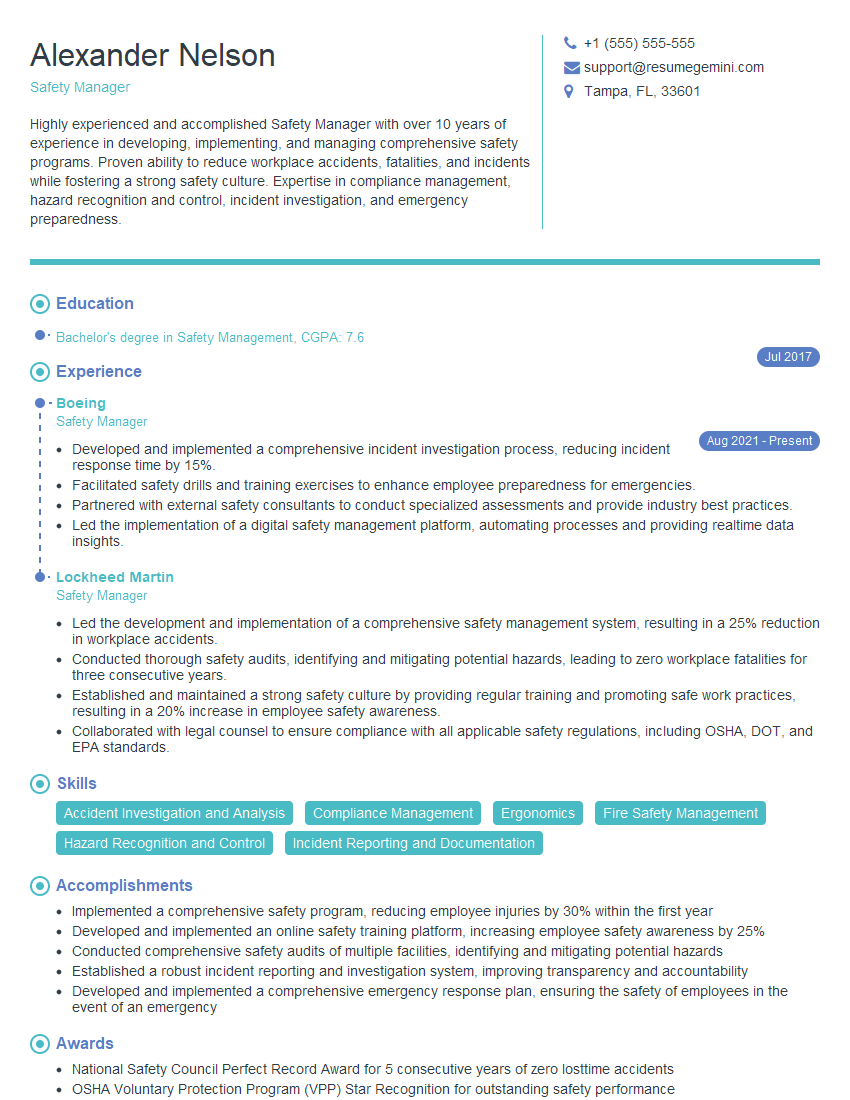
Safety Manager Resume Sample
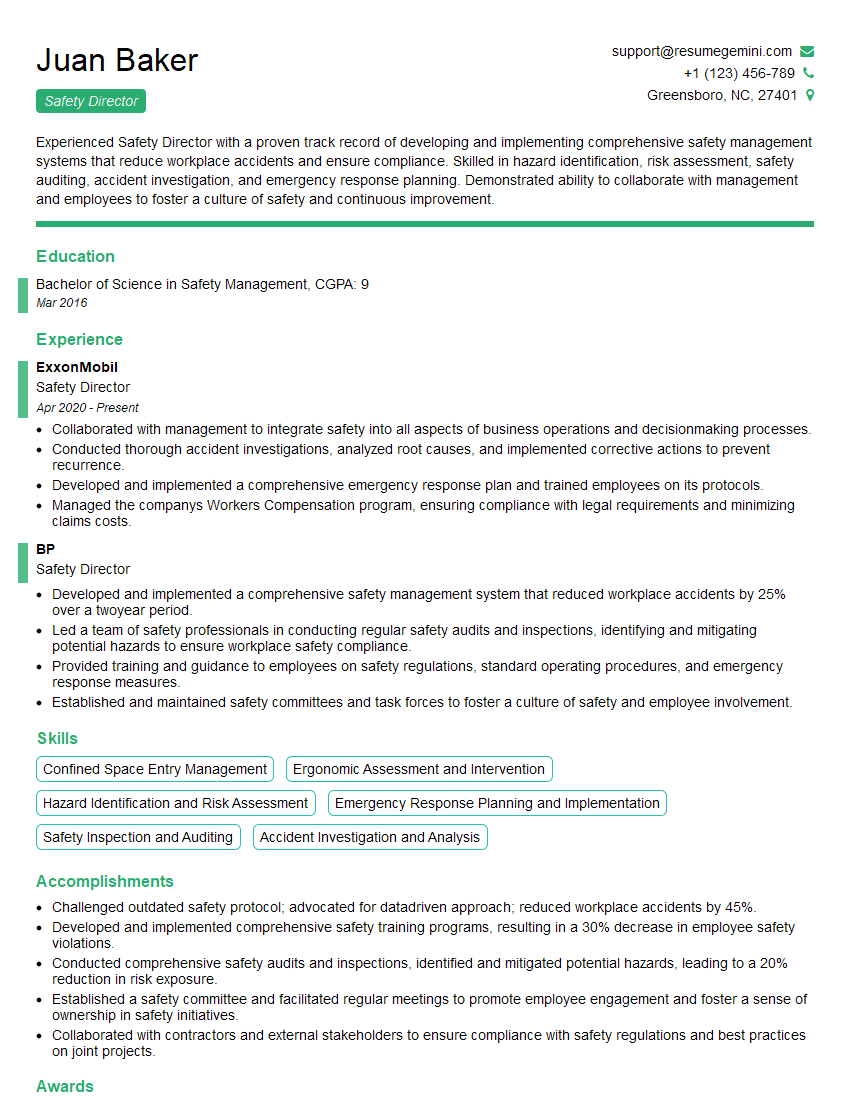
Safety Director Resume Sample
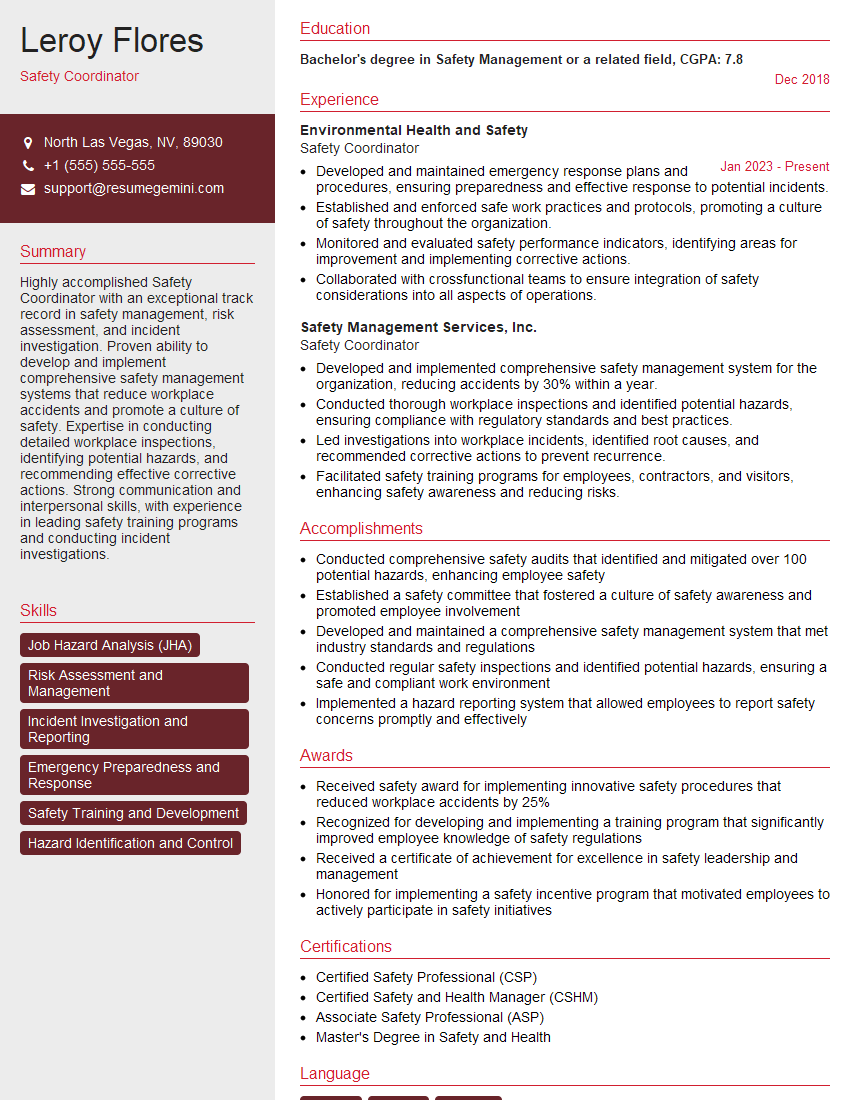
Safety Coordinator Resume Sample
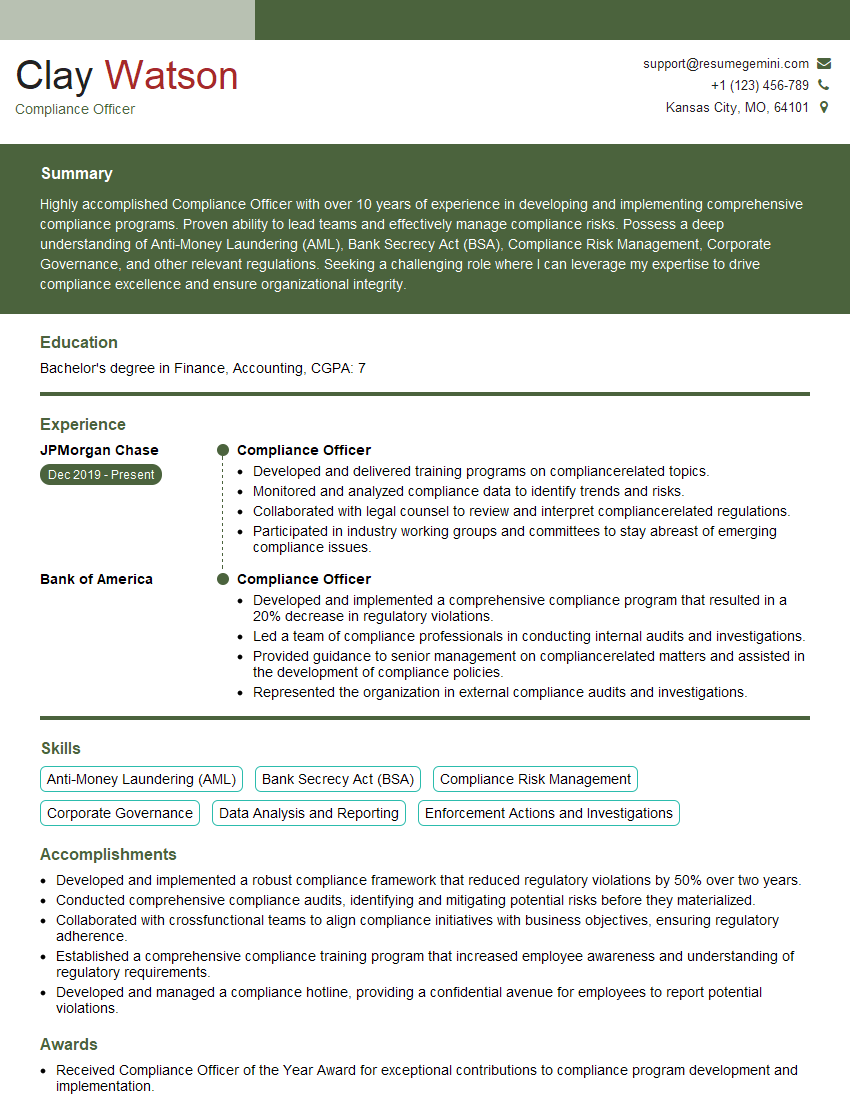
Compliance Officer Resume Sample
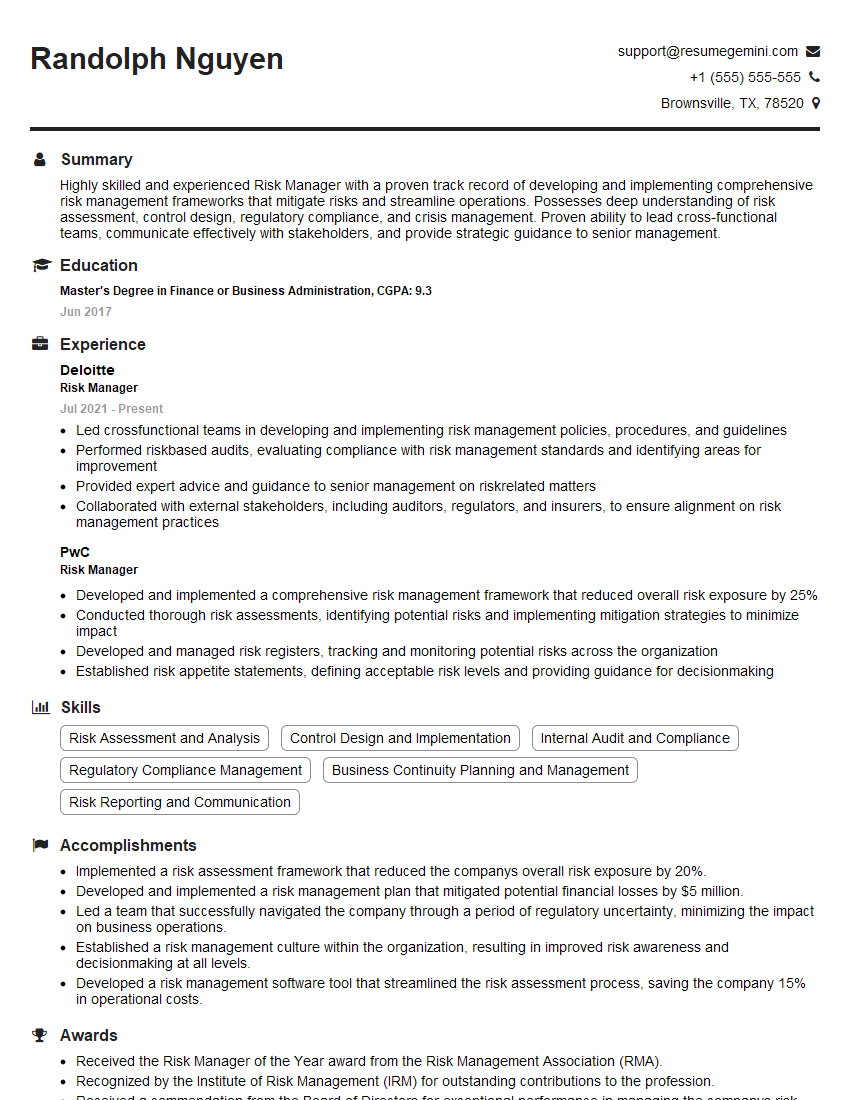
Risk Manager Resume Sample
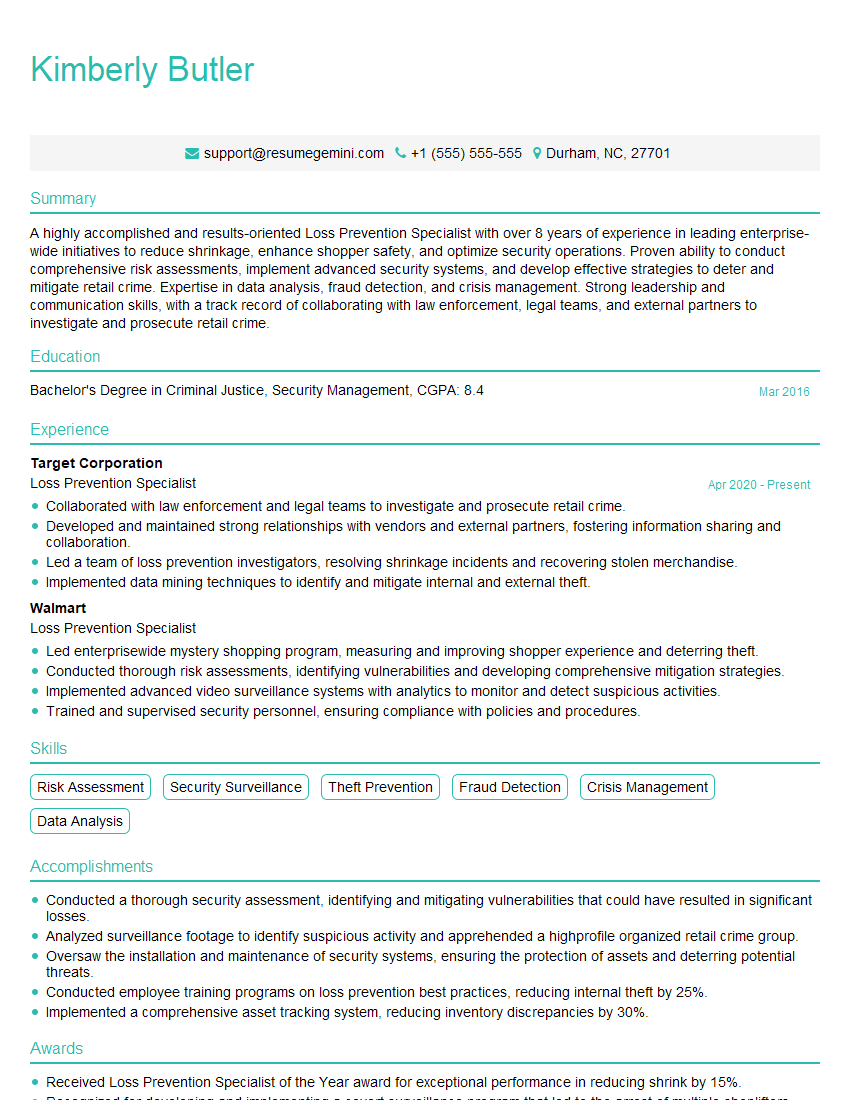
Loss Prevention Specialist Resume Sample
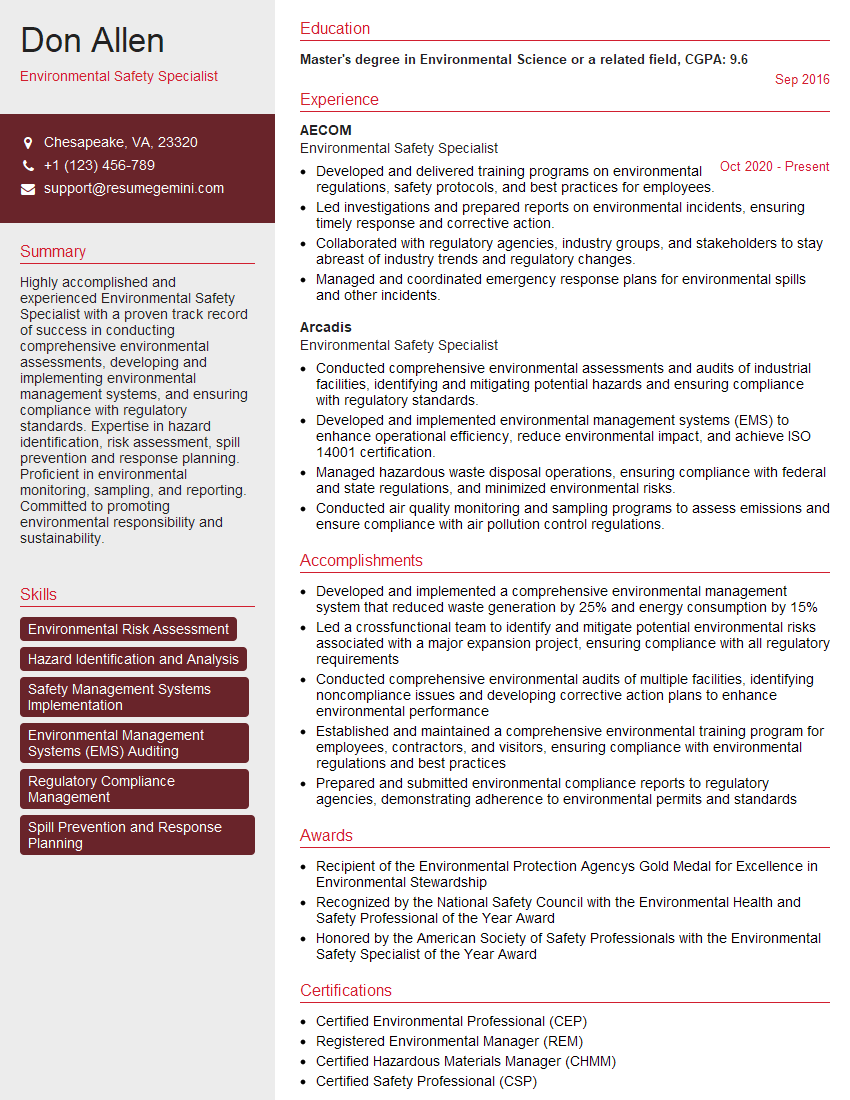
Environmental Safety Specialist Resume Sample
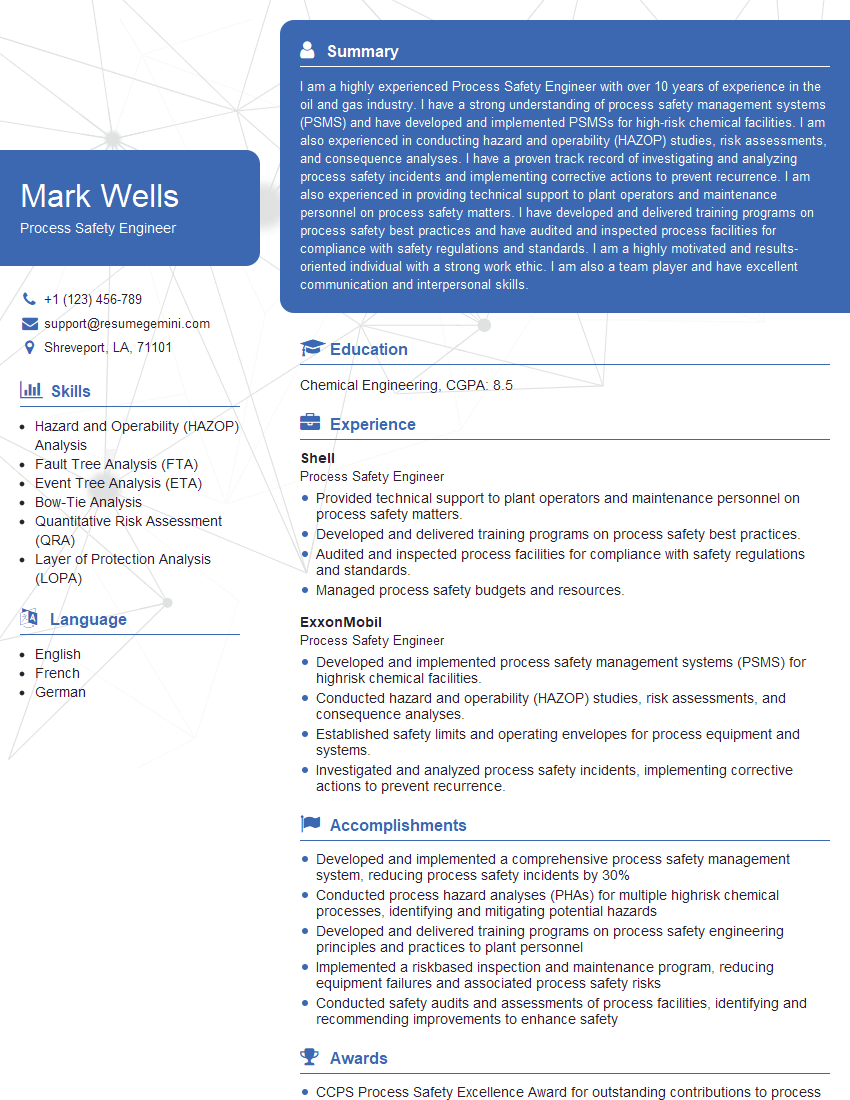
Process Safety Engineer Resume Sample
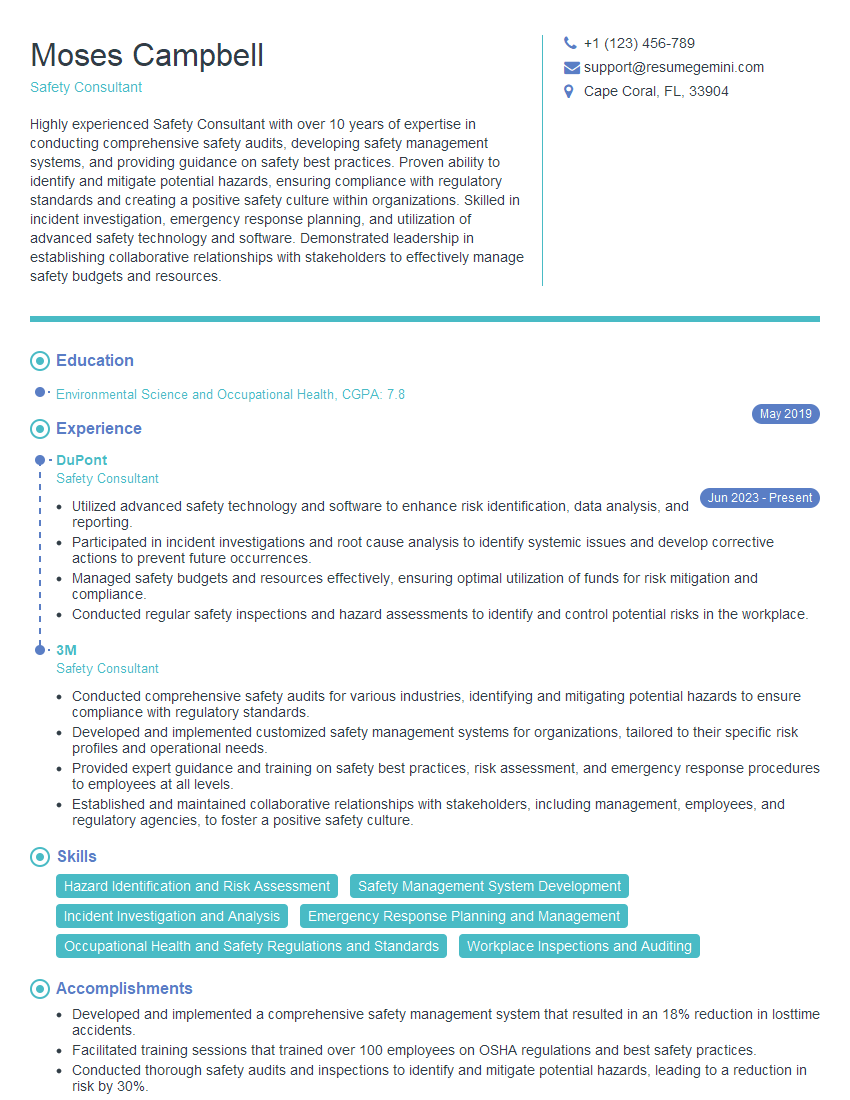
Safety Consultant Resume Sample
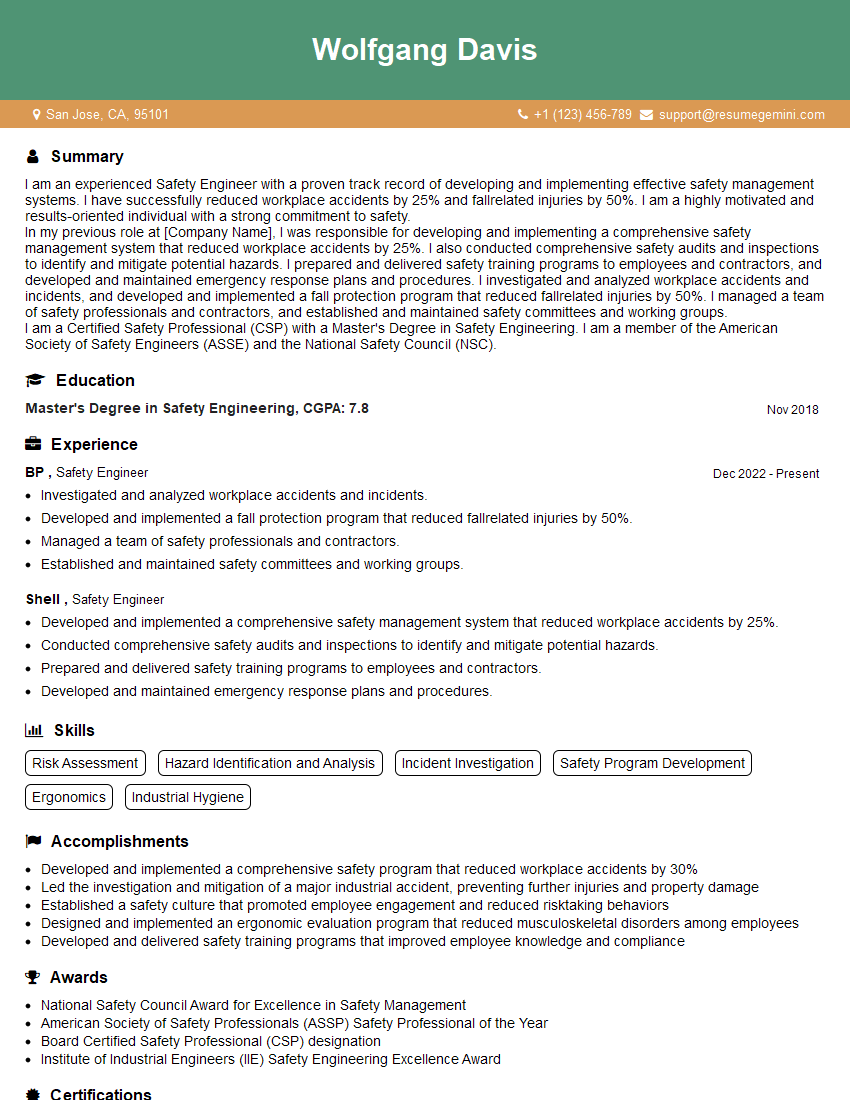
Safety Engineer Resume Sample
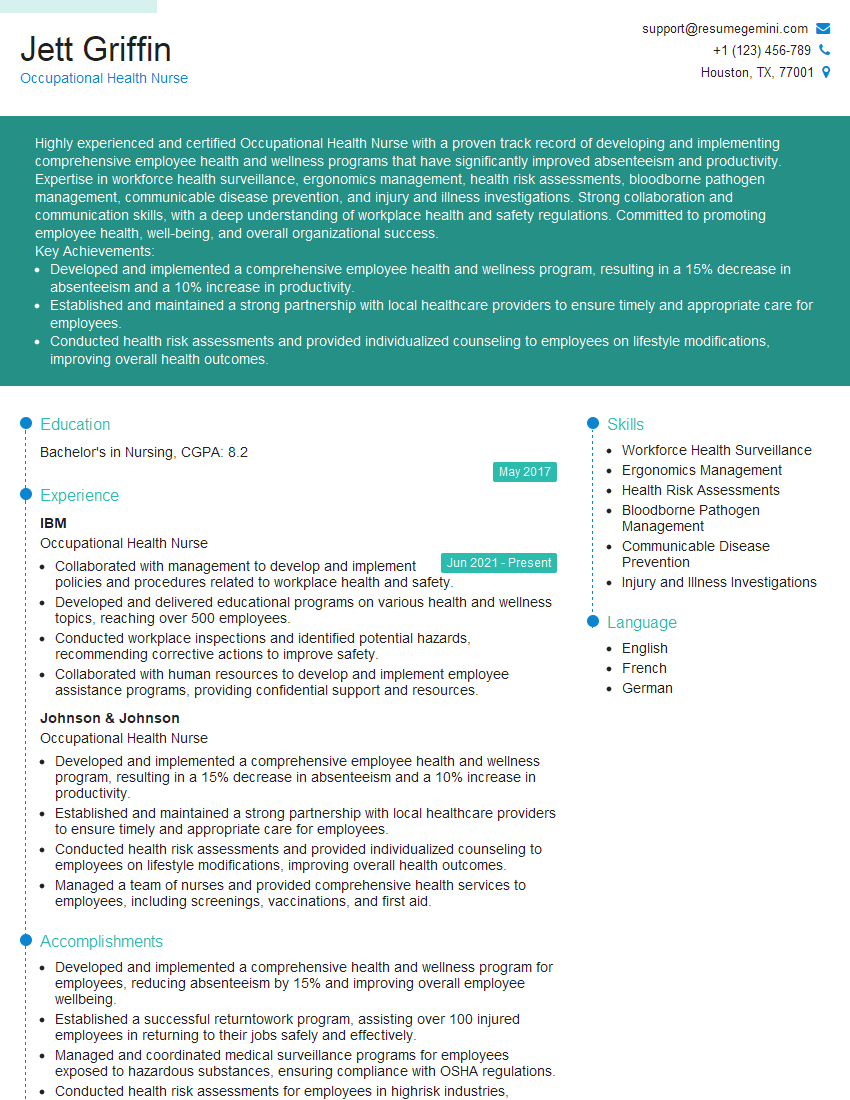
Occupational Health Nurse Resume Sample
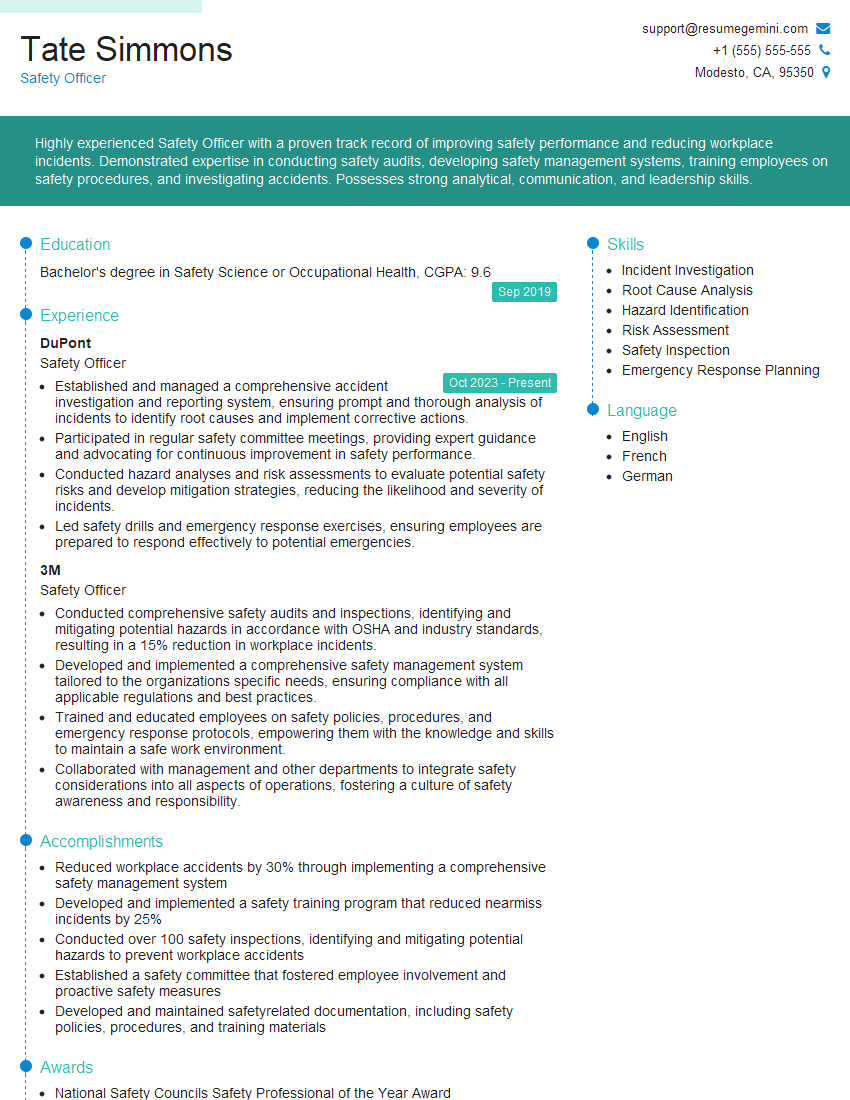
Safety Officer Resume Sample
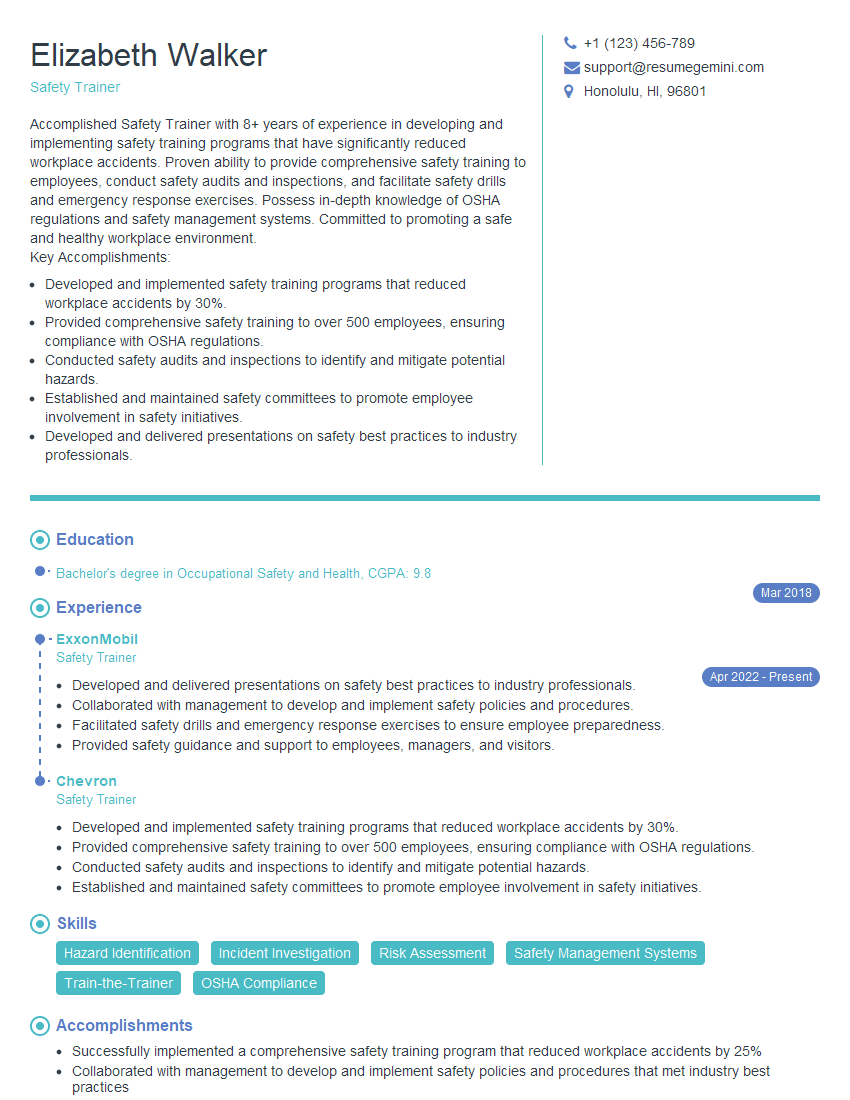
Safety Trainer Resume Sample
Explore more articles
Users Rating of Our Blogs
Share Your Experience
We value your feedback! Please rate our content and share your thoughts (optional).
What Readers Say About Our Blog
Really detailed insights and content, thank you for writing this detailed article.
IT gave me an insight and words to use and be able to think of examples