Interviews are opportunities to demonstrate your expertise, and this guide is here to help you shine. Explore the essential Security Testing (OWASP Top 10) interview questions that employers frequently ask, paired with strategies for crafting responses that set you apart from the competition.
Questions Asked in Security Testing (OWASP Top 10) Interview
Q 1. Explain the OWASP Top 10 vulnerabilities.
The OWASP Top 10 represents a curated list of the most critical web application security risks. Think of it as a ‘hit list’ for attackers. Each year, the OWASP Foundation updates this list based on real-world observations and emerging threats. It’s not just a list, but a guide for developers and security professionals to prioritize their efforts. While the exact rankings shift slightly year to year, the core vulnerabilities remain consistently relevant.
- Injection: This includes SQL injection, NoSQL injection, command injection, etc. Attackers insert malicious code into inputs to manipulate database queries or system commands.
- Broken Authentication: Weak passwords, lack of multi-factor authentication (MFA), and session management flaws make it easy for attackers to steal credentials or impersonate users.
- Sensitive Data Exposure: Failure to protect sensitive data like credit card numbers, passwords, and personal information. This can lead to identity theft and data breaches.
- XML External Entities (XXE): A vulnerability that allows attackers to read arbitrary files on the server or execute external commands through XML processing.
- Broken Access Control: Inadequate authorization checks allow unauthorized users to access restricted data or functionality. Imagine a user gaining access to another user’s account or admin panel.
- Security Misconfiguration: Default settings, unnecessary features, and insecure configurations can leave your application vulnerable. Think of it like leaving your front door unlocked.
- Cross-Site Scripting (XSS): Attackers inject malicious scripts into a website to steal user data, redirect users to phishing sites, or deface websites.
- Insecure Deserialization: Manipulating serialized data to execute arbitrary code on the server. This is a more advanced attack but can have devastating consequences.
- Using Components with Known Vulnerabilities: Relying on outdated or insecure third-party libraries and frameworks. It’s like building a house with weak bricks.
- Insufficient Logging & Monitoring: Lack of proper logging and monitoring makes it difficult to detect and respond to security incidents. It’s like having no security cameras in your house.
Understanding and addressing these vulnerabilities is crucial for building secure web applications.
Q 2. Describe the difference between XSS and CSRF attacks.
Both Cross-Site Scripting (XSS) and Cross-Site Request Forgery (CSRF) are web application vulnerabilities, but they exploit different weaknesses and have different attack vectors.
XSS focuses on injecting malicious scripts into a website. Imagine an attacker injecting a script into a comment section; when another user views the comment, their browser executes the malicious script. The attacker essentially uses the victim’s browser to perform actions on their behalf. This is like planting a time bomb inside a website.
CSRF, on the other hand, tricks a user into performing unwanted actions on a website where they’re already authenticated. It doesn’t directly inject malicious code; instead, it leverages the victim’s existing session to perform an action without their knowledge or consent. For example, an attacker might craft a link that automatically transfers money from the victim’s bank account. It’s like forging the victim’s signature to get them to perform an action.
The key difference lies in the how: XSS injects malicious code, whereas CSRF exploits existing user sessions to perform actions.
Q 3. How would you test for SQL injection vulnerabilities?
Testing for SQL injection vulnerabilities involves attempting to manipulate database queries by inserting malicious code into input fields. The goal is to see if the application fails to sanitize inputs properly, allowing the attacker to execute arbitrary SQL commands.
Here are some common techniques:
- Manual Testing: This involves directly inserting special characters and SQL syntax into input fields. For example, adding a single quote (
') or a semicolon (;) to a text field might reveal vulnerabilities. More sophisticated tests include inserting strings like' OR '1'='1which should always return true if vulnerable. - Automated Testing: Tools like SQLmap automate the process of identifying SQL injection vulnerabilities. These tools can perform a more comprehensive scan and often detect vulnerabilities that manual testing might miss.
- Black Box Testing: This involves testing the application without knowledge of its internal workings. It’s like trying to pick a lock without knowing the mechanism inside.
- White Box Testing: This involves testing with knowledge of the application’s source code and database structure. This allows for more targeted testing.
When performing manual tests, pay close attention to error messages; they often reveal valuable information about the database and the structure of the queries.
Example: Let’s say a login form has a username and password field. Trying to log in with a username like ' OR '1'='1 and a blank password might bypass authentication if the application isn’t properly sanitizing the input.
Q 4. Explain how to mitigate Broken Authentication vulnerabilities.
Mitigating broken authentication vulnerabilities requires a multi-layered approach, focusing on strengthening authentication mechanisms and implementing robust session management.
- Strong Password Policies: Enforce strong passwords with minimum length, complexity requirements (uppercase, lowercase, numbers, symbols), and password expiration policies. Regularly audit and enforce these policies.
- Multi-Factor Authentication (MFA): Implementing MFA adds an extra layer of security by requiring multiple forms of authentication (e.g., password and a one-time code from a mobile app). This significantly reduces the risk of unauthorized access, even if credentials are compromised.
- Secure Session Management: Use strong session IDs, short session timeouts, and protect against session hijacking. Regularly rotate session IDs and implement measures to prevent session fixation.
- Regular Security Audits and Penetration Testing: Conduct regular security assessments to identify and address potential vulnerabilities.
- Input Validation: Sanitize all user inputs to prevent injection attacks that could manipulate authentication processes.
- Account Lockout: Implement account lockout policies after multiple failed login attempts to prevent brute-force attacks.
- Regular Password Changes: Enforce periodic password changes for users.
By combining these strategies, you can create a significantly more resilient authentication system, making it much harder for attackers to compromise user accounts.
Q 5. What are the common techniques used to identify insecure direct object references?
Insecure Direct Object References (IDOR) occur when an application doesn’t properly validate user access to resources. Imagine a website that allows users to view images directly using a URL with a unique ID. An attacker might try incrementing the ID to access unauthorized resources. It’s like having a secret door with a clearly visible number on it.
Techniques to identify IDOR vulnerabilities:
- Manual Testing: Manually manipulating URLs and IDs to attempt access to restricted resources. This is often done by incrementing or decrementing numerical IDs, changing characters in alphanumeric IDs, or trying predictable patterns. For example, an ID like
user/123might be tested withuser/124oruser/122to see if unauthorized access is granted. - Automated Scanning: Some automated vulnerability scanners can detect IDOR vulnerabilities, but they often require configuration and may not catch all instances.
- Reviewing Application Logic: Examining the application’s source code and database schema can reveal flaws in access control mechanisms.
A systematic approach to testing, combined with an understanding of how the application handles resource access, is vital for identifying these vulnerabilities effectively. Look for predictable patterns in URLs and IDs.
Q 6. How would you test for sensitive data exposure?
Testing for sensitive data exposure involves identifying instances where sensitive information, such as credentials, personal data, or API keys, is exposed without proper protection.
Techniques to identify sensitive data exposure:
- Source Code Review: Inspecting the application’s source code to identify areas where sensitive data is stored, processed, or transmitted without proper encryption or protection.
- Network Scanning: Using tools to identify exposed data, such as those stored in clear text in databases or configuration files, through network analysis.
- Security Audits: Conducting a comprehensive security audit will include assessing the protection of sensitive data during storage, transit, and processing.
- Runtime Analysis: Observing the application’s behavior while it’s running to identify instances where sensitive data is inadvertently exposed, such as through error messages or HTTP responses.
- Penetration Testing: Attempting to extract sensitive information using various techniques, such as exploiting vulnerabilities to access data or manipulating the application’s logic.
Remember, detecting sensitive data exposure requires a combination of static and dynamic analysis. Always prioritize minimizing the exposure of sensitive data within the application itself.
Q 7. Describe different ways to protect against cross-site scripting (XSS).
Protecting against Cross-Site Scripting (XSS) requires a multi-pronged approach, focusing on both prevention and mitigation. It’s about creating a defensive barrier against malicious scripts.
- Input Validation and Sanitization: This is the first line of defense. Always validate and sanitize all user inputs before using them in the application. This ensures that any malicious scripts are removed or neutralized before they can be rendered by the browser. Context-aware escaping is key; different contexts (HTML, JavaScript, attributes) require different escaping methods.
- Output Encoding: Encode any user-supplied data that’s output to the browser. HTML encoding prevents scripts from being interpreted as HTML code, while JavaScript encoding prevents them from being interpreted as JavaScript. This is like putting malicious code inside a sealed container that the browser cannot open.
- HTTP Security Headers: Using HTTP headers like
Content-Security-Policy (CSP)can restrict the resources that the browser is allowed to load, preventing the execution of malicious scripts from untrusted sources. - Regular Security Audits and Penetration Testing: Regularly assess the application’s security posture to identify any XSS vulnerabilities and remediate them promptly.
- Web Application Firewall (WAF): A WAF can act as an additional layer of defense by filtering malicious traffic and blocking attempts to inject malicious scripts.
- Use of a Templating Engine: A good templating engine will often handle the escaping of special characters automatically, providing a layer of protection against XSS attacks.
A robust XSS prevention strategy combines multiple layers of protection. The most important is proper input validation and output encoding, ensuring that malicious code cannot be interpreted by the browser.
Q 8. Explain the concept of session management and its security implications.
Session management is the process of creating, maintaining, and terminating user sessions in a web application. Think of it like a digital key that allows a user access to the application’s resources after authentication. Secure session management is crucial because a compromised session grants an attacker access to the user’s account and potentially sensitive data.
Security implications arise from vulnerabilities like session hijacking (where an attacker steals a valid session ID), session fixation (where an attacker forces the victim to use a specific session ID they control), and insecure session management practices (like using easily guessable session IDs or storing session data insecurely).
For example, imagine an online banking application. If session management is weak, an attacker could potentially intercept the user’s session ID and access their account, transferring funds or viewing sensitive financial information. Robust session management practices, such as using unpredictable session IDs, HTTPS, and secure storage mechanisms, are crucial to preventing such attacks.
- Use strong session IDs: Randomly generated, long, and unpredictable IDs.
- HTTPS: Encrypt all communication to protect session IDs from interception.
- Regular session timeout: Automatically log users out after a period of inactivity.
- Secure storage: Store session data securely, not in easily accessible places like cookies.
- Defense against session fixation: Regenerate session IDs after successful authentication.
Q 9. How do you test for insecure deserialization vulnerabilities?
Insecure deserialization occurs when an application deserializes untrusted data without proper validation. Deserialization is the process of converting data from a byte stream or other format back into an object. If the application fails to properly validate this incoming data, an attacker might be able to inject malicious code that will be executed upon deserialization.
Testing for this involves attempting to feed the application specially crafted serialized data. The goal is to trigger unexpected behavior or code execution. This often requires understanding the application’s internal structure and the libraries it uses for serialization (e.g., Java’s ObjectInputStream, Python’s pickle). It’s not a simple ‘point and click’ test; it demands a good understanding of the target system.
For instance, imagine an application that receives a user profile as a serialized JSON object. A malicious actor could craft a JSON object that contains malicious code designed to execute arbitrary commands on the server when deserialized. The test would involve creating this malicious JSON and observing the application’s response. Successful exploitation might manifest as arbitrary code execution, denial of service, or data exfiltration.
Tools like custom scripts, fuzzers, and serialization-specific analysis tools can help in this process. However, a deep understanding of the serialization mechanisms employed by the application remains vital for effective testing.
Q 10. What are the common ways to protect against using components with known vulnerabilities?
Protecting against components with known vulnerabilities requires a multi-layered approach focusing on proactive measures and continuous monitoring.
- Regularly update components: Stay current with security patches and updates for all software components (libraries, frameworks, etc.). Utilize automated update mechanisms wherever possible.
- Use a software composition analysis (SCA) tool: These tools scan your codebase to identify dependencies with known vulnerabilities. They provide a comprehensive view of your software’s ‘bill of materials’ and alert you to potential risks.
- Implement strong input validation: Even with secure components, validate user inputs rigorously to prevent injection attacks regardless of the underlying libraries.
- Containerization and Microservices: Using isolated containers or microservices limits the impact of a compromised component. If one microservice is affected, the others remain secure.
- Least privilege principle: Ensure components only have the minimum necessary permissions to function. This principle prevents escalation of privilege even if a component is compromised.
- Dependency management: Use a robust dependency management system to track and manage all components effectively, enabling efficient updating and vulnerability management.
A real-world example is a web application using a vulnerable version of a JavaScript library. A timely update, made possible by an effective SCA tool and diligent dependency management, prevents attackers from exploiting that vulnerability.
Q 11. Explain the difference between black box, white box, and grey box testing.
These terms describe different approaches to penetration testing, focusing on the level of knowledge the tester possesses about the target system.
- Black box testing: The tester has no prior knowledge of the application’s internal workings, codebase, or architecture. This mimics a real-world attacker’s perspective, focusing on identifying vulnerabilities from an external point of view. Think of it as a burglar breaking into a house – they only see the outside and need to find ways to get in.
- White box testing: The tester has complete knowledge of the application’s architecture, source code, and internal workings. This approach allows for a more in-depth and targeted vulnerability assessment, identifying vulnerabilities that might be missed in a black box test. It’s like the building’s architect inspecting for vulnerabilities in the design.
- Grey box testing: This approach falls between black box and white box. The tester has partial knowledge of the system, such as network diagrams or high-level architecture, but not full access to the source code. This combines the benefits of both approaches, providing a balanced view of potential vulnerabilities. This is analogous to an inspector who has blueprints of some rooms but not others.
Each approach has its strengths and weaknesses. Black box tests are more realistic but can be less comprehensive, while white box tests are more comprehensive but may miss vulnerabilities that a real-world attacker would find.
Q 12. What are some common tools used for security testing?
The security testing landscape offers a plethora of tools, each with its strengths and weaknesses. Some notable examples include:
- OWASP ZAP: An open-source web application security scanner with a wide array of features for automated and manual testing.
- Burp Suite: A commercial tool (with a community edition) that offers powerful capabilities for intercepting, modifying, and analyzing web traffic.
- Nessus: A vulnerability scanner used to identify vulnerabilities in networks and systems.
- Nmap: A network scanning tool used for network discovery and security auditing.
- SQLmap: A penetration testing tool focused on detecting and exploiting SQL injection vulnerabilities.
- Metasploit: A penetration testing framework providing a vast collection of exploits and tools.
The choice of tool depends heavily on the specific testing objective and the target application’s characteristics.
Q 13. Describe your experience with automated security testing tools.
I have extensive experience using automated security testing tools, both commercially licensed and open-source. My experience spans various testing methodologies, including dynamic application security testing (DAST), static application security testing (SAST), and interactive application security testing (IAST).
I’ve utilized tools like OWASP ZAP for comprehensive web application vulnerability scanning, identifying issues like cross-site scripting (XSS), SQL injection, and cross-site request forgery (CSRF). I’ve integrated SAST tools into the development pipeline to catch vulnerabilities early in the development lifecycle. This approach reduces the costs associated with fixing vulnerabilities found later. Furthermore, I’ve worked with IAST tools to provide real-time feedback on application security during development, combining the benefits of both DAST and SAST.
However, I understand the limitations of automated tools. Automated tools can provide a great starting point but often require manual validation to ensure accuracy and context. False positives are common, and a security professional’s experience is critical to interpreting the results and prioritizing true vulnerabilities.
Q 14. How do you prioritize vulnerabilities found during a security test?
Vulnerability prioritization is critical for efficient remediation efforts. I typically use a combination of factors to determine the priority of vulnerabilities:
- Severity: This is often based on the potential impact of the vulnerability (e.g., data breach, denial of service). Common scoring systems like CVSS (Common Vulnerability Scoring System) provide standardized scores.
- Exploitability: How easily can the vulnerability be exploited? A vulnerability that is easily exploited gets a higher priority than one requiring sophisticated techniques.
- Likelihood: How likely is it that an attacker will attempt to exploit the vulnerability? This depends on factors like the application’s exposure and the attacker’s motivation.
- Business impact: This considers the impact of the vulnerability on the business, considering factors like financial loss, reputational damage, and regulatory compliance.
- Age: Older vulnerabilities are often more likely to have been discovered and exploited.
Using a risk matrix that combines these factors is highly effective. I usually document vulnerabilities clearly and present them with their assigned priority level to stakeholders, using a clear and concise methodology. This ensures that we focus on the most critical risks first.
Q 15. Explain the process of writing a comprehensive security testing report.
A comprehensive security testing report needs to be clear, concise, and actionable. It should provide stakeholders with a clear understanding of the application’s security posture and recommended remediation steps. The process typically involves these stages:
- Executive Summary: A high-level overview of the testing scope, methodology, key findings, and overall risk assessment.
- Methodology: A detailed description of the testing approach used (e.g., penetration testing, vulnerability scanning, code review), tools employed, and the scope of the testing.
- Vulnerability Details: A list of identified vulnerabilities, categorized by severity (critical, high, medium, low). Each vulnerability should include:
- ID: A unique identifier for tracking.
- Description: A clear and concise explanation of the vulnerability.
- Location: Precise location within the application (e.g., URL, specific function).
- Severity: Based on the potential impact and exploitability.
- Proof of Concept: Evidence of the vulnerability, such as screenshots, network traces, or exploit steps (sanitized for security).
- Recommendation: Specific steps to remediate the vulnerability.
- Risk Assessment: An evaluation of the likelihood and potential impact of each vulnerability, helping prioritize remediation efforts. This often involves using a risk matrix.
- Remediation Plan: A timeline and action plan for addressing the identified vulnerabilities, assigning responsibilities, and tracking progress.
- Appendices (optional): Supporting documents like testing scripts, raw scan data, or detailed technical information.
For example, a report might detail a Cross-Site Scripting (XSS) vulnerability found in a user input field, including screenshots demonstrating the injection of malicious JavaScript and recommending input sanitization as a fix. The report would also categorize this vulnerability by severity (e.g., high) and its potential impact (e.g., session hijacking).
Career Expert Tips:
- Ace those interviews! Prepare effectively by reviewing the Top 50 Most Common Interview Questions on ResumeGemini.
- Navigate your job search with confidence! Explore a wide range of Career Tips on ResumeGemini. Learn about common challenges and recommendations to overcome them.
- Craft the perfect resume! Master the Art of Resume Writing with ResumeGemini’s guide. Showcase your unique qualifications and achievements effectively.
- Don’t miss out on holiday savings! Build your dream resume with ResumeGemini’s ATS optimized templates.
Q 16. How do you handle false positives during a security test?
Handling false positives is crucial to avoid wasting time and resources on non-existent threats. My approach involves a multi-step verification process:
- Contextual Analysis: Carefully examine the reported vulnerability within the application’s context. False positives often arise due to misunderstandings of the application’s logic or configuration.
- Manual Verification: Instead of relying solely on automated tools, I manually verify the reported vulnerability. This involves attempting to exploit the vulnerability using various techniques and checking if it behaves as expected.
- Rule Refinement: If a scanner frequently reports false positives, I review and refine its rules or configurations to improve accuracy. This might involve adjusting thresholds or excluding specific parts of the application from scanning.
- Tool Comparison: Using multiple security testing tools can help reduce false positives. Discrepancies in findings between tools often indicate false positives reported by one specific tool.
- Documentation: I meticulously document each case of false positives, including the reason for dismissal, the tools used, and the steps taken for verification. This helps improve the testing process over time.
For instance, a vulnerability scanner might report a SQL injection vulnerability in a seemingly harmless comment field. However, upon manual inspection, it may become clear that the application properly sanitizes the input, making the report a false positive.
Q 17. Describe your experience with different security testing methodologies.
I have extensive experience with various security testing methodologies, including:
- Static Application Security Testing (SAST): Analyzing source code for vulnerabilities without executing the application. I’ve used tools like SonarQube and Fortify to identify potential flaws early in the development process.
- Dynamic Application Security Testing (DAST): Testing running applications by simulating attacks. I’ve used tools like OWASP ZAP and Burp Suite to identify vulnerabilities like SQL injection and XSS.
- Interactive Application Security Testing (IAST): Combining SAST and DAST to provide more comprehensive coverage. I have experience using IAST solutions to pinpoint vulnerabilities in real-time during application execution.
- Penetration Testing: Simulating real-world attacks to identify vulnerabilities in a system, encompassing both black-box and white-box testing approaches. This has allowed me to discover vulnerabilities missed by automated tools.
- Code Review: Manually examining source code for security weaknesses. This is crucial for finding logic flaws and custom vulnerabilities missed by automated tools.
My experience spans various testing levels, from unit testing to system testing, ensuring a holistic approach to identifying security vulnerabilities.
Q 18. What are some common challenges you face during security testing?
Security testing presents many challenges, including:
- Time Constraints: Security testing often has tight deadlines, requiring efficient planning and prioritization.
- Resource Limitations: Access to specialized tools, expertise, and sufficient testing time can be limited, especially in smaller organizations.
- Evolving Threat Landscape: The constantly evolving nature of security threats and vulnerabilities requires continuous learning and adaptation.
- Complex Applications: Modern applications often have complex architectures and integrations, making comprehensive testing difficult.
- Limited Access: Sometimes, testers lack full access to the application’s source code, databases, or infrastructure, which hinders thorough testing.
- False Positives and Negatives: Dealing with the challenges of differentiating between true and false positives/negatives requires significant expertise and attention to detail.
For example, a complex microservices architecture can make tracing vulnerabilities across multiple services a significant challenge, requiring careful coordination and planning.
Q 19. How do you stay up-to-date with the latest security threats and vulnerabilities?
Staying current with the latest threats and vulnerabilities is paramount in this field. My strategy involves:
- Following Security News and Blogs: Regularly reading reputable security blogs, newsletters, and websites (e.g., KrebsOnSecurity, ThreatPost) to stay informed on emerging threats.
- Participating in Security Communities: Engaging with online forums, conferences, and meetups to share knowledge and learn from other security professionals.
- Utilizing Vulnerability Databases: Consulting vulnerability databases such as the National Vulnerability Database (NVD) and OWASP to understand known vulnerabilities and their remediation strategies.
- Continuous Learning: Regularly pursuing professional development through certifications (e.g., OSCP, CEH) and training courses to enhance my expertise.
- Following Security Advisories: Subscribing to security advisories from software vendors and open-source projects to stay informed about vulnerabilities in the tools and technologies I use.
For example, I might read about a newly discovered vulnerability in a popular web framework and immediately assess its impact on projects I’m working on.
Q 20. Explain your understanding of the Software Development Lifecycle (SDLC) and how security testing fits in.
The Software Development Lifecycle (SDLC) encompasses all phases of software development, from inception to deployment and maintenance. Security testing should be integrated throughout the SDLC, not just at the end. A secure SDLC often involves:
- Requirements Gathering: Security requirements should be defined early in the process.
- Design: Security considerations should be included in the architecture and design phases.
- Coding: Secure coding practices should be followed during development.
- Testing: Comprehensive security testing, including SAST, DAST, penetration testing, and code reviews, should be conducted at multiple stages.
- Deployment: Security configurations should be verified before deploying the application.
- Maintenance: Ongoing monitoring and vulnerability patching are crucial.
Shifting security left, meaning integrating security testing early in the SDLC, is crucial for reducing the cost and complexity of fixing vulnerabilities. Finding a vulnerability during the design phase is far less expensive than discovering it after deployment.
Q 21. How would you approach testing a mobile application for security vulnerabilities?
Testing a mobile application for security vulnerabilities requires a specialized approach that goes beyond traditional web application testing. My approach would include:
- Static Analysis: Analyzing the application’s source code (if available) for potential vulnerabilities using mobile-specific SAST tools.
- Dynamic Analysis: Using mobile-specific DAST tools to test the running application, simulating attacks and identifying vulnerabilities like insecure data storage, insecure APIs, or insufficient authentication.
- Network Monitoring: Analyzing network traffic between the application and backend services to identify data leakage or insecure communication protocols.
- Reverse Engineering: If necessary, analyzing the application’s compiled code to identify potential vulnerabilities not detected by other methods.
- Security Assessments: Checking if the mobile application complies with mobile security best practices and guidelines like OWASP Mobile Security Testing Guide.
- Platform-Specific Vulnerabilities: Testing the application on multiple platforms (iOS and Android) to identify platform-specific vulnerabilities.
- Jailbroken/Rooted Devices: Testing the application on jailbroken/rooted devices to expose potential vulnerabilities that might not be visible on normal devices.
For example, I’d test for insecure storage of sensitive data like user credentials, ensuring that the application uses appropriate encryption techniques and adheres to platform-specific security guidelines. I’d also focus on API security, verifying that communication with backend servers is encrypted and authenticated.
Q 22. Describe your experience with penetration testing frameworks like Metasploit.
Metasploit is a powerful penetration testing framework that provides a comprehensive suite of tools for exploiting vulnerabilities. My experience encompasses using Metasploit for various phases of penetration testing, from reconnaissance and vulnerability scanning to exploitation and post-exploitation activities. I’ve leveraged its modules to simulate real-world attacks, assessing the impact of vulnerabilities like SQL injection, cross-site scripting (XSS), and remote code execution.
For example, I’ve used the auxiliary/scanner/http/dir_scanner module to identify hidden directories on web servers, potentially revealing sensitive information. I’ve also utilized the exploit/windows/smb/ms08_067_netapi module to demonstrate the exploitability of a known vulnerability in older versions of Windows. Beyond individual modules, I am proficient in crafting custom payloads and leveraging Metasploit’s scripting capabilities to automate testing processes and customize attacks to specific target systems. This allows for a more efficient and comprehensive assessment.
Crucially, my work always adheres to ethical guidelines and has always been conducted with explicit permission from the target organization. Before any testing commences, I ensure clear scopes and rules of engagement are established to avoid unintentional damage or unauthorized access.
Q 23. How do you ensure the security of APIs?
API security is paramount in today’s interconnected world. Ensuring API security involves a multi-layered approach. It begins with robust authentication and authorization mechanisms. I often recommend using OAuth 2.0 or OpenID Connect for secure authentication, coupled with fine-grained authorization controls based on roles and permissions. This prevents unauthorized access and data breaches. Furthermore, input validation and sanitization are essential to prevent injection attacks like SQL injection and command injection.
Rate limiting and throttling are important to prevent denial-of-service (DoS) attacks. Implementing strong encryption protocols, such as HTTPS with TLS 1.3 or later, is crucial for protecting data in transit. Regular security scanning and penetration testing of APIs are vital for identifying and remediating vulnerabilities proactively. Automated tools can identify common vulnerabilities, like insecure direct object references (IDORs) and broken authentication. Finally, comprehensive logging and monitoring are essential for detecting suspicious activity and responding promptly to security incidents. Think of it as a security fortress with many strong walls and checkpoints.
Q 24. Explain your experience with different types of authentication protocols.
My experience with authentication protocols spans a wide range, from basic methods like password-based authentication to more sophisticated protocols like OAuth 2.0, OpenID Connect, and SAML. I understand the strengths and weaknesses of each and can assess their suitability for specific applications. Password-based authentication, while simple, is vulnerable to brute-force attacks and requires strong password policies and multi-factor authentication (MFA) for enhanced security. OAuth 2.0 and OpenID Connect are widely used for authorizing access to web APIs and online services, providing a more secure alternative to traditional methods. SAML is commonly used for single sign-on (SSO) in enterprise environments, enabling users to access multiple applications with a single set of credentials.
In a recent project, I assessed an organization’s reliance on password-based authentication for a critical application. I recommended migrating to OAuth 2.0 with MFA to enhance security, reducing the risk of credential compromise. The transition not only improved security but also simplified user management.
Q 25. How would you test for server-side request forgery (SSRF)?
Server-Side Request Forgery (SSRF) occurs when an attacker can manipulate a server to make requests to internal or external resources on behalf of the server. Testing for SSRF involves trying to make the application request URLs that point to internal systems or restricted resources. This often involves testing parameters that accept URLs as input. For example, if an application has a feature to fetch an image from a URL, I would try to provide URLs pointing to internal services or internal network scans (e.g., http://192.168.1.1 or http://localhost).
Another approach is to try URLs pointing to restricted services like the internal LDAP server or internal network shares. I would also test with URLs that reference meta-characters or perform directory traversal attempts (e.g. http://example.com/../../etc/passwd). The goal is to see if the server blindly forwards the requests, potentially revealing sensitive information or allowing access to resources that should not be publicly accessible. I use both manual testing and automated tools to enhance the effectiveness of this type of testing and ensure comprehensive coverage. A successful SSRF attack can lead to significant security breaches.
Q 26. How do you handle unexpected findings during a security assessment?
Unexpected findings during a security assessment are common and require a careful and systematic approach. The first step is to carefully document the finding, including steps to reproduce it and the observed impact. Then, I would classify the severity of the finding based on its potential impact and exploitability, using a standardized scale like CVSS (Common Vulnerability Scoring System). Communication is key—I immediately report unexpected findings to the client, explaining the potential risk and recommending immediate remediation steps if necessary. Prioritization depends on the risk level; critical findings often require immediate attention.
Consider a scenario where I discovered a publicly exposed database during a web application assessment. I would immediately inform the client, provide details on the database contents, and recommend immediate steps to secure the database (e.g., firewall restrictions, access control limitations). Depending on the client’s preference, I might perform further analysis to determine the potential impact of the vulnerability before providing a comprehensive report with the assessment findings.
Q 27. Describe your experience with security testing in cloud environments.
Security testing in cloud environments presents unique challenges and opportunities. My experience includes testing various cloud platforms, including AWS, Azure, and GCP. The scope of cloud security testing is wider than on-premises systems. It incorporates aspects like infrastructure-as-code (IaC) security, configuration management, and identity and access management (IAM) controls within the cloud environment. My testing considers different security aspects specific to cloud, including:
- IAM misconfigurations: Identifying overly permissive roles or insufficiently secured access keys.
- Storage bucket vulnerabilities: Ensuring that cloud storage services are properly configured with appropriate access controls, encryption, and versioning.
- Vulnerable IaC: Scanning IaC code (e.g., Terraform, CloudFormation) for potential misconfigurations and security flaws.
- Network security group (NSG) misconfigurations: Checking the configurations of firewalls and network access control lists.
I leverage automated tools specifically designed for cloud security assessments, along with manual testing and vulnerability scanning to identify and report security weaknesses in cloud deployments. My approach ensures comprehensive security coverage across all aspects of the cloud infrastructure and applications, ensuring compliance with security best practices and regulatory requirements.
Key Topics to Learn for Security Testing (OWASP Top 10) Interview
Acing your Security Testing interview requires a strong understanding of both theory and practice. Focus on mastering these key areas related to the OWASP Top 10:
- Injection Flaws (SQLi, XSS, etc.): Understand the various types of injection attacks, how they work, and how to prevent them. Practice identifying vulnerable code snippets and proposing mitigation strategies.
- Broken Authentication and Session Management: Learn about common authentication vulnerabilities, such as weak passwords, session hijacking, and insecure password storage. Be prepared to discuss secure authentication practices and best practices.
- Sensitive Data Exposure: Understand the risks associated with exposing sensitive data (passwords, credit card information, etc.). Discuss secure storage and transmission techniques, and relevant regulations like GDPR and CCPA.
- XML External Entities (XXE): Grasp the concept of XXE attacks and how they can be exploited to access sensitive data or execute arbitrary code. Know how to prevent XXE vulnerabilities in your applications.
- Broken Access Control: Understand how access control works and common vulnerabilities, like authorization bypasses. Be prepared to discuss different access control models and their implementation.
- Security Misconfiguration: Learn about common misconfigurations in web servers, databases, and applications that can lead to security vulnerabilities. Discuss secure configuration best practices.
- Cross-Site Scripting (XSS): Deepen your understanding of XSS vulnerabilities, including reflected, stored, and DOM-based XSS. Know how to identify and prevent these vulnerabilities using various techniques.
- Using Components with Known Vulnerabilities: Understand the risks of using outdated or vulnerable third-party components and how to perform vulnerability scanning and remediation.
- Insufficient Logging & Monitoring: Discuss the importance of robust logging and monitoring for detecting and responding to security incidents. Be prepared to discuss different logging strategies and security information and event management (SIEM) systems.
- Server-Side Request Forgery (SSRF): Learn about SSRF vulnerabilities and how they can be used to access internal resources or perform unauthorized actions. Discuss prevention techniques.
- Problem-Solving Approach: Practice applying your knowledge to real-world scenarios. Develop your ability to analyze vulnerabilities, propose solutions, and explain your reasoning clearly and concisely.
Next Steps
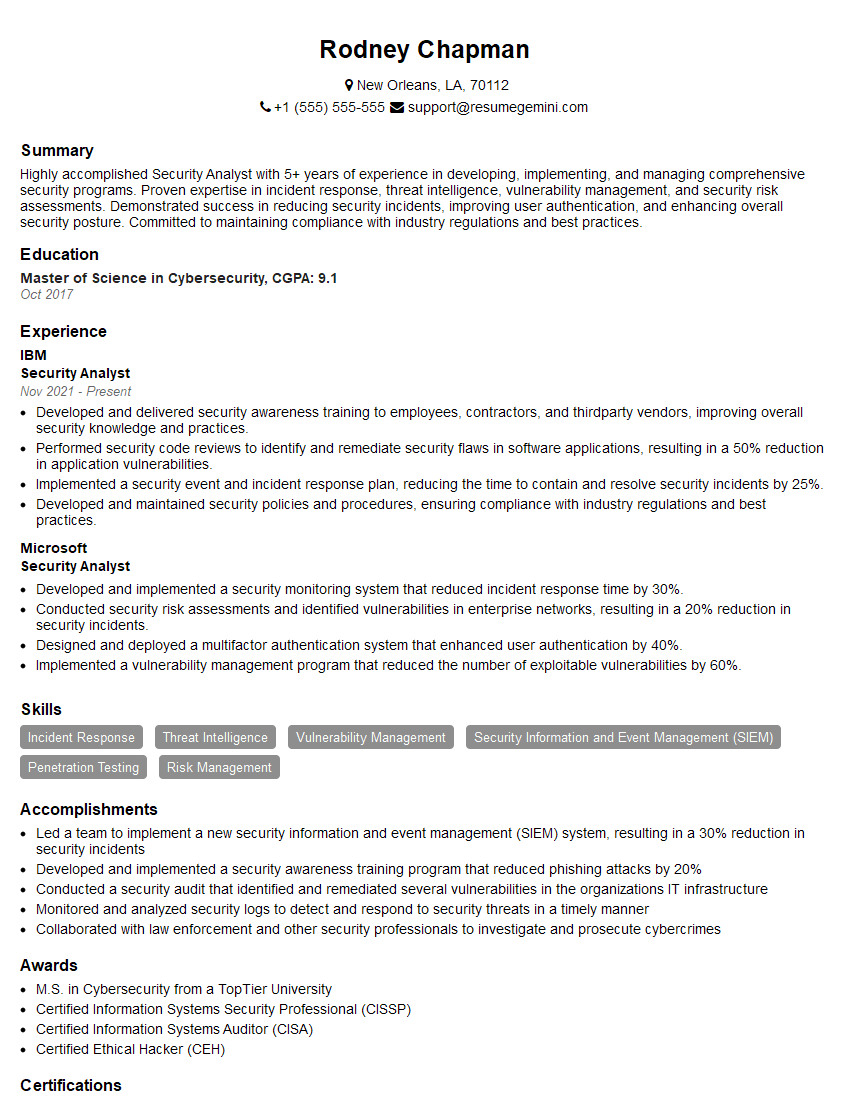
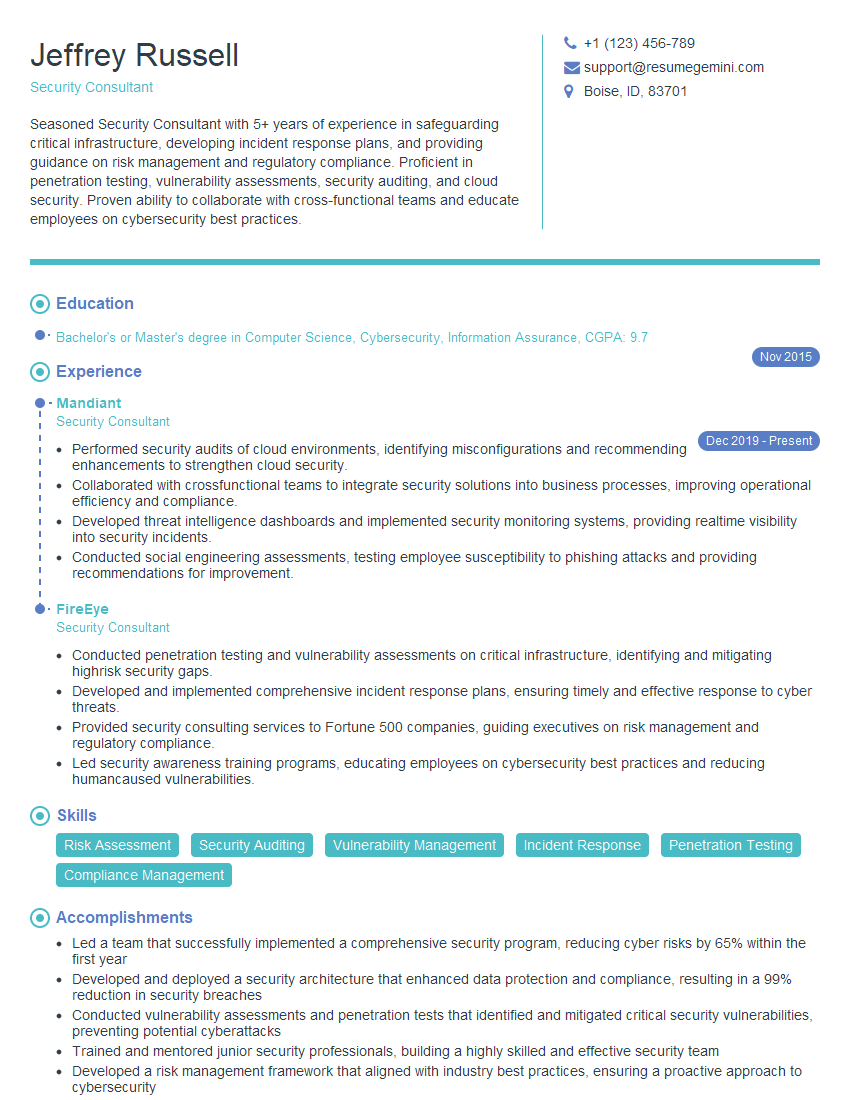
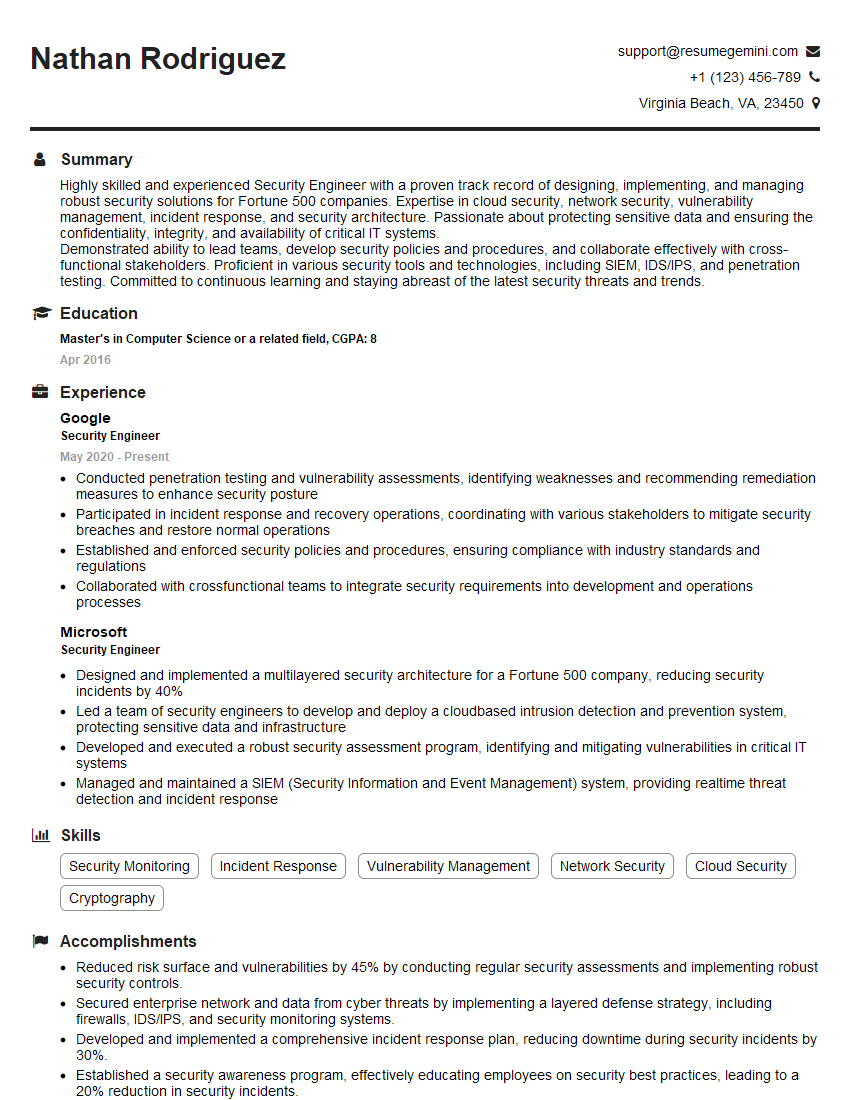
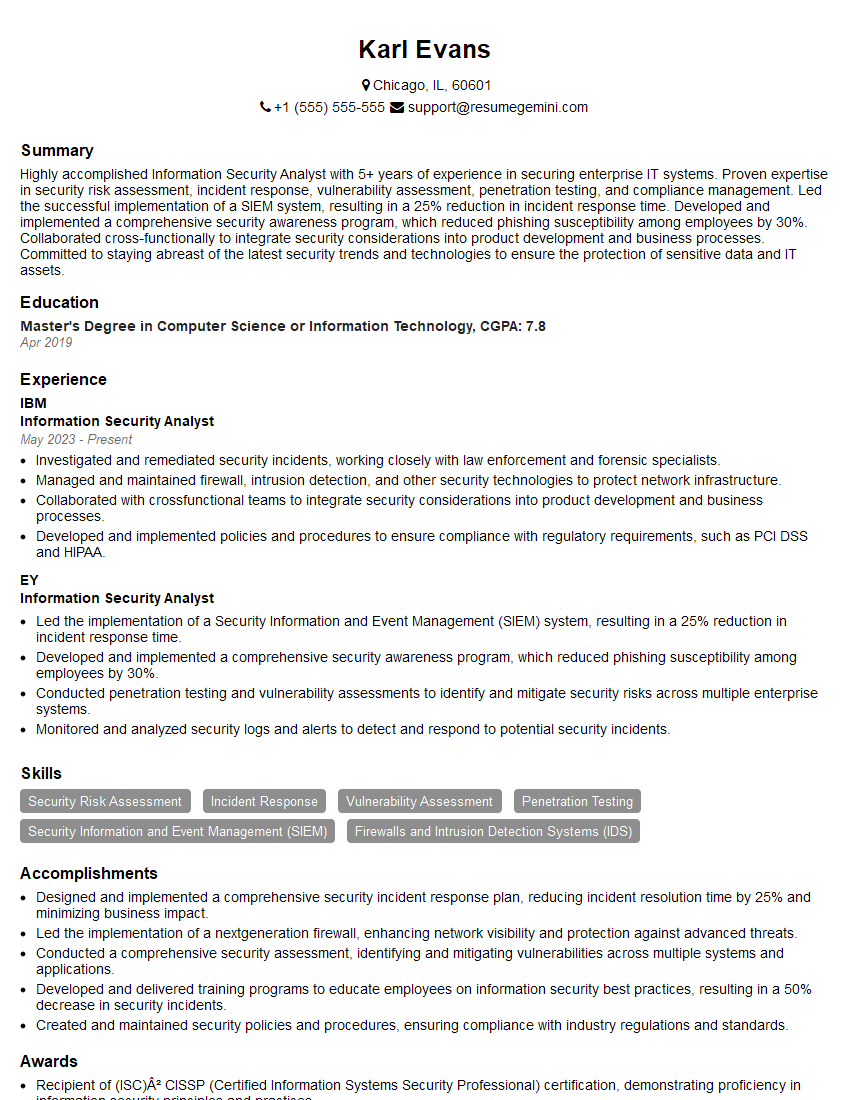
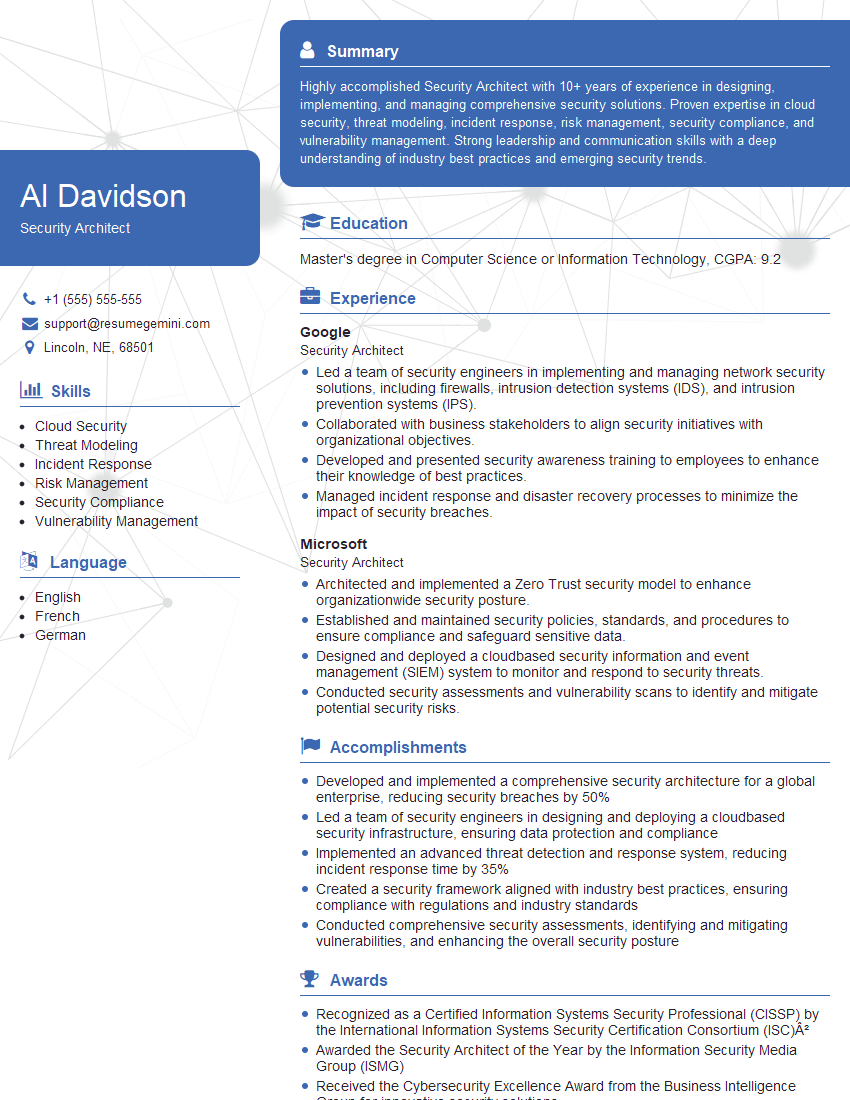
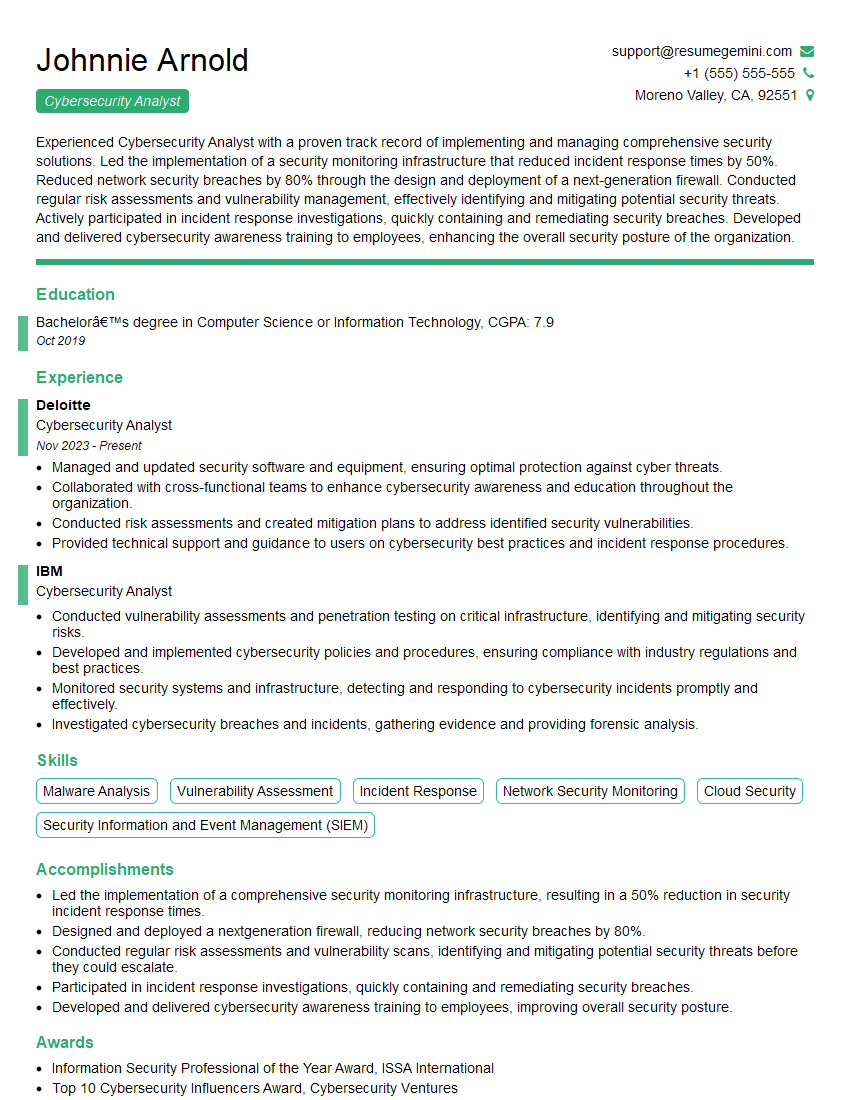
Mastering Security Testing (OWASP Top 10) is crucial for a successful career in cybersecurity. It demonstrates a strong foundation in web application security and opens doors to exciting opportunities. To maximize your job prospects, focus on crafting an ATS-friendly resume that highlights your skills and experience. ResumeGemini is a trusted resource to help you build a professional and impactful resume that gets noticed. Examples of resumes tailored to Security Testing (OWASP Top 10) are available to guide you. Take the next step towards your dream career today!

Explore more articles
Users Rating of Our Blogs
Share Your Experience
We value your feedback! Please rate our content and share your thoughts (optional).
What Readers Say About Our Blog
Really detailed insights and content, thank you for writing this detailed article.
IT gave me an insight and words to use and be able to think of examples