Every successful interview starts with knowing what to expect. In this blog, we’ll take you through the top Sensor Calibration and Validation interview questions, breaking them down with expert tips to help you deliver impactful answers. Step into your next interview fully prepared and ready to succeed.
Questions Asked in Sensor Calibration and Validation Interview
Q 1. Explain the difference between calibration and validation.
Calibration and validation are distinct but related processes crucial for ensuring the reliability of sensor measurements. Calibration is the process of adjusting a sensor’s output to match a known standard. Think of it like setting your watch to the correct time – you’re aligning the sensor’s reading with a trusted source. Validation, on the other hand, is the process of verifying that the calibrated sensor is performing within acceptable limits and is suitable for its intended purpose. It’s like checking if your watch is keeping accurate time over a longer period. Calibration focuses on accuracy; validation focuses on suitability and performance within a specific application.
For example, calibrating a thermometer involves comparing its readings to a known temperature standard (e.g., a calibrated water bath). Validation would then involve testing the thermometer’s performance across a range of temperatures and under different environmental conditions to confirm it meets the required accuracy and stability for its use in a specific experiment.
Q 2. Describe the process of calibrating a pressure sensor.
Calibrating a pressure sensor typically involves comparing its readings to a known pressure standard, often a deadweight tester or a calibrated pressure transducer. Here’s a step-by-step process:
- Prepare the equipment: Gather the pressure sensor, the pressure standard (e.g., a deadweight tester), necessary connecting tubing, and data acquisition system.
- Establish the pressure range: Determine the pressure range over which the sensor needs to be calibrated.
- Apply known pressures: Apply a series of known pressures to the sensor using the pressure standard, recording the sensor’s output at each pressure level.
- Data acquisition and analysis: Use data acquisition software to record the sensor’s response to each known pressure. Analyze the data to generate a calibration curve, which typically represents the relationship between applied pressure and sensor output.
- Calibration curve generation: Fit a suitable mathematical model (e.g., linear, polynomial) to the collected data. This model will be used to correct future sensor readings.
- Uncertainty analysis: Evaluate the uncertainty associated with the calibration process, considering factors like the accuracy of the pressure standard and the resolution of the data acquisition system.
- Generate a calibration certificate: Document the calibration procedure, results, uncertainties, and other relevant information in a calibration certificate.
The calibration curve allows for correction of subsequent sensor readings, improving the accuracy of pressure measurements.
Q 3. What are the common methods for sensor calibration?
Several methods exist for sensor calibration, depending on the sensor type and application. Common methods include:
- Comparison Calibration: Comparing the sensor’s output to that of a known standard, as described in the pressure sensor example. This is the most common method.
- In-situ Calibration: Calibrating the sensor while it’s installed in the system, often using a secondary sensor with known accuracy. This is useful for sensors that are difficult to remove.
- Two-point Calibration: Calibrating the sensor using two known points (e.g., zero and span). This is a simpler method suitable when a linear response is sufficient.
- Multi-point Calibration: Calibrating the sensor using multiple known points across its operating range. This provides a more accurate calibration curve, especially for non-linear sensors.
- Self-Calibration: Some sensors have built-in self-calibration mechanisms, using internal references or algorithms to adjust their readings automatically. This method reduces the need for external calibration but still requires periodic verification.
The choice of method depends on factors like the required accuracy, cost, and ease of implementation.
Q 4. How do you assess the accuracy of a sensor?
Assessing sensor accuracy involves comparing its measured values to known true values. This involves several key aspects:
- Accuracy: The closeness of the measured value to the true value. Often expressed as a percentage of the full-scale range or as an absolute error.
- Precision: The closeness of repeated measurements to each other. A high-precision sensor produces consistent readings, even if they’re not accurate.
- Repeatability: The ability of the sensor to produce the same output under the same conditions repeatedly.
- Linearity: How closely the sensor’s output follows a linear relationship with the measured quantity.
- Hysteresis: The difference in sensor output for the same input depending on whether the input is increasing or decreasing.
- Drift: The change in sensor output over time under constant conditions.
Statistical methods such as calculating mean, standard deviation, and confidence intervals are used to quantitatively assess these parameters. The sensor’s data sheet will also specify its expected performance characteristics which are then used as benchmarks for assessment.
Q 5. What are the different types of calibration standards?
Calibration standards are essential for accurate sensor calibration. They fall into different categories based on their accuracy and traceability:
- Primary Standards: These are the most accurate standards, often maintained by national metrology institutes (NMIs) and based on fundamental physical constants. They are rarely used directly for calibrating sensors.
- Secondary Standards: These are calibrated against primary standards and are used to calibrate working standards or sensors.
- Working Standards: These are used regularly to calibrate sensors in the field or laboratory. Their accuracy is less than primary or secondary standards but sufficient for most applications.
The choice of standard depends on the required level of accuracy and the application’s demands. For high-accuracy applications, secondary standards are employed, while working standards are suitable for routine calibrations. The accuracy of the standard directly impacts the accuracy of the sensor calibration.
Q 6. Explain the concept of traceability in sensor calibration.
Traceability in sensor calibration means establishing an unbroken chain of comparisons from the sensor’s calibration to a known primary standard. This chain ensures that the sensor’s calibration is directly linked to the fundamental units of measurement defined by national or international organizations. Think of it as a lineage proving the accuracy of your measurements. If a sensor’s calibration is traceable, it means its accuracy can be reliably verified.
Traceability is typically documented through calibration certificates that show the chain of calibrations and the uncertainty associated with each step. It ensures that measurements are comparable across different laboratories and facilities. Without traceability, the reliability of sensor readings and the validity of any conclusions drawn from them are severely compromised.
Q 7. What is a calibration certificate and what information does it contain?
A calibration certificate is a formal document that verifies the accuracy of a sensor calibration. It’s essentially a report card for your sensor. It contains essential information such as:
- Sensor identification: Unique identification number or serial number of the sensor.
- Calibration date: The date the calibration was performed.
- Calibration method: Description of the method used for calibration.
- Calibration standards used: Identification and traceability information for the standards used.
- Calibration results: The measured values, calibration curve, and any correction factors.
- Uncertainty analysis: Statement of the uncertainty associated with the calibration results.
- Expiry date: The date after which the calibration is no longer valid.
- Signature and accreditation: Signature of the calibrator and accreditation information (if applicable).
The calibration certificate is crucial evidence of the sensor’s accuracy and is often a requirement for regulatory compliance or quality assurance programs.
Q 8. How do you handle out-of-tolerance sensor readings?
Handling out-of-tolerance sensor readings requires a systematic approach. First, we must verify the reading. Is the sensor malfunctioning, or is there an external factor affecting the measurement? We’d check for things like power supply issues, loose connections, or environmental influences (temperature, humidity, electromagnetic interference). If the issue is with the sensor itself, we need to determine the cause. This might involve inspecting the sensor for physical damage or contamination.
If the sensor is indeed faulty, and the reading consistently falls outside the acceptable tolerance range, the sensor needs recalibration or replacement. Recalibration involves adjusting the sensor’s output to match known standards. If recalibration fails to bring the readings within tolerance, the sensor might be beyond repair and needs to be replaced with a new, calibrated sensor. Documentation of each step, including the original reading, troubleshooting steps, and the final corrected reading or replacement action, is crucial for maintaining data integrity.
For example, imagine a temperature sensor in a food processing plant. An out-of-tolerance reading could lead to spoiled product. By systematically investigating the cause and taking prompt corrective action, we prevent such costly consequences.
Q 9. Describe your experience with different calibration equipment.
My experience encompasses a broad range of calibration equipment. I’ve worked extensively with both manual and automated calibration systems. For example, I’ve used precision multimeters, calibrators for pressure sensors (both pneumatic and hydraulic), temperature baths and ovens, and various signal generators and analyzers. I’m also familiar with advanced systems such as laser interferometers for highly precise displacement measurements and specialized equipment for calibrating accelerometers and gyroscopes. Each device has specific capabilities and limitations; selecting the right tool is crucial for accurate and efficient calibration. The choice often depends on the sensor’s type, accuracy requirements, and the overall calibration procedure.
For instance, calibrating a simple thermocouple might only need a temperature bath and a high-precision thermometer. However, calibrating a complex fiber optic sensor might require specialized laser sources and optical power meters. My experience includes not only using these tools but also maintaining them and understanding their inherent uncertainties, ensuring the highest accuracy in calibration results.
Q 10. What are the common sources of error in sensor measurements?
Sensor measurements are susceptible to various error sources. These errors can be broadly categorized as systematic and random. Systematic errors are consistent, repeatable biases that shift measurements in a particular direction. They can stem from factors like:
- Sensor drift: Gradual changes in sensor output over time due to aging or environmental factors.
- Calibration errors: Inaccuracies introduced during the calibration process itself.
- Environmental factors: Temperature, pressure, humidity, or electromagnetic interference affecting the sensor’s output.
- Sensor non-linearity: Deviations from a perfectly linear relationship between the input and output.
Random errors are unpredictable variations in measurements that lack a consistent pattern. They’re typically due to:
- Noise: Unwanted electrical signals interfering with the sensor’s output.
- Vibrations: Mechanical disturbances affecting sensor readings.
- Human error: Mistakes in data acquisition or recording.
Understanding these error sources is crucial for developing effective calibration and measurement strategies.
Q 11. How do you minimize systematic and random errors in calibration?
Minimizing systematic errors involves careful calibration procedures. This includes using high-quality calibration standards traceable to national or international standards. We need to control environmental factors as much as possible, like maintaining a stable temperature and humidity during calibration. Regular calibration checks help to detect and correct for sensor drift. Proper sensor selection – choosing a sensor appropriate for the measurement application and its environmental conditions – plays a crucial role in reducing systematic errors. For example, selecting a sensor with a low temperature coefficient of resistance would minimize the impact of temperature fluctuations.
Random errors are usually minimized through statistical techniques. Repeating measurements multiple times and using averaging techniques reduce the influence of random variations. High-resolution data acquisition systems decrease the influence of noise. Proper grounding and shielding can mitigate the effects of electromagnetic interference. A well-designed experimental setup helps to reduce vibrations. Thorough training for personnel involved in the measurement process minimizes human errors. Statistical analysis of the data enables us to determine the precision of the measurements and assess the level of uncertainty.
Q 12. Explain the significance of uncertainty analysis in sensor calibration.
Uncertainty analysis is critical in sensor calibration as it quantifies the range of possible values within which the true value of the measurement likely lies. It’s essential for determining the reliability and trustworthiness of calibration results. A comprehensive uncertainty budget accounts for all potential sources of error—both systematic and random—and combines them to provide an overall uncertainty estimate. This estimate reflects the confidence we have in the calibration result. Without uncertainty analysis, we wouldn’t know how much confidence to place in our calibration data.
For example, if a sensor is calibrated to measure pressure with an uncertainty of ±0.5%, we know the measured pressure is likely within 0.5% of its true value. This knowledge is crucial for making informed decisions based on the sensor readings. International standards, like those from ISO, provide guidelines for conducting thorough uncertainty analyses, ensuring consistency and comparability across different calibrations.
Q 13. What are the key performance indicators (KPIs) for sensor calibration?
Key Performance Indicators (KPIs) for sensor calibration include:
- Accuracy: How close the measured values are to the true values. Often expressed as a percentage of the full-scale output or in absolute units.
- Precision: The repeatability and consistency of measurements. Typically represented by standard deviation or other statistical measures.
- Linearity: How well the sensor’s output follows a straight line over its operating range. Often expressed as a deviation from an ideal linear fit.
- Drift: The change in output over time under stable conditions. Usually specified as a percentage change per unit of time.
- Uncertainty: The overall quantification of the measurement uncertainty associated with the calibration process.
- Calibration interval: The recommended time between calibrations, determined by the sensor’s stability and the application’s accuracy requirements.
- Calibration cycle time: The time taken to perform a full calibration procedure.
Tracking these KPIs helps monitor calibration effectiveness, identify potential problems, and optimize calibration processes for better efficiency and accuracy.
Q 14. How do you maintain the integrity of calibration standards?
Maintaining the integrity of calibration standards is paramount. This involves storing standards under controlled environmental conditions to prevent degradation. Regular checks are performed on these standards using higher-order standards (standards calibrated at a higher level of accuracy). Any significant changes or deviations are documented, and if necessary, the standards are sent back to a calibration laboratory for recalibration. Regular inspection for any physical damage or contamination is also essential. We use appropriate handling procedures to avoid damaging the standards. The traceability chain—linking our standards back to national or international standards—is carefully maintained and documented.
Imagine a pressure standard used to calibrate pressure transducers in an aerospace application. Any degradation in the standard could lead to faulty measurements, potentially resulting in safety hazards. Strict adherence to best practices ensures the standards remain accurate and reliable, guaranteeing the accuracy of subsequent calibrations.
Q 15. What are the regulatory requirements for sensor calibration in your industry?
Regulatory requirements for sensor calibration vary significantly depending on the industry and the application. For example, industries like pharmaceuticals, aerospace, and medical devices often adhere to stringent regulations like 21 CFR Part 11 (for electronic records and signatures in the US), ISO 9001 (quality management systems), and ISO 17025 (testing and calibration laboratories). These regulations mandate meticulous record-keeping, traceability of calibration standards, documented procedures, and regular audits to ensure data integrity and accuracy. In other less regulated sectors, internal quality control procedures and best practices will dictate the calibration frequency and documentation requirements. For instance, a simple temperature sensor used for environmental monitoring in an office building will have less strict regulatory oversight than a pressure sensor in a nuclear power plant.
The key elements consistently required are: a defined calibration schedule, use of traceable standards, documented procedures, and a system for managing and archiving calibration records. Failure to comply with relevant regulations can lead to serious consequences, including fines, product recalls, and legal repercussions.
Career Expert Tips:
- Ace those interviews! Prepare effectively by reviewing the Top 50 Most Common Interview Questions on ResumeGemini.
- Navigate your job search with confidence! Explore a wide range of Career Tips on ResumeGemini. Learn about common challenges and recommendations to overcome them.
- Craft the perfect resume! Master the Art of Resume Writing with ResumeGemini’s guide. Showcase your unique qualifications and achievements effectively.
- Don’t miss out on holiday savings! Build your dream resume with ResumeGemini’s ATS optimized templates.
Q 16. Describe your experience with statistical process control (SPC) in calibration.
Statistical Process Control (SPC) is integral to a robust sensor calibration program. I utilize control charts, such as X-bar and R charts, to monitor the calibration process itself. By plotting calibration data over time, I can identify trends, shifts, and outliers that might indicate problems with the calibration process or with the sensor itself. For example, consistently high or low readings on a control chart might signal a drift in the calibration equipment or a failing sensor. Using these charts, we can quickly identify and address deviations, preventing costly errors and ensuring accuracy.
Furthermore, capability analysis helps us assess the performance of the calibration process by determining whether it is capable of meeting the required specifications. This ensures the calibration process is producing reliable results within acceptable tolerances. I routinely use software packages like Minitab and JMP to perform these SPC analyses and generate control charts and reports that are crucial for continuous improvement and regulatory compliance.
Q 17. How do you manage calibration schedules and documentation?
Managing calibration schedules and documentation requires a structured approach. I typically employ a Computerized Maintenance Management System (CMMS) or a dedicated calibration management software. This software allows me to input sensor details, assign calibration intervals based on manufacturer recommendations, regulatory requirements, or risk assessment, and generate automated alerts reminding us of upcoming calibrations. This prevents missed calibrations and potential inaccuracies.
The system ensures complete traceability of calibration records, including the date of calibration, the equipment used, the results obtained, and the technician who performed the calibration. All this data is securely stored, easily retrievable, and compliant with relevant regulations. This is extremely important for audits, troubleshooting, and analysis of calibration trends over time. A well-maintained system ensures that data integrity is never compromised.
Q 18. What software or tools do you use for sensor calibration and data analysis?
My experience encompasses a range of software and tools for sensor calibration and data analysis. For data acquisition, we often use dedicated data loggers and interface software specific to the sensor type. For example, we might use a Fluke Calibration software suite for calibrating temperature and pressure sensors. For data analysis and SPC, I rely heavily on statistical software packages like Minitab and JMP. These provide the tools for creating control charts, performing regression analysis to establish calibration curves, and assessing process capability. Furthermore, some specialized calibration equipment incorporates its own software with data logging and analysis capabilities.
Spreadsheet software like Microsoft Excel is also useful for managing calibration schedules, storing data, and generating reports, especially when working with simpler calibration procedures. In essence, the choice of software and tools depends on the complexity of the sensor and the calibration process.
Q 19. How do you troubleshoot sensor calibration issues?
Troubleshooting sensor calibration issues requires a systematic approach. I typically start by reviewing the calibration history, checking for any trends or patterns that might indicate a recurring problem. Then, I verify the calibration equipment and procedures to rule out errors in the calibration process itself. This includes examining the calibration standards, checking for proper calibration equipment function, and re-performing the calibration procedure to eliminate any human error.
If the problem persists, I move on to investigating the sensor itself. This involves inspecting the sensor for physical damage, checking connections, and assessing its overall condition. Depending on the sensor, more advanced diagnostic techniques may be needed. For instance, a faulty temperature sensor might require testing the sensor resistance or checking for broken wires. Thorough documentation at each step helps isolate the problem and ensures effective resolution. Often, a combination of review, verification, and inspection provides the solution.
Q 20. Explain your experience with different types of sensors (e.g., temperature, pressure, flow).
My experience with different sensor types is extensive. I’ve worked extensively with temperature sensors (thermocouples, RTDs, thermistors), pressure sensors (strain gauge, piezoresistive, capacitive), and flow sensors (differential pressure, ultrasonic, vortex shedding). Each type presents unique calibration challenges. For example, temperature sensors require careful control of the environment and the use of traceable temperature standards. Pressure sensors often necessitate the use of deadweight testers or other high-accuracy pressure sources. Flow sensors require precise measurement of flow rate, often using calibrated flow meters or other primary standards. Calibration procedures vary based on the sensor technology and the application.
Understanding the principles of operation and the potential sources of error for each sensor type is key. For instance, understanding the effects of temperature on a pressure sensor is crucial for accurate calibration. The choice of calibration method depends on the accuracy requirements and the available resources.
Q 21. Describe your experience with sensor validation methods.
Sensor validation is distinct from calibration. Calibration verifies that a sensor provides a known output for a known input. Validation, on the other hand, demonstrates that the sensor accurately measures the intended parameter within the specified application. Validation often involves comparing the sensor’s readings to a known reference method or standard, often using multiple sensors for redundancy and verification. This could involve comparing a new sensor to a gold standard sensor known for its accuracy and precision.
Methods for validation vary depending on the application. For example, in a pharmaceutical setting, sensor validation might involve comparing readings to those obtained from a reference instrument known to be highly accurate. This often involves multiple validation runs under varied environmental conditions. The results are then analyzed to confirm the accuracy and precision of the sensor within its operational range. Thorough documentation and compliance with relevant regulations are vital aspects of successful sensor validation.
Q 22. How do you determine the appropriate validation method for a specific sensor?
Choosing the right validation method for a sensor hinges on understanding its intended application and the required accuracy. It’s like choosing the right tool for a job – a screwdriver won’t work for hammering a nail. We need to consider several factors:
- Sensor Type: A temperature sensor will be validated differently than a pressure sensor. Temperature sensors might be validated against a traceable standard thermometer, while pressure sensors could require comparison against a calibrated pressure gauge.
- Accuracy Requirements: High-precision applications, such as medical devices or aerospace systems, demand rigorous validation methods with smaller tolerances. A less critical application might tolerate broader acceptance criteria.
- Environmental Conditions: Validation needs to reflect the operating environment. A sensor used outdoors requires testing across a range of temperatures, humidity, and pressure, whereas an indoor sensor may need less extensive testing.
- Traceability: The validation process must be traceable to national or international standards to ensure consistency and reliability. This usually involves using calibrated reference standards.
For example, validating a flow sensor used in a water treatment plant might involve comparing its readings to a calibrated flow meter under various flow rates and water conditions. For a highly sensitive gas detector used in a mining environment, we might use a more complex method involving multiple calibration gases and environmental simulations.
Q 23. How do you document sensor validation results?
Comprehensive documentation is crucial for sensor validation. Think of it as a detailed recipe, ensuring anyone can repeat the process and get the same results. My documentation typically includes:
- Sensor Identification: Unique serial number, model, manufacturer, and any relevant specifications.
- Validation Method: A detailed description of the techniques used, including equipment employed and its calibration status.
- Data Acquisition: A clear description of the data acquisition system, including sampling rate, data logging procedure, and any data processing techniques.
- Results: Presented in tables, graphs, and statistical summaries, including mean values, standard deviations, and uncertainties. Any outliers or anomalies are noted and explained.
- Acceptance Criteria: Clearly defined acceptance criteria, showing if the sensor met the required specifications. If not, the reasons for failure are clearly explained.
- Calibration Certificate: Reference to any relevant calibration certificates for equipment used in the validation process.
- Date and Signature: Confirmation of the completion date, and signatures of the personnel involved.
I usually employ a dedicated validation report template and utilise a Laboratory Information Management System (LIMS) to manage and store these documents electronically for easy access and version control.
Q 24. What are the acceptance criteria for sensor validation?
Acceptance criteria for sensor validation define the boundaries for acceptable performance. They’re established before validation begins and are directly tied to the sensor’s intended application. These criteria might include:
- Accuracy: The maximum permissible deviation between the sensor reading and the true value. Often expressed as a percentage of the full-scale range or as an absolute value.
- Precision: The repeatability of measurements under consistent conditions. Expressed as standard deviation or variance.
- Linearity: How closely the sensor’s response follows a linear relationship across its operating range.
- Drift: The change in sensor output over time under constant conditions. Acceptable drift limits are usually defined.
- Hysteresis: The difference in output for the same input when approached from opposite directions.
- Stability: The consistency of the sensor’s performance over extended periods.
For instance, a medical-grade blood pressure sensor might have stricter acceptance criteria (e.g., ±2 mmHg accuracy) than a home weather station (e.g., ±5°C accuracy). The criteria are always documented and agreed upon beforehand.
Q 25. How do you handle discrepancies between sensor readings and expected values?
Discrepancies between sensor readings and expected values require a systematic investigation. This is not an indication of failure, but rather a trigger for problem-solving. Here’s my approach:
- Repeat the Measurement: First, I would repeat the measurement several times to eliminate random errors.
- Check Calibration: Ensure the sensor is properly calibrated and that the calibration is still valid. Recalibration might be needed.
- Inspect the Setup: Carefully examine the entire measurement setup for any issues, such as faulty wiring, incorrect connections, or interference from external sources (electromagnetic interference, etc.).
- Environmental Factors: Assess the environmental conditions and check if they are within the sensor’s specified operating range. Extreme temperatures or humidity can affect accuracy.
- Sensor Degradation: Consider if the sensor itself might be degrading. This could be due to wear and tear, aging, or contamination. Sensor replacement may be necessary.
- Data Analysis: Perform a detailed statistical analysis of the data to identify systematic errors or outliers.
- Documentation: Record all observations, actions taken, and the final resolution of the discrepancy in detail.
For example, if a temperature sensor consistently reads 5°C lower than expected, I might check its calibration, inspect the wiring, and assess the surrounding temperature. If the problem persists, the sensor may need replacement.
Q 26. Explain your experience with sensor data acquisition systems.
My experience with sensor data acquisition systems is extensive. I’ve worked with a variety of systems, from simple data loggers to complex, multi-channel systems capable of handling high-volume data streams. My expertise encompasses:
- Hardware Selection: Choosing the appropriate hardware based on the sensor type, sampling rate, resolution, and storage requirements. This includes selecting appropriate A/D converters, signal conditioning circuits, and data storage devices.
- Software Configuration: Setting up and configuring data acquisition software to control the hardware, collect data, and perform basic data processing. Experience with LabVIEW, DASYLab, and other similar software is essential.
- Data Preprocessing: Applying techniques such as filtering, smoothing, and calibration to improve data quality and remove noise. I’m proficient in using various algorithms and software for this purpose.
- Data Analysis: Using statistical analysis techniques to interpret the acquired data, identify trends, and extract meaningful information.
- Troubleshooting: Diagnosing and resolving issues with data acquisition systems, such as hardware malfunctions or software errors.
In a recent project, I used a multi-channel data acquisition system to monitor and record temperature, humidity, and pressure sensors in a large industrial facility. The system was designed to handle real-time data streaming and automated data logging.
Q 27. Describe your experience working with different sensor interfaces (e.g., analog, digital).
I have significant experience working with both analog and digital sensor interfaces. Understanding the nuances of each is crucial for successful sensor integration:
- Analog Sensors: These sensors produce a continuous analog signal that needs to be converted to a digital signal using an analog-to-digital converter (ADC). I’m familiar with various signal conditioning techniques such as amplification, filtering, and offset adjustment to improve signal quality and minimize noise.
- Digital Sensors: These sensors output a digital signal, often through communication protocols like I2C, SPI, or RS-232. My experience includes configuring and interfacing with various microcontrollers and data acquisition systems to receive and interpret these digital signals. I understand the challenges of communication protocols and error handling.
For instance, I worked on a project integrating a variety of sensors, including analog potentiometers for position sensing and digital temperature sensors with I2C communication. In each case, I used appropriate signal conditioning and communication protocols for seamless integration.
Q 28. How do you ensure the long-term stability and reliability of calibrated sensors?
Maintaining the long-term stability and reliability of calibrated sensors is essential for accurate and consistent measurements. My strategies include:
- Proper Storage: Storing sensors in a controlled environment to minimize exposure to extreme temperatures, humidity, and contaminants. The storage conditions should be in accordance with the manufacturer’s recommendations.
- Regular Calibration: Implementing a scheduled calibration program based on the sensor’s expected drift and the application’s accuracy requirements. Calibration frequency depends on the sensor type and environmental conditions, but more frequent calibrations are recommended for critical applications.
- Environmental Monitoring: Monitoring the environmental conditions in which the sensors are deployed to detect potential factors affecting sensor performance. This could involve recording ambient temperature, humidity, and pressure.
- Preventive Maintenance: Regularly inspecting sensors for any signs of damage, wear, or contamination. Cleaning or repair might be necessary.
- Data Logging and Analysis: Continuously monitoring sensor outputs to identify potential issues or trends that indicate degradation. Statistical process control (SPC) charts can be helpful in this context.
- Documentation: Maintaining a detailed record of all calibration events, maintenance activities, and any observed deviations. This provides a valuable history for evaluating sensor performance over time.
For example, I’ve implemented a system where temperature sensors in a critical process are calibrated quarterly, and their outputs are monitored daily using a dedicated software. Any deviations outside predefined limits trigger an alert.
Key Topics to Learn for Sensor Calibration and Validation Interview
- Understanding Calibration Methods: Explore various calibration techniques like single-point, multi-point, and linearization, understanding their applications and limitations in different sensor types.
- Sensor Uncertainty and Error Analysis: Learn to identify and quantify sources of error, including systematic and random errors, and propagate uncertainty through calculations. Practical application: Analyzing sensor data to determine the reliability of measurements.
- Validation Techniques: Master methods for validating sensor performance against known standards or reference sensors. Understand the importance of traceability and documentation.
- Calibration Standards and Traceability: Familiarize yourself with national and international standards for calibration and the concept of traceability to national metrology institutes.
- Data Acquisition and Analysis: Understand the process of acquiring data from sensors, performing data analysis (e.g., statistical process control), and interpreting results to assess calibration effectiveness.
- Common Sensor Types and their Calibration Requirements: Gain a solid understanding of the specific calibration needs of various sensor types (e.g., temperature, pressure, flow, optical sensors) and the challenges associated with each.
- Calibration Equipment and Instrumentation: Become familiar with common calibration equipment and their proper operation, including calibration procedures and safety precautions.
- Troubleshooting and Problem-solving: Develop skills in identifying and resolving common sensor calibration issues, demonstrating practical problem-solving approaches.
- Documentation and Reporting: Understand the importance of meticulous record-keeping and generating comprehensive calibration reports that meet regulatory requirements.
- Software and Automation in Calibration: Explore the role of software and automation in streamlining calibration processes and improving efficiency.
Next Steps
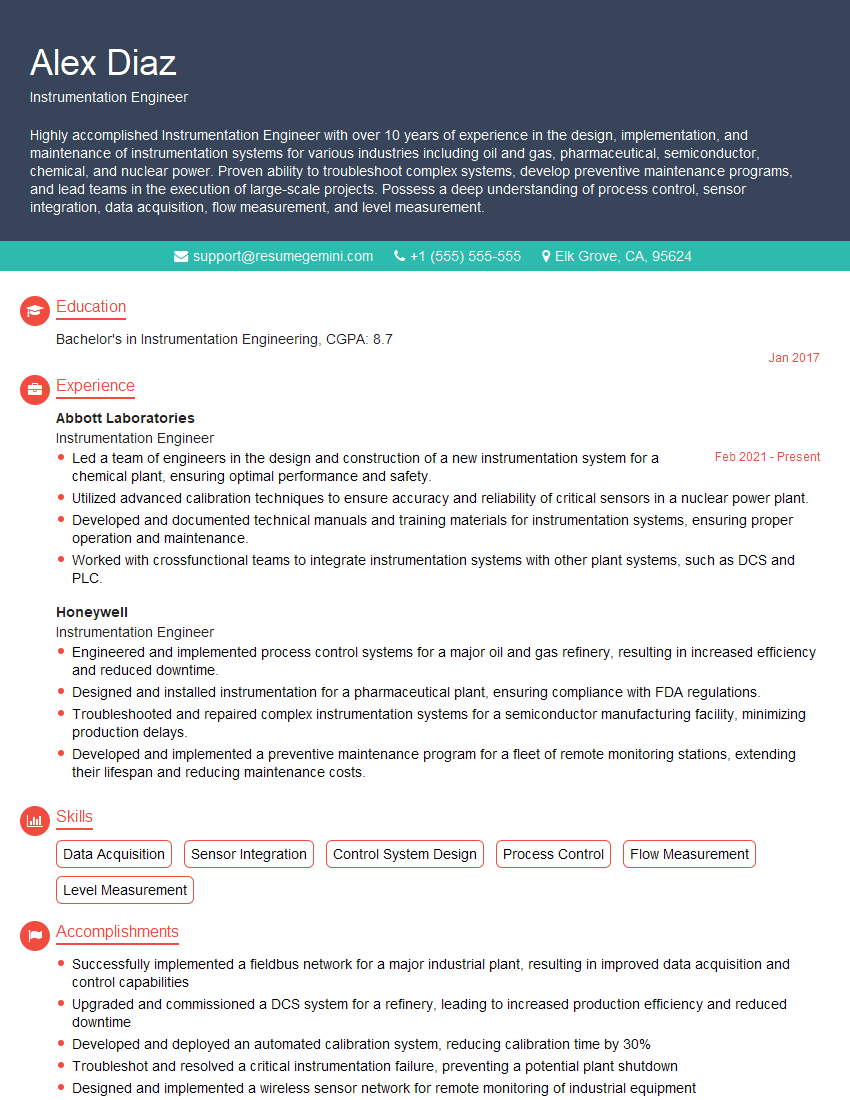
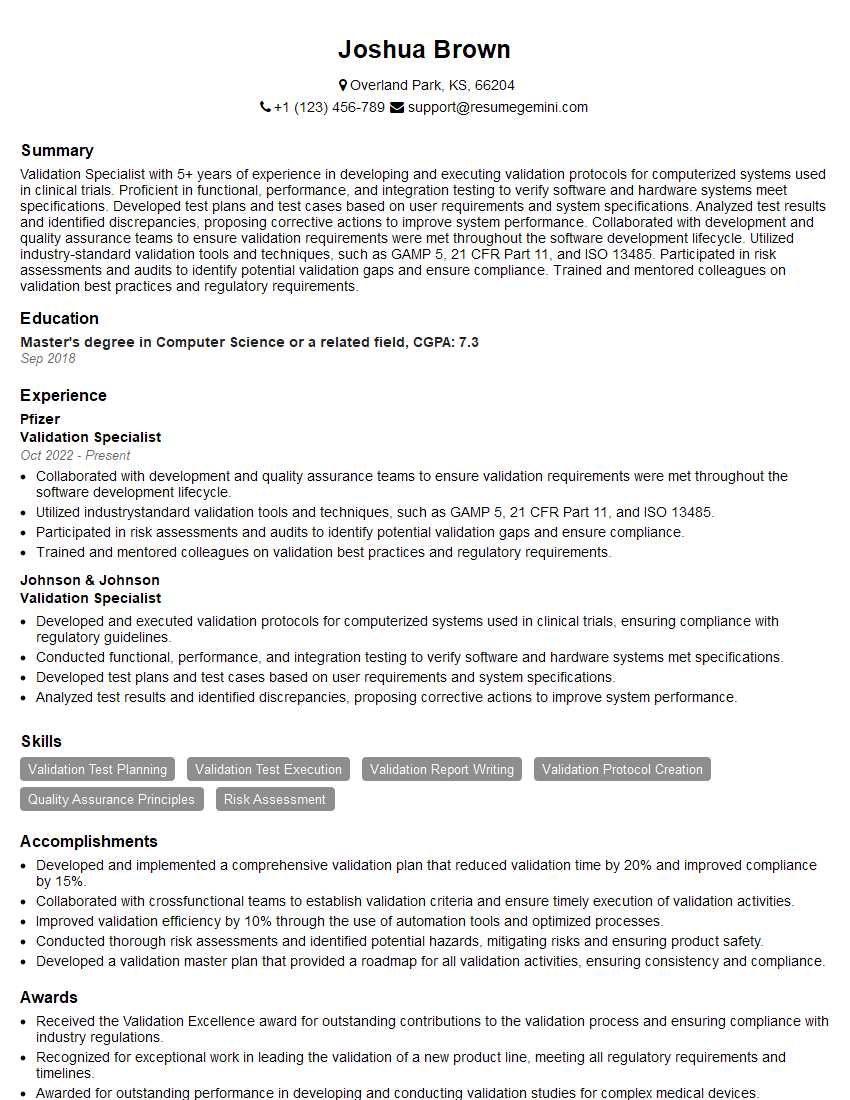
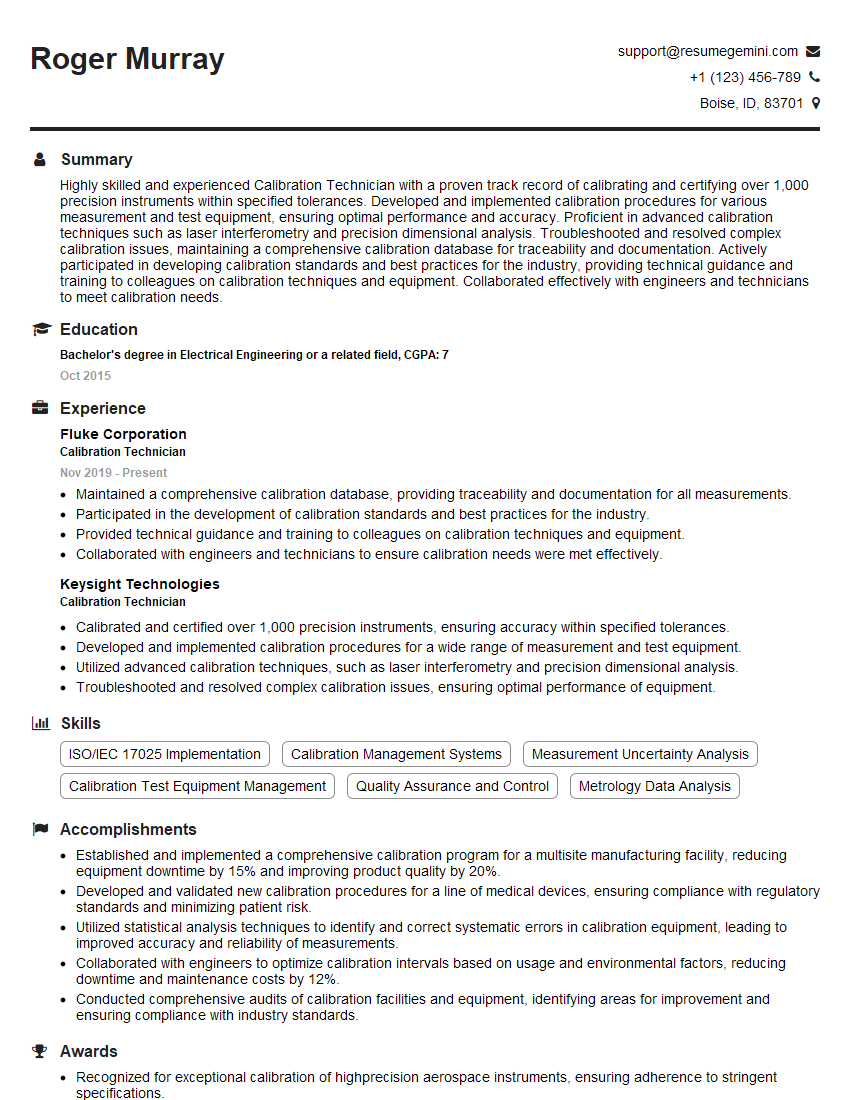
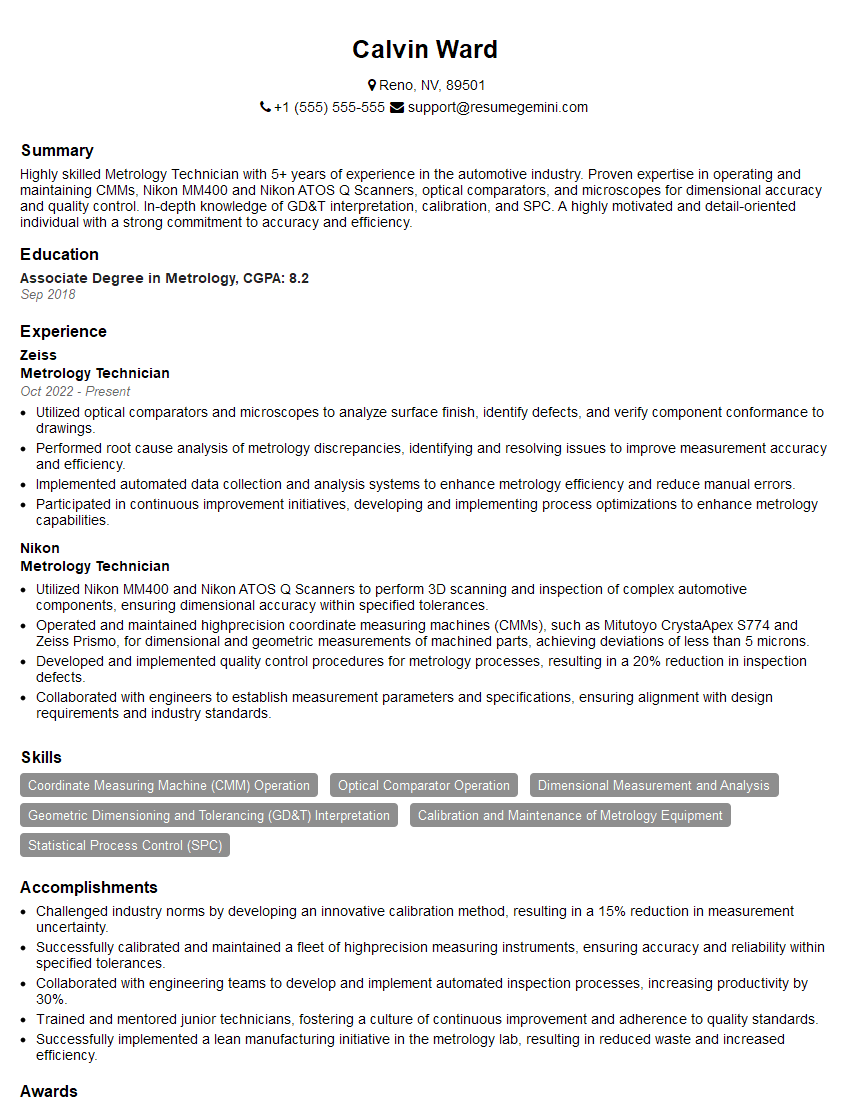
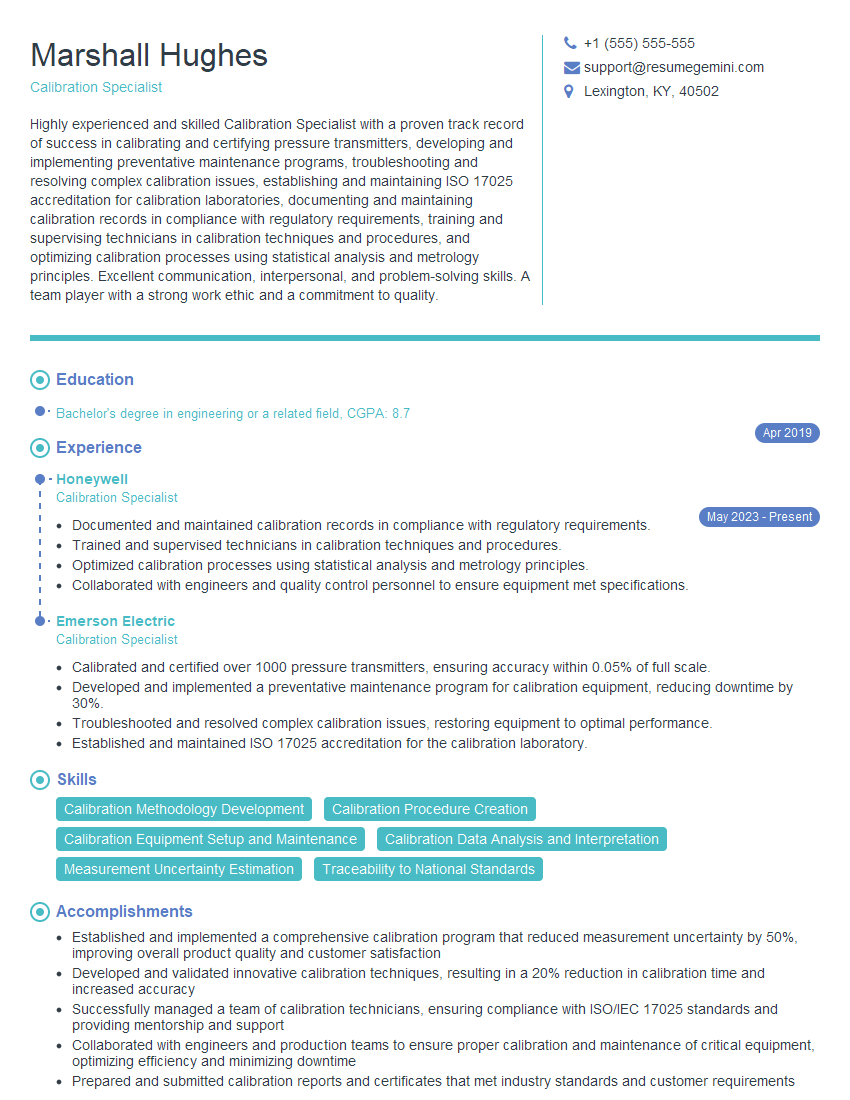
Mastering Sensor Calibration and Validation is crucial for advancing your career in a field demanding high accuracy and reliability. It opens doors to specialized roles with increased responsibility and earning potential. To maximize your job prospects, it’s essential to present your skills effectively. Create an ATS-friendly resume that highlights your technical expertise and experience in sensor calibration and validation. We strongly recommend using ResumeGemini to build a professional and impactful resume. ResumeGemini offers a streamlined process and provides examples of resumes tailored to Sensor Calibration and Validation, ensuring yours stands out.
Explore more articles
Users Rating of Our Blogs
Share Your Experience
We value your feedback! Please rate our content and share your thoughts (optional).
What Readers Say About Our Blog
Really detailed insights and content, thank you for writing this detailed article.
IT gave me an insight and words to use and be able to think of examples