Preparation is the key to success in any interview. In this post, we’ll explore crucial SPC and Quality Control Software interview questions and equip you with strategies to craft impactful answers. Whether you’re a beginner or a pro, these tips will elevate your preparation.
Questions Asked in SPC and Quality Control Software Interview
Q 1. Explain the principles of Statistical Process Control (SPC).
Statistical Process Control (SPC) is a powerful collection of statistical techniques used to monitor and control a process to ensure it operates at its best, consistently producing high-quality products or services. At its core, SPC uses data from the process itself to identify and address variations that lead to defects or inefficiencies. Think of it like having a dashboard for your process, constantly displaying its health. It’s not about eliminating all variation (some is inherent), but about understanding and managing the sources of variation to minimize deviations from target.
The principles revolve around:
- Data Collection: Regularly gathering data that reflects the process’s performance.
- Control Charts: Graphically representing the data to visualize process behavior and identify unusual patterns.
- Process Understanding: Analyzing the data to distinguish between common (random) and special (assignable) causes of variation.
- Process Improvement: Implementing actions to address special causes and continuously improve the process.
For example, a bottling plant might use SPC to monitor the fill level of bottles. By continuously monitoring the fill volume, they can quickly identify a machine malfunction that’s causing inconsistent fills, preventing large batches of defective product.
Q 2. Describe the different types of control charts and when to use each.
Many types of control charts exist, each tailored to specific data types and process characteristics. The choice depends on whether your data is continuous (measured) or discrete (counted), and whether you’re tracking individual measurements or subgroups of measurements.
- X-bar and R chart: Used for continuous data where subgroups of samples are collected. X-bar tracks the average of the subgroups, and R tracks the range within each subgroup. Ideal for monitoring the central tendency and dispersion of a process.
- X-bar and s chart: Similar to X-bar and R, but uses the standard deviation (s) instead of the range. More statistically efficient than X-bar and R for larger sample sizes, offering better sensitivity to smaller shifts in the process mean.
- Individuals and Moving Range (I-MR) chart: Used when individual measurements are taken instead of subgroups. Useful when subgrouping is impractical or impossible.
- p-chart: Used for discrete data, monitoring the proportion of nonconforming units in a sample. Perfect for tracking defect rates.
- c-chart: Also for discrete data, tracking the number of defects per unit. Useful when the number of defects is more relevant than the proportion.
- u-chart: Similar to the c-chart, but normalizes for different sample sizes, making it ideal when the sample size varies.
For example, a manufacturing process producing screws might use X-bar and R charts to monitor the screw length, while a software development team might use a p-chart to track the percentage of software bugs found during testing.
Q 3. How do you interpret a control chart? What do the different zones signify?
Interpreting a control chart involves looking for patterns that indicate process instability or out-of-control behavior. The chart displays data points plotted against control limits, typically three standard deviations above and below the process average (centerline).
- Centerline: Represents the average of the process data.
- Control Limits (UCL and LCL): Upper and Lower Control Limits; points outside these limits often signal special cause variation.
- Zones: Some charts utilize zones within the control limits. Points consistently clustering in certain zones might indicate trends or shifts, even without crossing the control limits.
Interpretation Key:
- Points outside the control limits: Strong evidence of special cause variation. Investigate and correct the root cause.
- Trends: A series of consecutive points increasing or decreasing suggests a systematic shift.
- Stratification: Points clustering above or below the centerline. May indicate a lurking variable impacting the process.
- Cycles: Repeated patterns of highs and lows.
- Runs: Extended sequences of points above or below the centerline.
For instance, if points consistently fall above the centerline on an X-bar chart, it could signify that the process mean has shifted upward. Investigating the potential causes, like a change in raw materials or machine settings, becomes crucial.
Q 4. What are common causes of variation versus special causes of variation?
Variation in a process is inevitable. Understanding the source of this variation is crucial for effective process control. We categorize variations into two types:
- Common Cause Variation (Random Variation): Small, inherent variations inherent to the process due to numerous minor factors. These variations are random and predictable within the control limits. Think of it as the ‘noise’ in the system. Examples: slight variations in raw materials, minor tool wear, small temperature fluctuations.
- Special Cause Variation (Assignable Variation): Significant variations resulting from identifiable factors that are not part of the usual process. These are unpredictable and often lead to points outside the control limits or patterns within them. Examples: machine malfunction, operator error, changes in raw materials, new equipment.
The goal of SPC is to reduce special cause variation, improving predictability and consistency, while accepting the level of common cause variation as inherent to the process. A process in statistical control only displays common cause variation.
Q 5. Explain the concept of process capability and how it is measured (Cp, Cpk).
Process capability refers to the ability of a process to meet specification limits (the acceptable range of the output). It assesses whether the process variation is small enough to produce outputs within the required tolerances. It’s measured using Cp and Cpk indices.
- Cp (Process Capability Index): Measures the potential capability of the process, assuming the process is centered on the target. A Cp of 1 indicates the process spread is equal to the specification width (tolerance).
- Cpk (Process Capability Index): Considers both the process spread and its centering relative to the target. It indicates the actual capability of the process, accounting for potential offset.
Calculation:
Cp = (USL – LSL) / 6σ
Cpk = min[(USL – μ) / 3σ, (μ – LSL) / 3σ]
Where:
- USL: Upper Specification Limit
- LSL: Lower Specification Limit
- μ: Process Mean
- σ: Process Standard Deviation
Higher Cp and Cpk values (generally above 1.33) indicate better process capability, meaning the process consistently produces outputs within the specified limits. Imagine a target and dartboard; a high Cpk indicates that the darts consistently hit the bullseye.
Q 6. How do you calculate the control limits for a control chart?
Control limits define the boundaries within which process data should fall if the process is in statistical control. They’re typically calculated based on the process’s mean and standard deviation, derived from historical data. The most common method uses three standard deviations from the mean.
For X-bar and R charts:
- Centerline (X-bar): Average of all subgroup averages.
- Upper Control Limit (UCL): X-bar + A2*R-bar (where A2 is a constant based on subgroup size and R-bar is the average range).
- Lower Control Limit (LCL): X-bar – A2*R-bar
For X-bar and s charts:
- Centerline (X-bar): Average of all subgroup averages.
- UCL: X-bar + A3*s-bar (A3 is a constant based on subgroup size and s-bar is the average standard deviation).
- LCL: X-bar – A3*s-bar
The constants (A2, A3) are available in standard control chart tables. Accurate calculation requires sufficient historical data, ensuring a stable and representative estimate of the process’s mean and variation.
Q 7. What is the difference between X-bar and R charts and X-bar and s charts?
Both X-bar and R charts and X-bar and s charts are used for continuous data with subgroups, monitoring the central tendency and variability of a process. The key difference lies in how they measure variability:
- X-bar and R chart: Uses the range (R) of each subgroup as a measure of variability. Simpler to calculate but less statistically efficient, especially for larger subgroup sizes, as it doesn’t utilize all the data within the subgroup.
- X-bar and s chart: Uses the standard deviation (s) of each subgroup as a measure of variability. More statistically efficient than X-bar and R, providing better sensitivity to smaller shifts in process variability. Calculation is slightly more complex.
In practice, X-bar and s charts are generally preferred for larger subgroup sizes (n > 10) due to their increased sensitivity and statistical efficiency. X-bar and R charts are suitable for smaller subgroups (n < 10) because of their simplicity. The choice depends on the trade-off between simplicity and statistical efficiency and the subgroup size.
Q 8. What are some common software used for SPC analysis?
Many software packages are available for Statistical Process Control (SPC) analysis, each offering a range of features and capabilities. The choice often depends on factors like budget, the complexity of your processes, and the specific needs of your team. Some of the most popular options include:
- Minitab: A widely-used statistical software package known for its robust SPC capabilities and user-friendly interface. It’s excellent for a wide range of applications, from basic control charts to more advanced analyses.
- JMP: Developed by SAS, JMP is another strong contender, particularly favored for its interactive visualizations and dynamic data exploration features. It’s well-suited for more complex analyses and integrates seamlessly with other SAS products.
- SigmaXL: An Excel add-in, SigmaXL offers a cost-effective way to incorporate SPC into your workflow. It’s particularly useful for users already comfortable with Excel and who need a quick and relatively easy-to-learn solution.
- QI Macros: Similar to SigmaXL, QI Macros is another Excel add-in providing a user-friendly approach to SPC analysis. It’s a popular option for smaller businesses or teams with limited budgets.
- StatGraphics Centurion: A comprehensive statistical software package that includes a wide variety of SPC tools and capabilities. It’s a powerful choice for more demanding applications and larger organizations.
Choosing the right software depends on your specific requirements. Factors to consider include ease of use, cost, specific statistical tools needed, integration with other systems, and the level of training required for your team.
Q 9. Describe your experience using [Specific SPC Software – e.g., Minitab, JMP].
I have extensive experience using Minitab for SPC analysis, spanning over five years. I’ve used it across various projects, including process improvement initiatives in manufacturing, quality control in pharmaceuticals, and analyzing customer satisfaction data in the service industry. My proficiency encompasses creating and interpreting various control charts (X-bar and R, X-bar and s, Individuals and Moving Range, p-charts, np-charts, c-charts, u-charts), performing capability analysis (Cpk, Ppk), and running various statistical tests. I’m comfortable with all aspects of the software, from data import and manipulation to creating comprehensive reports and presentations based on the findings. For example, in one project, I used Minitab to identify a significant reduction in defect rates after implementing a new manufacturing process. The software’s ability to visualize the data and clearly show the impact of the changes was crucial in securing management buy-in for the project.
Beyond the standard features, I’ve also utilized Minitab’s macros for automating repetitive tasks and customizing analysis procedures. This has greatly improved my efficiency and allowed me to focus more on interpreting the results and drawing valuable insights from the data. I’m confident in my ability to leverage Minitab’s capabilities to effectively manage and improve any quality control process.
Q 10. How do you handle out-of-control points on a control chart?
Handling out-of-control points on a control chart is critical for effective SPC. An out-of-control point suggests a special cause variation, something beyond the inherent randomness of the process. Ignoring these points can lead to flawed conclusions and missed opportunities for improvement. My approach involves a systematic investigation following these steps:
- Verify the Data: First, I meticulously check the data point for errors in recording, transcription, or data entry. A simple mistake can easily lead to an out-of-control signal.
- Investigate the Assignable Cause: If the data point is valid, I thoroughly investigate the process at that specific time point. This involves reviewing production logs, interviewing operators, checking equipment maintenance records, and examining raw material specifications. The goal is to identify the root cause behind the unusual data point.
- Implement Corrective Actions: Once the assignable cause is identified, I help implement appropriate corrective actions to eliminate or mitigate it. This might involve adjusting equipment settings, retraining operators, improving raw material quality, or modifying the process itself.
- Re-evaluate the Control Chart: After implementing corrective actions, I re-evaluate the control chart. This often includes removing the out-of-control point and recalculating control limits, ensuring that the process is now stable and operating within the expected range.
- Document Everything: Throughout this process, I maintain detailed documentation, including the date and time of the out-of-control point, the investigation steps, the identified assignable cause, the implemented corrective actions, and the results of the re-evaluation. This documentation is crucial for tracking progress and for future reference.
Think of it like a detective investigating a crime scene. Each step is critical in identifying the culprit (the assignable cause) and preventing future occurrences.
Q 11. Explain the process of investigating and correcting assignable causes.
Investigating and correcting assignable causes is a crucial step in SPC. It’s not enough to simply identify an out-of-control point; you must understand *why* it happened. My approach follows a structured methodology:
- Define the Problem: Clearly define the nature and extent of the variation. What’s the specific out-of-control point or pattern? What are the potential consequences?
- Gather Data: Collect data relevant to the problem. This could include process parameters, operator inputs, environmental conditions, equipment settings, and raw material characteristics.
- Analyze Data: Use various statistical tools and techniques (e.g., Pareto charts, scatter plots, histograms) to analyze the gathered data and identify potential root causes. Consider using cause-and-effect diagrams (fishbone diagrams) to brainstorm possible factors.
- Identify Root Cause(s): Based on the data analysis, determine the underlying root cause(s) of the variation. It’s crucial to identify the true root cause, not just a symptom.
- Develop and Implement Corrective Actions: Develop and implement corrective actions to address the identified root cause(s). These might include equipment repairs, process modifications, operator training, or changes in raw materials.
- Verify Effectiveness: Monitor the process to ensure that the corrective actions have been effective in eliminating the variation. Use control charts to track the process performance over time.
- Document Findings: Document the entire investigation process, including the problem definition, data collection, analysis, root cause identification, corrective actions, and verification results. This creates a record for future reference and helps prevent similar problems.
Imagine a car that’s overheating. Simply adding coolant (a symptom fix) won’t solve the problem. A thorough investigation might reveal a faulty radiator or thermostat (the root cause), requiring a more substantial repair.
Q 12. How do you determine the sample size for an SPC chart?
Determining the appropriate sample size for an SPC chart is crucial for its effectiveness. Too small a sample size may mask important variations, while too large a sample can be inefficient and costly. The optimal sample size depends on several factors:
- Process Variability: Higher process variability necessitates a larger sample size to ensure that the control chart is sensitive enough to detect variations.
- Cost of Sampling: The cost of obtaining samples should be considered. Balancing the cost of sampling with the risk of missing important variations is essential.
- Frequency of Sampling: More frequent sampling generally requires smaller sample sizes for each sampling event.
- Desired Sensitivity: The level of sensitivity desired in detecting shifts in the process mean influences the sample size.
There’s no single formula for calculating sample size, but using statistical software like Minitab can help. Often, a rule of thumb of 4-5 samples per subgroup is employed. However, using a larger sample size (e.g., 25 samples) might be necessary for processes with very high variability or when increased sensitivity is crucial. In practice, the choice of sample size is often a trade-off between statistical precision and practical constraints. The sample size should be large enough to detect significant shifts in the process while being economically feasible.
Q 13. What is the relationship between SPC and Six Sigma methodologies?
SPC and Six Sigma are closely related methodologies used to improve process quality and reduce variation. While distinct, they complement each other effectively:
- SPC (Statistical Process Control): Primarily focuses on monitoring and controlling process variation through the use of control charts and other statistical tools. It’s a reactive approach, detecting variations as they occur and taking corrective actions.
- Six Sigma: Is a more comprehensive methodology that aims to reduce defects and improve process efficiency by identifying and eliminating the root causes of variation. It uses a structured problem-solving approach (DMAIC) and often incorporates SPC as a key tool for monitoring and controlling processes after improvement initiatives.
Think of it this way: SPC is like a doctor taking your temperature regularly to monitor your health, whereas Six Sigma is a thorough medical investigation to diagnose and treat underlying illnesses. Six Sigma often uses SPC to monitor the progress of its improvement projects and ensure that process improvements are sustained over time. They work in tandem—Six Sigma’s proactive, problem-solving approach sets the stage for SPC’s ongoing monitoring and control.
Q 14. How do you use SPC data to drive continuous improvement?
SPC data is invaluable for driving continuous improvement. By monitoring process performance over time, SPC provides insights that facilitate data-driven decision making. Here’s how I use SPC data for continuous improvement:
- Identifying Areas for Improvement: Control charts clearly highlight process variations and instability, pinpointing areas needing attention. Out-of-control points immediately signal the need for investigation.
- Tracking Improvement Efforts: By monitoring control charts before, during, and after process changes, I can objectively measure the effectiveness of improvement initiatives. This data provides concrete evidence of the impact of implemented changes.
- Process Capability Analysis: SPC data is critical for evaluating process capability (Cpk, Ppk). This informs decisions regarding process optimization and whether a process is capable of consistently meeting customer requirements.
- Predictive Modeling: Analyzing historical SPC data can help predict future process performance and potentially identify issues before they escalate. This allows for proactive adjustments and prevents problems from occurring.
- Data-Driven Decision Making: Using SPC data to inform decisions fosters an evidence-based approach to continuous improvement. This helps move away from subjective opinions and towards fact-based actions.
In essence, SPC data provides a continuous feedback loop, allowing for timely adjustments, proactive interventions, and a data-driven approach to achieving ongoing improvements and preventing problems before they impact the customer. It’s about using the data to tell a story, not just presenting numbers.
Q 15. Describe your experience with Gage R&R studies.
Gage R&R (Repeatability and Reproducibility) studies are crucial for assessing the variability within a measurement system. They determine how much of the total variation in measured data is due to the measurement process itself, as opposed to actual variation in the product or process being measured. This is vital because unreliable measurements lead to flawed conclusions and poor decision-making in quality control.
In a typical Gage R&R study, multiple operators measure the same parts multiple times. The data are then analyzed using ANOVA (Analysis of Variance) to partition the total variation into components representing:
- Repeatability: Variation due to the measurement instrument itself when used by the same operator.
- Reproducibility: Variation due to different operators using the same instrument.
- Part-to-Part Variation: The actual variation among the parts being measured.
The results are often summarized in a table showing the percentage of variation attributable to each source. A well-designed Gage R&R study ensures that the measurement system is accurate and precise enough for the intended application. For example, if the measurement variation is significantly larger than the part-to-part variation, the measurement system needs improvement before reliable SPC analysis can be done. I’ve used Gage R&R extensively in automotive manufacturing, evaluating the precision of CMMs (Coordinate Measuring Machines) for dimensional measurements, and also in pharmaceutical settings for weight checks of tablets, where minute discrepancies are crucial.
Career Expert Tips:
- Ace those interviews! Prepare effectively by reviewing the Top 50 Most Common Interview Questions on ResumeGemini.
- Navigate your job search with confidence! Explore a wide range of Career Tips on ResumeGemini. Learn about common challenges and recommendations to overcome them.
- Craft the perfect resume! Master the Art of Resume Writing with ResumeGemini’s guide. Showcase your unique qualifications and achievements effectively.
- Don’t miss out on holiday savings! Build your dream resume with ResumeGemini’s ATS optimized templates.
Q 16. What is the purpose of a process capability analysis?
A process capability analysis determines whether a process is capable of consistently producing outputs that meet pre-defined specifications. It answers the question: “Can this process consistently meet customer requirements?” This is crucial because even a process that is in statistical control (showing no assignable causes of variation) might still be incapable of meeting specifications if its natural variation is too large.
The analysis typically involves calculating process capability indices, such as Cp, Cpk, Pp, and Ppk. These indices compare the process’s natural variation (measured by the process standard deviation) to the tolerance range (the difference between the upper and lower specification limits). A Cp value of 1 or greater indicates that the process is capable of meeting the specification width, given the process spread. A Cpk value takes into account the centering of the process relative to the specification. Values above 1.33 are usually considered good, implying the process is highly capable. Lower values raise concerns and may indicate the need for process improvement.
For example, I helped a client in the food processing industry determine the capability of their filling machine. By analyzing the weight data of filled containers, we found a low Cpk value, indicating that although the process was centered, its spread was too wide to consistently stay within the required tolerances. This led to recommendations for machine adjustments and stricter control procedures.
Q 17. Explain your understanding of Pareto charts and their application in quality control.
Pareto charts are bar graphs that rank causes of defects or problems in descending order of frequency. They visually represent the Pareto principle, also known as the 80/20 rule, which suggests that 80% of problems often stem from 20% of the causes. This is extremely helpful in focusing improvement efforts on the most impactful areas.
The horizontal axis lists the categories of defects or problems, while the vertical axis represents their frequency or cost. The bars are arranged from tallest to shortest, and a cumulative frequency line is added to highlight the overall contribution of each category. I’ve used Pareto charts countless times to identify the root causes of quality issues. In one instance, we used it to analyze defects in a printed circuit board assembly. The Pareto chart clearly showed that 70% of the defects were due to a particular component placement issue, enabling us to promptly address the issue at its source.
Using a Pareto chart provides a clear, concise way to show management the ‘vital few’ problems versus the ‘trivial many’. This allows us to prioritize efforts effectively and make data-driven decisions. By identifying the major contributors to defects or problems, organizations can allocate resources strategically, targeting those issues that will yield the greatest impact on quality improvement.
Q 18. What are some common sources of measurement error in SPC?
Measurement error in SPC can stem from various sources, all impacting the accuracy and reliability of the data used for analysis. These sources include:
- Instrument error: Calibration drift, faulty sensors, or inherent limitations in the instrument’s precision.
- Observer error: Inconsistent measurement techniques, subjective interpretation of readings (especially in visual inspections), or biases introduced by the operator.
- Environmental error: Temperature, humidity, or other environmental factors affecting the measurement process.
- Part variation during measurement: Changes in the part’s properties during the measurement process, such as temperature-induced expansion or deformation.
- Data entry error: Mistakes made during the recording or inputting of measurement data.
Understanding these sources is paramount as they can significantly skew the results of SPC charts. For instance, if a scale used to weigh products drifts out of calibration, all subsequent measurements will be erroneous, leading to incorrect conclusions about process capability.
Q 19. How do you ensure the accuracy and reliability of data used in SPC analysis?
Ensuring data accuracy and reliability in SPC is paramount. My approach involves a multi-faceted strategy:
- Calibration and Verification: Regular calibration of measurement instruments against traceable standards is essential. This ensures that the instruments are consistently accurate. Verification involves comparing the measurement instrument’s readings with a known standard.
- Operator Training: Thorough training for operators on correct measurement procedures and techniques reduces human error. Standard operating procedures (SOPs) need to be in place and followed rigorously.
- Environmental Control: Maintaining a stable and controlled environment minimizes environmental influences on measurements. This often involves specifying acceptable temperature and humidity ranges.
- Data Validation: Implementing checks and balances during data entry and analysis helps identify and correct errors. This could involve double-checking measurements, using automated data entry systems, and applying statistical process control (SPC) software to detect outliers.
- Gage R&R Studies: Regular Gage R&R studies help assess the measurement system’s variability and identify potential issues before they affect the SPC analysis.
Implementing these procedures helps ensure that the data used in SPC analysis is representative of the actual process variation and not confounded by measurement errors.
Q 20. Explain your experience with different sampling methods (e.g., random, stratified).
I have extensive experience with various sampling methods, selecting the most appropriate technique based on the specific context and objectives.
- Random Sampling: Each item in the population has an equal chance of being selected. This ensures unbiased representation of the population but might not be efficient in identifying localized issues.
- Stratified Sampling: The population is divided into subgroups (strata) based on relevant characteristics (e.g., production shift, machine used), and random samples are taken from each stratum. This is beneficial when there’s known variation within the population, as it ensures representation from all strata.
- Systematic Sampling: Items are selected at fixed intervals (e.g., every tenth item). While simple and efficient, it can be problematic if there’s a pattern or cycle in the process that coincides with the sampling interval.
- Cluster Sampling: Groups or clusters of items are selected, and all items within the selected clusters are measured. This is cost-effective for geographically dispersed populations but might lead to less precise estimates.
In one project involving a large-scale manufacturing process, I employed stratified sampling to analyze variations across different production lines. This allowed us to pinpoint specific issues related to certain lines, leading to targeted improvements and better overall quality.
Q 21. Describe your experience with designing and implementing quality control plans.
Designing and implementing quality control plans is a core part of my expertise. This involves a structured approach, starting with a thorough understanding of the process, customer requirements, and potential sources of variation. Key steps include:
- Define critical-to-quality (CTQ) characteristics: Identify the key product or process characteristics that are most important for customer satisfaction.
- Establish specification limits: Define the acceptable range for each CTQ characteristic.
- Select appropriate SPC tools: Choose the appropriate control charts (X-bar and R, X-bar and s, p, np, c, u) based on the type of data being collected.
- Develop sampling plans: Determine the sample size, frequency, and method of sampling.
- Establish control limits: Calculate the control limits for the chosen SPC chart based on historical data or initial process data.
- Implement the plan: Train personnel on proper data collection and chart interpretation.
- Monitor and review: Regularly monitor the charts to identify out-of-control points and investigate their root causes. Periodically review the effectiveness of the control plan and make adjustments as needed.
For example, in a semiconductor manufacturing facility, I developed a quality control plan using X-bar and R charts to monitor critical dimensions of integrated circuits. This plan resulted in a significant reduction in defects and improved process yield. The entire process is iterative, constantly being refined as new data is gathered and analyzed.
Q 22. How do you communicate SPC results to non-technical audiences?
Communicating SPC results to non-technical audiences requires translating complex statistical data into easily understandable visuals and narratives. Instead of showing control charts filled with data points and statistical calculations, I focus on the key takeaways. For instance, I’d use clear, concise language and avoid jargon. Think of it like this: instead of saying ‘the process is exhibiting an upward trend exceeding the upper control limit,’ I’d say ‘we’re seeing a recent increase in defects, suggesting a potential problem in the production process.’
Visually, I rely heavily on dashboards and summarized reports showing key metrics like defect rates, percentages, and the overall process capability index (Cpk). I use simple bar graphs or pie charts to represent the proportion of conforming and non-conforming units. A well-designed dashboard, highlighting only the most crucial information and using color-coding to indicate problem areas, is far more effective than showing raw data.
Finally, I always relate the findings back to the business impact. For example, instead of just stating that the process is out of control, I’d explain how this translates into increased costs due to rework, scrap, or customer complaints. This contextualization makes the data much more relevant and impactful for a non-technical audience.
Q 23. What are some common metrics used to measure the effectiveness of SPC?
Measuring the effectiveness of SPC involves assessing several key metrics. These metrics can be grouped into process capability and process stability.
- Process Capability: This measures how well the process meets the customer’s requirements. Key metrics include Cpk (process capability index), Ppk (process performance index), and sigma level. A higher Cpk indicates a more capable process.
- Process Stability: This focuses on the consistency of the process over time. We analyze control charts to assess stability. Key indicators include the number of points outside control limits, the presence of trends, and the presence of unusual patterns.
- Defect Rate/PPM: A fundamental metric that directly reflects the quality of the output and the impact on the business.
- Reduction in Rework/Scrap: A direct measure of the effectiveness of SPC in reducing waste and cost.
- Customer Satisfaction: Ultimately, the goal is improved customer satisfaction, so this is a crucial indirect metric to monitor.
It’s vital to track these metrics over time to assess the impact of implemented changes and identify areas for further improvement. Continuous monitoring and analysis allow for proactive adjustments and prevent potential issues.
Q 24. How do you handle data outliers in SPC analysis?
Handling data outliers in SPC analysis requires careful consideration and a systematic approach. Outliers can significantly skew the analysis and lead to incorrect conclusions. The first step is to investigate the cause of the outlier. Was it due to a measurement error, a special cause variation, or a true deviation in the process?
Methods for Handling Outliers:
- Investigation: Thoroughly investigate the root cause of the outlier. This might involve checking the data collection process, the measurement equipment, or the manufacturing process itself. It could be something as simple as a data entry error or a significant external event.
- Removal (with caution): If investigation reveals a clear error, the data point can be removed. However, this decision must be documented and justified. Arbitrarily removing outliers can mask real problems.
- Transformation: Techniques like logarithmic transformations can sometimes mitigate the impact of outliers.
- Robust Statistical Methods: Use statistical methods that are less sensitive to outliers, such as the median instead of the mean in calculations. Robust control charts are also available that are less affected by outliers.
The key is to avoid simply discarding outliers without a thorough understanding of their origin. Unjustified removal of outliers can lead to a false sense of process stability and could mask underlying problems.
Q 25. What is your experience with using SPC to monitor and improve key process indicators (KPIs)?
I have extensive experience in using SPC to monitor and improve KPIs. In past projects, we’ve used SPC to track key manufacturing process indicators like cycle time, yield, defect rate, and throughput. For example, in a semiconductor manufacturing setting, we implemented SPC charts to monitor wafer yields throughout the fabrication process. This involved collecting data on several parameters, including the number of defects per wafer, the number of wafers failing specific steps and various process parameters. By analyzing these charts, we could immediately detect process deviations and implement corrective actions to improve yield.
The ability of SPC to visually highlight anomalies is invaluable in this context. By setting up appropriate control limits and analyzing the charts in real-time, we were able to address deviations promptly. This proactive approach resulted in a significant reduction in production losses and cost savings, all while maintaining high quality.
Similarly, in other projects, we’ve used SPC to monitor KPIs in areas like customer service response times, order fulfillment rates and website conversion rates. The principles remain the same: collect data, plot it on appropriate control charts and analyze trends to identify opportunities for improvement.
Q 26. Describe a situation where you used SPC to solve a quality problem.
In a previous role, we were experiencing a significant increase in customer returns for a specific product due to a recurring defect. Initial attempts to address the problem through general troubleshooting were unsuccessful. To get to the root cause, we implemented an SPC program. We started by identifying the key process variables affecting the product’s quality – this involved working closely with the production team to determine the most influential parameters in the manufacturing process. Then we collected data on these variables and plotted them on control charts.
The charts quickly revealed an unusual pattern of variation in a specific process step. We discovered that the temperature during a critical curing phase was fluctuating outside the acceptable range, leading to inconsistencies and causing the defects. This unexpected variation, originally overlooked by traditional methods, was clearly visible on the control chart. By addressing the temperature fluctuation issue, implementing stricter temperature controls, and retraining personnel, we eliminated the defect, reduced customer returns drastically, and improved our overall product quality.
Q 27. How familiar are you with the latest advancements and trends in SPC software and technologies?
I am highly familiar with the latest advancements in SPC software and technologies. The field is constantly evolving, with new tools and techniques emerging to enhance data analysis and process improvement. Some key trends include:
- Advanced Analytics Integration: Modern SPC software increasingly integrates with advanced analytics techniques, including machine learning and artificial intelligence. This enables predictive modeling and proactive identification of potential process problems before they occur.
- Real-time Data Acquisition and Analysis: The ability to capture and analyze data in real-time from various sources (sensors, machines, etc.) is revolutionizing SPC. This empowers immediate responses to process deviations.
- Cloud-based Solutions: Cloud-based SPC software offers enhanced scalability, accessibility, and collaboration capabilities. This is particularly useful for companies with multiple manufacturing sites or globally distributed teams.
- Improved Visualization and Reporting: Modern SPC software provides sophisticated dashboards and reporting features, making it easier to communicate results to both technical and non-technical audiences.
- Integration with other systems (MES/ERP): Seamless integration with Manufacturing Execution Systems (MES) and Enterprise Resource Planning (ERP) systems streamlines data flow and provides a holistic view of the production process.
I stay current with these developments through industry publications, conferences, and ongoing professional development.
Q 28. Describe your experience integrating SPC data with other business systems (e.g., ERP).
I have extensive experience integrating SPC data with other business systems, primarily ERP and MES systems. This integration is crucial for obtaining a holistic view of the manufacturing process and enabling data-driven decision-making. Typically, this involves using APIs and data exchange protocols (like XML or JSON) to transfer data between the SPC software and other systems. It is important to establish clear data mapping and validation procedures to ensure data accuracy and integrity during transfer. This often requires collaborating with IT and database administrators to ensure a smooth and seamless integration.
For example, in one project, we integrated our SPC software with an ERP system to automatically pull production data and feed it into our control charts. This eliminated manual data entry, reducing errors and freeing up time for analysis and improvement initiatives. The ERP system then used the quality data from the SPC software to update inventory, track costs associated with defects, and generate reports for management. This integrated system provided a comprehensive overview of our manufacturing operations and played a vital role in ensuring our product quality remained consistently high.
Key Topics to Learn for SPC and Quality Control Software Interview
- Statistical Process Control (SPC) Fundamentals: Understanding control charts (X-bar and R, p-charts, c-charts, etc.), process capability analysis (Cp, Cpk), and the interpretation of statistical data to identify process variations and improvements.
- Quality Control Software Applications: Hands-on experience with popular SPC software (e.g., Minitab, JMP, etc.). Familiarize yourself with data input, chart generation, analysis features, and report creation. Be prepared to discuss specific software you’ve used.
- Process Improvement Methodologies: Understanding Lean Manufacturing principles, Six Sigma methodologies (DMAIC), and how SPC software supports these improvement initiatives. Be ready to discuss practical applications of these methods in a quality control context.
- Data Analysis and Interpretation: Mastering the ability to analyze data from SPC software, identify trends, root causes of variation, and propose data-driven solutions to quality issues. Practice interpreting statistical outputs and drawing meaningful conclusions.
- Quality Management Systems (QMS): Familiarity with ISO 9001 or other relevant quality standards and how SPC software contributes to meeting those standards. Understanding the role of documentation and traceability within a QMS.
- Problem-Solving and Root Cause Analysis: Develop your skills in using data from SPC software to identify and solve process problems. Techniques like Fishbone diagrams, Pareto charts, and 5 Whys can be valuable assets in demonstrating problem-solving capabilities.
Next Steps
Mastering SPC and Quality Control Software is crucial for career advancement in manufacturing, engineering, and other quality-focused industries. These skills are highly sought after, opening doors to more challenging and rewarding roles with increased earning potential. To maximize your job prospects, focus on creating a strong, ATS-friendly resume that highlights your skills and experience effectively. ResumeGemini is a trusted resource to help you build a professional and impactful resume. They provide examples of resumes tailored to SPC and Quality Control Software roles, allowing you to craft a document that truly showcases your qualifications. Take advantage of these resources to present yourself in the best possible light and land your dream job!
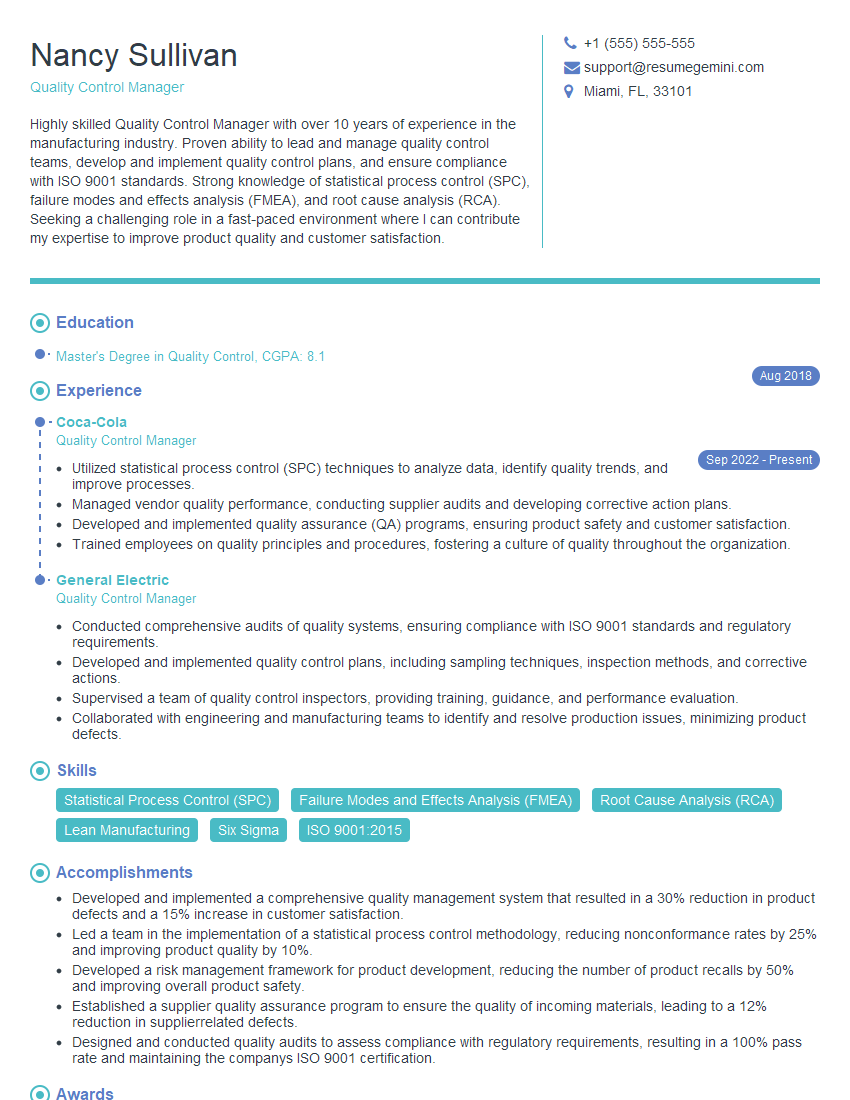
Quality Control Manager Resume Sample
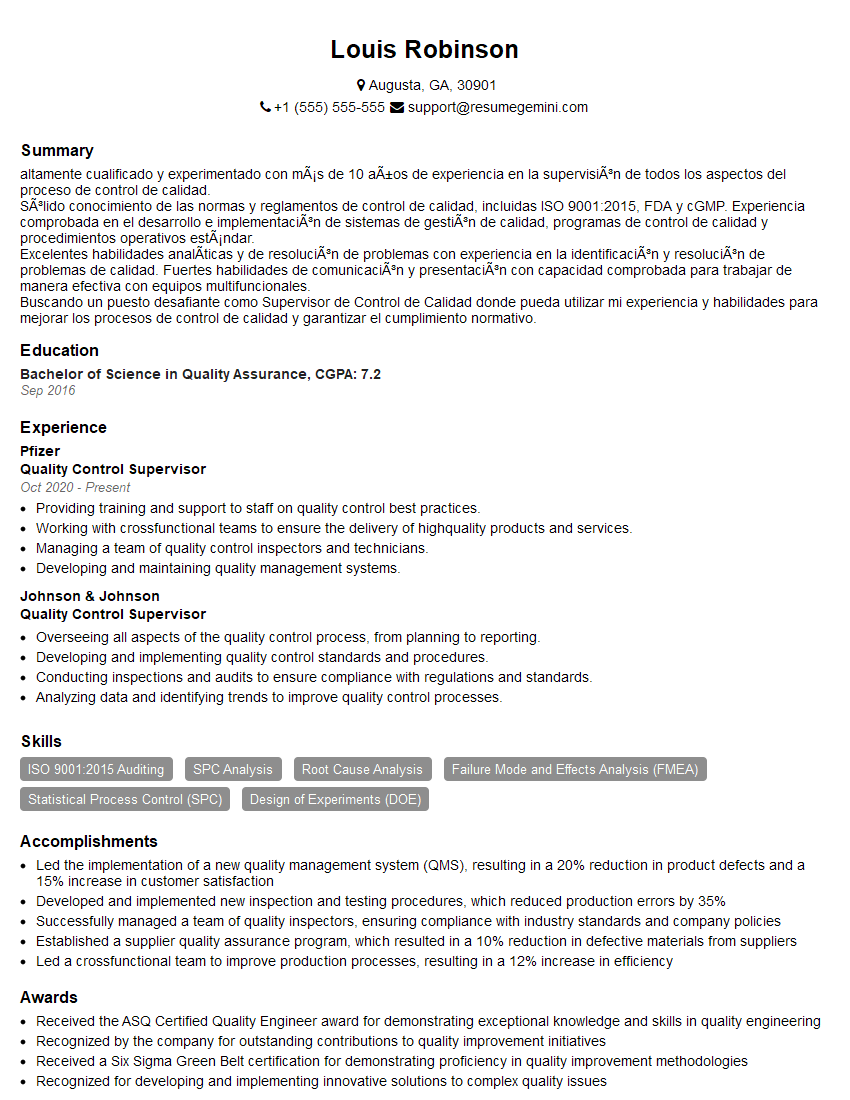
Quality Control Supervisor Resume Sample
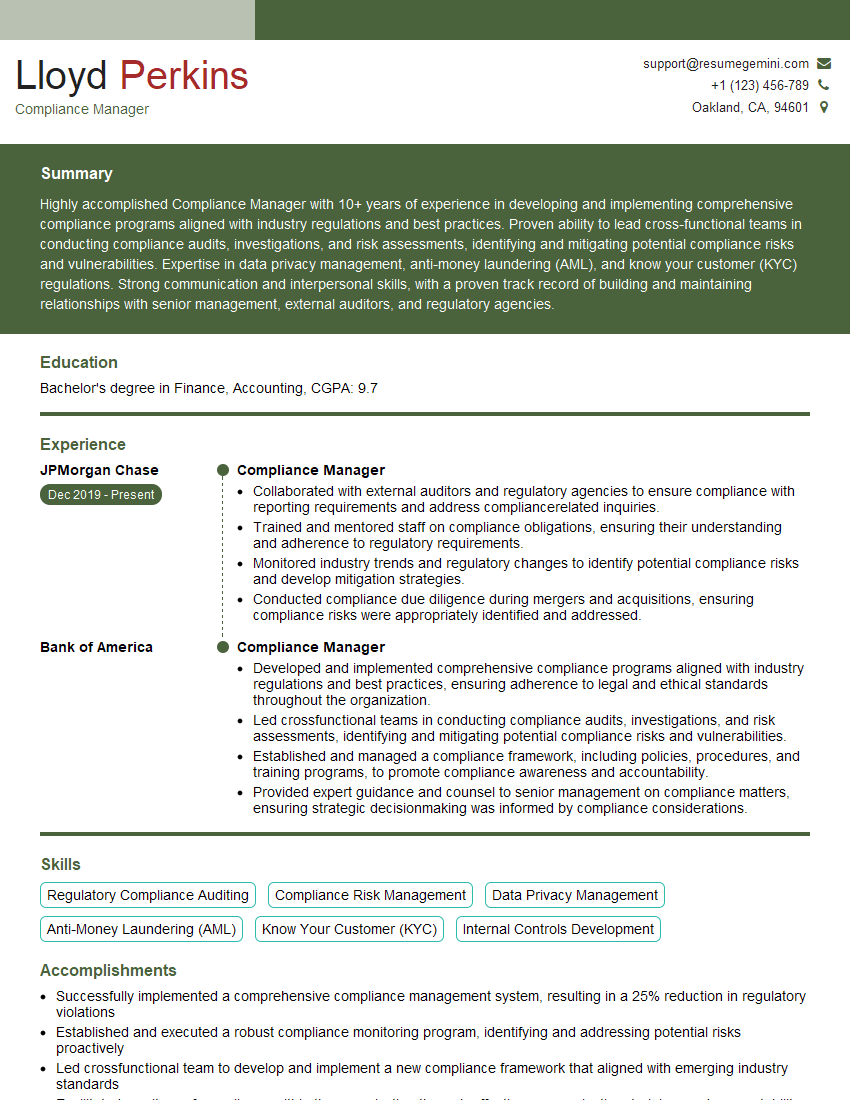
Compliance Manager Resume Sample
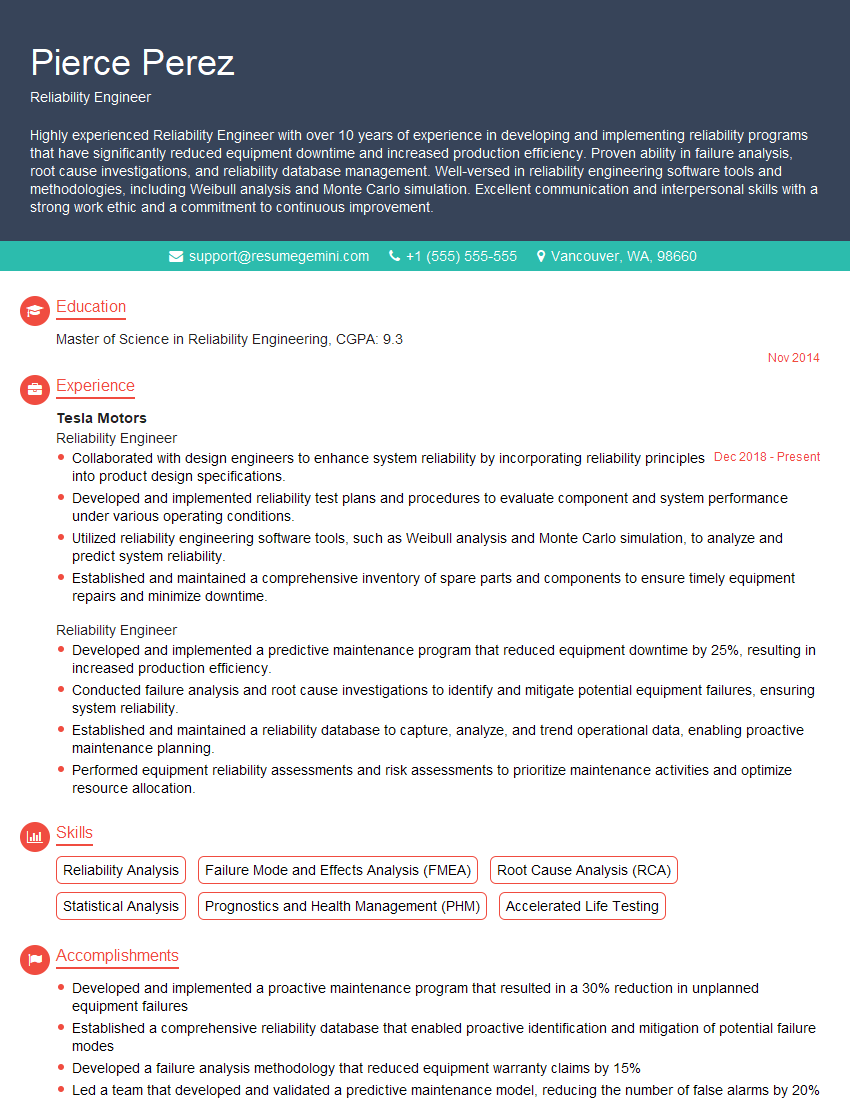
Reliability Engineer Resume Sample
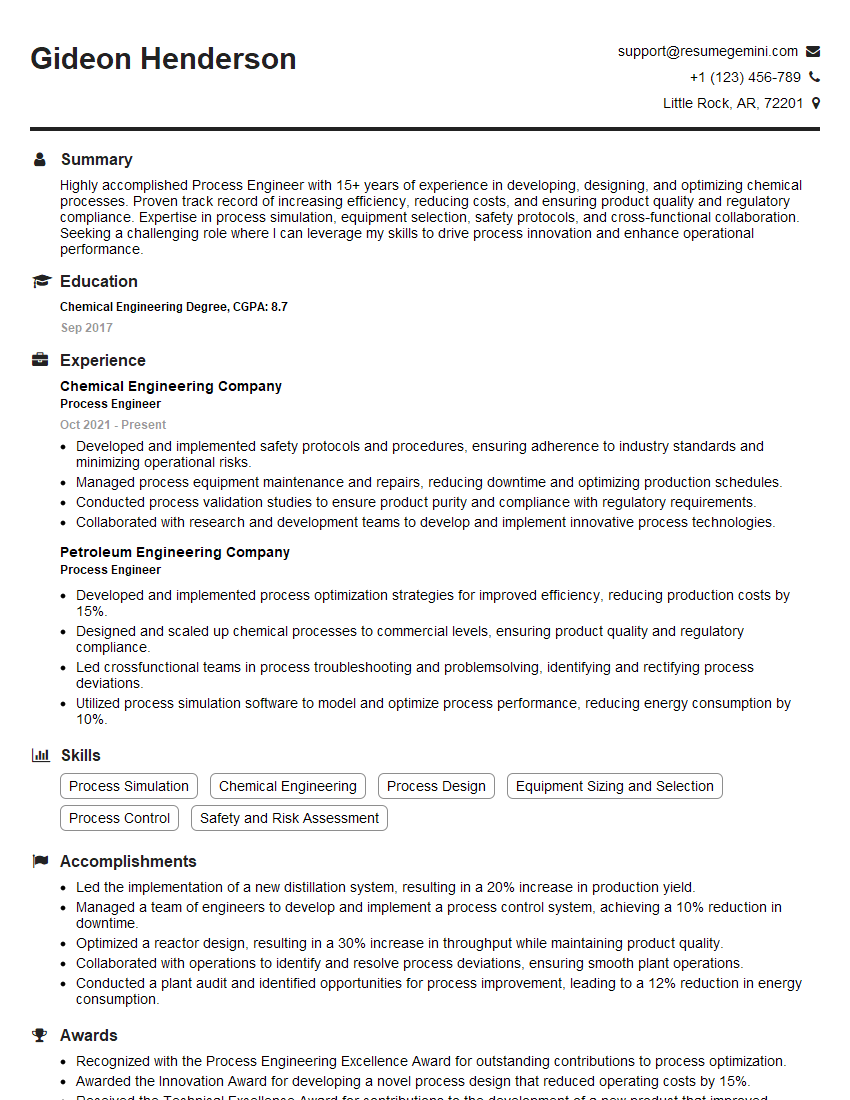
Process Engineer Resume Sample
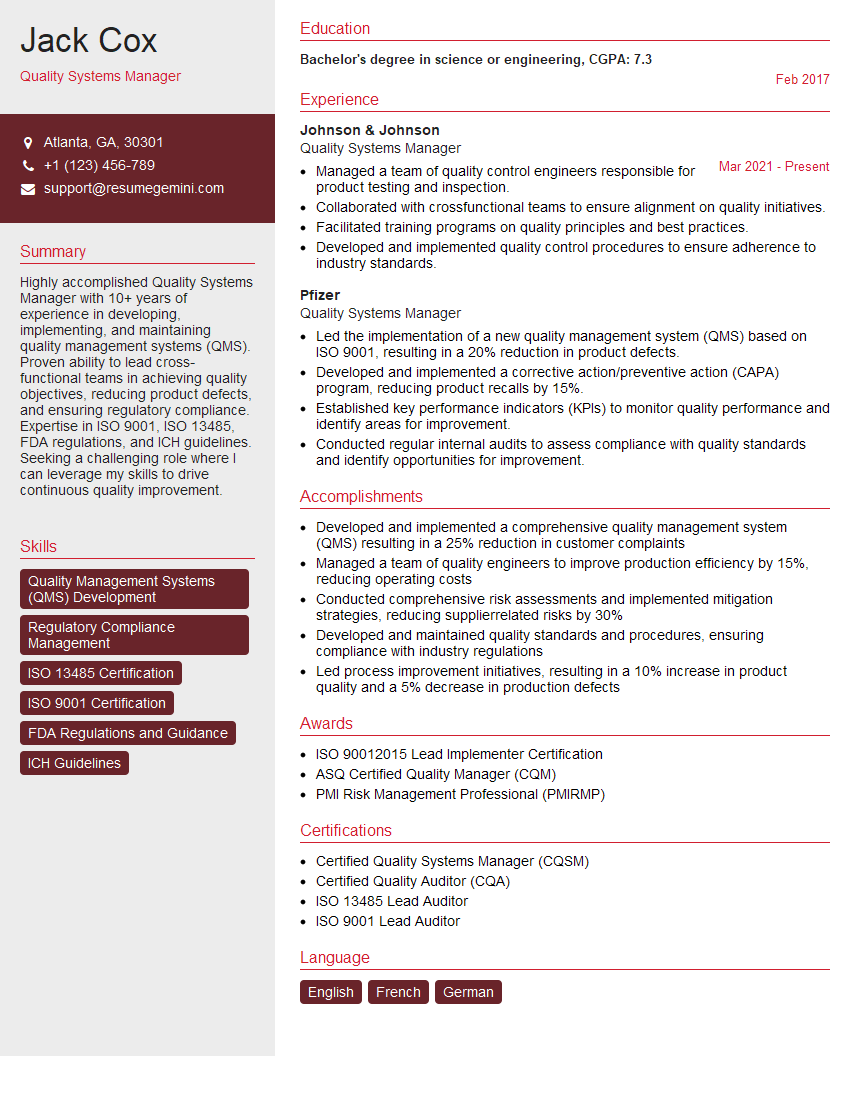
Quality Systems Manager Resume Sample
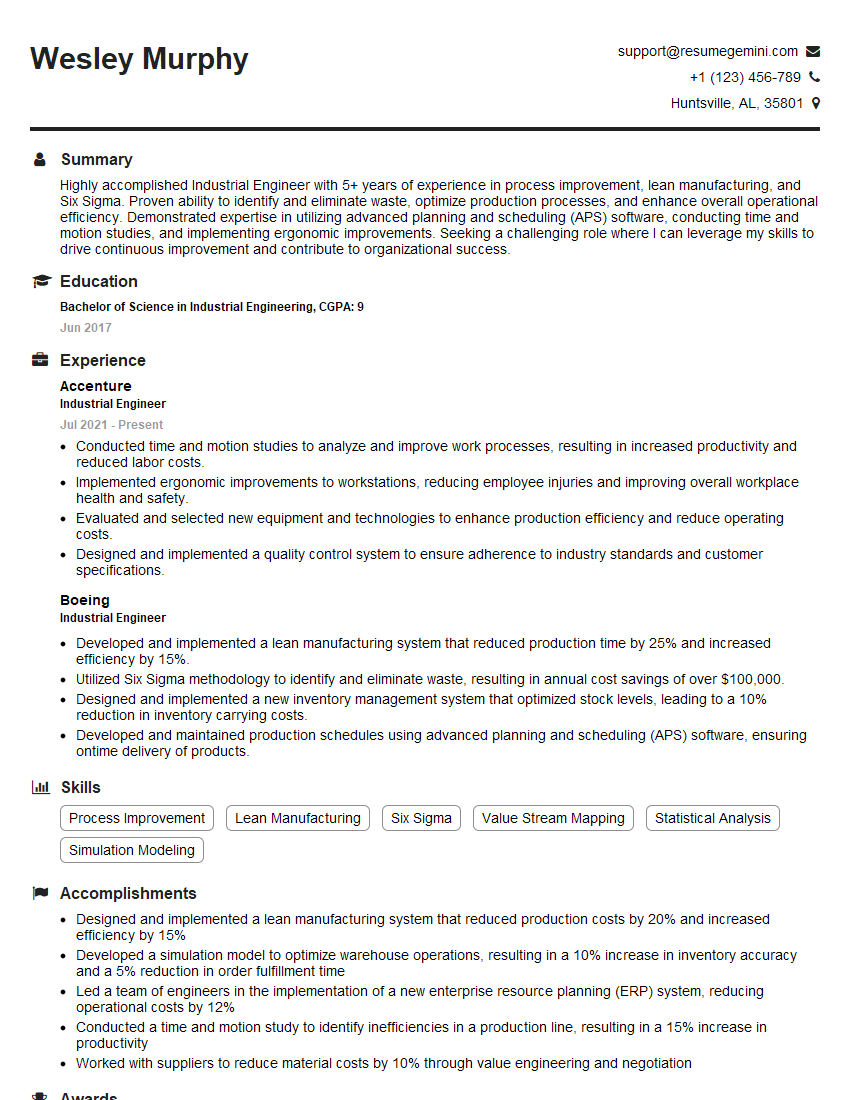
Industrial Engineer Resume Sample
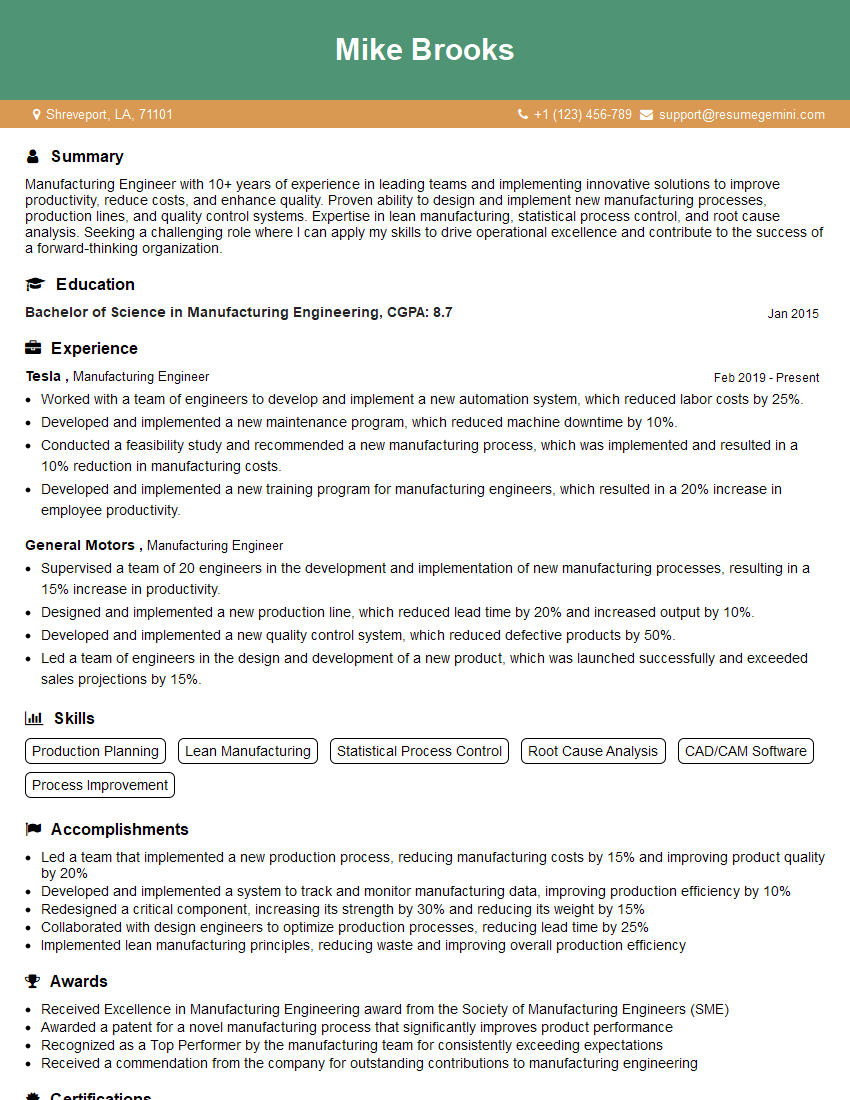
Manufacturing Engineer Resume Sample
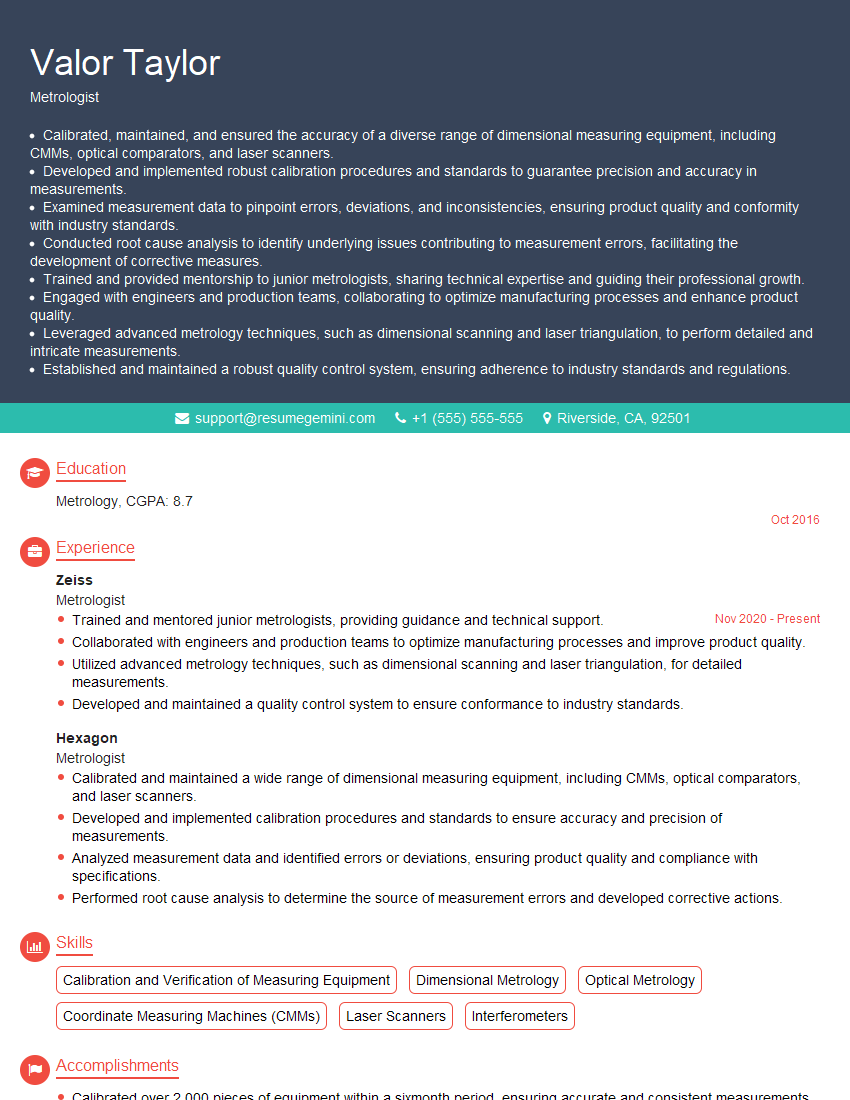
Metrologist Resume Sample
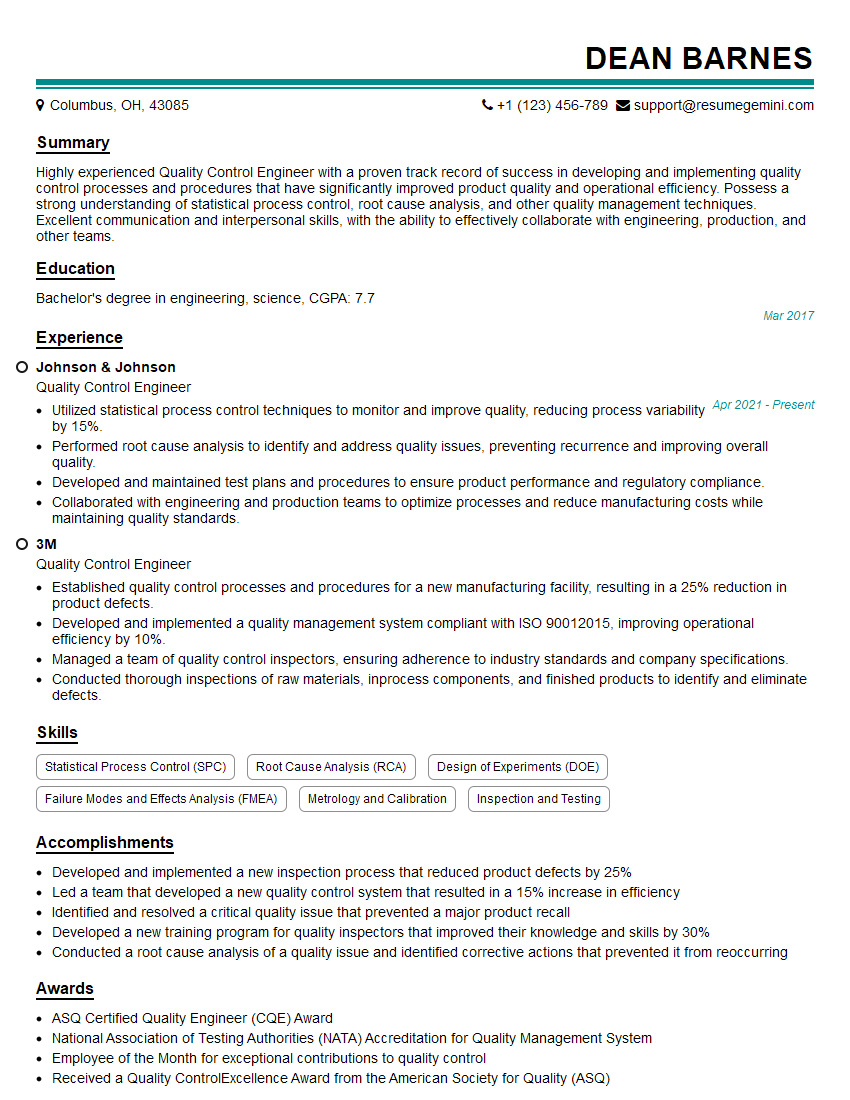
Quality Control Engineer Resume Sample

Quality Assurance Engineer Resume Sample
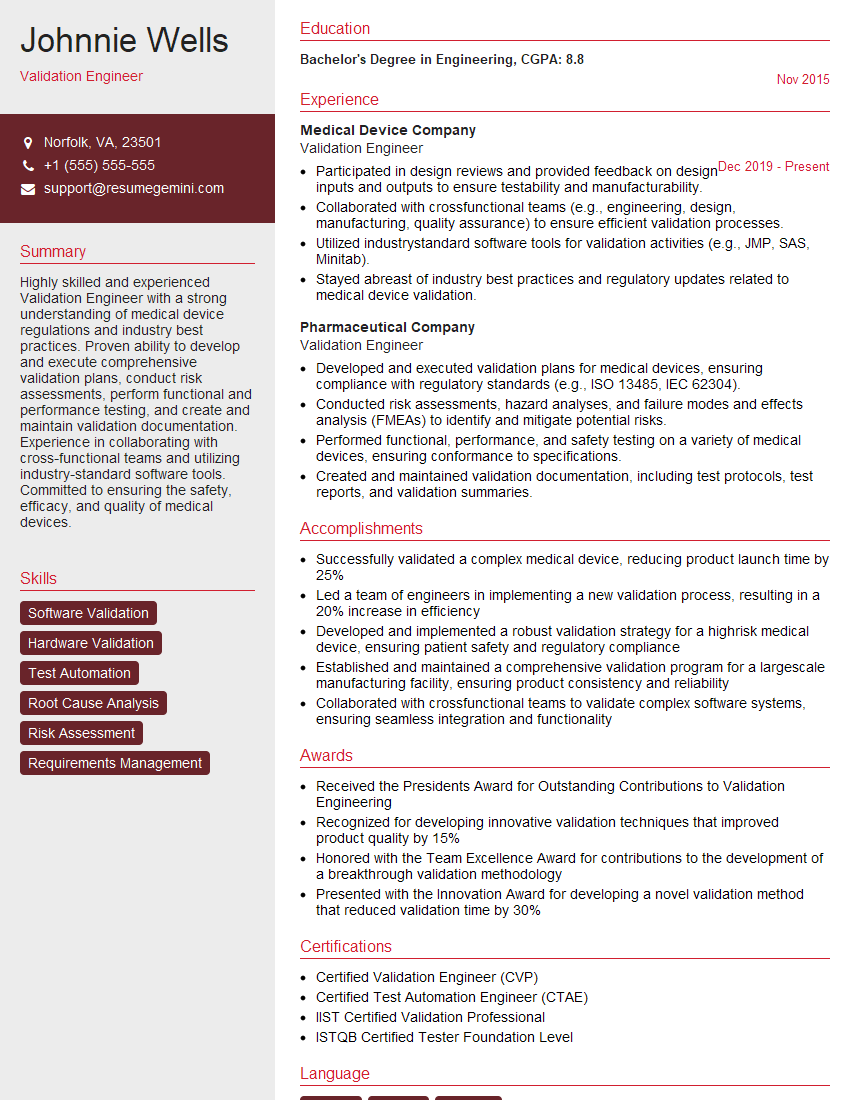
Validation Engineer Resume Sample
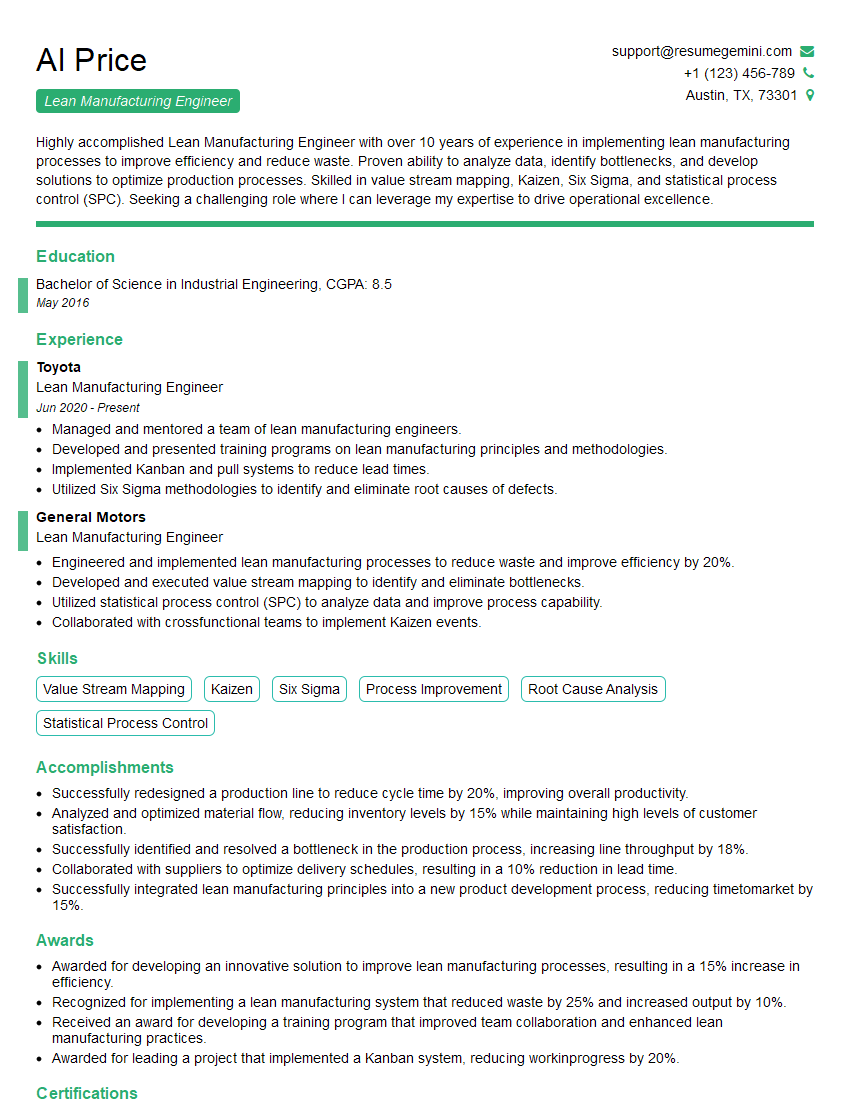
Lean Manufacturing Engineer Resume Sample
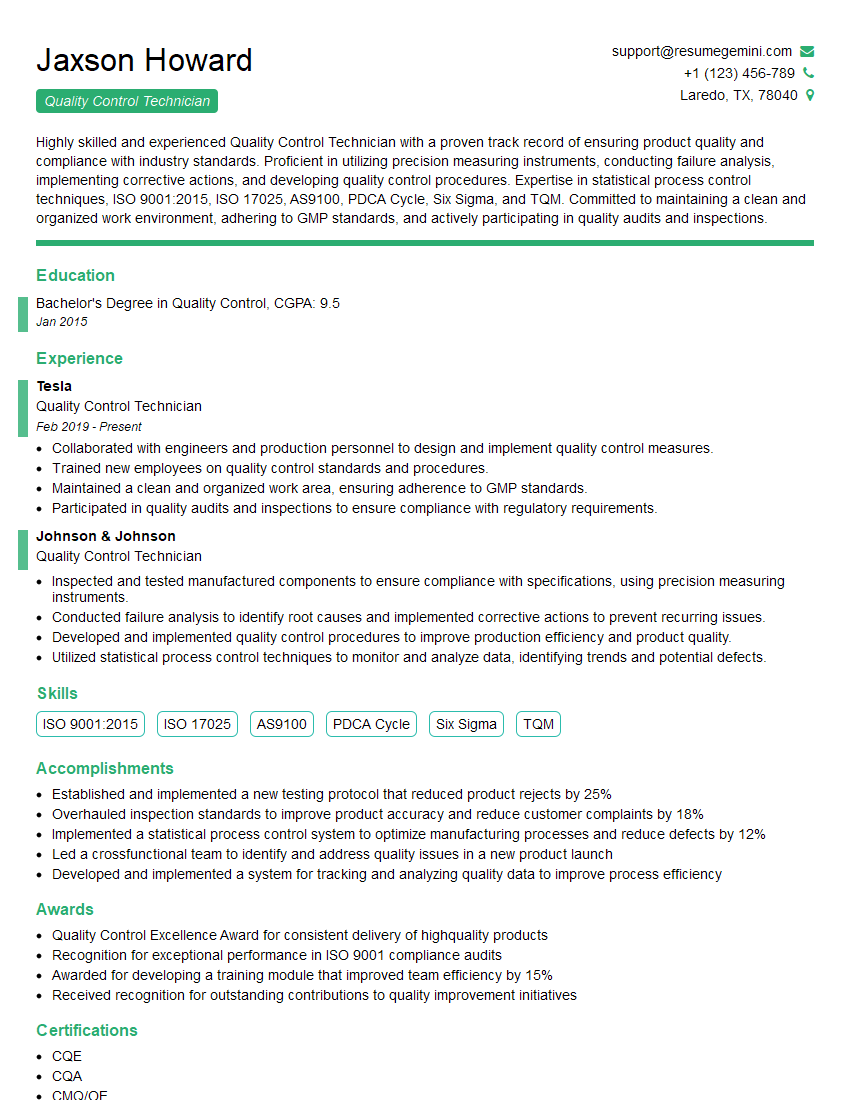
Quality Control Technician Resume Sample
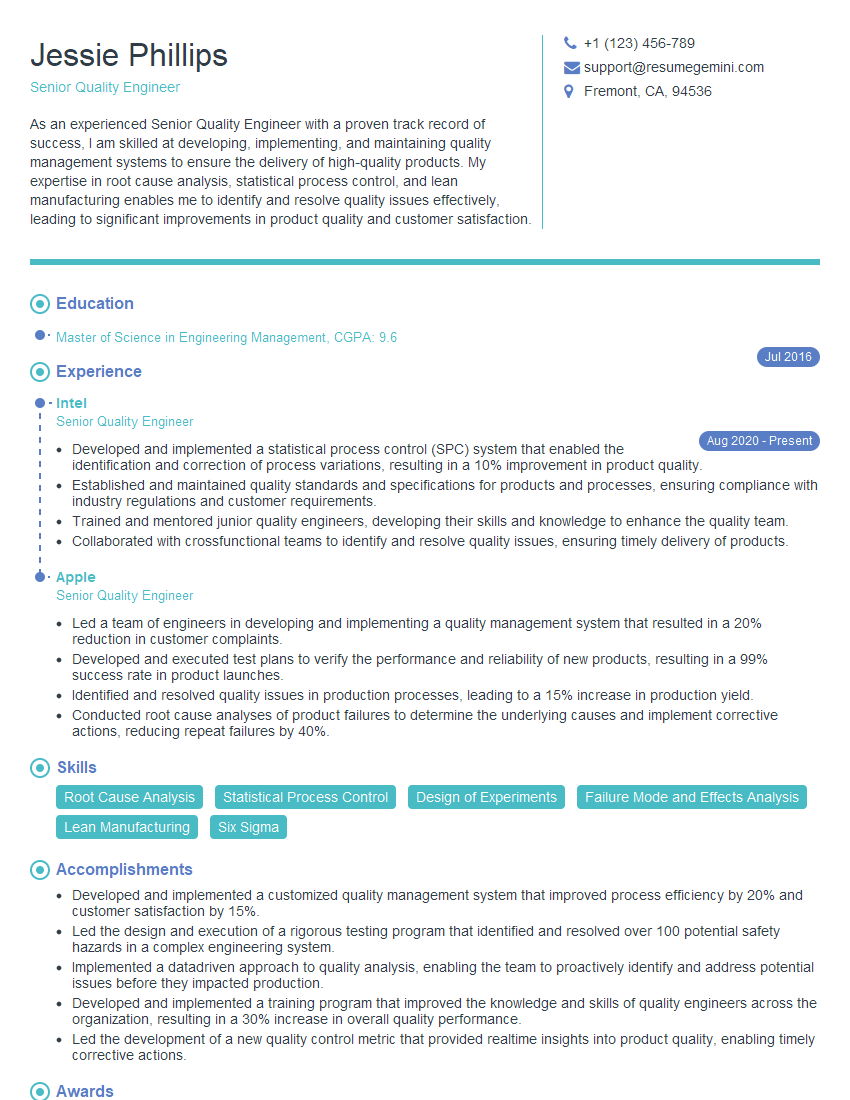
Senior Quality Engineer Resume Sample
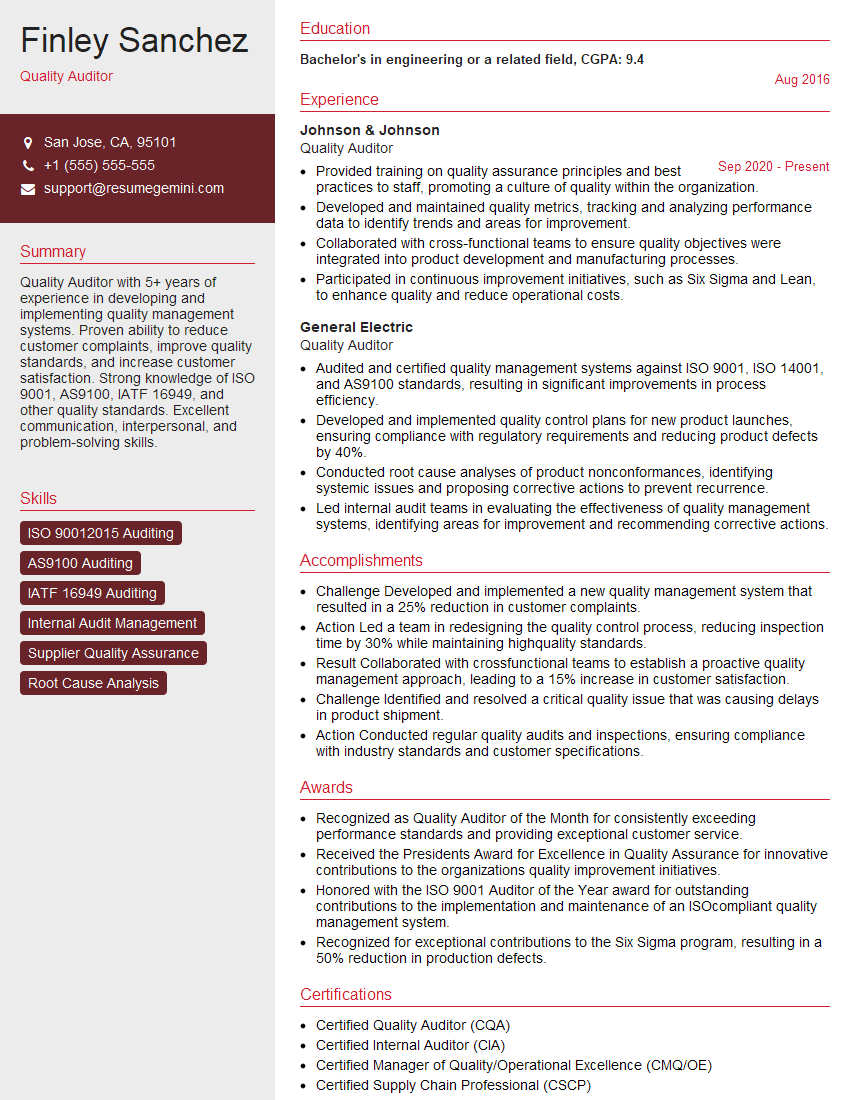
Quality Auditor Resume Sample
- Quality Control Manager
- Quality Control Supervisor
- Compliance Manager
- Reliability Engineer
- Process Engineer
- Quality Systems Manager
- Industrial Engineer
- Manufacturing Engineer
- Metrologist
- Quality Control Engineer
- Quality Assurance Engineer
- Validation Engineer
- Lean Manufacturing Engineer
- Quality Control Technician
- Senior Quality Engineer
- Quality Auditor
Explore more articles
Users Rating of Our Blogs
Share Your Experience
We value your feedback! Please rate our content and share your thoughts (optional).
What Readers Say About Our Blog
Really detailed insights and content, thank you for writing this detailed article.
IT gave me an insight and words to use and be able to think of examples