Are you ready to stand out in your next interview? Understanding and preparing for Special needs experience interview questions is a game-changer. In this blog, we’ve compiled key questions and expert advice to help you showcase your skills with confidence and precision. Let’s get started on your journey to acing the interview.
Questions Asked in Special needs experience Interview
Q 1. Describe your experience working with students/clients with [Specific Disability, e.g., Autism Spectrum Disorder].
For over eight years, I’ve worked extensively with students diagnosed with Autism Spectrum Disorder (ASD). My experience ranges from one-on-one therapy sessions to classroom co-teaching and developing individualized education programs (IEPs). I’ve worked with students across a wide spectrum, from those with high-functioning autism to those with more significant support needs. This has given me a deep understanding of the diverse ways ASD manifests and the individualized approaches required for effective support.
For example, I worked with a student named Alex who struggled significantly with social interactions and sensory sensitivities. Through careful observation and collaboration with his parents and teachers, we developed a visual schedule and implemented sensory breaks to manage his anxiety. We also used social stories to help him understand social cues and appropriate behaviors. Over time, Alex showed significant progress in his communication skills and social interactions.
Another example involves Sarah, a highly intelligent student who struggled with executive functioning skills, such as organization and time management. We implemented strategies like task breakdown, visual timers, and organizational tools. This allowed her to focus her talents and achieve academic success.
Q 2. Explain your approach to behavior management in a special needs setting.
My approach to behavior management is rooted in positive behavior support (PBS), which focuses on understanding the function of a behavior rather than simply punishing it. I believe in creating a structured, predictable environment that minimizes triggers for challenging behaviors. This involves proactive strategies like clear expectations, visual supports, and consistent routines.
When challenging behaviors occur, I prioritize identifying the underlying cause. This may involve a sensory issue, communication difficulties, or unmet needs. Once the cause is identified, I work collaboratively with the student, parents, and other professionals to develop individualized interventions. For instance, if a student is engaging in disruptive behavior due to anxiety, we might incorporate relaxation techniques or sensory regulation strategies into their day. Punishment is rarely used, instead focusing on reinforcement of positive behaviors and teaching replacement skills.
A key component of my approach is data collection. I meticulously track the frequency and context of challenging behaviors to monitor the effectiveness of interventions and make necessary adjustments. This data-driven approach ensures that interventions are evidence-based and tailored to the specific needs of the student.
Q 3. How do you adapt your teaching/therapy methods to meet diverse learning styles and needs?
Adapting my teaching and therapy methods to meet diverse learning styles and needs is fundamental to my practice. I utilize a multi-sensory approach, incorporating visual, auditory, and kinesthetic learning strategies. For example, I might use visual aids like flashcards or graphic organizers for visual learners, incorporate music or audiobooks for auditory learners, and provide hands-on activities for kinesthetic learners.
I also incorporate differentiated instruction, tailoring activities and assignments to meet the individual needs of each student. This involves modifying the complexity, length, or format of assignments. Some students benefit from shorter, more focused activities, while others may thrive on more challenging, open-ended tasks. I use a variety of teaching techniques, including direct instruction, project-based learning, and collaborative learning, to cater to different learning preferences. Regular assessment of student progress ensures that interventions remain effective and responsive to their evolving needs.
Furthermore, I leverage assistive technology and adaptive equipment when necessary. This might include text-to-speech software, visual timers, or specialized seating to maximize student participation and access to the curriculum.
Q 4. Describe a time you had to modify a lesson plan or intervention strategy.
During a lesson on fractions with a group of students with learning disabilities, I realized that the visual aids I initially provided were too abstract. Several students struggled to grasp the concept of fractions. To address this, I modified the lesson plan by incorporating hands-on manipulatives, like fraction circles and color-coded blocks.
I also broke down the lesson into smaller, more manageable chunks, focusing on one aspect of fractions at a time. I provided additional examples and incorporated more visual representations, such as real-world scenarios to illustrate the concepts. This modification made the lesson much more accessible and engaging, and the students demonstrated a significant improvement in their understanding of fractions.
Q 5. How do you collaborate effectively with parents and other professionals?
Effective collaboration with parents and other professionals is critical for successful outcomes. I believe in open communication, sharing regular updates about the student’s progress, challenges, and goals. I use various communication methods, including parent-teacher conferences, email, and phone calls, to ensure that everyone is informed and involved.
I actively involve parents in developing IEPs and treatment plans, valuing their expertise and insights into their child’s strengths and challenges. I actively seek their input on interventions and strategies, creating a collaborative partnership. Similarly, I maintain regular contact with other professionals, such as therapists, special education teachers, and administrators, to ensure a coordinated approach to supporting the student. This includes regularly attending meetings, sharing information, and discussing concerns to guarantee a unified plan of action.
Q 6. What are some common challenges you’ve encountered working with special needs individuals, and how did you overcome them?
One of the common challenges is managing the emotional and behavioral needs of students alongside their academic goals. For instance, some students might experience heightened anxiety or frustration, leading to meltdowns or disruptive behaviors. Another recurring challenge is ensuring that all interventions and support systems meet the unique and evolving needs of each student, especially as they transition between different educational settings or age groups.
To overcome these challenges, I prioritize building strong, trusting relationships with students, providing a safe and supportive learning environment, and constantly adapting my approaches based on their responses. Consistent communication with parents, therapists, and other professionals is vital, ensuring everyone is on the same page. Utilizing strategies such as sensory integration techniques, coping skills training, and conflict resolution skills have all proven successful in easing many of these challenges. Regular review and evaluation of interventions is also critical to ensure their effectiveness and make any necessary adjustments.
Q 7. How do you ensure the safety and well-being of students/clients in your care?
Ensuring the safety and well-being of my students is my top priority. I follow all safety protocols and procedures, including crisis intervention strategies and emergency response plans. I am trained in first aid and CPR. I create a physically safe environment, free from hazards, and adapt the environment as needed for specific students. This might involve removing tripping hazards or providing sensory-friendly spaces.
Beyond physical safety, I prioritize emotional and psychological well-being. I strive to create a positive, supportive classroom culture where students feel respected, valued, and understood. I actively teach students self-regulation skills, including techniques for managing anxiety and frustration. I also monitor students closely, paying attention to any signs of distress or potential safety concerns. Immediate intervention and reporting of any concerning behavior is critical, utilizing appropriate channels and following established protocol.
Q 8. How familiar are you with IEPs/IFSPs and their implementation?
IEPs, or Individualized Education Programs, and IFSPs, or Individualized Family Service Plans, are crucial documents that outline the specific educational and therapeutic needs of students with disabilities. IEPs are used for students aged 3-21, while IFSPs are used for infants and toddlers (birth to age 3). Both are developed collaboratively by a team including parents, educators, therapists, and the student (when appropriate).
My familiarity extends to the entire process: participating in IEP/IFSP meetings, contributing to goal setting, selecting appropriate interventions, monitoring student progress, and documenting data. I understand the legal requirements surrounding these plans and the importance of ensuring they are data-driven and reflect the student’s unique strengths and needs. For example, I’ve worked with students with autism spectrum disorder, creating IEPs that focus on social skills development, communication strategies, and sensory regulation. In one case, we incorporated a visual schedule and a reward system, leading to significant improvements in classroom behavior and task completion. With younger children, I’ve helped families develop IFSPs that prioritized early intervention services like speech therapy and occupational therapy to address developmental delays.
Q 9. What assistive technology tools have you used, and how effective were they?
I’ve utilized a range of assistive technology tools, adapting my choices based on the specific needs of each student. This includes:
- Augmentative and Alternative Communication (AAC) devices: Such as GoTalk devices and Proloquo2Go apps for students with limited verbal communication skills. These tools helped students express their needs and participate more fully in classroom activities. For instance, one student benefited tremendously from a picture exchange system, allowing them to communicate their wants and needs effectively.
- Adaptive software: Programs like Kurzweil 3000 for students with reading difficulties, providing text-to-speech, text-to-braille, and other features. This dramatically improved their access to educational materials.
- Assistive listening devices: FM systems to help students with hearing impairments clearly hear classroom instruction. This improved their comprehension and overall learning experience.
The effectiveness of these tools has been consistently positive, demonstrated by increased student engagement, improved academic performance, and enhanced communication skills. Regular monitoring and adjustments to the technology, based on student feedback and progress data, are vital to maximizing effectiveness.
Q 10. Describe your experience using data to inform instructional decisions.
Data informs every aspect of my instructional decisions. I routinely collect data through various methods, including:
- Formal assessments: Standardized tests and curriculum-based assessments to measure student progress against benchmarks.
- Informal assessments: Observations, work samples, and anecdotal records to gain a holistic understanding of student learning.
- Progress monitoring: Frequent checks on student performance to identify areas needing intervention early.
For example, I recently used data from progress monitoring probes to identify a student struggling with multiplication facts. This data informed my decision to implement a targeted intervention focusing on that skill, adjusting my instruction based on the student’s response. The intervention resulted in significant improvement in their multiplication skills. I regularly analyze this data to track student growth, modify instruction, and justify the effectiveness of interventions to stakeholders such as parents and administrators.
Q 11. How do you differentiate instruction to meet the individual needs of students/clients?
Differentiation is central to my approach. It’s about tailoring instruction to meet each student’s unique learning style, strengths, and needs. I use several strategies:
- Content differentiation: Adapting the complexity and depth of the material based on student readiness. For example, I might provide a simplified version of a reading assignment for struggling readers or offer an extension activity for advanced learners.
- Process differentiation: Varying the way students engage with the material. This could involve offering choices in activities, allowing students to work independently or collaboratively, or using different learning modalities (visual, auditory, kinesthetic).
- Product differentiation: Providing students with choices in how they demonstrate their understanding. They might write an essay, create a presentation, build a model, or complete a project based on their preferred learning styles. For instance, a student with writing difficulties might be allowed to complete a verbal presentation instead.
Consistent monitoring of student progress helps me to refine my differentiation strategies and ensure that all students are challenged and supported appropriately.
Q 12. How do you build rapport and trust with students/clients with diverse communication styles?
Building rapport and trust with students, especially those with diverse communication styles, requires patience, empathy, and a willingness to adapt. Key strategies include:
- Active listening: Paying close attention to both verbal and nonverbal cues to understand their perspectives.
- Respectful communication: Using clear, concise language and avoiding jargon. I also adapt my communication style to meet individual needs, such as using visual supports or simplified language for students with language impairments.
- Building relationships: Spending time getting to know the student, their interests, and their preferred ways of communicating. It could involve incorporating their interests into classroom activities or finding alternate methods of communication.
- Celebrating successes: Acknowledging and praising their efforts and accomplishments, however small, to reinforce positive behaviors and build confidence.
For example, I worked with a non-verbal student who communicated primarily through gestures. By observing their body language and learning their communication system, I was able to understand their needs and build a strong relationship based on mutual respect and understanding.
Q 13. What are your strategies for addressing challenging behaviors?
Addressing challenging behaviors requires a proactive, positive approach grounded in understanding the root cause of the behavior. I utilize a functional behavior assessment (FBA) to analyze the antecedents (events leading to the behavior), the behavior itself, and the consequences (results of the behavior). This helps identify the function of the behavior – what the student is trying to communicate or achieve.
Based on the FBA, I develop a behavior intervention plan (BIP) that focuses on teaching replacement behaviors, providing positive reinforcement, and preventing challenging behaviors from occurring in the first place. Strategies may include:
- Positive reinforcement: Rewarding positive behaviors with praise, rewards, or privileges.
- Antecedent interventions: Modifying the environment or routine to prevent triggering behaviors.
- Consequence interventions: Implementing consistent and logical consequences for challenging behaviors.
- Social skills training: Teaching students appropriate social skills to improve communication and interaction.
For example, a student’s disruptive classroom behavior was found (through FBA) to be a means of seeking attention. The BIP included strategies such as providing positive attention when the student was on-task and using a visual timer to help manage transitions, reducing the need for attention-seeking behaviors.
Q 14. Describe your experience with crisis intervention techniques.
My experience with crisis intervention techniques includes training in de-escalation strategies and emergency response procedures. I understand the importance of maintaining a calm demeanor, creating a safe space, and communicating clearly and empathetically during a crisis. My approach emphasizes:
- De-escalation techniques: Using calming language, active listening, and nonverbal cues to reduce tension and help the student regain control.
- Environmental modifications: Creating a safe and predictable environment that minimizes sensory overload or triggers.
- Collaboration with support staff: Working with school counselors, administrators, and other professionals to ensure a coordinated response.
- Documentation and follow-up: Thoroughly documenting the incident, including antecedent events, the student’s behavior, interventions used, and the outcome. A follow-up meeting with the student and relevant stakeholders may be necessary to address the situation and prevent future occurrences.
I’ve completed mandated crisis prevention intervention (CPI) training and regularly participate in professional development related to trauma-informed care and crisis management. Safety and the well-being of students are my top priorities.
Q 15. How do you promote inclusion and participation for students/clients with disabilities?
Promoting inclusion and participation for students with disabilities requires a multifaceted approach focused on creating a welcoming and supportive environment. It’s about ensuring that every student feels valued, respected, and has equal access to opportunities.
- Universal Design for Learning (UDL): This framework guides the creation of flexible learning environments and materials that cater to diverse learning styles and abilities. For example, providing multiple means of representation (visual, auditory, kinesthetic), action and expression (writing, speaking, drawing), and engagement (choice, challenge, collaboration).
- Assistive Technology (AT): Employing AT, such as speech-to-text software, adaptive keyboards, or augmentative and alternative communication (AAC) devices, empowers students to access the curriculum and participate fully. I’ve seen firsthand how a student with limited fine motor skills thrived with a specialized writing tool.
- Collaborative Partnerships: Building strong relationships with parents, teachers, therapists, and other professionals is crucial. Regular communication and shared planning ensure a consistent and supportive approach. For instance, a weekly meeting between myself, the teacher, and the parents of a student with autism helped us seamlessly implement strategies at home and school.
- Positive Behavior Support (PBS): Implementing PBS involves identifying challenging behaviors, understanding their underlying causes, and developing proactive strategies to prevent them. It focuses on teaching replacement behaviors and rewarding positive actions. I successfully used this approach with a student who had difficulty staying on task by creating a structured schedule and rewarding focused behavior.
- Peer Support and Social Inclusion: Fostering peer relationships is vital. Pairing students with disabilities with peers who can act as mentors or buddies can significantly enhance social inclusion and participation.
Career Expert Tips:
- Ace those interviews! Prepare effectively by reviewing the Top 50 Most Common Interview Questions on ResumeGemini.
- Navigate your job search with confidence! Explore a wide range of Career Tips on ResumeGemini. Learn about common challenges and recommendations to overcome them.
- Craft the perfect resume! Master the Art of Resume Writing with ResumeGemini’s guide. Showcase your unique qualifications and achievements effectively.
- Don’t miss out on holiday savings! Build your dream resume with ResumeGemini’s ATS optimized templates.
Q 16. What is your understanding of person-centered planning?
Person-centered planning is a collaborative approach that prioritizes the individual’s goals, preferences, and strengths. It shifts the focus from what’s ‘wrong’ with a person to what they can achieve and how they want to live their lives. It’s about empowering the individual to be the driver of their own planning process.
Instead of imposing pre-determined interventions, we work together with the individual (and their family/support network) to identify their aspirations, dreams, and challenges. We then brainstorm ways to support them in achieving their goals. It might involve developing a visual schedule, creating social stories, working on communication skills, or connecting them with community resources.
For example, working with a young adult with Down syndrome, we used person-centered planning to identify his desire to work in a coffee shop. We collaborated to develop a plan that included vocational training, job coaching, and support with transportation.
Q 17. How do you assess the progress of students/clients and adjust interventions accordingly?
Assessing progress and adjusting interventions is an ongoing process that requires regular data collection and analysis. It’s not a one-size-fits-all approach.
- Data Collection: This might involve observing behavior, conducting assessments (formal and informal), reviewing work samples, and gathering feedback from the individual, family, and other professionals. For instance, tracking the frequency of a specific behavior using a data sheet, or using standardized tests to monitor academic progress.
- Analysis: Once data is collected, it’s crucial to analyze it objectively. Are interventions proving effective? Are there areas needing improvement? Do the data support changing the plan?
- Intervention Adjustment: Based on the data analysis, interventions are adjusted to meet the evolving needs of the individual. This might involve modifying the intensity, frequency, or type of intervention. For example, if a student is struggling with reading comprehension, I might adjust the intervention to incorporate different teaching strategies such as visual aids or multisensory activities.
- Ongoing Evaluation: Regular reviews are crucial to ensure the plan remains relevant and effective. This requires flexibility and willingness to adapt as the individual grows and changes.
Q 18. What is your experience with specific therapeutic modalities (e.g., ABA, sensory integration)?
I have extensive experience with various therapeutic modalities, including Applied Behavior Analysis (ABA) and sensory integration therapy.
- ABA: ABA focuses on observable behaviors and uses principles of reinforcement and extinction to modify behaviors. I’ve used it successfully to teach new skills, reduce challenging behaviors, and improve adaptive functioning. For example, I’ve used discrete trial training (DTT) to teach a child with autism to communicate their needs using picture cards.
- Sensory Integration Therapy: This therapy addresses difficulties in processing sensory information. It involves providing carefully planned sensory experiences to help individuals organize and respond to sensory input more effectively. I have worked with children who have sensory processing disorder to improve their ability to regulate their reactions to different types of stimuli.
My approach is always to integrate these modalities with other interventions based on the individual’s specific needs and preferences. I believe in utilizing an eclectic approach rather than adhering strictly to one method.
Q 19. How do you maintain confidentiality and adhere to ethical guidelines?
Maintaining confidentiality and adhering to ethical guidelines is paramount. It forms the foundation of my professional practice.
- HIPAA Compliance: I meticulously follow HIPAA regulations concerning the protection of Protected Health Information (PHI). This involves secure storage of records, limited access to information, and obtaining informed consent for sharing information.
- Professional Boundaries: I maintain clear professional boundaries in all interactions with clients and their families. This includes refraining from engaging in personal relationships outside the therapeutic context.
- Ethical Decision-Making: I use a structured ethical decision-making framework to navigate complex situations and ensure my actions are consistent with professional ethical codes. I regularly consult with supervisors and colleagues when faced with ethical dilemmas.
- Advocacy: I advocate for the rights and wellbeing of my clients, ensuring they receive appropriate services and are treated with dignity and respect.
Q 20. Describe your experience with working with students/clients with various cognitive abilities.
I have a wide range of experience working with students and clients exhibiting diverse cognitive abilities, from individuals with profound intellectual disabilities to those with mild learning differences. My approach emphasizes individualized support and creating opportunities for success at each individual’s level of functioning.
For example, I worked with a student with a profound intellectual disability who required significant support with daily living skills. Through patient teaching and adaptive techniques, we were able to develop their independence in simple tasks. Simultaneously, I worked with a gifted student who needed enrichment activities to challenge their abilities and enhance creativity.
Adaptability and flexibility are key. I tailor my communication style, teaching methods, and assessment strategies to match the individual’s cognitive abilities and communication preferences. My goal is to help each individual reach their full potential, regardless of their cognitive abilities.
Q 21. How do you manage your workload and prioritize tasks effectively in a demanding environment?
Managing workload and prioritizing tasks in a demanding environment requires effective organizational skills and a proactive approach.
- Planning and Organization: I use digital calendars, to-do lists, and project management tools to schedule appointments, track progress, and manage deadlines effectively. I break down large tasks into smaller, manageable steps.
- Prioritization: I prioritize tasks based on urgency and importance, focusing on tasks that have the greatest impact on the clients’ well-being and progress. I use a system such as the Eisenhower Matrix (urgent/important) to help decide what to focus on.
- Time Management Techniques: I utilize time management techniques, like the Pomodoro Technique, to maintain focus and avoid burnout. Regular breaks and self-care are crucial.
- Delegation: Where possible, I delegate tasks to other team members, ensuring clear communication and collaboration.
- Reflection and Adjustment: I regularly reflect on my workload and adjust my strategies as needed. This allows for continuous improvement in my time management and efficiency.
Q 22. How do you handle conflict resolution amongst staff, parents, or students?
Conflict resolution in special needs education requires a multifaceted approach prioritizing empathy, clear communication, and a focus on shared goals. My strategy involves active listening to understand each perspective – staff, parents, or students – before attempting to mediate.
Active Listening: I begin by letting each party fully express their concerns without interruption, using reflective listening techniques to ensure understanding. For example, I might say, ‘So, it sounds like you’re feeling frustrated because…’
Identifying Common Ground: Once everyone feels heard, I focus on identifying shared goals. Even in seemingly opposing viewpoints, there’s usually common ground, such as a desire for the student’s success. This helps shift the focus from blame to collaborative problem-solving.
Collaborative Problem-Solving: Together, we brainstorm solutions, considering the needs and perspectives of everyone involved. This might involve adjusting IEPs, implementing new strategies, or improving communication channels.
Mediation and Facilitation: If needed, I act as a mediator, facilitating open discussion and guiding the group towards a mutually agreeable solution. I emphasize compromise and respect for diverse opinions.
Documentation: Finally, I meticulously document all discussions, agreements, and action plans. This ensures transparency and accountability.
For instance, in a situation involving a disagreement between parents and a teacher regarding a student’s behavior plan, I would facilitate a meeting, encouraging open dialogue, actively listening to both perspectives, and collaboratively developing a revised plan that addresses everyone’s concerns.
Q 23. What are your professional development goals related to special needs education?
My professional development goals center on enhancing my expertise in evidence-based practices and inclusive education. Specifically, I aim to:
Deepen my understanding of Assistive Technology (AT): I plan to pursue training in the latest AT advancements to better support students with diverse learning needs. This includes learning how to select, implement, and troubleshoot various assistive technologies.
Expand my knowledge of trauma-informed practices: Many students with special needs have experienced trauma, impacting their learning and behavior. I want to improve my skills in creating a safe and supportive learning environment that addresses the effects of trauma.
Become proficient in data-driven decision-making: Regularly analyzing student data, including assessment results and behavioral observations, is crucial for effective intervention. I plan to improve my skills in using data to inform instruction and adjust strategies as needed.
Enhance collaboration skills: Effective collaboration with parents, therapists, and other professionals is vital. I plan to focus on strengthening my skills in co-teaching, co-planning, and effective communication with multidisciplinary teams.
I believe continuous professional development is essential in special education to ensure I provide the most effective and compassionate support to my students.
Q 24. Describe your experience with different types of disabilities and their associated challenges.
My experience encompasses a wide range of disabilities, including:
Learning Disabilities (LD): I’ve worked extensively with students who struggle with reading, writing, or math. Challenges can include difficulties with phonological awareness, working memory, and processing speed. Interventions often involve differentiated instruction, explicit teaching strategies, and assistive technology.
Autism Spectrum Disorder (ASD): I have supported students with ASD, focusing on developing social skills, communication strategies, and behavior management plans. Challenges may involve sensory sensitivities, repetitive behaviors, and difficulties with social interaction. Interventions include applied behavior analysis (ABA), social stories, and visual supports.
Intellectual Disabilities (ID): I’ve worked with students with varying degrees of intellectual disabilities, focusing on functional life skills, adaptive behavior, and communication development. Challenges can range from difficulties with daily living skills to significant limitations in cognitive functioning. Interventions involve individualized instruction, task analysis, and positive reinforcement.
Attention Deficit Hyperactivity Disorder (ADHD): I’ve supported students with ADHD, focusing on behavior management, organizational skills, and executive functioning. Challenges can include inattention, impulsivity, and hyperactivity. Interventions may involve organizational strategies, behavior modification techniques, and medication management in collaboration with medical professionals.
Each disability presents unique challenges, requiring individualized approaches and a deep understanding of the student’s strengths and needs. My approach emphasizes creating a supportive and inclusive learning environment that caters to each student’s specific learning style and challenges.
Q 25. How do you utilize positive reinforcement strategies effectively?
Positive reinforcement is a cornerstone of my approach. I utilize it to encourage desired behaviors and create a positive learning environment. My strategies involve:
Clearly Defining Expectations: Before implementing any reinforcement system, I clearly communicate expectations and desired behaviors to students. I use visual aids and simple language to ensure understanding.
Using a Variety of Reinforcers: I understand that what motivates one student may not motivate another. I offer a range of reinforcers, including verbal praise, tangible rewards, privileges, and social reinforcement (e.g., positive attention, praise from peers).
Providing Immediate and Consistent Reinforcement: Reinforcement is most effective when it’s immediate and consistent. I praise positive behaviors promptly and consistently apply consequences for undesired behaviors.
Using a Token Economy (when appropriate): For some students, a token economy can be effective. Students earn tokens for desired behaviors, which they can later exchange for preferred rewards.
Focusing on Effort and Progress: I emphasize effort and progress over perfection. I praise students for trying their best, even if they don’t achieve immediate success.
For example, I might use a sticker chart for a student working on improving their on-task behavior. Each time they display the desired behavior, they receive a sticker. Once they earn a certain number of stickers, they get a small reward, reinforcing the positive behavior.
Q 26. How familiar are you with relevant legislation related to special education (e.g., IDEA)?
I am very familiar with the Individuals with Disabilities Education Act (IDEA) and its implications for special education. I understand its key components, including:
Free Appropriate Public Education (FAPE): The right of all eligible children with disabilities to receive a free and appropriate public education.
Individualized Education Program (IEP): The development, implementation, and review of IEPs to tailor education to individual student needs.
Least Restrictive Environment (LRE): The principle of educating students with disabilities in the setting that best meets their needs while remaining as close as possible to general education.
Due Process: The rights of parents and students to participate in decision-making and challenge decisions related to their education.
Evaluation and Assessment: The process of identifying students with disabilities and determining their educational needs.
My understanding of IDEA ensures I can effectively advocate for my students’ rights and collaborate with parents and administrators to develop and implement appropriate educational programs. I regularly review updates to IDEA and related regulations to maintain compliance and best practices.
Q 27. Describe a time you had to adapt your communication style to effectively interact with someone with a communication impairment.
I once worked with a student, Alex, who had significant expressive language challenges due to apraxia of speech. To communicate effectively, I adapted my communication style in several ways:
Visual Supports: I used visual aids, such as pictures, symbols, and written words, to supplement verbal communication. This helped Alex understand instructions and express his ideas.
Augmentative and Alternative Communication (AAC): I worked with Alex’s speech therapist to integrate AAC strategies, such as a picture exchange communication system (PECS), into our classroom routines. This provided Alex with additional communication options.
Patience and Active Listening: I practiced patience and active listening, giving Alex ample time to communicate. I avoided interrupting him and focused on understanding his nonverbal cues.
Simplified Language: I used shorter sentences and simpler vocabulary to make it easier for Alex to understand my instructions and questions.
Positive Reinforcement: I consistently praised Alex’s communication attempts, regardless of their clarity, to encourage him and build his confidence.
By adapting my communication style, I was able to create a supportive learning environment where Alex felt comfortable expressing himself and participating fully in class. This experience emphasized the importance of flexibility and creativity in adapting to individual student needs.
Q 28. How do you contribute to a positive and supportive team environment?
Contributing to a positive and supportive team environment involves active participation and a commitment to collaboration. My contributions include:
Open Communication: I maintain open and honest communication with colleagues, sharing ideas, concerns, and challenges proactively. I actively listen to others’ perspectives and value their input.
Collaboration and Teamwork: I actively participate in team meetings, contribute to collaborative planning, and readily assist colleagues when needed. I believe in a shared responsibility for student success.
Respect and Professionalism: I treat all team members with respect, regardless of their role or experience. I maintain a professional demeanor and resolve conflicts constructively.
Mentorship and Support: I offer support and mentorship to newer team members, sharing my experience and expertise. I believe in fostering a culture of mutual support and continuous learning.
Positive Attitude: I strive to maintain a positive and encouraging attitude, creating a welcoming and supportive environment for everyone.
For example, I regularly participate in IEP meetings, actively contributing to the development and implementation of individualized plans. I also offer support to my colleagues by sharing effective strategies and resources.
Key Topics to Learn for Special Needs Experience Interview
- Understanding Diverse Needs: Explore the wide spectrum of special needs, including intellectual, developmental, physical, and sensory disabilities. Consider the varying levels of support required.
- Individualized Approaches: Learn about person-centered planning and the importance of tailoring support strategies to individual needs and preferences. Discuss practical examples of adapting activities or communication methods.
- Communication & Interaction: Master effective communication techniques for individuals with diverse communication styles. This includes verbal and nonverbal cues, alternative communication methods (AAC), and strategies for managing challenging behaviors.
- Behavioral Management: Familiarize yourself with positive behavior support (PBS) and de-escalation techniques. Understand the importance of proactive strategies and creating a supportive environment.
- Safety & Risk Management: Learn about risk assessment and mitigation strategies relevant to specific disabilities. Understand how to create a safe and inclusive environment while supporting independence.
- Collaboration & Teamwork: Discuss the importance of effective communication and collaboration with families, other professionals (therapists, doctors), and support staff. Highlight your ability to work as part of a multidisciplinary team.
- Legal & Ethical Considerations: Familiarize yourself with relevant laws and regulations pertaining to individuals with special needs and the ethical considerations in providing support.
- Documentation & Record Keeping: Understand the importance of accurate and timely documentation of interactions, progress, and any incidents. Practice summarizing observations and outcomes concisely and professionally.
Next Steps
Mastering special needs experience is crucial for career advancement in many supportive roles. Demonstrating this expertise through a well-crafted resume is essential for securing your desired position. An ATS-friendly resume is key to getting your application noticed by hiring managers. We highly recommend using ResumeGemini to build a professional and impactful resume that highlights your skills and experience in this field. ResumeGemini offers examples of resumes tailored to special needs experience to help guide you in creating a compelling application. Invest time in crafting a strong resume; it’s your first impression and your gateway to success.

Special Education Director Resume Sample
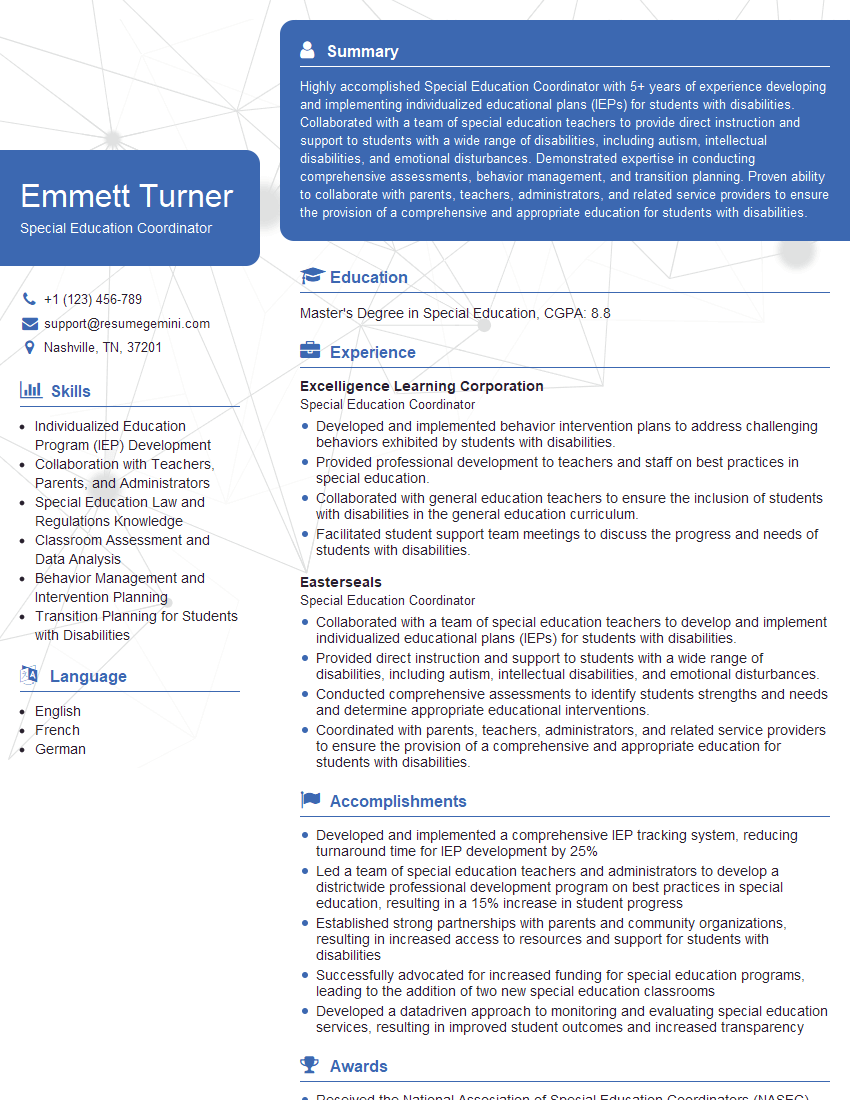
Special Education Coordinator Resume Sample
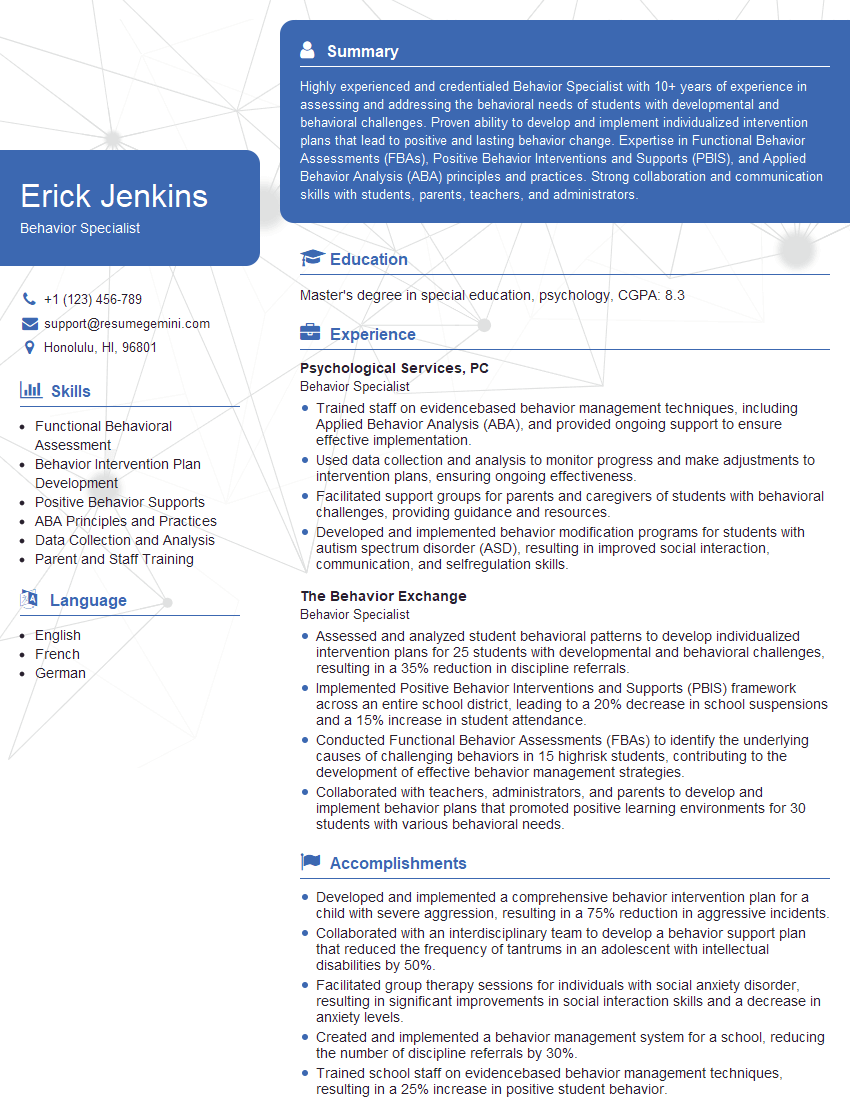
Behavior Specialist Resume Sample
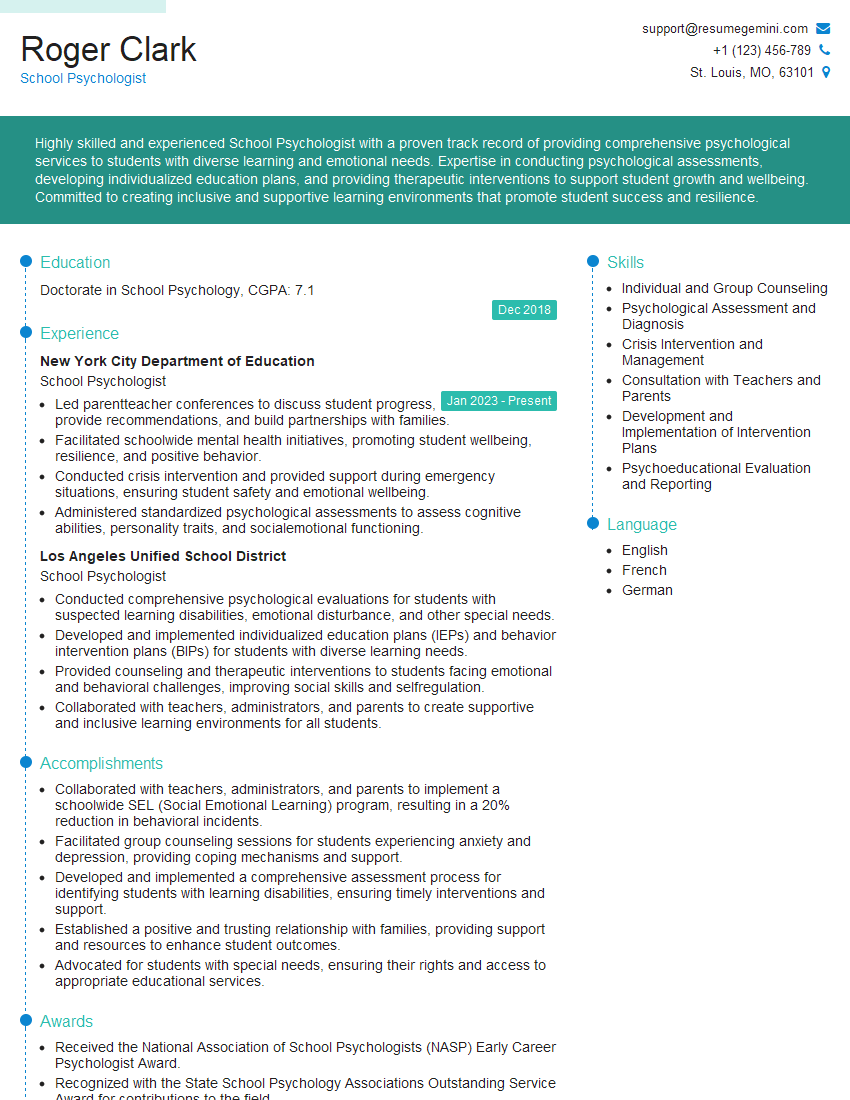
School Psychologist Resume Sample
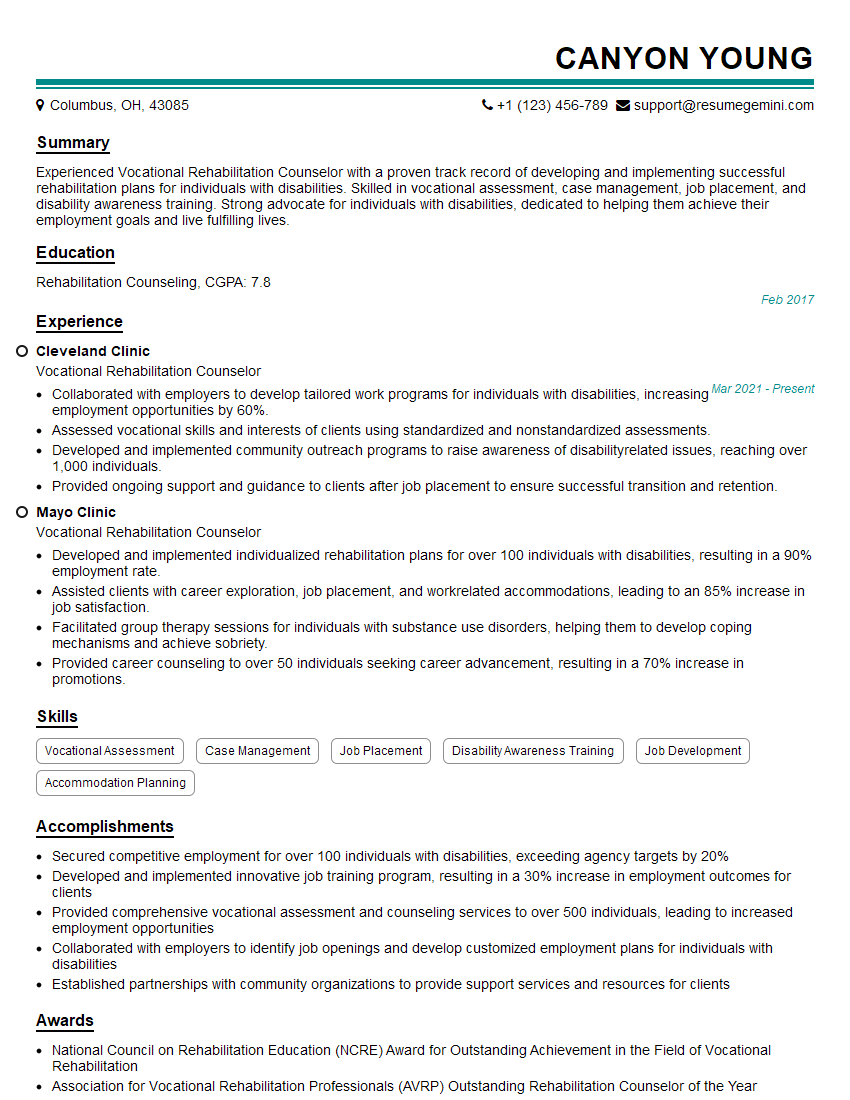
Vocational Rehabilitation Counselor Resume Sample
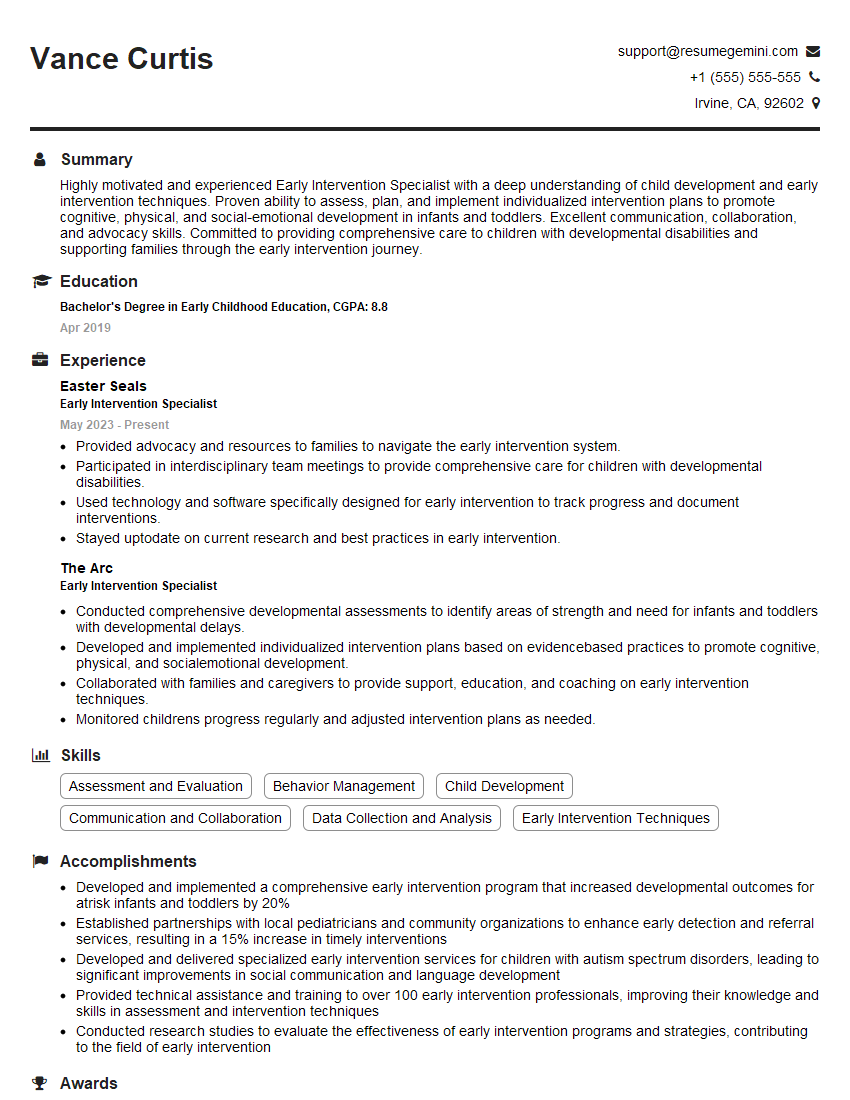
Early Intervention Specialist Resume Sample
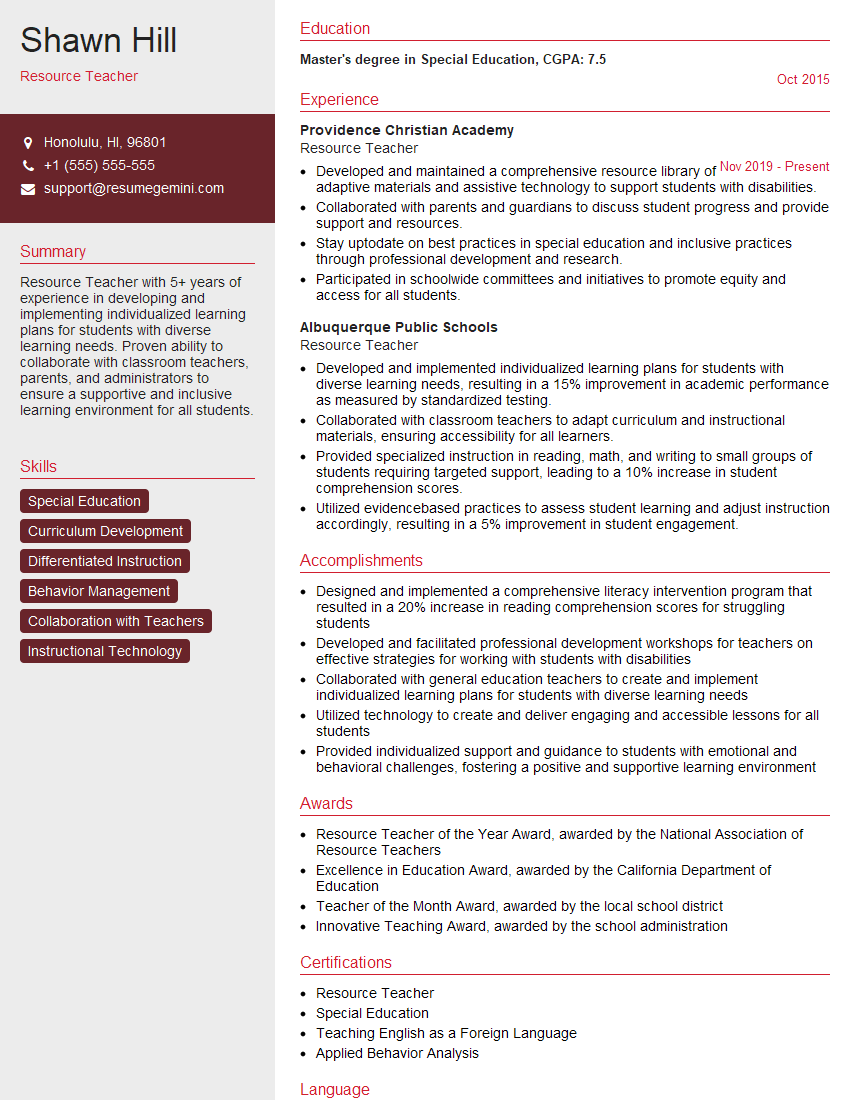
Resource Teacher Resume Sample
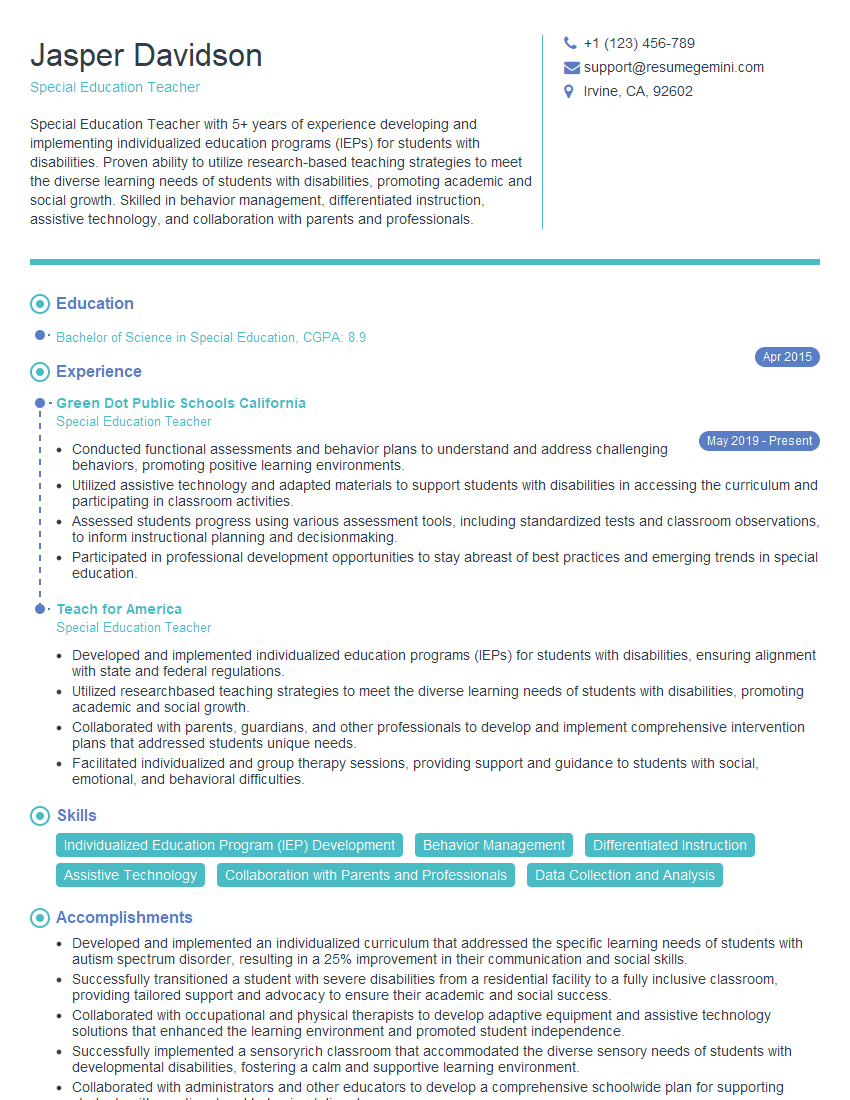
Special Education Teacher Resume Sample
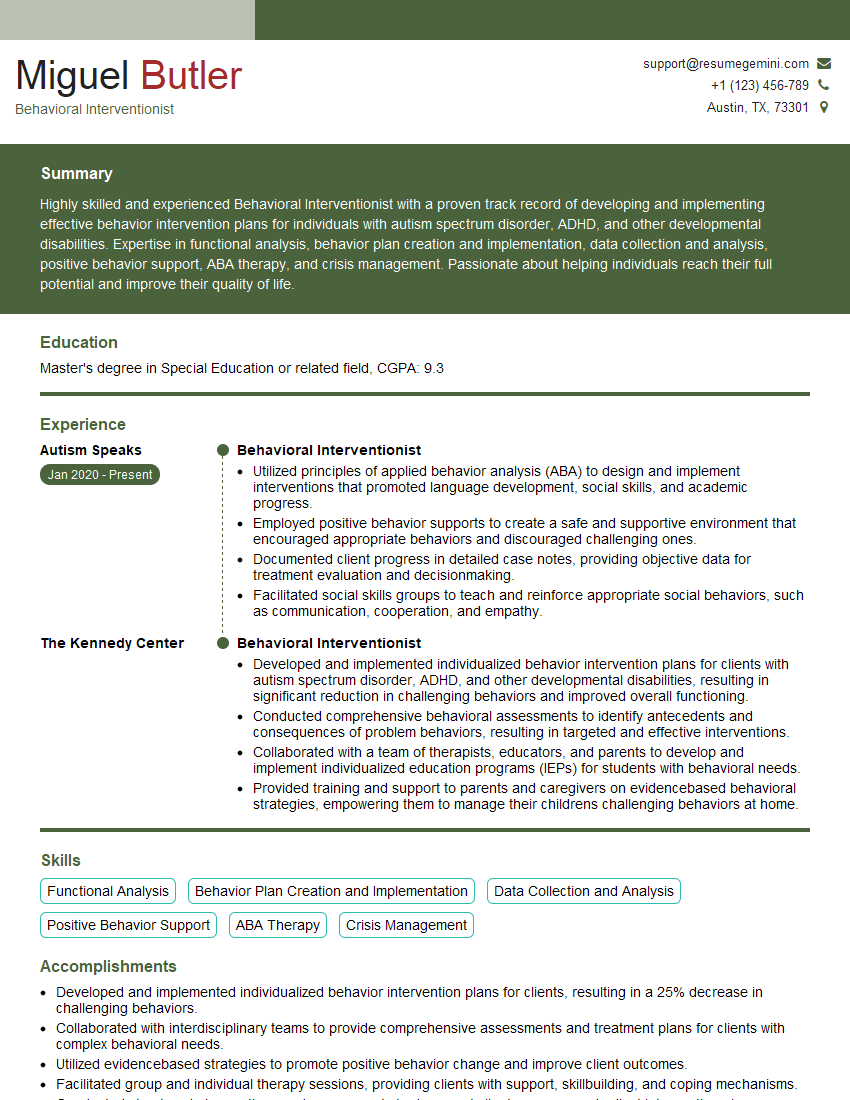
Behavioral Interventionist Resume Sample
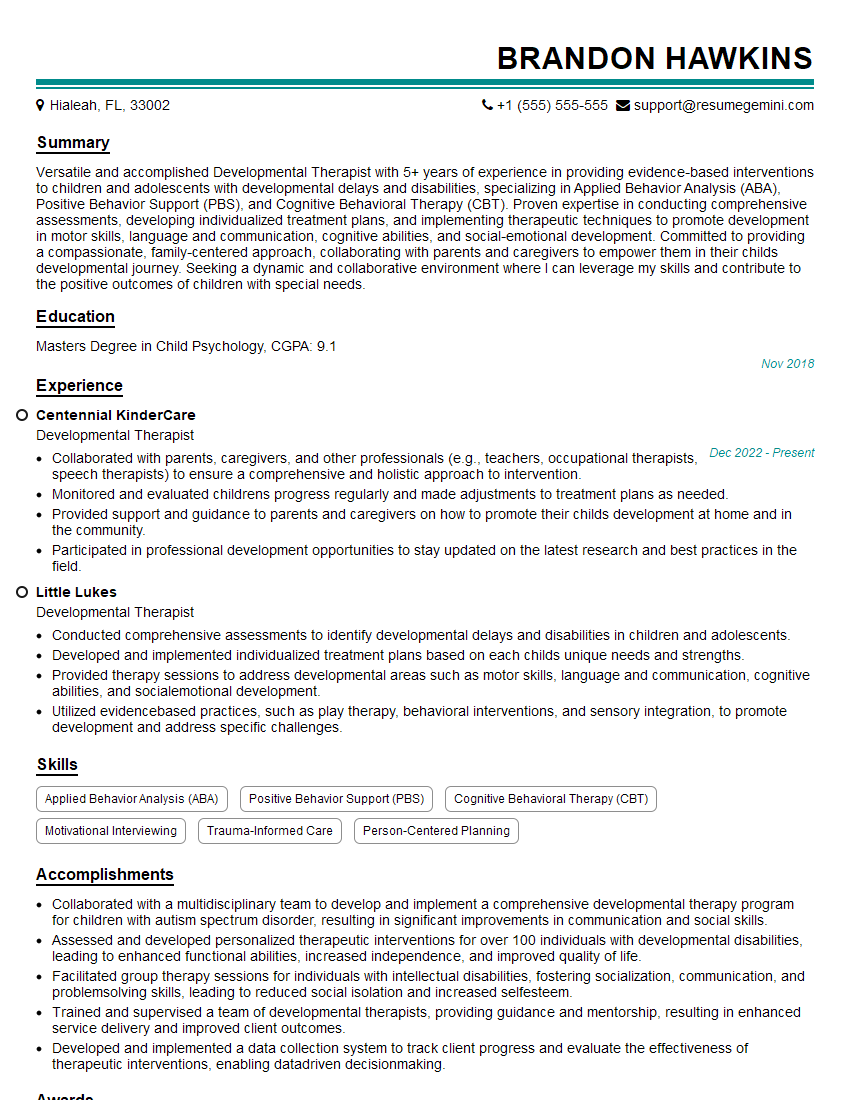
Developmental Therapist Resume Sample
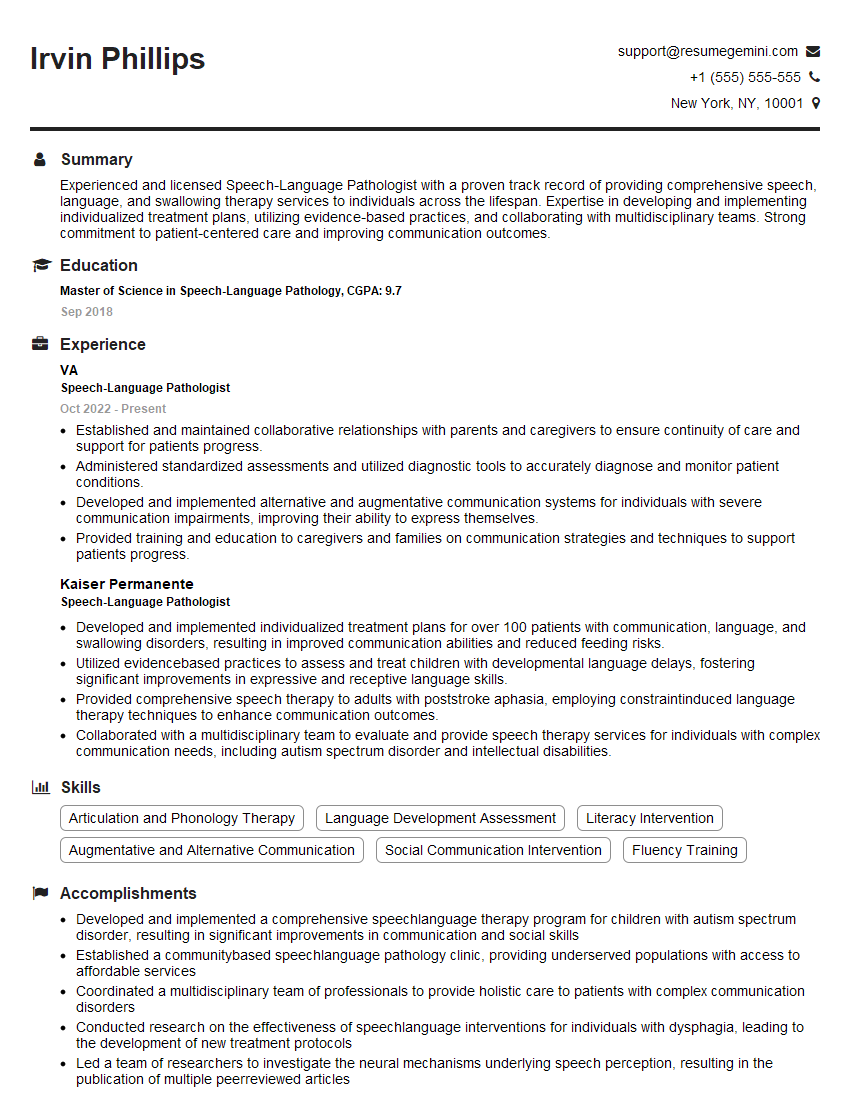
Speech-Language Pathologist Resume Sample
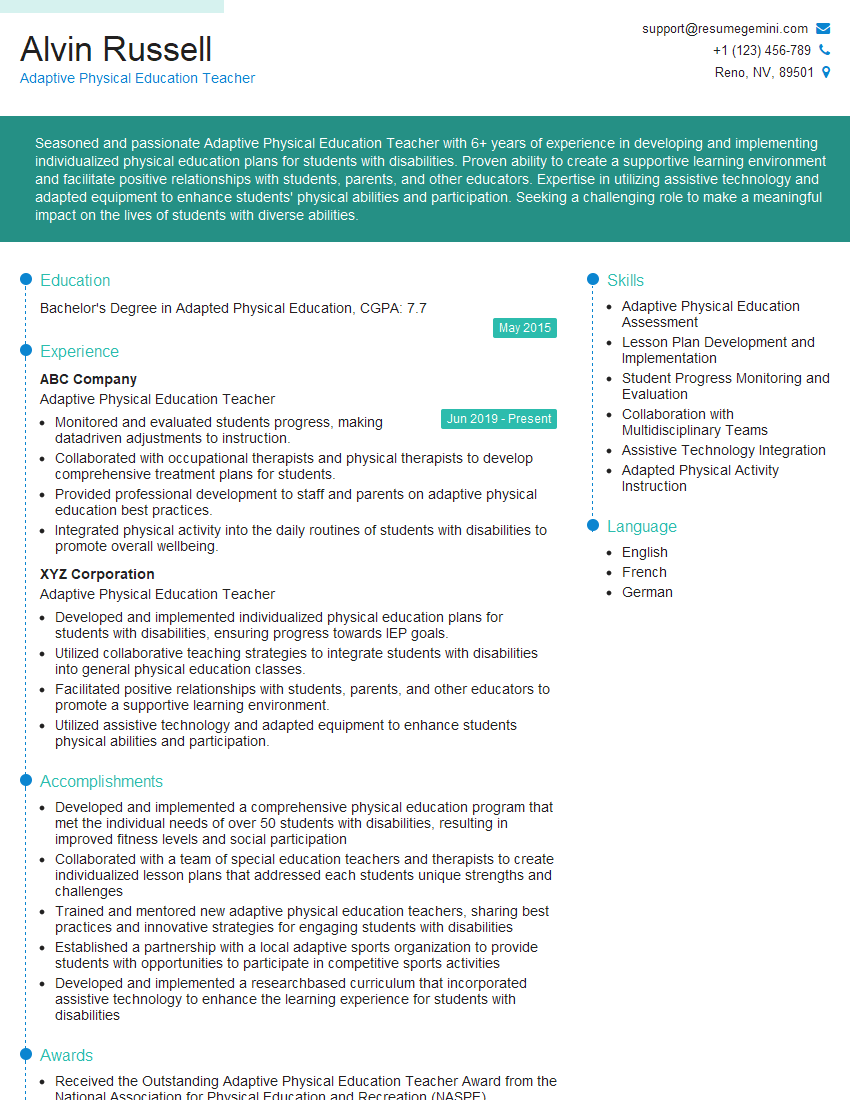
Adaptive Physical Education Teacher Resume Sample
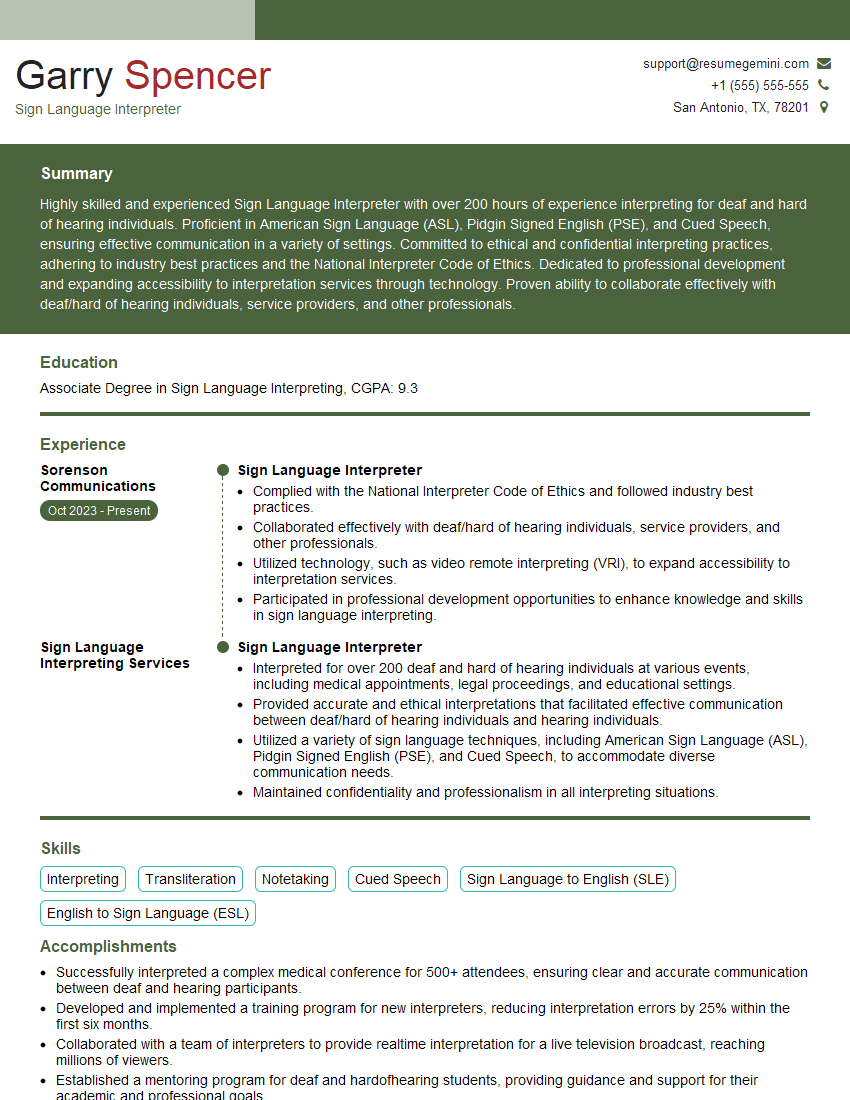
Sign Language Interpreter Resume Sample
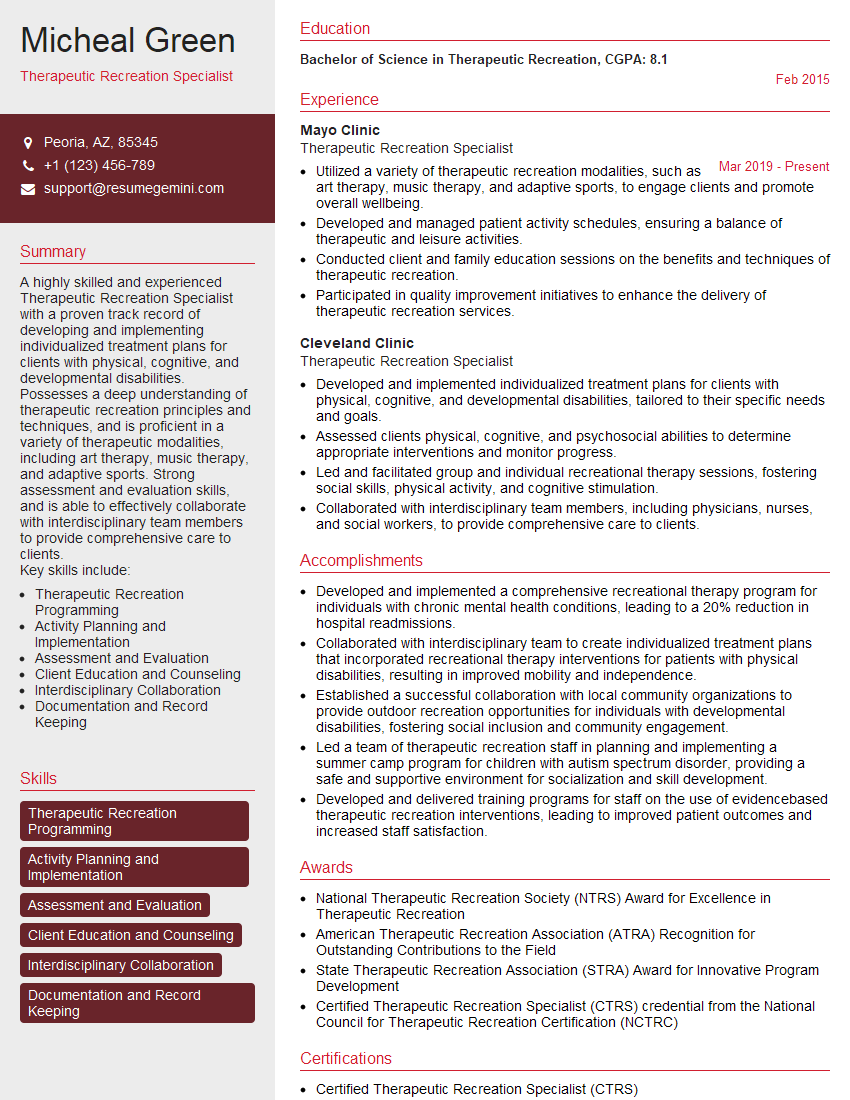
Therapeutic Recreation Specialist Resume Sample
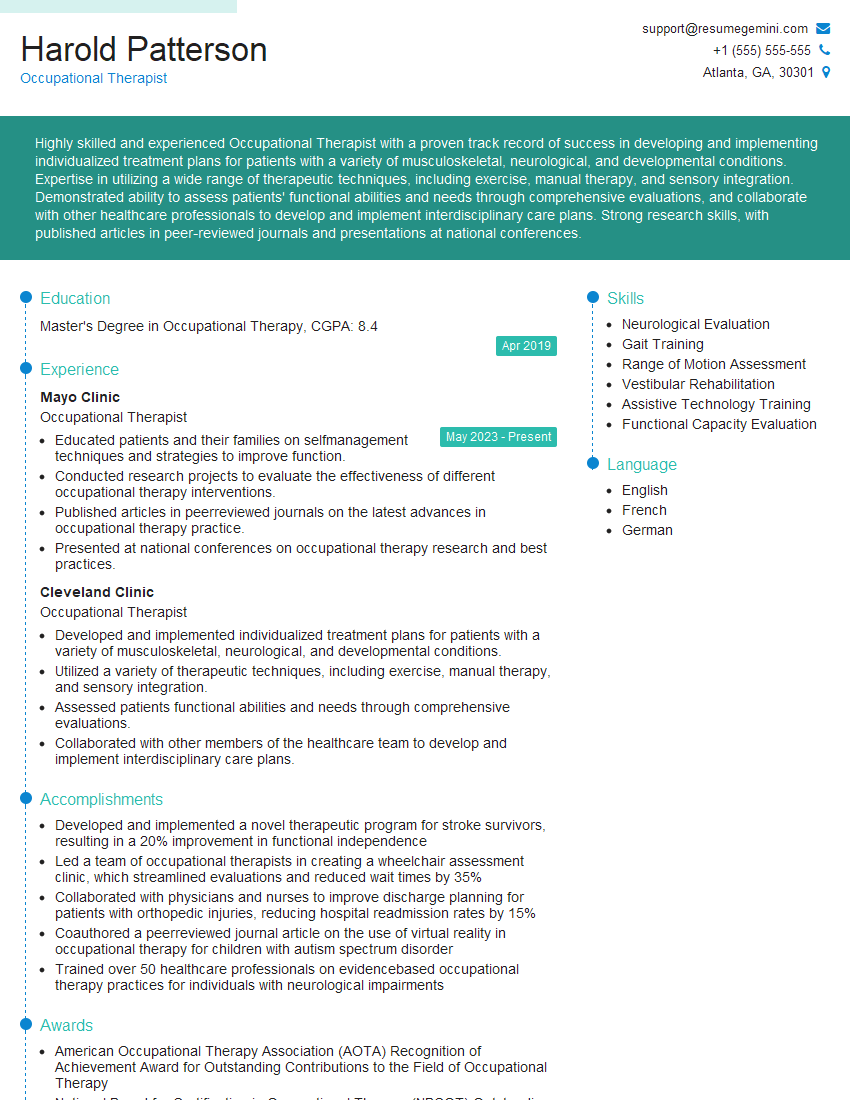
Occupational Therapist Resume Sample
- Special Education Director
- Special Education Coordinator
- Behavior Specialist
- School Psychologist
- Vocational Rehabilitation Counselor
- Early Intervention Specialist
- Resource Teacher
- Special Education Teacher
- Behavioral Interventionist
- Developmental Therapist
- Speech-Language Pathologist
- Adaptive Physical Education Teacher
- Sign Language Interpreter
- Therapeutic Recreation Specialist
- Occupational Therapist
Explore more articles
Users Rating of Our Blogs
Share Your Experience
We value your feedback! Please rate our content and share your thoughts (optional).
What Readers Say About Our Blog
Really detailed insights and content, thank you for writing this detailed article.
IT gave me an insight and words to use and be able to think of examples