Cracking a skill-specific interview, like one for Specimen Mounting, requires understanding the nuances of the role. In this blog, we present the questions you’re most likely to encounter, along with insights into how to answer them effectively. Let’s ensure you’re ready to make a strong impression.
Questions Asked in Specimen Mounting Interview
Q 1. Describe the different types of embedding media used in specimen mounting.
Embedding media are crucial for supporting specimens during sectioning. The choice depends on the specimen type and the downstream application. Common types include:
- Paraffin Wax: The most common embedding medium, ideal for routine histology. It’s relatively inexpensive, easy to use, and provides good support for sectioning thin slices. It’s hydrophobic, requiring tissue processing to remove water.
- Resins (Epoxy, Acrylic, Polyester): Used for electron microscopy and demanding applications requiring ultra-thin sections. These resins offer superior hardness and dimensional stability but often require more complex processing protocols.
- Agar: A natural polysaccharide used for embedding soft tissues or whole organs. It’s water-soluble and doesn’t require extensive dehydration, making it suitable for certain sensitive specimens.
- Gelatin: Similar to agar, useful for embedding delicate tissues needing minimal processing. It’s easily soluble in water.
The selection of embedding media is a critical decision that directly impacts the quality of the final sections and the success of the microscopy analysis. For example, paraffin wax is perfectly suitable for light microscopy of most tissues but would be completely inadequate for electron microscopy, which demands the greater hardness and thin-section capabilities of epoxy resins.
Q 2. Explain the process of tissue processing for paraffin embedding.
Paraffin embedding is a multi-step process to prepare tissues for sectioning. It involves:
- Fixation: Preserves tissue structure and prevents degradation. Formaldehyde is a common fixative.
- Dehydration: Removes water from the tissue using a graded series of alcohol (e.g., 70%, 80%, 95%, 100%). This is crucial because paraffin is hydrophobic.
- Clearing: Replaces alcohol with a solvent miscible with both alcohol and paraffin (e.g., xylene or limonene). This makes the tissue transparent.
- Infiltration: The tissue is immersed in molten paraffin wax, which gradually replaces the clearing agent. This process ensures the paraffin penetrates the tissue thoroughly.
- Embedding: The tissue is oriented within a mold filled with paraffin wax, allowing it to solidify into a firm block suitable for sectioning.
Think of it like baking a cake: fixation is like prepping ingredients, dehydration is removing excess moisture, clearing is preparing for the batter (paraffin), infiltration is mixing batter into the cake, and embedding is putting the batter into a pan to bake.
Q 3. What are the critical steps involved in proper tissue orientation during embedding?
Proper tissue orientation is essential to obtain sections in the desired plane. Incorrect orientation can lead to misinterpretation of tissue architecture. Critical steps include:
- Careful Examination: Before embedding, carefully examine the tissue to identify key anatomical features. Knowing the orientation of the specimen before embedding is crucial.
- Strategic Placement: Position the tissue within the mold so that the desired plane of sectioning is parallel to the bottom of the mold. Using forceps and fine instruments, you carefully place the specimen in the mold.
- Utilizing Orientation Aids: Small paper labels or pre-made molds with slots can guide orientation. This ensures the correct plane of the tissue is presented to the microtome knife.
- Slow Cooling: Allow the paraffin to cool slowly to minimize distortion and cracking.
For instance, if you’re studying muscle fiber alignment, you need to embed the tissue such that the fibers run parallel to the cutting plane to visualize the arrangement effectively.
Q 4. How do you ensure proper identification and labeling of specimens throughout the mounting process?
Specimen identification and labeling are paramount to avoid mix-ups and ensure traceability. This is done at multiple stages:
- Initial Labeling: Label cassettes and containers with unique identifiers (patient ID, date, tissue type) as soon as the specimen is received.
- Embedding Labels: Use waterproof labels placed into the embedding mold along with the tissue. This label must be resistant to heat and the embedding process.
- Microtome Block Labeling: Label the paraffin block itself with the same identifier, usually using a pencil or a special ink that is resistant to paraffin wax solvents.
- Digital Tracking Systems: Use lab information management systems (LIMS) to digitally track specimens from receipt through processing and archiving. This system helps to avoid errors through a digital tracking system.
Imagine the consequences of mislabeling – a wrong diagnosis or compromised research results. Rigorous labeling protocols are essential for maintaining data integrity and patient safety.
Q 5. What are the common artifacts encountered during specimen mounting, and how can they be avoided?
Several artifacts can occur during specimen mounting, impacting the quality of the sections. Common artifacts include:
- Compression Artifacts: Caused by excessive pressure during sectioning, resulting in distorted tissue structures. This is minimized by using sharp blades and appropriate sectioning techniques.
- Chatter: Vibrations during sectioning, leading to wavy sections. This can be addressed by properly maintaining the microtome and using appropriate cutting speed.
- Folding: Sections fold over themselves during sectioning, obscuring tissue details. Careful handling of the sections and proper embedding techniques can help prevent folding.
- Paraffin Shrinkage: The tissue shrinks due to the paraffin wax process, causing alterations to the tissue structure and size. Optimizing processing parameters and appropriate fixation can help minimize this.
Addressing these artifacts requires attention to detail at every step, from tissue fixation to sectioning. Regular maintenance of equipment and proper training are key to minimizing these issues.
Q 6. Describe your experience with different types of microtomes.
My experience encompasses various microtome types, including:
- Rotary Microtomes: These are the workhorses of histology labs. They are versatile and widely used for cutting paraffin-embedded sections. I’m proficient in operating and maintaining these instruments, including blade changing and adjusting section thickness.
- Sliding Microtomes: Ideal for large specimens and very hard tissues. I have experience using them for sectioning bone and large blocks of tissue.
- Cryostats: These microtomes allow for sectioning frozen tissues, enabling rapid processing for immunohistochemistry or rapid frozen sections during surgery. I have extensive experience in preparing and sectioning frozen tissue specimens.
- Ultramicrotomes: Used to create ultra-thin sections for electron microscopy. I have experience in preparing resin-embedded blocks and generating high-quality sections for transmission electron microscopy (TEM).
My expertise extends beyond basic operation; I’m adept at troubleshooting mechanical issues, optimizing cutting parameters, and selecting the appropriate microtome for specific applications.
Q 7. Explain the importance of section thickness in microscopy.
Section thickness is critical in microscopy. It directly impacts the image quality and the ability to visualize cellular details. Too-thick sections obscure fine structures, while too-thin sections may lead to difficulty in identifying some elements.
- Light Microscopy: Typical section thickness ranges from 3-10 µm. Thinner sections are preferred for detailed examination of cellular structures, while thicker sections can be beneficial for visualizing larger tissue architectures. The ideal thickness depends on the specific application and the tissue’s characteristics.
- Electron Microscopy: Requires ultra-thin sections, often less than 100 nm, to achieve the high resolution needed for visualizing subcellular components.
Imagine trying to look at a city map: a map with overly thick lines obscures streets and buildings; similarly, a section that is too thick for its purpose will obscure the fine details of the cellular level, hindering appropriate observations. Conversely, a too-thin section can be extremely fragile and difficult to handle for light microscopy.
Q 8. How do you troubleshoot issues with ribboning during microtomy?
Ribboning issues during microtomy, where sections wrinkle or fold instead of forming a continuous ribbon, are frustrating but often solvable. The root cause usually lies in one of three areas: the microtome itself, the tissue block, or the knife/blade.
Microtome Problems: Incorrect settings are common culprits. A too-thick section thickness, a dull or improperly positioned knife, or problems with the microtome’s advance mechanism can all cause ribboning issues. For example, a chattering microtome due to loose screws or a worn part will result in inconsistent sections and prevent ribbon formation.
Tissue Block Problems: Poorly processed tissue blocks are a frequent source of problems. Insufficient embedding, resulting in a soft or crumbly block, will not section well and will produce poor ribbons. Similarly, hard, desiccated tissues are prone to cracking and chipping, disrupting ribbon formation. Uneven processing or excessive heat during embedding can cause internal stress within the block, again making ribboning difficult.
Knife/Blade Problems: A dull or nicked blade is the most frequent cause. Imagine trying to slice bread with a dull knife – you get a messy, uneven cut. The same applies to microtomy. Proper blade honing and stropping is critical. Also, incorrect blade angle or clearance can lead to compression and poor ribbon formation.
Troubleshooting Steps: I approach troubleshooting systematically. First, I carefully inspect the block for any obvious defects, like cracks or air bubbles. Then, I check the microtome settings, ensuring the correct section thickness, proper knife angle, and smooth operation of the advance mechanism. I then inspect the blade for dullness or nicks, replacing or sharpening as needed. If the problem persists, I might check the quality of the embedding medium or even re-evaluate the tissue processing steps. Finally, I meticulously clean the blade and microtome to eliminate any debris which may interfere with sectioning.
Q 9. Describe your experience with cryostat sectioning.
Cryostat sectioning is a valuable technique for cutting frozen tissue sections, allowing for rapid processing and visualization of tissues with minimal alteration of cellular components. My experience spans various applications, from rapid diagnosis in surgical pathology to immunofluorescence studies.
I’m proficient in operating various cryostats, from routine models to those equipped with advanced features like anti-roll systems and programmable section thickness. I’m skilled in optimizing cutting parameters for different tissues – adjusting the temperature, section thickness, and knife angle to obtain high-quality sections. For example, I know that adjusting the cryostat’s temperature down is crucial for achieving high quality sections when dealing with soft or fatty tissues. I’ve also experienced using cryostats for immunohistochemical staining which requires utmost care in maintaining the integrity of the tissue to achieve optimal results.
A significant part of my experience involves troubleshooting. This includes dealing with issues like ice crystal formation, chatter, and section compression. I am familiar with various techniques for preparing tissue samples for cryostat sectioning, and how to select an optimal embedding media to improve section quality. One memorable instance was when we encountered significant ice crystal formation due to rapid freezing and inadequate embedding. By optimizing the freezing procedure and changing the embedding matrix we were able to improve the section quality.
Q 10. What are the safety precautions you take when working with hazardous chemicals during specimen preparation?
Safety is paramount when handling hazardous chemicals in specimen preparation. My approach is built on a foundation of adherence to standard operating procedures (SOPs) and meticulous attention to detail.
Personal Protective Equipment (PPE): I always wear appropriate PPE, including lab coats, gloves (nitrile or equivalent, depending on the chemical), eye protection, and sometimes a face shield, depending on the procedure. This is non-negotiable.
Chemical Handling: I follow specific instructions for handling each chemical. This includes proper handling procedures, usage of appropriately labelled containers, and understanding the hazards associated with each chemical. I always work under a fume hood when dealing with volatile or toxic substances.
Waste Disposal: All chemical waste is appropriately disposed of according to laboratory protocols. This often involves using designated waste containers, segregated by chemical type and hazard class. I always maintain accurate records of waste disposal to ensure compliance with regulations.
Emergency Procedures: I’m familiar with the laboratory’s emergency procedures, including the location of safety showers, eyewash stations, and fire extinguishers. Furthermore, I actively participate in safety training and refresh my knowledge of chemical safety regularly.
Beyond these, proactive measures like regular equipment maintenance (fume hoods, safety showers, etc.) and appropriate signage contribute to a safer working environment. We also hold regular safety meetings to discuss potential hazards and reinforce best practices.
Q 11. How do you maintain the quality and cleanliness of your workstation?
Maintaining a clean and organized workstation is crucial for both efficiency and safety in specimen mounting. My approach involves a combination of daily and periodic cleaning practices.
Daily Cleaning: At the end of each day, I thoroughly clean my work surface with a suitable disinfectant. I remove any debris, discard used reagents and materials appropriately, and ensure that all equipment is in its designated location.
Periodic Cleaning: More intensive cleaning is conducted on a weekly or monthly basis, depending on the lab’s protocols. This includes cleaning and disinfecting the microtome, cryostat, and other equipment more thoroughly and removing any accumulated dust or grime. I also maintain and regularly check the function of all the necessary equipment.
Organization: I maintain an organized workspace by having designated locations for all materials and equipment. This makes it easier to find what I need and reduces the risk of accidents. Furthermore, organization also prevents cross contamination.
A clean and organized workspace minimizes the risk of contamination and ensures that I have the necessary materials easily accessible, improving efficiency and reducing the chance of errors. A well-maintained workstation also reflects professionalism and attention to detail.
Q 12. Describe your experience with quality control procedures in specimen mounting.
Quality control is integral to ensuring the reliability of specimen mounting. My experience encompasses various aspects, from initial tissue handling to final slide preparation.
Tissue Handling: I check for proper tissue identification and orientation from the start. Any inconsistencies or discrepancies are documented immediately and brought to the attention of the supervisor.
Processing and Embedding: I closely monitor processing parameters such as times and temperatures, ensuring that they are consistently within acceptable ranges. I visually check the tissue blocks after processing and embedding for proper infiltration of the embedding medium and absence of air bubbles or other artifacts.
Sectioning and Staining: Section quality is a critical QC point. I consistently check for ribbon formation, evenness of the sections, and the absence of folding or compression artifacts. Stain quality and consistency are also monitored to ensure appropriate staining, preventing over or under staining of tissues. Any issues detected during sectioning or staining are carefully documented and corrected if possible.
Record Keeping: Meticulous record keeping is critical. I carefully document all steps, including the identification of the specimen, processing parameters, and any deviations or problems encountered during the process. This documentation is vital for traceability and for troubleshooting any issues that may arise later.
By employing these QC procedures, I ensure that the quality of the prepared slides meets the highest standards, thereby supporting accurate diagnosis and research.
Q 13. Explain the difference between paraffin and frozen sectioning techniques.
Paraffin and frozen sectioning techniques are both crucial in histopathology, but they differ significantly in their approach and applications.
Paraffin Sectioning: This is the more common method, involving tissue fixation, dehydration, clearing, infiltration with paraffin wax, and embedding. The paraffin block is then sectioned using a microtome. This method provides high-quality sections that are ideal for routine histological staining and permanent archiving, particularly for long-term storage and analysis. The paraffin embedding process ensures that the tissue is firm enough for thin sectioning and that the morphological structure of the cells is largely preserved. However, this process takes significantly longer than frozen sectioning and some antigens may be masked.
Frozen Sectioning: This technique involves freezing the tissue rapidly, often using liquid nitrogen or isopentane cooled by liquid nitrogen. Sections are then cut using a cryostat, which is a microtome housed in a refrigerated environment. Frozen sectioning allows for rapid processing of tissue, essential for intraoperative consultations (frozen sections during surgery) where a fast diagnosis is required. Frozen sections are also useful for immunohistochemistry where some antigens may be destroyed by the paraffin embedding procedure. However, the quality of frozen sections is often inferior to paraffin sections as ice crystal formation can damage the tissue’s cellular structure, making detailed morphological analysis challenging.
In essence, paraffin sectioning is better suited for routine histology and permanent archives, offering higher resolution and better preservation, while frozen sectioning excels in speed and preservation of certain antigens, making it crucial for intraoperative diagnosis and specialized immunohistochemical studies.
Q 14. How do you handle problematic tissues, such as very hard or very soft tissues?
Handling problematic tissues requires adjustments to standard protocols and often involves creative problem-solving.
Very Hard Tissues (e.g., bone): These tissues require special handling to prevent damage to the microtome blade. I often decalcify the tissue prior to processing using specialized solutions to soften the tissue. Even after decalcification, these tissues can still be challenging to section, therefore, I adjust the microtome settings, using a sharper blade and lower section thickness, often changing the blade frequently. Sometimes, I might employ special embedding media designed for hard tissues. Using a different blade angle can also improve section quality.
Very Soft Tissues (e.g., brain, lymph nodes): These tissues are prone to tearing and distortion during sectioning. To mitigate this, I carefully optimize the cryoprotection step during processing or freeze the tissue rapidly to minimize ice crystal formation. I use a cryostat for sectioning, ensuring the appropriate temperature settings for the specific tissue type. Furthermore, I might employ specialized embedding media to increase tissue firmness.
Careful attention to detail during each step of the process is crucial for successful sectioning of these problematic tissues. Flexibility and experience are essential in adapting techniques to each specific case. A thorough understanding of the nature of the tissues involved will often guide the necessary modifications to the standard procedures.
Q 15. What are the key considerations for mounting delicate specimens?
Mounting delicate specimens requires meticulous care to prevent damage. The key considerations revolve around minimizing stress and ensuring the specimen remains intact throughout the process. This involves selecting appropriate mounting media with low viscosity and optimal refractive index to reduce distortion. For instance, when mounting delicate insect wings, I would opt for a resin with low viscosity, allowing for slow infiltration and minimizing air bubbles that could damage the delicate structures. Furthermore, the embedding process should be slow and gradual, to avoid shrinkage or warping. The use of specialized tools, such as fine forceps and micro-manipulators, is crucial. I often use a stereomicroscope to monitor the process closely ensuring the specimen is perfectly positioned.
Another critical aspect is the choice of mounting medium. Water-soluble media are sometimes unsuitable due to potential specimen damage. In such cases, I would choose a non-aqueous mounting medium like Canada balsam, which is excellent for preserving delicate plant tissues. Finally, proper cleaning and preparation of the specimen before mounting is equally vital to prevent contamination or damage during the process.
Career Expert Tips:
- Ace those interviews! Prepare effectively by reviewing the Top 50 Most Common Interview Questions on ResumeGemini.
- Navigate your job search with confidence! Explore a wide range of Career Tips on ResumeGemini. Learn about common challenges and recommendations to overcome them.
- Craft the perfect resume! Master the Art of Resume Writing with ResumeGemini’s guide. Showcase your unique qualifications and achievements effectively.
- Don’t miss out on holiday savings! Build your dream resume with ResumeGemini’s ATS optimized templates.
Q 16. Describe your experience with different staining techniques.
My experience with staining techniques is extensive, covering both light and electron microscopy applications. For light microscopy, I’m proficient in various histological stains like Hematoxylin and Eosin (H&E), which are widely used to differentiate cell nuclei and cytoplasm. I have also worked with special stains such as Periodic Acid-Schiff (PAS) for staining carbohydrates and Gram staining for bacterial differentiation. Each stain has its specific protocol and optimal conditions; for example, precise timing is critical for achieving optimal H&E staining, while Gram staining requires careful control of reagent application to prevent artifacts.
For electron microscopy, I’m experienced with techniques like uranyl acetate and lead citrate staining to enhance contrast in biological samples. These heavy metal stains improve the visibility of cellular ultrastructure, allowing for detailed examination of organelles. I also have experience with immuno-gold labeling, a technique used to localize specific antigens within a tissue sample, providing highly specific and sensitive information.
Q 17. How do you ensure the proper storage and handling of mounted specimens?
Proper storage and handling of mounted specimens are essential for preserving their integrity and preventing deterioration. This begins with appropriate labeling, including date, specimen ID, and staining techniques used. Mounted specimens are stored in a cool, dark, and dry environment to minimize degradation from light, heat, and humidity. This often involves specialized storage cabinets or boxes. For light-sensitive specimens, I use archival-quality boxes with UV protection. The use of archival-quality materials, such as acid-free slides and coverslips, is crucial to avoid specimen damage from chemical reactions. Handling should be gentle, using clean tools and gloves to minimize contamination or physical damage.
For instance, delicate slides are transported in specially designed slide storage cases. In addition, regular inspection is important to detect any signs of deterioration or contamination. If any issues are noticed, appropriate conservation measures must be implemented immediately.
Q 18. What is your experience with different types of mounting media for electron microscopy?
My experience with mounting media for electron microscopy includes a range of resins, each with specific properties suited to particular applications. For example, I have extensively used epoxy resins, like Spurr’s resin or Epon, which offer excellent stability and sectioning properties. These are ideal for creating thin sections for transmission electron microscopy (TEM). For scanning electron microscopy (SEM), I have used conductive mounting media, such as carbon tape or silver paint, to ensure proper grounding of the sample and prevent charging artifacts during imaging. The choice of medium depends on factors such as the specimen’s nature, desired level of detail, and type of microscopy.
For example, when working with delicate biological tissues, I might carefully choose a low-viscosity resin to minimize embedding-related stress. In contrast, when embedding hard materials, a high-viscosity resin might be preferred for superior support and stability during sectioning.
Q 19. How do you maintain accurate records of specimen processing and mounting?
Maintaining accurate records is a critical aspect of specimen processing and mounting. I utilize a combination of electronic and physical record-keeping. Every step, from initial specimen collection to final mounting, is meticulously documented in a laboratory information management system (LIMS). This includes the specimen ID, date, processing steps, staining techniques used, and storage location. This information is readily accessible and facilitates traceability. In addition to the digital records, I maintain a physical logbook with handwritten notes detailing any procedural changes or unusual observations. This provides a redundant record-keeping system.
The LIMS software generates barcodes which are attached to the slides, ensuring the accurate link between physical specimens and the associated digital data. This system is crucial for data integrity and ensures quality control and accountability throughout the entire workflow.
Q 20. Describe your experience working with a team in a laboratory setting.
I have extensive experience collaborating within a laboratory setting. Effective teamwork is vital for successful specimen processing. I readily share my expertise with colleagues, providing training and guidance on complex mounting techniques and troubleshooting. Conversely, I actively seek assistance from others, leveraging their expertise when needed. Effective communication is crucial, and I make a point to participate actively in team meetings and maintain open lines of communication to ensure everyone stays informed.
For instance, during a particularly challenging project involving the mounting of extremely delicate fossilized specimens, I collaborated with a colleague who was expert in micro-manipulation. Combining our expertise allowed us to successfully mount the specimens without damage, a success that wouldn’t have been possible without teamwork.
Q 21. How do you adapt to changes in laboratory protocols or procedures?
Adaptability is essential in a laboratory setting, where protocols and procedures can evolve rapidly. I embrace change by actively seeking out information on new technologies and techniques. I participate in professional development workshops and read relevant scientific literature to stay abreast of advancements in the field. When changes in protocols are implemented, I approach them with an open mind and actively seek clarification to ensure I understand the rationale behind the changes.
For example, when our laboratory transitioned to a new embedding medium, I took the initiative to thoroughly familiarize myself with its properties and handling procedures, participating in training sessions and conducting test runs to ensure I could effectively utilize the new medium. I actively sought feedback to refine my technique to achieve optimal results.
Q 22. How do you troubleshoot equipment malfunctions during specimen preparation?
Troubleshooting equipment malfunctions during specimen preparation is crucial for maintaining efficiency and data integrity. My approach involves a systematic process starting with the most likely causes. For instance, if my tissue processor isn’t functioning correctly, I first check the power supply and any obvious physical obstructions. Then, I consult the equipment’s troubleshooting guide, looking for error codes or common issues. If it’s a more complex problem, such as inconsistent infiltration, I systematically examine each step of the processing protocol, from fixation to paraffin embedding. This might involve checking reagent levels, solution temperatures, and the duration of each step. If the problem persists, I would contact the equipment manufacturer’s technical support for assistance. I also maintain detailed logs of equipment usage and maintenance to identify recurring problems and implement preventative measures. Think of it like diagnosing a car problem; you wouldn’t immediately assume a major engine issue without checking the basics like fuel and battery first. Similarly, systematic troubleshooting saves time and prevents unnecessary repairs.
Q 23. Explain your understanding of the importance of proper specimen handling in maintaining sample integrity.
Proper specimen handling is paramount for maintaining sample integrity and achieving accurate diagnostic results. From the moment a specimen is received in the lab, meticulous handling is vital. This includes maintaining the appropriate temperature (often refrigeration), preventing desiccation, and avoiding any physical damage. Incorrect handling can lead to tissue degradation, artifact formation, and ultimately, misdiagnosis. For instance, improper fixation can cause poor tissue preservation, leading to difficulties in sectioning and interpretation. Similarly, crushing or tearing of tissue during processing will result in inaccurate assessments. We utilize specific protocols for handling different tissue types and follow strict chain-of-custody procedures to ensure accurate tracking and prevent mix-ups. In essence, proper handling ensures the sample we analyze accurately reflects the original biological material.
Q 24. Describe your experience with using different types of embedding cassettes.
I have extensive experience with various embedding cassettes, including those made of plastic and metal. Plastic cassettes, particularly those with color-coded options, are invaluable for organizing and tracking numerous samples simultaneously. They provide space for labeling and are compatible with most tissue processors and microtomes. The use of color-coding allows us to visually differentiate samples according to patient identifiers or tissue types, reducing the chance of errors. Metal cassettes, while less commonly used now, offer superior durability and are suitable for demanding applications or when higher resistance to chemicals is required. My experience also includes using cassettes with different grid designs and sizes to accommodate various specimen sizes and shapes. Choosing the right cassette is crucial for effective embedding and subsequent sectioning.
Q 25. How familiar are you with different types of microtome blades and their applications?
My familiarity with microtome blades extends across various types, including disposable and reusable blades, and different blade profiles (e.g., wedge, bevel). Disposable blades are commonly used due to their convenience and consistency in sharpness, reducing the risk of tear artifacts during sectioning. Reusable blades, while requiring sharpening and maintenance, offer a cost-effective option when dealing with a large volume of samples. The choice of blade depends heavily on the type of tissue and the desired section thickness. For instance, a sharper blade is ideal for delicate tissues, while a more robust blade may be necessary for harder tissues like bone. I have experience with both manual and automated microtomes and understand the importance of correctly orienting and changing blades to minimize sectioning problems. Knowing which blade type to use for a given tissue is an essential skill.
Q 26. Explain your understanding of the relationship between specimen preparation and diagnostic accuracy.
The relationship between specimen preparation and diagnostic accuracy is absolutely critical. High-quality specimen preparation ensures that the tissue is properly preserved, sectioned, and stained, enabling accurate microscopic evaluation. Any errors during this process can lead to misinterpretations and inaccurate diagnoses. For example, inadequate fixation can result in tissue artifacts, masking important cellular details. Similarly, improper sectioning can cause tissue damage and distort the tissue architecture. Furthermore, poor staining techniques can lead to false-negative or false-positive results. A well-prepared specimen allows pathologists to accurately assess tissue morphology, identify cellular abnormalities, and ultimately deliver a reliable diagnosis. In short, meticulous specimen preparation is the cornerstone of accurate and reliable pathology results. Think of it like preparing a canvas for a painting; without proper preparation, the final result will be flawed.
Q 27. What are your strategies for prioritizing tasks and managing your workload in a fast-paced laboratory environment?
In a fast-paced laboratory setting, effective task prioritization and workload management are key. I utilize several strategies, including the prioritization matrix (urgent/important), which helps me focus on time-sensitive tasks while ensuring long-term goals are met. I also utilize laboratory information systems (LIS) to effectively track workflow and identify bottlenecks. Furthermore, I actively communicate with colleagues and supervisors to ensure proper workload distribution and collaboration on demanding projects. Regularly reviewing my schedule, breaking down large tasks into smaller manageable steps, and employing time-management techniques like the Pomodoro Technique further enhance my efficiency. Proactive planning and flexible adaptation are crucial for navigating the dynamic demands of a busy laboratory.
Q 28. Describe a time you had to solve a challenging problem related to specimen mounting. What was the solution and outcome?
One challenging situation involved a batch of specimens exhibiting severe paraffin cracking during sectioning. Initially, I suspected issues with the paraffin embedding process. However, after systematically investigating—checking paraffin temperature, embedding technique, and processing protocols—I discovered that the problem stemmed from inadequate tissue fixation. The fixation solution had expired, leading to poor tissue preservation and subsequent cracking during sectioning. The solution was to immediately implement stricter protocols for checking reagent expiry dates and to re-fix the affected samples using fresh fixative. Although it was time-consuming to reprocess the samples, the outcome was successful, yielding high-quality sections for accurate diagnosis. This experience highlighted the importance of regular quality control checks and attention to detail in every step of the specimen preparation process.
Key Topics to Learn for Specimen Mounting Interview
- Specimen Selection and Preparation: Understanding the criteria for choosing appropriate specimens based on the intended analysis, and mastering pre-processing techniques like cleaning, fixation, and dehydration.
- Mounting Techniques: Proficiency in various mounting methods, including embedding in paraffin, resin, or other media, and understanding the advantages and limitations of each technique. Practical application includes demonstrating knowledge of proper embedding orientation for optimal sectioning.
- Microscopy and Sectioning: Knowledge of microtomy principles and practices, including the use of different microtomes and the production of high-quality sections for various microscopy techniques (e.g., light microscopy, electron microscopy).
- Troubleshooting and Quality Control: Identifying and resolving common issues encountered during specimen mounting, such as artifacts, poor sectioning quality, and improper tissue orientation. This includes understanding quality control measures to ensure reproducible and reliable results.
- Safety and Compliance: Familiarity with relevant safety protocols and regulations related to handling hazardous materials and disposing of biological waste in accordance with best practices and legal requirements.
- Advanced Techniques: Explore specialized mounting techniques relevant to your specific area of interest, such as cryotechniques, immunohistochemistry preparation, or specialized staining protocols.
- Equipment Maintenance and Operation: Understanding the proper operation and maintenance of relevant equipment, such as microtomes, embedding centers, and ovens.
Next Steps
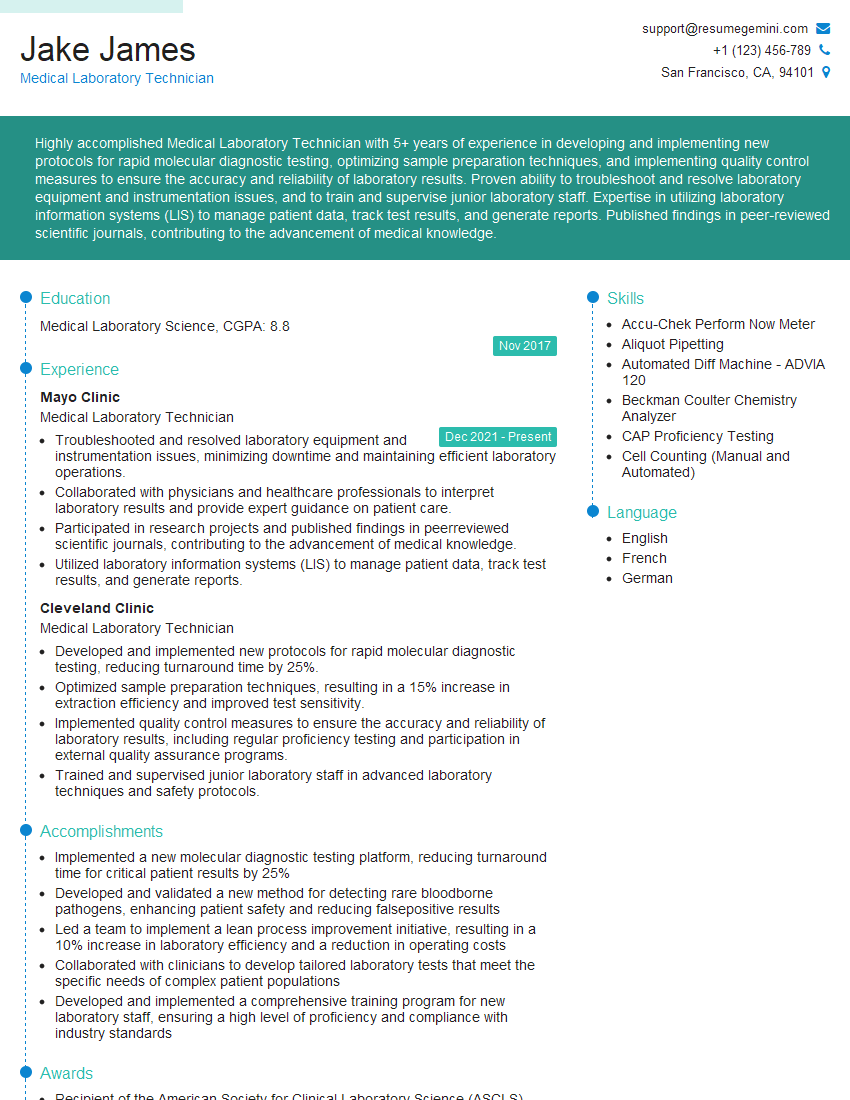
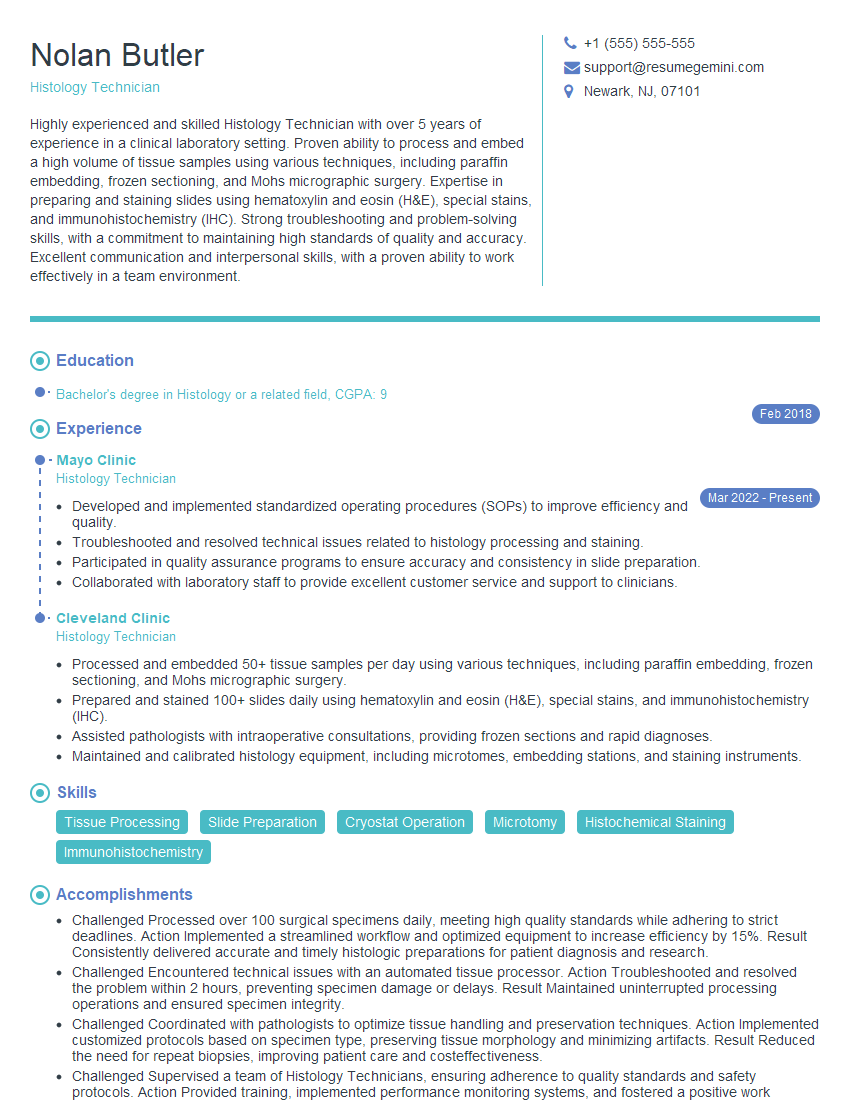
Mastering specimen mounting is crucial for career advancement in histology, pathology, and other related scientific fields. A strong foundation in these techniques demonstrates essential laboratory skills and opens doors to diverse and rewarding opportunities. To significantly boost your job prospects, it’s vital to create a resume that effectively communicates your skills and experience to Applicant Tracking Systems (ATS). ResumeGemini is a trusted resource that can help you build a professional and ATS-friendly resume. We provide examples of resumes tailored to Specimen Mounting to guide you through the process. Invest time in crafting a compelling resume; it’s your first impression on potential employers.


Explore more articles
Users Rating of Our Blogs
Share Your Experience
We value your feedback! Please rate our content and share your thoughts (optional).
What Readers Say About Our Blog
Really detailed insights and content, thank you for writing this detailed article.
IT gave me an insight and words to use and be able to think of examples