The right preparation can turn an interview into an opportunity to showcase your expertise. This guide to Starter Replacement interview questions is your ultimate resource, providing key insights and tips to help you ace your responses and stand out as a top candidate.
Questions Asked in Starter Replacement Interview
Q 1. Describe the process of diagnosing a faulty starter motor.
Diagnosing a faulty starter motor involves a systematic approach combining visual inspection with electrical testing. First, you’ll want to listen carefully for any unusual sounds when attempting to start the vehicle. A clicking sound often indicates a problem with the solenoid or low battery voltage, while a grinding noise suggests gear teeth issues or a misalignment. Visually inspect the starter motor for any obvious damage such as loose connections, broken wires, or physical damage.
If a visual inspection doesn’t reveal the problem, use a test light or multimeter (as detailed in question 4) to check for power at the starter motor’s terminals and the solenoid. This will help isolate whether the problem is with the starter itself or with the electrical circuit supplying power to it. Checking the battery voltage is also crucial; a weak battery can mimic starter motor failure. A low cranking speed can indicate insufficient battery power or a worn-out starter.
Q 2. What are the common causes of starter motor failure?
Starter motor failure is often caused by a combination of factors, with wear and tear playing a significant role.
- Worn brushes: These carbon brushes wear down over time, reducing electrical contact and eventually leading to failure. This manifests as slow cranking or no cranking at all.
- Damaged solenoid: The solenoid, responsible for engaging the starter motor, can fail due to overheating, corrosion, or internal short circuits. This often results in a rapid clicking sound when the ignition is turned.
- Faulty bendix gear: The bendix gear, responsible for engaging the flywheel, can get stuck, stripped, or break, preventing the starter from turning the engine. This usually leads to a grinding noise when attempting to start.
- Shorted windings: Overheating or continuous heavy loads can damage the starter motor’s windings, leading to a complete failure.
- Low battery voltage: A weak or dying battery can’t supply enough current to the starter, leading to slow cranking or a complete inability to start the vehicle.
- Corrosion: Corrosion at the battery terminals, starter terminals, or wiring connections can significantly hinder power flow.
Understanding these common causes is essential for accurate diagnosis and repair.
Q 3. Explain the function of the solenoid in a starter motor.
The solenoid in a starter motor acts as an electrical switch, connecting the high-current circuit to the starter motor when the ignition key is turned. It’s a powerful electromagnet that uses a small electrical current from the ignition switch to engage the starter motor’s heavy-duty drive gear.
Think of it like a powerful relay: a small electrical signal triggers the solenoid, causing it to activate a much larger current flow to the starter motor. This protects the ignition switch from handling the high current needed to crank the engine. The solenoid’s function is critical, and its failure prevents the starter from engaging, even if the motor itself is functional.
Q 4. How do you test a starter motor using a multimeter?
Testing a starter motor with a multimeter involves several steps and safety precautions. Always disconnect the battery’s negative terminal before starting any electrical tests!
- Check for continuity in the windings: Set the multimeter to the resistance setting (Ohms). Connect the probes to the starter motor’s terminals. A low resistance reading indicates good windings; a high or infinite reading suggests a broken or shorted winding.
- Test the solenoid: Set the multimeter to the continuity setting. Check for continuity between the large power terminals of the solenoid. Lack of continuity indicates a faulty solenoid. Additionally, check the continuity between the small terminal and either of the large terminals. This verifies the solenoid coil’s integrity.
- Test the voltage to the starter: With the ignition key turned to the ‘start’ position, measure the voltage at the starter motor’s terminals. A voltage drop significantly lower than the battery’s voltage indicates a wiring or connection problem. This test will likely require a helper to turn the ignition while you take readings.
Remember to interpret the readings based on the manufacturer’s specifications. A detailed wiring diagram can be crucial for accurate testing.
Q 5. What safety precautions should be taken when replacing a starter motor?
Safety is paramount when replacing a starter motor. High currents and heavy components pose significant risks.
- Disconnect the battery’s negative terminal: This is the most crucial safety step, preventing accidental short circuits and electrical shocks.
- Use appropriate tools: Use the correct sized wrenches and sockets to avoid damaging components.
- Wear safety glasses: Protect your eyes from debris or accidental impacts.
- Support the starter motor: Use a jack or other support to prevent the starter from falling and causing injury.
- Be aware of hot surfaces: The engine and exhaust manifold can be hot, especially after running. Allow the engine to cool down before working near it.
- Properly ground yourself: Avoid static electricity buildup that could damage sensitive components.
Never work on a vehicle’s electrical system while the engine is running. Always refer to the vehicle’s service manual for specific safety guidelines.
Q 6. How do you identify the correct replacement starter motor for a specific vehicle?
Identifying the correct replacement starter motor requires careful attention to detail. Never rely solely on the vehicle’s year, make, and model. Use the Vehicle Identification Number (VIN) or the part number from the original starter.
Consult a reputable auto parts supplier’s online catalog or use a parts lookup tool that utilizes the VIN for a precise match. Look for specifications such as voltage (usually 12V), amperage (varies depending on engine size), and mounting dimensions (to ensure proper fit). Comparing these specifications with those on the original starter or the online catalog will ensure accurate compatibility. Incorrect parts can cause damage or even safety hazards.
Q 7. Describe the procedure for removing and installing a starter motor.
Removing and installing a starter motor varies slightly depending on the vehicle’s make and model, but the general process remains consistent. Always consult the vehicle’s service manual for precise instructions.
- Disconnect the battery’s negative terminal.
- Locate the starter motor. It’s usually bolted to the engine block near the transmission.
- Disconnect the electrical connectors. This typically involves unbolting the positive and ground cables. Take note of their positions for reassembly.
- Remove the starter motor mounting bolts. These bolts are usually located on the starter’s bell housing.
- Carefully remove the starter motor. Often, it may be slightly wedged or require gentle persuasion to come free.
- Install the new starter motor. Reverse the removal process, carefully aligning the mounting holes and securing the bolts.
- Reconnect the electrical connectors. Ensure they’re firmly attached.
- Reconnect the battery’s negative terminal.
- Test the starter. Attempt to start the vehicle to confirm the repair.
If you’re unfamiliar with automotive repair, seek professional assistance. Improper installation can result in damage or injury.
Q 8. What specialized tools are required for starter motor replacement?
Replacing a starter motor requires a specialized set of tools to ensure efficient and safe operation. Think of it like performing surgery – you need the right instruments for a clean and successful procedure. The exact tools depend on the vehicle, but generally include:
- Sockets and Wrenches: A variety of sizes to fit the starter bolts and associated nuts, ideally metric and standard. You’ll need both to handle different fasteners.
- Ratchet and Extensions: To reach those hard-to-access bolts deep inside the engine bay.
- Torque Wrench: Crucial for tightening bolts to the manufacturer’s specified torque, preventing damage to the starter or its mounting points. Over-tightening is as bad as under-tightening.
- Screwdrivers: Both Phillips and flathead, likely needed for removing starter-related wiring connectors.
- Puller (sometimes): Some starters are stubborn and require a puller to separate them from the flywheel housing. This is not always necessary but having one available avoids potential delays.
- Wire Brush and Degreaser: To clean the battery terminals and starter mounting surface, ensuring a solid electrical connection.
- Jump Starter or Battery Charger: While not directly used for removal, it helps verify the battery’s capacity before and after the job. A bad battery will only mask starter problems.
Always consult your vehicle’s repair manual for the exact tools needed for your specific make and model.
Q 9. How do you check the starter motor’s wiring harness for damage?
Inspecting the starter wiring harness is essential to ensure a proper diagnosis. A damaged harness can cause intermittent starting problems or prevent the starter from engaging altogether. Think of the harness as the nervous system for your starter; any damage can severely impair its function. Here’s how to check it:
- Visual Inspection: Carefully examine the entire harness length, paying close attention to areas prone to wear and tear, such as bends and points where it rubs against the engine or other components. Look for broken or frayed wires, exposed copper, or signs of melting.
- Continuity Test: Use a multimeter set to ohms to check for continuity in each wire. This ensures that the wire isn’t broken internally, even if the outer insulation looks intact. A broken wire will show infinite resistance.
- Ground Connection: The ground wire is critical; a poor ground will make the starter perform poorly or not at all. Check the ground connection for corrosion or looseness.
- Connector Inspection: Examine the wire connectors at both ends of the harness. Look for bent pins, corrosion, or loose connections. A little corrosion can dramatically increase resistance, enough to prevent the starter from functioning.
If any damage is found, repair or replace the damaged section of the harness or the entire harness. Using electrical tape is only a temporary solution and should be avoided. Proper repair involves soldering and crimping.
Q 10. Explain the difference between a gear reduction starter and a conventional starter.
The main difference between a gear reduction starter and a conventional starter lies in their gear ratio and power delivery. Imagine trying to open a stubborn jar: a conventional starter is like using your bare hands, whereas a gear reduction starter is like using a wrench.
- Conventional Starter: These starters use a direct gear drive from the motor to the flywheel. They’re simpler in design, but can require a higher current draw, leading to more stress on the battery and a greater likelihood of failure under heavy load. They are commonly found in smaller or older engines.
- Gear Reduction Starter: These use a planetary gear system to reduce the motor’s speed and increase torque. The reduced speed allows the motor to generate higher torque with less current demand. This means less strain on the battery and longer life. They’re particularly well-suited for larger, high-compression engines where a substantial cranking force is needed.
In summary, while both achieve the same goal (cranking the engine), gear reduction starters are generally more powerful, more efficient, and less stressful on the vehicle’s electrical system. They’re often found in modern high-performance vehicles.
Q 11. What are the symptoms of a bad starter motor?
A failing starter motor can manifest itself in several ways, often providing clues to its demise. These symptoms can vary in intensity and frequency, from annoying to completely immobilizing.
- Slow Cranking: The engine cranks slowly, indicating the starter isn’t generating enough power. This might be due to internal wear, low voltage, or a weak battery.
- Clicking Noise: A rapid clicking sound when you turn the key often points to a low battery voltage, a bad starter solenoid, or corroded connections. It’s like the starter is trying, but lacks the necessary oomph.
- Grinding Noise: A grinding sound usually indicates a problem with the starter’s engagement with the flywheel. The teeth may be worn or misaligned.
- No Cranking at All: The starter doesn’t engage, and the engine remains silent. This usually points to a complete failure of the starter motor or a significant problem with the electrical system.
- Intermittent Starting: The starter works sometimes, but not others. This suggests a problem with the connections, the starter’s internal components, or the solenoid.
It’s crucial to address these issues promptly to avoid more serious engine damage or roadside breakdowns.
Q 12. How do you diagnose a problem with the starter relay?
Diagnosing a faulty starter relay is usually simpler than dealing with the starter itself. The starter relay acts as a switch, activating the starter motor when you turn the ignition. Think of it as a powerful intermediary that helps prevent a sudden surge of current.
Here’s how to diagnose a problem:
- Visual Inspection: Check the relay for any visible signs of damage, such as burnt contacts or a swollen casing.
- Click Test: With the ignition off, try to engage the starter. You should hear a distinct click from the relay. If not, the relay may be the culprit.
- Voltage Test: Use a multimeter to check for voltage at the relay’s terminals with the ignition on. You should see battery voltage present. Absence of voltage suggests a problem further upstream.
- Continuity Test: You can also test the relay for internal continuity (using the ohms setting on your multimeter) to ensure its internal contacts are intact. Look up the specifics for your particular relay as this can vary based on the relay design.
- Relay Swap: If the previous checks are inconclusive, try swapping the starter relay with another relay in the vehicle’s fuse box (if they are interchangeable). If the problem shifts to that other component’s function, you’ve likely found your issue.
Replacing a faulty starter relay is typically straightforward and inexpensive.
Q 13. How do you test the battery cables and connections related to the starter?
Testing the battery cables and connections is a crucial first step when troubleshooting starting problems. Weak or corroded connections can drastically reduce current flow, leading to poor performance or complete failure of the starter. This is akin to a leaky pipe; the more leaks you have, the less pressure makes it to its destination.
- Visual Inspection: Look for any obvious signs of corrosion, damage, or looseness at both ends of the positive (+) and negative (-) battery cables. Corrosion appears as a whitish-green or bluish-green buildup.
- Tightness Check: Ensure that all cable clamps are securely tightened to the battery terminals and the starter’s connections. Loose connections can increase resistance and cause voltage drop.
- Voltage Drop Test: Use a multimeter to measure the voltage at the battery terminals and then at the starter’s connections while someone cranks the engine. A significant voltage drop (more than a volt or two) indicates excessive resistance in the cables or connections.
- Cleaning: Clean any corroded terminals with a wire brush and baking soda mixed with water to neutralize the acid, creating a solid metal-to-metal contact.
By checking the cables and connections, you can rule out a simple, yet common cause of starting problems.
Q 14. What is the procedure for cleaning and lubricating a starter motor?
Cleaning and lubricating a starter motor, while not always necessary during a replacement, can extend its lifespan and improve its performance. It’s like giving your car’s engine a good cleaning – it’ll run better for longer.
- Disassembly (If Necessary): If you are not replacing the starter, carefully disassemble the starter motor according to the manufacturer’s specifications or a reliable repair manual. Pay close attention to how each part is assembled before taking it apart.
- Cleaning: Use a parts cleaner or degreaser to remove grease, dirt, and debris from all the internal components. Be careful not to damage any delicate parts. A compressed air duster can also be useful for removing loose debris.
- Inspection: Check for signs of wear or damage on the commutator, brushes, and other internal parts. Replace worn or damaged components.
- Lubrication: Apply a small amount of high-temperature grease to the shaft bearings and other moving parts. Avoid using excessive grease, as it can attract dirt and dust.
- Reassembly: Carefully reassemble the starter motor, ensuring all parts are correctly aligned. Refer to your repair manual for accurate reassembly procedures.
- Testing: After reassembly, test the starter motor’s operation before reinstalling it in the vehicle.
Remember to always consult a repair manual for your specific starter motor model before attempting any disassembly or repair.
Q 15. How do you prevent future starter motor failures?
Preventing future starter motor failures involves a multi-pronged approach focusing on proactive maintenance and addressing underlying issues. Think of it like regular check-ups for your car’s heart!
Regular Battery Checks: A weak or failing battery is a leading cause of starter motor strain. Regularly check battery voltage and have it load tested to ensure it’s delivering sufficient power. A low voltage can force the starter to work harder, leading to premature failure.
Clean Battery Terminals: Corrosion on battery terminals increases resistance, reducing the current flow to the starter. Clean them regularly with a wire brush and a battery terminal cleaner.
Inspect Starter Wiring: Look for loose, frayed, or corroded wiring in the starter circuit. These can create high resistance, leading to overheating and starter failure. Repair or replace any damaged wiring promptly.
Check the Solenoid: The starter solenoid is an electromagnetic switch that engages the starter motor. A faulty solenoid can prevent the starter from engaging or cause it to overheat. Test the solenoid’s functionality and replace it if necessary.
Address Engine Issues: A difficult-to-crank engine, due to issues like low compression or a seized engine, puts excessive stress on the starter. Addressing the underlying engine problems is crucial.
Lubrication: While many modern starters are sealed, ensuring the engine is properly lubricated can help prevent excessive wear and tear, indirectly protecting the starter.
By consistently addressing these points, you significantly reduce the risk of premature starter motor failures and ensure your vehicle’s reliable starting performance.
Career Expert Tips:
- Ace those interviews! Prepare effectively by reviewing the Top 50 Most Common Interview Questions on ResumeGemini.
- Navigate your job search with confidence! Explore a wide range of Career Tips on ResumeGemini. Learn about common challenges and recommendations to overcome them.
- Craft the perfect resume! Master the Art of Resume Writing with ResumeGemini’s guide. Showcase your unique qualifications and achievements effectively.
- Don’t miss out on holiday savings! Build your dream resume with ResumeGemini’s ATS optimized templates.
Q 16. What are some common problems encountered during starter motor installation?
Common problems during starter motor installation often stem from improper handling or overlooking crucial details. It’s like assembling a complex puzzle – each piece matters!
Incorrect Torque Specifications: Over-tightening bolts can strip threads or damage the starter housing. Under-tightening can lead to loose connections and subsequent failure. Always consult the vehicle’s service manual for the correct torque specifications.
Damaged or Misaligned Components: During removal or installation, the starter itself, its mounting points, or surrounding components might get damaged. Careful inspection and potential replacement of damaged parts are essential. Alignment is also crucial for smooth operation.
Wiring Issues: Incorrectly connecting the battery cables or other wiring harnesses can lead to short circuits or failure to engage the starter. Double-check wire connections against the vehicle’s wiring diagram.
Flywheel Damage: A damaged or misaligned flywheel can prevent the starter from meshing properly. This requires inspection and potential machining or replacement.
Improper Grounding: A poor ground connection can result in insufficient current flow to the starter, hindering its ability to crank the engine. Ensure clean and tight ground connections.
Careful attention to these details, using the right tools, and consulting the vehicle’s service manual are key to a successful and problem-free starter motor installation.
Q 17. How do you interpret diagnostic trouble codes (DTCs) related to the starter system?
Interpreting Diagnostic Trouble Codes (DTCs) related to the starter system requires understanding the vehicle’s onboard diagnostics system. Each code points towards a specific problem, acting like a clue in a detective novel.
For example, a code like P0500 (Vehicle Speed Sensor Malfunction) might seem unrelated, but a faulty vehicle speed sensor can prevent the starter from engaging in some vehicles due to the interconnectivity of the systems. Other codes directly related to the starter might include:
P0128(Throttle Pedal Position Sensor/Switch A Circuit High Input): While primarily related to throttle position, it could indirectly affect the starter system’s operation in some vehicles that have electronic throttle controls and interlock systems.Codes specific to the starter motor circuit or the starter relay might also be present, and their meaning varies widely depending on the vehicle’s make and model.
To accurately interpret DTCs, consult a vehicle-specific repair manual or a professional-grade scan tool. The scan tool will usually provide a detailed description of the code along with possible causes. Always verify DTCs with a thorough visual inspection and testing of the relevant circuits and components.
Q 18. Explain the function of the ignition switch in relation to the starter motor.
The ignition switch acts as the master control for the starting sequence. Imagine it as the conductor of an orchestra, coordinating various parts to start the engine.
When the key is turned to the ‘start’ position, the ignition switch completes a circuit that provides power to the starter solenoid. This energizes the solenoid, allowing it to engage the starter motor pinion gear with the engine’s flywheel. Once the engine starts, the ignition switch returns to the ‘run’ position, breaking the circuit and disengaging the starter motor.
Without the ignition switch, there would be no controlled method of energizing the starter motor, leading to potential damage and safety risks.
Q 19. What is the role of the neutral safety switch in the starting system?
The neutral safety switch is a critical safety device that prevents the engine from starting unless the vehicle’s transmission is in the park or neutral position. It’s a crucial safety feature that stops accidental starting while the vehicle is in gear.
This switch acts as a safety interlock in the starting circuit. If the transmission is not in park or neutral, the neutral safety switch opens the circuit, preventing the starter from receiving power even if the ignition key is turned. It prevents accidental starting that could lead to serious injury or damage.
Q 20. How do you troubleshoot a starter that engages but doesn’t crank?
A starter that engages but doesn’t crank typically points towards a problem with the starter motor itself or insufficient power reaching it. It’s like the engine is trying to turn but lacks the necessary force.
Weak Starter Motor: The motor might be worn out or have internal damage, preventing it from generating enough torque to turn the engine. Testing the starter’s amperage draw can help determine its condition.
Low Battery Voltage: A weak or low battery might not provide sufficient power to the starter motor. Testing the battery voltage and load testing are crucial.
Faulty Bendix Gear: The bendix gear is responsible for meshing with the flywheel. If it’s worn or damaged, the starter may engage but not be able to turn the engine effectively.
High Engine Compression: High engine compression or a seized engine can make it difficult for the starter to turn the engine, even if it engages.
Excessive Friction: Binding in the engine’s internal components, such as a frozen piston or bearing, could cause the problem.
Troubleshooting this requires systematically checking each of these possibilities.
Q 21. How do you troubleshoot a starter that clicks but doesn’t engage?
A clicking sound from the starter but no engagement usually indicates a problem with the starter solenoid or inadequate power supply. It’s like hearing the starter trying to engage but failing to do so.
Low Battery Voltage: The clicking sound is often the solenoid attempting to pull in, but the battery’s low voltage prevents it from generating enough power to engage the starter gear.
Faulty Starter Solenoid: The solenoid itself might be faulty, unable to engage the starter motor even with sufficient voltage. Testing the solenoid’s continuity can help determine this.
Poor Connections: Loose, corroded, or broken connections in the battery cables or starter circuit can restrict current flow, resulting in the clicking sound. Inspect all connections for cleanliness and tightness.
Faulty Ignition Switch: In some cases, a problem with the ignition switch can prevent the solenoid from receiving the necessary signal to engage.
Faulty Neutral Safety Switch: If the transmission isn’t in Park or Neutral, the neutral safety switch could prevent the starter from receiving power.
Systematic testing of these areas is essential to pinpoint the root cause.
Q 22. How do you troubleshoot a starter that is intermittently working?
An intermittently working starter points to a problem with its electrical connections, the solenoid, or the motor itself. Troubleshooting involves a systematic approach.
Check the Battery and Cables: Start with the basics. A weak battery or corroded battery terminals can cause intermittent starting. Clean the terminals and test the battery voltage. If the voltage is low, charge or replace the battery.
Inspect Wiring and Connections: Carefully examine all wiring connected to the starter, including the positive and negative cables, and the solenoid connection. Look for loose connections, corrosion, or broken wires. Tighten loose connections and repair or replace damaged wires.
Test the Starter Solenoid: The solenoid is an electromagnet that engages the starter motor. You can tap it gently with a hammer while someone attempts to start the car. A click sound indicates a potentially faulty solenoid (though sometimes it’s just a weak connection). A good solenoid will cause the starter motor to crank. If tapping doesn’t work, further testing with a multimeter might be needed to determine if the solenoid is receiving power.
Inspect the Starter Motor itself: If the solenoid seems fine, the problem might lie within the starter motor itself. This requires more advanced diagnostics and often involves removal of the starter for inspection and testing (brushes, windings, etc.) This is best done by a professional unless you have experience with electrical motor repair.
Example: I once had a car that would only start intermittently. After checking the battery and cables, I discovered a corroded connection at the solenoid. Cleaning the connection and applying dielectric grease solved the issue.
Q 23. What are the potential risks of using a faulty starter motor?
Using a faulty starter motor poses several significant risks:
Stranding: The most obvious risk is the inability to start your vehicle, leaving you stranded.
Damage to other components: A malfunctioning starter can draw excessive current, potentially damaging the battery, alternator, or even the vehicle’s electrical system. Imagine the starter motor seizing up – it puts immense strain on the battery.
Safety hazards: A faulty starter might create sparks or overheat, presenting a fire risk. This is especially true if there are loose connections or damaged wiring.
Internal Damage: A failing starter may cause damage to its own internal components, resulting in a complete failure sooner than anticipated.
Example: I’ve seen cases where a faulty starter motor drew so much current that it melted the positive cable leading to the battery, causing a fire risk.
Q 24. Explain the importance of torque specifications when installing a starter motor.
Torque specifications are crucial when installing a starter motor to ensure proper seating and prevent damage. Incorrect torque can lead to:
Loose Starter: Too little torque will result in a loose starter, leading to vibration, intermittent starting problems, and potential damage to the starter mounting.
Damaged Threads: Too much torque can strip the threads on the starter mounting bolts or on the engine block, requiring costly repairs.
Starter Malfunction: Improper torque can put stress on the starter itself, causing internal damage or premature failure.
Always consult your vehicle’s repair manual for the specific torque specifications for your starter motor’s mounting bolts. Using a torque wrench is essential to achieve the correct torque.
Example: Over-tightening a starter bolt stripped the threads in the engine block, requiring the block to be repaired.
Q 25. Describe the proper procedure for disconnecting the battery before working on a starter motor.
Disconnecting the battery before working on a starter motor is crucial for safety. Here’s the proper procedure:
Turn off the ignition: Ensure the vehicle’s ignition is completely off.
Locate the battery: Identify the positive (+) and negative (-) terminals of the battery.
Disconnect the negative (-) terminal first: Use a wrench to loosen and remove the negative cable clamp from the negative terminal. This is important to prevent accidental short circuits.
Disconnect the positive (+) terminal: Loosen and remove the positive cable clamp from the positive terminal.
Secure the cables: Keep the cables away from the terminals to avoid accidental contact.
Important: Always reconnect the battery in the reverse order (positive first, then negative).
Q 26. How do you dispose of a faulty starter motor responsibly?
Responsible disposal of a faulty starter motor involves taking it to a certified auto parts recycling center or an authorized scrap yard. These facilities have the proper equipment and procedures to handle hazardous materials that might be present in the starter (such as lead in the battery). Simply throwing it in the trash is illegal and environmentally irresponsible.
Many auto parts stores will also accept old starters for recycling, often offering a small credit towards a new one.
Q 27. What are the differences in starter replacement procedures between different vehicle makes and models?
Starter replacement procedures vary significantly across vehicle makes and models due to differences in engine bay design, starter mounting location, and access. Some starters are easily accessible, while others require the removal of other components for access (like exhaust manifolds or engine mounts). The type of starter itself (e.g., different bolt patterns, solenoid locations) also plays a role.
Example: Replacing a starter in a front-wheel drive car is generally simpler than in a rear-wheel drive vehicle or truck due to access differences.
Always refer to a repair manual specific to the vehicle’s make, model, and year. Generic instructions might not be sufficient and could lead to errors.
Q 28. What are some common mistakes to avoid when replacing a starter motor?
Common mistakes to avoid when replacing a starter motor include:
Failing to disconnect the battery: This is a major safety hazard and can lead to injury.
Incorrect torque specifications: This can damage the starter, engine block, or mounting.
Damaging surrounding components: Be careful not to scratch or damage other parts during removal or installation.
Forgetting to reconnect all wires: This will prevent the starter from working correctly. Double-check all connections before testing.
Improper use of tools: Using the wrong size sockets or wrenches can damage the bolts and the starter.
Not testing the starter after installation: Always test the starter to ensure it functions correctly before reassembling the vehicle.
Example: I once saw someone damage a wire harness while removing a starter due to a lack of care. Proper planning and use of appropriate tools are essential.
Key Topics to Learn for Starter Replacement Interview
- Understanding the Role: Clearly define the scope of a Starter Replacement role, including its responsibilities, expected contributions, and typical day-to-day tasks. Consider the variations depending on the specific industry and company.
- Technical Skills Application: Prepare examples demonstrating how your technical skills (programming languages, software proficiency, etc.) directly apply to the tasks and challenges of a Starter Replacement position. Focus on practical applications and quantifiable achievements.
- Problem-Solving and Troubleshooting: Practice explaining your approach to problem-solving, highlighting your analytical skills and ability to troubleshoot technical issues. Use the STAR method (Situation, Task, Action, Result) to structure your responses effectively.
- Teamwork and Collaboration: Showcase your experience collaborating effectively within a team environment. Prepare examples demonstrating your communication, collaboration, and conflict-resolution skills.
- Adaptability and Learning Agility: Highlight your ability to adapt to new technologies, learn quickly, and embrace challenges. Emphasize your proactive approach to continuous learning and professional development.
- Company Research and Alignment: Thoroughly research the company and the specific team you’re interviewing with. Demonstrate your understanding of their goals, culture, and how your skills align with their needs.
Next Steps
Mastering the concepts related to Starter Replacement positions significantly enhances your career prospects, opening doors to exciting opportunities and faster professional growth. A well-crafted, ATS-friendly resume is crucial for getting your application noticed by recruiters. Use ResumeGemini to build a professional resume that highlights your skills and experience effectively. ResumeGemini offers examples of resumes tailored specifically to Starter Replacement roles, providing you with valuable templates and guidance to craft a compelling application.
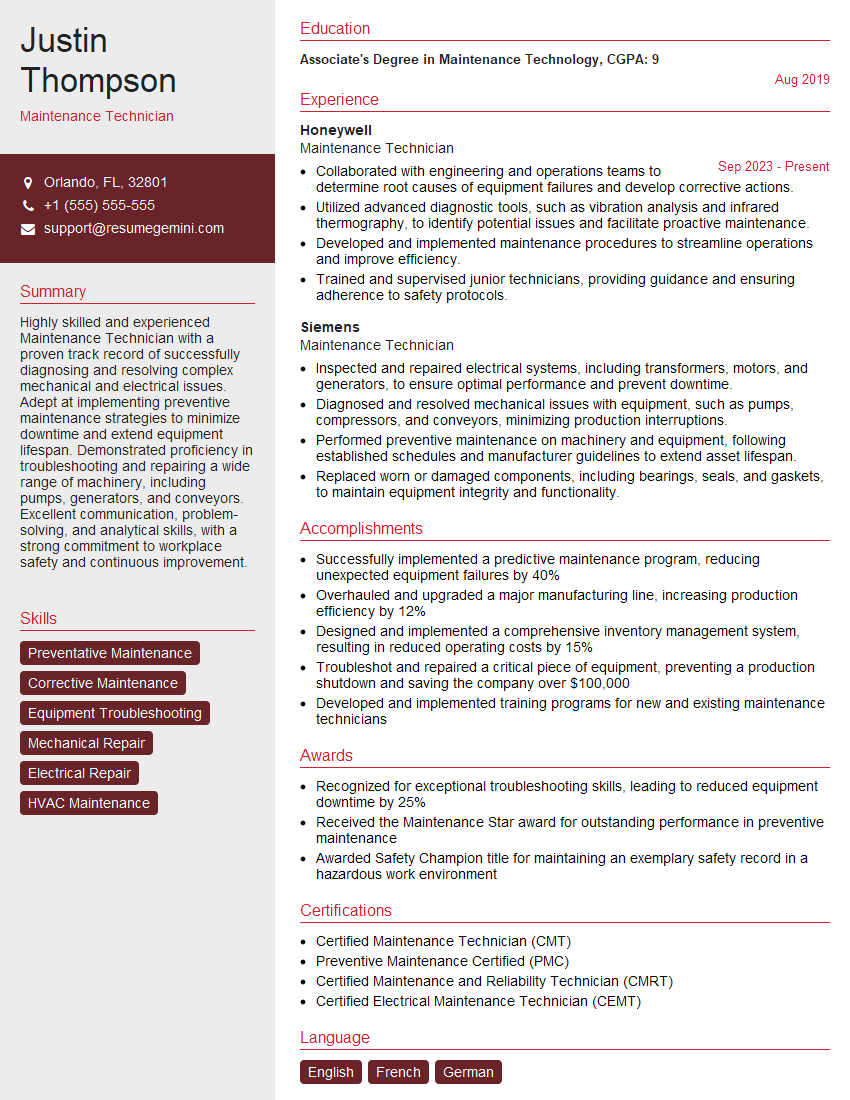
Maintenance Technician Resume Sample

Field Service Technician Resume Sample
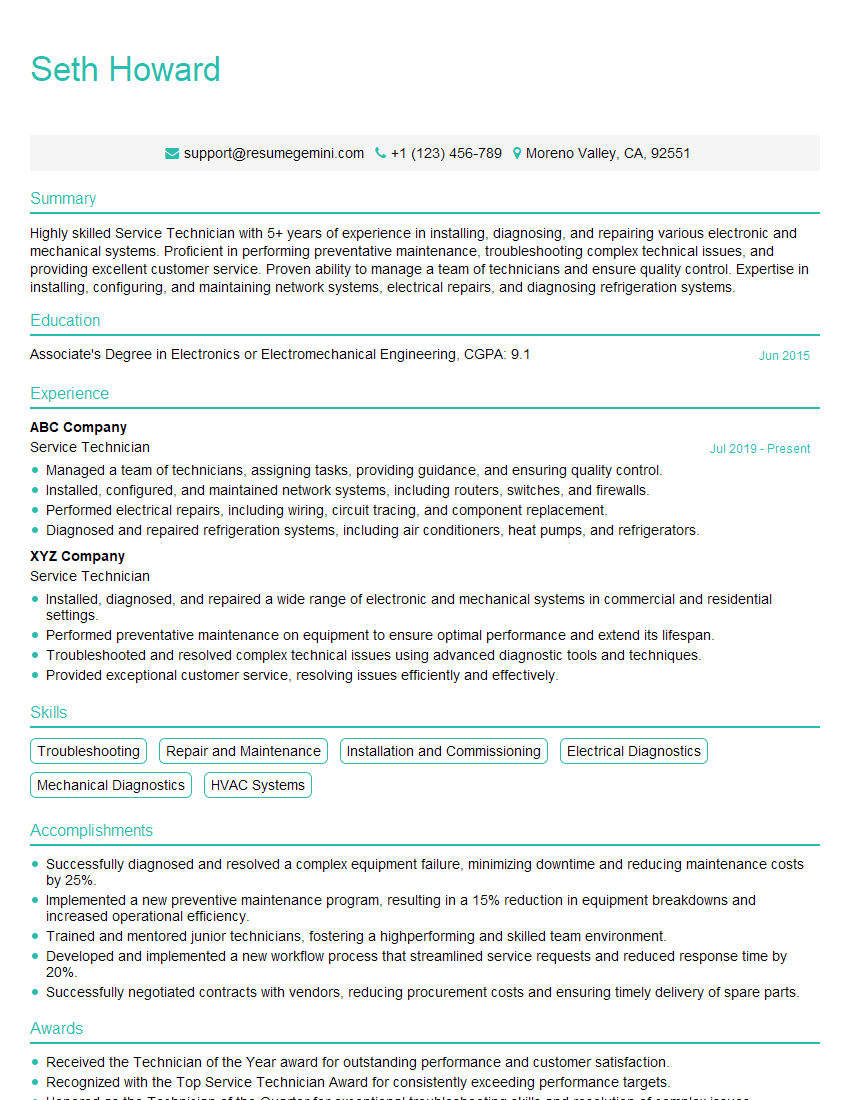
Service Technician Resume Sample
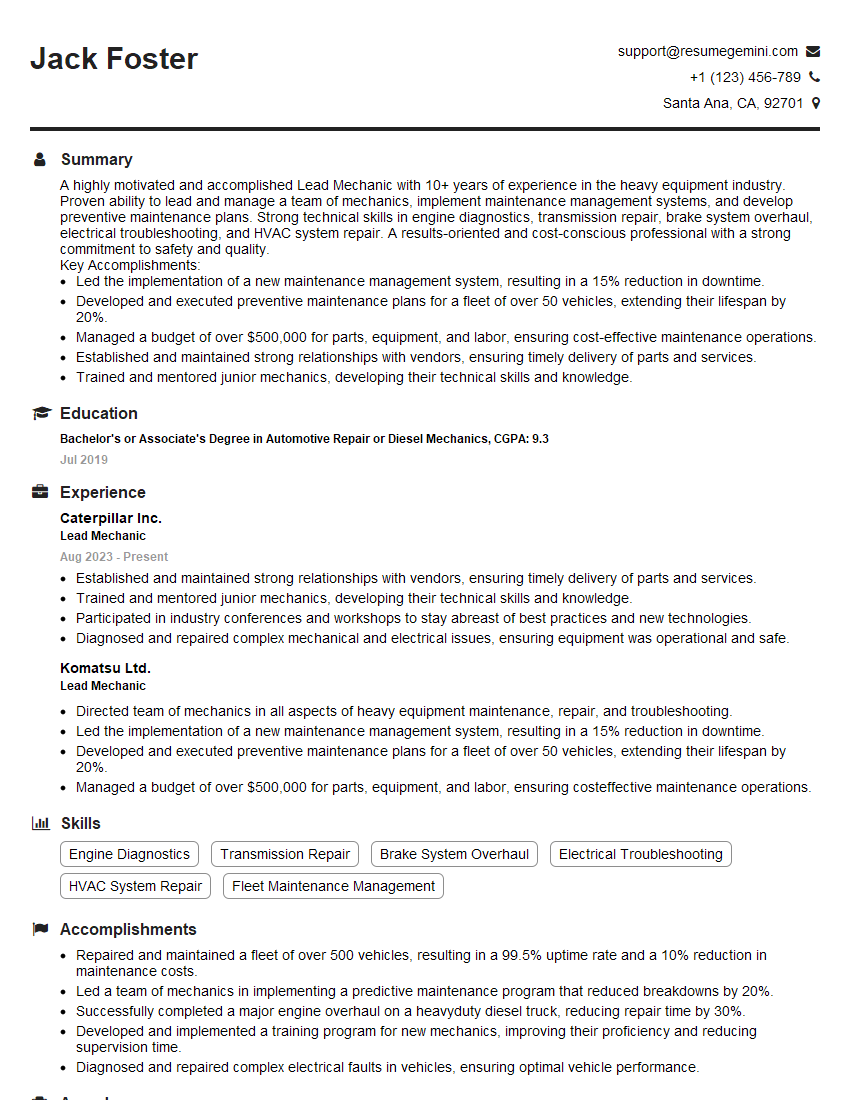
Lead Mechanic Resume Sample

Shop Foreman Resume Sample
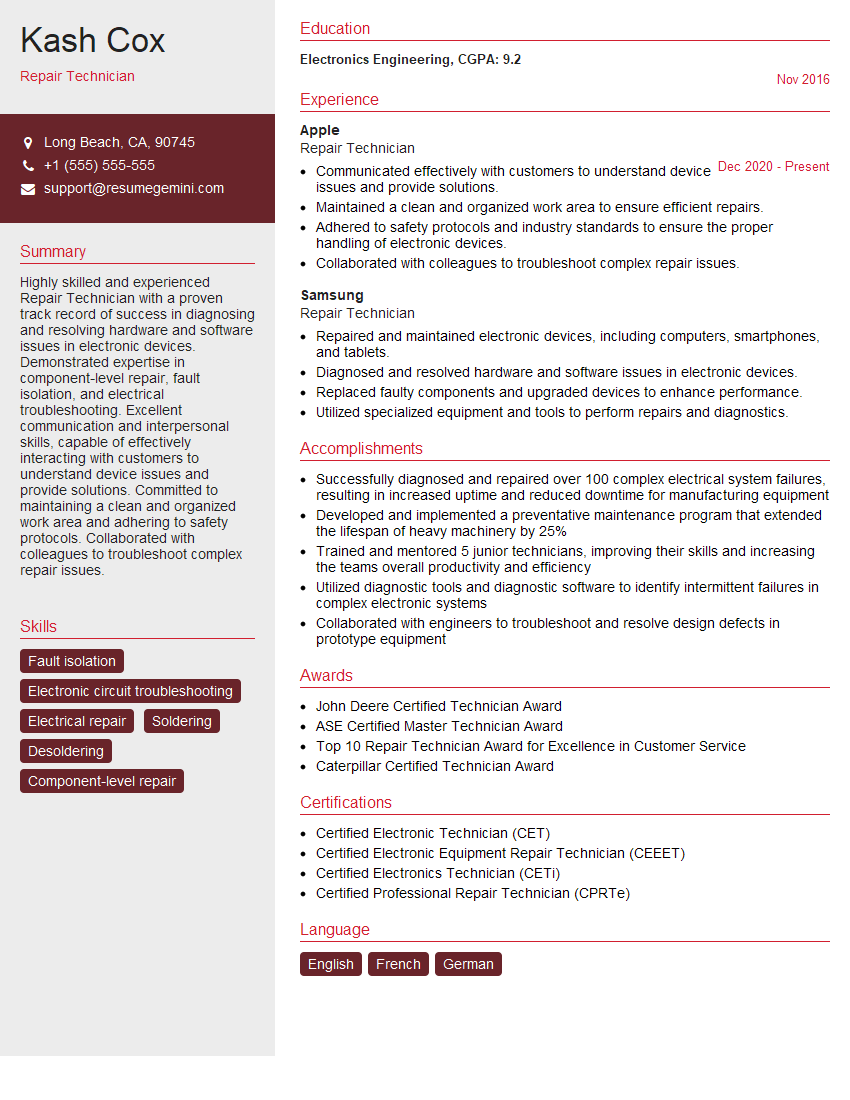
Repair Technician Resume Sample
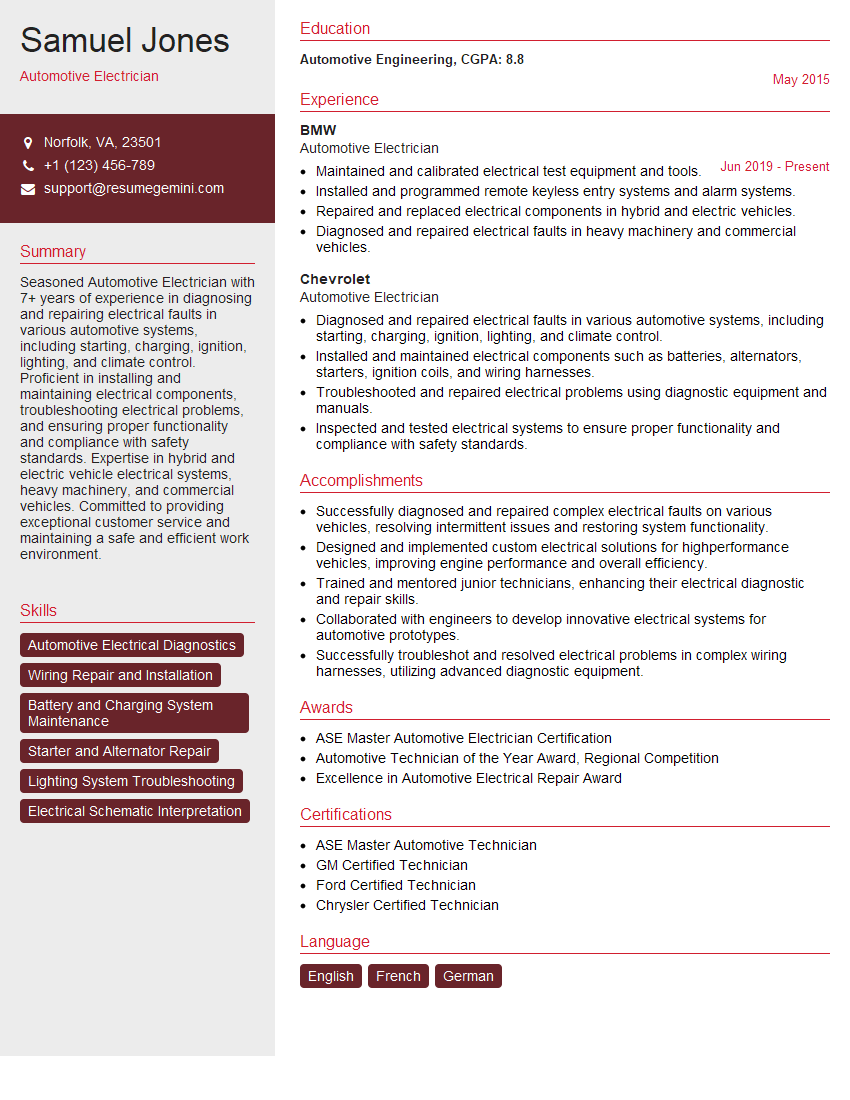
Automotive Electrician Resume Sample
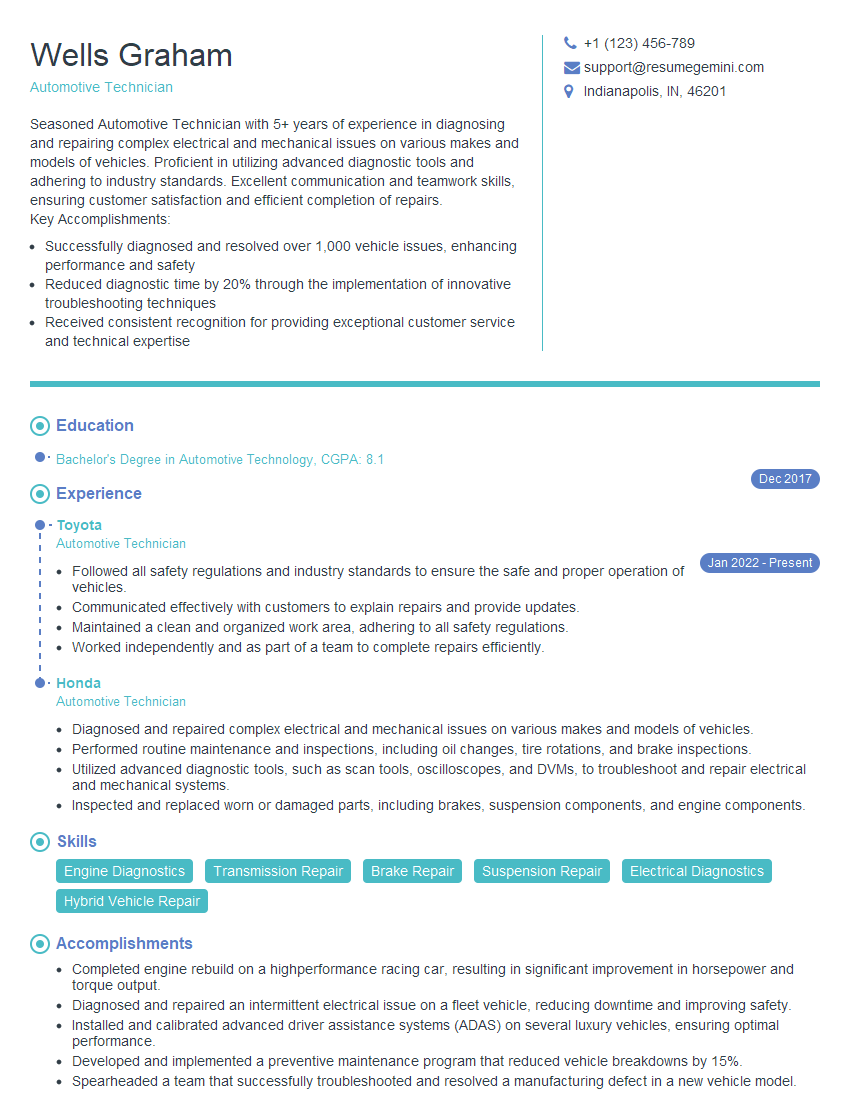
Automotive Technician Resume Sample
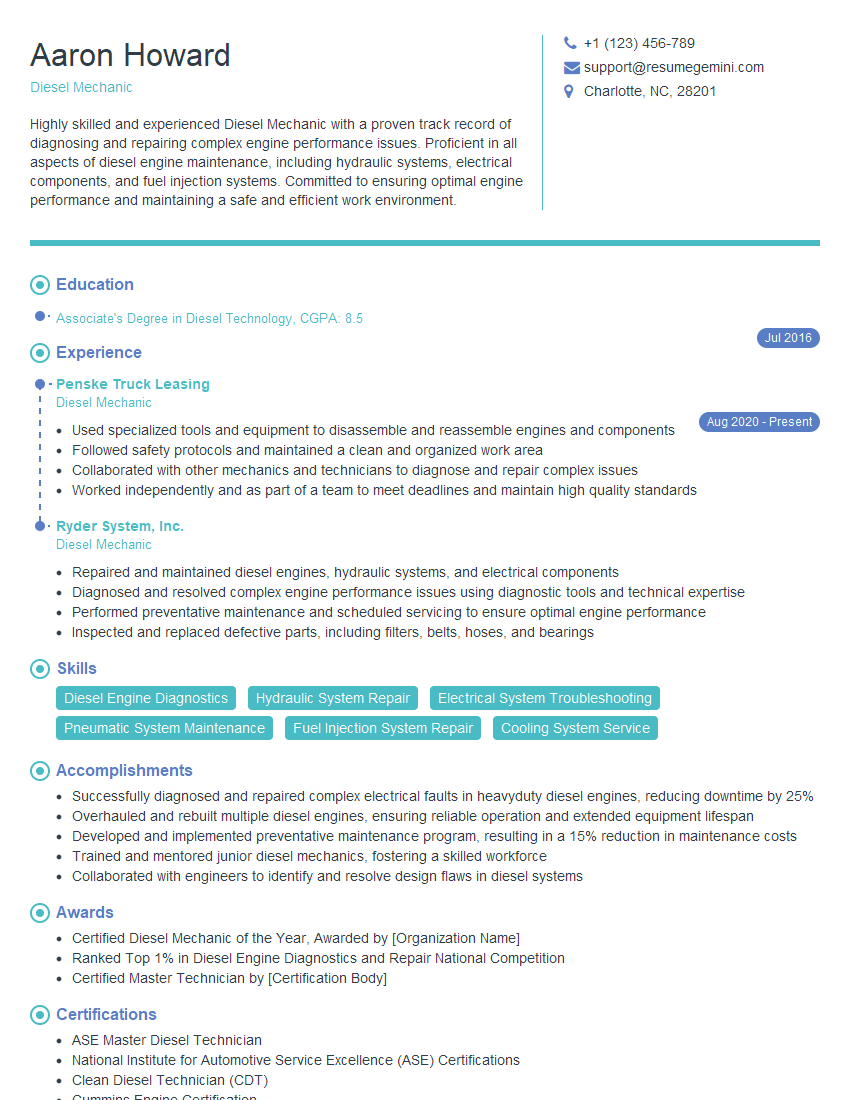
Diesel Mechanic Resume Sample

Fleet Mechanic Resume Sample
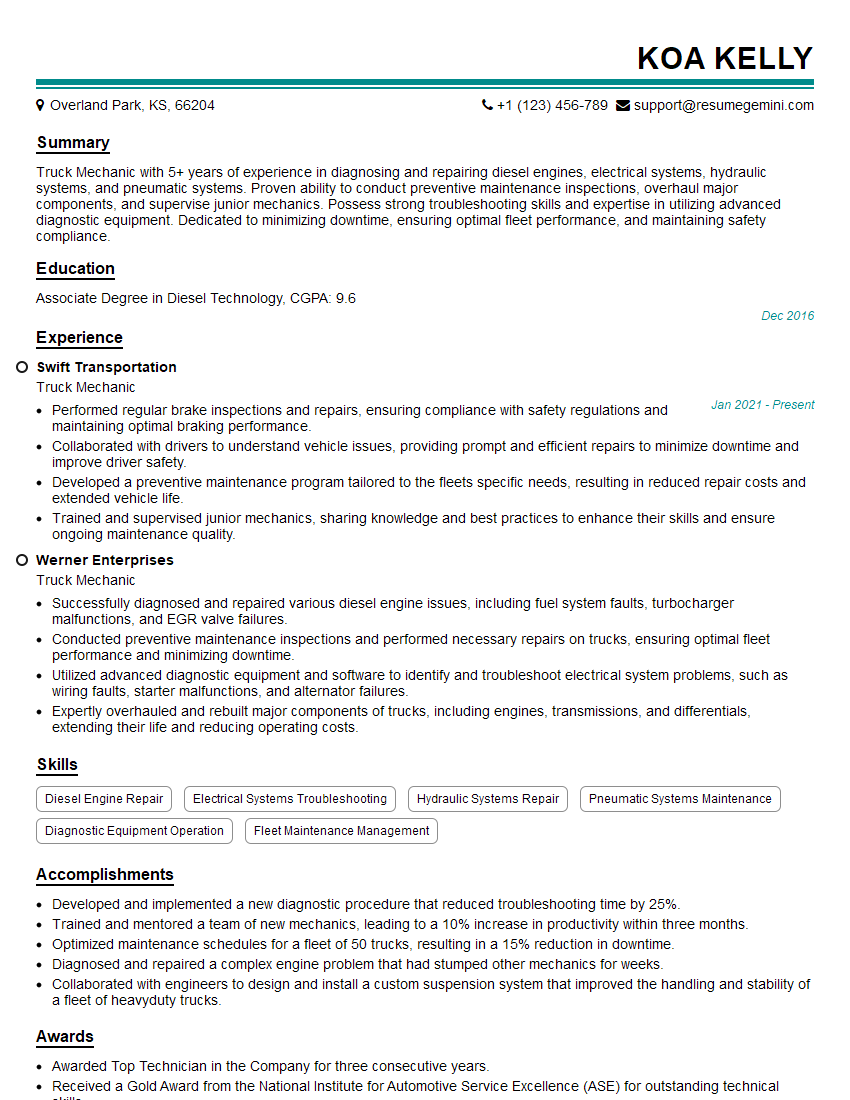
Truck Mechanic Resume Sample
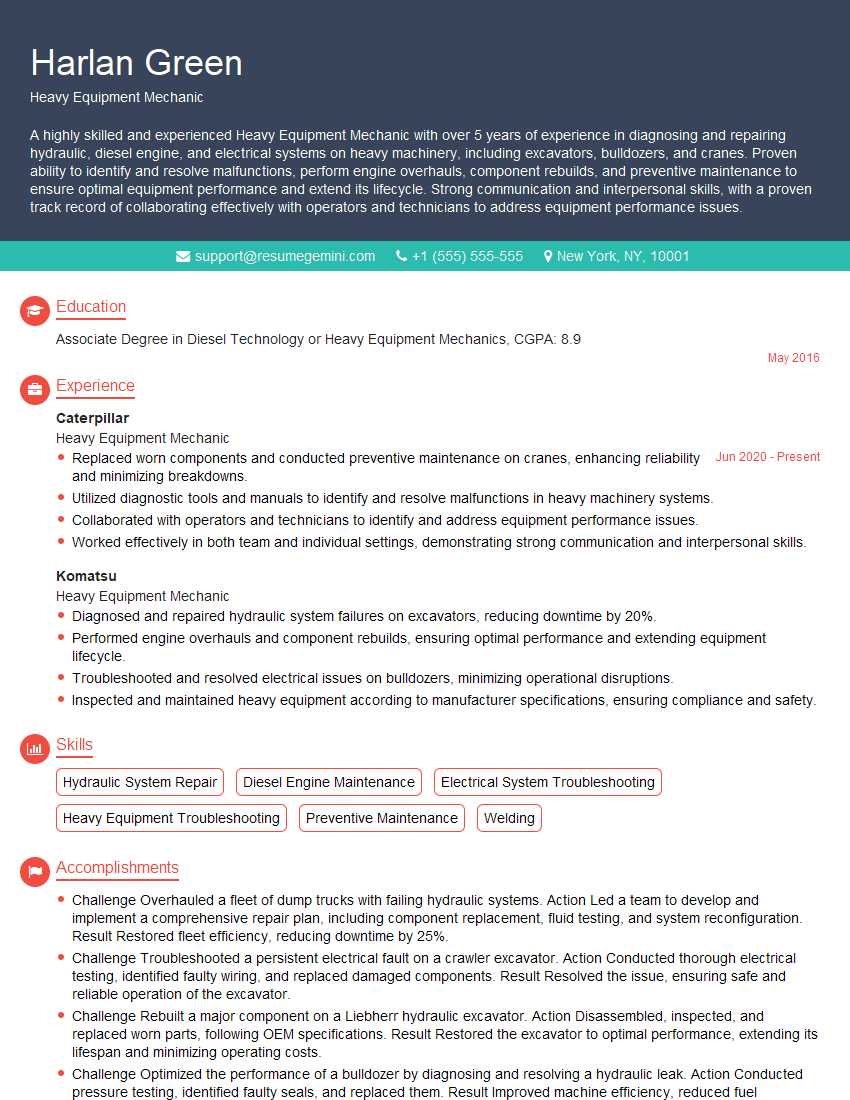
Heavy Equipment Mechanic Resume Sample
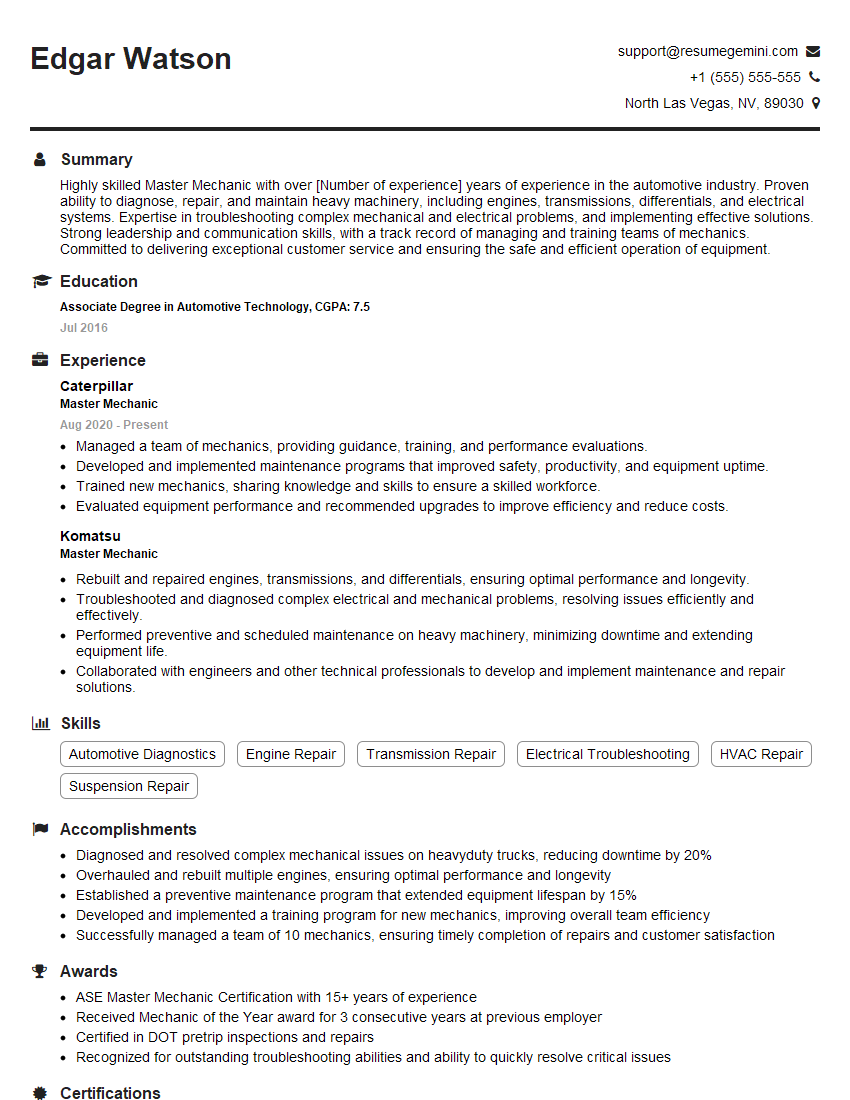
Master Mechanic Resume Sample
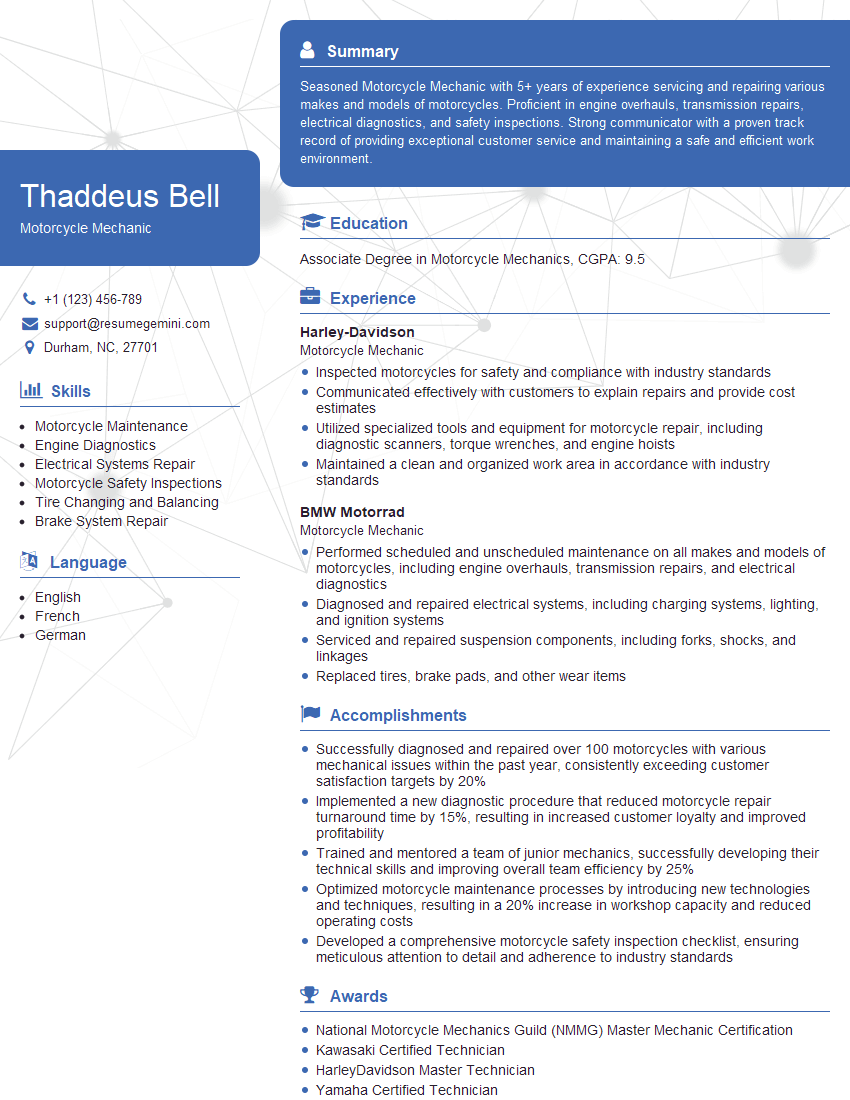
Motorcycle Mechanic Resume Sample

Engine Specialist Resume Sample
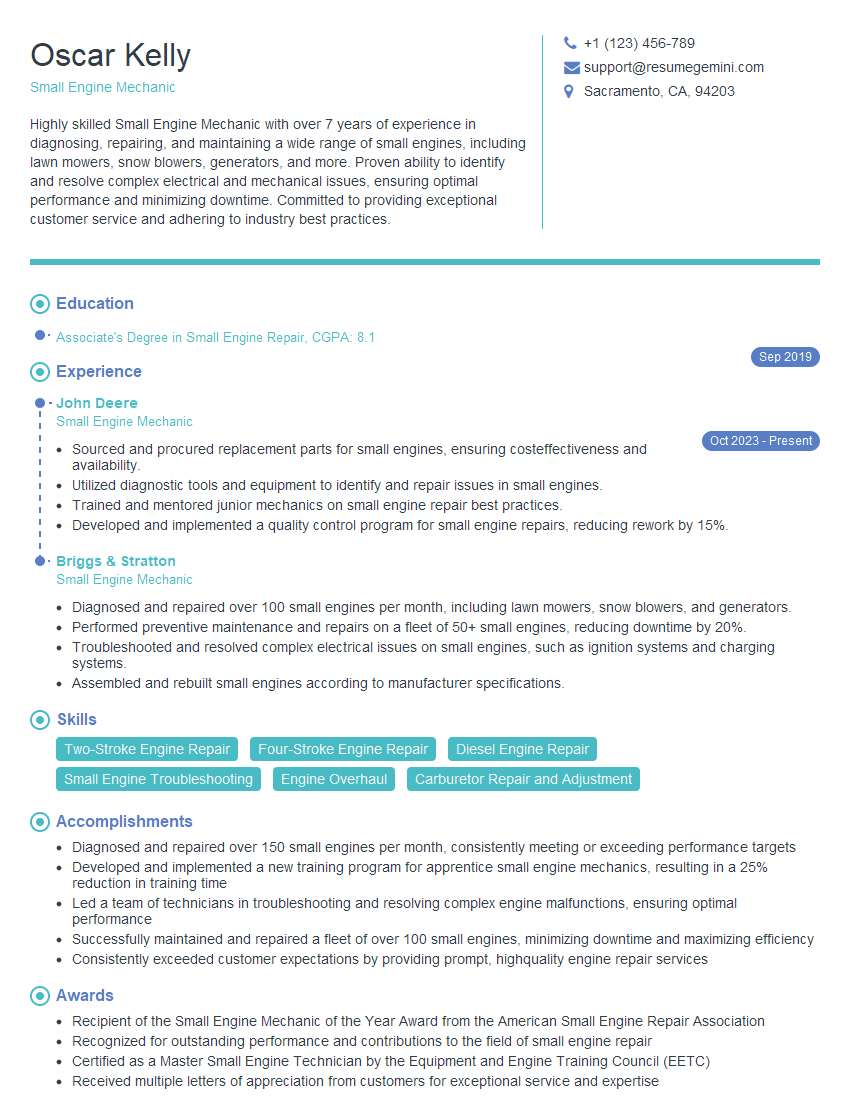
Small Engine Mechanic Resume Sample
- Maintenance Technician
- Field Service Technician
- Service Technician
- Lead Mechanic
- Shop Foreman
- Repair Technician
- Automotive Electrician
- Automotive Technician
- Diesel Mechanic
- Fleet Mechanic
- Truck Mechanic
- Heavy Equipment Mechanic
- Master Mechanic
- Motorcycle Mechanic
- Engine Specialist
- Small Engine Mechanic
Explore more articles
Users Rating of Our Blogs
Share Your Experience
We value your feedback! Please rate our content and share your thoughts (optional).
What Readers Say About Our Blog
Really detailed insights and content, thank you for writing this detailed article.
IT gave me an insight and words to use and be able to think of examples