Interviews are opportunities to demonstrate your expertise, and this guide is here to help you shine. Explore the essential Street Sweeping interview questions that employers frequently ask, paired with strategies for crafting responses that set you apart from the competition.
Questions Asked in Street Sweeping Interview
Q 1. Describe your experience operating various types of street sweeping equipment.
Throughout my career, I’ve operated a variety of street sweeping equipment, from smaller, truck-mounted sweepers ideal for residential areas to larger regenerative air sweepers capable of handling major thoroughfares and highways. My experience includes operating both mechanical broom sweepers, which use rotating brushes to dislodge and collect debris, and vacuum sweepers, which utilize powerful suction to remove even fine particles. I’m also proficient with combination sweepers, offering the best of both worlds. For example, I’ve used a Elgin Pelican sweeper for smaller jobs and a Tennant Sweeper for larger scale projects, adapting my technique based on the specific machine and the job requirements. Understanding the nuances of each machine, including their strengths and limitations in terms of sweeping width, debris capacity, and maneuverability, is critical to efficient and effective street sweeping.
Q 2. What safety protocols do you follow while operating a street sweeper?
Safety is paramount in street sweeping. My safety protocols always begin with a pre-operation inspection of the sweeper, checking fluid levels, tire pressure, and the functionality of all sweeping mechanisms and safety features. Before starting the machine, I ensure the area is clear of pedestrians and vehicles. I use warning lights and signals appropriately and maintain a safe following distance from other vehicles. I’m always mindful of blind spots and frequently check my mirrors. When working near traffic, I prioritize safe speeds and adjust my sweeping technique to avoid sudden movements or maneuvers. Wearing high-visibility clothing is essential, especially during low-light conditions. Regularly checking the sweeper’s warning systems for any issues, like low fluid levels or malfunctioning equipment, helps prevent accidents. Finally, I always follow all local traffic laws and regulations.
Q 3. How do you adjust your sweeping technique for different road surfaces (e.g., asphalt, concrete, brick)?
Adjusting sweeping technique for different road surfaces is crucial for optimal performance and debris removal. Asphalt is relatively smooth, allowing for higher speeds and less aggressive sweeping. Concrete, often featuring cracks and expansion joints, necessitates slower speeds and careful maneuvering to avoid damaging the sweeper or leaving debris behind. Brick surfaces, with their irregular texture, require the lowest speeds and may benefit from using different broom settings or multiple passes to ensure thorough cleaning. For instance, on cobblestone streets, I might reduce sweeping speed significantly and use a lower broom setting to prevent damage to both the street and the sweeper.
Q 4. Explain your process for identifying and clearing obstacles during street sweeping.
Identifying and clearing obstacles is a continuous process during street sweeping. I begin by conducting a visual inspection of the area before beginning the sweep. This helps identify any large debris, potholes, or other hazards. During the sweeping process, I remain vigilant, watching for objects that might become entangled in the sweeper’s brushes or clog the vacuum system. Smaller obstacles are often handled by the sweeper itself; however, larger items like abandoned shopping carts, construction materials, or even parked vehicles require immediate attention. In such cases, I’ll safely stop the sweeper, assess the situation, and either carefully maneuver around the obstacle or, if necessary, remove it, ensuring my safety and the safety of others.
Q 5. How do you ensure efficient route planning and time management while street sweeping?
Efficient route planning and time management are key to maximizing productivity in street sweeping. I leverage route optimization software or mapping tools that consider traffic patterns, street characteristics, and cleaning requirements to create optimal routes. This helps minimize travel time between sweeping zones and ensures that all designated areas are covered within the allotted time. I also factor in potential delays, such as unexpected obstacles or traffic congestion, and build buffer time into my schedule. Regular communication with dispatch and monitoring my progress throughout the sweep helps to identify and address potential delays proactively. Real-time adjustments to my route based on unforeseen circumstances are also crucial for effective time management.
Q 6. Describe your experience maintaining and performing basic maintenance on street sweeping equipment.
Maintaining street sweeping equipment is an essential part of my role. I regularly conduct pre- and post-operation checks, including inspecting fluid levels, checking for any leaks or damage, lubricating moving parts, and cleaning the brushes and vacuum system. I’m proficient in performing basic maintenance tasks, such as changing filters, replacing worn-out brushes, and resolving minor mechanical issues. I also perform daily cleaning of the sweeper, removing accumulated debris, and inspecting for any damage or wear and tear. For more complex repairs or maintenance, I rely on trained mechanics, documenting all maintenance activities and issues accurately.
Q 7. How do you handle unexpected mechanical issues while operating a street sweeper?
Handling unexpected mechanical issues requires a calm and systematic approach. My first step is to safely bring the sweeper to a complete stop, activating hazard lights to alert other vehicles and pedestrians. I then assess the situation and try to identify the source of the problem. For minor issues, I might have the necessary tools and knowledge to perform a temporary fix, allowing me to complete the sweep or return to the depot safely. For more serious issues that require specialized tools or expertise, I immediately contact dispatch and report the problem, following their instructions for next steps. Safety and responsible operation always take precedence. Prioritizing safety and following company protocols are key components of my handling of unexpected problems.
Q 8. What is your experience with different types of sweeping brushes and their applications?
Different sweeping brushes are crucial for effective street cleaning, each designed for specific debris types and surface conditions. Think of them as specialized tools in a toolbox.
- Main Sweepers (Cylinder Brushes): These are the workhorses, typically found on large street sweepers. Their rotating cylindrical design effectively gathers large debris like leaves, twigs, and litter. I’ve used these extensively on main thoroughfares and larger parking areas. The bristle stiffness is adjustable to optimize cleaning effectiveness across different surface types.
- Side Sweepers (Gooseneck Brushes): These smaller brushes are mounted on the sides of the sweeper and are excellent for cleaning close to curbs and edges where the main sweeper might miss. They’re especially helpful for clearing debris from gutters. I’ve relied on these frequently to ensure comprehensive cleaning in tight spaces.
- Rotary Brushes: These offer high-speed agitation and are exceptionally effective at removing finer particles like dust and sand. They’re also effective in removing stubborn, sticky materials. However, they require careful handling, as aggressive rotation might damage sensitive surfaces. I’ve used these in conjunction with other brushes on roads with particularly fine debris.
- Specialized Brushes: Some brushes are designed for specific materials such as snow removal or dealing with heavy mud. We used specialized brushes for snow clearing during a blizzard last year, allowing for continued street maintenance and reducing the risk of accidents.
The selection of brushes depends heavily on the specific job. For example, a residential street might only need a main sweeper and a side sweeper, while a busy city center might require a combination of all types for optimal results.
Q 9. How do you handle spills or hazardous materials encountered during street sweeping?
Handling spills or hazardous materials requires immediate action and adherence to strict safety protocols. Safety first is always the priority. My approach involves a multi-step process:
- Assessment and Isolation: First, I assess the nature and extent of the spill. If it’s a hazardous material (like oil or chemicals), I immediately cordon off the area, preventing access and notifying the appropriate authorities (police, fire department, environmental agency). I ensure there’s clear signage to warn pedestrians and drivers.
- Personal Protective Equipment (PPE): I always wear the correct PPE, including gloves, goggles, and protective clothing, appropriate for the specific hazard. This ensures my personal safety and prevents contamination.
- Specialized Cleaning: Depending on the material, specific cleaning methods are used. Oil spills, for instance, might require absorbent materials and specialized cleaning agents. Hazardous materials necessitate calling in specialized cleanup teams.
- Documentation: All incidents, no matter how minor, are meticulously documented, including the type of material, the location, the time, and the steps taken. This is crucial for liability purposes and helps prevent future issues.
For example, I once encountered a significant oil spill from a damaged vehicle. I immediately followed these steps, alerting the authorities and using absorbent pads to contain the spill before a specialized cleanup crew arrived. The thorough documentation ensured compliance and prevented any negative consequences.
Q 10. Describe your experience working in varying weather conditions.
Street sweeping is a year-round job, and I have extensive experience operating under diverse weather conditions. Adaptability is key.
- Rain: In light rain, sweeping can continue with caution, but heavy rain requires postponement to avoid water damage to the equipment and compromised street cleaning efficacy.
- Snow and Ice: In snowy or icy conditions, sweeping is generally not possible. Snow removal operations take precedence, and we switch to snowplows or other winter maintenance equipment.
- Extreme Temperatures: Extreme heat or cold can affect the equipment and operator’s performance. In extreme heat, more frequent breaks are needed to prevent dehydration. In extreme cold, careful monitoring of equipment is needed to avoid mechanical problems.
- Wind: Strong winds can impact efficiency as debris is more difficult to contain. Wind can also spread the debris, making it difficult to contain the cleanup zone.
I’ve learned to anticipate these challenges and adjust my schedule and operations accordingly. Safety is always the paramount concern in adverse weather.
Q 11. How do you prioritize tasks when facing multiple areas needing attention?
Prioritizing tasks when multiple areas need attention involves a strategic approach. My method considers several factors:
- Urgency: Areas with significant debris build-up or posing immediate safety risks (like blocked drains or hazardous materials) get top priority.
- Traffic Impact: Areas with heavy traffic congestion are prioritized to minimize disruption. This might involve focusing on major thoroughfares or intersections before less-trafficked side streets.
- Scheduled Maintenance: Pre-planned maintenance tasks, such as cleaning specific areas before an event, need scheduling in.
- Resource Availability: The number of available sweepers and personnel influences the task prioritization. Larger jobs might require breaking the task down into smaller, manageable parts.
Think of it like a triage system in a hospital; the most critical situations get dealt with first. I use a combination of route planning software and on-the-ground judgment to make informed decisions, ensuring the most effective and efficient use of resources.
Q 12. Explain your understanding of traffic laws and regulations related to street sweeping operations.
Understanding traffic laws and regulations related to street sweeping is crucial for safe and legal operations. This includes:
- Permitting and Scheduling: Many jurisdictions require permits for street sweeping operations, often specifying times and locations. I’m fully aware of the permitting process and ensure all necessary approvals are in place.
- Traffic Control: Safe traffic management is paramount, including the appropriate use of signage, cones, and, when necessary, flaggers to guide vehicles around work zones.
- No Parking Zones: Street sweeping often involves ‘No Parking’ zones to allow for unobstructed operation. I ensure that these zones are correctly implemented and that ample notification is provided to the public.
- Speed Limits and Safety: Adhering to speed limits during operation is non-negotiable. The large equipment requires a slower pace for both safety and operational efficiency.
- Emergency Vehicle Access: Maintaining clear access for emergency vehicles is a top priority, and the routes are planned to avoid interfering with emergency responders.
Non-compliance can lead to accidents or fines, therefore, a thorough understanding and strict adherence to these regulations are vital. I regularly review these regulations and updates to ensure my continued compliance.
Q 13. How do you ensure the safety of pedestrians and other vehicles during your work?
Ensuring the safety of pedestrians and vehicles during street sweeping is paramount. My approach encompasses several layers:
- Visibility: The sweeper is equipped with bright lights and warning signals to increase its visibility. We use additional safety cones and signage as needed.
- Slow Speeds: Operating the sweeper at safe, slow speeds is crucial, reducing the risk of accidents and enabling better observation of the surrounding area.
- Communication: Clear communication is vital. We might use radios to coordinate with other workers or traffic control personnel.
- Awareness: Constant awareness of the surroundings is a must, continuously scanning for pedestrians and vehicles.
- Signage and Warning Signals: Always employing the appropriate signage and warning signals in designated areas is essential to prevent accidents. This is also important to manage the traffic flow and safely delineate the work area.
Safety isn’t just a checklist; it’s an ingrained part of my operational approach. I’ve personally intervened several times to prevent potential collisions, illustrating the importance of constant vigilance.
Q 14. Describe your experience with GPS navigation and route optimization.
GPS navigation and route optimization are integral to efficient street sweeping operations. My experience includes:
- Route Planning Software: I utilize specialized route planning software that integrates with GPS technology. This allows me to optimize routes based on various factors, such as traffic patterns, street closures, and the locations of debris.
- Real-time Adjustments: The GPS system allows for real-time route adjustments based on unexpected events, like traffic jams or road closures. This ensures that I can stay on schedule while adjusting to dynamic conditions.
- Data Analysis: The software provides valuable data on sweeping times, areas covered, and overall efficiency, this data helps to identify areas where more frequent sweeping is needed or where the process can be improved. This also assists in resource allocation.
- Integration with Scheduling: GPS data is integrated with our scheduling software, optimizing the allocation of resources by allowing for the automated assignment of tasks and routes based on their location, area, and operational demands.
For instance, using the software during a recent festival, I was able to dynamically adjust the route to avoid congested areas, completing the task without significant delay or risk.
Q 15. What is your experience with daily logs and reporting procedures?
Daily logs and reporting are crucial for efficient street sweeping operations. My experience involves meticulously documenting all aspects of each shift, including the areas swept, the time spent in each location, the amount of debris collected, and any equipment malfunctions or incidents encountered. This data is crucial for performance evaluation and resource allocation. For example, I consistently record the start and end times of each route, the type of sweeper used (e.g., mechanical, vacuum), and any specific challenges like heavy debris accumulation or unexpected obstacles. These logs are then used to generate reports that highlight productivity, identify areas needing more frequent sweeping, and track overall operational efficiency. These reports usually follow a pre-defined template, often including summary statistics and any relevant observations.
I use a combination of digital and paper-based logging systems depending on the specific requirements of the job. Digital logs allow for easy data analysis and reporting, while paper logs provide a backup and are useful when technology is unavailable.
Career Expert Tips:
- Ace those interviews! Prepare effectively by reviewing the Top 50 Most Common Interview Questions on ResumeGemini.
- Navigate your job search with confidence! Explore a wide range of Career Tips on ResumeGemini. Learn about common challenges and recommendations to overcome them.
- Craft the perfect resume! Master the Art of Resume Writing with ResumeGemini’s guide. Showcase your unique qualifications and achievements effectively.
- Don’t miss out on holiday savings! Build your dream resume with ResumeGemini’s ATS optimized templates.
Q 16. How do you communicate effectively with supervisors and colleagues?
Effective communication is paramount in a street sweeping team. With supervisors, I ensure clear and concise reporting on progress, challenges, and potential issues. For example, if I encounter a blocked drain affecting sweeping operations, I immediately inform my supervisor, providing details of the location and potential solutions. I actively participate in team meetings, offering suggestions for improvements and sharing observations about different areas or sweeping techniques.
With colleagues, I maintain open and respectful communication, emphasizing teamwork and collaboration. This involves clear and direct communication about route assignments, equipment sharing, and potential hazards. I always strive to be a helpful team member, offering support and assistance when needed. For instance, if a colleague’s sweeper malfunctions, I’ll assist them in troubleshooting or contacting the necessary support personnel while ensuring the area remains safe and clean. A positive team dynamic significantly boosts efficiency and workplace morale.
Q 17. How do you identify and address areas needing more frequent street sweeping?
Identifying areas needing more frequent sweeping involves a multi-faceted approach. Regularly reviewing daily logs helps pinpoint areas with consistently high debris accumulation, such as locations near construction sites, busy intersections, or areas with heavy foot traffic. I also proactively observe areas for potential issues, like leaf build-up in the fall or excessive litter after special events. Visual inspection of the streets plays a significant role, enabling me to identify areas with unusual amounts of dirt, litter or debris that might not be reflected immediately in the quantitative data.
For example, I’d notice consistently clogged storm drains in a specific area indicating a need for more frequent sweeping to prevent debris from entering the drainage system. I then report these observations to my supervisor, suggesting adjustments to the sweeping schedule to address the problem effectively. Regular communication and feedback loops are crucial for adaptive scheduling.
Q 18. What are the common causes of street sweeper malfunctions?
Street sweeper malfunctions can stem from various causes. Mechanical issues such as worn brushes, clogged filters, hydraulic leaks, or engine problems are common. Electrical malfunctions, including faulty wiring or sensor failures, can also lead to operational problems. Environmental factors such as extreme weather conditions (heavy rain or snow) can affect performance as well. Proper maintenance plays a key role in minimizing these issues. Other problems include damage to the sweeper due to collisions with obstacles or poor driving.
For example, a clogged filter can reduce suction power, impacting sweeping efficiency. A faulty hydraulic system could result in the inability to lift or lower the sweeping brushes. Regular preventative maintenance, including thorough inspections and timely repairs, is crucial to minimize the occurrence and severity of these malfunctions.
Q 19. How do you ensure the proper disposal of collected waste?
Proper disposal of collected waste is critical for environmental protection and public health. My experience involves adhering strictly to local regulations and company procedures for waste disposal. This includes utilizing designated disposal sites, ensuring proper segregation of materials if required (e.g., separating recyclables), and correctly documenting the type and quantity of waste disposed of. I always ensure that waste is safely and securely loaded into the collection vehicles, preventing spillage or leakage which can impact the environment.
For example, I’m well-versed in the rules and regulations surrounding hazardous waste disposal. If I encounter something like broken glass or chemical spills, I’ll immediately follow the safety procedures and notify the appropriate personnel to ensure safe handling and disposal.
Q 20. Describe your experience working independently and as part of a team.
I have extensive experience working both independently and as part of a team. Working independently, I’m adept at managing my own time and route effectively, ensuring thorough and efficient coverage. I’m responsible for maintaining my equipment and ensuring the safety of my work area. For instance, I will meticulously plan my route for optimal efficiency and adjust as needed to tackle unexpected challenges independently and safely.
As part of a team, I value collaboration and communication. I’m comfortable sharing knowledge and assisting colleagues, ensuring smooth workflow and efficient coverage of our assigned territories. I am also a proactive participant in team briefings and discussions, sharing ideas and insights that help optimize our collective performance. A recent example involved coordinating with my team to address a sudden increase in street debris after a large public event. We adjusted our routes and collaboratively completed the cleanup quickly and effectively.
Q 21. How do you handle complaints or concerns from the public?
Handling public complaints or concerns requires professionalism, empathy, and effective communication. I always listen attentively to the complaint, acknowledging the individual’s concerns and validating their feelings. I then strive to explain the situation clearly and professionally, and provide reasonable solutions whenever possible. If I cannot resolve the issue immediately, I document the details and escalate it to my supervisor, keeping the complainant informed about the progress.
For example, if someone complains about an area not being swept thoroughly, I would first investigate, perhaps re-sweeping the area or explaining any unavoidable circumstances that prevented full coverage. If the issue was due to a wider problem, I’d escalate it to my supervisor. A respectful and responsive attitude goes a long way towards building public trust and improving community relations. Keeping records of these interactions and resolutions is essential for improvement.
Q 22. How do you stay updated on new technologies and best practices in street sweeping?
Staying current in street sweeping requires a multi-pronged approach. I regularly attend industry conferences like those hosted by the International Sweepers Association, where I learn about the latest in equipment, techniques, and regulations. I also actively participate in online forums and professional groups, engaging with other street sweeping professionals to share best practices and learn from their experiences. Reading industry publications, such as trade journals and government reports on environmental regulations, keeps me informed on advancements in sustainable sweeping technologies and evolving best practices. Finally, I’m always seeking out opportunities for professional development, such as attending webinars and workshops focusing on areas like data analytics for route optimization or the use of new sensor technology in autonomous sweeping vehicles.
Q 23. What are your strengths and weaknesses related to street sweeping?
My strengths lie in my problem-solving abilities and my commitment to efficiency. I’m adept at quickly assessing situations, identifying bottlenecks in sweeping operations, and implementing solutions to optimize performance. For instance, in my previous role, I identified a recurring issue with clogged catch basins that was delaying our sweeping schedule. By collaborating with the city’s drainage department, I implemented a pre-sweeping flushing program which significantly reduced this problem, improving overall efficiency. My weakness, however, is delegating tasks. I sometimes find it challenging to trust others to execute tasks to the same high standard I maintain myself. I’m actively working on improving this aspect by adopting more structured training and delegation processes.
Q 24. What are your salary expectations?
My salary expectations are in line with the industry standard for experienced street sweeping professionals with my skillset and experience in this region. I’m open to discussing a specific range based on the complete compensation package and the responsibilities associated with the role.
Q 25. Why are you interested in this specific street sweeping position?
I’m particularly interested in this position because of [Company Name]’s commitment to [mention a specific company value, e.g., sustainable practices, technological innovation, community engagement]. My own values strongly align with these, and I believe my skills and experience would allow me to make a significant contribution to your team’s success in achieving those goals. The opportunity to work with [mention specific technology, team, or project] is also very appealing.
Q 26. Describe a time you solved a challenging problem related to street sweeping.
During a particularly heavy rainfall event, we experienced significant debris build-up in a low-lying area of the city, creating a major flooding risk. The standard sweeping routes and equipment were insufficient to handle the situation. I quickly assessed the situation, organized a team, and procured additional equipment, including high-capacity pumps and specialized debris removal tools. We implemented a multi-phased approach, first removing the large debris, then deploying pumps to clear standing water, and finally using specialized equipment for thorough cleaning. This proactive, multi-faceted approach averted a potentially disastrous flooding situation and demonstrated my ability to think on my feet and effectively manage unforeseen challenges.
Q 27. What is your availability to work different shifts or overtime?
I am highly flexible and available to work various shifts and overtime as needed to meet the demands of the job. Street sweeping often requires adapting to changing conditions and unexpected events, so I’m comfortable with a flexible work schedule.
Q 28. What are your long-term career goals within the field of street sweeping?
My long-term career goals include progressing into a supervisory or management role within the street sweeping department. I envision myself contributing to the development and implementation of innovative strategies and technologies to improve sweeping efficiency and environmental sustainability. I am also keen to mentor and train newer team members, ensuring the department maintains a high level of expertise. Ultimately, I aim to become a recognized leader in the field, contributing to the advancement of street sweeping practices across the region.
Key Topics to Learn for Your Street Sweeping Interview
- Equipment Operation & Maintenance: Understanding the mechanics of street sweepers, including their various components, routine maintenance procedures, and troubleshooting common malfunctions. Practical application: Describe your experience with preventative maintenance and resolving minor equipment issues.
- Route Planning & Efficiency: Optimizing sweeping routes for maximum coverage and efficiency, considering factors like traffic flow, road conditions, and time constraints. Practical application: Explain how you would plan a route for a busy downtown area versus a residential neighborhood.
- Safety Procedures & Regulations: Adhering to all safety protocols, including traffic laws, proper use of personal protective equipment (PPE), and hazard identification. Practical application: Describe a scenario where you had to prioritize safety while performing your duties.
- Waste Management & Disposal: Understanding proper waste disposal procedures, including the handling and disposal of different types of debris and adherence to environmental regulations. Practical application: Explain your knowledge of different waste types and their appropriate disposal methods.
- Communication & Teamwork: Effective communication with supervisors, colleagues, and the public, including responding to inquiries and reporting issues. Practical application: Describe a time you worked effectively as part of a team to complete a task.
- Environmental Awareness: Understanding the environmental impact of street sweeping and best practices for minimizing negative effects. Practical application: Discuss methods for reducing water usage or improving waste sorting.
Next Steps
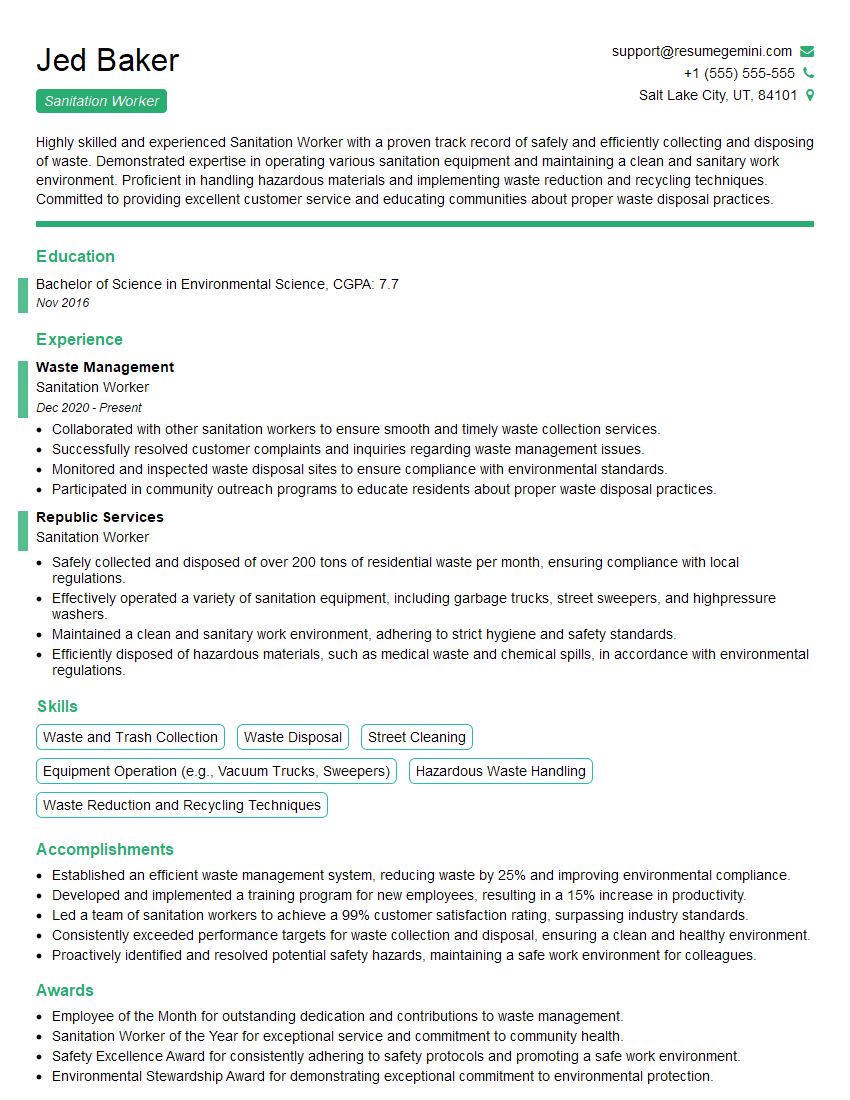
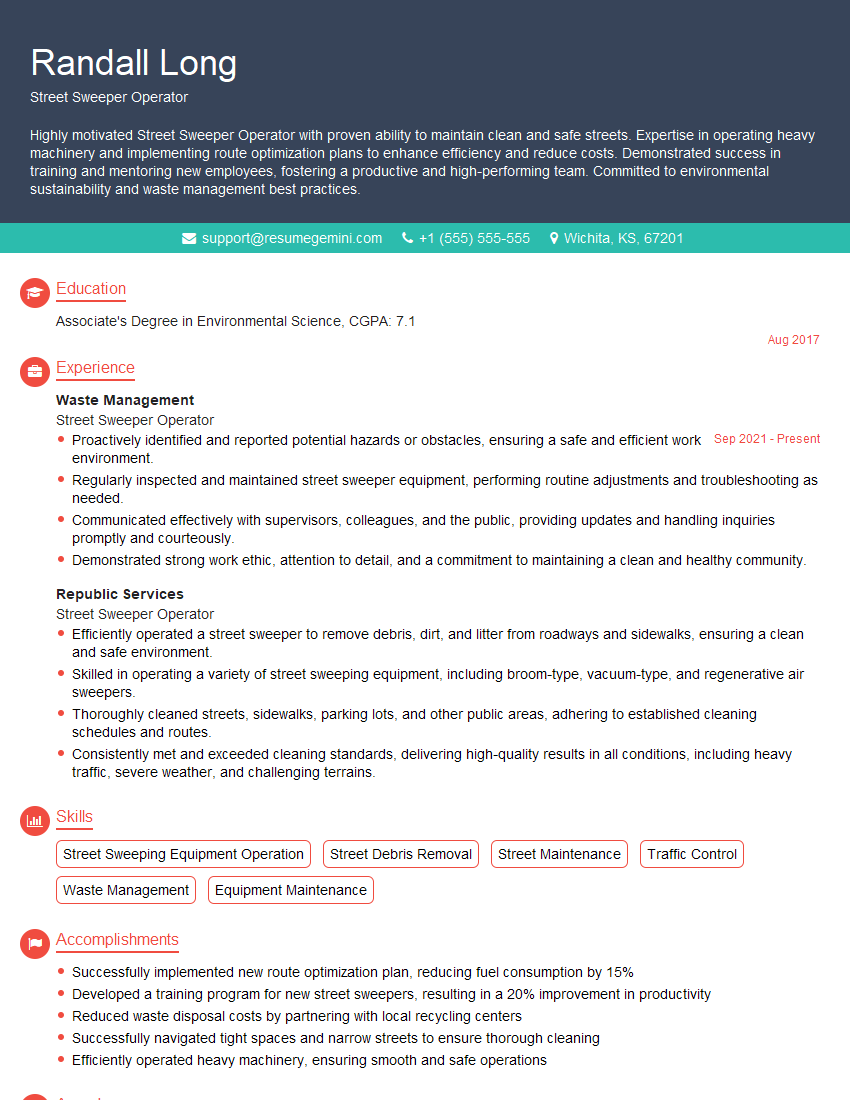
Mastering street sweeping offers excellent career growth opportunities, leading to increased responsibility, specialized training, and potentially supervisory roles. To maximize your job prospects, it’s crucial to present your skills effectively. Creating an ATS-friendly resume is key to getting your application noticed. We highly recommend using ResumeGemini to build a professional and impactful resume that highlights your experience and qualifications. ResumeGemini provides examples of resumes tailored to the street sweeping industry to help guide you. Invest time in crafting a strong resume – it’s your first impression with potential employers.



Explore more articles
Users Rating of Our Blogs
Share Your Experience
We value your feedback! Please rate our content and share your thoughts (optional).
What Readers Say About Our Blog
Really detailed insights and content, thank you for writing this detailed article.
IT gave me an insight and words to use and be able to think of examples