Every successful interview starts with knowing what to expect. In this blog, we’ll take you through the top Survey Quality Assurance and Control interview questions, breaking them down with expert tips to help you deliver impactful answers. Step into your next interview fully prepared and ready to succeed.
Questions Asked in Survey Quality Assurance and Control Interview
Q 1. Explain the difference between survey quality assurance and quality control.
Survey quality assurance (QA) and quality control (QC) are distinct but interconnected processes aimed at ensuring the reliability and validity of survey data. Think of it like baking a cake: QA is the overall plan to ensure a delicious cake (e.g., choosing the right recipe, ingredients, and equipment), while QC is the hands-on checking during the process (e.g., ensuring the oven temperature is correct, checking the cake’s doneness).
Quality Assurance focuses on the proactive prevention of errors. This includes meticulous planning, designing robust questionnaires, selecting appropriate sampling methods, developing clear protocols for data collection, and training interviewers effectively. It’s about setting up the entire process to minimize potential problems before they arise.
Quality Control, on the other hand, is a reactive process involving checks and inspections throughout the survey process. This includes monitoring data collection, validating responses, identifying outliers, and implementing data cleaning techniques to correct errors that have already occurred. It’s about catching and correcting mistakes as they happen.
In essence, QA sets the stage for high-quality data, while QC ensures that the data meets the established standards.
Q 2. Describe your experience with different sampling methods and their impact on survey quality.
My experience encompasses a wide range of sampling methods, each with its strengths and weaknesses impacting survey quality. The choice of sampling method significantly influences the representativeness of the sample and, therefore, the generalizability of findings.
- Simple Random Sampling: Every member of the population has an equal chance of selection. While straightforward, it can be impractical for large populations and may not guarantee representation across all subgroups.
- Stratified Random Sampling: The population is divided into strata (e.g., age groups, geographic regions), and random samples are drawn from each stratum. This ensures representation from key subgroups, improving the accuracy and precision of results. I used this method in a recent customer satisfaction survey, stratifying by customer segment to gain deeper insights into each group’s experience.
- Cluster Sampling: The population is divided into clusters (e.g., schools, cities), and a random sample of clusters is selected. All units within the selected clusters are included. It’s cost-effective but can lead to higher sampling error if clusters aren’t homogeneous.
- Convenience Sampling: Selecting readily available participants. This is less rigorous and prone to bias, impacting the generalizability of findings. I avoid this method whenever possible, opting for more robust probability sampling techniques.
For example, in a study assessing public health attitudes, stratified random sampling by age and socioeconomic status would ensure that the survey results accurately reflect the views of different population segments. Conversely, relying on convenience sampling (e.g., only surveying individuals at a particular location) would risk obtaining a skewed and unrepresentative sample.
Q 3. How do you identify and address potential sources of bias in survey data?
Identifying and addressing bias is crucial for maintaining survey data integrity. Bias can stem from various sources, including:
- Sampling Bias: A non-representative sample leads to biased results. For instance, using only online surveys might exclude individuals without internet access.
- Measurement Bias: Poorly worded questions, leading questions, or socially desirable response bias can skew results. For example, a question like, “Don’t you agree that our product is amazing?” is inherently biased.
- Interviewer Bias: The interviewer’s behavior or characteristics can influence responses. This is minimized through rigorous interviewer training and standardized interviewing protocols.
- Nonresponse Bias: Non-respondents may differ systematically from respondents, skewing results. We address this through follow-up attempts, incentives, and statistical weighting techniques.
To address bias, I employ several strategies:
- Careful questionnaire design: Using neutral language, avoiding leading questions, and pre-testing the questionnaire.
- Appropriate sampling methods: Selecting a sample that accurately reflects the target population.
- Interviewer training: Ensuring interviewers administer the survey consistently and ethically.
- Statistical adjustments: Using weighting techniques to account for nonresponse bias and other forms of bias.
For instance, in a survey investigating political preferences, a questionnaire needs careful phrasing to avoid leading questions and ensure neutrality. Analyzing response patterns can also help detect and adjust for potential biases.
Q 4. What are some common methods for validating survey data?
Validating survey data ensures its accuracy and reliability. Several methods are employed:
- Data consistency checks: Identifying illogical or inconsistent responses (e.g., a respondent stating they are both married and single).
- Range checks: Verifying that responses fall within acceptable ranges (e.g., age should be above 0).
- Cross-tabulation: Examining relationships between variables to identify unexpected patterns or inconsistencies.
- Comparison with external data: Comparing survey data with data from other sources to assess consistency. For instance, comparing survey data on income levels with national statistics.
- Expert review: Consulting subject matter experts to evaluate the validity and interpretation of the findings.
For example, in a health survey, data consistency checks would identify respondents who report both smoking and never smoking. Comparing survey findings about smoking rates to national health statistics offers a further validation step. Expert review by a medical professional can also be valuable.
Q 5. Explain the importance of data cleaning and preprocessing in survey research.
Data cleaning and preprocessing are essential steps to enhance the quality and reliability of survey data. Think of it as preparing ingredients before cooking; without it, the final dish (analysis) will be subpar. It involves several steps:
- Handling missing data: Addressing missing responses through imputation or exclusion.
- Identifying and correcting errors: Fixing inconsistencies, outliers, and illogical responses.
- Transforming variables: Converting variables into appropriate formats for analysis (e.g., recoding categorical variables).
- Creating new variables: Generating new variables from existing ones (e.g., calculating an index score).
Thorough data cleaning improves the accuracy and reliability of analyses, increasing confidence in the results. Neglecting this step can lead to skewed results and flawed conclusions.
Q 6. Describe your experience with different data cleaning techniques.
My experience includes various data cleaning techniques:
- Consistency checks: Identifying and correcting inconsistencies in responses, using conditional statements to flag discrepancies (e.g., if a respondent indicates they are single but also reports having children).
- Outlier detection: Identifying and handling extreme values, using methods like box plots or z-scores. This helps to decide whether to exclude, investigate or transform these values.
- Imputation of missing data: Employing techniques such as mean imputation, regression imputation, or multiple imputation, carefully considering the bias implications of each method. Multiple imputation is generally preferred due to its lower bias.
- Data transformation: Transforming variables (e.g., standardizing scores, recoding categorical variables) to suit the analytical requirements. For instance, converting ordinal data into numerical scores for regression analysis.
- Error correction: Correcting obvious data entry errors based on established codes and guidelines.
# Example Python code for outlier detection using IQR (Interquartile Range): import numpy as np Q1 = np.percentile(data, 25) Q3 = np.percentile(data, 75) IQR = Q3 - Q1 lower_bound = Q1 - 1.5 * IQR upper_bound = Q3 + 1.5 * IQR outliers = data[(data < lower_bound) | (data > upper_bound)]
The choice of technique depends on the nature of the data and the research question. It’s essential to document all cleaning steps to maintain transparency and reproducibility.
Q 7. How do you handle missing data in a survey dataset?
Handling missing data is a critical aspect of survey quality. Ignoring it can lead to biased results and inaccurate conclusions. Several strategies exist, each with advantages and disadvantages:
- Listwise deletion: Removing entire cases with missing values. This is simple but can lead to substantial loss of information, especially with multiple missing values. It’s suitable only when missing data is minimal and random.
- Pairwise deletion: Excluding cases only for analyses involving specific variables with missing values. This preserves more data than listwise deletion but can lead to different sample sizes for different analyses, making comparisons challenging.
- Imputation: Replacing missing values with estimated values. This can involve simple methods like mean or median imputation (easy but potentially biasing), or more sophisticated methods like regression imputation or multiple imputation (less bias but more complex). Multiple imputation is generally preferred because it accounts for the uncertainty associated with the imputed values.
The best approach depends on the pattern of missing data (random, missing completely at random (MCAR), missing at random (MAR), or missing not at random (MNAR)) and the amount of missing data. Careful consideration of the implications of each method is necessary to minimize bias and preserve data integrity. For instance, in a large dataset with a small amount of randomly missing data, mean imputation might be acceptable. However, if missingness is systematic, more advanced techniques are required, such as multiple imputation. Always document the method used and its rationale.
Q 8. What are the key metrics you use to assess survey data quality?
Assessing survey data quality relies on a suite of key metrics, categorized broadly into completeness, consistency, and validity. Completeness focuses on response rates and the proportion of completed questions. For instance, a low response rate (e.g., below 50%) might indicate issues with the survey design or distribution method, requiring investigation. Similarly, a high number of incomplete responses might point to survey length or complexity problems. Inconsistency metrics highlight discrepancies within individual responses or across respondents. For example, we might examine the frequency of illogical answer combinations or unexpected patterns in responses. These might be detected using data validation checks. Finally, validity metrics address whether the survey accurately measures what it intends to. This often involves comparing survey data against external data sources or established benchmarks. For example, we might check if the average age reported by survey respondents aligns with known demographics of the target population. By analyzing these metrics collectively, a holistic view of data quality is achieved, enabling us to identify potential issues and suggest corrective measures.
- Response Rate: Percentage of successfully completed surveys.
- Item Non-Response Rate: Percentage of unanswered questions within completed surveys.
- Consistency Checks: Identifying contradictory or illogical answers within a single response.
- Data Validation: Checking responses against pre-defined rules and ranges.
- Benchmarking: Comparing survey results to existing data or expected values.
Q 9. How do you ensure the confidentiality and anonymity of survey respondents?
Ensuring confidentiality and anonymity is paramount. We employ several strategies. Firstly, we remove personally identifiable information (PII) from the data as soon as feasible. This might involve using respondent IDs instead of names or anonymizing geographic information. Secondly, we use secure data storage and access protocols. This means encrypting data both in transit and at rest, and limiting access only to authorized personnel. Thirdly, we adhere to strict data governance policies, outlining how data will be collected, stored, used, and ultimately destroyed after the project concludes. These policies are transparently communicated to respondents, often through informed consent forms that clearly state how their privacy will be protected. Finally, for sensitive topics, we might consider using techniques such as differential privacy, adding noise to the data to obscure individual responses while preserving overall trends. Think of it like blurring a photograph – you can still see the general picture, but individual details are protected.
Q 10. Explain your experience with survey software and data management tools.
My experience spans various survey software and data management tools. I’m proficient in Qualtrics, SurveyMonkey, and LimeSurvey for survey design and distribution. For data management, I’m adept at using SPSS, R, and Stata for data cleaning, manipulation, and analysis. I also have experience with cloud-based solutions like Google Sheets and Excel for simple data organization, alongside database management systems such as SQL for more advanced functionalities like data warehousing and querying. I’m comfortable navigating the features of each, selecting the most appropriate tool depending on the project’s specific requirements, budget, and complexity. For example, for large-scale surveys needing complex branching logic and automated data exports, Qualtrics is my preferred choice. For smaller-scale projects with simpler needs, SurveyMonkey might suffice. My experience ensures I can efficiently handle the entire data lifecycle, from survey creation to final analysis and report generation.
Q 11. Describe a time you had to troubleshoot a problem in survey data.
In one project, we encountered unexpectedly high rates of missing data in a crucial section of the survey. Initial investigation revealed that a jump logic error in the survey design was causing respondents to skip this section unintentionally. We initially reviewed the survey flow logic to identify the potential source of the problem. We used data visualization techniques, specifically creating frequency distributions to see response patterns across questions. This helped identify where respondents were dropping off. Once the error was identified (a faulty conditional statement in the survey software), we immediately corrected the survey flow. Next, we considered several approaches to handle the missing data in the already collected responses – imputation methods were considered, but given the size of the missing data, re-launching the survey was determined the most appropriate action. This involved communicating the correction to participants and allowing them to complete the revised survey. The revised survey had a better completion rate, and the data quality was significantly improved. This experience highlighted the importance of rigorous testing and review of survey instruments before launch, and a well-defined plan for addressing data quality issues that may arise.
Q 12. What is your approach to managing and resolving conflicts between survey data and project goals?
Managing conflicts between survey data and project goals requires a nuanced approach. It’s crucial to understand the source of the conflict. Is the data flawed (e.g., low response rate, sampling bias), or are the project goals unrealistic or poorly defined? I start by thoroughly assessing the quality of the survey data using the metrics mentioned earlier. If data quality is an issue, we explore strategies to improve it – like weighting data to adjust for sampling bias or using imputation techniques for missing data. However, if the data is sound but contradicts project goals, we need to critically evaluate the goals themselves. Perhaps the target audience wasn’t accurately defined, leading to an unexpected response. In such cases, collaboration with stakeholders is key. We would discuss the discrepancies, explore potential explanations, and revise project goals or strategies as necessary. Transparency and open communication are crucial throughout the process to ensure buy-in from all parties. Sometimes, this might involve adjusting project expectations to align with the available data, rather than trying to force the data to fit preconceived notions.
Q 13. How do you evaluate the reliability and validity of survey instruments?
Evaluating the reliability and validity of survey instruments is crucial for ensuring the quality of the data. Reliability refers to the consistency of the instrument; a reliable instrument yields similar results under consistent conditions. We assess reliability using methods like Cronbach’s alpha (for internal consistency) or test-retest reliability (comparing results from repeated administrations). Validity, on the other hand, assesses whether the instrument measures what it intends to measure. We can use content validity (expert review of items), criterion validity (comparing survey scores to external criteria), or construct validity (examining the underlying theoretical constructs) to evaluate validity. For example, a questionnaire designed to measure job satisfaction should have items that comprehensively cover all facets of job satisfaction, demonstrating content validity. It should also correlate with other established measures of job satisfaction (criterion validity), and the results should align with theories of job satisfaction (construct validity). A low Cronbach’s alpha might indicate problems with internal consistency (reliability), while a lack of correlation with established measures might question the instrument’s criterion validity. Thorough evaluation of both reliability and validity ensures the survey provides meaningful and dependable results.
Q 14. Describe your experience with statistical analysis of survey data.
My experience encompasses a wide range of statistical analysis techniques applied to survey data. I’m proficient in descriptive statistics (e.g., calculating means, standard deviations, frequencies) to summarize the data. I also use inferential statistics to draw conclusions about the population based on the sample data. This includes t-tests, ANOVA, regression analysis, and chi-square tests, depending on the research questions and the nature of the data. For example, I might use a t-test to compare the mean satisfaction scores between two groups, or regression analysis to explore the relationship between multiple variables. Moreover, I have experience with more advanced techniques like factor analysis to reduce the dimensionality of data and structural equation modeling to test complex relationships between latent variables. My analyses are always guided by the research questions, considering appropriate statistical assumptions and presenting findings in a clear and accessible manner using visualizations such as charts and graphs. The choice of statistical method depends entirely on the research design, data characteristics and the questions being asked.
Q 15. Explain your understanding of different weighting techniques for survey data.
Weighting techniques in survey data adjust the contribution of different respondent groups to reflect the true population distribution. This is crucial when your sample doesn’t perfectly represent the population you’re studying. For instance, if you’re surveying the general population but have an overrepresentation of younger people, weighting can correct this imbalance. Several techniques exist:
- Post-stratification weighting: This involves weighting the responses based on known population proportions for specific demographic variables (e.g., age, gender, location). Let’s say your survey has 60% women and 40% men, but the population is 50/50. Post-stratification would give each male response a weight of 1.25 and each female response a weight of 0.83 to correct for this disparity. This is a common and relatively straightforward method.
- Raking (Iterative Proportional Fitting): This is a more sophisticated method used when you need to adjust for multiple variables simultaneously. It iteratively adjusts weights until the weighted sample matches the known marginal distributions for all variables. Think of it as a refined version of post-stratification, capable of handling complex relationships between different demographic groups.
- Weighting by sampling probability: If your sampling method wasn’t random (e.g., stratified sampling where certain groups had higher selection probabilities), you need to weight responses to account for these varying probabilities. Those selected with lower probability will get higher weights.
The choice of weighting technique depends on the specific sampling design and the available population data. Incorrect weighting can lead to biased results, so it’s essential to carefully consider the best approach and perform thorough validation.
Career Expert Tips:
- Ace those interviews! Prepare effectively by reviewing the Top 50 Most Common Interview Questions on ResumeGemini.
- Navigate your job search with confidence! Explore a wide range of Career Tips on ResumeGemini. Learn about common challenges and recommendations to overcome them.
- Craft the perfect resume! Master the Art of Resume Writing with ResumeGemini’s guide. Showcase your unique qualifications and achievements effectively.
- Don’t miss out on holiday savings! Build your dream resume with ResumeGemini’s ATS optimized templates.
Q 16. How do you measure and improve response rates in surveys?
Improving response rates is a critical aspect of survey quality. It involves a multi-pronged approach focusing on both design and execution:
- Incentivization: Offering rewards, such as gift cards or lottery entries, can significantly boost participation, especially for longer or more complex surveys. However, the incentive must be appropriately sized and ethically designed to avoid coercion.
- Survey Length and Design: Shorter, engaging surveys are more likely to be completed. Clear, concise questions and visually appealing layouts enhance the respondent experience. Pilot testing is vital here to refine the design.
- Multiple Contacts: Many respondents don’t respond on the first attempt. A follow-up email or phone call can be very effective; however, it’s crucial to strike a balance between persistence and annoyance.
- Personalization: Addressing respondents by name and tailoring the survey introduction to their demographics can increase engagement.
- Mode of Administration: The choice of survey mode (online, phone, mail) can greatly affect response rates. Online surveys are often convenient but may exclude those without internet access, while phone surveys can be more expensive but offer higher response rates from specific demographics.
- Pre-notification: Sending a short email or letter before the survey to explain its purpose and importance can prepare potential respondents and increase participation.
Measuring response rates involves calculating the proportion of eligible respondents who completed the survey. Tracking response rates throughout the survey period allows for timely adjustments to improve the final outcome. Regularly analyzing the demographics of respondents compared to the target population helps identify areas for improvement in future surveys.
Q 17. Describe your experience with designing surveys for specific populations.
Designing surveys for specific populations requires a deep understanding of their cultural context, communication preferences, and potential barriers to participation. For example, I recently worked on a survey targeting low-literacy adults. This required simplifying the language, using clear and concise questions, and incorporating visual aids where appropriate. We also pre-tested the survey extensively with members of the target population to identify any confusing aspects or potential biases.
Another project involved surveying elderly individuals. This necessitated adapting the survey length and mode to accommodate their physical and cognitive abilities. We opted for a shorter phone survey and employed a professional interviewer with experience working with this demographic. We also considered the potential for sensory impairments, such as vision or hearing loss, and made adjustments accordingly.
In both cases, careful consideration of the population’s characteristics was paramount. Cultural sensitivity, accessibility concerns, and detailed pre-testing were crucial in ensuring the survey effectively collected data from this specific group without introducing bias.
Q 18. What are some common challenges in conducting international surveys?
International surveys present unique challenges beyond those encountered in domestic studies. These include:
- Language Barriers: Accurate translation and back-translation of questionnaires are essential to ensure meaning and consistency across languages. It is not enough to just translate; the survey must then be re-translated into the original language to check for accuracy and clarity.
- Cultural Differences: Cultural norms and values can significantly influence survey responses. Questions that are perfectly acceptable in one culture may be offensive or misinterpreted in another. Thorough cultural adaptation is crucial.
- Infrastructure and Access: Variations in internet access and technological infrastructure across countries can affect the feasibility of online surveys. Phone surveys might be the only viable option in certain regions.
- Sampling and Data Collection: Establishing representative samples across multiple countries can be complex. Local expertise and collaboration with local research partners are crucial.
- Ethical Considerations: International research requires navigating differing ethical guidelines and regulations in each country involved.
To mitigate these challenges, careful planning, collaboration with local experts, and thorough pilot testing in each target region are essential. Adaptation of the survey instrument and data collection methods to the specific context of each country is critical to ensuring the validity and reliability of the results.
Q 19. How do you ensure the quality of survey fieldwork?
Ensuring the quality of survey fieldwork relies on meticulous planning, training, and monitoring. This involves:
- Interviewer Training: Interviewers must be thoroughly trained in standardized procedures, including proper question administration, handling of respondent refusals, and data recording techniques. Role-playing and practice sessions are invaluable here.
- Supervision and Monitoring: Regular monitoring of interviewer performance is crucial. This can involve reviewing a sample of completed questionnaires for consistency and accuracy, conducting mystery shopping calls to assess interviewing quality, and tracking key metrics like response rates and interview completion times.
- Data Validation: Implementing data validation checks during and after data collection helps identify and rectify errors or inconsistencies. These checks can range from simple range checks (e.g., ensuring age is within a realistic range) to more sophisticated consistency checks.
- Quality Control Measures: Implementing random audits and spot checks on interviewers helps maintain data quality and identifies any potential problems promptly.
- Technology and Tools: Using Computer-Assisted Telephone Interviewing (CATI) or Computer-Assisted Personal Interviewing (CAPI) systems improves data quality by reducing recording errors and ensuring consistent question administration.
By implementing these measures, you can greatly reduce data errors, increase the accuracy and reliability of the data collected, and ultimately enhance the validity of your survey results.
Q 20. Explain your experience with different modes of survey administration (online, phone, in-person).
My experience encompasses all three modes – online, phone, and in-person. Each mode has its own strengths and weaknesses:
- Online Surveys: These are cost-effective, reach a large geographical area easily, and can incorporate advanced features like branching logic and multimedia. However, they can suffer from lower response rates, sample bias due to unequal internet access, and difficulty verifying respondent identity.
- Phone Surveys: These allow for more personal interaction, higher response rates for some demographic groups, and better clarification of questions. However, they are relatively expensive, can be time-consuming, and may be limited by geographic reach and issues like telephone access.
- In-person Surveys: These offer the highest level of control over the interview process, allowing for direct observation of respondent behavior and immediate clarification of questions. They are also most effective when physical interaction is crucial (e.g., product demonstrations). However, they’re very expensive and time-consuming, with limited geographical reach and potential for interviewer bias.
The optimal mode depends on factors such as budget, sample characteristics, geographical reach, and the complexity of the survey questions. Sometimes, a mixed-mode approach combining multiple modes is the most effective strategy, maximizing reach and minimizing biases.
Q 21. How do you assess the accuracy and precision of survey data?
Assessing the accuracy and precision of survey data involves a combination of methods:
- Reliability Analysis: This evaluates the consistency of the measurements. Techniques like Cronbach’s alpha can assess internal consistency of scales within the survey. Test-retest reliability assesses the consistency of responses over time.
- Validity Analysis: This examines whether the survey actually measures what it intends to measure. Different types of validity – content, criterion, and construct – need to be considered depending on the survey’s objectives. Content validity looks at whether the questions comprehensively cover the topic; criterion validity compares survey scores to external measures; and construct validity examines whether the survey measures the underlying theoretical construct.
- Sampling Error Estimation: This quantifies the uncertainty associated with generalizing results from the sample to the population. Margin of error and confidence intervals provide information about this uncertainty.
- Non-response Bias Analysis: This examines whether those who didn’t participate differ systematically from those who did. Comparing the demographics of respondents to the target population is a critical step here. Weighting techniques might be employed to mitigate this bias.
- Data Cleaning and Editing: Thorough data cleaning, involving identification and handling of missing values and outliers, is critical for accurate analysis. Outliers need careful consideration – they might represent true variation or data entry errors.
By applying these methods, we gain a clearer picture of the quality and trustworthiness of the survey data, allowing for more informed interpretations and conclusions.
Q 22. What are some ethical considerations in survey research?
Ethical considerations in survey research are paramount to ensuring the validity and integrity of the findings, and to protecting the rights and well-being of participants. Key ethical concerns include:
- Informed Consent: Participants must be fully informed about the purpose of the study, their rights, and how their data will be used before consenting to participate. This includes clearly explaining the potential risks and benefits of participation and ensuring they understand they can withdraw at any time without penalty.
- Confidentiality and Anonymity: Protecting participant privacy is crucial. Data should be anonymized whenever possible, and robust security measures should be implemented to prevent unauthorized access. Participants should be assured their responses will be kept confidential and will not be linked to them individually unless they explicitly consent otherwise.
- Data Security and Storage: Secure data storage and handling protocols are essential to prevent data breaches and misuse. This includes encryption, access control, and adherence to relevant data protection regulations.
- Avoiding Bias and Deception: Survey questions should be carefully worded to avoid bias and leading questions. Deception should be avoided, except in rare cases where it is absolutely necessary and ethically justified. Even then, informed consent must be obtained after full disclosure.
- Transparency and Honesty: Researchers must be transparent about the methodology, data analysis techniques, and the limitations of the findings. Honesty is crucial in all aspects of the research process.
For example, a survey about sensitive topics like healthcare or personal finances needs rigorous measures to ensure confidentiality and anonymization to prevent any potential discrimination or harm to participants.
Q 23. Describe your experience with developing and implementing quality control procedures.
Throughout my career, I’ve been deeply involved in developing and implementing quality control procedures for various survey projects. My approach is multifaceted, encompassing all stages of the survey process, from design to data analysis.
In the design phase, I focus on creating clear and unambiguous questions, pre-testing the survey instrument to identify and rectify any issues, and selecting an appropriate sampling method to ensure representativeness. I carefully consider the survey mode (online, phone, in-person) and its potential impact on response quality.
During data collection, I implement rigorous procedures to monitor response rates, identify potential non-response bias, and detect and manage data entry errors. This involves using automated data validation tools and regularly checking the data for inconsistencies. For example, I may use range checks or consistency checks to flag out-of-range values or conflicting answers.
In data analysis, I employ various quality control measures to ensure the accuracy and reliability of the results. This includes checking for outliers, assessing the reliability and validity of measures, and conducting sensitivity analyses to understand how the findings might be affected by changes in the data.
A recent project involved a large-scale customer satisfaction survey. I implemented a multi-stage quality control process involving pre-testing, pilot testing, data cleaning using programming languages like R, and regular monitoring of data entry accuracy and response rates. This led to a significant reduction in data errors and a higher degree of confidence in the final findings.
Q 24. How do you document your quality assurance and control processes?
Documentation of QA/QC processes is vital for transparency, reproducibility, and continuous improvement. My documentation approach includes several key components:
- Survey Design Document: This document outlines the survey objectives, target population, sampling strategy, questionnaire design, and data collection methods. It also includes a detailed description of the planned quality control procedures.
- Data Collection Protocol: This document specifies the procedures for data collection, including data entry procedures, data validation rules, and quality control checks to be performed at different stages.
- Data Cleaning and Validation Report: This document details the steps undertaken to clean and validate the data, including the methods used to identify and handle missing data, outliers, and inconsistencies. This often includes code snippets demonstrating how data cleaning processes were performed.
- Quality Control Checklists: These checklists help ensure all necessary steps are consistently followed during each phase of the survey process. These can be used by different individuals or teams during the project.
- Version Control: All documentation and data are version-controlled using a system like Git to allow easy tracking of changes and potential revisions.
For example, a code snippet in R that I might include in the data cleaning report to show outlier detection and treatment would look like:# Outlier detection and removal data <- data[!data$age > 100, ] # Remove ages greater than 100
Q 25. How do you communicate survey results and findings to stakeholders?
Communicating survey results effectively to stakeholders requires a tailored approach that considers their level of understanding and their specific needs. I employ several strategies to ensure clear and impactful communication:
- Executive Summary: I provide a concise summary of the key findings, highlighting the most important results and their implications. This is tailored for senior management who need a quick overview.
- Detailed Report: A more comprehensive report with detailed analysis, methodology descriptions, limitations of the study, and supporting tables and figures is presented to stakeholders who require more in-depth information.
- Visualizations: I utilize charts, graphs, and other visuals to effectively communicate complex data and make it easier to understand. Think bar charts for frequency, line charts for trend analyses.
- Presentations: I deliver engaging presentations tailored to the audience, using clear and concise language, and emphasizing the key takeaways. I’m always ready to answer questions and discuss the implications of the findings.
- Interactive Dashboards: For ongoing monitoring or for stakeholders who prefer to explore the data independently, I might create interactive dashboards that allow them to filter and analyze the data themselves.
The communication method is always chosen based on the audience and the complexity of the information. For example, I might use a simple infographic for a public announcement, but a detailed report with statistical tables for a scientific publication.
Q 26. What are your strategies for preventing survey errors and improving data quality?
Preventing survey errors and enhancing data quality is a continuous process that requires proactive planning and meticulous execution. My strategies include:
- Thorough Survey Design: Clear and concise questions, pilot testing, cognitive interviews to identify any potential confusion or bias are critical. Using established scales and avoiding ambiguity are key.
- Data Validation: Implementing automated data validation checks during data entry to detect errors and inconsistencies immediately, as well as range and consistency checks to prevent nonsensical responses.
- Data Cleaning Procedures: Establishing clear procedures to handle missing data (imputation, exclusion) and outliers (removal, transformation), following accepted statistical practices.
- Regular Monitoring: Closely monitoring response rates, identifying potential non-response bias, and actively addressing any issues that arise during data collection.
- Sampling Methodology: Choosing a sampling method that provides a representative sample of the target population to avoid sampling bias.
- Interviewer Training: If using interviewers, they need comprehensive training to standardize data collection practices and minimize interviewer-induced error.
For example, if we see a disproportionate number of responses selecting the same option, this might indicate a problem with the question wording, needing clarification or revision.
Q 27. How do you stay up-to-date with the latest advancements in survey methodology and technology?
Staying current with the latest advancements in survey methodology and technology is crucial for maintaining high standards of quality and efficiency. My strategies include:
- Professional Development: Attending conferences, workshops, and webinars related to survey research, data analysis, and quality assurance.
- Reading Peer-Reviewed Journals: Staying abreast of new research methods and analytical techniques through relevant academic publications. Journals focusing on survey methodology are particularly valuable.
- Online Courses and Resources: Taking online courses and using online resources to learn about new software, techniques, and best practices.
- Networking with Other Professionals: Participating in professional organizations and engaging with colleagues to share insights and learn from each other’s experiences.
- Staying informed about new technologies: Exploring advancements in survey platforms, data analysis software, and data visualization tools. This also involves testing new tools and understanding how they can improve efficiency and data quality.
For instance, I actively follow advancements in machine learning applications for survey data analysis and explore tools which allow integration of data from multiple sources for more comprehensive findings.
Q 28. Describe a situation where you had to make a difficult decision related to data quality.
In a recent study assessing public opinion on a new policy, we discovered a significant number of incomplete responses, particularly on a crucial section about the policy’s economic impact. The temptation was to simply exclude these incomplete responses. However, this could have introduced non-response bias, potentially skewing the results.
After careful consideration, we opted for multiple imputation techniques to estimate the missing values based on the available data from other related variables. We documented this decision thoroughly, explaining the chosen method and its potential limitations in our final report. By carefully weighing the potential biases, we chose the method that minimized the risk of distorting the findings while maintaining transparency about the data limitations. This approach allowed us to retain valuable data, while acknowledging and addressing the inherent uncertainty introduced by the incomplete responses.
Key Topics to Learn for Survey Quality Assurance and Control Interview
- Survey Design & Methodology: Understanding different survey methodologies (e.g., quantitative, qualitative), sampling techniques, and questionnaire design principles to identify potential quality issues early on.
- Data Validation & Cleaning: Practical application of data validation techniques to identify and correct inconsistencies, outliers, and missing data. This includes understanding range checks, consistency checks, and plausibility checks.
- Quality Metrics & Reporting: Defining and calculating key quality metrics (e.g., response rates, completion rates, data accuracy) and effectively communicating findings through clear and concise reports.
- Data Analysis & Interpretation: Applying statistical methods to analyze survey data, identifying trends and patterns, and drawing meaningful conclusions while considering potential biases.
- Sampling Error & Bias Reduction: Understanding sources of error and bias in survey data (e.g., non-response bias, selection bias) and implementing strategies to mitigate these issues during all stages of the survey process.
- Software & Tools: Familiarity with relevant software and tools used in survey data management and analysis (mentioning specific software is optional, but could enhance the content depending on the target audience). This also encompasses understanding data import/export processes and their impact on data quality.
- Ethical Considerations: Understanding and adhering to ethical guidelines related to data privacy, informed consent, and responsible data handling.
- Troubleshooting & Problem Solving: Developing strategies for identifying and resolving issues related to data quality, survey instrument problems, and respondent issues.
Next Steps
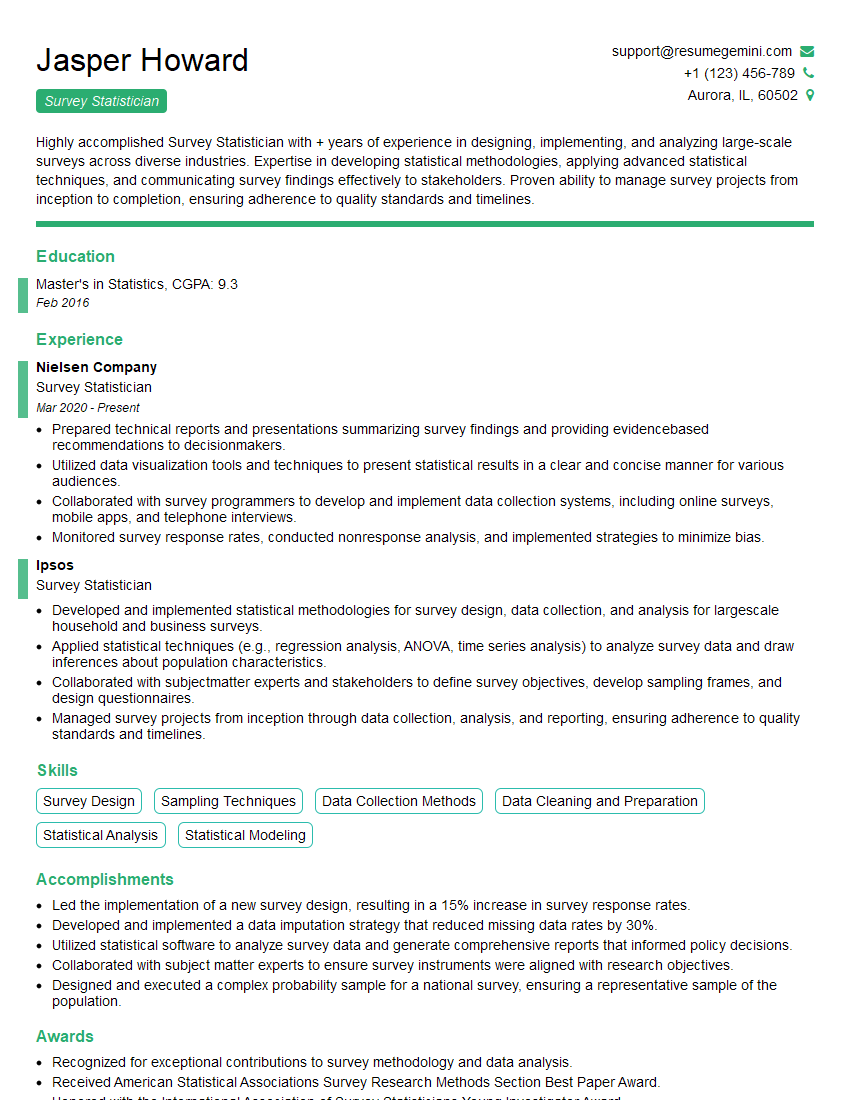
Mastering Survey Quality Assurance and Control is crucial for career advancement in market research, data analytics, and related fields. A strong foundation in these areas demonstrates your commitment to data integrity and your ability to deliver reliable insights. To significantly improve your job prospects, creating an ATS-friendly resume is essential. This ensures your qualifications are effectively communicated to hiring managers and Applicant Tracking Systems. We highly recommend using ResumeGemini to build a professional and impactful resume tailored to your skills and experience. ResumeGemini offers examples of resumes specifically designed for Survey Quality Assurance and Control professionals, allowing you to learn best practices and create a resume that stands out.

Explore more articles
Users Rating of Our Blogs
Share Your Experience
We value your feedback! Please rate our content and share your thoughts (optional).
What Readers Say About Our Blog
Really detailed insights and content, thank you for writing this detailed article.
IT gave me an insight and words to use and be able to think of examples