Cracking a skill-specific interview, like one for Surveying Officework, requires understanding the nuances of the role. In this blog, we present the questions you’re most likely to encounter, along with insights into how to answer them effectively. Let’s ensure you’re ready to make a strong impression.
Questions Asked in Surveying Officework Interview
Q 1. Explain your experience with different types of surveying equipment.
My experience with surveying equipment spans a wide range, encompassing both traditional and modern technologies. I’m proficient in using total stations – instruments that measure angles and distances with high accuracy – crucial for precise topographic surveys and construction layout. I’ve extensively used robotic total stations, which significantly improve efficiency by automating tasks like pointing and data recording. I’m also experienced with levels, used for determining elevations and creating contour maps, and GPS/GNSS receivers, vital for geodetic surveying and precise positioning. My experience extends to the use of data collectors, which streamline data entry and management in the field. For example, on a recent project involving a large-scale road construction, the robotic total station enabled us to complete the layout much faster and with greater accuracy than would have been possible with traditional methods, saving both time and resources.
- Total Stations: Leica TS16, Trimble S9
- Levels: Leica Sprinter 150, Nikon AP
- GPS/GNSS Receivers: Trimble R10, Leica GS18T
- Data Collectors: Trimble TSC7, Leica CS20
Q 2. Describe your proficiency in CAD software used in surveying.
My proficiency in CAD software for surveying is extensive. I’m highly skilled in AutoCAD Civil 3D, a leading software used for design and analysis of civil engineering projects, including surveying applications. I can efficiently create and manipulate digital terrain models (DTMs), design alignments, generate cross-sections, and produce construction drawings. I also possess expertise in MicroStation, another powerful CAD platform, which I use for various tasks such as creating survey plans, analyzing data, and preparing deliverables. My experience extends to using CAD software for volume calculations – essential for earthworks – and for generating precise contour lines. For instance, on a recent land development project, I used Civil 3D to create a precise DTM, analyze the site’s topography, and design drainage systems, resulting in cost-effective and environmentally sound solutions.
Q 3. How familiar are you with various coordinate systems (e.g., UTM, State Plane)?
I am very familiar with various coordinate systems used in surveying, including UTM (Universal Transverse Mercator) and State Plane Coordinate Systems. Understanding these systems is critical for accurate geospatial referencing and data integration. UTM divides the earth into 60 longitudinal zones, each with its own projection, minimizing distortion within each zone. State Plane Coordinate Systems, on the other hand, are designed for specific states or regions, optimizing accuracy for local surveys. I regularly convert coordinates between different datums (e.g., NAD83, NAD27) and coordinate systems using appropriate software and transformation parameters. The ability to seamlessly handle coordinate transformations is essential to ensure accurate integration of data from multiple sources and different projects. This is vital in a collaborative project where data from various survey teams using different systems needs to be combined.
Q 4. What is your experience with data processing and adjustment techniques?
Data processing and adjustment are crucial aspects of my work. I have extensive experience using software packages like Trimble Business Center and Leica Geo Office to process survey data from total stations and GPS receivers. This includes tasks such as coordinate transformations, error detection, and least-squares adjustment to ensure the accuracy and consistency of the data. I understand different adjustment techniques, such as the method of least squares, and I know how to select the most appropriate method based on the project’s requirements and the nature of the data. For example, on a recent boundary survey, I used least-squares adjustment to reconcile minor discrepancies between different survey measurements, producing a consistent and legally defensible boundary depiction. I’m also adept at identifying and handling outliers in the data, ensuring reliable results.
Q 5. Describe your understanding of boundary surveys and legal descriptions.
Boundary surveys and legal descriptions are a significant part of my expertise. I’m experienced in conducting boundary surveys, meticulously researching property records, interpreting legal descriptions (met-and-bounds, lot and block), and identifying monuments and evidence to establish property lines. I understand the importance of adhering to legal requirements and best practices in boundary surveying to avoid disputes and ensure the accuracy of property lines. I’m adept at using various tools and techniques to investigate and resolve boundary disputes, including analyzing deed descriptions, researching historical records, and performing field surveys to locate existing markers. For example, I was involved in a project where a boundary dispute arose due to conflicting deed descriptions. Through careful research and field work, I was able to clarify the property lines, ensuring a satisfactory resolution for all parties involved.
Q 6. How do you handle inconsistencies in survey data?
Inconsistencies in survey data are inevitable, and handling them effectively requires a systematic approach. I begin by thoroughly reviewing the data for any anomalies or outliers. I then investigate the potential sources of error – for example, instrument malfunction, human error, or environmental factors. Once the source is identified, I use appropriate adjustment techniques – often least squares adjustment – to reconcile the discrepancies. If inconsistencies remain, I’ll conduct further field checks to verify measurements and resolve any ambiguities. Documentation of the entire process, including the identification of inconsistencies, the steps taken to resolve them, and the final adjusted data, is crucial for transparency and accountability. In instances where discrepancies can’t be resolved, I carefully document these unresolved issues and discuss them with the relevant stakeholders to determine the best course of action.
Q 7. What experience do you have with GPS/GNSS surveying techniques?
I have extensive experience with GPS/GNSS surveying techniques, using both static and kinematic methods. Static surveying involves setting up receivers at fixed points for extended periods to achieve high-accuracy positioning. Kinematic surveying, on the other hand, allows for rapid and efficient data acquisition while moving between points. I’m proficient in using post-processing software to process GNSS data, which involves applying corrections for atmospheric and other errors to improve the accuracy of the coordinates. I’m familiar with different GNSS constellations (GPS, GLONASS, Galileo, BeiDou) and understand the advantages and limitations of each. For instance, in a recent project involving precise positioning of control points for a large infrastructure project, we employed a combination of static and RTK (Real-Time Kinematic) GPS techniques to ensure the accuracy and efficiency required.
Q 8. Explain your knowledge of surveying calculations (area, volume, etc.).
Surveying calculations are fundamental to determining the spatial characteristics of land and structures. This includes calculating areas, volumes, distances, and angles, all crucial for design, construction, and land management. Area calculations often involve using coordinates to apply geometrical formulas like the trapezoidal rule or more sophisticated methods for irregular polygons. Volume calculations are frequently used in earthworks, for example, determining the volume of material to be excavated or filled. This might involve calculating the volume of a prismoid or using a cross-sectional method for irregular shapes.
For instance, imagine calculating the area of a triangular plot of land. We’d use the standard formula: Area = 0.5 * base * height. If we have the coordinates of the three vertices, we can use the determinant method to calculate the area. Similarly, calculating the volume of a cut needed for a road requires surveying the cross-sections and using the appropriate method – such as the average end area method or the prismoidal method – to calculate the total volume.
My expertise encompasses a wide range of these calculations, including those for complex shapes, employing various coordinate systems (state plane, UTM) and leveraging both manual methods and advanced software capabilities to ensure accuracy and efficiency.
Q 9. Describe your experience with topographic surveys and map production.
Topographic surveys form the bedrock of many projects, providing a detailed representation of the Earth’s surface, including its natural and man-made features. My experience encompasses conducting these surveys using various instruments like Total Stations and GPS equipment. The data collected – elevations, distances, and positions – is then processed to create highly accurate topographic maps. This process involves data manipulation, error analysis, and the creation of contour lines which represent lines of equal elevation, forming a clear picture of the terrain.
I’ve been involved in projects ranging from small-scale site surveys for residential developments to larger-scale projects like highway alignments. In one project, we used LiDAR data to create highly detailed topographic models for a large-scale infrastructure project, enabling improved design accuracy and cost estimations. The final output included digital terrain models (DTMs), contour maps, and 3D visualizations, all essential for the project’s success. Proficiency in software like AutoCAD Civil 3D was critical to this workflow.
Q 10. How familiar are you with different types of surveying errors and their mitigation?
Understanding and mitigating surveying errors is crucial for delivering accurate results. Surveying errors can be broadly classified into systematic errors (consistent and predictable) and random errors (unpredictable and due to chance). Systematic errors might stem from instrument miscalibration or atmospheric refraction, whereas random errors can be caused by variations in human observation or slight movements during measurement.
Systematic errors are best addressed through careful calibration and adjustment of equipment, proper procedures, and environmental considerations. For example, temperature can affect the length of a measuring tape. Random errors can be mitigated by repeated measurements and the application of statistical methods to determine the most likely value, using techniques like least squares adjustment. Understanding how these errors propagate through calculations is important for accurate final results.
In my experience, I’ve developed a robust understanding of these errors, constantly refining my techniques to minimize their impact on my projects. Careful planning and meticulous attention to detail are essential to produce reliable results.
Q 11. What is your experience with construction layout and staking?
Construction layout and staking are critical phases where the surveyed design is transferred to the ground. This involves precisely marking the locations of buildings, roads, utilities, and other features to guide construction activities. This requires accuracy and an understanding of construction processes. The process often begins with establishing a control network on site – using GPS or traditional methods – then using this to locate points needed for construction.
My experience includes setting out building foundations, road alignments, and utility lines using total stations and GPS receivers. I’ve worked on projects involving complex geometry and tight tolerances, requiring careful planning and execution. In one particular project, we used robotic total stations to ensure accurate and efficient staking of foundations for a large commercial building, minimizing errors and improving overall construction efficiency. Understanding construction drawings and specifications is crucial in this phase of work.
Q 12. Describe your proficiency in using surveying software (e.g., AutoCAD Civil 3D, MicroStation).
I am proficient in using several surveying software packages, most notably AutoCAD Civil 3D and MicroStation. These platforms are crucial for processing survey data, creating design drawings, and generating accurate maps. AutoCAD Civil 3D, for example, allows for the creation of surface models, cross-sections, and design elements using coordinate data. I am able to utilize the software’s capabilities to perform tasks such as surface modeling, volume calculations, alignment design, and the generation of construction drawings.
My skills extend to importing and exporting data in various formats, ensuring seamless integration with other project workflows. I regularly use these software packages for data analysis, error detection, quality control, and report generation. I have utilized both programs extensively for design and construction layout purposes.
Q 13. How do you ensure accuracy and precision in your survey work?
Accuracy and precision are paramount in surveying. Accuracy refers to how close a measurement is to the true value, while precision refers to the reproducibility of the measurement. I ensure high accuracy and precision through a multi-faceted approach. This begins with using calibrated and well-maintained equipment, followed by careful field procedures, including repeated measurements and redundancy in observations.
Data processing is another crucial aspect, applying appropriate adjustments and error analysis techniques. I leverage software’s capabilities to detect outliers and inconsistencies in the data. Regular checks and cross-referencing with other data sources are also implemented to identify and rectify potential errors. My commitment to this thorough process ensures the reliability and integrity of our deliverables.
Q 14. Explain your experience with quality control procedures in surveying.
Quality control (QC) in surveying is an ongoing process, not a single event. It involves implementing measures throughout the project lifecycle to ensure accuracy and reliability. This starts with planning, encompassing meticulous instrument calibration and adherence to established procedures. Field QC includes regularly checking instrument functionality, performing redundant measurements, and documenting all observations thoroughly.
Post-processing QC involves rigorous data analysis, checking for inconsistencies, applying appropriate adjustments, and validating results against independent data sources. This also includes reviewing final maps and reports for accuracy and completeness. A robust QC program minimizes errors, ensures compliance with industry standards, and ultimately enhances the value and reliability of our survey outputs. This commitment to QC contributes to a high level of client trust and project success.
Q 15. Describe your knowledge of legal aspects related to surveying.
Understanding the legal aspects of surveying is paramount. It involves knowing and adhering to property laws, boundary regulations, and licensing requirements. This includes being familiar with the relevant legislation in the jurisdiction where the survey is conducted. For instance, understanding easements (rights of way across a property) and riparian rights (relating to water bodies) is crucial to accurately defining property boundaries. Incorrectly identifying a boundary can lead to significant legal repercussions and financial losses for clients. I have a thorough understanding of these regulations and ensure all my work complies fully, minimizing risks for both myself and the client.
In practice, this means meticulously researching title deeds, conducting thorough site investigations, and always maintaining precise and accurate records. I also understand the importance of clear communication with clients, explaining the implications of surveying data and ensuring they understand the legal ramifications of boundary designations.
For example, I was once involved in a project where an old, unclear boundary description caused dispute. By referring to historical maps, legal documents, and local regulations, we were able to definitively establish the property line, preventing costly legal battles.
Career Expert Tips:
- Ace those interviews! Prepare effectively by reviewing the Top 50 Most Common Interview Questions on ResumeGemini.
- Navigate your job search with confidence! Explore a wide range of Career Tips on ResumeGemini. Learn about common challenges and recommendations to overcome them.
- Craft the perfect resume! Master the Art of Resume Writing with ResumeGemini’s guide. Showcase your unique qualifications and achievements effectively.
- Don’t miss out on holiday savings! Build your dream resume with ResumeGemini’s ATS optimized templates.
Q 16. How do you manage and organize large datasets in a surveying project?
Managing large datasets in surveying requires a systematic approach. We utilize Geographic Information Systems (GIS) software such as ArcGIS or QGIS, coupled with robust database management tools. Data is typically organized using a hierarchical structure, with a central database containing project metadata and links to various data files. This ensures data integrity and accessibility.
For example, point cloud data from LiDAR scans can be incredibly large. To manage this efficiently, we utilize cloud-based storage solutions and process the data in sections, focusing on the areas of interest. We also implement rigorous quality control procedures at each stage of data processing, to identify and rectify errors early on. This involves techniques like outlier detection and data validation.
Furthermore, efficient file naming conventions and metadata standards are critical. We use a system of standardized naming that clearly identifies the date, location, and type of data, allowing for easy retrieval and organization. This is vital for teamwork and ensures data consistency throughout the project lifecycle.
Q 17. Explain your experience with working with clients and stakeholders.
Client and stakeholder management is a crucial aspect of successful surveying. It involves clear communication, active listening, and a commitment to meeting their needs and expectations. I always begin by having a thorough initial consultation to understand their project goals, budget, and timeline.
Throughout the project, I maintain regular communication with updates on progress, highlighting any potential challenges or delays proactively. This transparency fosters trust and prevents misunderstandings. I also involve stakeholders in key decision-making processes, ensuring their input is considered. For complex projects, I might organize regular progress meetings involving all parties involved.
For example, I once worked with a developer who had tight deadlines. By closely monitoring progress and working collaboratively with the construction team, we were able to deliver the necessary survey data on time, ensuring that the construction schedule remained unaffected.
Q 18. How do you prioritize tasks and manage time effectively in a busy surveying office?
In a busy surveying office, effective task prioritization and time management are essential. I utilize various techniques including:
- Prioritization Matrices: I use Eisenhower Matrix (Urgent/Important) to categorize tasks and focus on high-impact activities.
- Project Management Software: Tools like Asana or Trello help in scheduling tasks, assigning deadlines, and tracking progress visually.
- Time Blocking: Allocating specific time blocks for particular tasks helps maintain focus and improves productivity.
- Delegation: Where appropriate, I delegate tasks to junior staff, enabling me to concentrate on more complex issues.
Regular review of my schedule and adjusting priorities as needed is also crucial. Unexpected issues always arise, so flexibility is key. I aim for realistic scheduling, acknowledging that unforeseen delays may occur.
Q 19. Describe your problem-solving approach when encountering unexpected field conditions.
Unexpected field conditions are a common occurrence in surveying. My problem-solving approach involves a systematic process:
- Assessment: First, I carefully assess the situation, identifying the nature of the problem and its potential impact on the survey.
- Risk Mitigation: I then evaluate the risks associated with the problem, considering potential safety hazards and the impact on data accuracy.
- Alternative Solutions: I brainstorm multiple solutions, weighing the pros and cons of each approach. This might involve adjusting survey methods, using alternative equipment, or consulting with colleagues for their expertise.
- Implementation and Documentation: I implement the chosen solution, carefully documenting any changes made to the original survey plan. This ensures transparency and allows for future reference.
- Review and Adjustment: Finally, I review the results and make adjustments as necessary. Thorough documentation of the entire process is vital.
For instance, I once encountered unexpected flooding during a site survey. Instead of abandoning the work, we used a drone with waterproof equipment to capture aerial data, circumventing the immediate obstacle. The resulting data was slightly less detailed but still provided useful information for the project.
Q 20. What is your experience with utilizing LiDAR or other 3D scanning technologies?
I have extensive experience with LiDAR (Light Detection and Ranging) and other 3D scanning technologies. LiDAR provides high-density point cloud data, offering unparalleled detail for various applications including topographic mapping, volumetric calculations, and infrastructure modeling. I’m proficient in processing and analyzing LiDAR data using specialized software such as TerraScan or Global Mapper.
My experience encompasses various aspects, from planning and executing LiDAR surveys, to processing the data and creating detailed 3D models. I understand the limitations of the technology and how environmental factors like vegetation density can affect data accuracy. I’m also familiar with other 3D scanning technologies like terrestrial laser scanning (TLS), understanding their strengths and weaknesses in comparison to LiDAR. This enables me to choose the optimal technology for any given project.
For example, I was involved in a project that required precise measurements for a bridge renovation. LiDAR allowed us to obtain accurate 3D models of the bridge structure, enabling engineers to conduct detailed analyses and plan the repairs effectively.
Q 21. Explain your understanding of different types of mapping and their applications.
Surveying encompasses various types of mapping, each suited for specific applications. Here are a few examples:
- Topographic Mapping: This depicts the Earth’s surface features, including elevation, contours, and natural and man-made objects. It’s used extensively in civil engineering, urban planning, and environmental studies.
- Cadastral Mapping: This focuses on property boundaries and land ownership. It’s essential for land administration, property transactions, and legal disputes resolution.
- Planimetric Mapping: This shows only the horizontal positions of features, omitting elevation data. It’s often used for base maps and site plans.
- Thematic Mapping: This highlights specific themes or attributes, like soil types, vegetation, or population density. It is frequently used in environmental management and resource planning.
My understanding of these different mapping types allows me to select the most appropriate method for each project, ensuring the client receives the precise information they require. For instance, a cadastral survey would be unsuitable for a project requiring detailed terrain information, where a topographic map would be far more appropriate.
Q 22. How familiar are you with GIS software and its integration with surveying data?
GIS software is absolutely fundamental to modern surveying. My familiarity extends beyond basic usage; I’m proficient in several leading platforms, including ArcGIS, QGIS, and AutoCAD Map 3D. I understand how to effectively import, manage, and analyze surveying data within these environments. This includes processing data from various sources like total stations, GPS receivers, and scanners. For example, I’ve used ArcGIS to create detailed topographic maps from survey data, incorporating features like contour lines, spot elevations, and property boundaries. Integration often involves converting raw survey data into compatible formats (like shapefiles or geodatabases), then using GIS tools for spatial analysis, such as calculating areas, volumes, and distances, or conducting site analysis for infrastructure projects. This seamless integration streamlines workflows and significantly enhances the accuracy and efficiency of the entire surveying process.
Q 23. Describe your experience with photogrammetry and its use in surveying.
Photogrammetry is a powerful technique I’ve used extensively in surveying. It involves using photographs – often from drones or airplanes – to create accurate 3D models of the terrain. This is especially useful in areas difficult to access using traditional surveying methods, such as steep slopes or dense forests. My experience includes processing imagery using software like Agisoft Metashape and Pix4D. This involves tasks like image alignment, point cloud generation, mesh creation, and orthomosaic production. For instance, I was involved in a project where we used drone photogrammetry to create a highly accurate digital elevation model (DEM) of a landslide-prone area, allowing for more effective risk assessment and mitigation planning. The resulting 3D models are invaluable for tasks like volume calculations, designing infrastructure projects, and monitoring changes over time.
Q 24. Explain your understanding of surveying ethics and professional standards.
Surveying ethics and professional standards are paramount. I understand the importance of accuracy, honesty, and integrity in all aspects of my work. This includes adhering to the codes of conduct established by relevant professional organizations. My understanding covers aspects such as:
- Accuracy and precision: Maintaining the highest standards in data collection and processing to ensure reliable results.
- Confidentiality: Protecting client data and maintaining professional discretion.
- Professional competence: Continuously updating my knowledge and skills to meet evolving industry demands.
- Legal compliance: Adhering to all relevant laws and regulations.
- Objectivity: Avoiding conflicts of interest and maintaining impartiality.
A real-world example is refusing to sign off on a survey if I felt the data wasn’t sufficiently accurate, even under pressure to meet deadlines. Compromising on ethical standards is unacceptable and can lead to significant consequences.
Q 25. How do you stay updated with the latest advancements and technologies in surveying?
Staying current in surveying requires a proactive approach. I regularly attend industry conferences and workshops, participate in online courses, and subscribe to professional journals and publications like Point of Beginning. I actively engage in online communities and forums to stay informed about new technologies and techniques. I’m particularly interested in advancements in laser scanning, GNSS (Global Navigation Satellite Systems) technology, and the integration of AI in data processing. For example, I recently completed a course on using machine learning algorithms to automate data processing in photogrammetry, which significantly increased my efficiency.
Q 26. Describe a challenging surveying project you’ve worked on and how you overcame the challenges.
One challenging project involved surveying a heavily wooded area for a new pipeline route. The dense vegetation significantly hampered traditional GPS measurements and obstructed line of sight for total station work. To overcome this, we employed a combination of techniques. We used a drone equipped with RTK-GPS for accurate positional data, allowing us to create a highly detailed 3D model. This model, alongside ground-based surveys in more accessible areas, helped us precisely map the terrain and identify optimal pipeline placement while avoiding environmental impact. We also implemented robust quality control measures at every stage, ensuring accuracy and consistency. This project highlighted the importance of adaptability and innovative problem-solving in surveying.
Q 27. What are your salary expectations for this role?
My salary expectations for this role are in the range of [Insert Salary Range], depending on the specifics of the position and the company’s benefits package. I’m confident that my skills and experience align well with the requirements of this role, and I’m eager to contribute to your team’s success.
Q 28. Do you have any questions for me?
Yes, I do. I’d be interested in learning more about the specific technologies and software currently used by your team, the typical project scope and timelines, and opportunities for professional development within the company.
Key Topics to Learn for Surveying Officework Interview
- Data Processing and Management: Understanding various data formats (e.g., CAD, GIS, point clouds), data cleaning techniques, and proficiency in relevant software (e.g., AutoCAD Civil 3D, ArcGIS).
- Plan and Map Production: Practical application of surveying data to create accurate and detailed plans, maps, and cross-sections. This includes understanding map projections and coordinate systems.
- Calculations and Computations: Proficiency in performing calculations related to area, volume, distance, and elevation. Understanding and applying relevant formulas and using software tools for accurate results.
- Quality Control and Assurance: Implementing procedures for checking data accuracy, identifying and resolving discrepancies, and maintaining high standards of data quality.
- Legal and Regulatory Compliance: Familiarity with relevant surveying regulations, standards, and best practices. Understanding land tenure and legal descriptions.
- Report Writing and Communication: Clearly and concisely communicating technical information in written reports and presentations. Ability to explain complex concepts to both technical and non-technical audiences.
- Teamwork and Collaboration: Understanding the importance of effective collaboration with surveyors in the field and other office personnel.
- Problem-Solving and Troubleshooting: Ability to identify and solve technical problems related to data processing, calculations, and software usage. Demonstrate analytical and critical thinking skills.
Next Steps
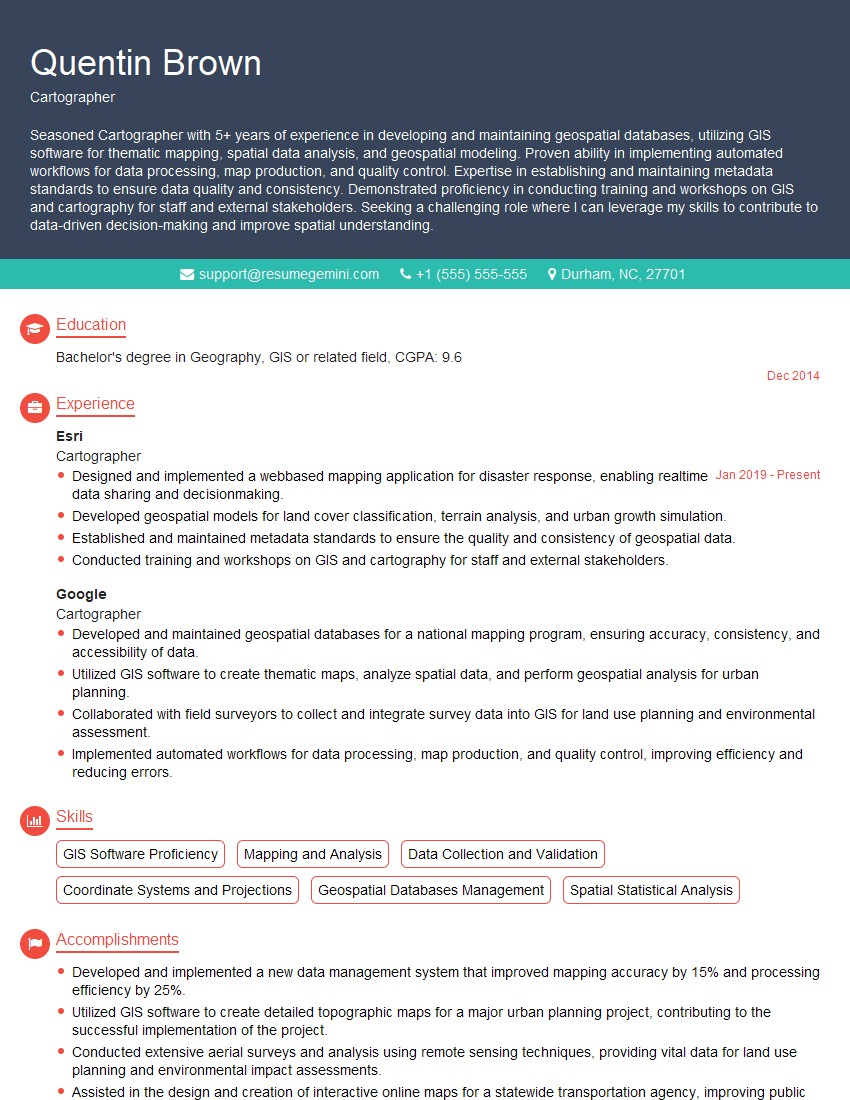
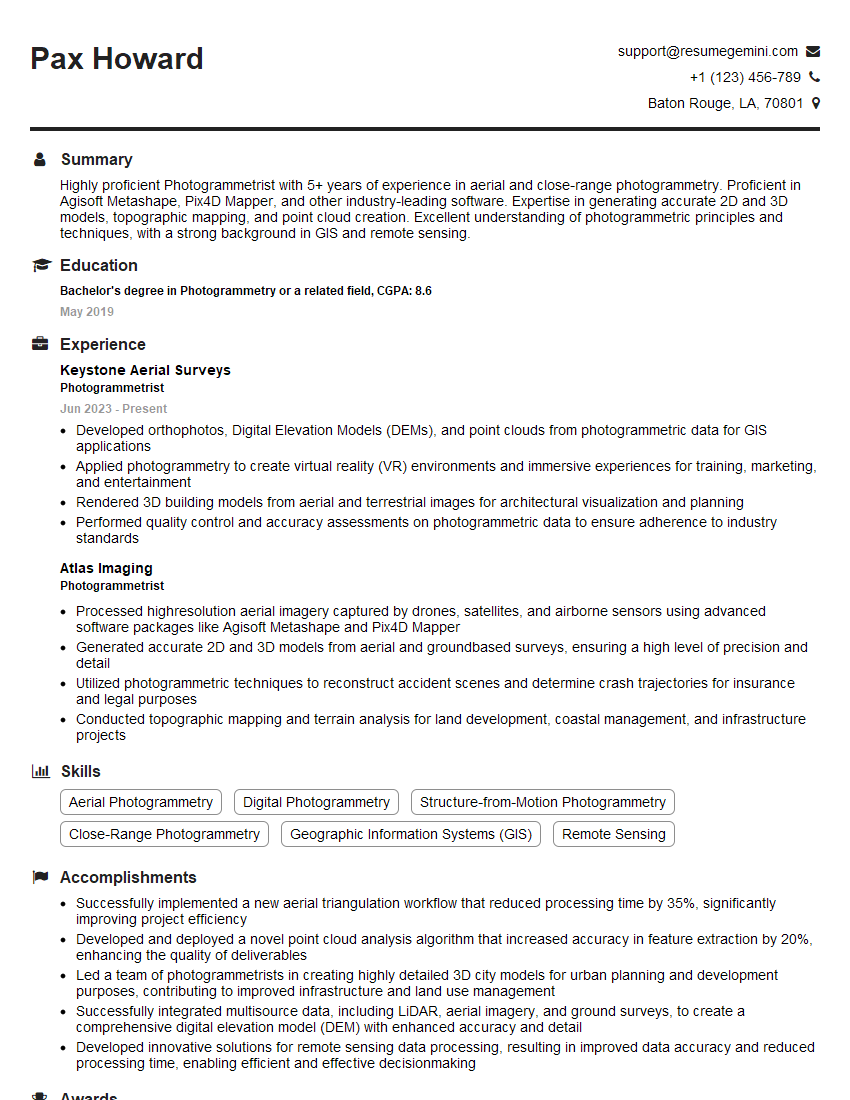
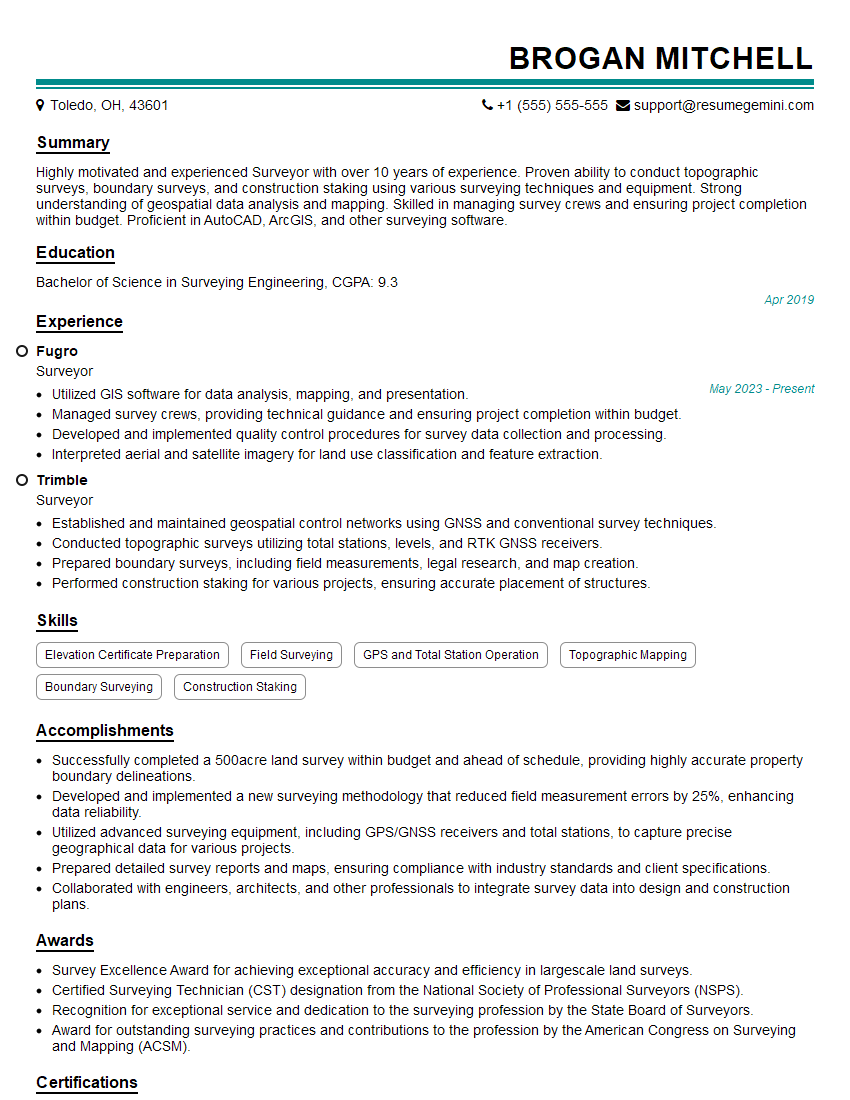
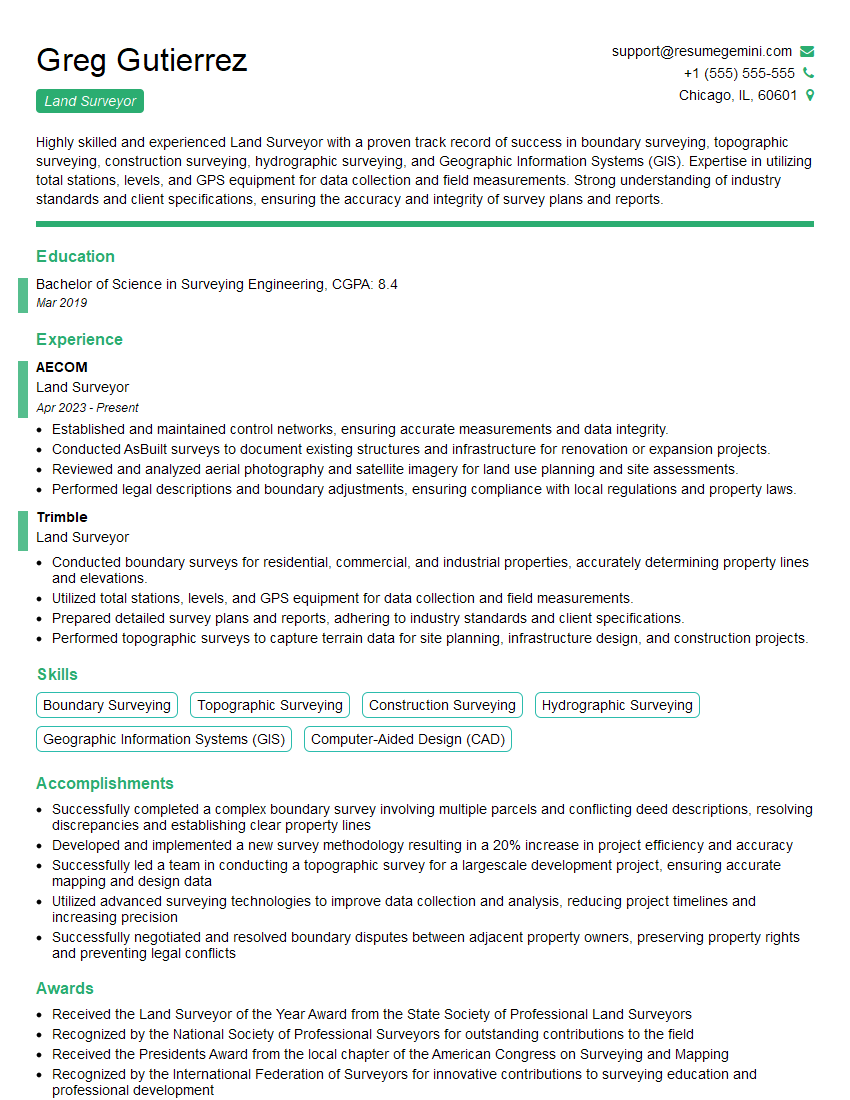
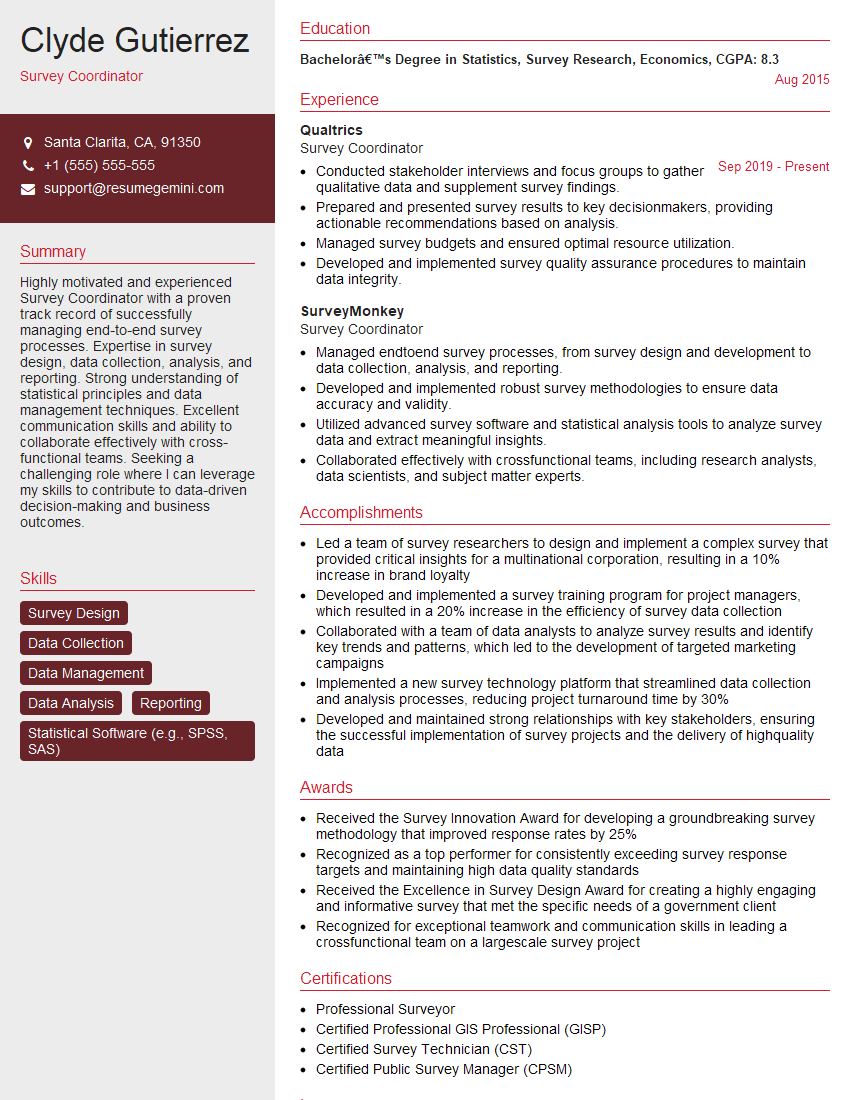
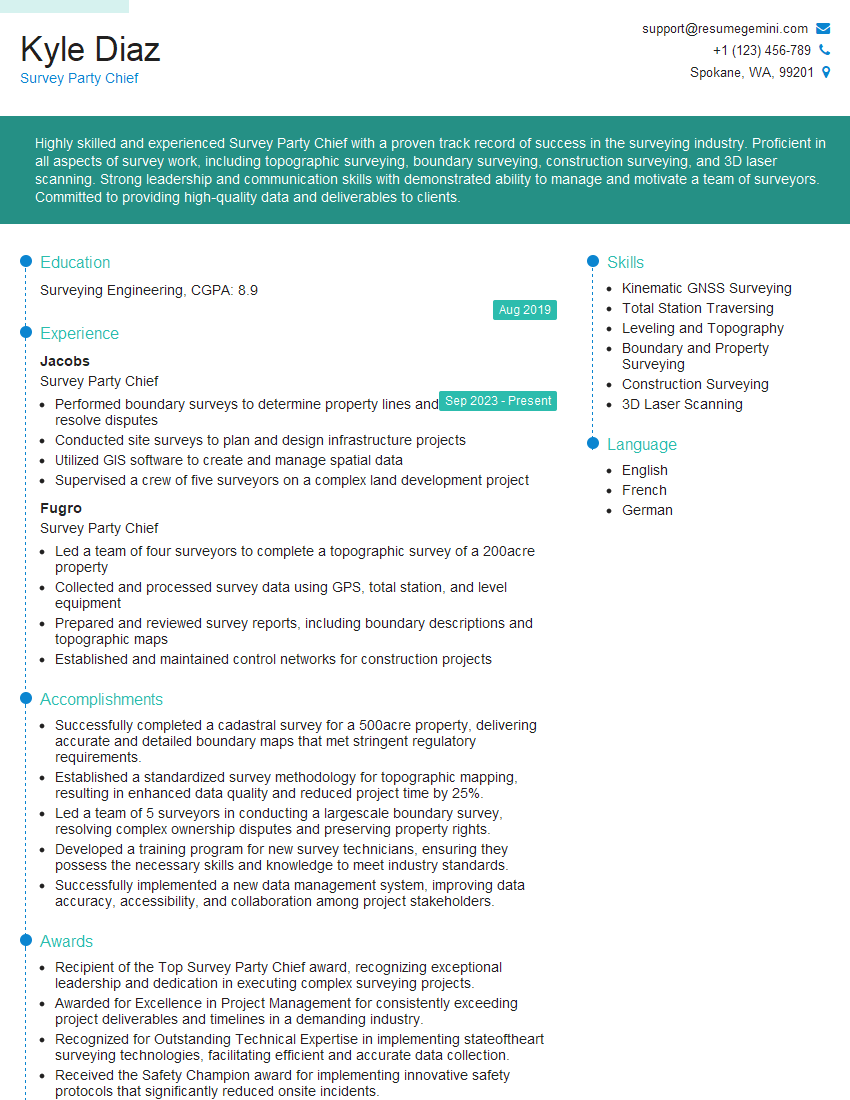
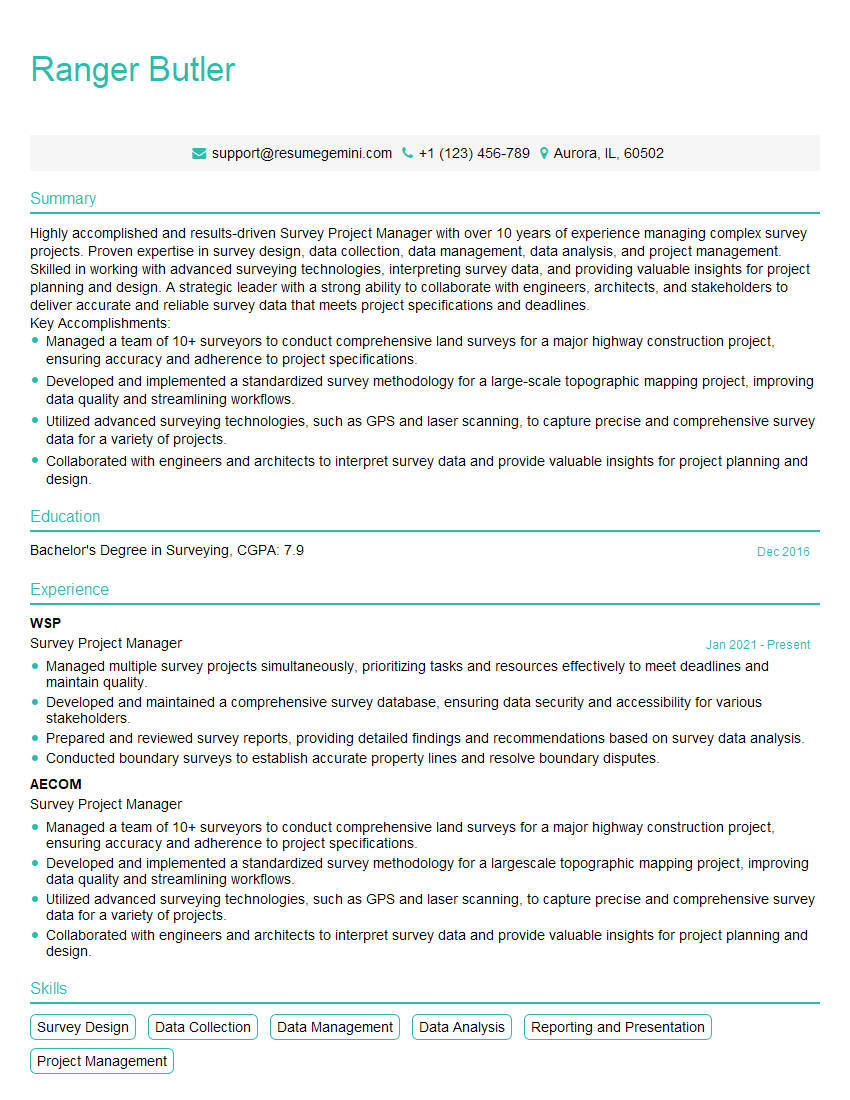
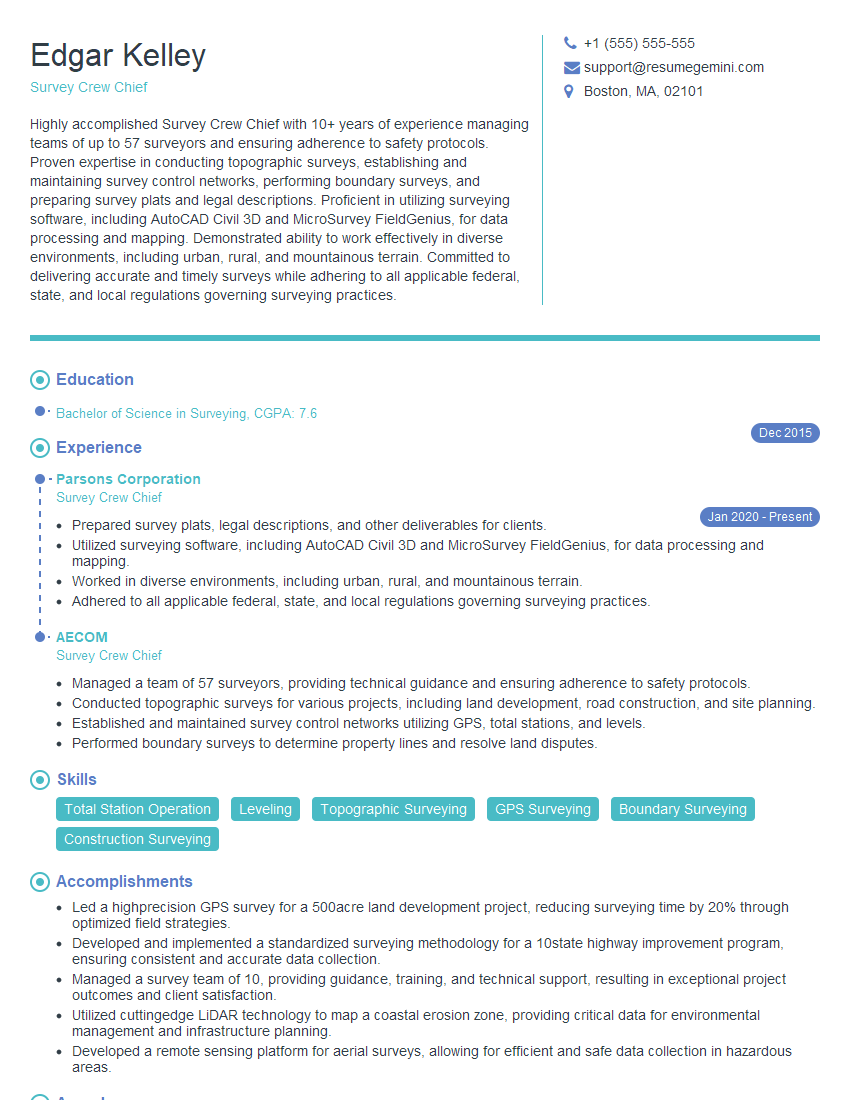
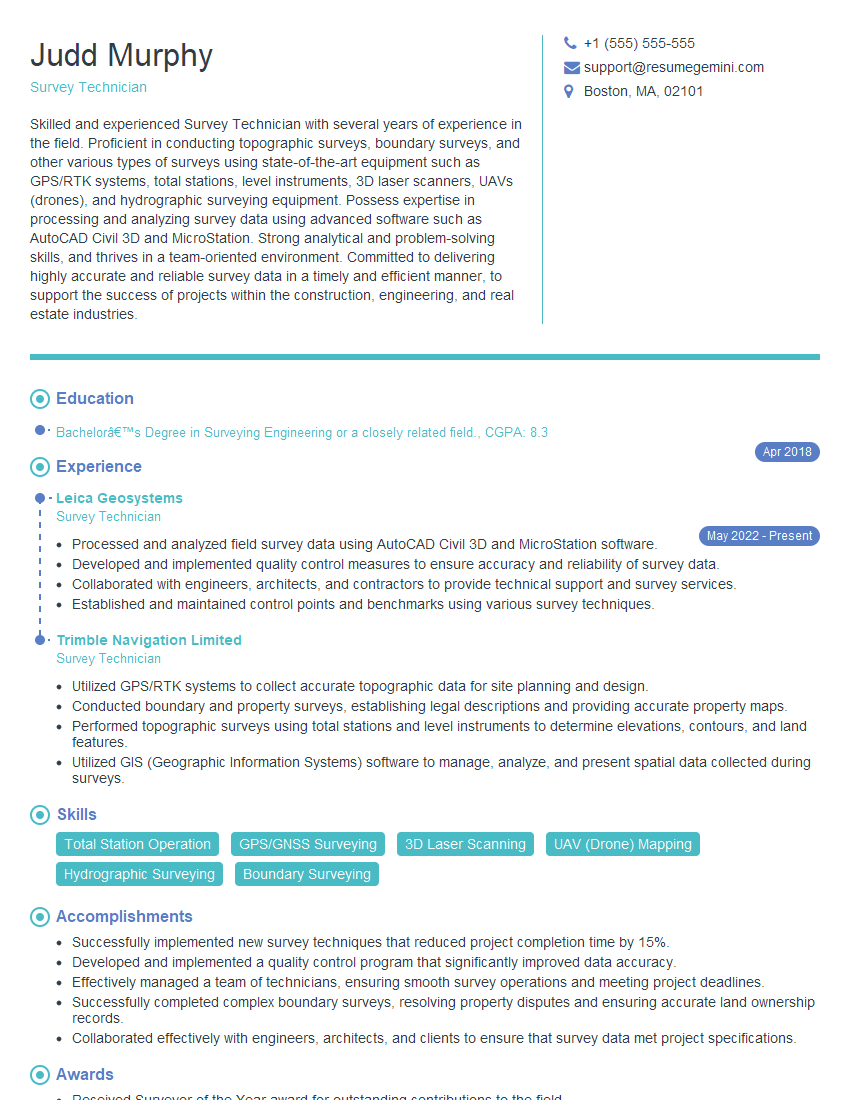
Mastering surveying officework is crucial for career advancement in the surveying field, opening doors to specialized roles and increased responsibility. A strong understanding of these key areas demonstrates your competence and professionalism to potential employers. To significantly boost your job prospects, creating an ATS-friendly resume is essential. ResumeGemini is a trusted resource that can help you build a professional and impactful resume, tailored to highlight your skills and experience. Examples of resumes specifically tailored to Surveying Officework are available to guide you through the process.
Explore more articles
Users Rating of Our Blogs
Share Your Experience
We value your feedback! Please rate our content and share your thoughts (optional).
What Readers Say About Our Blog
Really detailed insights and content, thank you for writing this detailed article.
IT gave me an insight and words to use and be able to think of examples