Preparation is the key to success in any interview. In this post, we’ll explore crucial Tank Inspection and Maintenance interview questions and equip you with strategies to craft impactful answers. Whether you’re a beginner or a pro, these tips will elevate your preparation.
Questions Asked in Tank Inspection and Maintenance Interview
Q 1. What are the common types of tank failures and their causes?
Tank failures can be catastrophic, leading to environmental damage, financial losses, and even injury. Common failure modes stem from various causes, broadly categorized as:
- Corrosion: This is arguably the most prevalent cause. Internal corrosion is driven by the stored product’s chemical properties (e.g., acidity, salinity), while external corrosion is influenced by soil conditions, atmospheric pollutants, and stray currents. Imagine a slow, insidious process eating away at the tank’s structure, weakening it over time. For example, a poorly maintained tank storing seawater might experience rapid pitting corrosion.
- Stress Cracking: This occurs when the tank metal is subjected to cyclic stresses, often from thermal expansion and contraction due to temperature fluctuations in the stored product. Imagine repeatedly bending a paperclip – eventually, it will break. Similarly, cyclical stress can lead to fatigue cracking in a tank wall.
- Overfilling and Overpressure: Exceeding the tank’s design capacity can lead to structural failure. Overpressure, often from excessive internal pressure or external loading, can cause bulging, buckling, or even complete rupture. Think of a balloon inflated beyond its capacity – it will pop.
- Foundation Issues: Settlement or shifting of the tank’s foundation can induce uneven stresses, potentially leading to cracking and leakage. Imagine a house built on unstable ground – its foundation can crack, leading to structural damage.
- Improper Welding: Faulty welding procedures during construction can create weak points vulnerable to cracking and leaks. Think of a poorly welded chain – a single weak link can break the entire chain.
Understanding these failure modes allows for targeted preventative measures during design, construction, and maintenance.
Q 2. Describe the different methods used for tank inspection (internal & external).
Tank inspection involves a multifaceted approach combining internal and external assessments.
- External Inspection: This typically involves visual examination, checking for signs of corrosion, dents, leaks, bulging, and foundation issues. Tools like ultrasonic thickness gauges can measure wall thickness to identify areas of thinning. Infrared thermography can detect temperature anomalies suggesting insulation issues or leaks. A thorough external inspection is like a visual health check for your tank.
- Internal Inspection: Accessing the tank’s interior is often more complex, requiring special equipment and procedures. Common methods include:
- Visual Inspection: Simple for smaller, easily accessible tanks, this checks for corrosion, sediment buildup, and damage.
- Remote Visual Inspection (RVI): Using robotic crawlers with cameras, this allows detailed inspection of large, complex tanks, minimizing human exposure to hazardous environments. It’s like having a miniature, remotely controlled explorer examine the tank’s interior.
- Ultrasonic Testing (UT): This non-destructive testing (NDT) method uses sound waves to measure wall thickness, identifying thinning areas that indicate corrosion.
- Magnetic Particle Inspection (MPI): This NDT technique is used to detect surface and near-surface cracks in ferromagnetic materials.
The choice of inspection methods depends on the tank’s size, age, stored product, and regulatory requirements.
Q 3. Explain the importance of API 653 in tank inspection.
API 653, ‘Tank Inspection, Repair, Alteration, and Reconstruction,’ is a widely accepted standard for inspecting, repairing, and maintaining aboveground storage tanks. It provides a comprehensive framework for ensuring the integrity and safety of these tanks.
Its importance lies in:
- Standardization: It provides a consistent methodology for inspections, ensuring thoroughness and minimizing subjectivity.
- Risk Management: It emphasizes risk assessment and prioritization, allowing for efficient allocation of resources to critical areas.
- Regulatory Compliance: Many regulatory bodies recognize API 653 as a benchmark for tank safety and maintenance, making adherence essential for compliance.
- Life Extension: By implementing API 653 recommendations, operators can extend the service life of their tanks safely and cost-effectively.
- Safety: The core principle is ensuring the safe and reliable operation of storage tanks. Proper inspections and maintenance per API 653 minimize the risks of catastrophic failures.
Think of API 653 as the best-practice manual for ensuring your tank remains structurally sound and safe. Ignoring it can lead to costly repairs, potential environmental disasters, or worse – accidents.
Q 4. What are the key aspects of a tank’s grounding system and its importance for safety?
A tank’s grounding system is crucial for safety, preventing the buildup of static electricity and protecting against lightning strikes. It involves connecting the tank to the earth, providing a path for electrical charges to dissipate safely.
Key aspects include:
- Grounding Conductors: These are low-resistance conductors, typically copper or galvanized steel, connecting the tank to earth electrodes. They form the pathway for electrical current to discharge safely.
- Earth Electrodes: These are buried conductors, usually copper-clad steel rods, providing a low-resistance connection to the earth. They act as a sink for electrical charges.
- Bonding: Connecting all metallic components of the tank and its associated equipment (e.g., piping, ladders, walkways) to the grounding system ensures a unified electrical potential, preventing voltage differences that could spark.
- Regular Inspection and Testing: Testing the grounding system’s resistance is crucial to ensure its effectiveness. A high resistance indicates a problem that needs immediate attention.
A properly functioning grounding system prevents the accumulation of static electricity, which can ignite flammable vapors, leading to explosions in tanks storing volatile materials. It also protects the tank and personnel from lightning strikes.
Q 5. How do you identify and assess corrosion in a storage tank?
Corrosion assessment requires a combination of visual inspection and non-destructive testing (NDT) methods.
- Visual Inspection: This involves looking for signs of rust, pitting, scaling, blistering, and other forms of degradation. The location and extent of corrosion should be carefully documented.
- Ultrasonic Testing (UT): This NDT method uses sound waves to accurately measure wall thickness, allowing identification of areas with significant corrosion. This provides quantitative data on the severity of thinning.
- Magnetic Particle Inspection (MPI): Used for detecting surface and near-surface cracks, especially in ferromagnetic materials. It is particularly useful for identifying stress corrosion cracking.
- Holiday Detection: This technique is used to identify discontinuities or pinholes in coatings. This is crucial for understanding if the coating is providing effective protection against corrosion.
By combining these methods, a comprehensive assessment of the corrosion’s type, extent, and severity is possible. This information is crucial for determining appropriate repair or replacement strategies. Remember, early detection is key to preventing catastrophic failures.
Q 6. What are the different types of tank coatings and their applications?
Various coatings are used on storage tanks to protect against corrosion and environmental damage. The choice of coating depends on the stored product, environmental conditions, and budget considerations.
- Epoxy Coatings: These are highly resistant to chemicals and offer excellent protection against corrosion. They are commonly used for tanks storing aggressive chemicals.
- Polyurethane Coatings: These coatings offer good flexibility and abrasion resistance, making them suitable for tanks subject to mechanical stress or abrasion.
- Vinyl Coatings: These offer good weather resistance and are often used for external tank protection. They are usually more economical compared to epoxy or polyurethane.
- Coal Tar Epoxy Coatings: These are historically used, offering excellent corrosion resistance in harsh environments, but environmental concerns have led to a decrease in usage.
- Zinc-Rich Coatings: These primers provide cathodic protection, acting as a sacrificial anode to protect the underlying steel. They are often used as a base layer under other coatings.
The application of coatings requires careful surface preparation to ensure proper adhesion and longevity. Each coating system has specific requirements for application, curing, and maintenance to ensure its effectiveness.
Q 7. What are the safety precautions you would take while inspecting a tank?
Safety is paramount during tank inspections. Procedures must follow strict protocols to minimize risk.
- Permit-to-Work System: A formal system authorizing entry into hazardous areas, ensuring necessary precautions are in place.
- Lockout/Tagout (LOTO) Procedures: Disconnecting and securing all energy sources (electricity, steam, etc.) to prevent accidental activation.
- Confined Space Entry Procedures: If entering a tank, following confined space entry protocols is crucial, including atmospheric testing for oxygen deficiency, flammable gases, and toxic substances.
- Personal Protective Equipment (PPE): Using appropriate PPE, such as respirators, safety harnesses, and fall protection equipment.
- Emergency Response Plan: Having a well-defined emergency response plan readily available and ensuring personnel are trained in its execution.
- Trained Personnel: Only qualified and trained personnel should conduct tank inspections, particularly internal inspections.
Always remember: A safe inspection is a successful inspection. Never compromise on safety procedures.
Q 8. Explain the process of a typical tank inspection, from planning to reporting.
A typical tank inspection is a multi-stage process, crucial for ensuring safety and operational efficiency. It begins with planning, where we define the scope, considering the tank’s age, material, contents, and regulatory requirements. We then prepare a detailed inspection plan outlining the methods, equipment, and personnel involved. The inspection itself involves a visual examination, checking for corrosion, leaks, dents, or any signs of degradation. This is often followed by non-destructive testing (NDT) methods to assess the tank’s structural integrity more thoroughly. We carefully document all findings, including photographs and measurements. Next comes the analysis phase, where we interpret the collected data to identify any critical issues or potential risks. Finally, we generate a comprehensive report detailing the inspection findings, recommendations for repairs or maintenance, and a timeline for addressing identified problems. For example, a recent inspection of a large oil storage tank involved a detailed review of its welds using ultrasonic testing (UT), followed by a thorough assessment of the tank’s foundation for any settlement.
Q 9. Describe your experience with non-destructive testing methods used in tank inspection (e.g., UT, MT, PT).
My experience encompasses a wide range of non-destructive testing (NDT) methods commonly employed in tank inspections. Ultrasonic testing (UT) is frequently used to detect internal flaws in tank walls, such as cracks or corrosion, by measuring the reflection of ultrasonic waves. I’ve extensively used UT to assess the thickness of tank walls, identifying areas of thinning that may require immediate attention. Magnetic particle testing (MT) is another crucial method I employ, particularly for detecting surface and near-surface cracks in ferromagnetic materials like steel. We magnetize the tank’s surface and apply magnetic particles; these particles accumulate at the crack, making the flaw visible. Liquid penetrant testing (PT) is invaluable for detecting surface-breaking flaws in any material, regardless of its magnetic properties. We apply a penetrant, which seeps into cracks, and then a developer that draws the penetrant out, making even small cracks easily detectable. Choosing the right NDT method depends on the specific tank material, its contents, and the type of defects we anticipate finding.
Q 10. How do you interpret inspection results and generate a report?
Interpreting inspection results requires a keen eye for detail and a thorough understanding of the NDT methods used. We systematically analyze the data collected during the inspection. For example, in UT, we look for indications like signal attenuation or reflections that suggest the presence of defects. Similarly, MT and PT results are assessed for the size, location, and severity of any identified flaws. Based on these results, we use established industry standards and codes to determine the significance of each finding. The report then summarizes these findings, with clear descriptions of the observed defects, their locations, and their severity, often using a standardized severity rating system (e.g., based on depth and length of defects). The report also includes recommendations for repair or remediation, specifying the appropriate techniques and timelines to ensure safety and compliance. For instance, if UT reveals significant wall thinning, we may recommend partial or complete tank replacement; if MT detects minor surface cracks, we may recommend repair using welding and subsequent retesting.
Q 11. What are the common causes of leaks in storage tanks?
Leaks in storage tanks can stem from various causes, broadly categorized as material degradation, poor workmanship, and external factors. Corrosion, both internal and external, is a leading cause, often accelerated by the tank contents, environmental conditions, or inadequate coating. Weld defects, such as incomplete penetration or porosity, resulting from poor welding practices, can also lead to leaks. Settlement of the tank foundation can cause stress and cracking in the tank walls, resulting in leaks. External damage, such as impacts or ground movement, can compromise the tank’s integrity. Improper installation of components like nozzles and connections can create vulnerabilities. In some cases, the nature of the stored material itself can play a role; for instance, certain chemicals can aggressively attack tank materials, leading to premature failure.
Q 12. Explain the importance of regular tank maintenance.
Regular tank maintenance is paramount for safety, environmental protection, and cost-effectiveness. Preventive maintenance minimizes the risk of catastrophic failures, leaks, and associated environmental damage. Regular inspections help identify and address minor problems before they escalate into major issues, reducing the risk of costly repairs or replacements. For example, timely cleaning and coating maintenance can prevent corrosion, extending the tank’s lifespan. Moreover, regular inspections ensure compliance with relevant safety regulations, mitigating potential fines and legal repercussions. Delaying maintenance can result in significant operational downtime, environmental contamination, and safety risks, making regular maintenance an indispensable aspect of responsible tank ownership.
Q 13. What is your experience with different types of tank repair techniques?
My experience encompasses a variety of tank repair techniques, ranging from simple to complex interventions. For minor surface damage, patching with specialized materials is often sufficient. Welding is a widely used method for repairing cracks and other defects in the tank walls; the choice of welding technique depends on the tank material and the nature of the defect. For more extensive damage, segmental replacement may be necessary, where a damaged section of the tank is removed and replaced with a new segment. In cases of severe corrosion or structural damage, complete tank replacement is sometimes the most practical and cost-effective solution. In recent projects, I’ve been involved in using advanced composite materials for repairing specific sections of tank walls, offering a lightweight and durable solution. Selecting the right technique depends on a comprehensive assessment of the damage extent, tank material, and operating conditions.
Q 14. How do you assess the structural integrity of a tank?
Assessing the structural integrity of a tank involves a combination of visual inspection, non-destructive testing, and engineering analysis. The visual inspection identifies external damage, corrosion, and signs of wear. NDT methods, such as UT and MT, provide crucial data on the condition of the tank walls and welds. Furthermore, detailed calculations, often involving finite element analysis (FEA), can help us evaluate the tank’s stress levels under various operating conditions. Factors such as the tank’s age, material, operating pressure, and environmental exposure are considered. If the analysis reveals potential structural weaknesses, we may recommend strengthening measures, such as adding external supports or replacing damaged sections. This process requires a deep understanding of structural engineering principles and relevant industry standards to ensure the tank’s continued safe and reliable operation.
Q 15. What are the regulatory requirements for tank inspection and maintenance in your region?
Regulatory requirements for tank inspection and maintenance vary significantly depending on location, the type of stored substance, and the tank’s size and construction. In my region (please specify your region here for a more accurate answer, e.g., ‘the United States,’ ‘the European Union,’ or a specific state/province), we primarily adhere to regulations set by [Specify relevant regulatory bodies, e.g., OSHA, EPA, local environmental agencies]. These regulations often dictate the frequency of inspections (e.g., annual, bi-annual, or more frequent for high-risk materials), the specific inspection procedures (including visual inspections, non-destructive testing, and pressure testing), and the required documentation. For example, regulations often specify the minimum thickness requirements for tank walls and bottoms, acceptable levels of corrosion, and procedures for addressing any detected deficiencies. Failure to comply can result in significant penalties, including fines and potential facility shutdowns.
Specific regulations often cover:
- API 653: This standard is widely recognized for the inspection, repair, alteration, and rerating of aboveground storage tanks.
- NFPA 30: This code addresses flammable and combustible liquids.
- Local regulations: These often incorporate or expand upon national or international standards.
Understanding these regulations is critical for ensuring safe and compliant tank operations. We maintain an up-to-date register of applicable codes and regularly update our procedures to reflect any changes.
Career Expert Tips:
- Ace those interviews! Prepare effectively by reviewing the Top 50 Most Common Interview Questions on ResumeGemini.
- Navigate your job search with confidence! Explore a wide range of Career Tips on ResumeGemini. Learn about common challenges and recommendations to overcome them.
- Craft the perfect resume! Master the Art of Resume Writing with ResumeGemini’s guide. Showcase your unique qualifications and achievements effectively.
- Don’t miss out on holiday savings! Build your dream resume with ResumeGemini’s ATS optimized templates.
Q 16. Describe your experience with tank cleaning and preparation for inspection.
Tank cleaning and preparation for inspection is a crucial, and often hazardous, step. My experience involves overseeing the entire process, from initial planning to final verification. It always begins with a thorough risk assessment, identifying potential hazards such as flammable vapors, toxic residues, and confined space entry risks. We then develop a detailed cleaning procedure, including:
- Emptying the Tank: Safe and complete emptying of the tank is paramount. This often involves pumping out the contents to appropriate storage or disposal facilities.
- Vapor Testing: Before entry, we conduct comprehensive vapor testing to ensure the atmosphere within the tank is safe for personnel. This typically involves using gas detectors to measure the concentration of flammable and toxic gases.
- Cleaning Methods: The cleaning method depends on the nature of the previous contents. Options include water washing, steam cleaning, chemical cleaning, or a combination of these. We select the most appropriate method based on the risk assessment and the material safety data sheets (MSDS) for the tank’s previous contents.
- Inspection After Cleaning: After cleaning, a thorough inspection is conducted to ensure the tank is completely clean and free of any residue that might interfere with the subsequent inspection. This also verifies that the cleaning process itself hasn’t caused any damage.
For example, during the cleaning of a tank that previously held highly flammable solvents, we utilized specialized vacuum trucks to remove the remaining liquid and employed inert gas purging to ensure the atmosphere was safe before entry for inspection. All workers involved used appropriate personal protective equipment (PPE) and followed strict safety protocols.
Q 17. How do you manage risks associated with tank inspection and maintenance?
Managing risks associated with tank inspection and maintenance is paramount. Our approach utilizes a multi-layered system:
- Comprehensive Risk Assessment: Before any work begins, we conduct a detailed hazard identification and risk assessment (HIRA). This involves identifying potential hazards (e.g., falls, confined space entry, exposure to hazardous materials) and implementing appropriate control measures.
- Permit-to-Work System: We use a strict permit-to-work system for all high-risk activities. This system ensures that all necessary precautions are in place before work commences and provides a mechanism for monitoring and controlling work activities.
- Lockout/Tagout Procedures: To prevent accidental energization or release of stored energy, lockout/tagout procedures are meticulously followed during maintenance activities.
- Personal Protective Equipment (PPE): Appropriate PPE is provided and mandatory for all personnel involved in tank inspection and maintenance activities, including respirators, harnesses, and protective clothing.
- Emergency Response Plan: A comprehensive emergency response plan is in place to deal with unexpected events, such as fires, leaks, or injuries. This plan outlines procedures for evacuation, emergency communication, and first aid.
- Regular Training and Competency Assessments: All personnel receive regular training on safety procedures and are subject to competency assessments to ensure that they are adequately trained and equipped to perform their tasks safely.
For instance, when inspecting a tank containing residual chemicals, we ensure that all personnel use appropriate respirators and follow strict air monitoring procedures. We also use confined space entry permits, ensuring that an attendant monitors atmospheric conditions and provides support to the worker inside the tank.
Q 18. What is your experience with tank gauging systems?
My experience with tank gauging systems is extensive, encompassing both traditional and modern technologies. I’m familiar with various types of gauging systems, including:
- Dip Tapes and Rulers: These traditional methods are still used for simple tanks, providing a basic level of inventory measurement.
- Float Gauges: These utilize a float connected to a measuring device, providing a continuous indication of the liquid level.
- Radar Gauges: These use radar technology to measure the distance to the surface of the liquid, providing accurate readings even in challenging conditions.
- Ultrasonic Gauges: Similar to radar gauges, but using ultrasonic waves to measure the distance to the liquid surface.
- Capacitance Gauges: These measure the change in capacitance between two electrodes as the level of liquid changes.
I understand the principles of operation for each type, their limitations, and their suitability for different applications. For example, radar gauges are well-suited for tanks containing high-viscosity liquids or those with internal obstructions, while float gauges might be less suitable in these situations. I’m also experienced in calibrating and maintaining these systems to ensure accuracy and reliability. Data from these systems are crucial for inventory management, leakage detection, and regulatory compliance reporting.
Q 19. How do you ensure compliance with environmental regulations during tank maintenance?
Ensuring compliance with environmental regulations during tank maintenance is a top priority. Our procedures are designed to minimize environmental impact, focusing on:
- Spill Prevention and Control: We use containment berms, absorbent materials, and other spill prevention measures to prevent accidental releases of hazardous materials. Every step considers the risk of spills.
- Waste Management: All waste generated during cleaning and maintenance is properly managed in accordance with relevant regulations. This includes the proper disposal or recycling of contaminated materials.
- Air Emissions Control: When cleaning tanks, we use techniques that minimize the release of volatile organic compounds (VOCs) into the atmosphere, such as vapor recovery systems. We may need permits for some procedures.
- Water Pollution Prevention: Appropriate measures are taken to prevent the discharge of contaminated water into the environment. This might involve treating wastewater before discharge or utilizing closed-loop cleaning systems.
- Regulatory Reporting: We maintain accurate records of all activities, including the quantities of materials handled, the methods used, and any spills or releases. This documentation is crucial for regulatory compliance reporting.
For instance, during the cleaning of a tank that previously held petroleum products, we used a closed-loop system to collect and treat wastewater before its discharge. This ensured that no contaminants entered the local drainage system, adhering to stringent environmental standards.
Q 20. What software or tools are you familiar with for tank inspection and data management?
I’m proficient in several software and tools for tank inspection and data management. These include:
- Computerized Maintenance Management Systems (CMMS): These systems allow us to schedule inspections, track maintenance activities, and manage spare parts. Examples include [mention specific CMMS software you’re familiar with, e.g., UpKeep, Fiix].
- Data Acquisition Systems (DAS): These systems are used to collect data from tank gauging systems and other sensors. The data is then used for inventory management, leakage detection, and process optimization.
- Inspection Software: Dedicated inspection software enables the efficient recording of inspection findings, including photos and videos. This software allows for better tracking of observations and helps generate comprehensive inspection reports.
- Spreadsheet Software (Excel, Google Sheets): These are useful for data analysis and report generation.
- Specialized Inspection Reporting Software: Software specifically designed to help create API 653 compliant inspection reports.
For example, we use a CMMS to schedule regular inspections, track maintenance performed, and generate reports for regulatory compliance. Data from the tank gauging system is automatically imported into the CMMS, providing a complete picture of tank status and inventory levels.
Q 21. Explain your understanding of different tank designs and their suitability for various applications.
My understanding of different tank designs and their suitability for various applications is comprehensive. I’m familiar with various tank types, including:
- Aboveground Storage Tanks (ASTs): These are commonly used for storing a wide range of liquids, from water to chemicals. Their design varies depending on the stored material and the required capacity.
- Underground Storage Tanks (USTs): These are used for storing liquids underground, typically fuels or other hazardous materials. Their design is more complex, focusing on preventing leaks and environmental contamination.
- Elevated Tanks: These tanks are elevated to provide pressure head for water distribution systems. Their structural design is critical to ensure stability.
- Horizontal Tanks: These tanks are often used for storage of liquids in limited space. They present different challenges regarding inspection and maintenance compared to vertical tanks.
- Pressure Vessels: These are designed to withstand internal pressures, and the inspection and maintenance requirements are significantly different from those of atmospheric tanks.
The choice of tank design depends on numerous factors, including the type of stored material, the required capacity, the available space, the environmental conditions, and the regulatory requirements. For example, for storing highly flammable liquids, a double-walled tank with secondary containment might be required to prevent environmental contamination. For storing water in a remote area, an elevated tank might be more suitable to take advantage of gravity.
Q 22. How do you handle unexpected findings during a tank inspection?
Unexpected findings during a tank inspection are a common occurrence. My approach is systematic and prioritizes safety. First, I would immediately halt any ongoing work that could potentially exacerbate the situation. Then, I’d thoroughly document the unexpected finding, including photographic evidence, precise location, and a detailed description of the observation. Next, I’d assess the potential risk – is it an immediate safety hazard, a potential environmental concern, or a minor issue? Based on this risk assessment, I’d communicate the finding to my supervisor and potentially relevant stakeholders (e.g., environmental protection agency, client representative). For example, if I discovered a significant crack in a tank’s weld during an inspection, I would immediately stop the inspection, report it immediately to my supervisor, and recommend the tank be taken out of service until a qualified engineer can assess the damage and recommend a course of action. This process ensures that the issue is addressed promptly and prevents further complications.
Depending on the severity and nature of the unexpected finding, I may need to implement temporary control measures, such as isolating the area or restricting access, until a more thorough evaluation and remediation plan are put in place.
Q 23. Describe your experience with working at heights and confined spaces.
I have extensive experience working at heights and in confined spaces, both integral parts of tank inspection and maintenance. My training includes comprehensive safety certifications such as OSHA 10 and confined space entry training. I’m proficient in using fall arrest systems, harness equipment, and other personal protective equipment (PPE) required for high-altitude work. I always adhere to the relevant safety protocols and conduct thorough pre-entry checks before commencing any work at height or in a confined space. For example, before entering a tank for internal inspection, I would carefully check the atmosphere for any hazardous gases using appropriate detection equipment. Similarly, working at heights requires using appropriate fall protection equipment and regularly ensuring the equipment is in good condition and correctly used. I also regularly attend refresher courses to stay updated with the best practices in these areas.
I always ensure a competent and qualified supervisor is present during such work and I meticulously follow all procedures to ensure the safety of myself and my team.
Q 24. What is your familiarity with emergency response procedures related to tank incidents?
My familiarity with emergency response procedures related to tank incidents is thorough. I’m trained in handling various scenarios, from minor leaks to major spills, including fire and explosion incidents. My training covers procedures for initial response, emergency shut-off procedures, evacuation plans, and communication protocols. I know how to effectively use emergency response equipment, like fire extinguishers, spill kits, and personal protective equipment (PPE) specific to different hazardous materials. I have participated in multiple emergency response drills and simulations to enhance my preparedness. For instance, during a drill simulating a leak from a storage tank, I successfully demonstrated the ability to isolate the leaking section, activate the emergency shutdown system, and effectively utilize spill containment equipment.
Knowledge of the relevant safety data sheets (SDS) for the materials being handled is essential for appropriate emergency response.
Q 25. How do you prioritize maintenance tasks based on risk assessment?
Prioritizing maintenance tasks is critical for effective tank management. I use a risk-based approach, combining a thorough risk assessment with a well-defined maintenance schedule. This risk assessment considers factors such as the age of the tank, the material it holds, the potential consequences of failure, and the probability of failure. For instance, a tank storing highly flammable materials would naturally require more frequent and stringent maintenance than one storing less hazardous substances. I typically utilize a risk matrix, assigning scores to each factor to determine an overall risk level for each task. Maintenance tasks are then prioritized according to their risk level, with high-risk tasks addressed first.
The maintenance schedule will often include both preventative and corrective maintenance tasks to ensure equipment reliability and longevity.
Q 26. Describe your experience with working in a team environment during tank inspections.
Teamwork is crucial in tank inspections. I’ve consistently worked effectively within teams of varying sizes and skill levels. My experience highlights my ability to communicate clearly, collaborate effectively, and delegate tasks based on individual strengths and expertise. For example, during a recent large-scale tank inspection, I led a team of inspectors. I assigned tasks based on individual strengths – one inspector with expertise in corrosion assessment focused on that aspect, while another specializing in structural integrity tackled that area. I coordinated the efforts of the team, ensuring seamless communication and efficient progress. Effective teamwork is key to conducting thorough inspections, ensuring accuracy and identifying potential issues quickly. It also improves safety because multiple eyes are reviewing the same issues, thus reducing the risk of overlooking critical defects.
Open communication and a collaborative approach are vital components of my teamwork.
Q 27. How do you ensure the accuracy and reliability of inspection data?
Ensuring the accuracy and reliability of inspection data is paramount. My approach involves a multi-layered strategy. First, I use calibrated and regularly maintained inspection equipment. Second, I employ standardized inspection procedures and checklists, ensuring consistency and reducing the risk of human error. Third, all observations are meticulously documented with photographic evidence, detailed written reports, and digital data capture. This data is then reviewed by a second inspector for verification. Any discrepancies are investigated thoroughly until a consensus is reached. Finally, the data is stored securely and archived according to company policy. This rigorous system ensures data integrity and enables effective tracking of tank condition over time.
Utilizing technology, such as digital inspection tools and reporting software, further enhances accuracy and efficiency.
Q 28. How would you handle a disagreement with a colleague about the severity of a tank defect?
Disagreements regarding the severity of a tank defect are a normal part of the inspection process. My approach to resolving these disagreements is professional, collaborative, and focused on reaching a consensus. I would begin by calmly discussing the differing viewpoints with my colleague, ensuring both perspectives are clearly understood. I would encourage a thorough review of the evidence, including photographic and measurement data, and refer back to industry standards and relevant codes to support our evaluations. If the disagreement persists, we would seek a third-party opinion from a more senior engineer or specialist. The goal is not to win the argument, but to reach a conclusion based on sound engineering judgment and accurate data. This approach ensures the safety of personnel and the integrity of the inspection process.
Transparency and open communication are paramount in addressing disagreements and ensuring the best possible outcome.
Key Topics to Learn for Tank Inspection and Maintenance Interview
- Tank Types & Construction: Understanding various tank materials (steel, fiberglass, concrete), designs, and their respective strengths and weaknesses. Practical application: Identifying potential failure points based on tank type and age.
- Inspection Methods & Techniques: Mastering both internal and external inspection methods, including visual inspections, non-destructive testing (NDT) techniques (e.g., ultrasonic testing, magnetic particle testing), and the use of specialized equipment. Practical application: Determining the appropriate inspection method for a given tank and condition.
- Safety Regulations & Compliance: Deep understanding of OSHA, EPA, and other relevant safety regulations pertaining to tank inspection and maintenance. Practical application: Implementing safety protocols to minimize risks during inspections and repairs.
- Corrosion & Degradation: Identifying different types of corrosion (e.g., pitting, crevice corrosion), understanding their causes, and implementing preventative measures. Practical application: Developing a corrosion management plan for a specific tank based on environmental factors and material properties.
- Maintenance Strategies & Scheduling: Developing and implementing effective maintenance schedules, including preventative maintenance, corrective maintenance, and predictive maintenance techniques. Practical application: Optimizing maintenance schedules to minimize downtime and maximize tank lifespan.
- Repair & Remediation Techniques: Familiarizing yourself with various tank repair methods, including patching, lining, and replacement. Practical application: Selecting the most appropriate repair technique based on the extent of damage and tank type.
- Documentation & Reporting: Thorough understanding of proper documentation procedures, including creating detailed inspection reports and maintaining accurate maintenance records. Practical application: Producing comprehensive reports that clearly communicate findings and recommendations.
- Environmental Considerations: Understanding environmental regulations related to tank contents and potential leaks. Practical application: Implementing procedures to minimize environmental impact during inspections and maintenance.
Next Steps
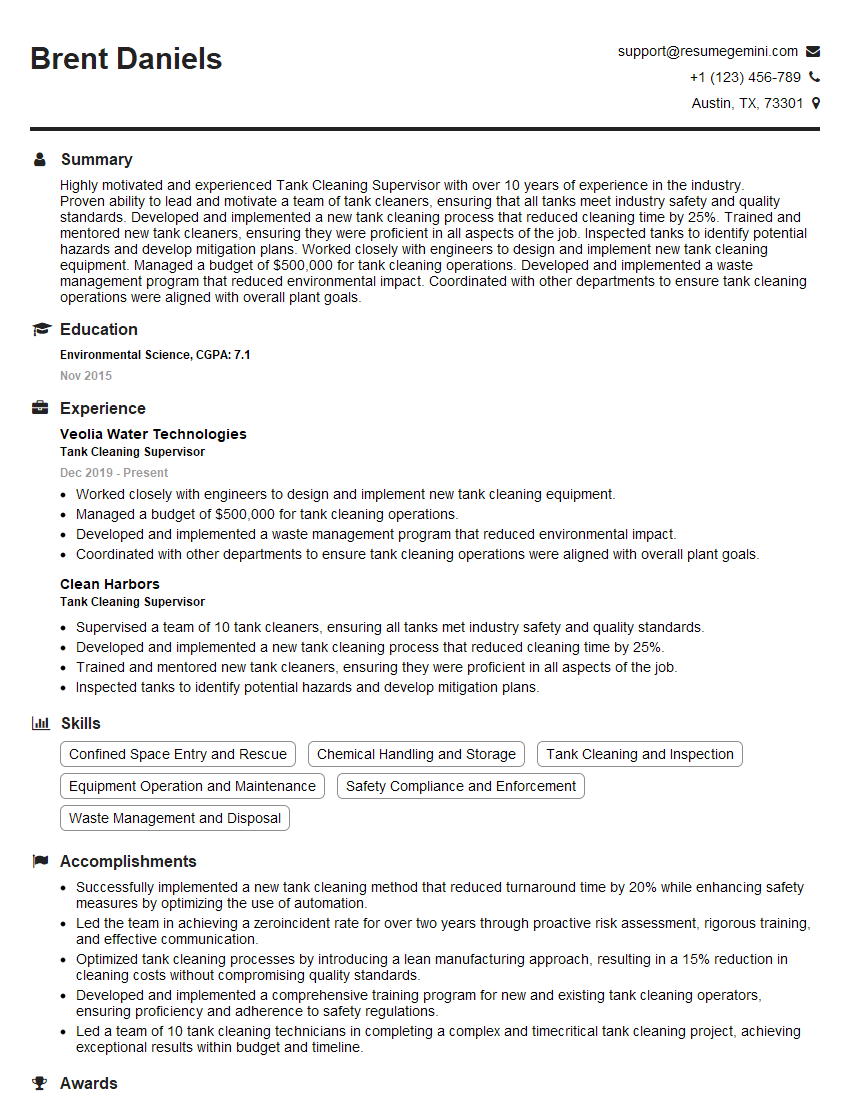
Mastering Tank Inspection and Maintenance is crucial for career advancement in this specialized field, offering opportunities for increased responsibility and higher earning potential. A strong, ATS-friendly resume is your key to unlocking these opportunities. To build a truly impactful resume that highlights your skills and experience, we encourage you to use ResumeGemini. ResumeGemini offers a streamlined process for creating professional resumes, and we provide examples of resumes tailored specifically to Tank Inspection and Maintenance to help guide you. Invest in your future; build the best possible representation of your expertise with ResumeGemini.

Explore more articles
Users Rating of Our Blogs
Share Your Experience
We value your feedback! Please rate our content and share your thoughts (optional).
What Readers Say About Our Blog
Really detailed insights and content, thank you for writing this detailed article.
IT gave me an insight and words to use and be able to think of examples