The right preparation can turn an interview into an opportunity to showcase your expertise. This guide to Tank Maintenance interview questions is your ultimate resource, providing key insights and tips to help you ace your responses and stand out as a top candidate.
Questions Asked in Tank Maintenance Interview
Q 1. Describe your experience with various tank types (e.g., aboveground, underground, pressurized).
My experience encompasses a wide range of tank types, from simple aboveground storage tanks (ASTs) used for rainwater harvesting to complex, pressurized tanks storing volatile organic compounds (VOCs) and underground storage tanks (USTs) containing fuels. I’ve worked extensively with double-walled tanks for enhanced environmental protection, and with various materials including steel, fiberglass, and concrete. Each type demands a unique approach to maintenance, driven by factors such as the stored material, tank design, and environmental considerations.
For example, inspecting an AST for rainwater involves checking for leaks, structural integrity, and cleaning out sediment. In contrast, inspecting a pressurized VOC tank requires stringent safety protocols, specialized equipment to handle potential leaks, and a deeper understanding of pressure dynamics. UST inspections often involve specialized technologies like ground-penetrating radar to detect corrosion or leaks that are not visible above ground.
My experience extends to both the preventative and reactive maintenance of these different tank types. Preventative maintenance is crucial, involving regular inspections and minor repairs, while reactive maintenance addresses unexpected issues like leaks or corrosion.
Q 2. Explain your understanding of tank inspection procedures and relevant codes (API 653, etc.).
Tank inspection procedures are critical for ensuring safety and preventing environmental damage. I’m proficient in following industry standards like API 653, which provides detailed guidelines for inspecting, repairing, and altering aboveground storage tanks. This standard outlines specific procedures for different tank types and materials, considering factors like age, operating conditions, and stored contents.
A typical inspection involves a visual examination of the tank’s exterior and interior (if accessible), looking for corrosion, dents, leaks, and other signs of damage. We use non-destructive testing (NDT) methods like ultrasonic testing (UT) and magnetic particle testing (MT) to assess the integrity of the tank’s walls and base. Documentation is crucial – thorough reports detail all findings, recommended repairs, and the overall condition of the tank.
Beyond API 653, I’m familiar with other relevant codes and regulations, including those related to environmental protection and occupational safety. This comprehensive understanding allows me to ensure inspections are not only thorough but also compliant with all applicable legal requirements.
Q 3. What are the common causes of tank corrosion and how do you mitigate them?
Tank corrosion is a major concern, stemming from various factors. Internal corrosion is often caused by the stored product itself – for instance, acidic or corrosive chemicals can rapidly degrade tank walls. External corrosion is frequently caused by environmental factors like soil conditions, moisture, and oxygen. Electrochemical corrosion, where dissimilar metals in contact accelerate corrosion, is another common issue.
- Mitigation Strategies:
- Protective Coatings: Applying specialized coatings to the tank’s interior and exterior provides a barrier against corrosive agents.
- Cathodic Protection: This electrochemical method prevents corrosion by making the tank the cathode in an electrical circuit, protecting it from oxidation.
- Proper Drainage: Ensuring good drainage around the tank prevents water accumulation, reducing the risk of external corrosion.
- Material Selection: Choosing corrosion-resistant materials for tank construction is a proactive measure.
- Regular Inspections: Early detection of corrosion through regular inspections allows for timely repairs.
For instance, I once worked on a tank experiencing significant internal corrosion due to the storage of sulfuric acid. By implementing cathodic protection and applying a specialized epoxy coating, we successfully mitigated the corrosion and extended the tank’s lifespan.
Q 4. Describe your experience with tank cleaning and decontamination procedures.
Tank cleaning and decontamination procedures vary widely depending on the contents previously stored in the tank. Simple cleaning might involve washing with water and detergent for non-hazardous materials. However, decontamination for hazardous substances requires specialized equipment and procedures, often involving the use of specialized cleaning agents and adherence to strict safety protocols. This may include vapor removal techniques, neutralizing agents, and proper waste disposal.
For example, cleaning a tank that previously held gasoline requires careful removal of residual fuel, followed by thorough washing and vapor extraction to ensure worker safety. Decontaminating a tank that held a toxic chemical might involve using specific neutralizing agents, followed by multiple rinses and testing to confirm the absence of contaminants. All cleaning and decontamination processes must adhere to relevant environmental and safety regulations. Proper documentation is key, recording every step of the process, materials used, and waste generated.
Q 5. How do you ensure compliance with environmental regulations during tank maintenance?
Environmental compliance is paramount during tank maintenance. I ensure compliance by meticulously following all applicable local, state, and federal regulations. This includes obtaining necessary permits, managing hazardous waste appropriately, and preventing spills or leaks. We utilize containment measures, such as berms and secondary containment structures, to prevent environmental contamination. We also monitor and analyze wastewater to ensure it meets discharge standards before release.
Accurate record-keeping is crucial, documenting all activities and waste generated. This information is vital for demonstrating compliance to regulatory agencies. We also regularly train our team on environmental regulations and best practices to maintain a culture of environmental responsibility. For example, we would utilize specialized equipment and techniques for the removal of any sediment or sludge and dispose of it according to environmental guidelines.
Q 6. What safety precautions do you follow when working on tanks?
Safety is our top priority when working on tanks. We follow a strict hierarchy of controls, starting with elimination or substitution of hazards where possible. If hazards cannot be eliminated, we employ engineering controls such as ventilation systems, and then administrative controls like detailed safety procedures and training. Lastly, we use personal protective equipment (PPE) such as respirators, safety harnesses, and protective clothing as the last line of defense.
Before commencing any work, we perform a thorough risk assessment, identifying potential hazards and developing control measures. This includes confined space entry procedures if necessary, atmospheric testing, and emergency response planning. Lockout/Tagout procedures are rigorously followed to prevent accidental energy release. Regular safety meetings and training keep the team updated on safe work practices. We consistently monitor atmospheric conditions and ensure proper ventilation to minimize the risk of exposure to hazardous materials.
Q 7. Explain your experience with tank gauging and level measurement systems.
Tank gauging and level measurement systems are vital for monitoring tank contents. My experience encompasses various methods, from traditional manual dip gauging to sophisticated automated systems. Manual methods are often used for simple tanks, while automated systems, such as radar, ultrasonic, and hydrostatic level sensors, provide continuous and accurate level data for larger or more complex tanks.
Automated systems offer significant advantages, including real-time monitoring, remote access to data, and improved accuracy compared to manual methods. I’m familiar with the installation, calibration, and maintenance of these systems. Accurate data from these systems is essential for inventory management, preventing overfilling, and detecting potential leaks.
For example, I’ve worked with installations using radar level sensors in large aboveground storage tanks, which provide highly accurate and continuous level measurements, enabling efficient inventory management and preventing overfilling. For smaller tanks, we might utilize ultrasonic sensors that provide precise level readings with minimal maintenance requirements.
Q 8. Describe your experience with tank repair techniques (e.g., welding, patching).
My experience in tank repair encompasses a wide range of techniques, primarily focusing on safety and structural integrity. Welding is a crucial skill, and I’m proficient in various methods including shielded metal arc welding (SMAW), gas metal arc welding (GMAW), and gas tungsten arc welding (GTAW), selecting the appropriate technique based on the material (e.g., stainless steel, carbon steel) and the specific repair needed. Patching involves careful preparation of the damaged area, ensuring a clean surface for proper adhesion of the patch material, often using epoxy resins or specialized patching compounds. I’ve handled repairs ranging from small pinhole leaks to significant corrosion damage, always prioritizing safety and adhering to industry best practices. For instance, on a project involving a large chemical storage tank, I utilized GMAW to repair a significant crack, meticulously following pre-weld and post-weld procedures to ensure structural integrity and prevent future failures. Another time, I successfully patched a smaller leak in a water tank using a specialized epoxy compound, ensuring the repair was both durable and watertight.
Q 9. How do you troubleshoot common tank maintenance issues?
Troubleshooting tank maintenance issues starts with a thorough inspection, identifying the problem’s root cause. Common issues include leaks, corrosion, and pump malfunctions. For leaks, I’d systematically check welds, seams, and nozzles for cracks or damage. Visual inspection, often combined with pressure testing, helps pinpoint the leak’s location. Corrosion is investigated by assessing the type and extent of rust or deterioration. Understanding the stored material helps determine the type of corrosion (e.g., pitting, crevice corrosion). Pump malfunctions often require checking for blockages, worn seals, or motor issues. I’d use diagnostic tools to analyze pump performance and identify the source of the problem. For example, diagnosing a leak in an underground fuel tank might involve using specialized leak detection equipment such as acoustic leak detection or vapor monitoring. This systematic approach, combined with my experience, ensures quick and effective resolution of tank maintenance issues.
Q 10. What are your experiences with different types of tank coatings and their applications?
My experience with tank coatings is extensive, covering various types and applications depending on the tank’s material, the stored substance, and environmental conditions. I’ve worked with epoxy coatings for their chemical resistance and durability, polyurethane coatings for their abrasion resistance and flexibility, and specialized linings for specific chemicals. The application process is crucial; proper surface preparation is key to ensuring adhesion and longevity of the coating. This often includes cleaning, blasting, and priming before applying the coating in multiple layers. I’ve also used specialized coatings designed for high temperatures, preventing degradation in high-heat environments. For instance, I applied a specialized epoxy coating to a tank storing highly corrosive chemicals, ensuring a long-lasting and safe barrier. Selecting the correct coating is critical; a wrong choice could lead to coating failure and costly repairs.
Q 11. How do you develop and implement a preventative maintenance program for tanks?
Developing a preventative maintenance program involves a risk-based approach, prioritizing components or areas most prone to failure. This starts with a thorough assessment of the tank’s condition, including material inspections, leak testing, and assessments of any previous repairs. A schedule is then created, outlining regular inspections, cleaning, and maintenance tasks. This could include visual inspections, pressure testing, internal examinations, and any necessary repairs or coatings. The program documents the procedures, responsible personnel, frequency of tasks, and acceptable standards. Detailed records are kept, including dates, findings, and actions taken. The program is regularly reviewed and updated based on inspection findings, ensuring its continued effectiveness. For example, a preventative program for a water storage tank might include annual inspections for corrosion, quarterly cleaning, and a five-year internal examination. This reduces the risk of catastrophic failure and extends the tank’s lifespan.
Q 12. Explain your experience with tank entry procedures and permit-required confined space entry.
Tank entry procedures are strictly governed by safety regulations, especially for confined spaces. Before entry, atmospheric testing is mandatory to ensure oxygen levels are sufficient and hazardous gases are absent. A confined space entry permit is required, outlining the necessary precautions, rescue procedures, and the responsibilities of the entry team. Proper personal protective equipment (PPE), including respirators, harnesses, and safety lines, is essential. An attendant must remain outside the tank, maintaining constant communication and ready to provide assistance. I’ve followed these procedures rigorously throughout my career, prioritizing safety above all else. Failing to adhere to these procedures can result in serious injury or fatality. For example, before entering a tank to perform cleaning, we would conduct atmospheric monitoring, ensure proper ventilation, and establish a communication system between the entry team and the outside attendant.
Q 13. Describe your experience with various types of tank pumps and their maintenance.
I’m experienced with various tank pumps, including centrifugal, positive displacement, and submersible pumps. Their maintenance differs based on design, but common tasks include regular inspections of seals, bearings, and motors. Lubrication is crucial for reducing wear and tear. Pump performance is monitored using flow rate and pressure gauges. Blockages are addressed by cleaning or replacing filters. Preventive maintenance, including regular servicing and component replacements as needed, significantly extends the pump’s lifespan and minimizes downtime. For example, for a centrifugal pump, regular lubrication of bearings, inspection of seals for leaks, and monitoring of vibrations are important preventative measures. A positive displacement pump might need more frequent maintenance on its internal components, requiring specialized tools and skills. Each type of pump requires a different approach, tailored to its specific mechanical design and application.
Q 14. How do you manage tank maintenance documentation and records?
Maintaining accurate and comprehensive tank maintenance documentation is critical for compliance, tracking maintenance history, and ensuring accountability. I use a combination of digital and physical records. Digital records maintain inspection reports, maintenance logs, and permits in a centralized database, allowing for easy access and retrieval. Physical files containing original documents and drawings are kept for auditing purposes. The documentation includes the type of tank, its location, the date of the inspection or maintenance, the procedures followed, any findings, and any corrective actions taken. Photographs and video recordings can supplement the written records, providing a visual record of the tank’s condition. Using a robust system ensures efficient record-keeping and minimizes the risk of errors or omissions. This meticulous documentation simplifies troubleshooting, regulatory compliance, and helps extend the useful life of the tanks.
Q 15. How do you prioritize tank maintenance tasks based on risk assessment?
Prioritizing tank maintenance tasks involves a robust risk assessment process. We start by identifying potential hazards, such as leaks, corrosion, or structural damage. Each hazard is then evaluated based on its likelihood and potential consequences. This is often done using a risk matrix, which visually represents the severity and probability of each risk. For example, a high probability of a minor leak might be rated differently than a low probability of a catastrophic failure.
High-risk tasks, those with high severity and high probability, are prioritized first. These might include addressing immediate leaks, repairing significant corrosion, or replacing critical components nearing end-of-life. Lower-risk tasks, such as routine inspections or preventative maintenance, are scheduled accordingly. This ensures that resources are allocated effectively to mitigate the most significant threats first, minimizing risk and maximizing safety and operational efficiency. We use a documented system with regular reviews to ensure the risk assessment remains current and relevant to the specific tank’s age, contents, and operational environment.
Career Expert Tips:
- Ace those interviews! Prepare effectively by reviewing the Top 50 Most Common Interview Questions on ResumeGemini.
- Navigate your job search with confidence! Explore a wide range of Career Tips on ResumeGemini. Learn about common challenges and recommendations to overcome them.
- Craft the perfect resume! Master the Art of Resume Writing with ResumeGemini’s guide. Showcase your unique qualifications and achievements effectively.
- Don’t miss out on holiday savings! Build your dream resume with ResumeGemini’s ATS optimized templates.
Q 16. Explain your experience with using different types of testing equipment for tank integrity.
My experience with tank integrity testing encompasses a range of methods. For example, we routinely use ultrasonic testing (UT) to detect internal flaws or corrosion in tank walls. UT uses high-frequency sound waves to create an image of the tank’s internal structure, allowing us to identify even small defects. Another common method is magnetic particle testing (MT), primarily used for detecting surface cracks in ferromagnetic materials. This technique involves applying a magnetic field to the tank’s surface and then dusting it with ferromagnetic particles. Cracks disrupt the magnetic field, causing the particles to accumulate, making cracks visible.
For larger tanks or those holding specific types of liquids, we may employ radiographic testing (RT), which utilizes X-rays or gamma rays to create images of the tank’s interior. RT allows for the detection of internal flaws that might not be detectable by other methods. Finally, I have experience with holiday detection, which is especially useful for identifying pinholes and small defects in coatings. This typically involves applying a high-voltage current to the coating and searching for sparks indicating a break in the coating’s continuity. The selection of the most appropriate testing method depends on the tank’s material, age, condition, and the specific concerns we have identified during the risk assessment.
Q 17. Describe your experience with tank leak detection and repair.
Tank leak detection and repair are critical aspects of tank maintenance. Leak detection begins with regular visual inspections, checking for staining, discoloration, or unusual odors. We also employ various testing methods depending on the suspected location and type of leak. For example, if we suspect a leak in the bottom of a tank, we might use hydrostatic testing—filling the tank with water and monitoring the water level for a period of time. We use pressure gauges to measure pressure drop. Vacuum testing, which involves creating a vacuum inside the tank and monitoring for pressure changes, can be effective for detecting leaks in the tank’s upper sections.
Once a leak is located, the repair method depends on the size and location of the leak. Small leaks might be repaired by welding or patching, while larger leaks may require more extensive repairs, including replacement of sections of the tank wall or bottom. I have experience repairing leaks in tanks ranging in size from small storage tanks to large industrial tanks, always prioritizing safety and minimizing downtime. Documentation of each repair, including photographs and detailed descriptions, is crucial for future reference.
Q 18. How do you ensure the safety of personnel during tank maintenance activities?
Ensuring personnel safety during tank maintenance is paramount. We begin with a thorough job hazard analysis (JHA) for each task, identifying potential hazards and implementing control measures. This includes things like lockout/tagout procedures to prevent accidental energy release, confined space entry permits to manage the risks associated with working in enclosed spaces, and the use of personal protective equipment (PPE), such as respirators, safety glasses, and protective clothing.
Before any maintenance work starts, we conduct thorough inspections to ensure safe conditions. We constantly monitor air quality using gas detectors and utilize proper ventilation to prevent hazardous gas buildup. Regular safety briefings, training programs, and emergency response drills are also critical in maintaining a high level of safety awareness. We emphasize a strong safety culture where each individual is accountable for their own safety and the safety of their colleagues. We keep detailed records of all safety incidents, even minor ones, to identify potential areas for improvement and prevent future incidents. Continuous monitoring and evaluation of our safety programs are vital to preventing accidents and maintaining a safe working environment.
Q 19. What is your understanding of cathodic protection and its role in tank maintenance?
Cathodic protection is an electrochemical technique used to prevent corrosion in metallic structures, including storage tanks. It involves applying a negative electrical potential to the tank’s surface, making it the cathode in an electrochemical cell. This prevents the metal from becoming an anode and losing electrons, which is the process of corrosion. In simpler terms, it protects the tank from rusting.
There are two main types of cathodic protection: impressed current cathodic protection (ICCP) and sacrificial anode cathodic protection. ICCP uses an external power source to drive the current needed to protect the tank. Sacrificial anodes, on the other hand, are made of a more readily corrodible metal than the tank’s material (like zinc or magnesium). They corrode preferentially, protecting the tank. Regular monitoring and maintenance of the cathodic protection system is crucial to ensure its effectiveness. This includes inspecting anodes, measuring potentials, and adjusting the current as needed. Maintaining effective cathodic protection significantly extends the lifespan of the tank and reduces the need for costly repairs.
Q 20. Explain your experience with tank decommissioning procedures.
Tank decommissioning is a systematic process involving the safe and environmentally sound removal of a tank from service. This process starts with a thorough assessment of the tank’s contents and condition, identifying potential hazards such as residual liquids, vapours, or sediment. All contents must be safely removed and disposed of according to environmental regulations. Next, the tank must be thoroughly cleaned and purged to ensure no hazardous materials remain. This might involve steam cleaning, chemical washing, or other specialized cleaning techniques.
The tank is then inspected for any structural damage or corrosion. Depending on its condition, it might be possible to dismantle the tank in place or transport it for recycling or disposal. If the tank is significantly damaged, it might need to be cut up on-site. Throughout the decommissioning process, all work must be carried out in accordance with safety regulations, with special emphasis on confined space entry, and handling of hazardous materials. Appropriate documentation of the entire process, including waste disposal records, is crucial for compliance and liability purposes. We follow strict regulatory compliance and maintain detailed records for all decommissioning projects.
Q 21. Describe your experience with different types of tank valves and their maintenance.
Tank valves are critical components requiring regular maintenance to ensure safe and reliable operation. I have experience with various valve types, including gate valves, globe valves, ball valves, butterfly valves, and check valves. Each valve type has its own unique maintenance requirements. For instance, gate valves require regular lubrication to prevent sticking and ensure smooth operation. Globe valves need careful inspection of their seating surfaces to prevent leaks. Ball valves require periodic lubrication and checking for wear on the ball and seat. Butterfly valves are prone to seal wear, and regular inspection and replacement of the seals is crucial. Check valves require inspection to ensure they open and close properly and don’t restrict flow.
Regular maintenance includes visual inspections for leaks, corrosion, or damage, as well as functional testing to ensure the valves open and close completely without leaks. Lubrication, as needed, is important for smooth operation and preventing premature wear. Sometimes, valves require more extensive repairs or replacement, especially if significant corrosion or damage is detected. The type and frequency of maintenance depend on the valve type, the material of construction, the fluid being handled, and the operational conditions of the tank. We always maintain a detailed maintenance schedule for each valve, documenting inspection, maintenance, and repair work.
Q 22. How do you handle emergency situations during tank maintenance?
Emergency situations during tank maintenance require immediate, decisive action. Our protocol prioritizes safety first, then containment, and finally, investigation. For example, if a leak is detected during inspection, the first step is to immediately isolate the tank, preventing further spillage or exposure. This might involve closing valves, activating emergency shut-off systems, and evacuating personnel from the immediate area. Next, we implement containment measures using booms, absorbent materials, and potentially diverting the flow. Once the immediate threat is neutralized, we begin investigating the root cause, taking photos and notes to assist in the repair planning and prevent future incidents. Post-incident reports, including a thorough root cause analysis (RCA), are critical for continuous improvement. We conduct regular drills to ensure everyone is familiar with these procedures, and we constantly update our emergency response plan to reflect the latest best practices and changes in our facilities.
Q 23. What are the common causes of tank leaks and how are they addressed?
Tank leaks stem from various sources, including corrosion, structural damage, faulty welds, and human error during installation or maintenance. Corrosion, particularly in older tanks, is a significant concern, often exacerbated by the nature of the stored material. We address this through regular inspections, including non-destructive testing methods like ultrasonic testing to detect flaws. Structural damage from impacts or ground settling can also cause leaks, necessitating repairs ranging from simple patching to more extensive structural reinforcement. Faulty welds can lead to leakage points, so thorough weld inspections are critical during initial tank construction and routine maintenance. Addressing these leaks involves carefully assessing the extent of the damage, developing a repair plan, and using appropriate techniques; this could involve welding repairs, patching with specialized materials resistant to the stored substance, or in severe cases, tank replacement. Human error, whether from improper handling during maintenance or substandard installation, is addressed through rigorous training programs and strict adherence to safety protocols. For instance, a properly trained technician will always inspect welds and connections during maintenance.
Q 24. Explain your experience with the use of personal protective equipment (PPE) during tank maintenance.
PPE is paramount in tank maintenance. My experience emphasizes the consistent and correct use of appropriate equipment for every task. This includes, but is not limited to, respirators appropriate for the specific stored substance (e.g., organic vapor cartridges, HEPA filters), flame-resistant clothing to protect against fire hazards, safety glasses or goggles to protect against splashes or flying debris, and appropriate gloves, which vary depending on the chemical handled. For instance, when working with corrosive substances, we utilize chemical-resistant gloves, while for handling hydrocarbons, we would use nitrile or similar gloves. We also use specialized boots to protect against spills or chemical exposure. Before any task, a pre-job safety briefing ensures that every member of the team is aware of the specific hazards and the proper PPE required. Furthermore, we maintain a robust PPE inspection and replacement program to guarantee the integrity and effectiveness of the equipment.
Q 25. How do you coordinate maintenance activities with other plant operations?
Coordinating maintenance activities with other plant operations requires meticulous planning and clear communication. We use a scheduling system that integrates our maintenance needs with the overall production schedule, minimizing downtime and disruptions. Before starting any work, we engage with plant operations management to discuss our proposed timeline and potential impacts on production. For example, if a tank requires emptying and cleaning, we coordinate this with the production team to avoid affecting their supply chain. We might schedule this maintenance during planned production outages. This collaborative approach ensures everyone is informed and prepared for any temporary production adjustments. Regular meetings and open communication channels ensure that everyone is on the same page throughout the process.
Q 26. Describe your experience with tank ventilation and breathing apparatus.
Tank ventilation and breathing apparatus are critically important for worker safety, especially when dealing with potentially hazardous atmospheres. Proper ventilation systems ensure that explosive or toxic gases are diluted or removed from the tank’s atmosphere before entry. This may involve using forced ventilation systems to create airflow or employing inert gas blanketing to displace oxygen and prevent fire hazards. Breathing apparatus, such as self-contained breathing apparatus (SCBA), provide respiratory protection in confined spaces or when working in environments with oxygen-deficient or hazardous atmospheres. My experience includes selecting and using the appropriate breathing apparatus depending on the specific risks associated with the tank contents. For instance, we use SCBA for entry into tanks containing oxygen-deficient environments or those with toxic vapors. Regular inspections and training on SCBA usage are critical components of our safety program. We never compromise on safety and will always use appropriate equipment to protect our personnel.
Q 27. How do you ensure the accuracy of tank inventory measurements?
Accurate tank inventory measurements are crucial for inventory management, production planning, and regulatory compliance. We use a variety of methods depending on the tank’s size, the nature of the stored material, and the desired level of accuracy. For example, we employ level gauges, which can be mechanical, electronic, or ultrasonic. These provide a direct reading of the liquid level. We also use tank gauging systems that combine level measurements with temperature and pressure readings to account for variations in density due to temperature fluctuations. For very precise measurements, we might employ techniques like hydrostatic gauging or use calibrated sampling systems. Regular calibration and maintenance of these systems is key to maintaining accuracy. All measurement data is recorded and verified, and any discrepancies are thoroughly investigated and rectified. Using multiple methods or cross-checking between measurements helps minimize errors.
Q 28. What are the key aspects of a successful tank maintenance program?
A successful tank maintenance program is built on several key aspects. Firstly, a comprehensive inspection schedule is vital, using various non-destructive testing methods to identify potential problems early. Secondly, a well-defined preventative maintenance schedule addresses potential issues before they become significant problems; this is more cost-effective than reactive repairs. Thirdly, a robust system for tracking maintenance activities, including documentation and records management, ensures compliance and accountability. Fourthly, a commitment to worker safety, which includes the provision of proper PPE, extensive safety training, and well-defined emergency response protocols is indispensable. Finally, continuous improvement through post-incident analysis and regularly reviewing safety protocols ensures that the program adapts to changing needs and improves over time. A successful program is proactive, not reactive, and emphasizes safety as its highest priority.
Key Topics to Learn for Tank Maintenance Interview
- Tank Inspection and Assessment: Understanding various inspection methods (visual, non-destructive testing), identifying common tank defects (corrosion, leaks, structural damage), and documenting findings accurately.
- Preventive Maintenance Procedures: Knowledge of routine maintenance tasks (cleaning, painting, leak detection), scheduling and implementing preventative maintenance programs, and understanding the importance of adhering to safety regulations.
- Repair and Restoration Techniques: Familiarity with different repair methods (welding, patching, lining), selecting appropriate repair materials based on tank type and damage, and understanding the importance of quality control in repairs.
- Safety Regulations and Compliance: Deep understanding of OSHA and industry-specific safety regulations related to tank maintenance, proper handling of hazardous materials, and implementing safe work practices.
- Tank Cleaning and Degassing: Understanding procedures for safely cleaning and degassing tanks, selecting appropriate cleaning agents, and ensuring compliance with environmental regulations.
- Troubleshooting and Problem-solving: Ability to diagnose common tank maintenance issues, develop effective solutions, and utilize problem-solving methodologies to resolve complex problems efficiently and safely.
- Tank System Components and Functionality: Comprehensive knowledge of various tank components (valves, pumps, piping), understanding their function, and ability to identify potential points of failure.
- Documentation and Reporting: Maintaining detailed records of maintenance activities, generating reports, and communicating effectively with supervisors and colleagues.
Next Steps
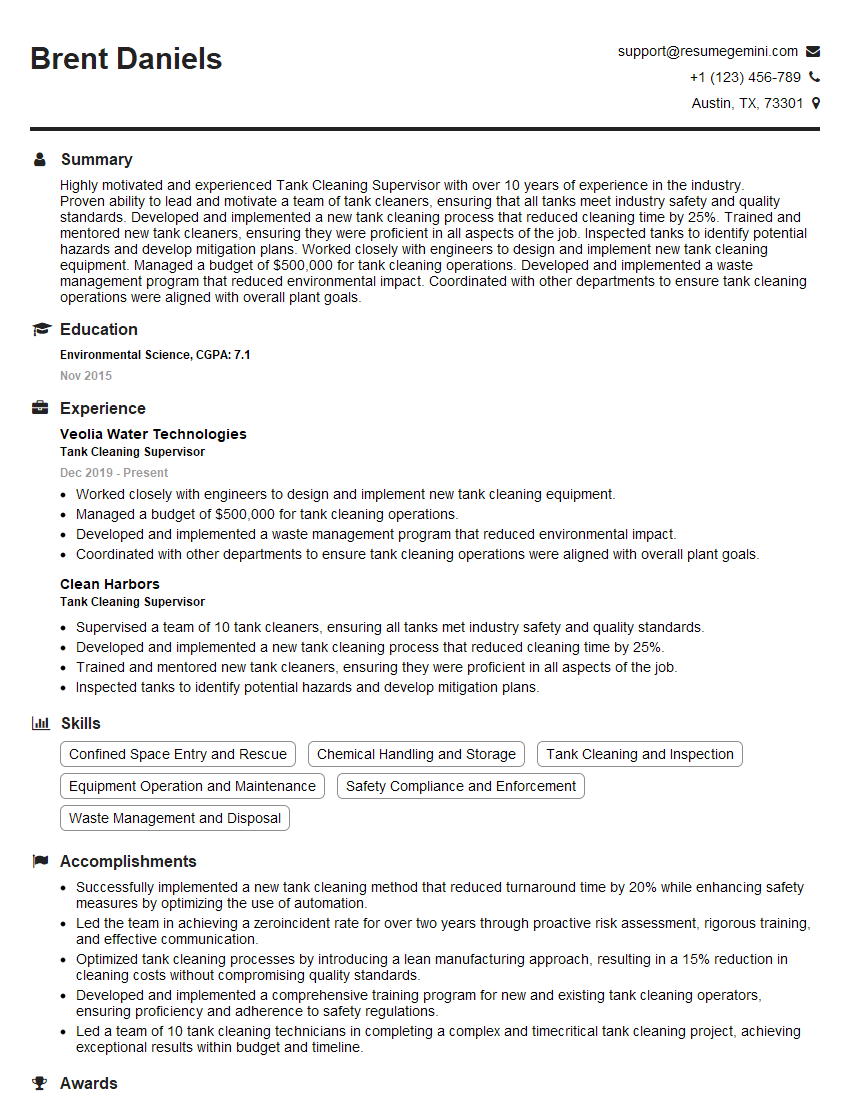
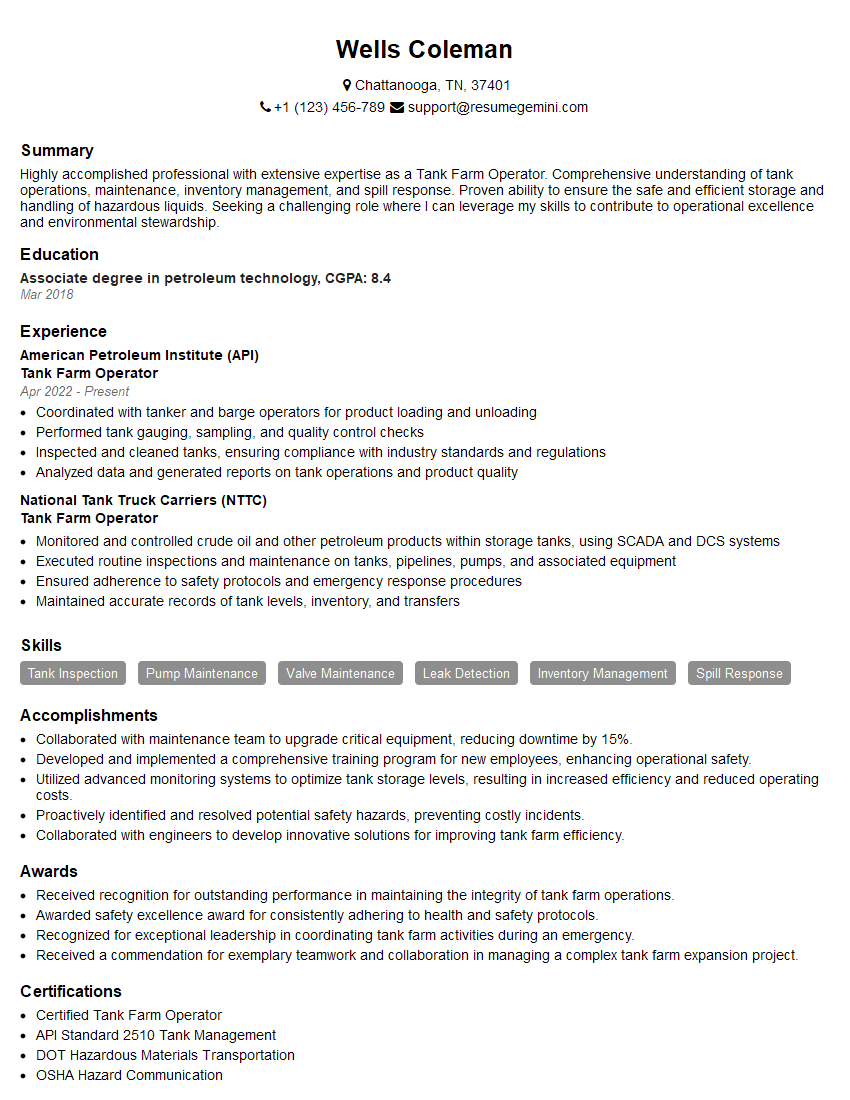
Mastering tank maintenance opens doors to a rewarding career with excellent growth potential. Advancement opportunities range from team lead to senior maintenance specialist, offering higher earning potential and increased responsibility. To maximize your job prospects, it’s crucial to present your skills effectively. An ATS-friendly resume is essential for getting your application noticed by recruiters and hiring managers. We highly recommend using ResumeGemini to build a professional and impactful resume that highlights your expertise in tank maintenance. ResumeGemini offers examples of resumes tailored specifically to the Tank Maintenance field, providing you with valuable templates and guidance.

Explore more articles
Users Rating of Our Blogs
Share Your Experience
We value your feedback! Please rate our content and share your thoughts (optional).
What Readers Say About Our Blog
Really detailed insights and content, thank you for writing this detailed article.
IT gave me an insight and words to use and be able to think of examples