Feeling uncertain about what to expect in your upcoming interview? We’ve got you covered! This blog highlights the most important Thermoplastic Molding interview questions and provides actionable advice to help you stand out as the ideal candidate. Let’s pave the way for your success.
Questions Asked in Thermoplastic Molding Interview
Q 1. Explain the difference between thermoplastic and thermoset polymers.
The key difference between thermoplastic and thermoset polymers lies in their response to heat. Thermoplastics can be repeatedly melted and reshaped without undergoing significant chemical change. Think of it like melting and remolding a wax candle – you can do it again and again. Thermosets, on the other hand, undergo an irreversible chemical change during curing, forming a rigid, cross-linked structure. Once cured, they cannot be melted or reshaped. Imagine baking a cake; once baked, you can’t unbake it and remold it into a different shape. This fundamental difference dictates their suitability for various applications and molding processes. Thermoplastics are ideal for injection molding due to their ability to be repeatedly melted and solidified, while thermosets are typically used in processes like compression molding or resin transfer molding.
Q 2. Describe the injection molding process step-by-step.
Injection molding is a highly automated process. Here’s a step-by-step breakdown:
- Feeding: The thermoplastic resin in pellet form is fed into a hopper.
- Melting: A rotating screw in the barrel melts the pellets through friction and heat.
- Injection: The molten plastic is injected under high pressure into a closed mold cavity.
- Holding: The molten plastic is held under pressure to ensure complete filling and proper part geometry.
- Cooling: The mold is cooled, solidifying the plastic.
- Ejection: Once solidified, ejector pins push the molded part out of the mold.
- Cycle Repetition: The process repeats continuously until the required number of parts is produced.
Imagine it like squeezing toothpaste from a tube into a mold. The screw is the piston, the barrel is the tube, and the mold is the shape you want the toothpaste to take.
Q 3. What are the common types of thermoplastic resins used in molding?
Many thermoplastic resins are used in molding, each with specific properties:
- Polyethylene (PE): Known for its flexibility, low cost, and excellent chemical resistance. Used in films, bottles, and containers.
- Polypropylene (PP): Strong, lightweight, and resistant to fatigue. Used in automotive parts, packaging, and appliances.
- Polyvinyl Chloride (PVC): Versatile, durable, and relatively inexpensive. Used in pipes, window frames, and flooring.
- Polystyrene (PS): Easy to mold, transparent, and inexpensive. Used in disposable food containers and packaging.
- Acrylonitrile Butadiene Styrene (ABS): Tough, impact-resistant, and easy to process. Used in automotive dashboards, electronics casings, and toys.
- Polycarbonate (PC): High impact strength, transparency, and heat resistance. Used in safety glasses, lenses, and medical devices.
The choice of resin depends heavily on the desired properties of the final product and the application’s requirements.
Q 4. How do you determine the appropriate molding parameters (temperature, pressure, etc.)?
Determining the optimal molding parameters is crucial for producing high-quality parts. It’s often an iterative process, involving:
- Resin Properties: The melt flow index (MFI) and other characteristics of the resin significantly influence temperature and pressure settings.
- Mold Design: The complexity of the mold, wall thickness, and gate design impact the filling time and pressure required.
- Part Geometry: Thin walls need lower injection pressures to avoid warping, while thicker sections require higher pressures for complete filling.
- Material Data Sheets: These sheets provide recommended processing ranges for different resins.
- Trial and Error: Experimental runs are vital to fine-tune the parameters based on observation and part quality assessment.
Specialized software can also simulate the molding process to help predict optimal settings, minimizing experimentation.
Q 5. Explain the concept of ‘melt flow index’ and its importance.
The Melt Flow Index (MFI) measures the ease with which a thermoplastic resin flows under specified conditions of temperature and pressure. It’s essentially a measure of the resin’s viscosity. A higher MFI indicates a lower viscosity, meaning the resin flows more easily. It’s crucial because:
- Process Optimization: MFI helps determine appropriate injection pressure and melt temperature. A resin with a high MFI may require lower injection pressure.
- Quality Control: Consistent MFI ensures uniform part quality across batches. Changes in MFI can indicate problems with the resin.
- Part Design: The MFI influences the design parameters, especially for thin-walled parts where low viscosity is desirable for complete filling.
Think of it like the ‘spreadability’ of butter; a high-MFI resin is like soft, easily spreadable butter, while a low-MFI resin is like firm, less spreadable butter.
Q 6. What are common molding defects and their root causes?
Common molding defects and their root causes:
- Short Shots: Incomplete filling of the mold cavity. Caused by insufficient injection pressure, low melt temperature, or insufficient material.
- Flash: Excess material escaping between the mold halves. Caused by excessive injection pressure, worn mold components, or improper mold clamping.
- Sink Marks: Indentations on the surface of the part. Caused by uneven cooling or insufficient material in thicker sections.
- Warping: Distortion of the part after molding. Caused by uneven cooling, high internal stresses, or improper mold design.
- Burn Marks: Discoloration or degradation of the surface. Caused by excessive melt temperature or prolonged exposure to high heat.
Understanding these defects and their root causes is vital for effective troubleshooting and process optimization.
Q 7. How do you troubleshoot short shots or flash in molded parts?
Troubleshooting short shots and flash requires a systematic approach:
Short Shots:
- Increase Injection Pressure: Gradually increase the pressure while monitoring for flash.
- Increase Melt Temperature: Increase the melt temperature to reduce viscosity.
- Increase Injection Time: Allow more time for the mold to fill completely.
- Check Gate Size: Ensure the gate size is adequate for the part’s geometry.
- Inspect for Blockages: Check for any obstructions in the flow path.
Flash:
- Reduce Injection Pressure: Gradually decrease the injection pressure.
- Lower Melt Temperature: Reduce the melt temperature to increase viscosity.
- Improve Mold Clamping Force: Ensure sufficient clamping force to prevent mold parting.
- Inspect Mold for Wear: Check for wear and tear on the mold components (especially parting lines).
- Adjust Mold Temperature: Adjusting mold temperature can impact viscosity and flow.
Remember, meticulous record-keeping during troubleshooting is key to identifying trends and finding effective solutions.
Q 8. Describe different types of injection molding machines.
Injection molding machines are categorized based on their clamping mechanism, injection unit, and overall size. The most common types are:
- Hydraulic Injection Molding Machines: These use hydraulic cylinders to provide the clamping force and injection pressure. They are known for their high clamping forces and versatility, making them suitable for large and complex parts. Think of them as the workhorses of the industry, capable of handling tough jobs.
- All-Electric Injection Molding Machines: These use electric motors to power both the clamping and injection units. They offer precise control, energy efficiency, and reduced noise compared to hydraulic machines. They are ideal for high-precision parts and applications where energy savings are a priority. Imagine them as the precision tools of the injection molding world.
- Hybrid Injection Molding Machines: These combine hydraulic and electric components. Typically, the clamping unit is hydraulic for high clamping force, while the injection unit is electric for precise control. They represent a balance between power and precision.
- Horizontal and Vertical Injection Molding Machines: The difference lies simply in the orientation of the mold. Horizontal machines are more common for larger parts and easier part ejection, while vertical machines can be advantageous for parts with undercuts or that require special handling during ejection.
The choice of machine depends on factors like part size, complexity, material, production volume, and budget.
Q 9. What are the key considerations for designing molds for thermoplastic molding?
Designing molds for thermoplastic molding requires careful consideration of several key factors:
- Part Design: The part’s geometry, wall thickness uniformity, draft angles (allowing for easy part removal), and undercuts all significantly impact mold design. A poorly designed part can lead to molding difficulties and defects.
- Material Selection: The thermoplastic material’s properties (melt flow index, shrinkage rate, thermal stability) dictate the mold’s material, temperature control requirements, and gating strategy.
- Mold Material: The chosen mold material (e.g., hardened tool steel, aluminum, beryllium copper) affects cost, durability, and thermal conductivity. Hardened tool steel is preferred for high-volume production due to its wear resistance.
- Gating and Runner System: Efficient filling of the cavity requires careful design of the gating and runner system to prevent air trapping, weld lines, and short shots.
- Cooling System: Effective cooling is critical for maintaining dimensional stability and cycle time. This often involves strategically placed cooling channels within the mold.
- Ejection System: A reliable ejection system is needed to remove the molded part from the cavity without damage. This typically involves ejector pins and strategically placed ejector plates.
Ignoring these factors can result in costly mold revisions, production delays, and defective parts.
Q 10. Explain the role of gating and runner systems in mold design.
The gating and runner system is the lifeline of the mold, delivering molten plastic to the mold cavity. The gate is the entry point for the molten plastic, while the runner system is the network of channels that transport the plastic from the sprue (the main entry point of the mold) to the gate.
- Gate Types: Various gate types (e.g., pin gate, edge gate, submarine gate) influence the flow characteristics and the quality of the molded part. The choice depends on the part’s geometry and material properties. For instance, a pin gate is good for smaller parts, while a fan gate is better for larger, complex parts needing to fill quickly and evenly.
- Runner Design: The runner system’s design impacts the pressure drop and flow uniformity. An improperly designed runner system can lead to uneven filling, short shots, and weld lines. A balanced runner system, with consistent cross-sections, ensures even flow.
- Hot Runners vs. Cold Runners: Hot runner systems keep the plastic molten in the runners, eliminating wasted material. Cold runner systems require removing and reprocessing the excess plastic in the runners. Hot runner systems are more expensive but can be cost-effective for high-volume production.
Careful design of this system prevents defects and ensures efficient material usage.
Q 11. How do you ensure consistent part quality in thermoplastic molding?
Ensuring consistent part quality involves a multi-faceted approach encompassing:
- Process Parameter Control: Maintaining consistent injection pressure, melt temperature, mold temperature, and clamping force are crucial. Variations in these parameters directly impact the part’s dimensions, weight, and appearance. Regular monitoring and adjustments are essential.
- Material Consistency: Using material from the same batch and ensuring consistent material properties is important. Variations in material characteristics can impact the molding process and part quality.
- Mold Maintenance: Regularly inspecting the mold for wear and tear, cleaning it to remove debris, and making necessary repairs prevent defects and maintain consistency.
- Statistical Process Control (SPC): Implementing SPC techniques, such as control charts, allows for continuous monitoring of key process variables and immediate detection of any deviations from target values. This proactive approach prevents the production of defective parts.
- Operator Training: Well-trained operators are less likely to introduce inconsistencies into the molding process.
By systematically managing these factors, we can minimize variations and achieve high levels of consistency in part quality.
Q 12. What are the different types of mold materials and their applications?
Mold materials are chosen based on factors such as cost, durability, thermal conductivity, and the specific application. Common materials include:
- Hardened Tool Steel: This is the most common material for high-volume production due to its high wear resistance, excellent dimensional stability, and ability to withstand high temperatures. It’s like the ‘gold standard’ for demanding applications.
- Aluminum: Aluminum molds are lighter and less expensive than steel molds, but they are less durable and have lower thermal conductivity. They are often used for prototyping or lower-volume production.
- Beryllium Copper: This offers excellent thermal conductivity and wear resistance, making it suitable for applications requiring fast cycle times or molding abrasive materials. However, it’s expensive.
- Pre-hardened Steels: These offer a balance between cost and performance, often used for less demanding applications.
The selection of the mold material is a crucial decision affecting both the cost and lifespan of the mold.
Q 13. Describe your experience with statistical process control (SPC) in molding.
My experience with Statistical Process Control (SPC) in molding is extensive. I’ve implemented and managed SPC programs for numerous projects. This typically involves:
- Identifying Key Process Variables (KPVs): These are the parameters that most significantly impact part quality. Examples include injection pressure, melt temperature, cycle time, and part dimensions.
- Establishing Control Charts: We use control charts (e.g., X-bar and R charts) to monitor the KPVs over time. This allows us to identify trends, patterns, and any deviations from the target values.
- Data Collection and Analysis: Regular data collection is crucial, and the collected data is analyzed to identify potential sources of variation.
- Process Capability Analysis: This helps determine whether the process is capable of meeting the specified requirements. This is crucial for making informed decisions about process improvements.
- Corrective Actions: Based on the analysis, we implement corrective actions to address any identified problems. This might include adjusting machine parameters, improving mold maintenance, or retraining operators.
Through effective SPC, we can proactively identify and address issues, leading to improved process stability, reduced scrap rates, and enhanced part quality. I have personally used this to reduce defect rates by over 50% in several projects.
Q 14. How do you manage and improve cycle times in injection molding?
Managing and improving cycle times in injection molding requires a systematic approach:
- Optimize Mold Design: A well-designed mold with efficient cooling channels and a streamlined gating system significantly reduces cycle time. Improved mold design is often the most impactful change.
- Adjust Machine Parameters: Fine-tuning parameters such as injection speed, melt temperature, and mold temperature can have a considerable impact on cycle time without compromising part quality.
- Improve Cooling System Efficiency: Optimizing cooling channel design or using more efficient cooling methods can significantly reduce the cooling time, thus reducing cycle time. Techniques like using chilled water or improved cooling channel design can greatly benefit this.
- Material Selection: Selecting materials with faster melt flow rates can reduce the time required for filling the cavity.
- Automation: Automating tasks such as part ejection and material handling can streamline the process and shorten cycle time.
- Preventive Maintenance: Regularly scheduled maintenance prevents unexpected downtime and maintains optimal machine performance, which is crucial for maintaining consistent cycle times.
A systematic approach, combining process optimization and preventive maintenance, allows for continuous cycle time reduction while maintaining part quality and productivity.
Q 15. What are your methods for identifying and resolving mold wear?
Identifying and resolving mold wear is crucial for maintaining consistent part quality and production efficiency. My approach involves a multi-faceted strategy combining preventative maintenance with proactive detection methods.
Regular Visual Inspections: I routinely inspect molds for signs of wear, such as scratches, pitting, erosion, or flash. This often involves using magnification tools to detect subtle imperfections. For example, I once identified micro-cracks on a runner system during a routine check that prevented a costly production downtime later.
Dimensional Measurement: Using precision measuring instruments like CMMs (Coordinate Measuring Machines), I check the molded parts against specifications to detect any deviations indicating mold wear. Consistent shrinkage or warping would signal a problem requiring investigation.
Part Analysis: Analyzing ejected parts for defects like flash, short shots, or sink marks can help pinpoint the location of mold wear. For instance, consistent flash on one side of a part points to wear in the corresponding area of the mold cavity.
Mold Temperature Monitoring: Inconsistencies in mold temperature can indicate issues like clogged cooling channels, which are indicative of longer-term wear and tear on the molding system.
Resolving the Wear: Depending on the severity and location of the wear, solutions range from simple polishing and repair to more extensive mold refurbishment or replacement. For minor scratches, polishing might suffice. More significant damage, like cavity erosion, requires more extensive repairs or even creating a new cavity insert.
Career Expert Tips:
- Ace those interviews! Prepare effectively by reviewing the Top 50 Most Common Interview Questions on ResumeGemini.
- Navigate your job search with confidence! Explore a wide range of Career Tips on ResumeGemini. Learn about common challenges and recommendations to overcome them.
- Craft the perfect resume! Master the Art of Resume Writing with ResumeGemini’s guide. Showcase your unique qualifications and achievements effectively.
- Don’t miss out on holiday savings! Build your dream resume with ResumeGemini’s ATS optimized templates.
Q 16. Explain the importance of proper material handling and drying in thermoplastic molding.
Proper material handling and drying are paramount in thermoplastic molding. Moisture in the resin can lead to serious defects, reduced mechanical properties, and equipment damage.
Material Handling: This includes proper storage, avoiding contamination, and using appropriate conveying systems to prevent resin degradation and ensure consistent material flow into the machine. Imagine storing your pellets in a humid warehouse – the absorbed moisture could cause splay marks and weak points on final products.
Drying: Most thermoplastics require drying before processing to remove absorbed moisture. The drying process involves using specialized equipment (e.g., hopper dryers) to reduce moisture content to the specified level for the specific material. I typically reference the resin supplier’s data sheet for recommended drying temperatures and times. Failure to properly dry leads to issues like bubbling, surface defects, and weaker mechanical strength of the finished component.
To illustrate, consider a case where we used undried nylon resin. The resulting parts had significant surface blemishes and compromised mechanical strength. After implementing rigorous drying procedures, the defect rate dropped significantly, demonstrating the importance of these steps.
Q 17. Describe your experience with different types of mold cavities (e.g., single, multi-cavity).
My experience encompasses a wide range of mold cavities, from simple single-cavity molds to complex multi-cavity molds with intricate inserts.
Single-cavity molds are ideal for prototyping or low-volume production, offering simplicity in design and manufacturing. They are easier to maintain and repair.
Multi-cavity molds, on the other hand, are used for high-volume production and can significantly improve cycle times by producing multiple parts simultaneously. This type increases production efficiency but adds complexity and cost.
Family molds allow for the production of multiple, similar parts within a single mold. They offer economies of scale and can be cost-effective for medium to high-volume production.
I’ve worked extensively with both single and multi-cavity molds, understanding the trade-offs between complexity, cost, and production efficiency. The choice always depends on factors such as production volume, product design, and budget considerations.
Q 18. How do you select the appropriate mold base size for a specific application?
Selecting the appropriate mold base size is crucial for ensuring mold stability, functionality, and longevity. It’s not just about fitting the cavity; factors like clamping force, mold size, and ejection system design play significant roles.
My selection process usually involves the following steps:
Determining the Mold Size: This depends on the size and complexity of the part being molded, and the number of cavities.
Calculating Clamping Force Requirements: The clamping force required needs to be sufficient to withstand the injection pressure, particularly for larger and thicker parts. An insufficient clamping force can lead to mold flashing and deformation.
Ejection System Design: Consider the number and placement of ejector pins and their force requirements. A larger and more complex ejection system might require a larger mold base.
Standard Sizes: I typically utilize standardized mold base sizes to ensure compatibility with readily available components and reduce lead times. This simplifies maintenance and replacement of components.
For example, a complex, large part requiring high injection pressure would necessitate a larger, heavier mold base with a higher clamping force rating compared to a small, simple part.
Q 19. What are the safety precautions you take when working with injection molding machines?
Safety is paramount in my work with injection molding machines. My safety protocols adhere to strict industry standards and include:
Lockout/Tagout Procedures: Before any maintenance or repair work, I always follow strict lockout/tagout procedures to prevent accidental machine start-up. This is non-negotiable.
Personal Protective Equipment (PPE): I consistently use appropriate PPE, including safety glasses, hearing protection, and heat-resistant gloves, to prevent injuries from molten plastic, high noise levels, and other hazards.
Machine Guards: I ensure all machine guards are in place and functioning correctly to prevent accidental contact with moving parts. I report any malfunctions immediately.
Emergency Shut-off Procedures: I’m familiar with the location and operation of all emergency shut-off switches and other safety devices.
Regular Inspections: I routinely inspect the machinery for any signs of wear or damage, and I follow documented procedures for reporting any safety concerns.
One time, a colleague forgot to engage the safety lock before making adjustments, leading to a minor injury. This reinforced the importance of rigorously following safety procedures.
Q 20. Explain your experience with mold maintenance and preventative measures.
Mold maintenance is critical for ensuring the longevity and efficiency of molds. My approach focuses on both preventative and corrective maintenance:
Preventative Maintenance: This includes regular cleaning of the mold, lubrication of moving parts, and periodic inspection for wear and tear. I follow a detailed schedule for lubrication and cleaning, adapting the schedule based on the material and usage of each mold. Regular cleaning prevents buildup of resin and reduces the risk of defects.
Corrective Maintenance: This involves repairing or replacing worn or damaged components. I’m proficient in handling minor repairs, such as polishing or replacing worn ejector pins. However, significant damage requires the expertise of specialized mold repair shops.
Documentation: I maintain meticulous records of all maintenance activities, including dates, procedures, and any identified issues. This facilitates analysis and identification of patterns which can prevent future problems.
Once, a mold started producing parts with inconsistent wall thickness. By reviewing maintenance records, we found a missing lubricant application. Addressing this simple oversight resolved the issue. This highlights the importance of accurate documentation and preventative maintenance.
Q 21. Describe your experience with different types of molding gates (e.g., hot runner, cold runner).
Mold gates are critical for delivering molten plastic into the mold cavity. My experience includes working with various gate types, each with its strengths and weaknesses:
Hot Runner Systems: These systems maintain the plastic in a molten state within the mold, eliminating the need for runners and sprues. They minimize material waste, improve cycle times, and offer better part quality. However, hot runner systems are more complex and costly to implement.
Cold Runner Systems: These systems allow the plastic to solidify in the runners and sprues, requiring post-processing to remove them. They are less expensive but create material waste, slower cycle times, and a slightly higher risk of part defects if not managed properly.
Different Gate Types within Hot/Cold Runners: Within hot and cold runner systems, various gate designs exist (e.g., pin gates, edge gates, tab gates, etc.). Each design has its implications on the final part’s quality and appearance. For instance, a pin gate minimizes weld lines, while an edge gate might be preferred for better aesthetics.
The choice of gate type and system depends on the part design, material, production volume, and cost considerations. A complex part with thin walls might benefit from a hot runner system with pin gates, while a simpler, high-volume part may be adequately served by a cold runner system with simpler gate designs.
Q 22. How do you ensure the dimensional accuracy of molded parts?
Ensuring dimensional accuracy in molded parts is paramount for functional and aesthetic reasons. It involves a multi-faceted approach starting even before the molding process begins. We must meticulously design the mold itself, carefully considering factors like shrinkage, warp, and the specific material’s properties.
Mold Design: Accurate CAD models are critical, using precise dimensions and tolerances based on the final part requirements. We often employ techniques like mold flow analysis (MFA) software to predict potential warping or shrinkage before the mold is even built. This allows for proactive adjustments to the mold design.
Material Selection: The choice of thermoplastic resin significantly impacts dimensional stability. Some materials are more prone to shrinkage or warping than others. We select materials considering the part’s application and environmental conditions.
Molding Process Parameters: Precise control over injection pressure, melt temperature, mold temperature, and cooling time is essential. Even slight variations in these parameters can significantly impact the final dimensions. We use sophisticated process monitoring and control systems to maintain consistency.
Post-Molding Inspection: Rigorous quality checks, including dimensional measurements using CMM (Coordinate Measuring Machine) or other precision instruments, are crucial. Statistical Process Control (SPC) charts help us track variations over time and identify trends that could indicate deviations from the required tolerances.
For example, in a project involving a complex automotive part, we used MFA software to predict and compensate for warpage caused by uneven cooling. This resulted in parts within 0.05mm of the target dimensions, meeting stringent automotive quality standards.
Q 23. Explain your experience with CAD software used for mold design.
My experience encompasses a wide range of CAD software, primarily focusing on those specifically designed for mold design. I’m proficient in Autodesk Moldflow, SolidWorks, and Pro/ENGINEER. These tools allow me to create highly detailed 3D models of molds, including the cavity, core, runner system, and ejection mechanisms. I’m comfortable using various features such as surface modeling, solid modeling, and advanced assembly techniques.
Furthermore, I’m experienced in using these tools to perform mold flow analysis, predicting potential issues such as weld lines, air traps, and short shots. This allows for proactive design changes to optimize the molding process and avoid costly rework.
For instance, in one project, I used SolidWorks to design a multi-cavity mold for a high-volume consumer product. By leveraging Moldflow, we were able to identify and rectify a potential sink mark issue during the design phase, preventing production delays and material waste.
Q 24. How do you perform root cause analysis for molding defects?
Root cause analysis (RCA) for molding defects is a systematic process that involves carefully identifying the underlying causes of the problem. My approach generally follows a structured methodology, often using techniques like the ‘5 Whys’ or fishbone diagrams.
Data Collection: The first step involves gathering comprehensive data about the defect, including its location, frequency, severity, and any associated process parameters. This data may come from visual inspection, dimensional measurements, or other quality control tests.
Defect Characterization: We systematically analyze the defect to understand its nature – is it a sink mark, a short shot, a warp, or something else? Visual inspection and microscopy are often employed.
Process Parameter Review: We scrutinize all aspects of the molding process, including injection pressure, melt temperature, mold temperature, cycle time, and material properties. Statistical process control (SPC) data is often critical in identifying trends and patterns.
Material Analysis: The properties of the thermoplastic material itself can sometimes contribute to defects. We might conduct material testing to check for degradation or variations in properties.
Mold Evaluation: The mold itself is a potential source of defects. We might examine the mold for wear, damage, or other imperfections.
For example, when we experienced excessive warping in a particular part, RCA revealed that inadequate cooling in a specific section of the mold was the root cause. By modifying the cooling channels, we eliminated the problem.
Q 25. Describe your experience working with different types of automation in molding.
My experience with automation in molding includes working with various types of robotic systems, automated material handling systems, and sophisticated process control systems. This encompasses both the integration and troubleshooting of these systems.
Robotic Systems: I’ve worked extensively with robotic arms for part removal, placement, and secondary operations. Experience includes programming and troubleshooting robotic systems to optimize cycle times and improve efficiency.
Automated Material Handling: This includes working with automated systems for material delivery, hopper filling, and regrind handling, ensuring smooth and uninterrupted operation.
Process Control Systems: I’m familiar with PLC (Programmable Logic Controller) programming and integration, allowing for precise control and monitoring of injection molding parameters, leading to improved consistency and reduced defects.
In one project, we integrated a vision system with a robotic arm to automate the inspection and sorting of molded parts. This improved accuracy and significantly reduced labor costs.
Q 26. What is your experience with process validation and qualification in thermoplastic molding?
Process validation and qualification in thermoplastic molding are crucial for ensuring consistent product quality and compliance with industry regulations (e.g., ISO 9001, FDA, etc.). My experience includes designing and executing validation protocols, including IQ (Installation Qualification), OQ (Operational Qualification), and PQ (Performance Qualification).
IQ: Verifying that the molding equipment is installed correctly and meets specifications.
OQ: Confirming that the equipment performs as intended under various operating conditions.
PQ: Demonstrating that the process consistently produces parts that meet predefined quality criteria.
This involves documenting each step meticulously, including equipment specifications, process parameters, and test results. We use statistical methods such as Design of Experiments (DOE) to optimize process parameters and ensure robustness. For example, during the validation of a medical device component, we used DOE to determine the optimal process window, ensuring consistent quality and compliance with strict regulatory requirements. We documented the entire process according to the GMP guidelines, providing traceability and compliance.
Q 27. How do you contribute to a team environment in a manufacturing setting?
In a manufacturing setting, teamwork is indispensable. My approach emphasizes open communication, collaboration, and mutual respect. I actively participate in team meetings, contribute my expertise to problem-solving, and proactively assist my colleagues. I believe in a supportive environment where everyone feels comfortable sharing ideas and concerns.
I’m adept at coordinating with engineers, technicians, and operators to ensure smooth workflow and efficient problem resolution. I strive to create a collaborative spirit where we leverage each team member’s strengths to achieve shared goals. For example, in one instance, I worked closely with the process technicians to troubleshoot a recurring defect, sharing my knowledge of material properties and process parameters while actively listening to their insights on machine behavior. This collaborative approach led to a rapid solution.
Q 28. Describe a challenging project you worked on in thermoplastic molding and how you overcame obstacles.
One challenging project involved the production of a highly intricate part with thin walls and complex internal features for a medical device. The initial attempts resulted in high rates of warping and sink marks. The tight tolerances and the critical nature of the application (medical device) made this particularly challenging.
To overcome these obstacles, we implemented a multi-pronged approach:
Refined Mold Design: We used advanced simulation software to optimize the mold’s cooling system, reducing the thermal gradients that were contributing to warping.
Material Optimization: We explored different grades of the thermoplastic material to find one with better flow characteristics and improved dimensional stability.
Process Parameter Fine-Tuning: We used DOE to systematically optimize injection pressure, melt temperature, and mold temperature, minimizing variations in the resulting part dimensions.
Enhanced Quality Control: We implemented more rigorous in-process inspections, incorporating automated optical inspection to detect defects early in the production process.
Through this systematic approach, we successfully reduced the defect rate to less than 0.5%, meeting the stringent quality requirements for the medical device application. This project highlighted the importance of a systematic and data-driven approach to problem-solving in thermoplastic molding.
Key Topics to Learn for Your Thermoplastic Molding Interview
Ace your interview by mastering these fundamental concepts and practical applications of Thermoplastic Molding. Remember, demonstrating a solid understanding of both theory and practice is key to showcasing your expertise.
- Polymer Selection and Properties: Understanding the characteristics of different thermoplastic materials (e.g., HDPE, PP, ABS) and their suitability for specific applications. Consider factors like impact resistance, heat deflection temperature, and chemical resistance.
- Mold Design and Manufacturing: Familiarize yourself with various mold designs, including hot runner systems and cooling strategies. Understand the manufacturing processes involved in creating molds, such as machining and EDM.
- Injection Molding Process: Master the stages of the injection molding cycle, from material melting and injection to cooling and ejection. Be prepared to discuss process parameters like injection pressure, melt temperature, and cycle time.
- Molding Defects and Troubleshooting: Learn to identify common molding defects (e.g., short shots, sink marks, warping) and understand the root causes and corrective actions. Problem-solving skills are highly valued in this field.
- Quality Control and Testing: Understand the importance of quality control in thermoplastic molding and the various methods used to ensure product quality, including dimensional inspection and material testing.
- Automation and Process Optimization: Discuss your familiarity with automated molding systems and techniques for optimizing the molding process to improve efficiency and reduce costs. This includes understanding process monitoring and data analysis.
- Material Handling and Safety: Demonstrate awareness of safe handling procedures for thermoplastic materials and understanding of relevant safety regulations and best practices within a manufacturing environment.
Next Steps: Launch Your Thermoplastic Molding Career
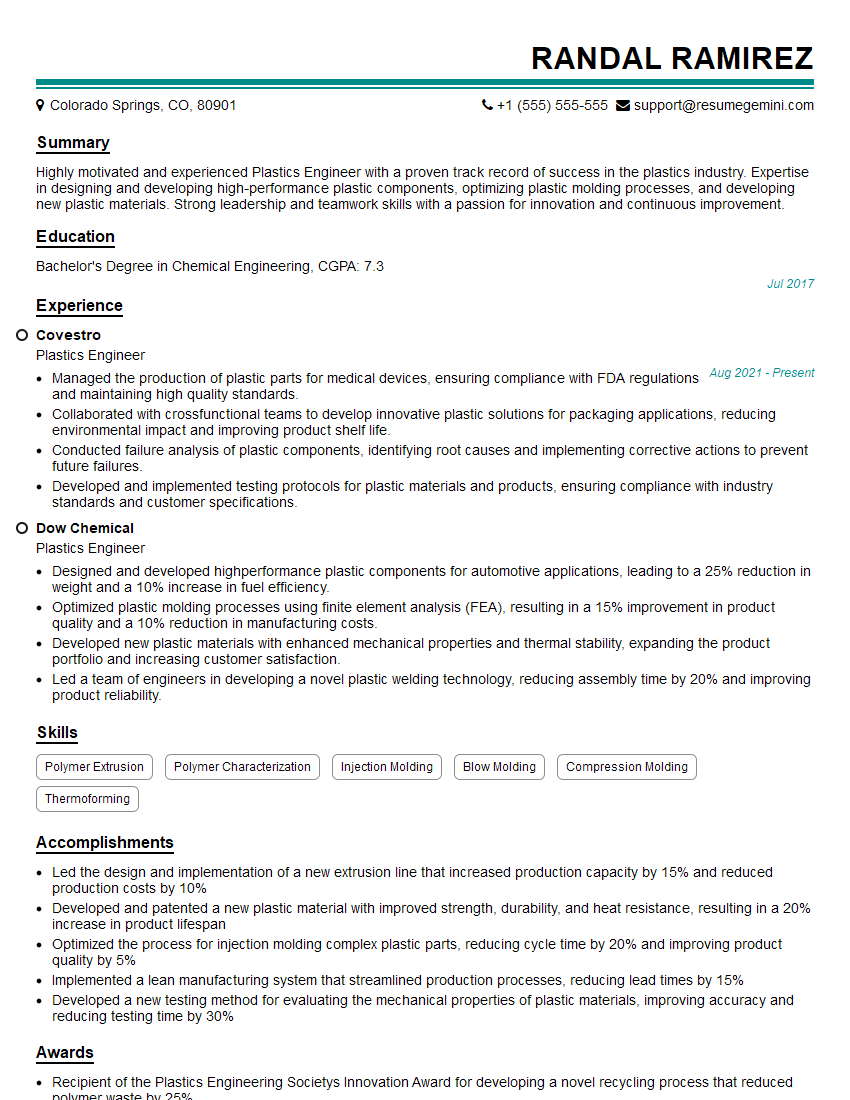
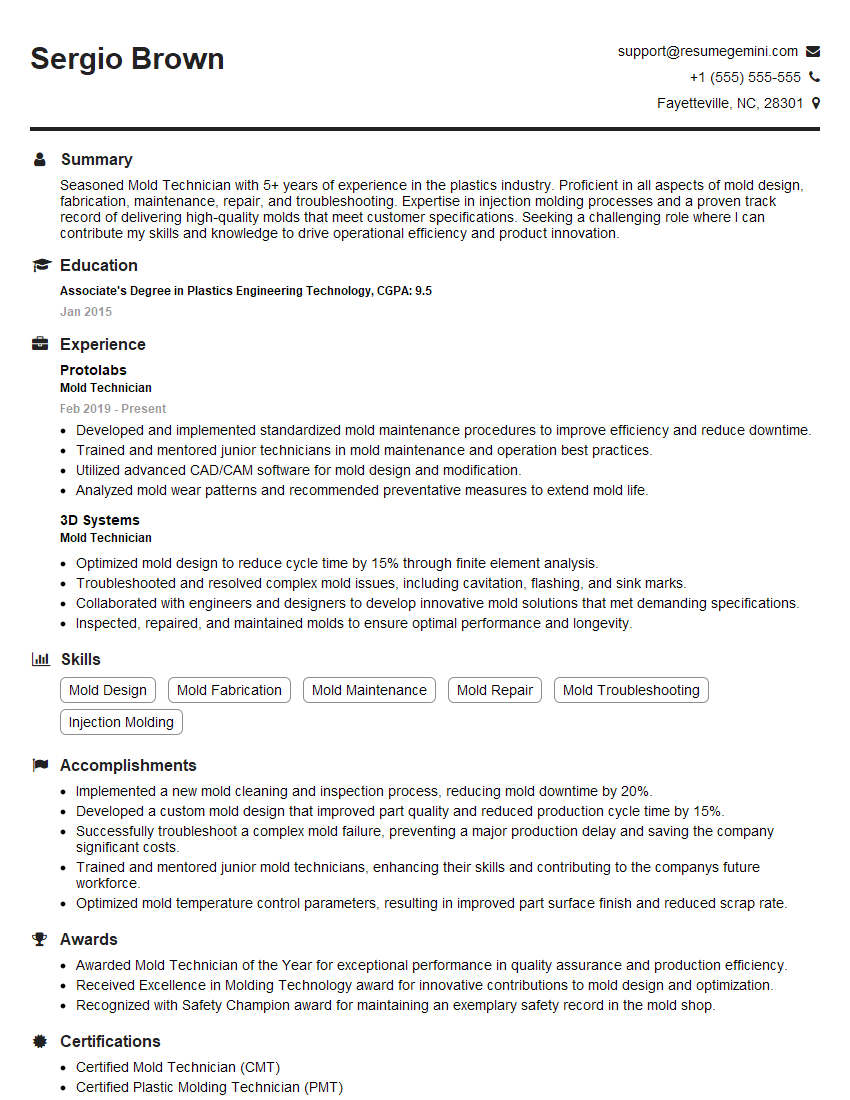
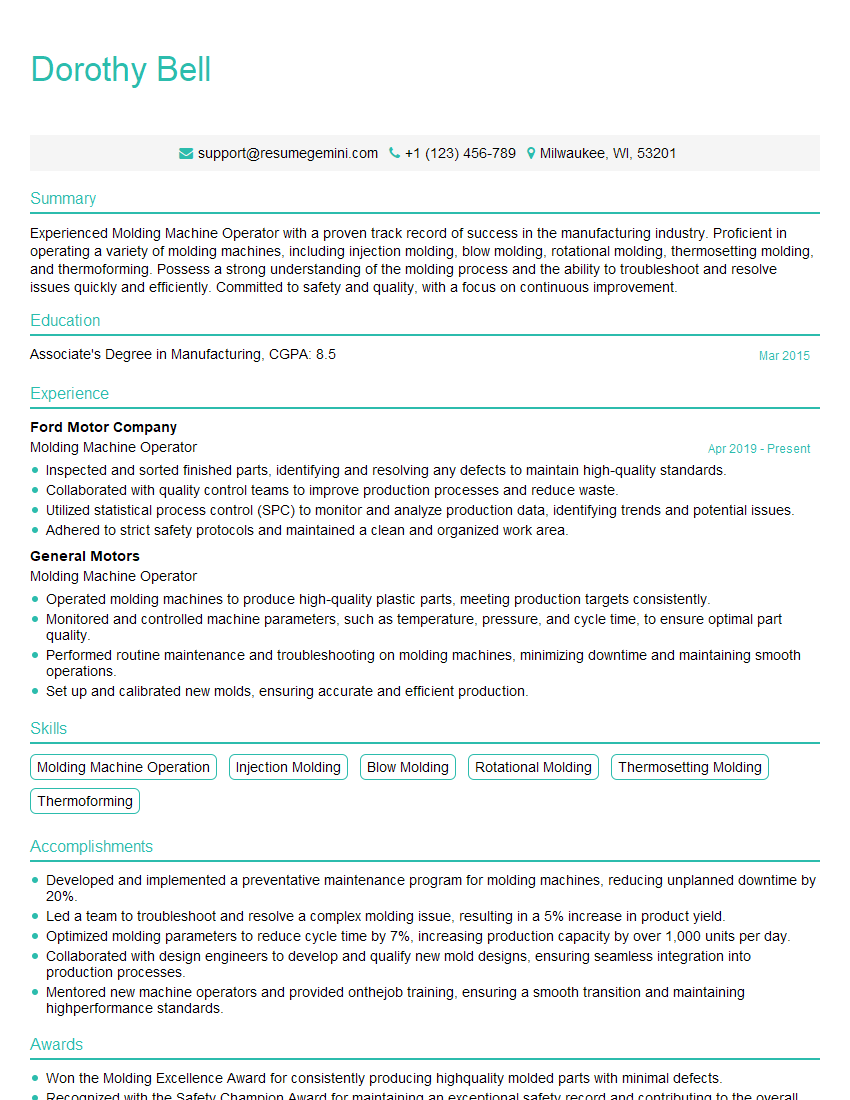
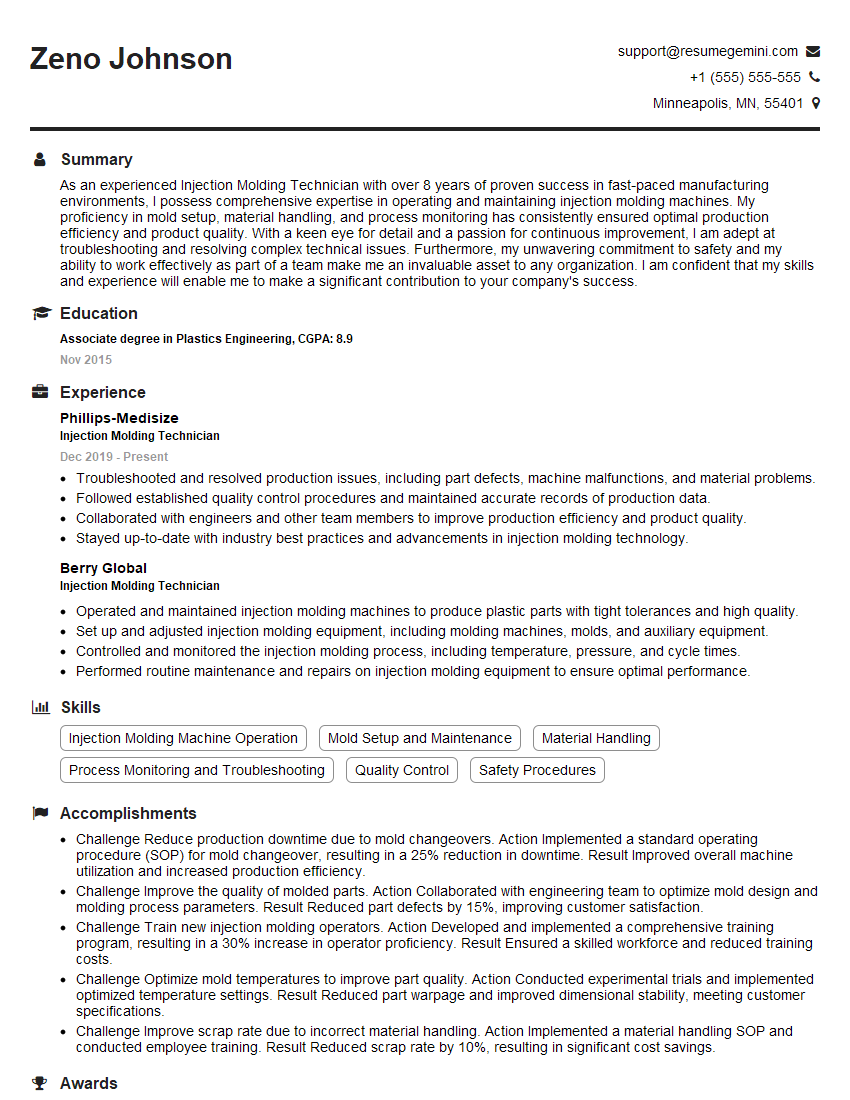
Mastering Thermoplastic Molding opens doors to exciting career opportunities in a dynamic industry. To maximize your job prospects, create an ATS-friendly resume that highlights your skills and experience effectively. ResumeGemini is a trusted resource to help you build a professional and impactful resume that stands out from the competition. We offer examples of resumes tailored specifically to the Thermoplastic Molding field to help you get started.
Explore more articles
Users Rating of Our Blogs
Share Your Experience
We value your feedback! Please rate our content and share your thoughts (optional).
What Readers Say About Our Blog
I Redesigned Spongebob Squarepants and his main characters of my artwork.
https://www.deviantart.com/reimaginesponge/art/Redesigned-Spongebob-characters-1223583608
IT gave me an insight and words to use and be able to think of examples
Hi, I’m Jay, we have a few potential clients that are interested in your services, thought you might be a good fit. I’d love to talk about the details, when do you have time to talk?
Best,
Jay
Founder | CEO